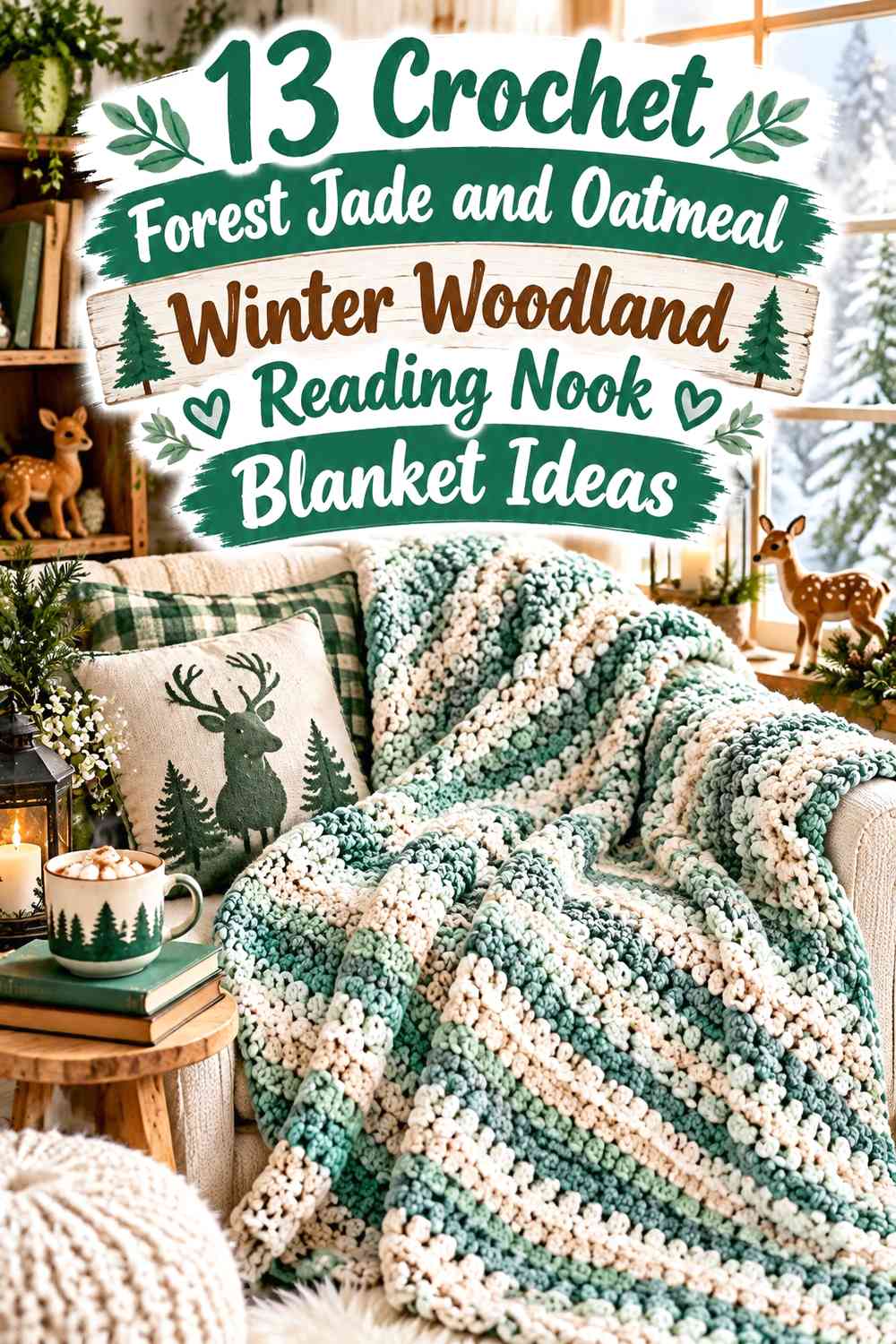

Forest jade and oatmeal create a useful two-color palette for a winter reading nook because they can make a crochet blanket feel woodland-inspired without depending on literal tree or animal motifs. Forest jade can provide the darker visual foundation, while oatmeal lightens textured stitches, borders, motif frames, and stripe breaks.
A reading-nook blanket also needs color placement that still works when the throw is folded, draped over a chair, or gathered across your lap. A large jade center with an oatmeal border stays recognizable in all three situations, while intricate narrow stripes may become harder to appreciate once the blanket is bunched or folded.
These ideas use alpine texture, chevrons, herringbone, granny stripes, basketweave, granny motifs, moss stitch, mesh, and other blanket constructions as the base. The forest jade and oatmeal schemes are independent color adaptations, so the creators are not being credited with these exact palettes unless their tutorial happens to use something similar.
Quick List
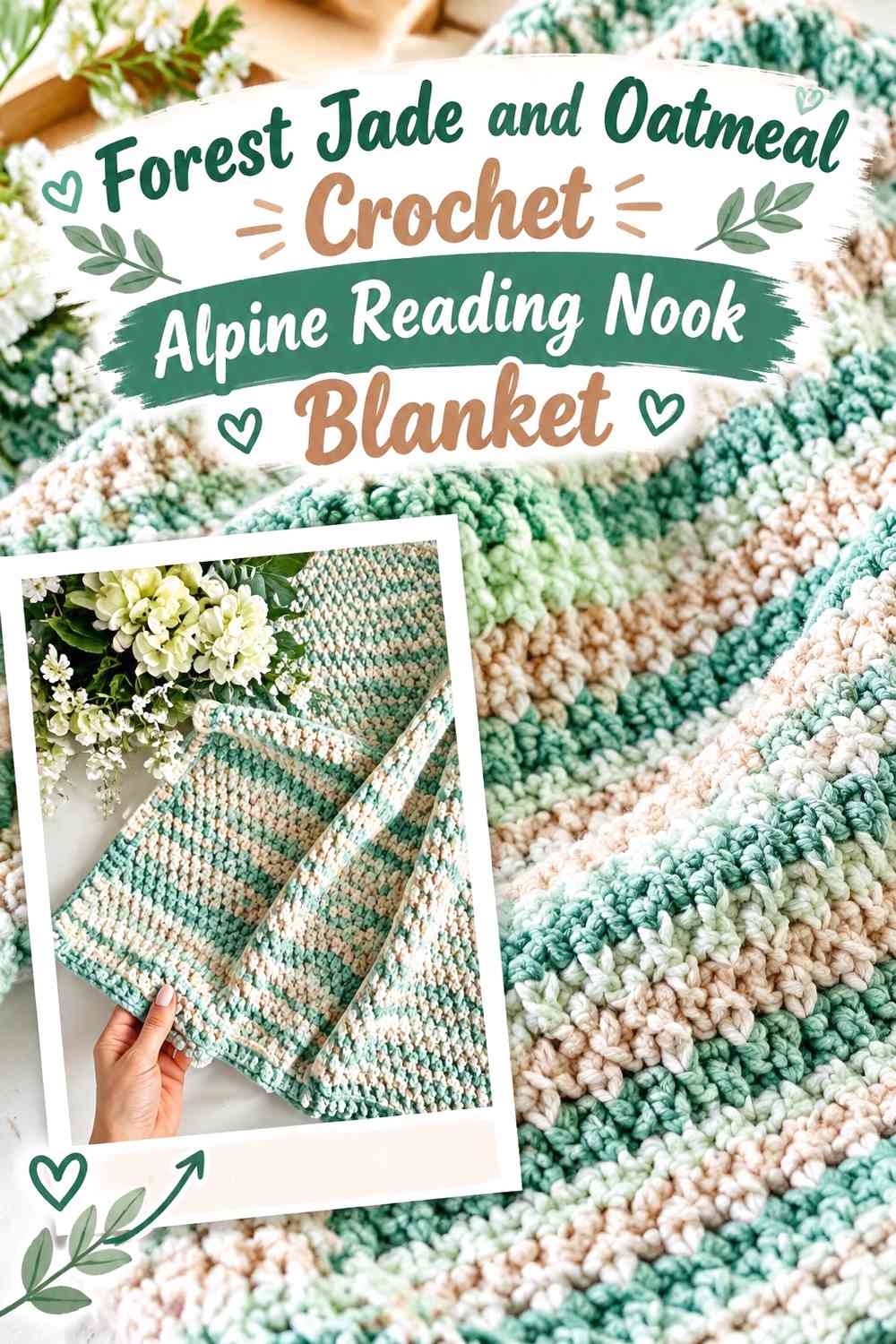
- Forest Jade and Oatmeal Crochet Alpine Reading Nook Blanket
- Forest Jade and Oatmeal Crochet Woodland Chevron Reading Nook Blanket
- Oatmeal and Forest Jade Crochet Herringbone Reading Nook Blanket
- Forest Jade and Oatmeal Crochet Granny-Stripe Woodland Blanket
- Oatmeal and Forest Jade Crochet Basketweave Reading Nook Blanket
- Forest Jade and Oatmeal Crochet Granny-Square Woodland Reading Blanket
- Forest Jade and Oatmeal Crochet Moss-Stitch Woodland Blanket
- Oatmeal and Forest Jade Crochet Cabin-Stripe Reading Nook Blanket
- Forest Jade and Oatmeal Crochet Granny-Mesh Woodland Blanket
- Forest Jade and Oatmeal Crochet Woodland Reading Nook Throw
- Oatmeal and Forest Jade Crochet Block-Stripe Reading Nook Blanket
- Forest Jade and Oatmeal Crochet Chunky Woodland Reading Blanket
- Oatmeal and Forest Jade Crochet Simple Woodland Reading Nook Blanket
Let Forest Jade Create the Woodland Foundation
Forest jade works well across large blanket areas because it can establish the woodland direction before any decorative motif is added. Use it through the center field, major stripe groups, motif backgrounds, or the broadest textured sections when you want the blanket to feel rooted in deep winter greenery.
Oatmeal can then keep the darker shade from becoming visually heavy. It is especially useful around raised texture, between broad jade bands, or at the outer edge where a light neutral can separate the blanket from a dark reading chair or wood-toned furniture.
Use Oatmeal Where Forest Jade Texture Needs More Separation
Texture already creates contrast through light and shadow, so not every raised stitch needs a color change. A mostly forest jade alpine or basketweave surface may need only an oatmeal border or occasional pale band to make the construction easier to see.
For motif blankets, oatmeal can do more. Using it around the edges of forest jade squares creates a visible joining rhythm and stops several dark motifs from merging into one large green field.
Plan Forest Jade and Oatmeal for Folding and Draping
A reading-nook blanket is rarely displayed completely flat. Think about which colors will remain visible when one third of the blanket is folded over a chair arm or when the lower half is gathered across the seat.
Borders, wide stripes, and repeated motif frames survive folding particularly well because the secondary color appears in several places. If oatmeal is used only in one narrow center stripe, it may disappear entirely when the blanket is folded.
1. Forest Jade and Oatmeal Crochet Alpine Reading Nook Blanket
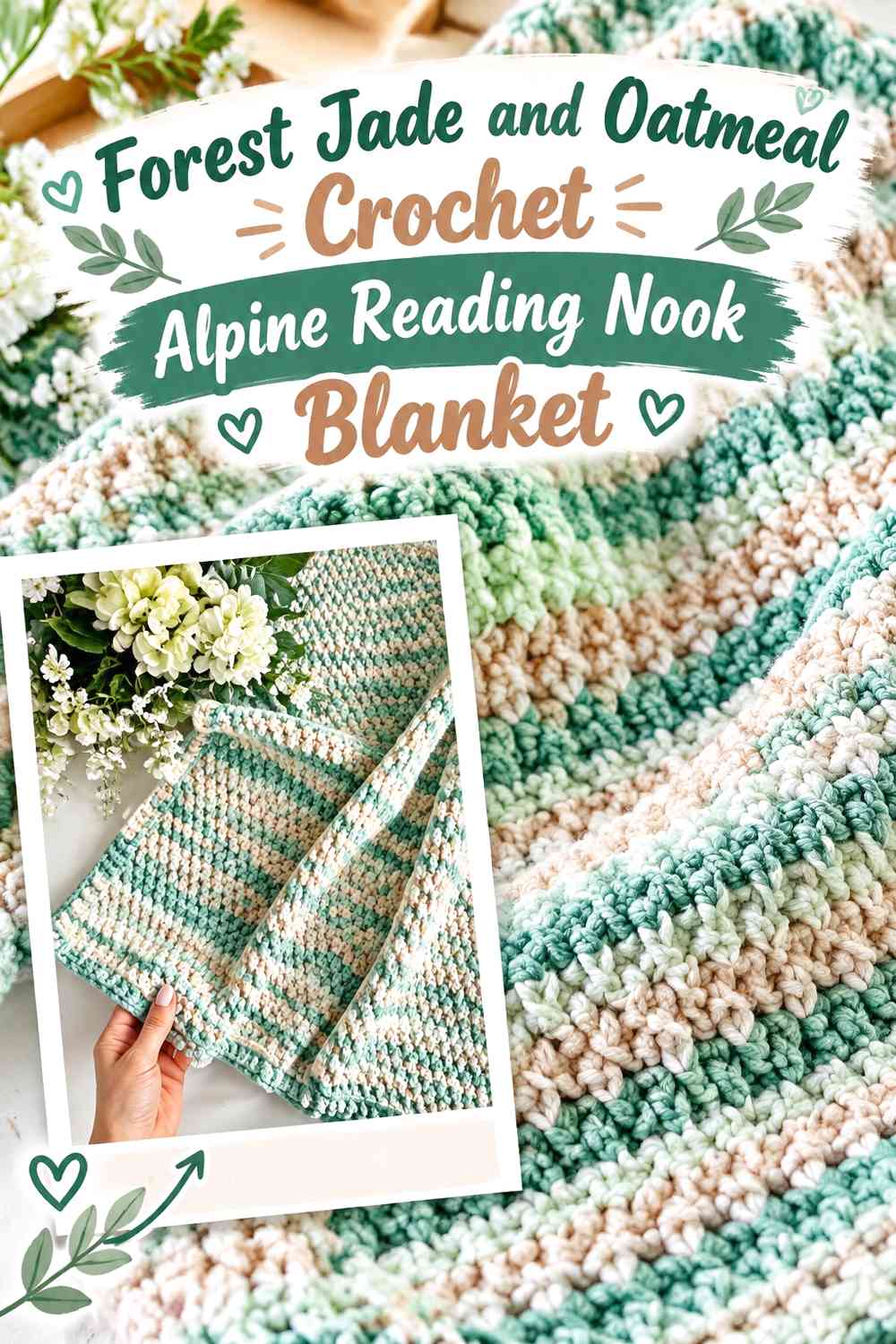
Alpine texture gives the blanket substantial surface interest without requiring complicated color placement. Let forest jade cover most of the textured field and reserve oatmeal for the perimeter or selected transition bands. The result keeps the woodland color dominant while allowing the raised surface to remain the main decorative feature.
Keep Forest Jade Continuous Across the Crochet Alpine Texture
Use forest jade over long uninterrupted sections so the raised pattern remains visually connected. Frequent oatmeal changes through every textured repeat can divide the blanket into small blocks and make the stitch structure harder to appreciate from a reading chair.
The deep green field also gives the blanket a clear woodland identity even when no leaves, trees, or other motifs are added.
Let Oatmeal Frame the Forest Jade Crochet Blanket
An oatmeal outer border gives the dark center a defined stopping point and remains visible when the throw is folded. If you want another light repeat, add one controlled oatmeal band before the border rather than scattering pale stitches through the entire jade field.
Creator Credit: MJ’s Off The Hook Designs
2. Forest Jade and Oatmeal Crochet Woodland Chevron Reading Nook Blanket
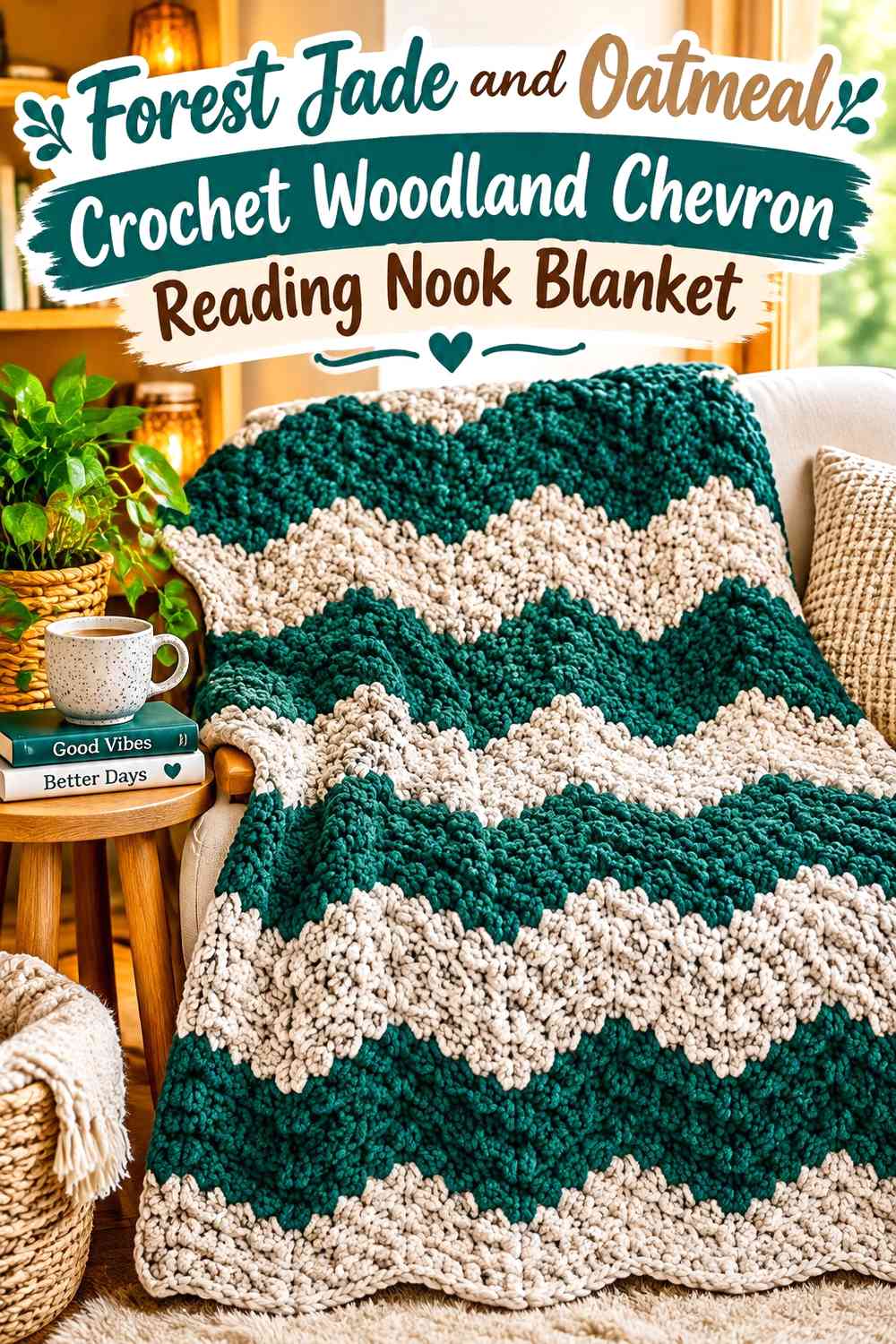
Chevron construction gives the two colors natural directional movement. Use forest jade for the broader runs and oatmeal for narrower waves so the blanket reads as a dark woodland throw with pale ridgelines rather than an equal green-and-neutral stripe pattern.
Give Forest Jade More Width Through the Crochet Chevrons
Broad jade sections create a stronger visual base and prevent the blanket from becoming a high-frequency zigzag. This matters when the throw is draped, because only part of each chevron may remain visible.
Keep the jade sections consistent enough that the eye can follow the woodland color from one side to the other.
Use Oatmeal to Trace the Forest Jade Crochet Peaks
Narrow oatmeal waves can clarify the rises and dips without taking over the design. If the chevrons already have strong relief or shadow, you may need fewer pale bands than you first expect.
An oatmeal finishing edge can repeat the light shade when the blanket is folded and the interior waves are partly hidden.
Creator Credit: CrochetHooksYou
3. Oatmeal and Forest Jade Crochet Herringbone Reading Nook Blanket
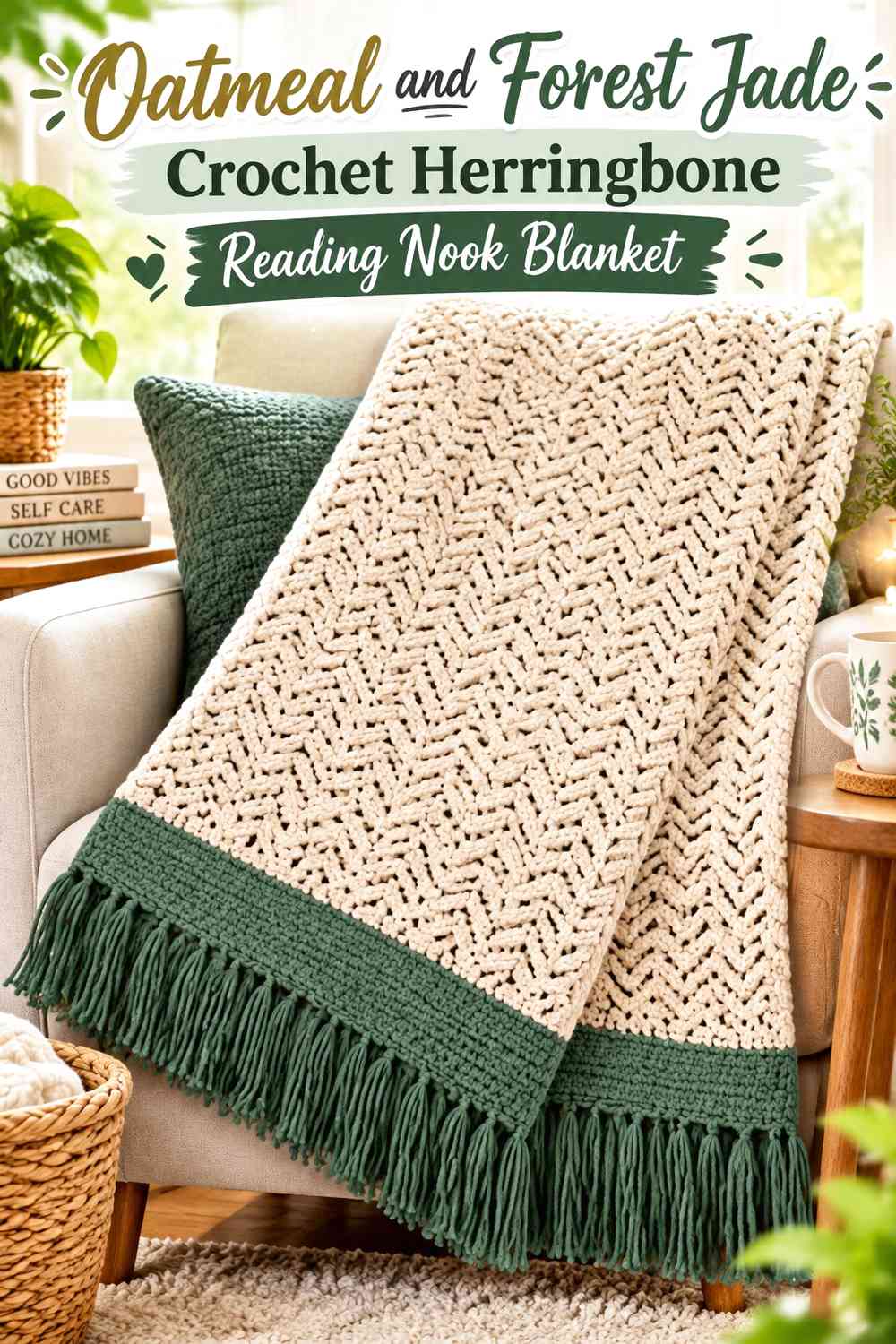
A herringbone-style surface can make oatmeal the primary field while forest jade is concentrated at the ends. This creates a lighter blanket for a dark chair or wood-lined nook, with the green acting more like a woodland frame than an all-over background.
Let Oatmeal Show the Crochet Herringbone Direction
Keeping most of the blanket oatmeal allows the directional stitch structure to remain visible through natural shadow. Multiple narrow color changes are unnecessary when the texture itself already creates movement.
The broad neutral field also leaves enough visual room for stronger jade sections at the ends.
Anchor Oatmeal With Forest Jade Crochet End Bands
Place forest jade near the short ends or other major finishing sections rather than scattering small green accents everywhere. When the blanket is folded over a chair, at least one dark band is likely to remain visible and keep the woodland palette recognizable.
If fringe or another edge treatment is part of your chosen construction, consider whether jade or oatmeal should visually finish that end before adding another color change.
Creator Credit: The Crochet Crowd
4. Forest Jade and Oatmeal Crochet Granny-Stripe Woodland Blanket
Granny stripes give the palette a more relaxed handmade look. Let forest jade appear in wider groups of rows and use oatmeal as a recurring pause between them. This makes the stripe pattern noticeable without producing an equal green-and-cream sequence across the entire throw.
Group Forest Jade Crochet Stripes Into Larger Woodland Sections
Instead of changing color after every stripe, repeat jade across several visual bands before introducing oatmeal. The larger green areas feel more connected to the woodland theme and remain noticeable when the blanket is scrunched across your lap.
Use Oatmeal as Breathing Space Between Forest Jade Crochet Stripes
Oatmeal can separate the deeper green sections and keep the open granny texture from feeling visually dense. Repeat it at predictable intervals so it looks intentional rather than like a leftover color inserted occasionally.
A wider oatmeal border can balance the lighter stripe breaks if the center remains strongly jade-dominant.
Creator Credit: The Loopy Lamb
5. Oatmeal and Forest Jade Crochet Basketweave Reading Nook Blanket
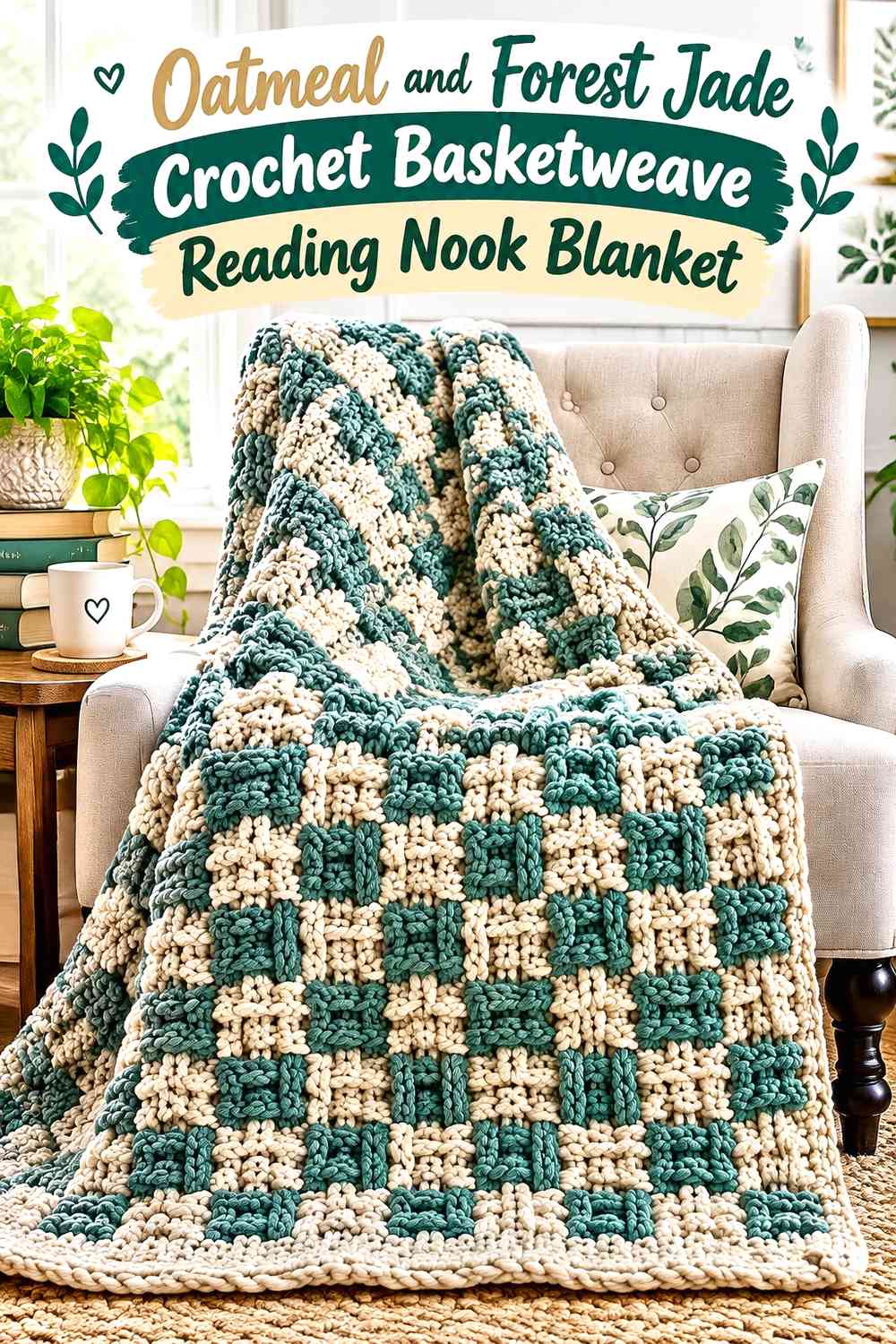
Basketweave texture already suggests warmth and substantial structure, so a restrained color plan works well. Use oatmeal for most of the woven-looking field and forest jade around the border or in a few broad panels. The lighter body lets the shadows between raised sections provide much of the visual depth.
Keep Oatmeal Broad Across the Crochet Basketweave Surface
A consistent oatmeal field prevents individual woven-looking blocks from becoming separate color patches. This keeps attention on the texture while creating a calm neutral surface for a reading corner.
If the basketweave is highly dimensional, inspect the blanket under the lighting used in the nook before deciding that it needs additional color changes.
Frame the Oatmeal Crochet Basketweave With Forest Jade
A forest jade border can give the pale blanket a stronger woodland perimeter and make its full outline easier to see over light bedding or upholstery.
For additional balance, repeat jade once near each end rather than coloring individual basketweave blocks throughout the center.
Creator Credit: The Reclaimed Heirloom
6. Forest Jade and Oatmeal Crochet Granny-Square Woodland Reading Blanket
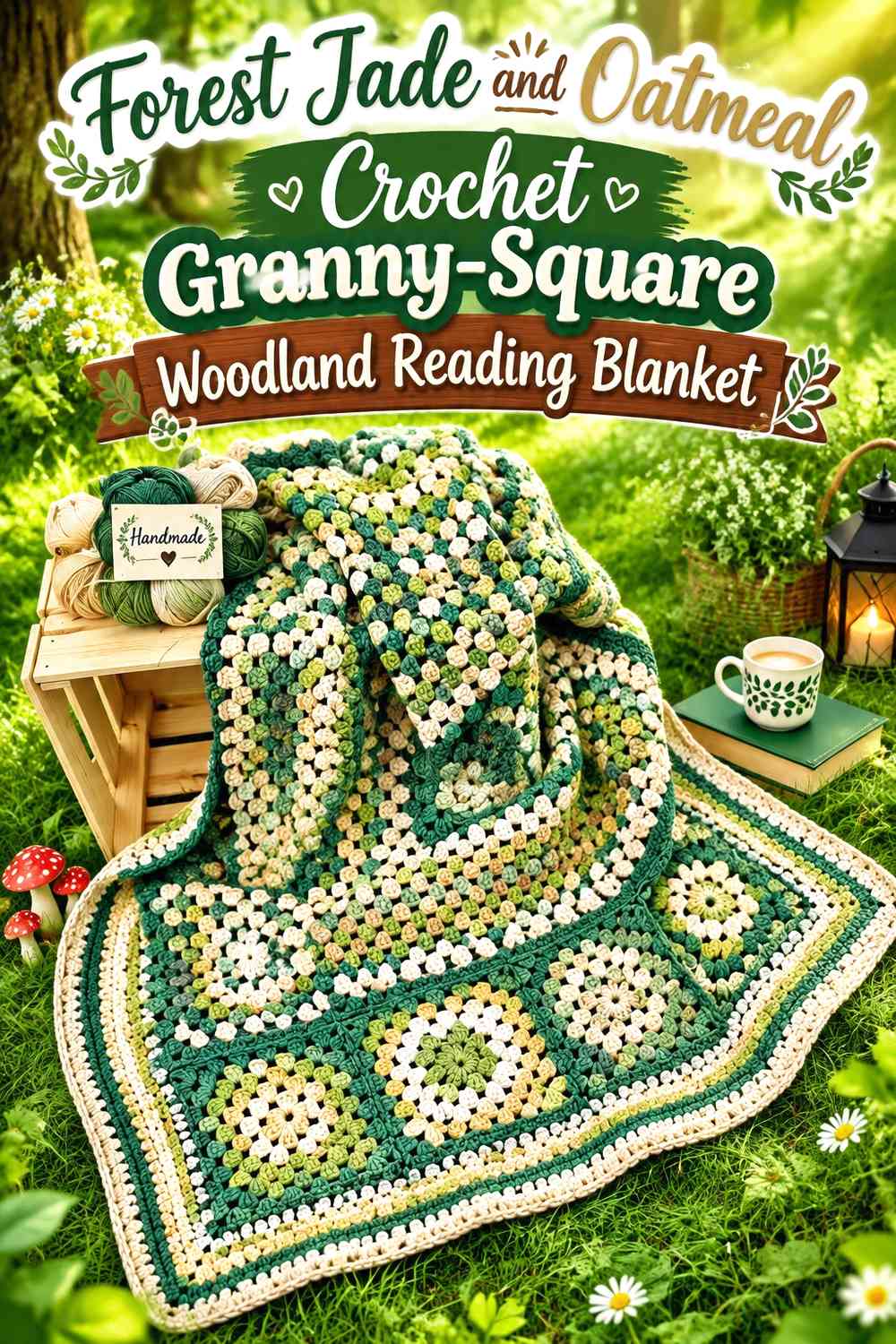
A granny-square construction allows forest jade and oatmeal to repeat in every motif. Keep jade in the centers or broad interior rounds and use oatmeal toward the edges so the pale neutral becomes a connecting framework after assembly.
Repeat Forest Jade Inside Every Oatmeal-Framed Crochet Square
Including jade in every motif creates continuity across the blanket even when the square placement changes. The green does not have to occupy exactly the same proportion in every square, but a repeated role keeps the full throw visually connected.
Use Oatmeal Around Forest Jade Crochet Motif Edges
Oatmeal outer rounds can stop neighboring green squares from merging into one dark block. They also make the motif construction more visible when the blanket is folded, because pale lines continue across several layers.
Continue Oatmeal Around the Forest Jade Crochet Blanket Border
A final oatmeal border can connect the motif frames to the outside edge. If the interior already contains a large amount of oatmeal, consider a narrow forest jade finishing detail so the darkest shade reaches the perimeter too.
Creator Credit: Ophelia Talks Crochet
7. Forest Jade and Oatmeal Crochet Moss-Stitch Woodland Blanket
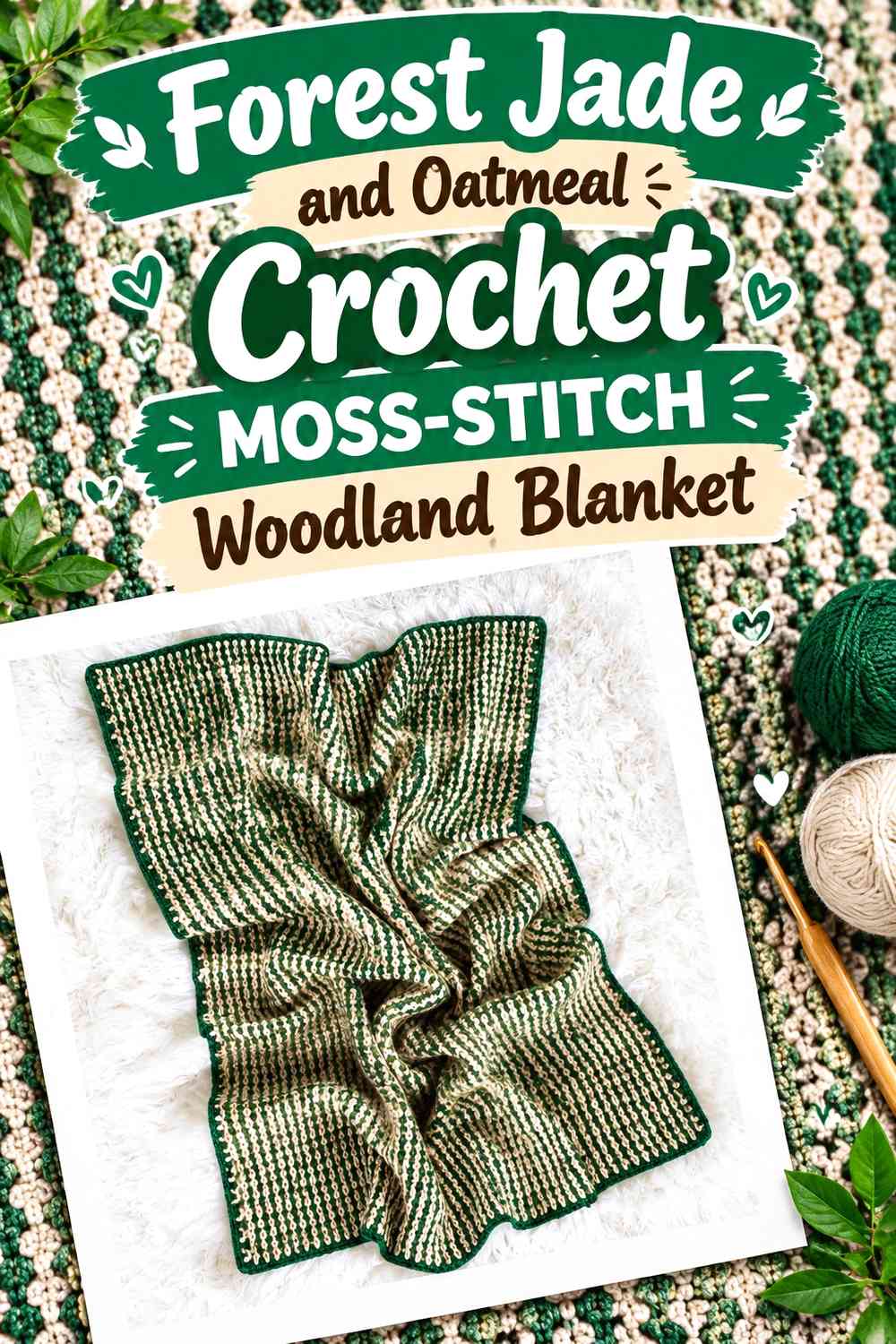
Moss stitch gives this two-color palette a quieter, more blended appearance than large granny clusters or chevrons. Forest jade can dominate through broad sections while oatmeal appears in widely spaced bands. The small-scale texture makes subtle color repetition enough.
Let Forest Jade Carry Most of the Crochet Moss-Stitch Field
Using forest jade through long stretches keeps the compact texture cohesive and gives the reading blanket a deep woodland base. Changing to oatmeal too frequently can make the tiny stitch pattern feel busier than necessary.
Space Oatmeal Widely Through the Forest Jade Crochet Blanket
Use oatmeal as an occasional visual break rather than an equal alternating stripe. Wider spacing gives each light section more impact and keeps the overall blanket clearly jade-led.
If the center already has enough oatmeal, finish with forest jade at the edge so the darker shade encloses the stripe pattern.
Creator Credit: Make & Do Crew
8. Oatmeal and Forest Jade Crochet Cabin-Stripe Reading Nook Blanket
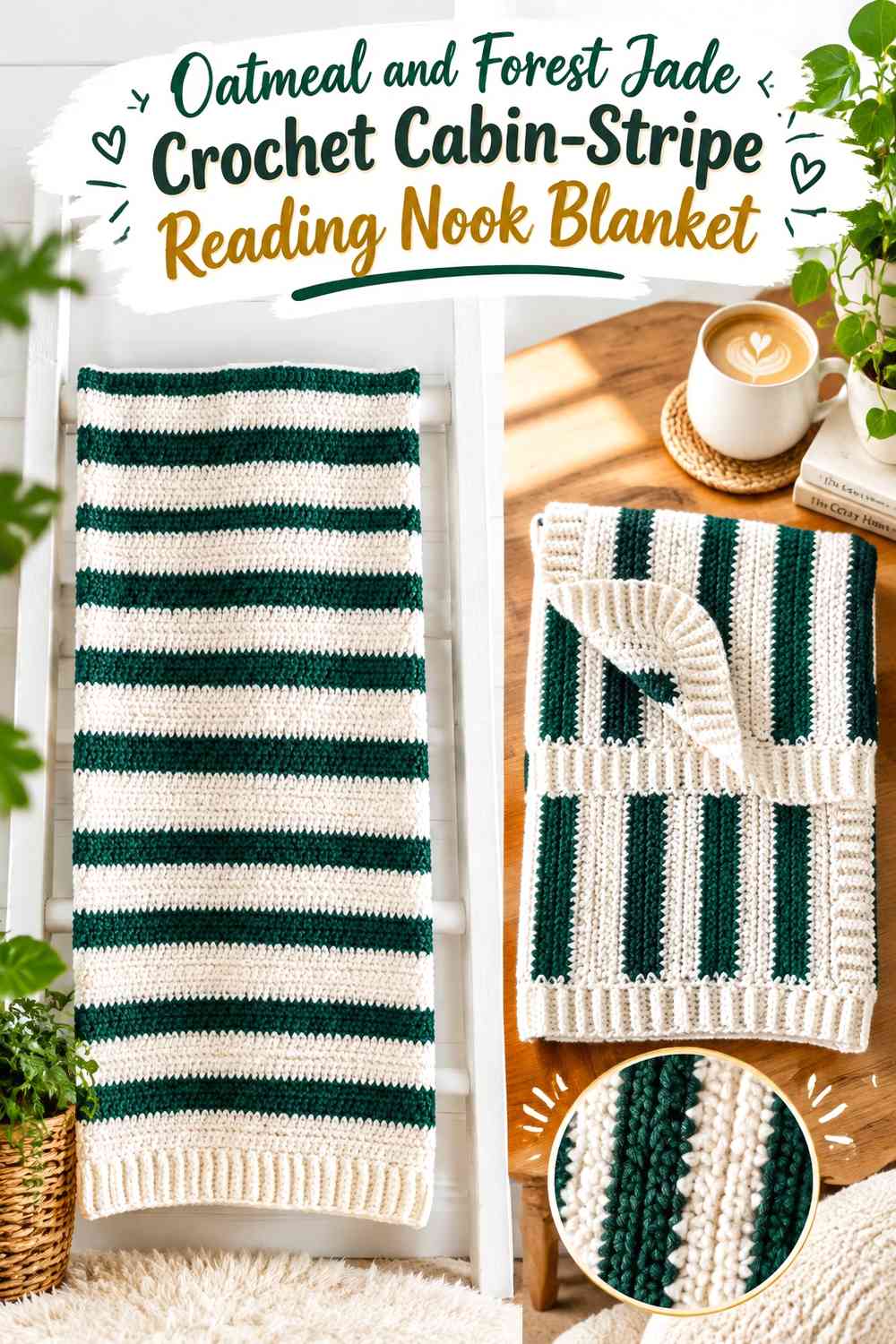
A camping-style stripe construction adapts naturally to a winter cabin reading nook. Make oatmeal the recurring base and insert forest jade bands at measured intervals. The neutral can keep the blanket light while the green repeats strongly enough to establish the woodland direction.
Use Oatmeal Between Every Major Forest Jade Crochet Band
Repeating oatmeal around the green sections creates a steady visual rhythm and prevents neighboring jade bands from appearing as one large dark area.
This is especially useful when the blanket is folded lengthwise, because repeated oatmeal remains visible across several parts of the drape.
Keep Forest Jade Crochet Bands Broad Enough to Read From the Chair
Very narrow jade lines may disappear once the throw is gathered or viewed from across the room. Give the green enough surface area to remain recognizable as a major palette color rather than a tiny accent.
A forest jade border can further reinforce the darker woodland shade if the interior remains predominantly oatmeal.
Creator Credit: Daisy Farm Crafts
9. Forest Jade and Oatmeal Crochet Granny-Mesh Woodland Blanket
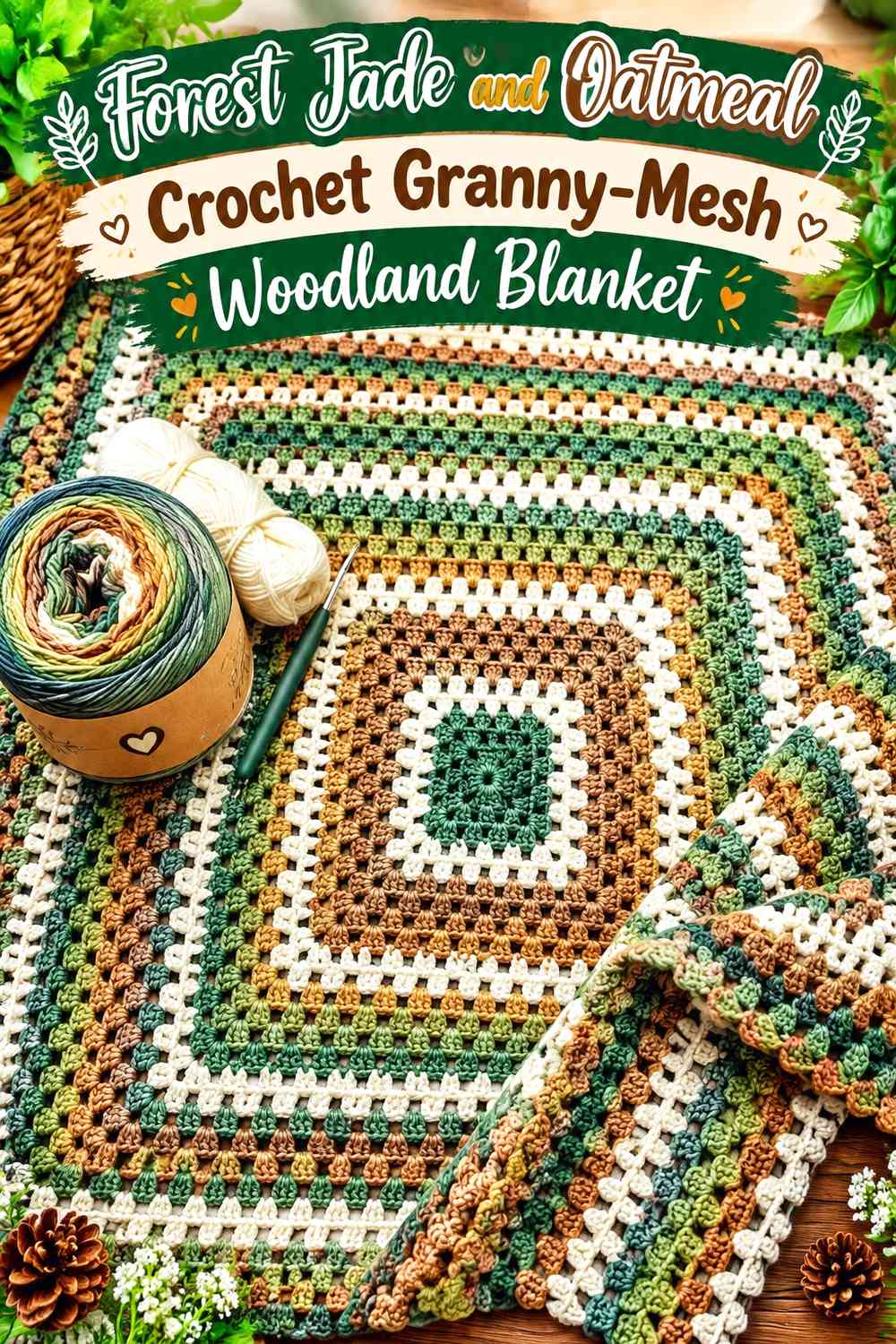
Granny mesh creates intentional open space, making color and background interact more than they do in a dense blanket. Use forest jade for the denser sections and oatmeal through selected mesh rounds or vice versa, depending on which surface will usually sit beneath the throw.
Put Forest Jade Where the Crochet Granny Mesh Needs More Weight
Forest jade works well through the denser sections because it gives the open blanket enough visual substance for a winter reading nook. Large green rounds can also make the expanding square structure easier to see.
Use Oatmeal Through Selected Forest Jade Crochet Mesh Rounds
Pale openwork can create breathing space between darker jade sections without requiring solid oatmeal blocks. Test a swatch over the chair or bedding where the blanket will be used, since the background color will show through open sections.
Repeat Oatmeal at the Forest Jade Crochet Border
A pale outer edge can make the final square shape more visible and keep the darker center from visually running into a deep-colored chair.
Creator Credit: Hooked by Robin
10. Forest Jade and Oatmeal Crochet Woodland Reading Nook Throw
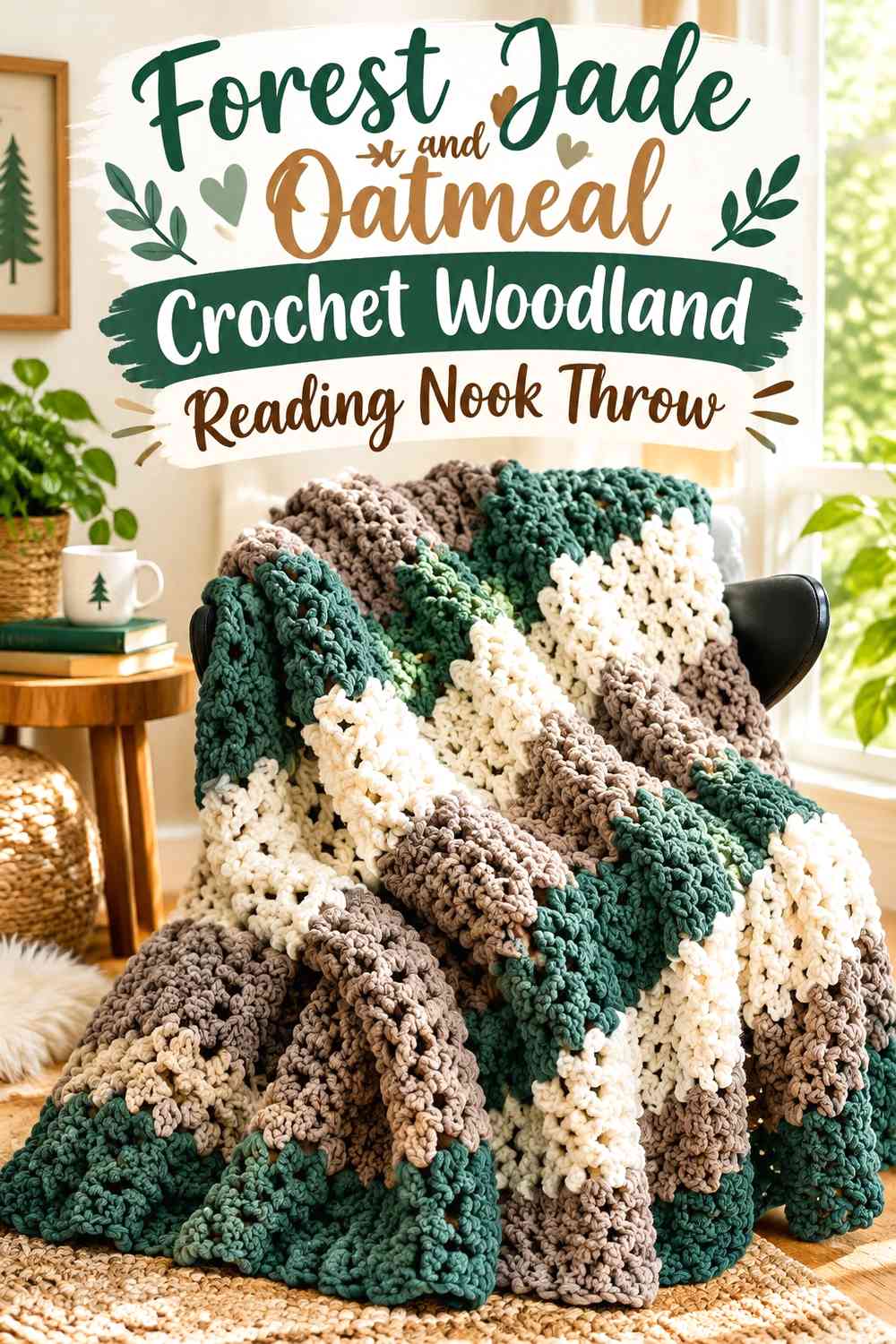
A simple throw construction gives color proportion more importance because there are fewer decorative motifs competing for attention. Use forest jade across most of the blanket and introduce oatmeal through several generous bands rather than numerous narrow stripes.
Let Forest Jade Make the Crochet Throw Feel Woodland-Led
Keep the largest sections jade so the blanket still reads as a deep green reading-nook throw when only part of it is visible over a chair arm.
The uninterrupted color also allows the stitch pattern to remain the main source of surface variation.
Use Oatmeal Bands to Break Up the Forest Jade Crochet Field
Broad oatmeal sections can lighten the blanket at several points without producing a highly striped look. Place them where they will still be noticeable when the throw is folded, such as toward both ends or at repeated intervals.
Keep Oatmeal Secondary to Forest Jade at the Crochet Edge
If oatmeal bands already occupy substantial space, choose forest jade for at least part of the border so the dominant shade reaches the perimeter and visually contains the lighter sections.
Creator Credit: Fiber Flux
11. Oatmeal and Forest Jade Crochet Block-Stripe Reading Nook Blanket
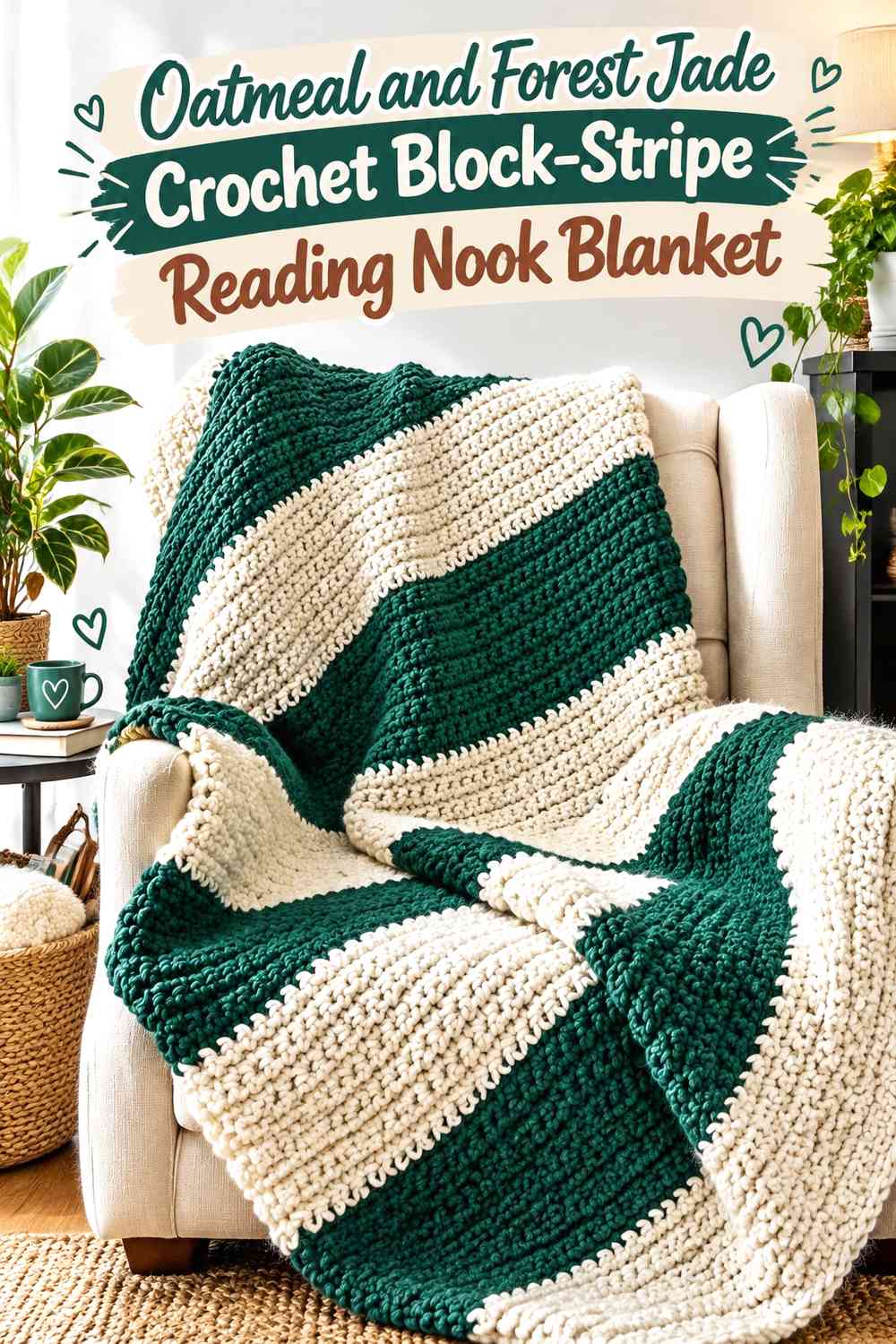
Large blocks of oatmeal and forest jade create a more graphic woodland blanket. Instead of trying to blend the shades, let each occupy substantial horizontal areas. This works particularly well when you want the blanket to coordinate with both pale upholstery and darker wood or green accents in the nook.
Give Oatmeal and Forest Jade Crochet Blocks Unequal Widths
Use one color more broadly so the blanket does not look divided exactly in half. An oatmeal-dominant throw with fewer jade blocks feels lighter, while wider jade sections create a darker winter direction.
Choose the hierarchy before beginning so each color change follows a planned proportion.
Repeat Forest Jade at More Than One Oatmeal Crochet Section
Avoid placing all of the dark green in one large block at a single end. Repeating jade elsewhere keeps the color visible when that end is folded underneath the blanket or draped behind a chair.
Creator Credit: B.Hooked Crochet
12. Forest Jade and Oatmeal Crochet Chunky Woodland Reading Blanket
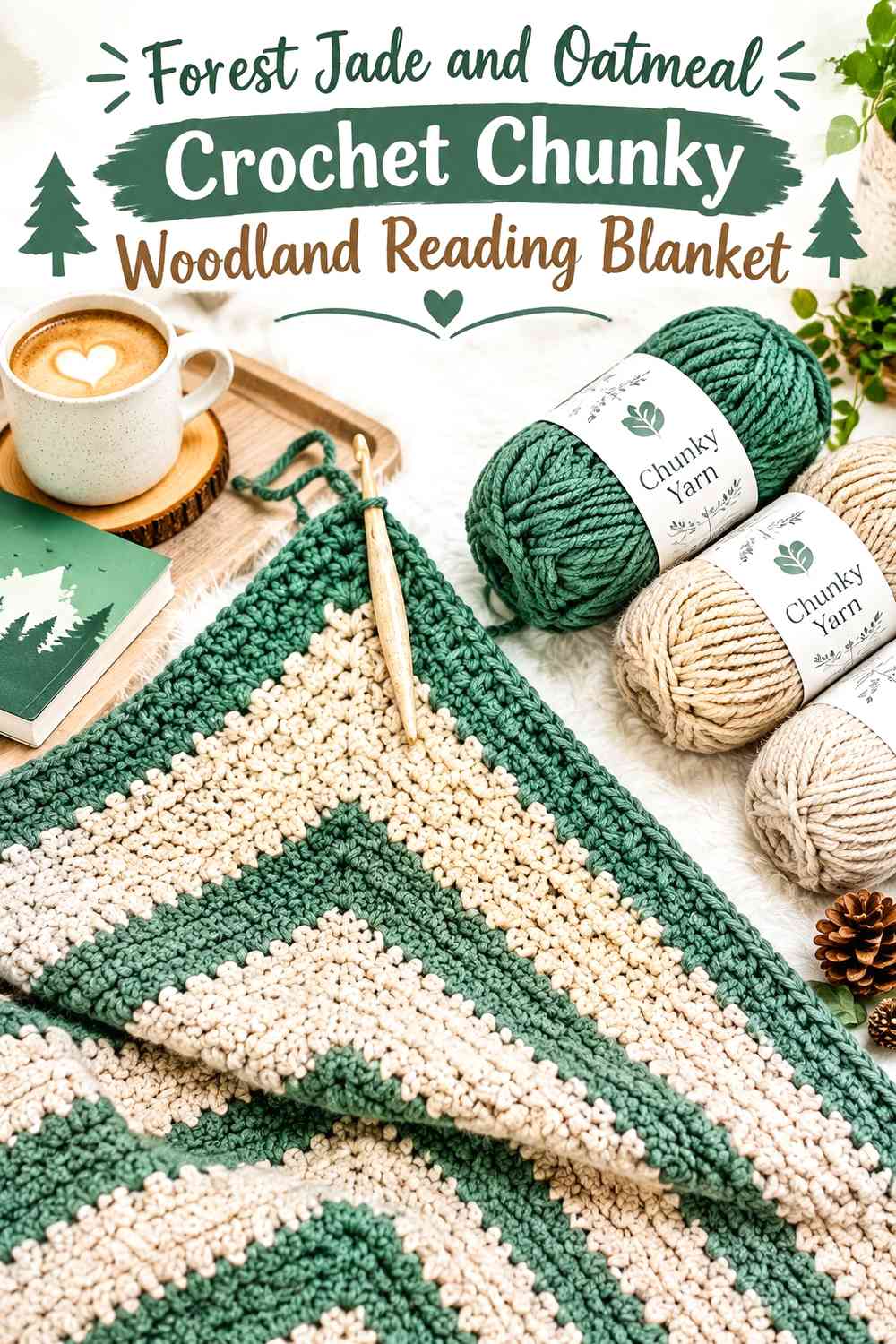
A chunky throw makes each color block visually substantial, so small scattered accents are usually unnecessary. Use forest jade as the dominant body and oatmeal around selected edges, corners, or broad transition sections. The large-scale structure suits a reading nook where the blanket will often be loosely draped rather than displayed flat.
Keep Forest Jade Broad Across the Chunky Crochet Blanket
Large stitches already produce strong texture and shadow. A continuous jade field lets that texture stay cohesive instead of making every row another color statement.
The deep green also remains recognizable even when the throw is heavily folded.
Use Oatmeal in Large Areas Against Forest Jade Crochet
Because chunky stitches enlarge every visual element, tiny oatmeal pinstripes may feel insignificant. Use a substantial border or broad end section so the lighter neutral has enough area to balance the jade.
Keep the number of color transitions relatively low to preserve the strong, simple woodland character.
Creator Credit: TL Yarn Crafts
13. Oatmeal and Forest Jade Crochet Simple Woodland Reading Nook Blanket
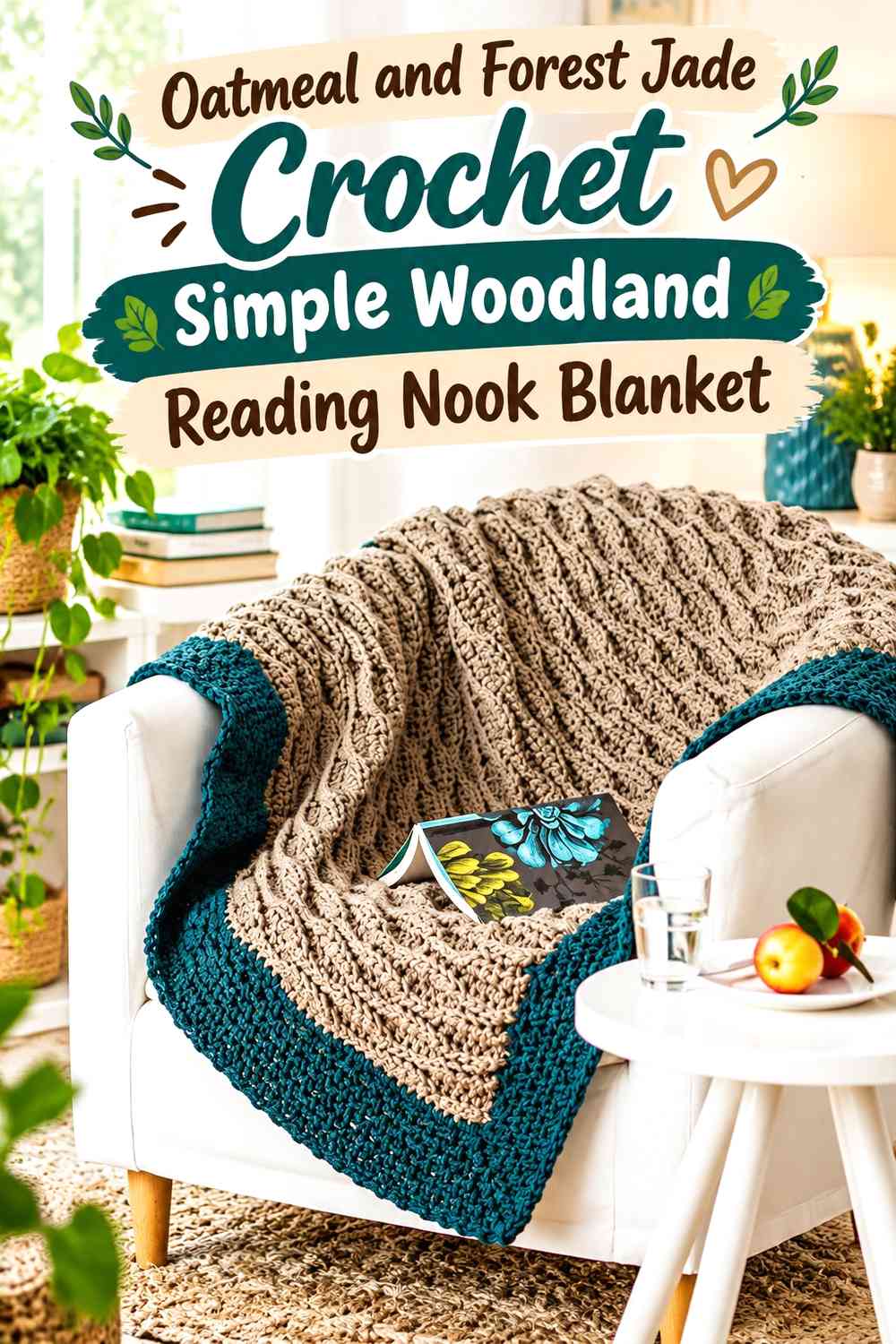
The final idea uses a straightforward blanket body to make the palette itself the main design feature. Keep most of the center oatmeal and finish it with a generous forest jade edge. A small amount of jade can also repeat inside the blanket so the border does not feel disconnected from the center.
Let Oatmeal Create a Calm Crochet Reading-Nook Center
A broad oatmeal field gives the blanket a lighter overall appearance and works well when the surrounding chair, shelves, or wall colors are already dark.
Keep the main field relatively consistent so the forest jade edge becomes the intentional finishing feature.
Make Forest Jade Strong Around the Oatmeal Crochet Perimeter
Use enough jade at the outer edge for the frame to remain visible when the blanket is folded. A very narrow green line may disappear among the surrounding furniture or bedding.
Repeat Forest Jade Once Inside the Oatmeal Crochet Blanket
One controlled inner band can connect the border to the center without converting the blanket into a stripe-heavy design. Place it far enough from the outer edge that both jade areas remain visually distinct.
Creator Credit: Yarnspirations
Which Forest Jade and Oatmeal Reading Nook Blanket Direction Should You Choose?
For the strongest woodland color presence, start with the forest jade alpine, moss-stitch, granny-stripe, or chunky blanket ideas. These give dark green most of the visual area and use oatmeal mainly to separate texture or finish the edge.
For a lighter reading corner, the oatmeal herringbone, basketweave, cabin-stripe, block-stripe, and simple framed blanket ideas put the neutral first. Forest jade then supplies stronger bands, borders, or end sections without darkening the whole throw.
Motif and granny-mesh constructions sit between those two directions. They allow the colors to repeat throughout the blanket instead of assigning one shade only to the center or border, which can be useful when the throw will spend most of its time folded or casually draped.
Conclusion
Forest jade and oatmeal can create a winter woodland reading-nook blanket through color hierarchy alone. You do not need to cover the throw with literal pine trees or leaves for the palette to communicate a forest-inspired direction.
Choose forest jade as the dominant shade when you want a deep, grounded blanket, and let oatmeal reveal borders, texture, motifs, or stripe breaks. Reverse the balance when the reading nook already contains dark furniture and you want the throw to add more light.
Most importantly, plan the palette for how the blanket will actually be used. Wide bands, repeated motif frames, and contrasting borders remain visible when the throw is folded, while very small accents can disappear. Follow each linked creator tutorial for the demonstrated blanket construction, then adapt the forest jade and oatmeal placement independently.
Frequently Asked Questions
Should Forest Jade or Oatmeal Dominate a Woodland Crochet Reading Blanket?
Forest jade is useful when you want the blanket to provide the strongest woodland color in the reading nook. Oatmeal works well when you prefer a lighter throw and want green confined to borders, motifs, or broad bands. Give one shade more surface area so the palette has a clear hierarchy.
Where Should Oatmeal Go on a Mostly Forest Jade Crochet Blanket?
Useful placements include borders, motif frames, end bands, selected stripes, and openwork sections. Keep oatmeal close to the texture or construction feature you want to emphasize rather than scattering small pale details across the entire throw.
How Can Forest Jade Stand Out on an Oatmeal Crochet Blanket?
Use forest jade in areas large enough to remain visible after folding, such as a substantial border, repeated block sections, broad stripes, or motif centers. A few tiny green lines may disappear once the blanket is draped over a chair.
Do Forest Jade and Oatmeal Need a Third Woodland Color?
No. A two-color blanket can already create strong woodland contrast. Introduce another shade only when it solves a specific design problem, since extra browns, greens, or creams can weaken the clear jade-and-oatmeal relationship.
Which Forest Jade and Oatmeal Layout Works Well With Heavy Crochet Texture?
A mostly single-color textured field with the second shade at the border or in broad transition bands is often easier to read. Alpine, basketweave, herringbone, and chunky textures already create substantial visual movement through raised stitches and shadows.
Should the Crochet Blanket Border Be Forest Jade or Oatmeal?
Use oatmeal when a dark forest jade center needs a lighter frame. Use forest jade when an oatmeal center needs stronger definition. The surrounding chair, bedding, or wall also matters, because the border is the part of the blanket most likely to sit directly against those surfaces.
How Do I Substitute Forest Jade or Oatmeal Without Losing the Woodland Palette?
For forest jade, choose another deep or medium muted green that still remains substantially darker than the neutral. For oatmeal, use a warm pale neutral that stays clearly lighter than the green. Preserve the dominant-versus-supporting relationship even if the exact shades change.