

Persimmon Coral and Cream give a crochet checkerboard mini skirt a warmer retro direction than a high-contrast black-and-white grid. Persimmon Coral can provide the stronger color blocks, while Cream can separate them, lighten the waistband or hem, and make individual checks easier to distinguish.
A mini skirt also gives the checkerboard relatively little vertical space, so check scale matters. A few large squares create a bold graphic result, while smaller repeated checks make the color pattern busier and allow more alternation between the waistband and hem. Solid sections can be useful when you want the skirt shape, ribbing, pleats, or ruffles to remain visible instead of covering every surface with checks.
The tutorials below support mini-skirt, skirt, granny-square, A-line, pleated, or ruffled construction concepts. The Persimmon Coral and Cream checkerboard arrangements are independent color adaptations unless a creator’s own color choices are specifically verified.
Quick List
- Classic Persimmon Coral and Cream Checkerboard Crochet Mini Skirt
- Persimmon Coral and Cream Framed Granny Checkerboard Crochet Mini Skirt
- Persimmon Coral and Cream Oversized-Square Checkerboard Crochet Mini Skirt
- Persimmon Coral and Cream Micro-Checker Crochet Mini Skirt
- Persimmon Coral Checkerboard Crochet Mini Skirt With a Cream Waistband
- Cream Crochet Mini Skirt With a Persimmon Coral Checkerboard Hem Band
- Cream-Dominant Persimmon Coral Checkerboard Crochet Mini Skirt
- Persimmon Coral Checkerboard Crochet Mini Skirt With a Cream Ruffle
- Cream Checkerboard Crochet Mini Skirt With a Persimmon Coral Ruffle
- Persimmon Coral Checkerboard Yoke and Cream Pleated Crochet Mini Skirt
- Cream Checkerboard Yoke and Persimmon Coral Pleated Crochet Mini Skirt
- Persimmon Coral and Cream Oversized A-Line Checkerboard Crochet Mini Skirt
- Persimmon Coral Micro-Checker Coquette Crochet Mini Skirt With Cream Trim
- Persimmon Coral Center-Panel and Cream Fitted Checkerboard Crochet Mini Skirt
- Persimmon Coral and Cream Tiered Ruffle Checkerboard Crochet Mini Skirt
- Cream Crochet Mini Skirt With a Persimmon Coral and Cream Checkerboard Ruffle
Make Persimmon Coral and Cream Read Clearly as Checkerboard
Checkerboard depends on repetition more than simply placing two colors beside each other. Persimmon Coral and Cream should switch positions predictably enough that the eye can follow the grid across the skirt.
Before committing to a full garment, place the two yarns side by side and compare their lightness as well as their hue. If your particular Cream and Persimmon Coral are closer in value than expected, a photograph viewed in grayscale can reveal whether the checks will retain enough separation.
A checkerboard made from individual motifs also needs the layout checked as a whole. Arrange the squares before joining so two Persimmon Coral blocks do not accidentally meet where Cream should continue the alternation.
Choose Persimmon Coral and Cream Check Size Before Building the Mini Skirt
Large checks give each color more uninterrupted area and make the retro grid visible from farther away. They also mean that the exact placement of each Persimmon Coral and Cream block has greater impact because fewer checks fit across the garment.
Small checks create more frequent color changes. That can work well on a simple skirt body, but detailed waistbands, ruffles, pleats, ties, and decorative hems may compete with a very dense grid.
If the skirt construction already has a strong feature, consider keeping the checkerboard on the main body and making that structural element solid Persimmon Coral or Cream.
Use Solid Persimmon Coral or Cream to Control a Busy Checkerboard
A solid waistband, hem, side panel, or ruffle can give a two-color checkerboard a clear stopping point. Cream generally creates a lighter visual break, while Persimmon Coral reinforces the warmer color and can make the skirt feel more color-dominant even when the checks themselves are evenly divided.
Think of these solid areas as part of the palette hierarchy. If Persimmon Coral already dominates the checks, a Cream waistband may be more useful than another Coral section. If Cream occupies most of the skirt, a Coral hem or ruffle can restore enough of the warm shade to keep the palette balanced.
1. Classic Persimmon Coral and Cream Checkerboard Crochet Mini Skirt

This is the clearest retro interpretation: alternate solid Persimmon Coral and Cream squares across the complete mini-skirt body. A granny-square construction makes the grid especially easy to plan visually because each motif can function as one large check. Keep the waistband quieter so the alternating square layout remains the feature readers notice first.
Keep Persimmon Coral and Cream in a True Alternating Grid
Lay out the complete group of squares before joining. Each Persimmon Coral square should meet Cream on its horizontal and vertical sides if you want a traditional checkerboard rather than a general patchwork arrangement.
Pay particular attention to the point where the grid wraps around the skirt. A sequence that looks correct while lying flat can create two matching colors beside each other when the first and last columns meet.
Use Cream or Persimmon Coral Consistently at the Waist
A solid Cream waistband gives the checkerboard a lighter top boundary and prevents the grid from continuing into every part of the garment. A Persimmon Coral waistband makes the warm shade more dominant without changing the equal alternation below.
Choose the waistband after arranging the body rather than automatically matching the first row of checks.
Creator Credit: Shyler crochets
2. Persimmon Coral and Cream Framed Granny Checkerboard Crochet Mini Skirt
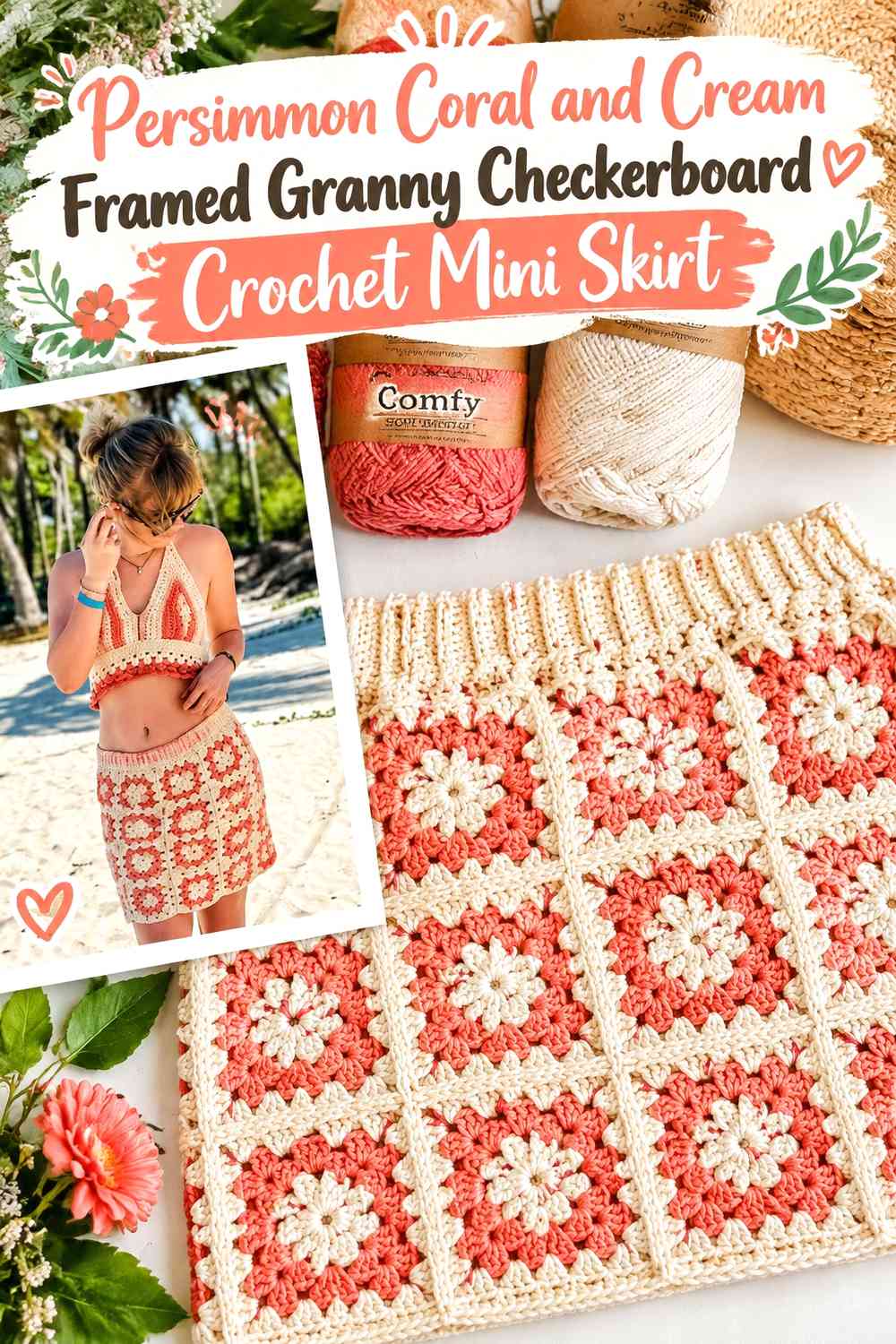
Instead of making every granny square a single solid color, build a secondary color relationship inside the motifs. Persimmon Coral can lead one set of squares while Cream leads the neighboring set, allowing the dominant outer color to alternate across the garment.
Alternate Persimmon Coral and Cream on the Granny Square Borders
If one square finishes with Persimmon Coral around its outside, let the neighboring motif finish with Cream. The changing outer frames create the checker rhythm even when both colors appear inside each individual square.
This gives the skirt more internal texture than solid checks, so avoid introducing additional accent colors that would weaken the two-color grid.
Keep Cream and Persimmon Coral Motif Centers Predictable
The internal color order should support the larger checkerboard rather than fight it. For example, squares with Persimmon Coral outer sections can repeat one consistent Cream-centered arrangement while the reverse squares follow the opposite hierarchy.
View several motifs together before making the full set. The checkerboard should still be recognizable when the smaller internal color changes are visible.
Creator Credit: MJ’s Off The Hook Designs
3. Persimmon Coral and Cream Oversized-Square Checkerboard Crochet Mini Skirt
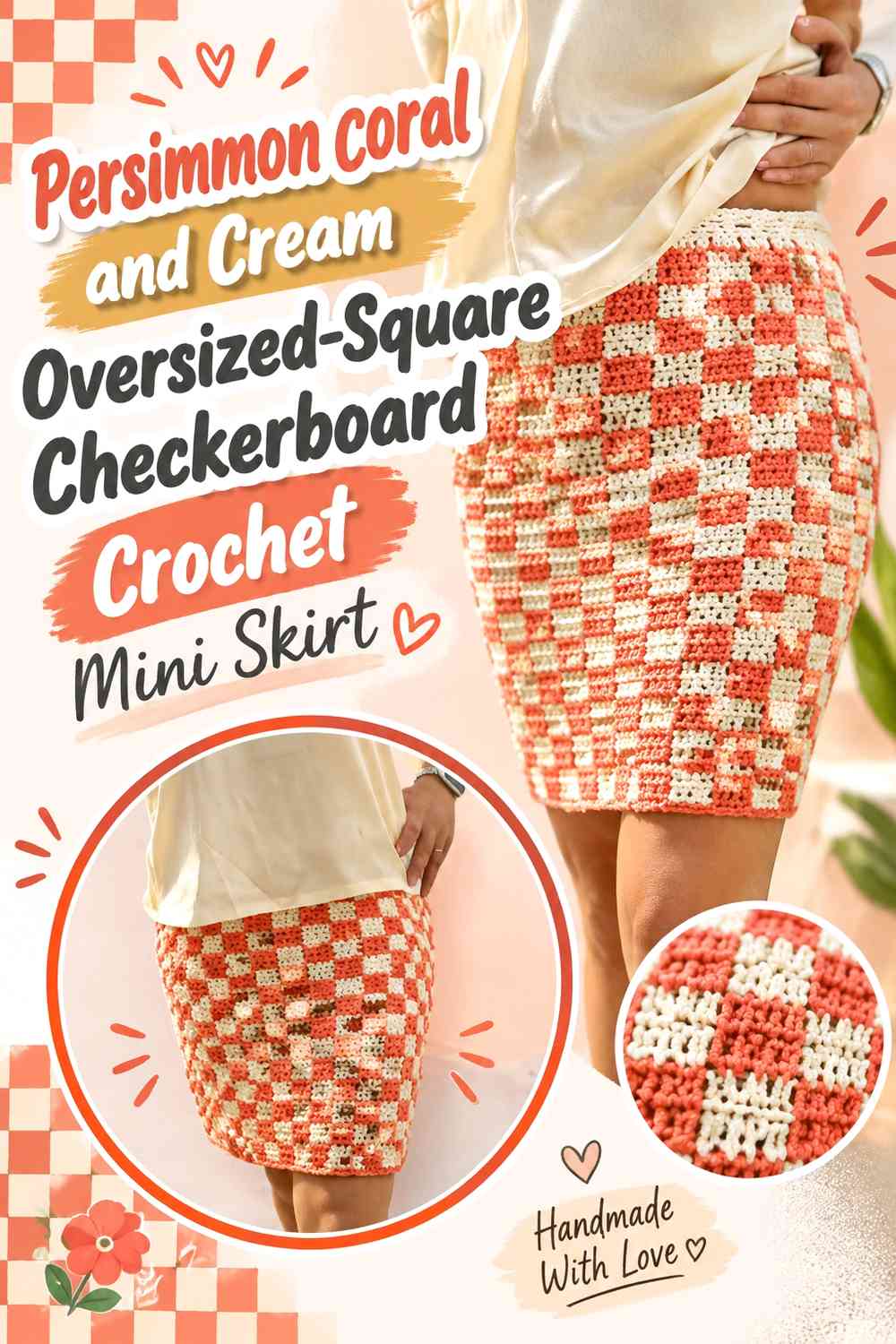
Use fewer, larger Persimmon Coral and Cream motifs to make the checkerboard deliberately bold. On a mini skirt, oversized checks can occupy a substantial part of the front or back, so the placement of each square becomes more important than it would in a fine grid.
Give Persimmon Coral Enough Space to Read as a Full Check
Avoid breaking a large Persimmon Coral square with unnecessary Cream edging if the goal is a strong graphic checker. Large uninterrupted blocks make the warm shade easier to distinguish at a glance.
If a join introduces visible Cream between every motif, account for that line when judging the finished size of the Coral blocks.
Position Cream Checks Carefully Around the Skirt Sides
The side area can interrupt an otherwise obvious checker pattern when a large motif is split visually between front and back views. Arrange the layout around the complete circumference rather than designing only the front.
If possible within the chosen construction, keep the alternating sequence continuous so the Cream and Persimmon Coral pattern still makes sense from a three-quarter view.
Creator Credit: Saiyubi Crochet
4. Persimmon Coral and Cream Micro-Checker Crochet Mini Skirt
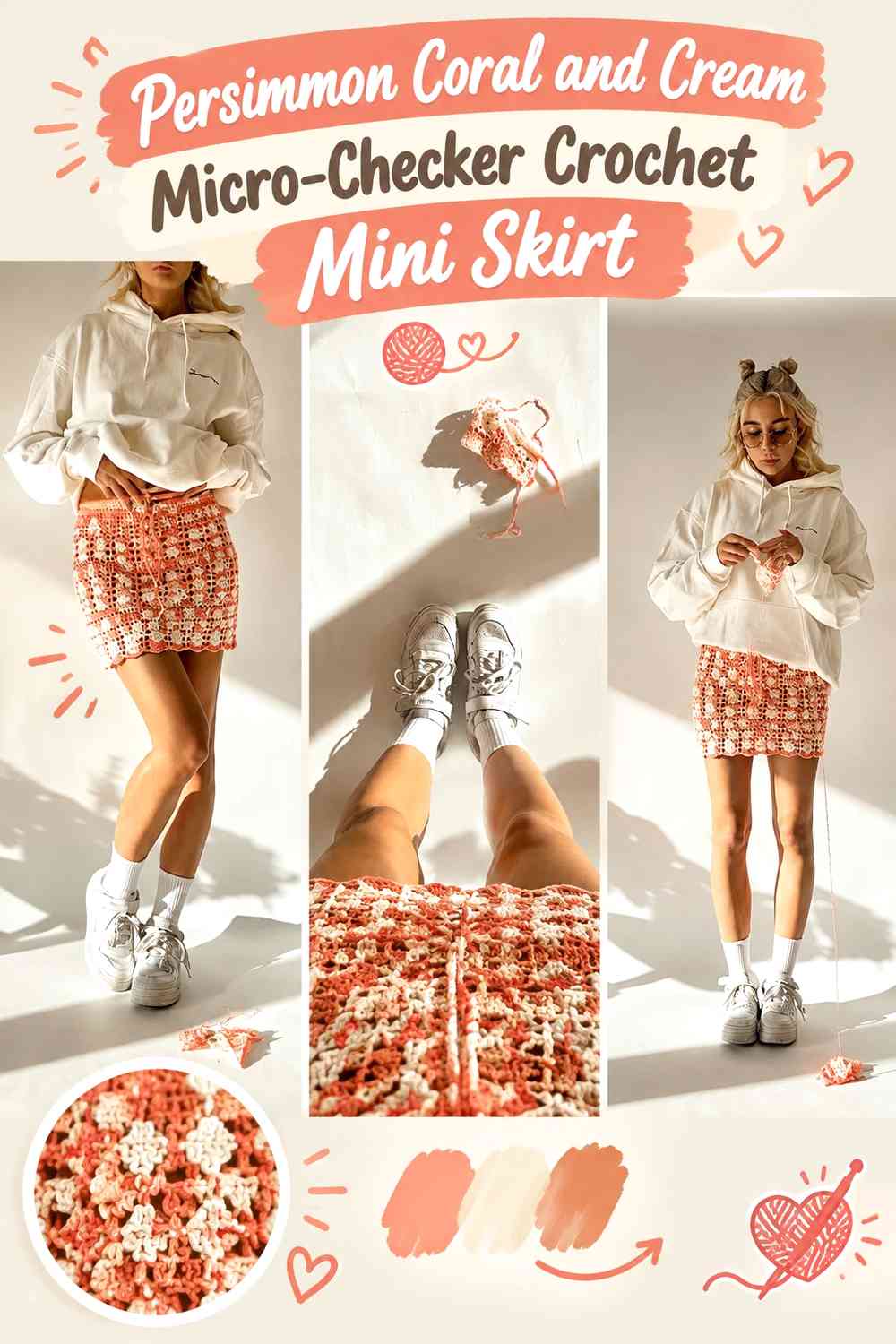
A smaller checker scale creates a busier, more fabric-like retro pattern. Instead of letting a few squares dominate the mini skirt, repeat Persimmon Coral and Cream frequently across the body while simplifying the surrounding details.
Keep Persimmon Coral and Cream Micro-Checks Consistent
Small checks reveal irregular color sequences quickly. Plan the repeat before crocheting a large section so the color order does not drift as the body progresses.
A simple sketch or laid-out yarn map can help you verify which color should begin each new checker row without reproducing any creator-specific pattern instructions.
Give Persimmon Coral and Cream Micro-Checks a Quiet Border
A dense checker pattern benefits from a visually simple waistband or hem. Use one of the existing palette colors rather than adding a third shade.
Cream creates a softer stopping point; Persimmon Coral makes the outer boundary warmer and stronger. Pick one according to which color needs more weight in the finished skirt.
Creator Credit: Belina Bellwood
5. Persimmon Coral Checkerboard Crochet Mini Skirt With a Cream Waistband

Make the checkerboard body Persimmon Coral-led and use a solid Cream waistband as a deliberate visual break. The lighter band separates the retro pattern from the top of the garment and gives the checker grid a clean starting line.
Let Persimmon Coral Carry More of the Checkerboard Body
Persimmon Coral can gain dominance through surrounding details even when the actual alternating checks remain balanced. Repeat Coral at selected side details or lower edging while keeping Cream primarily inside the checker grid and waistband.
This lets the skirt look warm and Coral-led without destroying the alternating checker structure.
Keep the Cream Waistband Separate From the Persimmon Coral Checks
A continuous Cream waistband gives the eye a place to rest before the checkerboard begins. It can also help prevent the top edge from looking like an incomplete row of checks.
If Cream already appears heavily throughout the grid, keep the waistband simple rather than adding more decorative Cream color changes.
Creator Credit: BRcrochet
6. Cream Crochet Mini Skirt With a Persimmon Coral Checkerboard Hem Band

Concentrate the retro pattern near the lower part of the skirt instead of covering the whole garment. Use Cream across most of the body and introduce alternating Persimmon Coral and Cream blocks in a defined hem band.
Let Cream Create a Calm Upper Skirt
A broad Cream field keeps the upper portion visually simple and gives the lower checkerboard more importance. This direction works when you want a retro reference without making the complete mini skirt highly patterned.
Keep the transition into the checker band deliberate rather than gradually scattering Coral upward.
Make Persimmon Coral Stronger Inside the Cream Hem Band
The lower band should contain enough Persimmon Coral to separate clearly from the Cream body above. If the checks are too small or sparse, they may read as isolated accents instead of checkerboard.
Test the band width visually against the finished skirt length before repeating the pattern around the full circumference.
Creator Credit: 🧶Mihankushea🧶
7. Cream-Dominant Persimmon Coral Checkerboard Crochet Mini Skirt
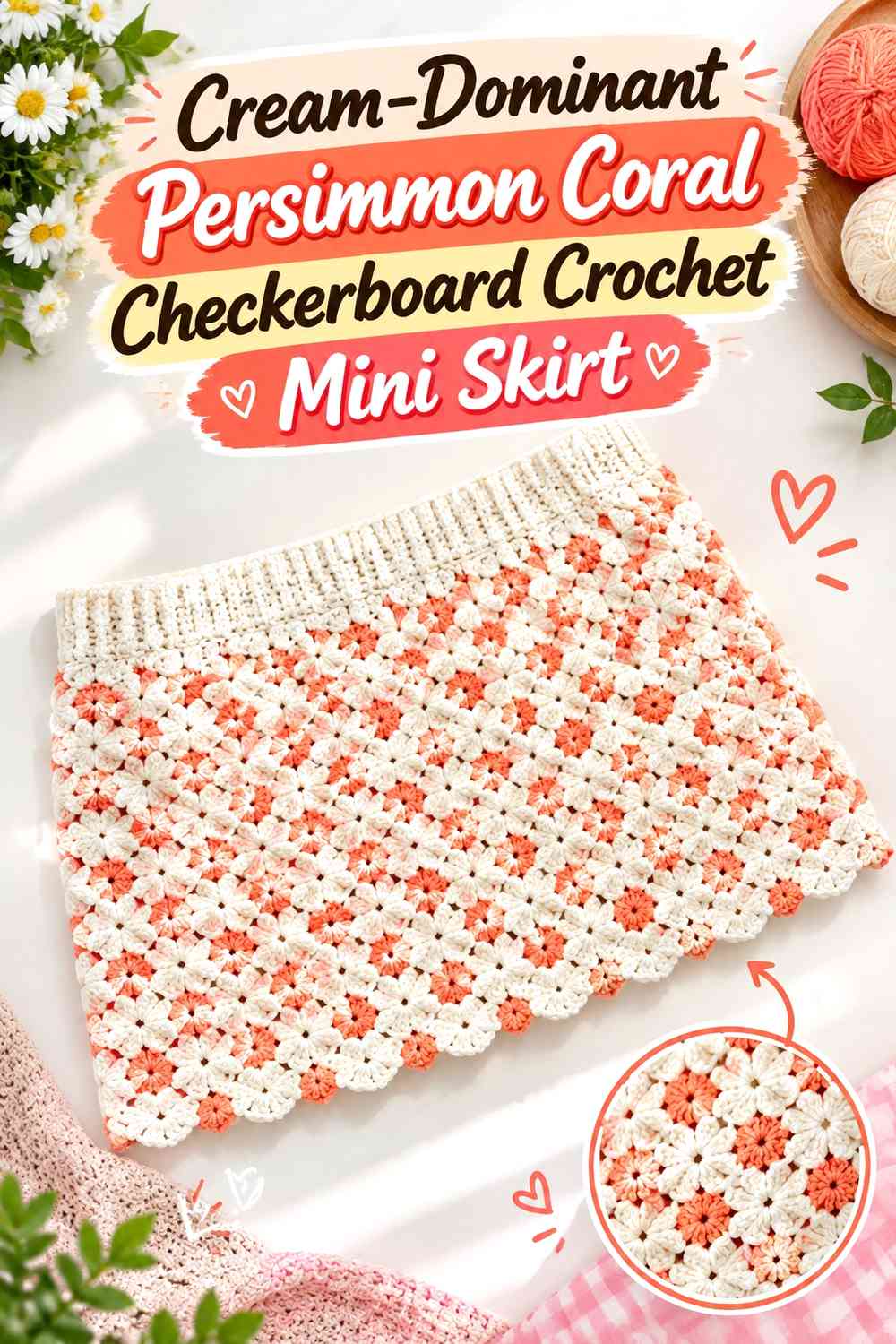
For a lighter retro version, give Cream more visual area through the waistband, borders, and spaces surrounding the checks while keeping Persimmon Coral as the stronger repeated accent.
Surround Persimmon Coral Checks With More Cream
Cream can dominate without eliminating the checkerboard if it occupies the waistband, joining areas, or additional solid sections. The Persimmon Coral checks then become the repeated warm focal points.
Avoid shrinking Coral into tiny dots. Each Coral section should remain large enough to read as a check rather than an embellishment.
Use Cream to Keep Persimmon Coral Texture Visible
If the skirt includes noticeable stitch texture, compare a sample in both colors before finalizing the distribution. A dark or saturated Coral can make some surface detail look different from the same stitch in Cream.
Use the clearer color where you most want the crochet texture to remain visible rather than assuming both shades will show it identically.
Creator Credit: Majovel crochet english
8. Persimmon Coral Checkerboard Crochet Mini Skirt With a Cream Ruffle
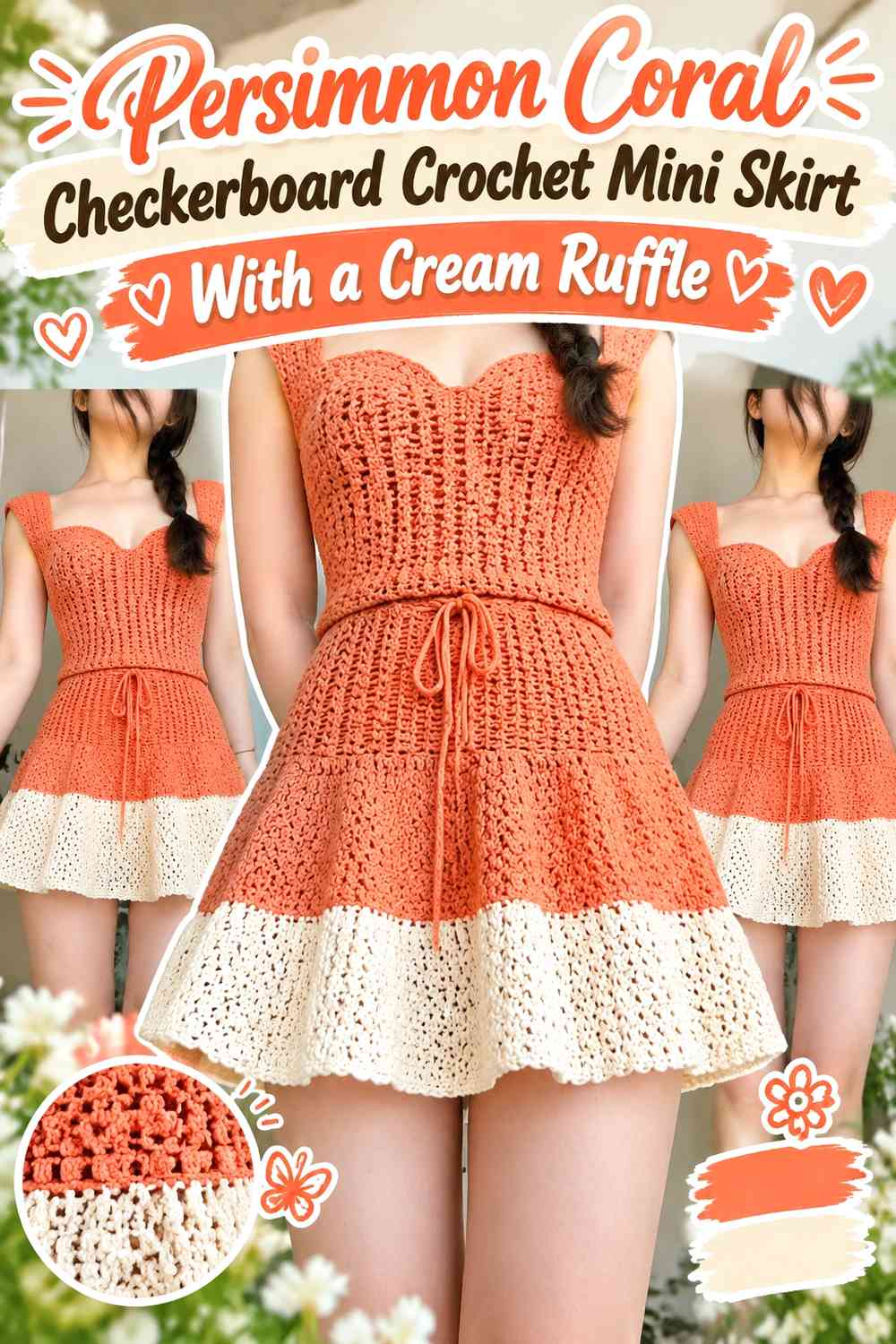
Keep Persimmon Coral and Cream alternating across the fitted or straighter upper section, then stop the checkerboard before a solid Cream ruffle. The shift from graphic checks to one light color gives the lower edge more movement without adding another competing pattern.
Stop the Persimmon Coral and Cream Checks Before the Ruffle
Give the checkerboard a clear final row rather than carrying partial blocks into the expanding ruffle. The graphic grid and the ruffle already create two different kinds of visual information.
A clean boundary lets readers notice both instead of seeing the checks become increasingly distorted toward the hem.
Let Cream Lighten the Persimmon Coral Checkerboard Hem
A Cream ruffle can make a Coral-heavy checker body feel less visually dense. It also repeats one of the existing check colors, so the ruffle looks connected rather than newly introduced.
If the body is already Cream-dominant, consider another placement direction from this list rather than adding an even larger light section.
Creator Credit: yaejiyea
9. Cream Checkerboard Crochet Mini Skirt With a Persimmon Coral Ruffle
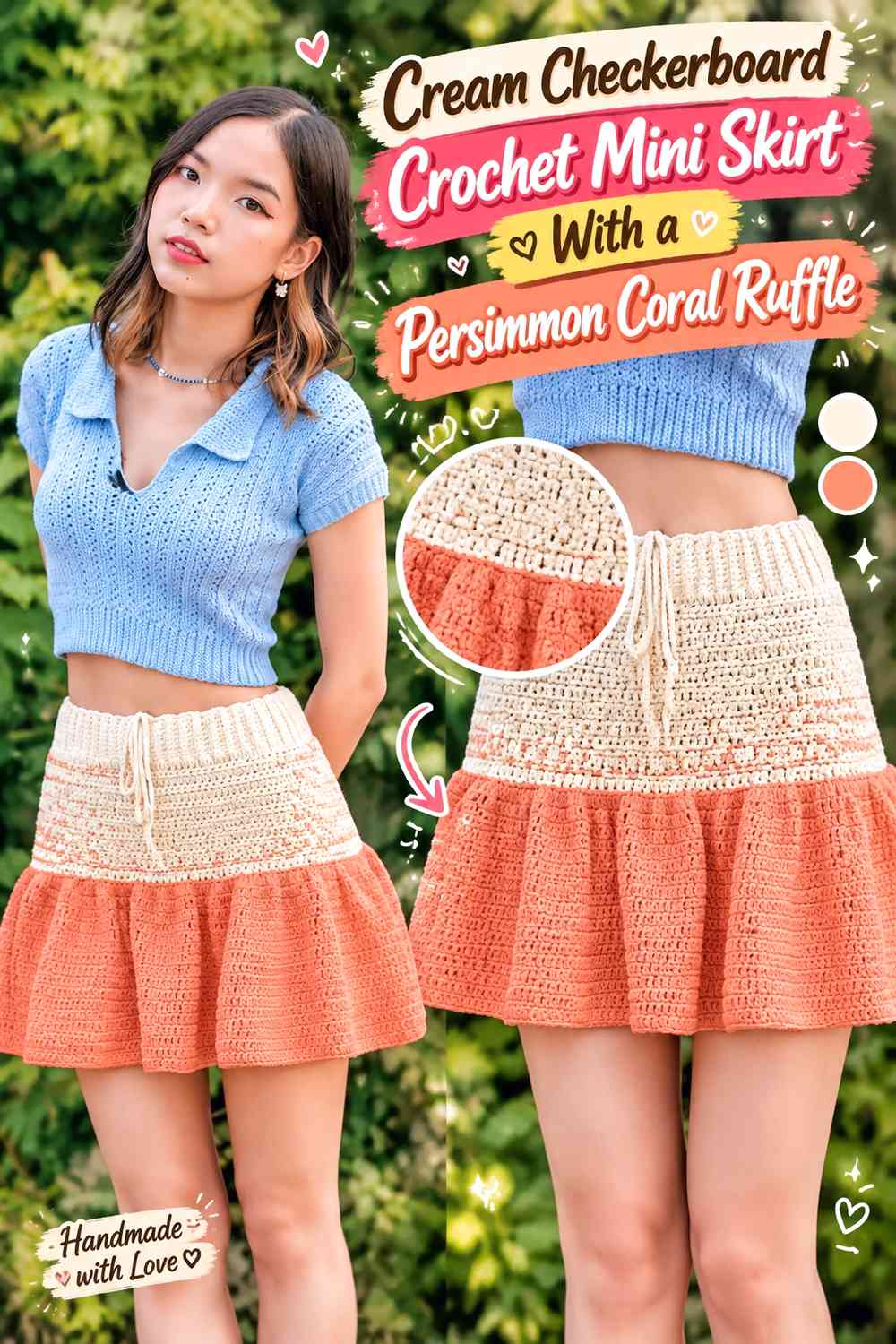
Reverse the previous arrangement. Keep Cream more prominent through the checkerboard body and finish the skirt with a solid Persimmon Coral ruffle that increases the warm shade’s visual weight at the bottom.
Give Cream More Area Above the Persimmon Coral Ruffle
Use Cream for the waistband or joining areas so the checkerboard body remains visibly lighter. Persimmon Coral can still alternate through the checks without becoming dominant until the hem.
This creates a clear progression from light upper structure to a stronger warm lower edge.
Keep the Persimmon Coral Ruffle Solid Beneath the Cream Checks
A solid Coral ruffle provides enough contrast by itself. Adding Cream spots, stripes, and extra borders to the same ruffle can make the transition unnecessarily busy.
If you want Cream repeated at the bottom, a very restrained finishing detail is usually more coherent than restarting the full checker sequence.
Creator Credit: Chenda DIY
10. Persimmon Coral Checkerboard Yoke and Cream Pleated Crochet Mini Skirt
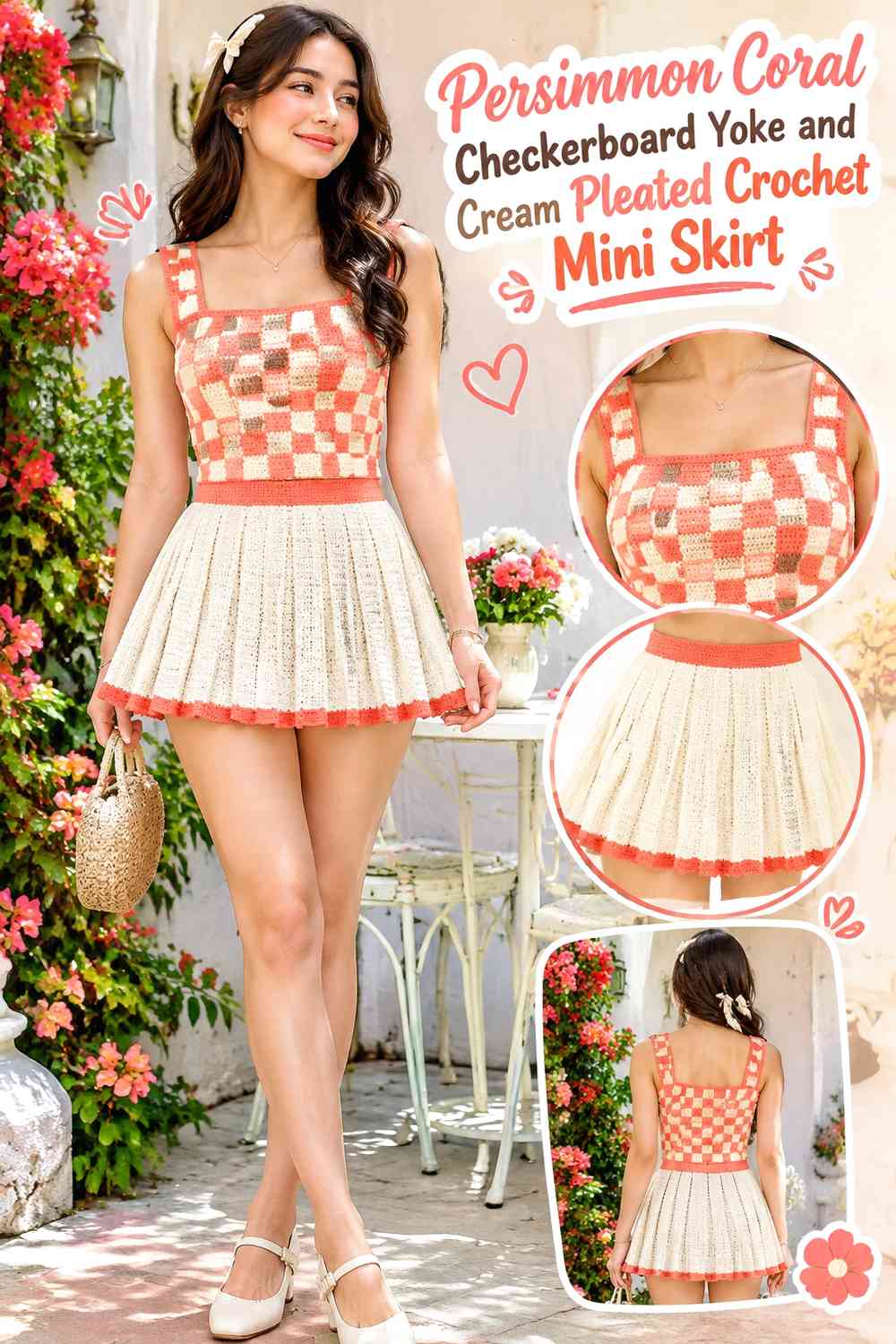
Use Persimmon Coral and Cream checks only across the upper section, then let the lower pleated area become primarily Cream. This keeps the checkerboard crisp where the surface is visually calmer and allows the dimensional lower portion to have one dominant color.
Make Persimmon Coral the Stronger Color in the Checkerboard Yoke
A Coral-led yoke can create a distinct retro band around the upper skirt. Keep the Cream blocks clear enough to preserve the checker structure rather than turning the section into a mostly Coral stripe.
Check how the grid meets at the side or back before committing to the full color sequence.
Let Cream Simplify the Pleated Section Below Persimmon Coral
Pleats already create repeated light and shadow. A mostly Cream lower section allows that structure to remain the primary detail instead of layering frequent checker changes over it.
Repeat Persimmon Coral only where it helps connect the lower section to the yoke rather than automatically carrying it through every pleat.
Creator Credit: CBH Academy
11. Cream Checkerboard Yoke and Persimmon Coral Pleated Crochet Mini Skirt

Turn the color balance around by making the upper checker section Cream-led and the pleated lower portion Persimmon Coral. The solid warm hem gives the skirt more Coral presence even though Cream dominates near the waist.
Use Cream to Lighten the Checkerboard Yoke
Let Cream occupy the waistband and surrounding sections while Persimmon Coral appears as defined checks. This prevents the upper section from becoming visually as heavy as the lower Coral pleats.
Keep the Coral checks large enough to connect visually with the solid Coral section below.
Carry Persimmon Coral Through the Pleated Lower Skirt
A continuous Persimmon Coral lower section can connect multiple pleats into one warm field. That helps prevent shadows within the pleats from competing with frequent color changes.
If the transition feels abrupt, repeat a narrow Cream detail at the boundary rather than introducing another full checker row.
Creator Credit: Kali’s Threads
12. Persimmon Coral and Cream Oversized A-Line Checkerboard Crochet Mini Skirt
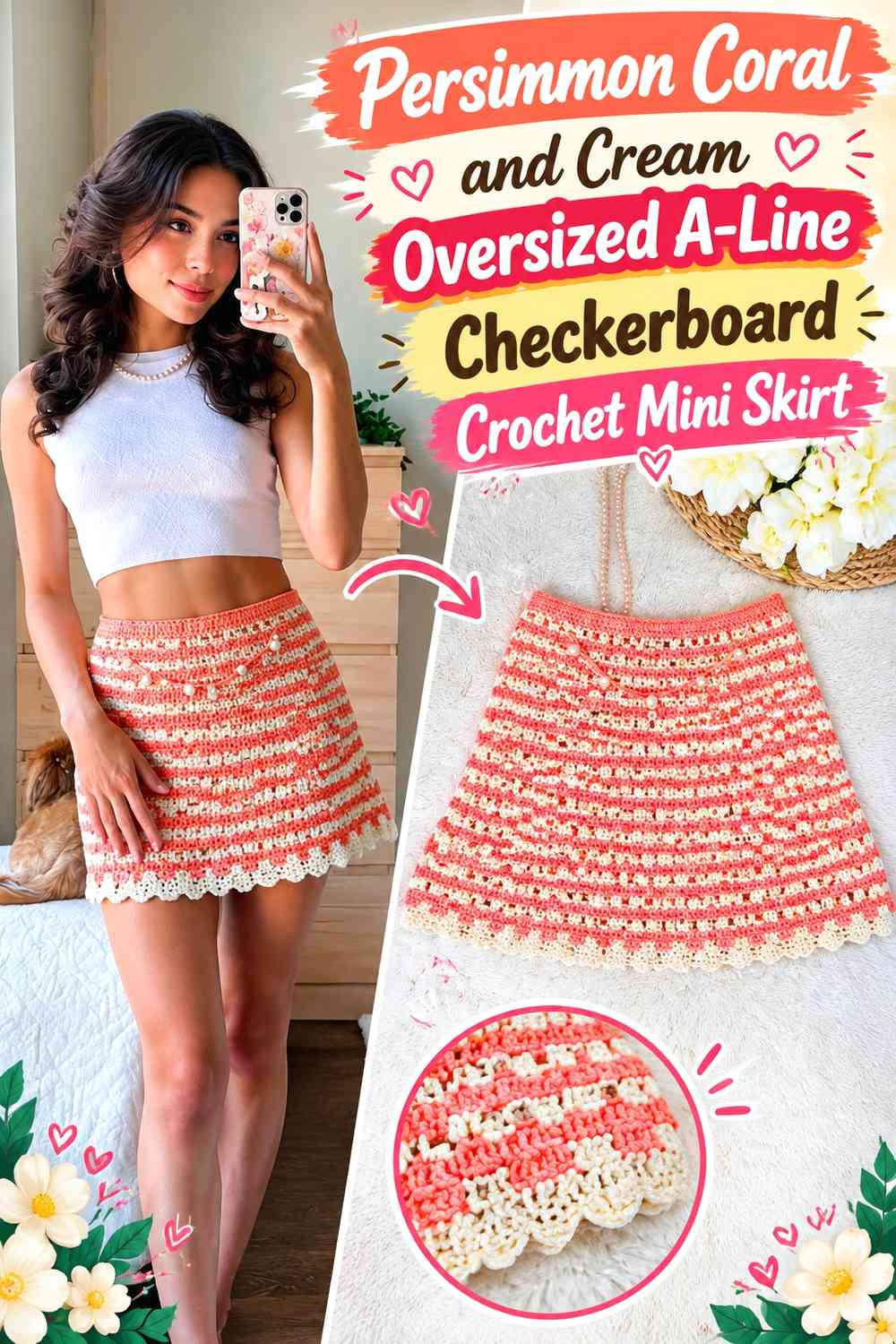
An A-line silhouette gives oversized checks room to spread across a gradually changing width. Keep the blocks relatively large so the checkerboard remains graphic rather than turning into a dense pattern as the skirt moves toward the hem.
Keep Persimmon Coral and Cream Checks Visually Balanced as the Skirt Widens
Check the layout at several points instead of assuming a grid planned near the waist will automatically look the same lower down. The garment’s changing width can affect where the color blocks meet.
Preserve the alternating relationship even if the exact visual share of each check changes slightly with the construction.
Use Cream at the Edge of the Persimmon Coral A-Line Hem
A Cream finishing edge can visually contain large Coral blocks and stop them cleanly at the bottom of the garment.
If Cream already dominates the final checker row, consider Persimmon Coral edging instead. The border should improve balance rather than simply repeat the nearest block.
Creator Credit: petpetcrochets
13. Persimmon Coral Micro-Checker Coquette Crochet Mini Skirt With Cream Trim
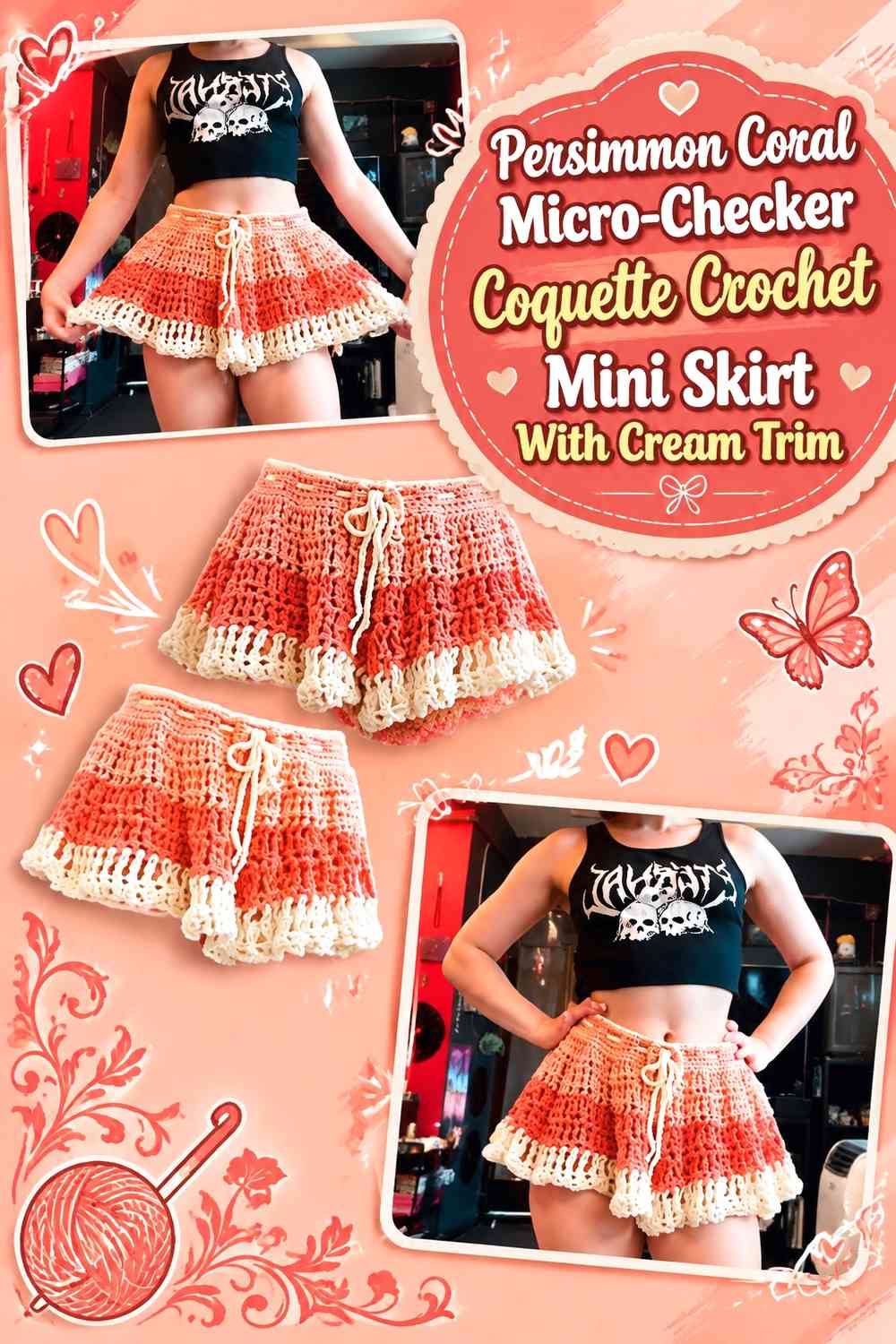
Use smaller Persimmon Coral and Cream checks across a compact mini-skirt body, then give Cream a controlled finishing role around the edge. This creates a busier retro surface than the large-check versions while still giving the pattern a defined boundary.
Keep Persimmon Coral Micro-Checks Organized Against Cream
Smaller color blocks need disciplined repetition. If Persimmon Coral appears twice in succession where Cream should interrupt it, the error will be noticeable because the eye expects a regular grid.
Review the pattern from a distance periodically instead of checking only individual stitches or blocks up close.
Use Cream Trim to Finish the Persimmon Coral Checker Pattern
A clear Cream edge can separate the micro-check body from decorative details at the bottom or waist. Keep the trim proportional to the check size so it does not become a large third visual section.
If the checkerboard is very small, even a narrow Cream treatment may provide enough definition.
Creator Credit: Faith.Wisest
14. Persimmon Coral Center-Panel and Cream Fitted Checkerboard Crochet Mini Skirt
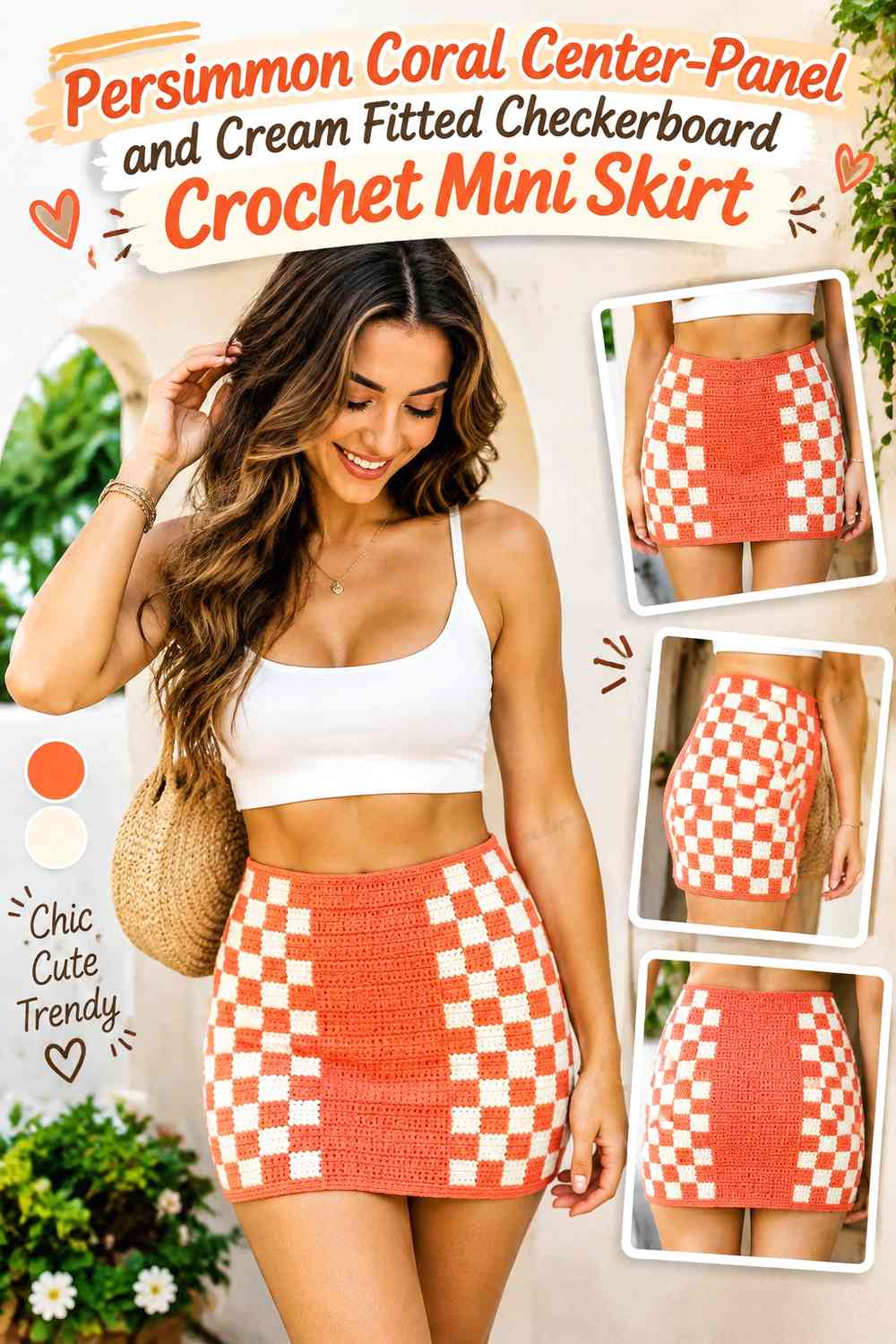
Rather than wrapping the full skirt in checks, concentrate the Persimmon Coral and Cream checkerboard in a visible central panel and keep the surrounding areas Cream. This makes the grid a focal feature instead of an all-over print.
Center Persimmon Coral Checks Within the Cream Skirt Field
Give the checker panel clear vertical boundaries so it looks intentional. A narrow strip of scattered blocks can appear accidental, while a defined panel reads as a deliberate retro insert.
Keep Persimmon Coral repeated through the full height of the panel so the warm shade does not disappear halfway down the skirt.
Let Cream Side Areas Control the Persimmon Coral Pattern
Solid Cream beside the checkerboard creates negative space and reduces the amount of repeated color change around the body. It also makes the central Persimmon Coral blocks easier to recognize.
Before finishing, view the skirt from the front and side to see whether the panel remains centered visually when worn.
Creator Credit: ABoC Studio
15. Persimmon Coral and Cream Tiered Ruffle Checkerboard Crochet Mini Skirt
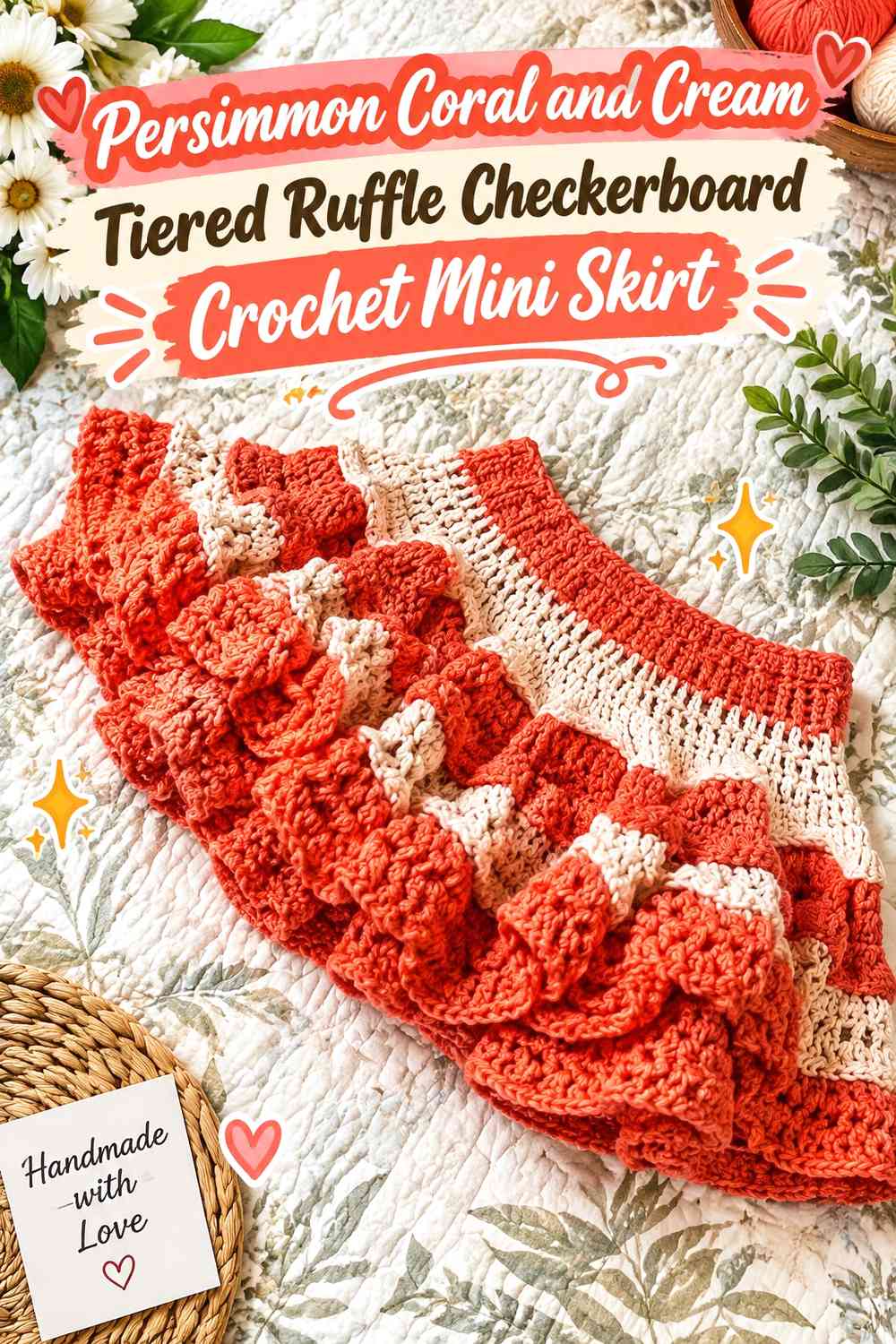
Use a checkerboard yoke as the stable graphic section, then alternate Persimmon Coral and Cream through larger ruffle tiers. This preserves the retro grid at the top while translating the same palette into broader color zones lower down.
Keep Persimmon Coral and Cream Checks on the Stable Upper Section
A relatively flat yoke is a clearer place for a regular checkerboard than highly gathered tiers. Let the upper body carry the precise grid before the color treatment changes.
End the checker pattern cleanly at the point where the first ruffle begins so partial checks do not get lost in the added volume.
Alternate Persimmon Coral and Cream Across the Ruffle Tiers
Use each ruffle as a larger color statement rather than trying to reproduce tiny checks across heavily dimensional fabric. A Persimmon Coral tier followed by a Cream tier still carries the two-color rhythm while allowing the ruffles to remain readable.
Check the complete skirt before deciding which shade belongs on the final tier. The bottom color has disproportionate visual influence because it forms the outermost edge.
Creator Credit: Shaun Kamryn
16. Cream Crochet Mini Skirt With a Persimmon Coral and Cream Checkerboard Ruffle
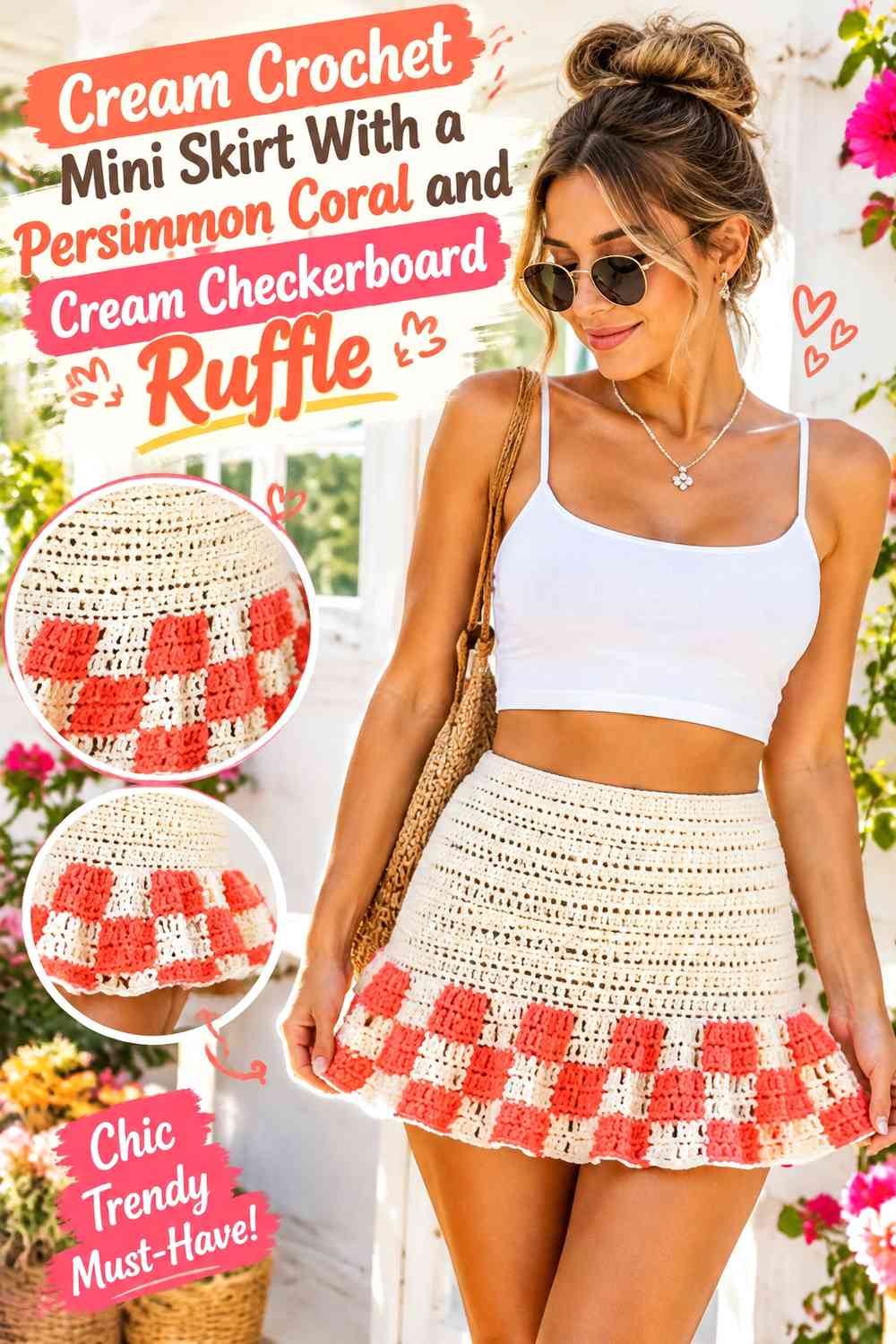
Finish the collection by moving the checkerboard almost entirely to the hem. Keep the main skirt Cream and introduce broader Persimmon Coral-and-Cream blocks only through the decorative ruffle.
Let Cream Keep the Main Crochet Mini Skirt Quiet
A solid Cream body gives the lower checker treatment plenty of visual space. This is the most restrained checkerboard option in the collection because the retro motif occupies only a limited part of the garment.
Keep additional Coral decoration away from the upper body if you want the ruffle to remain the clear focal point.
Make Persimmon Coral and Cream Checks Larger Across the Ruffle
A gathered or expanding ruffle can make very small checks harder to read. Broader Persimmon Coral and Cream sections allow the two-color alternation to remain visible even when the fabric curves and folds.
Judge the color blocks while the ruffle is in its finished shape rather than only while the crochet is lying flat.
Creator Credit: Christine Manaloto
Which Persimmon Coral and Cream Checkerboard Mini Skirt Direction Should You Choose?
For the clearest classic checkerboard, Ideas 1, 3, and 12 put large Persimmon Coral and Cream blocks across most of the skirt. Idea 1 emphasizes a straightforward granny-square grid, while Ideas 3 and 12 increase the scale for a more graphic result.
Ideas 4 and 13 move in the opposite direction with smaller checks. They work better when you want frequent Persimmon Coral and Cream repetition rather than a few large color blocks.
For a less pattern-heavy skirt, Ideas 5, 6, 10, 11, 14, and 16 restrict the checkerboard to a waistband-adjacent section, hem, yoke, center panel, or ruffle. These options leave more solid Persimmon Coral or Cream visible and can make structural details easier to notice.
Ideas 8, 9, and 15 combine checkerboard with ruffles. Choose a Cream ruffle when the upper section already feels Coral-heavy, a Persimmon Coral ruffle when the checker body needs more warm color, or alternating solid tiers when you want the palette to continue without forcing checks into every gathered section.
Conclusion
Persimmon Coral and Cream can create a retro crochet checkerboard mini skirt in more ways than simply alternating two colors across the entire garment. Check scale, solid sections, waistband color, hem placement, joins, pleats, panels, and ruffles all change which shade leads and how strongly the checkerboard is perceived.
Choose large checks when you want the grid to be the main graphic feature. Use micro-checks for more frequent color repetition, or confine the pattern to a yoke, hem, panel, or ruffle when you want more solid color around it.
Before joining or finishing the skirt, inspect the Persimmon Coral and Cream layout around the full garment rather than only from the front. That final check can catch interrupted alternation, unbalanced side placement, or a waistband and hem that give one color more visual weight than intended.
Use the original creator tutorials for exact construction and fitting details, then apply the Persimmon Coral and Cream placement that fits the retro checkerboard direction you want.
Frequently Asked Questions
How Can I Make Persimmon Coral and Cream Look Clearly Checkerboard in Crochet?
Keep the alternation predictable. A Persimmon Coral block should generally meet Cream on its horizontal and vertical sides when you want a classic checkerboard.
Lay out motifs before joining or map the color sequence before making a continuous colorwork section. This is especially useful where the pattern wraps around the side or back of the skirt.
Should Persimmon Coral or Cream Be the Dominant Mini-Skirt Color?
Persimmon Coral can lead when you want a warmer, stronger retro result. Make it more prominent through a solid waistband, hem, ruffle, or side detail while preserving the alternating checker grid.
Cream can dominate when you want a lighter result. Use it for surrounding panels, joins, the waistband, or a larger solid section.
Can I Make a Persimmon Coral and Cream Checkerboard Skirt From Granny Squares?
Yes. Alternating solid Persimmon Coral and Cream motifs is one direct way to build a checkerboard grid.
You can also use two-color motifs and alternate which shade dominates the outer part of neighboring squares. In either case, lay out the complete grid before joining so the checker sequence remains correct.
What if My Persimmon Coral and Cream Yarn Do Not Have Enough Contrast?
Compare the yarns from a distance and consider viewing a photo in grayscale. Different hues can still look surprisingly similar when their lightness is close.
If the checks merge visually, choose a lighter Cream or a deeper Persimmon Coral while preserving the warm-coral-versus-light-neutral relationship.
Should the Waistband Match Persimmon Coral or Cream?
Choose the waistband according to the balance of the skirt body. A Cream waistband can calm a Coral-heavy checkerboard, while a Persimmon Coral waistband can strengthen the warm color on a Cream-dominant skirt.
A solid waistband is also useful when you want a clear boundary between the checkerboard and the top edge.
How Can I Keep a Persimmon Coral and Cream Checkerboard Mini Skirt From Looking Too Busy?
Increase the check size or reduce the area covered by checkerboard. A solid waistband, hem, panel, pleated section, or ruffle can interrupt the grid without adding another color.
Also avoid giving every structural detail its own color sequence. If the skirt already has ruffles or pleats, keeping those sections solid Persimmon Coral or Cream can make the checkerboard easier to read.
Can I Put Persimmon Coral and Cream Checkerboard on Only Part of the Mini Skirt?
Yes. A checkerboard yoke, center panel, hem band, waistband area, or ruffle can carry the retro motif while the rest of the skirt stays solid.
This is particularly useful when you want the two-color theme but prefer a less pattern-dense finished garment.