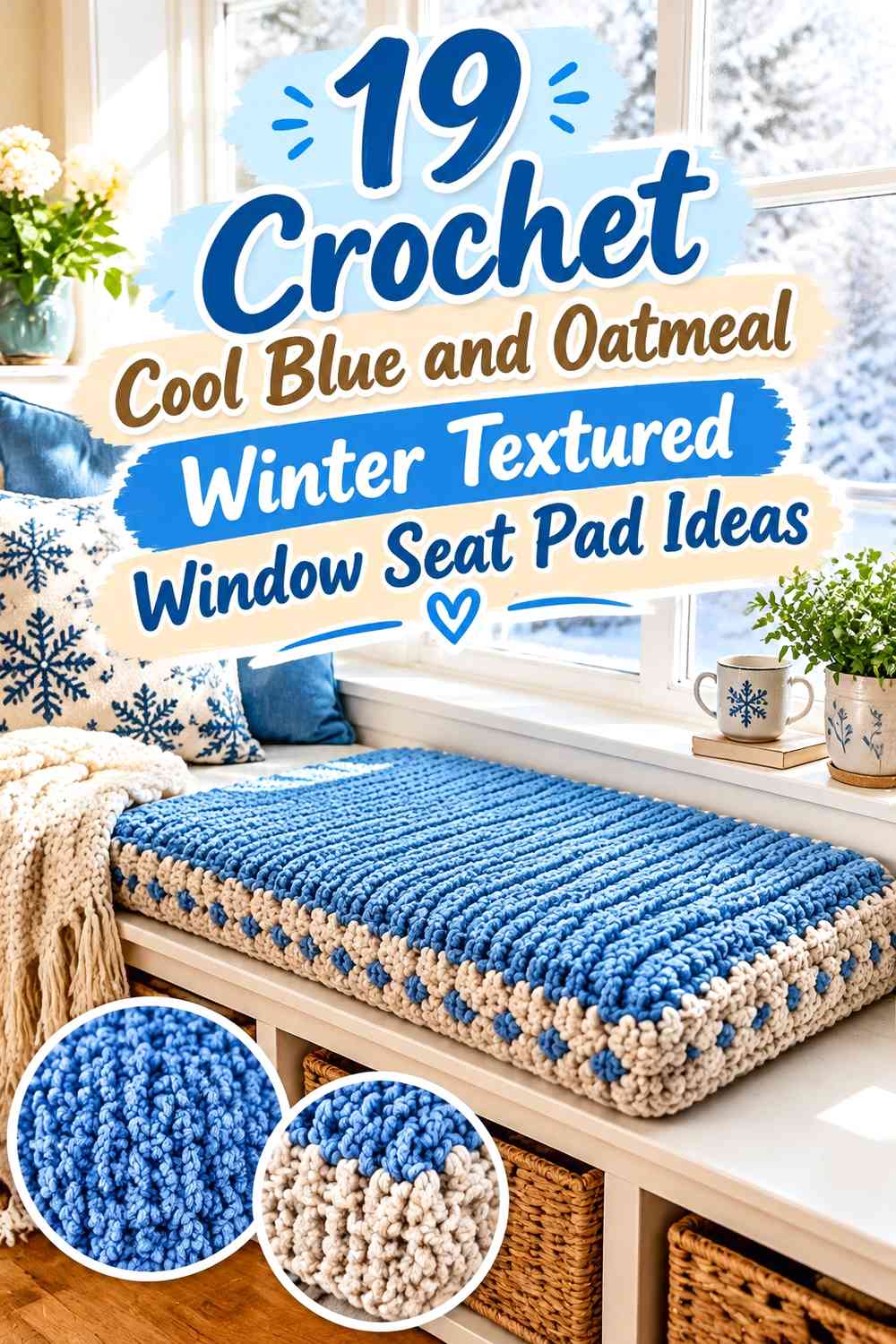

Cool blue and oatmeal make a crochet window seat pad feel wintery without turning the nook into a stark blue-and-white space. Cool blue can define the main sitting surface, textured bands, borders, or side panels, while oatmeal can lighten raised stitches and create quieter breaks between more substantial textured sections.
A window seat pad also needs a different color strategy from an ordinary decorative pillow. Its surface is viewed horizontally, much of the center may be covered while someone is sitting, and the front edge often remains visible from across the room. A striking oatmeal border or cool blue front band can therefore matter as much as the texture in the middle.
The tutorials below include actual seat pads along with cushion-cover and pillow constructions that provide useful surface, edging, panel, and texture references. For a fitted window seat, measure the actual seating area and plan the pad or insert independently rather than assuming a standard cushion tutorial will match the required dimensions.
Quick List
- Cool Blue and Oatmeal Crochet Winter Window Seat Pad With an Oatmeal Border
- Oatmeal and Cool Blue Crochet Winter Window Seat Pad With a Blue Center
- Cool Blue and Oatmeal Crochet Bobble-Texture Window Seat Pad
- Cool Blue and Oatmeal Crochet Waffle Window Seat Pad With Oatmeal Ends
- Cool Blue and Oatmeal Crochet Textured Window Seat Pad With an Oatmeal Perimeter
- Oatmeal and Cool Blue Crochet Window Seat Pad With a Center Band
- Cool Blue and Oatmeal Crochet Mixed-Texture Window Seat Pad
- Oatmeal and Cool Blue Crochet Granny-Texture Window Seat Pad
- Cool Blue and Oatmeal Crochet Panel Window Seat Pad With Oatmeal Side Bands
- Oatmeal and Cool Blue Crochet Bobble-Diamond Window Seat Pad
- Cool Blue and Oatmeal Crochet Celtic-Weave Window Seat Pad
- Cool Blue and Oatmeal Crochet Granny Window Seat Pad With Oatmeal Outer Rounds
- Oatmeal and Cool Blue Crochet Fusion-Panel Window Seat Pad
- Cool Blue and Oatmeal Crochet Line-Texture Window Seat Pad
- Oatmeal and Cool Blue Crochet Radial Winter Seat Pad
- Cool Blue and Oatmeal Crochet Textured-Square Window Seat Pad
- Oatmeal and Cool Blue Crochet Spike-Stitch Window Seat Pad
- Oatmeal and Cool Blue Crochet Bavarian-Texture Window Seat Pad
Let Cool Blue Carry the Main Window Seat Surface
Cool blue works particularly well across the broad central sitting area because it gives the nook a clear winter direction without needing many decorative colors. Raised stitches, ribs, bobbles, or woven-looking texture can remain blue and rely on shadow for definition.
Oatmeal can then be saved for the front edge, perimeter, selected raised bands, or the ends of a long pad. Those placements stay visible even when books, blankets, or a person cover much of the middle.
Use Oatmeal to Separate Cool Blue Crochet Texture
Oatmeal is most useful when it gives the eye a break between substantial textured areas. A narrow oatmeal band between two cool blue bobble sections, for example, can clarify the pattern better than changing color inside every bobble.
For window seats, also consider the wall, trim, and cushion colors around the pad. If the nook already contains a lot of pale neutral fabric, make the cool blue areas broad enough that the crochet pad does not visually disappear into the surrounding oatmeal-colored surfaces.
1. Cool Blue and Oatmeal Crochet Winter Window Seat Pad With an Oatmeal Border
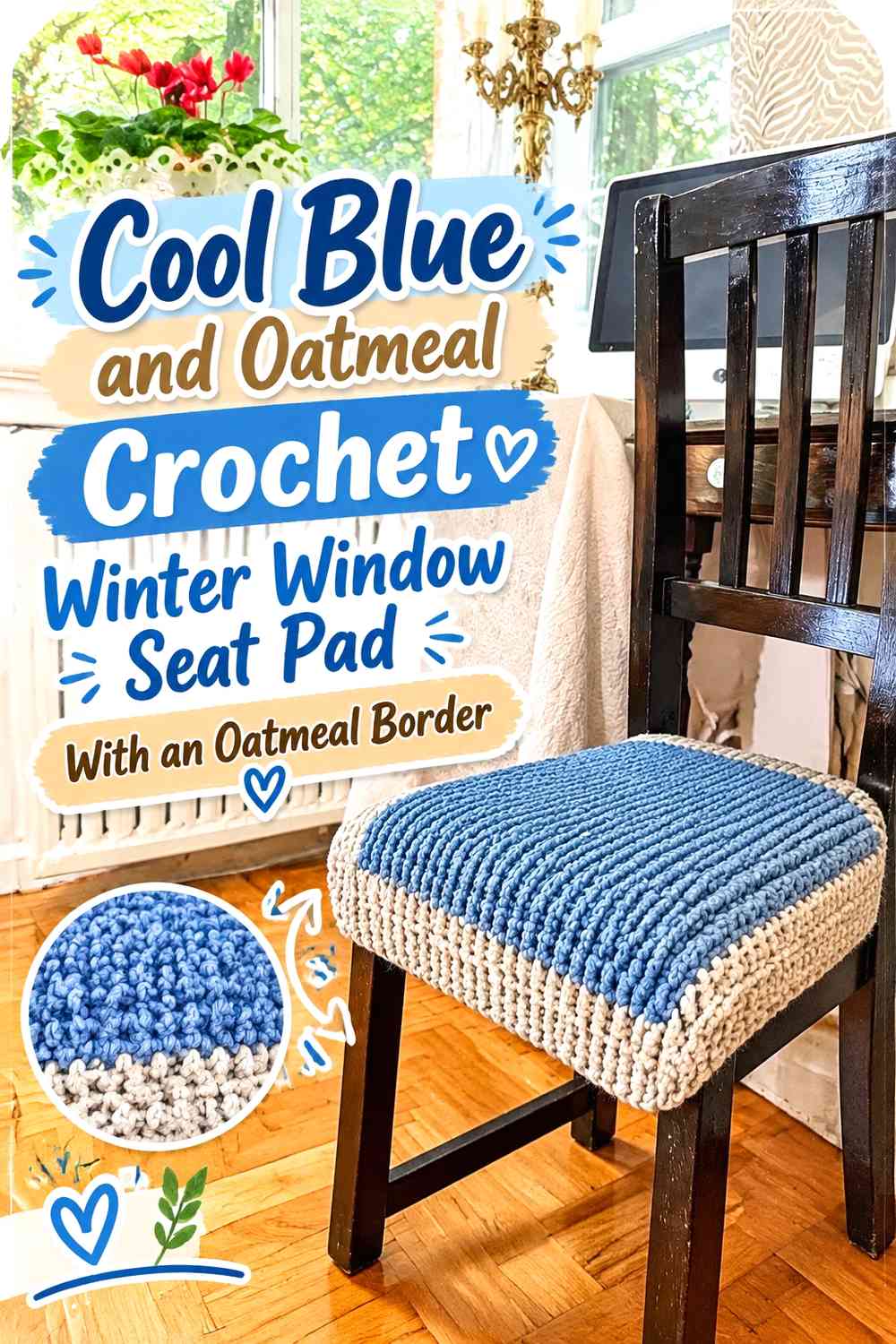
Start with a straightforward seat-cushion construction and make cool blue the main sitting surface. Use oatmeal around the outer edge where it can define the pad against the window-seat base and remain visible even when most of the center is occupied.
Keep Cool Blue Broad Across the Crochet Window Seat Pad
A large uninterrupted blue center gives the pad its strongest winter identity. If the underlying stitch already produces substantial texture, you do not need narrow oatmeal lines running repeatedly through the middle.
Use Oatmeal Around the Cool Blue Crochet Seat-Pad Edge
A complete oatmeal perimeter can give the blue field a clear stopping point. On a long window seat, pay particular attention to the front edge because this is the part most likely to remain visible from the room.
Creator Credit: The Stitch Sessions – Crochet & Conversation
2. Oatmeal and Cool Blue Crochet Winter Window Seat Pad With a Blue Center
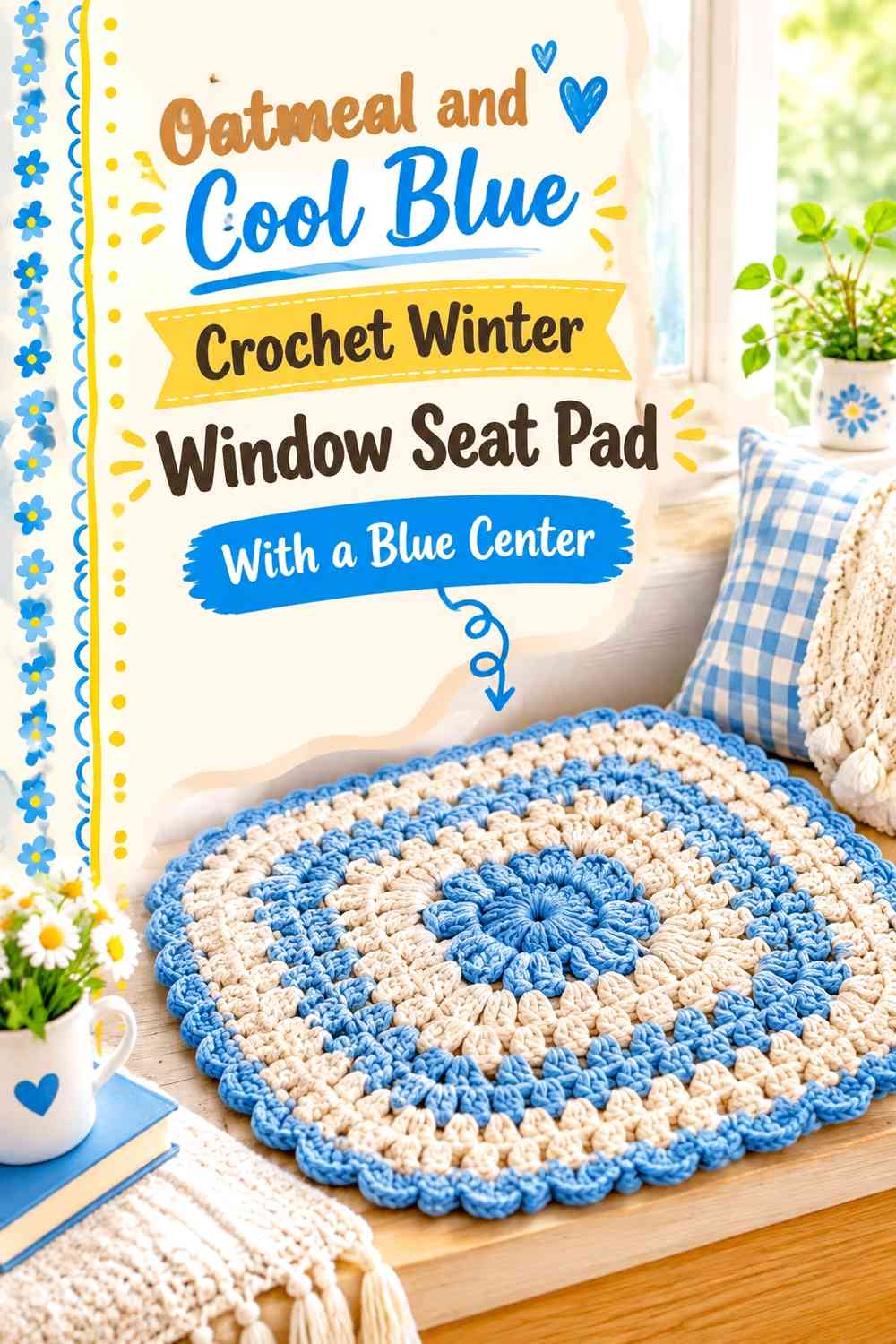
This arrangement reverses the hierarchy. Oatmeal covers most of the sitting surface, while cool blue appears in one substantial central area. The result works well when the nook already has darker wood or blue textiles and the seat itself needs to stay visually lighter.
Let Oatmeal Cover Most of the Cool Blue Crochet Seat Pad
Keep the pale neutral continuous around the center accent so the pad retains a calm overall appearance. Small blue details scattered through every section would weaken the simple center-focused composition.
Make Cool Blue Large Enough on the Oatmeal Crochet Surface
A tiny blue insert can disappear once a throw or book is placed on the seat. Give the accent enough width to remain visible from the room, or position part of it closer to the front edge.
Creator Credit: Woolhouse – Stricken, Häkeln & mehr
3. Cool Blue and Oatmeal Crochet Bobble-Texture Window Seat Pad
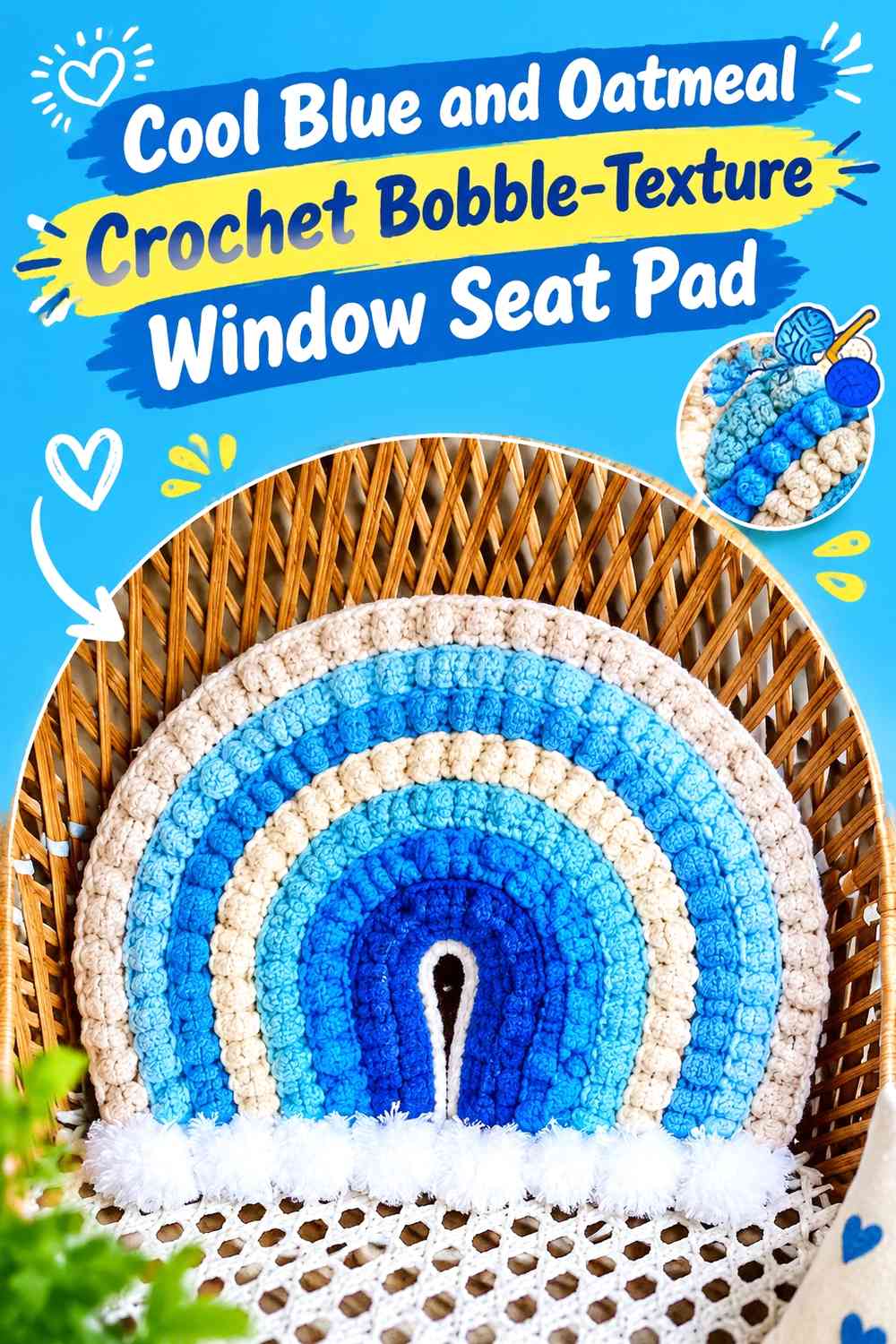
Bobble texture is already visually strong, so use cool blue for the raised sections and oatmeal for calmer channels between them. This gives the seating surface tactile variation without turning every individual bobble into a separate color accent.
Keep Cool Blue Bobbles Grouped on the Oatmeal Crochet Pad
Arrange blue bobble areas in recognizable rows or larger blocks. Grouping them gives the raised texture more impact than scattering single blue bobbles over the entire neutral surface.
Use Oatmeal Between Cool Blue Crochet Bobble Sections
Plain oatmeal sections provide necessary visual rest and make the blue texture easier to notice from standing height. Keep those neutral areas broad enough to function as separators rather than thin stripes.
Creator Credit: Cute Crochet
4. Cool Blue and Oatmeal Crochet Waffle Window Seat Pad With Oatmeal Ends
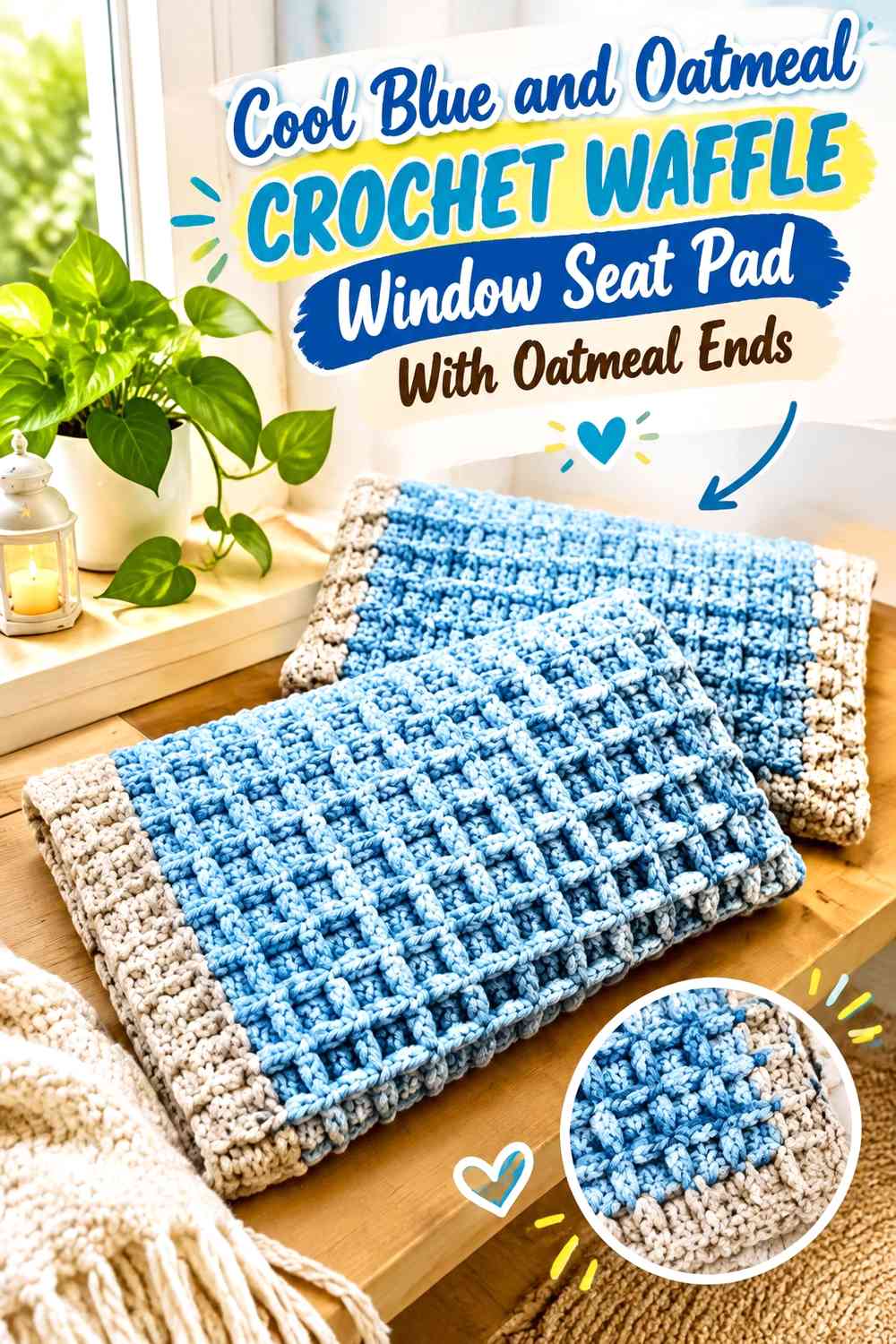
This waffle variation keeps cool blue across the center and places oatmeal at both ends. The pale end panels break up a long window-seat pad without interrupting the textured middle.
Keep Cool Blue Continuous Through the Crochet Waffle Center
Allow the grid texture to travel through one broad blue field. This emphasizes the length of the seat and avoids turning the cushion into many short stripes.
Balance Oatmeal at Both Cool Blue Crochet Pad Ends
Use comparable pale sections at the two ends so the long pad feels visually anchored. If one side is normally hidden by a wall or furniture, judge the balance from the main viewing direction rather than assuming perfect symmetry is required.
Creator Credit: Cristina Lopes Costa
5. Cool Blue and Oatmeal Crochet Textured Window Seat Pad With an Oatmeal Perimeter
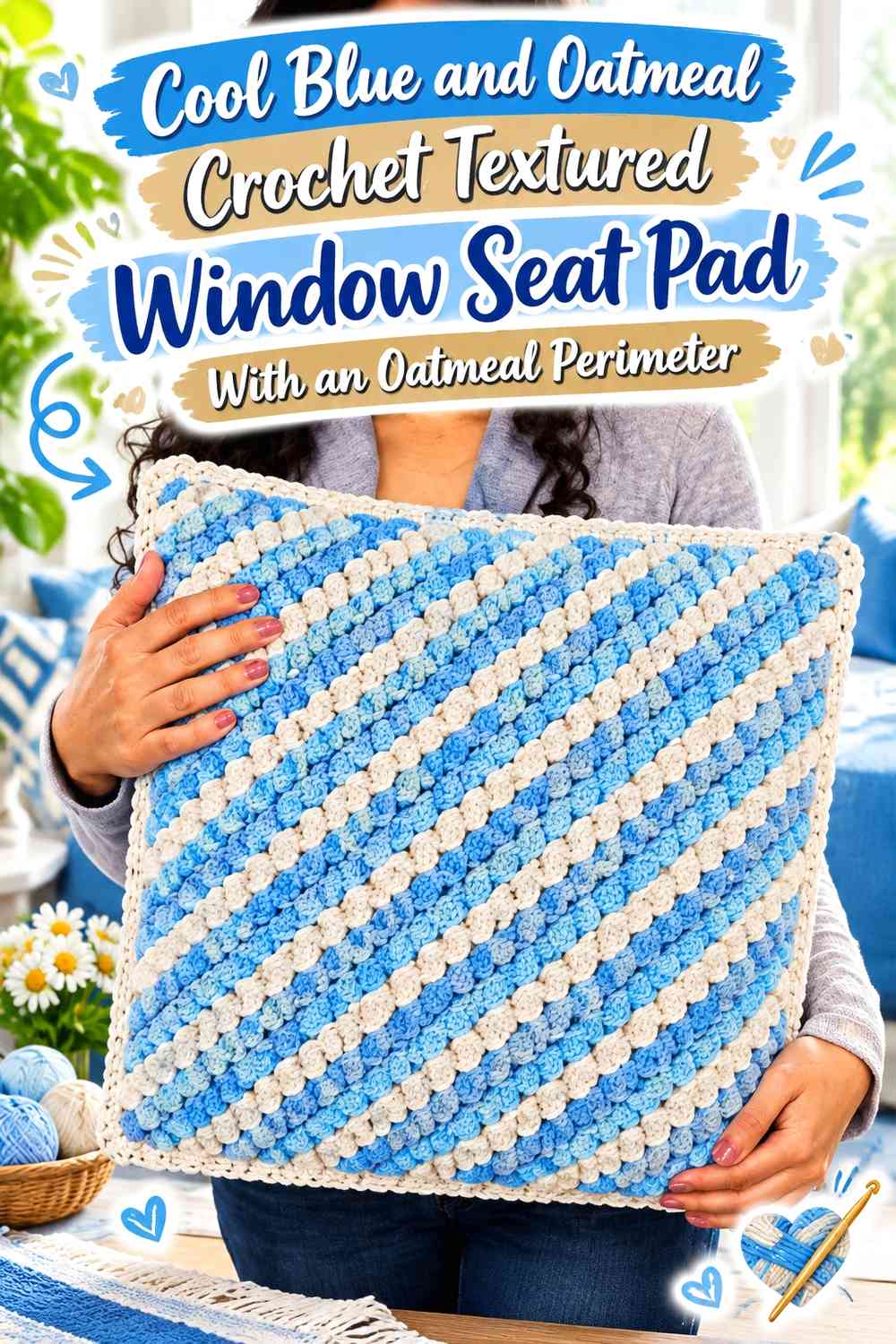
A general cushion-cover construction can support a simple texture-first window-seat adaptation. Use cool blue through the entire main panel and make oatmeal the seaming or outer finishing color.
Let Cool Blue Carry the Main Crochet Seat-Pad Texture
A broad blue panel keeps attention on the stitch pattern and gives the pad a clean winter appearance. Avoid inserting oatmeal wherever the texture changes direction unless that change genuinely needs emphasis.
Use Oatmeal to Finish the Cool Blue Crochet Perimeter
A pale joining or edging treatment can clearly define the finished pad shape. This works especially well along corners where the seat surface meets its front or side edges.
Creator Credit: Crochet MC
6. Oatmeal and Cool Blue Crochet Window Seat Pad With a Center Band
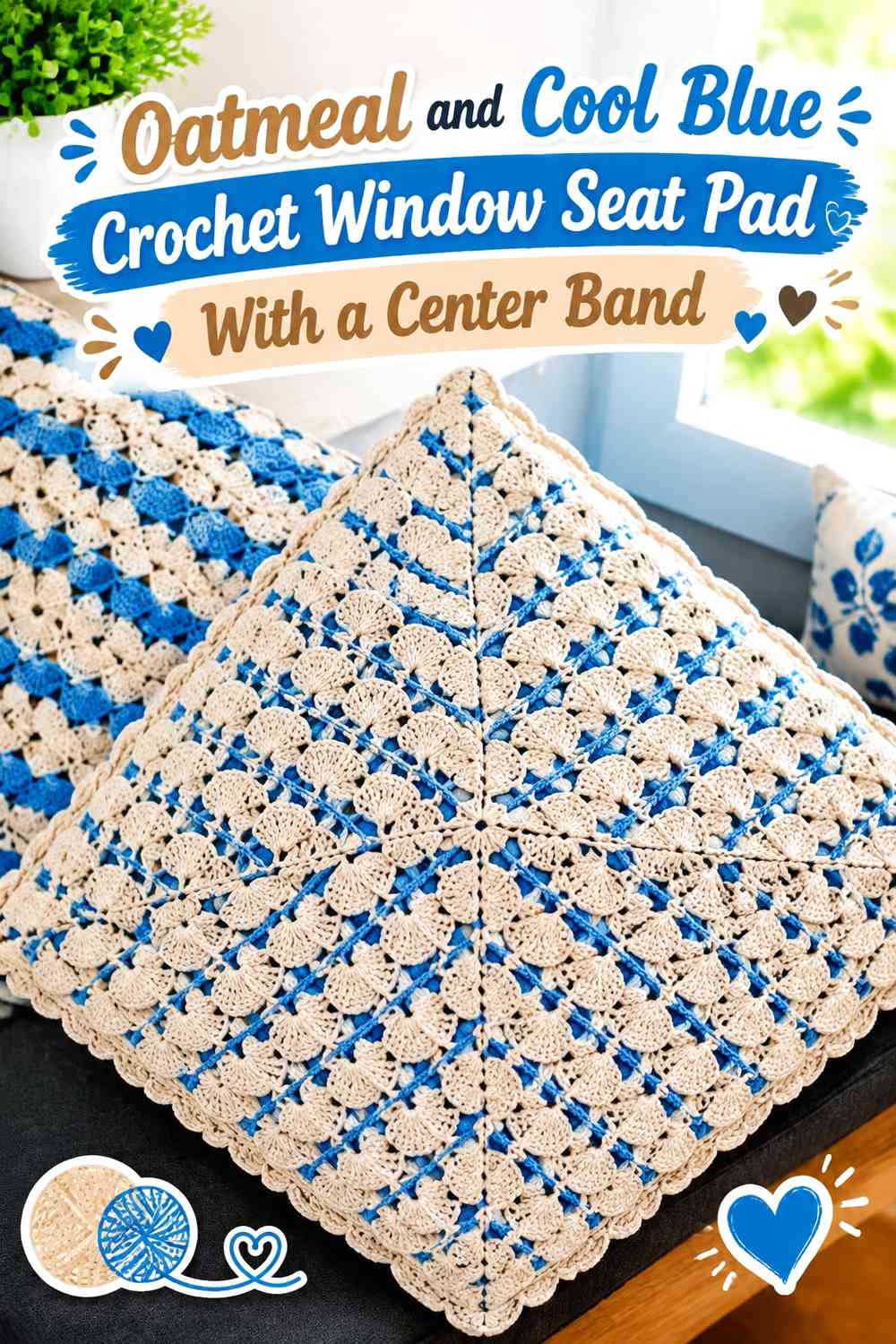
Use oatmeal for most of the front surface and place one broad cool blue band across the middle. Unlike narrow striping, this produces a single substantial color break that remains visible without overwhelming the neutral field.
Keep Oatmeal Broad Around the Cool Blue Crochet Band
Give the neutral enough room on both sides for the blue section to look deliberate. If the blue occupies almost the whole surface, the project becomes blue-dominant rather than an oatmeal pad with a center accent.
Place Cool Blue Where the Oatmeal Crochet Pad Remains Visible
If the center is often covered by a folded blanket, move the band slightly toward the visible front portion while respecting the construction you are adapting. The strongest color detail should not disappear during normal use.
Creator Credit: Crocheter Priya
7. Cool Blue and Oatmeal Crochet Mixed-Texture Window Seat Pad
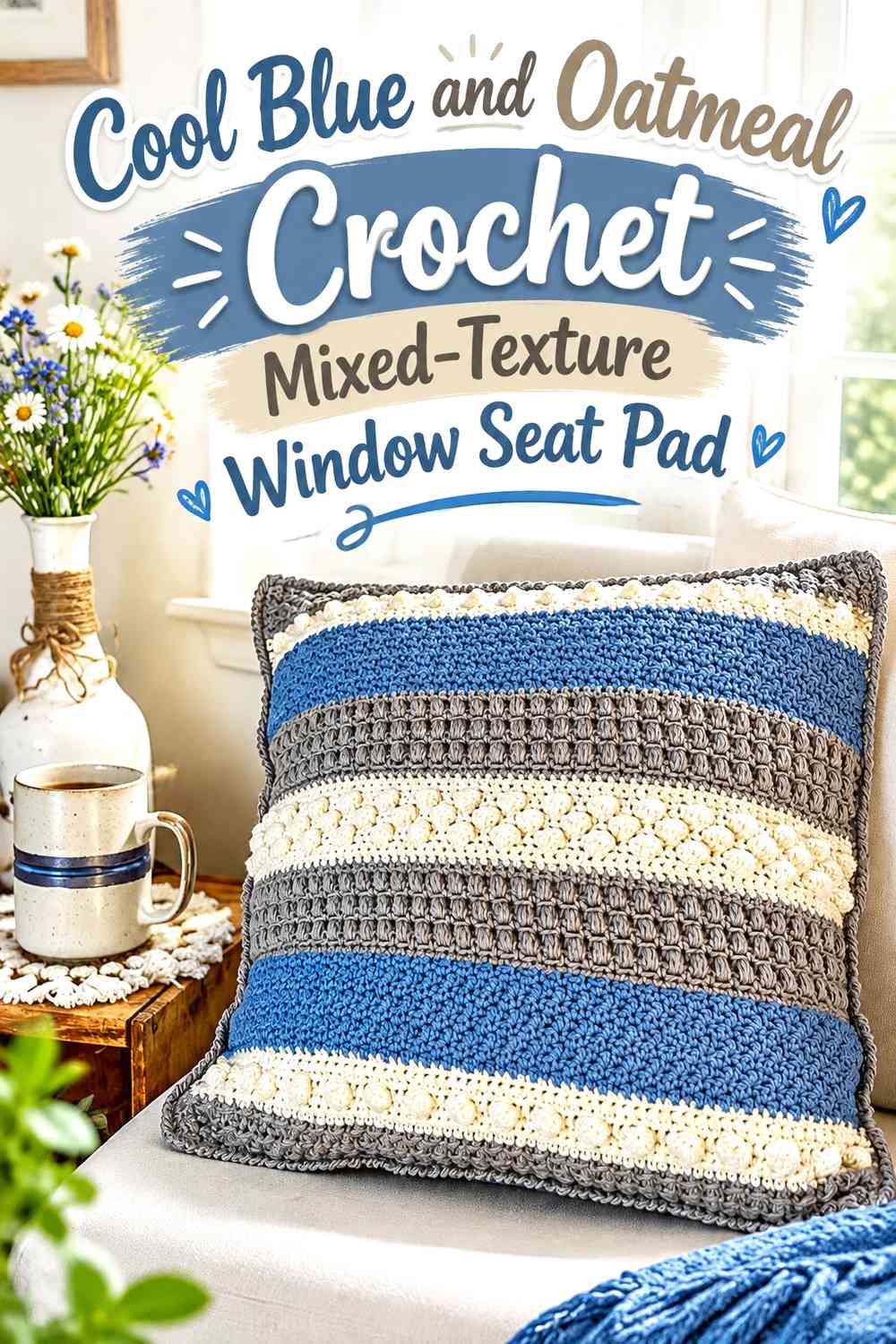
A cushion combining cluster, bobble, puff, and flatter stitches is ideal for a sectional color strategy. Use cool blue for the strongest raised sections and oatmeal for the quieter divisions between them.
Assign Cool Blue to the Raised Crochet Textures
Keeping clusters, puffs, or bobbles blue creates a consistent visual rule even when the stitch type changes. This makes a multi-texture pad feel organized rather than like a stitch sampler with unrelated color changes.
Use Oatmeal Between Cool Blue Crochet Texture Zones
Oatmeal can mark the transition from one texture to another. Keep these sections comparatively plain so they actually separate the raised blue areas instead of becoming another competing feature.
Creator Credit: Stephanie Zed
8. Oatmeal and Cool Blue Crochet Granny-Texture Window Seat Pad
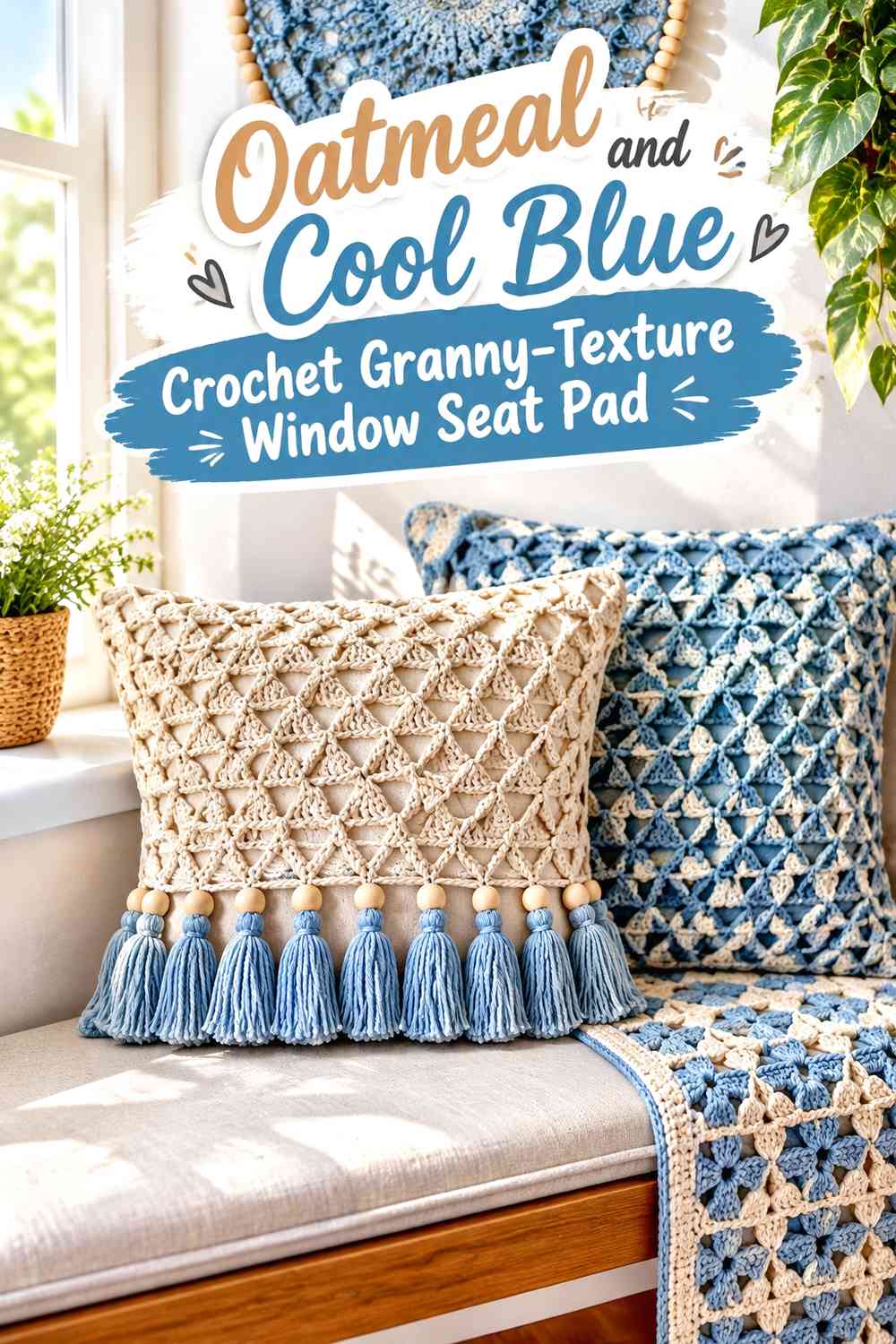
A granny-based cushion surface can create a more relaxed reading-nook look. Use oatmeal through most of the expanding central field and bring cool blue into the corners or outer sections so the color becomes stronger toward the seat-pad edges.
Keep Oatmeal Central in the Cool Blue Crochet Granny Layout
A broad pale middle makes the granny texture visible without adding high contrast to every round. It also works well if the center is usually covered by a cushion or throw.
Move Cool Blue Toward the Oatmeal Crochet Corners
Cool blue outer corners can define the rectangular or square units that make up a longer seat pad. Repeating the darker shade at the perimeter helps separate the crochet from pale surrounding trim.
Creator Credit: Crafts By Fatma
9. Cool Blue and Oatmeal Crochet Panel Window Seat Pad With Oatmeal Side Bands
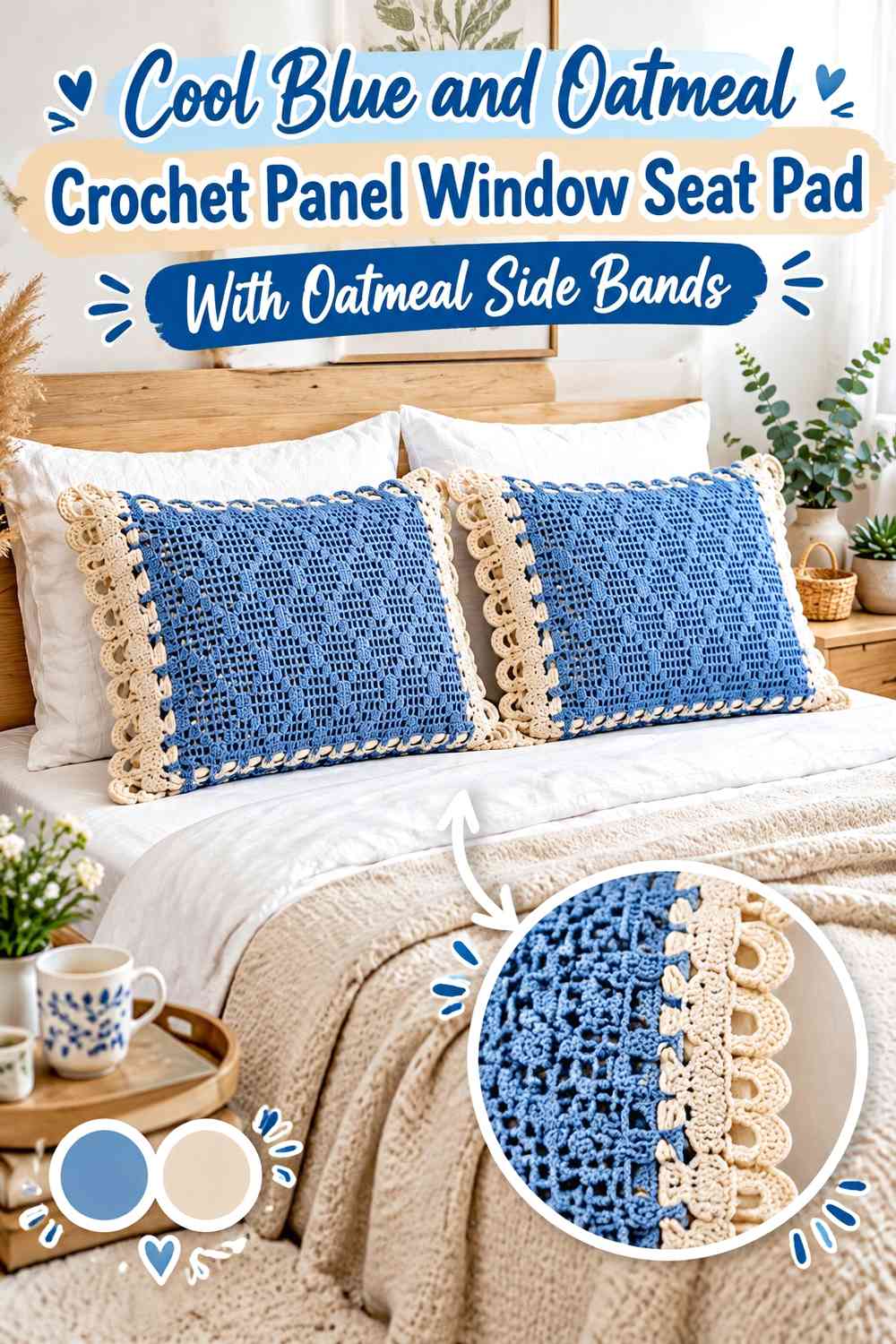
A straightforward panel construction works well for strong horizontal color blocking. Keep the central section cool blue and add oatmeal bands along the short sides, creating a calm winter pad without intricate motif changes.
Let Cool Blue Fill the Main Crochet Window-Seat Panel
A continuous blue center makes the pad look longer and gives any stitch texture enough room to develop across the surface.
Use Oatmeal as End Bands Beside Cool Blue Crochet
Pale side sections can soften the long blue field and coordinate with cream or natural textiles elsewhere in the nook. Keep them broader than a simple edge if you want them to count as genuine color blocks.
Creator Credit: Crochet With Samina
10. Oatmeal and Cool Blue Crochet Bobble-Diamond Window Seat Pad
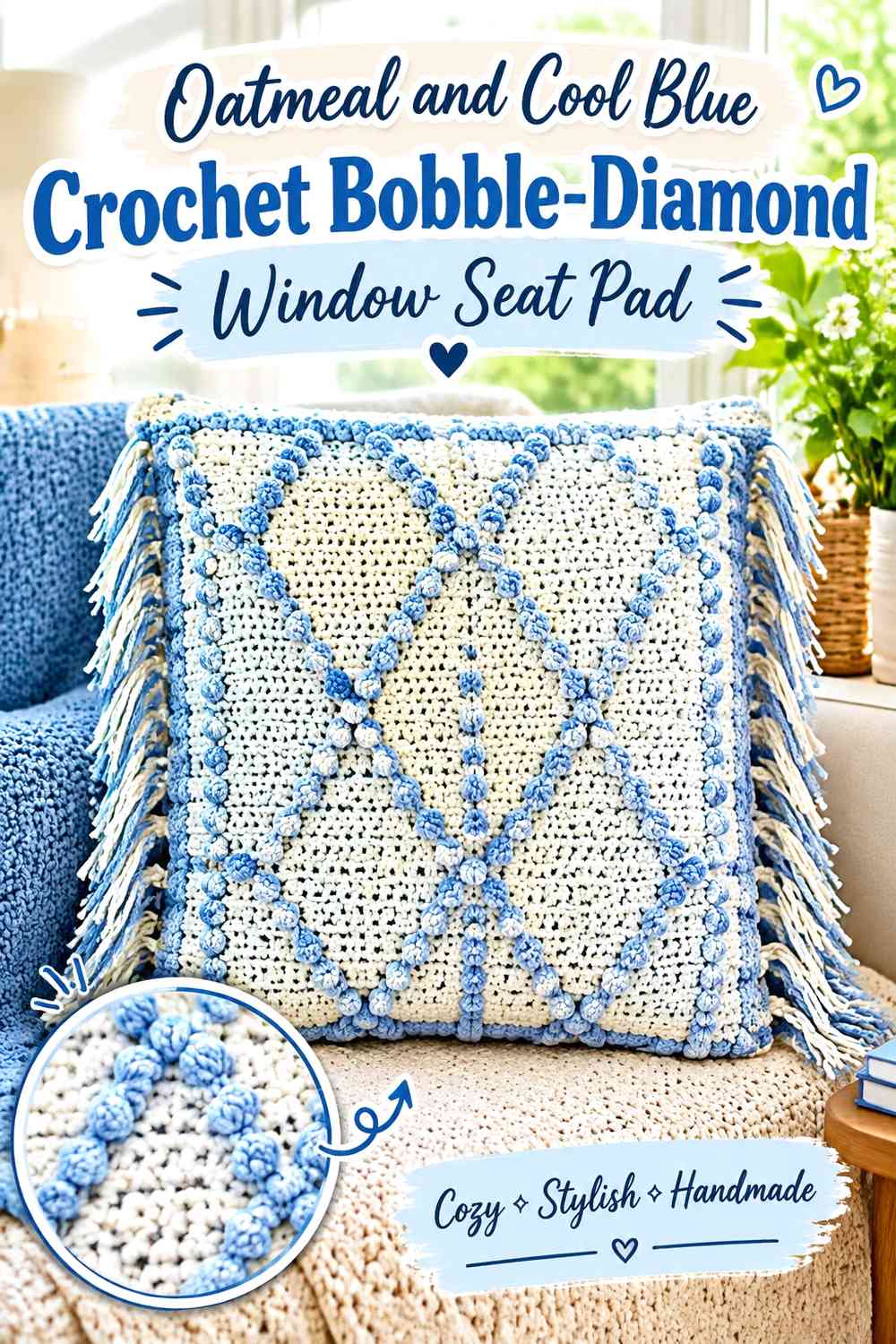
A diamond-bobble surface can carry the retro-modern texture without needing multiple colors inside the motif. Use oatmeal as the broad background and cool blue for the outer frame or selected diamond sections.
Let Oatmeal Surround Cool Blue Crochet Bobble Diamonds
Enough pale space around the raised design keeps individual diamonds recognizable. Filling every gap with another blue detail can make the texture look more like an all-over field than a repeated motif.
Use Cool Blue to Frame the Oatmeal Crochet Bobble Surface
A blue edge can connect the raised interior details to the outside of the pad. If the diamonds already contain substantial blue, keep the frame relatively narrow.
Creator Credit: Crazy Cool Crochet
11. Cool Blue and Oatmeal Crochet Celtic-Weave Window Seat Pad
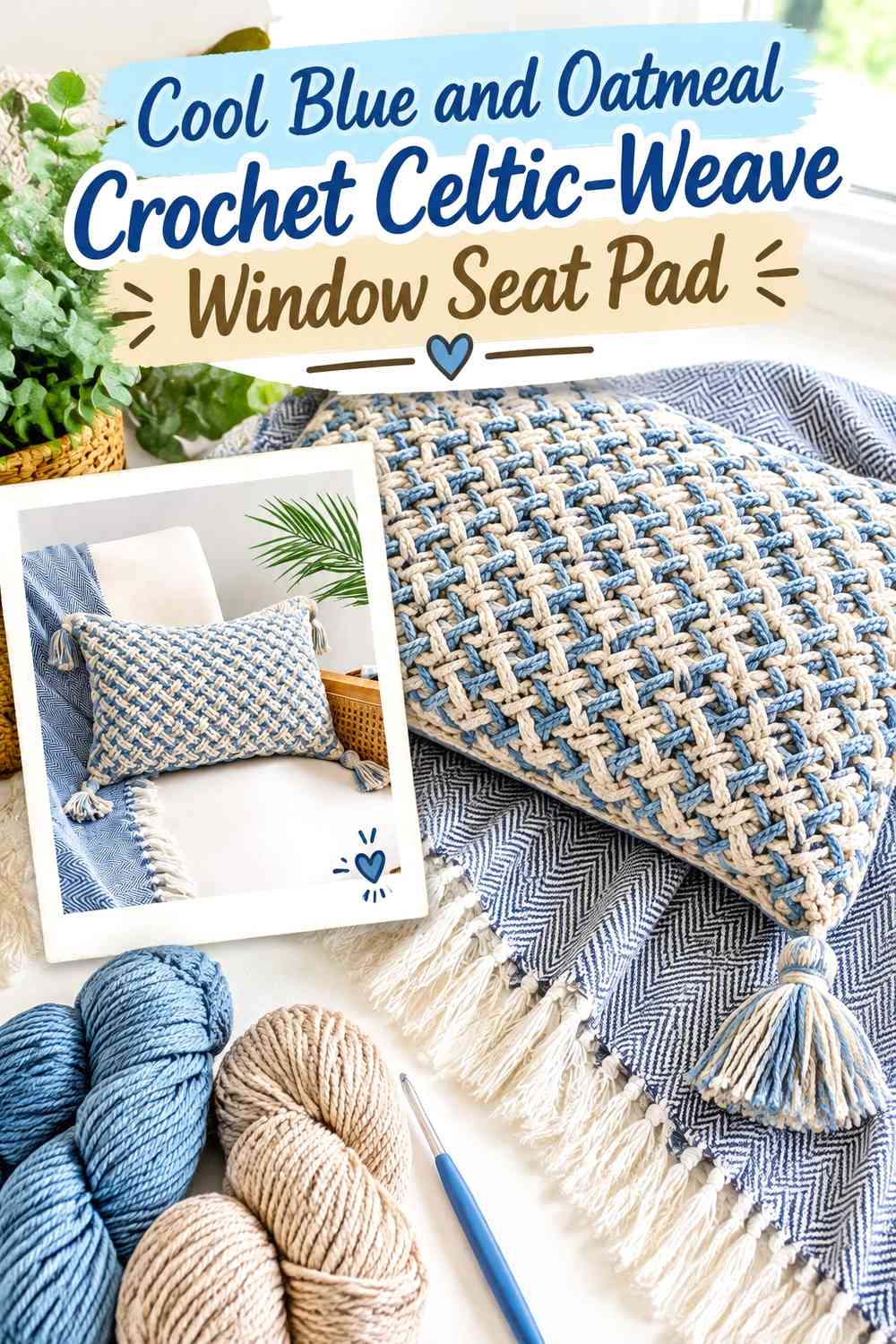
Celtic weave produces deeply crossing texture, making a simple two-color hierarchy especially useful. Keep the woven-looking field cool blue and use oatmeal only around the perimeter or at a major transition.
Keep Cool Blue Continuous Through the Crochet Celtic Weave
One blue field lets crossing stitches and shadows create the detail. Alternating colors inside every cable-like crossing can obscure the larger woven pattern.
Place Oatmeal Around the Cool Blue Crochet Weave
A calmer oatmeal edge gives the dense central texture a visual boundary. This is useful on a long seat pad where the woven surface might otherwise appear to continue indefinitely into similarly dark surroundings.
Creator Credit: MJ’s Off The Hook Designs
12. Cool Blue and Oatmeal Crochet Granny Window Seat Pad With Oatmeal Outer Rounds
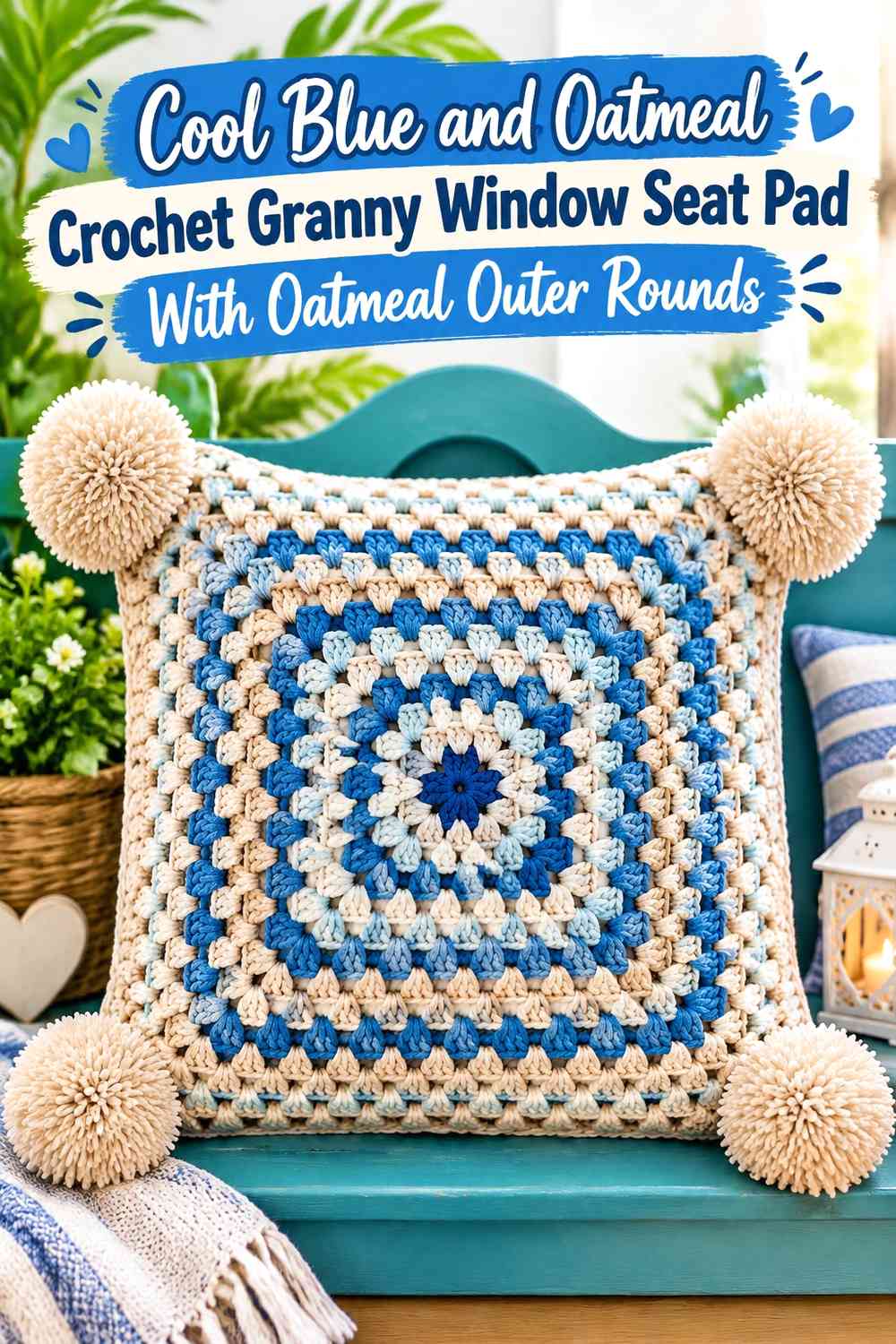
A classic granny-square pillow construction can be adapted into larger panels or repeated units for a window-seat surface. Use cool blue in the centers and transition toward oatmeal as the squares approach their edges.
Keep Cool Blue Strong in the Crochet Granny Centers
Repeating blue in the same central role across multiple units gives the finished seat pad a consistent winter rhythm.
Use Oatmeal Around Cool Blue Crochet Granny Squares
Pale outer rounds can visually merge during joining and soften the grid between motifs. This keeps repeated blue centers distinct without creating a dark seam network.
Creator Credit: Lori Holt
13. Oatmeal and Cool Blue Crochet Fusion-Panel Window Seat Pad
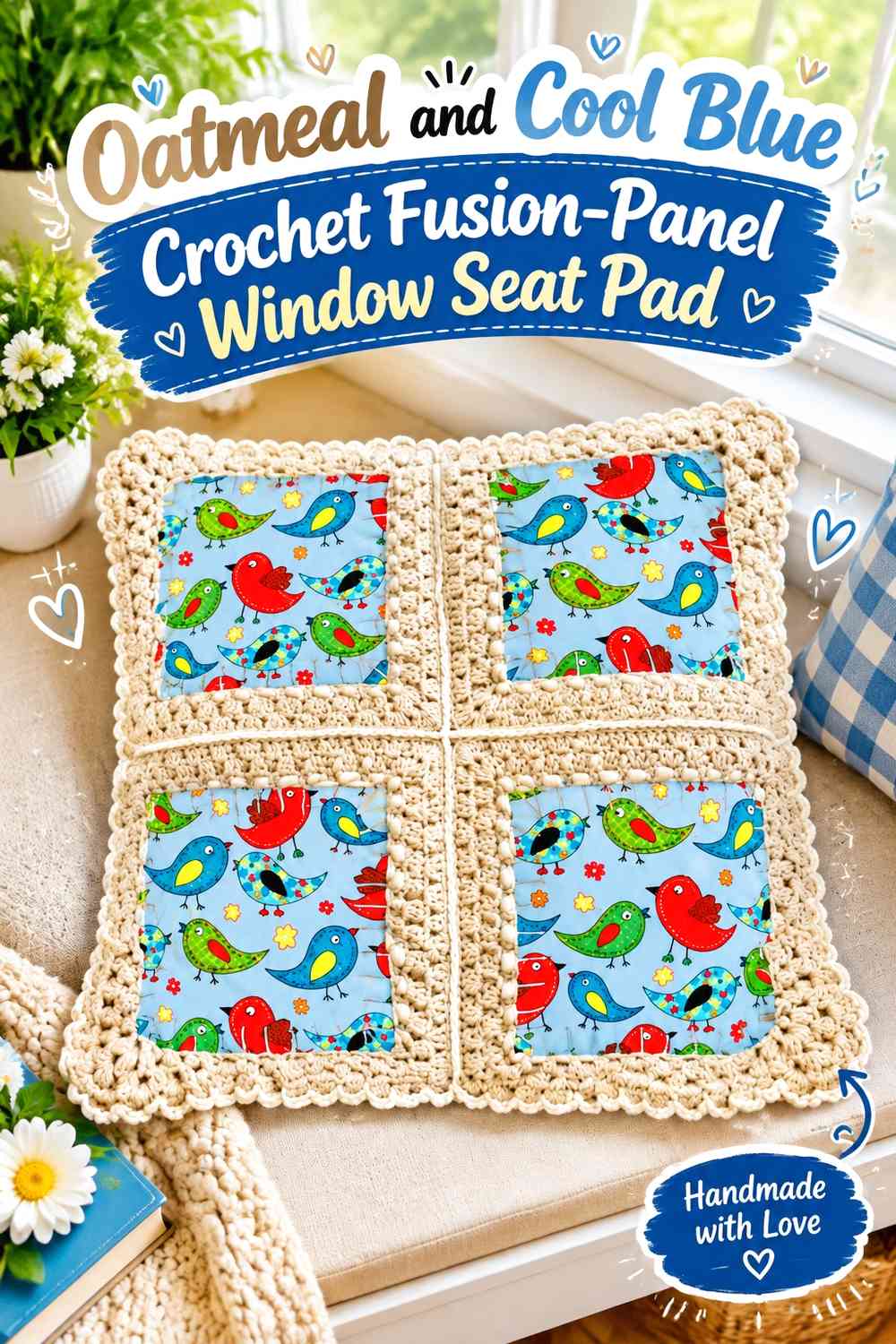
A crochet-and-fabric fusion construction offers a different way to handle a removable window-seat cover. Let oatmeal provide the quieter central panel and use cool blue crochet around the perimeter, where the handmade texture remains clearly visible.
Keep Oatmeal Calm Inside the Cool Blue Crochet Frame
A simple pale center prevents the mixed-material surface from becoming overly decorative. This also gives the crochet edging enough visual space to register as the intentional feature.
Use Cool Blue Crochet Around the Oatmeal Window-Seat Panel
A blue crochet frame can emphasize the handmade perimeter and connect the pad to other blue accents in the nook. If you want an all-crochet seat pad, choose one of the fully crocheted constructions elsewhere in this list instead of this fusion approach.
Creator Credit: Pookie Doodle Crafts
14. Cool Blue and Oatmeal Crochet Line-Texture Window Seat Pad
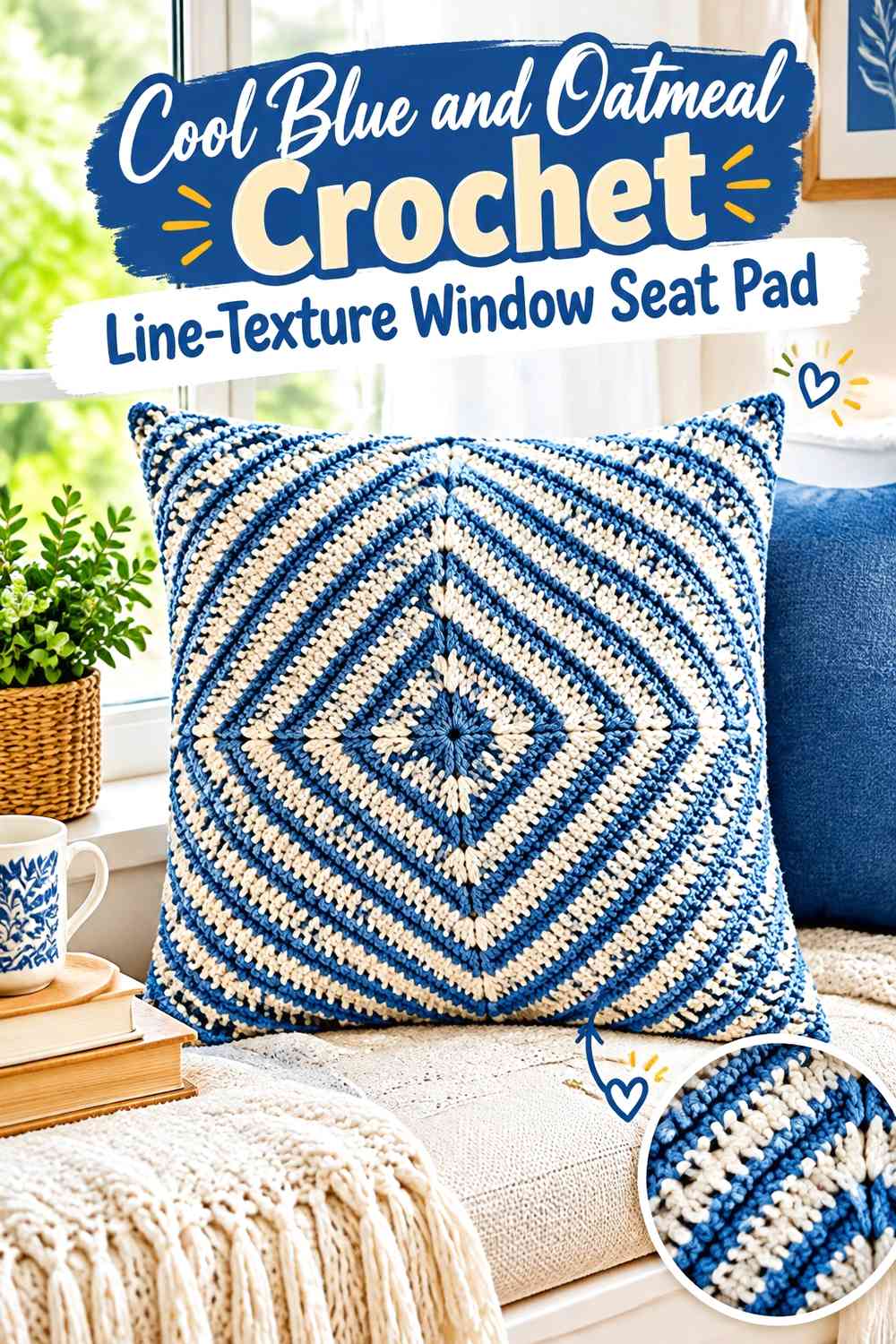
A lined pillow construction can translate into a long pad with repeating horizontal or vertical bands. Let cool blue remain the primary surface and use oatmeal only where the line pattern needs a visible break.
Keep Cool Blue Dominant Across the Crochet Line Pattern
Broad blue areas prevent repeated linear texture from becoming overly busy. Decide whether you want the lines to emphasize the seat’s width or depth before assigning the strongest color transitions.
Add Oatmeal Between Selected Cool Blue Crochet Lines
Use oatmeal at wider intervals rather than after every line. This creates a measured winter stripe rhythm and keeps blue clearly dominant.
Creator Credit: The Crochet Crowd
15. Oatmeal and Cool Blue Crochet Radial Winter Seat Pad
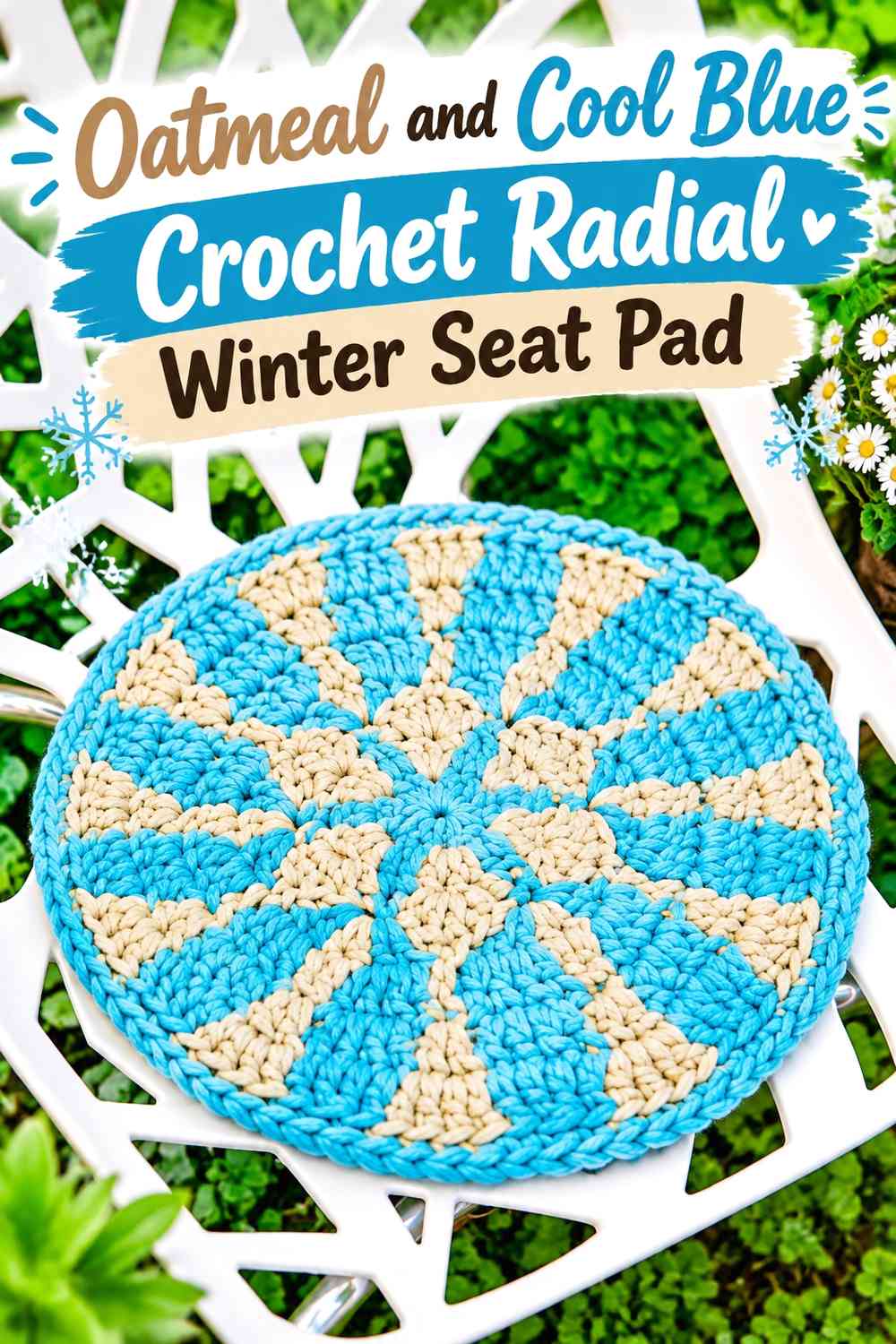
A true seat-pad construction with a central motif can inspire a window-seat arrangement built from repeated or enlarged padded units. Use oatmeal as the broad field and cool blue around the radial or center feature.
Let Oatmeal Surround the Cool Blue Crochet Radial Detail
A generous neutral field gives the darker motif enough room to remain visible. If adapting the concept into multiple seat sections, keep the blue placement consistent from one section to the next.
Keep Cool Blue Concentrated Inside the Oatmeal Crochet Pad
One substantial blue radial area generally creates a clearer focal point than many unrelated small accents. For a long window seat, repeated units can create rhythm without requiring every section to use a different palette.
Creator Credit: Tamara Kelly – Moogly
16. Cool Blue and Oatmeal Crochet Textured-Square Window Seat Pad
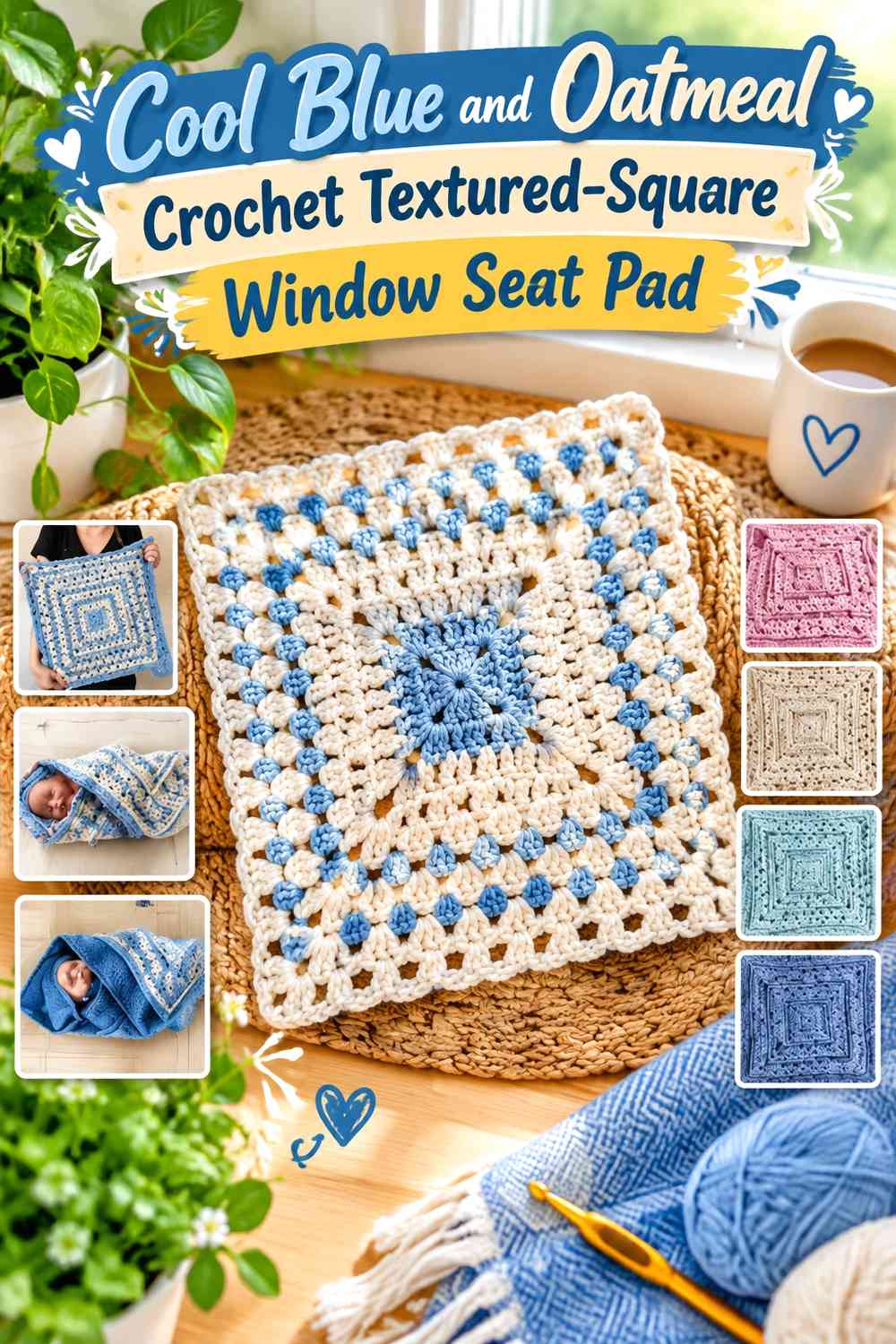
An expanding textured granny square can create a layered surface with color changes placed at major structural intervals. Start with cool blue and use oatmeal on selected rounds before returning to blue.
Let Cool Blue Occupy the Largest Crochet Square Sections
Broad blue rounds keep the winter color dominant and prevent the square from becoming a tight series of alternating rings.
Use Oatmeal as a Pause Between Cool Blue Crochet Texture Repeats
Place oatmeal at a major transition in the stitch pattern rather than at every round. The pale band can help separate one texture cycle from the next and remain visible when multiple squares are joined.
Creator Credit: Wilma Westenberg
17. Oatmeal and Cool Blue Crochet Spike-Stitch Window Seat Pad
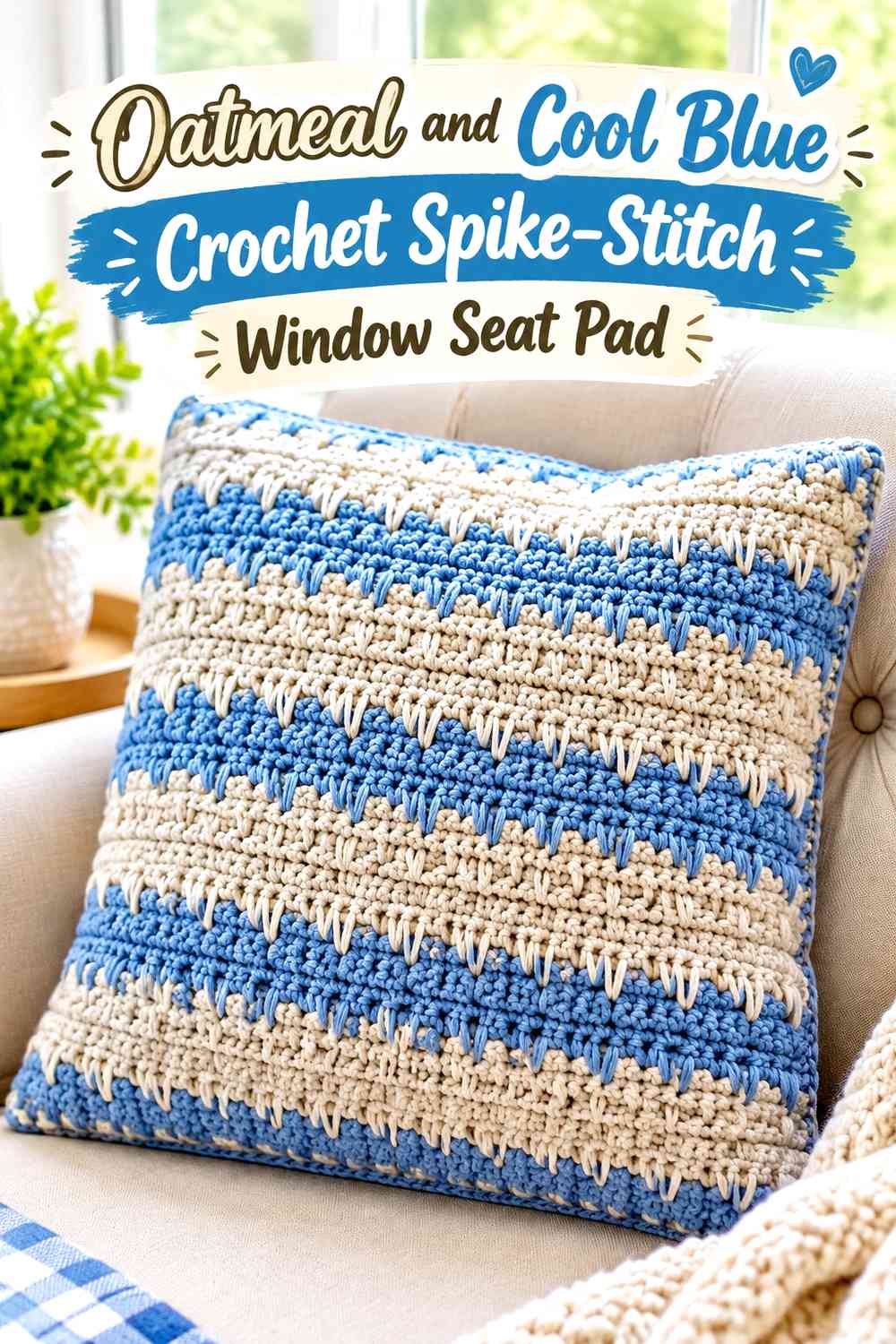
Spike stitches naturally create pointed vertical color movement. Use oatmeal as the main background and cool blue for the elongated spikes so the darker shade appears to move into the lighter field rather than forming ordinary straight stripes.
Keep Oatmeal Broad Behind the Cool Blue Crochet Spikes
The pale background is essential to the pointed effect. If blue fills too much of the surrounding surface, the spikes lose their contrast and become part of a larger dark block.
Repeat Cool Blue Crochet Spikes Predictably Through Oatmeal
Keep the blue pattern consistent across the seat so the elongated stitches produce rhythm rather than isolated marks. On a long window pad, repeated spike sections can create movement without introducing another color.
Creator Credit: Yarnspirations
18. Oatmeal and Cool Blue Crochet Bavarian-Texture Window Seat Pad
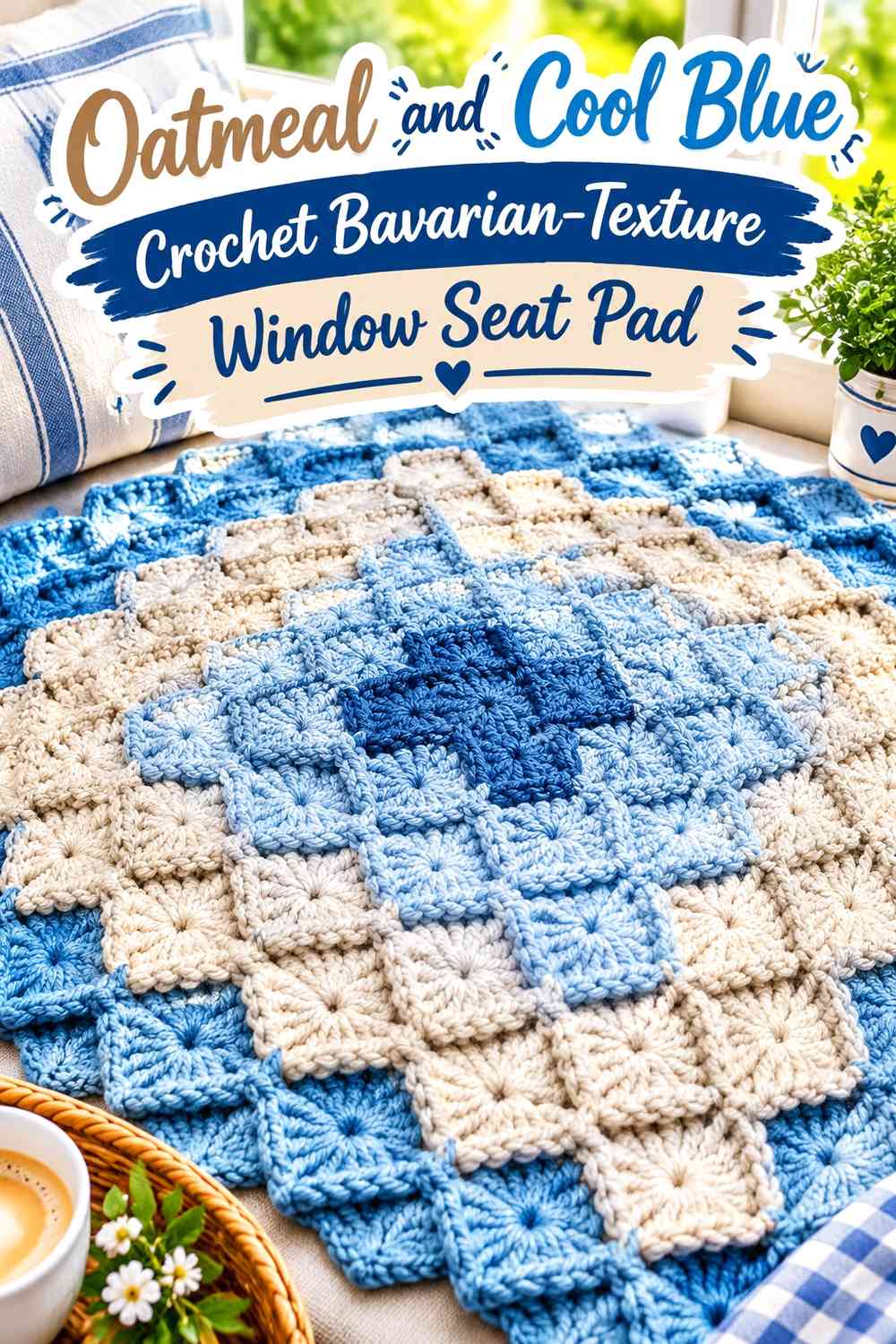
Bavarian stitch creates bold clustered texture and built-in color zones, making it a strong final option for a two-color winter pad. Use oatmeal in the central or quieter rounds and cool blue through the broader outer repetitions.
Keep Oatmeal Visible Between Cool Blue Crochet Bavarian Sections
Allow enough neutral color to separate the blue cluster shapes. If the blue sections touch too broadly, the characteristic layered geometry becomes harder to distinguish.
Use Cool Blue to Expand Around the Oatmeal Crochet Center
Increasing the blue presence toward the outside can visually ground the seat pad and create a darker frame around the softer middle.
For a long window seat, repeated Bavarian squares or coordinated panels can carry the same color order so the finished surface stays consistent.
Creator Credit: Hooked by Robin
Which Cool Blue and Oatmeal Window Seat Pad Direction Should You Choose?
For the strongest tactile surface, choose waffle, Celtic weave, bobble, spike, or mixed-texture designs. These stitches already provide substantial relief, so the color changes can remain broad and restrained.
For a lighter reading nook, start with oatmeal and use cool blue as a border, center band, spike pattern, or outer round. This keeps the overall seat neutral while still giving it a recognizable winter accent.
For more pattern and color movement, granny, Bavarian, and radial constructions allow the two shades to repeat across separate sections. If your window seat is especially long, repeated panels can also be easier to plan visually than one complicated color design stretching from end to end.
Conclusion
Cool blue and oatmeal can make a crochet window seat pad feel wintery through texture and color placement alone. Cool blue works particularly well across large waffle, woven, bobble, or panel sections, while oatmeal can reveal borders, texture breaks, end panels, and joining areas.
The final layout should account for how a window seat is actually used. Much of the center can disappear beneath a person, blanket, books, or decorative pillows, so keep some of the important color contrast along the front edge or exposed ends.
Use the linked creator tutorials for their demonstrated seat-pad, cushion, stitch, or pillow construction concepts. For a fitted window seat, measure and plan the final pad dimensions, insert, fastening, and structural requirements independently rather than assuming a standard cushion tutorial will fit the space unchanged.
Frequently Asked Questions
Should Cool Blue or Oatmeal Dominate a Crochet Window Seat Pad?
Cool blue is useful when you want the pad to provide the strongest winter color in the nook. Oatmeal works when the surrounding space is already dark or colorful and you want a lighter seat with blue used only on borders, bands, or textured motifs.
Where Should Oatmeal Go on a Mostly Cool Blue Crochet Window Seat Pad?
Useful placements include the front border, end panels, texture separators, granny-square frames, outer edging, and quieter bands between raised stitch sections. Choose placements that will remain visible during normal use.
Which Cool Blue and Oatmeal Crochet Texture Works Well for a Window Seat?
Waffle, bobble, Celtic weave, spike stitch, Bavarian stitch, granny texture, and mixed raised-stitch panels can all create strong visual texture. The better choice depends on the construction and surface you want, so follow the relevant tutorial rather than assuming different textures can be substituted without adjustment.
How Can I Keep Cool Blue and Oatmeal Texture From Looking Too Busy?
Assign the colors separate roles. For example, keep waffle texture cool blue and its border oatmeal, or use oatmeal as the background behind cool blue spike stitches. Avoid changing colors inside every raised stitch unless the construction specifically benefits from it.
Should the Front Edge of a Cool Blue and Oatmeal Window Seat Pad Contrast?
It can be especially useful because the front edge often remains visible when the center is occupied. An oatmeal front edge on a blue pad, or a cool blue edge on an oatmeal pad, can preserve the palette even when blankets and pillows cover the top.
Can I Adapt a Crochet Pillow Tutorial Into a Window Seat Pad?
A pillow tutorial can provide useful guidance for stitch texture, panels, joining, and finishing, but it does not automatically provide the correct dimensions or internal structure for a fitted window seat. Measure the actual nook and plan the pad or insert separately.
How Do I Substitute Cool Blue or Oatmeal Without Losing the Winter Palette?
For cool blue, choose another softened blue with a clearly cool cast rather than a strongly green or warm blue. For oatmeal, choose a warm pale neutral that remains clearly lighter than the blue. Preserve the same dominant and supporting roles after making the substitution.