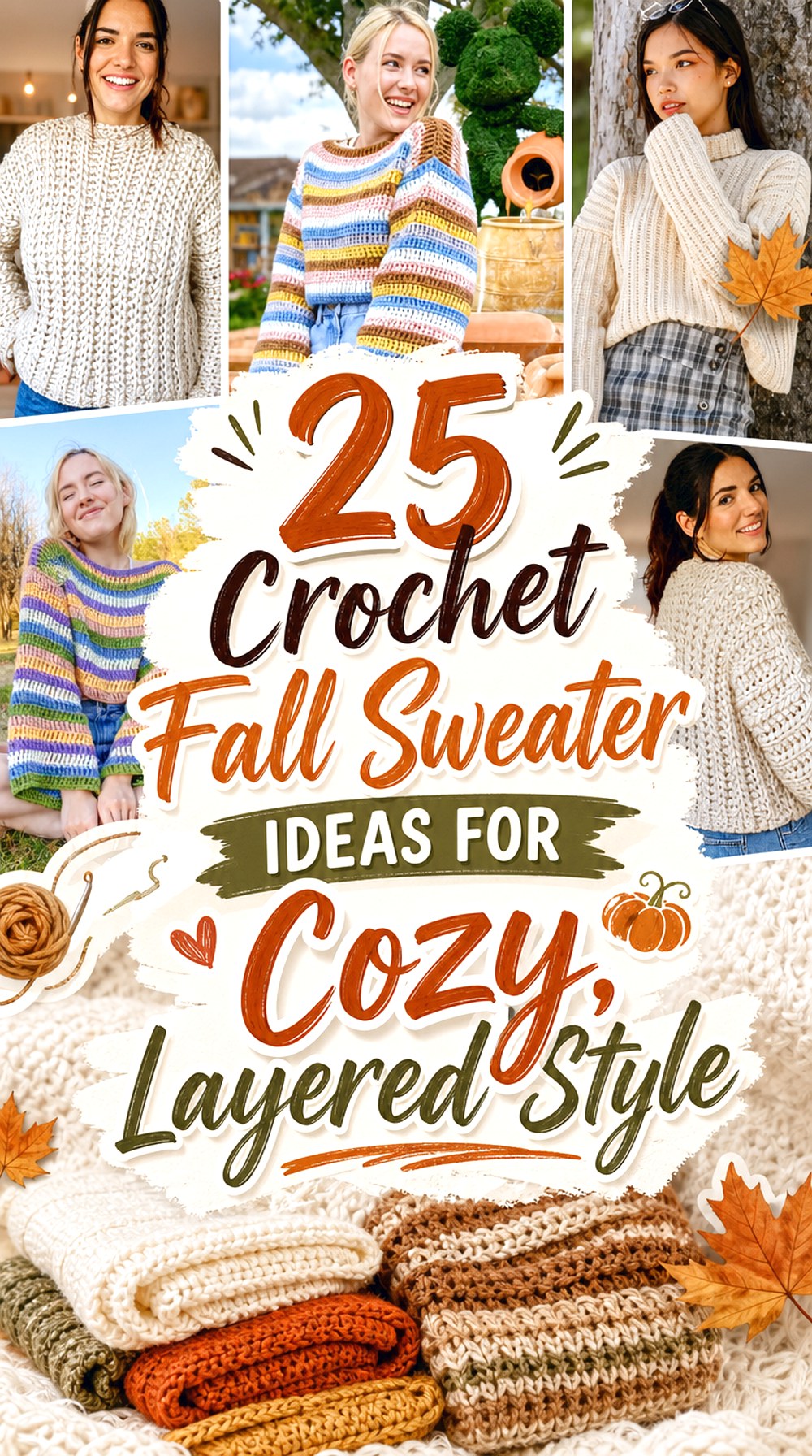

Fall crochet sweaters do not all need to be thick, oversized pullovers. A useful autumn wardrobe can include lighter lace layers for mild afternoons, cropped sweaters for high-waisted outfits, roomy V-necks that fit over shirts, dense textured pieces for colder days, and statement sleeves that turn a simple silhouette into the focus.
The 25 ideas below cover noticeably different constructions, textures, proportions, and styling options. You will find granny squares, cables, waffle texture, stripes, color blocking, raglan shaping, chunky fabric, flare sleeves, turtlenecks, and several approaches to oversized fit. Each idea is paired with an original YouTube tutorial, while the planning notes help you decide which shape and construction make sense before committing yarn to a full sweater.
Quick List
- Crochet Boxy V-Neck Fall Sweater
- Crochet Off-Shoulder Cropped Fall Sweater
- Crochet Basketweave Balloon-Sleeve Sweater
- Crochet Oversized Knit-Look Fall Sweater
- Crochet Alpine-Texture Cropped Sweater
- Crochet Color-Block Ribbed Sweater
- Crochet Custom-Stripe Everyday Sweater
- Crochet Scrap-Yarn Raglan Sweater
- Crochet Granny-Square Patchwork Sweater
- Crochet Side-to-Center Granny-Stripe Sweater
- Crochet Oversized Autumn Lace Sweater
- Crochet Cable-Panel Fall Jumper
- Crochet Ribbed Turtleneck Sweater
- Crochet Waffle-Stitch Raglan Turtleneck
- Crochet Super-Chunky Textured Jumper
- Crochet Slouchy Tweed-Look Sweater
- Crochet Chunky Relaxed Fall Sweater
- Crochet Four-Rectangle Oversized Pullover
- Crochet Top-Down Ribbed Raglan Sweater
- Crochet Flare-Sleeve Statement Sweater
- Crochet Knit-Look Cropped Jumper
- Crochet Bulky Cropped Fall Sweater
- Crochet Measurement-Led Classic Pullover
- Crochet Multicolor V-Stitch Fall Sweater
- Crochet Scrap-Stripe Pullover Sweater
Choose Fall Sweater Yarn by Fabric, Not Just Fiber
A sweater’s autumn usefulness depends as much on the finished fabric as the label on the yarn. Thick yarn and dense stitches can create a substantial layer, but they also add weight. DK yarn or open lace can produce a lighter sweater that works well over another top without becoming too bulky indoors.
Texture changes the equation too. Waffle, basketweave, cables, ribbing, and tightly worked slip stitches usually create a different hand from open granny or lace fabric. Before substituting yarn, make a swatch large enough to judge drape and recovery rather than looking only at stitch appearance. A yarn that produces beautiful texture may still feel too stiff for the sleeve or body shape you want.
Fit Starts With the Sweater Construction
Two sweaters with the same bust circumference can feel completely different. A boxy drop-shoulder shape distributes extra width differently from a top-down raglan, while a cropped sweater changes the relationship between body width and overall length. Off-shoulder and V-neck designs add another fit decision because the neckline affects where the garment sits.
Measure the body you are dressing, then compare those measurements with the finished garment information supplied by the creator whenever it is available. For made-to-measure tutorials, check fit repeatedly as instructed rather than assuming that “customizable” eliminates measurement work. Sleeves, armholes, shoulders, and neck openings deserve separate attention instead of treating sweater fit as one number.
Plan Fall Layers Before Choosing the Neckline and Sleeves
Think about what will sit underneath the sweater. A roomy V-neck can accommodate a collared shirt or turtleneck without crowding the neck. An off-shoulder crop is more suited to styling as the visible top layer, while a high turtleneck already provides considerable coverage around the neckline.
Sleeve volume matters in the opposite direction. Balloon, flare, and super-chunky sleeves can be visually effective but may feel crowded under fitted coats. If the sweater will regularly sit beneath outerwear, compare its sleeve volume with the coats or jackets you already own. For indoor layering, lighter lace, granny stitch, and more open fabrics may provide enough fall character without the bulk of a dense cold-weather pullover.
Crochet Boxy V Neck Fall Sweater
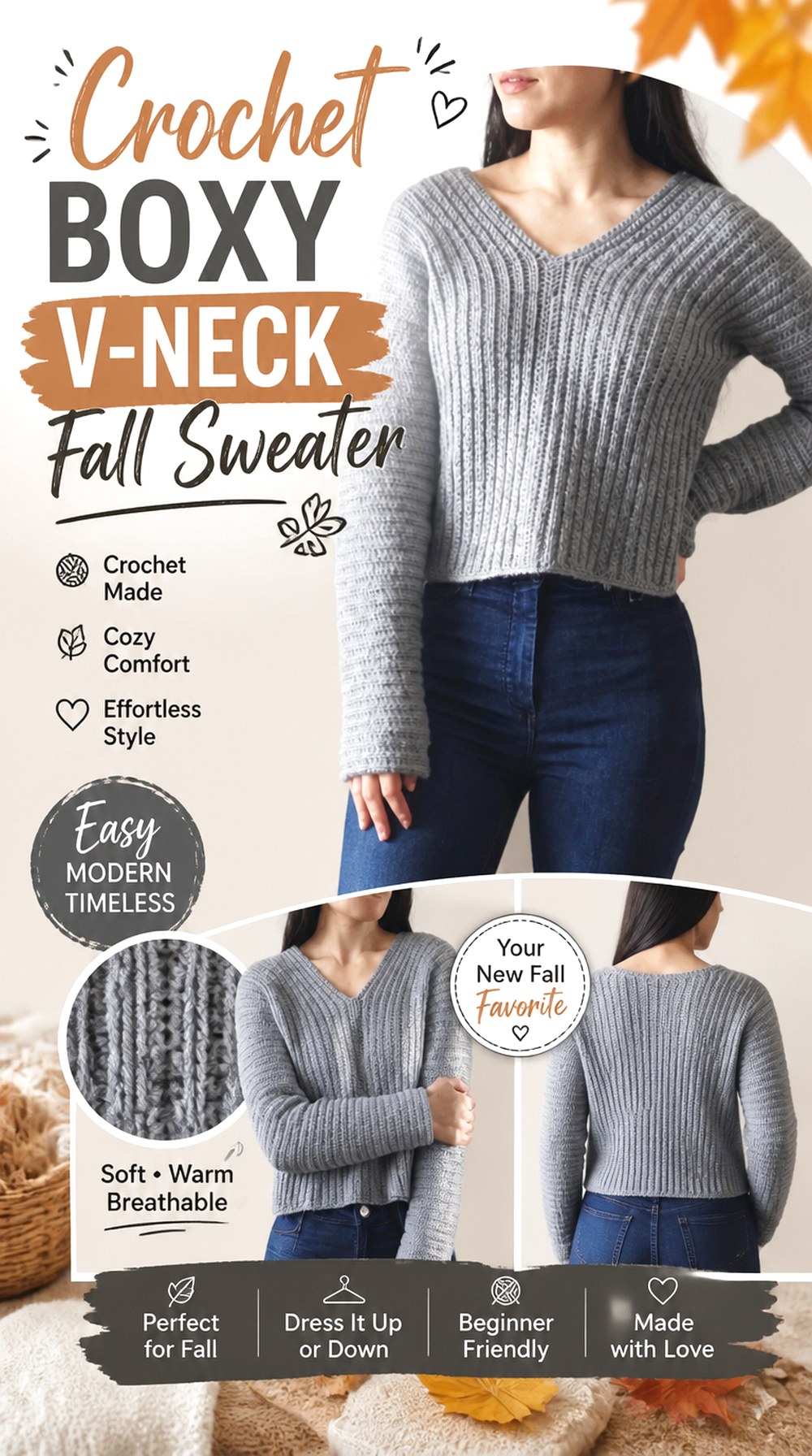
A boxy V-neck is a useful alternative to the standard crochet crew-neck pullover because the open neckline changes both styling and layering. The forthefrills tutorial shows a long-sleeved V-neck sweater with a boxier body and more tapered sleeves, giving the sweater volume through the torso without carrying the same amount of width to the wrist. The accompanying pattern information includes multiple sizes, making this a particularly relevant option for readers who prefer a conventional graded garment rather than a purely improvised shape.
The V-Neck Leaves Useful Room for Layers
A V-neck gives a shirt collar, fitted turtleneck, or contrasting camisole somewhere to appear instead of hiding every layer beneath the sweater. Check the finished neckline depth before choosing the project, though. The amount of exposed chest can noticeably change how practical the sweater feels in cooler weather.
Boxy Width and Sleeve Taper Need Separate Checks
Extra body ease does not automatically mean the sleeves should be equally oversized. This design’s contrast between a boxier torso and tapered sleeves keeps the silhouette from becoming uniformly bulky. When choosing your size, compare sleeve information as carefully as bust width so the cuffs and upper arms suit the fit you want.
Crochet Off Shoulder Cropped Fall Sweater

For early fall or indoor styling, an off-shoulder sweater creates a much lighter-looking silhouette than a high-neck pullover. VivCrochets demonstrates a cropped version and notes that the neckline and length can be adapted, so the concept does not have to remain strictly off-shoulder or very short. The tutorial uses a panel-and-sleeve approach and DK-weight yarn, making it a good contrast to the chunky sweaters later in this collection. Rather than choosing it for maximum coverage, choose this style when neckline placement and proportions are the main attraction.
Off-Shoulder Placement Changes the Neckline Fit
The neck opening has to do more than look wide enough in a flat piece. It controls whether the sweater rests securely where you want it. If you would rather wear the garment on the shoulders, use the creator’s adjustment guidance instead of simply making an off-shoulder opening and hoping it sits higher.
Crop Length Works Best With the Outfit in Mind
Decide where you want the hem to meet your usual pants or skirts before extending or shortening the body. A crop that looks balanced with high-rise jeans may leave more exposed space with lower-rise bottoms. Planning that relationship early is more useful than choosing length from a product photo alone.
Original Tutorial and Creator Credit
Creator: VivCrochets
Crochet Basketweave Balloon Sleeve Sweater

This sweater makes texture and sleeve shape equally important. TCDDIY’s tutorial combines a basketweave-style surface with balloon sleeves, cuffs, a finished neckline, and paneled construction. The result has considerably more visual density than a plain-stitch pullover, which suits the deeper textures commonly associated with fall clothing. Because the sleeves carry substantial volume before narrowing at the cuffs, this idea is especially useful for someone who wants a statement silhouette without relying on multiple colors or applied motifs.
Basketweave Texture Adds Visual and Physical Density
Raised or strongly textured fabric can behave differently from a smoother swatch made with the same general yarn category. Before committing to the full sweater, judge whether your fabric still bends comfortably around the torso and elbows. If it feels board-like, reconsider the yarn-and-hook combination rather than expecting assembly to create drape later.
Balloon Sleeves Need Enough Cuff Control
The contrast between a roomy sleeve and a narrower cuff gives a balloon sleeve its recognizable form. Pay attention to wrist fit as well as upper-arm room. A cuff that feels comfortable but stable can keep the extra sleeve fabric positioned where intended instead of allowing the whole sleeve to slide toward the hand.
Original Tutorial and Creator Credit
Creator: TCDDIY
Crochet Oversized Knit Look Fall Sweater
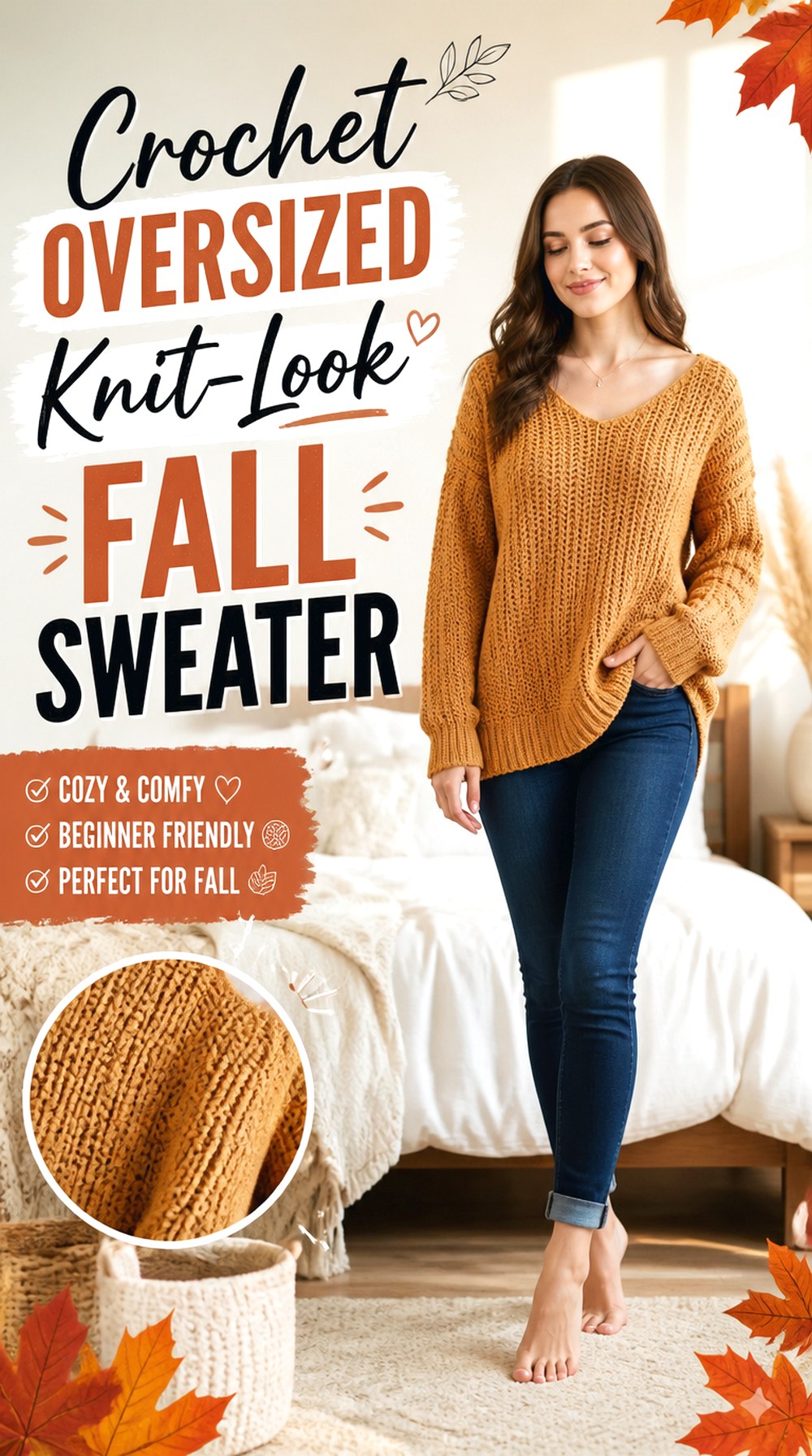
Amanda Love Santos’ tutorial focuses on an oversized crochet sweater designed to give a knit-sweater appearance. That makes it a useful choice for someone who likes crochet construction but wants a quieter surface than granny squares, bobbles, or pronounced cables. The tutorial’s sample is deliberately roomy, so the project’s main decision is not simply whether you like oversized clothing—it is how much ease looks intentional on your own frame while keeping the shoulder and sleeve proportions manageable.
The Knit-Look Surface Favors Clean Drape
When the stitch pattern is meant to read as smooth and knit-like, yarn texture becomes especially visible. A highly fuzzy or irregular yarn can soften stitch definition, while a very stiff yarn can undermine the relaxed sweater silhouette. Swatch for both appearance and movement rather than matching color first.
Oversized Ease Should Still Respect Shoulder Balance
More width can create an appealing relaxed shape, but shoulder placement affects how that width hangs. Compare the sample’s proportions with your own shoulder and arm measurements. If you adapt the body width, think through whether the sleeve opening and sleeve length also need to change so the sweater remains wearable rather than merely larger.
Original Tutorial and Creator Credit
Creator: Amanda Love Santos
Crochet Alpine Texture Cropped Sweater
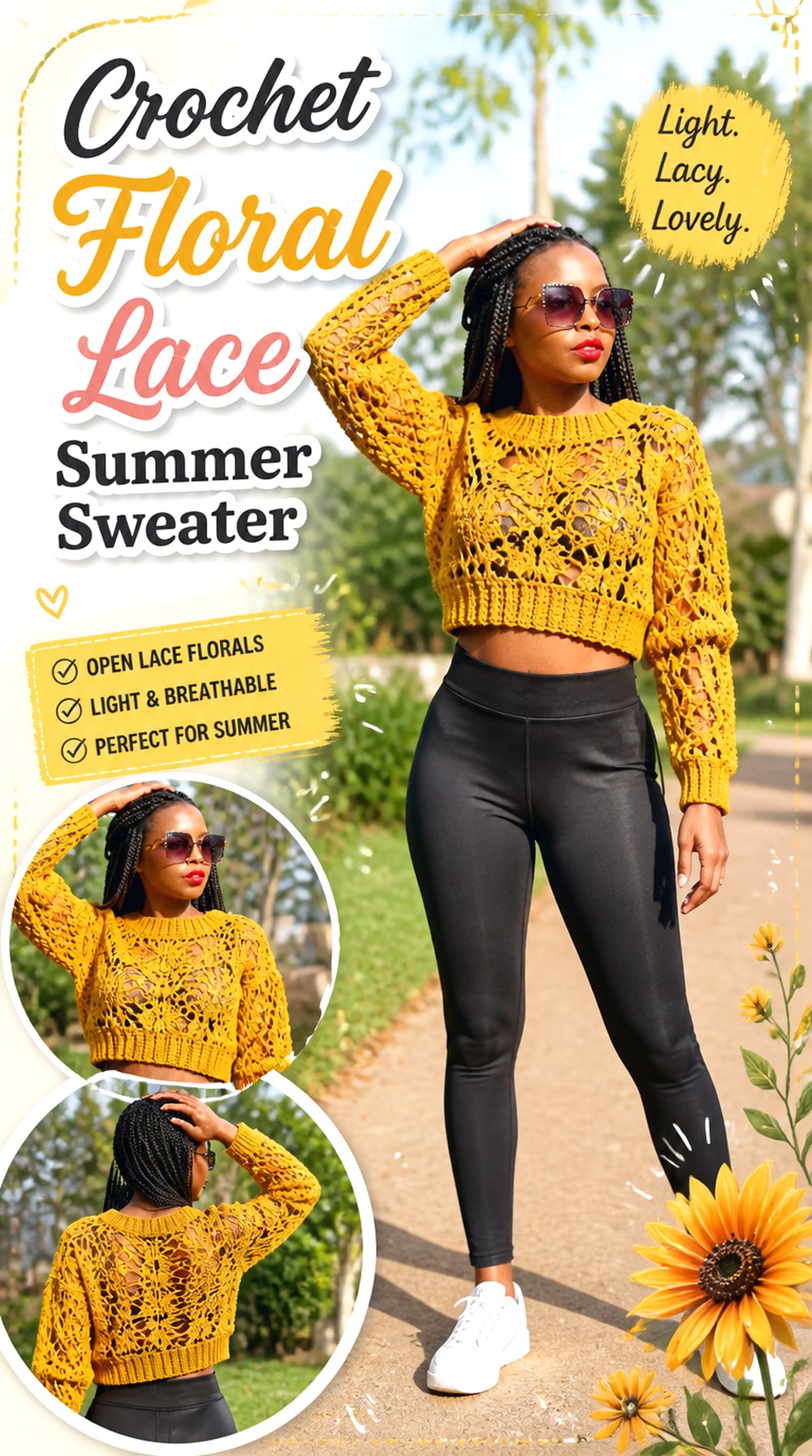
The alpine stitch gives this cropped sweater a strongly textured surface without requiring separate motifs. AC Crochets presents the design as a crop but also discusses making the body longer, which is useful if you like the stitch pattern more than the original hem position. Ribbed sections help define the edges, while the textured body keeps a single-color version from appearing plain. This is a good fall option when you want texture to carry the design rather than stripes, patches, or elaborate shaping.
Alpine Texture Makes the Surface the Main Feature
Texture shows best when the stitch definition remains clear. Before buying all the yarn, check a swatch in natural light and from several feet away. If the raised pattern disappears into a very fuzzy or heavily variegated yarn, decide whether you value the yarn effect or the alpine texture more.
A Cropped Body Can Be Lengthened Only With Planning
Adding length may seem like a simple change, but it also increases yarn use and garment weight. Confirm where the creator’s construction allows extra body length to be added, then reassess the proportions with the sleeves and ribbing. A longer version may look more balanced with slightly different ease than the original crop.
Original Tutorial and Creator Credit
Creator: AC Crochets
Crochet Color Block Ribbed Sweater
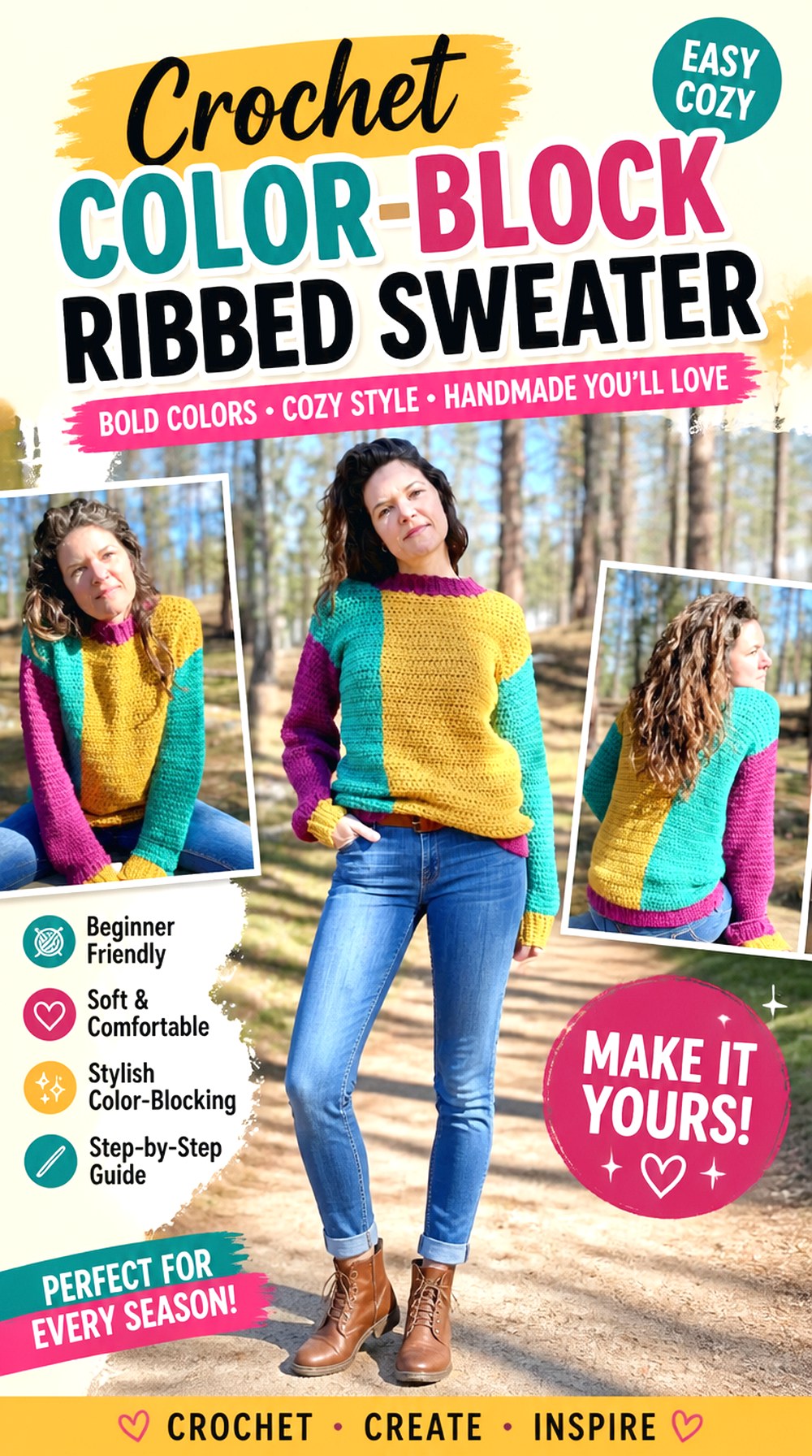
Color blocking gives a fall sweater structure before you even examine the stitches. Off the Beaten Hook’s tutorial features contrasting sections together with ribbed finishing at the hem and collar, providing a cleaner, more graphic alternative to narrow stripes. The associated pattern information covers a broad size range, which is helpful for readers who prefer graded sizing. This idea works particularly well when you have two or more colors you want to feature in clearly defined areas rather than mixing them throughout the fabric.
Color Blocks Make Proportion More Visible
A large contrast area can visually shorten, lengthen, widen, or emphasize part of the sweater depending on where the transition sits. Before joining colors, hold them against your body or sketch the approximate block placement. The goal is to choose the division deliberately instead of treating the color change as an afterthought.
Ribbed Edges Help Frame a Bold Palette
Strong color blocking already creates visual movement, so clear finishing can keep the design from looking fragmented. Notice how the ribbed collar and hem establish boundaries around the larger color areas. If you substitute colors, compare their contrast in daylight; two shades that look different in skeins may read nearly identical once crocheted.
Original Tutorial and Creator Credit
Creator: Off the Beaten Hook
Crochet Custom Stripe Everyday Sweater

ElyseCrochets’ striped sweater is designed around a made-to-fit approach rather than a single rigid finished size. The tutorial covers the garment panels, sleeves, and assembly, making it a useful candidate for readers who want straightforward stripes but need more control over dimensions. The visual interest comes from repeating horizontal color changes rather than complex surface texture, so this sweater can be styled as a casual everyday fall layer without competing with other patterned pieces.
Stripe Width Changes the Sweater’s Visual Rhythm
Before beginning, decide whether you want evenly repeated stripes, a few broad bands, or deliberately irregular color sections. Narrower repeats produce more color changes and therefore more ends to manage. Wider bands make each yarn color more prominent and can make differences in yarn texture or thickness easier to notice.
Custom Fit Still Needs Measurement Checkpoints
“Any size” construction is not the same as one set of instructions magically fitting everyone. Record the body and garment measurements you are using and check the developing panels against them. Pay particular attention to armhole depth and sleeve circumference because those areas can feel wrong even when the torso width appears correct.
Original Tutorial and Creator Credit
Creator: ElyseCrochets 💌
Crochet Scrap Yarn Raglan Sweater
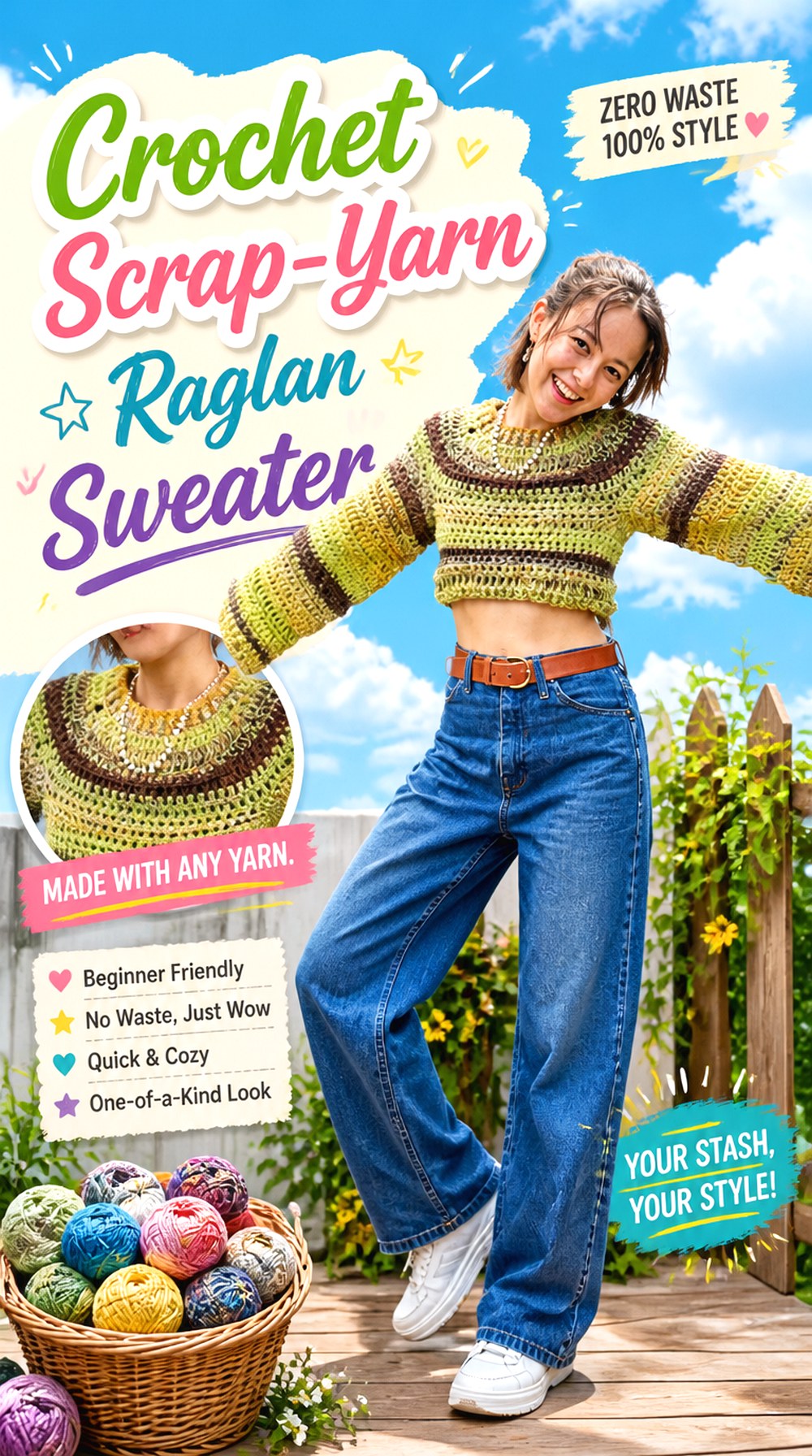
A scrap sweater can look intentional rather than random when the construction gives the changing yarns a clear framework. Made in the moment’s tutorial uses a top-down raglan approach and incorporates leftover yarns in changing colors and weights. That makes this one of the most adaptable ideas in the collection, but also one of the projects where material planning matters most. Different leftovers can produce noticeably different fabric behavior even when their labels appear similar.
Mixed Scraps Can Change Fabric Behavior
Compare scraps by thickness, elasticity, fiber feel, and washed behavior before placing them beside one another. A dramatic change in yarn weight can alter the width or firmness of a section. If a particular leftover behaves very differently, using it as a smaller accent may produce a more predictable fabric than giving it an entire structural area.
Top-Down Raglan Shaping Helps With Try-On Decisions
A top-down sweater gives you useful opportunities to evaluate the developing neckline, yoke, and body before the garment is complete. Use those checkpoints to assess fit rather than focusing only on color placement. Scrap choices are easier to enjoy when the underlying sweater proportions already work.
Original Tutorial and Creator Credit
Creator: made in the moment
Crochet Granny Square Patchwork Sweater

A granny-square sweater turns motif planning into garment planning. TL Yarn Crafts’ tutorial uses granny squares along with additional shapes, joining, panel adjustments, sleeves, and neckline finishing to create a complete pullover rather than simply attaching a few motifs to a basic top. This option has stronger patchwork character than the continuous granny-stitch sweaters elsewhere in the list, making it a better fit for someone who enjoys arranging individual units before assembly.
Granny Square Size Controls the Whole Layout
Block a representative motif before making a large stack of squares. Small differences multiply across a garment panel, so an apparently minor size mismatch can change body width or make joins difficult. If you alter yarn, hook, or motif design, recheck the blocked dimensions instead of assuming the original layout will remain compatible.
Triangles and Joining Lines Become Design Elements
This sweater is not simply a grid of identical squares. Additional shapes and joining areas help the motif layout conform to a wearable form. When choosing colors, remember that join lines can either blend into the squares or become a visible framework. Decide which effect you want before assembling the full garment.
Original Tutorial and Creator Credit
Creator: TL Yarn Crafts
Crochet Side to Center Granny Stripe Sweater

Instead of using separate squares, the Wapta Falls pullover from MJ’s Off The Hook Designs creates granny-stitch fabric in a side-to-center construction. This shifts the visual direction so the stripes run vertically through much of the finished sweater. The tutorial also includes a cinched lower band, giving the body a different finish from loose rectangular granny-stitch pullovers. The associated pattern offers a wide graded size range.
Side-to-Center Construction Turns Stripes Vertical
Directional construction can completely change how a familiar stitch pattern looks. If you like granny stitch but do not want the conventional horizontal-row appearance, this layout is worth comparing with standard bottom-up panels. Color changes become long vertical features rather than stacked horizontal bands.
The Cinched Band Changes the Finished Silhouette
A gathered or more fitted lower edge pulls the loose body fabric inward and can create a blousier shape above it. Check where you want that band to sit on your body. Moving the effective hem position can alter both the apparent sweater length and the amount of fabric that gathers above it.
Original Tutorial and Creator Credit
Creator: MJ’s Off The Hook Designs
Crochet Oversized Autumn Lace Sweater
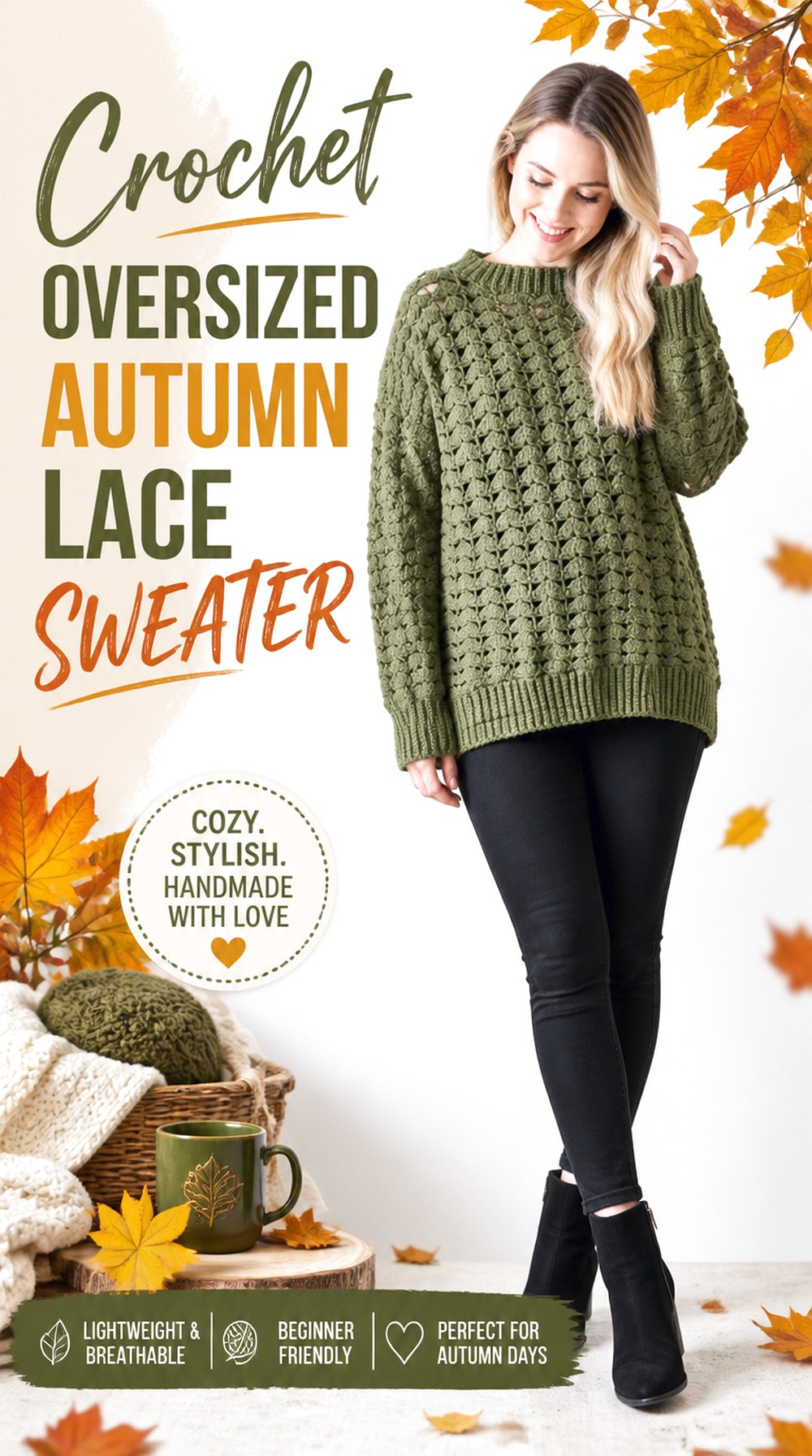
The Autumn Lace Sweater from Coffee and Crocheting brings a lighter texture into a collection dominated by dense fall fabric. It is an oversized pullover built from separate body and sleeve pieces, with neckline and edge finishing added afterward. The creator provides graded sizing from XS through 5X and uses DK-weight yarn for the sample. The open stacked-shell-style texture makes this particularly suitable for transitional layering because another garment can remain visible beneath the sweater.
Open Lace Needs a Layering Plan
A lace sweater’s practical warmth depends heavily on what is worn underneath it. Rather than comparing it directly with a chunky pullover, decide whether you want a breathable decorative layer over a fitted tee, tank, or long-sleeved top. The underlayer’s color will also become part of the sweater’s final appearance.
Flat Pieces Make Length Adjustments Easier to Visualize
Because the body sections are worked separately before assembly, you can compare their developing length against a favorite sweater with similar intended ease. If you alter length, remember that the change affects yarn requirements and where the side details and hem fall, not just the amount of torso coverage.
Original Tutorial and Creator Credit
Creator: Coffee and Crocheting
Crochet Cable Panel Fall Jumper
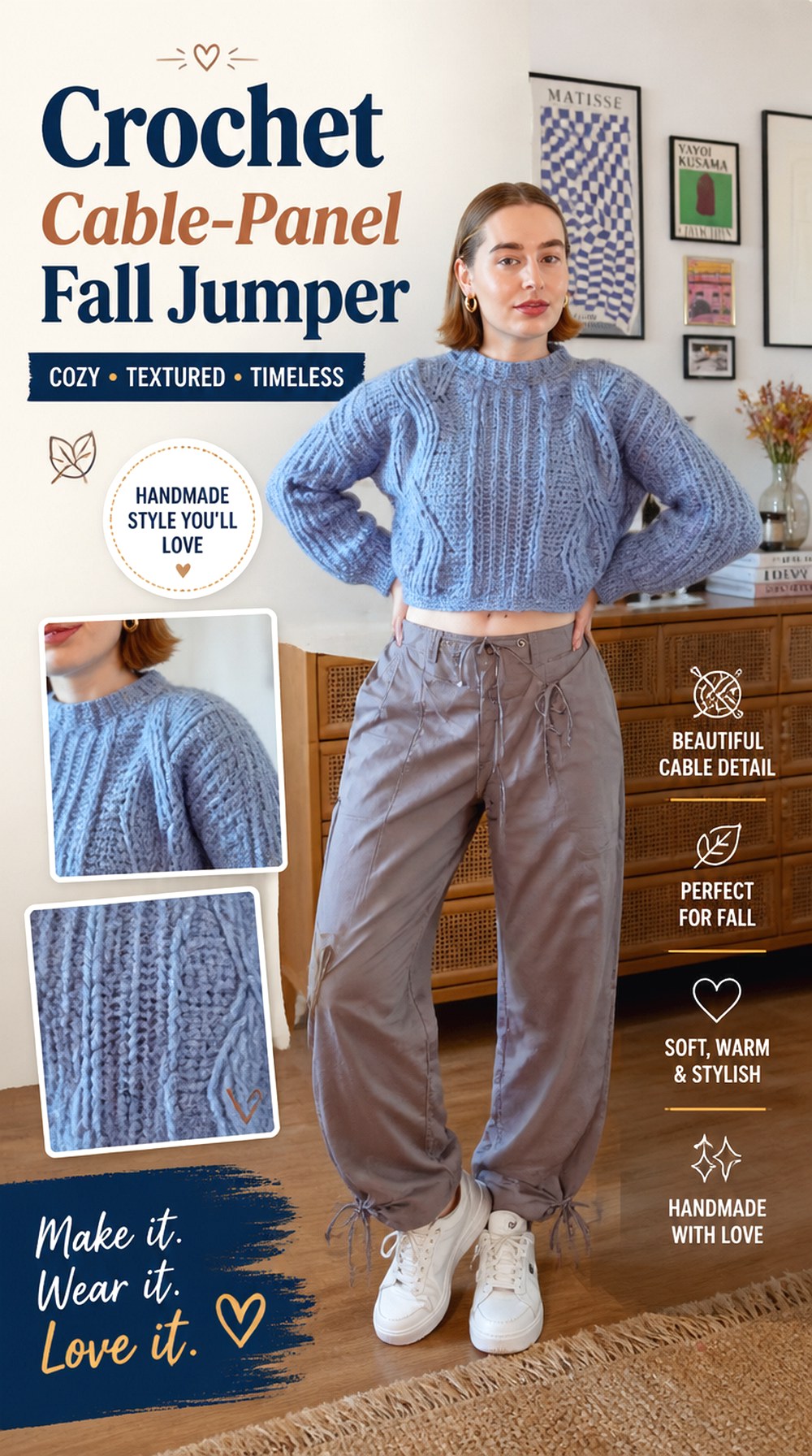
Katie Joslin’s crochet cable jumper is a strong option when you want a sweater to look structured and deliberately textured rather than soft and open. The made-to-measure design combines raised cable sections with ribbed crochet panels, and the creator explains that width, length, and cable arrangement can be customized. The tutorial also uses multiple strands together for the demonstrated fabric, which makes swatching particularly important before adapting it to different yarns.
Cable Panels Add Structure and Bulk
Raised cables place more yarn and texture into concentrated areas. That can create an attractive cold-weather surface, but it can also make the cable sections behave differently from adjoining ribbing. Compare the depths and stretch of your swatches before deciding how many cables you want across a panel.
Made-to-Measure Works Only When You Measure Often
Customization is valuable because you are not locked into a standard size, but the trade-off is that you become responsible for the fit decisions. Record your target body, sleeve, and garment measurements and revisit them during construction. Do not rely solely on the appearance of a partially finished panel lying flat.
Original Tutorial and Creator Credit
Creator: Katie Joslin
Crochet Ribbed Turtleneck Sweater
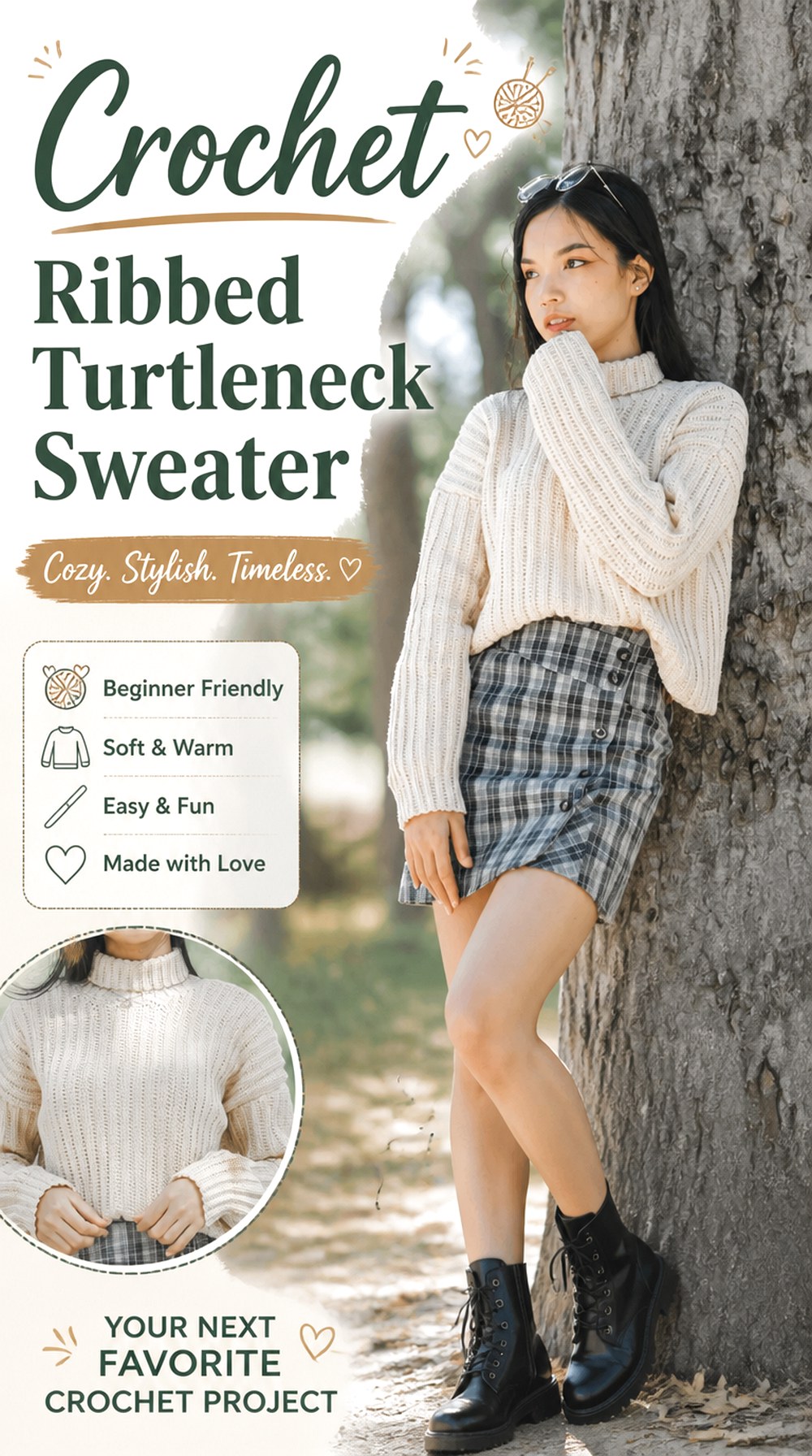
A ribbed turtleneck puts fall function at the neckline rather than relying entirely on a heavy body fabric. Chenda DIY’s tutorial separates the sweater into front, back, sleeve, joining, and turtleneck stages, giving the finished garment a clearly defined high neck and ribbed look. This can work well as a standalone sweater when you would rather not add a scarf or visible underlayer around the neck.
A Folded Turtleneck Adds Warmth Near the Face
Check both circumference and height before deciding that a taller collar is automatically better. A turtleneck that feels comfortable on one person can feel restrictive on another. If you are sensitive to fabric around the neck, compare the creator’s finished shape with a sweater you already enjoy wearing.
Ribbing Can Amplify Horizontal or Vertical Stretch
Ribbed crochet often changes dimension more noticeably when worn than when resting flat. Observe the direction in which the ribbing stretches and consider how that affects the torso, cuffs, and neck. A relaxed body and a secure neckline may need different fit judgments even when they share a similar visual texture.
Original Tutorial and Creator Credit
Creator: Chenda DIY
Crochet Waffle Stitch Raglan Turtleneck
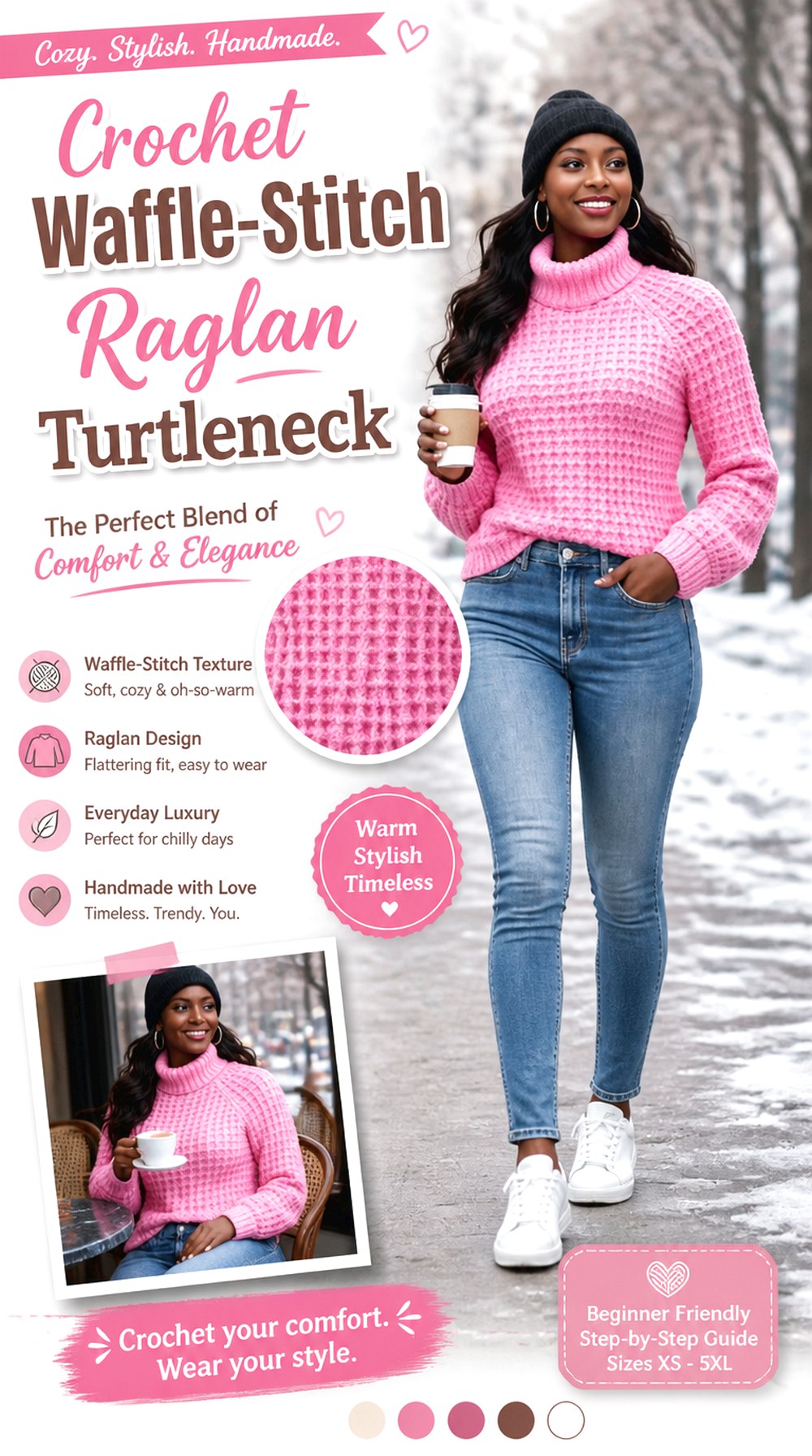
Shyler crochets combines three strong fall features in one garment: waffle texture, top-down raglan shaping, and a folded ribbed turtleneck. Compared with the smoother ribbed turtleneck above, this sweater puts significantly more emphasis on the body texture. The tutorial also describes the fit and length as customizable, making it a useful project for someone who wants to evaluate the garment on the body as the raglan develops.
Waffle Texture Creates a Denser Statement Surface
Waffle stitch has visible depth, so color is not the only thing that determines the finished look. A solid or lightly heathered shade can let the raised geometry remain easy to read. If you choose a highly variegated yarn, make a generous swatch first to see whether the color changes compete with the texture.
Raglan Depth Is a Key Fit Check
During a top-down raglan, the point where the yoke reaches the underarm strongly affects mobility and overall fit. Do not evaluate only the bust width. Check the developing armhole depth and shoulder position according to the tutorial before separating the body and sleeves.
Original Tutorial and Creator Credit
Creator: Shyler crochets
Crochet Super Chunky Textured Jumper
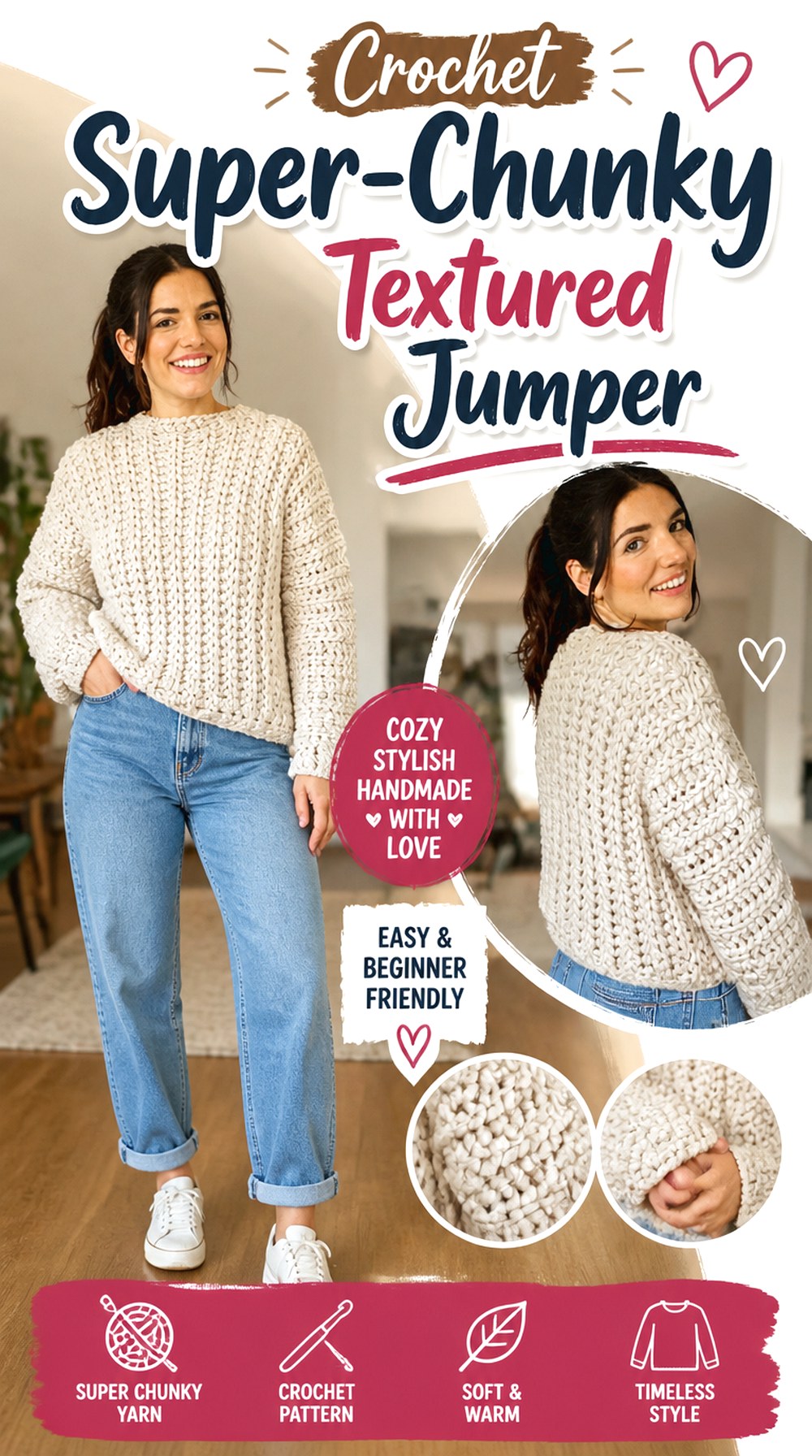
Cat Kemble’s super-chunky jumper uses half double crochet slip stitch as a prominent part of its texture, with additional finishing for the cuffs, waist, and collar. The body is worked in flat pieces, while the sleeves are added from the body. Super-chunky yarn gives this sweater a very different scale from the DK lace and lightweight striped projects, so it suits readers who want a visibly substantial garment rather than a delicate transition layer.
Super-Chunky Yarn Changes Scale Quickly
With very thick yarn, a small difference in stitch height, tension, or hook choice can noticeably change a garment panel. Make the creator’s gauge information a priority rather than assuming that every yarn carrying the same general weight label will create an interchangeable sweater fabric.
Textured Slip Stitches Can Feel Firmer Than Expected
A stitch can look wonderfully dense while still producing less drape than you want in a full garment. Move and fold your swatch before starting the body. If you want a particularly soft oversized silhouette, judge whether the chosen yarn and textured stitch combination bends comfortably at the shoulders and elbows.
Original Tutorial and Creator Credit
Creator: Cat Kemble
Crochet Slouchy Tweed Look Sweater

JeggoCrochet’s tutorial creates a slouchy pullover using DK yarn, and the sample yarn contributes a tweed-like visual effect. This is a quieter fall look than patchwork or color blocking: the interest comes from the speckled yarn and relaxed shape rather than large graphic areas. It is a useful option if you want a casual sweater that can work with jeans, boots, and other patterned accessories without becoming the dominant element in the outfit.
Tweed-Look Yarn Already Supplies Visual Texture
Speckles and neps can make a simple stitch pattern appear more complex, so consider whether additional surface texture is necessary. A relatively straightforward fabric may give the yarn enough room to show. Before committing, view a swatch from normal wearing distance rather than examining it only close up.
Slouch Needs Intentional Ease, Not Random Extra Width
A relaxed sweater should still have planned proportions. Compare the body width, armhole position, and sleeve length rather than simply making every part larger. Too much sleeve or shoulder length can make an intended slouchy silhouette feel cumbersome, especially when another coat must fit over it.
Original Tutorial and Creator Credit
Creator: JeggoCrochet
Crochet Chunky Relaxed Fall Sweater
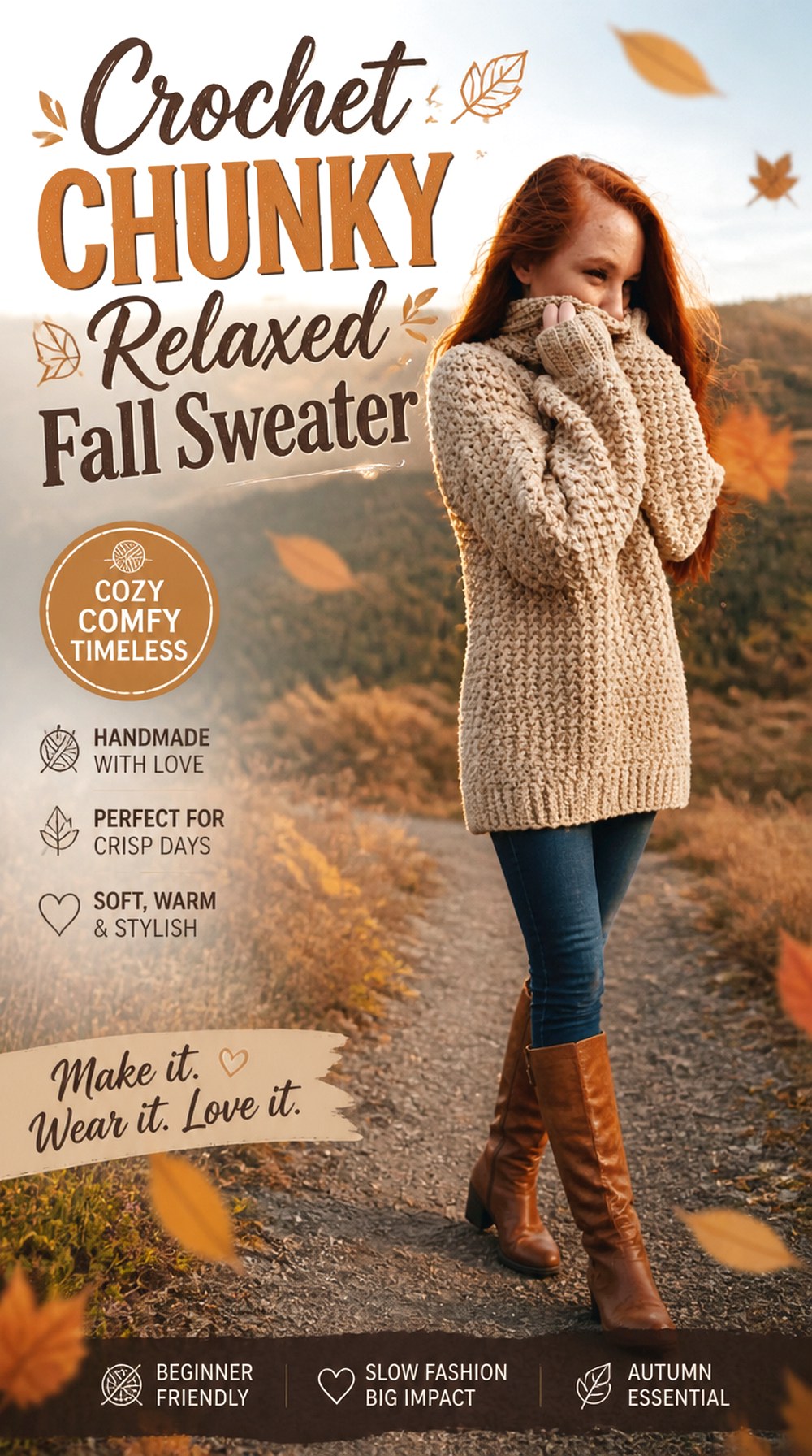
Hey Carrie’s sweater tutorial offers another substantial pullover direction without making a complex motif or multicolor layout the main event. The tutorial uses larger hooks for the main fabric and a smaller hook within the project, signaling that different garment areas receive different treatment. This is a good idea to consider when you want a chunky sweater aesthetic but prefer the finished silhouette—not cables, patchwork, or dramatic sleeves—to carry the design.
Chunky Yarn Makes Edges and Seams More Noticeable
As stitches get larger, finishing details become easier to see. Pay attention to joins, edges, and the transition between main fabric and finishing. If you change the yarn, compare how bulky the seams become before deciding that the substitute will behave exactly like the tutorial sample.
Keep the Neckline Comfortable Under Fall Layers
A relaxed sweater may be roomy through the torso while still feeling very different at the neck. Compare the opening with the tops you expect to wear underneath. If a T-shirt, collared shirt, or mock neck is part of your usual fall outfit, make sure the sweater neckline accommodates that layer comfortably.
Original Tutorial and Creator Credit
Creator: Hey Carrie
Crochet Four Rectangle Oversized Pullover

The oversized sweater from it’s erin b. is notable for its simple geometric construction: the creator describes the project as using four rectangles. That makes the garment easy to understand visually, but it does not eliminate fit decisions. The sample is deliberately roomy, and the tutorial covers the body, neckline, sleeves, cuffs, ribbed band, and seaming. This idea suits readers who prefer building recognizable flat pieces before putting the full garment together.
Four Rectangles Simplify Shape, Not Fit
Rectangular pieces reduce shaping complexity, but their dimensions still determine the armhole, body length, sleeve room, and final ease. Measure a sweater you already like and compare its general proportions before deciding how much width you want. Rectangular construction is forgiving only when those dimensions are chosen deliberately.
Seaming Determines How Relaxed the Sweater Hangs
Straight pieces gain their final three-dimensional shape during assembly. Align edges carefully and check that corresponding sections are compatible before completing long seams. Uneven joining tension can create puckering even if the individual rectangles looked neat and flat on their own.
Original Tutorial and Creator Credit
Creator: it’s erin b.
Crochet Top Down Ribbed Raglan Sweater
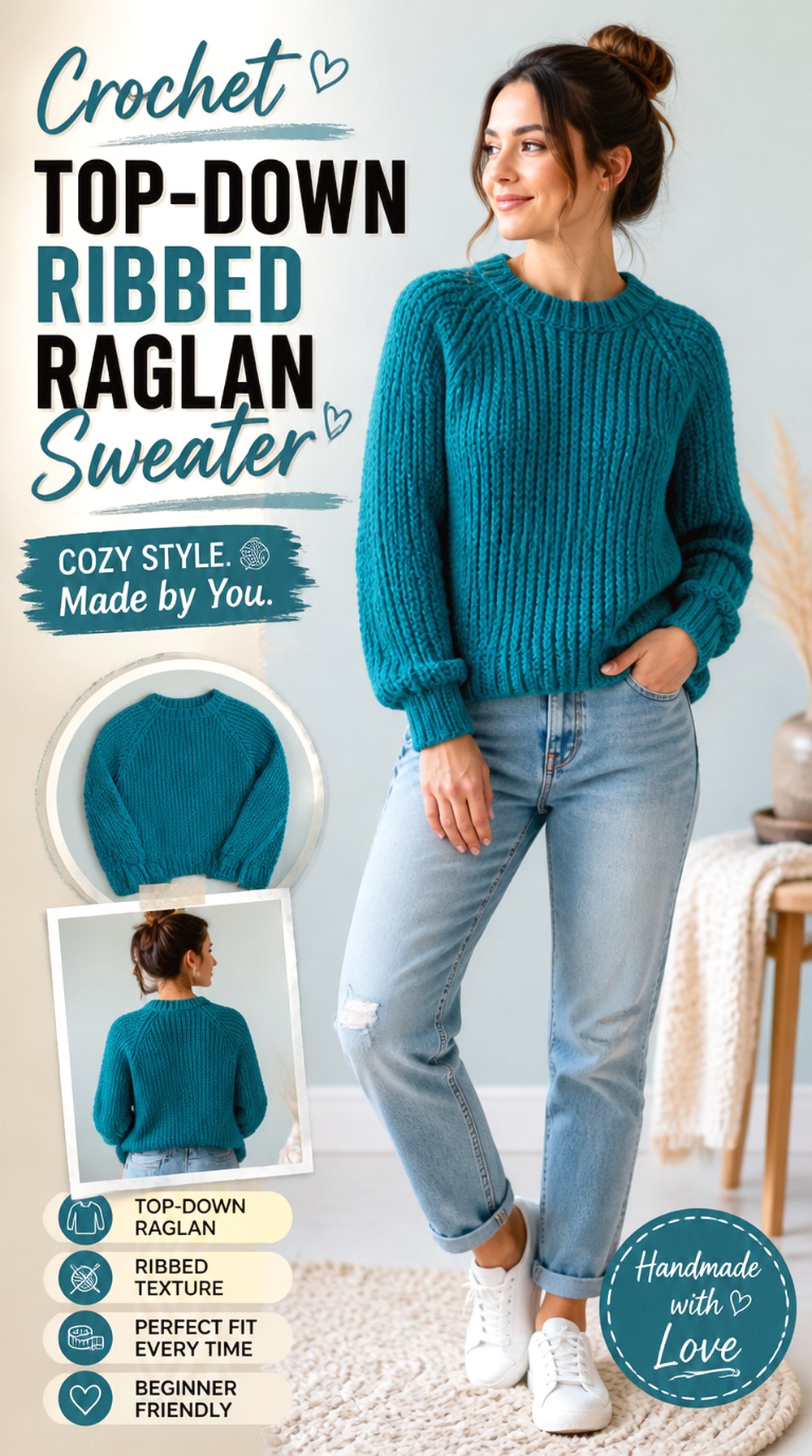
Brenda DIY’s top-down raglan sweater uses pronounced ribbed texture and begins from the upper garment rather than requiring separate front and back panels. The tutorial sample is size small, so readers planning another size should pay close attention to the creator’s sizing or adjustment guidance rather than copying the sample dimensions. As a fall project, its main appeal is the combination of clean raglan shaping and a strongly ribbed surface.
Top-Down Construction Supports Earlier Fit Checks
The yoke develops before the body and sleeves are completed, which creates an important point for checking neckline placement, shoulder shaping, and underarm depth. Use that opportunity. Fixing an uncomfortable yoke early is usually more practical than trying to compensate by changing the lower body later.
Ribbed Texture Can Pull In Differently by Area
Raised and ribbed stitch patterns may contract or stretch differently from flatter fabric. Compare the garment while relaxed and while worn, particularly around the neck, hem, and upper body. If substituting yarn, do not assume that matching a general yarn category guarantees identical recovery.
Original Tutorial and Creator Credit
Creator: Brenda DIY
Crochet Flare Sleeve Statement Sweater
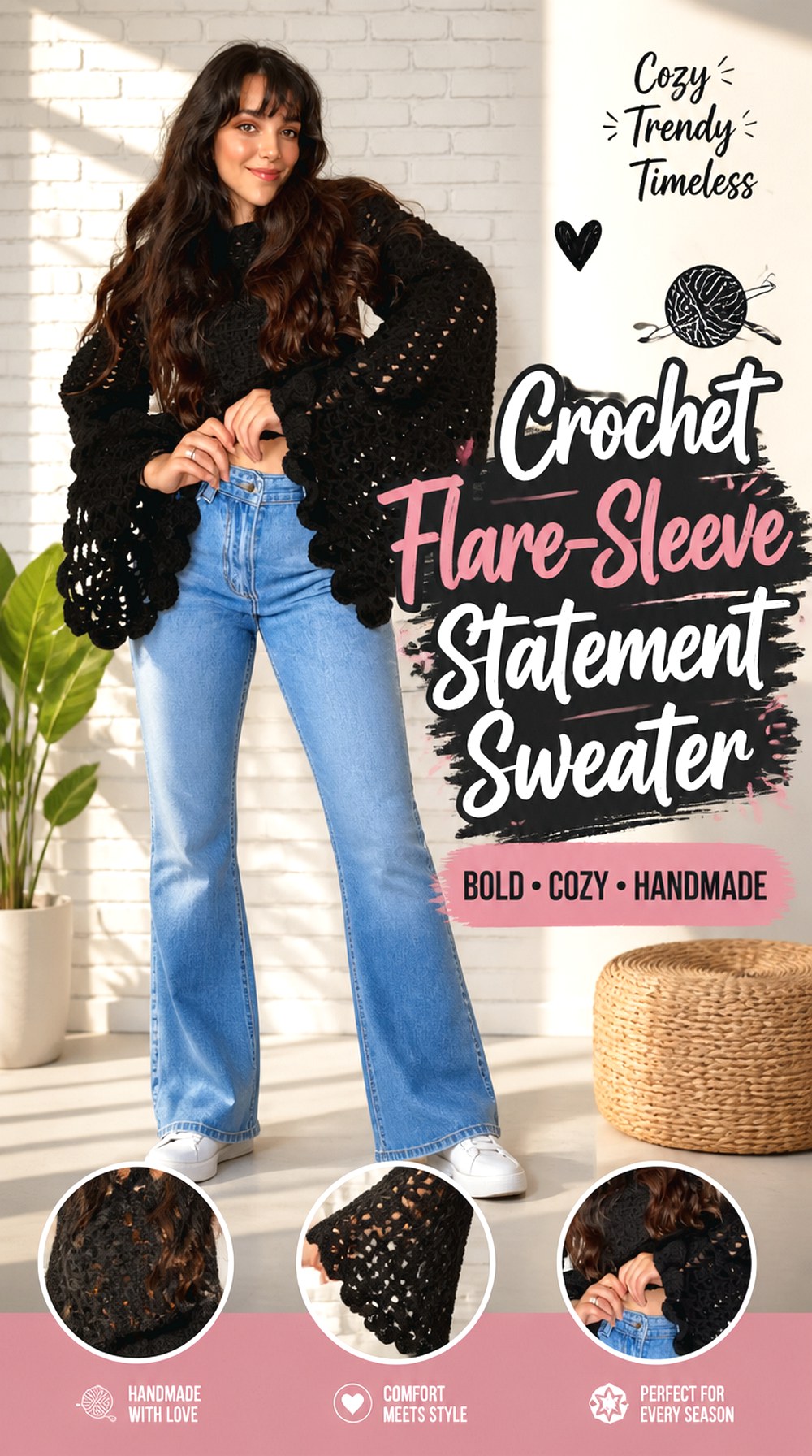
Krystal Everdeen’s sweater shifts attention away from the torso and toward the sleeves. The defining feature is the flared sleeve shape, making this a useful project for anyone who likes a relatively recognizable pullover silhouette with a stronger fashion detail at the arms. Compared with balloon sleeves, flares keep expanding toward the wrist instead of gathering back into a narrow cuff, so they create a noticeably different line.
Flared Sleeves Need Clearance at the Cuff
Think about daily use before choosing the flare. A wider sleeve opening can look dramatic but may be less convenient around food preparation, desks, or fitted outerwear. Compare the finished sleeve shape with how you actually expect to wear the sweater rather than evaluating it only as a photo feature.
Let the Sleeve Be the Statement Feature
Because the flare already adds strong shape, a simpler yarn palette can keep attention on the silhouette. If you also add bold stripes or highly textured yarn, make a small visual plan first. Multiple competing details can obscure the very sleeve line that made the project distinctive.
Original Tutorial and Creator Credit
Creator: Krystal Everdeen
Crochet Knit Look Cropped Jumper
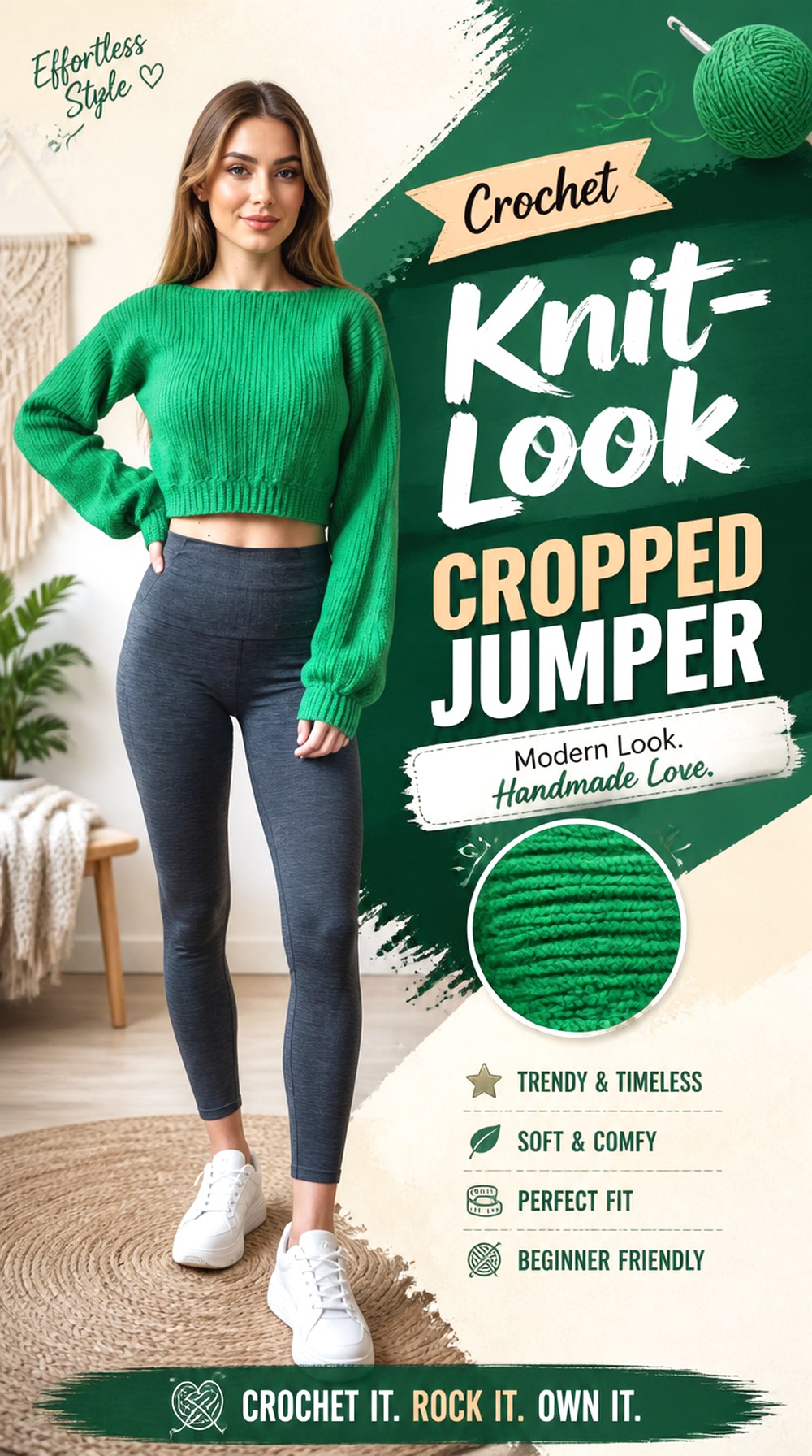
Shirleyrosey’s cropped jumper uses crochet to create a surface with a knit-like appearance. The tutorial covers the main body piece, ribbing, shoulder seam, sleeves, and neckline, resulting in a long-sleeved cropped silhouette with a relatively streamlined texture. It is a useful alternative to the oversized knit-look sweater earlier in the list because the shorter body changes the overall proportion while keeping the quieter faux-knit aesthetic.
Knit-Look Crochet Benefits From Consistent Direction
Stitches that imitate knit fabric often rely strongly on their orientation. When assembling pieces, check that the visible texture runs in the intended direction and that corresponding areas match. A small directional inconsistency may be much more obvious in a smooth fabric than in highly variegated or heavily textured crochet.
A Cropped Hem Puts More Focus on Proportion
With less body length, the relationship among sleeve length, sweater width, and hem position becomes more noticeable. Try the developing pieces against the bottoms you intend to wear most often. If you lengthen the body, reassess whether you still want the same amount of ease and sleeve emphasis.
Original Tutorial and Creator Credit
Creator: Shirleyrosey
Crochet Bulky Cropped Fall Sweater

Dana B’s cropped sweater offers a more substantial interpretation of the short fall pullover. Supporting pattern roundups identify the project as using bulky yarn, so the fabric has a different visual scale from the DK-weight cropped sweaters in this collection. The original YouTube tutorial itself focuses on the cropped sweater construction. This makes it useful if you like a short hem but do not want the garment to feel visually delicate.
Bulky Fabric Can Make a Short Sweater Feel Substantial
Cropping a sweater reduces body length, but using thick fabric can still give it considerable visual presence. Check the swatch against the intended neckline and sleeves; a yarn that feels attractive in a small square may feel much heavier once it becomes a full upper-body garment.
Check the Tutorial’s Size Scope Before Adapting
This is especially important when a video demonstrates a particular sample rather than a comprehensive graded range. If your measurements differ, do not simply scale every part by the same amount. Confirm what the creator provides, then separately assess torso width, armhole depth, sleeve circumference, and desired length.
Original Tutorial and Creator Credit
Creator: Dana B
Crochet Measurement Led Classic Pullover
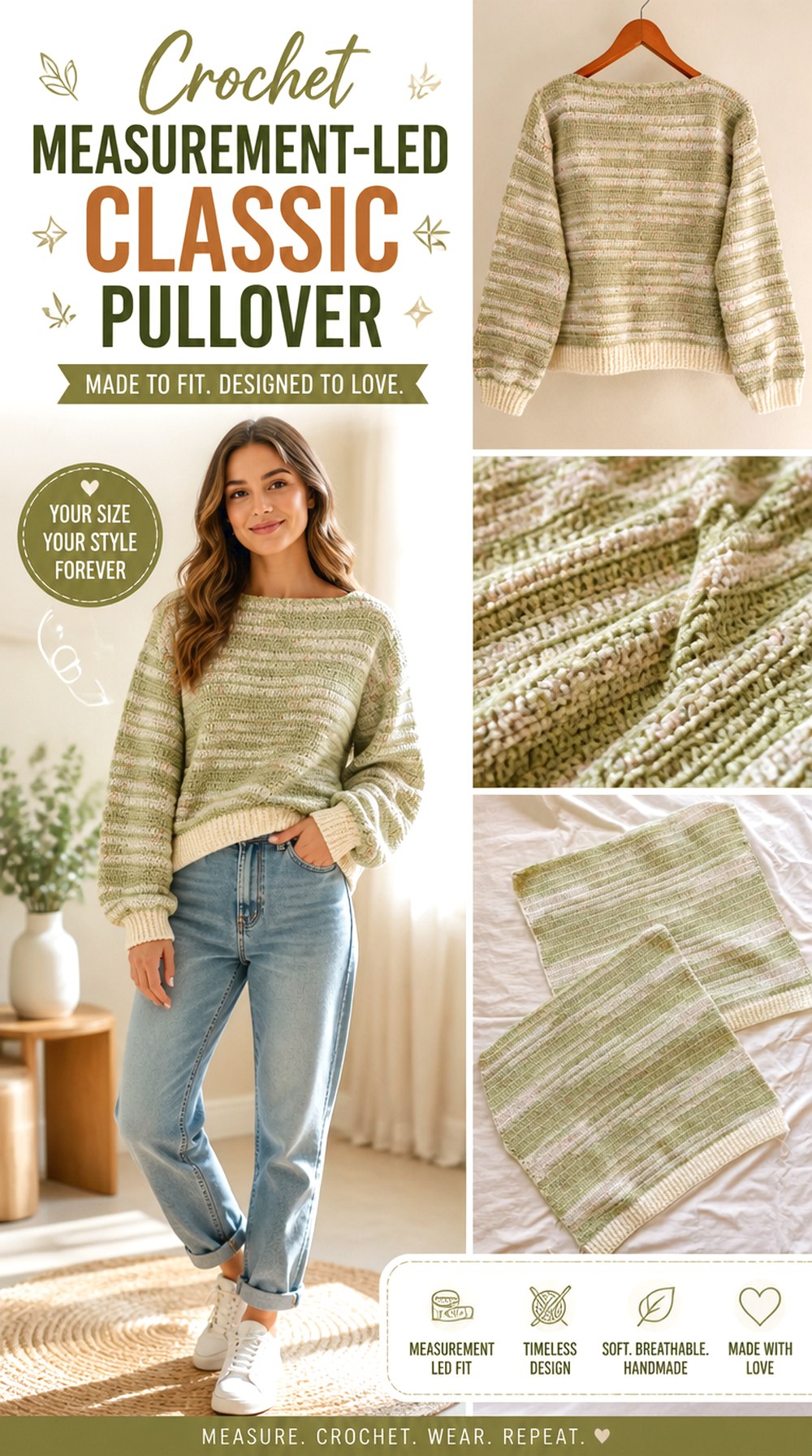
Branda Crochet’s pullover tutorial emphasizes adapting the sweater to different sizes and yarn choices instead of presenting one highly specific fashion silhouette. That makes it a practical option when your priority is learning how a straightforward crochet pullover comes together while keeping your own measurements central. It also creates a useful visual break in this list between dramatic sleeves, colorwork, lace, and complex texture.
Measurement-Led Sizing Is Useful for Nonstandard Proportions
If your preferred torso width, body length, or sleeve measurements do not align neatly with one standard size, a measurement-based approach can be appealing. Keep a written record of each target dimension so adjustments remain consistent between corresponding pieces instead of being made from memory.
Changing Yarn Also Changes the Math
A tutorial that can accommodate different yarn does not mean every yarn can be substituted without recalculating dimensions. Thicker or thinner yarn changes stitch scale, fabric density, and possibly garment weight. Work from measured fabric and the creator’s adaptation method rather than transplanting counts from one yarn to another.
Original Tutorial and Creator Credit
Creator: Branda Crochet
Crochet Multicolor V Stitch Fall Sweater

ByKaterina Designs’ ColorFall sweater makes autumn color a structural part of the garment. The tutorial demonstrates the sweater in multiple shades and covers the yoke, body, sleeves, and ribbed finishing. The accompanying written pattern extends beyond the size demonstrated in the video, while the stitch pattern introduces open spaces that keep the multicolor surface from becoming visually solid.
A Multicolor Yoke Concentrates Attention Near the Shoulders
Color changes around a yoke naturally frame the neck, shoulders, and upper body. Arrange your palette before beginning instead of selecting the next shade spontaneously unless an intentionally random result is the goal. Photographing the skeins together can also reveal whether one shade dominates more strongly than expected.
V-Stitch Fabric Balances Color With Openness
Open spaces allow neighboring colors and underlying layers to interact differently from dense crochet. Consider what will be worn beneath the sweater and swatch enough rows to see several color changes. The best palette in separate skeins is not always the combination that reads most clearly once separated by open stitches.
Original Tutorial and Creator Credit
Creator: ByKaterina Designs
Crochet Scrap Stripe Pullover Sweater

HayHay Crochet’s striped pullover is particularly relevant if your fall yarn box already contains partial skeins you want to combine. The tutorial specifically presents leftover yarn as an option and uses a tall stitch for the sweater fabric, separating this idea from denser striped designs. Rather than trying to make every leftover equal, the project invites you to think in terms of a controlled stripe sequence and a more open, casual fall layer.
Leftover Yarn Turns Stripe Planning Into a Material Puzzle
First group possible yarns by compatible thickness and fabric behavior, then plan the colors. A beautiful stripe sequence is not very useful if one section becomes dramatically narrower, stiffer, or stretchier than the rest. Save especially different scraps for small accents instead of forcing every leftover into the body.
Treble Crochet Creates a Different Fall Layer Than Dense Stitches
Taller stitches can produce more openness and movement than compact waffle, cable, or slip-stitch fabric. That makes this sweater worth considering for earlier fall or indoor layering. If maximum warmth is your priority, compare the resulting fabric with one of the denser options in this collection before choosing solely for the stripe effect.
How These Crochet Fall Sweaters Compare
If warmth and substantial texture are the priority, start with the basketweave balloon-sleeve sweater, waffle raglan turtleneck, cable jumper, or super-chunky textured jumper. For lighter transitional layering, the oversized lace sweater, off-shoulder crop, V-stitch ColorFall sweater, and treble-crochet striped pullover provide more visual openness.
For fit flexibility, compare the made-to-measure cable sweater, measurement-led classic pullover, custom-stripe sweater, and top-down raglan designs. If color is the main reason you want to start a new project, granny-square patchwork, color blocking, scrap yarn, vertical granny stripes, and multicolor yokes give you five genuinely different ways to distribute it.
Sleeve-focused choices are different again: balloon sleeves create gathered volume, while flare sleeves keep widening toward the wrist.
Conclusion
The most useful fall sweater choice starts with how you expect to wear it. Choose cables, waffle texture, basketweave, or chunky fabric when a substantial surface matters; look at lace, V-stitch, or taller stitches when you want an easier transitional layer. Raglans and measurement-led projects offer different adjustment opportunities from seamed rectangles, while granny squares and scrap stripes put more of the planning into color and layout.
Sleeves and necklines can narrow the list even further: compare turtlenecks for coverage, V-necks for layering, balloon sleeves for gathered volume, and flares for a more dramatic shape. Once you have picked the silhouette, use the original tutorial for its exact construction, measurements, stitch information, and finishing details.
Frequently Asked Questions
What yarn weight is most practical for a crochet fall sweater?
There is no single ideal weight. Bulky and super-chunky yarn can create a substantial fabric but may add more weight and volume. DK or medium-weight yarn gives access to a wider range of drapes and textures, while lace or open-stitch construction can produce a lighter layering sweater. Judge the finished swatch rather than choosing by yarn label alone.
How should I choose a sweater size when the tutorial is made to measure?
Start with the measurements the creator asks you to use, then keep the intended garment ease separate from your actual body measurements. Check the torso, shoulders, armholes, sleeve circumference, sleeve length, and neckline rather than treating fit as one bust measurement. A made-to-measure tutorial gives you control, but it also makes regular measuring more important.
Can I make a cropped crochet sweater longer for colder weather?
Often, but only where the specific construction allows it. Adding body length also increases yarn use and can change the visual balance between the torso and sleeves. Check the creator’s tutorial before altering the design, especially when shaping, ribbing, side details, or a particular stitch repeat affects where additional length can be placed cleanly.
Is a top-down raglan easier to adjust than a seamed sweater?
It offers different adjustment opportunities rather than being universally easier. Top-down raglans can provide useful try-on checkpoints while the yoke and body are developing. Seamed sweaters let you measure individual flat pieces clearly and compare matching parts before assembly. Choose the method that better matches how you prefer to check fit and correct mistakes.
How can I keep a textured crochet sweater from becoming too stiff?
Swatch the exact yarn and hook combination in the stitch pattern you plan to use. Cables, waffle stitch, basketweave, ribbing, and slip-stitch textures can create very different fabric from a simple stitch using the same yarn. Bend, stretch, and drape the swatch rather than judging it only while it lies flat.
Should sweater pieces be blocked before I seam them?
Blocking can help you compare dimensions and even out pieces before assembly when it is appropriate for the yarn and project. It is especially useful when two matching panels or multiple motifs need to align. Follow the fiber’s care information and the creator’s finishing guidance, since different yarns respond differently to moisture, heat, and handling.