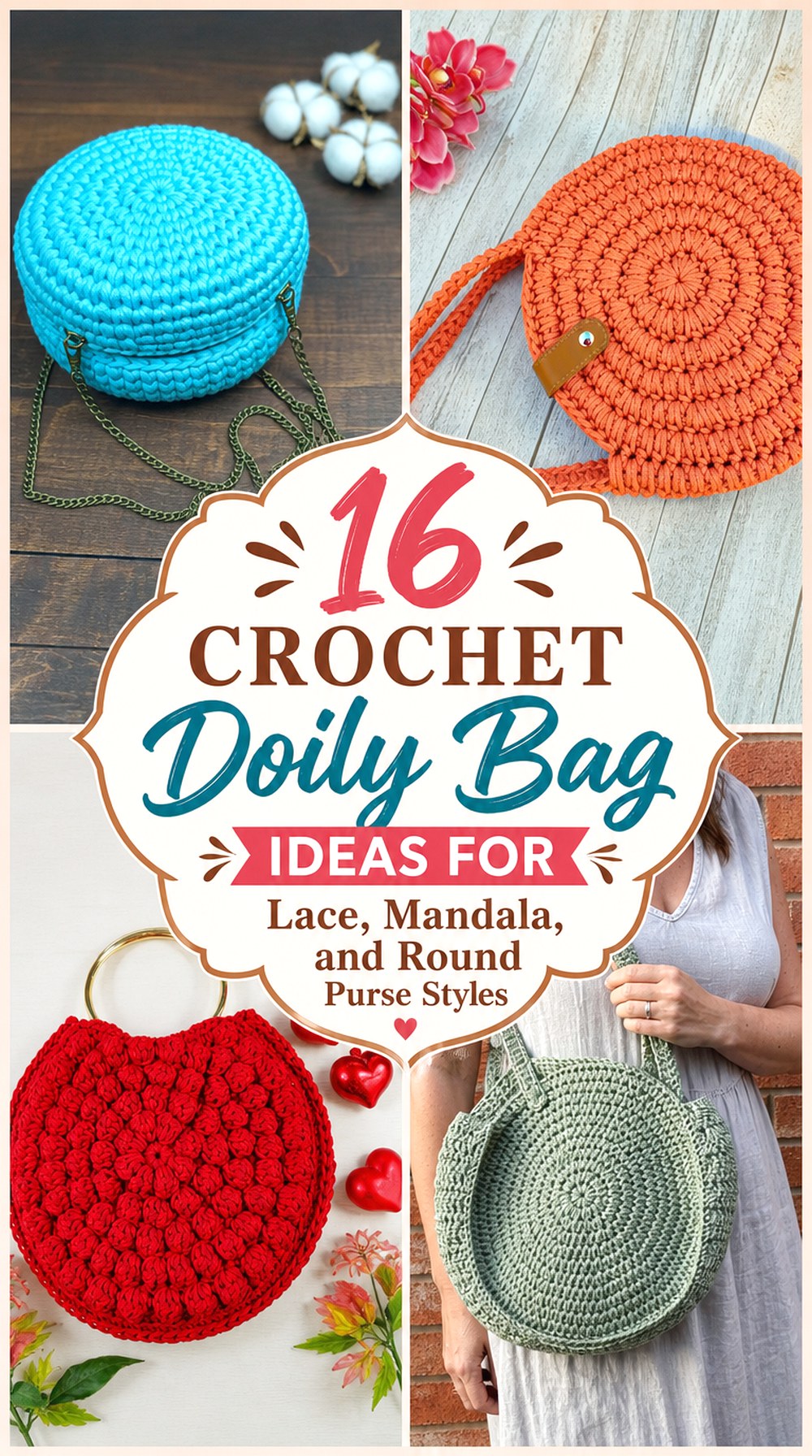

A crochet doily bag can range from a genuinely lacy, openwork purse to a colorful mandala bag with a dense circular face. That difference matters. An airy doily panel puts the decorative stitches first, while a firmer round bag gives small belongings more coverage and usually creates a more defined silhouette.
These 16 ideas intentionally cover that wider range. You will find lace-forward shoulder bags, mandala crossbodies, textured handbags, zipper purses, gusseted totes, raffia designs, and sturdy cord versions. Some tutorials are exact doily or mandala matches; others are useful round-bag constructions for crocheters who want the same medallion-inspired shape with less openwork. Along the way, the comparisons below will help you think through lining, closures, straps, depth, and how each circular fabric behaves before committing to a design.
Quick List
- Crochet Boho Lace Doily Shoulder Bag
- Crochet Color-Ring Mandala Bag
- Crochet Buttoned Mandala Crossbody Bag
- Crochet Textured Mandala Gusset Tote
- Crochet Sunburst Round Handle Bag
- Crochet Multicolor Granny-Circle Crossbody Bag
- Crochet Bubble-Stitch Ring-Handle Handbag
- Crochet Ruffled Round Purse
- Crochet Zippered Round Bamboo-Handle Purse
- Crochet T-Shirt Yarn Circle Chain Purse
- Crochet Raffia Round Summer Handbag
- Crochet Chunky T-Shirt Yarn Boho Circle Bag
- Crochet Structured Cord Circle Tote
- Crochet Button-Loop Round Crossbody Bag
- Crochet Gusseted Circular Handle Bag
- Crochet Cotton-Rope Round Crossbody Bag
Decide How Open You Want the Doily Panel to Be
The prettiest lace is not automatically the most practical bag fabric. Large open spaces make a doily or mandala visually light, but they can also expose the lining and whatever is carried inside. If you want the crochet itself to remain the focal point, think about whether a contrasting lining would compete with the motif or whether a closely related lining color would let the lace pattern read more clearly.
Denser radial designs behave differently. They reveal less of the interior and often create a more graphic circular shape, although the yarn and stitch structure still affect stretch. Before choosing solely by motif, compare the amount of open space in the finished panel and decide whether your priority is decorative lace, everyday coverage, or a balance between the two.
Treat the Lining, Opening, and Strap as Part of the Bag
A beautiful circular panel is only one part of a usable doily bag. The opening determines how quickly you can reach the contents and how contained they remain. An open top feels casual; a button limits the opening without sealing it; a zipper offers a more enclosed finish but needs an edge stable enough to support it.
Lining can prevent smaller objects from working through open crochet and can also keep the interior visually tidy behind lace. The strap deserves equal attention because a long unsupported crochet strap may stretch differently from the bag body. Check where the strap or handle attaches, particularly on an openwork panel, and consider whether that area needs a firmer edge or another form of reinforcement.
Check the Circle Before Joining Two Panels
Circular crochet is especially sensitive to shape. If a panel begins to cup, the finished purse may gain unintended depth; if it ripples strongly, joining it to a second circle can make the edge difficult to align. Compare both finished faces before permanent assembly rather than assuming two separately crocheted circles will behave identically.
Construction also changes the result. Two circles joined almost directly together make a flatter purse, while a gusset or side panel creates more interior depth and a clearer edge profile. Thick T-shirt yarn, cord, and raffia can emphasize every curve more than a softer yarn. Whatever tutorial you choose, pay attention to the finished panel shape shown by the creator before deciding how closely that construction suits your intended bag.
Crochet Boho Lace Doily Shoulder Bag
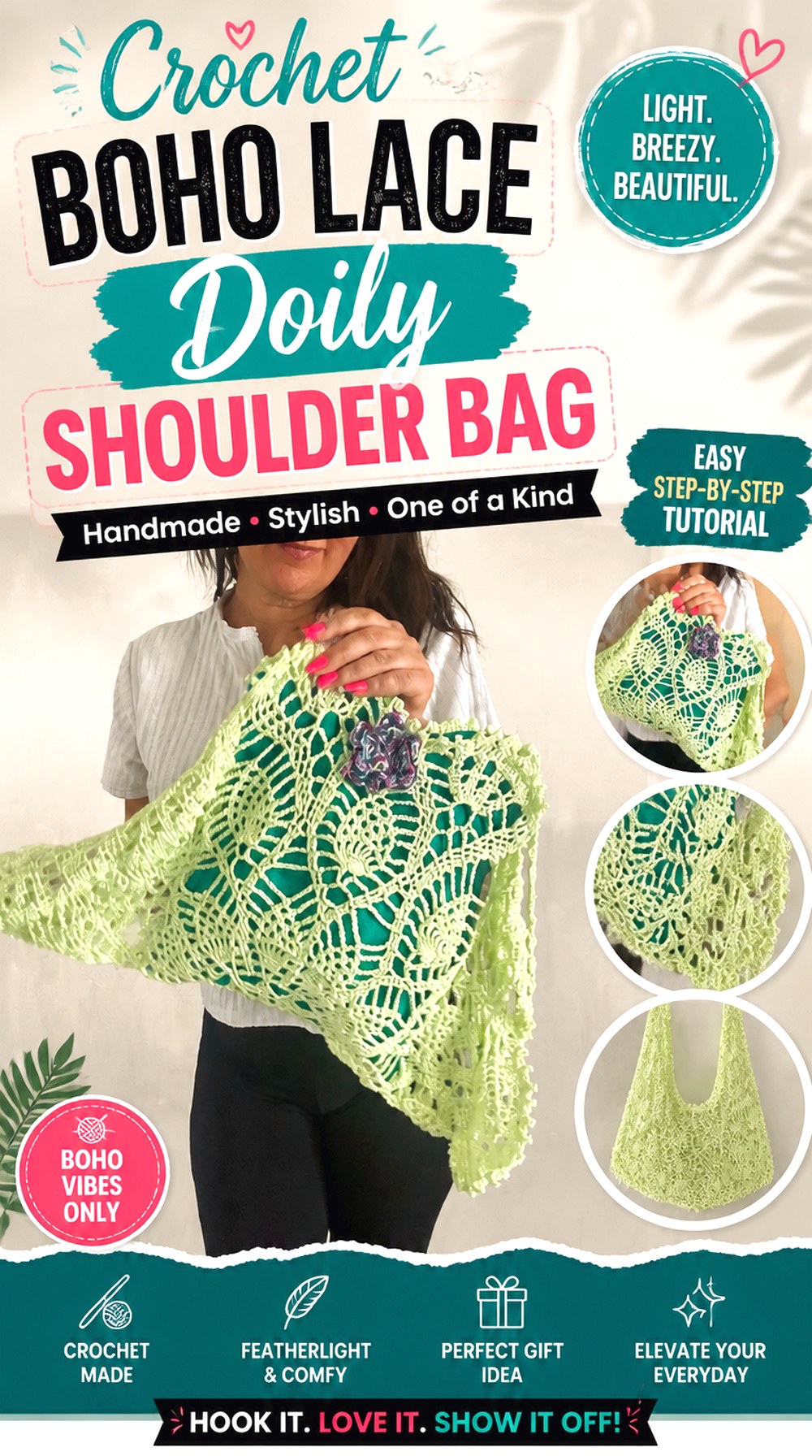
This is the closest match for anyone picturing a traditional crochet doily transformed into a wearable bag. Indigo Handmade Design’s tutorial shows a boho lace bag with a pronounced openwork, medallion-like appearance rather than the dense surface of a conventional crochet purse. The lace makes the front visually delicate and gives the project a strong handmade statement.
That openness also makes function an important planning decision. If the bag will carry small everyday items rather than serve mainly as a decorative accessory, examine the finished holes and opening carefully. A lining, pouch insert, or another containment choice may matter more here than with most of the denser circle bags later in the collection.
Let the Lace Be Decorative, Not Accidental Storage
Open spaces are a feature when they make the radial design readable, but they become a problem if small belongings can protrude through them. Look at the widest openings in the finished panel rather than judging only the center motif. If those gaps are larger than you want for your intended use, plan an interior solution before completing the outer bag instead of trying to retrofit one after every edge is finished.
A Lining Can Change the Whole Look
With highly open lace, the lining becomes visible from the outside, so its color effectively joins the crochet design. A high-contrast fabric can emphasize every opening, while a closer tonal match keeps the effect quieter. Neither is universally better. Decide whether you want the viewer to notice the lace silhouette first or the color showing through it, then choose any lining only after seeing the completed crochet against possible fabrics.
Check Where the Strap Meets the Openwork
The strap attachment concentrates pulling at a relatively small part of the bag. On a lacy design, that transition deserves closer inspection than the decorative center. Look for a solid enough upper edge and notice how the tutorial distributes the strap connection. If you adapt the strap style, avoid assuming an attachment that works on dense crochet will behave the same way when connected directly to a more open section.
Crochet Color Ring Mandala Bag
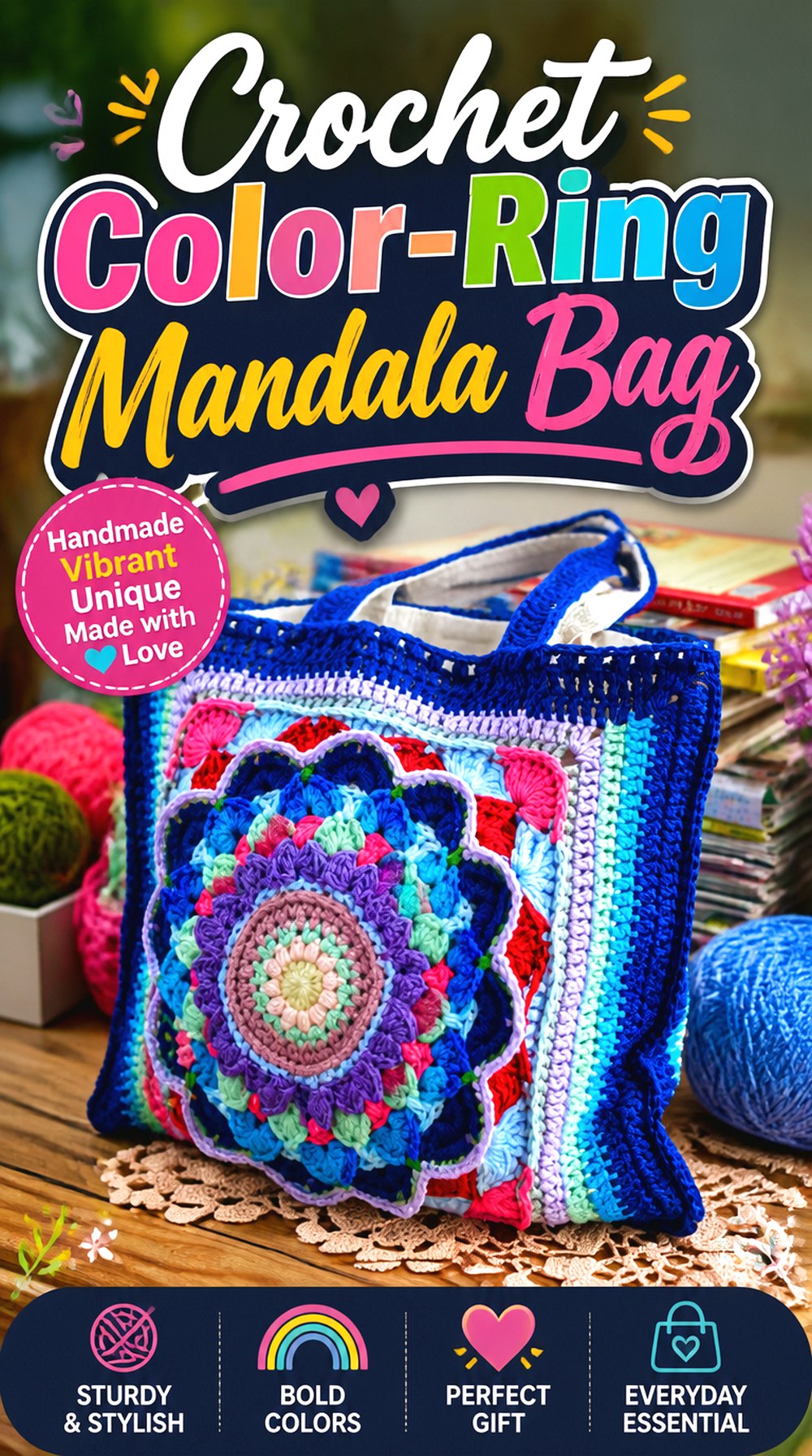
A mandala offers the same circular, decorative focus as a doily while making color a much larger part of the design. Hablemos de Magia Crochet presents a crocheted mandala bag built around a bright radial composition, making this choice particularly relevant if you want the bag face to function almost like a piece of textile artwork.
Compared with a single-color lace doily, several color rings make changes in proportion and motif placement easier to see. They can also make an uneven transition more noticeable. This style therefore rewards planning the full palette before the project is far along. It suits someone who wants the circular motif—not hardware or surface texture—to be the immediate visual focus.
Color Changes Need a Radial Plan
A mandala grows outward, so every added color affects how large the preceding section appears. Several equally strong colors can create an energetic result, while one dominant shade with quieter supporting colors gives the eye a clearer focal area. Before choosing yarn, arrange the colors in their likely visual order and consider where you want the strongest contrast. This simple preview is more useful than deciding each new color only when you reach it.
Match Both Circular Faces Before Joining
If the construction uses paired circular faces, compare them while they are still separate. Differences in tension, yarn behavior, or finishing can leave one face slightly fuller or flatter than the other even when both were made from the same concept. Align the outer edges and inspect the center placement. Correcting a visible mismatch is easier before the bag sides or connecting edge make the two panels dependent on each other.
Keep a Busy Mandala Balanced at the Edge
A highly detailed center does not always need an equally complicated outer border. If your color changes and radial sections already create considerable movement, a calmer final edge can provide a visual stop and make the overall circle easier to read. This becomes particularly useful near the bag opening, where decorative elements must coexist with handles, straps, or closures instead of competing with them.
Original Tutorial and Creator Credit
Creator: Hablemos de Magia Crochet
Crochet Buttoned Mandala Crossbody Bag
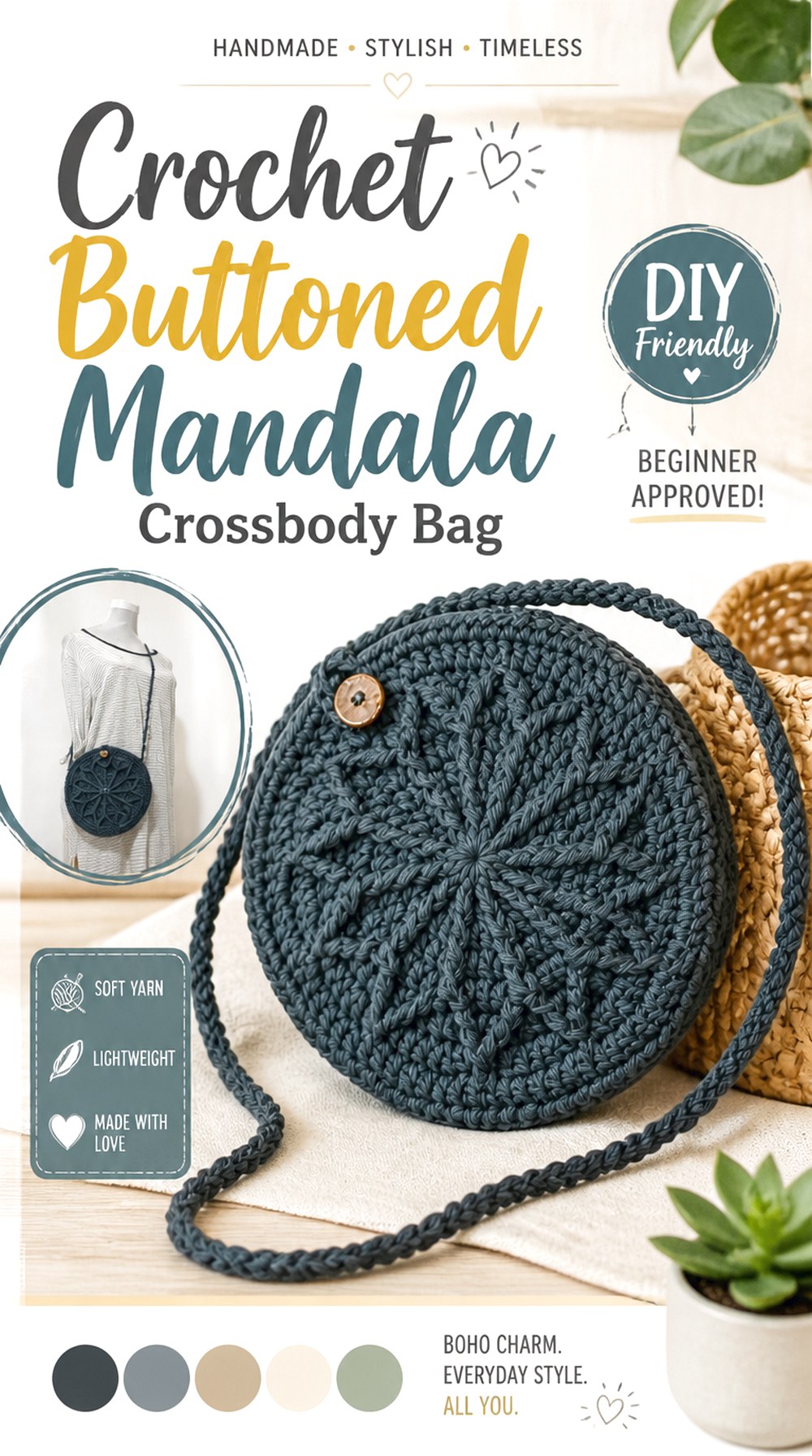
Creggy’s Crochet combines the decorative circle with a more compact crossbody format. The tutorial shows two circular sections, a buttoned opening area, and a strap, so the design feels more like a small everyday purse than an oversized doily tote.
The button is an important distinction. It keeps the top visually simple and avoids adding the stiffness of a full zipper, while still giving the opening a defined closing point. A compact round bag also hangs differently from a wide tote: its circular face remains prominent when worn, and the strap length can change where that motif sits against the body.
The Button Works Best With a Stable Opening
A button closure closes one point rather than the entire top edge, so the surrounding fabric still controls how widely the purse can gape. Before adding or adapting a button, look at whether the upper edge keeps its shape when the bag hangs. If your yarn produces a softer result than the tutorial’s finished example, consider how that extra flexibility may affect both access and the appearance of the closed top.
Crossbody Length Changes How the Circle Hangs
A round purse carried high near the waist can remain relatively steady, while a longer strap allows more movement against the hip or leg. Rather than copying a strap length without context, hold the unfinished bag at the position where you actually want to wear it. Use that wearing position to judge the strap before final finishing, accounting for the possibility that crochet may relax under normal use.
Preserve the Mandala as the Main Focal Point
Because the circle already carries a strong radial design, extra decorative hardware can quickly compete with it. A restrained closure and narrow strap allow the mandala to remain the visual center. If you customize colors or add embellishment, place the bag at normal viewing distance before deciding it needs more detail. What feels sparse close up may already look visually complete when worn.
Original Tutorial and Creator Credit
Creator: Creggy’s Crochet
Crochet Textured Mandala Gusset Tote
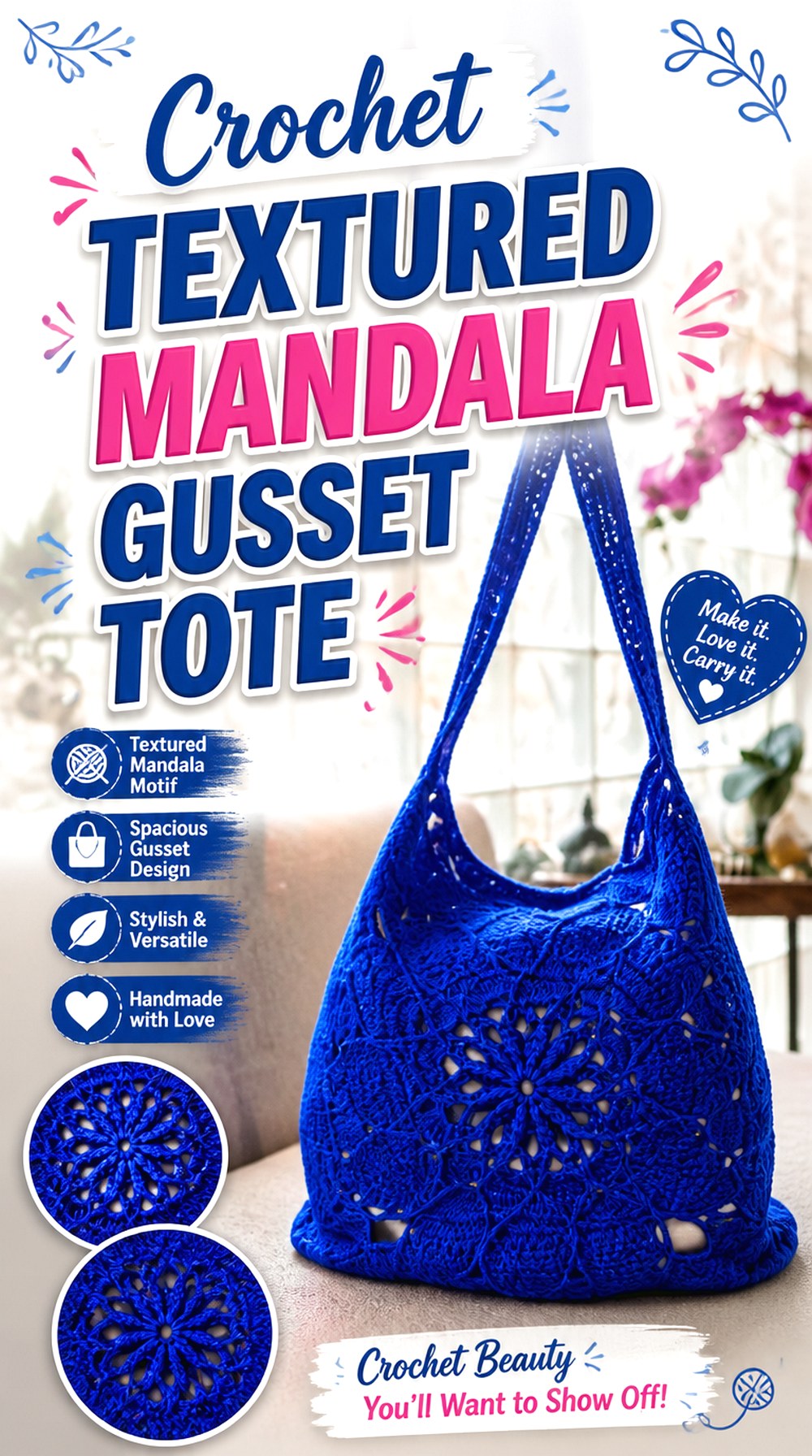
Kristin Omdahl’s mandala motif tote moves beyond two nearly flat circles by incorporating a more developed bag structure. The design uses a mandala motif, side and bottom depth, and an integrated-looking strap treatment; the supporting pattern information also discusses an optional lining.
That makes it a useful choice if you love a doily-like focal motif but want the finished item to read unmistakably as a tote. The circular decorative surface stays important, yet the gusset gives the bag a more defined interior rather than letting the two motif faces collapse directly against one another. It is a stronger reference for construction planning than a purely ornamental doily conversion.
A Gusset Gives the Mandala Usable Depth
A gusset separates the front and back instead of forcing their edges to meet directly. Visually, that changes the project from a flat medallion pouch into a bag with a distinct side profile. If interior depth matters to you, inspect how wide and structured that connecting section appears in the finished tutorial. More depth is not automatically better; it can also change how the circular motif sits when the bag is filled.
Texture Adds Definition—and More Visual Weight
Textured crochet can make radial lines stand out beautifully because light catches raised stitches differently from flat fabric. The trade-off is a busier and potentially heavier-looking surface. If you plan multiple colors, decide whether texture or color should do most of the visual work. Keeping one element quieter often prevents the motif from becoming difficult to read, especially when the tote also includes visible side construction and straps.
Decide on Lining Before the Final Finish
Because lining is an option associated with this design, it is worth deciding early whether you want the inside exposed or covered. Lining can keep the reverse of the motif from becoming the interior focal point and can help contain smaller belongings behind open sections. It also adds another layer that must fit the bag’s depth, so it is easier to plan around the gusset shape than to treat fabric as an unrelated last-minute addition.
Original Tutorial and Creator Credit
Creator: Kristin Omdahl
Crochet Sunburst Round Handle Bag
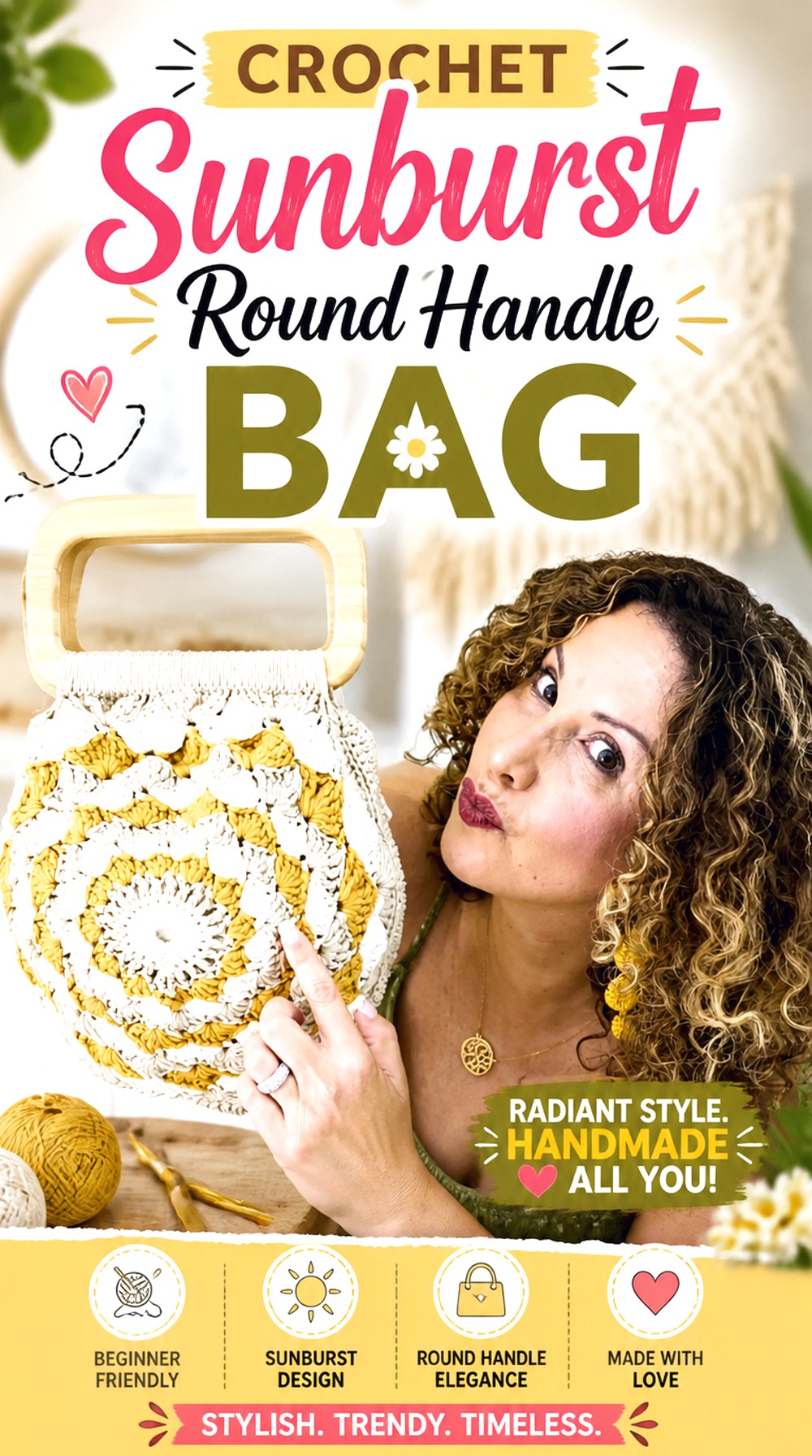
This option keeps the radial excitement of a mandala but shifts attention toward a sunny, graphic circular face and dedicated handbag handles. Annoo and The Unruly Stitch’s tutorial presents a sunshine/mandala-style handbag rather than an airy lace shoulder bag, making it a useful bridge between decorative doily inspiration and a more conventional handled purse.
Handles change both function and visual balance. Instead of a long crossbody strap framing the circle, the upper edge becomes the place where the bag transitions from ornament to carry point. This approach suits readers who want the circular face to remain prominent while giving the finished project a clearly defined handbag silhouette.
Fixed Handles Shift Stress Toward the Top
A dedicated handle concentrates carrying force near the upper portion of each circle. Examine how much solid fabric surrounds the handle connection and compare it with the more decorative areas of the motif. If you change handle type, do not assume the same attachment will suit a larger or heavier replacement. The useful checkpoint is whether the handle and upper edge behave as one stable area rather than pulling visibly away from the motif.
Keep the Sunburst Visually Centered
A strong radial motif can look off balance if the handles, opening, or joining seam make one side appear visually heavier. Before final assembly, orient both circular faces in the direction you prefer and mark the intended top. This is especially worthwhile if the motif has color changes or distinctive sections that are not perfectly interchangeable when rotated, even if the overall outline remains circular.
Original Tutorial and Creator Credit
Creator: Annoo and The Unruly Stitch
Crochet Multicolor Granny Circle Crossbody Bag
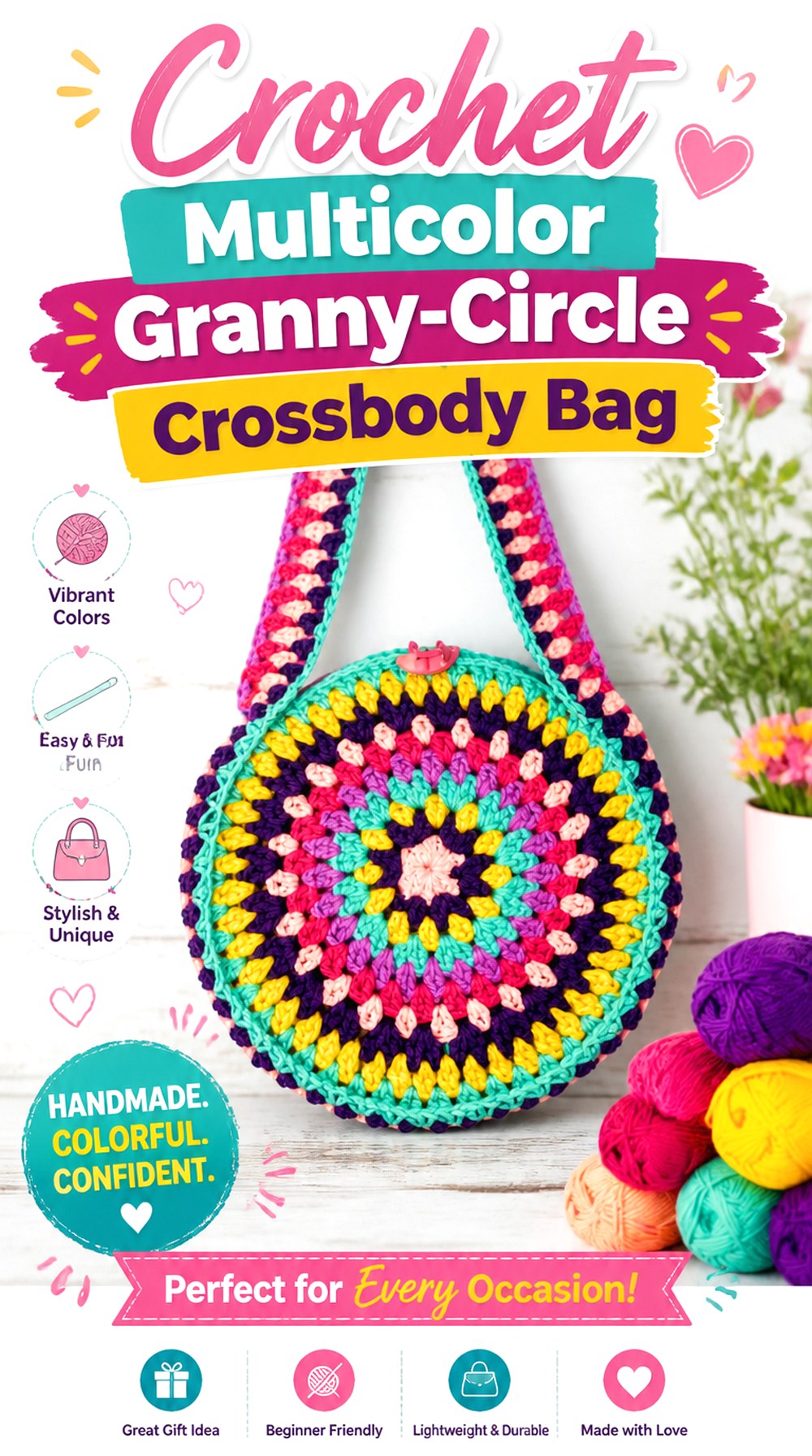
Littlejohn’s Yarn takes the round-bag idea in a different direction with colorful granny-style clusters. The design uses two circular bag faces and a crossbody format; the accompanying project page also discusses alternative closure choices, including a button, zipper, or open top.
This version feels less like fine lace and more like a bold granny motif expanded into a wearable circle. Gaps between clusters still create decorative openness, but the geometry is chunkier than a traditional doily. It is a strong choice for readers who enjoy frequent color changes or want leftover colors to become part of the design rather than hiding them inside a single neutral motif.
Cluster Gaps Create a Different Kind of Openwork
Granny-style spacing tends to produce repeated, geometric openings rather than fine lace. That makes the surface easier to read from a distance but still leaves the interior partially visible. Place the finished circle against a possible lining fabric before choosing one. A strong contrasting lining can turn every gap into a deliberate graphic element; a quieter lining lets the yarn colors remain dominant.
Plan Strap Length From Wearing Position
The supporting pattern offers different strap-length considerations based on wearer height, which reinforces a broader point: crossbody length should be chosen for the person and wearing position, not simply copied as an isolated number. Hold the bag where you want the circular face to sit, then judge how a particular strap treatment will reach that point. Remember that fiber and stitch structure can affect how much a crocheted strap relaxes.
Use Color to Clarify the Circle
Frequent color changes can emphasize each outward-growing ring, but too many equally dominant shades may make the radial structure harder to follow. Decide which colors should repeat and which should appear only as accents. If you are working from scraps, lay the yarns together first and reserve enough visual contrast for the outer section, where the circle meets the strap and bag opening.
Original Tutorial and Creator Credit
Creator: Littlejohn’s Yarn
Crochet Bubble Stitch Ring Handle Handbag
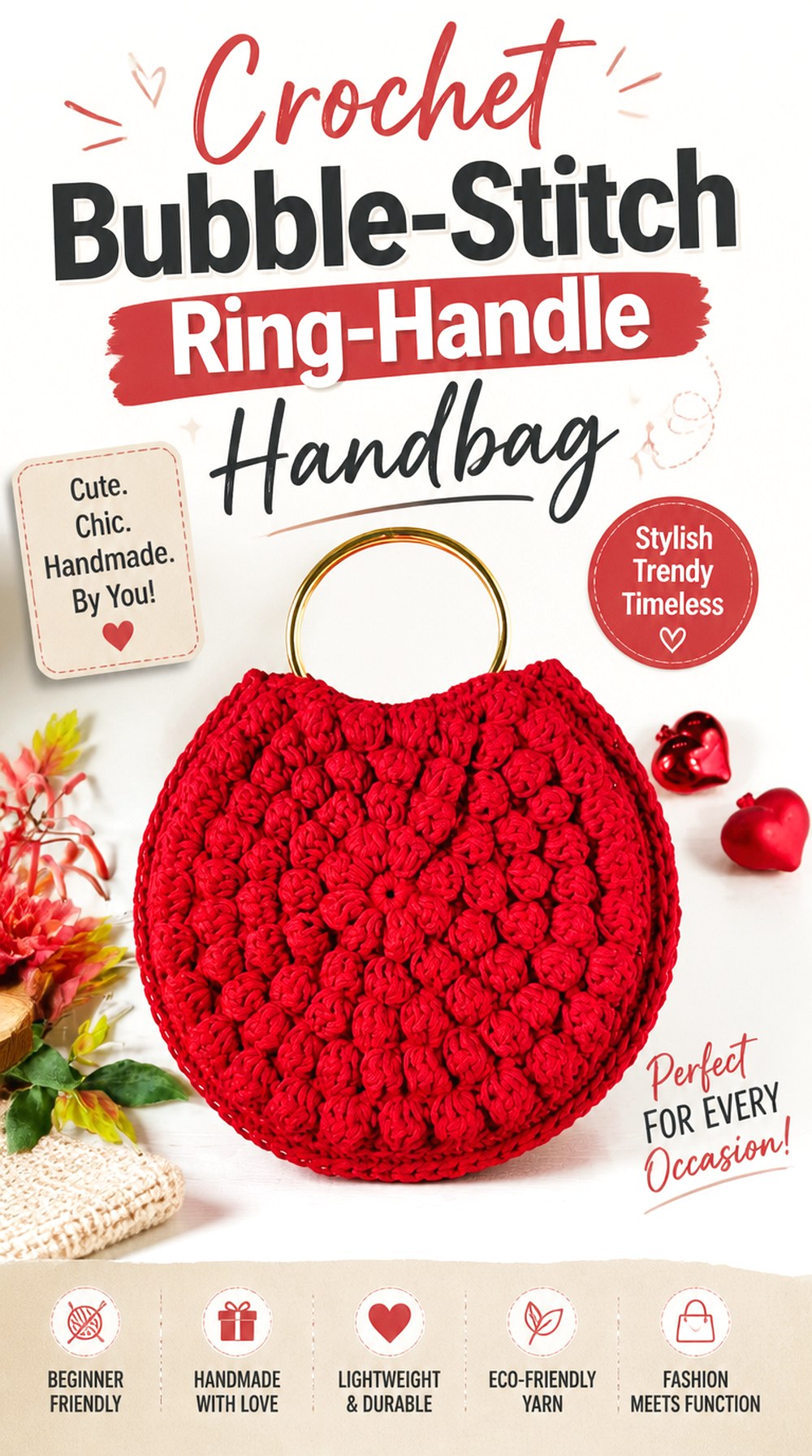
GirlyCrochetByAnthi replaces flat lace with pronounced surface texture. The tutorial’s round “bubble” handbag uses circular faces and metal ring handles, creating a substantially different effect from a delicate doily even though the overall silhouette remains medallion-like.
This is the option to study when you want the circle to feel tactile rather than airy. Raised texture makes shadows part of the design and gives a solid-color bag more visual interest without relying on multiple shades. The ring handles also keep the top compact and turn the project into a hand-carried accessory rather than a long shoulder or crossbody bag.
Raised Bubbles Change the Surface Thickness
Dimensional stitches stand proud of the background, so the front will not behave like a thin, flat doily. That can be an advantage if you want substantial texture, but it also means seams and edges deserve visual comparison with the center. Check whether your chosen yarn keeps the raised areas distinct without making the entire circle look overly dense or obscuring the round outline.
Metal Rings Make Handle Placement Highly Visible
Ring handles create a strong geometric contrast with a round crochet body. Because the hardware is rigid, small differences in attachment placement can be more noticeable than they would be with a flexible yarn strap. Before securing both handles, align the bag faces, locate the true top of each circle, and check that the rings appear level when the bag is held naturally.
Original Tutorial and Creator Credit
Creator: GirlyCrochetByAnthi
Crochet Ruffled Round Purse
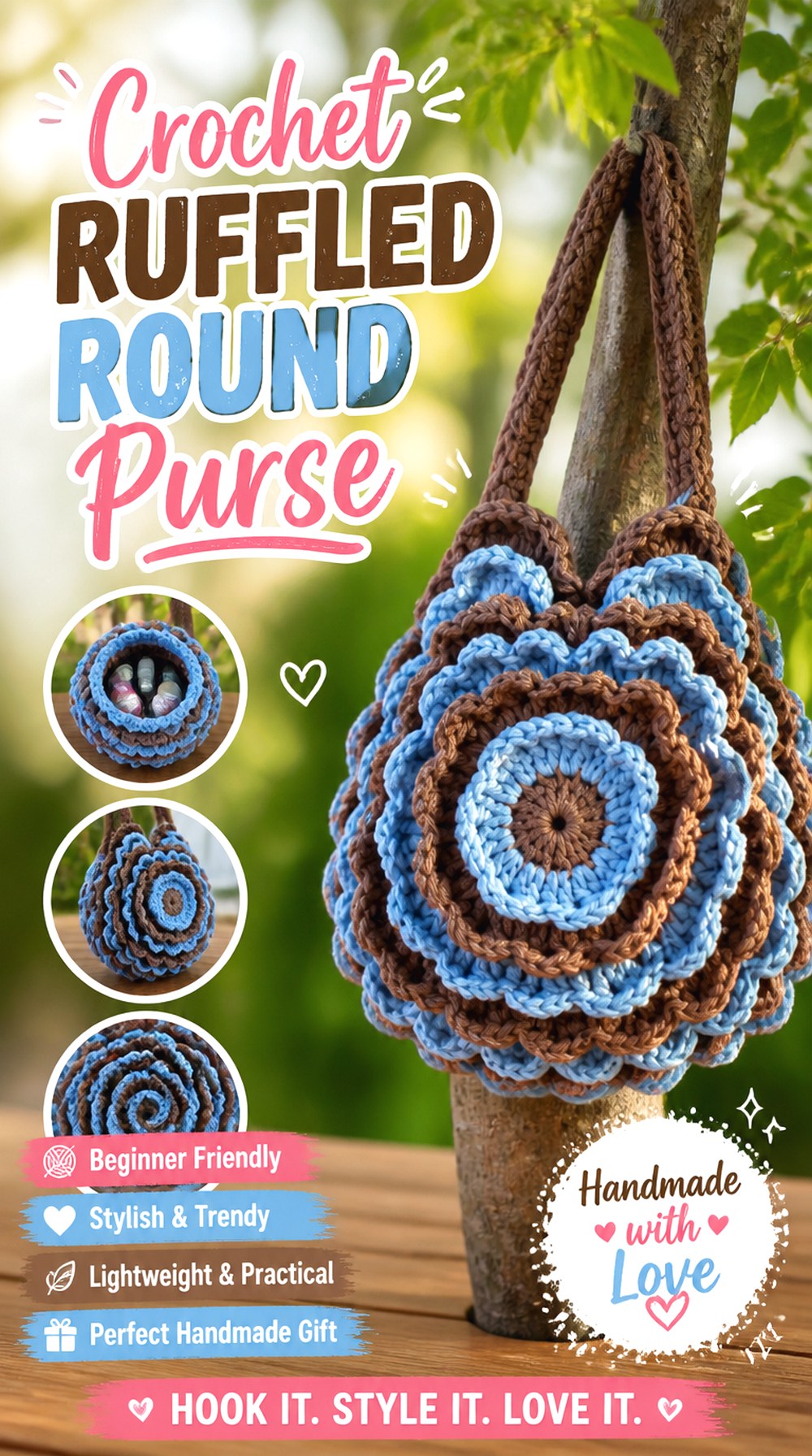
Bag-O-Day Crochet’s round ruffles purse turns the decorative surface outward. Instead of relying on fine openwork or repeated color rings, the finished effect uses ruffles to make the circular bag feel layered and dimensional. That makes it a useful alternative for anyone attracted to vintage doily aesthetics but wanting more volume and movement on the face of the purse.
The major decision here is not just color; it is how much dimensional decoration you want on a bag that will be handled and stored. Ruffles can create a strong statement, but they also need room to remain visible rather than being continuously flattened against other items.
Give the Ruffles Room to Stay Dimensional
A heavily textured front looks its best when the raised sections can sit naturally. If the purse will regularly be packed tightly inside another tote or suitcase, expect the surface to be compressed more than a flat mandala. That does not automatically rule the design out; it simply makes storage part of the choice. A ruffled purse is strongest when the three-dimensional face is an intentional feature rather than an inconvenience.
Keep Added Details Quieter Than the Surface
Once the front already has substantial ruffle movement, a highly decorative strap, oversized hardware, and multiple competing embellishments can make the finished purse visually crowded. If you customize the design, consider letting the ruffles carry most of the decorative load. A simpler handle or edge treatment can provide contrast and help preserve the circle’s overall outline.
Original Tutorial and Creator Credit
Creator: Bag-O-Day Crochet
Crochet Zippered Round Bamboo Handle Purse
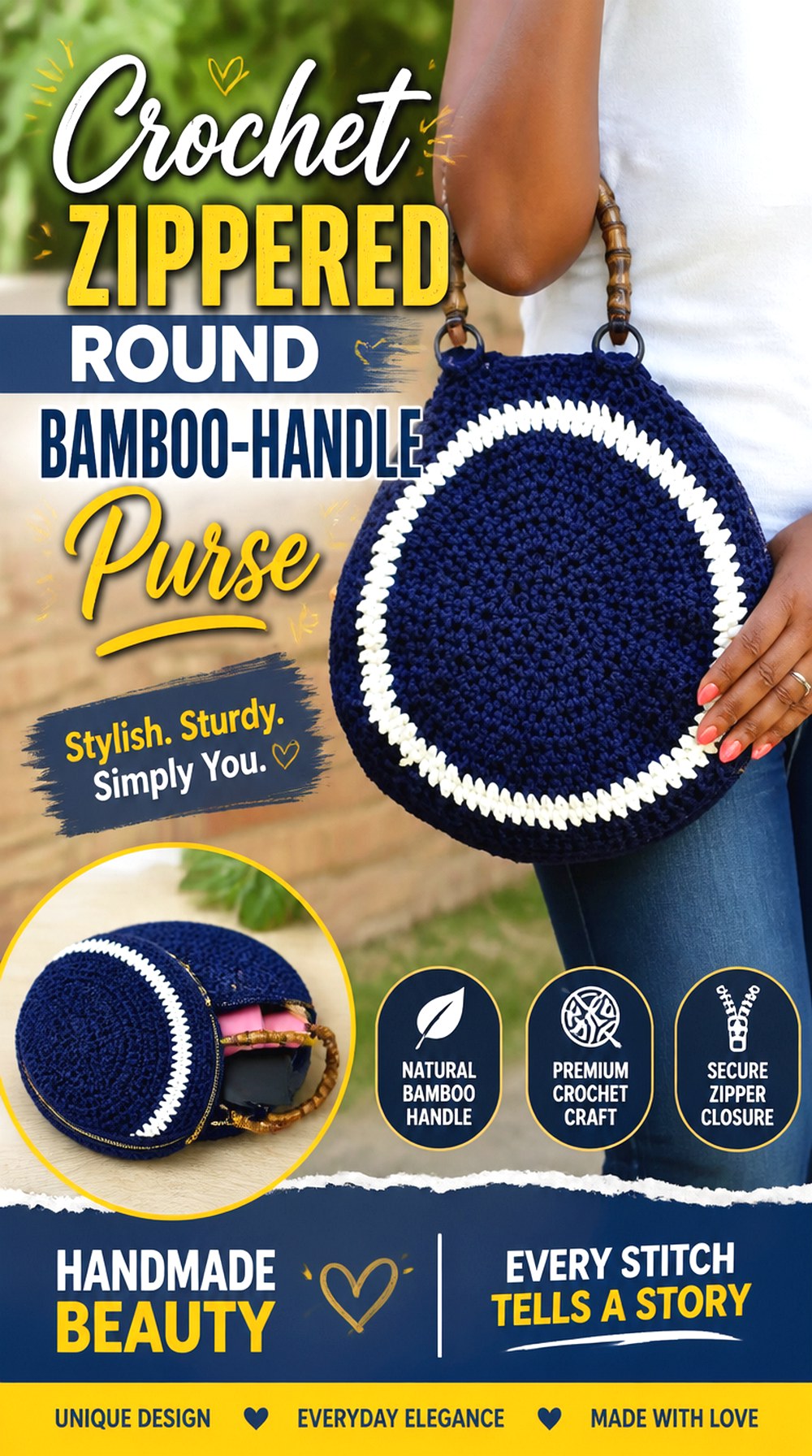
Ahsel Anne by Felicia offers a round purse that adds two strong functional elements: a zipper and rigid bamboo-style handles. The creator’s tutorial description identifies both the zipper and handle, making this one of the clearest choices for readers who want the circular silhouette but prefer a more contained handbag structure.
Those details make the project behave differently from an open lace tote. The zipper creates a defined closing edge, while the handles keep the carry point short and close to the top. The result places more emphasis on finishing and hardware alignment, which can appeal to crocheters who want their doily-inspired bag to read as a structured purse rather than a soft pouch.
A Side Zipper Needs a Clean, Stable Edge
A zipper works most predictably when the crochet edge beside it is even enough to align without excessive stretching or gathering. Before installation, compare the opening on both sides and make sure the circular panels are not pulling in opposite directions. If you substitute a substantially softer yarn, consider how that fabric change may affect the relationship between flexible crochet and the comparatively stable zipper tape.
Bamboo Handles Create a Hand-Carry Silhouette
Rigid handles keep their own shape instead of draping like a crocheted strap. That gives the bag an immediate handbag profile and keeps attention concentrated at the upper edge. If you change handle size or material, hold the proposed hardware against the finished circle first. A handle that is disproportionately large can visually overpower the motif, while one that is too small may crowd the opening.
Align the Circles Before Adding Hardware
Hardware tends to make small alignment issues more obvious. Lay the two bag faces together and compare their outer edges, center points, and intended tops before attaching anything rigid. If one circle has relaxed differently, address that discrepancy first. It is much easier to orient matching faces while they are still flexible than after a zipper and handles have established fixed reference points.
Original Tutorial and Creator Credit
Creator: Ahsel Anne by Felicia
Crochet T Shirt Yarn Circle Chain Purse
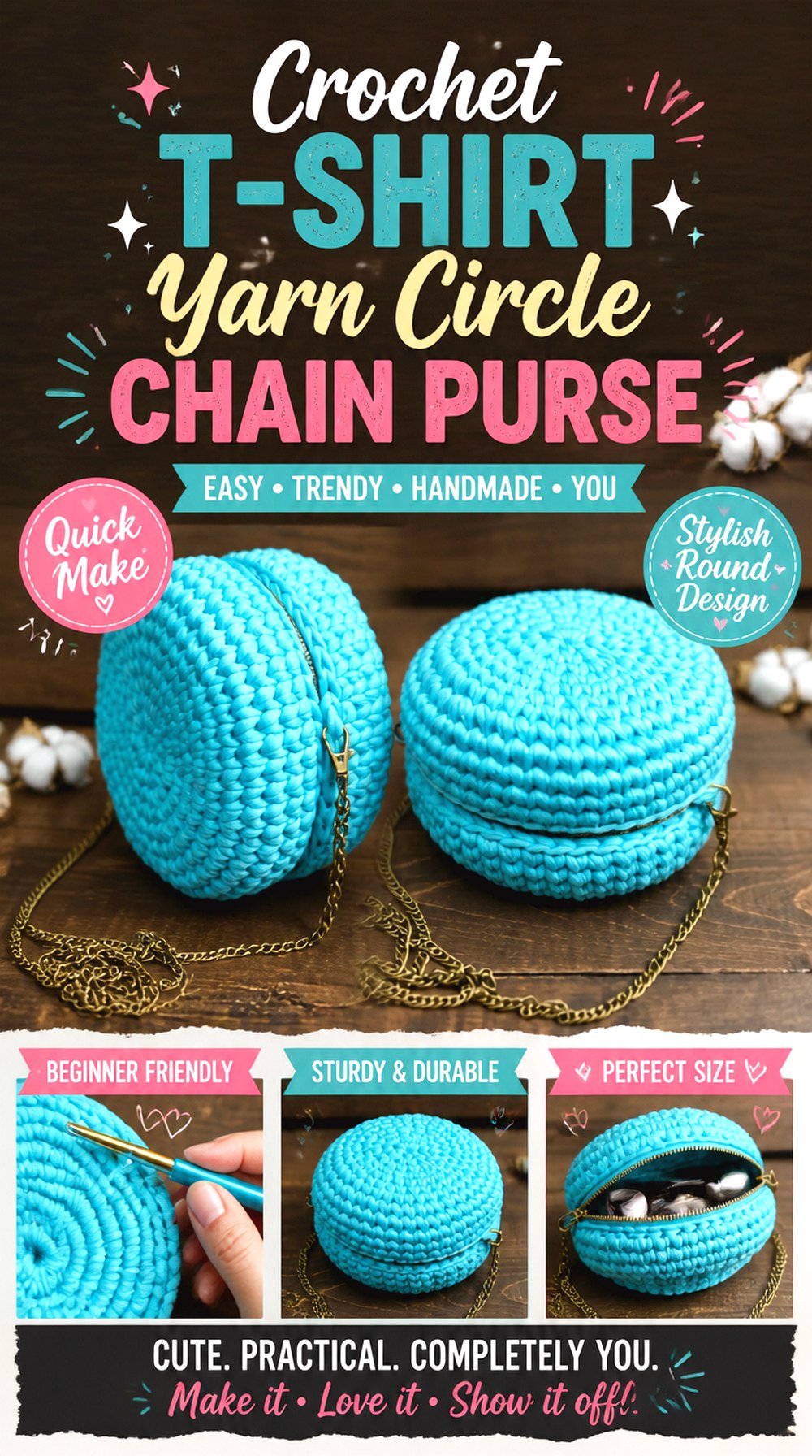
KnitcroAddict’s circle purse takes the medallion silhouette into much denser territory. The tutorial uses T-shirt yarn and includes a chain strap and zipper-related finishing, with the creator also referencing a lining option.
This is not a fine-lace doily bag, and that is precisely why it adds useful variety. Thick fabric turns the circle into a bold, compact shape with less visual openness. The chain strap brings in a contrasting material rather than repeating the crochet texture from body to handle. It is worth considering if you like the geometry of a doily bag but want a more substantial-looking purse.
T-Shirt Yarn Makes the Circle Graphic, Not Delicate
A thick yarn enlarges the visual importance of every stitch and reduces the fine detail associated with traditional doilies. That can make a simple radial layout look modern and bold. It can also make uneven edges more noticeable because the material itself has greater visual mass. Check the circle frequently from a distance; overall shape matters more here than tiny decorative details that would be obvious in finer lace.
The Chain Strap Separates Body From Handle
Using a chain rather than a wide crochet strap keeps the upper portion visually lighter and introduces a different surface texture. If you substitute hardware, check the connection points carefully because the rigid or semi-rigid strap component interacts differently with crochet than yarn does. The useful question is not simply whether the chain fits through an attachment point, but whether that point is stable enough for the intended configuration.
Plan Any Lining Before the Purse Is Fully Closed
A dense body may reduce the need for lining purely to contain small items, but a lining can still create a cleaner interior or keep the reverse of the crochet from being exposed. Because this design also involves a zipper, lining is easiest to think about as part of the opening system. Decide how finished you want the interior to look before all access to the inside edges becomes restricted.
Original Tutorial and Creator Credit
Creator: KnitcroAddict
Crochet Raffia Round Summer Handbag
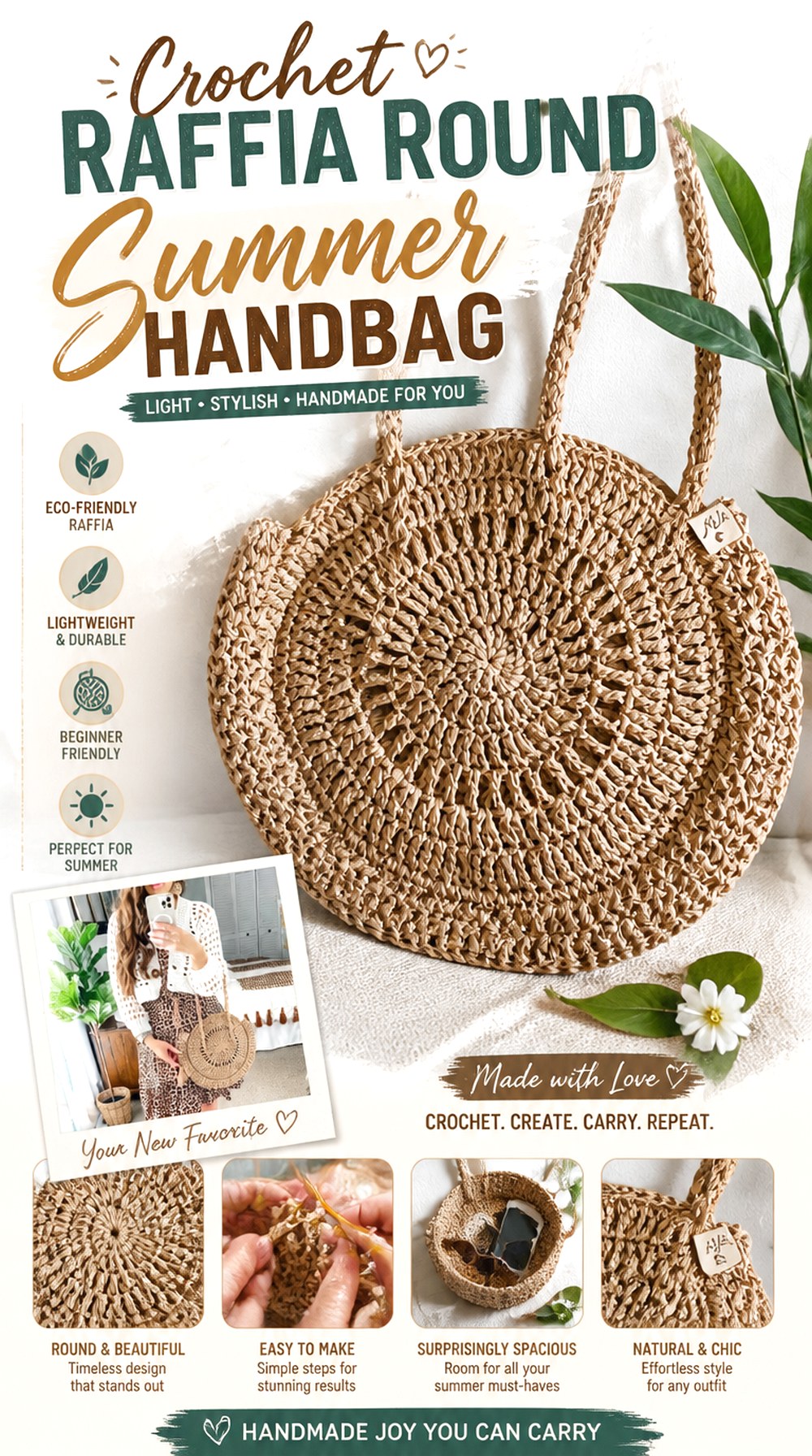
MJ’s Off The Hook Designs gives the round bag a distinctly summery interpretation by using raffia paper ribbon. The project is built from circular pieces with a gusset and uses a narrow crocheted cord-style strap, so it combines a medallion face with noticeably more dimensional bag construction.
Raffia also changes the visual language of the circle. Instead of soft lace, the stitches create a crisp, natural-looking surface that makes the silhouette important. This can suit readers who like doily geometry but prefer a warm-weather handbag with less openwork. Because raffia-type materials behave differently from conventional soft yarn, it is especially important to judge the tutorial’s finished fabric rather than substituting based on appearance alone.
Raffia Emphasizes Shape More Than Soft Drape
A material with a crisp hand can make the circular outline look deliberate and clean, but it offers less of the flowing behavior people often expect from yarn. If you substitute another fiber, first decide whether you are trying to preserve the firm summer-bag look or intentionally create a softer version. A dramatically softer material may change how the front, sides, and opening stand when the bag is not full.
The Gusset Separates It From a Flat Pouch
Adding a gusset gives the two circular faces space between them and creates a visible side wall. That difference matters if you want the bag to have a recognizable interior rather than functioning like two medallions joined around most of their circumference. Compare this silhouette with flatter crossbody options before choosing: the gusset adds dimensionality, but it also makes the side construction part of the design.
A Narrow Cord Strap Keeps the Top Visually Light
The tutorial uses a Romanian-cord-style strap, which provides a slimmer visual line than a broad crocheted band. That proportion helps the circular body remain dominant. If you prefer a wider strap, hold a sample beside the completed bag first; increasing strap width can make the upper section feel heavier and can shift the look from delicate summer handbag toward a more substantial tote.
Original Tutorial and Creator Credit
Creator: MJ’s Off The Hook Designs
Crochet Chunky T Shirt Yarn Boho Circle Bag
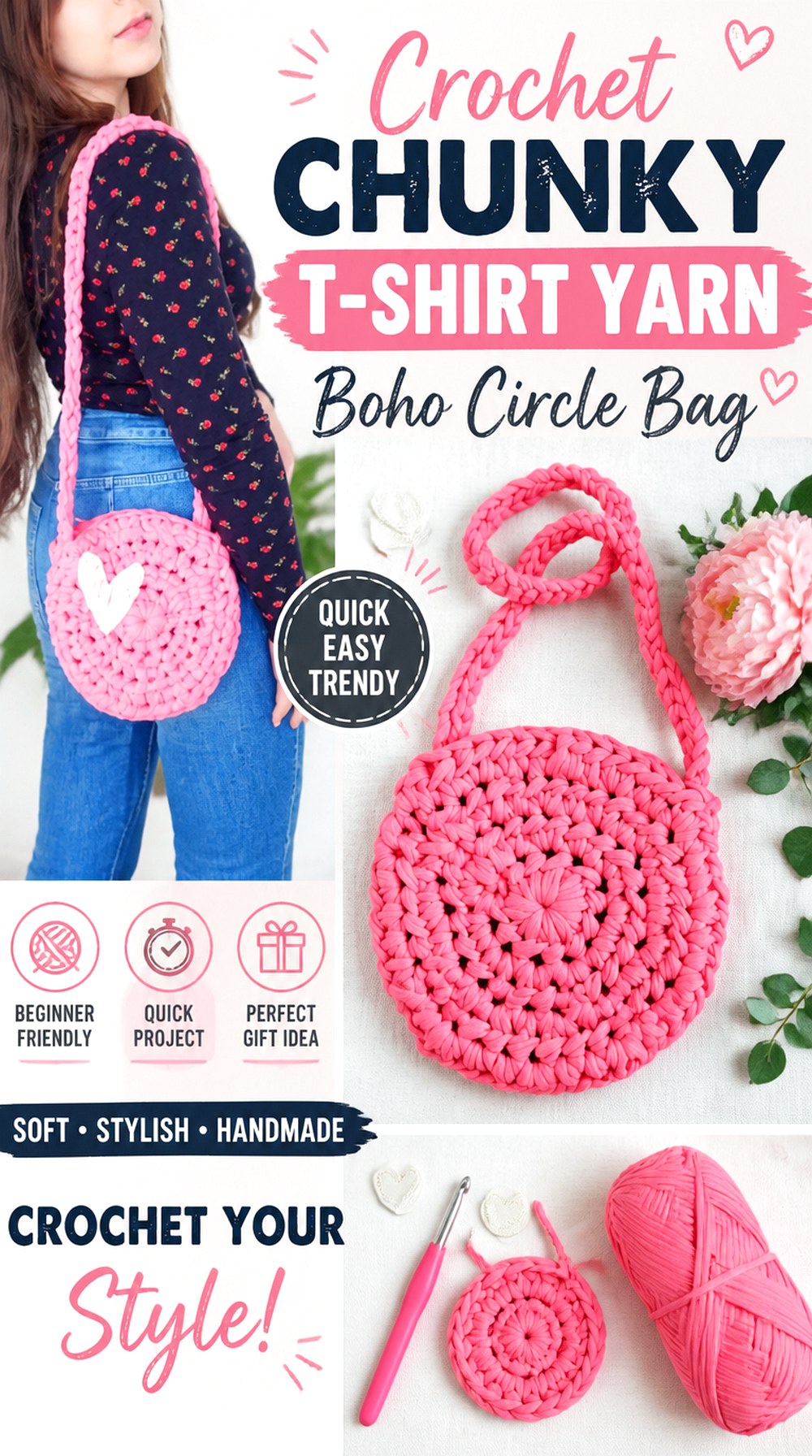
Selina Veronique Crochet uses T-shirt yarn for a round boho bag, giving the familiar circular form a chunky, solid appearance. The result is far removed from fine thread doilies, yet it preserves the radial shape that makes doily-inspired bags so recognizable.
This is a useful direction when you want the circle itself but not the transparency of lace. Thick yarn makes the stitches and outer edge prominent, so the finished shape carries much of the design. It also means substitutions need thought: replacing the original material with a much finer yarn may produce a substantially different scale, drape, and visual density even if the general construction concept remains recognizable.
Thick Yarn Makes the Radial Shape More Graphic
With chunky fabric, subtle lace openings are replaced by broad stitch definition and a clear outer silhouette. This is ideal if your favorite part of doily design is the expanding circle rather than the delicate holes. Keep embellishment restrained until you see the complete bag. A thick texture already adds visual weight, so extra tassels, fringe, or contrasting hardware may have more impact than expected.
Watch the Edge Where Two Thick Panels Meet
Joining bulky circular faces can create a noticeably substantial perimeter. Before completing the whole seam, inspect a short section and decide whether you like the resulting edge profile. If your chosen yarn is thicker, flatter, or more elastic than the tutorial’s material, the join can look different even when the faces themselves appear similar. The finished side view is therefore an important checkpoint, not an afterthought.
Original Tutorial and Creator Credit
Creator: Selina Veronique Crochet
Crochet Structured Cord Circle Tote
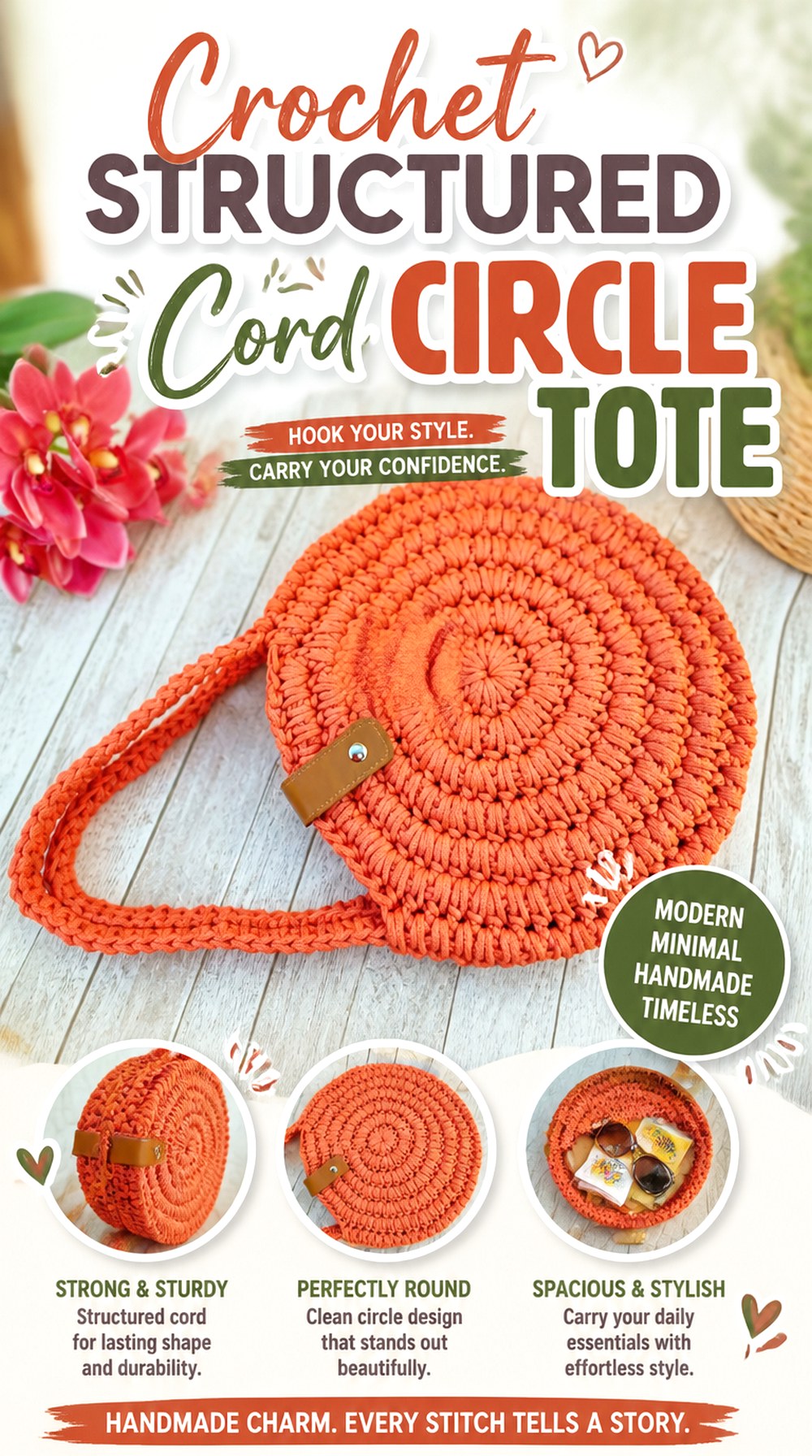
Natessa | Sacred Crochet Art’s round handbag uses polyester cord and a leather buckle, pushing the doily-inspired circle toward a much more structured accessory. The circular face remains the central shape, but the material and hardware give it a crisp, modern identity rather than a vintage lace appearance.
This is a useful reference if you want strong radial geometry without visible interior gaps. Cord can make edges and stitch lines more pronounced, while a buckle introduces a deliberate closure detail. Those features also make planning more important: when material and hardware are visually assertive, small proportional choices at the top of the bag can strongly affect the overall balance.
Cord Gives the Circle Architectural Definition
A firm cord can make the circumference and radial stitch lines appear especially crisp. That is an advantage when you want a clean geometric bag, but it leaves less room for a deliberately floppy doily effect. If substituting yarn, compare the material’s flexibility with the tutorial’s finished fabric. A softer option may still work as a creative adaptation, but expect the bag to hang and collapse differently when empty.
A Leather Buckle Changes the Closure Strategy
The tutorial uses a leather buckle, which makes the closure a visible design component rather than something hidden inside the opening. If you substitute another buckle or closure, compare its scale with the circular face before attachment. Hardware that is too visually dominant can interrupt the radial design, while very small hardware may look disconnected from a thick cord body.
Check Hardware Compatibility Before Final Finishing
Cord, leather, and metal or rigid components may require attachment points that differ from an all-yarn bag. Before closing access to the interior, make sure any chosen hardware can be positioned where the crochet is sufficiently stable and where its attachment will look intentional. This is also the stage to confirm that replacement hardware physically suits the openings or connection method you plan to use rather than assuming pieces are interchangeable.
Original Tutorial and Creator Credit
Creator: Natessa | Sacred Crochet Art
Crochet Button Loop Round Crossbody Bag
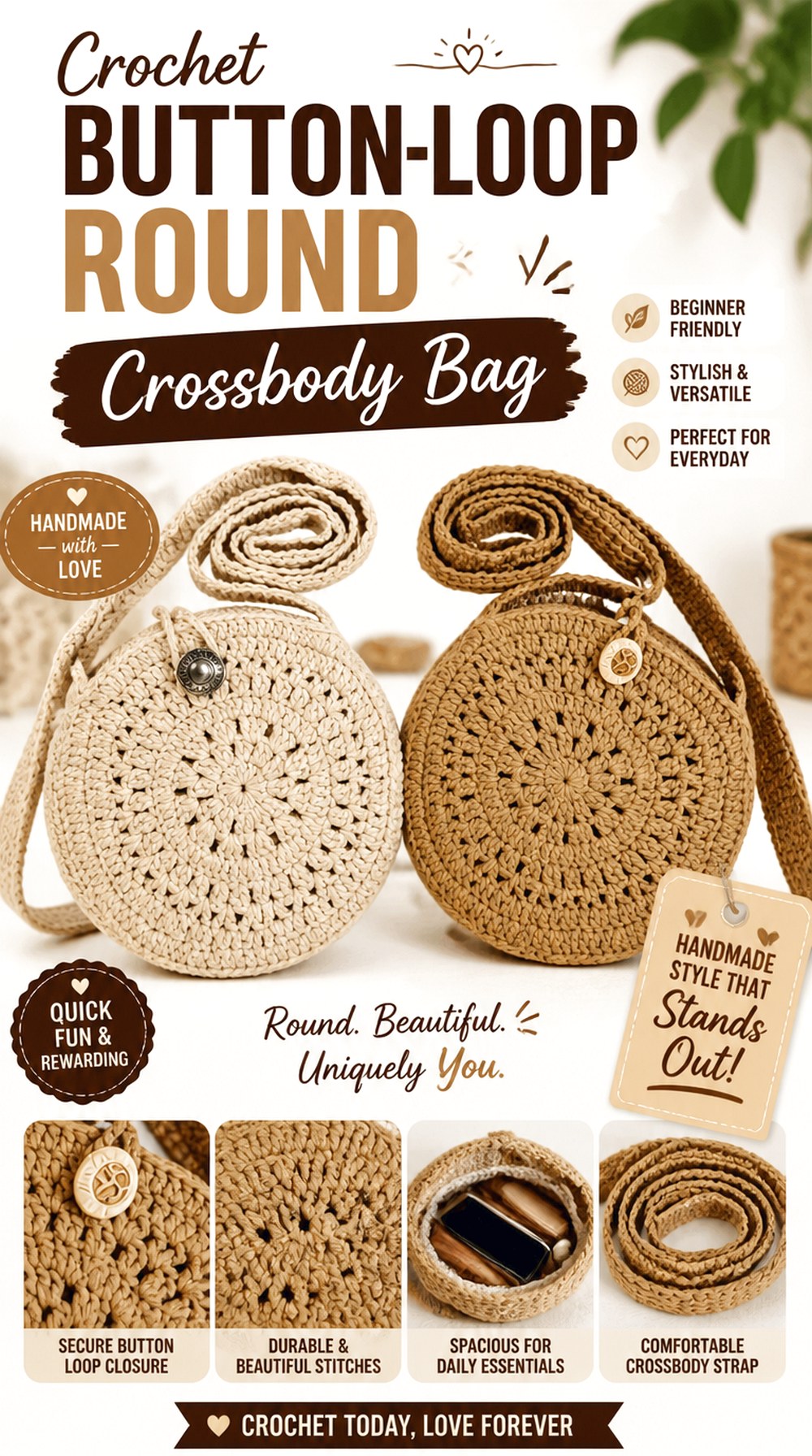
Crochet Musings offers another practical crossbody route, this time with a round body and a button-and-loop opening. The tutorial shows two circular pieces, the closing detail, and a strap, giving readers a straightforward reference for turning a radial crochet face into a wearable purse.
Compared with the zipper and rigid-handle options, this version keeps the finishing visually light. That suits a casual doily-inspired bag where you want the crochet itself to remain dominant. It also gives a useful comparison point: a button loop is less structurally complex than a full zipper but does not enclose the entire opening, so the choice depends on how you expect to use the purse.
A Button-and-Loop Opening Remains Partly Open
The closure draws together one area at the top rather than sealing the whole opening. If you plan to carry very small loose objects, look at how much space remains around that central closure in the finished bag and decide whether an interior pouch or lining would suit your use. If easy access matters more than complete enclosure, the simplicity of the button loop may be an advantage.
A Tighter Fabric Helps Preserve the Round Face
The creator specifically discusses using a smaller hook relationship to create tighter bag fabric. The practical lesson is broader than one hook size: bag fabric often benefits from being evaluated for both stitch appearance and unwanted openness. If you substitute yarn, make a small sample and judge whether the resulting fabric has the coverage and firmness you want before committing to the full circle.
Test the Strap at Wearing Height
A visually balanced circle can hang awkwardly if the strap leaves it much higher or lower than intended. Before fully finishing the strap, position the bag against the body and check where the round face sits. Also watch the upper attachment area while doing this. If the circle visibly distorts under the light pull of the empty bag, that is a useful signal to review the attachment before regular use.
Original Tutorial and Creator Credit
Creator: Crochet Musings
Crochet Gusseted Circular Handle Bag
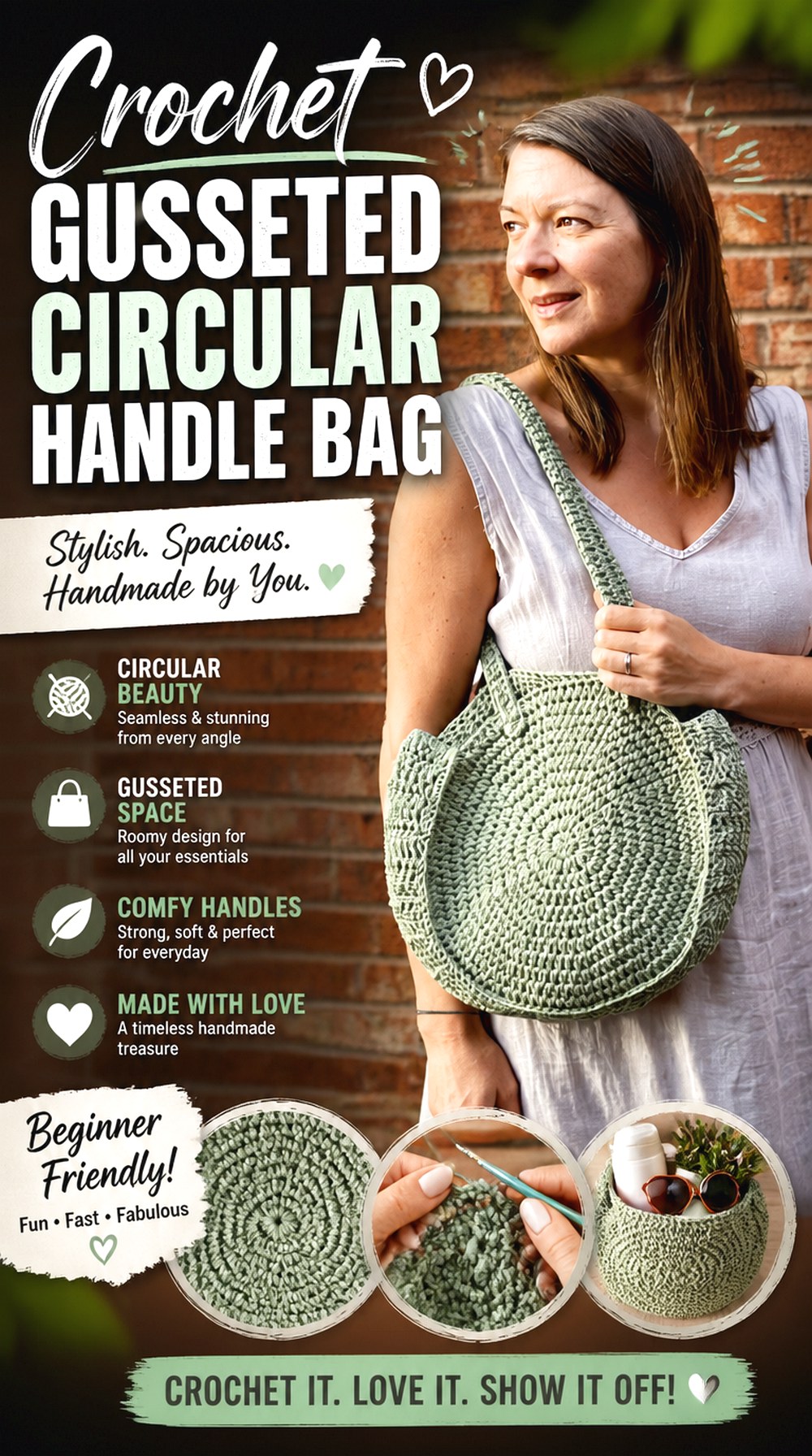
Ophelia Talks Crochet’s Laurel Bag gives the circular format a classic handbag structure. The project uses two flat circular faces with a separate side section and handles, so the finished silhouette gains depth without losing the prominent round front.
This construction is especially relevant if you like the look of a doily or mandala panel but find very flat round purses limiting. A defined side panel creates a clearer transition between front and back, while paired handles shift the carrying style away from crossbody wear. The result can serve as a useful base concept for a decorative circular face, provided any adapted motif is compatible with the required finished dimensions and edge shape.
A Side Panel Creates More Interior Volume
A separate side section gives the bag depth along more of its circumference rather than allowing the faces to meet immediately. If you adapt the concept with a different doily or mandala, compare the completed panel diameter with the side construction before assuming the pieces will cooperate. This is one case where “round” alone is not enough; the circumference, flexibility, and edge behavior all influence how neatly the side can meet the face.
Paired Handles Make It Read as a Handbag
Two short handles keep the bag close to the hand and make the upper edge visually important. This arrangement can feel more polished than a long crocheted strap, but it also puts both handle positions on display at once. Align the two circular faces before locating attachments so the handles appear symmetrical relative to the motif and opening rather than merely symmetrical relative to an uneven outer edge.
Consistent Edge Shape Matters More With a Gusset
When a side panel must connect around a large portion of a circle, small ripples or cupping can accumulate into a visible assembly problem. Lay each completed face flat and compare the perimeter before joining. If one panel behaves differently, correct the underlying shape issue first rather than expecting the side piece to force both faces into agreement.
Original Tutorial and Creator Credit
Creator: Ophelia Talks Crochet
Crochet Cotton Rope Round Crossbody Bag
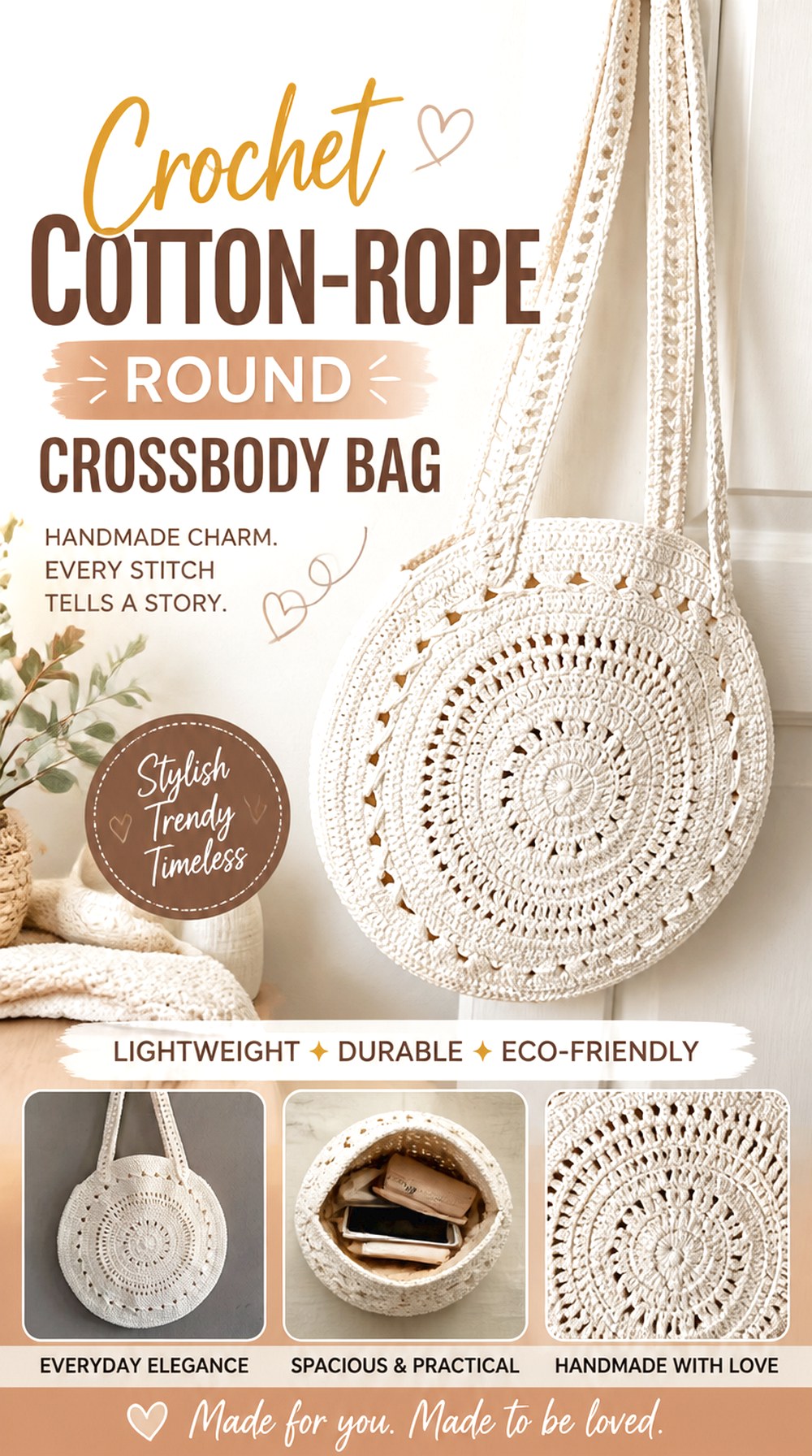
Chompu Handicrafts uses cotton rope for a round crossbody bag, creating another firm alternative to fine doily lace. The tutorial presents a clearly circular handbag shape with a crossbody use, and the creator identifies cotton rope as the working material.
This option belongs at the structured end of the collection. The rope makes the radial construction visually bold and gives the circular outline a strong presence, which can appeal to anyone who likes doily geometry but wants a cleaner, less delicate result. Because the material is so visible, shape control and strap attachment deserve particular attention; there is less decorative lace to disguise an uneven edge or distorted curve.
Cotton Rope Shows Every Curve Clearly
A substantial rope makes the outer circumference an important design line. If the circle ripples or begins to cup more than intended, that shape is likely to remain visually prominent in the final bag. Stop periodically and view the entire panel on a flat surface rather than concentrating only on the current working area. A smooth overall circle is more important here than squeezing in additional decorative detail.
Crossbody Use Puts Attention on Attachment Points
A long strap frames the circular body and transfers its pull through two relatively localized areas. Check that those points sit at matching heights and that the upper edge does not bend sharply when the empty bag is lifted. If you alter the strap material or width, reassess the connection instead of treating the original attachment as automatically suitable for every substitute.
Which Crochet Doily Bag Style Fits Your Use?
For the clearest traditional doily effect, the Crochet Boho Lace Doily Shoulder Bag puts openwork first. The colorful mandala and granny-circle options keep the same radial focus while making color a bigger part of the finished surface. If texture interests you more than lace, the bubble-stitch and ruffled purses create distinctly dimensional fronts.
For additional interior depth, look toward the mandala gusset tote, raffia handbag, or gusseted circular handle bag. If containment is a higher priority, the zippered bamboo-handle and T-shirt-yarn circle purses provide more enclosed references. At the firmest end, the chunky T-shirt-yarn, structured cord, and cotton-rope bags retain the round medallion silhouette while replacing delicate openwork with dense, graphic fabric.
Conclusion
The right crochet doily bag depends less on the prettiest motif and more on how you want that circle to function. Choose true lace when transparency and delicate stitchwork are the attraction, a colorful mandala when the front should make a graphic statement, or a gusseted design when interior depth matters. Zippers, buttons, rigid handles, chain straps, raffia, T-shirt yarn, and cord each push the same basic round idea in a different direction.
Before starting, compare the finished panel openness, edge stability, closure, and carry style with how you expect to use the bag. Then follow the original tutorials for their exact construction details rather than assuming one circular bag method transfers directly to another.
Frequently Asked Questions
Does a Crochet Doily Bag Always Need a Lining?
No. Whether lining is useful depends on the openness of the crochet and what you plan to carry. Fine lace with large gaps can allow small objects to protrude and will show the interior clearly, making lining more useful. A dense T-shirt-yarn or rope circle may provide much more coverage on its own. If you add lining, choose its color with the outside appearance in mind because it may be visible through the motif.
What Yarn Qualities Work Well for a Doily-Style Bag?
Start with the behavior you want rather than a universal fiber rule. A softer yarn can create more drape and a relaxed boho look, while cord, raffia, or thicker yarn can emphasize shape and stitch definition. Openwork also reveals differences in yarn texture clearly. When substituting for a tutorial, compare thickness, flexibility, and stretch with the creator’s finished fabric instead of assuming two yarns will create the same bag simply because they look similar.
Why Is My Crochet Circle Ruffling or Cupping?
A circle that will not lie as intended can be affected by tension, material behavior, hook choice, or how the circular shaping develops. Do not rely on the joining stage to correct a strongly distorted panel. Lay the work flat periodically and compare its shape with the tutorial’s corresponding finished appearance. If you are making two faces, compare them with one another before assembly so you do not build a bag from mismatched circles.
Can I Turn Any Decorative Crochet Doily Into a Bag Panel?
Not automatically. A decorative doily may have the visual effect you want but lack the size, edge stability, density, or shape required by a particular bag construction. First finish and, where appropriate for the fiber, prepare the motif so you can evaluate its actual dimensions and behavior. Then compare it with the intended second panel, gusset, handles, and opening. Adaptation works best when the doily is treated as a structural component rather than simply attached because it is round.
How Can I Reduce Strap Stretch on a Doily Bag?
Begin by looking at both the strap fabric and its attachment points. A long, elastic crochet strap may relax more than a rigid handle, chain, cord, or reinforced construction. The bag body also matters: attaching a strap directly to delicate openwork can distort the motif even if the strap itself is firm. Test the bag at the intended wearing height before final finishing and consider whether the top edge needs a more stable connection.
Can I Add a Zipper to an Openwork Mandala or Doily Bag?
It can be possible, but the zipper needs an opening edge that can support it without excessive stretching, rippling, or distortion. Fine lace may need a more stable finishing area or lining arrangement before a zipper becomes practical. Compare both sides of the opening first and decide how the zipper will interact with any fabric lining. If the original tutorial uses only an open top or button, verify the adapted construction rather than assuming a zipper can simply replace that closure.