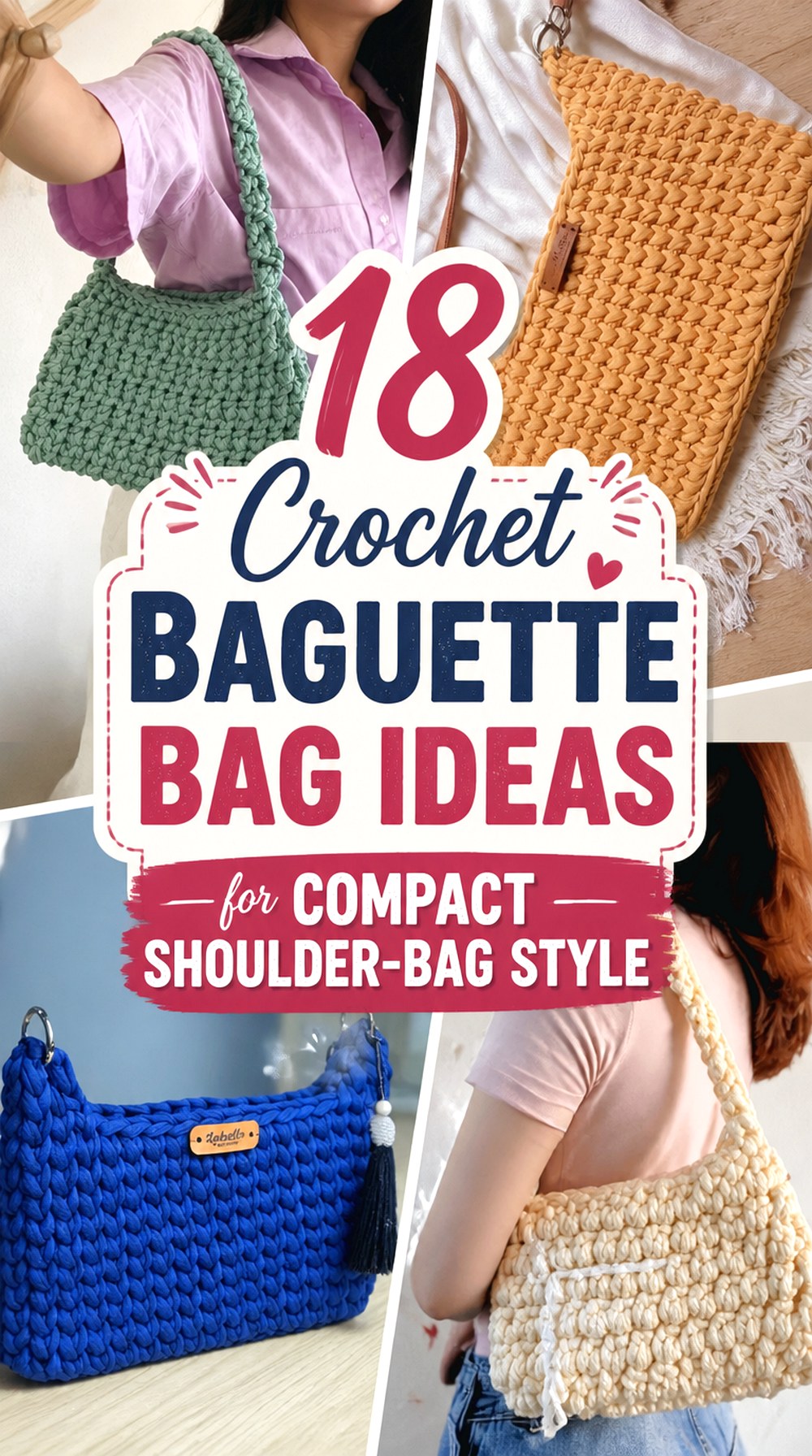

Crochet baguette bags share the familiar wide, compact shoulder-bag silhouette, but they do not all behave the same way. A chunky cord version can feel firm and sculptural, while a softer yarn creates more drape. Checkerboard colorwork changes the visual focus, bows make the bag more decorative, and closures or reinforced handles can change how practical the finished accessory feels.
This collection covers 18 genuinely different directions, from simple mini bags and T-shirt-yarn constructions to curved mandu shapes, herringbone texture, bold checks, and compact structured designs. Along the way, the notes focus on useful choices such as opening security, strap stretch, lining, fabric density, proportion, and material behavior rather than treating color as the only difference.
Quick List
- Crochet Everyday Mini Baguette Shoulder Bag
- Crochet Magnetic-Closure T-Shirt Yarn Baguette Bag
- Crochet Clean-Line Classic Baguette Bag
- Crochet Panel-Built Buttoned Baguette Bag
- Crochet Classic Checkered Baguette Bag
- Crochet Bow-Trim Chunky Baguette Shoulder Bag
- Crochet Slim Everyday Baguette Purse
- Crochet Short-Body T-Shirt Yarn Baguette Bag
- Crochet Minimal T-Shirt Yarn Baguette Purse
- Crochet Side-Detail Baguette Bag
- Crochet Smooth-Cord Structured Baguette Bag
- Crochet Graphic Checkered Baguette Bag
- Crochet Simple Low-Profile Baguette Bag
- Crochet Curved Mandu Mini Baguette Bag
- Crochet Macramé-Cotton Baguette Shoulder Bag
- Crochet Chunky Textured Baguette Bag
- Crochet Extra-Chunky Cord Baguette Bag
- Crochet Herringbone-Texture Baguette Bag
Choose Structure Before You Choose Color
The elongated silhouette is what makes a baguette bag recognizable, so fabric behavior matters more than a fashionable color combination. A dense fabric can help preserve that horizontal shape, while a softer or more elastic fabric may sag once everyday items are added. That does not make one approach wrong; it simply changes the result.
Before choosing a tutorial, look at the finished bag rather than only the yarn on the worktable. Notice whether the base stays defined, whether the opening collapses inward, and how the strap meets the body. Also compare the intended scale with what you normally carry. Increasing the width without considering fabric stretch can turn a compact baguette into a deeper, softer shoulder bag, so proportion should be planned as a whole.
Strap, Opening, and Closure Choices Change the Bag Most
Two bags with similar bodies can feel completely different once their openings and handles are considered. A short shoulder strap keeps the classic underarm proportion, whereas a longer unsupported crochet strap may stretch and lower the bag over time. Wider attachment points can also distribute stress differently from narrow ones.
The opening deserves similar attention. An open-top bag offers quick access but less security. A magnetic closure adds a simple central fastening point, while a zipper can provide more coverage but usually requires additional finishing decisions. Buttons create another visual and functional option. If you plan to alter the closure shown in a tutorial, check first that the top edge has enough stability to support the hardware without being pulled out of shape.
When Lining or Reinforcement Is Worth Considering
A lining is not automatically necessary for every crochet baguette bag. It becomes more useful when the crochet fabric has openings that small objects could slip through, when the bag stretches noticeably, or when you want the interior to resist distortion from frequently carried items.
The strap is another place to assess reinforcement. Long, narrow crochet handles can stretch more than compact, dense ones, especially when the yarn itself has significant give. Reinforcement may mean choosing a less elastic handle construction, incorporating a supportive material, or adding a separate strap where compatible with the design. Before modifying a creator’s version, inspect how the original handle joins the body. Strengthening the strap itself will not solve the problem if its attachment points are the area taking the most strain.
Crochet Everyday Mini Baguette Shoulder Bag
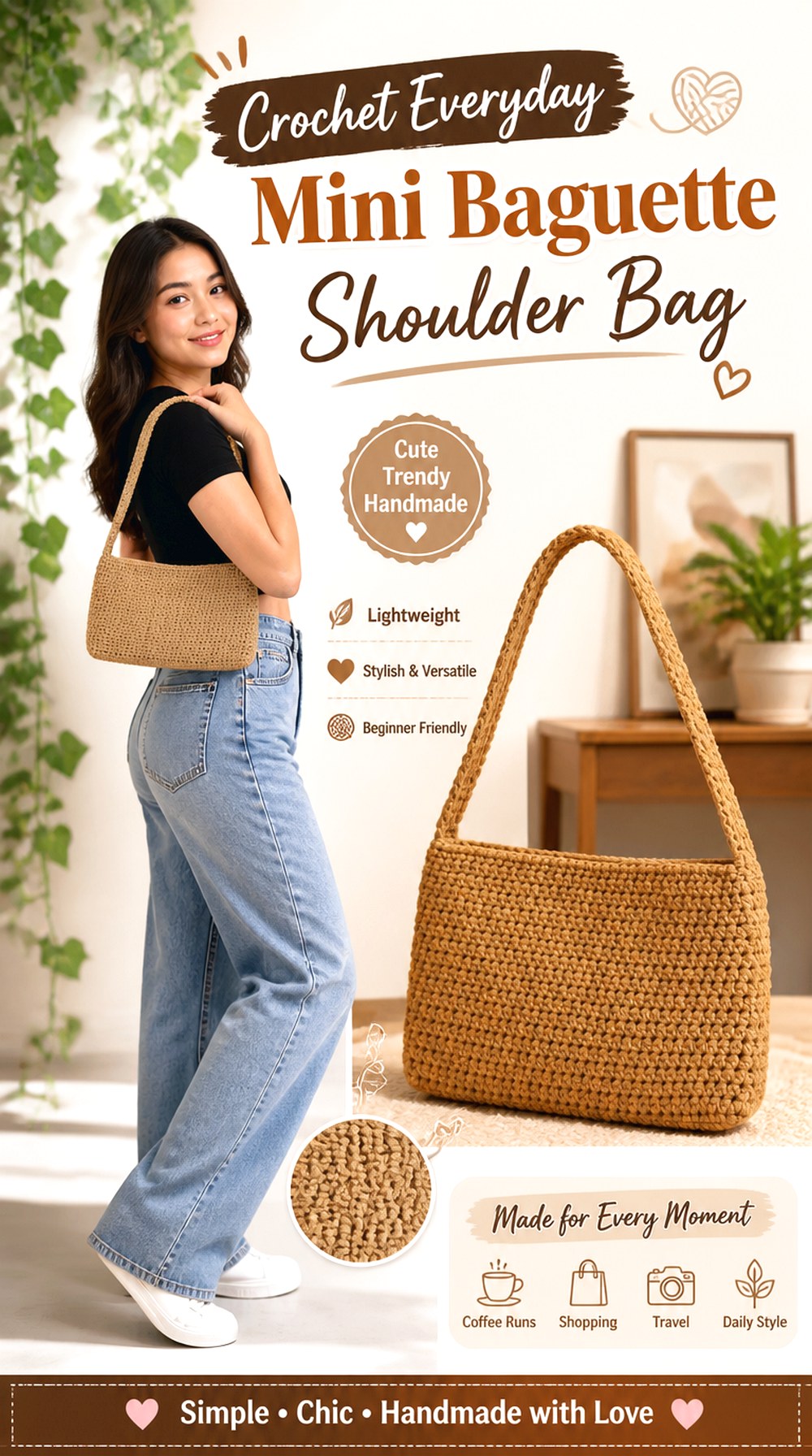
A simple mini silhouette is a useful starting point when the classic baguette proportion matters more than decoration. This version has a compact horizontal body and short shoulder carry, keeping the finished shape close to the recognizable underarm style rather than drifting toward a tote.
The restrained surface also makes yarn texture and stitch consistency more visible. It is a good direction for someone who wants the bag itself to remain visually quiet and work with different outfits. Because the tutorial creates a genuinely small shoulder bag, compare its finished scale with the objects you expect to carry rather than assuming every “mini” bag will meet the same needs.
The Small Body Makes Proportion Easy to Judge
With little decoration competing for attention, width, height, and strap placement determine most of the visual effect. If you want to resize a compact baguette, test the planned width and height together instead of adding length to only one dimension. Too much added depth can quickly change the bag from slim and horizontal to a conventional small purse.
Strap Placement Is Part of the Silhouette
The tutorial’s strap is an important visual component because a baguette bag normally sits much closer to the shoulder than a crossbody. Before changing its length, hold a temporary strand or measuring tape at the intended position. This simple checkpoint shows whether the finished bag will remain tucked under the arm or hang substantially lower than expected.
Crochet Magnetic Closure T Shirt Yarn Baguette Bag
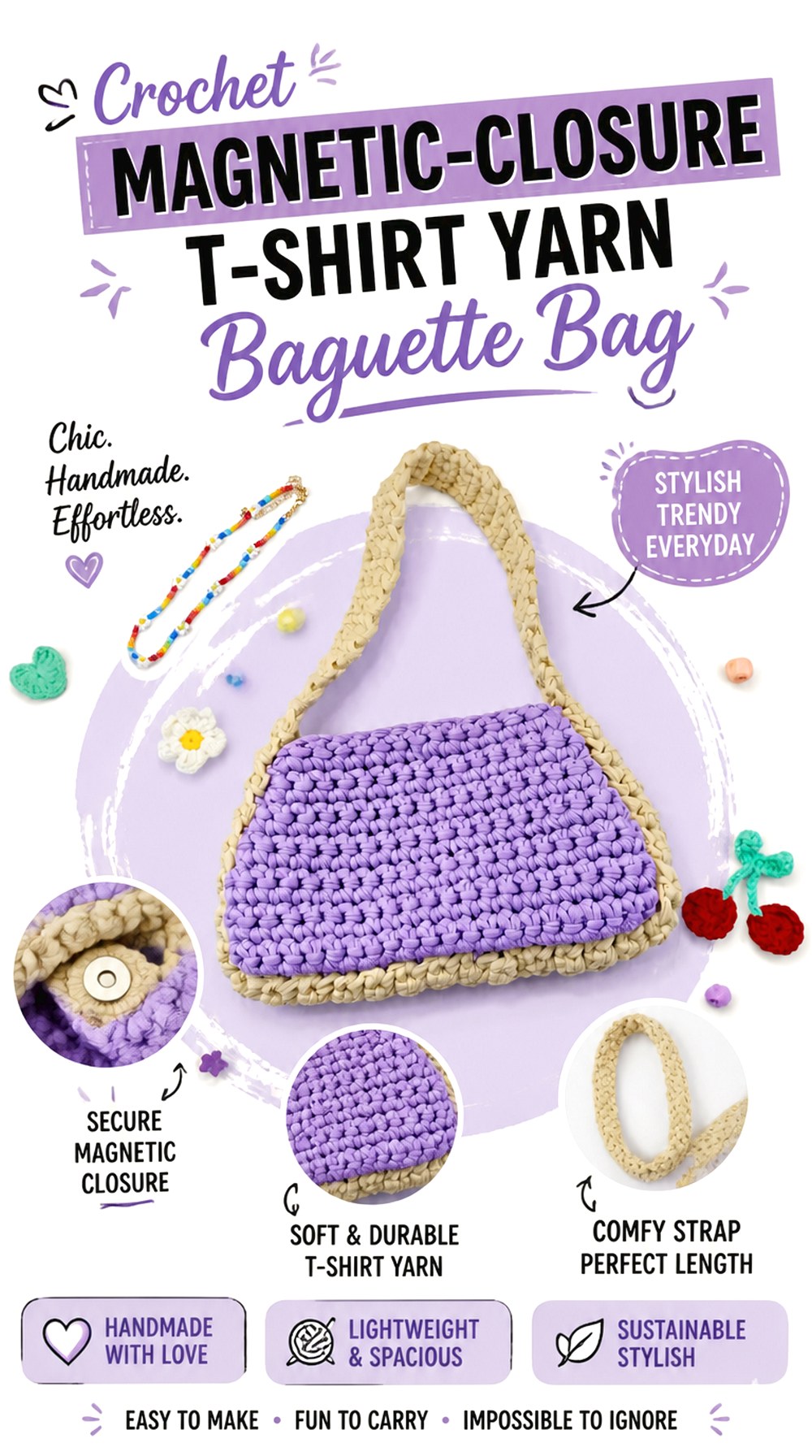
This option shifts the focus toward a firmer-looking fabric and a more defined opening. Chenda DIY’s tutorial uses T-shirt yarn and includes a magnetic button, giving readers a useful alternative to completely open baguette bags.
The combination suits someone who likes a clean contemporary bag but wants a central fastening point rather than an unrestricted top edge. T-shirt yarn can vary substantially in thickness and elasticity between products, however, so substitution deserves more attention than simply matching color. Compare the replacement yarn’s thickness and stretch with the tutorial material before assuming the same hook choice or finished proportions will transfer directly.
A Magnetic Closure Needs a Stable Top Edge
A central magnetic fastener pulls two parts of the opening toward one another. If you substitute a particularly soft or stretchy material, watch whether the top edge puckers around that point. The closure should improve usability without becoming the only rigid spot on an otherwise loose opening.
T-Shirt Yarn Can Change the Finished Weight
Thick fabric yarn builds visual structure quickly, but material weight can also increase quickly in a compact accessory. If you are adapting the dimensions, make a reasonably sized fabric sample first and handle it rather than judging it only on the hook. A bag that feels comfortably substantial at the original scale may become much heavier if both width and depth are enlarged.
Original Tutorial and Creator Credit
Creator: Chenda DIY
Crochet Clean Line Classic Baguette Bag
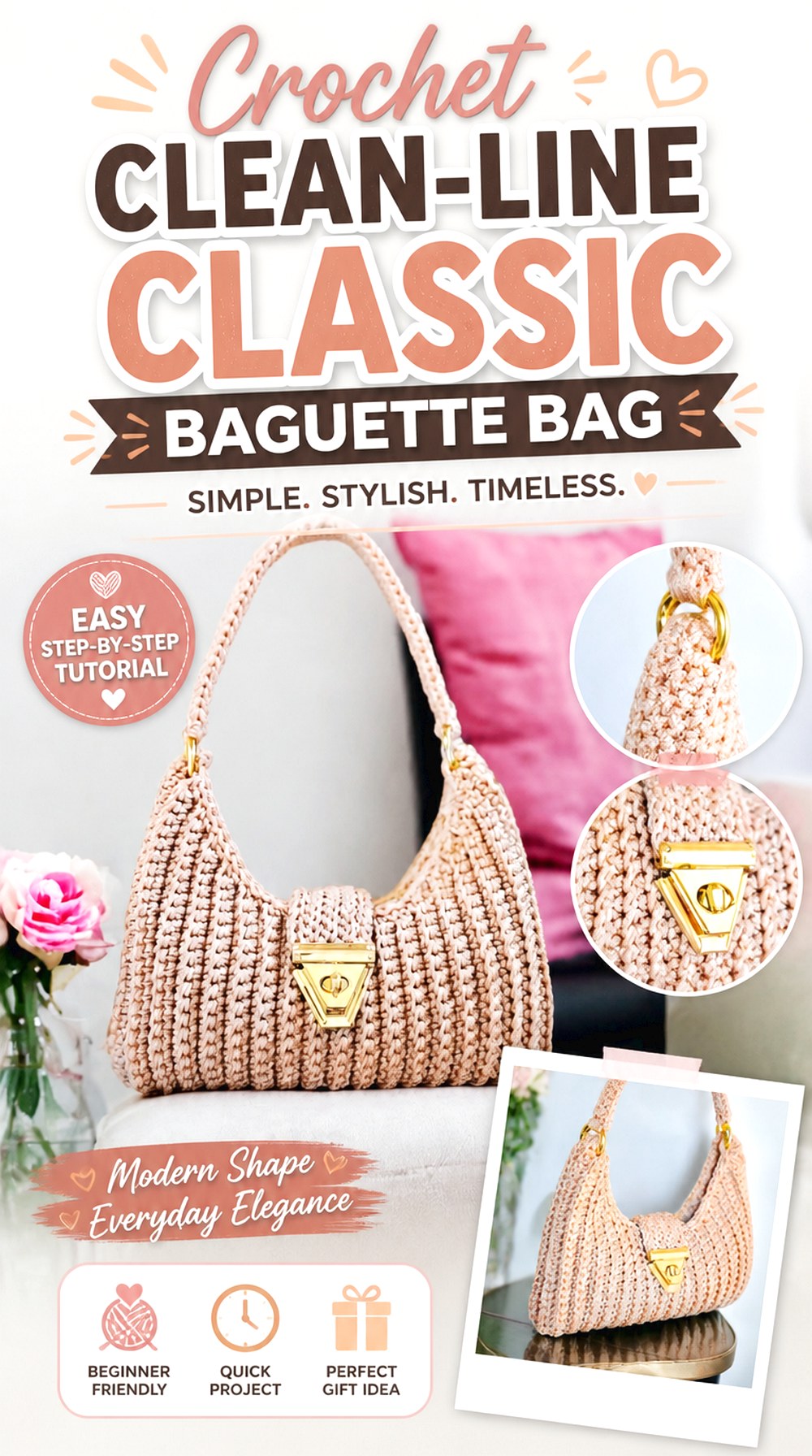
For a baguette bag without an obvious novelty feature, a classic streamlined version gives the proportions room to do the work. Faz Crochê’s tutorial centers the familiar elongated shoulder-bag shape, making this a useful reference when you want the finished object to read as a baguette first and a decorative crochet piece second.
A quieter design also leaves more room for later customization. A lining, different strap treatment, hardware, or subtle color blocking can be considered without competing with an existing motif. Make those decisions after establishing the shape, though. Adding several structural changes at once makes it harder to tell which modification altered the finished proportions.
Clean Surfaces Reveal Uneven Fabric Quickly
Minimal bags are less forgiving of accidental changes in tension because there is no strong motif to distract from the body shape. Periodically lay the work flat and compare the two long edges. If one edge is beginning to curve or flare, correcting the fabric early is easier than trying to force the finished bag into shape during assembly.
Decide on Interior Finishing Before Closing the Bag
If you expect to add a lining, think about access before all finishing is complete. A narrow baguette opening can make later hand sewing more awkward than it would be on a large tote. You do not need to change the creator’s construction, but you should decide early whether additional interior finishing is part of your version.
Original Tutorial and Creator Credit
Creator: Faz Crochê
Crochet Panel Built Buttoned Baguette Bag
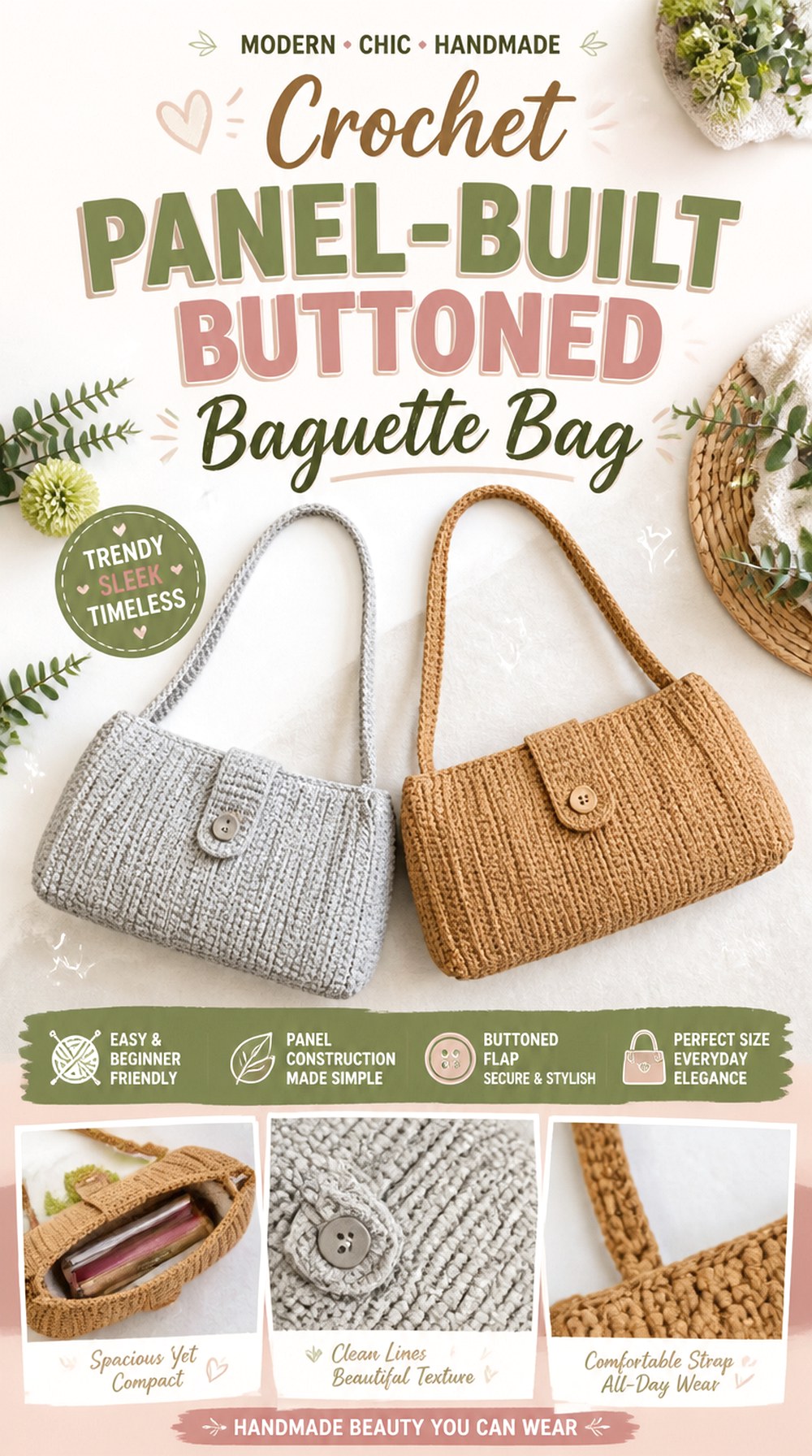
Cleyoché Crafts offers a different construction direction by showing a baguette bag developed through distinct body sections, with side work, buttons, and a strap visible in the tutorial structure. That makes this option useful for readers who prefer seeing how separate areas contribute to the final three-dimensional form.
The buttons also give the upper portion more visual detail than a completely plain opening. If you are comparing this with a bag crocheted continuously in rounds, think about which learning style you prefer. Panel-oriented construction provides clear component checkpoints, while continuous construction can reduce the number of obvious joins. Neither is universally better; the finishing experience simply differs.
Side Sections Control More Than Capacity
A defined side section affects depth, but it also changes how strongly the bag keeps its rectangular profile when viewed from the front. If you adapt those sections, compare the new depth with the overall height. A surprisingly deep side can make a short baguette body look boxier than the original.
Button Placement Should Be Checked With the Bag Closed
Decorative hardware can look perfectly centered while the bag lies flat but shift visually once the opening is under tension. Before permanently attaching a button, position the bag as it will actually be carried and confirm that the fastening point still looks balanced.
Separate Components Give Useful Fit Checkpoints
Panel construction lets you compare corresponding pieces before final assembly. Use that opportunity. Matching pieces that differ noticeably in blocked dimensions can create twisting or uneven seams later, even when the stitch counts used to make them were intended to match.
Original Tutorial and Creator Credit
Creator: Cleyoché Crafts
Crochet Classic Checkered Baguette Bag

Checks give a baguette bag a graphic surface without requiring added appliqués or dangling embellishments. By StellaM’s tutorial specifically creates a small checkered baguette bag, so the color pattern and compact silhouette are designed to work together rather than being unrelated features.
This direction is useful if a plain bag feels too quiet but you still want a tidy geometric look. The main planning issue is consistency: irregular tension becomes visible not only at the outer edges but also where the color areas meet. If you substitute yarns, use options that behave similarly so one section does not become noticeably thicker, softer, or more elastic than the other.
Color Changes Become Part of the Structure Visually
A checker pattern gives the eye repeated reference lines. That makes drifting block widths or uneven rows easier to notice than on a single-color bag. Pause periodically to view the entire panel from a little distance rather than inspecting only the stitches currently on the hook.
Keep Hardware From Competing With the Checks
The grid already supplies strong visual rhythm. If you add a closure, label, charm, or decorative strap hardware, consider whether it supports that rhythm or makes the front feel crowded. A simple finishing choice can preserve the checkered surface as the main feature.
Original Tutorial and Creator Credit
Creator: By StellaM
Crochet Bow Trim Chunky Baguette Shoulder Bag

Bows make this baguette feel intentionally decorative rather than simply functional. The lerugi crochets tutorial combines T-shirt yarn, a sturdy-handle concept, and visible bow accents, producing a more playful interpretation of the normally streamlined shoulder-bag shape.
Because the embellishments become focal points, their placement matters as much as their color. This option suits someone who wants a bag to function almost like an accessory within an outfit rather than disappear into it. Before adding extra bows or enlarging them, consider the opening and handle area. Decorative pieces that look balanced on the flat body can become inconvenient if they crowd the places you need to grip or open frequently.
Bow Placement Should Follow the Finished Shape
Attach or plan embellishments while thinking about the bag in its carried position. Elements placed near an edge may rotate toward the side once the bag has contents inside. Checking the bag both flat and hanging helps keep decorative details where they remain clearly visible.
The Handle Needs to Balance a Chunky Body
A substantial fabric visually calls for a handle that does not look undersized at its connection points. If you modify the strap, pay particular attention to its width and attachment area rather than only its total length. A delicate-looking connection can feel out of proportion against a thick body even before practical strain is considered.
Decorative Bags Benefit From a Restraint Check
Bows, labels, contrasting edges, charms, and colorful yarn can each work well, but they do not all need to appear together. Once the main bow treatment is established, view the whole bag before adding another focal element. The elongated silhouette should still be readable.
Original Tutorial and Creator Credit
Creator: lerugi crochets
Crochet Slim Everyday Baguette Purse
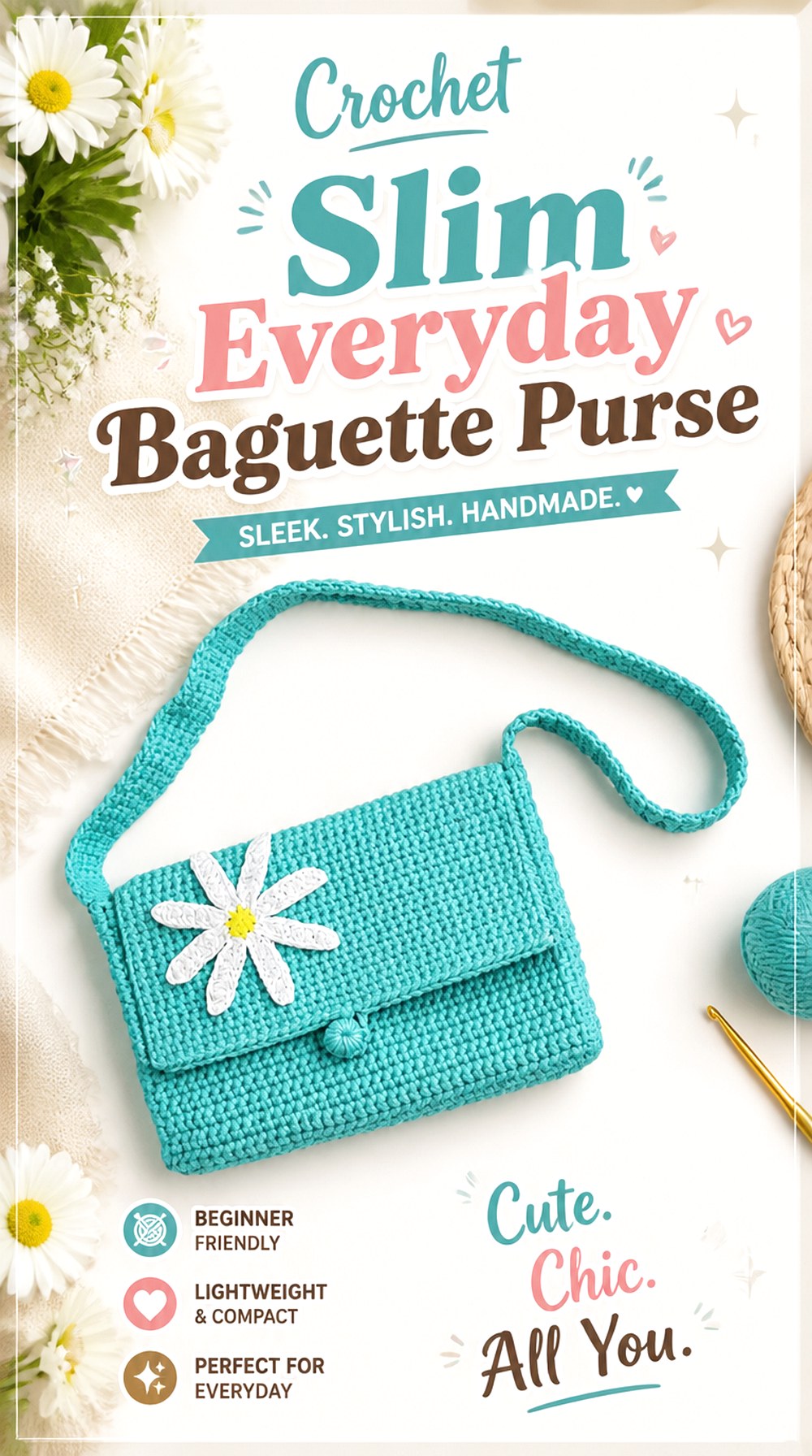
Irma Tri Austurina’s baguette-bag tutorial offers another straightforward shoulder-purse direction without needing colorwork or oversized embellishment to establish the style. The appeal is the narrow everyday shape: it can be treated as a foundation for a neutral wardrobe accessory or adapted with restrained finishing details later.
A slim bag requires more realistic capacity planning than a roomy tote. Rather than asking whether the bag is “big enough” in the abstract, group the actual essentials you expect to carry and compare their combined thickness with the intended depth. Phones, card holders, keys, and small personal items may fit individually yet create a bulky profile when stacked together.
Protect the Horizontal Profile From Overstuffing
The baguette silhouette looks cleanest when the long body remains visibly wider than it is tall and deep. If your usual contents would make the sides bulge dramatically, choosing a slightly roomier tutorial may work better than simply forcing more into a deliberately slim design.
Make Strap Length a Wardrobe Decision
Think about the clothing you expect to wear with the bag. A very short shoulder strap may sit comfortably over a light top but feel tighter over a bulky jacket. Testing the intended drop while wearing your typical layers gives a more useful answer than measuring the strap in isolation.
Original Tutorial and Creator Credit
Creator: Irma Tri Austurina
Crochet Short Body T Shirt Yarn Baguette Bag

Jordanna Pinheiro of Labellebags Crochet demonstrates a baguette made with fio de malha, or T-shirt-style fabric yarn. The chunky material emphasizes the compact proportions, making the body read more like a small structured handbag than a soft yarn pouch.
This is a useful direction when you prefer visible thickness and a substantial surface but do not necessarily want added motifs. Material substitution is the main checkpoint. Fabric yarn is not standardized in the same way as many conventional spun yarns; strips can differ in width, stretch, density, and even weight within a single category. Judge substitutions by the fabric they produce, not solely by the label.
A Short Body Magnifies Changes in Depth
On a low-profile bag, even a modest increase in side depth can noticeably alter the silhouette. If you want more capacity, consider whether slightly increasing width would preserve the baguette look better than dramatically deepening the sides.
Fabric Yarn Deserves a Handle Test
Crochet a small sample with the yarn you actually plan to use and pull it gently in the direction a strap would be stressed. This will not predict a formal load limit, but it can reveal whether the fabric feels substantially more elastic than the material shown in the tutorial.
Original Tutorial and Creator Credit
Creator: Jordanna Pinheiro | Labellebags Crochet
Crochet Minimal T Shirt Yarn Baguette Purse

The baguette tutorial from @feitoamaoporisa also uses fabric yarn, but it works well here as the minimalist option: a clean, fashion-led purse where the elongated body itself remains the central feature. The creator identifies the project specifically as a baguette-style crochet bag made with fio de malha.
If you like the firmness associated with thick yarn but do not want bows or checkered colorwork, this is a useful comparison point. Keep customization restrained until you see the completed body. Hardware and decorative additions that look small separately can appear disproportionately large against a compact horizontal purse.
Minimal Design Makes Edge Quality More Important
The top opening and side transitions become obvious design lines when the surface has little decoration. Check them from several angles as you work. An edge that looks acceptable while the bag lies flat may become much more visible when the purse hangs from its handle.
Plan Added Hardware Around Fabric Thickness
If you decide to add a closure or purchased handle, do not assume hardware meant for a thin textile bag will automatically suit thick crochet fabric. Check that any opening, ring, or attachment component can accommodate the finished crochet without crushing it or creating an awkward pinch point.
Original Tutorial and Creator Credit
Creator: @feitoamaoporisa
Crochet Side Detail Baguette Bag
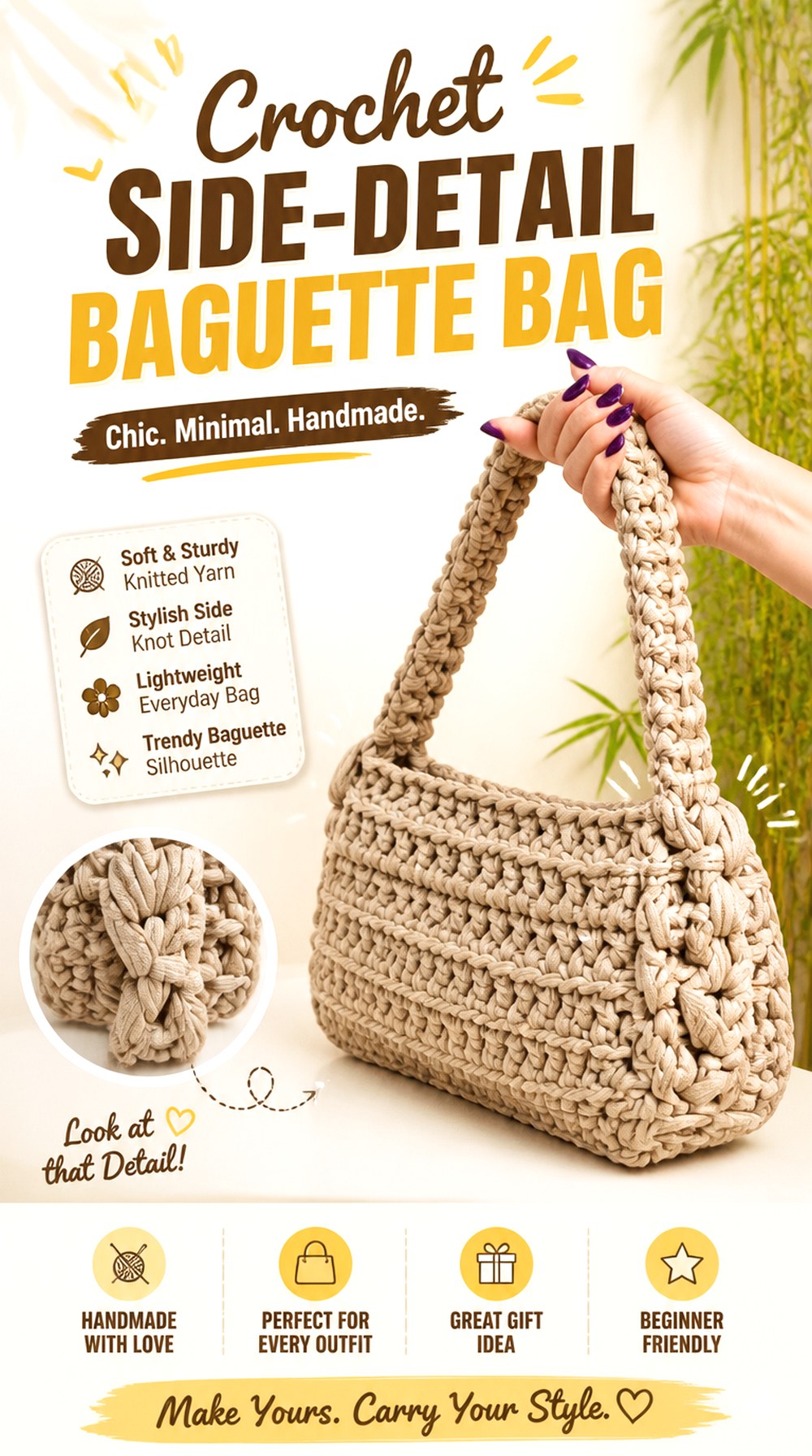
Artes da Belly – Matelí Ateliê’s baguette tutorial brings more attention to finishing around the sides, and the accompanying material also discusses optional interior or opening treatments such as lining and a zipper. That makes it a useful choice for readers thinking beyond the crochet body itself.
A zipper can make a compact bag more secure, but it also introduces precision at the opening. If the crochet edge stretches considerably while the zipper tape does not, the two materials can fight each other and produce rippling. A lining creates a similar planning question: its dimensions need to reflect the interior space rather than simply duplicating the outside measurements.
Side Details Can Become a Design Feature
The side is often treated as purely structural, but a compact bag exposes it whenever the purse hangs under the arm. If the tutorial’s side treatment appeals to you, avoid hiding that area behind oversized charms or an excessively wide strap attachment.
Decide on a Zipper Before Finalizing the Opening
Retrofitting a zipper is possible in many handmade bags, but planning it early gives you more control over the top edge. Check whether the opening stays reasonably stable and whether the intended zipper orientation lets the bag open far enough for practical access.
A Lining Should Follow the Interior, Not the Exterior
Crochet thickness takes up space. If you create a custom lining, work from the actual finished interior rather than assuming the outside dimensions describe the cavity perfectly. This is especially important in a narrow baguette, where a small discrepancy can consume a noticeable portion of the usable space.
Original Tutorial and Creator Credit
Creator: Artes da Belly – Matelí Ateliê
Crochet Smooth Cord Structured Baguette Bag
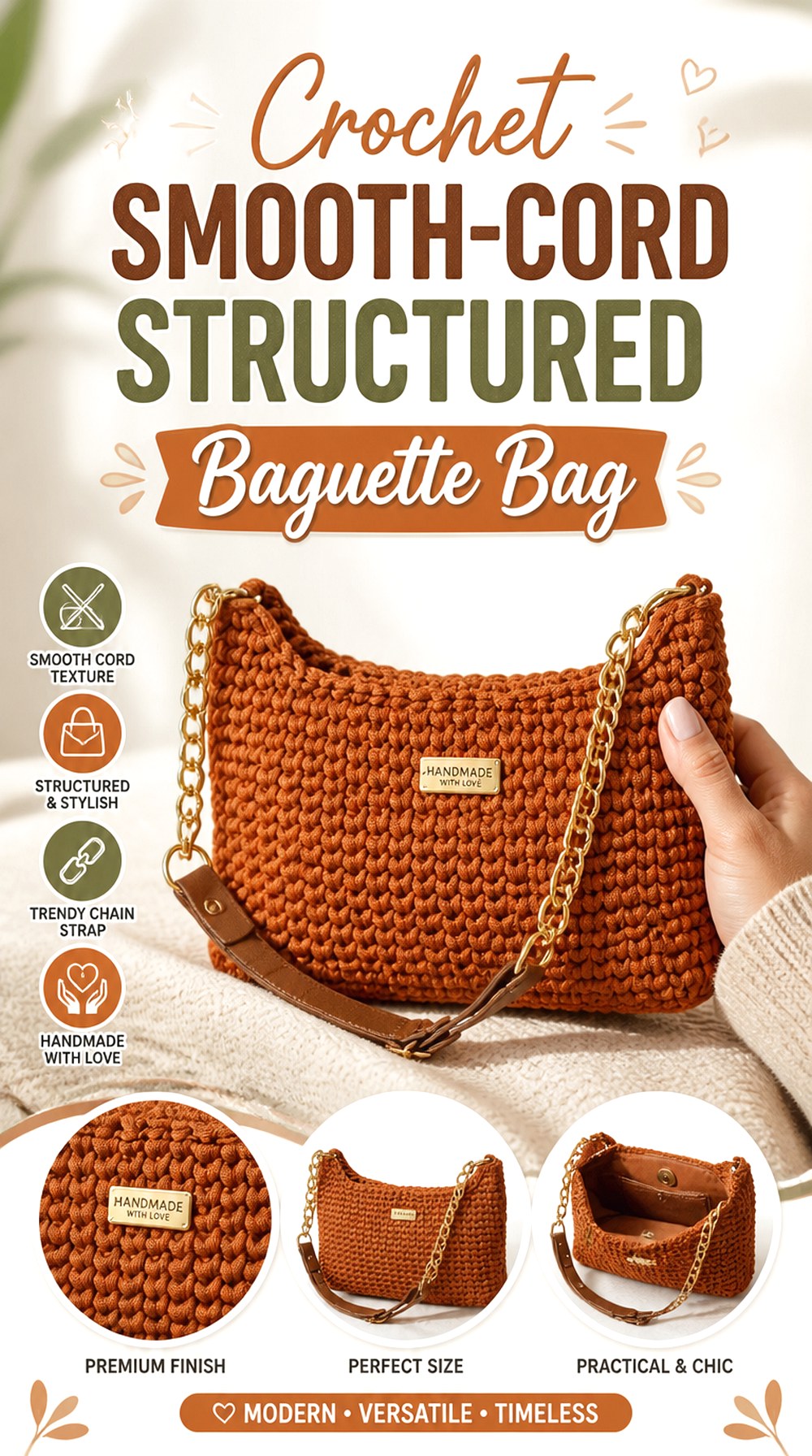
Fischer Fios presents a baguette bag made with its Poli yarn in a tutorial led by Adri Rodrigues. Compared with fuzzy or very soft yarn, a smooth cord-like material can put more visual emphasis on crisp stitch definition and the outline of the finished handbag.
This direction is worth considering when you want the crochet to resemble a compact structured accessory rather than a soft pouch. The important word is “resemble”: the amount of shape retention still depends on the exact material, tension, construction, and finishing. If substituting another cord, make a fabric sample and bend, fold, and hang it before committing to the entire bag.
Smooth Yarn Puts Stitch Definition Front and Center
A clean-surfaced cord exposes changes in stitch size readily. If your tension normally changes during long sessions, divide the project into manageable periods and compare the fabric frequently. Consistency matters more here than adding decorative complexity.
Check Whether the Strap Material Matches the Body
A firm body paired with a highly elastic strap can create an uneven wearing experience. If you alter the handle, compare its stretch with the finished body fabric. The goal is not necessarily zero stretch, but avoiding a dramatic mismatch between the two areas.
Original Tutorial and Creator Credit
Creator: Fischer Fios
Crochet Graphic Checkered Baguette Bag
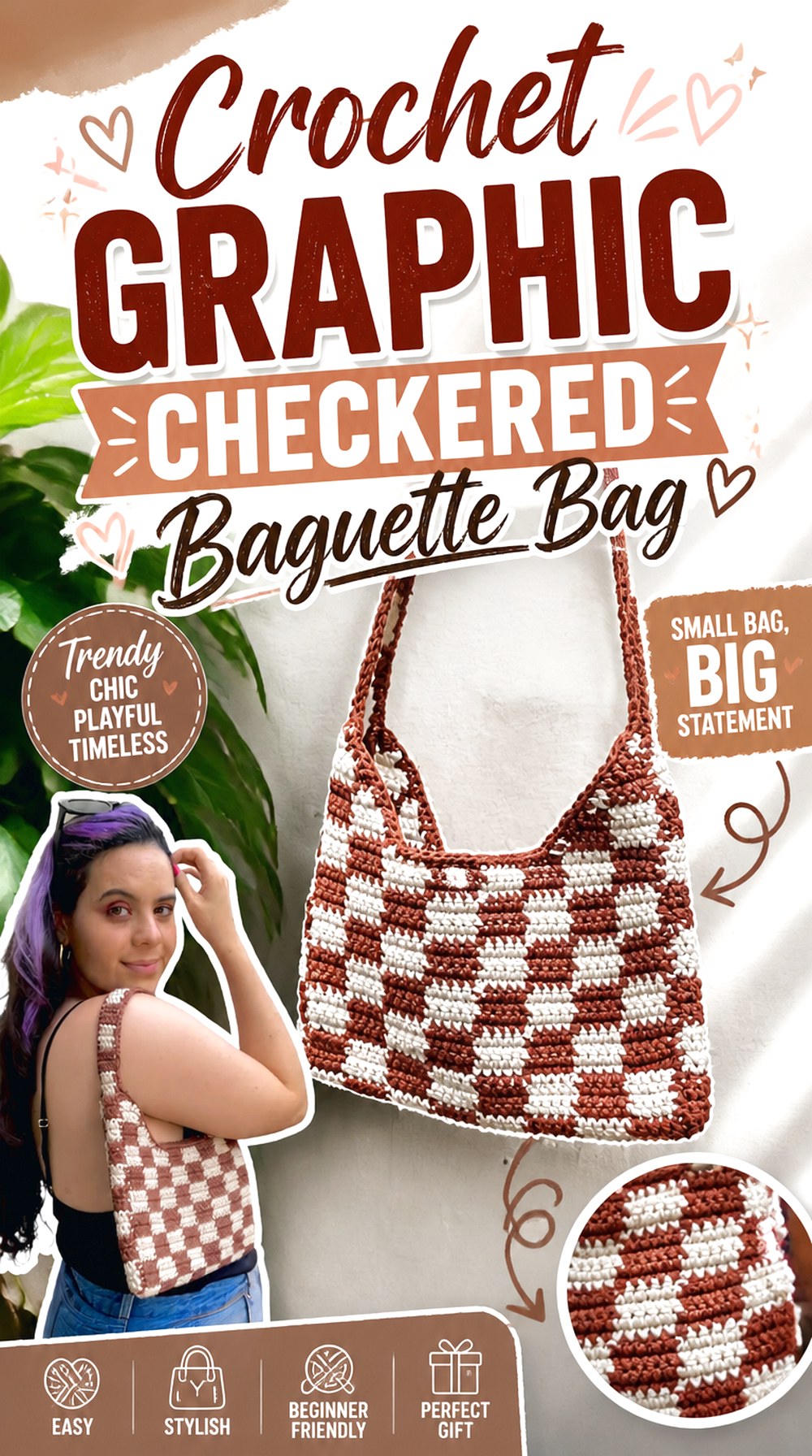
Bia Crochet’s tutorial takes the checkerboard idea in a fashion-focused, Pinterest-inspired direction. The bag is still recognizably a baguette, but the repeated contrasting blocks make the surface a much stronger statement than a monochrome version.
Choose this route when the pattern itself should be noticed from across the room. Unlike a plain bag, a high-contrast checker layout gives you less room to conceal inconsistent color transitions. It also means customization should begin with the complete color arrangement rather than picking two attractive skeins independently. Place them together in approximately the same proportions as the planned bag to make sure one does not visually overwhelm the other.
Contrast Determines How Loud the Grid Feels
Two colors with a strong light-dark difference create a much more graphic checker than closely related shades. Decide which effect you want before crocheting the whole body. The same geometric layout can read bold, retro, soft, or understated depending on the value contrast.
Watch the Corners of Each Color Area
The eye naturally follows the checker grid, so misaligned transitions can interrupt the pattern more noticeably than small variations elsewhere. View several completed blocks together periodically; a larger section makes it easier to spot drift than inspecting one color change at a time.
Keep the Strap From Becoming a Third Competing Pattern
If the body already has an assertive checkerboard, a heavily patterned strap can divide attention. A simpler handle can frame the main design, while a contrasting strap makes sense only when you deliberately want an additional graphic element.
Original Tutorial and Creator Credit
Creator: Bia Crochet
Crochet Simple Low Profile Baguette Bag
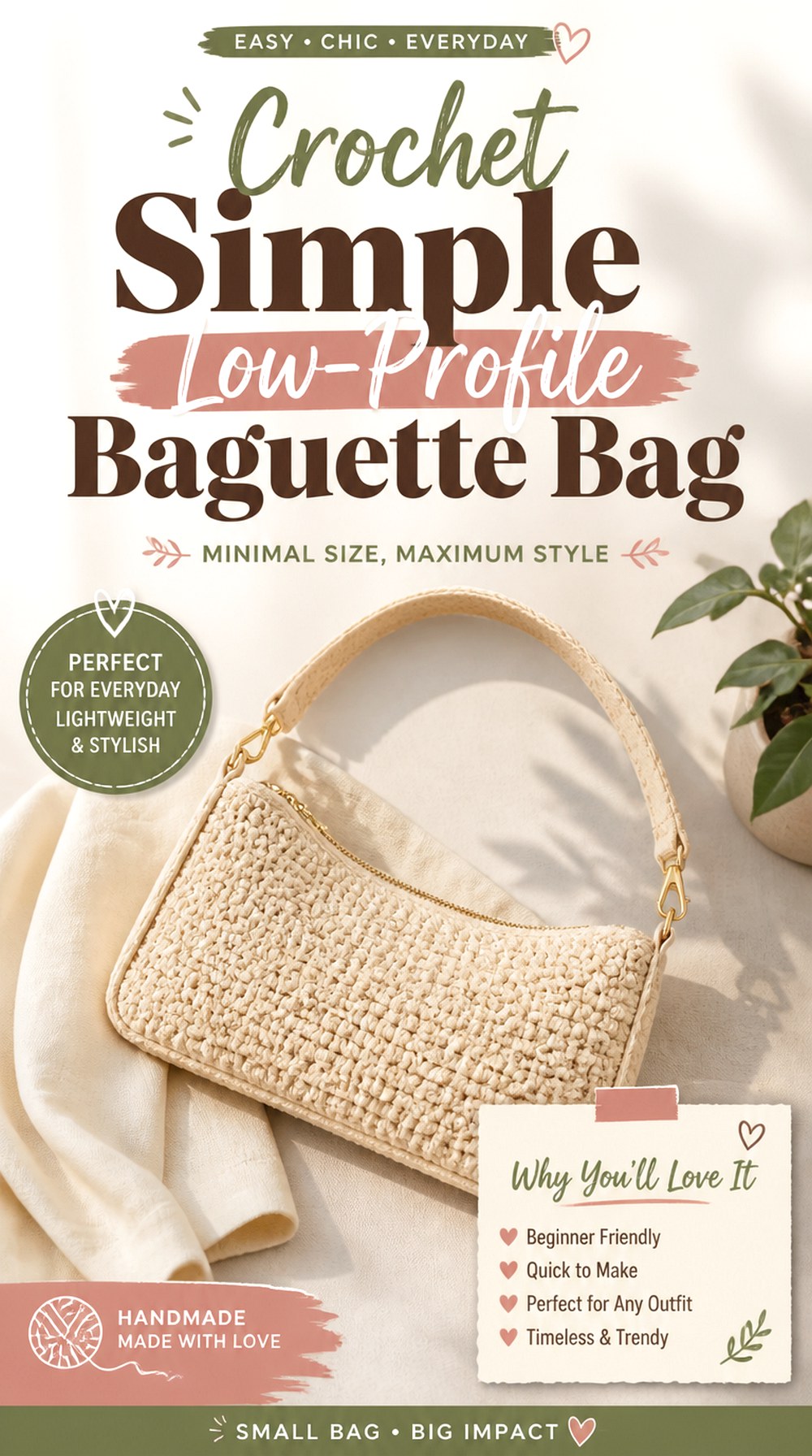
Eng Crochet Eman’s tutorial focuses on a simple, compact baguette-style shoulder bag. It fits well into this collection as the low-profile option for readers who care more about the elongated dimensions than decorative finishing.
The horizontal body makes it worth thinking carefully about what “small bag” means in practice. A baguette can be wide enough for common essentials while remaining quite shallow. That is different from a similarly sized pouch with more vertical room. Before choosing it, pay attention to the shape of what you actually carry—especially rigid objects whose dimensions cannot adapt to the bag.
Opening Width Can Matter More Than Interior Width
An item may technically fit inside the widest part of a bag but still be awkward to insert through a tighter opening. If you are adapting the top edge or adding a closure, test access using an object similar in size to your usual essentials before committing to the final fastening.
Low Profiles Benefit From Controlled Stretch
Vertical sag changes a shallow baguette more dramatically than it changes a tall tote. If your yarn substitution produces a very elastic fabric, consider whether the finished bag will retain the proportion that attracted you to this design in the first place.
Original Tutorial and Creator Credit
Creator: Eng Crochet Eman
Crochet Curved Mandu Mini Baguette Bag
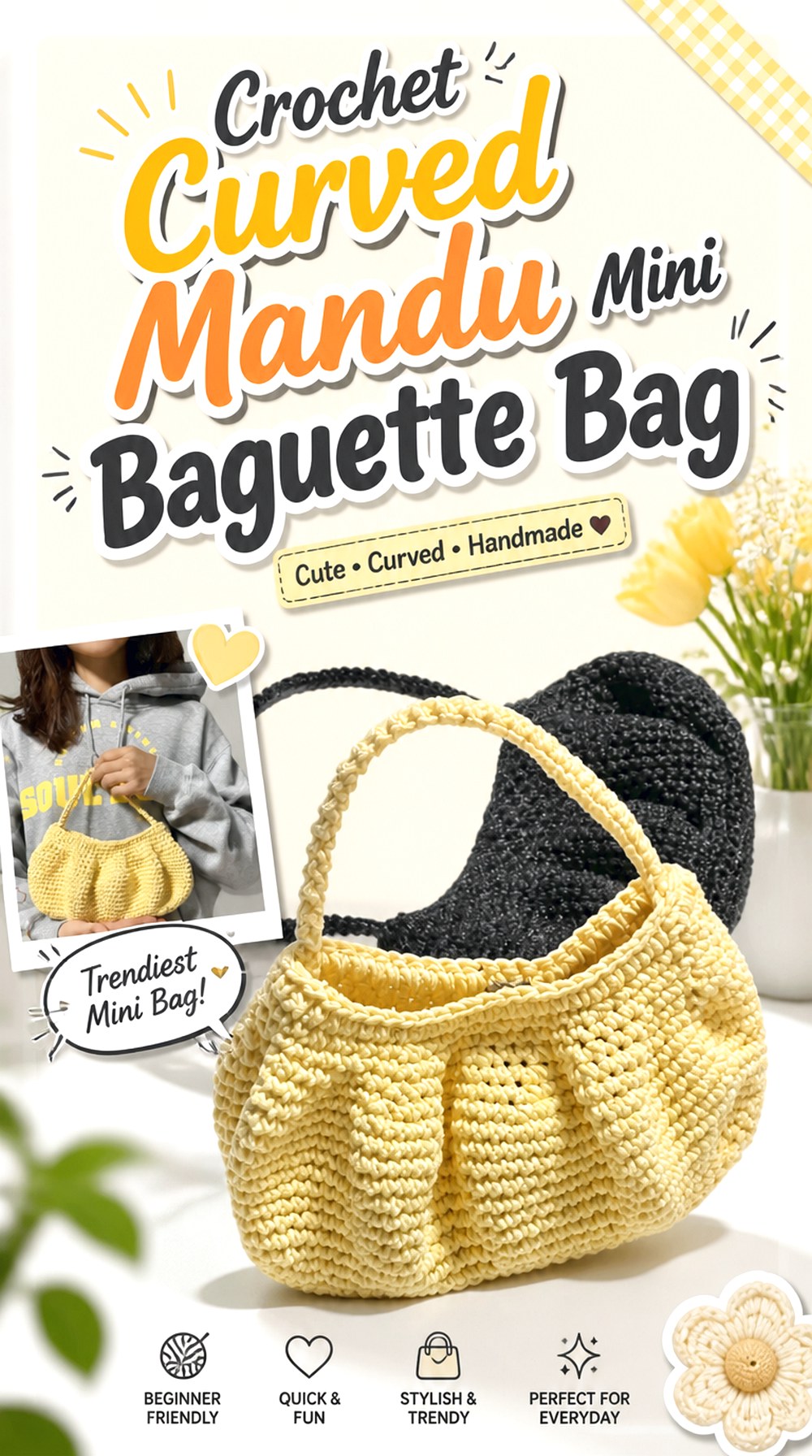
The mandu version from 수리마마surimama changes the outline rather than merely changing the yarn or color. Its rounded, dumpling-like body softens the usual rectangular baguette silhouette while preserving a compact shoulder-bag scale.
This is the option to consider if straight sides feel too formal or boxy. The curved profile also means resizing deserves extra care. A simple rectangle can often tolerate straightforward proportional changes, but shaped edges rely more heavily on the relationship between the sections. If you want a larger version, study how the finished curve is formed in the original tutorial before deciding which dimensions can be altered without flattening or exaggerating it.
The Curve Is the Main Design Feature
Avoid hiding the lower contour with heavy fringe or bulky exterior embellishments. The silhouette distinguishes this bag from the straighter examples in the collection, so letting that line remain visible preserves the reason for choosing this particular version.
Rounded Bodies Change How Contents Settle
Rigid rectangular items may sit differently inside a curved bag than they do inside a boxier purse. If capacity is important, think in terms of usable interior shape rather than overall width. Corners that exist visually in a rectangular bag may not exist here.
Check the Strap Against the Softer Outline
A sharply rigid handle can create an intentional contrast with a rounded body, while a softer handle continues the curved visual language. Neither choice is inherently better. Decide whether you want the strap to reinforce the soft shape or add structure to it.
Original Tutorial and Creator Credit
Creator: 수리마마surimama
Crochet Macramé Cotton Baguette Shoulder Bag
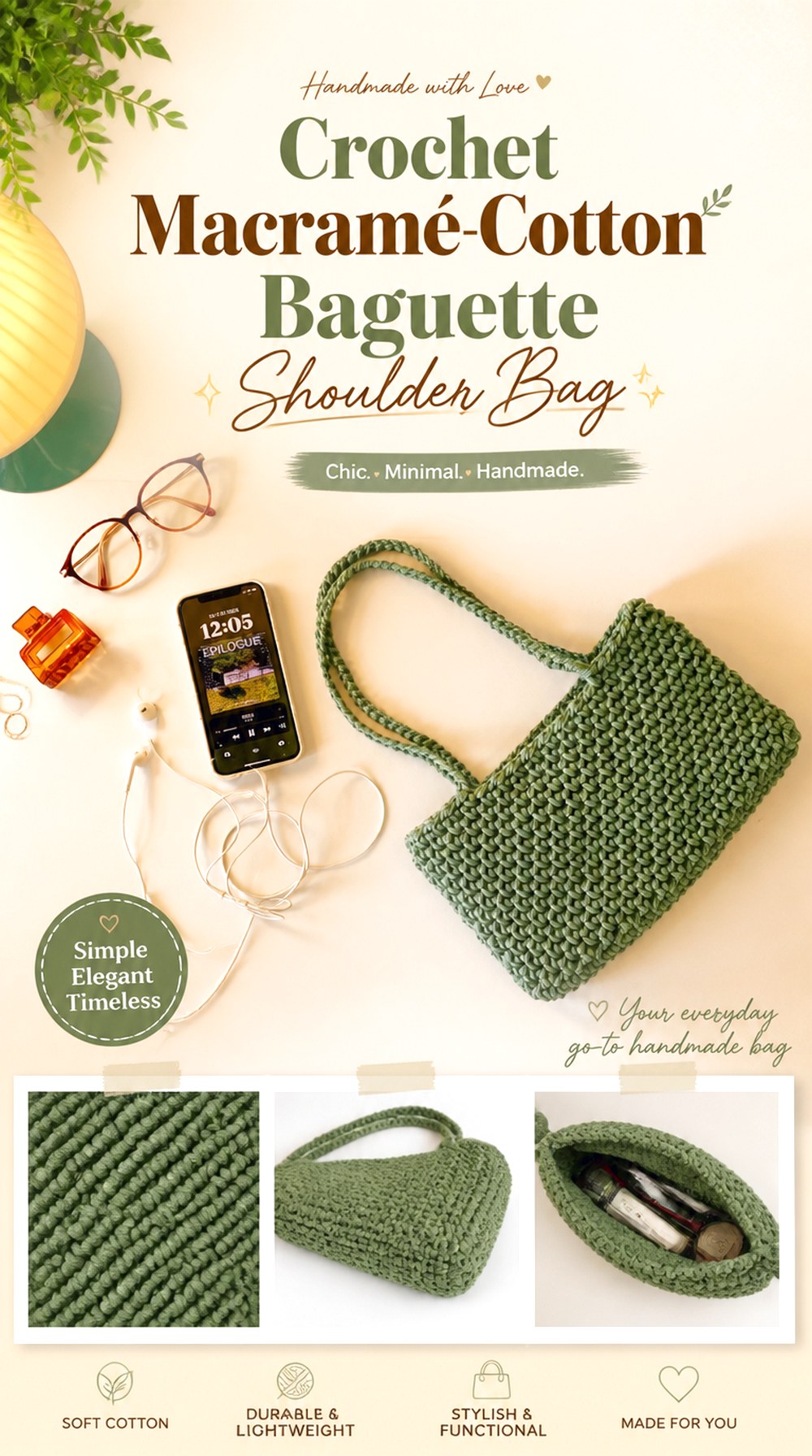
natsuki knit.’s baguette tutorial uses a macramé-cotton-style material, bringing a corded, defined appearance to the compact shoulder-bag shape. This is a strong direction for readers who like minimalist Korean- and Japanese-inspired accessory styling where material texture and clean proportion provide most of the visual interest.
Cord substitutions need careful handling because two products described as macramé cotton can still vary in diameter, twist, softness, and density. Instead of assuming another cord will produce an identical body, compare a crocheted sample with the original finished look. The question is whether your fabric folds and holds its edge in a similar way, not whether the packaging uses the same general fiber description.
Cord Diameter Directly Changes Visual Scale
Thicker stitches can make the same conceptual shape appear chunkier and more casual, while finer cord can create a more refined surface. If the original proportions are what you like, treat a large material change as a design change rather than a simple substitution.
Minimal Styling Rewards Careful Finishing
When there is no checkerboard, bow, or prominent hardware to command attention, joins and yarn ends become proportionally more visible. Allocate enough finishing time for the clean surface instead of treating the last stage as an afterthought.
Original Tutorial and Creator Credit
Creator: natsuki knit.
Crochet Chunky Textured Baguette Bag
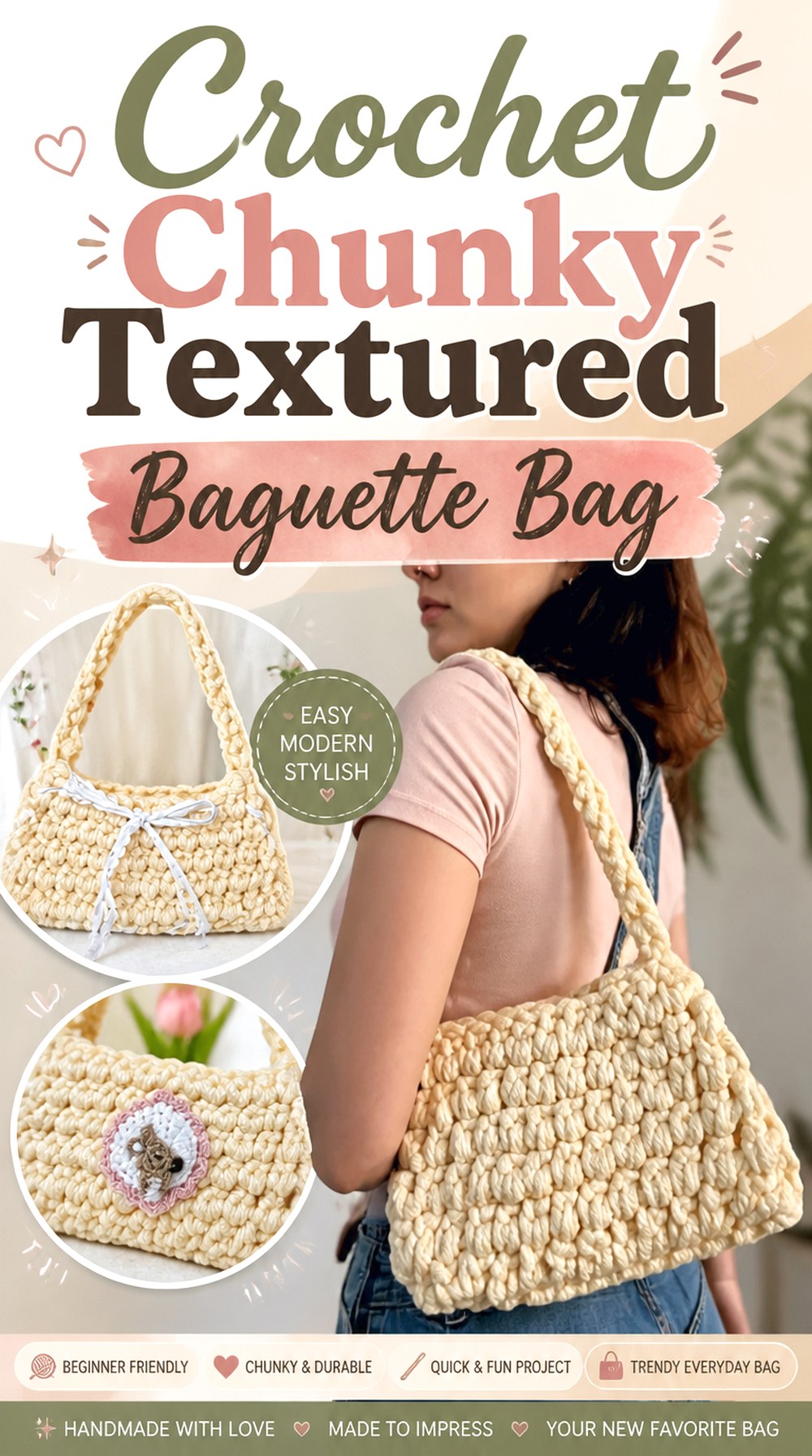
thisfairymade’s version takes a softer, chunky approach to the baguette silhouette. The creator describes the project as a chunky baguette shoulder bag and spends tutorial time explaining the textured crochet techniques used to create it.
This makes the project noticeably different from smooth cord and flat checkerboard versions. The fabric itself is the feature. If you substitute yarn, think about stitch visibility as well as thickness. A very fuzzy fiber can obscure raised or directional texture even when the overall gauge seems workable. Conversely, a smooth yarn may make the stitch architecture more prominent than in the original.
Texture Needs Enough Light and Definition
A raised fabric can disappear visually in a very dark, fuzzy yarn. If the stitch surface is why you chose this project, examine a swatch in ordinary indoor and daylight conditions. You may prefer a fiber that lets the shadows between stitches remain visible.
Chunky Does Not Automatically Mean Rigid
A thick yarn can still produce a flexible or stretchy fabric. Handle your sample vertically and horizontally rather than assuming thickness alone will keep the baguette shape crisp. If it lengthens significantly under gentle handling, account for that behavior when choosing your finished scale.
Keep Extra Decoration Secondary to the Fabric
The stitch texture already supplies surface interest. Before adding charms, appliqués, or multiple contrasting trims, decide whether they improve the bag or simply obscure the detail that makes this version distinct.
Original Tutorial and Creator Credit
Creator: thisfairymade
Crochet Extra Chunky Cord Baguette Bag

The Boho Cord’s tutorial pushes the silhouette toward an especially substantial chunky shoulder bag. The creator identifies it as a DIY crochet baguette bag made with cord and notes that the tutorial assumes familiarity with basic crochet stitches and terminology.
This is a useful contrast to the finer, slimmer bags earlier in the collection. Its visual weight comes from the material and scale rather than colorwork. Because chunky cord can create a substantial finished object quickly, resist the temptation to enlarge the body without first considering the additional material. Increasing both dimensions can affect overall weight more than expected.
Chunky Cord Makes Every Proportion More Obvious
A few large stitches can occupy a visually significant amount of space, so small dimensional changes can have a strong effect. Compare the body with the handle throughout the project; a strap that seems adequate early may look undersized once the substantial bag body is complete.
The Attachment Area Deserves Extra Attention
A chunky handle concentrates visual and physical stress where it meets the body. If you customize the strap, keep the attachment area proportional rather than narrowing it dramatically for appearance alone. Inspect those joins regularly during use instead of assuming a thick material guarantees unlimited strength.
Original Tutorial and Creator Credit
Creator: The Boho Cord
Crochet Herringbone Texture Baguette Bag
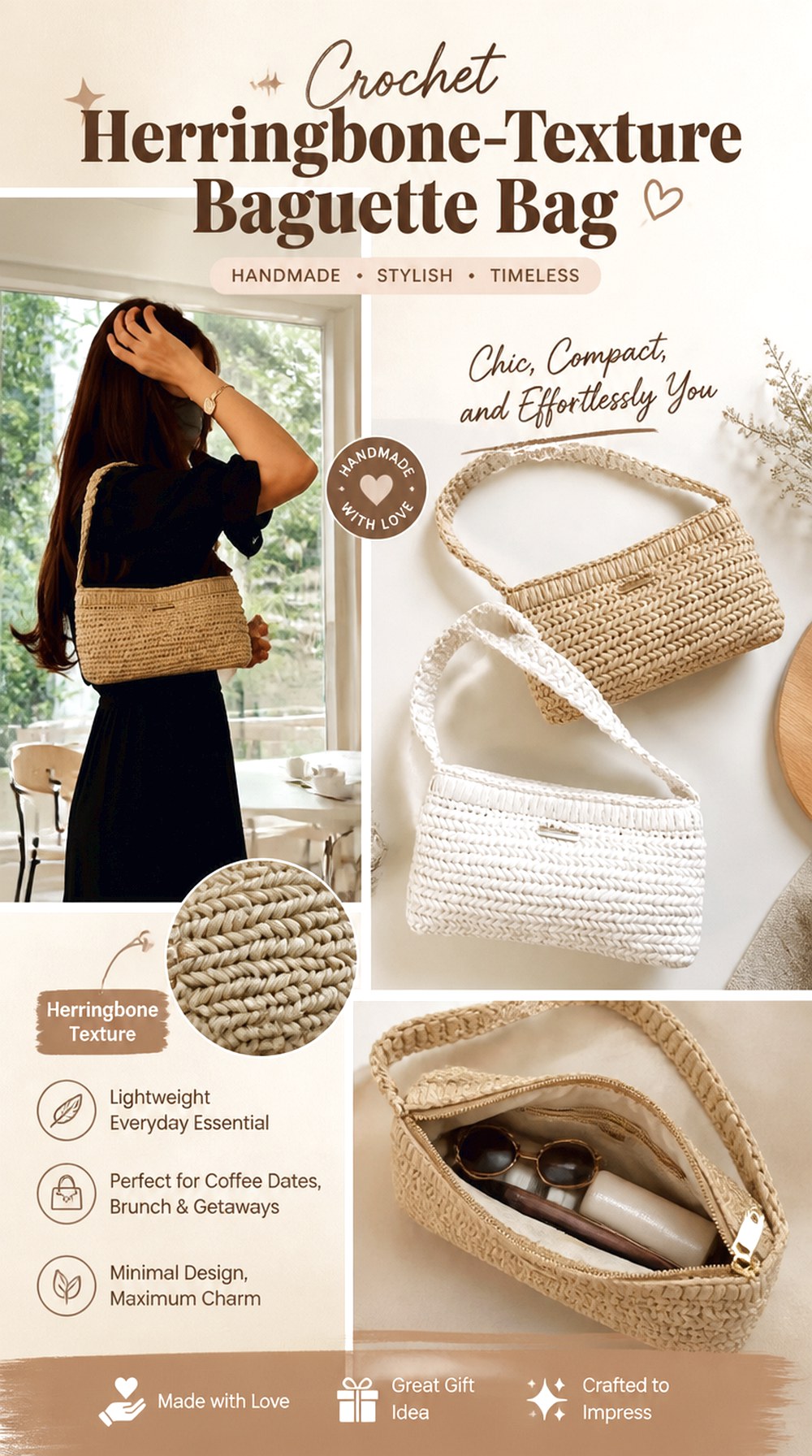
The herringbone baguette from 털몽치 Mongchi Crochet closes the collection with a clearly directional surface. The creator specifically identifies the bag as a herringbone-stitch baguette and notes that keeping the texture consistent can require attention.
This direction works well when you want subtle pattern rather than contrasting color blocks. The repeated diagonal-looking texture gives a solid-color bag enough movement to stand apart from a completely plain surface. Because directional stitches can make tension changes visible, establish a comfortable rhythm before evaluating the final appearance. If you change yarn, choose based on how clearly it displays the herringbone effect as well as how the fabric behaves structurally.
Directional Texture Needs Consistent Tension
The eye follows repeated lines, which means sudden changes in stitch height or density may interrupt the surface more visibly than on an irregular texture. Step away from the work periodically and view a larger section as a whole to catch inconsistencies early.
Material Choice Can Sharpen or Soften the Pattern
The creator uses a wide, thin, felt-like yarn and mentions thicker fabric yarn as a possible alternative. Those materials will not necessarily produce identical visual results. A sharper cord can emphasize stitch direction, while a softer surface may blur it, so swatching is especially useful here.
Let the Herringbone Carry the Design
A directional stitch already supplies movement. If you customize the bag, consider restrained hardware or a simple strap before adding another large motif. Keeping the surrounding details quieter makes the herringbone surface easier to read.
Which Crochet Baguette Bag Style Should You Choose?
| If your priority is… | Ideas to compare | Main trade-off to consider |
|---|---|---|
| A simple everyday silhouette | 1, 3, 7, 13 | Minimal surfaces make proportion and finishing more noticeable |
| A firmer chunky look | 2, 8, 9, 17 | Thicker materials may add more weight and bulk |
| Strong surface pattern | 5, 12, 18 | Checks and directional textures reveal inconsistent tension more easily |
| Decorative personality | 6 | Bows add character but should not interfere with the opening or handle |
| Unusual shaping | 14 | Curved construction is less forgiving of casual resizing |
| Refined cord texture | 11, 15 | Cord substitutions can noticeably change drape and stitch definition |
| More finishing options | 4, 10 | Buttons, lining, or zipper choices add planning beyond the crochet body |
| Chunky stitch texture | 16 | Yarn fuzziness and elasticity can change how well the texture shows |
Conclusion
The right crochet baguette bag depends less on which one looks prettiest in a single photo and more on how you want the finished accessory to behave. Choose the mini and low-profile designs for a cleaner everyday silhouette, the fabric-yarn and cord versions for more visual structure, the checkerboard or herringbone bags for surface pattern, and the mandu or bow styles when shape or decoration should be the focal point.
Before starting, compare the opening, strap, material, depth, and expected contents rather than choosing by color alone. Once you have selected a direction, use the original creator’s tutorial for the exact construction details rather than trying to combine incompatible instructions from several designs.
Frequently Asked Questions
What yarn qualities help a crochet baguette bag keep its shape?
Look at the finished fabric rather than relying only on fiber name or yarn weight. A relatively dense fabric with controlled stretch generally preserves a compact horizontal silhouette more effectively than very loose, elastic crochet. Cord and fabric yarn can create substantial structure, but thickness alone does not guarantee stiffness. Make a sample, hold it vertically, and see how much it stretches or folds before deciding whether the material suits the bag you chose.
Should a crochet baguette bag always have a lining?
No. A dense small bag may function perfectly well without one. A lining becomes more useful if the crochet openings could lose small objects, the body stretches more than you want, or you prefer an interior that is separated from the crochet fabric. If you plan to add one, measure the actual completed interior. The outside dimensions can overstate the usable space because the crochet itself has thickness.
Why can a crochet baguette bag strap stretch so much?
Stretch depends on the yarn, stitch structure, strap length, width, and what the bag carries. A long narrow strap made from an elastic material generally has more opportunity to lengthen than a short, dense handle. If stretch matters, examine the handle construction before you begin and consider reinforcement only in a way compatible with that design. Also inspect the attachment points, because strengthening the middle of a strap does not automatically strengthen its joins.
How do I know whether a baguette bag is large enough for my essentials?
Do not judge by width alone. Gather the rigid items you normally carry and consider their width, height, and combined thickness. Then check the tutorial’s stated dimensions when available and look carefully at the opening. An object can fit the interior dimensions yet still be awkward to insert through a narrow or heavily fastened top. When a creator does not provide finished measurements, confirm them directly from the tutorial or description rather than estimating from the video image.
Can I resize a crochet baguette bag without changing its style?
Often you can adapt the scale, but increasing one dimension disproportionately can change the silhouette. The defining visual relationship is usually a body that remains noticeably wider than it is tall. Enlarging depth or height too aggressively may turn it into a boxy purse instead. Shaped projects such as the mandu-style bag require even more care because their curves depend on construction relationships, not merely overall width.
Is a zipper better than a magnetic button for a crochet baguette bag?
They solve different problems. A zipper can close more of the opening, while a magnetic button provides a quick central fastening point and leaves more of the top edge accessible. The better choice depends on the bag’s structure and your intended use. Whatever you choose, check that the crochet edge can support the hardware without puckering, stretching excessively, or becoming difficult to open.