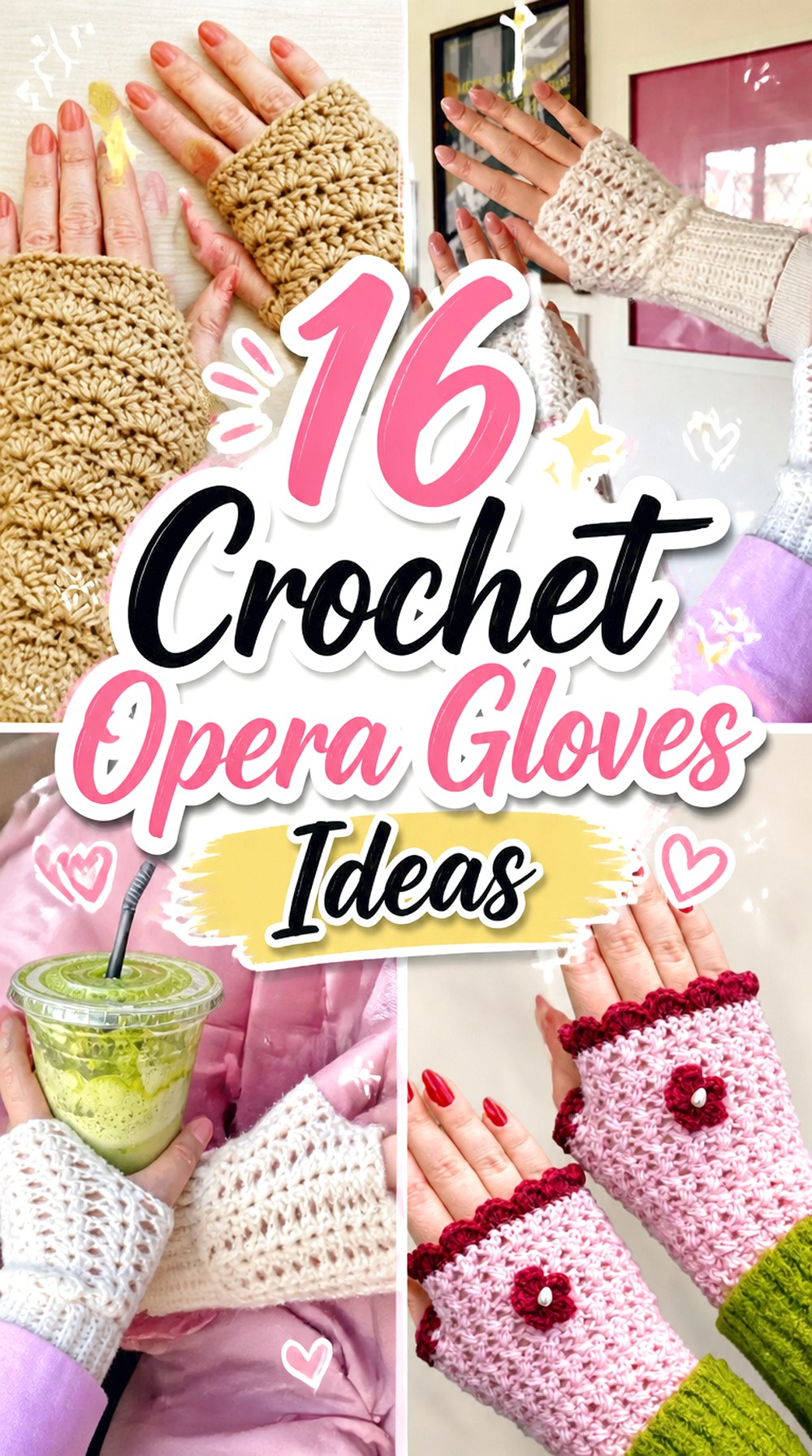

Crochet opera gloves turn the practical fingerless glove into a much more visible accessory. Some reach well along the forearm, others approach the elbow, and the overall look can shift from sleek ribbing to Victorian lace, flowers, bows, shells, raised texture, or open fishnet. Length alone does not make these designs interchangeable: stretch, taper, thumb placement, upper-edge stability, and stitch density all affect how a long glove actually wears.
The tutorials below include both genuinely long arm-warmer designs and shorter decorative fingerless gloves that can serve as construction references for an opera-length adaptation. When a source is shorter, that distinction is noted rather than treating it as an exact long-glove pattern. This gives you more design variety while still making it clear what needs to be measured, adjusted, or confirmed before you extend a project.
Quick List
Crochet Sleek Long Fingerless Opera Gloves
Crochet Elbow-Length Ribbed Opera Wrist Warmers
Crochet Textured Statement Opera Arm Warmers
Crochet Minimal Ribbed Opera Arm Warmers
Crochet Flat-Construction Minimalist Opera Gloves
Crochet Straight-Fit Opera Arm Warmers
Crochet Trimmed Custom-Length Opera Gloves
Crochet Bow-Accent Ribbed Opera Gloves
Crochet Soft Vintage Lace Opera Gloves
Crochet Starlight Lace Opera Gloves
Crochet Victorian-Style Opera Gloves
Crochet Scalloped Floral Opera Gloves
Crochet Flower-Stitch Opera Gloves
Crochet Shell-Stitch Opera Gloves
Crochet Autumn-Leaf Opera Gloves
Crochet Fishnet Opera Gloves
What Makes Crochet Opera Gloves Fit Differently From Short Mitts
A short fingerless glove only has to negotiate the hand, wrist, and thumb opening. An opera-length version continues across a forearm that usually changes circumference as it rises. That makes a single straight width less predictable: a tube that feels comfortable at the upper forearm may be loose at the wrist, while a narrow wrist fit may become restrictive higher up.
Before choosing a construction, decide where you actually want the upper edge to sit. Check your hand, wrist, forearm, and intended stopping point rather than relying on one circumference. Stretch also matters. A highly elastic ribbed fabric can accommodate more change in shape than a firm decorative stitch. There is no useful universal opera-glove size formula, so fit should be evaluated with the actual yarn, stitch pattern, and amount of stretch in the fabric you plan to use.
Choose Yarn by Recovery, Drape, and Stitch Openness
Long gloves put more fabric on the arm, so yarn behavior becomes more noticeable. A fabric with good recovery can help a fitted glove return toward its original shape after being stretched over the hand and forearm. A softer, drapier fabric may feel elegant but can require more careful shaping if you do not want the upper section to slide.
Stitch structure matters just as much as fiber. Ribbing emphasizes stretch, raised texture adds visual and physical bulk, and open lace or fishnet exposes more skin while making small changes in tension easier to see. Decorative flowers, shells, and scallops can also add weight or flare at particular points. Rather than choosing yarn only for color, make a small fabric sample and check stretch, recovery, skin feel, stitch definition, and how the fabric behaves after handling.
How to Adapt a Short Fingerless-Glove Tutorial to Opera Length
A short mitt can provide a useful hand shape, thumb opening, cuff, or decorative stitch without automatically providing the shaping needed for an opera glove. Simply adding more fabric upward can create a tube that is too loose near the wrist or too tight farther up the arm.
For an adaptation, keep the creator’s tutorial as the reference for the portion it actually teaches. Separately plan the extension by comparing the fabric’s relaxed and stretched widths with several points along your arm. Check the developing glove before committing to the full length, especially when the stitch repeat restricts where circumference changes can occur. If the tutorial uses lace, shells, flowers, or another repeat-based texture, decide where any adjustments can be made without making the two gloves visibly different. Work the second glove against the first rather than relying on memory.
Crochet Sleek Long Fingerless Opera Gloves
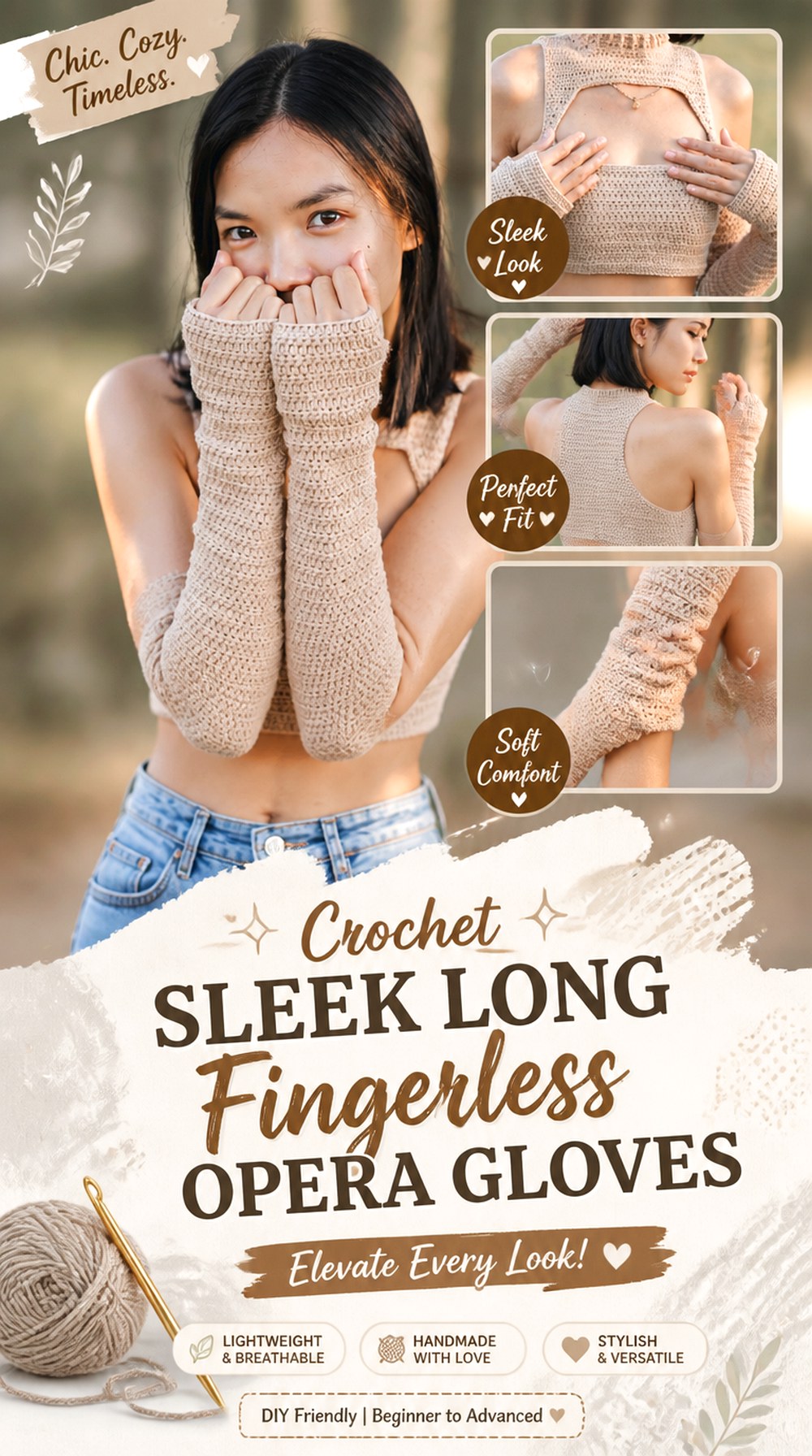
This is one of the most direct routes to the opera-glove look because Chenda DIY’s source tutorial is specifically for long fingerless gloves rather than a short wrist mitt. The streamlined shape keeps attention on the extended silhouette instead of adding a large decorative cuff or separate embellishment.
That makes this version useful when you want long crochet gloves to work almost like a fitted styling layer under sleeveless dresses, short sleeves, or costume pieces. The relatively restrained appearance also means fit inconsistencies are easier to notice. Compare the two gloves as you work and pay particular attention to how the fabric changes from wrist to forearm rather than assuming the same width will behave identically everywhere.
Keep the Upper Edge Snug Without Over-Tightening
The top of a long glove needs enough stability to stay where you intended, but making it dramatically tighter than the rest of the fabric can create an uncomfortable pressure point. Check the upper edge on your actual arm with the hand relaxed and the elbow moving naturally. A fit that seems secure while standing still may feel different after bending and reaching.
Thumb Placement Should Follow Hand Proportion
On an elongated glove, the eye naturally follows the line from the hand all the way up the arm, so a poorly positioned thumb opening can make the entire piece feel twisted. Use the tutorial’s hand construction as the primary reference and check that the glove sits straight before evaluating the long forearm section.
Smooth Fabric Makes Uneven Taper More Visible
A simple surface has fewer decorative elements to disguise abrupt changes in width. If you need to accommodate a noticeably wider forearm, aim for gradual shaping or use the fabric’s natural stretch rather than making one sudden transition. Try the glove on during planning so the finished silhouette follows the arm instead of forming a visible step.
Original Tutorial and Creator Credit
Creator: Chenda DIY
YouTube Video: Crochet Long Fingerless Gloves Tutorial | Chenda DIY
Crochet Elbow Length Ribbed Opera Wrist Warmers
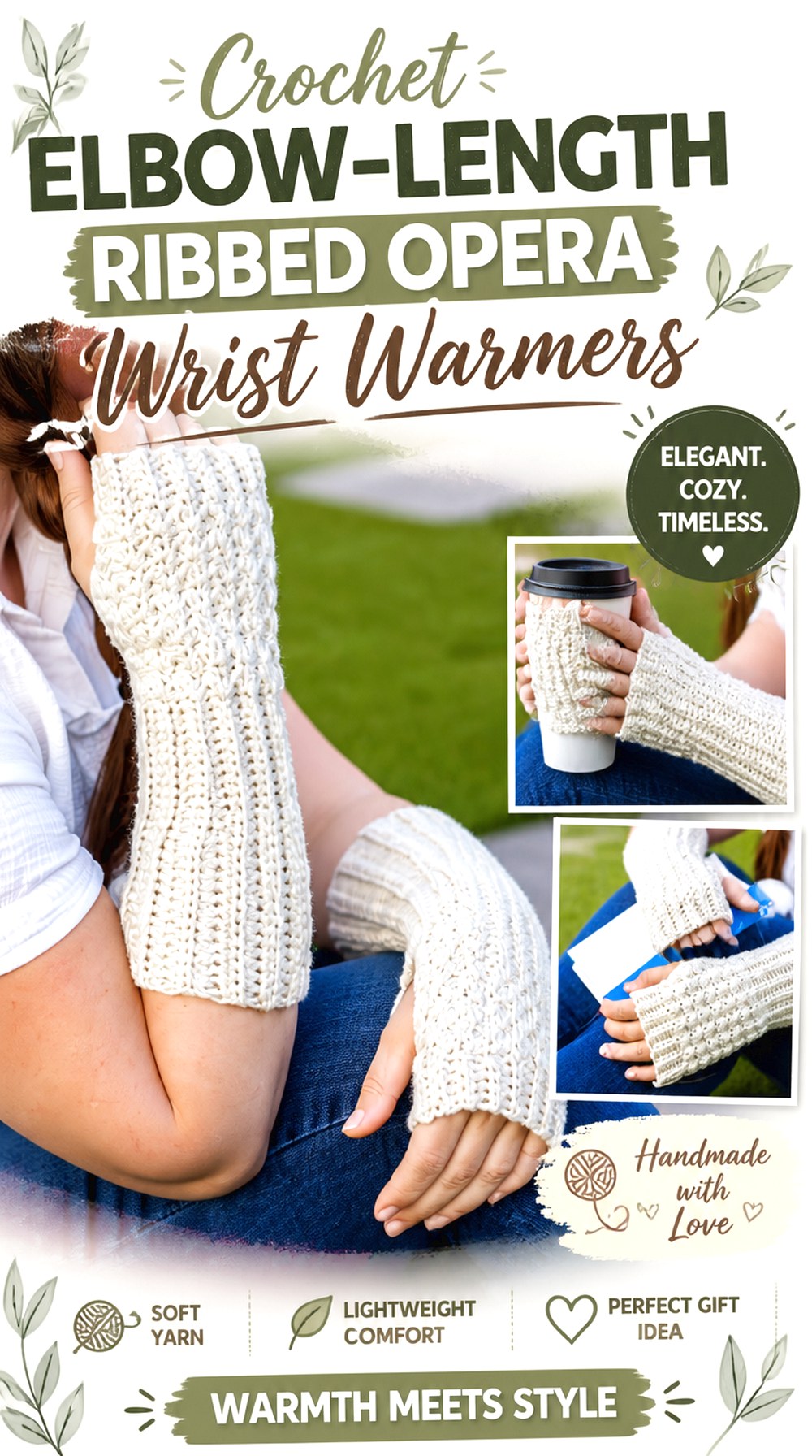
Winding Road Crochet’s long fingerless mitt tutorial gives this idea a deliberately extended silhouette. Instead of treating the forearm as an optional add-on, the length is a defining visual feature, making it useful for readers who want the glove itself to carry the outfit rather than disappear beneath a sleeve.
The long, relatively continuous form also puts emphasis on stretch and consistency. When a glove reaches much farther up the arm, small differences between the first and second piece can become obvious. This is a strong direction for cold-weather styling, layered outfits, or a softer everyday alternative to delicate lace opera gloves, provided the final upper edge and elbow area remain comfortable for the wearer.
Ribbing Helps the Long Tube Follow the Forearm
A ribbed or visibly elastic fabric can adapt to changing circumference without requiring the glove to look heavily shaped. Still, stretch should not be treated as unlimited. Compare how the fabric behaves at the wrist and at the intended upper edge so you do not depend on excessive stretching to make one section fit.
Check Elbow Movement Before Choosing Final Length
The closer a glove comes to the elbow, the more important arm movement becomes. Decide whether you want the edge clearly below the joint or approaching it, then bend your elbow before finalizing the length. Extra fabric can bunch in a different way once the arm is moving rather than held straight for fitting.
A Long Seam Needs Consistent Tension
If your chosen construction creates a seam along a substantial part of the glove, an uneven join can affect both appearance and stretch. Check that neither glove twists after joining and that the seam does not become noticeably tighter than the surrounding fabric. This matters more on a long, uninterrupted silhouette where the seam has plenty of room to pull the piece off line.
Crochet Textured Statement Opera Arm Warmers

TCDDIY’s arm-warmer construction gives this opera-glove idea a more substantial fashion silhouette. Instead of the delicate surface associated with traditional formal gloves, the extended crochet fabric becomes a statement accessory with enough visual presence to work alongside simple tops, fitted sleeves, or layered streetwear.
For an opera-length interpretation, the important decision is how much texture you want distributed over the arm. Long textured fabric can feel dramatically different from a fine lace glove, both visually and physically. Before extending any repeat or changing the source proportions, confirm that the surface still stretches enough where your forearm widens and that the finished hand section remains comfortable for gripping and movement.
Raised Texture Adds Thickness Along the Forearm
Dimensional crochet can make a long glove look fuller even when its actual circumference is close to a flatter design. Consider that visual bulk when pairing the glove with fitted sleeves or cuffs. If the texture must slide underneath clothing, test that combination before committing to maximum length.
Let the Pattern Repeat End at a Clean Visual Point
With a noticeable textured repeat, the upper edge becomes part of the design rather than merely a stopping place. If you alter length, avoid ending at an awkward point in the visible repeat. Determine the closest workable stopping position while also keeping the glove at a comfortable point on your arm.
Balance Decorative Fabric With Hand Mobility
Texture that works beautifully across the forearm may feel less practical around the palm, thumb, or areas that bend frequently. Follow the tutorial for its intended construction and evaluate the hand section separately from the decorative arm. The goal is a glove that looks substantial without sacrificing ordinary finger and thumb movement.
Original Tutorial and Creator Credit
Creator: TCDDIY
Crochet Minimal Ribbed Opera Arm Warmers
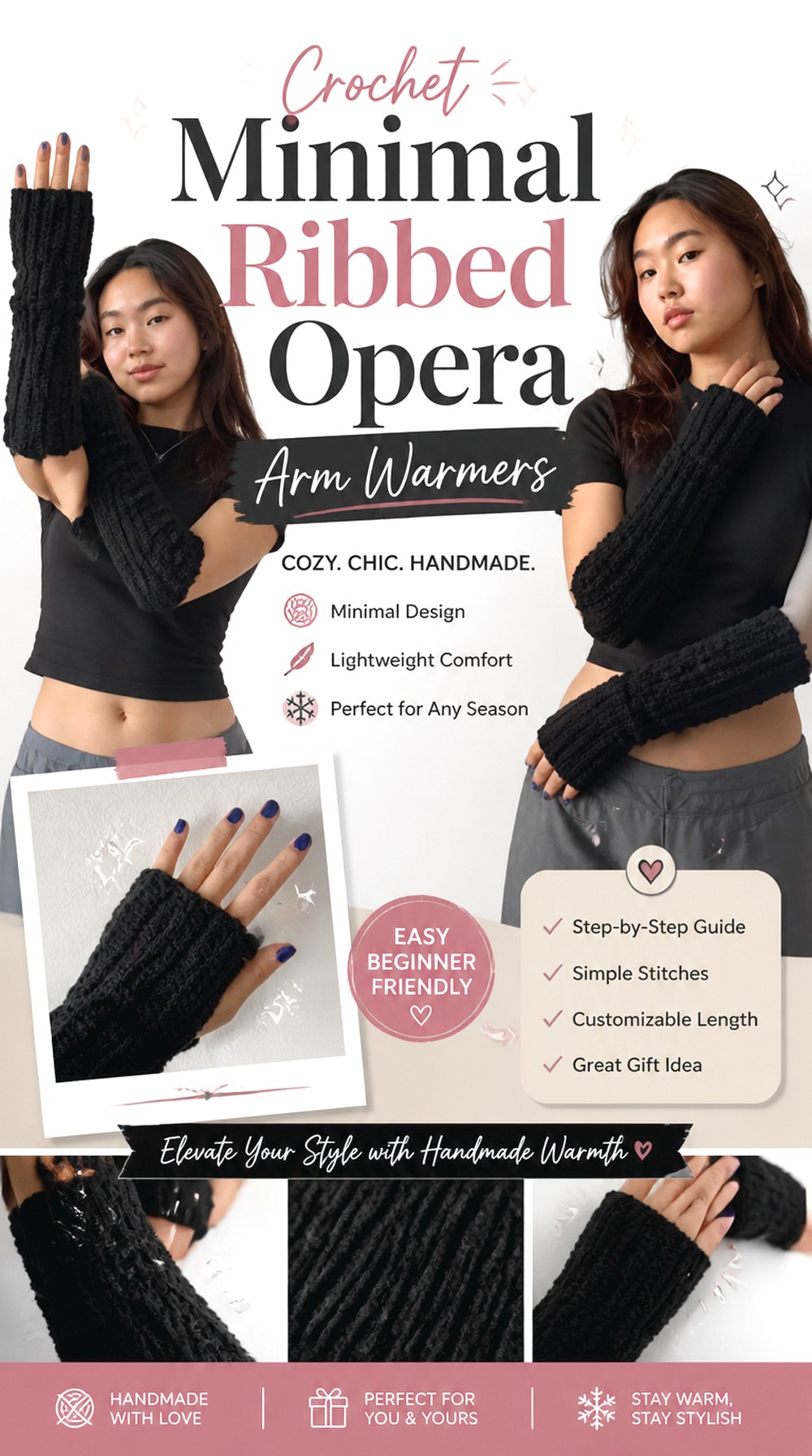
Ariel Tong’s fingerless glove and arm-warmer tutorial is a good foundation for an understated opera-glove direction. The appeal here is not an added flower, ruffle, or dramatic border. Instead, the extended shape and ribbed appearance can do most of the visual work, which makes the gloves easier to combine with different clothing styles.
This is also a useful choice when fit is more important to you than ornamental detail. With fewer visual distractions, you can concentrate on how the fabric hugs the wrist, follows the forearm, and ends at the upper edge. The tutorial itself is presented as customizable arm-warmers/fingerless gloves, making it a relevant source when length is part of the intended project rather than a completely separate modification.
Simple Ribbing Puts Fit Ahead of Decoration
When the surface is repetitive and restrained, a sagging wrist or overly stretched upper section is easier to notice. Check the fabric in its relaxed state as well as on the arm. You want the ribbing to retain its character rather than being stretched flat merely to reach the required circumference.
Measure at More Than One Point on the Arm
A long glove crosses enough of the arm that one circumference rarely tells the whole story. At minimum, compare the wrist, a wider part of the forearm, and the proposed upper edge. Those checkpoints help you judge whether the construction’s stretch can handle the full shape without unwanted compression or looseness.
Neutral Styling Makes Proportion the Main Feature
A plain long glove can look distinctly elegant, sporty, cozy, or dramatic depending on where it ends. Before choosing maximum length, look at the sleeves and garments you expect to wear with it. A clean gap between glove and sleeve often looks more intentional than an upper edge that accidentally competes with a cuff.
Original Tutorial and Creator Credit
Creator: Ariel Tong
Crochet Flat Construction Minimalist Opera Gloves

Yaejiyea’s video presents both knit and crochet arm-warmer versions, with the crochet portion offering a useful reference for a clean hand-warmer construction. For this article, the crochet version is the relevant one. Its pared-back look works well as an opera-length concept when you want something intentionally simple rather than formal lace.
This direction is also helpful for understanding the logic of a relatively straightforward piece before experimenting with more elaborate stitches. If you extend the crochet version farther up the forearm, treat that extra length as an adaptation rather than assuming the source dimensions will automatically transfer. Check the changing width of your arm and make sure any seam or join stays straight once the glove is worn.
Flat Pieces Make Width Adjustments Easier to Visualize
With a construction that can be assessed before final joining, you have a useful opportunity to compare the fabric directly against your arm. This can make it easier to notice whether an extended section needs more room. Remember to account for stretch rather than wrapping the unstretched piece tightly and treating that as the final fit.
Plan the Thumb Opening Before Lengthening the Tube
Opera length changes the forearm, not the basic relationship between the hand and thumb. Establish the hand section first so it sits correctly, then evaluate the extension above it. If you change too many proportions at once, it becomes harder to identify whether a twist or poor fit originates at the hand or higher on the arm.
Match Both Gloves Before Final Seaming
Long minimalist gloves show discrepancies easily. Lay the two pieces together before the final join and compare overall length, thumb position, upper width, and edge alignment. Correcting an obvious difference while the pieces are still easy to inspect is preferable to discovering it after both have been completely finished.
Original Tutorial and Creator Credit
Creator: yaejiyea
Crochet Straight Fit Opera Arm Warmers

Gabrielle McAuley’s crochet arm-warmer tutorial offers a straightforward base for a long glove that favors a clean continuous silhouette. This makes it a useful contrast to the later floral, shell, Victorian, and fishnet options: the appeal comes from proportion and styling rather than a highly decorative surface.
For an opera-glove interpretation, decide whether you want the warmer to look softly relaxed or closely fitted along the entire forearm. Those are different outcomes, even if the finished length is identical. The longer the tube becomes, the more important it is to check the difference between wrist and upper-forearm circumference. A straight construction can accommodate that difference through stretch only when the fabric has enough usable elasticity.
A Straight Silhouette Needs Enough Stretch for a Tapered Arm
If the glove has nearly the same relaxed width from wrist to upper edge, make sure the fabric can expand comfortably at the wider part of your forearm without becoming overstretched. Conversely, extra width added for the forearm should not leave the wrist visibly loose. Try the developing fabric at both positions.
Decide Between Wrist Compression and a Relaxed Hand Edge
Some long warmers look best with a close wrist transition, while others intentionally maintain a soft column shape. Decide which appearance you want before modifying width. A glove that changes tension unexpectedly at the wrist can look accidental even when it technically fits.
Longer Warmers Can Shift if the Upper Edge Is Too Loose
A long glove has more fabric capable of moving as you use your arm. If the upper section repeatedly slips downward, adding even more length will not solve the underlying fit issue. Check the upper circumference and the fabric’s recovery first, then decide whether the construction itself suits your desired level of closeness.
Original Tutorial and Creator Credit
Creator: Gabrielle McAuley
Crochet Trimmed Custom Length Opera Gloves
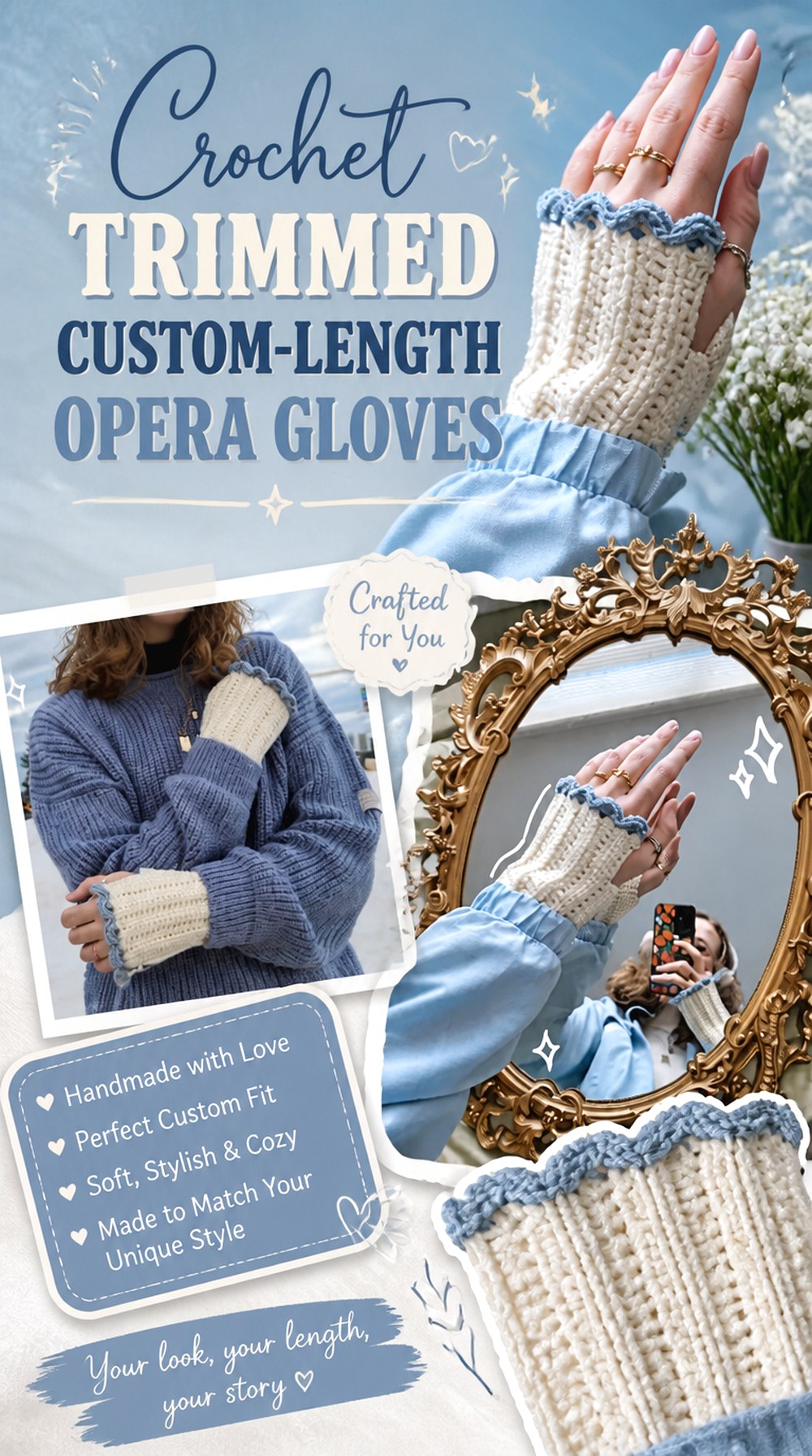
Savannah Fletcher’s source is a shorter fingerless-glove tutorial, but the creator specifically notes that the design can be made longer to become arm warmers. That makes it a transparent adaptation route for opera gloves rather than a case where additional length has to be inferred from an unrelated project.
The finished idea can be kept simple or treated as a canvas for contrasting colors and decorative trim. The key is to make structural decisions before finishing decisions. Establish the hand fit, thumb location, desired forearm length, and upper circumference first. Once those are working, the trim can reinforce the chosen style instead of becoming something you have to work around while still correcting the fit.
Extend the Body Before Adding Decorative Trim
A border can change the way an edge stretches or hangs, so it is better to establish the main length before treating the trim as final. Check where the plain glove ends on the arm and whether it stays comfortably in place. Then judge whether the edging should be subtle or visually prominent.
Pattern Changes Can Alter Stretch
The source encourages customization, but a different stitch pattern is not always structurally equivalent to the original fabric. If you substitute a denser, more open, or more textured surface, recheck width and stretch instead of keeping the same dimensions by default. The finished glove should be evaluated as new fabric.
Use the Source as a Customization Framework
This design works well for readers who already know they want to personalize color, pattern, or length. Keep the tutorial as the construction reference, but make each modification deliberately. Changing length plus width plus stitch texture at once can make troubleshooting harder because several variables have shifted together.
Original Tutorial and Creator Credit
Creator: Savannah Fletcher
Crochet Bow Accent Ribbed Opera Gloves
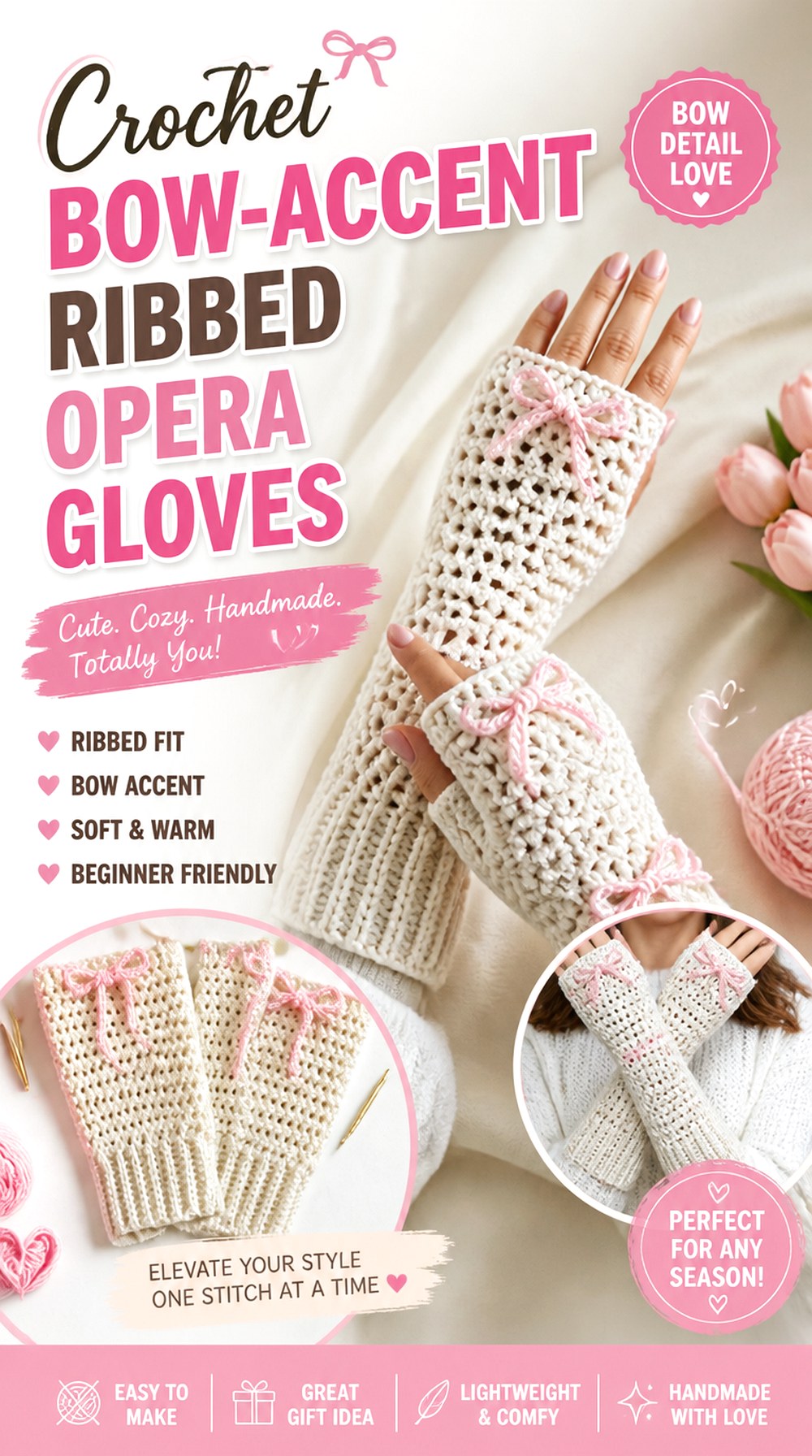
Mahum’s tutorial pairs fingerless gloves with cute bow details, giving this opera-glove idea a softer, playful character. The ribbed base provides visual continuity while the bows act as focused accents rather than covering the entire arm in texture.
For a longer adaptation, the main challenge is proportion. A small bow that looks balanced on a compact glove may appear isolated on a much longer forearm section, while several large bows can quickly dominate the piece. Decide whether the embellishment belongs near the hand, upper edge, or another intentional point before extending the glove. The source includes the fingerless glove construction and the separate bow addition, which makes those two design decisions easier to consider independently.
Place Bows Where They Will Not Catch During Use
An embellishment can be visually appealing while still being inconvenient if positioned on a high-contact part of the hand or inner wrist. Think about bags, coat sleeves, desks, and ordinary hand movement. The safest decorative placement is usually one chosen after wearing the plain glove and noticing which surfaces experience the most friction.
Ribbing and Decoration Need Different Tension Priorities
The glove body needs enough flexibility to fit and recover, while a bow needs to retain a recognizable shape. Do not assume the same tension goal applies to both elements. Evaluate the base glove first, then add the decoration without pulling the surrounding fabric out of alignment.
Repeat the Accent Symmetrically Across the Pair
Even small differences in bow placement become noticeable when both arms are visible. Before permanently attaching embellishments, position both gloves side by side and mark equivalent locations. If you prefer asymmetry, make it obviously intentional rather than allowing minor placement differences to look accidental.
Original Tutorial and Creator Credit
Creator: mahum 🎀
Crochet Soft Vintage Lace Opera Gloves

Mucie Studio’s lace fingerless gloves offer a delicate vintage direction that translates naturally to the visual idea of opera gloves. The source itself is a fingerless-glove tutorial rather than an already elbow-length design, so extending it should be treated as a measured adaptation.
The contrast between ribbing and lace is especially useful. A more stable cuff area can frame a lighter openwork section, giving the finished glove definition without making every inch equally dense. For a long version, consider where you want the lace to dominate: all the way up the forearm, mainly around the hand, or as a decorative section paired with a simpler extension. That decision changes both the visual density and the fit behavior of the glove.
Open Lace Needs a Better Fit Check Than Dense Fabric
Open stitches can appear to fit differently once stretched over skin because the holes enlarge as the fabric expands. Check both circumference and the appearance of the lace while it is worn. A technically wearable glove may not give the lace proportions you expected if it has to stretch too far.
Stretch the Lace Gently Before Deciding Length
A long openwork section can change in both width and apparent length when worn. Before deciding where the upper edge should stop, hold or try the fabric in the way it will actually sit on the arm. This prevents planning solely from relaxed measurements laid flat on a table.
A Plain Cuff Can Stabilize a Delicate Upper Section
The ribbed element in the source provides a useful contrast to the lace. When adapting the concept, consider where greater stability would help most rather than assuming every section must use the same stitch. A restrained cuff or edge can also give the eye a clear boundary around more decorative openwork.
Original Tutorial and Creator Credit
Creator: Mucie Studio
Crochet Starlight Lace Opera Gloves

HookedOnViktoriya’s Starlight hand warmer uses a lace-focused design with an adjustable cuff, thumb opening, and glove length described by the creator. Its airy V-stitch look and shell-style finishing give this opera-glove interpretation a more decorative edge than the smoother ribbed options.
Because the stitch pattern creates visible openings and repeated shapes, length changes should be planned around the appearance of the repeat as well as the measurement of the arm. This is a good direction for a lighter-looking glove where skin remains visible through the crochet. If you extend it substantially, keep checking that the fabric still follows the forearm rather than relying on the openwork to compensate for every circumference change.
The V-Stitch Look Creates More Visual Air
Open V-shaped repeats can make a long glove appear lighter than a dense fabric covering the same area. That makes this style useful when you want opera length without a heavy visual block. However, the openness also means stretched or distorted repeats are easier to see, so fit still needs attention.
Shell Edging Works Best as a Deliberate Endpoint
A decorative border naturally attracts the eye to the end of the glove. Choose the final length before committing to that finish so the shell edge lands at a flattering and comfortable place on the arm. Extending the glove afterward would disrupt the visual purpose of the border.
Keep the Thumb Area Cleaner Than the Decorative Forearm
The hand moves more than most of the forearm, particularly near the thumb opening. Avoid crowding that area simply because the rest of the glove is decorative. The best opera-glove adaptation can preserve the airy visual theme while allowing the thumb and palm area to function without unnecessary bulk.
Original Tutorial and Creator Credit
Creator: HookedOnViktoriya
Crochet Victorian Style Opera Gloves
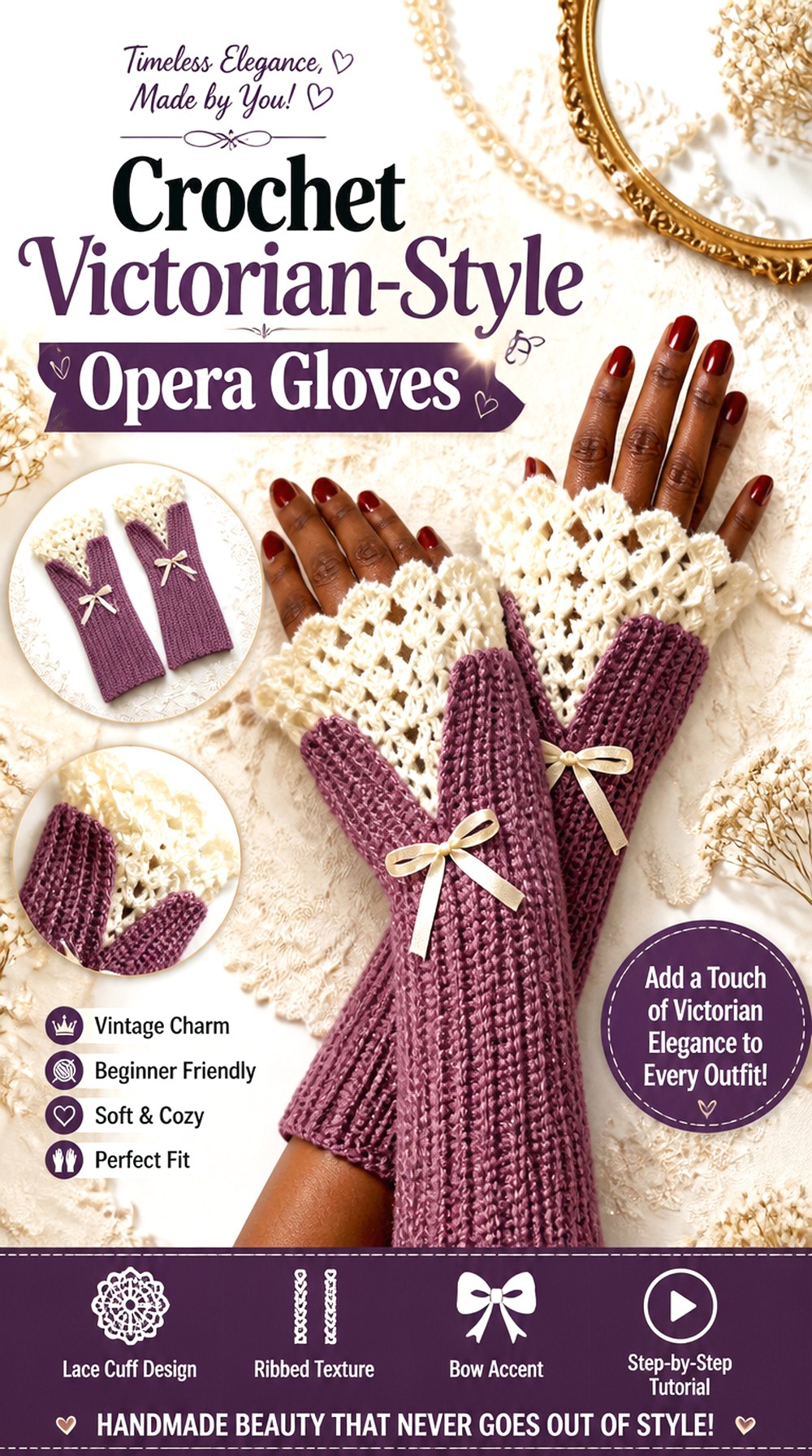
For a more historical-romantic appearance, Ooty knitting and crochet’s Victorian-style vintage fingerless glove provides a useful design reference. The source glove is not presented as a full elbow-length opera glove, so the long forearm should be planned as an adaptation rather than assumed from the tutorial.
What makes this direction distinct is proportion and styling rather than simply adding lace to another glove. A Victorian-inspired result can use a more decorative hand and edge while keeping the extension comparatively restrained, preventing the finished accessory from becoming visually overloaded. Think about the clothing the gloves will accompany before deciding how ornate the entire forearm should be; a glove meant to pair with detailed sleeves may benefit from more visual breathing room.
Vintage Styling Depends on Edge Shape and Proportion
Small details at the wrist, hand, and upper edge can do more to establish a vintage character than filling the entire glove with decoration. Before adding extra motifs, look at the silhouette as a whole. A balanced long glove usually benefits from deciding where the decorative emphasis belongs rather than treating every area equally.
Longer Length Can Make Decorative Cuffs Feel Heavier
A flourish that looks modest on a short hand warmer occupies a different visual relationship once a large forearm section is added. Compare the width of any decorative edging with the overall glove length. If the edge begins to overpower the silhouette, simplifying either the extension or the trim can restore balance.
Choose Embellishment With Sleeve Pairing in Mind
Victorian-inspired crochet is often used as part of a larger outfit. If the glove will sit beside lace cuffs, ruffles, jewelry, or costume sleeves, check those items together before finalizing embellishments. Decorative pieces can compete when viewed separately but occupy the same small area once worn.
Original Tutorial and Creator Credit
Creator: Ooty knitting and crochet
Crochet Scalloped Floral Opera Gloves
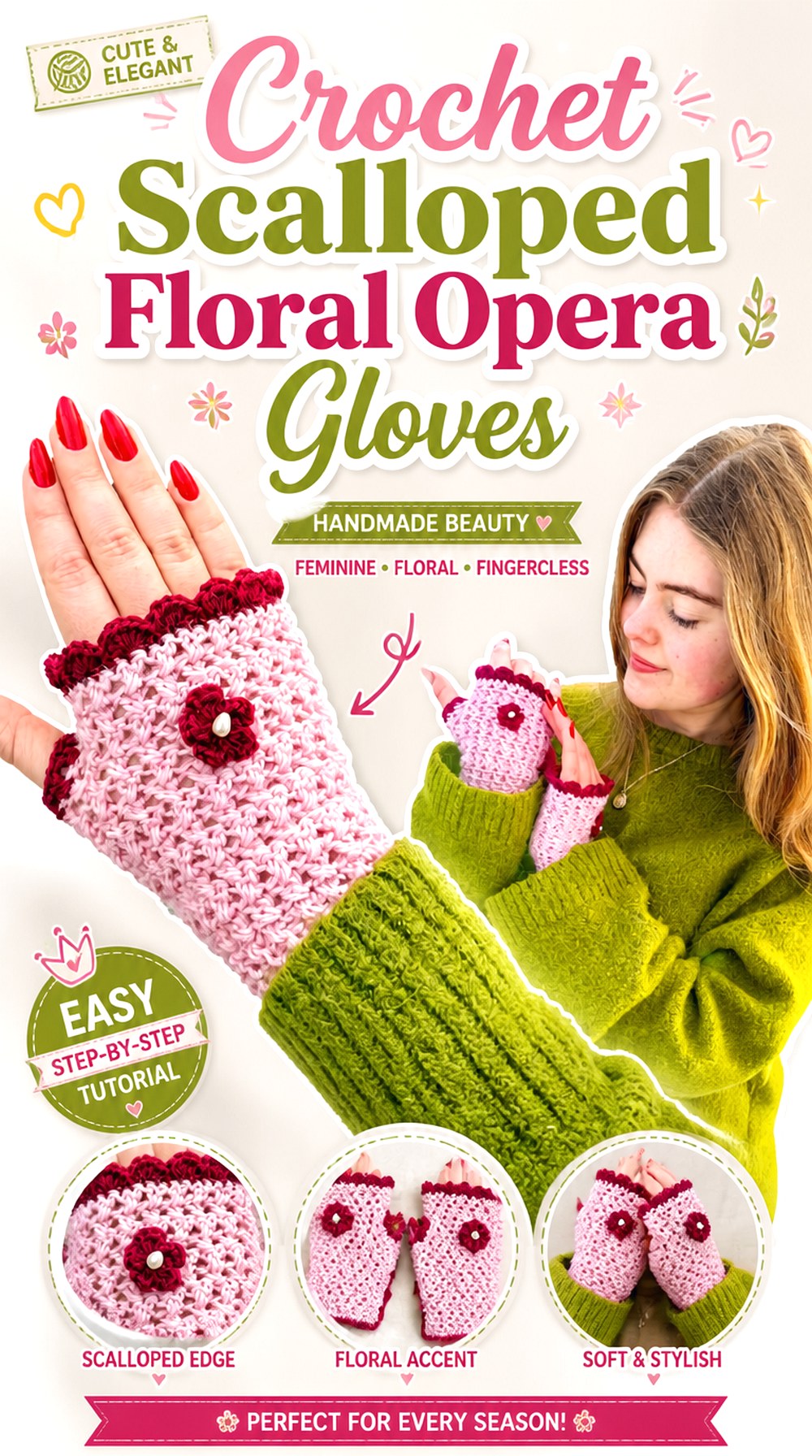
Crochet with Linni’s design combines a stretchy ribbed cuff, crossed double-crochet body, scalloped border, and a decorative flower. That gives this idea several layers of detail without requiring the entire glove to use one highly elaborate motif. The source is shorter than a traditional opera-glove silhouette, so the extended forearm is the adaptation.
For a long version, decide whether you want to continue the crossed texture upward or transition into a simpler section. Extending every decorative feature can make the finished glove busier and may alter its stretch. The flower also gives you a clear focal point, so it is worth choosing its position only after the long glove fits correctly and you know which side of the hand will be most visible.
Let the Flower Sit Away From High-Friction Areas
The decorative flower is most useful where it can remain visible without constantly rubbing against surfaces. Try the plain glove with your normal hand movements before fixing the embellishment. Placement near a bag handle, inner wrist, or frequently covered area can make a pretty detail less practical.
Crossed Texture Needs Room to Flex Across the Hand
A decorative stitch pattern may stretch differently from ribbing. Check the hand when opening the fingers, gripping, and moving the thumb rather than evaluating only a relaxed pose. If you continue that texture up the arm, separately confirm that its stretch remains suitable for the wider forearm.
Scalloped Edges Can Flare if Tension Changes
A scallop is supposed to create a decorative outline, but a sudden tension difference can exaggerate the flare. Judge the border against the finished glove rather than treating it as an isolated embellishment. On an opera-length version, a clean edge helps the long silhouette feel intentional.
Original Tutorial and Creator Credit
Creator: Crochet with Linni
Crochet Flower Stitch Opera Gloves

Kiri Kiri’s fingerless mitt tutorial uses a flower stitch as part of the decorative fabric rather than relying only on a separately attached flower. That creates a different floral effect from the previous idea: the motif becomes part of the glove’s texture and influences the way the fabric stretches.
The source mitt is shorter, so an opera-length version needs separate forearm planning. One option is to let the floral texture remain the dominant feature all the way upward; another is to keep the flowers concentrated around the hand and transition into quieter fabric. The better choice depends on how the stitch behaves when stretched and whether a long field of repeated flowers suits the visual weight you want.
Integrated Floral Texture Changes the Fabric, Not Just the Surface
Because the flowers are created through the stitch pattern itself, they cannot be repositioned as freely as a sewn-on embellishment. Check the fabric’s stretch and thickness before deciding that the same motif should cover the entire forearm. Decorative structure and fit have to work together.
Test Motif Stretch Before Extending Up the Arm
A floral repeat that sits comfortably around the hand may behave differently at a wider forearm point. Make sure the motifs retain a recognizable shape while worn rather than opening or compressing unevenly. This check is particularly important before committing to a much longer extension.
Keep Flower Placement Aligned on Both Gloves
Repeated motifs give the eye obvious landmarks. When you compare the pair, check where prominent flowers sit relative to the thumb, wrist, and upper edge. Small differences that disappear in plain fabric may become visible when an identifiable motif is offset on one glove.
Original Tutorial and Creator Credit
Creator: Kiri Kiri
Crochet Shell Stitch Opera Gloves
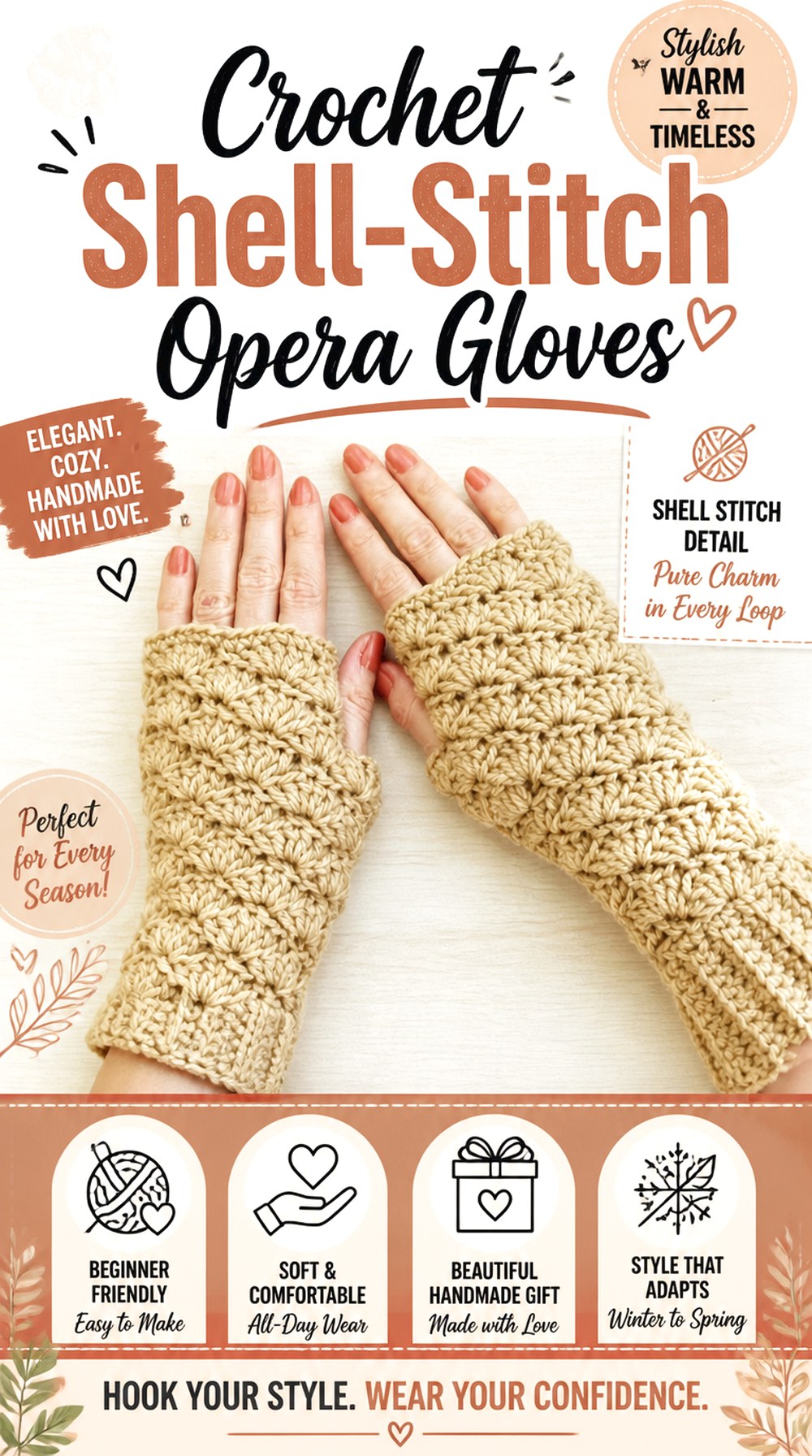
Crochet with GG’s shell-stitch fingerless gloves provide a classic decorative texture that can be adapted into a longer opera-glove concept. The source teaches a fingerless glove rather than an already elongated formal glove, so extra forearm length needs to be planned independently.
Shells are useful when you want visible crochet texture without adding separate flowers or bows. They also create a rhythmic pattern that can make a long glove look deliberately ornate. The trade-off is that repeated clusters may not have the same width and recovery as plain ribbing. Before extending the shell section, see how the actual fabric behaves around your hand and decide whether the forearm should continue the same repeat or transition to something simpler.
Shell Repeats Can Widen the Fabric Visually and Physically
Grouped stitches can create a fuller appearance than a narrow ribbed surface. When placed over a large section of forearm, that effect becomes more noticeable. Compare the shell fabric against your intended silhouette rather than choosing the repeat only because you like it on the shorter glove.
Use a Stable Lower Section Around the Wrist
The wrist is often the narrow transition between hand and forearm. If the shell texture naturally opens outward, a more stable section nearby can help the overall shape feel controlled. Follow the source construction where applicable and avoid forcing decorative fullness into an area where you actually need a closer fit.
Plan the Long Extension Around Complete Repeats
A recognizable shell pattern has visual boundaries. If you alter the length, calculate where a complete repeat can finish near your preferred upper edge instead of stopping midway through a prominent motif. When two possible lengths are close, the cleaner pattern ending may produce the more intentional result.
Original Tutorial and Creator Credit
Creator: Crochet with GG
Crochet Autumn Leaf Opera Gloves
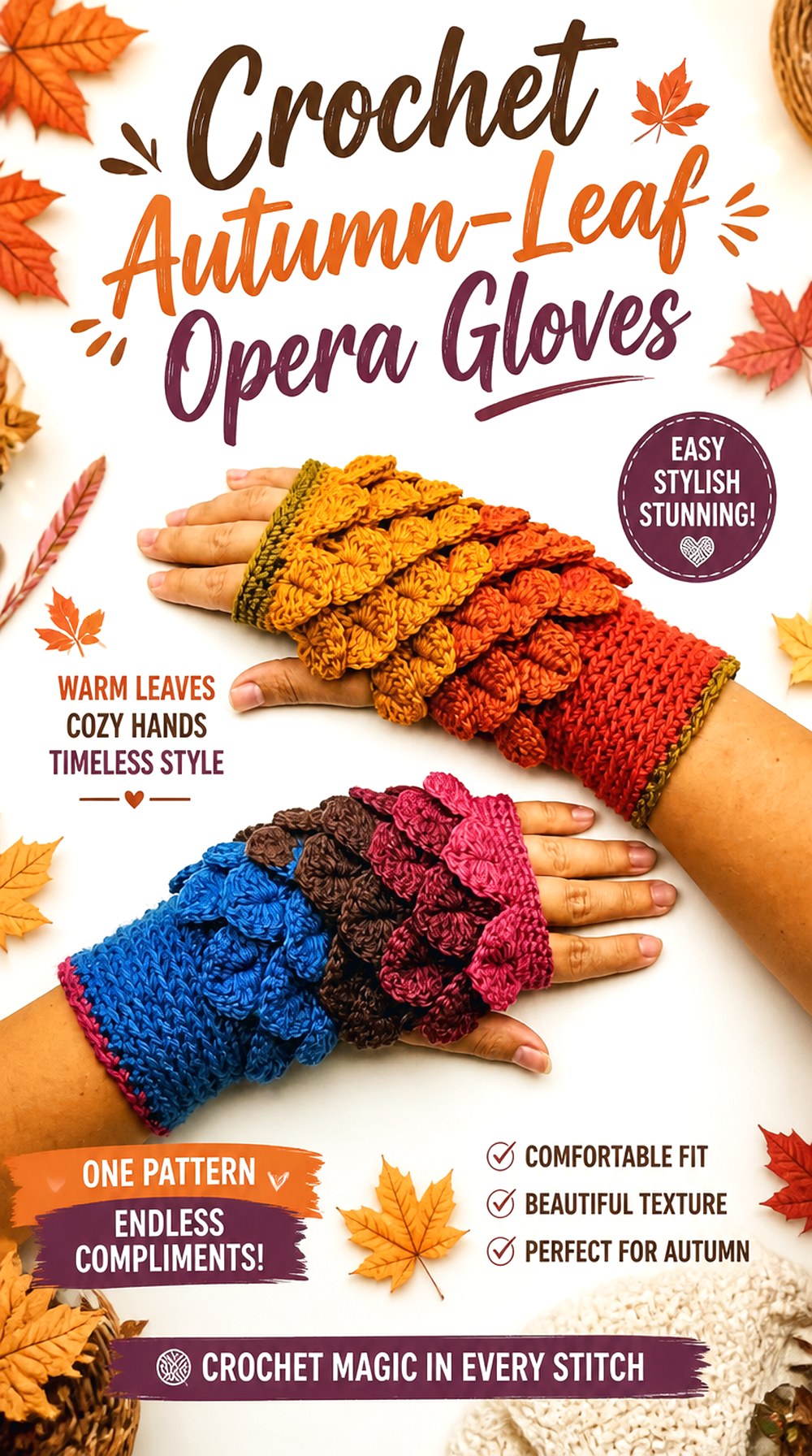
Bag-O-Day Crochet’s Autumn Leaves fingerless wristers give this idea a nature-inspired direction that stands apart from flowers, shells, and generic lace. The original tutorial is for wristers rather than full opera-length gloves, so the leaf-themed hand section is best treated as the design anchor for a longer adaptation.
A long version does not necessarily need to repeat the strongest decorative texture over the entire forearm. Keeping the distinctive detail around the hand or lower arm and using a calmer extension can make the leaves easier to notice. If you do continue a directional motif upward, compare both gloves frequently so the pattern orientation and the relationship to the thumb remain consistent.
Directional Texture Needs Intentional Orientation
Leaf-inspired details can have a visible top and bottom in a way that plain ribbing does not. Before extending the glove, decide how you want that direction to relate to the fingertips and elbow. Mirror or repeat the orientation consistently so the pair reads as deliberately matched.
A Longer Decorative Panel Can Become Visually Busy
A texture that looks balanced across a short wrister may dominate when multiplied over an entire opera-length glove. Step back and view the developing piece from a distance. If the motif begins to lose definition because there is too much repetition, a simpler forearm can give the decorative hand more impact.
Pair the Decorative Hand With a Simpler Forearm if Needed
You do not have to reproduce every source detail over the added length. A plain or restrained extension can preserve the tutorial’s hand character while solving the separate fit problem of the forearm. Just make sure the transition between the two fabrics is structurally compatible and does not create an abrupt tight band.
Original Tutorial and Creator Credit
Creator: Bag-O-Day Crochet
Crochet Fishnet Opera Gloves
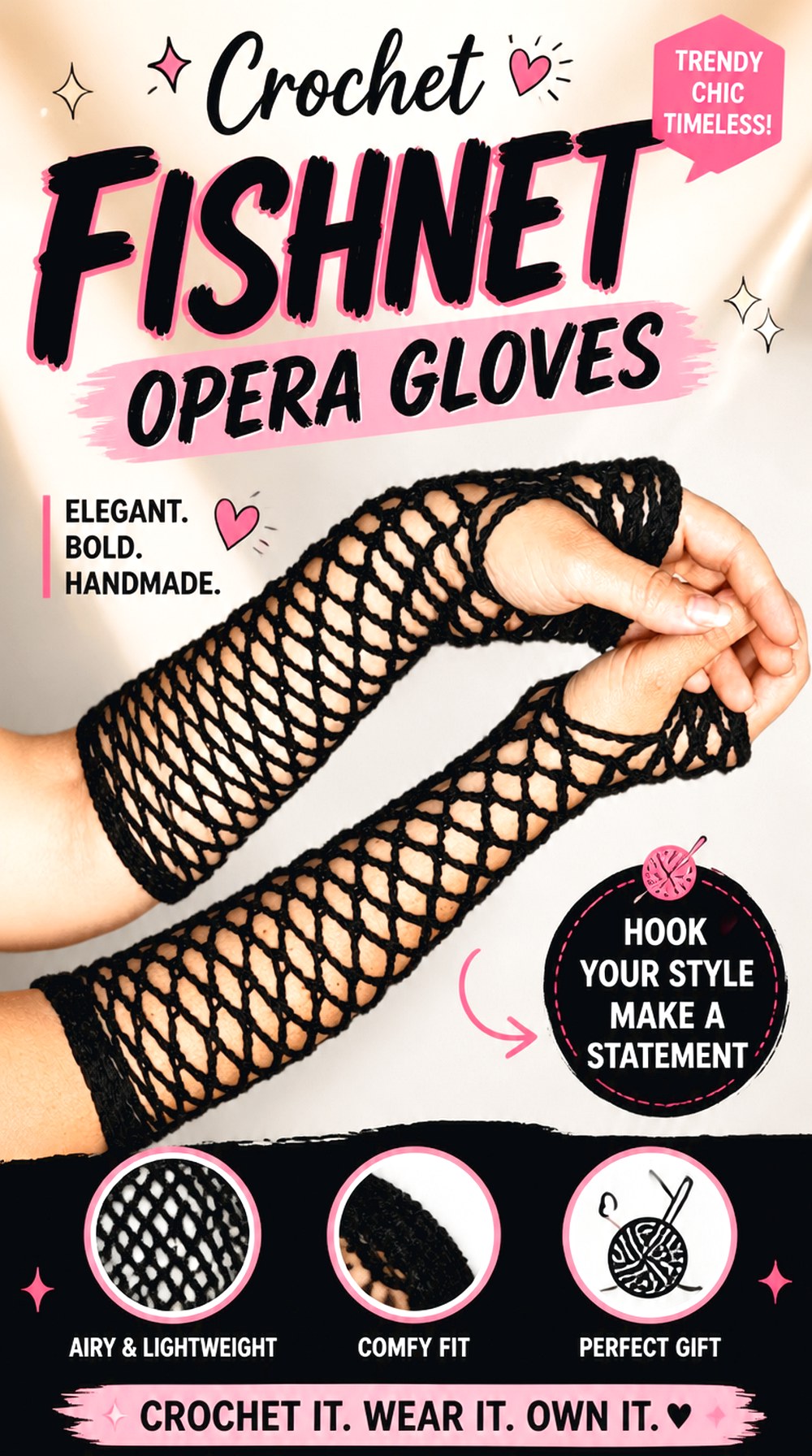
Diving Ducks Crochet’s tutorial is one of the strongest direct matches in this collection because it specifically presents long fingerless gloves in a fishnet pattern. The open mesh creates a dramatically different result from ribbing, dense texture, shells, or floral fabric, with much more skin showing through the glove.
That makes this design particularly effective when the goal is fashion styling rather than maximum coverage. The source uses cotton yarn for its version and discusses customizing the fit. Because open mesh changes appearance substantially as it stretches, do not judge sizing only from the glove lying flat. Check how evenly the openings spread over the hand, wrist, and forearm and whether the upper edge remains stable without distorting the mesh below it.
Open Mesh Changes How Fit Is Perceived
With fishnet crochet, you see both the yarn and the negative space. Stretching the glove farther does not simply make it tighter; it also changes the size and shape of the openings. Evaluate the worn appearance at several points along the arm so one section does not look dramatically more stretched than another.
Keep the Upper Edge From Carrying All the Tension
A loose mesh body paired with an extremely tight upper edge can create an obvious visual break and an uncomfortable pressure point. The top should help the glove stay positioned without compensating for an otherwise poorly fitted forearm. Check the whole tube rather than treating the edge as the only anchoring mechanism.
Fishnet Length Looks Best When the Mesh Stays Even
The long silhouette gives the eye plenty of repeated openings to compare. Uneven tension can therefore become more visible than it would on a very short accessory. Periodically lay both gloves together and compare the mesh distribution, overall length, thumb position, and upper edge before finishing.
Which Crochet Opera Glove Style Should You Choose?
| If you want… | Start with… | Main point to check |
|---|---|---|
| A clean, fitted long silhouette | Ideas 1, 4, 5, or 6 | Forearm taper and upper-edge stability |
| Maximum visible length | Ideas 1 or 2 | Elbow movement and fabric recovery |
| Strong surface texture | Idea 3 | Bulk, stretch, and sleeve compatibility |
| Cute decorative details | Ideas 7 or 8 | Trim or bow placement after fitting |
| Romantic lace | Ideas 9 or 10 | How openwork changes when stretched |
| Vintage styling | Idea 11 | Proportion between decoration and length |
| Floral detail | Ideas 12 or 13 | Attached embellishment versus integrated motif |
| Repeated classic texture | Idea 14 | Shell width and clean repeat endings |
| Nature-inspired texture | Idea 15 | Motif orientation and visual density |
| Dramatic open mesh | Idea 16 | Even mesh expansion across the arm |
The biggest divide is between tutorials that are already long and tutorials being used as decorative hand-glove references. Choose an already-long design when you want fewer proportion decisions. Choose an adaptation when a particular lace, flower, shell, or vintage detail matters enough to justify extra fit planning.
Conclusion
Crochet opera gloves can be sleek, cozy, romantic, playful, or dramatic, but the most useful choice starts with structure rather than decoration. Pick the long ribbed and fitted options when dependable forearm coverage is the priority; choose lace, Victorian, floral, or shell designs when the hand detail matters more; and use fishnet when openness is part of the intended look.
For shorter source gloves, plan the added forearm as a genuine adaptation by checking taper, stretch, motif behavior, and upper-edge stability instead of simply adding length. Whichever direction you choose, use the original tutorials for their exact construction details and keep your own measurements at the center of any opera-length changes.
Frequently Asked Questions
How long should crochet opera gloves be?
There is no single required crochet opera-glove length. Decide where you want the upper edge to sit based on the look you want and how the glove interacts with your sleeves and elbow. A glove that ends mid-forearm behaves differently from one approaching the elbow. Measure to your chosen stopping point and test arm movement rather than selecting length from appearance alone.
Can I turn any crochet fingerless glove into an opera glove?
Not automatically. A short glove can provide the hand, cuff, thumb opening, or decorative stitch, but the forearm introduces changing circumference and much more fabric. Before extending a tutorial, check how its stitch pattern stretches, whether its repeat can accommodate width changes, and whether the upper section will stay in place. Some constructions adapt much more naturally than others.
What yarn qualities work well for long crochet gloves?
Look at skin comfort, stretch, recovery, drape, stitch definition, and the behavior of the actual fabric rather than relying only on fiber name or yarn weight. A fitted ribbed glove and an open lace glove may need very different characteristics. Make a sample in the planned stitch and stretch it several times to see how well it returns before committing to two long pieces.
How can I keep crochet opera gloves from sliding down?
First check the overall fit rather than tightening only the top edge. A loose forearm with a very tight upper border can still shift and may create an uncomfortable band. Better taper, suitable fabric recovery, and a correctly fitted upper circumference can all contribute to stability. If you consider adding an elasticized finish, make sure it suits the design and remains comfortable against the arm.
Are lace and fishnet crochet opera gloves as warm as dense ones?
They provide a different type of coverage. Open lace and fishnet intentionally leave more exposed space than dense crochet, so they are often chosen for appearance and layering rather than maximum coverage. Actual comfort and warmth also depend on fiber, yarn thickness, stitch density, weather, and what you wear with the gloves, so appearance alone is not enough to make a precise warmth claim.
Should crochet opera gloves be blocked?
Blocking can help even stitches or open decorative lace, but the appropriate method depends on the yarn and construction. Check the yarn’s care information before applying water, heat, steam, or significant stretching. For fitted gloves, avoid blocking them so aggressively that you remove the recovery needed to stay on the arm. Compare both gloves during finishing so their final dimensions remain consistent.
Can I add flowers, bows, beads, or ribbons to long crochet gloves?
Yes, provided the embellishment suits the fabric and intended use. Place decorative elements away from areas that receive frequent friction or interfere with thumb and wrist movement. Added weight can also affect a soft long glove, so secure embellishments carefully and keep the base fit working on its own rather than depending on decoration to hold the glove in position.


