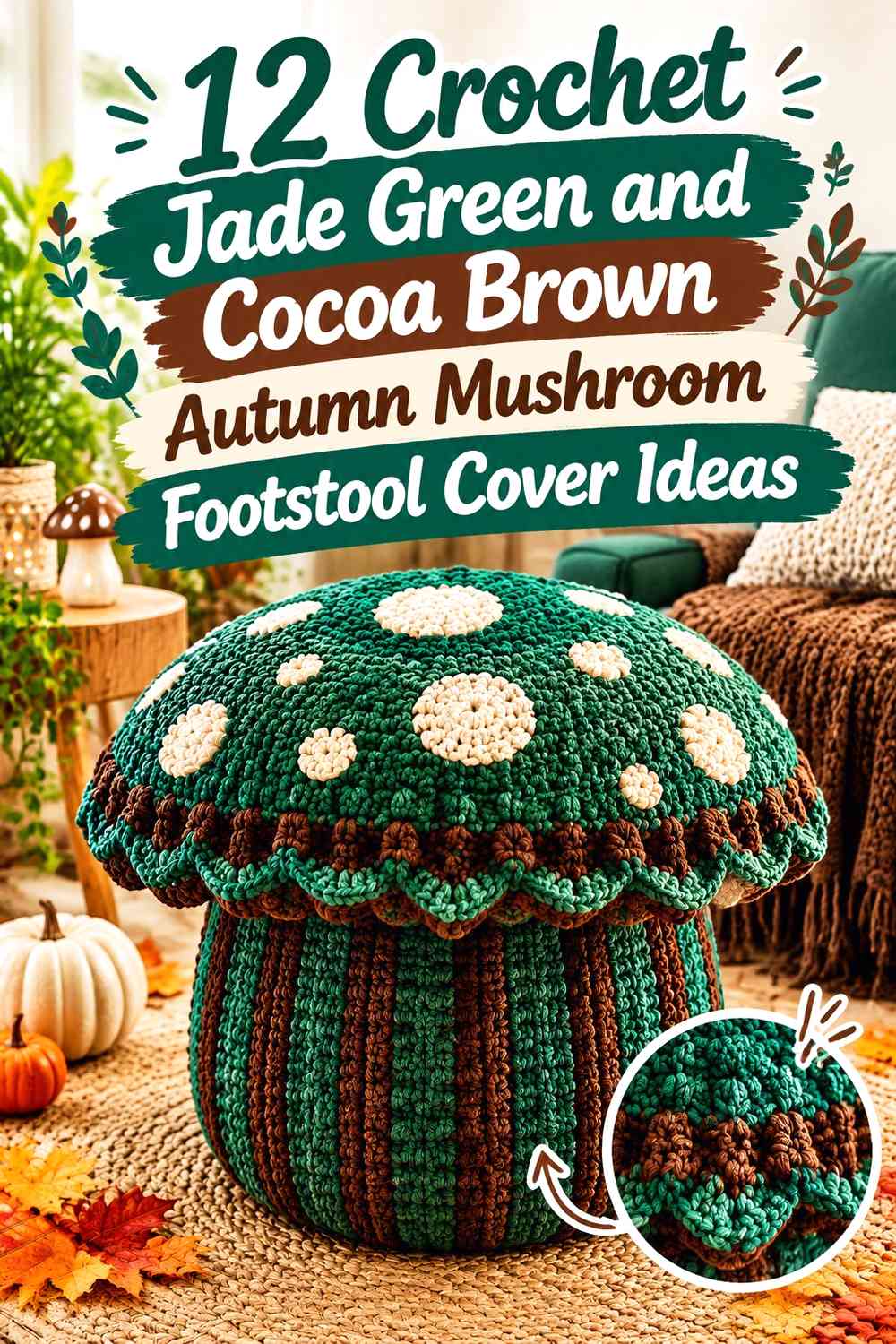

Jade green and cocoa brown create a grounded autumn palette for a crochet mushroom footstool cover without depending on bright orange or red. Jade green can suggest mossy woodland surfaces, stems, borders, or background panels, while cocoa brown naturally suits mushroom caps, side bands, edging, and darker structural areas.
A footstool cover also needs a different color strategy from a small mushroom appliqué. The top is viewed from above and may be used as a footrest or seat, while the sides are seen horizontally. Large flat color areas usually work better on the top, with detailed mushroom motifs placed around the sides or near the perimeter where they remain visible without making the main surface excessively bulky.
The tutorials below include full pouf-cover constructions, mushroom granny squares, appliqués, a mushroom pillow, a mushroom bag, and a mushroom basket. When a source demonstrates only the mushroom component, use it for that visual construction and combine it independently with a properly fitted footstool cover.
Quick List
- Jade Green Crochet Mushroom Footstool Cover With Cocoa Brown Side Band
- Jade Green Crochet Footstool Cover With Cocoa Brown Mushroom Granny Squares
- Cocoa Brown Crochet Footstool Cover With Jade Green Mushroom Panel
- Jade Green Crochet Footstool Cover With Cocoa Brown Mushroom Appliqués
- Cocoa Brown Crochet Footstool Cover With Jade Green Mushroom Medallions
- Jade Green Crochet Footstool Cover With Cocoa Brown Heart-Cap Mushrooms
- Cocoa Brown Crochet Footstool Cover With Jade Green Toadstool Border
- Jade Green Crochet Mushroom-Cap Footstool Cover With Cocoa Brown Base
- Cocoa Brown Crochet Mushroom Footstool Cover With Jade Green Cap Spots
- Jade Green Crochet Footstool Cover With Cocoa Brown Mini Mushroom Corners
- Cocoa Brown Crochet Mushroom Footstool Cover With Jade Green Woodland Sides
Let Jade Green Create the Woodland Background
Jade green works particularly well across broad top or side panels because it gives cocoa-brown mushroom motifs enough contrast to remain recognizable. A green field also allows the footstool to feel woodland-inspired without filling every section with individual leaves or fungi.
If jade green dominates the top, keep cocoa brown concentrated on complete features such as a side band, mushroom cap, border, or grouped appliqué. Random brown stitches scattered through the surface are less useful than a clear dark shape.
Use Cocoa Brown Where the Footstool Needs Visual Weight
Cocoa brown can visually ground the lower edge of the cover and separate the footstool from the floor. It also makes an effective mushroom-cap color because a broad brown shape remains easy to read against jade green.
For a cocoa-dominant cover, move jade green to stems, cap spots, borders, or selected granny-square backgrounds. One repeated green role creates more cohesion than changing its purpose from motif to motif.
Keep Jade Green and Cocoa Brown Mushroom Texture Practical
If the footstool is regularly used, keep the central top surface reasonably flat. Thick appliqués, raised mushroom stems, and large bobbles can be moved toward the perimeter or side panel where they remain decorative without sitting directly beneath feet.
Fit the basic cover before attaching mushrooms. A motif that is centered on a flat panel can shift toward an edge after the crochet stretches over a rounded or padded footstool.
1. Jade Green Crochet Mushroom Footstool Cover With Cocoa Brown Side Band

This is the simplest furniture-focused color scheme. Use jade green across the top and make the vertical side section cocoa brown. The green surface creates the woodland field, while the darker lower band gives the cover visual weight and leaves room for subtle mushroom decoration around the perimeter.
Jade Green Should Dominate the Crochet Footstool Top
Keep the main upper surface continuously jade green instead of breaking it into numerous cocoa-brown stripes. A broad green field makes the cover calmer and gives mushroom details room to stand out later.
For a footstool that is regularly used, let stitch texture rather than raised appliqués provide most of the top-surface detail.
Cocoa Brown Can Ground the Jade Green Footstool Sides
Use cocoa brown around the full lower section so the contrast follows the furniture’s structure. This creates a cleaner division than inserting narrow brown bands across the seating surface.
A few flat jade-green stems or leaf-like details can repeat the upper color around the side band if desired.
Cocoa Brown Mushroom Caps Should Stay Near the Jade Green Perimeter
If mushrooms are added, place them around the edge or side rather than in the high-contact center. This keeps the theme visible while preserving a flatter upper surface.
Creator Credit: Aprendiz de Crocheteiras – Bruna Szpisjak
2. Jade Green Crochet Footstool Cover With Cocoa Brown Mushroom Granny Squares
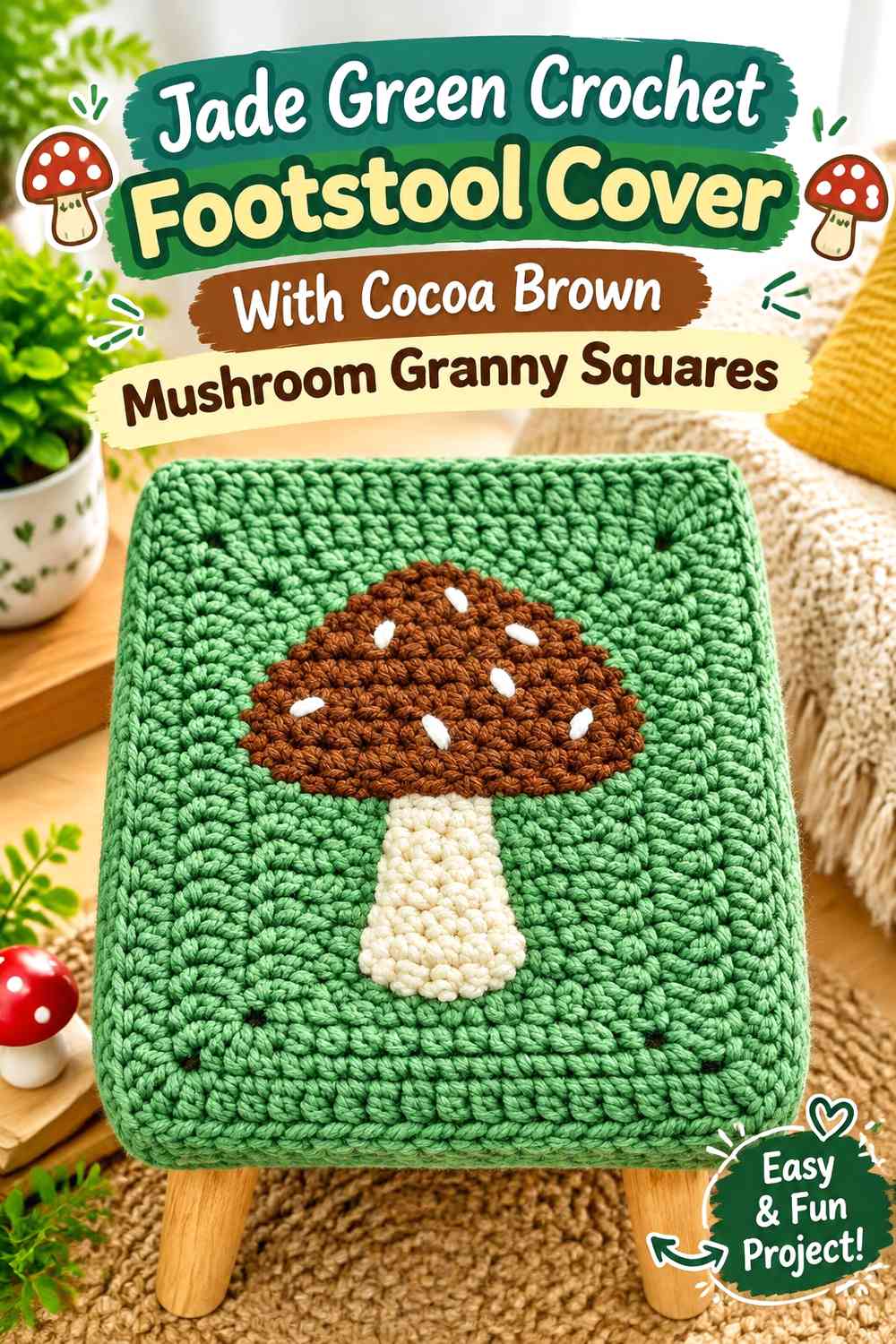
This version makes the mushroom square itself the main decorative unit. Use jade green around the square background and cocoa brown for the mushroom cap, then repeat the motif across selected areas of the footstool cover.
The supporting tutorial teaches the mushroom granny square rather than a complete footstool, so combine the square with a separate cover construction fitted to your furniture.
Cocoa Brown Mushroom Caps Need Jade Green Space Inside Each Square
Leave enough green around the mushroom that the cap remains distinct from adjoining motifs. A cap pushed against every square edge can become harder to identify once several blocks are joined.
Jade Green Should Repeat Consistently Around Cocoa Brown Mushrooms
Use the same green role in each square so the assembled top looks planned. Varying mushroom placement is enough to create interest without reversing every color block.
Cocoa Brown Joining Can Frame Jade Green Mushroom Squares
A narrow brown join or perimeter can visually connect the mushroom caps to the rest of the footstool. Keep the joining flatter than the mushroom motif if the top will be used regularly.
Creator Credit: The Bumbling Busy Bee 🐝
3. Cocoa Brown Crochet Footstool Cover With Jade Green Mushroom Panel
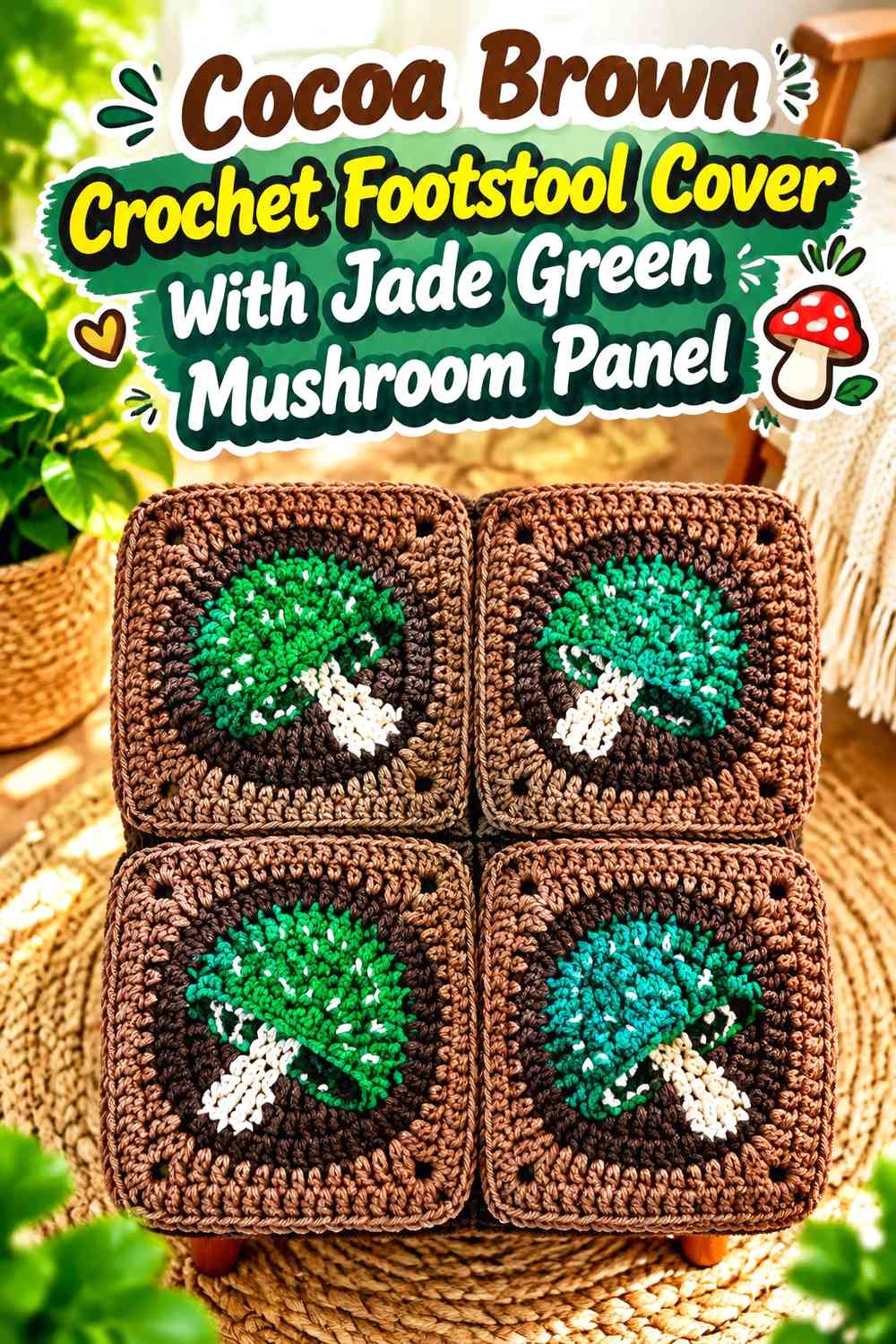
A cocoa-brown cover can support one concentrated mushroom panel instead of repeating fungi across the whole surface. Use jade green around the mushroom stems or surrounding square so the decorative area stands apart from the brown furniture cover.
Cocoa Brown Should Stay Broad Around the Jade Green Mushroom Panel
Leave substantial brown surface outside the decorative section. This makes the motif look intentionally framed rather than like the beginning of an all-over patchwork design.
Jade Green Can Define the Mushroom Stem Against Cocoa Brown
Use jade green on the stem or surrounding motif field where it creates the clearest separation from the brown cover.
If the cap is also cocoa brown, keep a jade-green boundary around it so the mushroom does not disappear into the background.
Jade Green Mushroom Panels Should Stay Away From the Cocoa Brown High-Contact Center
Place the strongest motif near the front edge or on the side if dimensional detail is included. A flatter colorwork version can sit closer to the center.
Creator Credit: VetkaKnit Svetlana Gibadullina
4. Jade Green Crochet Footstool Cover With Cocoa Brown Mushroom Appliqués
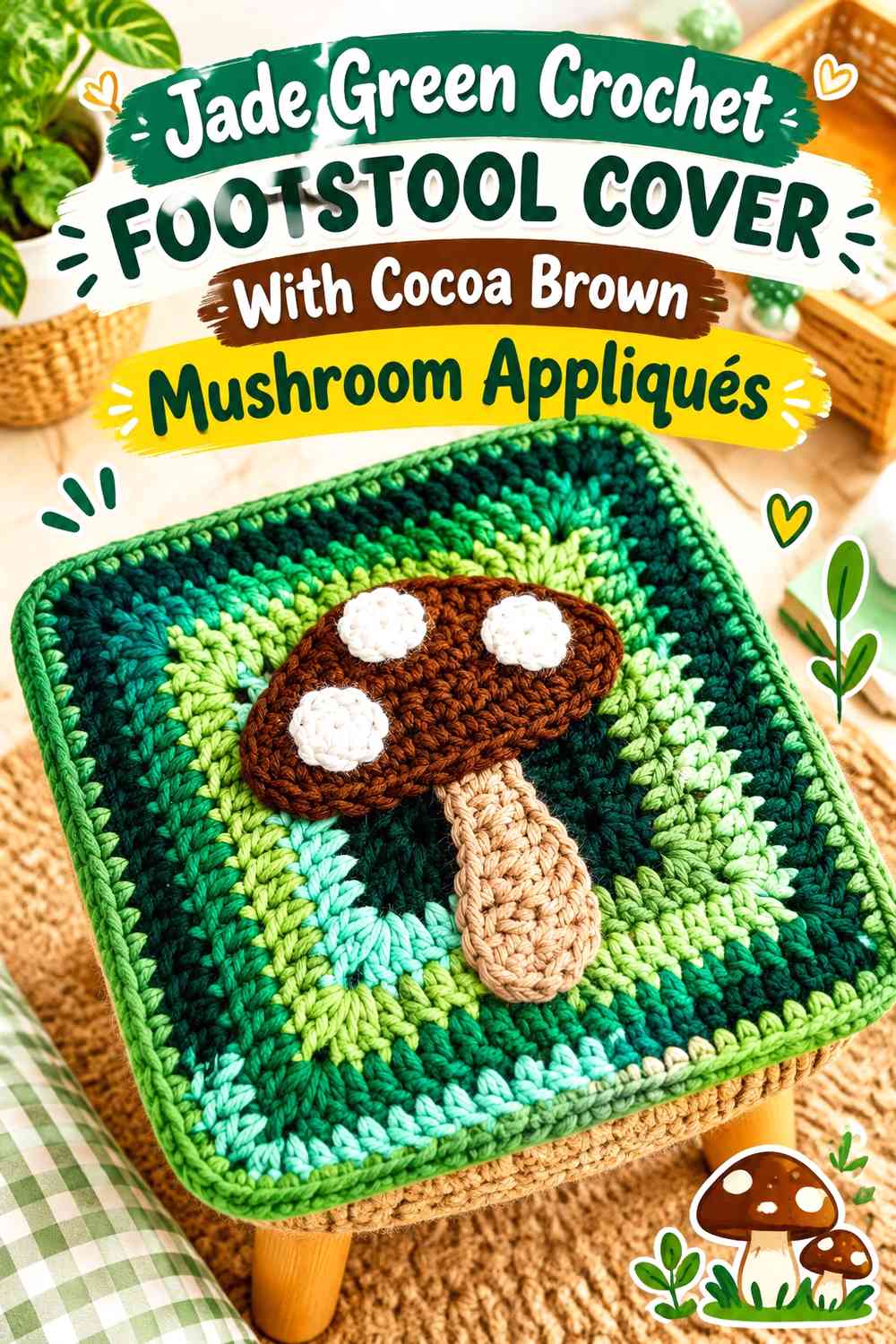
A plain jade-green cover provides an easy background for several flat cocoa-brown mushrooms. Instead of covering the entire footstool in pattern, concentrate the appliqués around the lower side panel or one section of the perimeter.
Cocoa Brown Appliqués Need Jade Green Separation
Leave visible green between neighboring mushrooms so each cap and stem remains recognizable. If several brown appliqués touch, they can merge into one irregular dark patch.
Jade Green Should Remain the Main Footstool Surface
Keep most of the cover free of appliqués. The mushroom shapes become more noticeable when they interrupt a broad green field instead of competing with all-over texture.
Cocoa Brown Mushrooms Should Follow the Jade Green Footstool Curve
Pin or temporarily position the appliqués after fitting the cover. A motif that looks upright on a flat panel can tilt once the side wraps around a round stool.
Creator Credit: Melody Yarn Tinka
5. Cocoa Brown Crochet Footstool Cover With Jade Green Mushroom Medallions
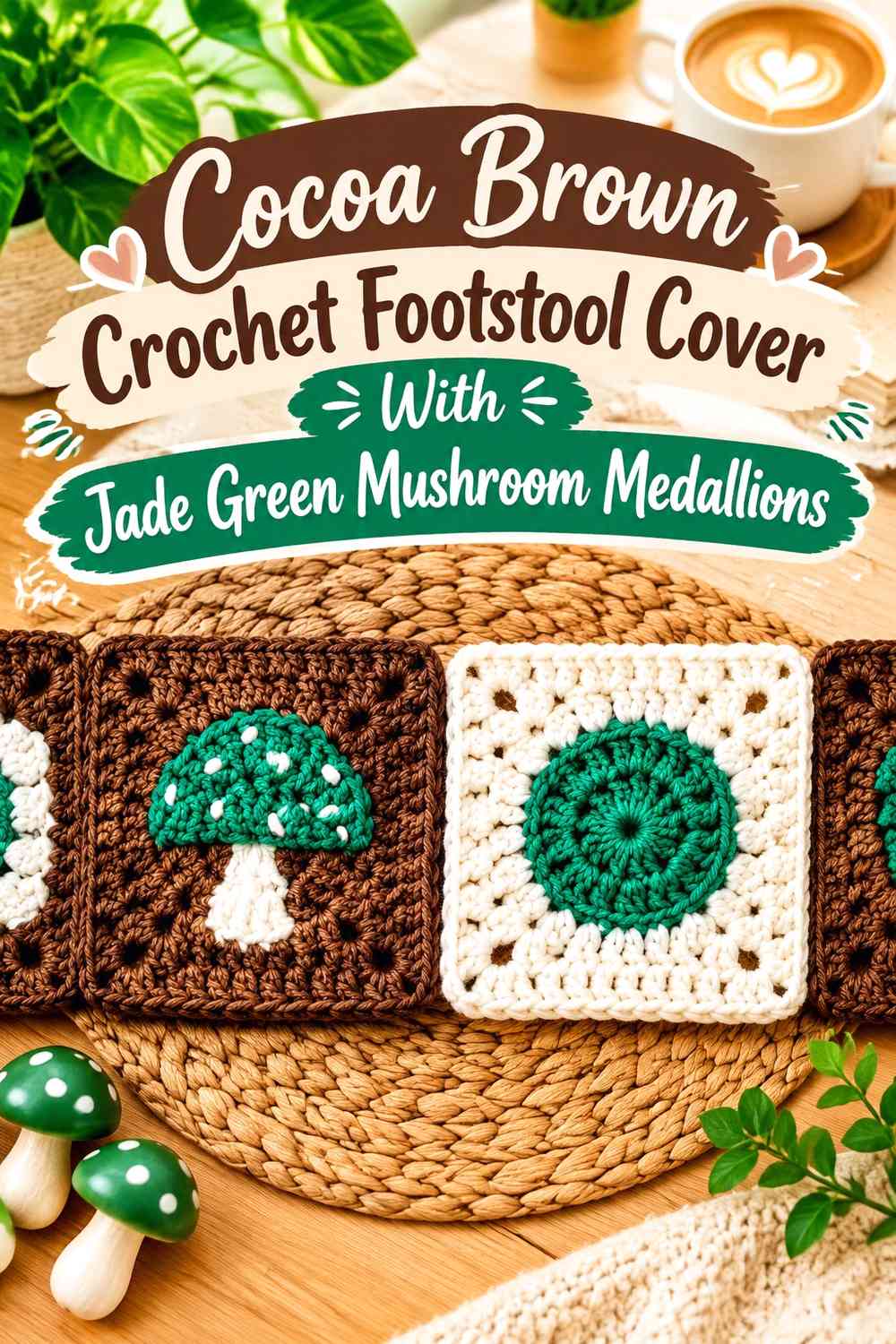
This direction gives cocoa brown most of the furniture surface and uses mushroom granny-square or medallion motifs as isolated jade-green accents. Position them around the top perimeter rather than covering the complete center.
Jade Green Medallions Need Enough Cocoa Brown Background
Keep visible brown around each motif so the green accents remain separate. A ring of evenly spaced medallions can provide more structure than an all-over random layout.
Cocoa Brown Should Connect the Space Between Jade Green Mushrooms
Use one continuous brown field through the center. This gives the upper surface a calmer look and makes the perimeter decoration easier to distinguish.
Jade Green Mushroom Details Should Repeat at Similar Intervals on Cocoa Brown
Consistent spacing matters more than making every motif identical. Check the arrangement on the fitted cover before joining or sewing the pieces permanently.
Creator Credit: Viv Crochets
6. Jade Green Crochet Footstool Cover With Cocoa Brown Heart-Cap Mushrooms

A heart-shaped mushroom-cap appliqué creates a softer woodland variation. Keep the cover jade green and use cocoa brown for the distinctive cap, with the stem remaining green or another restrained part of the same two-color plan.
Cocoa Brown Heart-Cap Mushrooms Need Clear Jade Green Outlines
Leave enough green visible around the heart-shaped cap to preserve its curves and point. If the brown motif sits directly against a similarly dark border, the unusual cap shape can disappear.
Jade Green Should Stay Simple Behind Cocoa Brown Heart Caps
Avoid strong textured stitches directly beneath the appliqués. A relatively quiet background lets the cap silhouette provide most of the decoration.
Cocoa Brown Heart-Cap Mushrooms Work Best Along the Jade Green Side Panel
The side gives the appliqués more visibility without putting raised edges directly under feet. Repeat two or three motifs rather than covering the full circumference if you want a quieter autumn look.
Creator Credit: GoldenLucyCrafts
7. Cocoa Brown Crochet Footstool Cover With Jade Green Toadstool Border
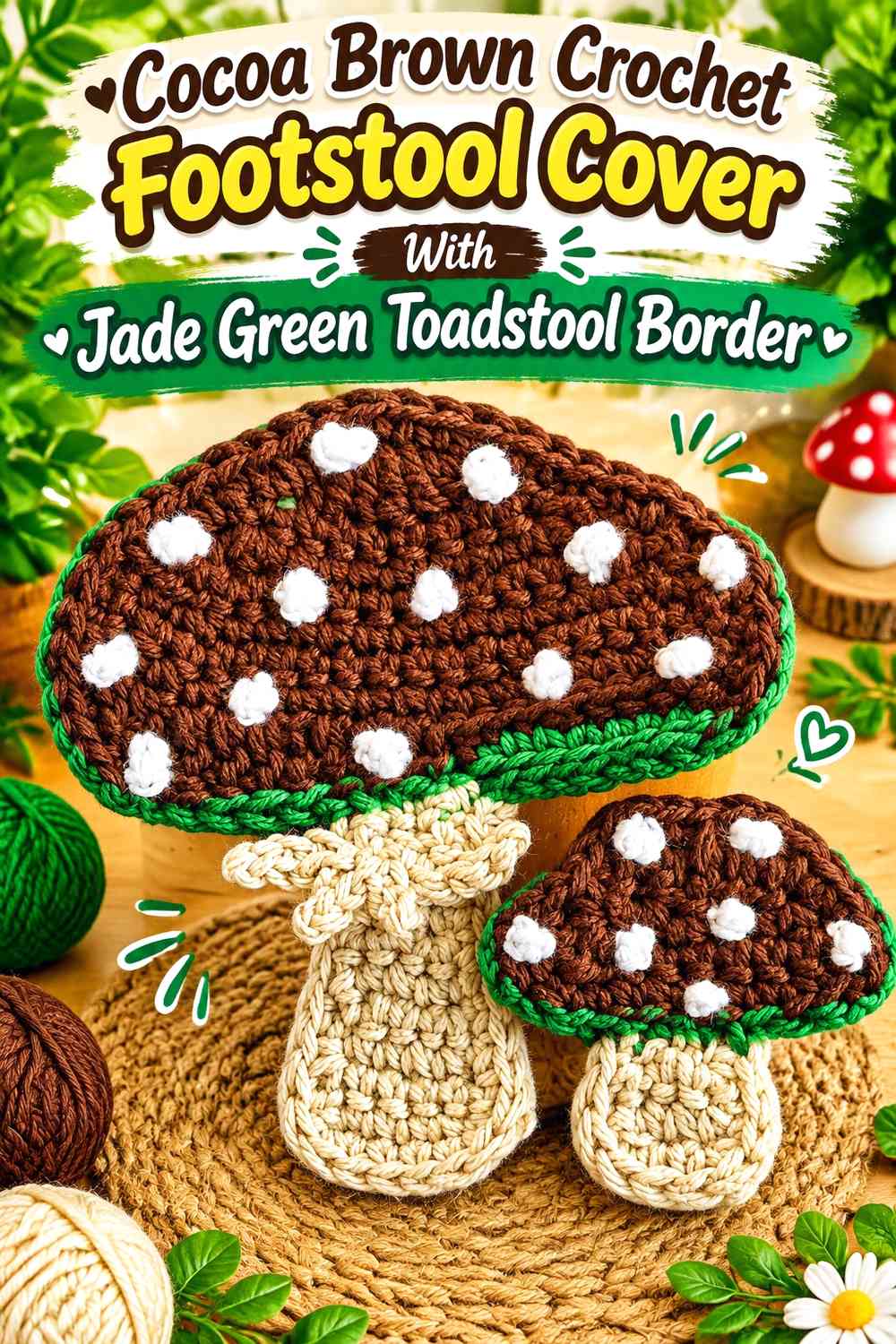
Use cocoa brown over the top and sides, then place a controlled row of jade-green-accented toadstools around the lower perimeter. The repeated mushrooms create a woodland border while the broad upper field stays practical.
Jade Green Toadstools Need Cocoa Brown Space Between Repeats
Do not position the motifs edge to edge. Brown gaps create visual rhythm and stop the lower border from becoming a continuous textured band.
Cocoa Brown Should Stay Quiet Above the Jade Green Toadstool Border
Let the large upper section remain mostly solid. A second mushroom ring near the top would compete with the distinctive lower woodland scene.
Jade Green Details Should Face Outward on the Cocoa Brown Footstool
Check orientation after the cover is installed. The mushroom caps and stems should sit vertically from a normal room viewpoint rather than rotating under the footstool.
Creator Credit: Kerri’s Crochet
8. Jade Green Crochet Mushroom-Cap Footstool Cover With Cocoa Brown Base
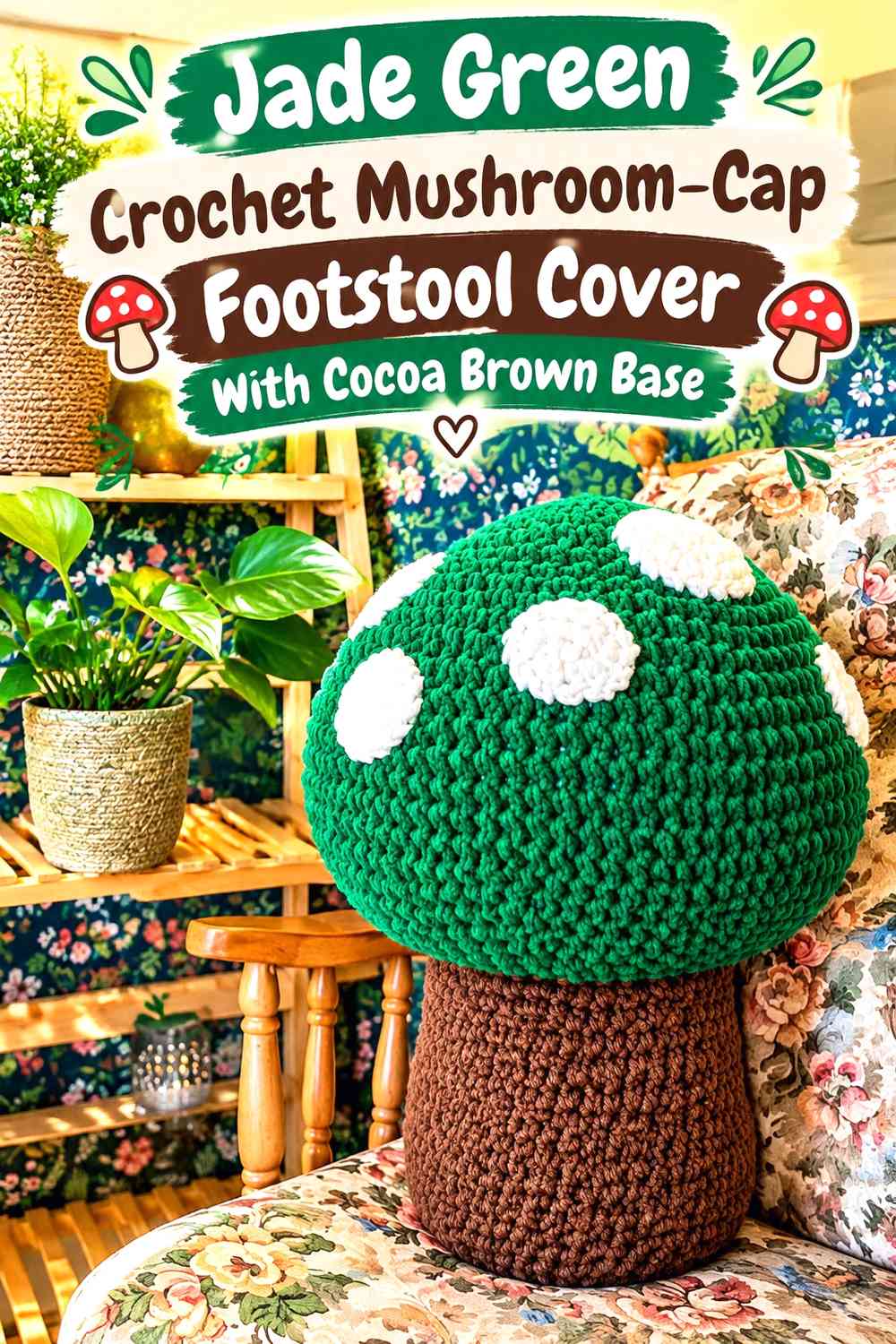
Instead of adding small mushrooms, treat the entire footstool as one oversized stylized mushroom. Jade green can form the rounded cap-like top, while cocoa brown covers the side or lower section to create a grounded base.
The supporting tutorial demonstrates a dimensional mushroom pillow and is useful for thinking about broad cap shaping rather than an exact furniture cover.
Jade Green Should Cover the Full Mushroom-Cap Top
Keep the upper surface one connected green field. The strong cap silhouette provides enough mushroom identity without needing several smaller fungi on top.
Cocoa Brown Can Make the Jade Green Mushroom Cap Feel Grounded
Use brown on the vertical side section or lower band. This creates a strong dark base and prevents the whole footstool from appearing like one green cushion.
Cocoa Brown Spots Should Stay Limited on the Jade Green Cap
If you want additional cap markings, use a small number of flat brown spots toward the perimeter. Large raised circles in the center can create an uneven footrest surface.
Creator Credit: Garden and Crochet With Delight
9. Cocoa Brown Crochet Mushroom Footstool Cover With Jade Green Cap Spots
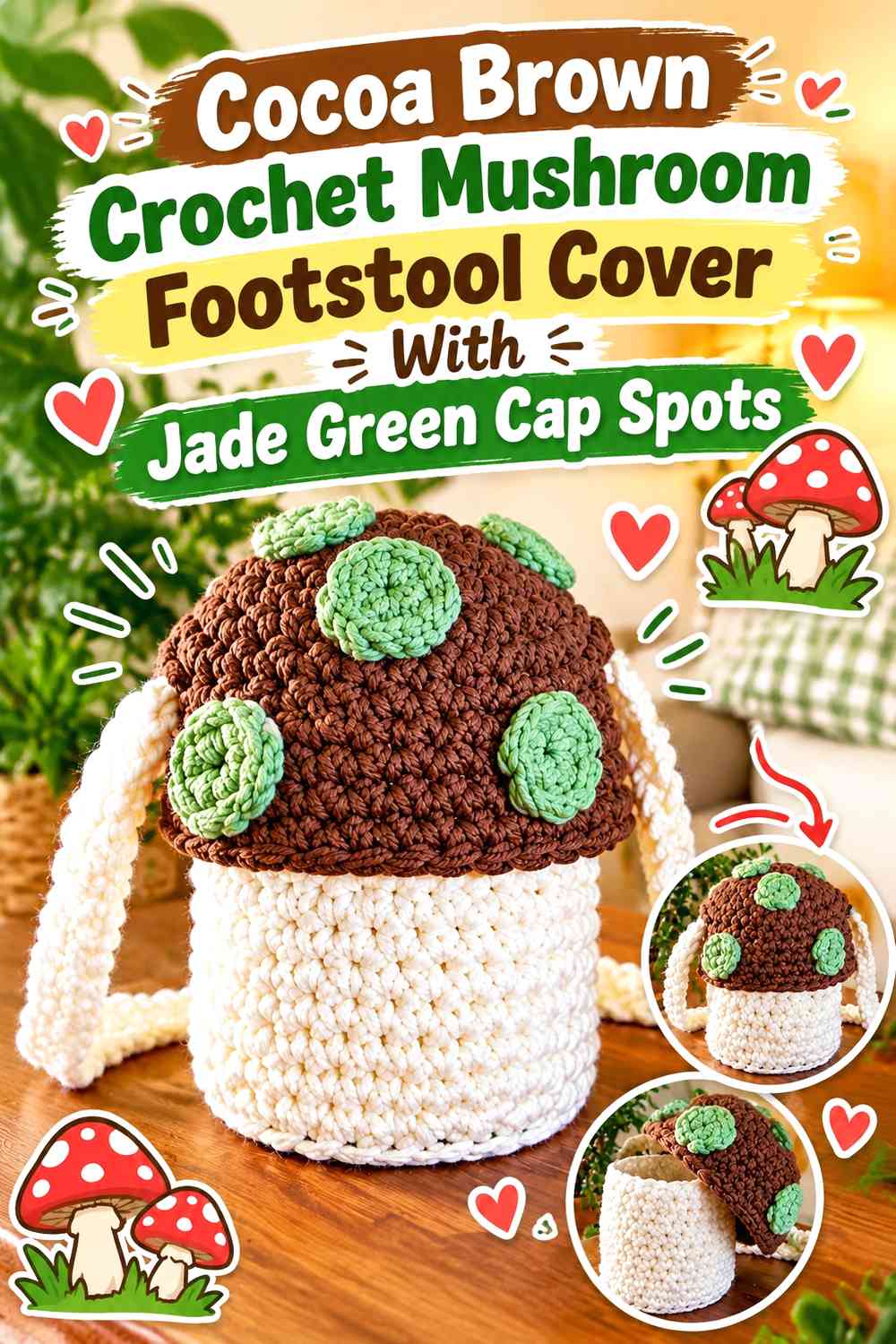
This idea uses the entire top as a cocoa-brown mushroom cap and adds jade-green circular spots. The side panel can remain brown or transition to green lower down, depending on how strongly you want the mushroom silhouette to read.
The supporting tutorial demonstrates mushroom-cap construction and spots on a bag, so use those decorative concepts rather than treating the bag dimensions as furniture-cover instructions.
Jade Green Spots Should Be Large Enough on the Cocoa Brown Footstool Top
A footstool is viewed from farther away than a small accessory. Use fewer, broader green spots rather than numerous tiny dots.
Keep the spots flat if the top is used regularly.
Cocoa Brown Should Remain Visible Between Jade Green Cap Spots
Leave enough brown to preserve the cap as the dominant field. If the green circles occupy most of the surface, the palette hierarchy becomes unclear.
Jade Green Should Repeat Once Below the Cocoa Brown Mushroom Cap
A narrow green side band can connect the spots with the rest of the cover. Avoid adding several competing green stripes.
Creator Credit: Teenie Crochets
10. Jade Green Crochet Footstool Cover With Cocoa Brown Mini Mushroom Corners

For a square or rectangular footstool, place one cocoa-brown mushroom near each corner while keeping the center jade green. The repeated corner placement creates symmetry without covering the main surface.
Cocoa Brown Mini Mushrooms Should Match Across the Jade Green Corners
Use comparable scale and orientation so the four motifs look intentionally coordinated. Small differences are less noticeable when their overall placement remains consistent.
Jade Green Should Stay Open Between Cocoa Brown Corner Motifs
The center should remain largely plain, especially if the footstool is used frequently. This also prevents the four mushrooms from visually merging into a busy top pattern.
Cocoa Brown Mushrooms Can Wrap Slightly Onto the Jade Green Side
For a softer edge transition, position the motifs close enough to the perimeter that part of the woodland scene visually connects with the side panel. Keep attached pieces secure and low-profile.
Creator Credit: CrochetByMoni
11. Cocoa Brown Crochet Mushroom Footstool Cover With Jade Green Woodland Sides

The final idea uses cocoa brown for the top and makes jade green the main side color. Mushroom-shaped or basket-like side construction can inspire a woodland base, while the darker upper field keeps the furniture visually grounded.
The supporting source demonstrates a mushroom-shaped crochet basket. Use its circular woodland construction as inspiration for the side treatment rather than as a substitute for fitting a furniture cover.
Cocoa Brown Should Stay Broad Above the Jade Green Woodland Sides
Keep the upper surface dark and simple so the green side section creates a distinct lower zone. This is especially effective when the footstool has a rounded top and vertical sides.
Jade Green Can Carry Mushroom Details Around the Cocoa Brown Base
Use green through most of the side panel and introduce small brown caps or stems only where needed. The side already has strong color contrast, so it does not require dense embellishment.
Cocoa Brown and Jade Green Should Meet at a Clear Footstool Edge
Place the color transition where the top turns into the side whenever the furniture shape allows. Following the actual structure usually looks more intentional than creating an arbitrary band across the top.
Creator Credit: Crocheting with White Owl
Which Jade Green and Cocoa Brown Mushroom Footstool Cover Should You Choose?
For a furniture-first design with a relatively smooth top, Ideas 1, 2, 8, and 12 keep the strongest mushroom detail on the sides, borders, or perimeter. These work well when the footstool is regularly used.
Ideas 3, 4, 6, and 11 bring mushrooms onto the upper panel through squares, medallions, or controlled corner placement. Keep those motifs flat if feet will rest directly on them.
Ideas 5 and 7 emphasize appliqués, making them useful when you want the mushroom theme to be clearly recognizable without rebuilding the entire cover around a specialty stitch pattern.
Ideas 9 and 10 treat the whole footstool top like an oversized mushroom cap. They create the boldest woodland silhouette while keeping the two-color palette simple.
Conclusion
Jade green and cocoa brown suit an autumn mushroom footstool cover because both colors can take on clear woodland roles. Jade green can establish mossy backgrounds, stems, borders, or side panels, while cocoa brown can define mushroom caps, bases, joins, and darker structural sections.
For the most practical cover, keep the central top comparatively smooth and move dimensional mushroom decoration toward the perimeter. Granny squares and flat colorwork can handle more of the upper surface because they do not require separate raised pieces.
Fit the underlying cover to the actual footstool before positioning mushrooms, and judge the final palette after the crochet is stretched into place. Follow the credited tutorials for the pouf, square, appliqué, pillow, bag, or basket construction each creator demonstrates, then apply the jade-green-and-cocoa-brown footstool arrangement independently.
Frequently Asked Questions
Should jade green or cocoa brown dominate an autumn mushroom footstool cover?
Either can lead. Jade green creates a mossy woodland background that makes brown mushroom caps easy to see, while cocoa brown creates a warmer, more grounded furniture cover with green used for stems, spots, borders, or side panels.
Where should cocoa brown mushrooms go on a jade green footstool cover?
Useful placements include the side panel, lower border, top perimeter, or corners. If the footstool is used frequently, keep raised appliqués away from the central high-contact area.
Can mushroom granny squares be used for a footstool cover?
Yes, provided the finished panel is adapted to the shape and dimensions of the actual footstool. Use mushroom squares as decorative building blocks rather than assuming a fixed number will fit every piece of furniture.
How can I keep jade green and cocoa brown mushroom motifs visible?
Use clearly separated color areas. A complete cocoa-brown cap against a jade-green field will remain easier to recognize than many tiny alternating stitches.
Should mushroom appliqués go on the top or sides of the footstool?
Flat appliqués can work near the top perimeter, but the sides are often better for strongly raised or layered motifs. That keeps more of the upper surface smooth for normal use.
Can the whole crochet footstool cover look like one mushroom?
Yes. Use one color for the broad cap-like top and the second for the side or lower base. Keep any cap spots relatively flat so the central surface remains comfortable.
How should I plan the color change between jade green and cocoa brown?
Use the footstool’s actual structure as a guide. The edge where the top turns into the side, the lower base, or a defined border usually creates a more natural color-change point than an arbitrary stripe through the middle.
What should I check before attaching mushroom motifs?
Fit the cover first. Check where the top center, corners, perimeter, and visible front actually land once the crochet is stretched over the footstool. Then pin or temporarily position the mushrooms before sewing them permanently.