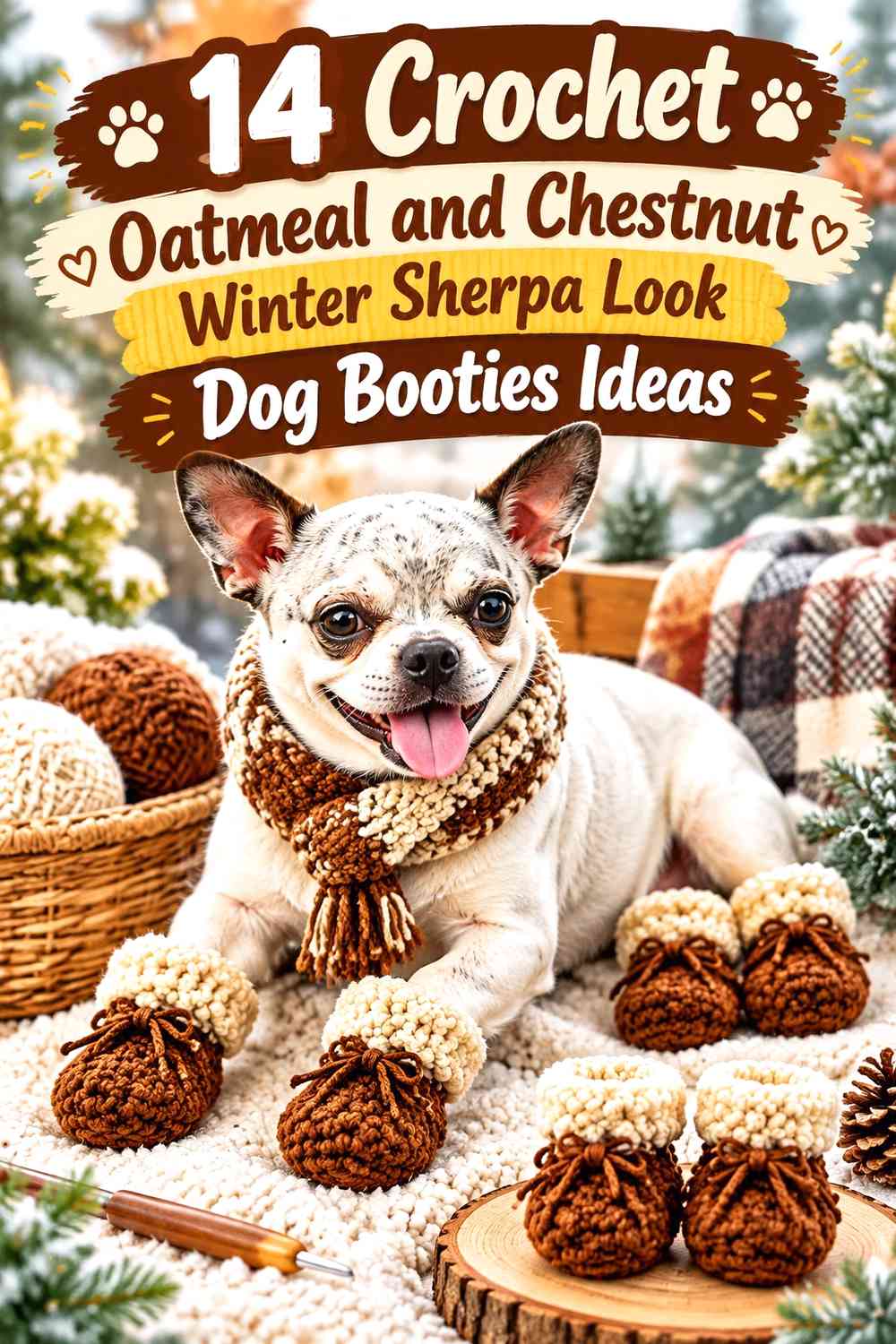

Oatmeal and chestnut create a natural winter palette for crochet dog booties, especially when you want a sherpa-inspired visual effect without making the design depend on bright seasonal colors. Oatmeal can suggest the lighter, fluffy-looking trim, while chestnut can define the sole, toe, ankle band, or main boot body.
For this article, sherpa look refers to appearance rather than a verified fiber property. Nubby stitches, loops, bobbles, raised edging, or softly textured cuffs can create the visual impression, but the yarn used in a particular tutorial may behave very differently from the yarn you choose.
Dog booties also need more attention to fit than decorative human booties. Measure the actual paws, check front and rear paws separately when needed, and test one finished bootie before making all four. The boot should not squeeze the toes, rub the dewclaw area, rotate noticeably, or change the dog’s gait.
Crocheted footwear should not automatically be treated as waterproof, non-slip, or suitable for hot pavement, ice, road salt, injuries, or long outdoor walks. Use these ideas primarily as color-and-style directions and follow a dog-specific construction when functional paw protection matters.
Quick List
- Chestnut Crochet Dog Booties With Oatmeal Sherpa-Look Cuffs
- Oatmeal Crochet Dog Booties With Chestnut Soles
- Chestnut Crochet Dog Booties With Oatmeal Toe Panels
- Oatmeal Crochet Dog Booties With Chestnut Ankle Bands
- Chestnut Crochet Dog Booties With Oatmeal Double Cuffs
- Oatmeal Crochet Dog Booties With Chestnut Paw Frames
- Chestnut Crochet Dog Booties With Oatmeal Nubby Trim
- Oatmeal Crochet Dog Booties With Chestnut High Cuffs
- Chestnut Crochet Dog Booties With Oatmeal Side Panels
- Oatmeal Crochet Dog Booties With Chestnut Toe Caps
- Chestnut Crochet Dog Booties With Oatmeal Ribbed Ankles
- Oatmeal Crochet Dog Booties With Chestnut Contrast Edges
- Chestnut Crochet Dog Booties With Oatmeal Sherpa-Look Top Bands
- Oatmeal and Chestnut Two-Tone Crochet Dog Booties
Let Oatmeal Create the Sherpa Look Without Covering the Whole Dog Bootie
Oatmeal is especially useful around the cuff because texture is easy to see there and does not need to cover the complete paw. A raised or nubby oatmeal top edge against a smoother chestnut body can suggest a lined winter boot while preserving a clean lower section.
Keep highly textured stitches away from areas where they create uncomfortable interior bulk. The sherpa effect is more useful as an exterior visual treatment than as a reason to make the inside of the bootie thick or irregular.
Use Chestnut to Define Oatmeal Dog Bootie Structure
Chestnut can give a pale oatmeal boot stronger visual boundaries at the sole, ankle, toe, or edging. Because the darker shade attracts the eye, you often need less of it.
A complete chestnut sole line or ankle band is usually more effective than scattering small brown stitches throughout an oatmeal boot. Connected color blocks also make it easier to compare all four booties and notice if one differs from the others.
Check Oatmeal and Chestnut Fit Before Adding Winter Texture
Complete the basic dog-bootie shape before committing to thick cuffs, bobbles, or raised trim. Additional crochet at the ankle can change both the opening size and the way a boot sits when the dog flexes the leg.
Test one bootie indoors for a short supervised period. If it twists, slips, leaves a mark, catches near a dewclaw, or makes the dog alter its steps, correct the construction before repeating the decorative oatmeal-and-chestnut treatment on the remaining paws.
1. Chestnut Crochet Dog Booties With Oatmeal Sherpa-Look Cuffs
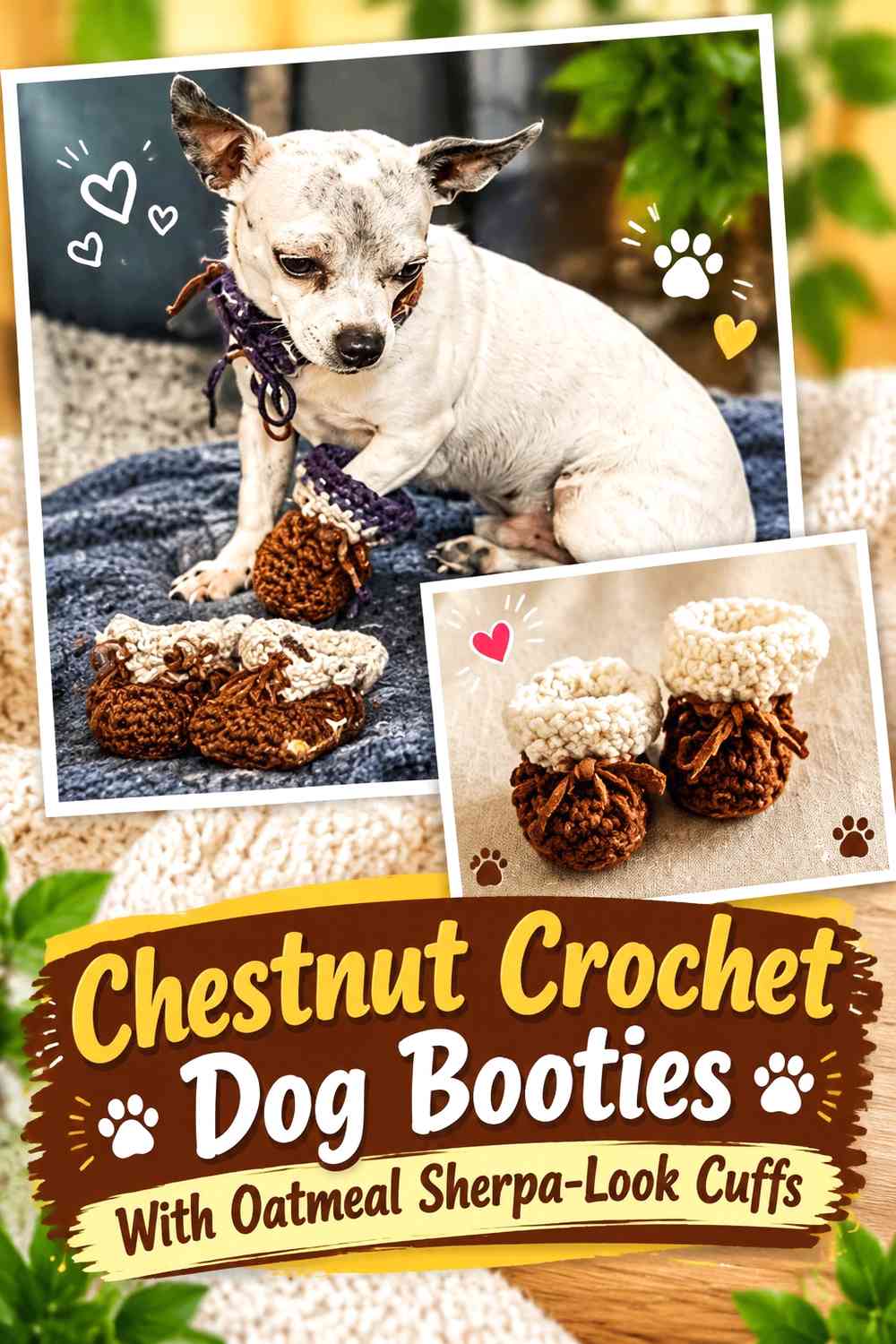
This is the most direct winter interpretation of the palette. Use chestnut across the paw and lower boot, then make oatmeal the complete upper cuff. The strong division creates the visual impression of a brown winter boot with pale fluffy-looking trim.
Chestnut Should Keep the Dog Bootie Body Visually Grounded
Use chestnut continuously from the toe through most of the ankle. A broad darker body gives the small boot enough definition and keeps the oatmeal cuff from visually taking over.
Keep the chestnut portion comparatively smooth if the oatmeal cuff carries the strongest texture.
Oatmeal Sherpa-Look Cuffs Should Stay Flexible Above Chestnut
Choose a nubby or raised treatment that still allows the opening to flex. A decorative cuff should not be made excessively tight simply to help the bootie stay on.
Check the cuff around the actual leg before deciding its final height.
Creator Credit: Sara Sach Crochet Designs
2. Oatmeal Crochet Dog Booties With Chestnut Soles
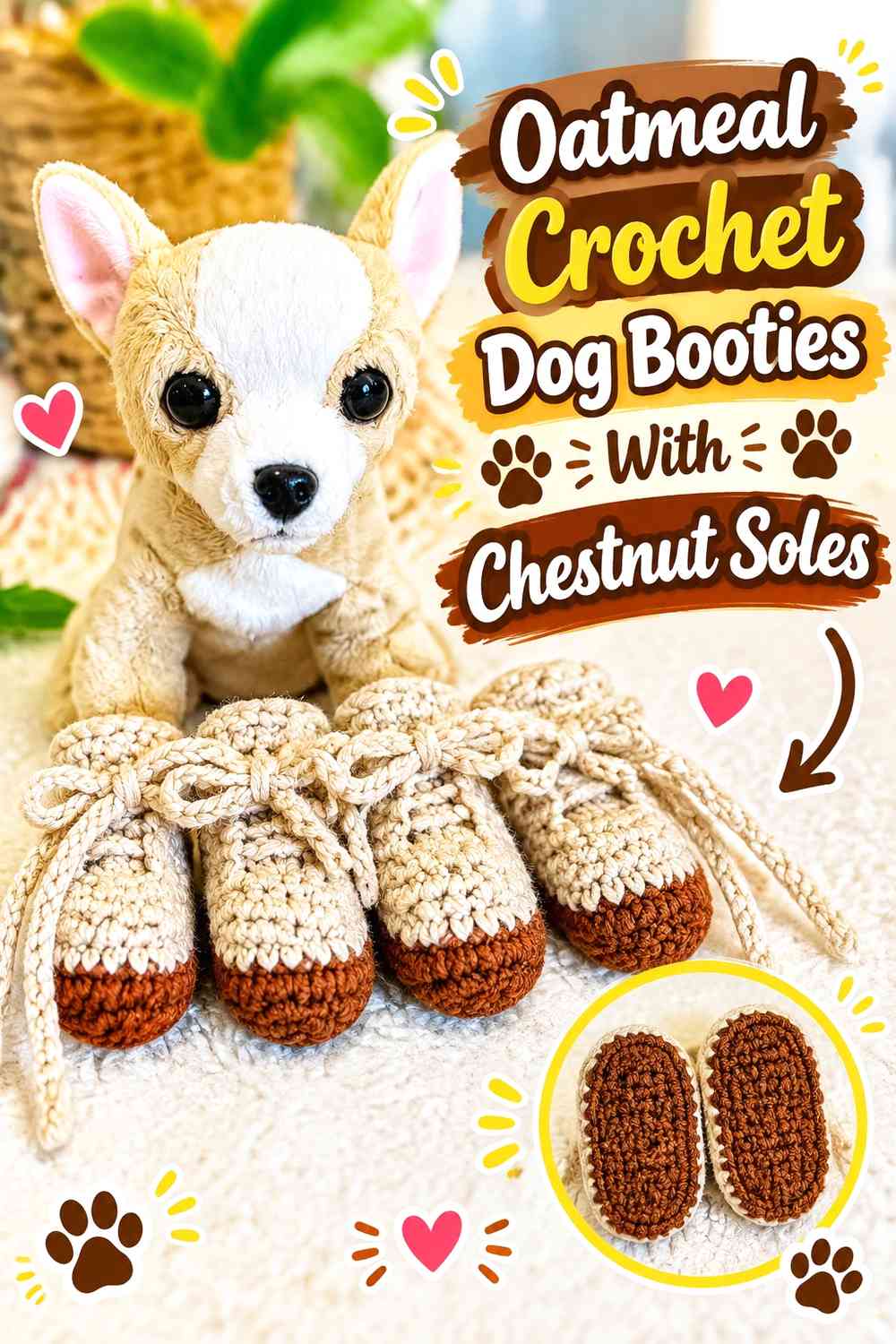
This reversal creates a lighter bootie overall. Oatmeal covers the toe, paw, and ankle while chestnut stays concentrated along the bottom. The darker sole visually separates the dog bootie from the floor without introducing additional upper-body stripes.
Oatmeal Should Stay Continuous Above the Chestnut Dog Bootie Sole
Keep the pale upper mostly uninterrupted so it maintains the soft winter look. Adding several chestnut bands through the paw can make the bootie appear more striped than sherpa-inspired.
A separate oatmeal cuff can provide texture without changing the color hierarchy.
Chestnut Soles Should Clearly Border the Oatmeal Upper
Use chestnut in one connected lower area rather than occasional dark stitches. This makes the sole easier to distinguish and gives all four booties a consistent visual foundation.
A crocheted chestnut sole is still a textile surface; do not assume the darker color makes it non-slip or outdoor-protective.
Creator Credit: LittleGemsCreations – Fibre Artist
3. Chestnut Crochet Dog Booties With Oatmeal Toe Panels
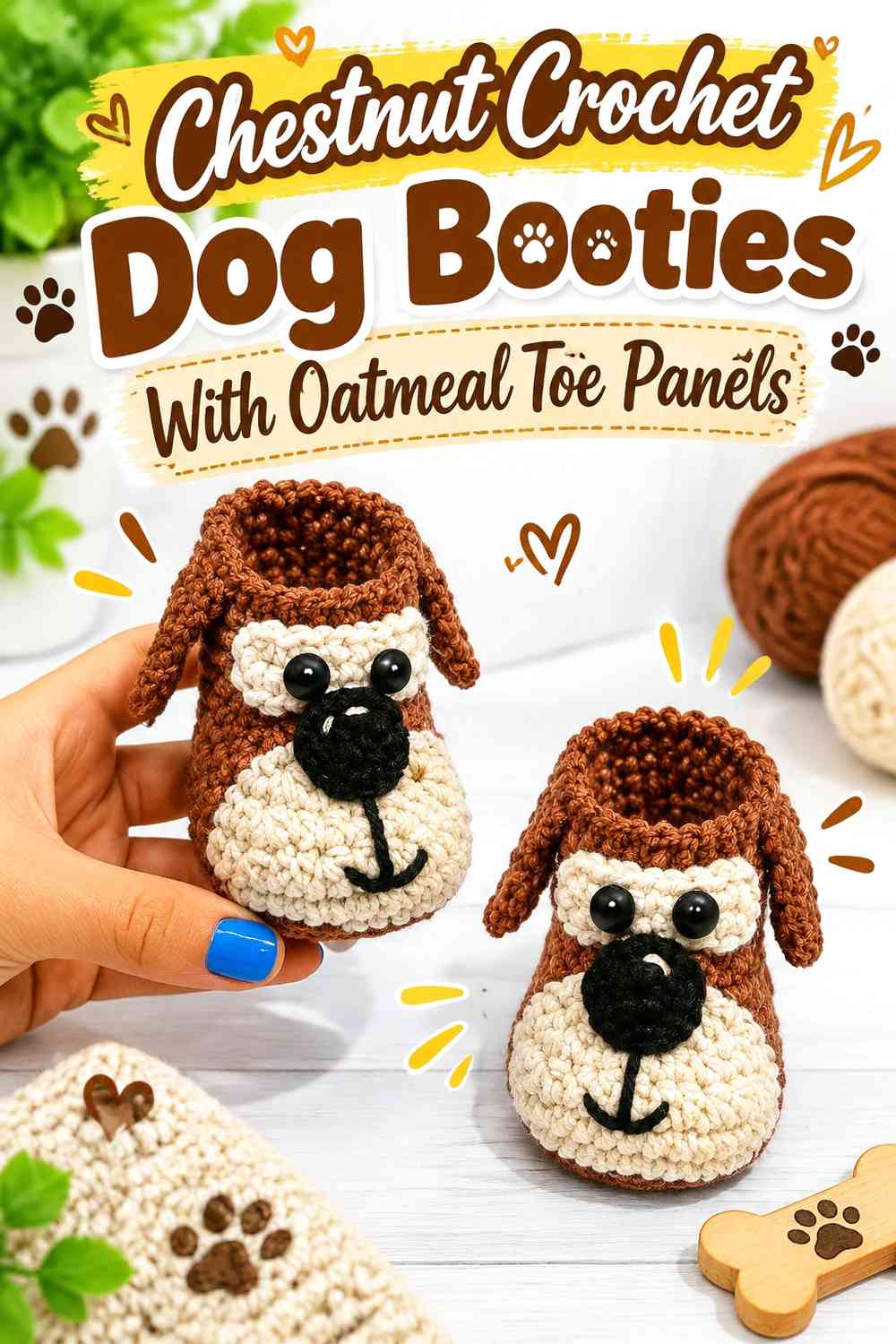
Move the light color away from the cuff and onto the front of the paw. A chestnut body can wrap around the sides and ankle while one oatmeal toe panel creates a soft, rounded focal area.
Oatmeal Toe Panels Need a Clear Chestnut Border
Leave chestnut visible along both sides and below the pale panel. The darker frame helps the toe remain recognizable after the bootie curves around the paw.
Keep the oatmeal section centered so one side does not visually outweigh the other.
Chestnut Should Continue From the Oatmeal Toe Into the Ankle
Use one connected brown field behind the toe panel. This lets you make fit changes higher on the boot without disturbing a complicated stripe sequence.
For the sherpa look, texture the oatmeal toe lightly rather than adding excessive raised bulk over the dog’s toes.
Creator Credit: Moda Crochet Maritza
4. Oatmeal Crochet Dog Booties With Chestnut Ankle Bands
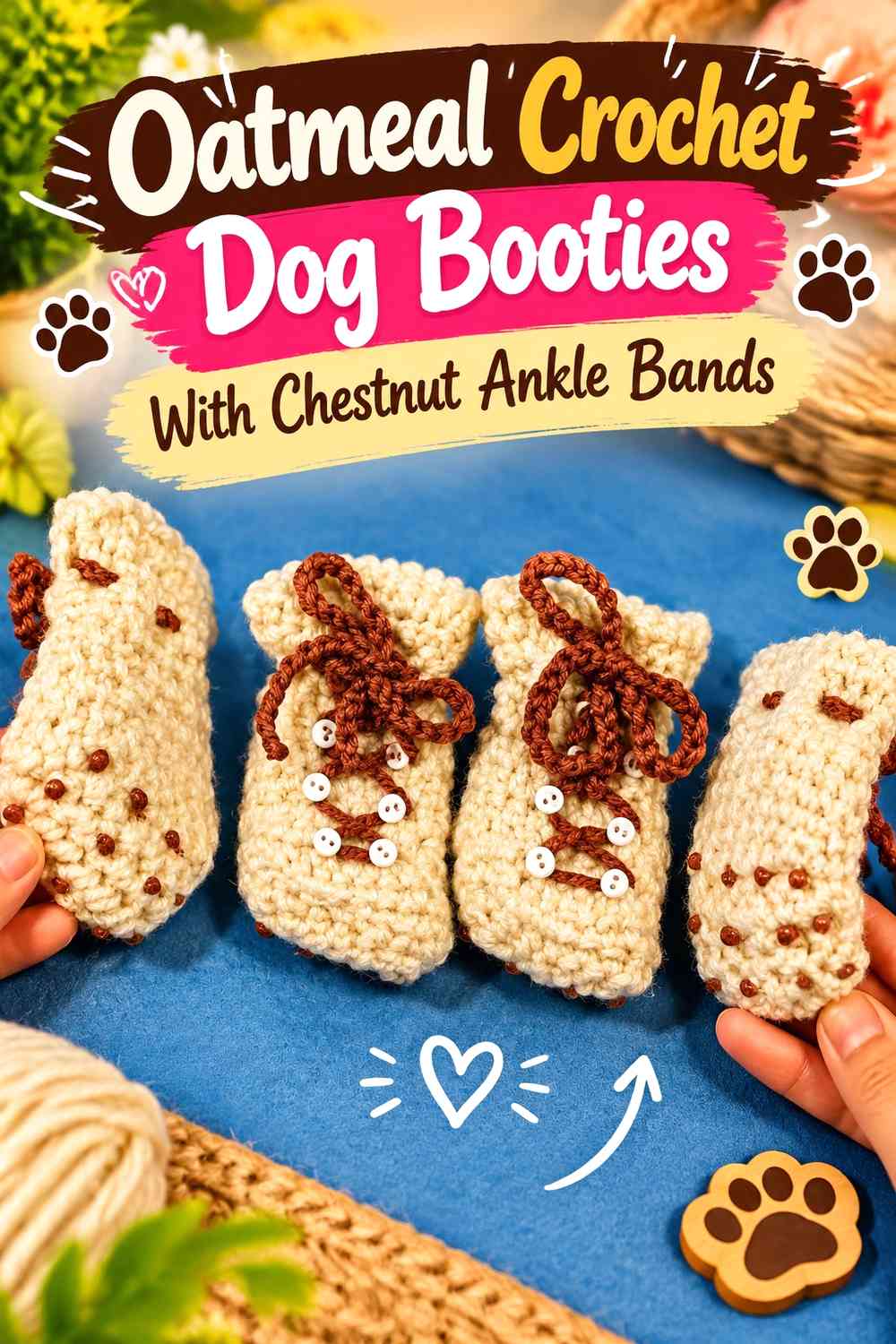
This design keeps almost the entire paw section oatmeal and uses chestnut only around the ankle. The darker band creates a strong horizontal checkpoint where the bootie changes from paw shaping to cuff.
Chestnut Ankle Bands Should Sit Clearly Against Oatmeal
Give the band enough width to look deliberate, but do not depend on a narrow, tight chestnut strip to keep the bootie attached.
Fit should come from the bootie’s overall shaping rather than excessive compression at one point.
Oatmeal Can Carry Sherpa-Look Texture Above the Chestnut Band
Keep the paw section smoother and place any nubby visual texture above the ankle band. That separates the functional lower boot from the decorative winter cuff.
Check that the textured oatmeal section does not rub a dewclaw or joint when the leg bends.
Creator Credit: Tejiendo Con Candy
5. Chestnut Crochet Dog Booties With Oatmeal Double Cuffs
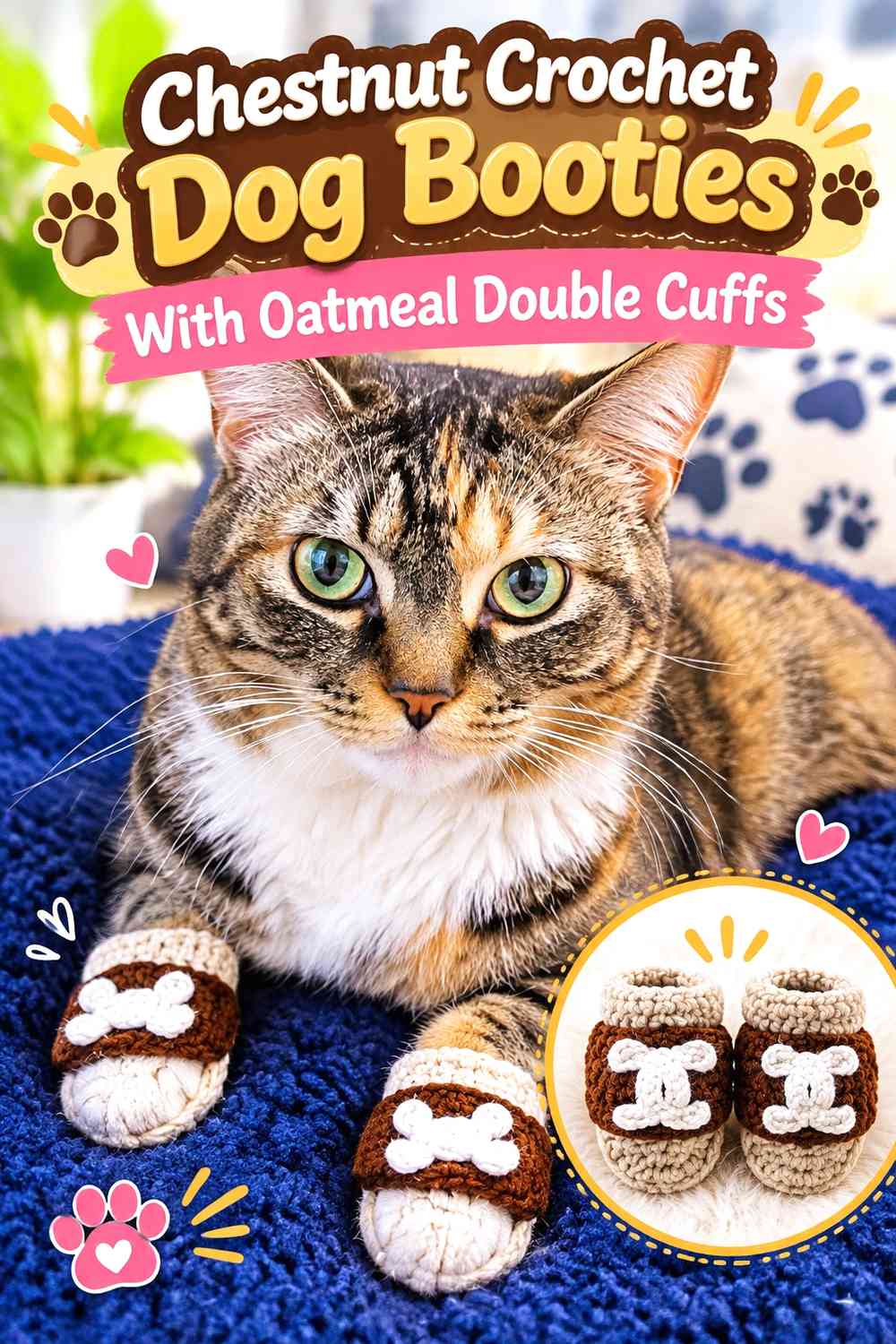
Use one narrow oatmeal band immediately above the chestnut body and a second textured oatmeal finish at the top. The two light sections can give the cuff extra visual depth without putting oatmeal through the paw itself.
The supporting tutorial demonstrates small pet slippers rather than dog-specific booties, so use it only as a reference for compact pet-footwear shaping and build the actual fit around the dog’s paw.
Oatmeal Double Cuffs Need Chestnut Space Between Textures
Keep the two pale treatments visually organized. A narrow chestnut interval can separate a smoother oatmeal band from a more textured oatmeal top.
If both pale sections merge into one thick mass, simplify the cuff instead.
Chestnut Should Remain the Main Dog Bootie Color Below Oatmeal
Let chestnut cover the toe, sides, and most of the ankle so the doubled cuff does not make the complete boot appear pale.
This also leaves the paw section easier to inspect for fit.
Creator Credit: Crochet Cat
6. Oatmeal Crochet Dog Booties With Chestnut Paw Frames
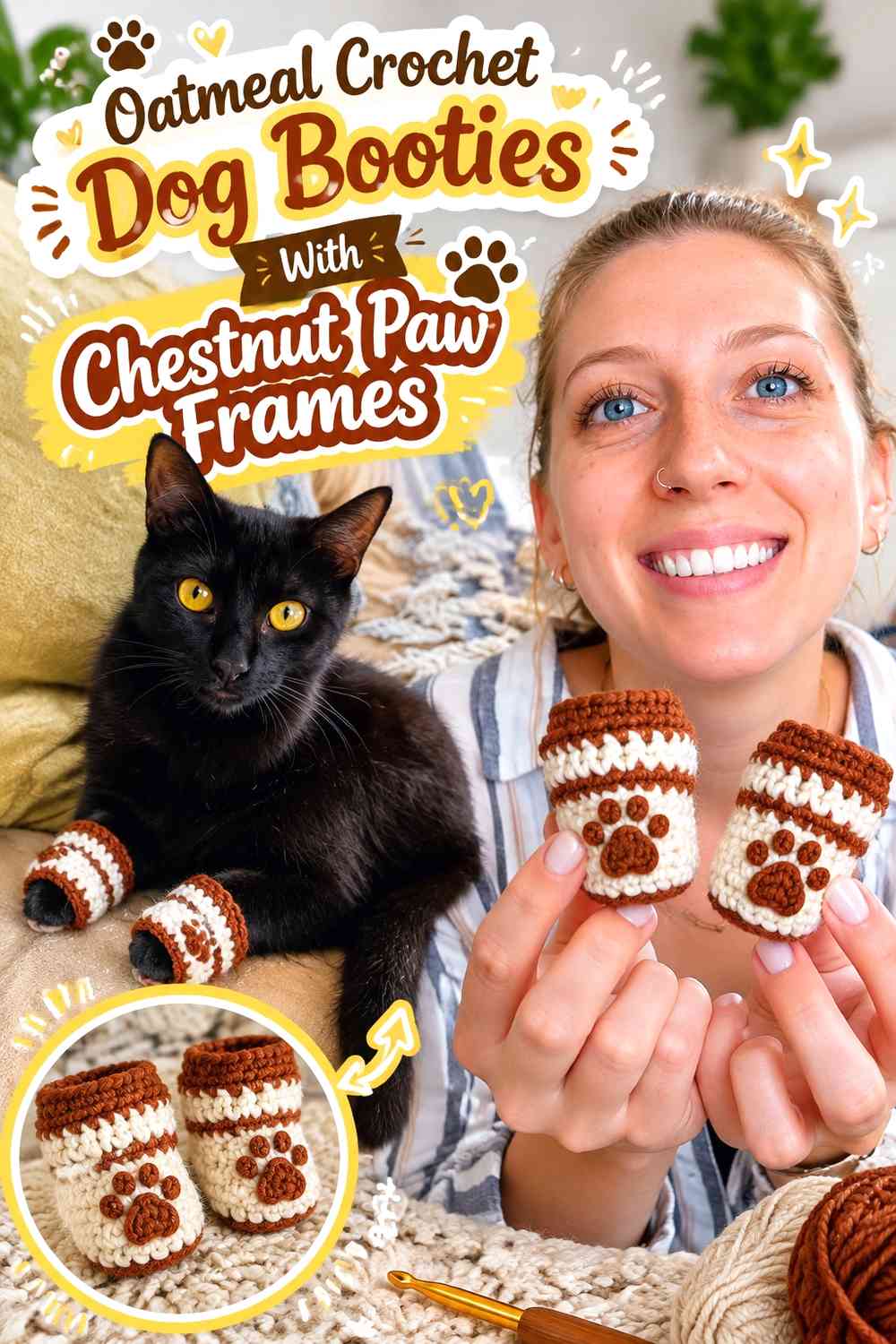
Use oatmeal across the main paw surface and chestnut around the perimeter, almost like a dark frame. This gives the bootie a more tailored color treatment than a simple contrasting cuff.
The supporting source demonstrates crochet slippers for a cat, so treat its small-pet footwear concept as inspiration rather than transferring proportions directly to a dog.
Chestnut Should Frame Oatmeal Without Narrowing the Dog Paw
Keep the darker edge visually clear but physically proportionate. Adding several rounds solely to enlarge the chestnut border can change the internal width of a small boot.
Work from the paw measurement first and apply the color arrangement within that shape.
Oatmeal Should Occupy Most of the Chestnut-Framed Paw
Leave a broad pale center so this remains an oatmeal-dominant idea. A very wide brown perimeter can turn the design into a chestnut bootie with a small cream patch.
Creator Credit: justine isabelle
7. Chestnut Crochet Dog Booties With Oatmeal Nubby Trim
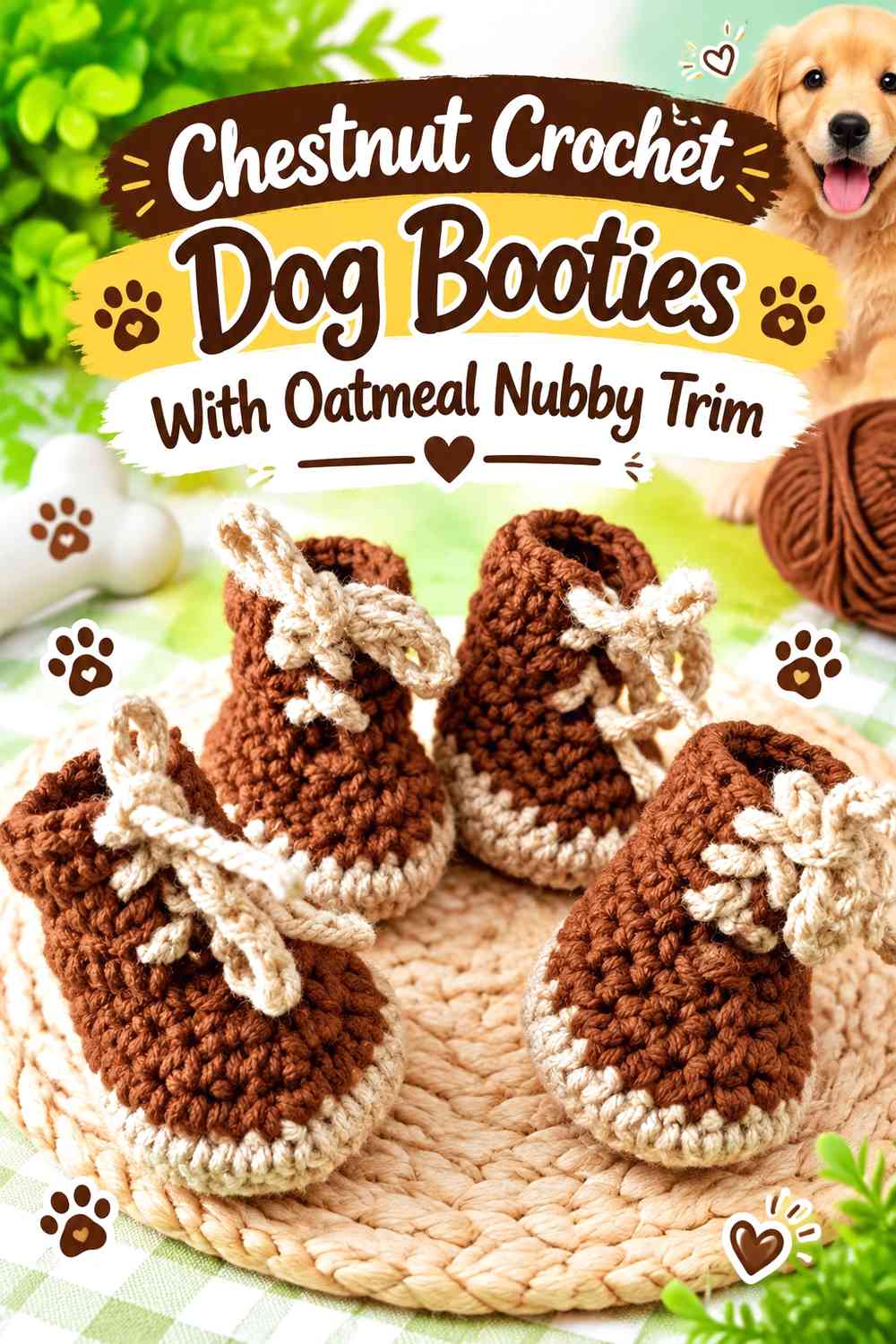
A chestnut dog shoe can stay nearly solid while one oatmeal nubby border provides the sherpa-inspired effect. Concentrate the texture at the top rather than repeating it around the sole.
Oatmeal Nubby Trim Should Stay Above the Chestnut Paw Section
Keep raised texture away from the ground-facing area and the interior paw surface. Its purpose here is visual softness around the upper edge.
A shallow band is often enough to create contrast against the smooth chestnut body.
Chestnut Should Keep the Oatmeal-Trimmed Dog Bootie Shape Simple
Avoid another large cream toe or sole in this version. One pale textural feature creates a clearer distinction from the more heavily color-blocked ideas.
The dog-shoe tutorial provides the footwear construction; apply the nubby oatmeal trim independently.
Creator Credit: Reno Govindarajoo crochet
8. Oatmeal Crochet Dog Booties With Chestnut High Cuffs
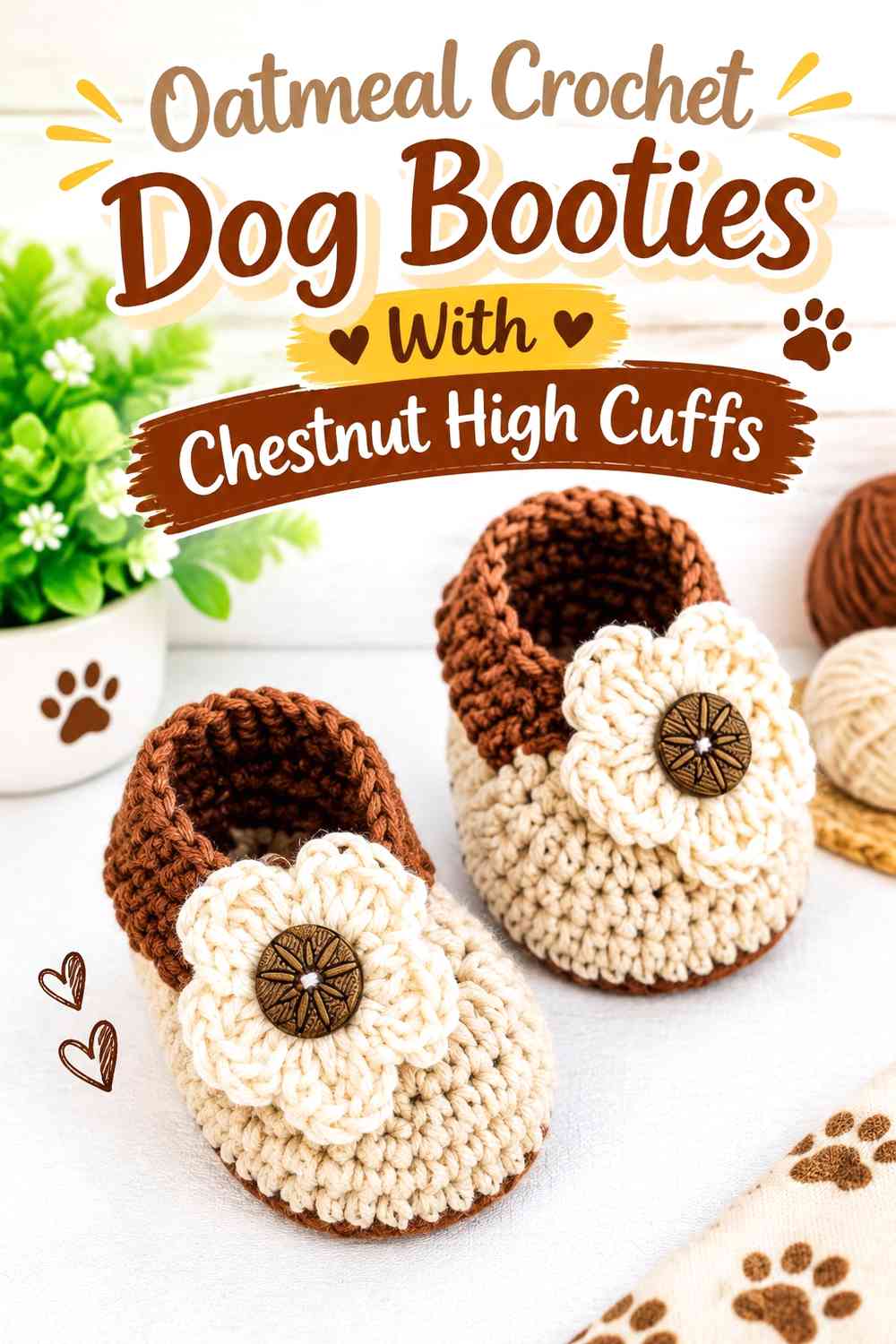
This light bootie uses oatmeal across the paw and moves chestnut to a taller upper section. It is useful when you want the leg portion to look darker and more structured than the paw.
The supporting tutorial is for baby booties, so use it only for general upper-and-cuff construction ideas; dog paw dimensions and ankle fit must be determined independently.
Chestnut High Cuffs Should Not Overpower the Oatmeal Paw
Keep the brown upper proportionate to the overall bootie height. A very deep chestnut section can make the pale paw look like a small toe cap.
Oatmeal Sherpa-Look Texture Can Sit Below the Chestnut Cuff
A narrow oatmeal textured transition between paw and upper cuff can soften the color change. Keep it outside the primary pressure areas and check that it does not create a bulky internal ridge.
Creator Credit: Croby Patterns
9. Chestnut Crochet Dog Booties With Oatmeal Side Panels
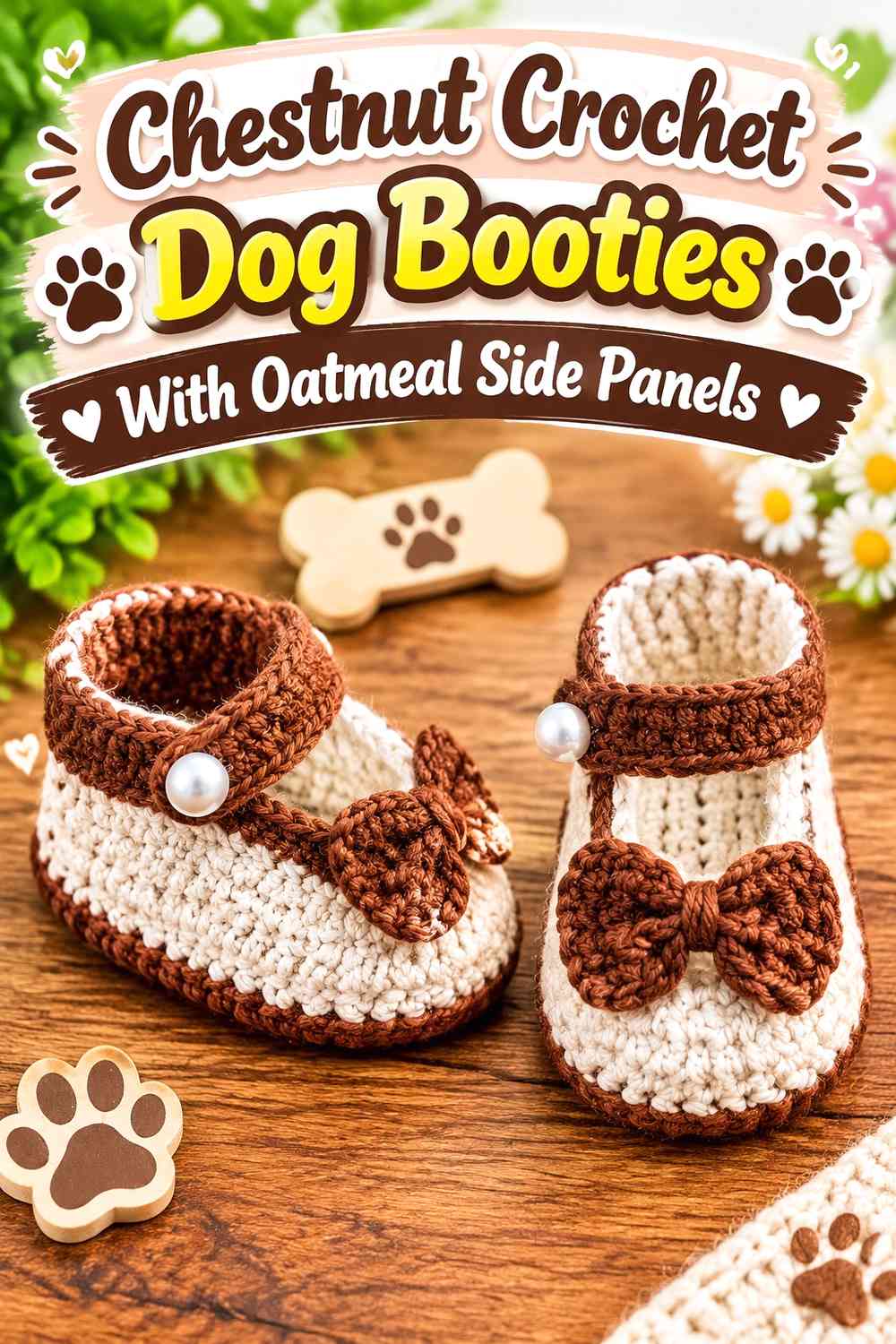
Instead of putting oatmeal on the front or cuff, place it on two small side sections. Chestnut remains continuous across the toe, sole area, and ankle, while the lighter panels break up the side profile.
The supporting tutorial demonstrates baby booties and is used only for general bootie shaping; the dog version requires independent paw sizing and fit testing.
Oatmeal Side Panels Should Match Across the Chestnut Dog Bootie
Keep the pale areas similar on both sides so the bootie does not look twisted before it is even worn.
On all four booties, use the same placement reference so the set feels coordinated.
Chestnut Should Stay Connected Across the Oatmeal Side Panels
Maintain a dark route from toe to cuff. That continuity preserves chestnut as the dominant shade and prevents the two pale panels from dividing the boot into separate front and back sections.
Creator Credit: Maisie and Ruth
10. Oatmeal Crochet Dog Booties With Chestnut Toe Caps
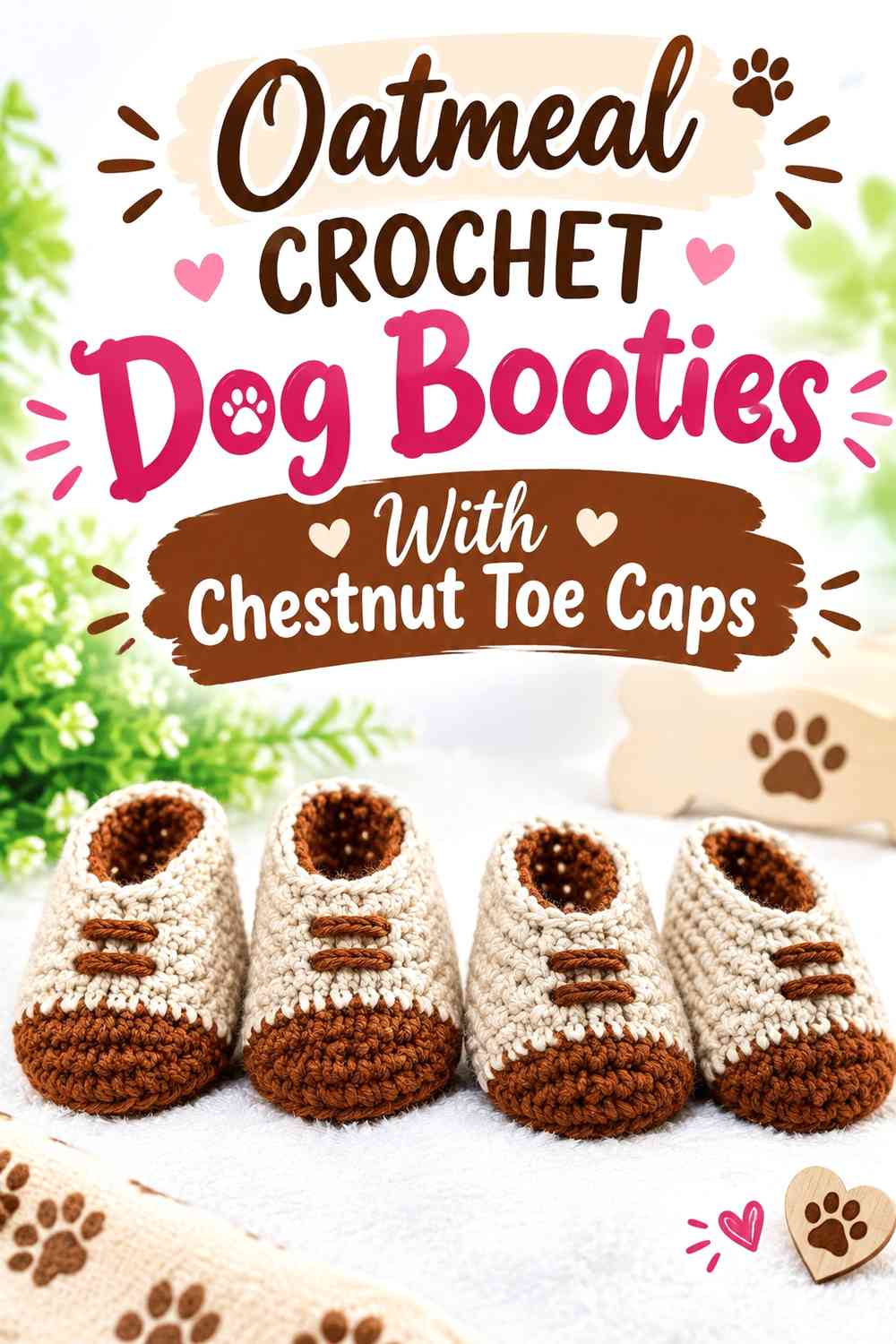
A dark toe cap gives oatmeal booties a stronger front-facing feature. The chestnut section can cover the rounded toe while the sides, ankle, and cuff remain pale.
The supporting tutorial is a baby-bootie tutorial, so use its toe-shaping concept only and construct the dog footwear to the dog’s actual paw.
Chestnut Toe Caps Should Stay Centered on Oatmeal
Keep the darker front symmetrical so the boot does not appear to rotate toward one side.
A chestnut toe also provides a useful visual check when comparing all four finished booties.
Oatmeal Should Remain Broad Behind the Chestnut Toe
Let the pale section extend through most of the paw and ankle. Adding another large chestnut cuff would make the design much more evenly divided.
A textured oatmeal top edge can provide the sherpa look without changing the color balance.
Creator Credit: Bella Coco
11. Chestnut Crochet Dog Booties With Oatmeal Ribbed Ankles

Use chestnut for the complete paw and switch to oatmeal at the ankle, where ribbing creates a neat vertical texture. This produces a cleaner sherpa-inspired look than loose loops or highly raised bobbles.
The supporting tutorial demonstrates baby booties rather than dog footwear, so treat its sock-and-bootie structure only as a construction reference.
Oatmeal Ribbing Should Stretch Comfortably Above Chestnut
Make sure the pale ankle can open sufficiently for the paw to pass through without forcing the toes.
Once worn, it should sit securely without leaving a compressed ring.
Chestnut Should Stop Cleanly Before the Oatmeal Ribbed Cuff
Use one obvious color transition. Bringing alternating brown stitches into the ribbing can reduce the contrast and make the cuff look mottled rather than intentionally pale.
Creator Credit: Jayda InStitches
12. Oatmeal Crochet Dog Booties With Chestnut Contrast Edges

This version uses chestnut sparingly on the upper and lower boundaries of an oatmeal boot. The middle remains light, while the dark edges define where the boot begins and ends.
The supporting tutorial demonstrates human baby booties, so adapt only the concept of clean bootie edging; dog-specific shaping and movement checks remain essential.
Chestnut Edges Should Stay Narrow on the Oatmeal Dog Bootie
Use the darker shade as definition rather than broad color blocking. A slim chestnut lower edge and upper finish can be enough.
If both borders become deep, the oatmeal center can shrink into an isolated band.
Oatmeal Should Carry the Sherpa-Look Surface Between Chestnut Edges
Put any soft-looking raised texture in the larger pale area while keeping the boundaries relatively flat. That reinforces oatmeal as the winter-texture color.
Creator Credit: Yarnspirations
13. Chestnut Crochet Dog Booties With Oatmeal Sherpa-Look Top Bands
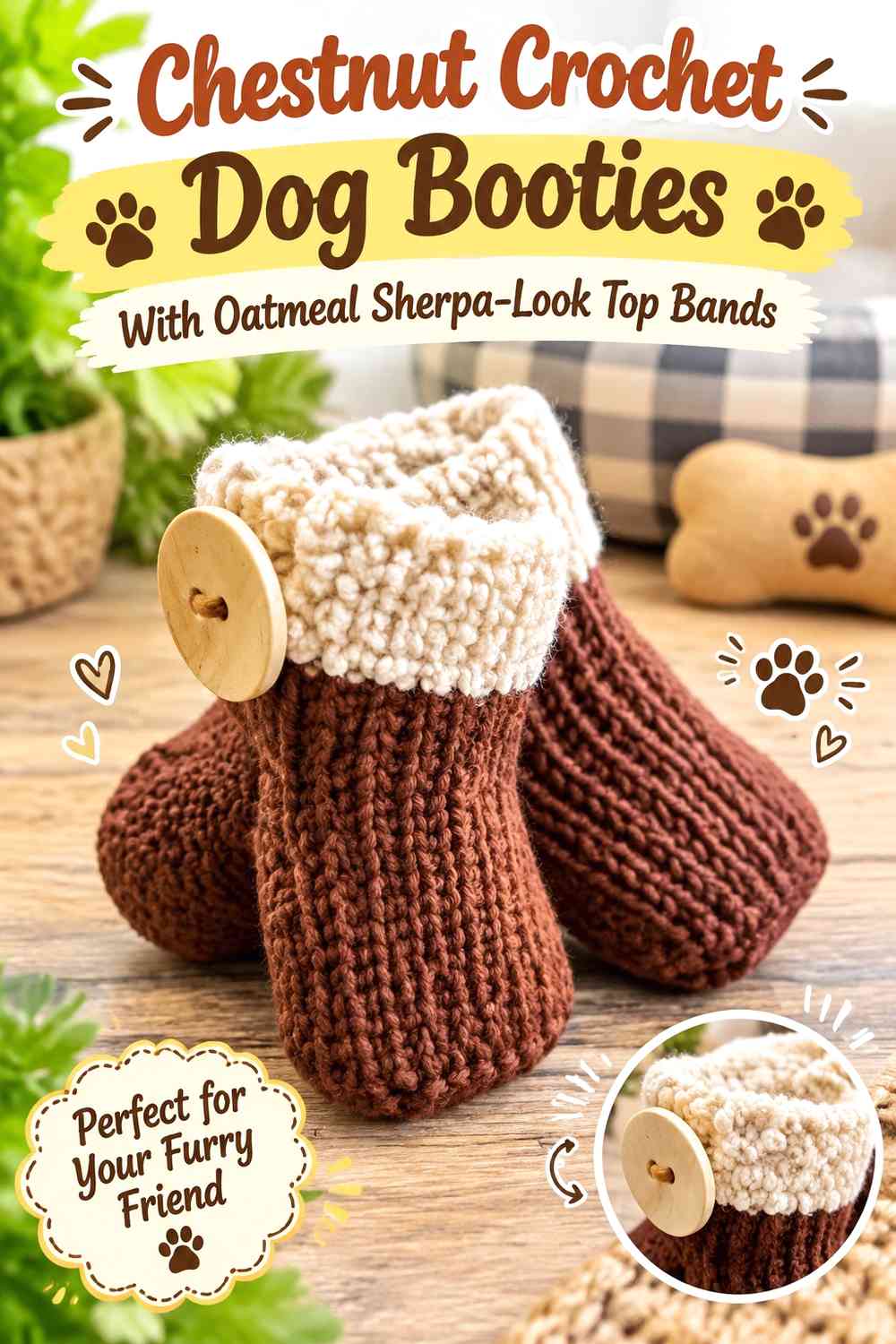
This chestnut-dominant design keeps the paw entirely dark and adds one broad oatmeal band at the top. Unlike Idea 1, the pale section is flatter at its lower edge and becomes more textured only near the final rim.
The supporting tutorial uses Tunisian crochet for baby booties, so use it as a texture-and-bootie reference rather than a dog-footwear sizing guide.
Oatmeal Top Bands Can Build Texture Gradually Above Chestnut
Start the oatmeal section comparatively smooth and add more visible texture near the rim. This creates a layered sherpa-look finish without making the entire ankle bulky.
Chestnut Should Remain Plain Beneath the Oatmeal Winter Band
Keep the paw and lower ankle uncomplicated. The cleaner dark body gives the more decorative pale upper area room to stand out.
Creator Credit: HappyBerry Crochet
14. Oatmeal and Chestnut Two-Tone Crochet Dog Booties
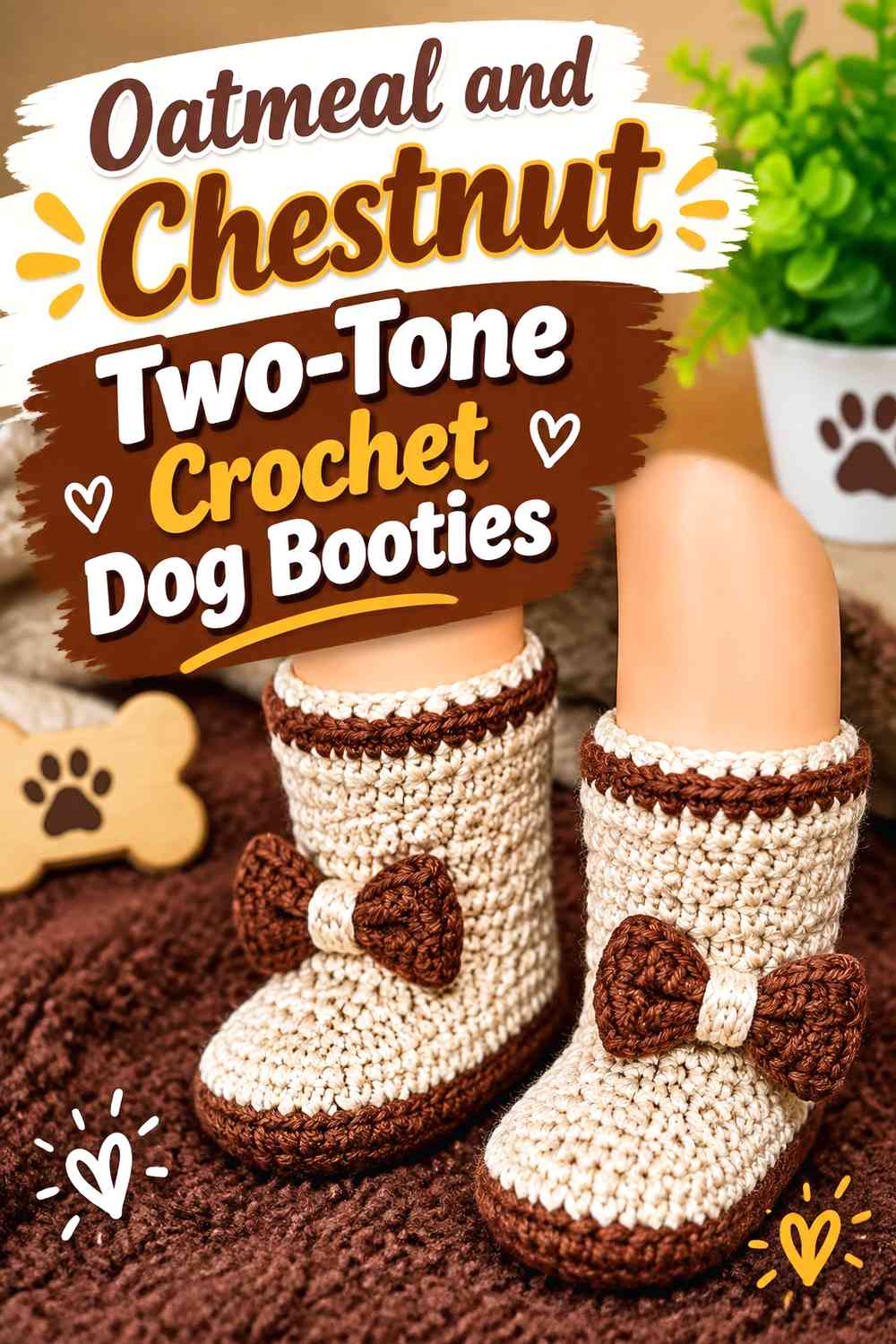
The final idea gives both colors substantial roles. Use oatmeal on the upper paw and cuff, chestnut on the sole and lower sidewall, then repeat a narrow chestnut line near the top. This creates an obvious two-color winter boot without relying on many stripes.
The supporting tutorial demonstrates bow-trimmed baby booties, so use its general bootie shaping and decorative color-placement ideas only. Size and construction for a dog must be independently adapted.
Oatmeal Should Stay Broad Between Chestnut Dog Bootie Sections
Keep enough pale area through the upper paw that the design does not become chestnut-dominant. Oatmeal can also carry the strongest nubby or sherpa-inspired surface.
Chestnut Should Connect the Oatmeal Bootie Sole and Upper Accent
Repeat the same dark color in the lower foundation and one small upper detail. That repetition helps the palette feel intentional without placing brown throughout every row.
Oatmeal and Chestnut Should Match Across All Four Dog Booties
Compare the height of the dark sole, pale upper, and final chestnut accent before finishing the set. Small color-placement differences become much more noticeable when four booties are worn together.
Creator Credit: Crochet Guru
Which Oatmeal and Chestnut Sherpa-Look Dog Bootie Direction Should You Choose?
For the clearest winter-boot appearance, Ideas 1, 7, 11, and 13 use oatmeal mainly around the cuff while chestnut grounds the paw. These give the strongest visual impression of pale, fluffy-looking trim above a darker boot body.
Ideas 2, 4, 8, 10, and 12 are oatmeal-dominant. They create a lighter bootie with chestnut used strategically on soles, ankle bands, toe caps, cuffs, or edges.
Ideas 3, 6, and 9 move the contrast onto the paw itself through toe or side panels. These color placements are useful when you want the bootie to remain visually interesting even if the cuff is mostly hidden by leg fur.
Idea 14 gives oatmeal and chestnut the most balanced two-color treatment. Whichever layout you choose, prioritize the dog’s actual paw dimensions and movement over decorative symmetry.
Conclusion
Oatmeal and chestnut can create a convincing sherpa-look winter direction without requiring the entire dog bootie to be highly textured. Oatmeal works naturally on cuffs, ribbing, nubby edging, and soft-looking panels, while chestnut can define the sole, toe, ankle, and main boot body.
For the clearest design, keep the paw section comparatively simple and concentrate the strongest texture at the top. If oatmeal dominates, chestnut can provide structure through one connected sole or ankle band. If chestnut dominates, a broad oatmeal cuff gives the boot an immediate winter appearance.
Remember that the sherpa look is visual. Crochet yarn alone does not guarantee traction, waterproofing, insulation, or protection from extreme surfaces. Fit one bootie first, test it briefly under supervision, and stop using it if it rotates, rubs, slips, or changes the dog’s gait.
Use the dog-specific tutorials for the core footwear construction whenever possible. The human baby-bootie references in the later ideas are best used only for color placement, edging, cuff, or shaping inspiration—not for copying measurements onto a dog’s paw.
Frequently Asked Questions
Should oatmeal or chestnut dominate sherpa-look crochet dog booties?
Chestnut works well as the dominant shade when you want a classic dark winter-boot body with pale sherpa-inspired trim. Oatmeal can dominate for a lighter look, with chestnut defining the sole, toe, or ankle.
What makes oatmeal crochet look like sherpa on dog booties?
Use visible surface texture such as controlled nubby stitches, raised edging, ribbing, or another soft-looking treatment. Keep the effect mainly on the exterior cuff rather than creating unnecessary bulk inside the boot.
Where should chestnut go on oatmeal crochet dog booties?
Useful placements include the sole, toe cap, ankle band, side edging, or upper border. One connected chestnut area generally reads more clearly than numerous small dark stitches.
Can I use fuzzy yarn to create the oatmeal sherpa look?
Only if the chosen dog-bootie construction and intended use make that yarn appropriate. A sherpa look does not require actual fuzzy fiber. A textured stitch in a suitable yarn can create the visual effect without making unsupported assumptions about warmth, washability, or durability.
Should all four oatmeal and chestnut dog booties be the same size?
Not automatically. Measure the dog’s paws because front and rear paws can differ. If the measurements differ enough to affect fit, adjust the respective pair rather than forcing all four to match simply for visual symmetry.
Can crochet dog booties be used on snow, ice, or hot pavement?
Do not assume a crocheted sole provides suitable traction, waterproofing, heat protection, or resistance to road salt and rough surfaces. If the dog needs technical paw protection, use footwear designed for that purpose or seek appropriate veterinary guidance.
How should I test the fit of chestnut and oatmeal dog booties?
Make and test one bootie before completing the set. Check that the toes are not compressed, the ankle is not pinched, the dewclaw area is clear, and the boot does not rotate or alter the dog’s gait during a brief supervised indoor trial.
How can I keep the oatmeal sherpa-look cuff from becoming too bulky?
Limit the stronger texture to the outermost portion of the cuff and keep the lower ankle smoother. If the decorative treatment noticeably reduces the opening or creates a stiff ridge, simplify it rather than tightening the rest of the bootie.