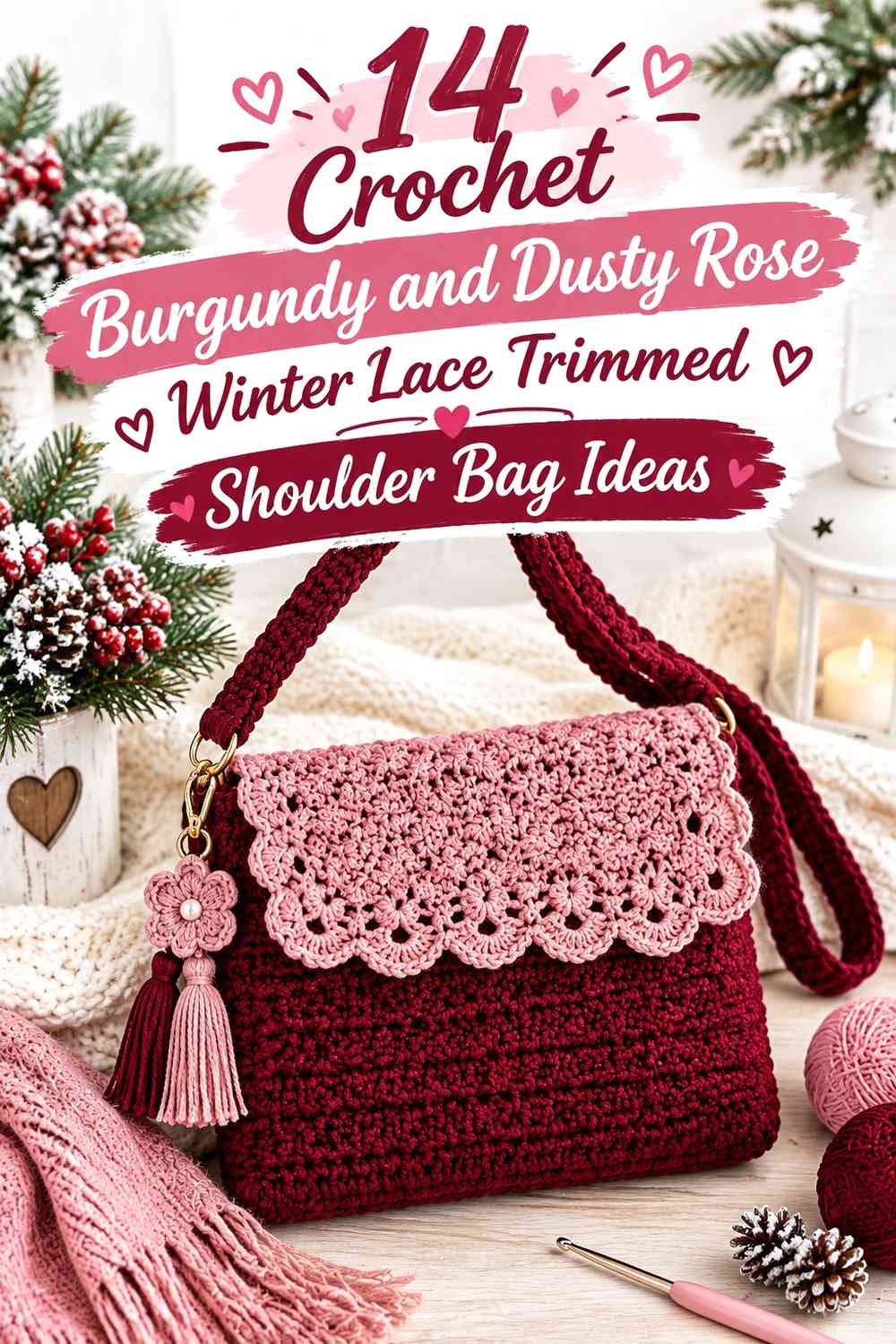

Burgundy and dusty rose give a crochet shoulder bag enough tonal relationship to feel coordinated while still allowing lace trim, flaps, straps, and textured panels to stand apart. Burgundy can anchor the bag body or structural edges, while dusty rose can lighten scallops, lace borders, motif centers, or a decorative flap without introducing a completely separate color family.
The important decision is where the lighter dusty rose should interrupt the deeper burgundy. On a shoulder bag, a lace border around the opening creates a different effect from lace around a flap, lower edge, granny-square panel, or strap attachment. Keeping the contrast tied to actual bag features makes the palette look more deliberate than scattering alternating pink and burgundy details across every surface.
The supporting tutorials include shoulder bags, flap purses, granny-square bags, textured handbags, crossbody constructions, round purses, and a scallop-edged bucket bag. The burgundy-and-dusty-rose lace treatments below are independent color adaptations, so use each creator’s tutorial for its demonstrated construction rather than assuming the original project uses this editorial palette.
Quick List
- Burgundy Crochet Shoulder Bag With Dusty Rose Lace Flap
- Dusty Rose Ribbed Crochet Shoulder Bag With Burgundy Lace Opening
- Burgundy Granny Crochet Shoulder Bag With Dusty Rose Lace Borders
- Burgundy Structured Crochet Shoulder Bag With Dusty Rose Scalloped Trim
- Burgundy Flap Crochet Shoulder Bag With Dusty Rose Lace Edge
- Dusty Rose Crochet Shoulder Bag With Burgundy Framed Lace Panel
- Burgundy Textured Crochet Shoulder Bag With Dusty Rose Lace Top
- Dusty Rose Rounded Crochet Shoulder Bag With Burgundy Lace Strap Detail
- Burgundy Bucket Crochet Shoulder Bag With Dusty Rose Scalloped Lace
- Burgundy Panel Crochet Shoulder Bag With Dusty Rose Lace Seams
- Dusty Rose Round Crochet Shoulder Bag With Burgundy Lace Frame
- Burgundy Handbag-Style Crochet Shoulder Bag With Dusty Rose Lace Band
- Dusty Rose Textured Crochet Shoulder Bag With Burgundy Lace Border
- Burgundy Structured Crochet Shoulder Bag With Dusty Rose Lace Insert
Decide Whether Burgundy or Dusty Rose Should Lead the Shoulder Bag
Burgundy works well across a larger bag body when you want a dark winter base with lace functioning as a softer detail. Dusty rose can then appear around the flap, opening, lower border, or motif edges where a lighter value helps the decorative crochet remain visible.
Reversing the proportions creates a softer bag. A dusty rose body with burgundy lace or edging makes the decorative treatment darker and more defined. Whichever color leads, avoid dividing every panel equally unless a deliberately patchworked appearance is the goal.
Use Dusty Rose and Burgundy Contrast to Keep Crochet Lace Visible
Lace relies on open spaces and repeated edges, so color placement can either clarify or hide it. Dusty rose lace against burgundy usually creates more visible separation than dusty rose worked directly beside another similarly light pink.
The exact yarns still matter. A very deep dusty rose can approach burgundy in value. Compare the yarns together before committing to the full border, especially if the lace consists of small scallops or narrow openwork.
Keep Burgundy and Dusty Rose Connected Across the Strap and Bag Body
A contrasting trim can look isolated when its color appears nowhere else. If dusty rose defines a burgundy flap, repeat a smaller amount around the strap attachment, bag opening, or another appropriate edge. If burgundy trims a dusty rose body, the strap itself can carry some of that darker color.
The goal is repetition without covering every component in both shades. The body, trim, strap, and closure area should each have a clear color role.
1. Burgundy Crochet Shoulder Bag With Dusty Rose Lace Flap
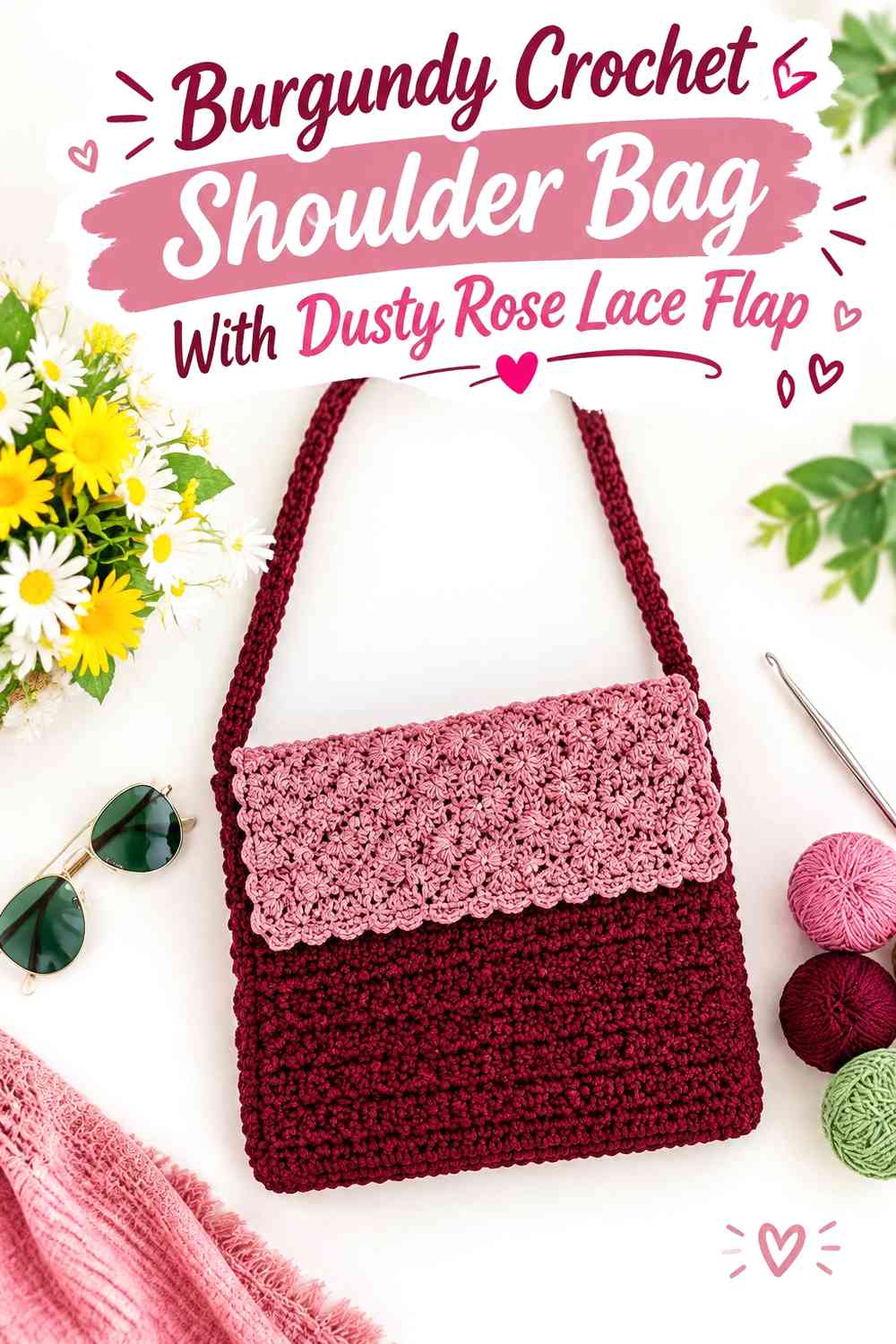
A deep burgundy body gives this shoulder bag a strong winter base, while dusty rose lace around the flap provides a softer decorative break. Keep the main panels and most of the strap burgundy so the lighter color remains closely associated with the flap rather than spreading equally across the entire bag.
Dusty Rose Lace Can Define a Burgundy Shoulder Bag Flap
Place dusty rose around the visible outer edge of the flap, where the color change can follow the flap shape. This makes the lace trim easier to identify than placing the same openwork against a dusty rose background.
If the flap already contains substantial texture, keep the lace width restrained so the trim does not compete with the flap surface.
Burgundy Should Repeat Beyond the Dusty Rose Lace Edge
Keep the center of the flap burgundy or return to burgundy at the closure area. That darker repetition connects the flap to the main body and stops the dusty rose border from appearing like a separate attached piece.
Creator Credit: Jo to the World Creations
2. Dusty Rose Ribbed Crochet Shoulder Bag With Burgundy Lace Opening
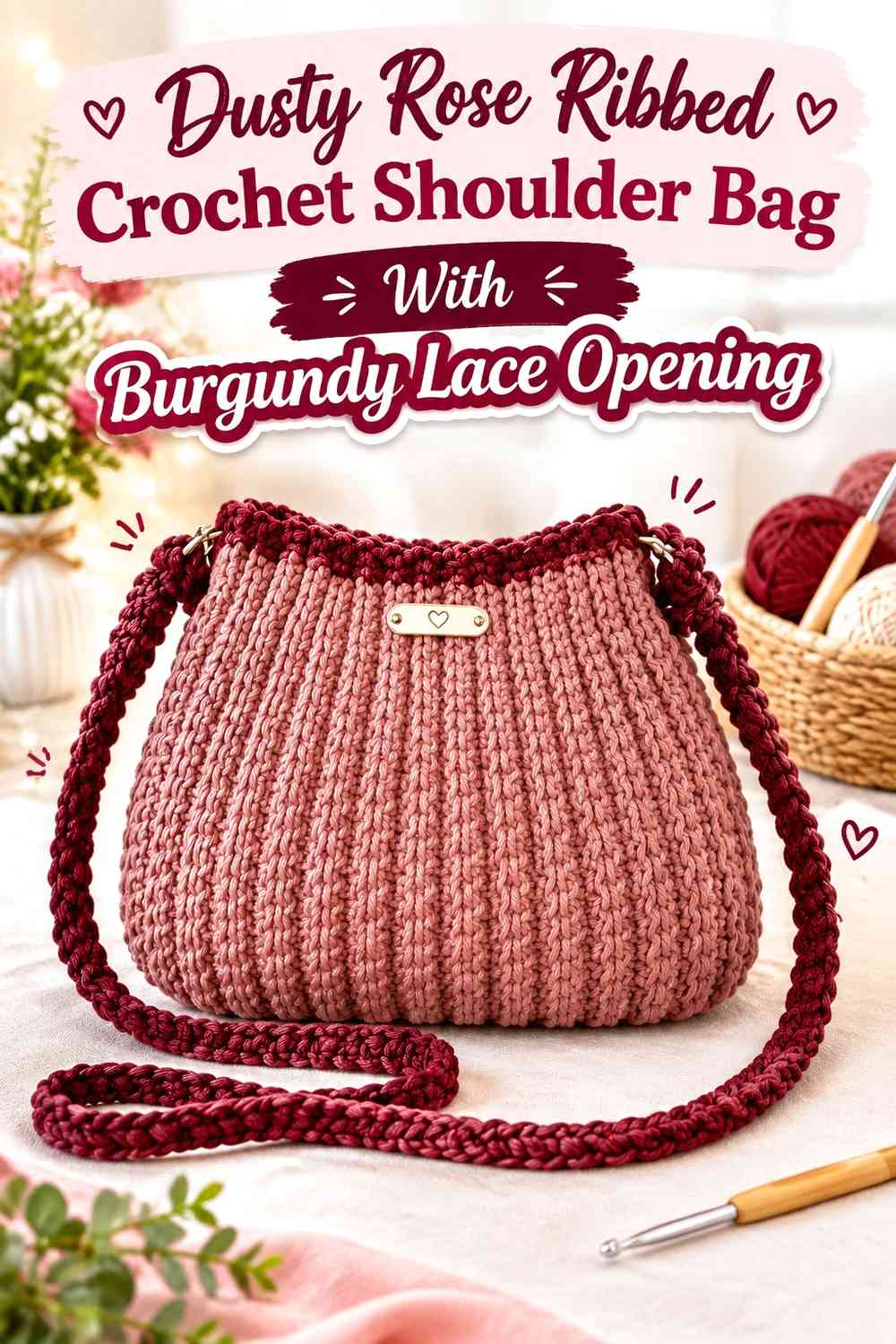
Let dusty rose cover the ribbed body and use burgundy around the top opening. The darker lace treatment creates a distinct upper edge without interrupting the vertical texture across the main panels.
Dusty Rose Keeps the Ribbed Shoulder Bag Surface Continuous
Use dusty rose across most of the ribbed fabric so the stitch direction remains visually consistent. Alternating burgundy through every rib can make the color pattern compete with the texture.
Save the stronger contrast for the opening and selected structural details.
Burgundy Lace Gives the Dusty Rose Opening a Dark Frame
Work burgundy around the upper decorative edge where it can clearly separate the opening from the body. If the lace includes repeated scallops or points, the darker value can make their outline easier to recognize against dusty rose.
Repeat a small amount of burgundy near the strap attachments if the top trim otherwise feels isolated.
Creator Credit: Crochet Bag
3. Burgundy Granny Crochet Shoulder Bag With Dusty Rose Lace Borders

A granny-square shoulder bag provides several natural places for the two colors. Keep burgundy prominent in the outer motif areas and joins, then use dusty rose around selected motif centers or as a lace-like finishing border.
Dusty Rose Can Lighten Burgundy Granny Motifs
Place dusty rose inside the motifs rather than using it equally in every round. Concentrating the lighter shade near motif centers gives the repeated squares a focal point while leaving burgundy enough space to connect them visually.
If the colors are close in value, keep a consistent sequence so the motif structure remains easy to follow.
Burgundy Joins Can Separate Dusty Rose Lace-Like Motifs
Use burgundy where the granny sections meet. The darker joining color creates boundaries between neighboring dusty rose details and can prevent a multi-square shoulder bag from becoming visually blurred.
A dusty rose outer trim can then repeat the motif color without replacing the dark join structure.
Creator Credit: VivCrochets
4. Burgundy Structured Crochet Shoulder Bag With Dusty Rose Scalloped Trim
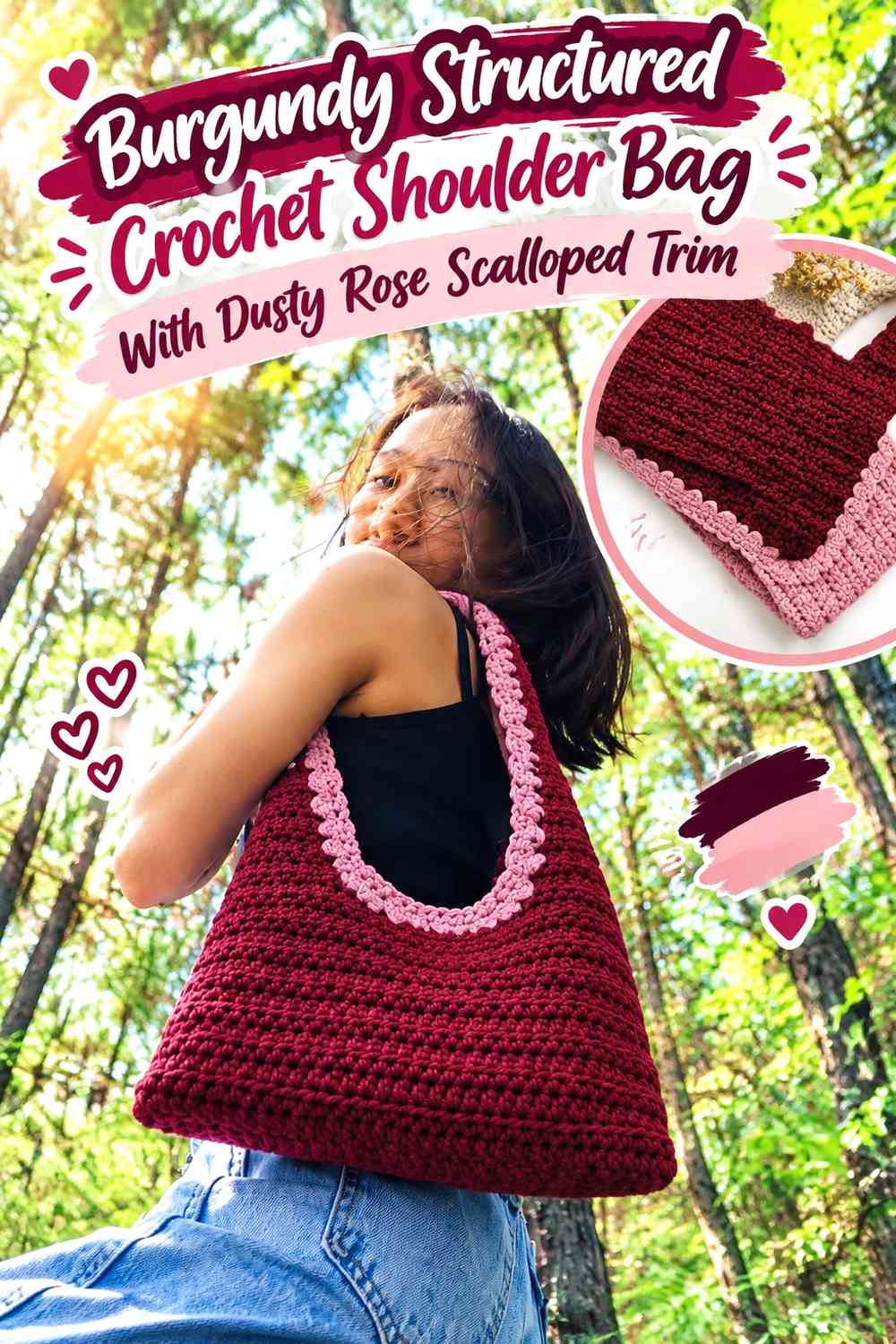
A structured shoulder bag benefits from placing decorative color where it will not obscure the main shape. Keep the rounded or ribbed body burgundy and add dusty rose scallops only around the top or another defined exterior edge.
Dusty Rose Scallops Should Follow a Clear Burgundy Bag Edge
Apply the lighter trim along one continuous boundary rather than scattering scallops across unrelated sections. This lets the decorative edge reinforce the bag shape instead of competing with it.
Leave enough burgundy visible immediately below the scallops for their silhouette to remain distinct.
Burgundy Should Dominate Beneath the Dusty Rose Trim
Keep the broad bag body dark so the dusty rose functions as true lace-like finishing. If the lighter color spreads through the body, handle, base, and trim equally, the scalloped edge loses its special role.
Creator Credit: ABoC Studio
5. Burgundy Flap Crochet Shoulder Bag With Dusty Rose Lace Edge
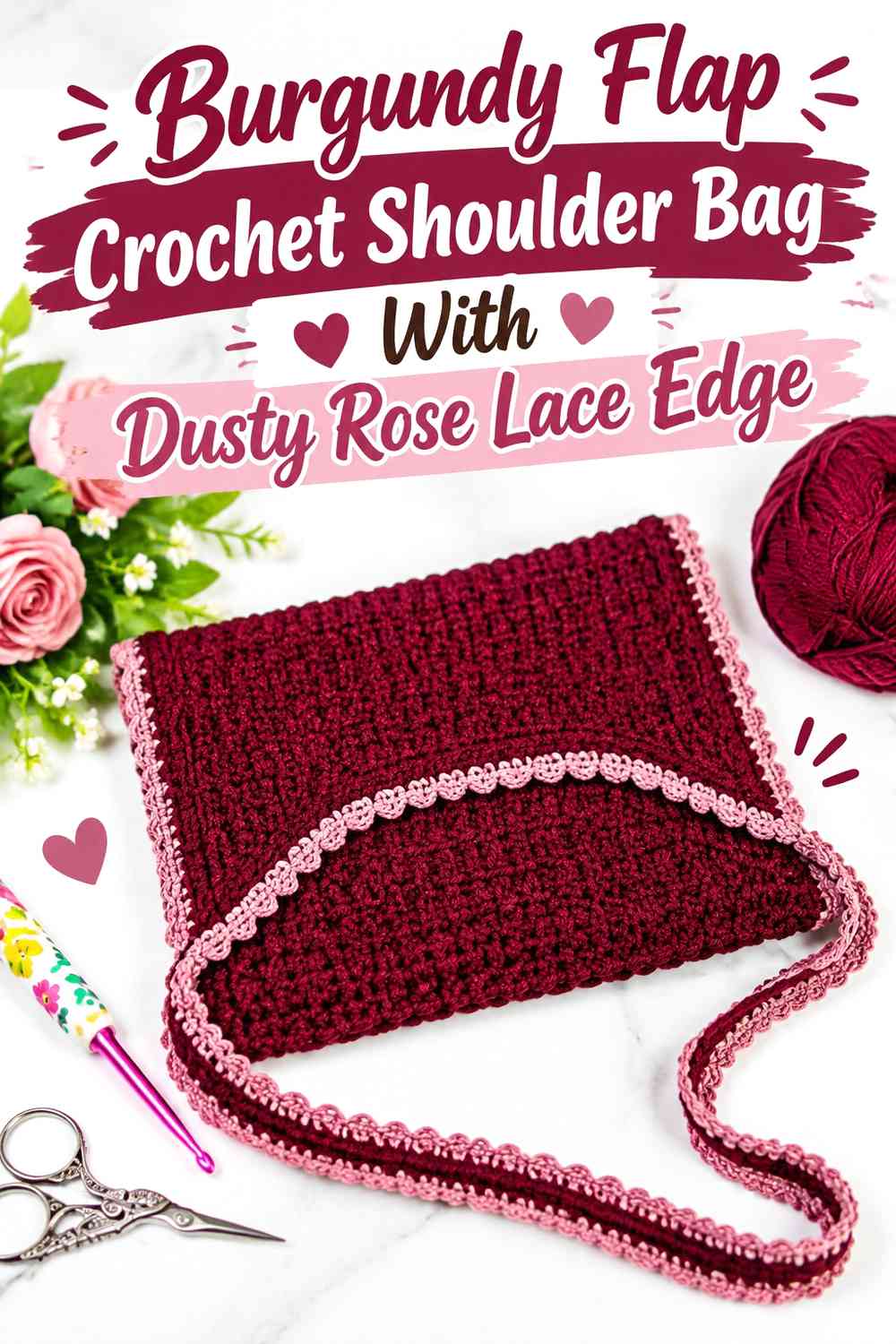
This version concentrates dusty rose around a more pronounced flap while leaving the body and strap mainly burgundy. The contrast draws attention to the closing section without requiring another decorative panel on the front.
Dusty Rose Lace Can Trace the Burgundy Flap Shape
Follow the flap perimeter with dusty rose so the lighter trim explains the shape of the closure. This is especially useful when the flap and body use the same burgundy texture and might otherwise visually merge.
Keep the lace away from areas where it would interfere with whatever closure method the chosen construction uses.
Burgundy Keeps the Dusty Rose Flap Border Connected to the Bag
Repeat burgundy through the flap center and main strap. The broad dark areas make the dusty rose look like deliberate finishing rather than the beginning of a second competing color block.
Creator Credit: Littlejohn’s Yarn
6. Dusty Rose Crochet Shoulder Bag With Burgundy Framed Lace Panel
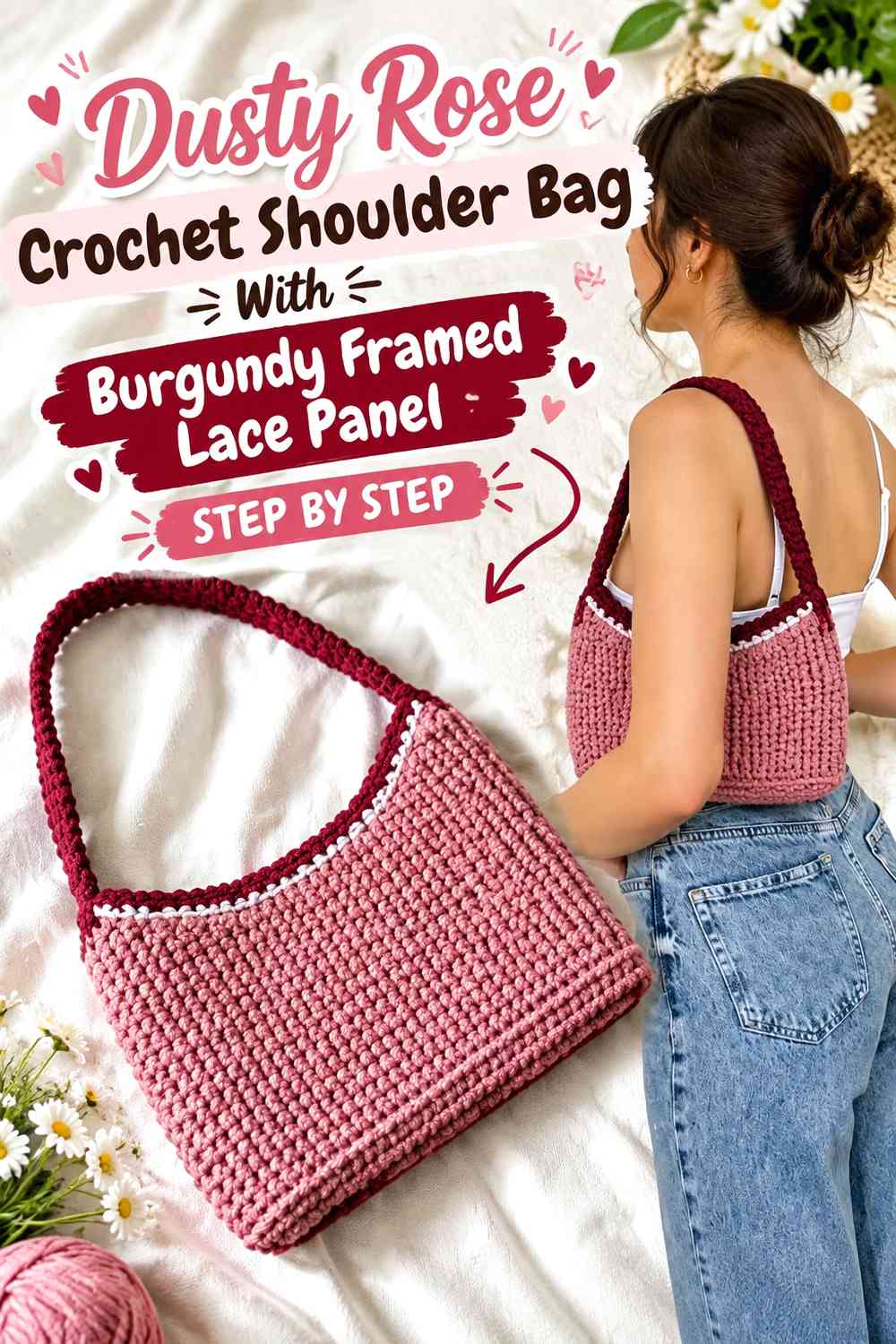
Give dusty rose the larger visual share and reserve burgundy for a frame around one decorative lace or openwork panel. This creates a softer overall bag while still using the deeper shade to define the focal surface.
Burgundy Can Contain a Dusty Rose Lace Panel
Place burgundy around the outer edge of the lace section rather than throughout every open stitch. The dark frame makes the decorative panel easier to distinguish from the rest of the dusty rose body.
Keep the frame related to the bag’s existing panel lines so it looks structural rather than randomly applied.
Dusty Rose Should Continue Around the Burgundy Frame
Allow the main dusty rose fabric to remain visible on more than one side of the framed section. That surrounding color makes it clear that burgundy is an accent and keeps the bag from appearing split into equal halves.
Creator Credit: crochet daniela
7. Burgundy Textured Crochet Shoulder Bag With Dusty Rose Lace Top
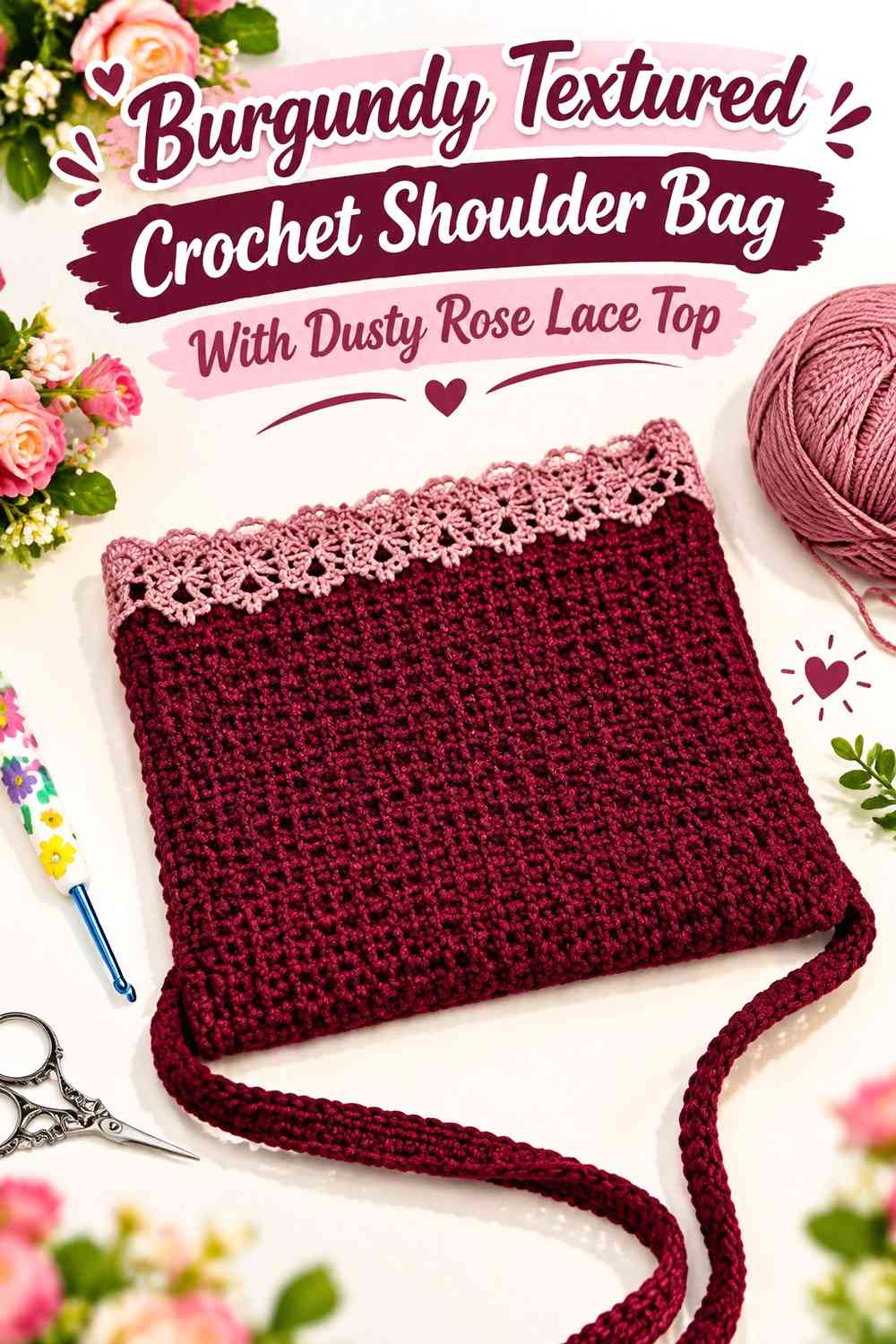
A textured or bobble-style bag already has considerable surface detail, so the lace should occupy a limited area. Keep the main texture burgundy and place dusty rose only around the upper rim or immediately below the opening.
Dusty Rose Lace Should Stay Separate From Burgundy Texture
Give the lace a clear starting point above the main textured body. Mixing small dusty rose details into every bobble or raised section can make the surface busier than necessary.
The lighter upper edge creates sufficient contrast without changing the entire texture pattern.
Burgundy Lets the Shoulder Bag Texture Remain the Main Feature
Use burgundy consistently through the broad front and back. The uninterrupted dark color lets the raised crochet create its own variation through light and shadow.
A small dusty rose repeat on the strap can connect the trim without introducing another large color section.
Creator Credit: Littlejohn’s Yarn
8. Dusty Rose Rounded Crochet Shoulder Bag With Burgundy Lace Strap Detail

A rounded shoulder bag changes the emphasis from straight panel edges to curved outlines. Use dusty rose across the rounded body and add burgundy where the strap meets the bag or along a controlled curved border.
Burgundy Can Emphasize the Dusty Rose Rounded Outline
Use burgundy along part of the outer curve if the dusty rose body needs stronger definition. A narrow dark edge can reveal the bag’s shape without turning the whole front into a color-block design.
Keep the burgundy line consistent rather than changing width unpredictably around the curve.
Dusty Rose Should Remain Visible Around Burgundy Strap Attachments
Leave a clear dusty rose area between dark attachment details and any lower trim. This prevents the darker sections from merging into one heavy outer frame.
Creator Credit: The Crochet Crowd
9. Burgundy Bucket Crochet Shoulder Bag With Dusty Rose Scalloped Lace
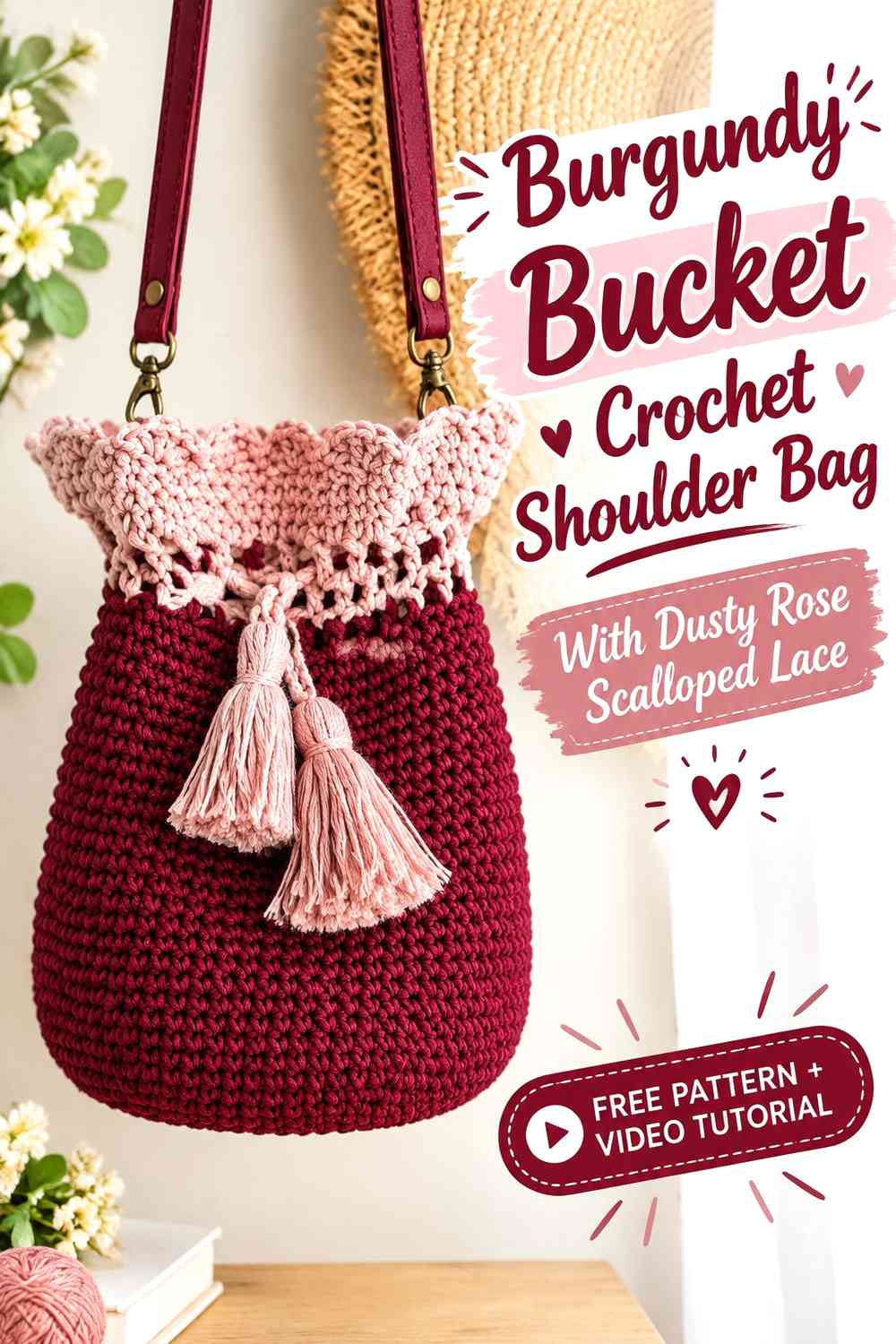
A scallop-edged bucket construction is one of the most natural matches for the lace-trimmed theme. Make the main bucket burgundy and use dusty rose for the upper scalloped section so the decorative edge becomes clearly separate from the dense body.
Dusty Rose Scallops Can Lighten a Burgundy Bucket Opening
Move into dusty rose close to the decorative upper edge. The lighter value helps each scallop stand apart from the dark body and makes the trim more visible from the side as well as the front.
Keep enough burgundy beneath the scallops for a clean color boundary.
Burgundy Should Anchor the Dusty Rose Lace Below the Opening
Use burgundy across the base and main sides. This gives the bag visual weight below the airy trim and keeps the scalloped section from dominating the entire silhouette.
If a drawstring or cord is used in the chosen construction, decide whether matching it to burgundy or dusty rose better preserves the hierarchy.
Creator Credit: forthefrills
10. Burgundy Panel Crochet Shoulder Bag With Dusty Rose Lace Seams
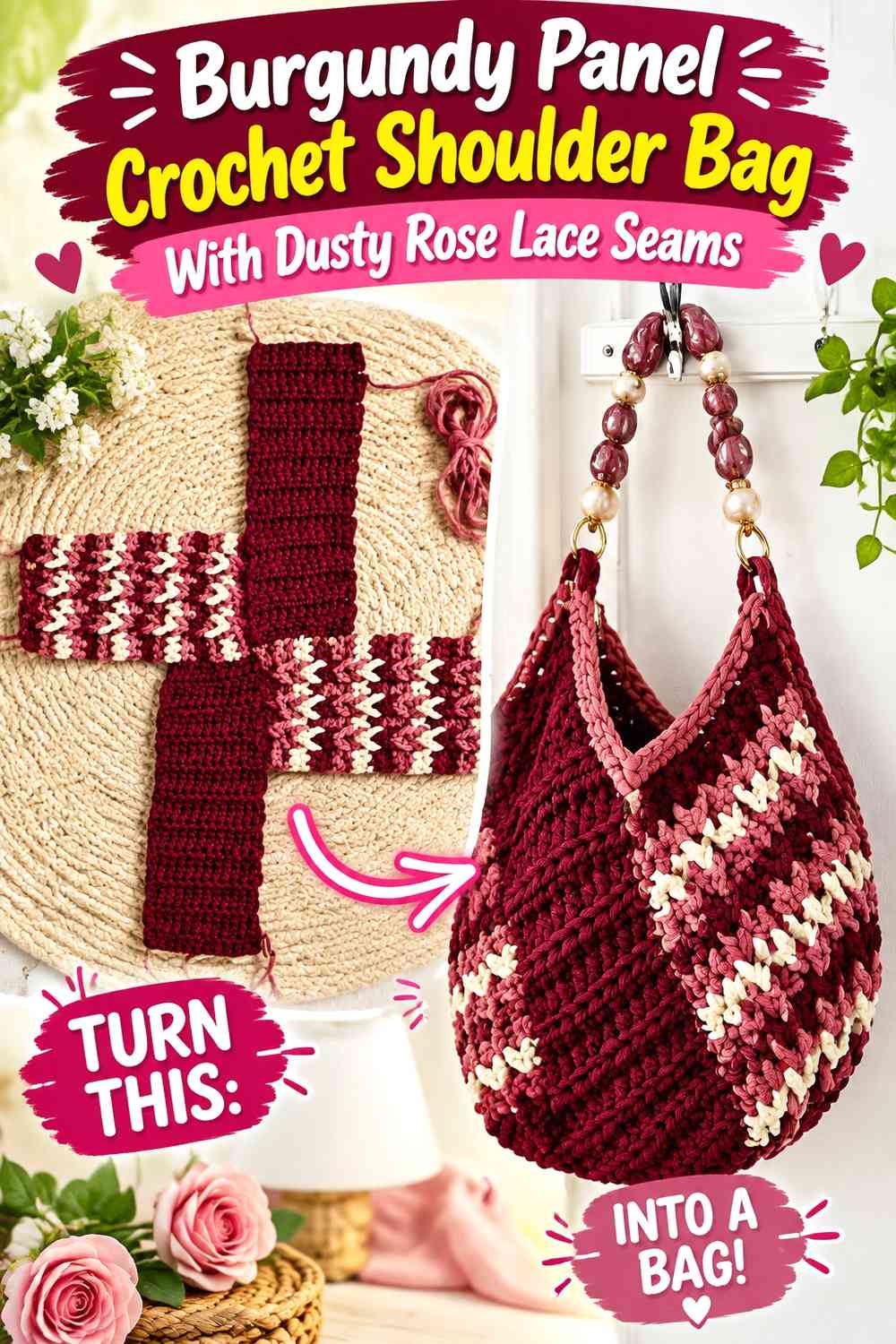
A panel-based construction lets dusty rose appear between burgundy sections rather than only at the outer edge. Use burgundy for the main panels and introduce narrow dusty rose lace-like joining lines where the panels meet.
Dusty Rose Can Turn Burgundy Panel Joins Into a Decorative Feature
Keep the lighter color narrow and consistent along selected seams. This makes the joining structure part of the color scheme without dividing the bag into equal dusty rose sections.
The effect works particularly well when the panel arrangement is already visually clear.
Burgundy Panels Need Enough Width Around Dusty Rose Joins
Do not let repeated dusty rose seam treatments occupy so much area that each burgundy panel becomes a thin strip. Broad dark panels are what give the lighter joins their definition.
Creator Credit: Brunaticality
11. Dusty Rose Round Crochet Shoulder Bag With Burgundy Lace Frame
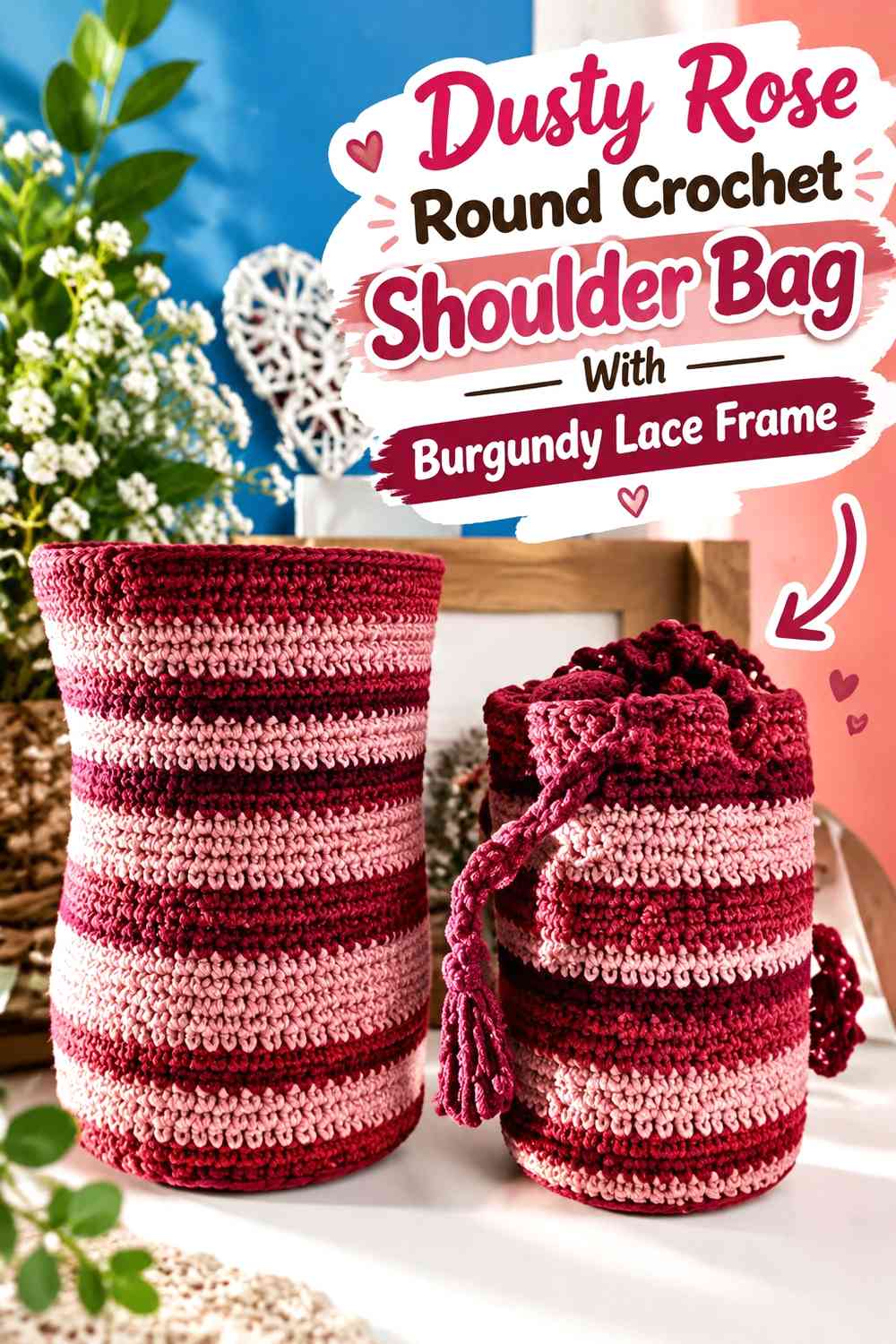
Use dusty rose across the circular or rounded face and burgundy around its outer frame. The dark border gives the lighter body a crisp perimeter and creates a natural location for a restrained lace detail.
Burgundy Lace Can Define a Dusty Rose Round Bag Face
Work burgundy around the edge rather than cutting across the center of the dusty rose panel. Following the curve keeps the contrast tied to the bag’s construction.
If the trim is strongly textured, keep the interior dusty rose surface comparatively calm.
Dusty Rose Should Stay Broad Inside the Burgundy Border
Leave most of the round face uninterrupted so the lighter shade remains dominant. A wide dusty rose center provides enough negative space for the burgundy lace frame to look deliberate.
Creator Credit: The Crochet Crowd
12. Burgundy Handbag-Style Crochet Shoulder Bag With Dusty Rose Lace Band
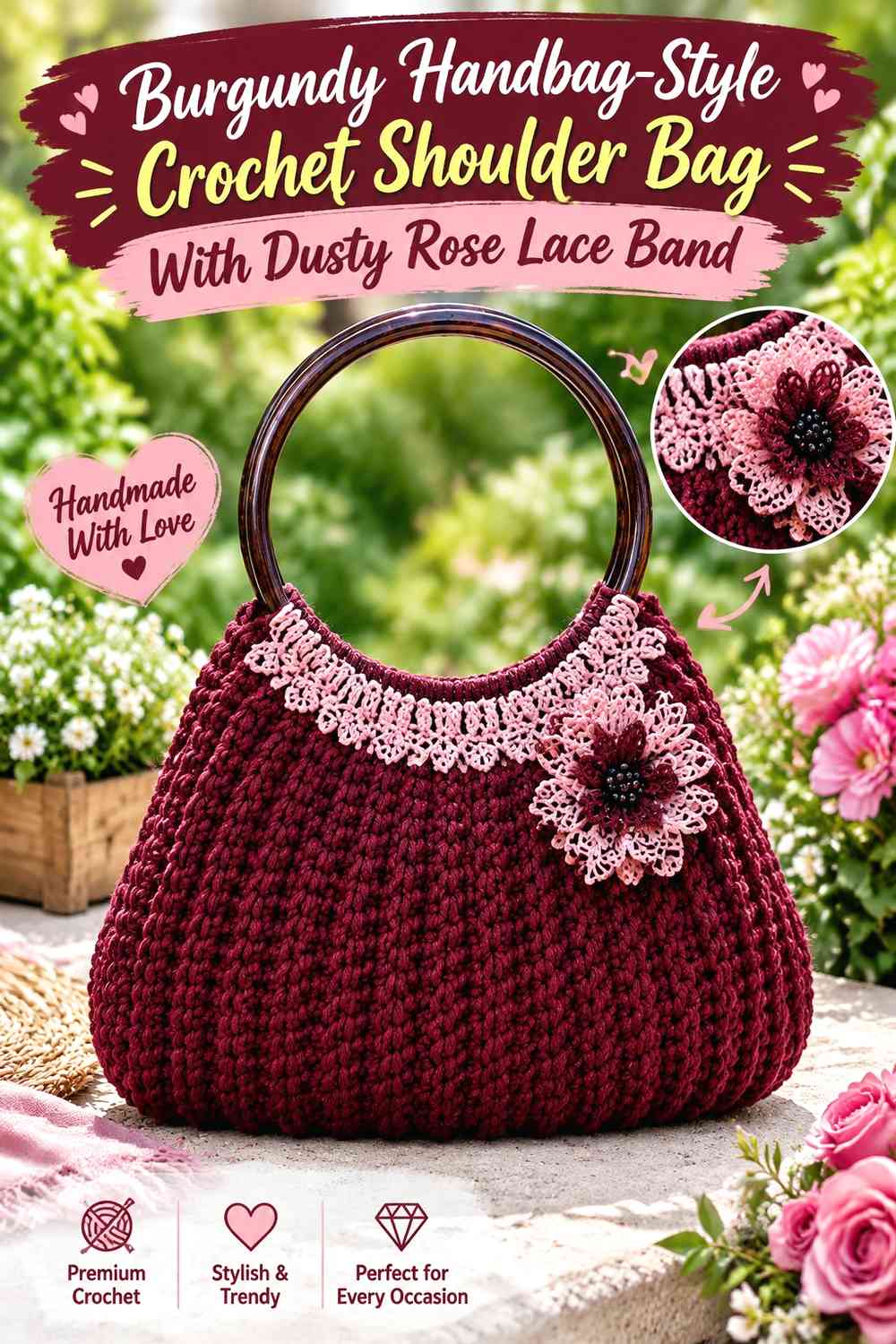
A classic handbag shape can be adapted into a shoulder bag by treating dusty rose as one horizontal decorative band rather than outlining every edge. Burgundy remains dominant across the main body and handles or strap.
Dusty Rose Can Create One Clear Lace Band Across Burgundy
Place the lighter lace treatment in one defined horizontal area. A single band gives the bag a romantic winter detail without turning the whole surface into repeated stripes.
Make sure burgundy remains visible above and below the band so it reads as an insertion rather than a complete color change.
Burgundy Should Repeat Through the Dusty Rose Shoulder Strap Area
Keep most of the strap burgundy, especially when the main body is dark. If dusty rose is repeated on the strap, use it as a narrow accent connected to the decorative body band.
Creator Credit: naztazia
13. Dusty Rose Textured Crochet Shoulder Bag With Burgundy Lace Border

Reverse the dark-body approach by using dusty rose across a highly textured bag and burgundy as the stronger border. This makes the raised surface softer while retaining dark definition at the outer edges.
Burgundy Gives Dusty Rose Texture a Defined Outer Boundary
Place burgundy around the opening or exterior perimeter so the textured pink surface does not visually fade into surrounding clothing.
The border does not need to be wide; burgundy already has enough visual weight to create separation in a relatively small amount.
Dusty Rose Should Carry Most of the Textured Shoulder Bag Surface
Keep the raised stitch pattern predominantly dusty rose. Introducing burgundy inside every textured repeat can make the visual hierarchy harder to understand.
Let texture provide the interior variation and color provide the exterior frame.
Creator Credit: Amena Crochet Bags
14. Burgundy Structured Crochet Shoulder Bag With Dusty Rose Lace Insert
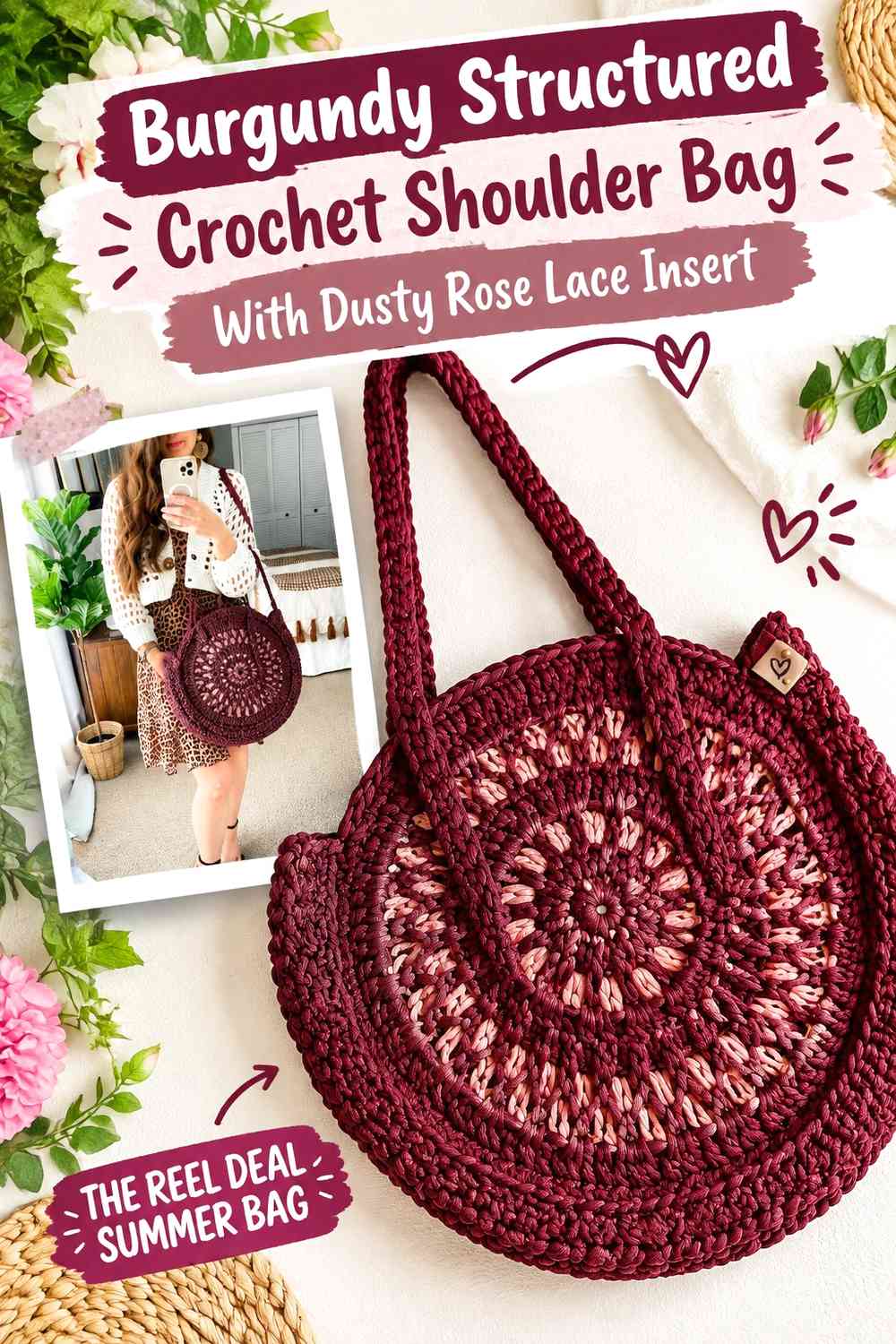
For the final direction, use a structured burgundy body with one dusty rose lace insert positioned on the front or upper portion of the bag. The insert becomes the main decorative feature while the remaining surfaces stay restrained.
Dusty Rose Lace Needs a Clear Burgundy Border Around the Insert
Surround the lighter panel with enough burgundy for its shape to remain obvious. If the lace reaches every side edge, it may start to look like a separate half of the bag rather than an inset feature.
A centered or deliberately offset panel can both work as long as its placement relates to the bag shape.
Burgundy Should Continue Through the Dusty Rose Bag Base and Strap
Keep the base and most of the strap burgundy so the structural parts remain visually connected. The dusty rose panel can then function as the softer focal detail rather than the primary construction color.
Creator Credit: MJ’s Off The Hook Designs
Comparing the Burgundy and Dusty Rose Lace-Trimmed Shoulder Bag Directions
For the clearest lace emphasis, Ideas 1, 5, and 9 concentrate dusty rose around a flap or scalloped opening where the decorative edge can be immediately recognized. Idea 9 is especially useful if you want the trim itself to provide the strongest visual texture.
Ideas 3 and 10 integrate the lighter color into the construction through granny motifs or panel joins. These produce more repeated color changes than a single lace border but can still remain organized when burgundy provides the dominant framework.
For a softer overall bag, Ideas 2, 6, 8, 11, and 13 make dusty rose the main surface and use burgundy to frame openings, panels, curves, or textured fabric.
Ideas 4, 7, 12, and 14 keep burgundy dominant and use dusty rose in one concentrated decorative area. These are useful when you want the winter bag to remain dark while still carrying a clearly visible rose-toned lace detail.
Conclusion
Burgundy and dusty rose work particularly well on a lace-trimmed crochet shoulder bag when the darker shade defines structure and the softer shade highlights decoration—or when those roles are deliberately reversed.
For a dark winter bag with a romantic edge, start with a burgundy body and dusty rose flap, scallop, or lace band. If you prefer a softer bag, let dusty rose cover the panels and use burgundy around the opening, outer frame, or strap attachments. Granny and panel constructions offer another option when you want the color relationship repeated throughout the bag instead of concentrated at one edge.
Before making a full lace border, crochet enough of both colors together to check the actual value contrast and the scale of the trim. A lace detail that looks clear in a small sample can become too narrow on a larger bag, while a very wide trim can overpower the body. Use the original creator tutorials for their demonstrated bag constructions and treat these burgundy-and-dusty-rose layouts as independent color and lace-placement adaptations.
Frequently Asked Questions
Should Burgundy or Dusty Rose Dominate a Lace-Trimmed Crochet Shoulder Bag?
Burgundy works well as the dominant shade when you want a darker winter bag with dusty rose lace as the focal detail. Dusty rose can lead when you want a softer bag with burgundy outlining the opening, flap, panels, or edges.
Where Should Dusty Rose Lace Go on a Burgundy Crochet Shoulder Bag?
Useful locations include the flap edge, top opening, scalloped border, panel seam, granny-square border, or one decorative band. Choose one or two related areas rather than adding lace to every edge.
How Can I Make Dusty Rose Lace Stand Out Against Burgundy?
Check the yarns for light/dark contrast before making the complete trim. If the dusty rose is nearly as dark as the burgundy, use a slightly lighter rose or give the lace a broader area so its openwork and outline remain visible.
Can Burgundy Lace Be Used on a Dusty Rose Shoulder Bag?
Yes. Burgundy creates a stronger, darker frame and can work particularly well around a dusty rose flap, opening, round panel, or textured body. Keep the darker trim proportional so it defines rather than overwhelms the softer color.
Should the Shoulder Strap Match Burgundy or Dusty Rose?
Match it to the color role you want to reinforce. A burgundy strap connects naturally to a dark bag body, while dusty rose can repeat a lighter lace detail. A two-color strap can also work, but it does not need to reproduce every color change from the bag body.
How Can I Keep a Burgundy and Dusty Rose Shoulder Bag From Looking Too Busy?
Give each color a specific job. For example, keep the body burgundy and all lace dusty rose, or make the body dusty rose and reserve burgundy for the frame and strap. Avoid combining dense stripes, granny color changes, several lace borders, and contrasting seams unless a highly decorative result is intentional.
What Should I Preserve if I Substitute Burgundy or Dusty Rose?
Preserve their relationship rather than chasing an exact shade name. The burgundy substitute should remain deep enough to provide the dark structural role, while the dusty rose substitute should remain sufficiently lighter or softer to separate lace and decorative details from the main bag body.