Burgundy and olive create a Thanksgiving vase wrap with more depth than a typical orange-and-brown harvest palette. Burgundy can provide the rich focal color around the vase body, while olive naturally suits wheat-inspired stems, leaves, edging, and narrow bands. Together, the colors can suggest an autumn field without making the centerpiece compete with the flowers, branches, or dried arrangement placed inside the vase.
The wheat theme can come from more than one type of crochet detail. Raised grain-like stitch texture can cover part of the wrap, individual leaf or wheat-inspired motifs can be attached to a simpler background, or repeated vertical sections can suggest bundled stalks. The strongest approach depends on how much of the vase will remain visible beneath the arrangement.
The tutorials credited below include jar and bottle covers, vase-friendly cylindrical cozies, wheat-texture tutorials, and leaf appliqués. The burgundy-and-olive Thanksgiving palettes and exact wheat-vase-wrap combinations are independent adaptations. Use the creators’ tutorials for their original constructions, then size and arrange the wrap around the particular vase you plan to decorate.
Quick List
- Burgundy Wrap With Olive Wheat Stalks Crochet Thanksgiving Vase
- Olive Wrap With Burgundy Wheat Heads Crochet Thanksgiving Vase
- Burgundy and Olive Wide-Band Crochet Harvest Wheat Vase Wrap
- Burgundy Textured Wheat With Olive Border Crochet Vase Wrap
- Olive Textured Wheat With Burgundy Border Crochet Vase Wrap
- Burgundy Wrap With Olive Leaf and Wheat Crochet Vase
- Olive Wrap With Burgundy Tied Center Crochet Harvest Vase
- Burgundy and Olive Vertical-Stalk Crochet Wheat Vase Wrap
- Burgundy Base With Olive Wheat-Crown Crochet Vase Wrap
- Olive Base With Burgundy Wheat-Crown Crochet Vase Wrap
- Burgundy, Olive, and Oatmeal Crochet Harvest Wheat Vase Wrap
- Burgundy, Olive, and Chestnut Crochet Thanksgiving Wheat Vase Wrap
- Burgundy and Olive Granny-Panel Crochet Harvest Vase Wrap
- Burgundy and Olive Laced-Tie Crochet Wheat Vase Wrap
- Layered Burgundy and Olive Thanksgiving Crochet Wheat Vase Wrap
Decide Whether Burgundy or Olive Should Lead the Vase Wrap
The largest uninterrupted area usually determines how the centerpiece reads from across the table. Burgundy creates a deeper, more formal Thanksgiving base and makes olive wheat or leaves noticeable without requiring a bright green. An olive-led wrap feels more botanical and allows burgundy to appear as a concentrated fall accent.
Consider the arrangement inside the vase before committing to the dominant shade. If the centerpiece already contains substantial green foliage, a mostly olive wrap can blend into it. A burgundy body may give the foliage more separation. Conversely, an arrangement dominated by dark red flowers or branches may benefit from a quieter olive background.
Use Burgundy and Olive to Make Wheat Details Read Clearly
Wheat-inspired details are usually narrower than the vase body, so they need sufficient contrast. A small olive stalk can disappear against burgundy if the two yarns have similar light-dark values, even though their hues are different.
When contrast is limited, enlarge the wheat detail or separate the colors into larger areas. A full olive band beneath burgundy wheat heads can be clearer than dozens of tiny olive stitches distributed across a similarly dark burgundy background.
Fit Burgundy and Olive Around the Vase, Not Just the Color Plan
A wrap should follow the actual vase shape. Straight-sided cylinders are relatively simple to cover, while vases that flare at the top, taper toward the base, or have pronounced shoulders may need a different construction.
For a vase holding fresh flowers, treat the crochet as removable exterior decor. Keep water inside the vase, wipe away spills, and avoid leaving damp crochet against the vessel. A removable wrap also makes it easier to refill and clean the vase without disturbing decorative wheat motifs.
1. Burgundy Wrap With Olive Wheat Stalks Crochet Thanksgiving Vase

Let burgundy cover most of the vase and place olive wheat-inspired stalks vertically across the front. The deep red background creates a strong Thanksgiving focal point, while the muted green gives the grain motif a natural botanical connection. Keep the wheat grouping concentrated rather than spreading identical stalks around every inch of the wrap.
Let Burgundy Form the Main Olive Wheat Vase Background
A broad burgundy field gives the centerpiece depth and keeps the vase visually distinct from green foliage above it. Leave enough uninterrupted burgundy around the wheat motif for the individual stalk shapes to remain recognizable.
Place Olive Wheat Stalks Clearly Against Burgundy
Group the olive details into a small sheaf or a few repeated vertical elements. If the stalks are too thin to show clearly against your burgundy yarn, increase their visual width rather than adding many more small motifs.
Repeat Burgundy Around the Olive Wheat Vase Edge
Keep the rim or lower border burgundy if you want the wheat to remain the main olive feature. This gives the wrap a defined outer frame without adding another competing green section.
Creator Credit: Crochet With Julie
2. Olive Wrap With Burgundy Wheat Heads Crochet Thanksgiving Vase

Reverse the hierarchy by using olive across the vase body and burgundy for the grain heads or upper parts of the wheat motif. The result is more botanical overall, with the darker red details giving the harvest pattern a richer Thanksgiving accent.
Keep Olive Broad Beneath the Burgundy Wheat Details
Use olive consistently around most of the cylindrical wrap so the burgundy grain heads remain distinct focal points. Several additional red bands can reduce the impact of the smaller wheat shapes.
Make Burgundy Wheat Heads Large Enough on Olive
A compact wheat motif needs enough surface area to stay visible from normal table distance. If individual burgundy grains become difficult to distinguish, simplify them into stronger clustered shapes.
Creator Credit: Johana Tejidos
3. Burgundy and Olive Wide-Band Crochet Harvest Wheat Vase Wrap
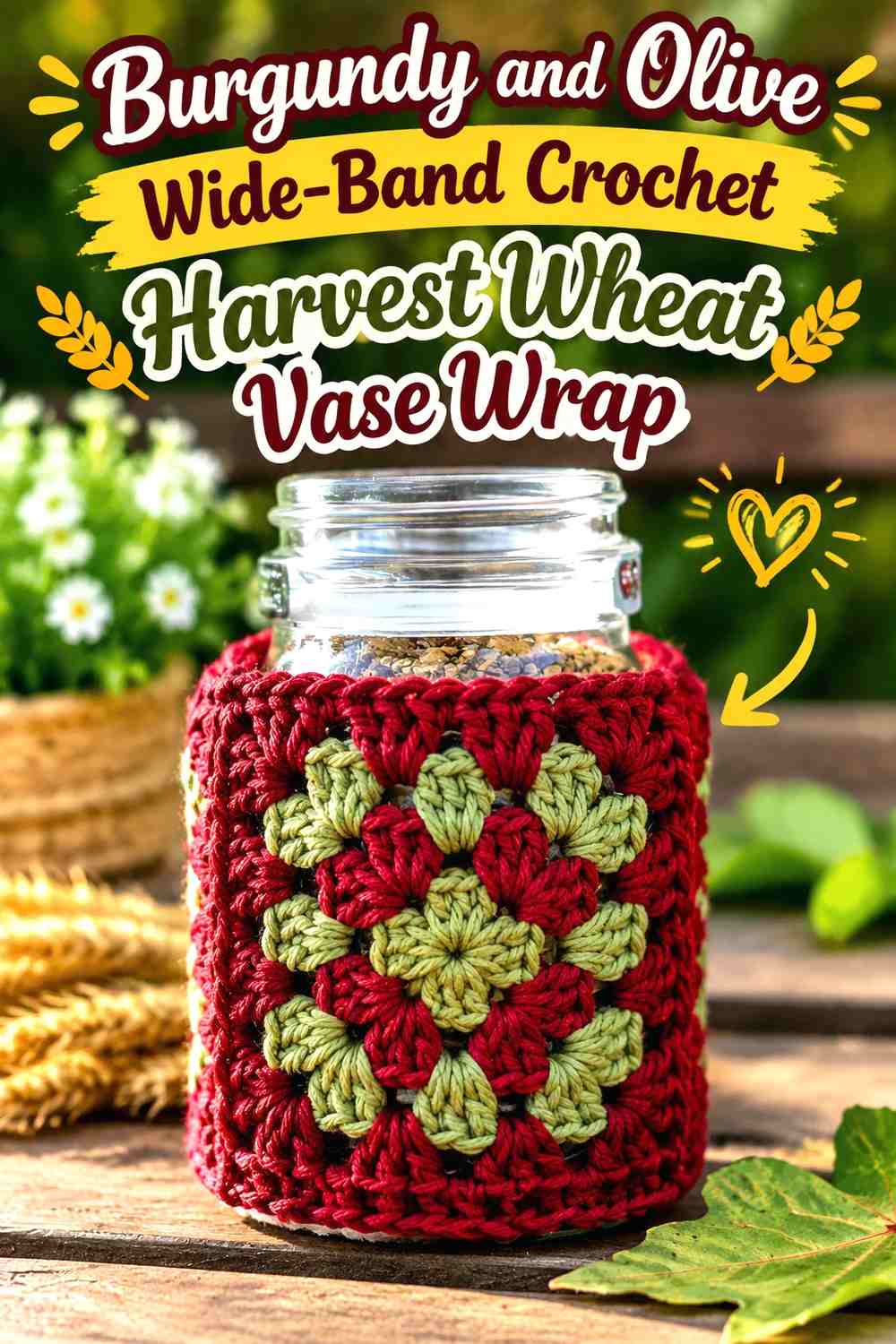
Instead of using many narrow stripes, divide the vase wrap into a small number of broad burgundy and olive sections. A burgundy lower band, olive middle section, and burgundy top edge can create an organized harvest palette while leaving room for a wheat motif on the central green area.
Use Burgundy and Olive in Broad Vase Bands
Wide blocks maintain their identity even when the vase sits behind plates, candles, or other Thanksgiving table elements. Numerous thin stripes can create more visual activity than a wheat centerpiece needs.
Keep Olive Wheat Details Separate From Burgundy Bands
If the wheat motif sits inside an olive section, use burgundy for the grain heads or selected outline details rather than extending another large red stripe through the same area.
Creator Credit: Ophelia Talks Crochet
4. Burgundy Textured Wheat With Olive Border Crochet Vase Wrap
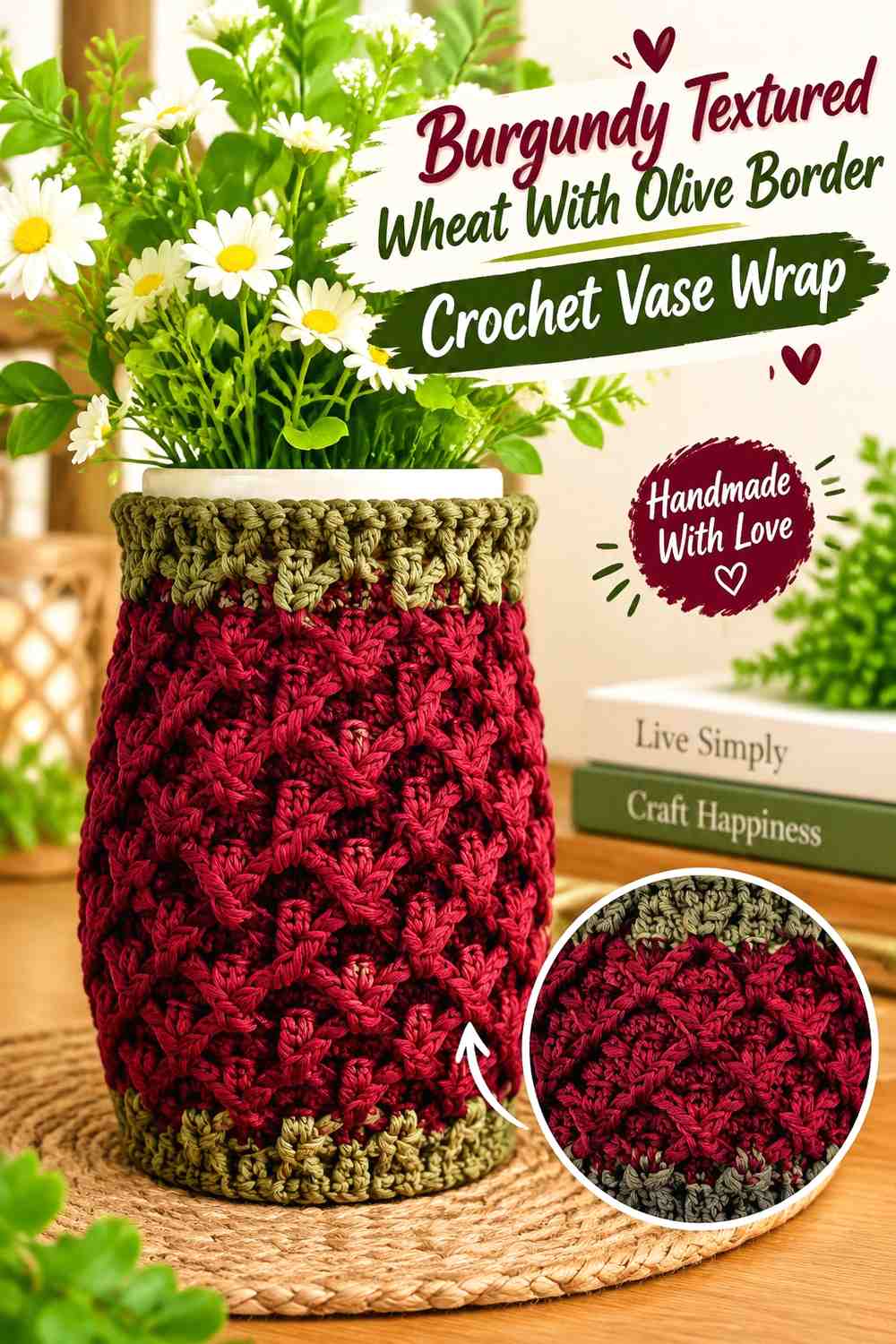
Use a wheat-like raised stitch texture across a burgundy wrap and keep olive limited to the top and bottom borders. Here, the harvest theme comes mainly from the surface texture rather than a separate appliqué, so the color plan can stay restrained.
Let Burgundy Wheat Texture Cover the Main Vase Surface
A single burgundy field allows shadows around the raised stitches to define the grain-like pattern. Alternating colors through every textured repeat could make the surface harder to interpret.
Use Olive to Frame the Burgundy Wheat Texture
A narrow olive border gives the textured burgundy section a visual start and finish. Keep the border comparatively simple so it does not compete with the raised wheat effect.
Check Burgundy Wheat Texture Before Adding More Olive
Place the wrap around the vase and view it from table distance. If the burgundy texture already reads strongly, additional green motifs may be unnecessary.
Creator Credit: Rich Textures Crochet
5. Olive Textured Wheat With Burgundy Border Crochet Vase Wrap
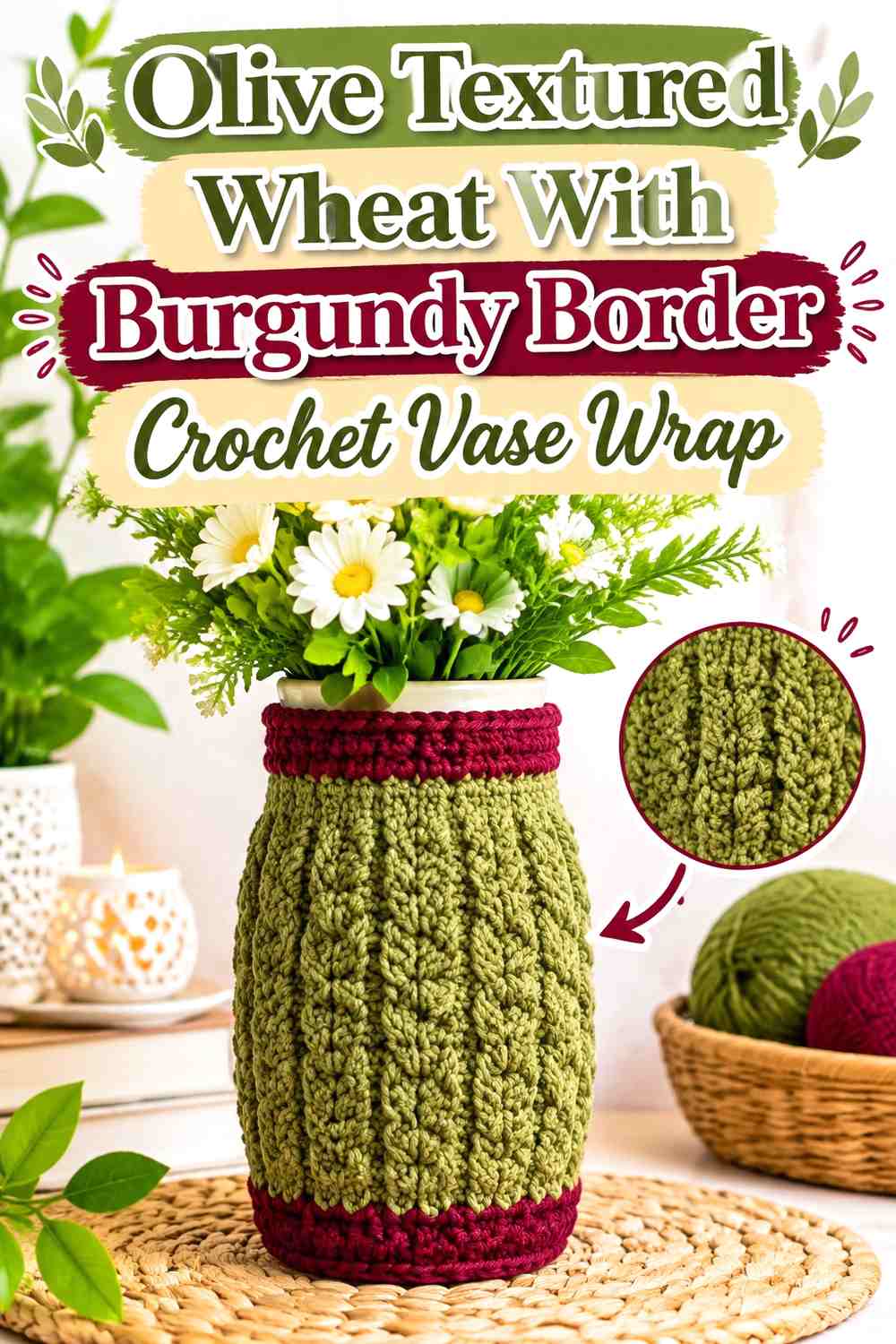
Reverse the textured treatment with olive across the main surface and burgundy around the perimeter. The darker border gives a muted-green wheat texture more definition and can visually separate the vase wrap from green leaves in the arrangement.
Keep Olive Continuous Through the Burgundy-Framed Wheat Texture
Allow the raised olive surface to create its own light and shadow. A continuous color field makes the stitch texture more important than color switching.
Make Burgundy a Clear Boundary Around Olive
A defined dark border can help contain the olive texture, especially near the vase rim. Repeat burgundy at the bottom if you want the wrap to look framed rather than top-heavy.
Creator Credit: Kelli’s Purpose
6. Burgundy Wrap With Olive Leaf and Wheat Crochet Vase

Combine wheat-inspired stalks with a small number of olive leaf appliqués on a burgundy background. This introduces botanical variety without adding a third major color. Position the leaves around the lower stalks so the wheat remains the tallest decorative element.
Keep Olive Leaves Smaller Than the Burgundy Vase Field
A few leaves can reinforce the harvest theme, but large clusters may cover too much of the burgundy base. Preserve clear red space around the appliqués so the wrap remains burgundy-led.
Extend Olive Wheat Above the Burgundy Leaf Cluster
Allow the vertical wheat forms to rise above the leaves. This keeps the decorative composition from becoming a horizontal band and gives the vase wrap more height visually.
Leave Burgundy Visible Between Olive Botanical Motifs
Spacing matters when several appliqués share one surface. Burgundy gaps help individual leaves and stalks remain distinguishable rather than merging into one green patch.
Creator Credit: Jess Crafting
7. Olive Wrap With Burgundy Tied Center Crochet Harvest Vase
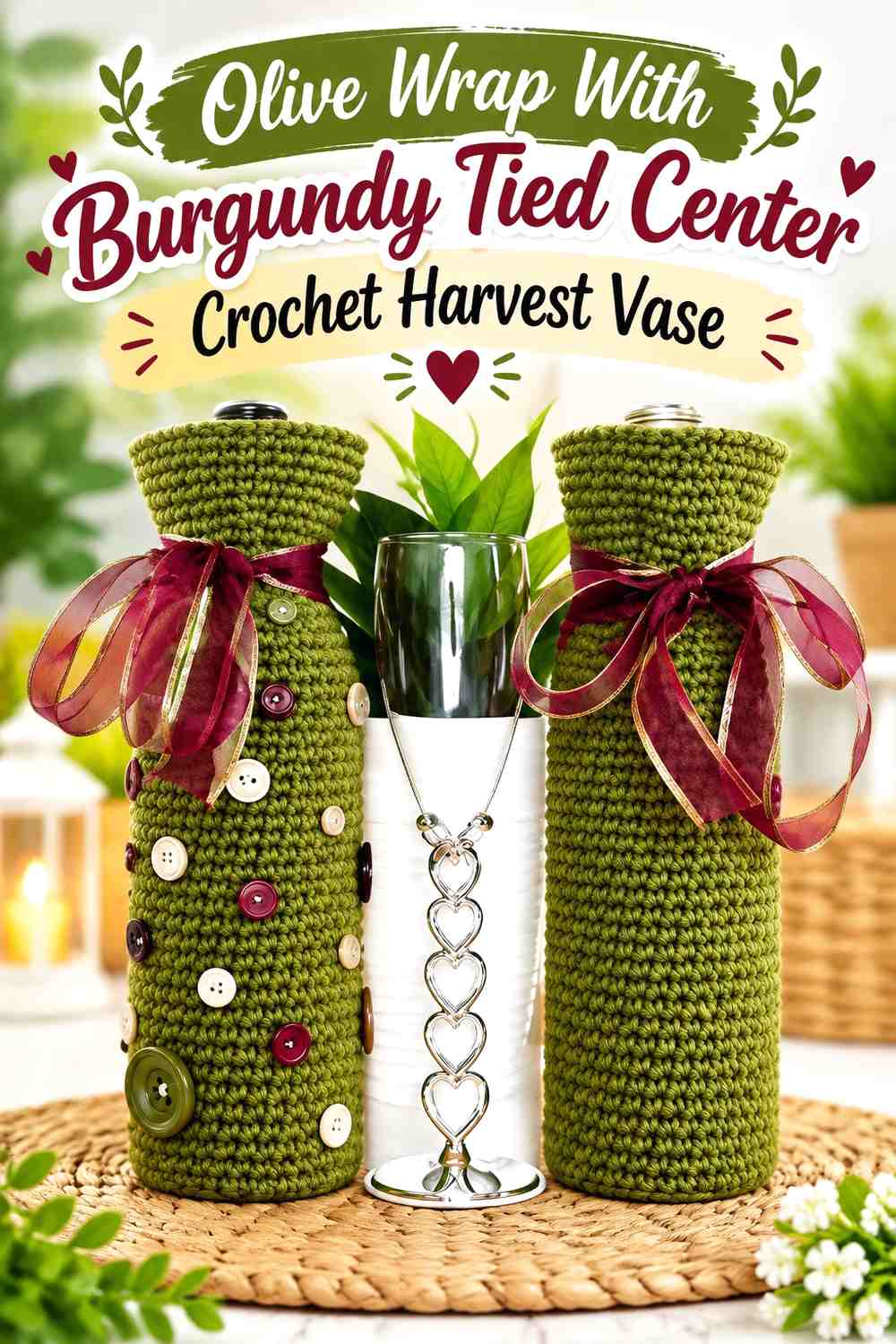
Use olive over the main vase body and gather or visually cinch the middle with a burgundy tie, band, or bow-like detail. A small wheat motif can sit beneath the center wrap so the darker red functions as both structure and decoration.
Let Olive Stay Smooth Around the Burgundy Center Tie
Keep the main wrap comparatively simple where the burgundy band crosses it. Heavy texture underneath a prominent tie can make the center unnecessarily bulky.
Use Burgundy to Focus the Olive Harvest Vase Center
A strong horizontal accent naturally draws attention to the middle. Keep it narrow enough that olive remains the dominant color above and below.
Creator Credit: CrochetHooksYou
8. Burgundy and Olive Vertical-Stalk Crochet Wheat Vase Wrap

Use alternating vertical burgundy and olive sections to suggest a group of standing stalks. Unlike horizontal striping, the vertical direction can make a short vase look taller and connects naturally to the shape of wheat stems.
Keep Olive Vertical Lines Narrow Against Burgundy
If burgundy is the intended background, treat olive as repeated stalk-like lines rather than equal-width color blocks. This preserves a clear dominant shade.
Repeat Burgundy Between Every Olive Wheat Section
Consistent red spacing keeps the vertical pattern organized. Irregular green placement can make the wrap look striped at random rather than deliberately inspired by upright grain.
Keep Burgundy and Olive Vertical Texture Clear at the Vase Rim
Do not crowd the upper edge with additional color changes if the vertical pattern already reaches it. A simple finishing border can give the stalk effect a clean endpoint.
Creator Credit: Hectanooga1
9. Burgundy Base With Olive Wheat-Crown Crochet Vase Wrap

Concentrate olive at the upper portion of a burgundy wrap so it resembles a crown of wheat or grain around the vase opening. This placement keeps the harvest detail close to the flowers or dried stems while leaving the lower half strong and simple.
Keep Burgundy Solid Beneath the Olive Wheat Crown
A broad dark base gives the upper decoration something to contrast against. Avoid repeating large olive bands lower down if you want the crown to remain the main feature.
Let Olive Wheat Details Rise Above the Burgundy Edge
Use the green where the wrap changes from solid body to decorative upper treatment. Make sure the motif does not extend far enough to interfere with inserting or removing the vase arrangement.
Creator Credit: Edirnir Croche
10. Olive Base With Burgundy Wheat-Crown Crochet Vase Wrap

Use olive on the body and place burgundy wheat-inspired decoration around the upper edge. The darker crown creates a strong visual line beneath greenery, branches, or pale Thanksgiving flowers.
Leave Olive Open Below the Burgundy Wheat Crown
A quiet green body prevents the upper decoration from competing with stripes or other motifs. It also gives the vase a botanical foundation without repeating the wheat pattern everywhere.
Keep Burgundy Wheat Clear Against Olive Near the Rim
Check the color boundary after placing the wrap on the vase. The upper grain forms should remain visible rather than disappearing beneath the arrangement or folding inward around the opening.
Creator Credit: Made by Yuma
11. Burgundy, Olive, and Oatmeal Crochet Harvest Wheat Vase Wrap

Oatmeal provides a light neutral that can make burgundy and olive wheat details easier to distinguish. Use oatmeal only as a small separator, central panel, or narrow band so the original two-color Thanksgiving palette remains dominant.
Keep Oatmeal Smaller Than Burgundy on the Olive Wheat Vase
A large pale section can quickly change the overall character of the centerpiece. Reserve oatmeal for a background patch behind a wheat motif or a limited separating line.
Use Olive Wheat Against Oatmeal Beside Burgundy
A small oatmeal panel can give olive stalks extra visibility when burgundy and olive are similar in value. Keep burgundy around the panel so the light neutral looks intentionally inset.
Repeat Burgundy Outside the Olive and Oatmeal Detail
Carry burgundy through the rest of the wrap or border so the darker Thanksgiving shade remains visually important.
Creator Credit: Dani West
12. Burgundy, Olive, and Chestnut Crochet Thanksgiving Wheat Vase Wrap
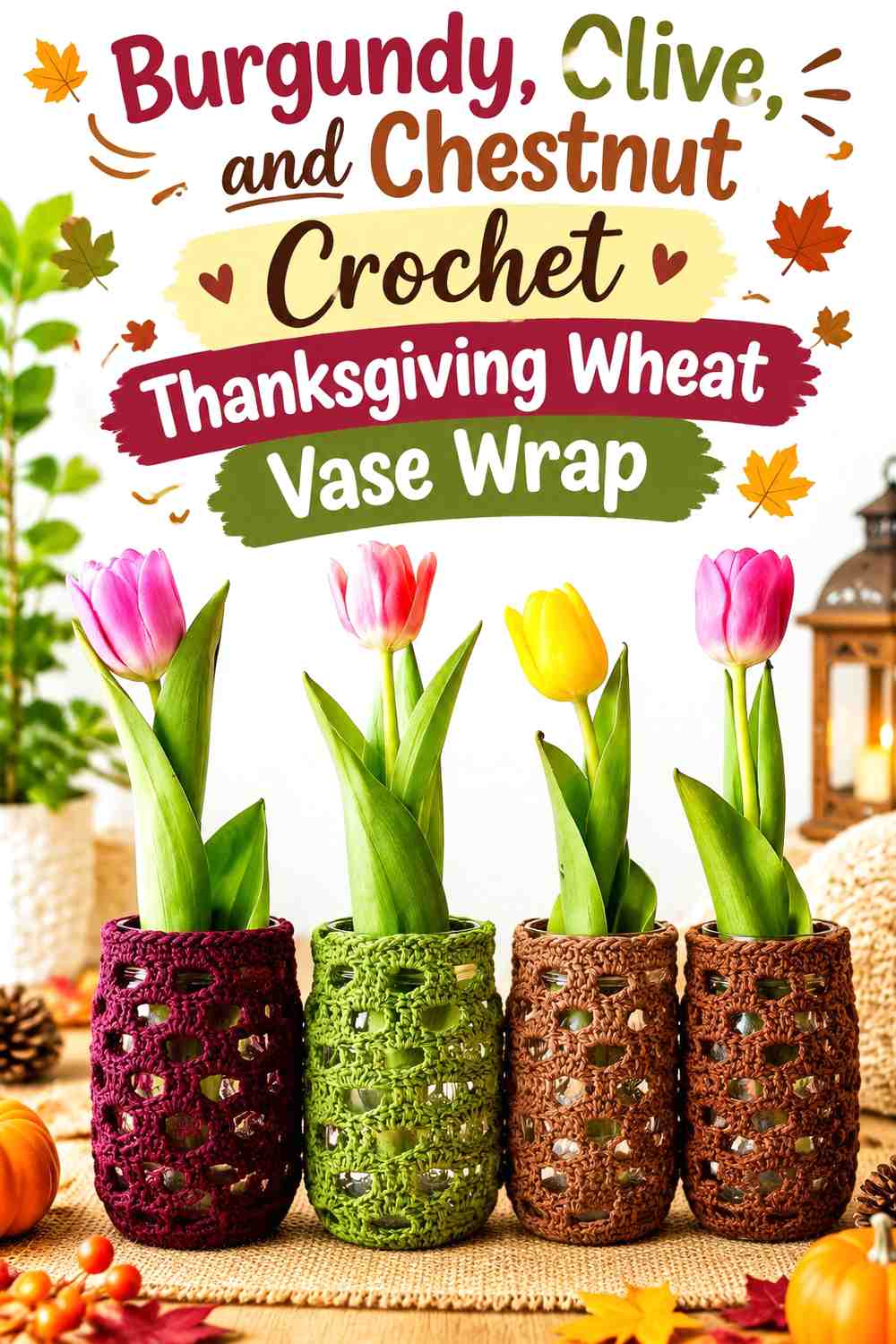
Chestnut can act as a darker harvest neutral for a stem tie, lower border, or small central knot. Let burgundy and olive control the vase surface while the brown shade adds only a limited grounding detail.
Keep Chestnut Smaller Than Burgundy on the Olive Vase Wrap
Dark brown can blend with burgundy if both shades are deep. Use chestnut where its role is clearly different, such as a stalk binding or base accent.
Let Olive Separate Chestnut From Burgundy Wheat Details
An olive interval can keep the two dark warm colors from becoming one indistinct area. This works particularly well when chestnut appears at the base of an olive wheat bundle on a burgundy field.
Creator Credit: HandmadebyRaine
13. Burgundy and Olive Granny-Panel Crochet Harvest Vase Wrap

Use small granny-style panels to create the wrap, assigning burgundy to the stronger outer sections and olive to centers or selected rounds. The modular look can suggest a patchwork Thanksgiving textile while still fitting a cylindrical vase.
Keep Burgundy and Olive Granny Panels Consistent Around the Vase
Use one repeated color order instead of changing every panel independently. Consistency allows the joined construction to look intentional rather than like unrelated scraps.
Give Olive a Wheat Accent Over the Burgundy Granny Surface
If you add a wheat motif, place it across one quieter panel or a limited front area. The modular background already supplies considerable detail, so the grain decoration should stay controlled.
Use Burgundy to Frame the Olive Panel Arrangement
A burgundy upper or lower border can unify multiple squares and prevent the wrap from appearing unfinished at the vase edges.
Creator Credit: Bo’s Handmade Shop
14. Burgundy and Olive Laced-Tie Crochet Wheat Vase Wrap
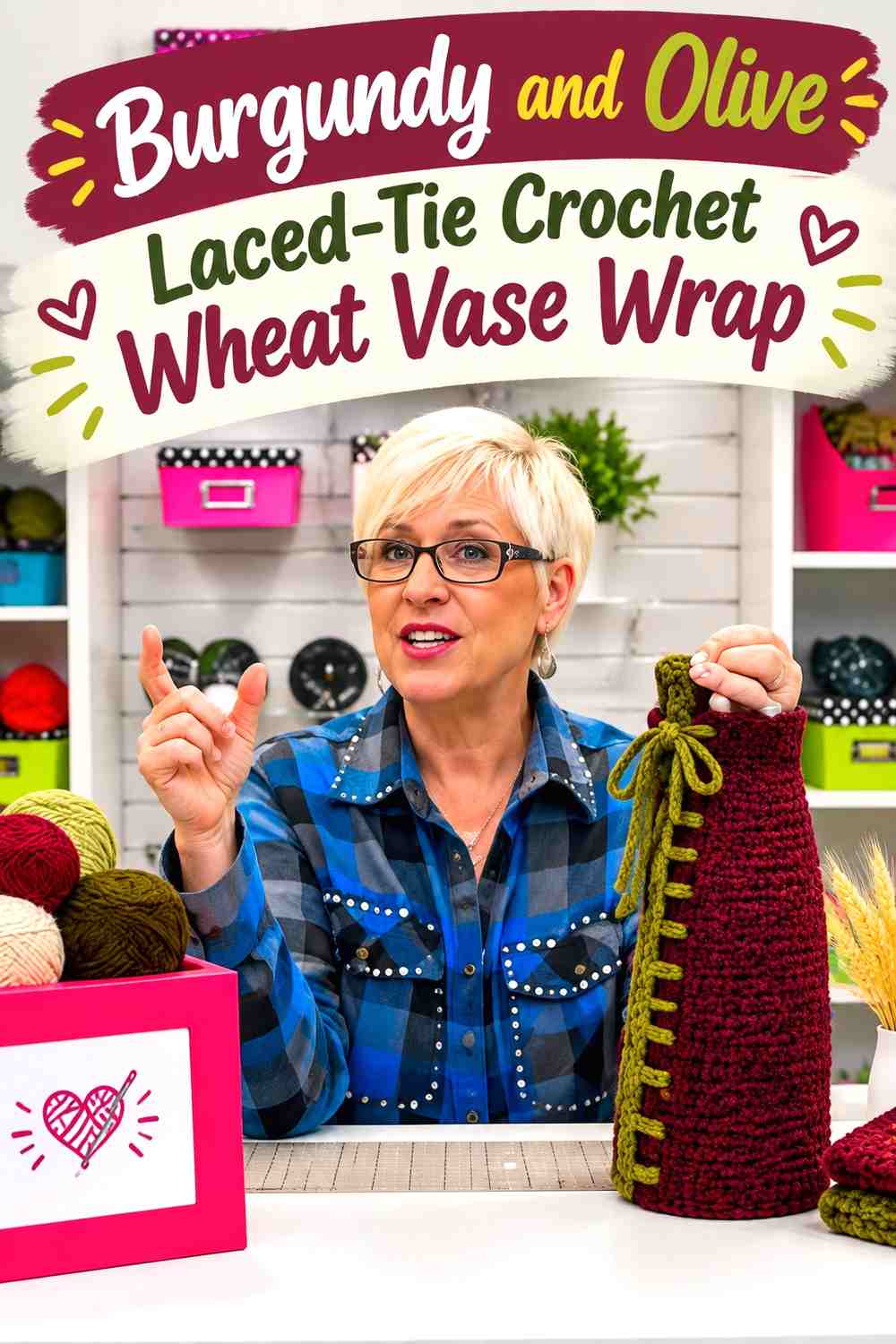
Work the vase cover as a wrap-style panel rather than a closed sleeve and use a contrasting tie to secure or decorate the opening. Burgundy can cover the main panel while olive handles the lacing and wheat embellishment, or those roles can be reversed for a greener centerpiece.
Use Olive Ties Clearly Against a Burgundy Vase Panel
A green tie creates an obvious functional color detail against the deeper red field. Keep the tie placement tidy and away from delicate wheat appliqués so the two features do not compete.
Repeat Burgundy Around the Olive Laced Opening
Maintain burgundy along the panel edges so the wrap keeps a strong frame when tied. This also helps distinguish the olive lacing from the underlying vase.
Keep Olive Wheat Details Away From the Burgundy Tie Area
Place the main wheat motif toward the front while the opening or fastening sits toward the back or side. Separating decoration from closure makes both easier to read and use.
Creator Credit: CrochetSoiree
15. Layered Burgundy and Olive Thanksgiving Crochet Wheat Vase Wrap

The final idea gives both colors several specific jobs: burgundy for the main body, olive for a textured middle band, burgundy for a narrow upper border, and olive for a small front wheat bundle. Repetition creates a more detailed Thanksgiving wrap without introducing another shade.
Let Burgundy Remain the Largest Layer Around Olive
Even with multiple color changes, keep burgundy across the broadest continuous section if you want the centerpiece to remain red-led. Olive should appear in clearly defined supporting areas.
Give Olive Different Jobs Beside Burgundy Layers
Use one olive section as a horizontal band and another as a botanical wheat motif. Different functions make the repeated green feel purposeful rather than simply striped.
Check Burgundy and Olive Layers With the Finished Vase Arrangement
Put the flowers, branches, or dried stems into the vase before deciding whether another color section is needed. A full arrangement can hide much of the upper wrap, changing which burgundy and olive areas remain visible.
Creator Credit: Bella Coco
Comparing Burgundy and Olive Thanksgiving Wheat Vase Wraps
For the strongest Thanksgiving color statement, choose a burgundy body with olive wheat or leaf details. Burgundy gives the vase visual weight, while the green remains connected to the botanical harvest theme.
An olive-led wrap works well when you want the centerpiece to feel more natural and understated. Burgundy can then appear as grain heads, edging, a center tie, or an upper crown where a smaller amount of dark red still has substantial impact.
Wheat-textured wraps are useful when you prefer fewer separate appliqués. A raised grain-like surface can provide the harvest theme while color remains simple. Individual wheat or leaf motifs offer more precise control over where the Thanksgiving detail appears.
Wide bands give the palette a more graphic appearance, vertical stalk layouts emphasize height, and granny panels create the most patchwork-inspired option. Oatmeal can provide light separation, while chestnut gives the arrangement an extra dark harvest note.
Conclusion
Burgundy and olive give a Thanksgiving harvest wheat vase wrap enough contrast to feel seasonal without relying on the most predictable fall colors.
For the most direct arrangement, use burgundy across the vase and place olive wheat-inspired stalks or leaves on the front. If you prefer a greener centerpiece, reverse the hierarchy and use burgundy to emphasize grain heads, borders, ties, or the upper edge.
Texture can carry much of the wheat theme. Raised grain-like stitches work especially well across a solid burgundy or olive surface, while appliqués are better when you want one clearly positioned bundle of wheat rather than an all-over pattern.
Measure and test the wrap on the actual vase before final finishing, particularly if the vessel tapers or flares. For fresh arrangements, keep the crochet removable and protect it from water spills.
Use the credited jar-cover, bottle-cover, wheat-stitch, and leaf tutorials for their original constructions. Then apply the burgundy-and-olive palette and Thanksgiving wheat placement independently to create a vase wrap suited to your centerpiece.
Frequently Asked Questions
Should Burgundy or Olive Be the Main Color of a Thanksgiving Wheat Vase Wrap?
Burgundy creates a richer harvest centerpiece and gives olive wheat details a strong background. Olive produces a more botanical wrap and makes burgundy accents more concentrated. Consider the colors in the flowers or dried arrangement before choosing the dominant shade.
Where Should Olive Go on a Burgundy Crochet Wheat Vase Wrap?
Olive works well for wheat stalks, leaves, upper crowns, narrow borders, ties, or a central textured band. Choose one substantial green role first, then repeat it only where the palette needs additional connection.
How Can I Make Burgundy and Olive Wheat Details Easier to See?
Check their light-dark contrast as well as their hue. If they are similar in value, use larger separate color areas, widen the wheat motif, or add a limited light neutral such as oatmeal between selected sections.
Can Oatmeal Be Added to a Burgundy and Olive Harvest Vase Wrap?
Yes. Oatmeal can provide a light background behind olive wheat or separate two dark sections. Keep it secondary so burgundy and olive remain the main Thanksgiving palette.
Does Chestnut Work With Burgundy and Olive Crochet?
Yes. Chestnut can suit stems, bindings, or a narrow lower border. Because it may be close in depth to burgundy, keep the two shades in clearly different roles rather than placing tiny brown and red details directly together.
Should the Wheat Motif Cover the Entire Burgundy and Olive Vase Wrap?
Not necessarily. One front wheat bundle or a limited textured band can establish the harvest theme while leaving enough quiet color around it. A restrained motif is particularly useful when the vase arrangement itself is full or highly textured.
How Should a Crochet Wheat Vase Wrap Be Used With Fresh Flowers?
Keep the crochet on the outside of a suitable vase and manage water inside the vessel normally. A removable wrap is practical because it can be taken off for refilling, cleaning, or drying if water spills onto the exterior.