

Burgundy wine and dusty rose make a natural pairing for a romantic crochet waist cincher because they offer depth without requiring harsh contrast. Burgundy can provide the dark visual structure around the waist, while dusty rose can soften lace, scallops, ties, and decorative details.
The main challenge is keeping the two colors distinct once they are worked into textured or open crochet. If both yarns sit too close in value, delicate lace can disappear. If dusty rose occupies too much of the surface, the deeper wine color may stop giving the cincher a strong frame.
The ideas below use different ratios, accent shades, edging choices, and placement strategies. The linked tutorials provide corset, corset-belt, underbust, and lace-up construction references; the burgundy wine and dusty rose palettes are independent color adaptations and do not imply that the creators used these exact colors.
Quick List
- Burgundy Wine, Dusty Rose, and Antique Ivory Crochet Lace Waist Cincher
- Burgundy Wine and Dusty Rose Tonal Crochet Scalloped Waist Cincher
- Burgundy Wine, Dusty Rose, and Blush Crochet Rose-Motif Waist Cincher
- Burgundy Wine, Dusty Rose, and Plum Crochet Underbust Lace Waist Cincher
- Burgundy Wine, Dusty Rose, and Cream Crochet Picot-Edge Waist Cincher
- Burgundy Wine, Dusty Rose, and Black Crochet Gothic Lace-Up Waist Cincher
- Burgundy Wine, Dusty Rose, and Champagne Beige Crochet Vintage Waist Cincher
- Burgundy Wine, Dusty Rose, and Sage Crochet Botanical Waist Cincher
- Burgundy Wine, Dusty Rose, and Espresso Crochet Corset-Belt Waist Cincher
- Burgundy Wine, Dusty Rose, and Mauve Crochet Tonal Lace Waist Cincher
- Burgundy Wine, Dusty Rose, and Antique Gold Crochet Accent Waist Cincher
- Burgundy Wine, Dusty Rose, and Soft Gray Crochet Lace Waist Cincher
- Burgundy Wine, Dusty Rose, and Ivory Crochet Heirloom Floral Waist Cincher
How to Balance Burgundy Wine and Dusty Rose on a Crochet Lace Waist Cincher
A useful starting point is to let burgundy wine control the largest solid areas and use dusty rose where you want the eye to notice softness: scalloped edges, narrow lace bands, floral motifs, ties, or repeated openwork.
That hierarchy matters on a waist cincher because the piece is already visually compact. Giving both colors exactly the same amount of space can break the belt into competing sections. A clear dominant color makes the silhouette easier to read, while the second color can highlight construction details.
Keep Burgundy Wine and Dusty Rose Lace Visibly Different
Color difference alone does not guarantee contrast. A dark muted burgundy and a similarly dark muted rose may become difficult to distinguish once converted into small crochet stitches.
Compare the yarns side by side before committing to a large lace section. A quick grayscale photo can also show whether the dusty rose remains noticeably lighter. When contrast is weak, place the lighter color around openwork, scallops, small motifs, or lacing holes rather than burying it inside a dark textured field.
Plan Burgundy Wine and Dusty Rose Around the Lacing and Edges
The laced opening and outer border naturally attract attention on a corset-style accessory. Decide early whether you want those areas to blend into the body or become deliberate accent points.
Burgundy edging can make the waist cincher look more defined, while dusty rose edging gives the same silhouette a softer finish. For the lacing itself, repeating a color already used elsewhere usually looks more connected than introducing an unrelated shade only at the back.
1. Burgundy Wine, Dusty Rose, and Antique Ivory Crochet Lace Waist Cincher
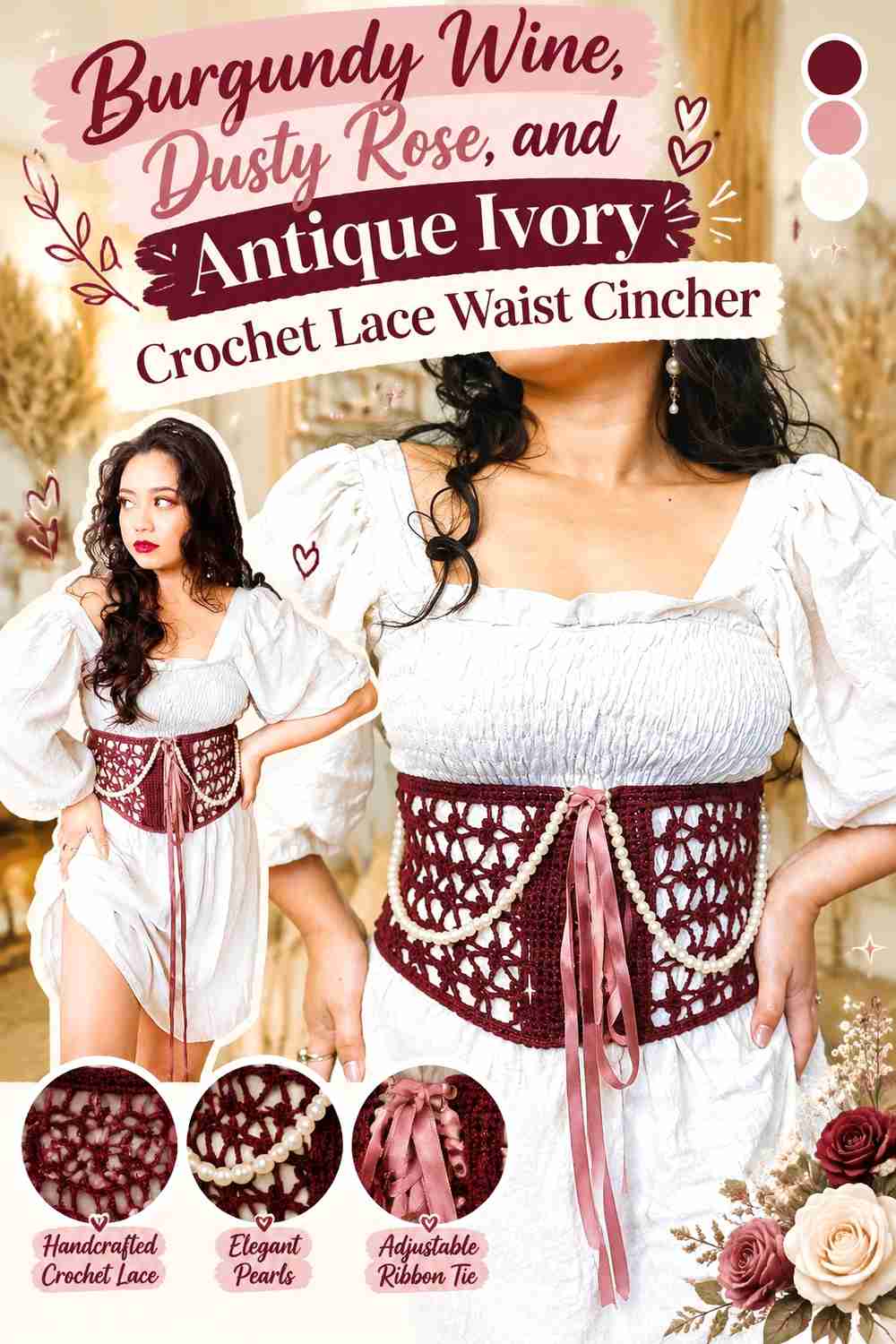
This palette gives burgundy wine the structural role, dusty rose the romantic middle tone, and antique ivory the job of separating fine details. Use burgundy across the main waist panel, place dusty rose through selected lace areas or ties, and reserve ivory for narrow borders or small highlights. The lighter neutral is especially useful when burgundy and dusty rose begin to merge visually.
Burgundy Wine Should Anchor the Main Crochet Waist Panel
Let burgundy wine cover the largest solid sections if you want the cincher to retain a clearly defined silhouette over a blouse or dress. A dark main field also gives dusty rose lace a more obvious place to stand out instead of scattering both colors evenly across the piece.
Dusty Rose Can Soften Burgundy Wine Around Crochet Lace Details
Dusty rose works well along scallops, narrow openwork sections, or the laced opening because those placements keep the softer color visible without weakening the burgundy frame. If the dusty rose begins to dominate, reduce it to repeated smaller areas rather than one broad central block.
Antique Ivory Separates Burgundy Wine From Dusty Rose
A slim ivory edge between burgundy and dusty rose can prevent the two muted colors from visually blending. Keep the ivory narrow so it behaves as a separator rather than turning the cincher into a three-color project with equal emphasis.
Creator Credit: Yommycrochetlogy
2. Burgundy Wine and Dusty Rose Tonal Crochet Scalloped Waist Cincher

This two-color version keeps the palette tightly focused. Burgundy wine can form the body and upper edge, while dusty rose appears through scalloped trim and lacing. Because there is no pale neutral to create separation, the success of this scheme depends more heavily on choosing a dusty rose that remains visibly lighter than the wine shade.
Burgundy Wine Gives the Crochet Cincher a Continuous Dark Frame
Use burgundy wine across uninterrupted body sections and around areas where you want the outline to remain crisp. Keeping the darkest color continuous can stop scalloped or lace-heavy construction from looking fragmented.
Dusty Rose Makes Scalloped Crochet Edging Easier to Notice
A dusty rose scallop against burgundy gains definition from its lighter value as well as its softer hue. If your two yarns appear almost identical from several feet away, choose a lighter dusty rose rather than relying on stitch texture alone to create separation.
Creator Credit: Kemunto crochets
3. Burgundy Wine, Dusty Rose, and Blush Crochet Rose-Motif Waist Cincher
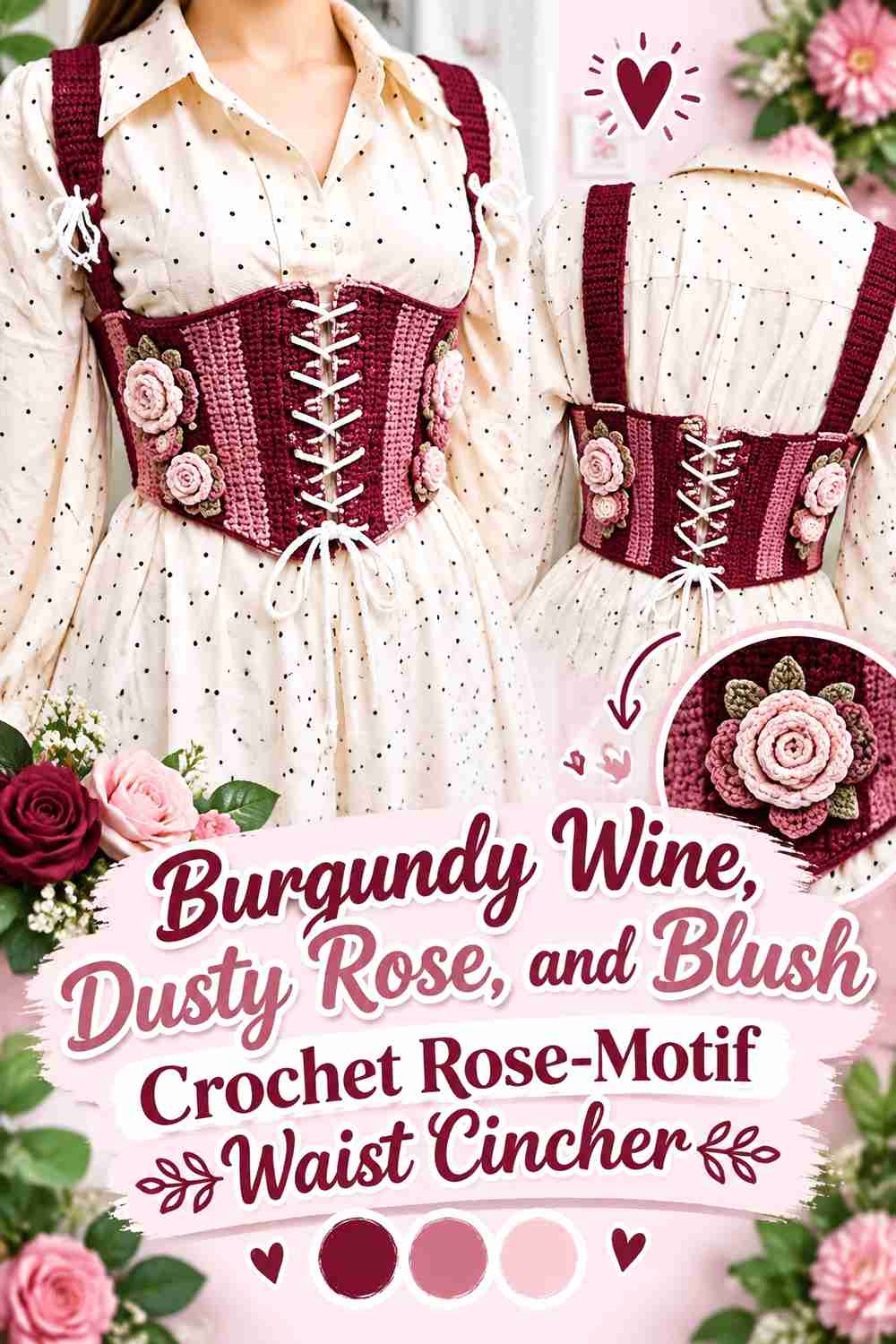
Adding blush moves this palette toward a softer floral direction. Burgundy wine still provides the visual foundation, dusty rose bridges the dark and light shades, and blush can be limited to petals, tiny motif centers, or narrow lace accents.
Burgundy Wine Keeps Dusty Rose and Blush Motifs From Looking Washed Out
A burgundy background gives pale floral elements enough visual weight around them. This is particularly useful when rose motifs or appliqué-like details occupy only a small part of the cincher and could disappear against another light base.
Dusty Rose Should Bridge Burgundy Wine and Blush
Place dusty rose next to both the burgundy and the blush where possible. Its middle value can make the change from the darkest shade to the lightest feel intentional rather than abrupt.
Blush Works Better as a Small Accent Beside Dusty Rose
Limit blush to the smallest romantic details, such as flower centers, narrow scallops, or a repeated edging element. Too much blush can pull attention away from the waist-defining burgundy body and make the three colors compete equally.
Creator Credit: Alem knit and Crochet
4. Burgundy Wine, Dusty Rose, and Plum Crochet Underbust Lace Waist Cincher
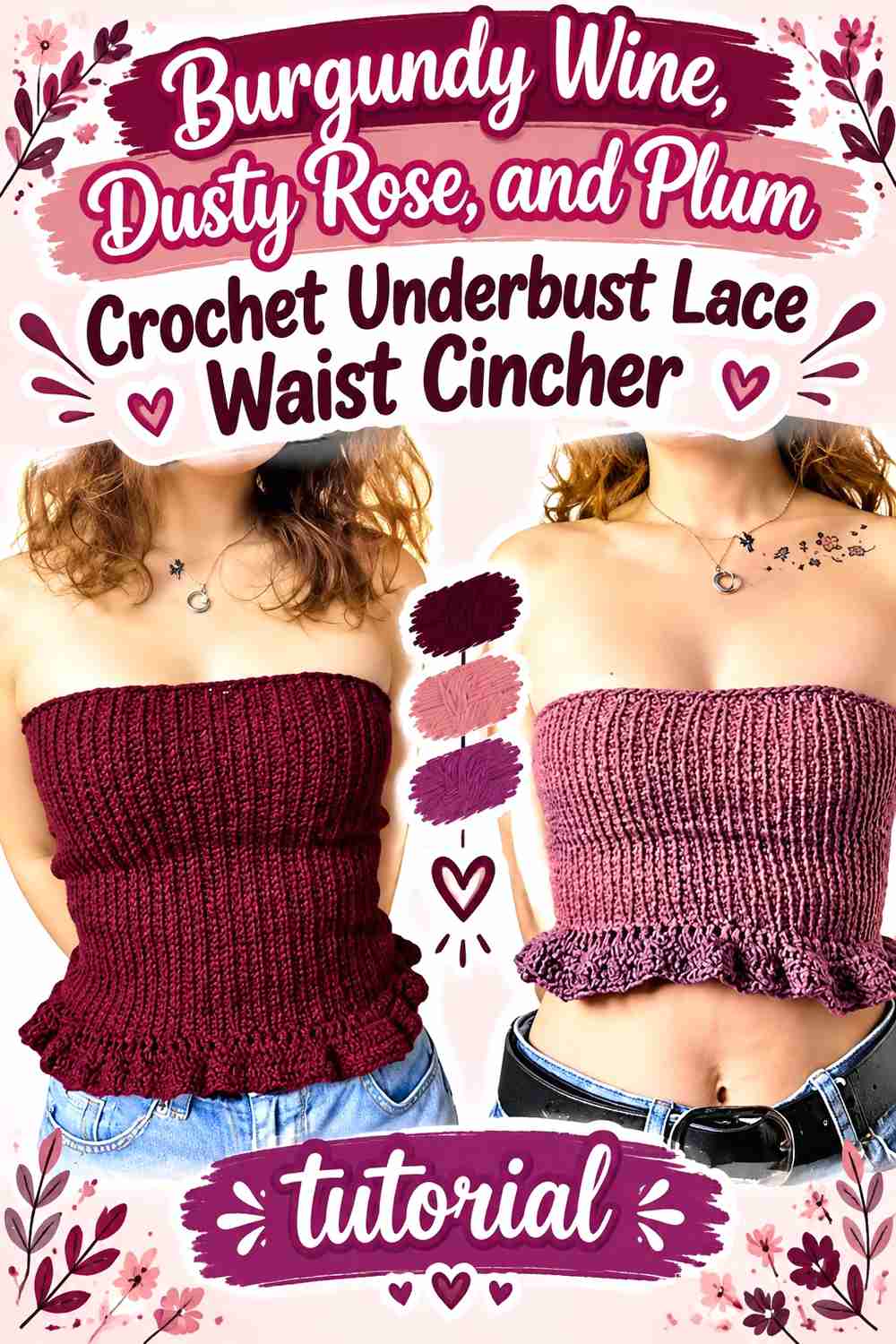
Plum creates a deeper tonal direction without introducing a neutral. Burgundy wine can remain dominant, dusty rose can carry the lighter lace, and plum can reinforce selected edges or vertical sections. The result is strongest when plum stays clearly distinguishable from burgundy.
Burgundy Wine Should Remain Distinct From Plum on the Crochet Body
Compare burgundy and plum before assigning them to neighboring panels. When both are equally dark, changing the hue may not create enough visible separation, especially in textured crochet.
Dusty Rose Gives Burgundy Wine and Plum a Necessary Light Break
Dusty rose can be used around open lace or between darker sections to stop the underbust cincher from becoming one continuous dark mass. It is particularly helpful around narrow decorative bands where stitch definition matters.
Plum Can Reinforce Burgundy Wine Without Replacing It
Use plum selectively around the lower border, side sections, or another contained area. Keeping burgundy wine as the repeated primary shade prevents the palette from drifting away from the article’s central color direction.
Creator Credit: thisfairymade
5. Burgundy Wine, Dusty Rose, and Cream Crochet Picot-Edge Waist Cincher
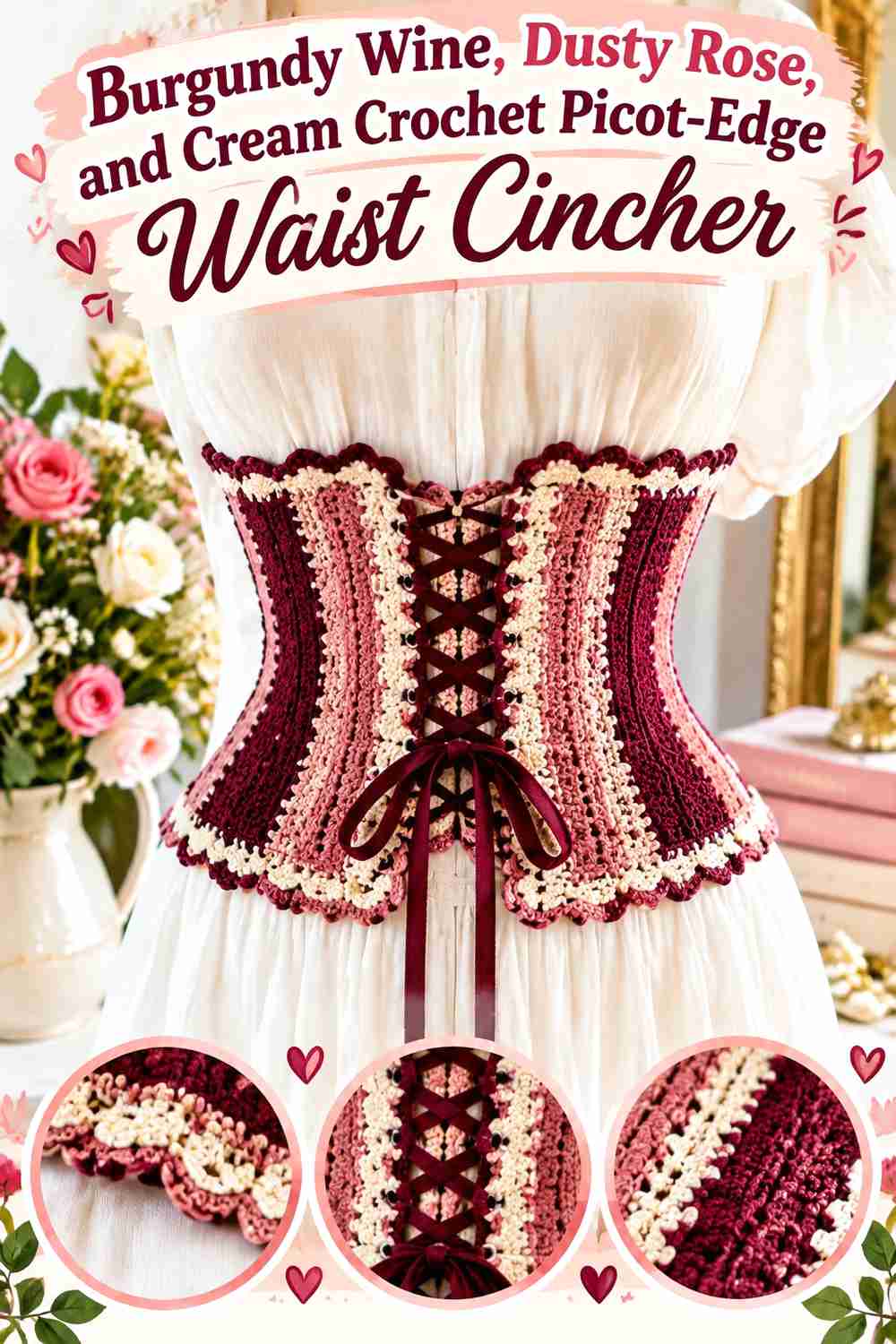
Cream creates stronger light-and-dark contrast than a fully tonal palette. Burgundy can cover the body, dusty rose can soften transitional lace, and cream can define tiny picots or narrow edging where darker yarn might hide delicate detail.
Burgundy Wine Creates the Strongest Contrast Against Cream Crochet Edging
Use cream sparingly against burgundy if you want small edge details to remain readable. Because the contrast is strong, even a narrow cream line can attract attention, so it does not need to occupy much surface area.
Dusty Rose Keeps Burgundy Wine and Cream From Feeling Too Abrupt
Dusty rose can sit between the darkest and lightest shades in lace panels or repeated accents. This three-step value progression is useful when a direct burgundy-to-cream change feels visually sharper than you want.
Creator Credit: yaejiyea
6. Burgundy Wine, Dusty Rose, and Black Crochet Gothic Lace-Up Waist Cincher
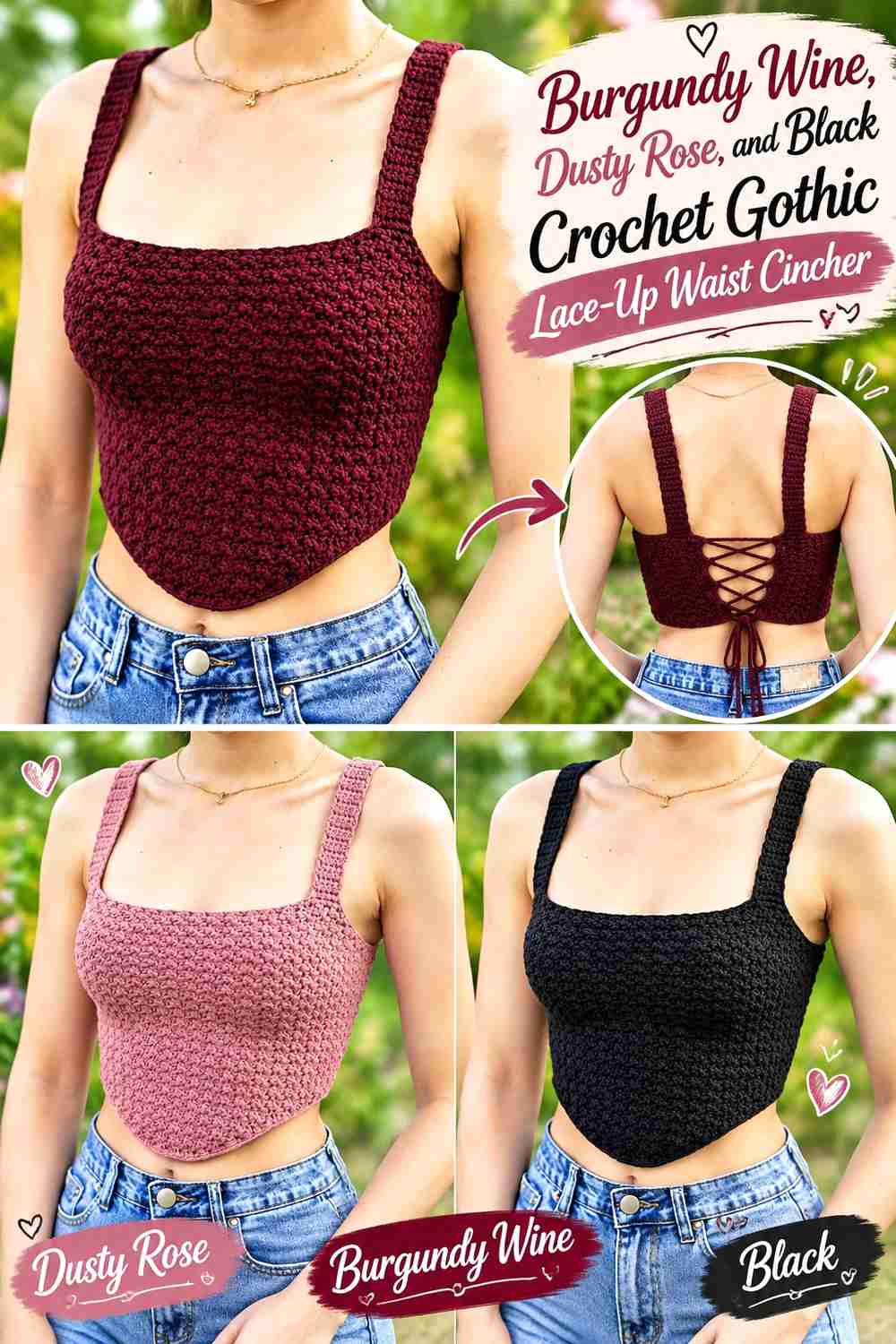
Black shifts the burgundy-and-rose pairing toward a darker romantic style. Instead of allowing black to take over the main surface, use burgundy wine as the dominant color and treat black as framing around lacing, borders, or selected structural lines.
Burgundy Wine Should Cover More Crochet Surface Than Black
If black occupies every large panel, burgundy wine can become a minor accent and the original palette loses its identity. Keep wine visible across the center or major side panels, then use black to reinforce the silhouette.
Dusty Rose Prevents Burgundy Wine and Black From Becoming Too Visually Heavy
Dusty rose can lighten scallops, small motifs, or ties without eliminating the darker direction. Repeating it in at least two areas helps the pink look connected rather than added as a single isolated detail.
Black Can Define Burgundy Wine Along the Crochet Laced Opening
A narrow black edge beside burgundy can make the crisscross lacing area more distinct. Keep the dark accent controlled, especially if the lace itself is also black, so the opening does not become the only feature the eye notices.
Creator Credit: Chenda DIY
7. Burgundy Wine, Dusty Rose, and Champagne Beige Crochet Vintage Waist Cincher
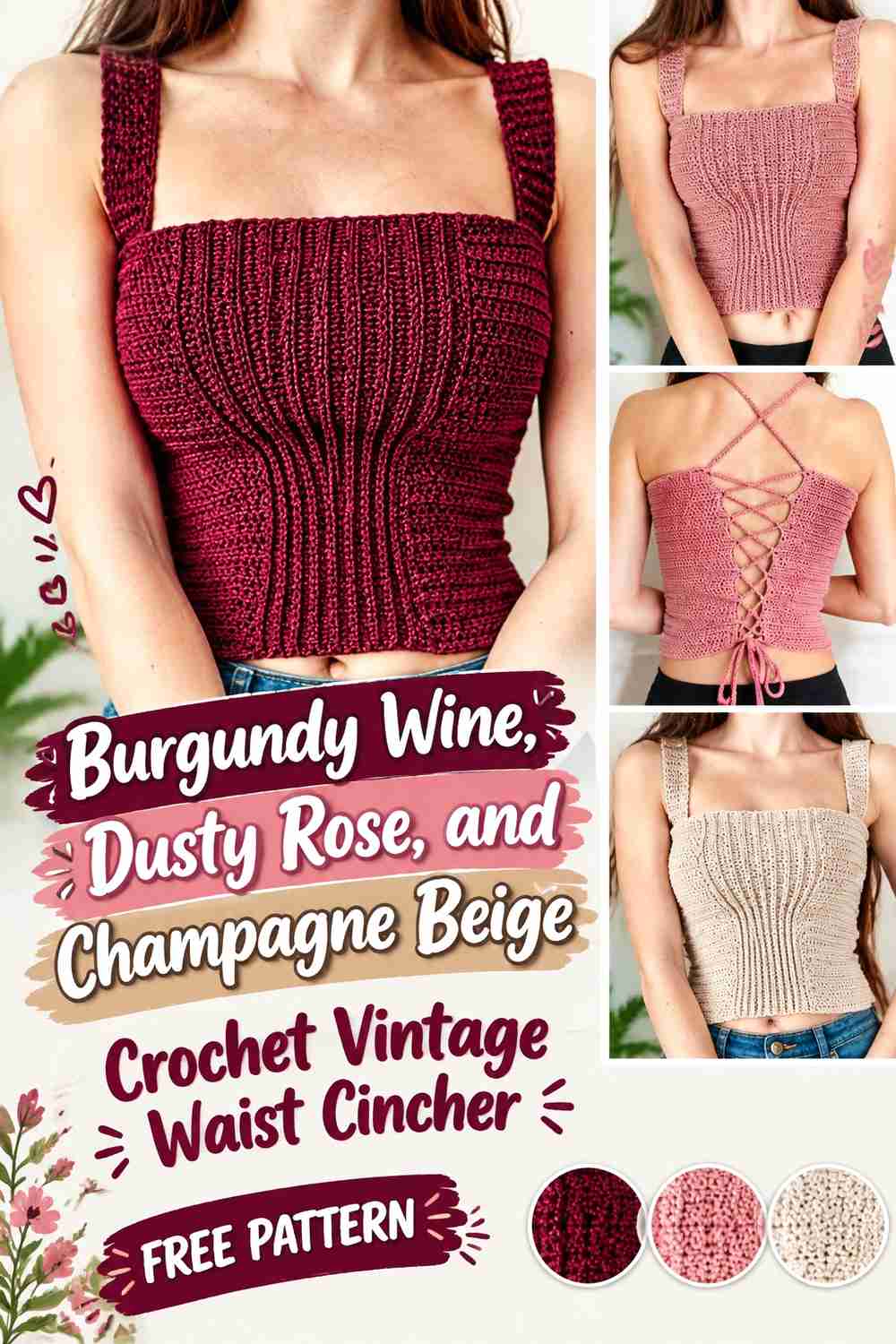
Champagne beige offers a softer neutral than bright cream. It can make burgundy wine and dusty rose feel more muted and aged, which works well when you want a vintage-inspired lace accessory rather than a high-contrast modern one.
Burgundy Wine Can Frame Champagne Beige Crochet Lace
Use wine around the outer edge or denser body sections and place champagne beige where the lace pattern needs breathing room. The darker frame keeps the pale openwork from visually disappearing into light-colored clothing.
Dusty Rose Connects Burgundy Wine With Champagne Beige
Dusty rose works naturally as the middle shade between wine and beige. It can be repeated around scallops, motif outlines, or lacing loops so the palette moves gradually from dark to light.
Creator Credit: Amigurumi Forge
8. Burgundy Wine, Dusty Rose, and Sage Crochet Botanical Waist Cincher
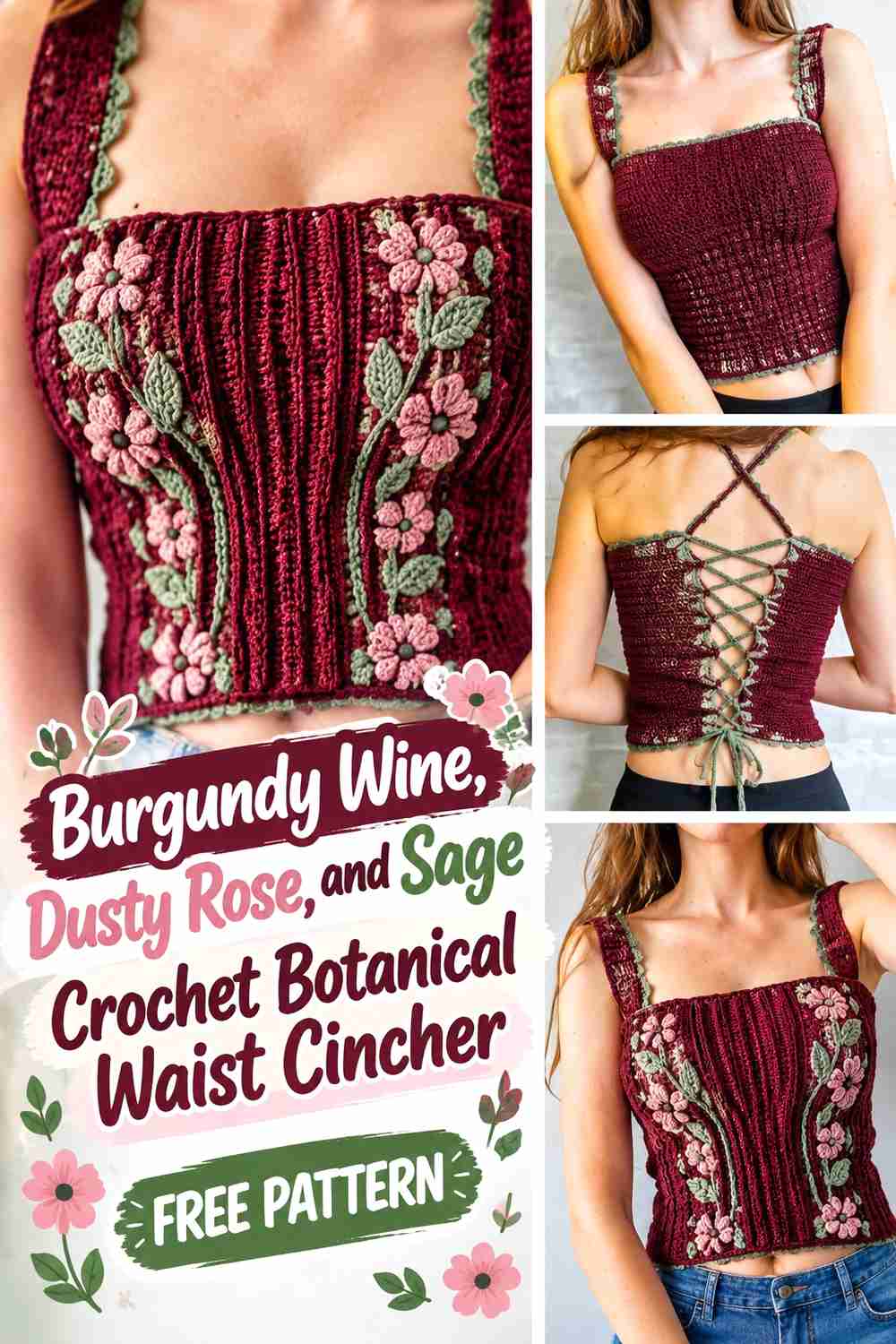
A small amount of muted sage introduces a botanical contrast while keeping burgundy wine and dusty rose clearly in charge. Sage works best as a supporting accent around floral or vine-inspired decorative areas rather than as a third large body color.
Burgundy Wine Should Stay Dominant Beside Sage Crochet Details
Use burgundy for the body and sage only in smaller repeated areas. This prevents the green from turning the project into an equal red-and-green split and keeps the romantic wine palette recognizable.
Dusty Rose Can Separate Burgundy Wine From Sage Motifs
Dusty rose works well around petals or narrow floral borders that sit near sage leaves or vine-like details. The softer pink helps the botanical accent look integrated rather than attached to an otherwise two-color cincher.
Sage Should Repeat Near Burgundy Wine Instead of Appearing Once
A single green motif can look disconnected. If sage is introduced at one side of the waist cincher, echo a smaller amount elsewhere—such as another motif or narrow detail—to establish deliberate repetition.
Creator Credit: ABoC Studio
9. Burgundy Wine, Dusty Rose, and Espresso Crochet Corset-Belt Waist Cincher
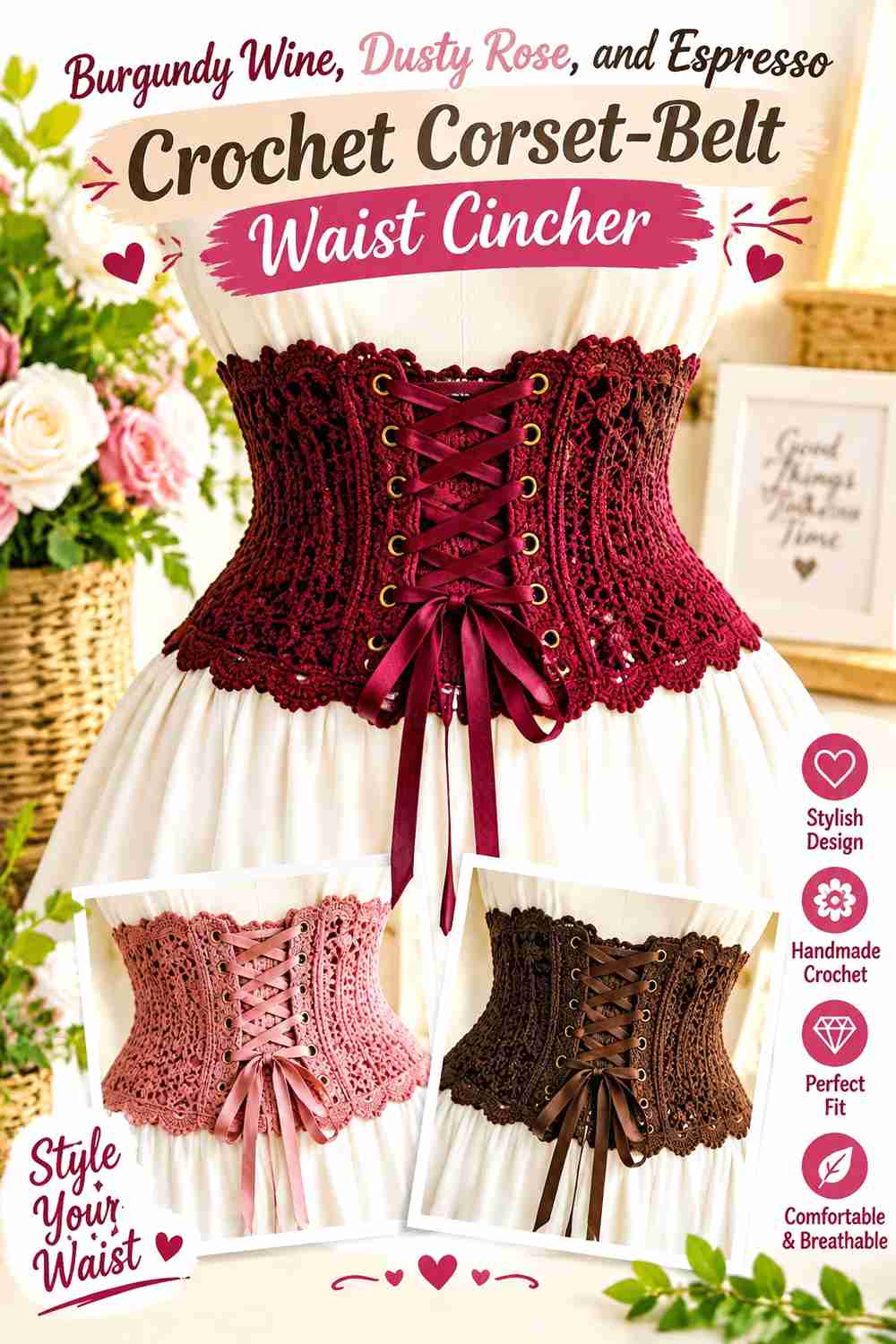
Espresso brown adds depth without the severity of black. It can support burgundy wine around the border or lacing area while dusty rose keeps the finished corset belt from becoming too dark.
Burgundy Wine Needs Enough Separation From Espresso Crochet Edging
Because deep brown and wine can be close in value, check the yarns side by side before using espresso as a border. If the shades visually merge, reduce the brown to the lacing or another small detail instead of outlining the entire piece.
Dusty Rose Can Lighten Burgundy Wine and Espresso at the Center
A dusty rose lace inset, narrow central motif, or repeated edge detail can create a useful focal break between the two dark shades. Keeping it near the center also draws attention to the crochet work rather than only to the dark outline.
Creator Credit: LaDenser Crochets
10. Burgundy Wine, Dusty Rose, and Mauve Crochet Tonal Lace Waist Cincher
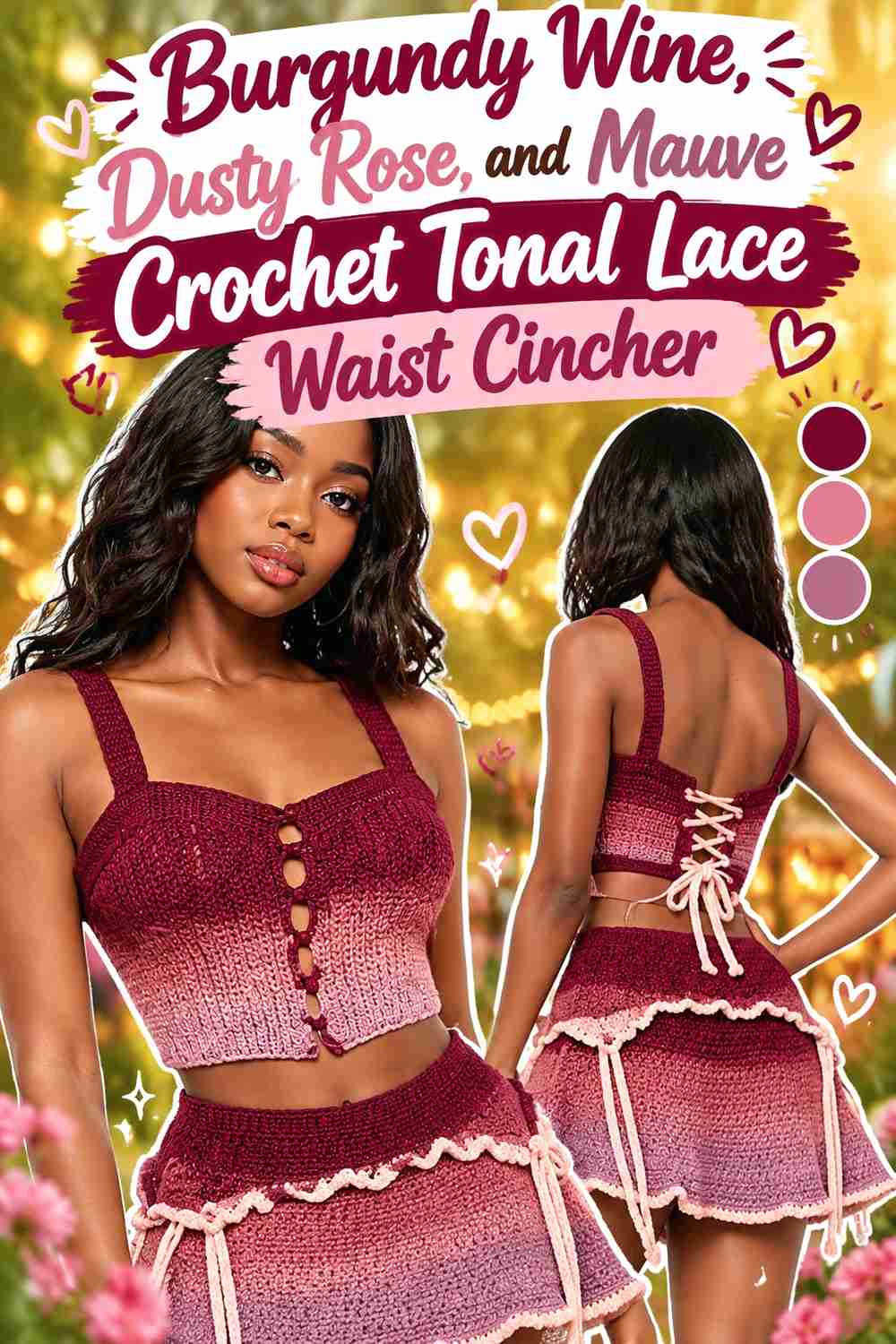
Mauve keeps this palette entirely within softened red-purple territory. The result can look cohesive, but similar colors require careful placement because texture alone may not distinguish each section.
Burgundy Wine Should Remain the Darkest Crochet Color
Choose mauve and dusty rose shades that stay noticeably lighter than burgundy wine. Maintaining that value hierarchy allows borders, lace panels, and lacing areas to remain readable even though all three colors are related.
Dusty Rose Can Highlight Lace While Mauve Handles Transitions
Place dusty rose where openwork needs the most visibility and use mauve as a bridge between it and burgundy. This keeps the lightest pink from being spread everywhere and gives each tonal shade a specific purpose.
Mauve Should Not Compete With Burgundy Wine for the Main Waist Panel
If mauve covers the same amount of area as wine, the focal color becomes less clear. Use mauve across secondary bands, motif outlines, or selective trim instead.
Creator Credit: Nitah Crochets
11. Burgundy Wine, Dusty Rose, and Antique Gold Crochet Accent Waist Cincher

Antique gold can work as a very small accent rather than a full third color. Burgundy wine carries the body, dusty rose provides the romantic lace component, and gold appears only where you want a touch of definition.
Burgundy Wine Should Control the Crochet Surface Around Antique Gold
A restrained gold accent has more impact against a broad burgundy field than it does when scattered throughout every section. Consider placing it in a narrow border, tiny motif center, or limited lacing detail.
Dusty Rose Keeps Antique Gold Softer Beside Burgundy Wine
Dusty rose can surround or separate gold details from the wine body. That placement reduces the risk of the metallic-looking color direction overpowering the soft romantic character of the crochet lace.
Creator Credit: Vsyachina vsyakaya
12. Burgundy Wine, Dusty Rose, and Soft Gray Crochet Lace Waist Cincher
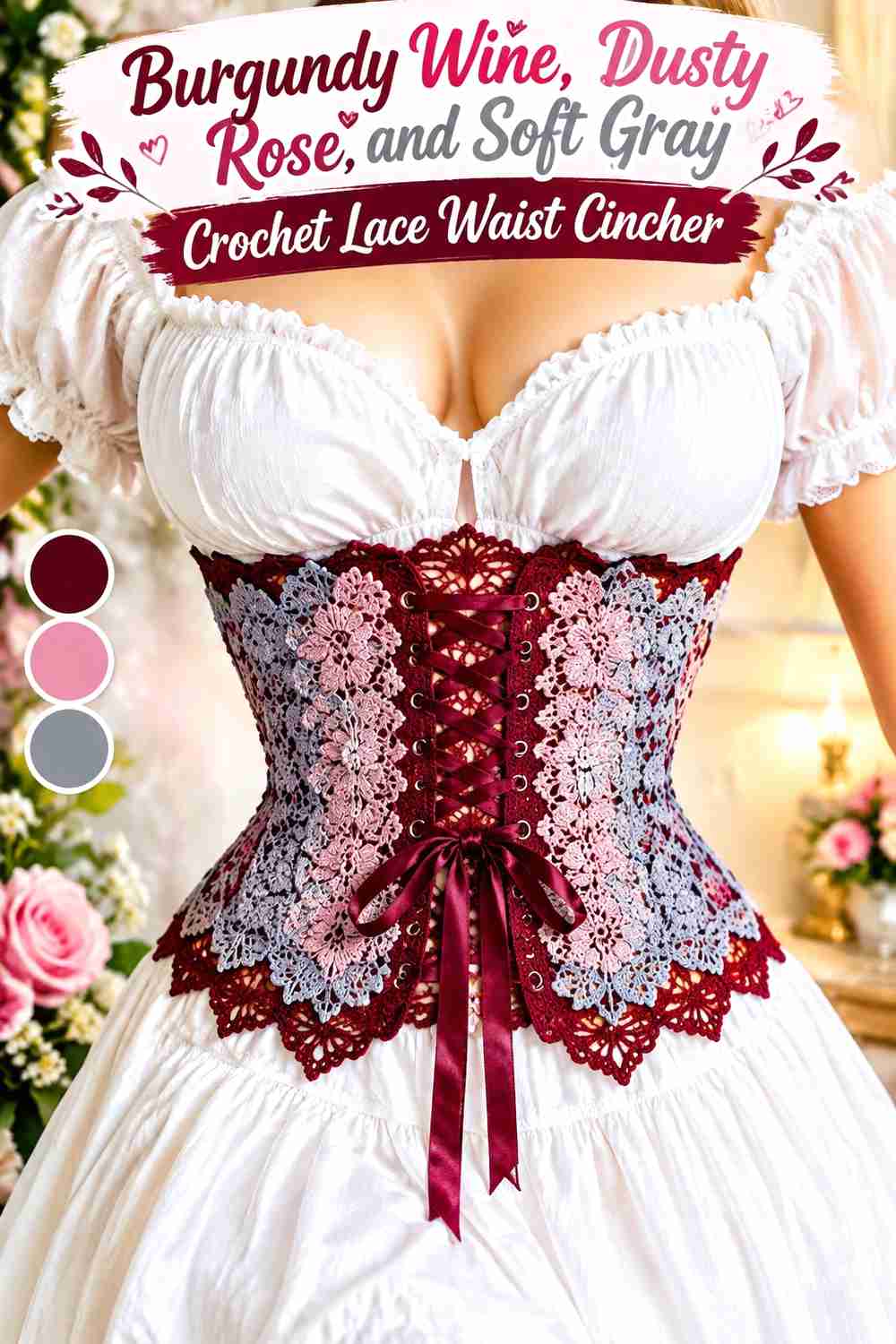
Soft gray cools the overall palette without becoming as stark as black. It can work well around joins, narrow borders, or secondary lace sections when you want burgundy wine to feel less warm while still preserving dusty rose.
Burgundy Wine Looks Clearer When Soft Gray Stays Secondary
Use the gray to frame or separate rather than cover the main waist area. Too much gray can make the project neutral-led, while smaller amounts allow the burgundy to remain the visual anchor.
Dusty Rose Can Warm Soft Gray Crochet Edges
Place dusty rose between gray and burgundy where possible. This prevents the cool neutral from looking detached and gives the palette a smoother progression across the cincher.
Soft Gray Can Clarify Burgundy Wine Lacing Without Using Black
When black feels too strong, gray can outline the lacing area with lower contrast. Check that the gray remains distinct from dusty rose, particularly if both shades are muted and medium-light.
Creator Credit: Made by BJax
13. Burgundy Wine, Dusty Rose, and Ivory Crochet Heirloom Floral Waist Cincher
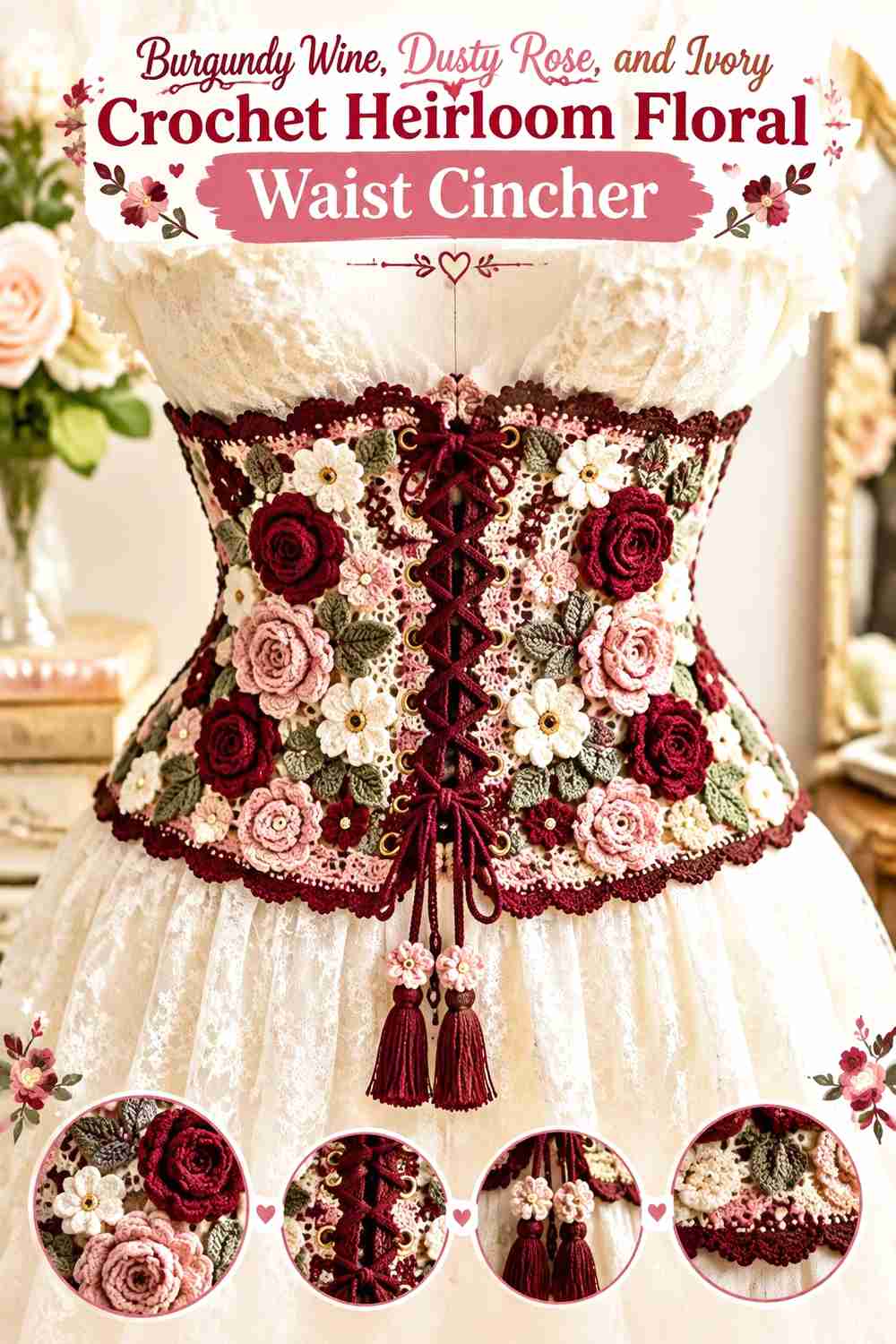
This final palette gives the strongest heirloom-style direction. Burgundy wine forms the dark foundation, dusty rose supplies the main floral color, and ivory is reserved for lace edges, small petals, or separators.
Burgundy Wine Gives Dusty Rose Floral Crochet Motifs a Dark Foundation
Place the larger wine areas behind or beside dusty rose flowers so the motif edges remain distinct. This is more effective than alternating equal blocks of burgundy and pink, which can interrupt the continuous waistline.
Dusty Rose Should Repeat Across the Burgundy Wine Cincher
If dusty rose is used for one floral cluster, echo it in another small area such as a scallop, tie, or motif center. Repetition makes the romantic accent feel planned across the full accessory.
Ivory Can Protect Fine Burgundy Wine and Dusty Rose Lace Details
Use ivory where tiny details need the most separation, such as around small flowers or narrow openwork edges. Keep it limited enough that the cincher still reads primarily as burgundy wine and dusty rose rather than burgundy and ivory.
Creator Credit: Sew Historically
Comparing the Burgundy Wine and Dusty Rose Waist Cincher Palettes
Choose the palette according to what you want the crochet lace to emphasize.
For the strongest light-and-dark definition, the cream or antique ivory versions give burgundy wine plenty of separation. For a darker romantic direction, black, plum, or espresso can deepen the outline while dusty rose keeps smaller details visible.
The mauve and pure two-color versions are better when you want a softer tonal result, but they require more attention to value contrast. Sage introduces the clearest botanical change, while antique gold adds the smallest decorative accent without changing the overall burgundy-and-rose identity.
If lace visibility is your priority, choose a dusty rose that remains noticeably lighter than burgundy. If you prefer a blended, subdued appearance, closer values can work, but use texture and placement deliberately so the waist cincher does not become visually flat.
Conclusion
Burgundy wine works especially well as the dominant color when you want the crochet waist cincher to have a defined silhouette, while dusty rose is useful for softening lace, scallops, motifs, and lacing details.
For a pale romantic finish, pair the two colors with ivory, cream, champagne beige, or blush. For more depth, consider plum, espresso, black, or mauve. Sage gives the palette a botanical direction, while a restrained antique-gold accent can add definition without competing with the main colors.
Before committing to the full piece, compare your yarns together and check whether delicate lace remains visible. Use the linked creator tutorials for exact construction guidance, then adapt the color placement according to the visual balance you want.
Frequently Asked Questions
Should Burgundy Wine or Dusty Rose Be the Main Color of a Crochet Waist Cincher?
Burgundy wine is usually the stronger choice when you want a dark, clearly defined main panel. Dusty rose can then be reserved for lace, scallops, floral details, or ties. Reversing the ratio can work when you want a much lighter cincher, but the result will feel noticeably softer.
How Can I Tell Whether Burgundy Wine and Dusty Rose Have Enough Contrast?
Place the yarns next to each other and view them from a short distance. A grayscale photo can also help reveal whether they are genuinely different in lightness. If they merge, choose a lighter dusty rose or add a pale separator around the smallest lace details.
Where Should Dusty Rose Go on a Burgundy Wine Crochet Waist Cincher?
Dusty rose is particularly useful around scalloped edging, open lace, decorative motifs, the lacing area, and narrow trim. These placements let the softer color remain visible without taking over the main burgundy structure.
Does Burgundy Wine Work Better Than Dusty Rose for Crochet Lacing?
Either can work depending on the desired emphasis. Burgundy lacing blends more closely with a wine-dominant body, while dusty rose lacing creates a softer contrasting feature. Whichever color you choose, repeating it elsewhere on the waist cincher helps the lacing feel connected.
What Can Replace Dusty Rose Without Changing the Burgundy Wine Palette Too Much?
Choose another muted pink that remains lighter than the burgundy. Preserve the relationship rather than trying to match an exact shade name: the supporting color should still read as softer and lighter than the main wine tone.
Can Burgundy Wine and Dusty Rose Be Used Without a Third Color?
Yes. A two-color version can look especially cohesive. The main checkpoint is value contrast: if the burgundy and dusty rose are too similar in darkness, use placement strategically so openwork, borders, and lacing remain visible.
Which Accent Color Gives Burgundy Wine and Dusty Rose Crochet Lace the Most Definition?
Cream or ivory usually produces the clearest light-and-dark separation among the palettes covered here. Black creates strong dark framing instead, while champagne beige or soft gray gives a quieter transition when high contrast is not the goal.