

Cocoa Brown and Powder Pink give a crochet teddy bear baby lovey a soft winter palette without depending on bright holiday colors. Cocoa Brown can establish the bear’s face, ears, arms, and other character-defining areas, while Powder Pink can lighten the blanket, muzzle, edging, or selected points.
The most useful color decision is deciding whether the teddy bear or the blanket should carry the darker shade. A Cocoa Brown bear against a Powder Pink blanket creates clear separation between the character and comforter. Reversing the balance produces a lighter teddy with a darker blanket underneath, while smaller Powder Pink accents can keep an almost entirely brown lovey from looking visually heavy.
The credited tutorials provide teddy bear lovey, security blanket, or closely related bear-comforter construction references. Treat the Cocoa Brown and Powder Pink palettes below as independent color adaptations and use each creator’s tutorial for the original crochet construction.
Quick List
- Cocoa Brown Bear and Powder Pink Star Crochet Baby Lovey
- Cocoa Brown Bear with Powder Pink Muzzle Crochet Baby Lovey
- Powder Pink Bear and Cocoa Brown Blanket Crochet Baby Lovey
- Cocoa Brown Bear with Powder Pink Ear Crochet Baby Lovey
- Cocoa Brown Blanket with Powder Pink Border Crochet Teddy Baby Lovey
- Powder Pink Blanket with Cocoa Brown Edge Crochet Teddy Baby Lovey
- Cocoa Brown Center and Powder Pink Point Crochet Teddy Baby Lovey
- Cocoa Brown Bear with Powder Pink Paw Crochet Baby Lovey
- Powder Pink Star with Cocoa Brown Teddy Head Crochet Baby Lovey
- Cocoa Brown and Powder Pink Alternating Crochet Teddy Baby Lovey
- Cocoa Brown Teddy with Powder Pink Outer-Round Crochet Baby Lovey
Let Cocoa Brown Define the Teddy Bear Before Adding Powder Pink
On a small lovey, the bear head is usually the strongest recognizable feature. Cocoa Brown works well across the head, ears, muzzle outline, or arms because one connected dark area keeps the teddy bear easy to identify even when the blanket underneath contains more color.
Avoid adding Powder Pink to every facial section simply because the second color is available. If the ears, muzzle, nose area, arms, and blanket border all become pink, the bear can lose the clear Cocoa Brown structure that makes the palette coherent.
Use Powder Pink to Separate the Bear From the Winter Lovey Blanket
Powder Pink can do more than decorate the lovey. A pink blanket beneath a Cocoa Brown head creates an immediate color boundary between the stuffed character and the flatter comforter section. A Powder Pink border around a brown blanket can also lighten the outer edge without changing the main field.
For a winter direction, softer contrast is often more useful than adding several additional colors. Keep the palette focused enough that the teddy face, blanket shape, and outer edge remain distinct.
Keep Cocoa Brown and Powder Pink Baby Details Visually Simple
A lovey already combines several forms: a stuffed or dimensional bear head, ears, arms, and a blanket section. Too many small color changes can make those parts compete.
For baby projects, also consider how decorative details are attached. Embroidered or securely crocheted facial features can avoid adding unnecessary loose embellishments. Always assess the completed lovey for its intended use rather than assuming decorative additions are appropriate simply because the item is handmade.
1. Cocoa Brown Bear and Powder Pink Star Crochet Baby Lovey

This color direction gives the teddy bear a solid Cocoa Brown identity while placing most of the Powder Pink in the blanket. The strong separation is useful when the lovey has a star-shaped or pointed blanket because the lighter Powder Pink makes the spreading blanket visibly different from the compact bear head at the center.
Cocoa Brown Should Keep the Teddy Head Separate From Powder Pink
Use Cocoa Brown continuously across the main bear head and outer ears. That darker central shape gives the lovey a recognizable focal point before the viewer follows the Powder Pink blanket outward.
If Powder Pink is used on the muzzle, keep enough Cocoa Brown surrounding it to preserve the face as one connected brown area.
Powder Pink Can Make the Cocoa Brown Bear the Lovey Focal Point
Let Powder Pink cover most or all of the blanket section. A broad pale field gives the Cocoa Brown head stronger visual definition than several alternating blanket colors would.
If the star points already create enough visual movement, avoid adding frequent Cocoa Brown stripes through them.
Cocoa Brown Can Repeat Once Along the Powder Pink Lovey Edge
A narrow Cocoa Brown finishing edge can reconnect the blanket to the teddy head. Keep the repeat smaller than the Powder Pink field so the blanket does not become dark around its complete perimeter.
Creator Credit: MummaJ Crochet
2. Cocoa Brown Bear with Powder Pink Muzzle Crochet Baby Lovey

This idea keeps almost the complete teddy Cocoa Brown and concentrates Powder Pink on the muzzle. The small light area draws attention toward the face without changing the color identity of the head, ears, and arms.
Powder Pink Should Stay Compact on the Cocoa Brown Teddy Muzzle
Give Powder Pink enough space to distinguish the muzzle but not so much that the lower half of the face becomes a separate pink block. The darker Cocoa Brown should remain visible around every side of the lighter section.
This placement is especially useful when you want the blanket itself to remain neutral or Cocoa Brown rather than introducing another broad pink area.
Cocoa Brown Needs to Connect the Teddy Ears, Head, and Arms
Repeat Cocoa Brown across the character-defining pieces so they read as one bear. If the arms are attached near the blanket center, their brown color can also create a transition between the head and the lower lovey.
Keep other Powder Pink details smaller than the muzzle if you want the face to remain the strongest pink focal point.
Creator Credit: Andrea Quinteros
3. Powder Pink Bear and Cocoa Brown Blanket Crochet Baby Lovey

Reversing the palette creates a noticeably different winter lovey. Powder Pink becomes the main character color, while Cocoa Brown supplies a deeper blanket beneath it. The darker lower section gives the pale teddy enough visual grounding without requiring a strong third color.
Powder Pink Should Remain Continuous Across the Cocoa Brown-Backed Teddy Head
Keep the head and outer ears mainly Powder Pink so the character reads as a single light form. Small Cocoa Brown facial accents can provide definition, but broad brown patches can make the bear look divided.
The Powder Pink head should remain visibly separate from the Cocoa Brown blanket where the two forms meet.
Cocoa Brown Can Give the Powder Pink Teddy Lovey More Visual Weight
Use Cocoa Brown across the main blanket field when you want a darker lower half. This creates a clear center-to-edge transition from a pale bear into a rich brown comforter.
If the blanket has open spaces or pronounced points, evaluate the color at normal viewing distance to make sure the shape remains readable in the darker shade.
Powder Pink Can Return at the Cocoa Brown Blanket Border
Repeating Powder Pink around the outer edge connects the blanket back to the teddy head. A narrow border is enough; making several outer rounds pink may shift the blanket toward equal color coverage.
Creator Credit: Tommy’s sheep crochet and knitting
4. Cocoa Brown Bear with Powder Pink Ear Crochet Baby Lovey

Powder Pink inner-ear details create a softer facial accent than a large contrasting muzzle or blanket. Cocoa Brown still controls the teddy silhouette, while the pink sits high on the head and helps separate the ears from the surrounding blanket.
Cocoa Brown Should Define the Outer Powder Pink Teddy Ears
Keep each outer ear Cocoa Brown so it remains visually connected to the head. Powder Pink works better as the smaller inner section rather than replacing the complete ear.
This color hierarchy matters on a compact bear head because two entirely pink ears can become stronger than the face itself.
Powder Pink Ear Accents Need Clear Space Against Cocoa Brown
Avoid placing a wide Powder Pink blanket border directly behind the ears if it causes the ear centers to merge into the background. A Cocoa Brown or differently positioned blanket section can provide enough separation.
Look at the completed head and blanket together before deciding whether the muzzle also needs Powder Pink.
Cocoa Brown Can Keep the Powder Pink Details From Multiplying
Once both ears contain Powder Pink, the color has already been repeated symmetrically. Additional pink facial accents are optional rather than necessary.
Let Cocoa Brown fill the quieter areas so the inner ears remain purposeful details.
Creator Credit: Little Crochet Farm
5. Cocoa Brown Blanket with Powder Pink Border Crochet Teddy Baby Lovey
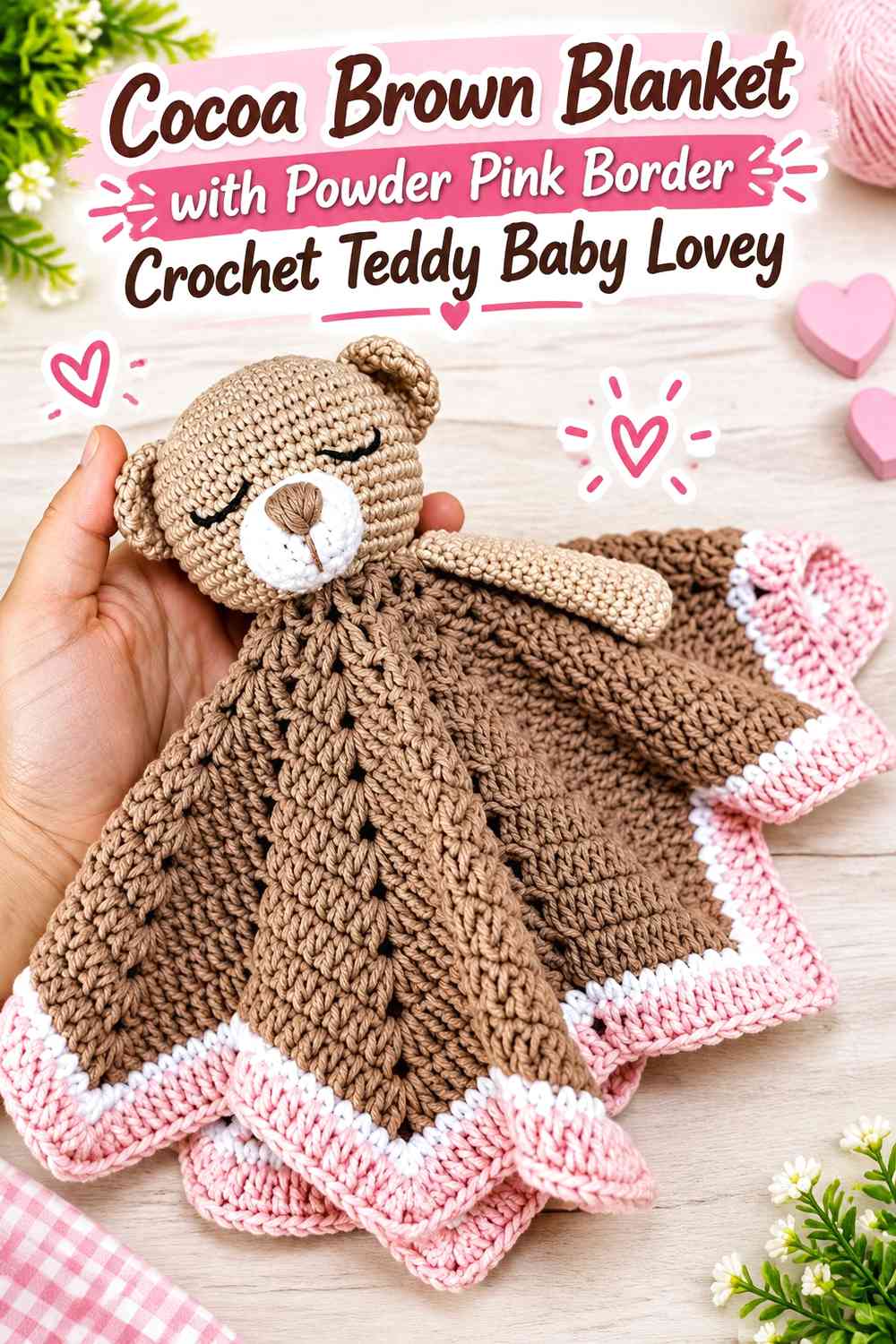
Instead of concentrating the contrast on the teddy’s face, this idea puts Powder Pink around the blanket perimeter. Cocoa Brown can run from the bear head into the main blanket field, while the pink outer edge creates a lighter frame.
Cocoa Brown Can Connect the Teddy Head and Main Lovey Blanket
Using Cocoa Brown for both the character and central blanket creates a more unified look than separating them with two large colors. The distinction then comes from shape rather than a strong head-to-blanket color change.
This can work particularly well when the blanket has visible points or an open silhouette that already distinguishes it from the bear.
Powder Pink Should Frame the Cocoa Brown Lovey Without Becoming Too Wide
Keep the Powder Pink border proportionate to the blanket. A narrow outer section can lighten a dark Cocoa Brown field, while a very broad pink edge changes the project into a two-tone blanket.
If the outer points are an important feature, place enough Powder Pink there for their outlines to remain visible.
Powder Pink Can Make Cocoa Brown Blanket Points Easier to Follow
When the blanket contains directional points, a lighter outer color can clarify where each one ends. Check the lovey laid flat before finalizing the border so the Powder Pink appears balanced around the entire perimeter.
Creator Credit: Ateliê Shirley Borges
6. Powder Pink Blanket with Cocoa Brown Edge Crochet Teddy Baby Lovey
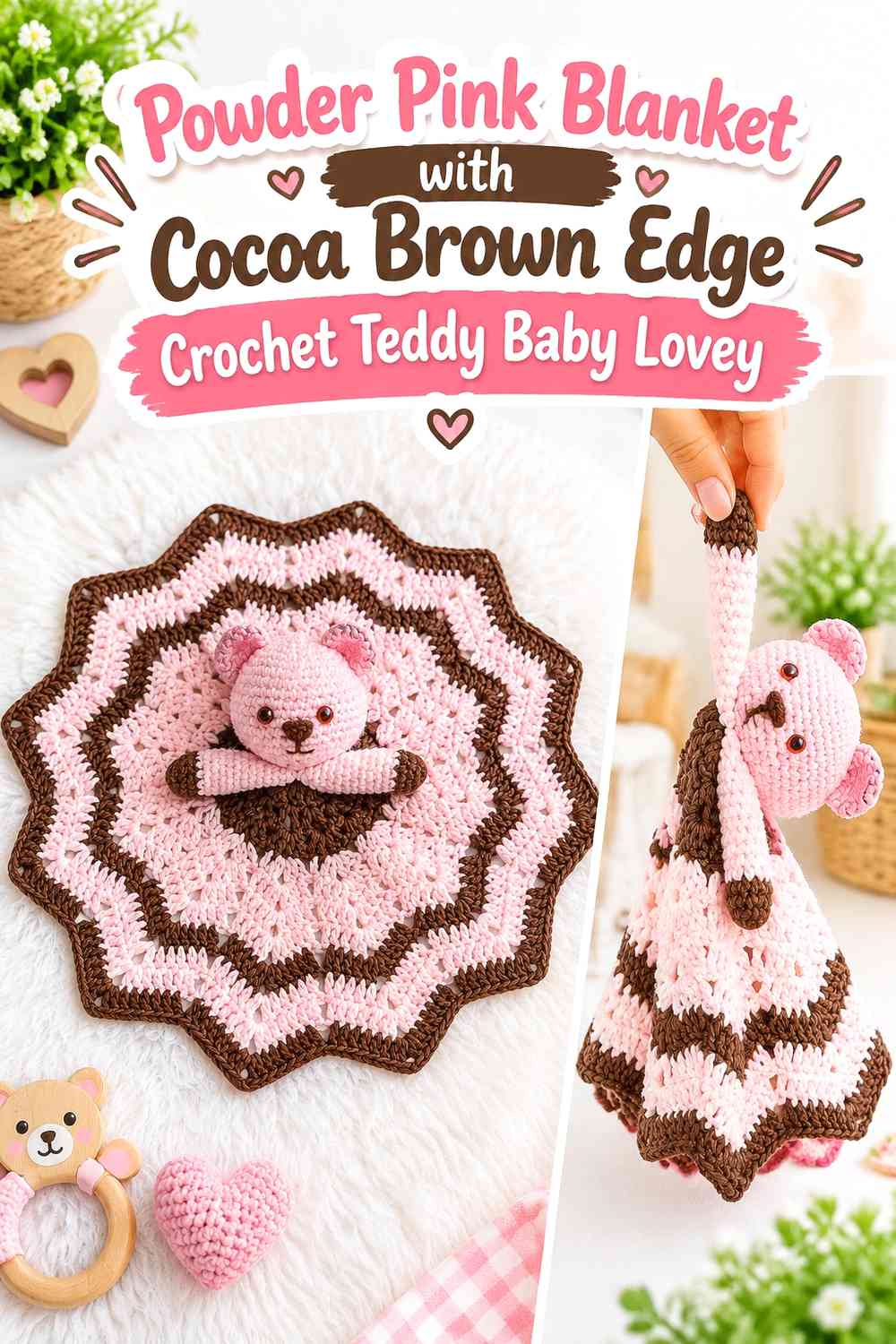
This design uses a large Powder Pink blanket but gives the perimeter a Cocoa Brown frame. The darker edge connects visually with a brown teddy head and prevents the pink field from reaching every outer boundary.
Powder Pink Should Occupy the Largest Lovey Blanket Area
Keep the blanket center Powder Pink so it remains the main supporting color rather than another small accent. This gives the Cocoa Brown teddy a lighter backdrop and makes the head easier to distinguish.
If the blanket has several rounds or sections, avoid switching repeatedly between pink and brown before reaching the outer edge.
Cocoa Brown Can Give the Powder Pink Blanket a Defined Finish
A Cocoa Brown border creates a visual endpoint around the pale blanket. Keep that edge consistent enough to frame the shape rather than appearing as scattered dark patches.
The brown repeat also links the blanket back to the bear head without needing extra brown stripes through the Powder Pink field.
Creator Credit: Hopeful Turns
7. Cocoa Brown Center and Powder Pink Point Crochet Teddy Baby Lovey

This version changes color according to the blanket’s geometry. Cocoa Brown stays around the center near the teddy, while Powder Pink appears farther out toward the points or outer sections. The result creates a gradual visual opening from dark center to light edge.
Cocoa Brown Should Anchor the Lovey Beneath the Powder Pink Points
Use Cocoa Brown around the area where the teddy attaches to the blanket. The darker center can make the connection between character and comforter look intentional rather than placing a brown head abruptly on a pale field.
Keep the central brown area broad enough to register as a planned zone.
Powder Pink Can Lighten the Outer Cocoa Brown Lovey Shape
Move into Powder Pink before the outer points so the edge feels lighter than the center. This produces a different effect from a simple border because the pink occupies a more substantial part of each point.
Make the color transition at a visually consistent stage around the blanket rather than changing different points at unrelated positions.
Cocoa Brown and Powder Pink Need a Clear Center-to-Edge Hierarchy
Do not add another broad Cocoa Brown stripe beyond the Powder Pink unless you specifically want a banded effect. The strength of this palette comes from one clear dark-to-light movement.
Creator Credit: It’s So Corinney
8. Cocoa Brown Bear with Powder Pink Paw Crochet Baby Lovey

Powder Pink can move away from the face entirely and appear on the arms or paw ends. This keeps the Cocoa Brown teddy expression simple while adding small repeated accents lower on the character.
Cocoa Brown Should Keep the Teddy Arms Visually Attached to the Head
Use Cocoa Brown through most of each arm so the limbs belong to the same bear as the head. If the entire arms become Powder Pink, they may read more like blanket decorations than teddy features.
The brown section also creates enough surrounding contrast for a small pink paw detail.
Powder Pink Paw Accents Should Repeat Symmetrically Against Cocoa Brown
Use similar Powder Pink placement on both arms so the color looks intentional. Because the accents are small, symmetry helps them remain visible without needing to increase their size.
If the blanket also contains Powder Pink, repeat a related shade there rather than introducing another pink direction.
Cocoa Brown Can Keep Powder Pink Away From the Teddy Face
This is a useful option when you prefer a fully brown head and muzzle. The pink remains part of the character palette but does not interfere with facial readability.
Creator Credit: Ginaz Kr8tion
9. Powder Pink Star with Cocoa Brown Teddy Head Crochet Baby Lovey

A Powder Pink star-style blanket with a Cocoa Brown head creates one of the clearest two-color arrangements in the collection. The bear forms the dark center while the blanket radiates outward in a lighter shade.
Cocoa Brown Should Remain the Strongest Center on the Powder Pink Star
Keep the head predominantly Cocoa Brown and avoid a large Powder Pink muzzle if you want the central contrast to stay strong.
The bear should still be easy to recognize when the lovey is viewed with the complete star blanket spread around it.
Powder Pink Points Should Stay Uninterrupted Around Cocoa Brown
Use the pink continuously through the major blanket points. Brown stripes running through every point can compete with the radial shape and make the blanket visually busier.
If you want Cocoa Brown to repeat, place it in a narrow outer edge or small central transition instead.
Cocoa Brown Can Define the Powder Pink Star Edge Sparingly
A thin brown finish can connect the blanket to the teddy head while preserving the Powder Pink dominance. Compare the blanket with and without that edge before deciding whether the additional contrast is necessary.
Creator Credit: Crochet with Lisa
10. Cocoa Brown and Powder Pink Alternating Crochet Teddy Baby Lovey

This is the most balanced two-color option. Instead of giving one shade almost the entire blanket, alternate larger Cocoa Brown and Powder Pink areas while keeping the teddy head predominantly brown.
Cocoa Brown and Powder Pink Need Broad Repeats on the Lovey Blanket
Use substantial color sections rather than changing shades at every small opportunity. Larger repeats allow the eye to follow the blanket shape and make the two-color pattern look deliberate.
A regular color rhythm is particularly useful around pointed or geometric blanket shapes.
Cocoa Brown Should Still Identify the Teddy Above Powder Pink Sections
Even when the blanket uses both colors equally, keep enough Cocoa Brown across the head, ears, and arms to make the character distinct.
If the blanket section directly behind the head is also Cocoa Brown, a small Powder Pink transition around the attachment area can provide separation when needed.
Powder Pink Should Repeat Consistently Between Cocoa Brown Areas
Avoid concentrating most Powder Pink on only one side of the blanket. Balanced repetition keeps one edge from appearing visually heavier than the other when the lovey is laid flat.
Creator Credit: Estúdio de Crochê
11. Cocoa Brown Teddy with Powder Pink Outer-Round Crochet Baby Lovey

The final idea keeps both the bear and most of the blanket Cocoa Brown, then introduces Powder Pink only near the outermost section. The result is dark and cohesive through the center with a softer pink finish around the perimeter.
Cocoa Brown Should Dominate Before the Powder Pink Outer Round
Maintain Cocoa Brown across the head and most of the blanket so the lovey reads as brown first. The Powder Pink should arrive late enough in the color layout to function as a finishing feature rather than a second main field.
This works well when you want only a moderate amount of pink.
Powder Pink Can Soften the Cocoa Brown Lovey Perimeter
Use Powder Pink around the outer section where it can lighten the darkest edge and make points or scallops easier to distinguish.
Keep the color placement continuous enough to form a complete visual frame rather than isolated pink patches.
Cocoa Brown Can Return at Small Powder Pink Edge Details
If the Powder Pink perimeter feels detached from the center, a very small Cocoa Brown repeat at selected finishing details can reconnect it. Keep that repeat restrained so the Powder Pink outer section remains clearly visible.
Creator Credit: Meladora’s Creations for Crochet
Comparing the Cocoa Brown and Powder Pink Teddy Lovey Directions
For the clearest teddy-focused palette, Ideas 1, 2, 4, and 8 keep Cocoa Brown concentrated on the character and use Powder Pink in defined secondary locations such as the blanket, muzzle, ears, or paws.
Ideas 3, 6, and 9 give Powder Pink more visual area. These produce a lighter overall lovey while keeping Cocoa Brown strong enough around the head, blanket edge, or central teddy to preserve definition.
Ideas 5 and 11 are useful when you prefer a mostly Cocoa Brown lovey but want Powder Pink to soften the perimeter. Idea 7 creates a larger dark-to-light transition from center to points, while Idea 10 gives the two colors the most balanced blanket coverage.
If the bear face is your priority, reserve the strongest contrast for the head and muzzle. If the blanket silhouette is more important, move Powder Pink toward the points, border, or larger outer sections.
Conclusion
Cocoa Brown and Powder Pink can produce very different winter teddy bear baby loveys without adding more colors. Cocoa Brown works particularly well as the visual anchor for the head, ears, arms, and central blanket area, while Powder Pink can lighten the muzzle, inner ears, paws, blanket field, or perimeter.
For the strongest head-to-blanket contrast, pair a Cocoa Brown teddy with a Powder Pink blanket. For a darker lovey, keep most of the blanket Cocoa Brown and use Powder Pink only around the outer edge. If you want both colors to receive more equal attention, repeat them in large blanket sections rather than many small alternating details.
Finish the main color placement before deciding whether the lovey needs additional embellishment. A clearly defined Cocoa Brown teddy, Powder Pink accent system, and secure facial treatment can provide enough visual interest without crowding a baby-scale project. Follow the credited creators for their original crochet construction and adapt the palette independently.
Frequently Asked Questions
Should Cocoa Brown or Powder Pink dominate a winter teddy bear baby lovey?
Cocoa Brown is a strong choice when you want the teddy bear to be the main focal point. Powder Pink can dominate when you want a lighter overall lovey, especially across the blanket. Giving one color a clear leading role generally makes the small character and blanket sections easier to distinguish.
Where should Powder Pink go on a Cocoa Brown teddy bear lovey?
Useful placements include the muzzle, inner ears, paws, blanket center, outer points, or border. Choose one or two related areas first instead of adding pink to every available bear and blanket detail.
Can the teddy bear be Powder Pink instead of Cocoa Brown?
Yes. A Powder Pink teddy can stand out clearly against a Cocoa Brown blanket. Keep enough Cocoa Brown around the blanket or facial details to maintain separation between the pale bear and the surrounding crochet.
How can I tell whether Cocoa Brown and Powder Pink have enough contrast?
Place the yarns beside each other and view them from several feet away. A grayscale photo can also help you compare their light-and-dark values. If they appear closer than expected, use the colors in larger areas instead of relying on tiny Powder Pink details against Cocoa Brown.
Should the Cocoa Brown bear match the lovey blanket center?
It can. Repeating Cocoa Brown from the teddy head into the blanket center creates a unified look. Add Powder Pink farther out toward the points or border if you want clearer separation around the outer shape.
How can I make a Cocoa Brown lovey look lighter with Powder Pink?
Move Powder Pink into areas with more visual reach, such as the complete border, outer rounds, or blanket points. A tiny pink muzzle changes the face, while a broad Powder Pink perimeter changes the overall balance of the lovey.
What should I consider when adding facial details to a Cocoa Brown and Powder Pink baby lovey?
Keep the face readable and avoid letting decorative elements cover the muzzle, ears, or other important crochet shapes. For baby projects, consider securely crocheted or embroidered details rather than relying on unnecessary loose embellishments, and assess all attachments for the lovey’s intended use.


