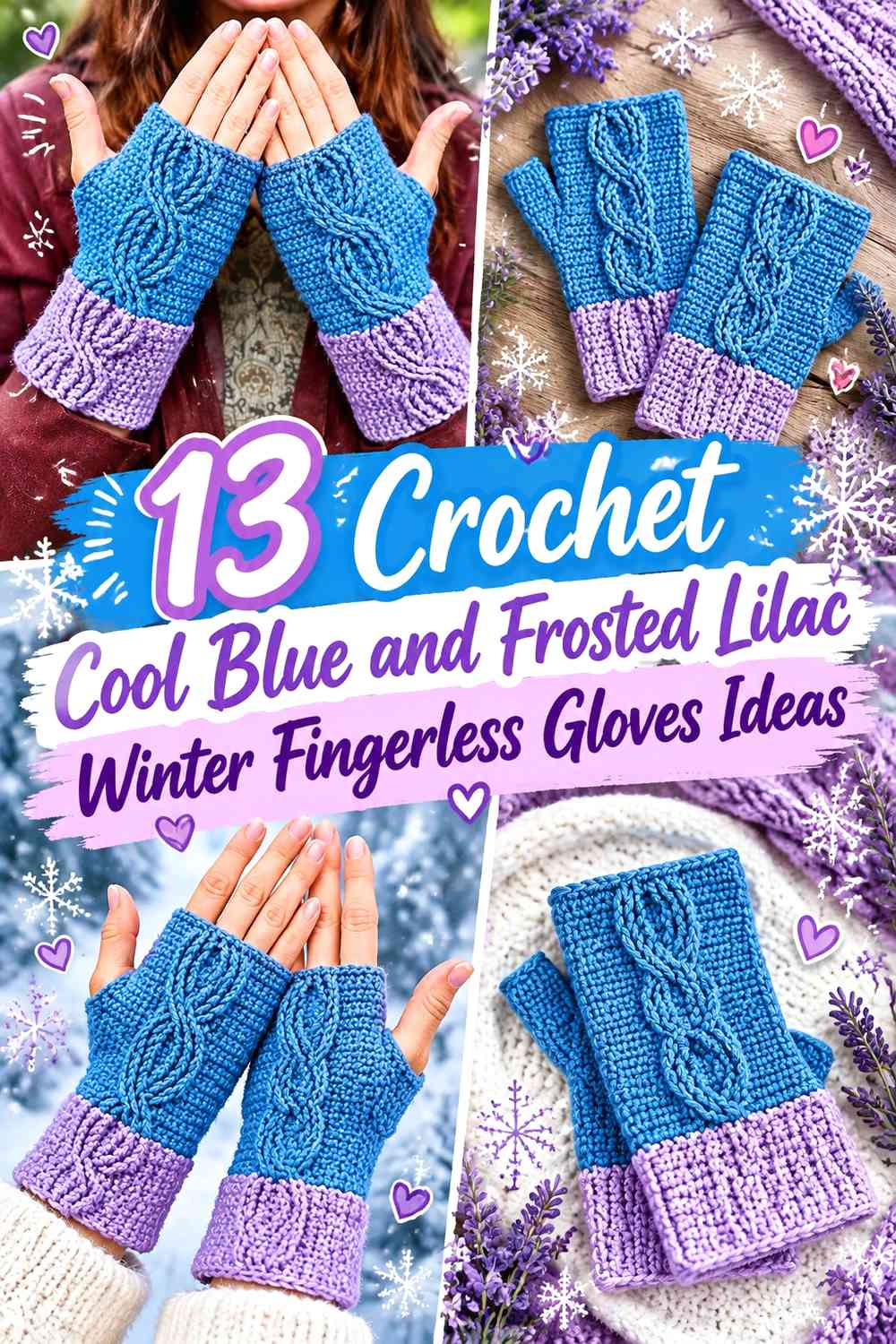

Cool Blue and Frosted Lilac create a soft winter palette for crochet fingerless gloves without relying on an extremely high-contrast combination. Cool Blue can provide the clearer visual anchor, while Frosted Lilac can lighten cuffs, thumb openings, textured panels, stripes, and decorative edges.
Here, both names describe general color directions rather than specific commercial yarn shades. Cool Blue means a softened medium-light blue, while Frosted Lilac means a pale, muted purple. Because the colors can be fairly close in lightness, their placement matters. A small lilac cable on a similarly light blue background may blend more than a broad lilac cuff beside a darker Cool Blue hand section.
Fingerless gloves also have several compact design zones: cuff, palm, back-of-hand panel, thumb opening, and upper finger edge. Color changes that seem minor on a sweater can occupy a large percentage of a glove, so a restrained contrast plan often works better than alternating shades in every row.
The tutorials below support cable, moss-stitch, puff-stitch, ribbed, textured, striped, braided, wrist-warmer, and other fingerless-glove constructions. The Cool Blue and Frosted Lilac palettes are independent adaptations and should not be attributed to the creators unless their tutorials specifically use those shades.
Quick List
- Cool Blue Cable Crochet Fingerless Gloves with Frosted Lilac Cuffs
- Frosted Lilac Cable Crochet Fingerless Gloves with Cool Blue Hand Panels
- Cool Blue Moss-Stitch Crochet Fingerless Gloves with Frosted Lilac Edges
- Frosted Lilac Puff-Stitch Crochet Fingerless Gloves with Cool Blue Ribbing
- Cool Blue Textured Crochet Fingerless Gloves with Frosted Lilac Thumb Trim
- Cool Blue Brick-Stitch Crochet Fingerless Gloves with Frosted Lilac Color Bands
- Frosted Lilac Long-Cuff Crochet Fingerless Gloves with Cool Blue Hand Sections
- Cool Blue Even-Moss Crochet Fingerless Gloves with Frosted Lilac Ribbed Cuffs
- Frosted Lilac Stretchy Crochet Fingerless Gloves with Cool Blue Edge Bands
- Cool Blue Braided Crochet Fingerless Gloves with Frosted Lilac Side Accents
- Frosted Lilac Half-Finger Crochet Gloves with Cool Blue Cuffs
- Cool Blue Striped Crochet Wrist Warmers with Frosted Lilac Bands
- Frosted Lilac Ribbed Crochet Fingerless Gloves with Cool Blue Thumb Edging
Check the Value Difference Between Cool Blue and Frosted Lilac
Cool Blue and Frosted Lilac can look clearly different as yarn balls but become more similar once worked into dense crochet. Before committing to small colorwork details, place completed samples beside each other or check a photo in grayscale. If they appear nearly identical in value, use larger color zones rather than relying on tiny motifs.
Contrast is particularly important around cables, braids, thumb openings, and ribbed cuffs. These features already depend on shadow and texture, so subtle color differences may need enough surface area to remain visible.
Decide Whether Cool Blue or Frosted Lilac Should Lead the Gloves
Cool Blue can cover the hand section while Frosted Lilac is reserved for the cuff and upper edge, producing a blue-led winter glove with softer purple framing. Reversing those roles gives Frosted Lilac more visual space and lets Cool Blue define smaller structural areas.
You do not need a fifty-fifty split. Because gloves are compact, one contrasting cuff and one repeated thumb edge can be enough to make the palette feel coordinated.
Plan Cool Blue and Frosted Lilac Around Both Gloves as a Pair
Color placement should be checked across the right and left gloves together. If one glove has a Frosted Lilac cable or stripe positioned differently, the mismatch can be more noticeable than it would be on a larger garment.
When working two-color details, decide whether the pair should mirror each other or repeat the same placement. Either can work, but the choice should be deliberate.
1. Cool Blue Cable Crochet Fingerless Gloves with Frosted Lilac Cuffs
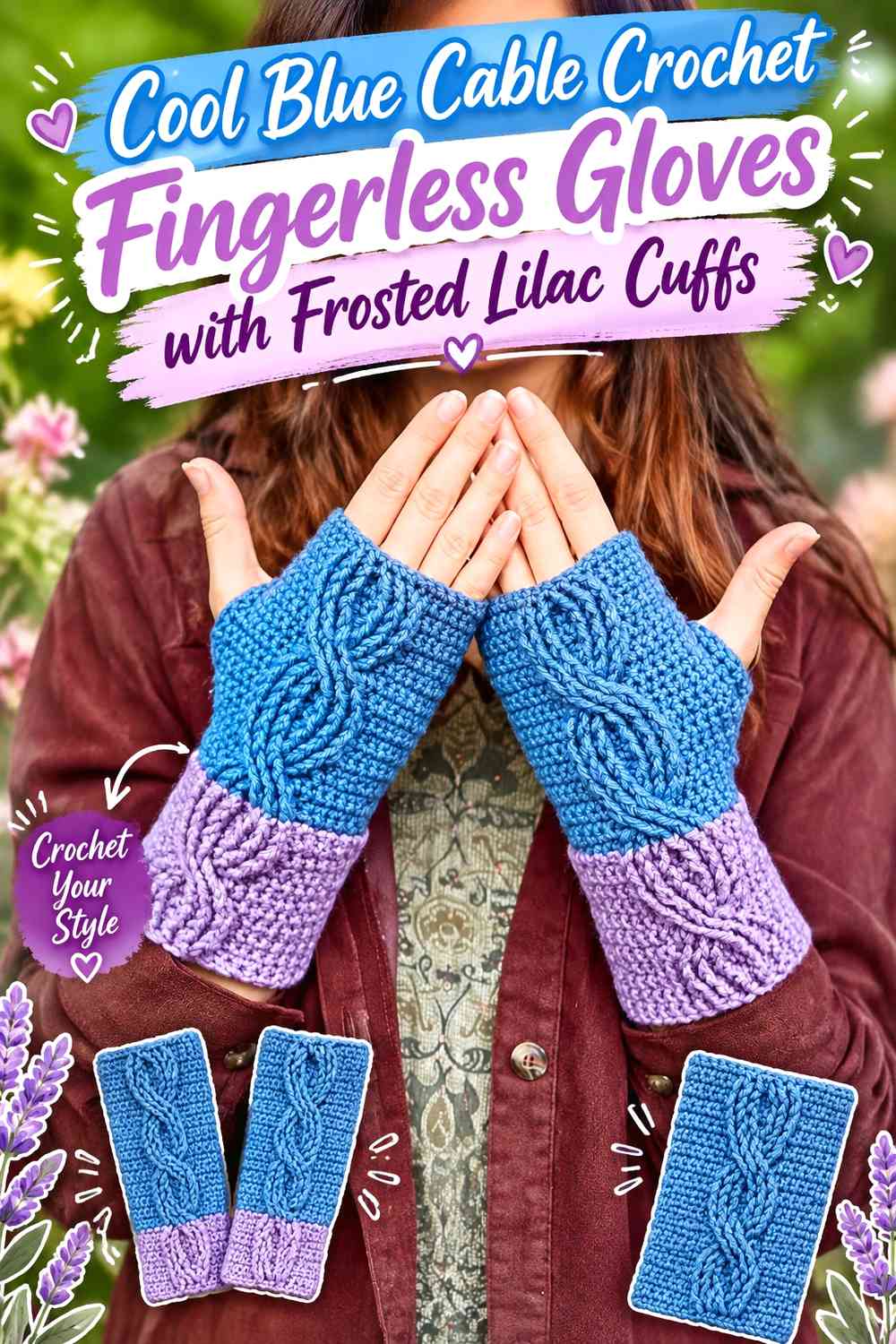
Cool Blue can carry the main hand section while a Frosted Lilac cuff provides a softer contrast at the wrist. The cable remains part of the blue field, so texture rather than color becomes the main feature across the back of the hand.
Cool Blue Should Keep the Crochet Cable Visually Continuous
Use Cool Blue across the cable and surrounding hand fabric if you want the raised texture to read as one uninterrupted panel. Changing the cable itself to Frosted Lilac can make the color contrast compete with the shadow created by the raised stitches.
Frosted Lilac Cuffs Can Frame the Cool Blue Cable Gloves
A Frosted Lilac cuff creates one clear color break before the cable begins. Keep enough Cool Blue immediately above it that the cable has its own visual space rather than appearing attached to a large lilac section.
Creator Credit: Calluna Crochet
2. Frosted Lilac Cable Crochet Fingerless Gloves with Cool Blue Hand Panels
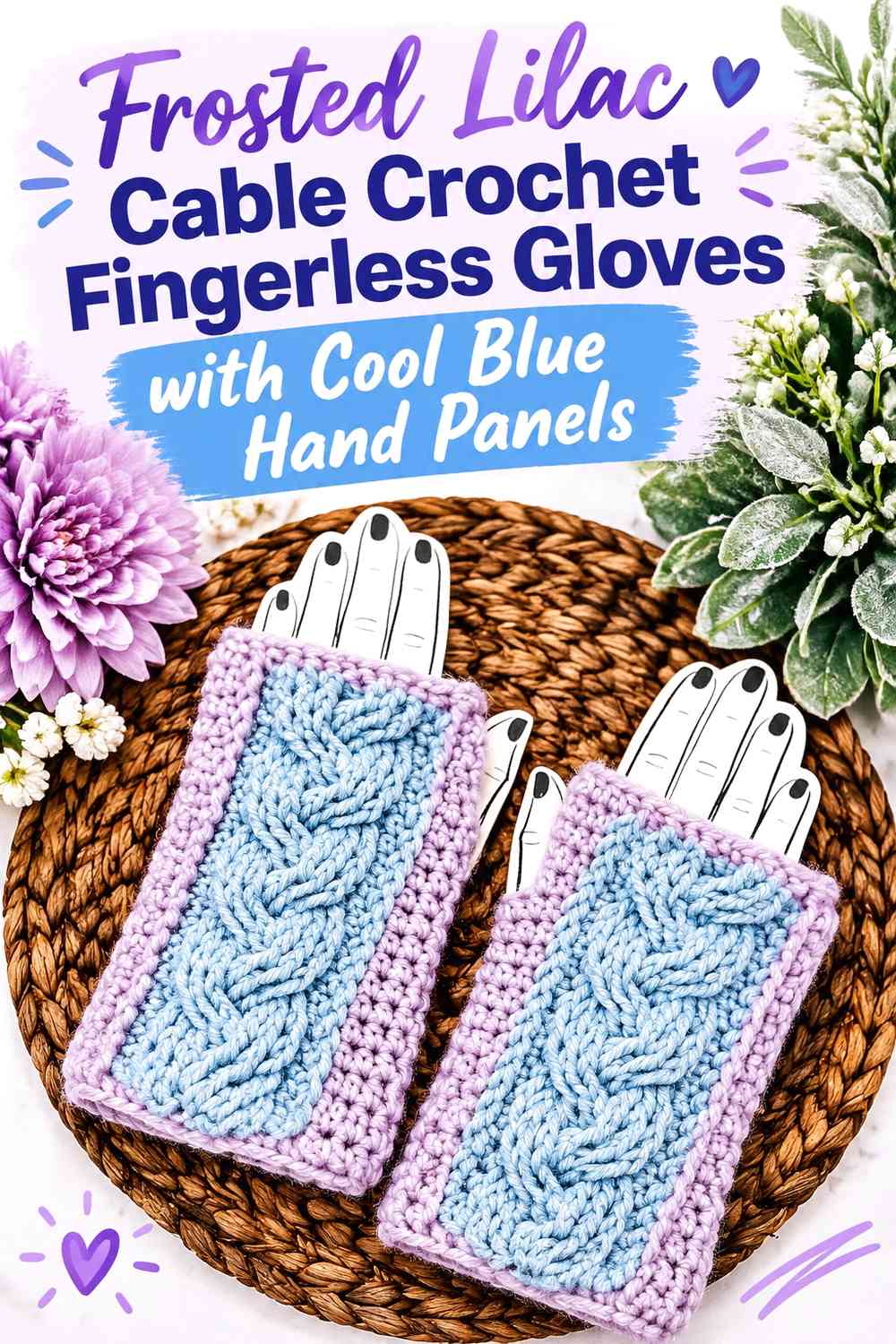
This version reverses the palette by placing Frosted Lilac around the main cable area and using Cool Blue in supporting hand sections or the cuff. The deeper blue can provide stronger definition where the lilac texture needs a boundary.
Frosted Lilac Gives the Cool Blue Cable Contrast a Softer Background
Keep the main textured panel Frosted Lilac when you want the glove to remain purple-led. A Cool Blue side or palm section can define the edges without breaking the raised cable itself into several colors.
Cool Blue Should Repeat Clearly Around Frosted Lilac
If Cool Blue appears at the cuff, repeat it once at the thumb opening or upper edge so it does not feel isolated. Keep those repeats smaller than the Frosted Lilac body when lilac is intended to remain dominant.
Creator Credit: Sierra Fontaine
3. Cool Blue Moss-Stitch Crochet Fingerless Gloves with Frosted Lilac Edges
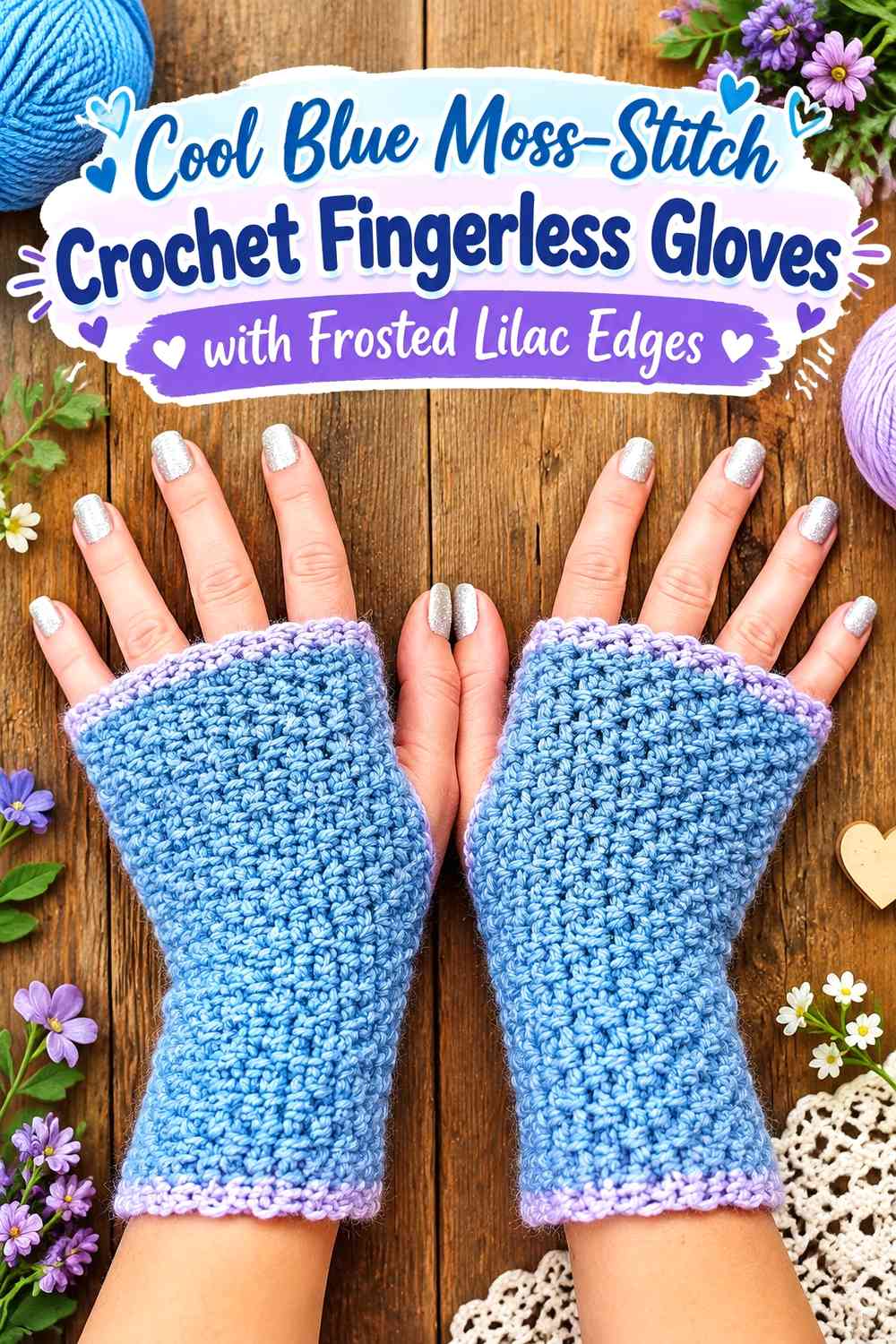
Moss-style texture already creates small alternating spaces across the fabric, so a simple two-color plan works well. Cool Blue can cover the main hand section, while Frosted Lilac defines the upper and lower edges.
Cool Blue Moss Texture Needs Calm Frosted Lilac Placement
Let the moss-stitch body remain mostly Cool Blue so the texture stays easy to read. Frequent lilac changes through the small stitch repeat could make the glove appear busier than necessary.
Frosted Lilac Can Define the Cool Blue Thumb and Finger Edges
Use Frosted Lilac around one or both openings when the edges need clearer separation. Because these areas are small, even a narrow pale-purple line can connect the cuff to the rest of the glove.
Creator Credit: naztazia
4. Frosted Lilac Puff-Stitch Crochet Fingerless Gloves with Cool Blue Ribbing
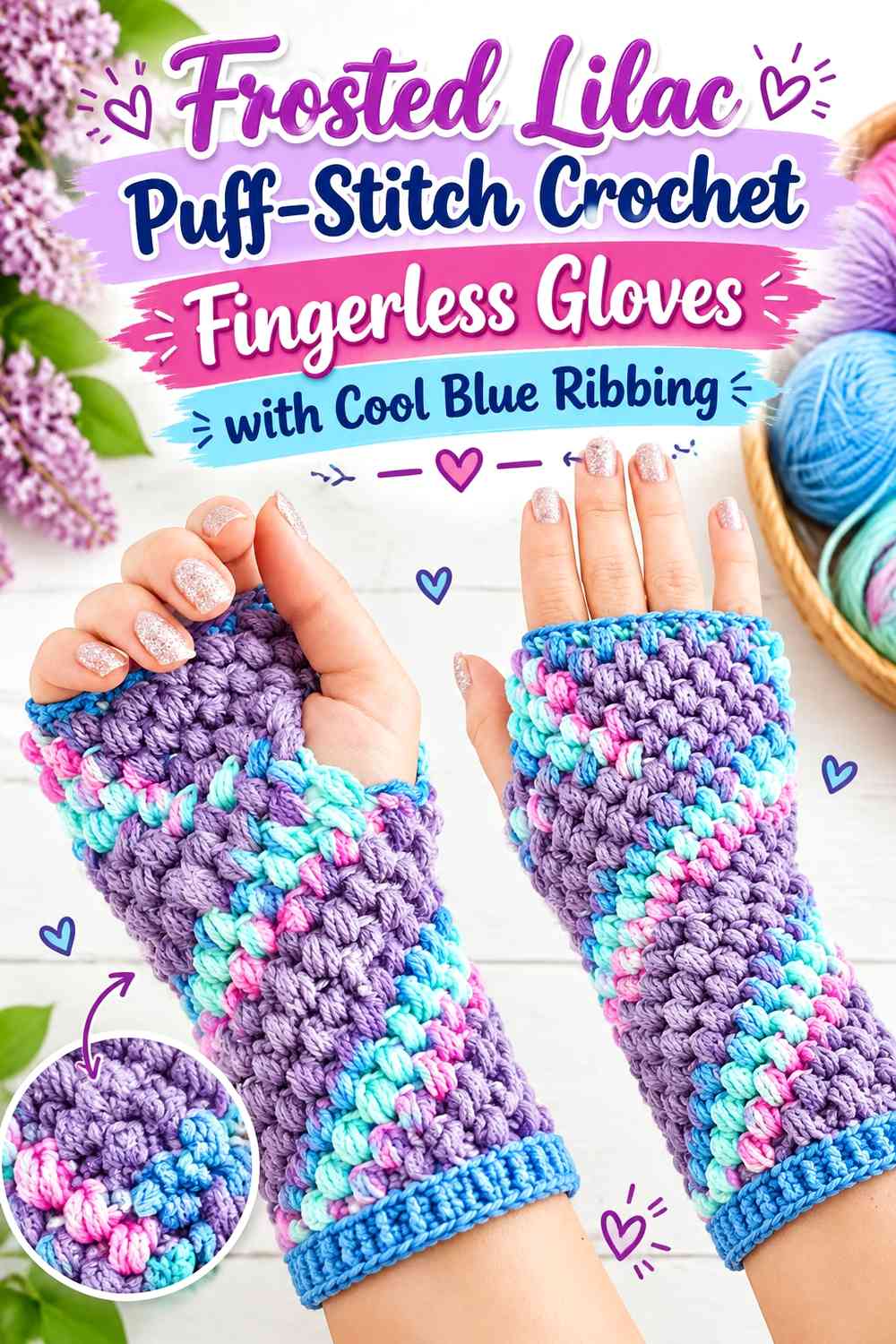
Puff stitches create a rounded, dimensional surface that can carry Frosted Lilac without additional colorwork inside each puff. Cool Blue works well around the cuff, where the straighter ribbing can visually contain the softer texture above it.
Frosted Lilac Should Remain Continuous Across the Puff-Stitch Hand
Keep the puff section one main color if you want the rounded texture to be the feature. Alternating every puff between Frosted Lilac and Cool Blue can turn the hand area into a dot pattern rather than a cohesive textured panel.
Cool Blue Ribbing Can Ground the Frosted Lilac Crochet Puffs
Use Cool Blue around the wrist to give the paler puff texture a defined lower boundary. A small blue repeat around the finger edge can connect the palette if the cuff alone feels too separate.
Creator Credit: Hooked by Robin
5. Cool Blue Textured Crochet Fingerless Gloves with Frosted Lilac Thumb Trim
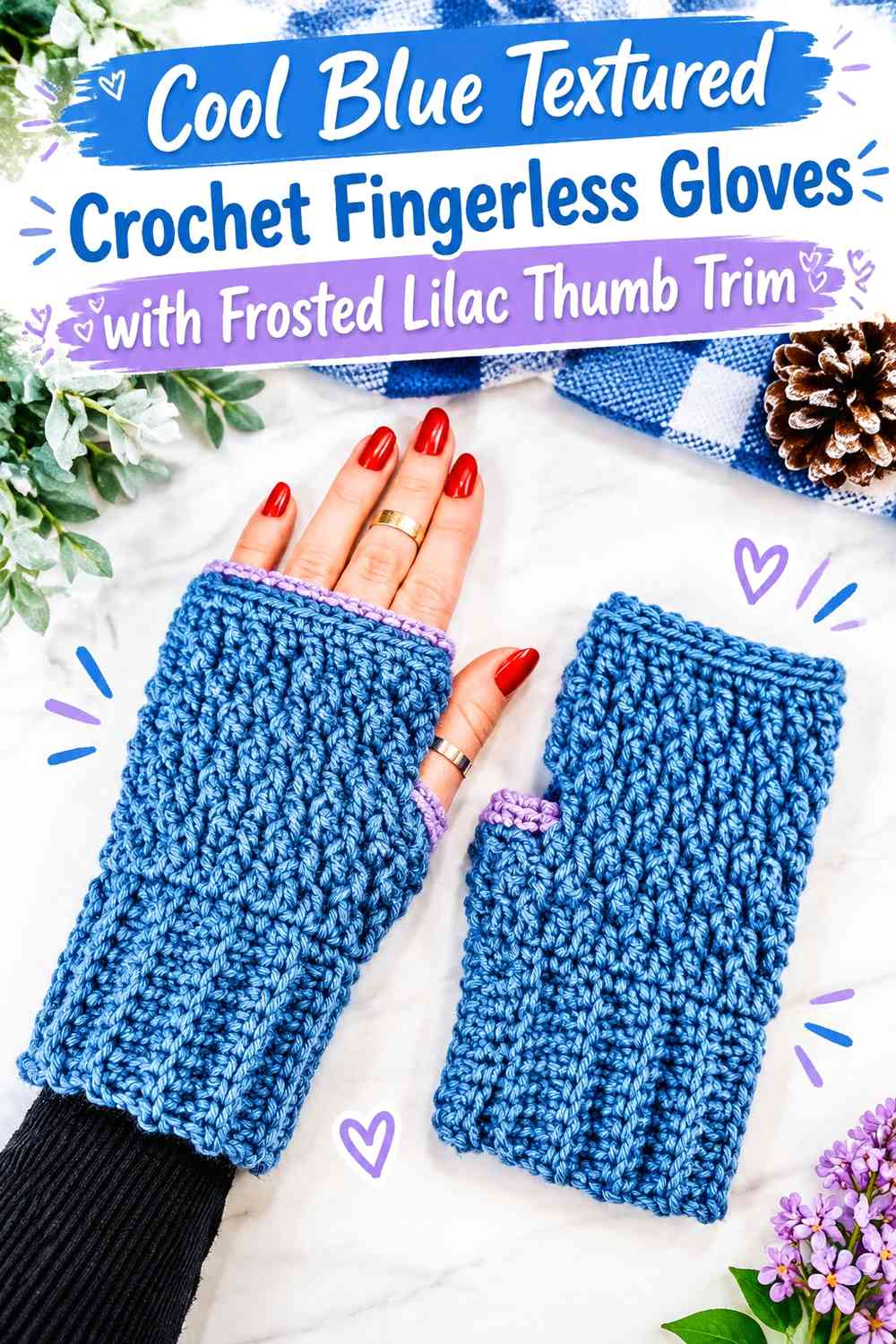
This idea keeps the overall glove Cool Blue and uses Frosted Lilac almost entirely around the thumb opening. It is a restrained option when you want the glove texture to remain uninterrupted but still want a visible two-color detail.
Cool Blue Should Carry the Main Textured Crochet Surface
Allow Cool Blue to cover the cuff and hand if the stitch pattern already creates enough visual movement. The continuous field keeps both gloves easy to match and prevents small decorative areas from competing.
Frosted Lilac Can Clarify the Cool Blue Thumb Opening
A narrow Frosted Lilac finish can make the thumb opening easier to identify visually, especially when the body stitch is highly textured. Repeat the lilac at the upper finger edge only if the thumb trim feels isolated.
Creator Credit: The Turtle Trunk
6. Cool Blue Brick-Stitch Crochet Fingerless Gloves with Frosted Lilac Color Bands
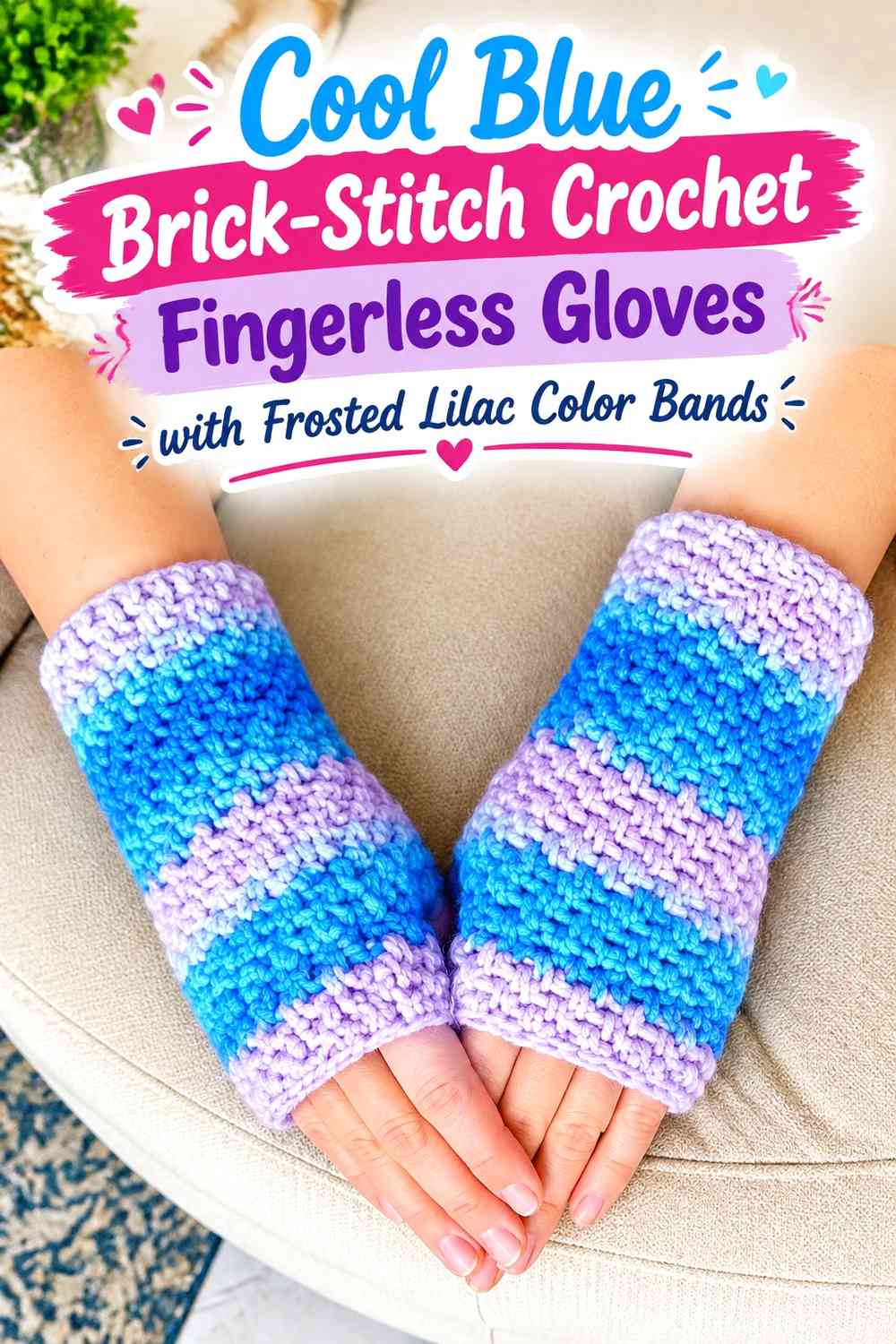
Brick-style crochet gives the two colors natural opportunities to alternate in controlled rows or sections. Cool Blue can remain the dominant field while Frosted Lilac appears in selected bands that emphasize the layered stitch structure.
Cool Blue Should Connect the Frosted Lilac Brick-Stitch Bands
Leave several Cool Blue sections between lilac bands if you want the glove to remain blue-led. Using equal amounts of both colors throughout changes the appearance into a strongly striped design.
Frosted Lilac Bands Can Reveal the Cool Blue Brick Texture
Place Frosted Lilac where it emphasizes the layered or overlapping look of the stitch rather than changing color at arbitrary intervals. A consistent repeat helps both gloves look coordinated even when the texture itself is complex.
Creator Credit: Meladora’s Creations for Crochet
7. Frosted Lilac Long-Cuff Crochet Fingerless Gloves with Cool Blue Hand Sections
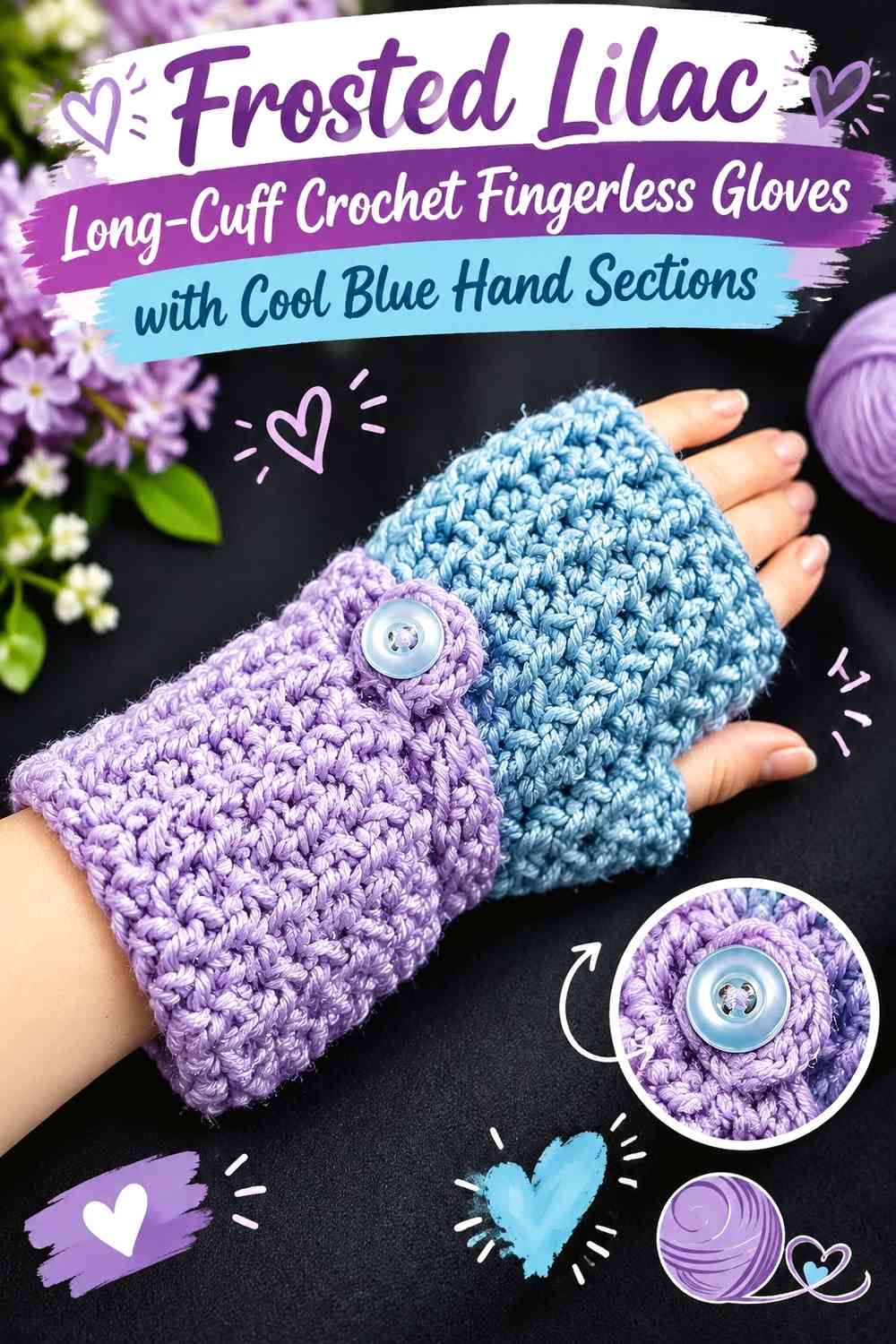
A longer cuff gives Frosted Lilac much more visual area than a standard wrist band. Cool Blue can begin nearer the hand, creating a clear transition from pale-purple wrist warmer to blue fingerless glove.
Frosted Lilac Should Use the Extra Cuff Length Deliberately
If the cuff is meant to be the major lilac section, keep it continuous rather than filling it with several Cool Blue stripes. The longer pale area creates a clean color block beneath the hand.
Cool Blue Can Define the Frosted Lilac Hand Transition
Introduce Cool Blue where the glove moves from wrist coverage toward the palm and thumb. A distinct transition is usually clearer than gradually alternating both shades through the entire cuff.
Creator Credit: Crochet with Clare
8. Cool Blue Even-Moss Crochet Fingerless Gloves with Frosted Lilac Ribbed Cuffs
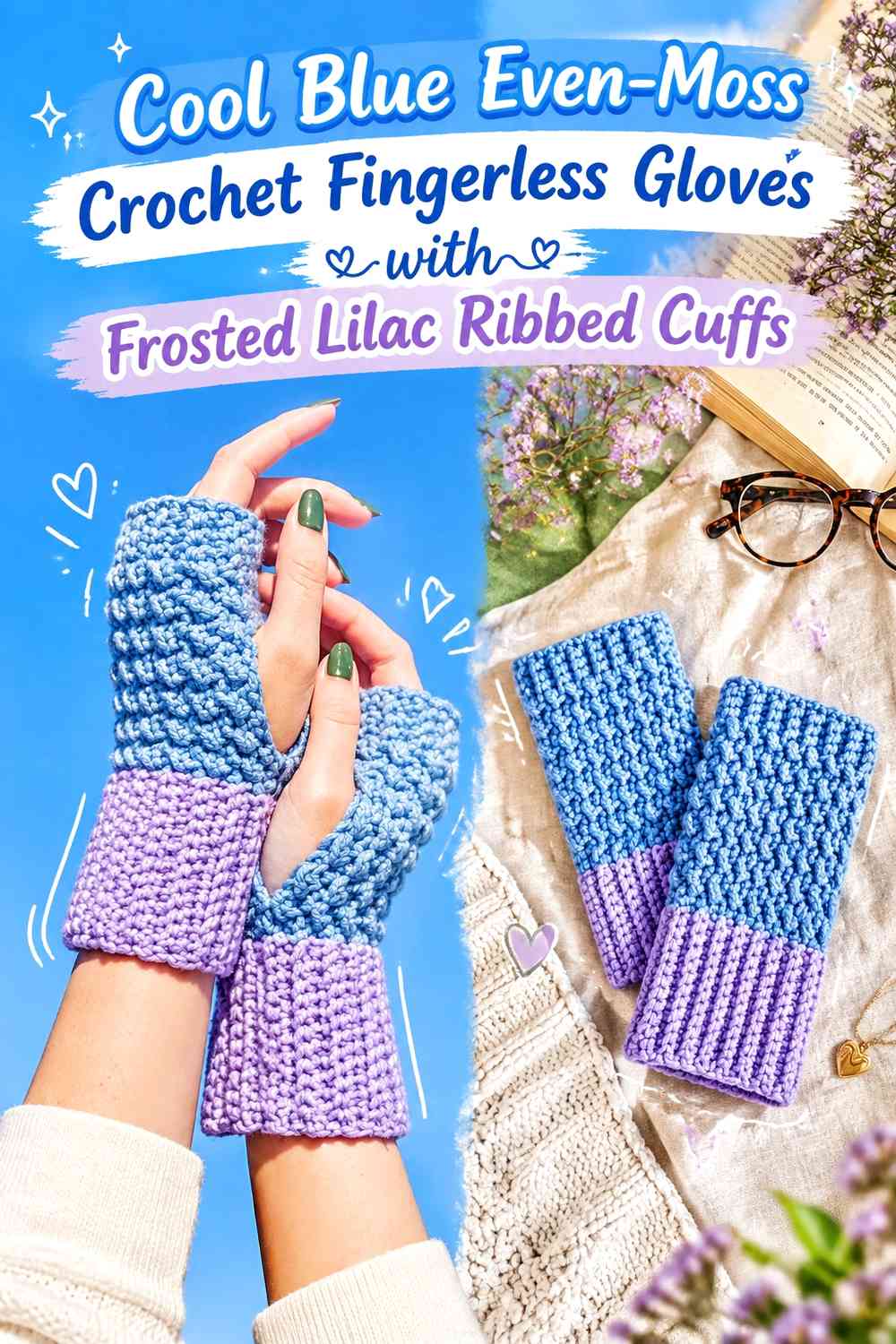
This arrangement combines a Cool Blue textured hand with a distinctly Frosted Lilac ribbed wrist. The difference between the two surface textures gives each color its own role without needing additional motifs.
Cool Blue Should Stay Broad Across the Even-Moss Hand Section
Keep the main hand fabric Cool Blue so the repeated small texture reads as one field. A continuous color also allows the thumb opening to remain easier to locate within the stitch pattern.
Frosted Lilac Ribbing Can Separate the Cool Blue Glove From the Sleeve
A Frosted Lilac cuff creates a clear boundary between the glove and winter clothing worn above it. If the cuff is long, keep the upper finger edge Cool Blue so the lilac does not frame both ends equally.
Creator Credit: HayHay Crochet
9. Frosted Lilac Stretchy Crochet Fingerless Gloves with Cool Blue Edge Bands
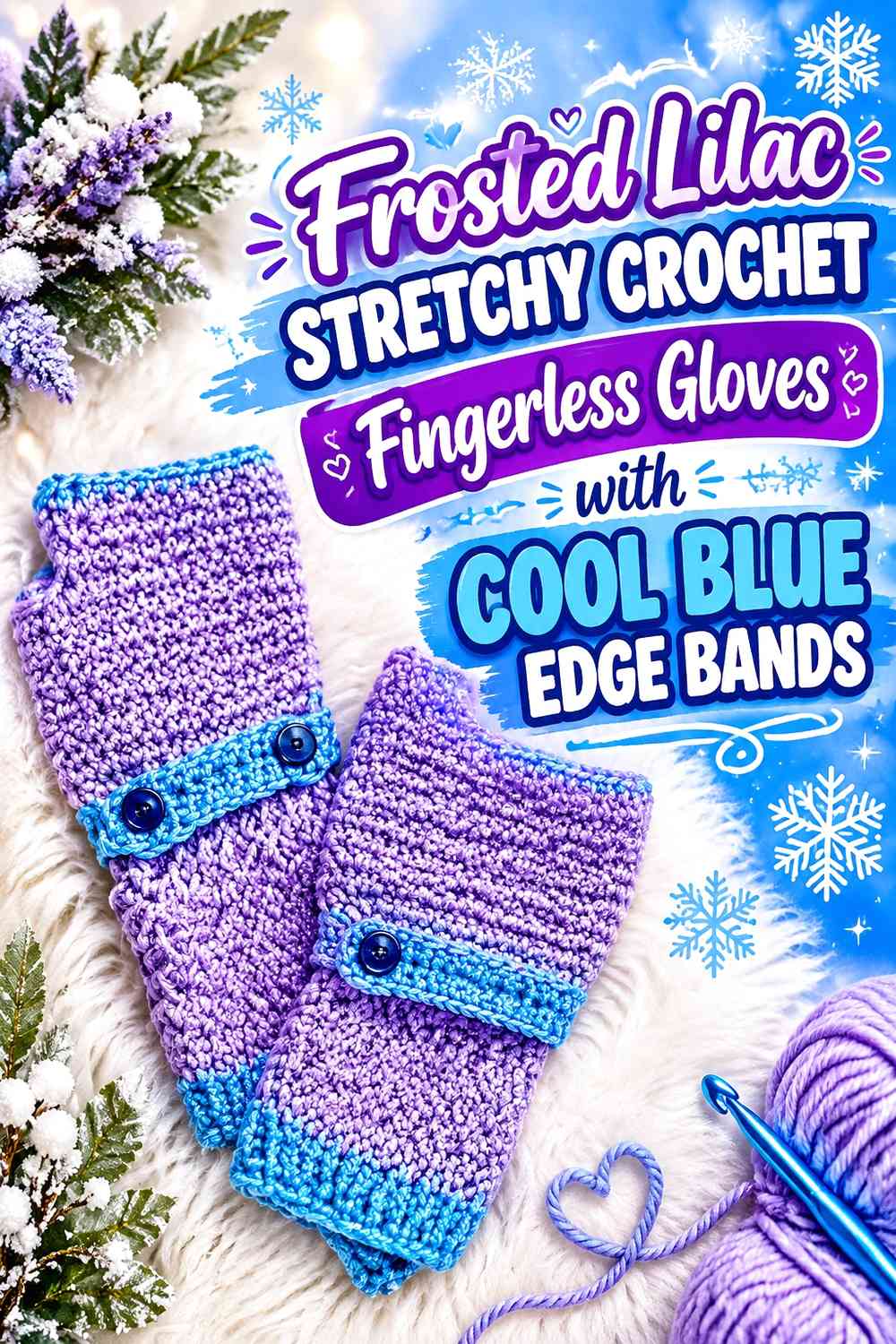
A simple stretchy glove construction allows color placement to become the main design feature. Frosted Lilac can cover most of the tube-like hand section, while Cool Blue defines the cuff and upper edge.
Frosted Lilac Should Remain the Main Stretchy Crochet Field
Keep the center section Frosted Lilac if you want the glove to read as lilac from a distance. Broad Cool Blue stripes through the hand would shift the concept toward equal color blocking.
Cool Blue Edge Bands Can Frame Frosted Lilac Without Crowding It
Use Cool Blue at the wrist and finger edge, but consider making one band narrower than the other. Two equally deep blue bands can make the Frosted Lilac center look visually compressed.
Creator Credit: The Crochet Crowd
10. Cool Blue Braided Crochet Fingerless Gloves with Frosted Lilac Side Accents
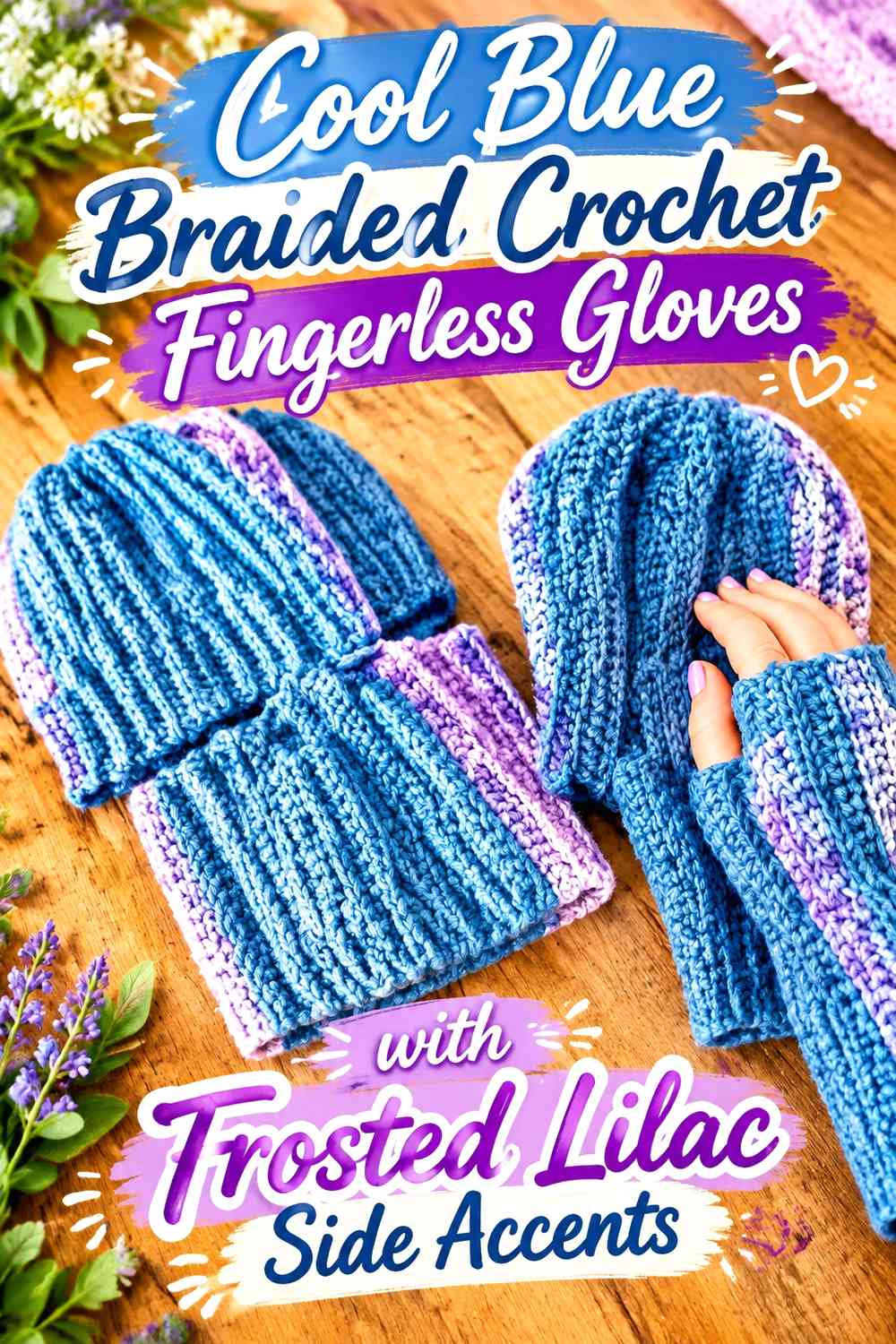
Vertical braided texture naturally draws the eye along the hand, making Cool Blue useful for the main raised section. Frosted Lilac can sit beside the braid or along the side where it provides contrast without interrupting the vertical texture.
Cool Blue Braids Should Stay Continuous Beside Frosted Lilac
Keep the braid itself Cool Blue from cuff toward finger opening if vertical continuity is important. Changing shade halfway through a raised braid can make the texture feel divided.
Frosted Lilac Side Accents Can Frame the Cool Blue Braids
A lilac section beside the braid can make the raised Cool Blue column easier to distinguish. Keep its width consistent on both gloves so the central textured panel appears similarly positioned.
Creator Credit: JolieKnots Crochet
11. Frosted Lilac Half-Finger Crochet Gloves with Cool Blue Cuffs
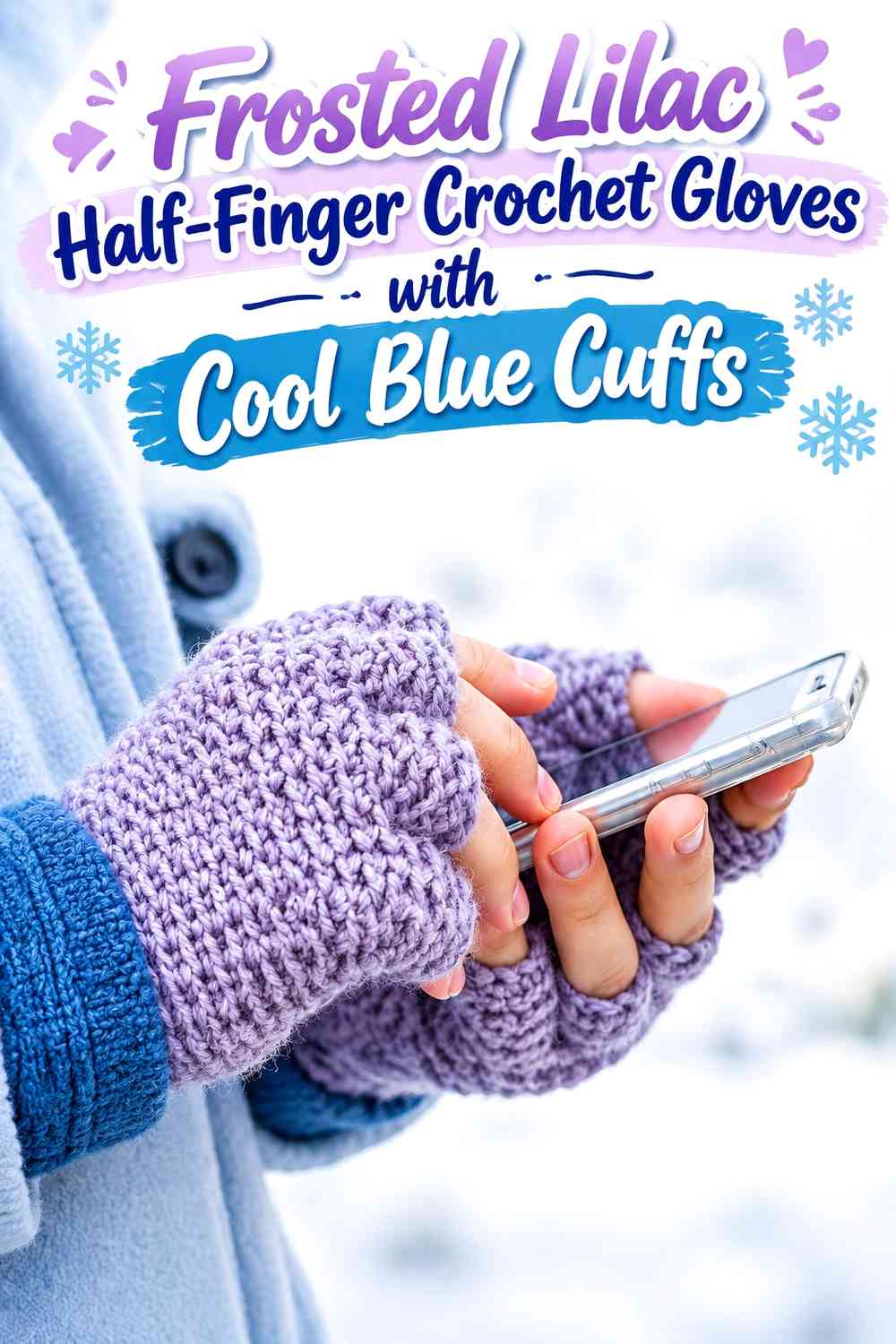
A half-finger construction creates more small edges than a standard open fingerless mitt. Frosted Lilac can cover most of the glove while Cool Blue is concentrated at the wrist, letting the detailed finger openings remain visually simple.
Frosted Lilac Should Unite the Individual Crochet Finger Sections
Use the same lilac across the hand and short finger sections so the multiple openings do not become even busier through color changes. One continuous shade helps the glove read as a single piece.
Cool Blue Cuffs Can Anchor the Frosted Lilac Half-Finger Shape
Keep the darker blue around the wrist where it can provide one strong base. If you want a second Cool Blue repeat, a narrow thumb edge is usually enough without outlining every finger opening.
Creator Credit: Fuad Azmat / YARNutopia by Nadia
12. Cool Blue Striped Crochet Wrist Warmers with Frosted Lilac Bands
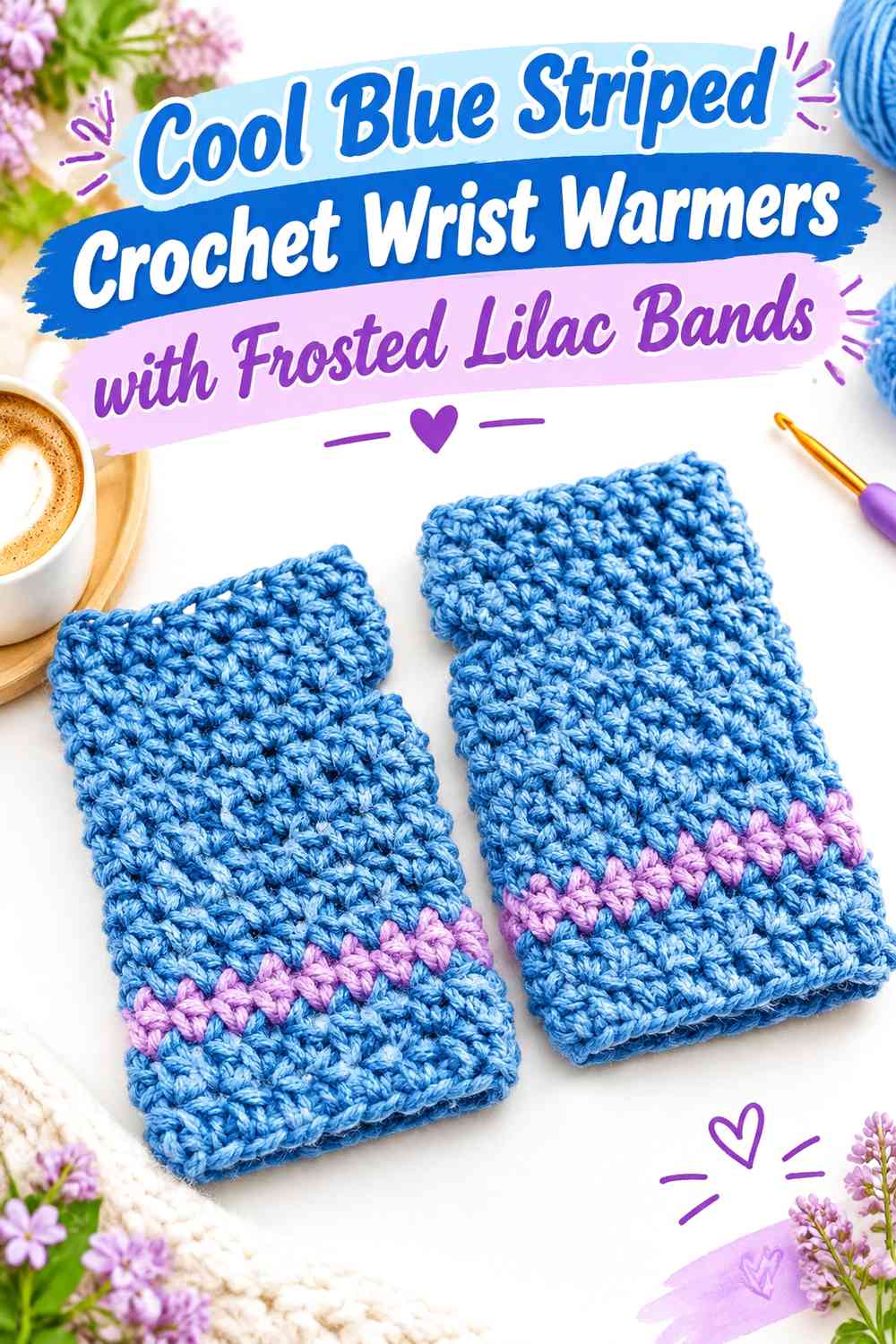
This idea makes striping the main color feature. Cool Blue carries most of the wrist warmer, while Frosted Lilac appears in a small number of horizontal bands rather than covering an entire cuff.
Cool Blue Should Occupy More Space Between Frosted Lilac Stripes
Give the main blue sections enough width that the gloves do not become evenly alternating stripes. Larger Cool Blue areas produce a calmer winter look and keep Frosted Lilac in a supporting role.
Frosted Lilac Bands Should Repeat Clearly Across Cool Blue
Match the stripe positions across the pair so the bands sit at comparable heights on both hands. Because fingerless gloves are worn side by side, even a small difference in stripe placement can be noticeable.
Creator Credit: Fiber Flux
13. Frosted Lilac Ribbed Crochet Fingerless Gloves with Cool Blue Thumb Edging
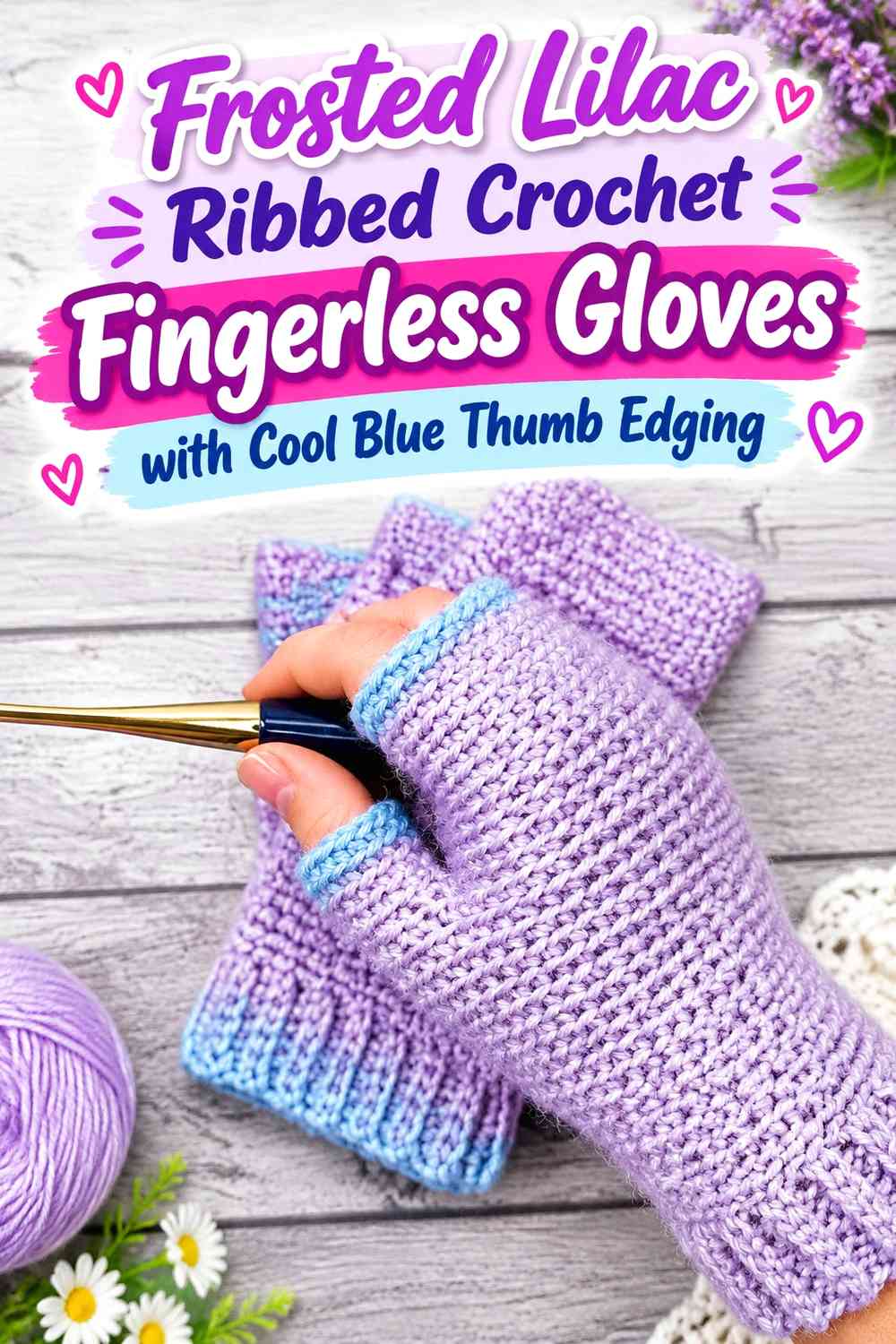
The final direction keeps Frosted Lilac across almost the entire glove and limits Cool Blue to compact structural details. Ribbing gives the lilac fabric enough visual interest that a large second-color area is unnecessary.
Frosted Lilac Ribbing Should Carry the Main Winter Glove Texture
Use Frosted Lilac continuously through the wrist and hand when you want the vertical rib structure to remain the dominant feature. The pale purple surface can provide enough texture without body stripes.
Cool Blue Can Define Frosted Lilac Thumb and Finger Openings
Finish the thumb opening or upper edge in Cool Blue when those small boundaries need clearer definition. Avoid outlining every edge equally if you want Frosted Lilac to remain the obvious main shade.
Creator Credit: Kickin Crochet
Which Cool Blue and Frosted Lilac Fingerless Gloves Should You Choose?
For the cleanest winter color balance, choose a Cool Blue hand with a Frosted Lilac cuff or reverse the arrangement for a Frosted Lilac glove framed by Cool Blue. Large color zones are particularly useful if your chosen yarn shades are close in value.
If texture is the main attraction, cable, puff, braid, moss, and ribbed designs generally benefit from fewer color changes. Let one shade carry the texture and use the second color at an edge, cuff, thumb opening, or side panel.
For more obvious two-color styling, brick-stitch and striped wrist warmers give you repeated places to alternate Cool Blue and Frosted Lilac. Keep one color visually dominant unless a balanced striped effect is intentional.
Long cuffs and half-finger designs provide more surface area, so use contrast selectively. More construction detail does not automatically require more color changes.
Conclusion
Cool Blue and Frosted Lilac can create a subtle winter fingerless-glove palette, but their similar softness makes deliberate placement especially important.
Use Cool Blue as the dominant shade when you want clearer structure through cables, braids, hand panels, or stripes, then let Frosted Lilac soften cuffs and edges. Reverse the hierarchy for paler purple gloves with Cool Blue providing definition around the wrist, thumb, or finger opening.
Texture should guide how much contrast you add. Puff stitches, cables, moss stitch, ribbing, and brick texture already create shadows and visual movement, so a single contrasting cuff may be more effective than frequent color changes.
Finally, compare the two gloves together before finishing all edging. Stripe height, cuff depth, thumb accents, and side-panel placement are much easier to judge as a pair. Follow the original creator tutorial for its exact construction, then adapt the Cool Blue and Frosted Lilac placement to the finished glove shape.
Frequently Asked Questions
Should Cool Blue or Frosted Lilac Be the Main Color of Fingerless Gloves?
Use Cool Blue as the dominant shade when you want a slightly stronger winter base with Frosted Lilac providing softer accents. Choose Frosted Lilac as the main color when you want a paler glove and let Cool Blue define cuffs, thumb openings, or textured panels.
How Can I Tell Whether Cool Blue and Frosted Lilac Have Enough Contrast?
Work small samples and compare them side by side. A grayscale photo can help show whether their light-and-dark values are different enough. If they merge visually, use larger color blocks rather than tiny contrasting details.
Where Should Frosted Lilac Go on Mostly Cool Blue Crochet Gloves?
Useful placements include the cuff, thumb opening, finger edge, side panel, stripe, or selected textured band. Choose one or two areas that need visual separation rather than adding lilac to every structural feature.
Do Cool Blue and Frosted Lilac Cuffs Need to Match on Both Gloves?
The overall placement should usually relate clearly across the pair. You can mirror decorative details or repeat them exactly, but cuff depth and major color sections should appear intentional when both gloves are worn together.
Can Cool Blue Be Used Only Around the Thumb of Frosted Lilac Gloves?
Yes. A small Cool Blue thumb edge can provide enough contrast on an otherwise Frosted Lilac glove, especially when the body has strong ribbing or another visible texture.
Are Cool Blue and Frosted Lilac Good for Striped Fingerless Gloves?
Yes, but closely spaced equal stripes can look more blended if the shades are similar in value. Wider bands or a clearly dominant background color usually make the two-color relationship easier to see.
What Can I Substitute for Cool Blue?
Choose another softened blue that remains visibly different from Frosted Lilac. A slightly deeper dusty blue can increase contrast while preserving the cool winter direction.
What Can I Substitute for Frosted Lilac?
Choose another pale, muted purple that stays distinguishable from Cool Blue. Preserve its lighter or softer role if you want cuffs, edges, and small accents to remain clearly separate.