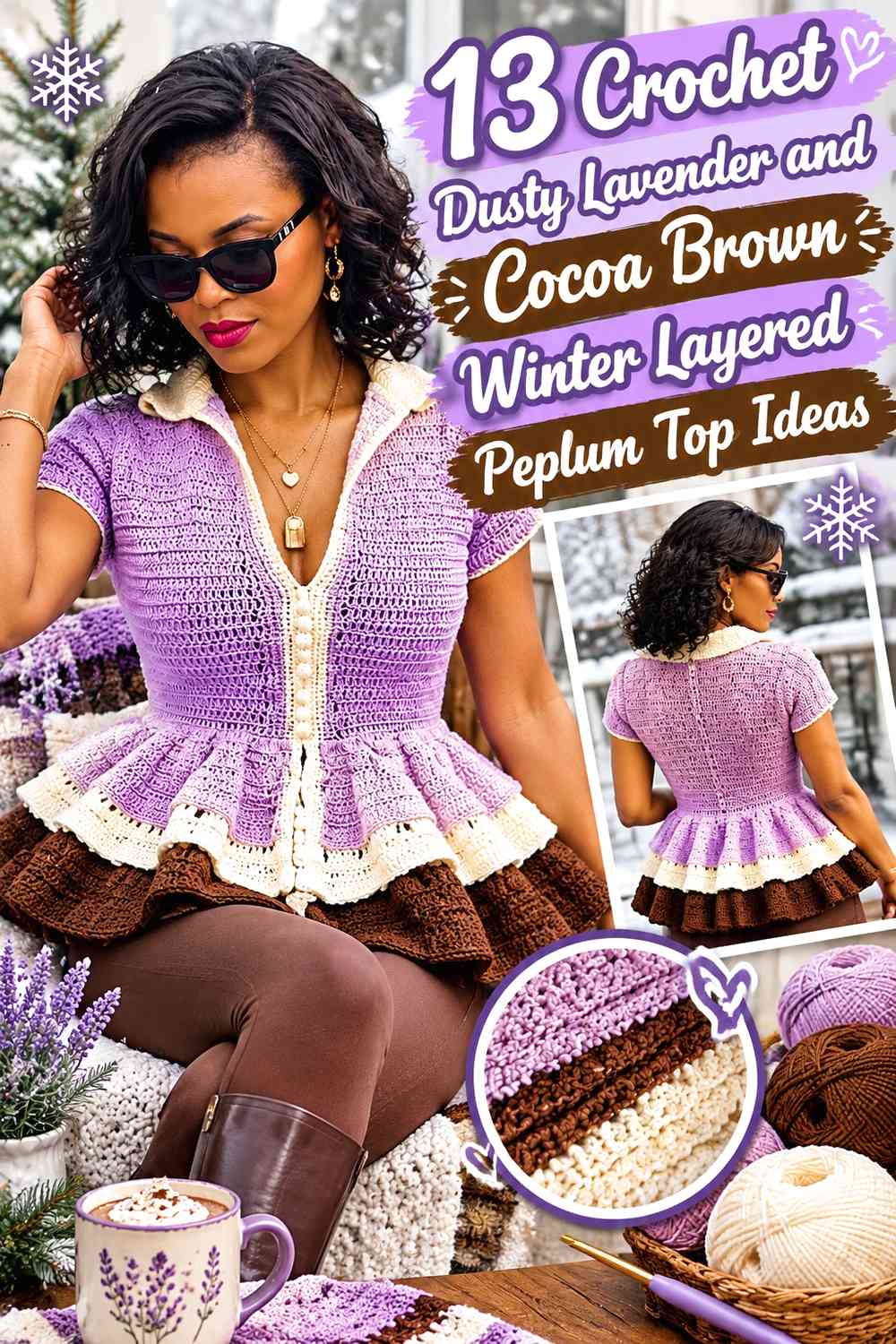

Dusty Lavender and Cocoa Brown create a softer winter color direction for a crochet peplum top than a palette built entirely around dark neutrals. Dusty Lavender can draw attention to the bodice or flared lower layers, while Cocoa Brown can define the waist, neckline, sleeve edges, or lower peplum tier.
A layered peplum needs particularly clear color planning because the garment already has several visual zones. The bodice, waist transition, first flare, lower tier, sleeves, and edging can all carry color, but giving every area equal contrast can make the silhouette look segmented. A stronger approach is to choose one dominant shade, let the second color repeat at structural points, and reserve any third color for a specific purpose.
For winter wear, also consider what will be visible when the crochet top is layered over another garment. A neckline border that looks subtle on its own may become more obvious over a contrasting fitted base layer, while open stitches can reveal the color worn underneath. The tutorials credited below support peplum, babydoll, ruffled, or closely related flared-top constructions. The Dusty Lavender and Cocoa Brown palettes and layered peplum treatments are independent adaptations.
Quick List
- Dusty Lavender and Cocoa Brown Crochet Winter Layered Peplum Top With Cream
- Dusty Lavender and Cocoa Brown Crochet Winter Layered Peplum Top With Oatmeal
- Dusty Lavender and Cocoa Brown Crochet Winter Layered Peplum Top With Deep Plum
- Dusty Lavender and Cocoa Brown Crochet Winter Layered Peplum Top With Charcoal
- Dusty Lavender and Cocoa Brown Crochet Winter Layered Peplum Top With Sage
- Dusty Lavender and Cocoa Brown Crochet Winter Layered Peplum Top With Muted Mauve
- Dusty Lavender and Cocoa Brown Crochet Winter Layered Peplum Top With Camel
- Dusty Lavender and Cocoa Brown Crochet Winter Layered Peplum Top With Burgundy
- Dusty Lavender and Cocoa Brown Crochet Winter Layered Peplum Top With Ivory
- Dusty Lavender and Cocoa Brown Crochet Winter Layered Peplum Top With Midnight Navy
- Dusty Lavender and Cocoa Brown Crochet Winter Layered Peplum Top With Muted Teal
- Dusty Lavender and Cocoa Brown Crochet Winter Layered Peplum Top With Rose Taupe
- Tonal Dusty Lavender and Cocoa Brown Crochet Winter Layered Peplum Top
Decide Where Dusty Lavender and Cocoa Brown Change at the Peplum
A layered peplum creates natural color-change points, but that does not mean every tier needs a different shade. If Dusty Lavender covers the bodice and upper flare, a Cocoa Brown lower tier can give the hem more visual weight without splitting the garment into numerous stripes.
The reverse distribution gives a different result. A Cocoa Brown bodice can create a darker upper section while Dusty Lavender opens out across the peplum layers. This can put more attention on the flare instead of the neckline and shoulders.
Whichever direction you choose, check where the color change falls when the garment is worn. A narrow contrasting stripe directly at the waist attracts more attention to that transition than a gradual change across the peplum.
Use Dusty Lavender and Cocoa Brown to Separate Peplum Layers
Layered flares need enough definition for the separate sections to remain visible. Color can help, but using Cocoa Brown around every Dusty Lavender tier is not always necessary.
If the crochet texture already creates obvious shadows between layers, broader areas of one color may look calmer. If the tiers visually merge, a narrow Cocoa Brown edge beneath a Dusty Lavender layer can make the construction easier to read.
The same principle applies to ruffled hems. Contrast works best when it clarifies the shape. If it creates several competing horizontal lines across the torso, reduce the number of color changes.
Plan Dusty Lavender and Cocoa Brown for Winter Layering
Before choosing neckline, sleeve, and armhole colors, consider whether the top will usually be worn alone or over a fitted winter layer. An underlayer may show through open crochet fabric and effectively become another color in the palette.
A neutral layer can keep Dusty Lavender and Cocoa Brown prominent. A colorful layer creates a more complex combination, so it helps to view the yarns beside clothing you already expect to wear underneath.
For sleeveless or short-sleeved peplums, Cocoa Brown edging can define the armholes against a Dusty Lavender bodice. On a sleeved version, the same brown can be repeated at the cuffs or neckline so the darker shade does not stop abruptly at the waist.
1. Dusty Lavender and Cocoa Brown Crochet Winter Layered Peplum Top With Cream
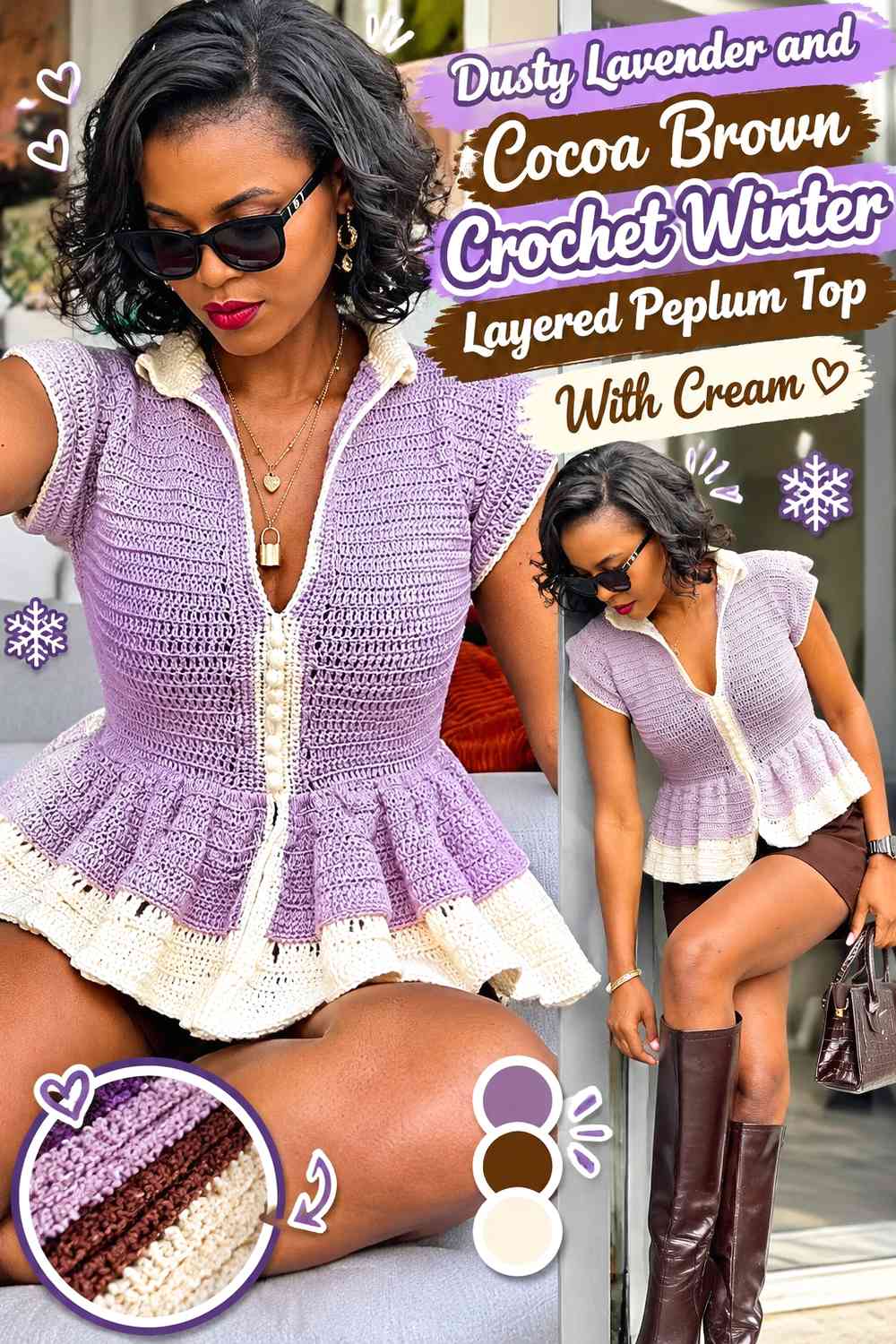
Dusty Lavender can dominate the bodice and first peplum layer, while Cocoa Brown defines the waist and lowest flare. Winter Cream works as a small separator around the neckline or between two layers where the lavender and brown need more distinction. Keep Cream limited so the top remains clearly built around Dusty Lavender and Cocoa Brown.
Dusty Lavender Can Carry the Main Peplum Layers
Use Dusty Lavender across enough of the upper body and flare for the garment to read as lavender-led rather than as a series of equal stripes.
If the peplum has more than one visible layer, the same Dusty Lavender can continue through neighboring sections. Texture and shadow can distinguish the tiers without requiring a new color on each one.
Cocoa Brown and Cream Can Define the Dusty Lavender Waist
A Cocoa Brown waist transition creates a stronger dividing point between the fitted bodice and flare. If that change feels too abrupt, a small Cream detail can soften the boundary.
Avoid placing broad Cream bands at both the waist and hem. The pale shade is more useful when it highlights one transition rather than competing with the main palette.
Creator Credit: AC Crochets
2. Dusty Lavender and Cocoa Brown Crochet Winter Layered Peplum Top With Oatmeal
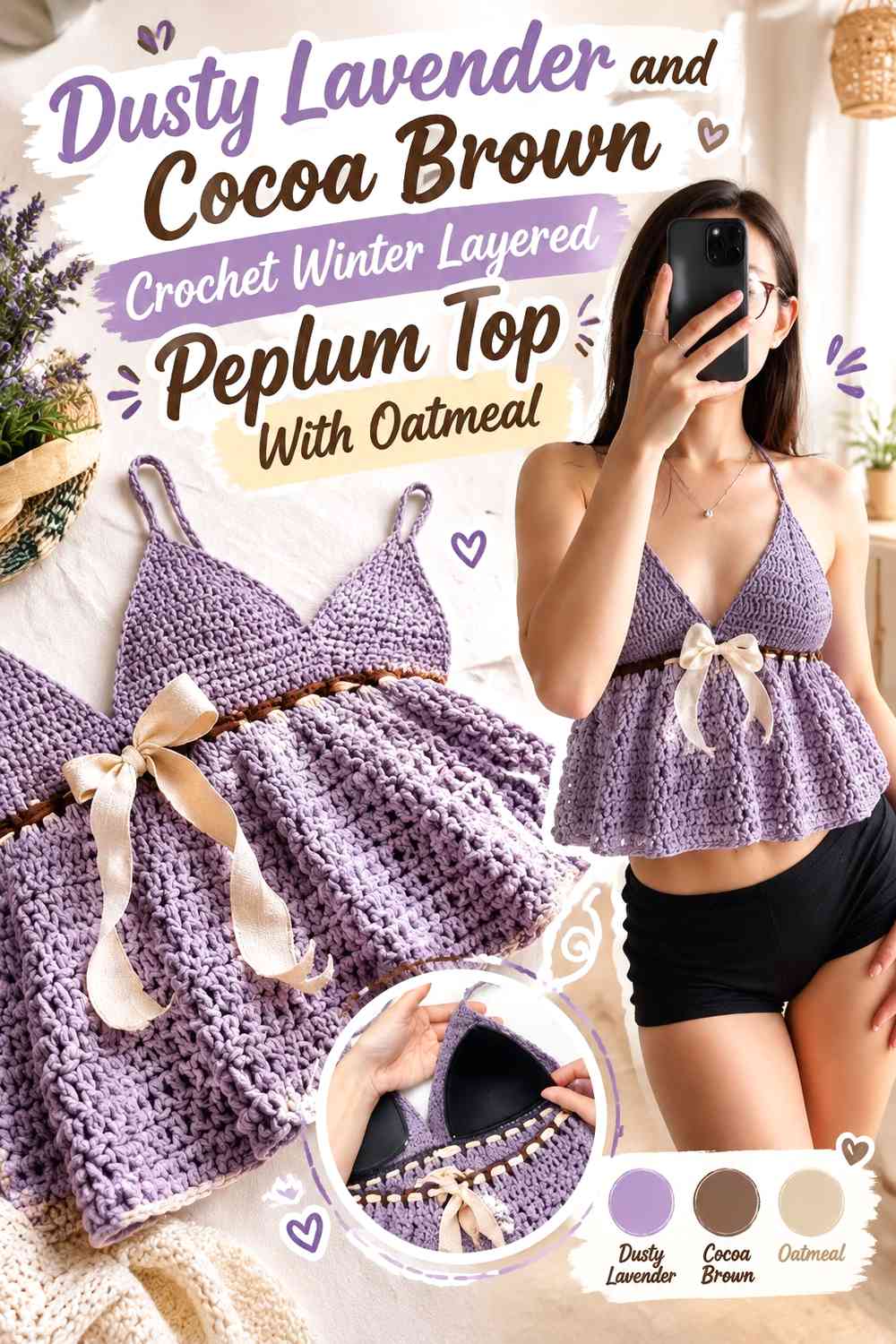
Oatmeal gives the palette a softer neutral bridge. Let Cocoa Brown lead the fitted bodice, introduce Dusty Lavender across the flared lower section, and use Oatmeal at the neckline or one peplum edge. This arrangement places more attention on the lavender movement below the waist.
Cocoa Brown Can Anchor a Dusty Lavender Peplum Flare
A Cocoa Brown upper body gives Dusty Lavender a defined starting point where the flare begins. Keep the brown relatively continuous across the bodice rather than breaking it into numerous lavender inserts.
Repeating Cocoa Brown once near the lowest peplum edge can connect the upper and lower portions without enclosing every lavender layer in dark trim.
Oatmeal Can Lighten the Cocoa Brown and Dusty Lavender Neckline
A small Oatmeal neckline or shoulder detail creates a lighter point near the face while leaving the lower flare visually stronger.
If Oatmeal is also used at the hem, keep that second appearance narrow. Otherwise the top can start to look neutral-led instead of maintaining its Dusty Lavender and Cocoa Brown identity.
Creator Credit: ABoC Studio
3. Dusty Lavender and Cocoa Brown Crochet Winter Layered Peplum Top With Deep Plum
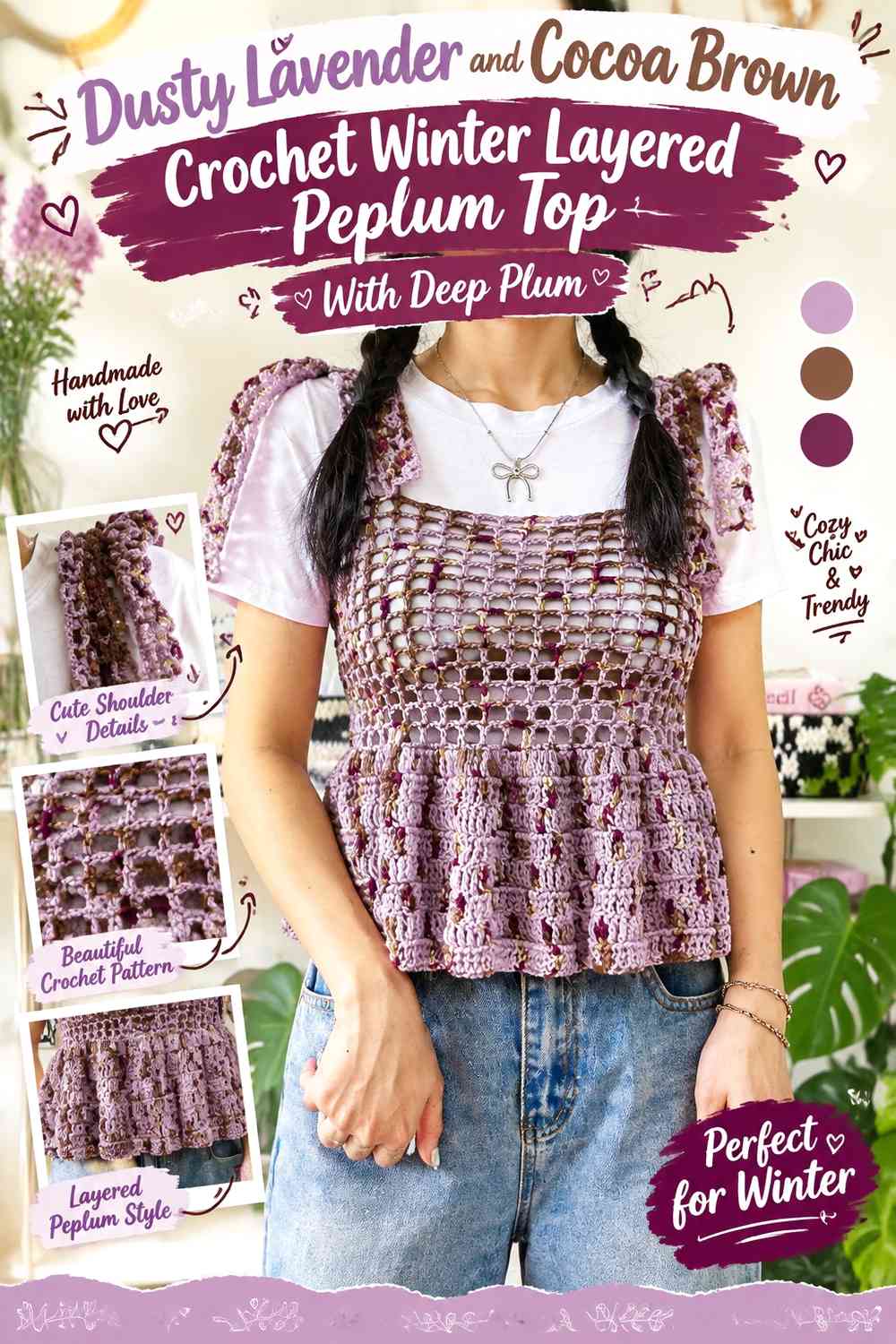
Deep Plum creates a tonal extension of Dusty Lavender. Use the lighter lavender for most of the bodice or upper peplum, Deep Plum on one lower layer, and Cocoa Brown for the waist, straps, sleeves, or edging.
Deep Plum Needs to Stay Distinct From Dusty Lavender
Compare the worked colors before assigning them to adjacent peplum layers. If Deep Plum is only slightly darker than Dusty Lavender, a narrow stripe may disappear once folds and stitch shadows are added.
Give Deep Plum enough surface area to register as an intentional tonal layer, or separate it from Dusty Lavender with a small Cocoa Brown boundary.
Cocoa Brown Can Ground the Dusty Lavender and Deep Plum Layers
Two purple-family shades can make the entire flare feel visually related, so Cocoa Brown is useful where stronger structure is needed.
The waist, neckline, or lowest edge are practical locations because they frame the tonal lavender-plum sections instead of interrupting them repeatedly.
Creator Credit: Vyva ’s Crochet
4. Dusty Lavender and Cocoa Brown Crochet Winter Layered Peplum Top With Charcoal
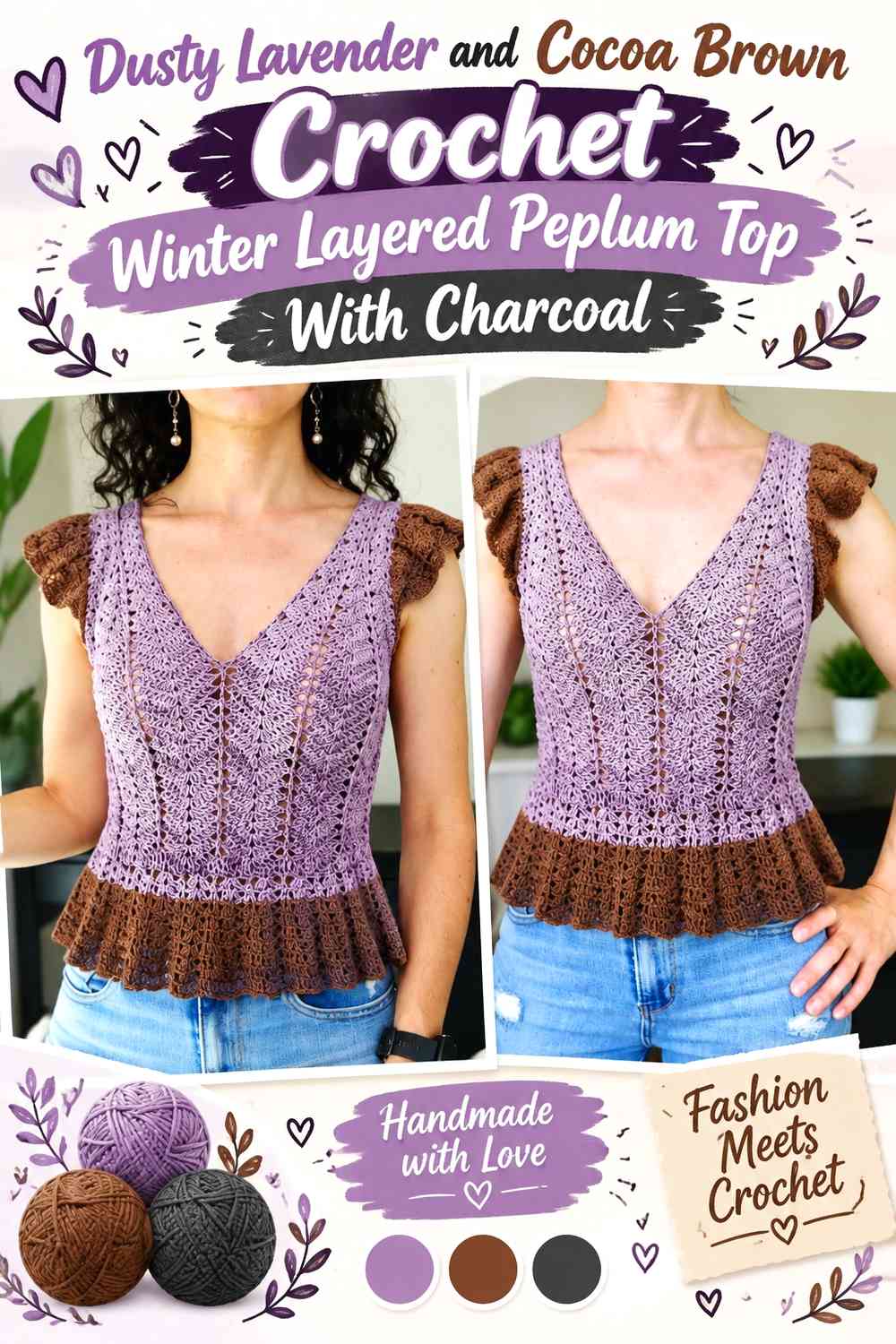
Charcoal gives the palette a cooler dark accent. Because Cocoa Brown already supplies a deep neutral, Charcoal should have a limited, clearly different job, such as a neckline edge, one lower peplum border, or a small sleeve detail.
Charcoal Should Not Compete With Cocoa Brown Across the Peplum
Avoid alternating Cocoa Brown and Charcoal through multiple narrow tiers if the colors have similar values. The distinction may be difficult to see while adding unnecessary color changes.
Keep Cocoa Brown tied to one structural area such as the waist and let Charcoal handle a separate feature such as the neckline or outermost edge.
Dusty Lavender Needs Broad Space Beside Cocoa Brown and Charcoal
Two dark supporting shades can visually compress the lighter lavender if they surround every panel.
Preserve a broad Dusty Lavender bodice, flare, or sleeve section so the top still feels lavender-led rather than dark-neutral with lavender accents.
Creator Credit: I love my crochet
5. Dusty Lavender and Cocoa Brown Crochet Winter Layered Peplum Top With Sage
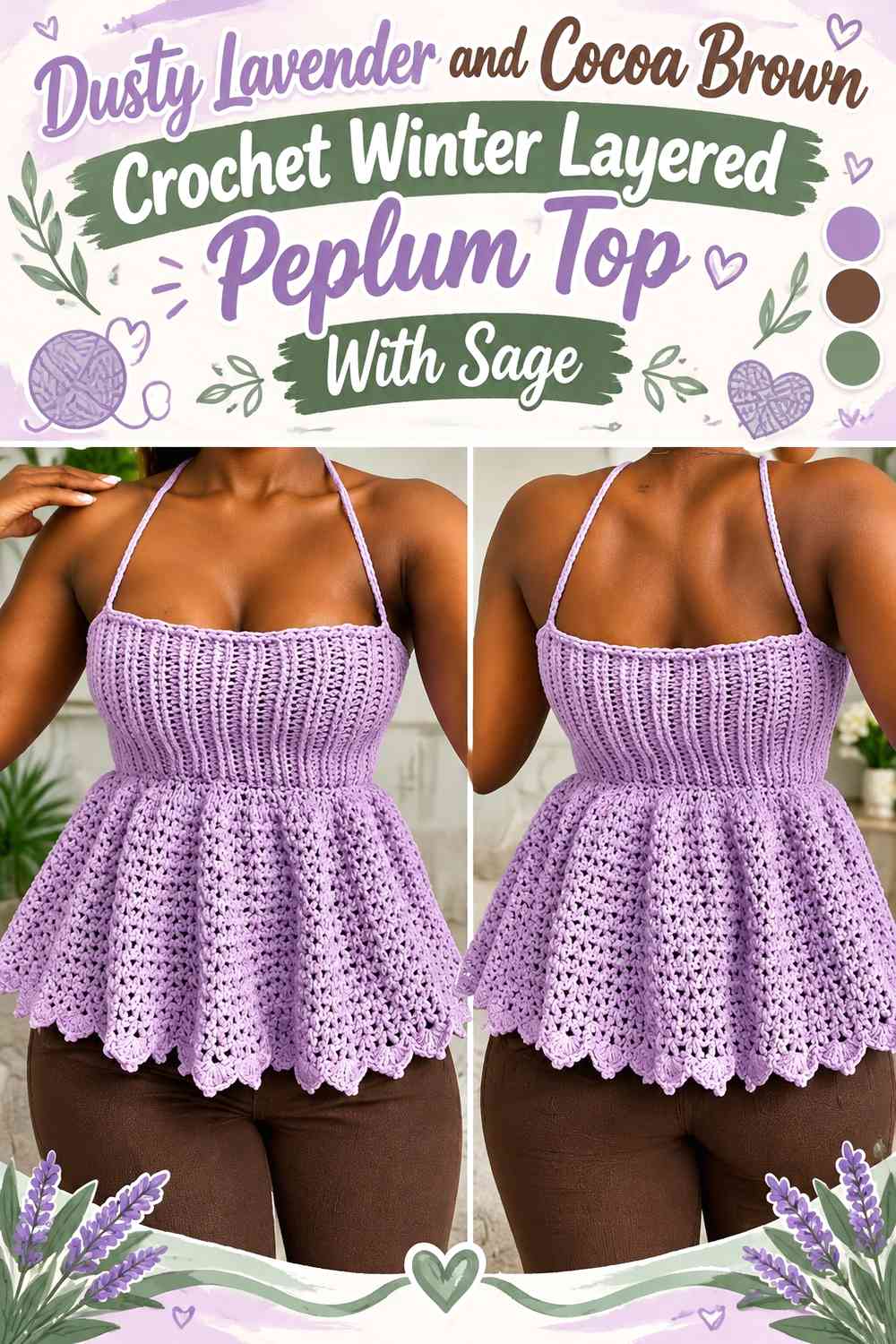
Sage adds a muted green accent that can make Dusty Lavender feel cooler while Cocoa Brown keeps the palette grounded. Use Sage sparingly on one peplum layer, neckline trim, or cuff rather than creating equal green and lavender sections.
Sage Can Support Dusty Lavender on One Peplum Layer
A Sage lower or middle tier can create a noticeable color shift without taking over the entire garment.
Keep the neighboring Dusty Lavender area broader so the green functions as an accent to the layered silhouette rather than becoming a second dominant body color.
Cocoa Brown Can Connect Sage Back to Dusty Lavender
A Cocoa Brown waist or narrow edge can give the muted green a visual relationship with the darker parts of the top.
This is especially helpful if Sage appears only once. Repeating Cocoa Brown around both lavender and green areas makes the full palette feel more connected.
Creator Credit: KnotKisses
6. Dusty Lavender and Cocoa Brown Crochet Winter Layered Peplum Top With Muted Mauve
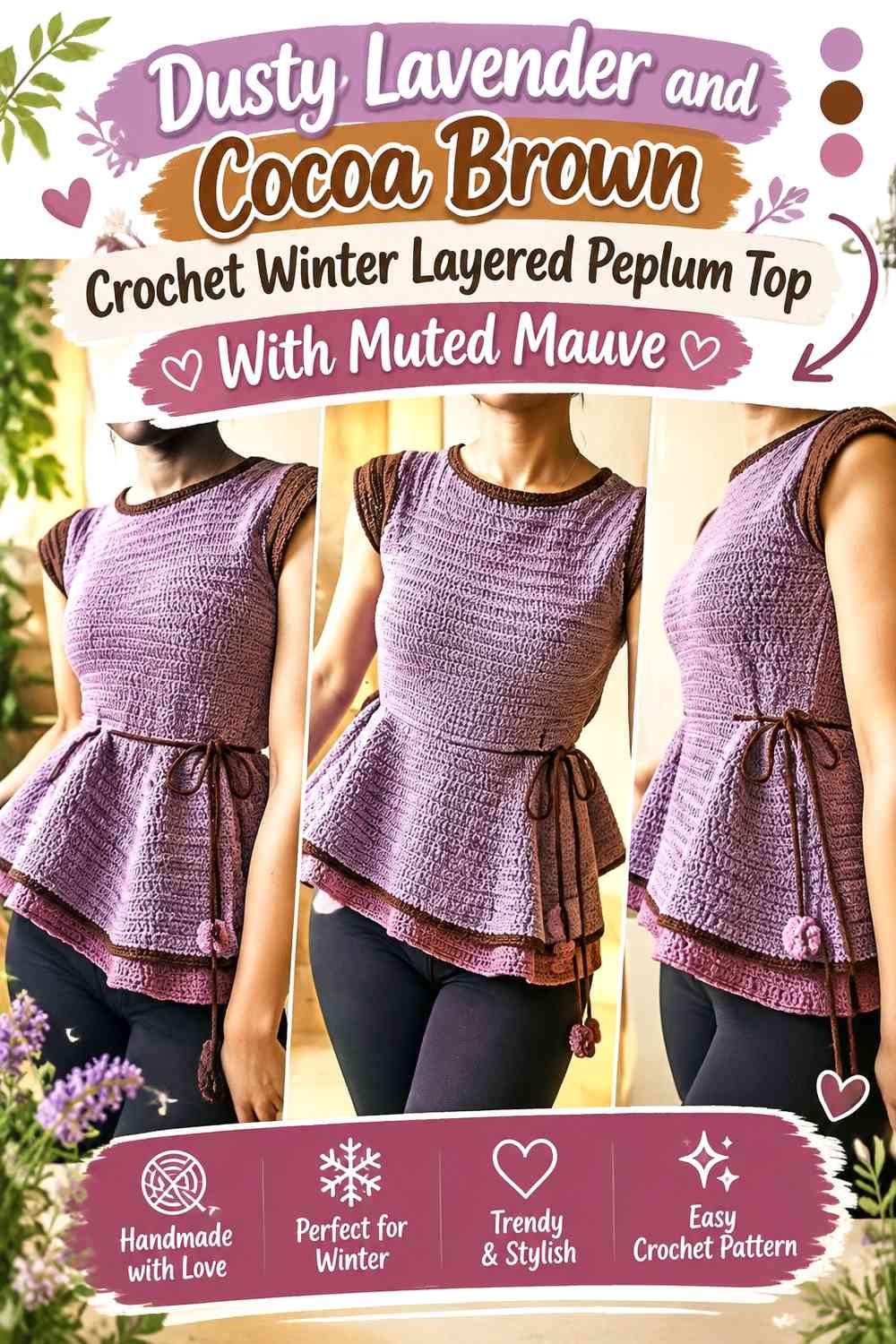
Muted Mauve creates a softer tonal progression between Dusty Lavender and Cocoa Brown. Let Dusty Lavender lead the bodice, use Mauve on one peplum layer, and reserve Cocoa Brown for deeper definition at the waist or hem.
Muted Mauve Should Have a Different Role From Dusty Lavender
Two related purple-pink shades can look accidental if they appear in similarly sized neighboring stripes.
Assign Dusty Lavender to the main body and give Muted Mauve one clear layer or edging function. Defined roles make subtle color differences look planned.
Cocoa Brown Gives Dusty Lavender and Muted Mauve More Depth
A Cocoa Brown waistline or lowest hem prevents the two softer shades from blending into one uniformly pale garment.
If the brown feels too heavy at the hem, reduce its width rather than scattering extra brown throughout the Dusty Lavender bodice.
Creator Credit: Mary K’s Designs
7. Dusty Lavender and Cocoa Brown Crochet Winter Layered Peplum Top With Camel
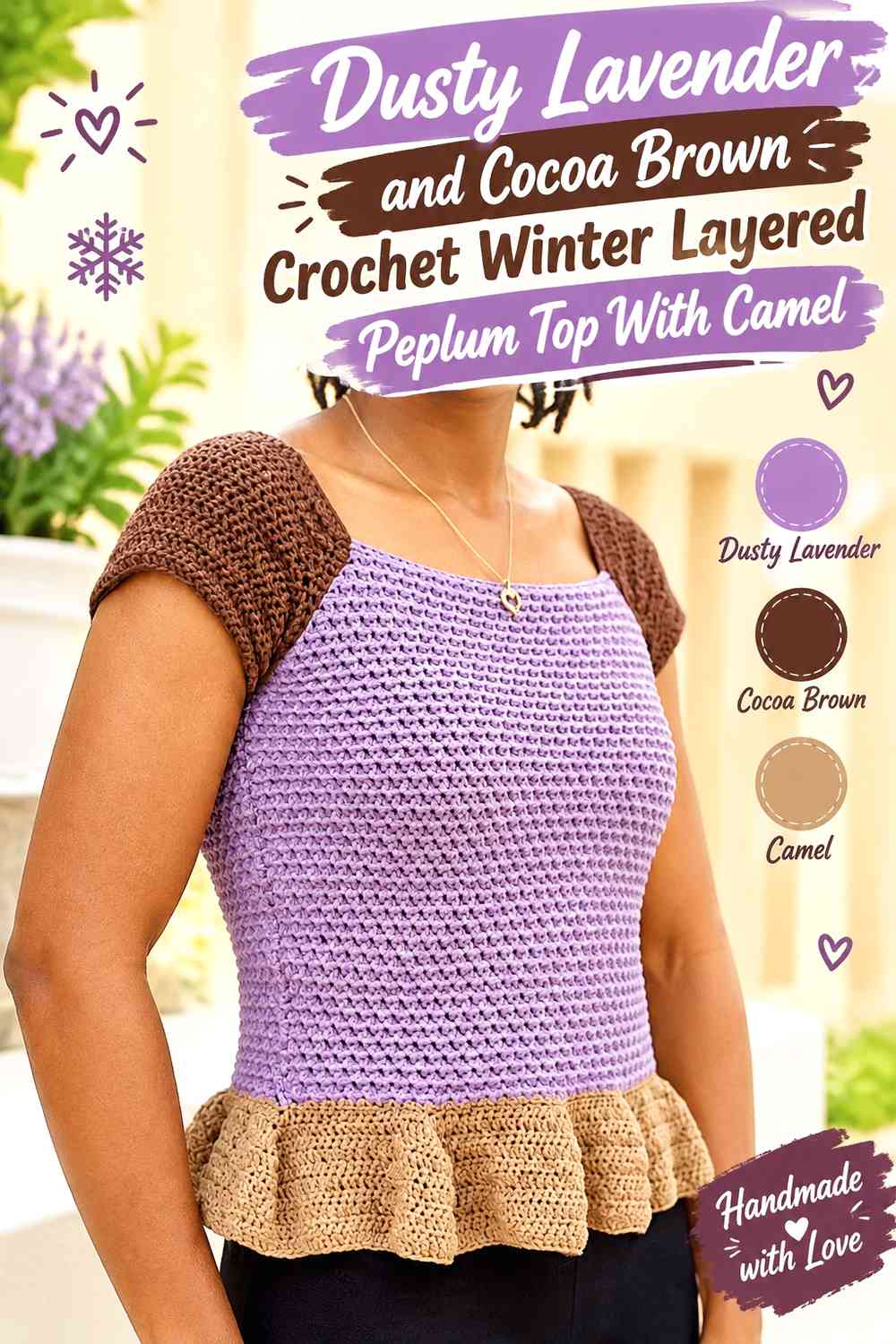
Camel creates a warm transition between Dusty Lavender and deep Cocoa Brown. It works particularly well as a narrow middle peplum layer or edging shade when you want the brown family to have more dimension.
Camel Can Bridge Dusty Lavender and Cocoa Brown at the Waist
If a direct Dusty Lavender-to-Cocoa Brown change feels visually abrupt, Camel can occupy a smaller transition area.
Keep Camel narrower than the two main colors. Its purpose is to soften the change, not create three equal horizontal bands across the waist.
Cocoa Brown Should Remain Deeper Than Camel Around Dusty Lavender
When using two browns, their placement should make the hierarchy obvious. Cocoa Brown can define the strongest edge or waistband, while Camel handles a softer adjacent detail.
That distinction preserves depth around the Dusty Lavender flare without making the warm neutrals look interchangeable.
Creator Credit: Yarn Craftee
8. Dusty Lavender and Cocoa Brown Crochet Winter Layered Peplum Top With Burgundy
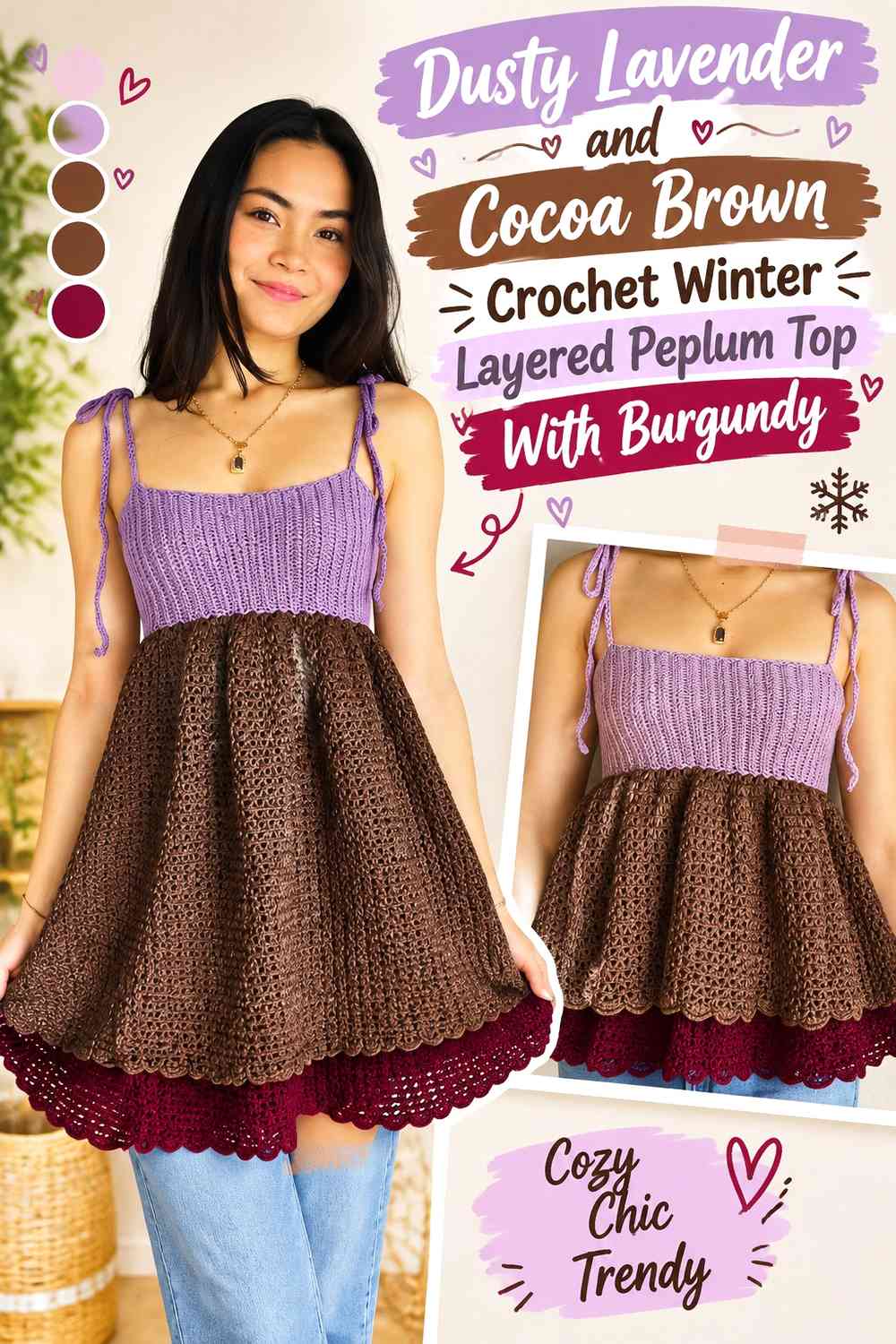
Burgundy gives the peplum a richer winter accent. Dusty Lavender can cover the upper body and one flare layer, Cocoa Brown can define the waist, and Burgundy can appear on the lowest tier or sleeve edge.
Burgundy Can Deepen a Dusty Lavender Peplum Without Replacing It
Keep Burgundy below or beside a larger Dusty Lavender section so the lighter purple remains one of the main visual anchors.
A broad Burgundy bodice plus Cocoa Brown waist can become quite dark, so the lower flare may be the better place for a controlled burgundy section.
Cocoa Brown Needs Clear Separation From Burgundy
If your Burgundy and Cocoa Brown are similarly dark, placing them in adjacent narrow bands may make the distinction disappear.
Use Dusty Lavender between them or assign one shade to the waist and the other to a larger peplum tier so each color has enough area to be recognized.
Creator Credit: Granny Gaia
9. Dusty Lavender and Cocoa Brown Crochet Winter Layered Peplum Top With Ivory
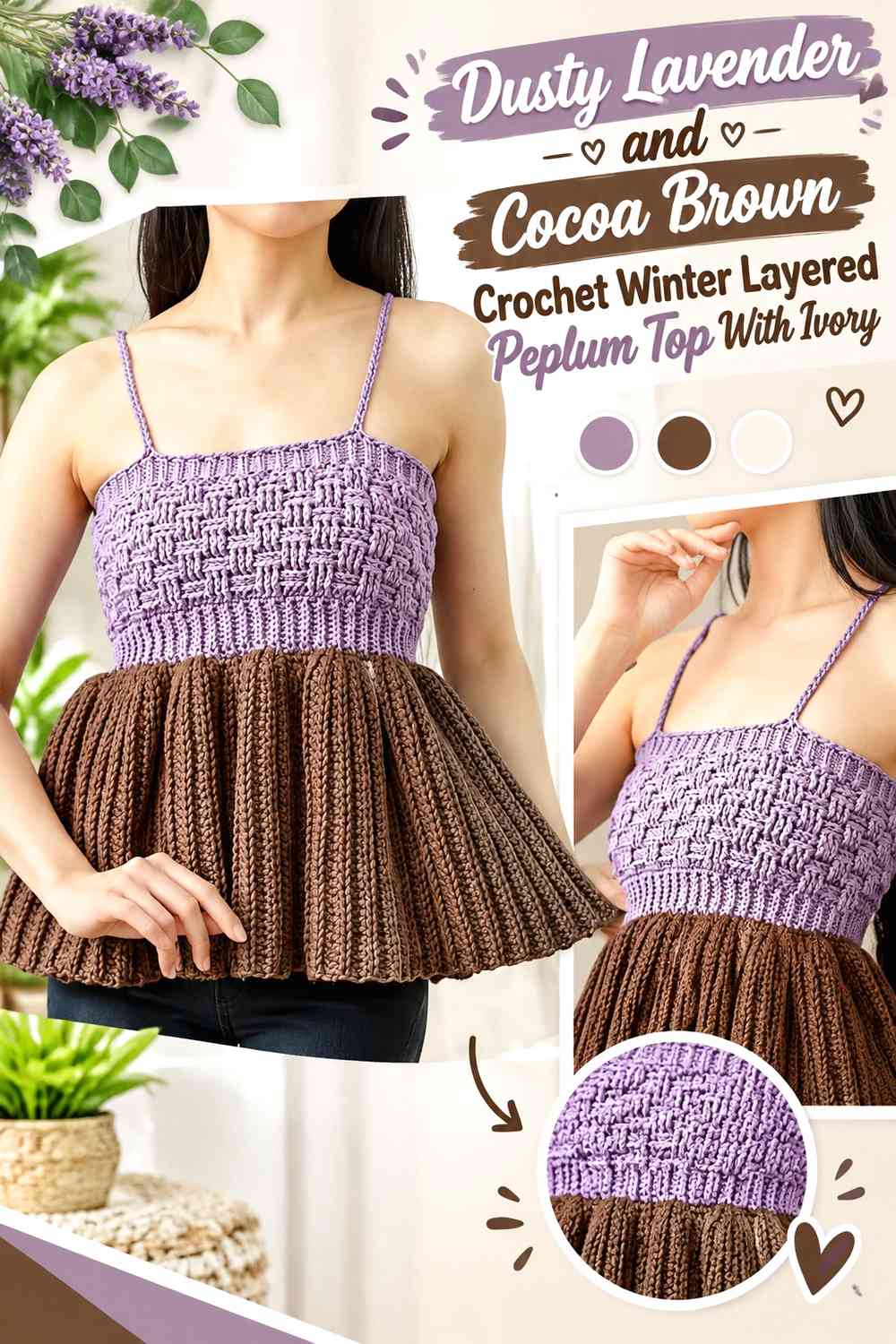
Ivory creates the strongest pale contrast in this collection. Use it to outline a Dusty Lavender neckline, define a layered edge, or separate Cocoa Brown from the upper flare rather than turning it into a third dominant color.
Ivory Can Make Dusty Lavender Peplum Edges More Visible
A narrow Ivory edge can help distinguish two neighboring Dusty Lavender layers when shadow alone is not enough.
Avoid outlining every tier. Too much pale trim can emphasize horizontal lines more strongly than the peplum silhouette itself.
Cocoa Brown Can Balance an Ivory and Dusty Lavender Upper Body
If Ivory appears around the neckline or shoulders, Cocoa Brown at the waist or hem gives the garment a darker counterweight.
This top-to-bottom balance can be especially useful for winter layering, where a pale underlayer may add even more light color around the upper body.
Creator Credit: TCDDIY
10. Dusty Lavender and Cocoa Brown Crochet Winter Layered Peplum Top With Midnight Navy
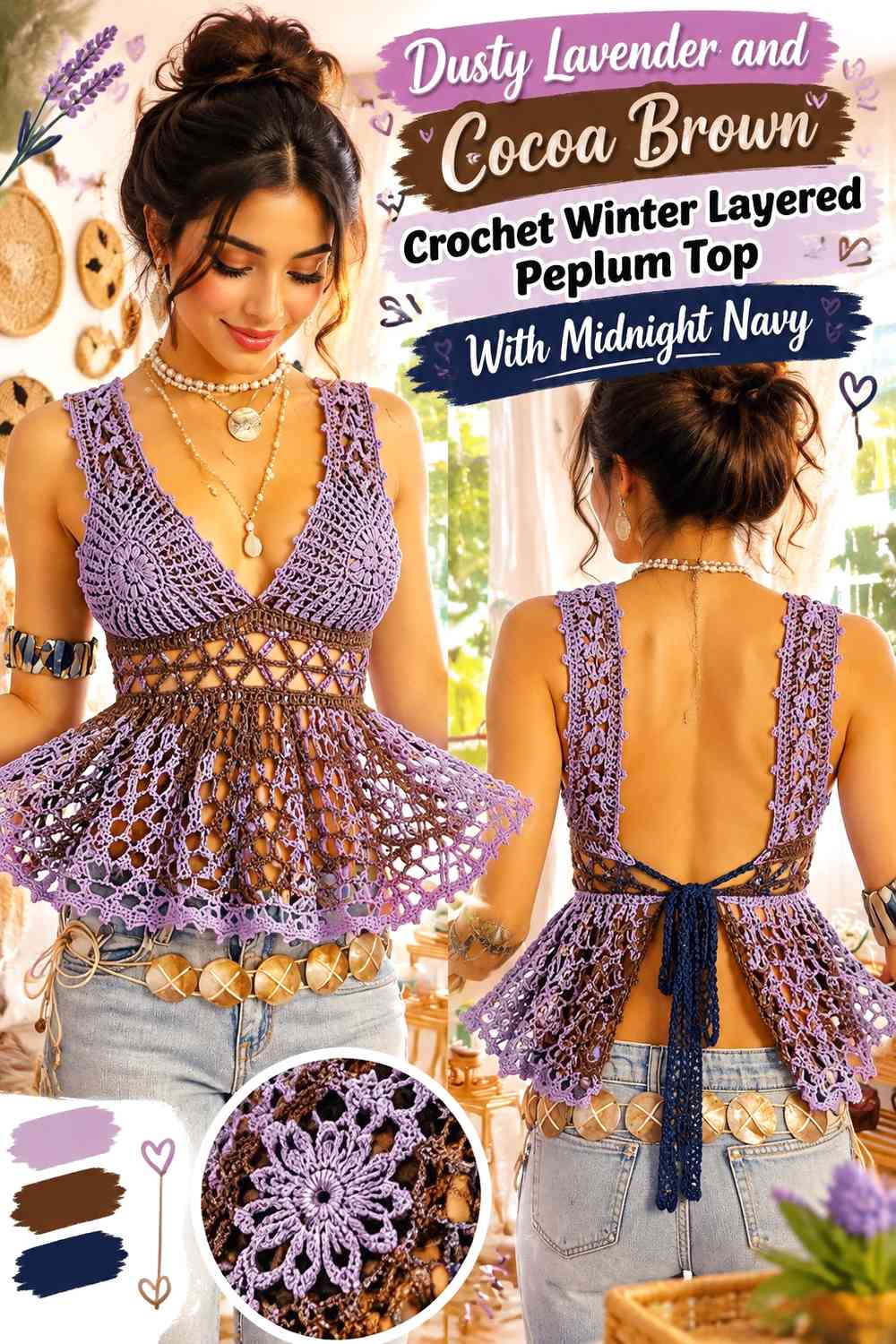
Midnight Navy adds a cooler deep shade while Cocoa Brown supplies warmth. Keep Navy controlled around the neckline, one tier, or sleeve edge and allow Dusty Lavender to occupy the largest visible surface.
Midnight Navy Should Stay Secondary to Dusty Lavender
Dusty Lavender and Navy can create a strong cool relationship, but equal areas may move attention away from the Cocoa Brown foundation.
Use Navy for one deliberate peplum or upper-body feature rather than alternating it throughout the garment.
Cocoa Brown Can Warm Dusty Lavender and Midnight Navy
A Cocoa Brown waistline provides a warmer break between the cooler colors.
Repeating Cocoa Brown at a cuff or lower hem can strengthen that connection, but avoid enclosing every Navy and Dusty Lavender section in brown borders.
Creator Credit: Baecrochett by Lizzy & Becky
11. Dusty Lavender and Cocoa Brown Crochet Winter Layered Peplum Top With Muted Teal
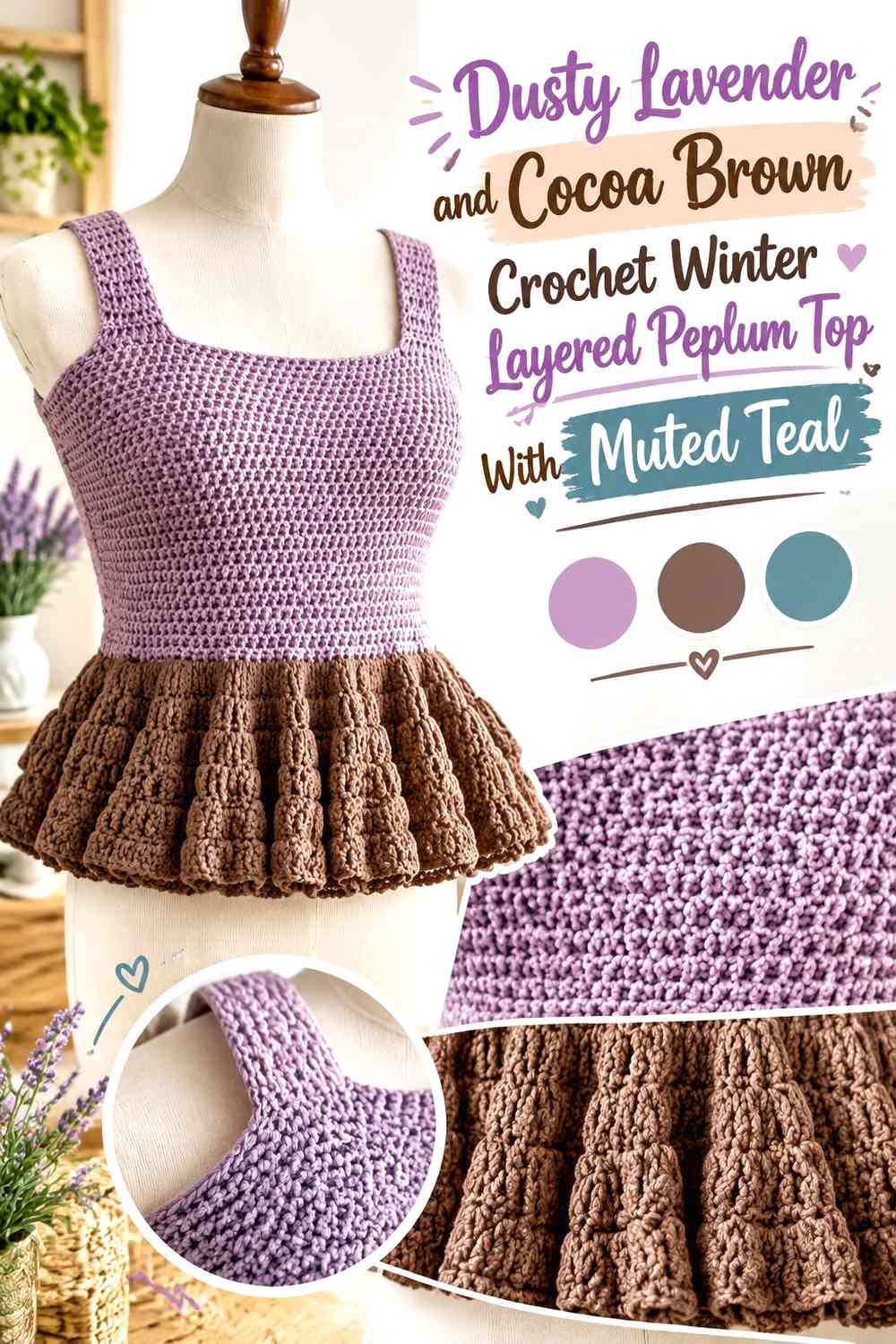
Muted Teal creates one of the strongest hue changes in the group. It works best when concentrated in one small layer or edge while Dusty Lavender and Cocoa Brown continue to control most of the garment.
Muted Teal Needs Limited Space Beside Dusty Lavender
Instead of making alternating Teal and Dusty Lavender peplum tiers, use Teal on one narrower section.
That creates a deliberate accent without turning the layered flare into several equally strong color bands.
Cocoa Brown Can Tie Muted Teal Back to Dusty Lavender
Cocoa Brown at the waist, neckline, or cuffs acts as a stable neutral between the two cooler hues.
If Teal appears on the lowest tier, repeating Cocoa Brown immediately above or below it can also prevent the accent from looking disconnected from the upper top.
Creator Credit: Fiber Flux
12. Dusty Lavender and Cocoa Brown Crochet Winter Layered Peplum Top With Rose Taupe
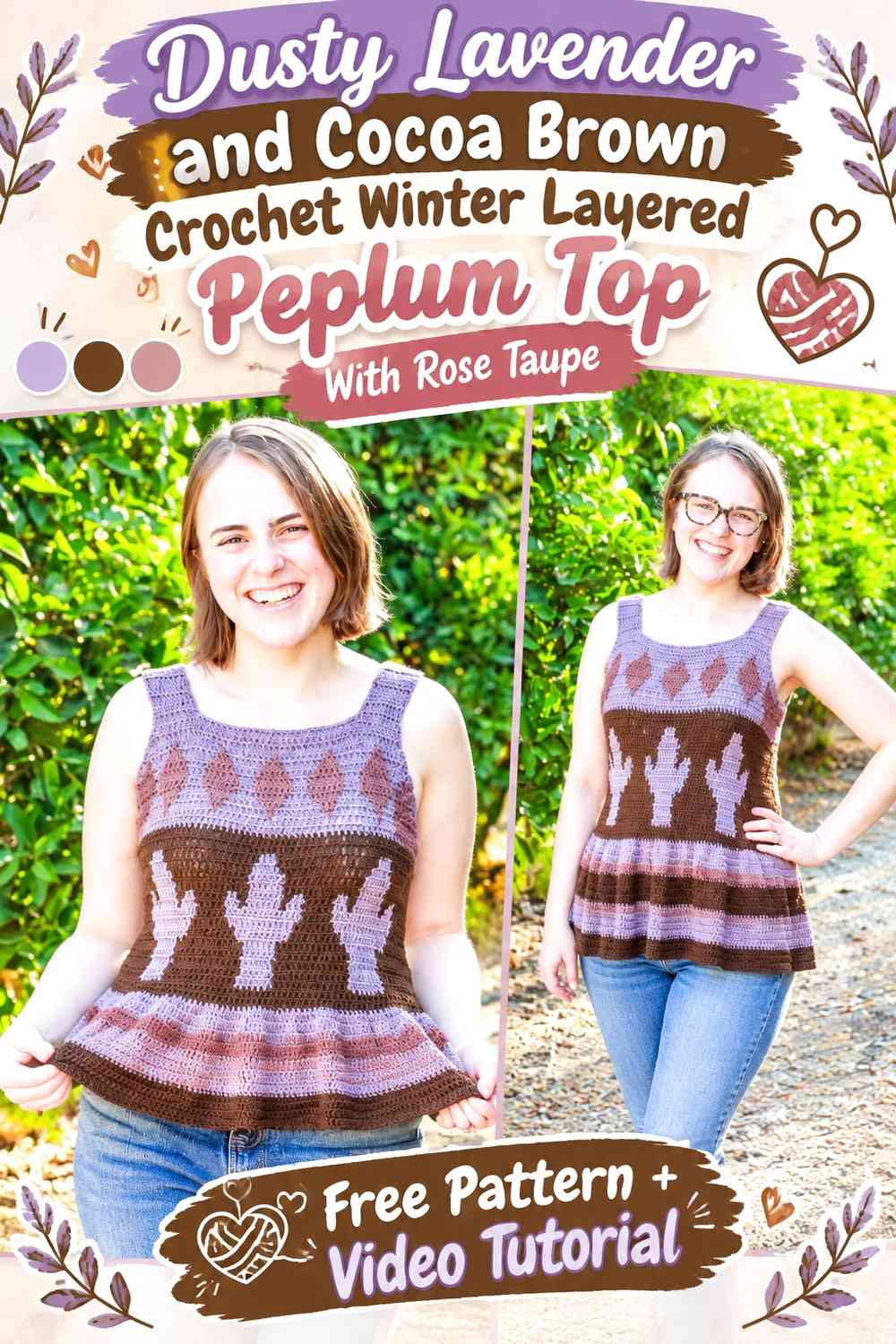
Rose Taupe gives Dusty Lavender a warmer muted companion while staying softer than Burgundy. Use it on a secondary flare, sleeve detail, or neckline edge, with Cocoa Brown supplying the deepest contrast.
Rose Taupe Can Warm a Dusty Lavender Peplum Layer
Place Rose Taupe on one peplum tier where the color change is large enough to be visible.
Very small Taupe and Lavender stripes can merge, especially when the crochet fabric is textured. Larger sections make the relationship easier to see.
Cocoa Brown Gives Dusty Lavender and Rose Taupe a Clear Anchor
A Cocoa Brown waist or lower border prevents the related muted shades from making the garment visually flat.
Keep the darkest brown concentrated around structural points rather than adding small Cocoa Brown details to every tier.
Creator Credit: E’Claire Makery
13. Tonal Dusty Lavender and Cocoa Brown Crochet Winter Layered Peplum Top
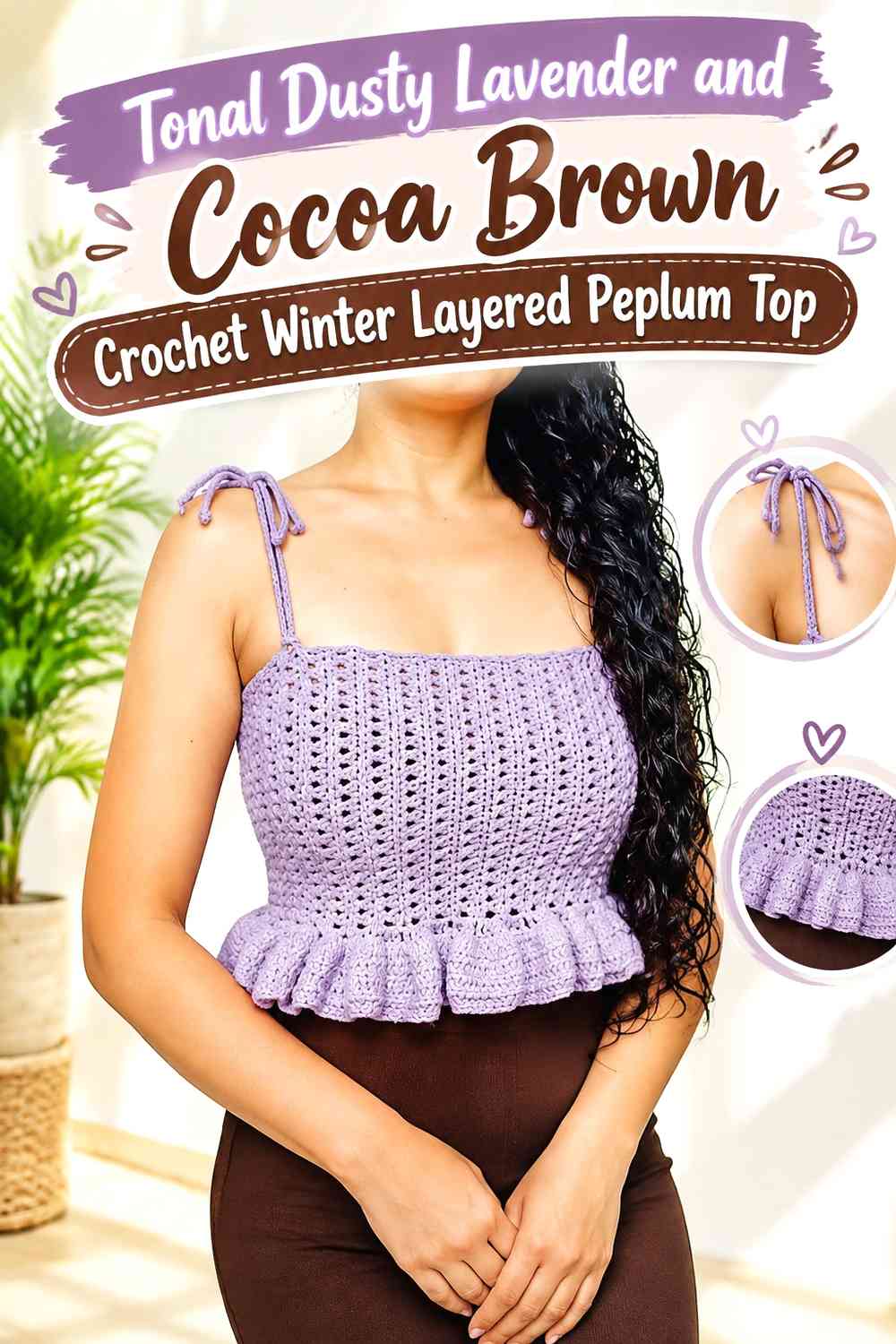
The final idea uses only Dusty Lavender and Cocoa Brown as the main visible palette. Dusty Lavender can cover the bodice and first flare, while Cocoa Brown defines the waist and lower tier. Repeating Lavender once near the bottom can connect the peplum layers without adding a third shade.
Dusty Lavender Can Differentiate Layers Through Texture Instead of More Colors
A two-color palette does not require every peplum layer to alternate between Lavender and Brown.
Several neighboring Dusty Lavender tiers can remain visually distinct when their edges and texture already create shadows. Save Cocoa Brown for the places where stronger definition is genuinely useful.
Cocoa Brown Can Repeat Through the Dusty Lavender Top Strategically
A Cocoa Brown neckline, waist, and restrained lower edge create repetition from top to bottom without fragmenting the Dusty Lavender surface.
If that feels too dark, remove one brown border instead of adding a third neutral. The simplified palette is the main strength of this version.
Creator Credit: What About Yarn
Comparing Dusty Lavender and Cocoa Brown Layered Peplum Palettes
Palette DirectionMain Visual EffectUseful Color PlacementDusty Lavender + Cocoa Brown + CreamSoft light contrastNeckline or layer separatorDusty Lavender + Cocoa Brown + OatmealWarm neutral balanceUpper edge or trimDusty Lavender + Cocoa Brown + Deep PlumTonal purple depthLower peplum tierDusty Lavender + Cocoa Brown + CharcoalDarker modern contrastNeckline or hemDusty Lavender + Cocoa Brown + SageMuted cool accentOne peplum layerDusty Lavender + Cocoa Brown + MauveSoft tonal transitionSecondary flareDusty Lavender + Cocoa Brown + CamelWarm graduated neutralWaist transitionDusty Lavender + Cocoa Brown + BurgundyRich winter depthLower tier or cuffsDusty Lavender + Cocoa Brown + IvoryStrongest light contrastPeplum edgingDusty Lavender + Cocoa Brown + Midnight NavyCool dark accentSleeves or one tierDusty Lavender + Cocoa Brown + Muted TealStronger hue contrastSmall flare accentDusty Lavender + Cocoa Brown + Rose TaupeMuted warm softnessSecondary tierDusty Lavender + Cocoa Brown onlyMost restrained paletteBodice, waist, layered flare
Conclusion
Choose a Dusty Lavender-dominant version when you want the peplum layers and bodice to feel lighter and the Cocoa Brown to provide structure at the waist, neckline, or lower edge. A Cocoa Brown-dominant bodice creates a deeper winter look and moves more attention toward Dusty Lavender flares below the waist.
Cream, Oatmeal, and Ivory provide the clearest pale contrast. Deep Plum and Muted Mauve extend the purple family, while Camel and Rose Taupe create warmer transitions. Burgundy, Charcoal, and Midnight Navy add depth, and Sage or Muted Teal introduce a more noticeable cool accent.
For a layered peplum, let color reinforce the garment shape rather than marking every construction change. Decide which shade owns the bodice, which one defines the waist, and whether the lower layers need contrasting edges at all. If the top will be worn over a winter base layer, include that visible underlayer when evaluating the final palette. Use the original tutorials for exact construction, fit, measurements, and finishing details.
Frequently Asked Questions
Should Dusty Lavender or Cocoa Brown dominate a winter peplum top?
Dusty Lavender works well when you want the layered flare and surface details to receive more attention, while Cocoa Brown creates a darker overall direction. Either can lead, but making one color clearly dominant usually creates a more coherent peplum than dividing the garment equally between both.
Where should Cocoa Brown go on a Dusty Lavender layered peplum?
The waist transition, neckline, cuffs, lowest peplum edge, or one complete lower layer are useful locations. These areas allow Cocoa Brown to define the garment structure without breaking the Dusty Lavender body into too many small sections.
How can I keep several Dusty Lavender peplum layers from blending together?
First check whether the physical edges and shadows already provide enough separation. If they do not, use Cocoa Brown or a lighter neutral on selected edges rather than outlining every layer. Strong contrast is most useful where it clarifies the layered construction.
What winter colors work with Dusty Lavender and Cocoa Brown?
Cream, Oatmeal, Ivory, Camel, Burgundy, Deep Plum, Charcoal, Sage, and muted blue-green shades can all create different directions. Choose the third color according to its role—light separator, tonal transition, dark accent, or contrasting peplum layer.
Can I wear a crochet peplum over a winter base layer?
That depends on the garment’s fit, stitch openness, neckline, armholes, and sleeve construction. If layering is your goal, compare the tutorial’s finished fit with the thickness of the clothing you expect to wear underneath rather than assuming the original fit includes extra room.
How do I stop Dusty Lavender and Cocoa Brown color blocking from making the peplum look striped?
Use broader color zones. Keep the bodice primarily one color, define the waist with the second shade, and change color only on selected peplum layers. Avoid assigning a new color to every horizontal construction line unless a striped effect is intentional.
Should every layered peplum tier use a different color?
No. Several tiers can remain Dusty Lavender or Cocoa Brown if texture and physical overlap already distinguish them. Repeating the same color across neighboring layers often produces a calmer result and allows one contrasting tier or edge to have more impact.