Dusty lilac and espresso create a winter capelet palette with a clear light-dark relationship. Dusty lilac can cover the broad shoulder area without feeling overly bright, while espresso can define the neckline, front opening, lower hem, or faux-fur trim. The dark brown also gives pale lilac stitch texture a stronger visual boundary.
Faux fur changes the balance because even a narrow fluffy trim can look visually substantial. An espresso faux-fur collar around a dusty-lilac capelet may become the strongest feature despite occupying relatively little surface area. Reversing the palette with creamier-looking dusty lilac faux fur against an espresso body creates a much darker garment with a softer face frame.
The tutorials below provide compatible capelet, cape, cowl-capelet, and shoulder-wrap constructions. Use each creator’s tutorial for its original construction and sizing guidance. The dusty-lilac-and-espresso palette and faux-fur placement are independent adaptations; not every original project includes faux fur.
Quick List
- Dusty Lilac Capelet With Espresso Faux Fur Collar
- Espresso Capelet With Dusty Lilac Faux Fur Face Frame
- Dusty Lilac Vintage Capelet With Espresso Faux Fur Hem
- Dusty Lilac Cable Capelet With Espresso Faux Fur Collar
- Espresso Shoulder Capelet With Dusty Lilac Front Trim
- Dusty Lilac Textured Capelet With Espresso Faux Fur Lower Border
- Espresso Winter Capelet With Dusty Lilac Shoulder Panels
- Dusty Lilac Capelet With Espresso High-Neck Faux Fur Trim
- Dusty Lilac Lacy Capelet With Espresso Winter Border
- Espresso Lace Capelet With Dusty Lilac Faux Fur Collar
- Dusty Lilac Open-Front Capelet With Espresso Faux Fur Framing
- Dusty Lilac Vintage Shoulder Capelet With Espresso Tassel-Style Trim
Let Dusty Lilac Cover the Shoulders and Espresso Define the Capelet
A shoulder capelet gives the main color a large uninterrupted area, so dusty lilac works well across the back and shoulder sweep. Espresso can then identify the parts that need stronger definition: the neckline, center front, hem, or closure area.
If espresso appears in every textured row as well as the collar and hem, it can fragment the dusty-lilac field. Decide whether the dark brown is primarily a frame or an internal pattern color before distributing it across the garment.
Use Espresso Faux Fur Selectively Against Dusty Lilac
Faux-fur yarn or trim creates more apparent volume than a smooth crochet edge. An espresso collar therefore does not need to be extremely wide to become a major visual feature against dusty lilac.
If you use faux fur at both the collar and hem, consider leaving the front edges simpler. Three equally prominent fluffy borders can make the crochet body feel secondary. Always check the properties and care instructions for the specific trim or yarn you choose rather than assuming it behaves like the main crochet fabric.
Check Dusty Lilac and Espresso Around the Face and Shoulder Line
The neckline is viewed close to the face, while the hem spreads across the shoulders and upper torso. A dark espresso neckline gives dusty lilac a stronger upper boundary; a dusty-lilac neckline on an espresso capelet creates a softer transition.
Also assess the capelet over the clothing you expect to layer underneath it. Similar dark values can make espresso trim visually merge with a dark coat or top, while dusty lilac usually provides more separation.
1. Dusty Lilac Capelet With Espresso Faux Fur Collar
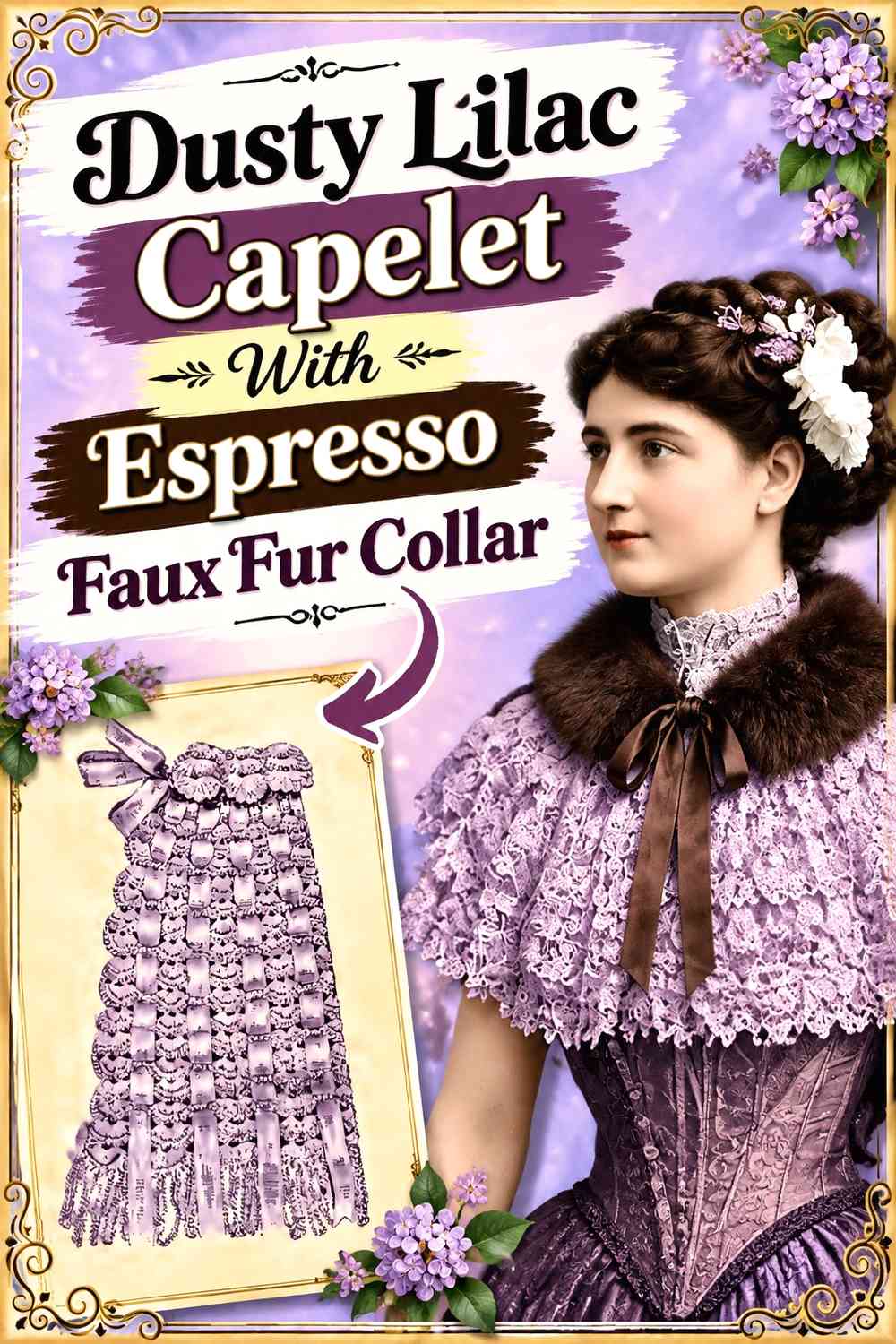
This is the clearest expression of the palette. Let dusty lilac cover almost the entire shoulder capelet and concentrate espresso around a faux-fur-style collar. The dark neckline frames the garment while the muted lilac remains the color seen across the broadest area.
Keeping the hem dusty lilac prevents the fur collar from being repeated too heavily. A narrow espresso closure detail can be enough to reconnect the collar with the center front.
Dusty Lilac Should Carry the Main Shoulder Sweep
Use dusty lilac continuously across the back and shoulders so the capelet retains a calm, unified field. This also allows textured or vintage-inspired crochet to remain visible without constant color interruption.
If the capelet construction contains several decorative bands, keep most of them dusty lilac and let stitch texture create the variation.
Espresso Faux Fur Can Give Dusty Lilac a Strong Winter Neckline
Place espresso faux fur at the collar or immediate neckline where its depth creates a clear frame. The fluffy texture will already attract attention, so additional wide espresso stripes across the shoulders may be unnecessary.
If the collar appears visually heavy, keep the lower hem entirely dusty lilac rather than adding another broad dark border.
Creator Credit: Just Vintage Crochet
2. Espresso Capelet With Dusty Lilac Faux Fur Face Frame

Reverse the hierarchy for a darker capelet. Espresso covers the main shoulder area while dusty lilac creates a lighter faux-fur-style collar or face frame.
This arrangement gives the garment a strong brown winter foundation but prevents the neckline from appearing too visually dense.
Espresso Can Anchor the Dusty Lilac Winter Capelet Body
Keep espresso through the broad back and side areas. The uninterrupted dark surface makes the capelet feel cohesive and gives any crochet texture a subtle tonal appearance.
Avoid inserting dusty lilac repeatedly through the body if the pale fur neckline is intended to remain the focal feature.
Dusty Lilac Faux Fur Can Soften the Espresso Face Edge
Use dusty lilac around the neckline where its lighter value separates the espresso body from the face. A fluffy lilac trim can carry plenty of visual weight without extending far down the garment.
Repeat dusty lilac only in a small closure or edge detail if the collar needs another visual connection.
Creator Credit: Selina Veronique Crochet
3. Dusty Lilac Vintage Capelet With Espresso Faux Fur Hem

Instead of emphasizing the neckline, move espresso to the lower edge. A dusty-lilac capelet with a dark faux-fur hem creates a strong horizontal finish across the shoulders and upper torso while leaving the neckline comparatively light.
This works especially well when the capelet silhouette itself has vintage character and does not need an elaborate contrasting collar.
Dusty Lilac Should Stay Unbroken Above the Espresso Hem
Let dusty lilac cover most of the garment from neckline to lower border. The broad light field keeps the dark hem from making the capelet appear visually shortened.
If you want espresso near the neck, use only a narrow finishing line rather than another full faux-fur band.
Espresso Faux Fur Can Ground the Dusty Lilac Vintage Hem
Place the darkest fluffy trim along the lower edge so it acts as a visual stopping point. The deep brown can emphasize the capelet’s curved or flared silhouette.
Check the finished depth carefully: an overly broad espresso hem can dominate a short shoulder capelet more quickly than it would on a full-length cape.
Creator Credit: Stitches n Scraps
4. Dusty Lilac Cable Capelet With Espresso Faux Fur Collar

Raised cables or similarly dimensional texture already produce shadows across the body. Keeping those details dusty lilac allows them to remain visible through relief, while an espresso faux-fur collar provides the major color contrast.
This scheme keeps color and texture from competing for the same role.
Dusty Lilac Lets Cable Texture Stay Visible Without Extra Brown
Use dusty lilac through the main textured panel so raised sections and recessed shadows form a connected surface. Adding espresso to every cable could make the garment look striped rather than sculptural.
The muted lilac can still show strong texture when the stitches have enough relief.
Espresso Faux Fur Should Frame the Dusty Lilac Cable Capelet
Concentrate espresso at the neckline instead of spreading it through the cable field. This separates the fluffy trim from the structured crochet texture.
A narrow espresso hem can work if more dark balance is needed, but keep it less substantial than the collar.
Creator Credit: Fiber Flux
5. Espresso Shoulder Capelet With Dusty Lilac Front Trim
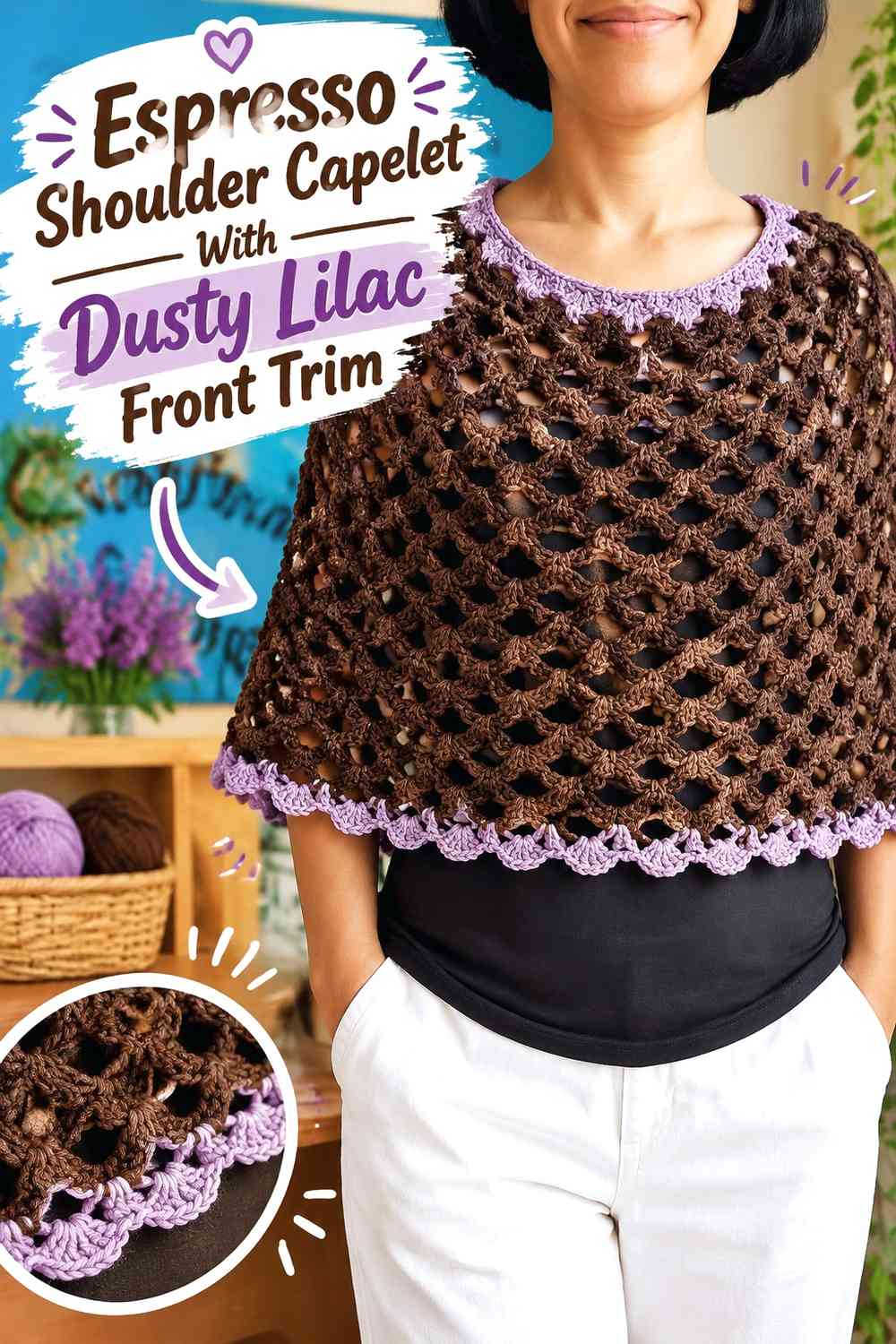
This design keeps the back and shoulder area espresso but introduces dusty lilac vertically along the front opening. The lighter front edges create two visible lines that break up the dark body and draw attention toward the center.
A small amount of dusty-lilac faux-fur texture can make those edges more noticeable without requiring a pale collar.
Espresso Should Dominate the Shoulder Area Behind Dusty Lilac
Keep the back and outer shoulders dark so the vertical lilac edges have a stable field around them. This makes the capelet appear intentionally framed rather than randomly color blocked.
If the construction is closed rather than open-front, shift the lilac emphasis to the neckline or central closure area.
Dusty Lilac Faux Fur Can Define Espresso Front Edges
Use dusty lilac along the most visible front boundaries. A fluffy edge has considerable visual presence, so the trim can remain relatively narrow.
Avoid adding a second large dusty-lilac panel across the back if the front framing is meant to be the key feature.
Creator Credit: Crafting Shed
6. Dusty Lilac Textured Capelet With Espresso Faux Fur Lower Border
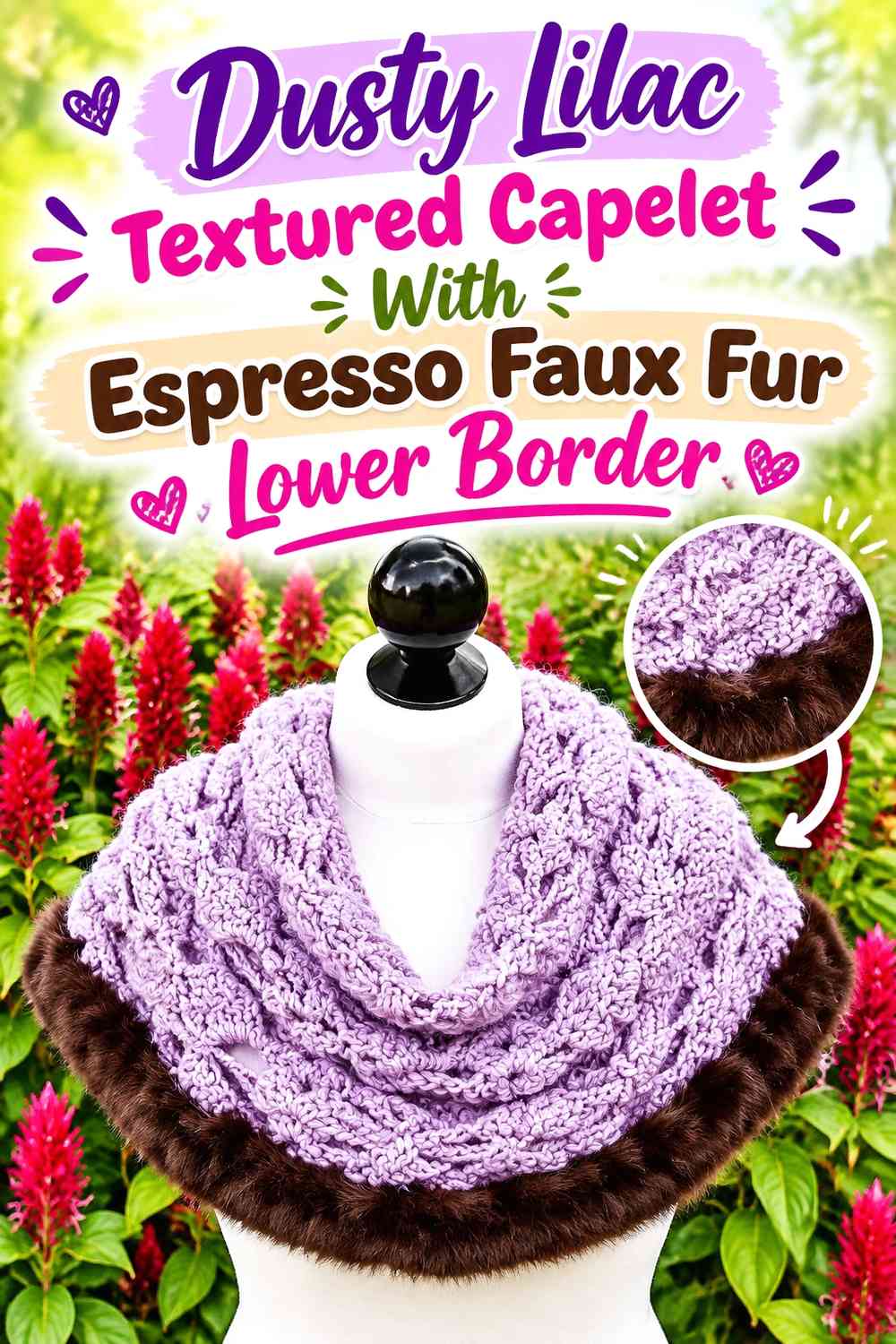
This version reserves espresso for the lowest edge of a more textured dusty-lilac shoulder piece. The combination works when you want the neckline to stay understated while the hem carries the winter trim.
The darker border can also make an open or decorative crochet body look more substantial.
Dusty Lilac Can Keep Textured Capelet Details Cohesive
Run dusty lilac through the boxes, shells, or other repeated texture rather than switching colors throughout the stitch pattern. A single color helps complex texture remain readable.
Use the dark trim only after the main body has established a clear lilac field.
Espresso Faux Fur Gives Dusty Lilac a Defined Lower Edge
An espresso border can visually contain open or heavily textured sections above it. The contrast is especially useful when the body otherwise ends in a light, irregular edge.
Because faux fur is visually dense, use it as a finishing feature rather than attempting to echo every textured repeat above.
Creator Credit: The Secret Yarnery
7. Espresso Winter Capelet With Dusty Lilac Shoulder Panels
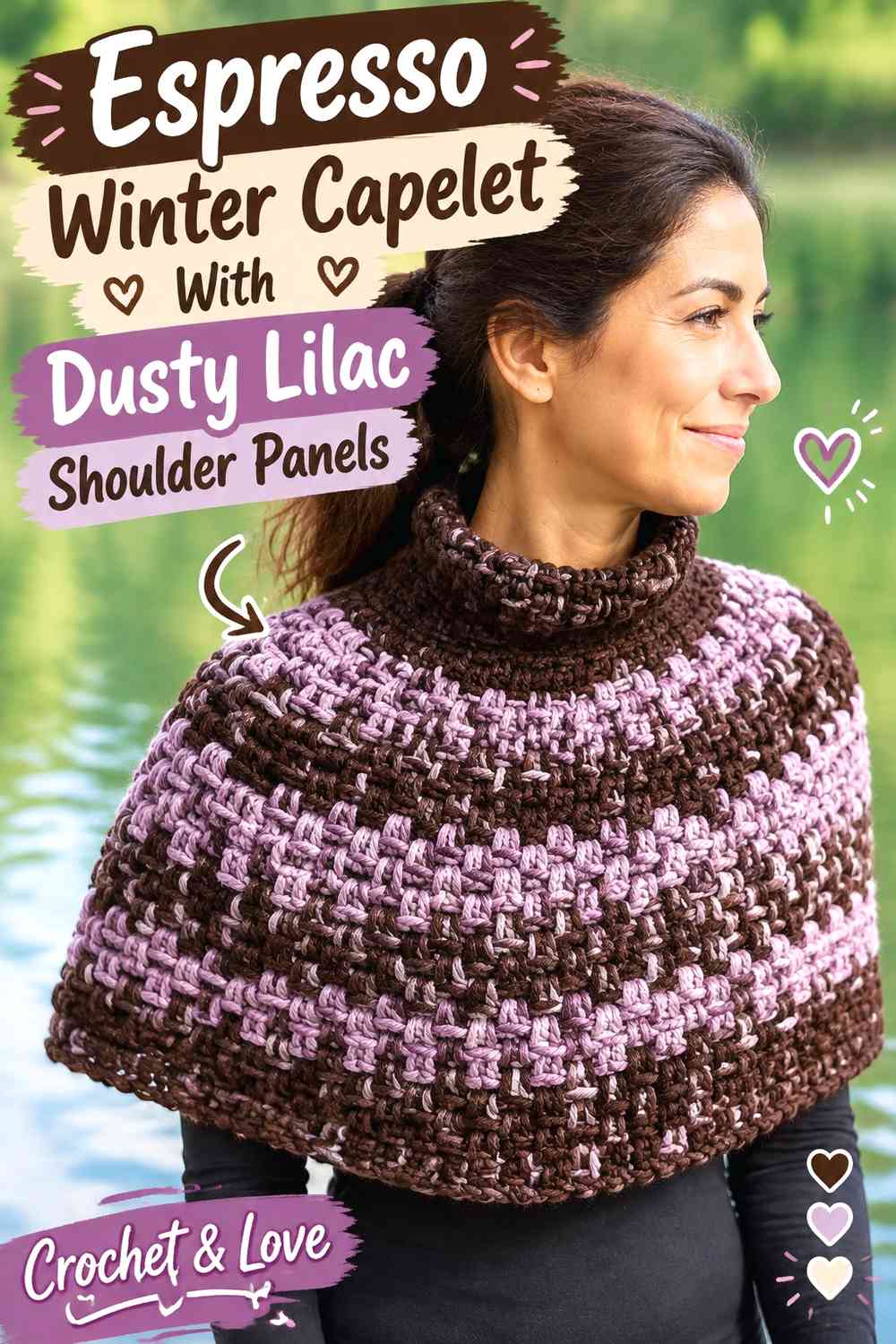
Color blocking can give a simple cape construction more distinction. Use espresso for the center body and dusty lilac across selected shoulder-facing areas, creating lighter panels near the upper silhouette.
A small espresso faux-fur collar can reconnect the dark center with the neckline.
Dusty Lilac Panels Can Lighten an Espresso Shoulder Line
Place dusty lilac where it remains visible from the front and side rather than hiding the lighter color entirely across the back.
Broad lilac panels work better than numerous narrow stripes when the goal is a clear shoulder-blocked effect.
Espresso Faux Fur Can Reconnect Dusty Lilac Panels at the Neck
Use an espresso collar or narrow neckline trim to join the dark body and lighter shoulder sections visually. The brown frame provides continuity even when lilac appears on both sides.
Keep the faux fur compact if the shoulder panels already occupy a large part of the capelet.
Creator Credit: Francesca Uncinettando Crochet&Love
8. Dusty Lilac Capelet With Espresso High-Neck Faux Fur Trim

This idea concentrates espresso around a taller neckline rather than the entire perimeter. Dusty lilac covers the flared shoulder area, giving the garment a clear dark-top/light-body hierarchy.
A high neckline already has substantial visual presence, so the rest of the color placement should remain restrained.
Dusty Lilac Should Spread Broadly Below the Espresso Neckline
Let lilac begin immediately below the collar and continue across the shoulders without repeated brown bands. This creates a visible transition from dark neck to lighter body.
If the garment includes a closure, keep it dusty lilac or use only a small espresso detail.
Espresso Faux Fur Makes a Dusty Lilac High Neck the Focal Point
Use the dark fluffy texture around the neckline where it naturally draws attention toward the face. Since the collar sits higher than a flat border, it does not need additional dark ornament below.
Check the weight and flexibility of the chosen faux-fur yarn or trim so the collar treatment remains compatible with the capelet construction.
Creator Credit: Jesuecrochet
9. Dusty Lilac Lacy Capelet With Espresso Winter Border
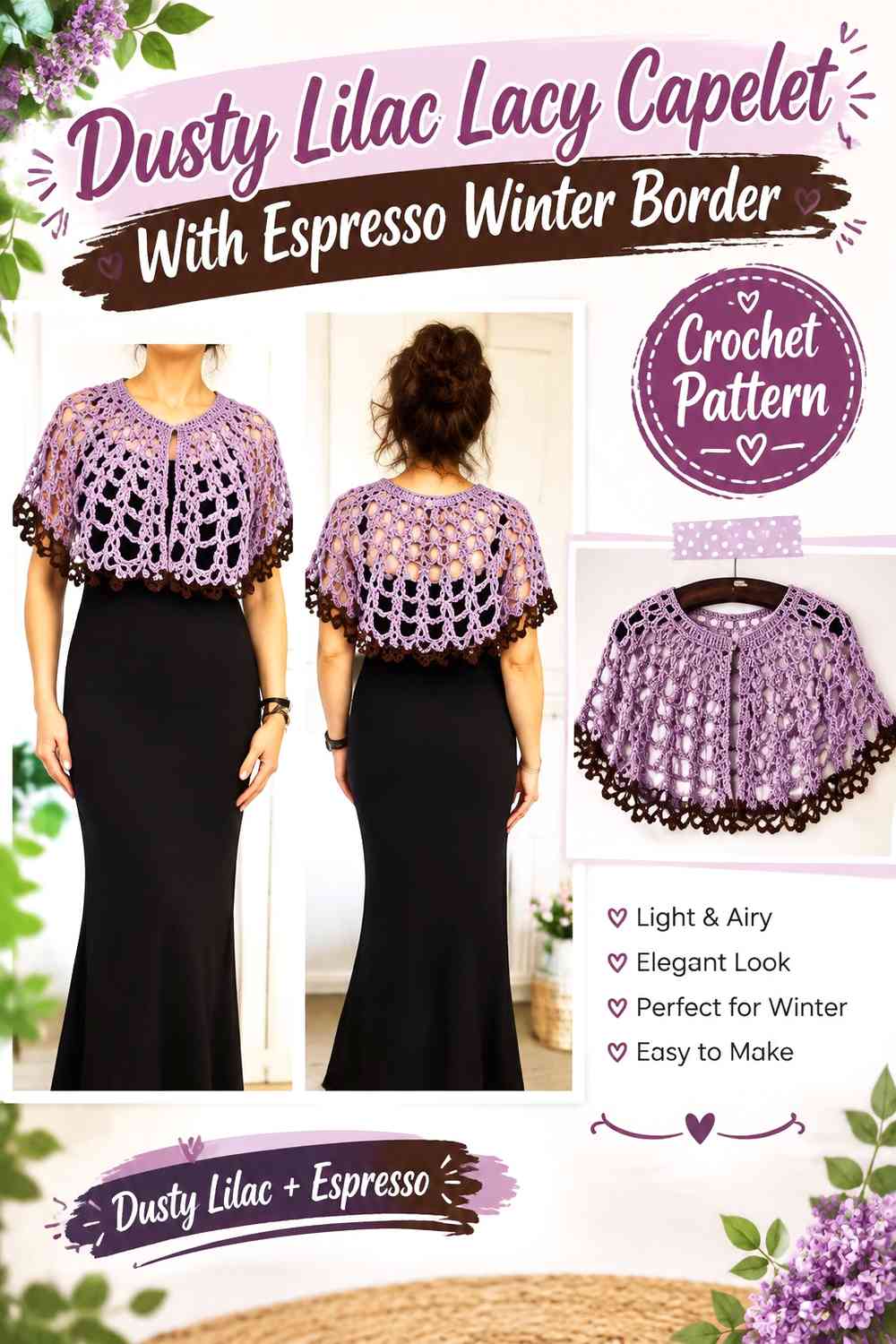
For a lighter openwork construction, keep the lace dusty lilac and introduce espresso as a controlled border. The dark brown can appear along the neckline and lower edge while leaving the open central fabric uninterrupted.
This lets the light-dark contrast reinforce the silhouette rather than competing inside each lace opening.
Dusty Lilac Keeps Open Lace Softer Than Espresso
Use lilac continuously across the open shoulder fabric. The negative spaces will already create dark-light variation depending on the clothing beneath the capelet.
Avoid putting espresso into every lace repeat, which can make the pattern harder to follow.
Espresso Can Frame Dusty Lilac Lace Without Closing It In
Place espresso along one or two outer boundaries, such as the neckline and hem. These dark lines give the open dusty-lilac fabric a visible edge.
If faux fur is added, choose only one border for the fluffy treatment and keep the second espresso edge smoother and quieter.
Creator Credit: Hectanooga1
10. Espresso Lace Capelet With Dusty Lilac Faux Fur Collar

This is the darkest lace direction. Espresso covers the openwork body while dusty lilac provides a pale fluffy neckline. The contrast makes the face frame much more noticeable than it would be on an all-brown capelet.
Because dark lace already creates considerable visual depth, the lilac collar should remain relatively simple.
Espresso Lace Can Give Dusty Lilac a Deeper Winter Background
Keep the main openwork espresso so the garment maintains a strong dark character. The holes and shadows in the lace will provide natural tonal variation without additional lilac patterning.
If the espresso is very deep, check the lace against the clothing worn underneath to ensure the pattern remains visible.
Dusty Lilac Faux Fur Can Brighten an Espresso Lace Neckline
Use dusty lilac only around the neck or upper front where it can soften the transition between dark crochet and the face.
A small lilac repeat at the closure can connect the palette, but keep the lace body predominantly espresso.
Creator Credit: Mitsu
11. Dusty Lilac Open-Front Capelet With Espresso Faux Fur Framing
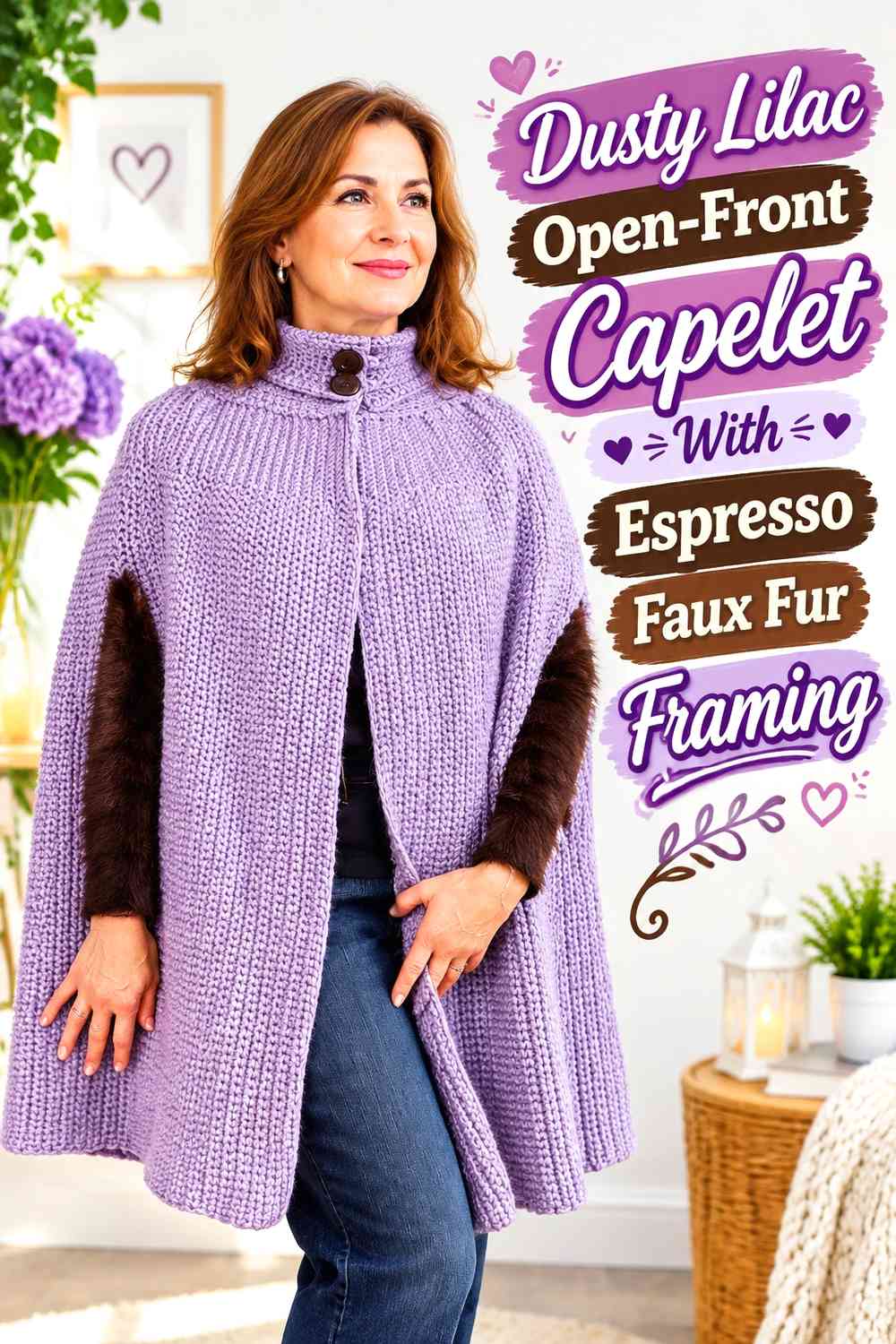
An open-front cape gives espresso an obvious place to work: the long front boundaries. Keep the body dusty lilac and use espresso around the neckline and down the opening for a continuous frame.
This distributes the dark color vertically rather than concentrating it entirely around the shoulders.
Dusty Lilac Should Stay Broad Inside the Espresso Front Frame
Keep the main front and back panels dusty lilac so the dark border remains visually separate from the body.
If the construction includes buttons or another closure, consider how their placement interacts with the espresso edge rather than adding more color blocks around them.
Espresso Faux Fur Can Trace the Dusty Lilac Open Front
Use fluffy espresso selectively along the most visible framing areas. A full fur treatment from neckline to hem creates a stronger effect, while collar-only fur with smoother espresso front edging feels more restrained.
Either way, avoid covering so much of the dusty-lilac front that the main color becomes secondary.
Creator Credit: Crazy Cool Crochet
12. Dusty Lilac Vintage Shoulder Capelet With Espresso Tassel-Style Trim

The final idea keeps dusty lilac across the cape body and gives espresso a more decorative lower role. Instead of a completely solid fur hem, use restrained espresso trim at the edge, allowing movement or spaced texture to break up the dark boundary.
This offers a lighter alternative to a continuous espresso faux-fur band while keeping the same winter color hierarchy.
Dusty Lilac Should Remain the Main Vintage Shoulder Color
Use dusty lilac across the largest visible area from neckline to hem. The muted purple gives the capelet its distinctive palette, so do not let lower trim occupy a disproportionate amount of surface.
Keep upper detailing simple if the lower edge is already decorative.
Espresso Trim Can Finish Dusty Lilac Without Becoming a Heavy Border
A narrower, spaced, or tassel-influenced espresso edge can give the dusty-lilac capelet a defined finish while retaining movement.
If you substitute faux-fur texture for some of that lower trim, use it selectively so the hem does not become visually heavier than the shoulders.
Creator Credit: Vivirtejiendo
Which Dusty Lilac and Espresso Faux Fur Capelet Should You Choose?
For the clearest winter faux-fur look, choose the dusty-lilac body with espresso collar, the cable capelet with dark fur neckline, or the high-neck version. These arrangements concentrate fluffy texture near the face and leave the shoulder body relatively clean.
For a lighter face frame, reverse the colors with an espresso body and dusty-lilac faux fur. The dark garment retains its winter depth while the pale collar creates separation around the neckline.
If you prefer the trim away from the face, the espresso faux-fur hem or lower-border ideas keep the neckline quieter and move the dark emphasis toward the shoulder edge.
For more visible color blocking, compare the espresso capelet with dusty-lilac shoulder panels and the open-front dusty-lilac capelet with espresso framing. These use broad color placement rather than relying only on narrow borders.
Conclusion
Dusty lilac and espresso can create very different winter capelets depending on where the dark color sits. Espresso at the neckline makes the garment feel strongly framed near the face, espresso along the hem grounds the shoulder silhouette, and espresso down an open front creates longer vertical definition.
Dusty lilac works particularly well as the broad body color when you want crochet texture, cables, shells, or lace to remain part of the visual focus. Reversing the palette produces a much darker capelet in which a smaller amount of dusty lilac can have greater impact.
With faux fur, remember that texture changes visual weight as much as color does. Give the fluffy trim one clear role rather than adding it automatically to every edge. Use each creator’s tutorial for its original construction and sizing details, then apply the dusty-lilac-and-espresso palette only where it suits that structure.
Frequently Asked Questions
Should Dusty Lilac or Espresso dominate a winter faux fur capelet?
Dusty lilac is useful as the dominant color when you want a softer shoulder field with strong dark trim. Espresso works as the main color when you want a deeper winter garment and a lighter dusty-lilac face frame. Decide which shade should cover the largest area before planning the fur.
Where should Espresso faux fur go on a Dusty Lilac crochet capelet?
The neckline, front opening, or lower hem are the clearest choices. A collar draws attention toward the face, vertical front trim frames an open capelet, and a dark hem emphasizes the shoulder silhouette. Using faux fur on all three at once can make a short capelet visually crowded.
Can Dusty Lilac faux fur work with an Espresso capelet?
Yes. A pale dusty-lilac trim creates a softer contrast against a dark espresso body and can keep the neckline from appearing too heavy. Preserve enough espresso around the shoulders so the capelet still reads as dark-dominant.
How can I keep Dusty Lilac texture visible beside Espresso trim?
Keep the main lilac body relatively uninterrupted. Cables, shells, ribbing, or openwork can create their own shadows, so they do not necessarily need additional espresso inside the stitch pattern. Concentrating brown around an outer edge often makes the internal lilac texture easier to appreciate.
Should an Espresso faux fur collar match the lower capelet hem?
It can, but it does not have to. Matching both creates a strongly framed look. If the collar is already substantial, leaving the lower dusty-lilac edge plain may produce better balance on a short shoulder capelet.
What can replace Dusty Lilac if I cannot find that exact shade?
Choose another softened, cool-leaning purple that remains noticeably lighter than the espresso. Preserving the muted character and light-dark relationship matters more than matching an exact commercial shade name.
What should I check before adding faux fur to a Dusty Lilac and Espresso capelet?
Check that the selected trim or faux-fur yarn is compatible with the capelet’s edge, weight, flexibility, and intended care. Also look at a sample beside the crochet body before committing: fluffy yarn can appear much more visually substantial than the same width of smooth crochet.