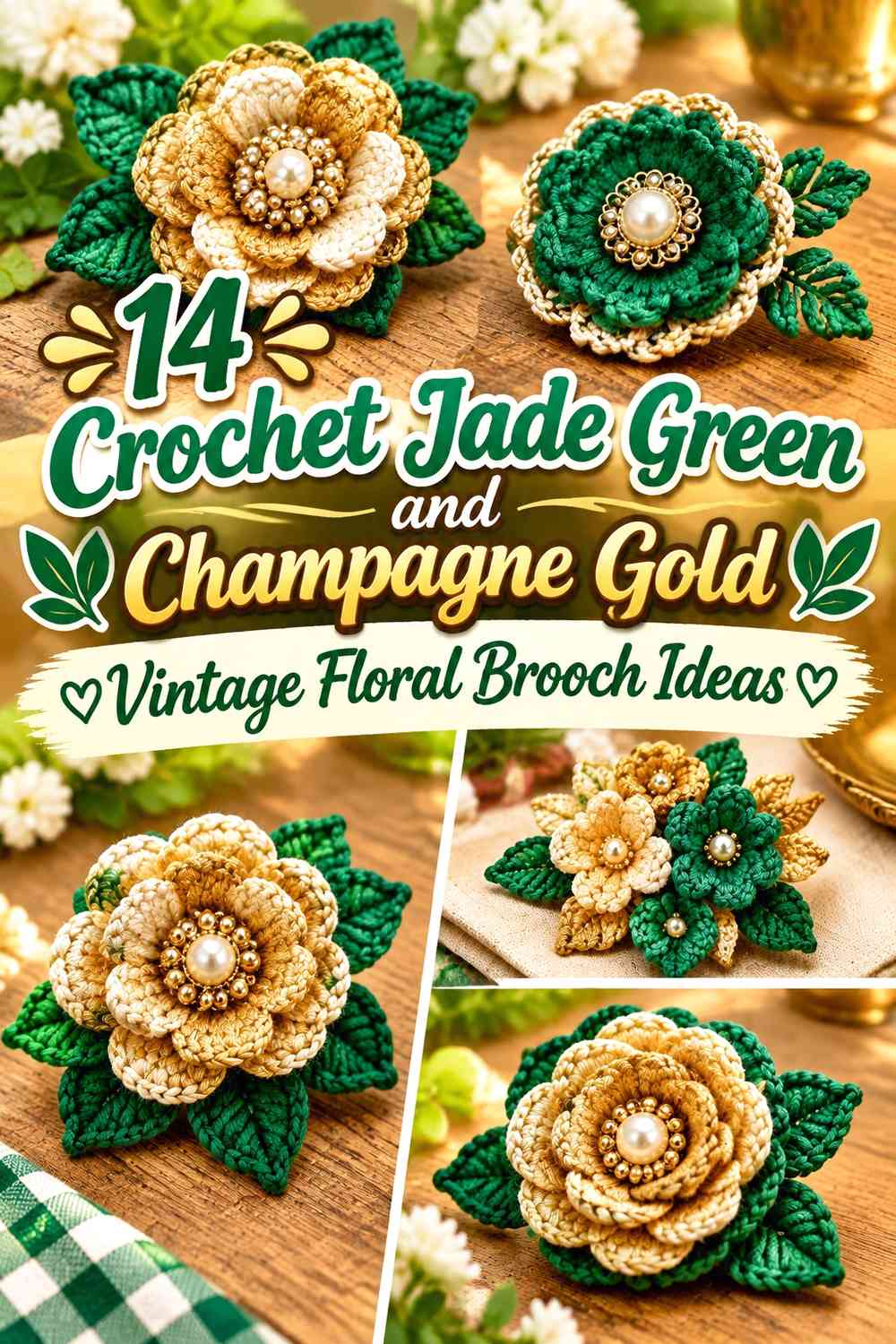

Jade green and champagne gold can give a crochet floral brooch an old-fashioned jewelry direction without requiring a complicated palette. The important choice is not simply using both colors, but deciding which one should lead. On a small brooch, equal areas of two strong colors can make petals, centers, and leaves harder to distinguish.
These ideas use jade green and champagne gold in different roles across roses, carnations, orchids, peonies, floral sprays, and other flower shapes. Some let champagne gold carry the bloom while jade green behaves like traditional foliage. Others deliberately reverse those roles for a more stylized vintage-jewelry effect.
The credited tutorials provide the crochet flower or brooch construction reference. The jade green and champagne gold color arrangements below are independent palette adaptations rather than claims about the colors used by the creators.
Quick List
- Jade Green and Champagne Gold Crochet Rose Cluster Vintage Brooch
- Champagne Gold and Jade Green Crochet Sunflower Vintage Brooch
- Jade Green and Champagne Gold Crochet Carnation Vintage Brooch
- Jade Green and Champagne Gold Crochet Layered Flower Vintage Brooch
- Champagne Gold and Jade Green Crochet Poppy Vintage Brooch
- Jade Green and Champagne Gold Crochet Orchid Vintage Brooch
- Champagne Gold and Jade Green Crochet Lily-of-the-Valley Vintage Brooch
- Jade Green and Champagne Gold Crochet Pansy Vintage Brooch
- Champagne Gold and Jade Green Crochet Daffodil Vintage Brooch
- Champagne Gold and Jade Green Crochet Peony Vintage Brooch
- Jade Green and Champagne Gold Crochet Lavender-Sprig Vintage Brooch
- Jade Green and Champagne Gold Crochet Dahlia Vintage Brooch
- Jade Green and Champagne Gold Crochet Forget-Me-Not Vintage Brooch
- Champagne Gold and Jade Green Crochet Camellia Vintage Brooch
Balance Jade Green and Champagne Gold on a Small Crochet Brooch
A brooch gives you much less visual space than a scarf, bag, or blanket, so the two colors need clearly assigned jobs. Decide first whether the flower or the foliage should receive the dominant color. If champagne gold covers most petals, jade green can define leaves, stems, centers, or small separating details. If jade green becomes the bloom color, champagne gold is usually more effective when concentrated around a center, narrow edge, or secondary petal layer.
Treat “champagne gold” as a color direction rather than an assumption about metallic fiber. A muted warm gold-colored yarn can provide the palette even when the yarn itself has no shimmer.
Check Jade Green and Champagne Gold Contrast After Crocheting
Hue difference does not automatically guarantee useful contrast. A medium jade green and a medium champagne gold may look clearly different as skeins but become closer in visual weight once worked into textured crochet.
Make or compare small worked sections when possible. A grayscale photo is also useful for checking light-and-dark separation. If both colors merge, keep the lighter one around tiny centers, narrow petals, or edging where separation is most important rather than scattering both colors through every detail.
1. Jade Green and Champagne Gold Crochet Rose Cluster Vintage Brooch
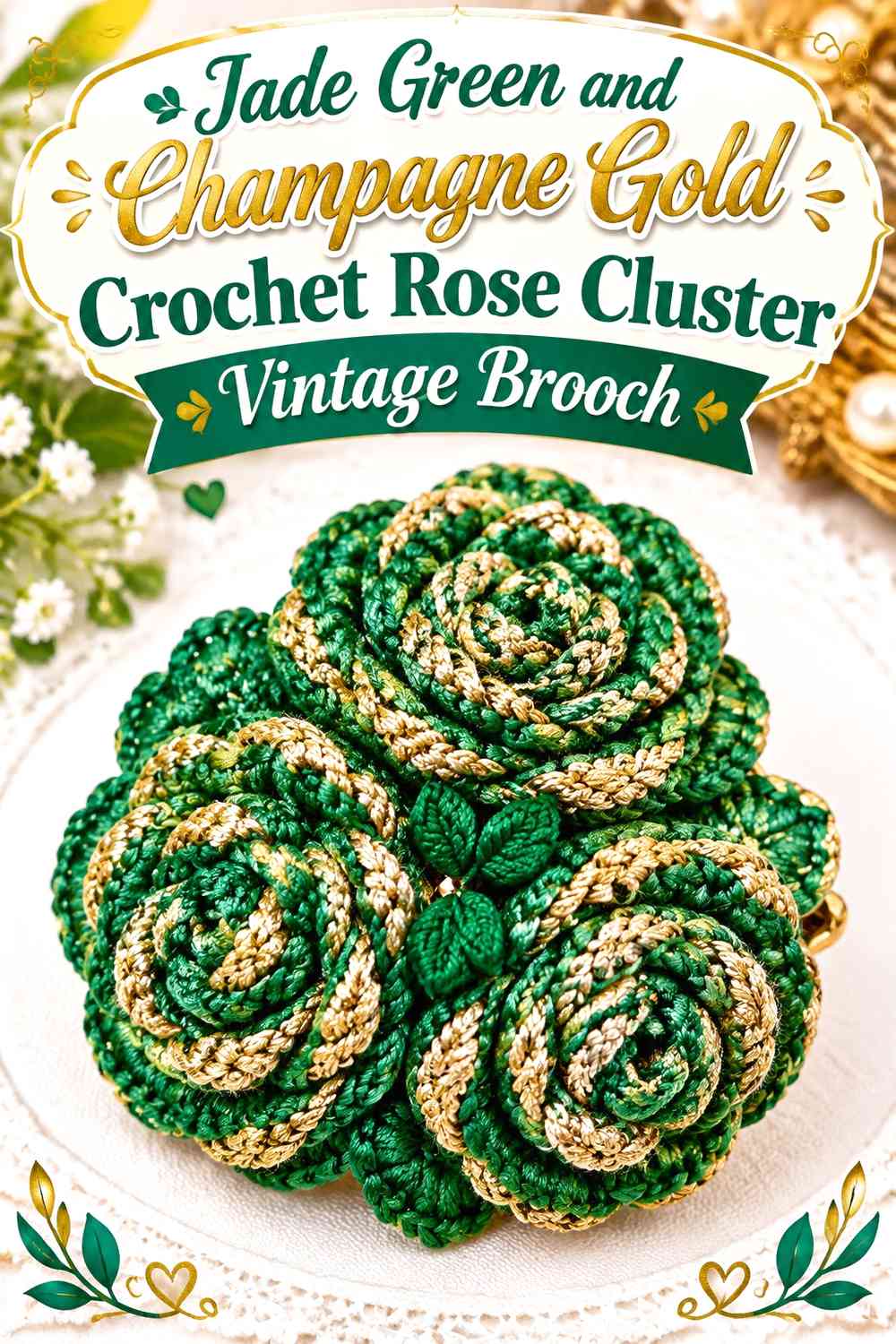
A rose cluster gives this palette several small surfaces instead of one large flower. Use jade green across the main roses for a stylized vintage-jewelry look, then keep champagne gold concentrated in one smaller rose, tiny center details, or a restrained outer accent. Because several roses already make the brooch visually complex, the two-color hierarchy should remain simple. Let the repeated jade blooms connect the cluster while champagne gold provides a focal interruption.
Jade Green Can Unite the Crochet Rose Cluster
Keep most of the rose petals within the same jade green family so separate blooms still read as one arrangement. The rolled or layered construction already creates shadows between petals, so frequent color changes are unnecessary.
Before joining the flowers, arrange the jade green roses at slightly different angles and check the overall silhouette. If champagne gold will appear in only one bloom, place it where it creates intentional emphasis rather than making the cluster look accidentally unbalanced.
Champagne Gold Should Stay Selective Around Jade Green Roses
Champagne gold can work as one smaller flower, a compact center, or a narrow detail around the cluster. Keeping its area smaller prevents the warm accent from breaking every rose into separate competing sections.
If the champagne gold looks too isolated, repeat a small amount elsewhere instead of enlarging the original accent. Two restrained appearances can connect the palette more effectively than one oversized gold-colored patch.
Creator Credit: The Crochet Circle
2. Champagne Gold and Jade Green Crochet Sunflower Vintage Brooch
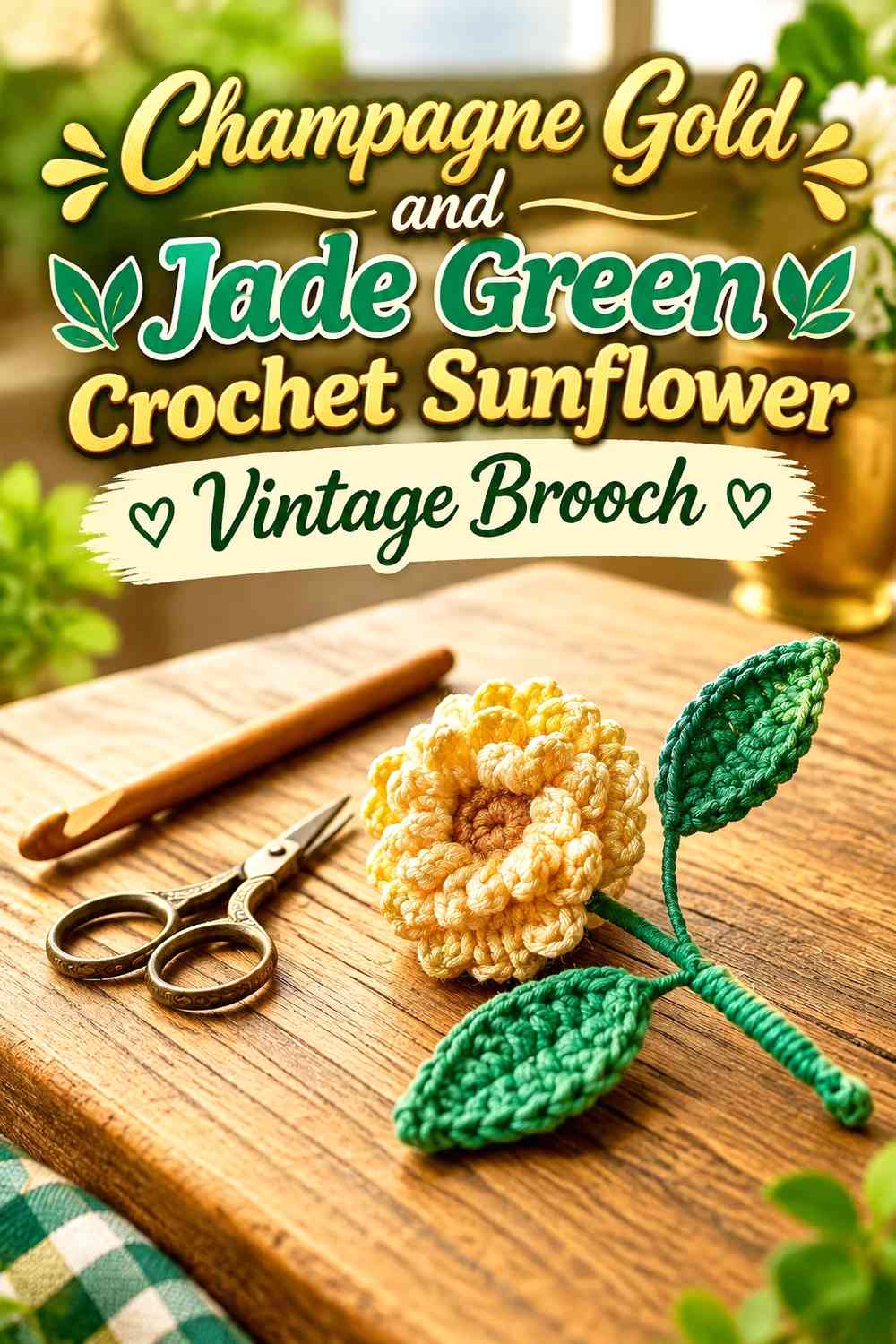
The sunflower format naturally provides a large petal ring, a defined center, and optional foliage, making the two-color division easy to control. Champagne gold can lead across the radiating petals while jade green provides the center and leaves. For a vintage interpretation, keep the gold-colored petals relatively consistent rather than introducing several unrelated yellows or browns.
Champagne Gold Can Carry the Crochet Sunflower Petals
Use champagne gold across the main petal ring so the repeated shape remains easy to recognize. The petals already create movement through repetition, so alternating jade and gold petal by petal would add complexity without necessarily improving the flower.
Check the finished petal circle from normal wearing distance. Champagne gold should form a continuous floral outline instead of appearing as many disconnected small highlights.
Jade Green Can Anchor the Champagne Gold Sunflower Center
A jade green center produces a strong color change inside the warm petal ring without requiring a third shade. Keep the center visually contained so it defines the flower rather than spreading outward and reducing the amount of visible champagne gold.
If leaves are included, repeat the same jade green there. That repetition connects the center to the botanical details and prevents the dark or saturated portion of the palette from looking confined to one isolated spot.
Creator Credit: Lilyrosycrafts
3. Jade Green and Champagne Gold Crochet Carnation Vintage Brooch
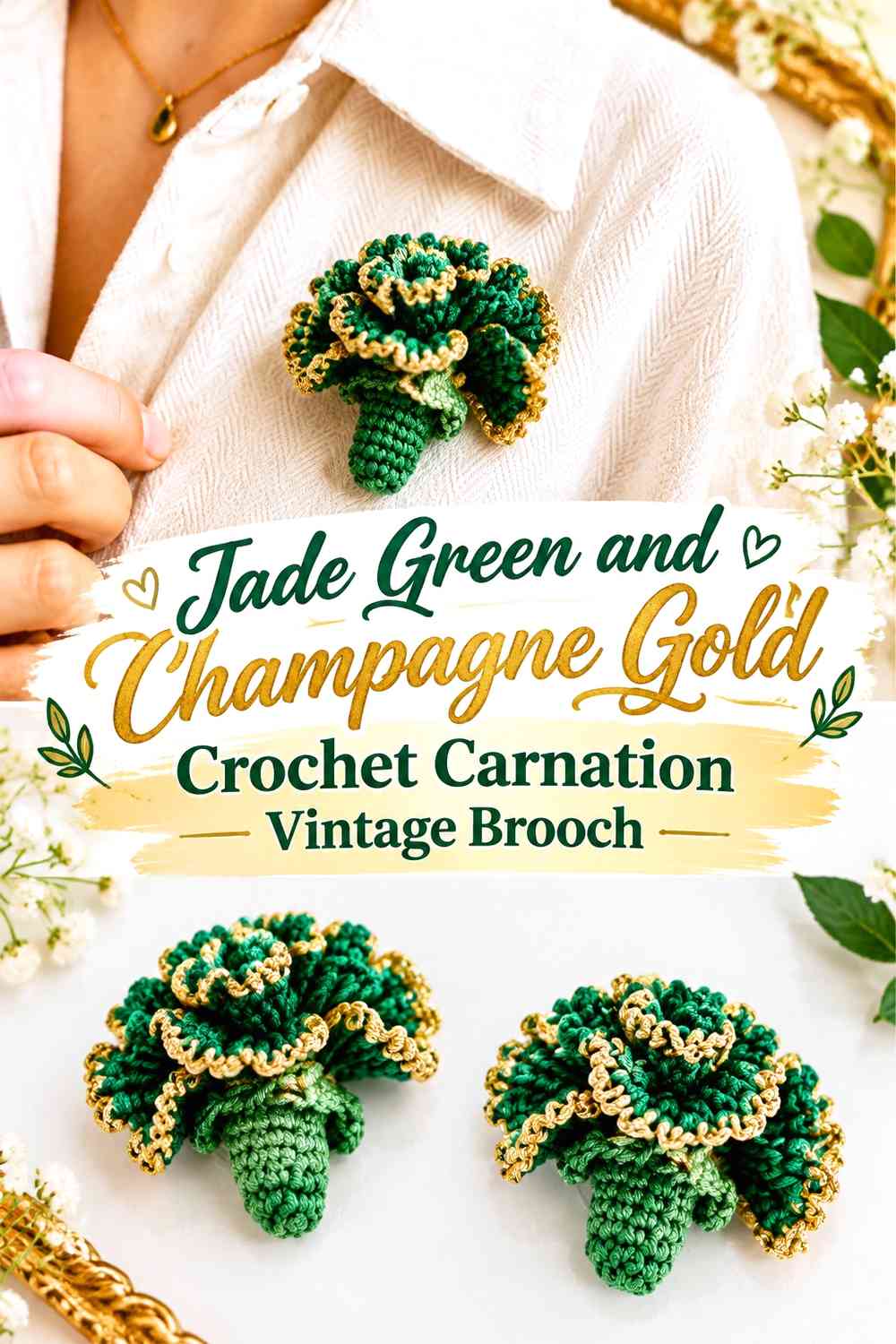
A carnation gets much of its character from ruffled texture, so it does not need complicated color blocking. Jade green can cover the entire ruffled bloom for an intentionally stylized vintage accessory, with champagne gold limited to the lower flower detail, a small central glimpse, or a narrow finishing accent. This reverses conventional flower-and-foliage coloring and makes the brooch feel more like textile jewelry than a botanical replica.
Jade Green Keeps the Crochet Carnation Ruffles Connected
Use jade green consistently through the major ruffled areas. Multiple folds already create light and shadow, so the flower can gain depth without changing colors between every section.
If the finished carnation looks too dark against the garment, adjust the jade green shade before adding extensive champagne-gold edging. Too much outlining can turn a softly ruffled flower into a striped one.
Champagne Gold Can Define the Jade Green Carnation Base
Place champagne gold near the lower edge, center, or another compact structural point. That gives the eye a warm accent without interrupting every jade green ruffle.
Check the brooch from the side as well as the front. If champagne gold is visible mainly at the base, it should still look intentional when the dimensional flower projects away from the garment.
Creator Credit: Pembe Düğme
4. Jade Green and Champagne Gold Crochet Layered Flower Vintage Brooch
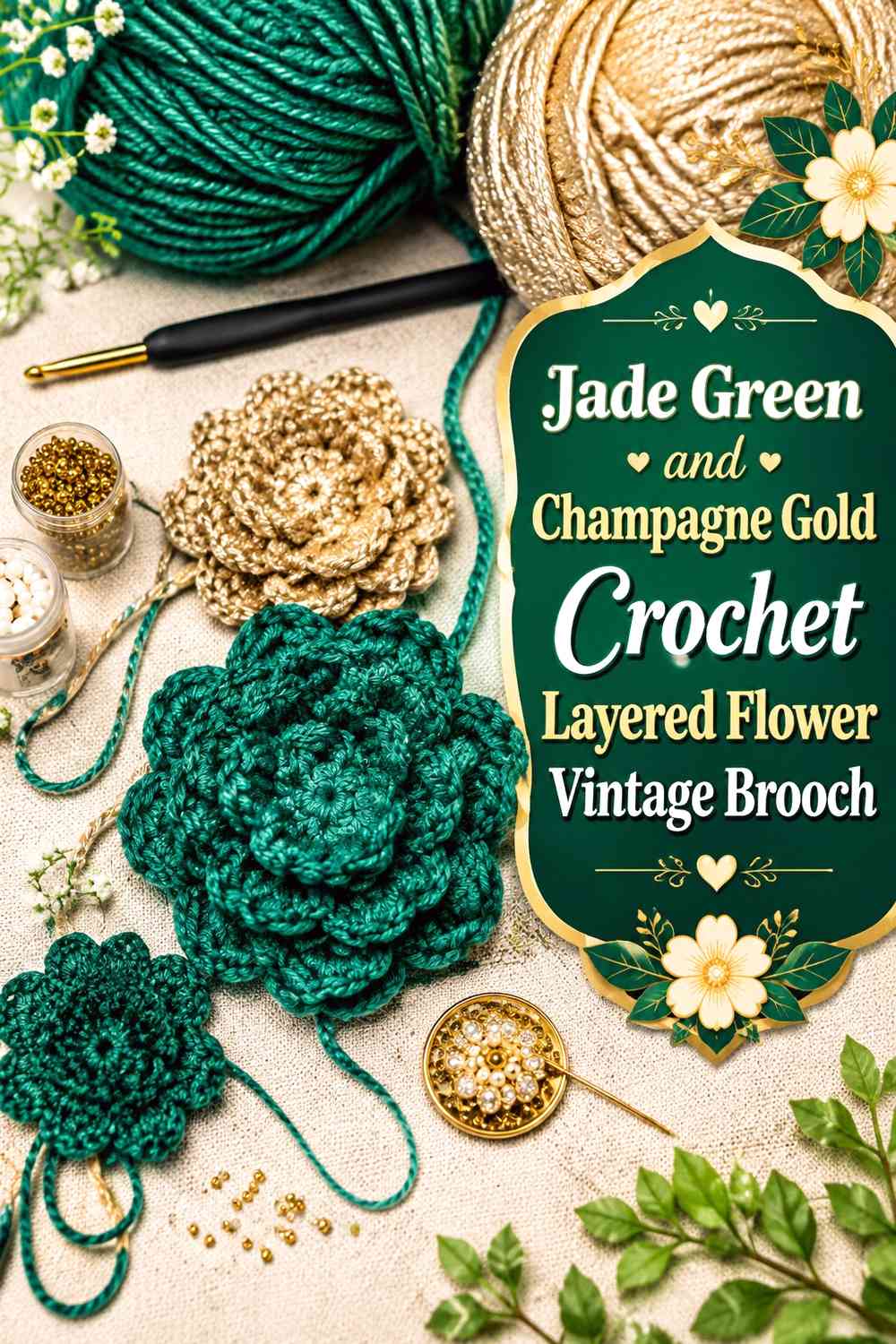
A non-botanical layered flower is one of the easiest places to give both colors substantial space. Use jade green for the broader back layer and champagne gold for a smaller front flower or center. The visible jade petals then behave like a frame around the warmer inner layer, creating the stacked appearance associated with decorative vintage corsage pieces.
Jade Green Should Frame the Champagne Gold Crochet Layer
Rotate the jade green back flower until its petals show clearly between the champagne-gold petals above it. If both layers align exactly, much of the jade may disappear while still adding unnecessary bulk.
Judge the stacked flower before permanently joining it. The goal is to see deliberate jade green points around the perimeter without turning the lower layer into a thick continuous border.
Champagne Gold Can Become the Vintage Crochet Focal Layer
A smaller champagne-gold flower at the front draws attention toward the center while allowing the jade green structure to remain visible behind it. This is particularly useful when you want champagne gold to feel important without covering most of the brooch.
If you add a separate center detail, keep it restrained. The layered jade-and-gold relationship should remain more noticeable than an unrelated third embellishment.
Creator Credit: Loopy Mabel Crochet
5. Champagne Gold and Jade Green Crochet Poppy Vintage Brooch
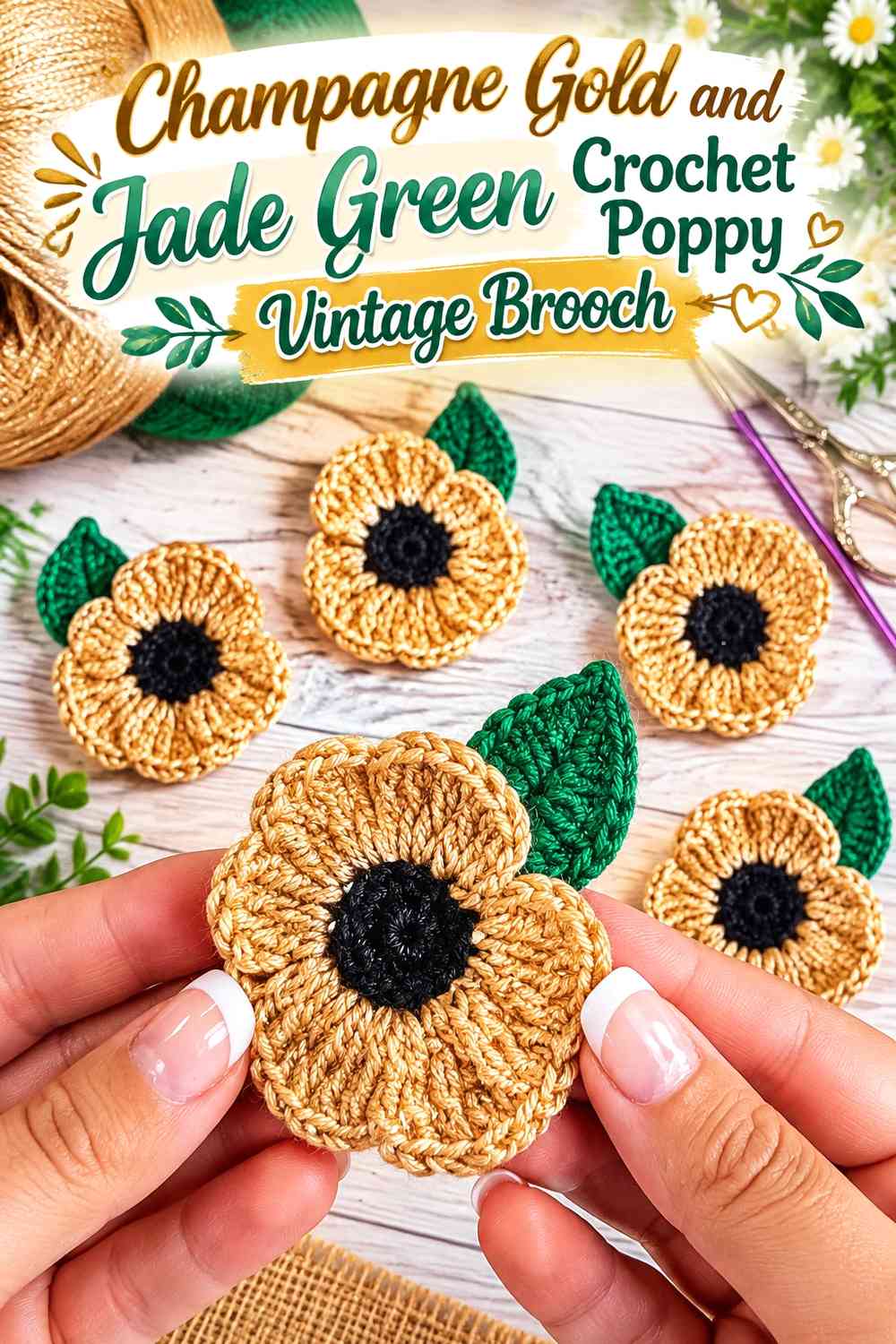
A broad-petal poppy creates a flatter floral silhouette than a heavily layered rose or peony. Champagne gold can cover the open petals while jade green forms the center and leaf. Because the flower shape is relatively simple, the contrast between its center and petals becomes especially important.
Champagne Gold Should Keep the Crochet Poppy Petals Visually Open
Use champagne gold across the broad petal areas rather than dividing them into numerous jade sections. A continuous warm surface helps the poppy retain its open silhouette.
After finishing, overlap and arrange the petals as the construction allows, then view the brooch from a short distance. The champagne-gold outline should remain recognizable even where petals cross one another.
Jade Green Can Give the Champagne Gold Poppy a Defined Center
Keep jade green concentrated around the flower center and any supporting leaf. This creates a clear focal point while preventing the center from visually spreading into the petals.
If your jade green and champagne gold are close in value, compare them in grayscale. A stronger light-dark difference may be useful at the center because that is where the flower needs its clearest separation.
Creator Credit: Crafting Happiness Crochet
6. Jade Green and Champagne Gold Crochet Orchid Vintage Brooch
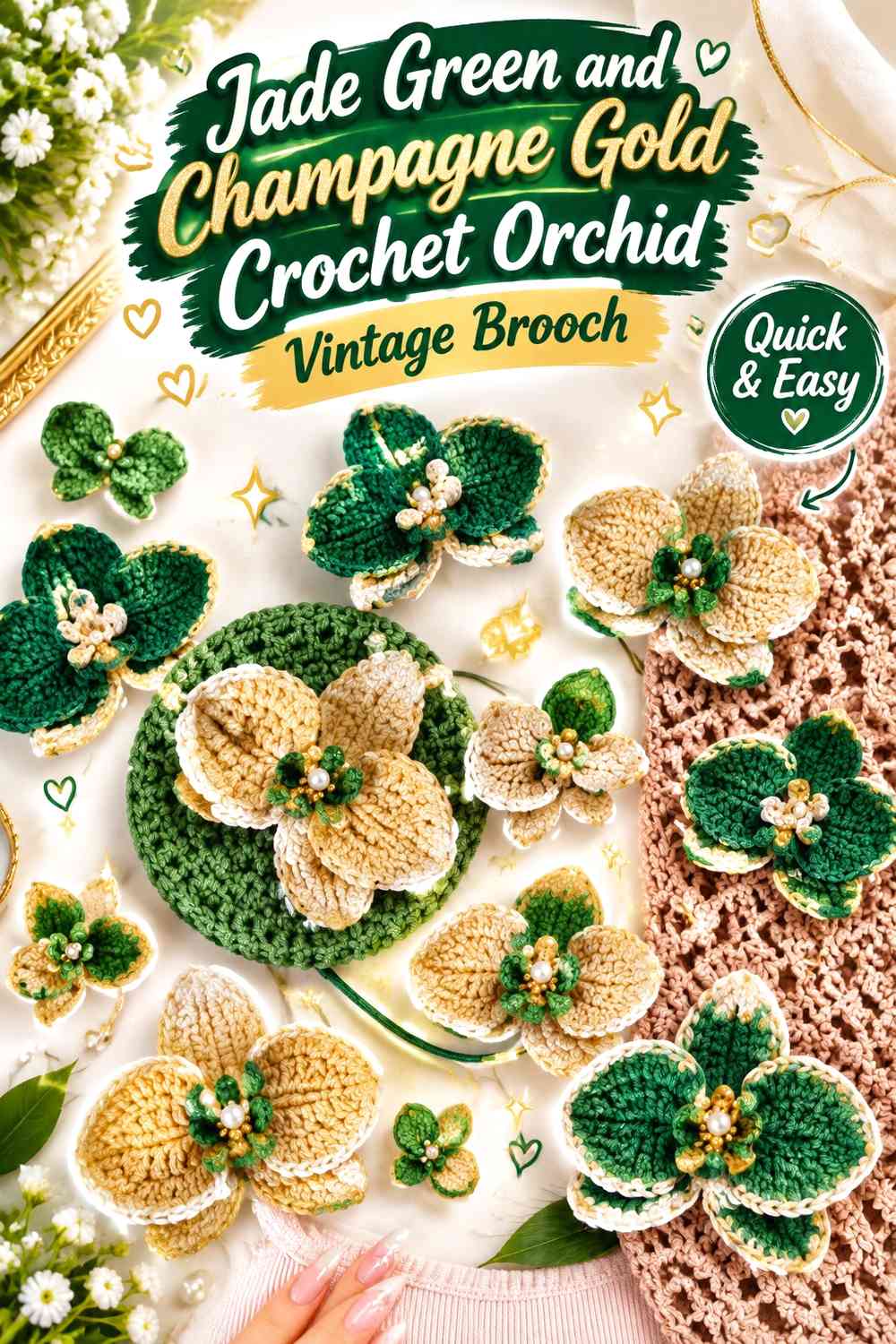
An orchid has an irregular, sculptural silhouette, so color placement should reinforce its shape rather than divide every petal differently. Let jade green cover the major outer petals and reserve champagne gold for the smaller inner structure. This makes the warm color a focal accent inside a larger cool-toned floral form.
Jade Green Can Preserve the Crochet Orchid Silhouette
Keep the larger petals jade green so their different shapes remain visually connected. An orchid already asks the eye to follow several curves and projections; giving each one a different color would make the brooch harder to read.
Choose the preferred orientation before attaching the brooch backing. The jade green outer petals establish the main outline, and rotating that outline can substantially change how the accessory appears on a lapel.
Champagne Gold Can Highlight the Jade Green Orchid Center
Use champagne gold around the smaller central portion where a warm highlight can attract attention without covering the orchid’s unusual petal arrangement.
Avoid carrying champagne gold around every outer petal unless you specifically want an outlined effect. A concentrated center gives the palette a stronger hierarchy and leaves more room for the jade green silhouette to do the visual work.
Creator Credit: chubbiesbyash𐙚
7. Champagne Gold and Jade Green Crochet Lily-of-the-Valley Vintage Brooch
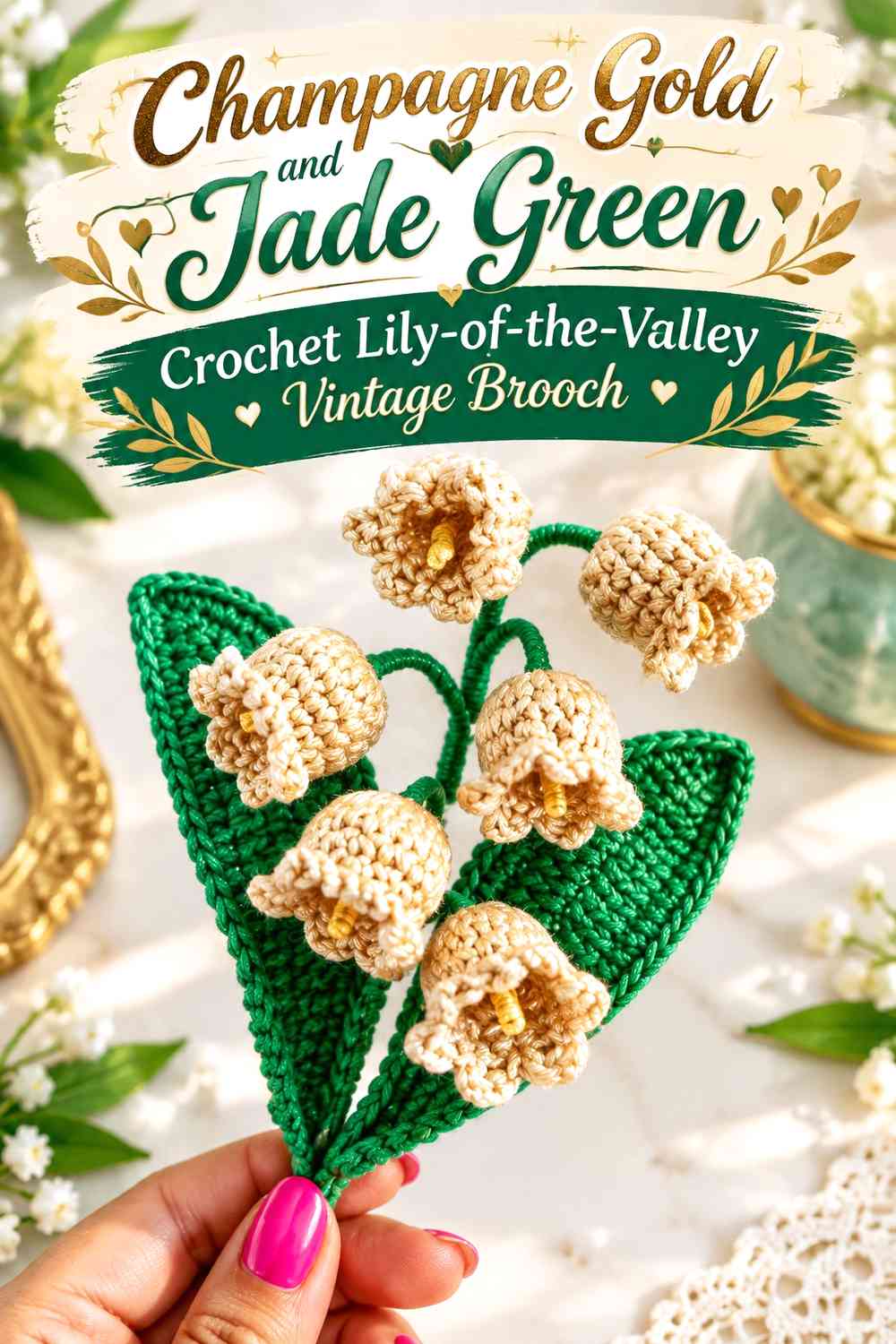
Lily of the valley creates a narrow floral spray rather than a centered round brooch. Champagne gold can form the hanging bell-shaped flowers while jade green runs through the leaves and supporting stem structure. The repeated pale-gold blooms create rhythm along the brooch without needing additional flower colors.
Champagne Gold Can Repeat Across the Crochet Lily Bells
Use the same champagne-gold direction across the visible bells so they read as a coordinated group. Several tiny flowers already create repetition; varying each one individually would make the narrow brooch busier.
Leave enough jade green visible between the blooms for each champagne-gold flower to remain distinct. If the flowers crowd together visually, reduce competing accent details rather than adding more color.
Jade Green Should Organize the Champagne Gold Floral Spray
Jade green can connect the separate flowers through stems and leaves, giving the elongated brooch one continuous botanical line.
Before fixing the backing, hold the spray at the intended wearing angle. If a large jade leaf overwhelms the champagne-gold bells, reposition the visible foliage rather than increasing the gold area simply to compensate.
Creator Credit: Shelen Crochet
8. Jade Green and Champagne Gold Crochet Pansy Vintage Brooch
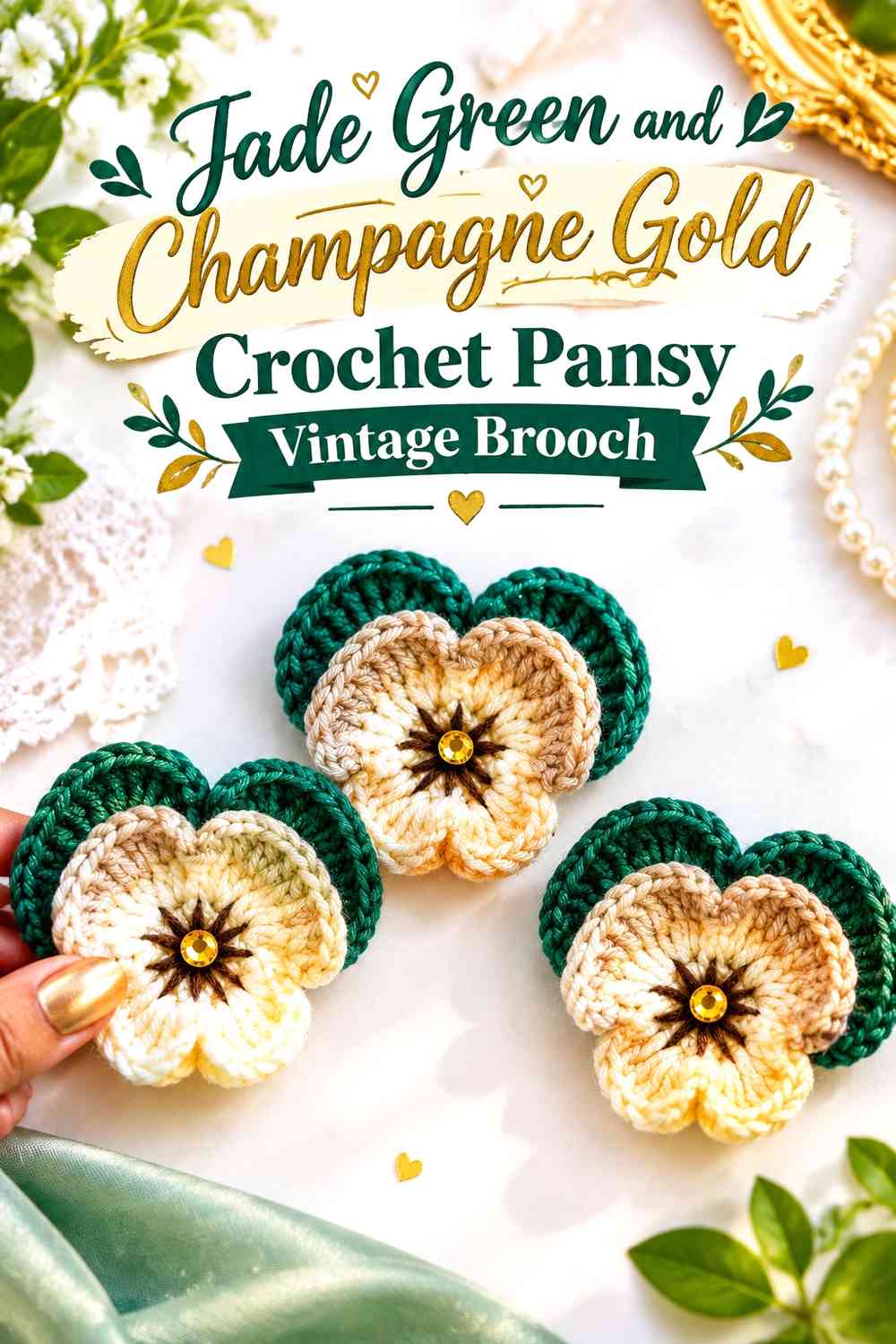
A pansy offers broader areas for color blocking than a small daisy or forget-me-not. Use jade green across the main petal mass and champagne gold around the inner face of the flower. The result is a stylized two-tone pansy that keeps the vintage palette concentrated inside a relatively flat brooch shape.
Jade Green Should Remain the Main Crochet Pansy Field
Give jade green the larger petal areas so the flower retains one clear dominant color. Scattering champagne gold equally over every section can make the broad pansy shape look fragmented.
Check the flower against the garment before committing to the final backing. Because the pansy is relatively flat, its edge contrast with the fabric becomes particularly noticeable.
Champagne Gold Can Clarify the Jade Green Pansy Face
Concentrate champagne gold around the inner petal sections or center rather than tracing every outside edge. This keeps attention on the distinctive face-like center of the pansy.
If the champagne gold feels too strong, reduce its area before changing to a third color. On a small brooch, adjusting proportion is often enough to correct the balance.
Creator Credit: naztazia
9. Champagne Gold and Jade Green Crochet Daffodil Vintage Brooch
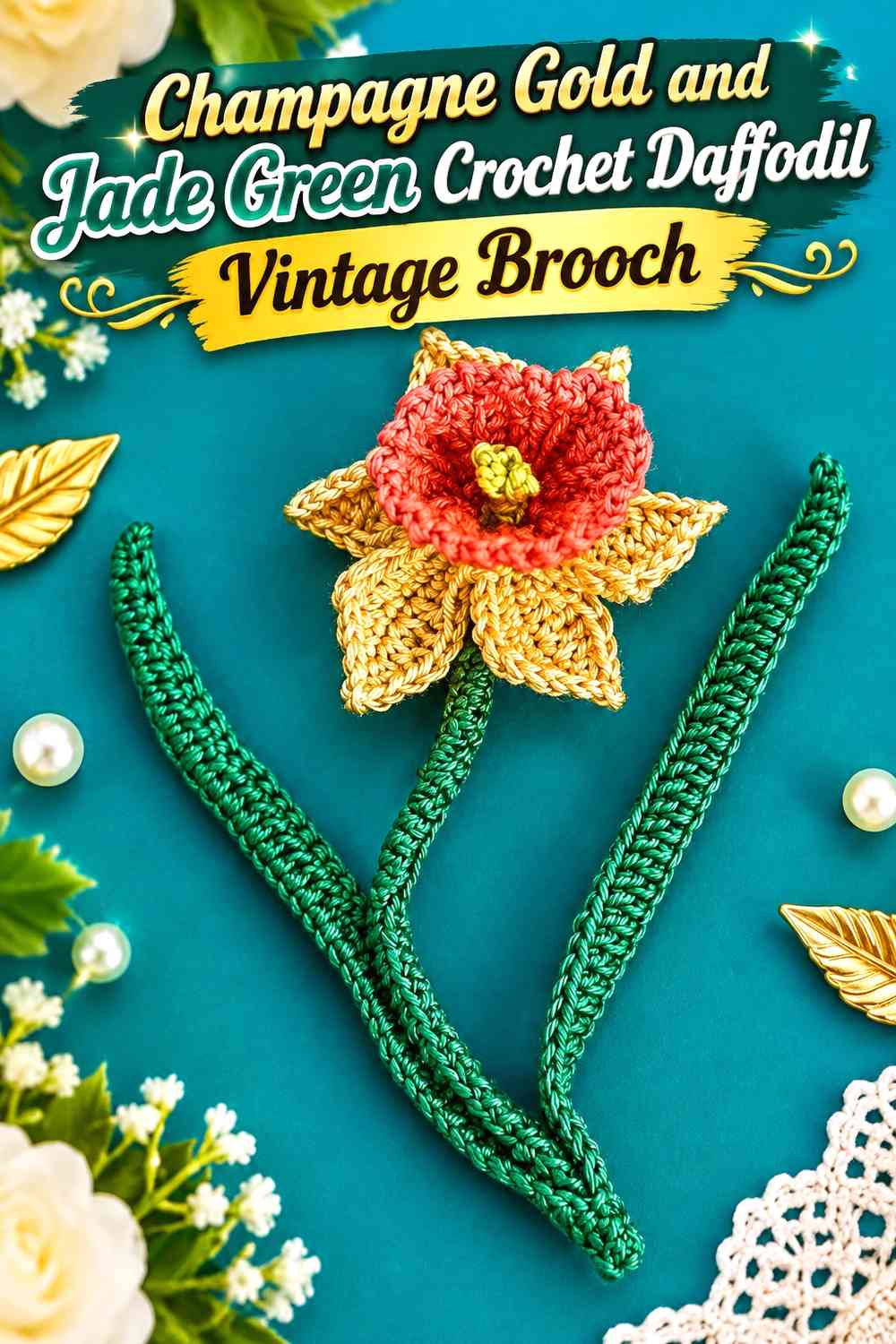
The daffodil is especially compatible with this palette because its projecting center gives champagne gold an obvious focal role while jade green can remain in botanical supporting areas. Keep the main flower warm and use jade primarily in the leaf or stem if those elements are included.
Champagne Gold Can Emphasize the Crochet Daffodil Trumpet
Use champagne gold on the projecting center and, if desired, across the surrounding petals. Keeping the flower within one warm family allows its three-dimensional structure to create most of the internal variation.
If you want stronger separation between the trumpet and outer petals, use a slightly different lightness within the champagne-gold family rather than automatically introducing an unrelated hue.
Jade Green Can Give the Champagne Gold Daffodil Direction
A jade green leaf or stem changes the brooch from a centered flower into a directional botanical piece. Decide whether that elongated composition suits the lapel, scarf, or bag where you plan to wear it.
Keep the jade area smaller when champagne gold is meant to dominate. A very large leaf can shift the visual center downward and make the flower appear secondary.
Creator Credit: Kerri’s Crochet
10. Champagne Gold and Jade Green Crochet Peony Vintage Brooch
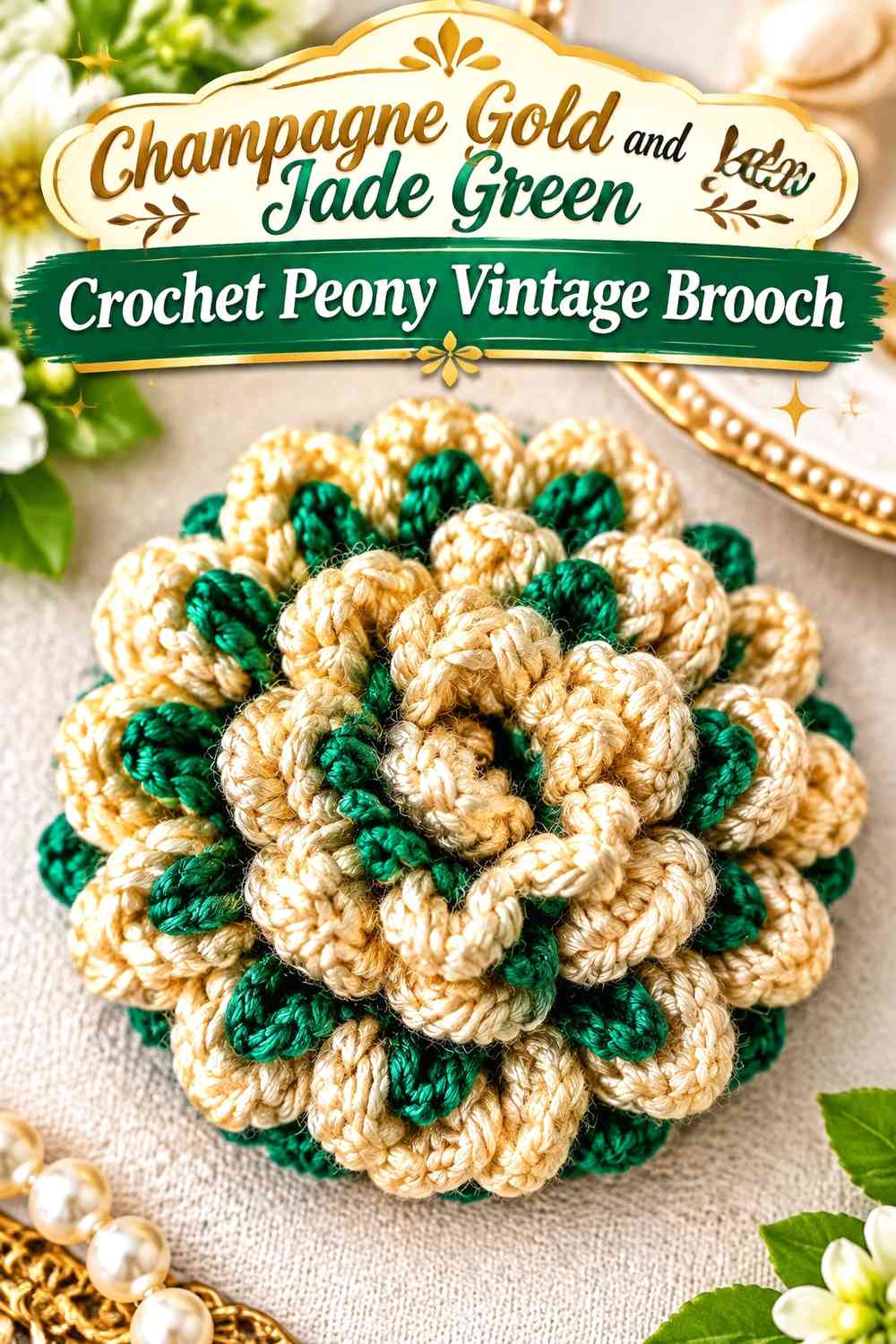
A peony has enough layered texture that the palette can remain very disciplined. Let champagne gold fill the bloom and use jade green only behind it as foliage or a compact base detail. The many petal folds will create visual variation without requiring alternate colors in every layer.
Champagne Gold Should Carry the Crochet Peony Layers
Keep most of the peony within the same champagne-gold family so the bloom reads as one large flower. Strong jade bands between petal layers would compete with the volume that makes a peony recognizable.
If you want greater depth, compare slightly lighter and darker warm-gold tones while preserving one dominant champagne direction. Keep any tonal shift broad and subtle rather than alternating every petal.
Jade Green Can Ground the Champagne Gold Peony Without Crowding It
Use jade green behind the bloom, where one or two visible leaf shapes can establish the botanical context without cutting through the petal mass.
Because a peony can be visually substantial, check how much jade remains visible after the flower is assembled. Foliage that disappears completely adds little color value, while oversized leaves may compete with the bloom.
Creator Credit: Crochet Bits
11. Jade Green and Champagne Gold Crochet Lavender-Sprig Vintage Brooch
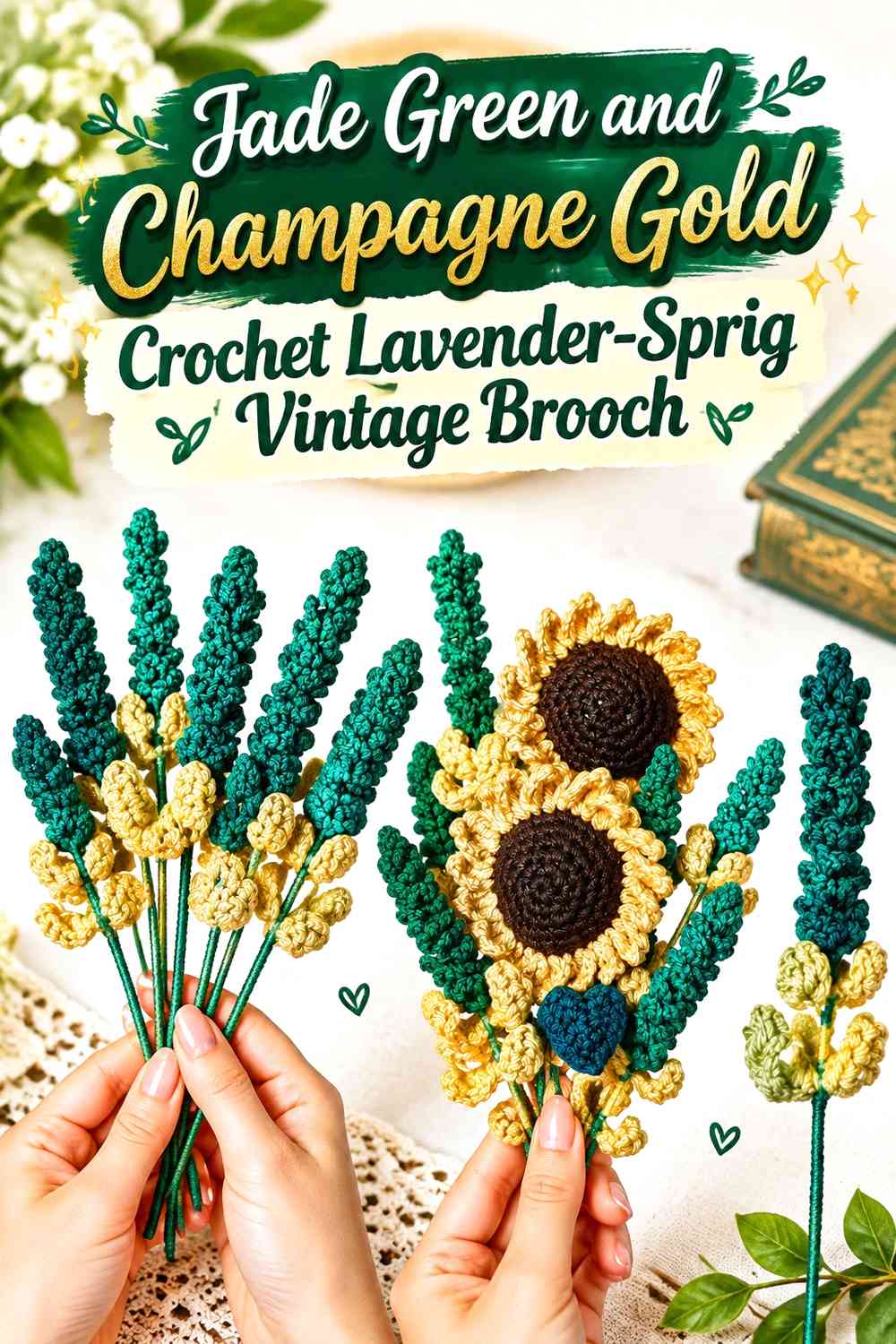
A lavender-style sprig gives the palette a long, narrow format. Instead of copying natural lavender coloring, use champagne gold for the repeated small floral sections and jade green along the stem and leaves. This keeps the brooch within the requested two-color scheme while preserving the recognizable clustered structure of a floral spike.
Champagne Gold Can Repeat Along the Jade Green Crochet Sprig
Small champagne-gold flower sections can repeat along the length of the brooch, creating a controlled visual rhythm. Keep the repeated accents similar in color so the sprig looks continuous rather than spotted with unrelated highlights.
If the flower sections are tiny, strong consistency matters more than complicated shading. Let the crochet texture create the small changes in light across the gold-colored surface.
Jade Green Should Form the Structural Line of the Crochet Lavender Brooch
Run jade green through the stem and foliage so the elongated composition has one clear connecting color. That line helps separate individual champagne-gold flower sections while visually holding them together.
Before installing the backing, check whether the sprig hangs securely at the intended angle. A long jade green stem extending far beyond the supported area may make the brooch rotate or feel visually bottom-heavy.
Creator Credit: Brunaticality
12. Jade Green and Champagne Gold Crochet Dahlia Vintage Brooch
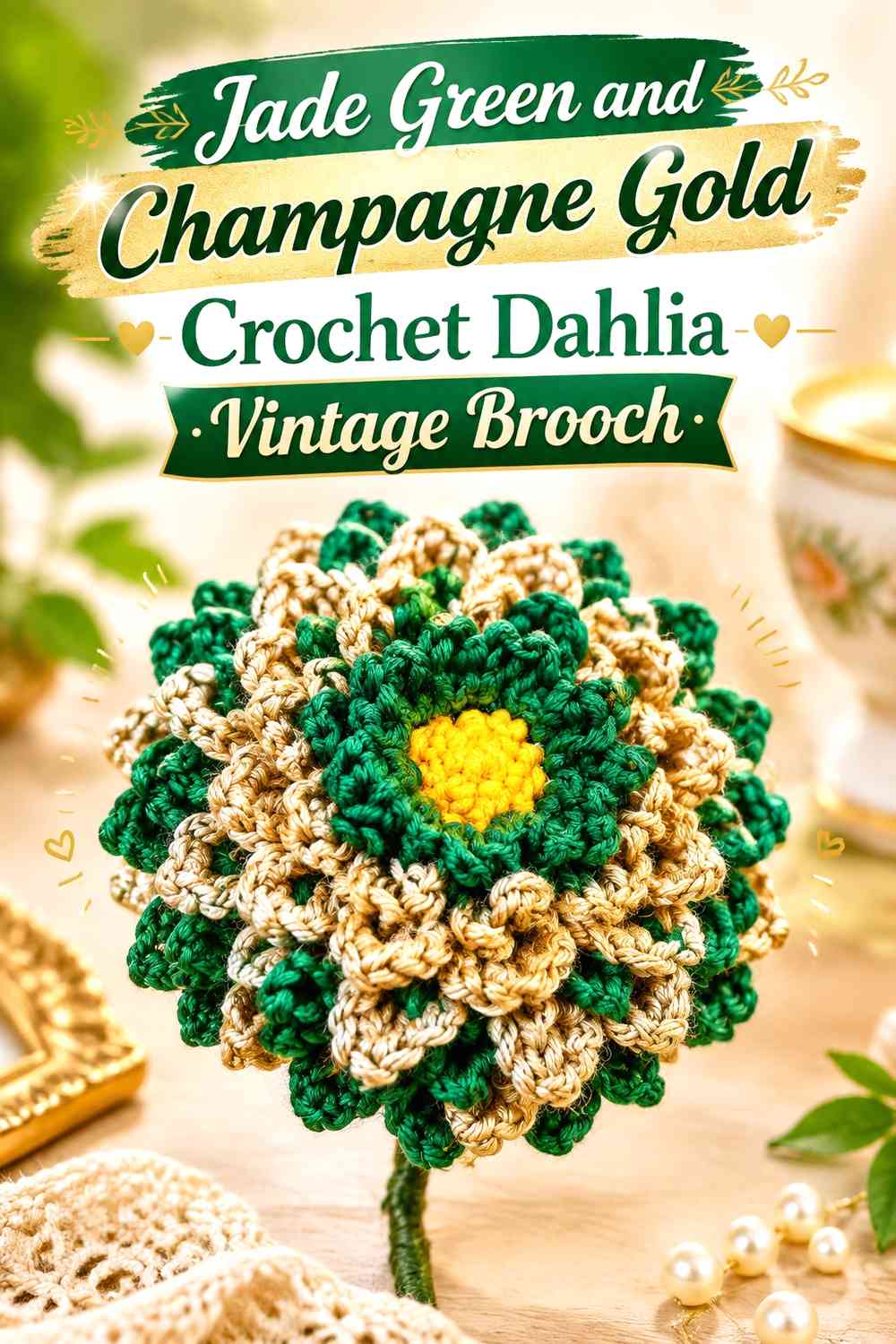
A dahlia offers many petal layers arranged around a strong center, making it suitable for a controlled two-tone gradient. Jade green can dominate the outer and middle petal mass while champagne gold remains concentrated toward the center. This creates depth without alternating colors around every individual petal.
Jade Green Can Build the Crochet Dahlia’s Main Petal Mass
Use jade green over the larger outside area so the many petals still read as one flower. The repeated layers already create plenty of detail, making frequent color changes unnecessary.
If you use more than one jade shade, preserve a clear relationship between them. Large tonal zones generally keep the flower calmer than switching shade on every small petal.
Champagne Gold Can Draw Attention Into the Jade Green Dahlia Center
A compact champagne-gold center gives the layered flower a warm destination for the eye. Because the dahlia contains many repeated shapes, even a small central color change can be noticeable.
Keep the champagne-gold area proportionate to the center. Expanding it too far through the middle layers can turn the intended jade-led flower into an evenly split two-color target.
Creator Credit: Moara Crochet
13. Jade Green and Champagne Gold Crochet Forget-Me-Not Vintage Brooch
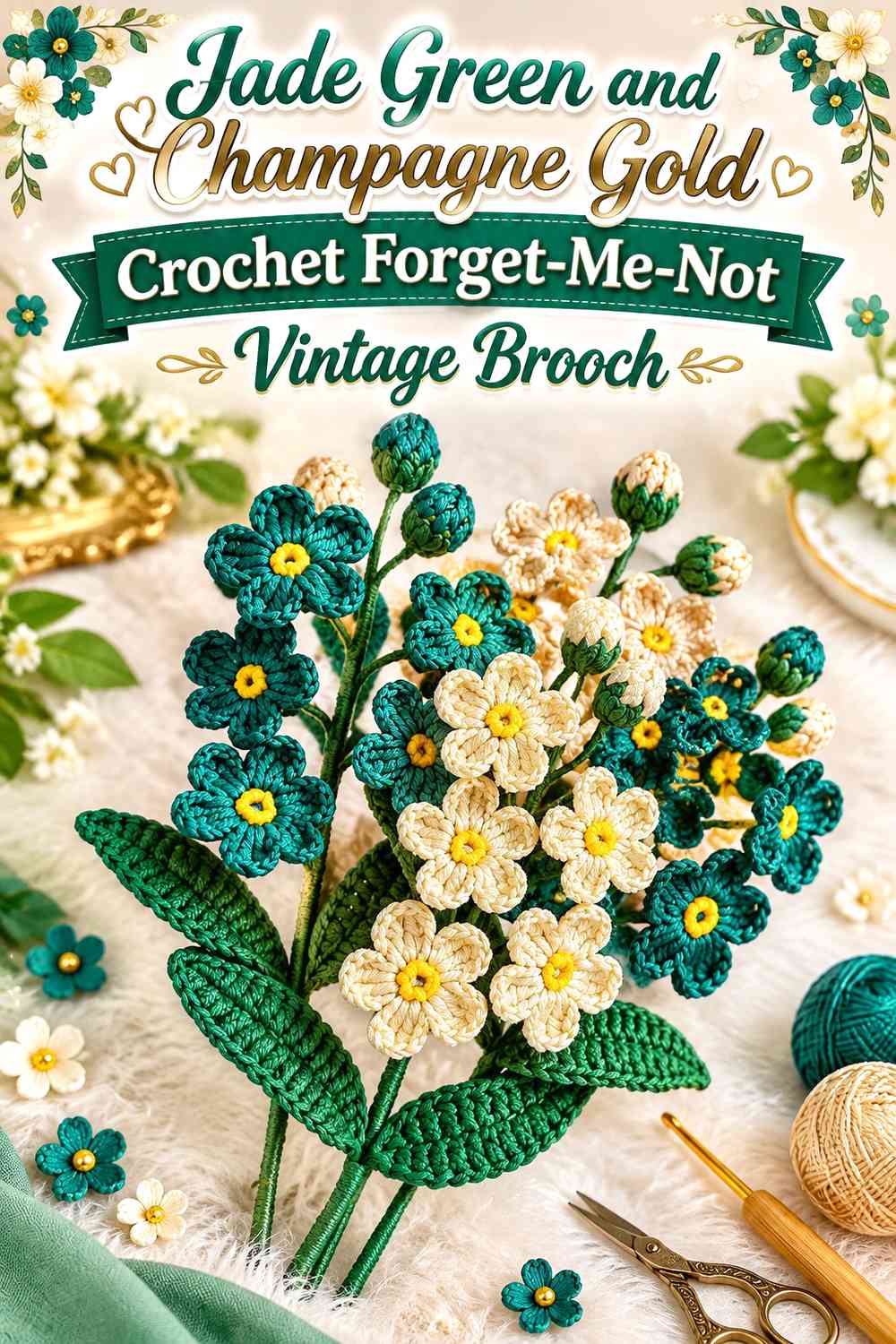
Forget-me-nots work as a cluster of tiny flowers rather than one statement bloom, so repetition is the main color tool. Use jade green across most petals for a stylized jewel-like cluster and champagne gold at the small centers. Repeating the same arrangement across several flowers makes the brooch look intentionally coordinated.
Jade Green Should Repeat Across the Crochet Forget-Me-Not Cluster
Keep jade green consistent through the main petals so separate flowers read as one spray. Tiny motifs have little room for complex palettes, and changing every flower can quickly make the cluster look dotted rather than floral.
Arrange the completed jade flowers before final assembly. Leave enough space for their outlines to remain visible rather than packing them into one solid green mass.
Champagne Gold Can Give Each Jade Green Crochet Flower a Small Focal Point
Use champagne gold sparingly at the centers. Repeating the same small warm accent across the group helps link the flowers without requiring a large gold-colored surface.
If the centers begin to dominate from normal viewing distance, reduce their visual area rather than adding more jade elsewhere. On tiny flowers, small changes in center proportion can noticeably change the whole cluster.
Creator Credit: Kane Crochet
14. Champagne Gold and Jade Green Crochet Camellia Vintage Brooch
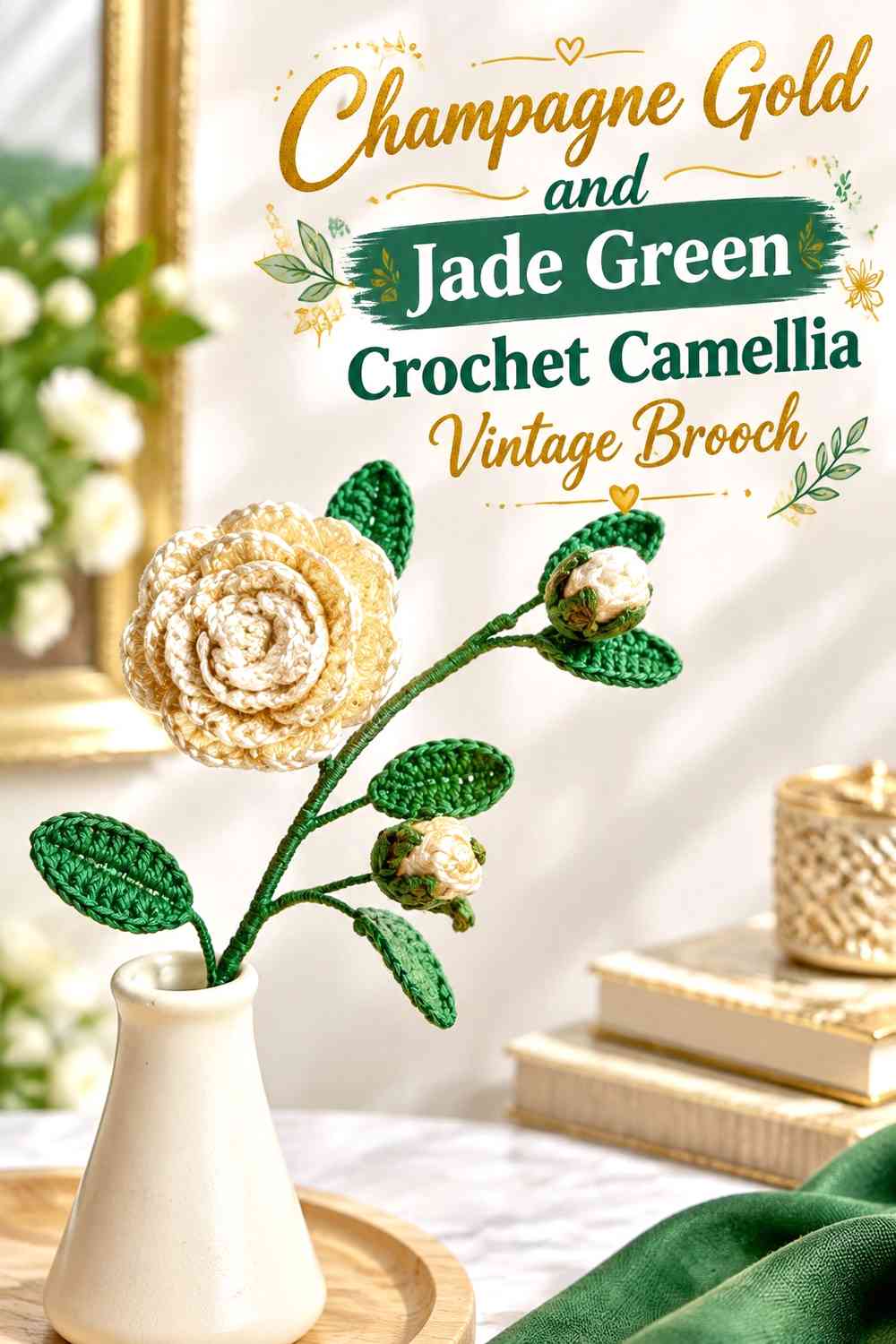
A camellia closes the collection with a rounded layered bloom that can support broad zones of both colors. Let champagne gold dominate the outer petals while jade green appears deeper in the inner layers or in foliage behind the flower. Grouping the colors by layer preserves the camellia shape more effectively than alternating them petal by petal.
Champagne Gold Can Keep the Crochet Camellia Outer Layers Light
Give champagne gold the larger visible area when you want the finished brooch to feel warm and softly framed. The broad outer petals are a useful place for the lighter color because their edges remain prominent around the entire flower.
Check whether the gold-colored outer layer separates clearly from the intended garment. On beige, camel, or other warm light fabrics, the jade portions may need enough visibility to prevent the brooch outline from disappearing.
Jade Green Can Add Depth Inside the Champagne Gold Crochet Camellia
Use jade green toward the center or on selected lower layers where the darker or cooler-looking shade can create visual depth. Keep the transition in broad zones rather than alternating individual petals.
If jade green is also used for leaves, the repeated color connects the flower center to the outside foliage. That repetition can make the two-tone brooch feel deliberate without adding another accent shade.
Creator Credit: Lingzhi Handmade
Which Jade Green and Champagne Gold Vintage Brooch Direction Should You Choose?
Choose the rose cluster, peony, carnation, or camellia when you want a fuller corsage-like accessory with dimensional petals. The pansy, poppy, sunflower, and daffodil create clearer single-flower silhouettes, making the placement of jade green versus champagne gold easier to read from a distance.
For a narrower vintage botanical line, lily of the valley, lavender, and forget-me-not clusters distribute the palette through repeated small elements. The orchid and dahlia are better suited to a more sculptural direction where concentrated color placement can emphasize unusual petal shapes.
The most important comparison is still the color hierarchy. Decide whether you want jade green to be the first color noticed or whether champagne gold should carry the flower. Once that choice is clear, the supporting color can be assigned to centers, leaves, inner layers, or small repeated details.
Conclusion
Jade green and champagne gold can produce several very different vintage floral brooch directions even when the palette itself stays consistent. For a traditional botanical arrangement, let champagne gold carry flowers such as the sunflower, daffodil, peony, or lily of the valley while jade green handles stems and leaves. For a more stylized textile-jewelry effect, reverse the relationship and make jade green the rose, carnation, orchid, pansy, dahlia, or forget-me-not color.
If you prefer strong light-dark definition, choose a jade and champagne pairing with noticeably different values. For a softer heirloom appearance, keep the two shades closer in value but give them clearly separated areas instead of mixing them repeatedly within every petal.
Use the credited tutorials for the exact flower construction, then make the color decisions according to the finished brooch size, floral silhouette, garment background, and amount of contrast you want.
Frequently Asked Questions
Should Jade Green or Champagne Gold Dominate a Vintage Crochet Brooch?
Either can dominate, but choose one before distributing the colors. Champagne gold works naturally across petals when you want a warm floral focal point, while jade green can lead when you want a more stylized jewel-toned brooch. Giving one shade clearly more visual area generally keeps a small accessory from looking divided into competing halves.
How Can I Check Whether Jade Green and Champagne Gold Have Enough Contrast?
Compare the actual crocheted colors rather than relying only on the skeins. Crochet texture changes how light falls across the yarn. A grayscale photo can help reveal whether the two colors have enough light-dark separation for small centers, petal divisions, and borders to remain visible.
Can Champagne Gold Be Used Only as a Small Crochet Brooch Accent?
Yes. Champagne gold can be limited to a flower center, inner petal layer, narrow edge, or repeated tiny detail. On a small brooch, a compact accent may be more effective than dividing every petal between jade green and champagne gold.
What Should I Do if Jade Green and Champagne Gold Look Too Similar in Value?
First simplify their placement. Put one color on the main petals and the other on a clearly separate center, leaf, or lower layer rather than placing them side by side in many tiny areas. If more contrast is still needed, substitute a lighter or darker version while preserving the jade-green or champagne-gold color role.
Do Jade Green and Champagne Gold Work Better on Flat or Dimensional Crochet Flowers?
They can work on both, but the color problem changes. Flat flowers such as pansies and poppies depend more heavily on visible color separation because there are fewer natural shadows. Dimensional roses, peonies, carnations, and camellias gain additional definition from overlapping petals, so they can often support a quieter two-color relationship.
Should Jade Green or Champagne Gold Be Used Around the Brooch Backing?
The backing should primarily be secure and unobtrusive. If crochet or backing material remains visible around the hardware, using a palette color that blends into the rear of the motif can keep the front view cleaner. Choose the shade according to the actual back of the flower rather than automatically matching the dominant front color.