

Jade green and copper penny give a winter fireplace garland an earthy alternative to brighter holiday red and green. Jade can carry the evergreen side of the palette, while copper penny adds warmth that reads clearly against dark fireplace surrounds, pale walls, brick, wood, or a neutral mantel.
The strongest versions do more than alternate two colors. Leaf shape, motif scale, spacing, edging, and the location of copper accents all change how the garland reads from across the room. A narrow jade vine with occasional copper leaves feels restrained, while large copper maple leaves against jade greenery create a much stronger mantel statement.
The tutorials credited below support the crochet construction or botanical motif. The jade green and copper penny palettes are color adaptations you can apply to the project rather than colors attributed to the tutorial creators.
Quick List
- Jade Green-Dominant and Copper Penny Crochet Autumn Leaf Fireplace Garland
- Jade Green and Copper Penny Alternating Crochet Leaf Vine Garland
- Oversized Jade Green and Copper Penny Crochet Botanical Leaf Garland
- Copper Penny Oak Leaves With Jade Green Crochet Fireplace Garland
- Jade Green Mistletoe With Copper Penny Berries Crochet Garland
- Jade Green Evergreen Sprigs With Copper Penny Crochet Pinecones
- Jade Green Oak Leaves With Copper Penny Crochet Woodland Garland
- Jade Green and Copper Penny Crochet Ginkgo Fireplace Garland
- Copper Penny Poinsettias With Jade Green Crochet Leaf Garland
- Jade Green Trees With Copper Penny Details Crochet Fireplace Garland
- Copper Penny Acorns With Jade Green Leaves Crochet Woodland Garland
- Jade Green Laurel With Copper Penny Crochet Botanical Garland
- Jade Green Holly With Copper Penny Berries Crochet Fireplace Garland
- Jade Green and Copper Penny Crochet Maple Leaf Banner Garland
How to Balance Jade Green and Copper Penny Across a Fireplace Garland
Jade green works well as the visual base because a continuous green line helps separate individual botanical motifs from the mantel background. Copper penny can then interrupt that line with warmer leaves, berries, flower bracts, pinecones, or motif centers.
Avoid automatically dividing the two colors fifty-fifty. If every motif alternates with equal visual weight, the strand can become striped rather than botanical. A jade-dominant garland with smaller copper repeats usually feels more foliage-led, while a copper-dominant version creates a warmer and more decorative fireplace focal point.
Before joining a long strand, arrange several finished motifs directly on the mantel. Look at them from the normal viewing distance rather than only from the worktable. Jade and copper can be clearly different hues while still appearing fairly close in lightness, so a cream, oatmeal, dark brown, or another carefully chosen supporting shade can help when more separation is needed.
Keep Jade Green and Copper Penny Botanical Shapes Visible on the Mantel
The fireplace background affects the palette as much as the yarn does. Copper penny may blend into warm brick or medium wood, while jade green can disappear against dark green holiday foliage. Test both colors against the actual surround before committing to dozens of motifs.
Detailed leaves such as oak, maple, holly, or ginkgo need enough empty space around their edges for the silhouette to remain readable. When motifs overlap heavily, the first details to disappear are usually points, lobes, and narrow stems.
Texture matters too. If a motif has pronounced ridges or layered petals, using one color across the entire shape can emphasize the crochet texture. When the shape itself is subtle, contrasting edging or a second-color center can provide stronger definition.
1. Jade Green-Dominant and Copper Penny Crochet Autumn Leaf Fireplace Garland
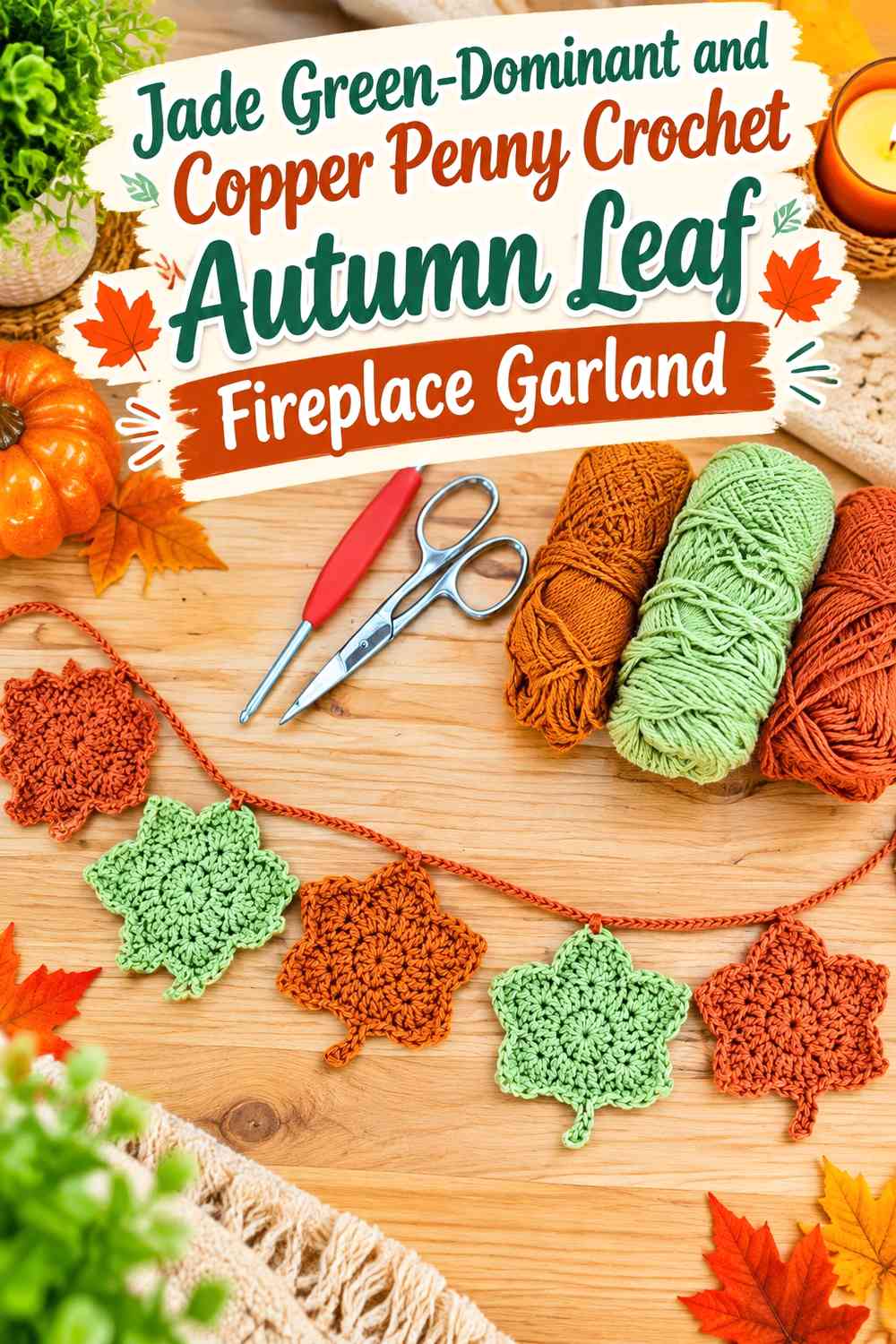
This version treats jade green as the continuous winter foliage color and uses copper penny on selected leaves rather than every second motif. The result keeps the garland primarily green while allowing warm copper leaves to appear as deliberate highlights across the fireplace.
Use the copper leaves around visual anchor points—the center of the mantel or the lowest parts of a draped strand—where a warmer color naturally attracts more attention. Keeping the remaining leaves jade lets the botanical outline remain connected.
Jade Green Should Carry Most of the Crochet Leaf Repetition
A jade-dominant arrangement works especially well when you want the garland to read as greenery first. Repeat several jade leaves before introducing copper penny instead of forcing a strict one-for-one alternation.
Lay out a short section before joining. If copper penny begins to divide the strand into obvious blocks, increase the jade repetition between warm accents.
Copper Penny Leaves Can Mark the Fireplace Garland’s Focal Points
Place copper penny leaves where the eye already pauses, such as the middle of the mantel or near a deeper swag. That concentrates the warm shade without making every section equally busy.
If the fireplace surround is warm brick or wood, check whether copper penny has enough separation. A jade leaf between nearby copper motifs can restore a clearer outline.
Creator Credit: hibouchoucaillou
2. Jade Green and Copper Penny Alternating Crochet Leaf Vine Garland
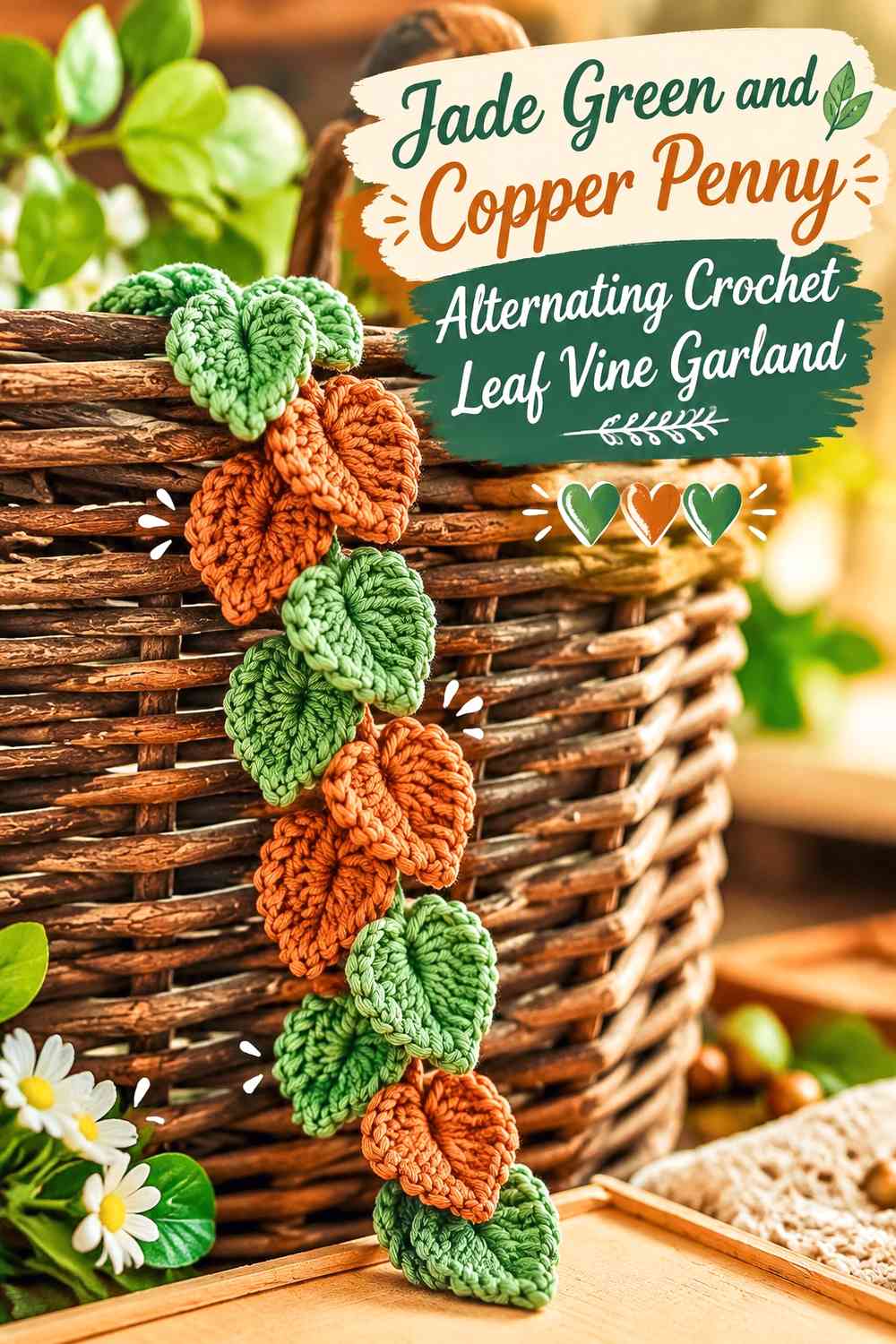
An alternating leaf vine can use both colors more evenly without looking like simple stripes if leaf direction also changes along the strand. Jade green can occupy one side of a visual turn while copper penny appears on the next, creating movement across the mantel.
This palette suits a lighter garland where the connecting strand remains visible and each leaf has enough breathing room. The main checkpoint is whether the alternation still feels organic once the garland is hanging rather than lying flat.
Jade Green Leaves Can Establish the Vine’s Direction
Use jade green on several of the leaves that visually guide the eye along the main curve. Because jade represents the cooler, foliage-heavy side of the palette, repeating it consistently helps the strand retain a botanical identity.
Check the leaf orientation from the front of the fireplace. A well-colored motif can still disappear if it turns edge-on or overlaps the next leaf.
Copper Penny Should Break the Jade Green Rhythm Without Taking Over
Copper penny works well as the counterpoint to the green sequence. Rather than making every copper leaf identical in placement, distribute the warm shade across alternating directions or slightly wider intervals.
That approach keeps the color rhythm noticeable while avoiding a rigid two-color pattern.
Creator Credit: Príncipe del Crochet
3. Oversized Jade Green and Copper Penny Crochet Botanical Leaf Garland

Larger crochet leaves can carry more complex color placement because they remain visible from farther away. Alternate jade-dominant and copper-dominant motifs, or keep the center of the mantel warmer while allowing jade to increase toward the ends.
The main risk is crowding. Large motifs need more open space, especially when the garland drapes over stockings or other mantel decorations.
Jade Green Large Leaves Need Enough Space to Show Their Edges
Do not pack large jade leaves so tightly that they become one solid strip. A small amount of background between motifs helps the outline remain botanical rather than fabric-like.
Test the spacing while the garland is actually hanging because gravity can cause larger leaves to overlap more than expected.
Copper Penny Works Best on Selected Oversized Crochet Leaves
Large copper penny leaves already carry significant visual weight. Use them as deliberate punctuation rather than repeating them at every interval.
A useful arrangement is one warm center cluster with smaller copper repeats farther out, leaving jade green to connect the composition.
Creator Credit: BitKnits
4. Copper Penny Oak Leaves With Jade Green Crochet Fireplace Garland
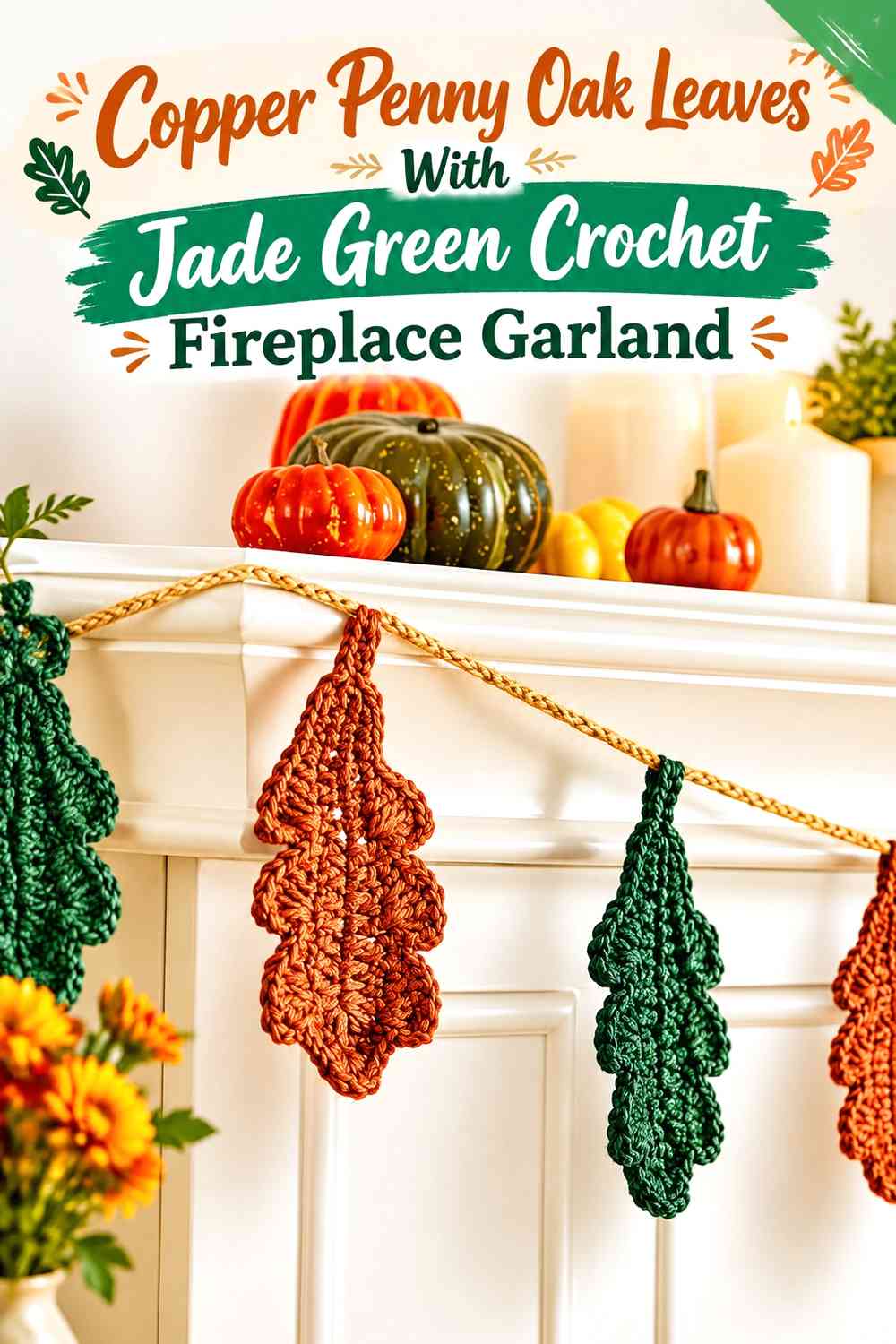
Oak leaves bring a lobed woodland shape that works naturally with deeper winter colors. Make copper penny the feature color for selected oak leaves and use jade green for the connecting strand or alternating foliage.
This palette can feel richer than a light leaf vine, so it suits a fireplace where the garland is intended to act as one of the main seasonal decorations.
Copper Penny Should Not Hide the Crochet Oak Leaf Lobes
The oak outline is part of the appeal, so avoid stacking multiple copper leaves directly on top of one another. Their lobed edges need contrasting background or jade foliage around them.
Rotate neighboring leaves slightly rather than forcing every motif into the same position.
Jade Green Creates Separation Between Copper Penny Oak Leaves
Use jade green where two warm oak motifs would otherwise merge visually. The cooler green gives each copper shape a clearer boundary and reinforces the woodland theme.
If the mantel is narrow, fewer copper leaves with stronger jade spacing can look cleaner than a dense strand.
Creator Credit: Yarnspirations
5. Jade Green Mistletoe With Copper Penny Berries Crochet Garland

Mistletoe gives the garland a distinctly winter botanical shape without requiring traditional red berries. Use jade green for the leaves and reinterpret the berry accents in copper penny for a warmer, more muted fireplace palette.
Because berries are small, they can carry a strong accent color without challenging the green foliage for dominance.
Jade Green Should Remain the Main Color Across Crochet Mistletoe Sprigs
Keep the leaves and most stems jade green so each mistletoe cluster reads clearly as foliage. Several green sprigs can be grouped before the next copper accent appears.
When arranging the mantel strand, turn some sprigs in different directions to avoid creating a row of identical flat shapes.
Copper Penny Berries Need Clear Contrast Against Jade Green
Copper penny berries are most useful where they sit directly against green leaves rather than against a similarly warm fireplace background.
If copper becomes difficult to see from across the room, keep berries grouped rather than scattering single accents too thinly along the strand.
Creator Credit: Fuad Azmat / YARNutopia by Nadia
6. Jade Green Evergreen Sprigs With Copper Penny Crochet Pinecones
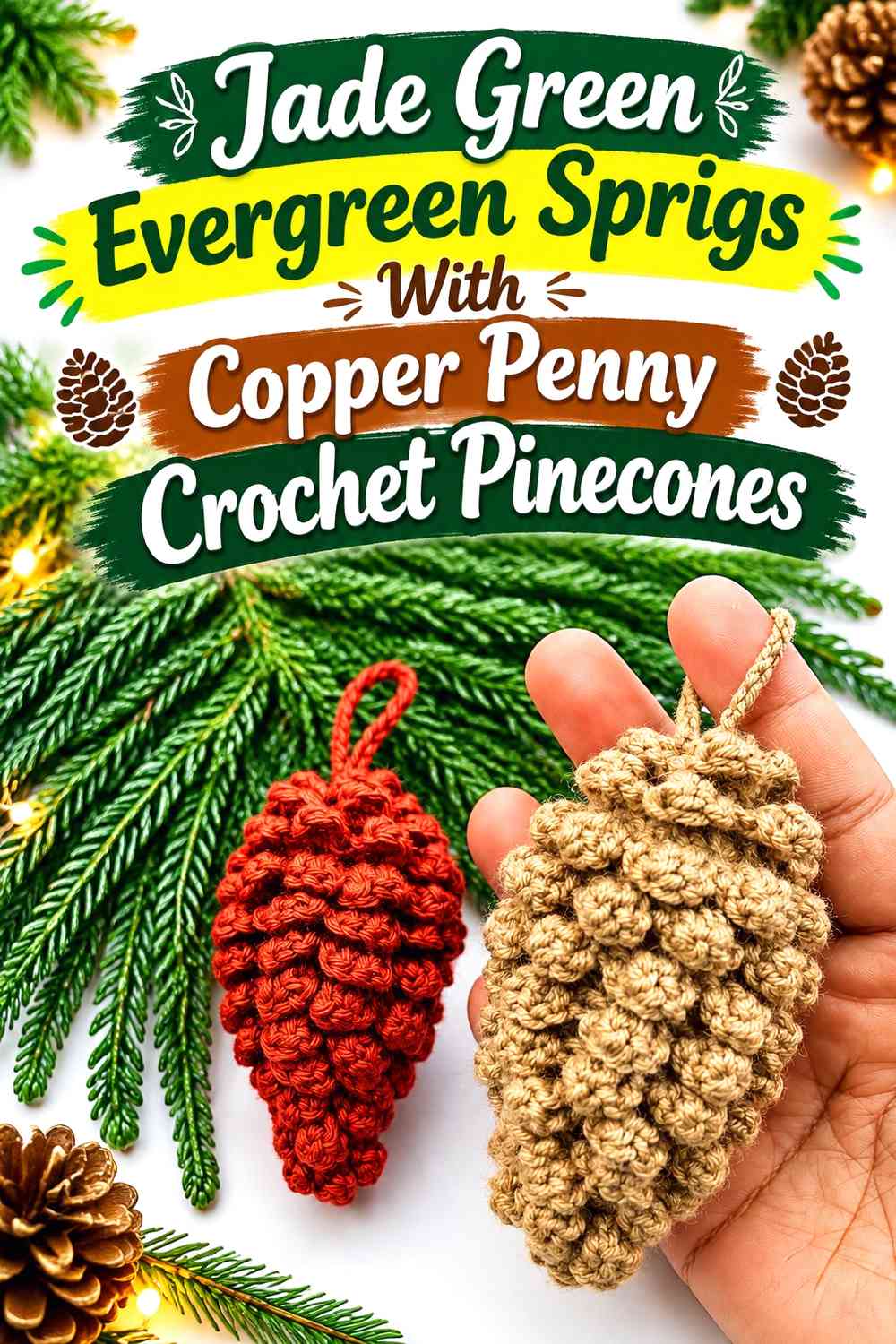
Pinecones give copper penny a natural place to dominate without recoloring the entire garland. Build the surrounding visual field with jade green foliage, then repeat copper pinecones at wider intervals.
This arrangement creates stronger changes in texture than an all-leaf strand because the pinecone motifs introduce depth and a more dimensional silhouette.
Jade Green Foliage Should Surround Copper Penny Pinecones
Give each copper penny pinecone enough jade green around it to keep the warm motif distinct. Several green leaves or sprigs between pinecones prevent the garland from becoming visually heavy.
This is particularly important at the deepest draped sections, where dimensional motifs can naturally bunch together.
Copper Penny Pinecones Add Texture Without Requiring More Accent Colors
Copper penny can carry both the warm color and the dimensional emphasis, reducing the need for several extra shades.
Before making many pinecones, hold one against the finished jade foliage and check whether the difference in value is strong enough for the texture to show.
Creator Credit: HiruHandmade Crochet
7. Jade Green Oak Leaves With Copper Penny Crochet Woodland Garland
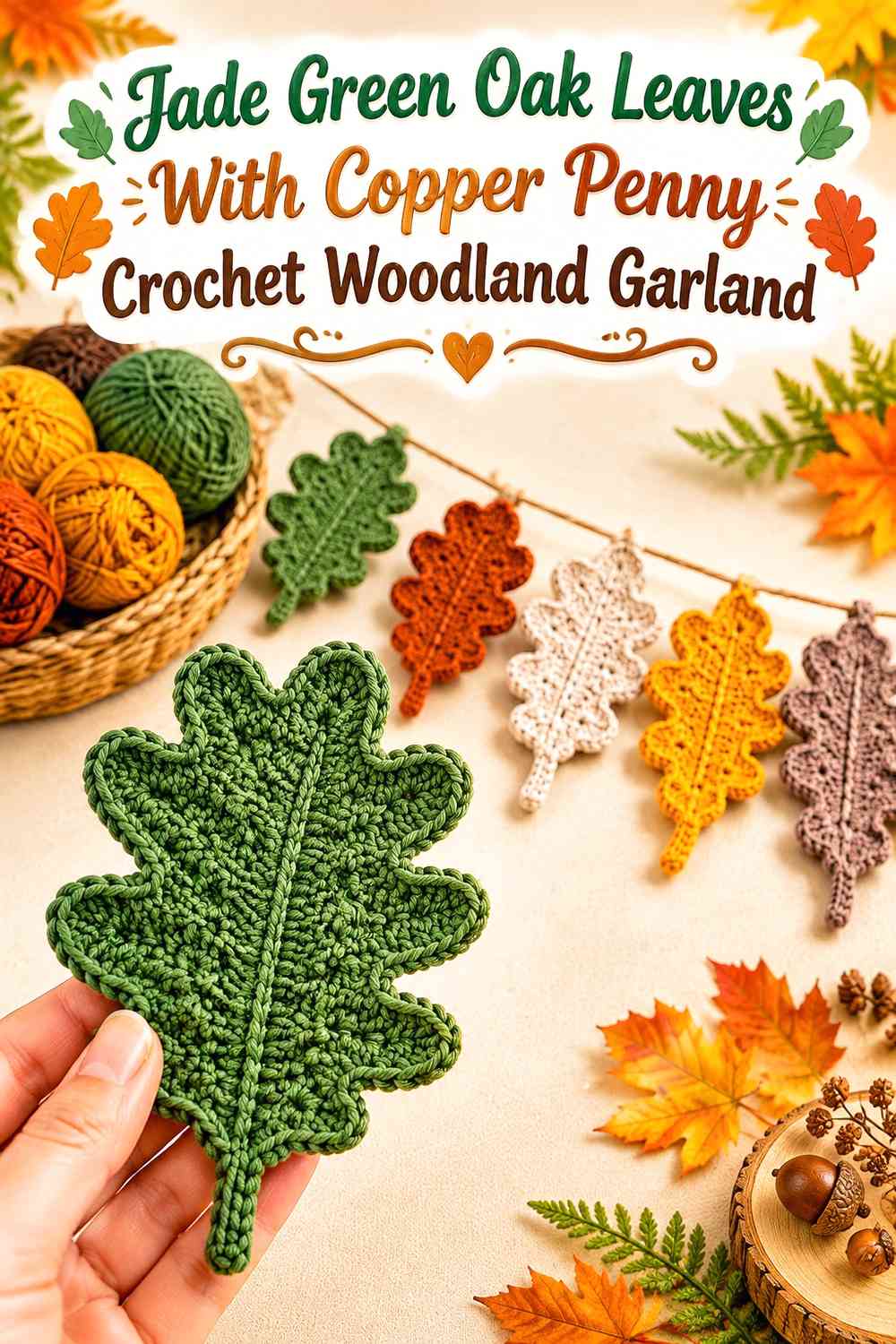
This oak-leaf direction reverses the balance of the earlier copper-dominant version. Use jade green for most lobed leaves and limit copper penny to smaller repeated leaves, stems, or occasional focal motifs.
The greener distribution creates a cooler winter woodland effect and works well when the fireplace already contains warm wood, brass-colored decor, or amber lighting.
Jade Green Oak Leaves Can Carry Most of the Fireplace Width
A repeated jade leaf silhouette creates continuity across a long mantel. Keep enough space between leaves for the lobes to remain visible, especially toward the middle where the garland may drape lower.
Use a full layout test before attachment because oak leaves can overlap differently depending on their angle.
Copper Penny Should Highlight Selected Jade Green Oak Sections
A few copper penny leaves or connecting details can interrupt the green without turning the project into an autumn-only palette.
For a balanced fireplace arrangement, repeat copper on both sides of the center rather than concentrating every warm element in one cluster.
Creator Credit: Tuba Crochet
8. Jade Green and Copper Penny Crochet Ginkgo Fireplace Garland
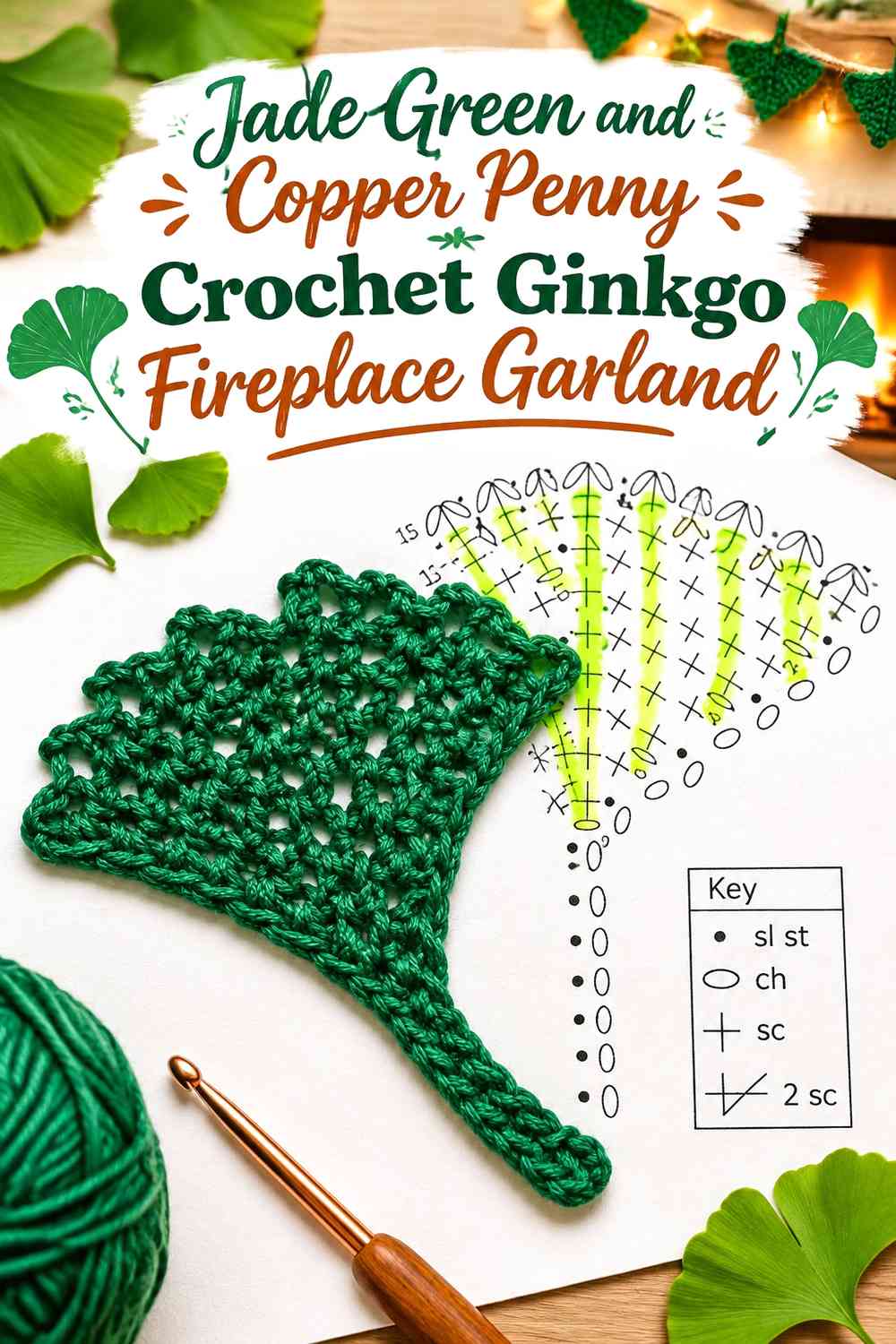
Ginkgo leaves introduce a fan shape that immediately separates this garland from pointed holly, oak, or narrow vine leaves. Use jade green on most fans and copper penny on selected leaves to create a restrained two-color botanical rhythm.
Because the leaf is broad, color differences remain visible even when the motifs are spaced fairly widely.
Jade Green Lets the Crochet Ginkgo Shape Read as Foliage
A majority of jade green fans keeps the unusual leaf silhouette connected to the winter botanical theme. Avoid layering too many fans directly over one another because their broad edges can disappear.
Spacing the leaves along a quiet cord lets each fan shape become part of the visual design.
Copper Penny Ginkgo Leaves Can Warm the Center of the Jade Green Garland
Use more copper penny near the central mantel area and gradually reduce it toward the ends for a soft color transition.
This creates variation without requiring a third strong color and keeps the warmest part of the composition near the fireplace focal point.
Creator Credit: Stitches n Scraps
9. Copper Penny Poinsettias With Jade Green Crochet Leaf Garland
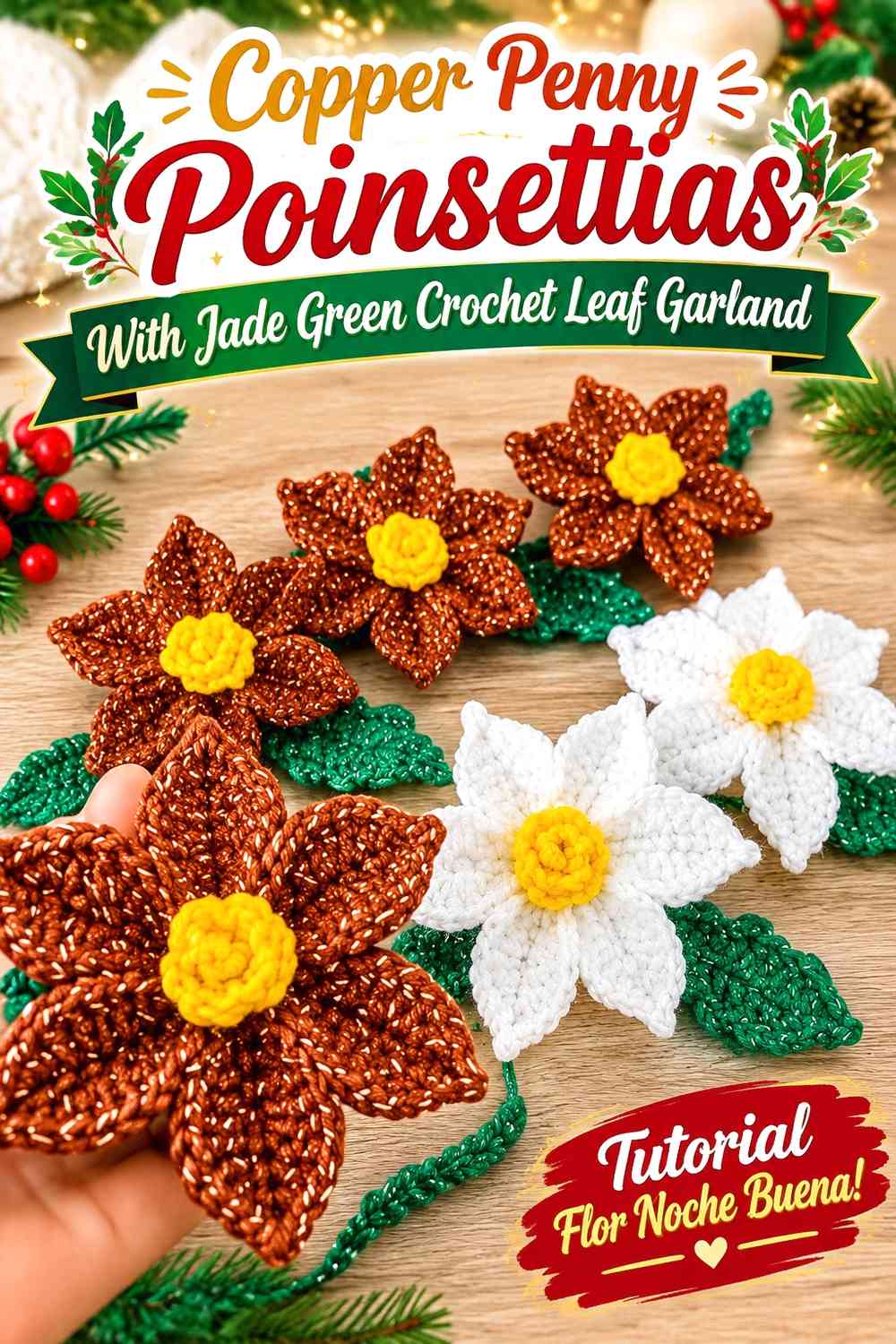
Poinsettias do not have to remain bright red. Copper penny can take the flower role while jade green stays in the leaves and connecting foliage, creating a warmer and more subdued winter floral garland.
Because layered flowers are visually heavier than flat leaves, use them as focal motifs rather than filling the entire strand with blooms.
Copper Penny Poinsettias Need Space Between Jade Green Foliage
Leave enough green around each flower for the pointed layers to remain visible. If poinsettias sit directly beside one another, the copper can turn into one broad patch instead of separate blooms.
A useful fireplace layout is one larger visual cluster near the center with smaller repeats farther outward.
Jade Green Should Frame Copper Penny Rather Than Hide the Flower
Arrange jade leaves around the outer edge of each poinsettia instead of covering the copper petals from the front.
View the sample from several feet away. The correct balance is the one where the bloom remains recognizable but still belongs to the green garland.
Creator Credit: Crochet Cuties Creations by Esther
10. Jade Green Trees With Copper Penny Details Crochet Fireplace Garland

Small crochet tree motifs extend the botanical theme through evergreen silhouettes rather than individual leaves. Use jade green for the tree bodies and copper penny for the connecting line, selected lower details, or occasional contrasting trees.
This is one of the more graphic ideas in the collection, making it useful when you want the fireplace garland to look clearly wintry from across the room.
Jade Green Should Dominate the Crochet Evergreen Tree Shapes
Keeping most trees jade green makes the forest reference immediate. If too many trees switch to copper penny, the strand becomes more geometric and less foliage-led.
Leave visible space between silhouettes so neighboring tree edges do not merge.
Copper Penny Can Connect Jade Green Trees Without Competing With Them
A copper penny connecting element adds warmth across the entire width of the fireplace while allowing the trees themselves to stay green.
If the connecting color becomes too prominent, reduce its visual thickness or increase the distance between copper-dominant details.
Creator Credit: Crochet with Tuula Maaria
11. Copper Penny Acorns With Jade Green Leaves Crochet Woodland Garland

Acorns give copper penny a natural small-scale motif that pairs well with jade leaves. Instead of alternating large warm leaves, keep the foliage green and let groups of copper penny acorns supply the warmer color.
This creates a woodland garland where the accent is dimensional but still smaller than the surrounding leaves.
Copper Penny Acorns Work Better as Clusters Than a Continuous Warm Line
Several acorns near selected leaf groups create stronger focal points than one tiny copper motif between every leaf.
Keep the clusters visually balanced across the fireplace so one end of the garland does not appear heavier.
Jade Green Leaves Give Copper Penny Acorns Enough Visual Background
Place the copper motifs against jade rather than directly against similarly colored wood or brick whenever possible.
The green field makes the acorn shape and warm color easier to identify while preserving a foliage-led winter look.
Creator Credit: Brunaticality
12. Jade Green Laurel With Copper Penny Crochet Botanical Garland
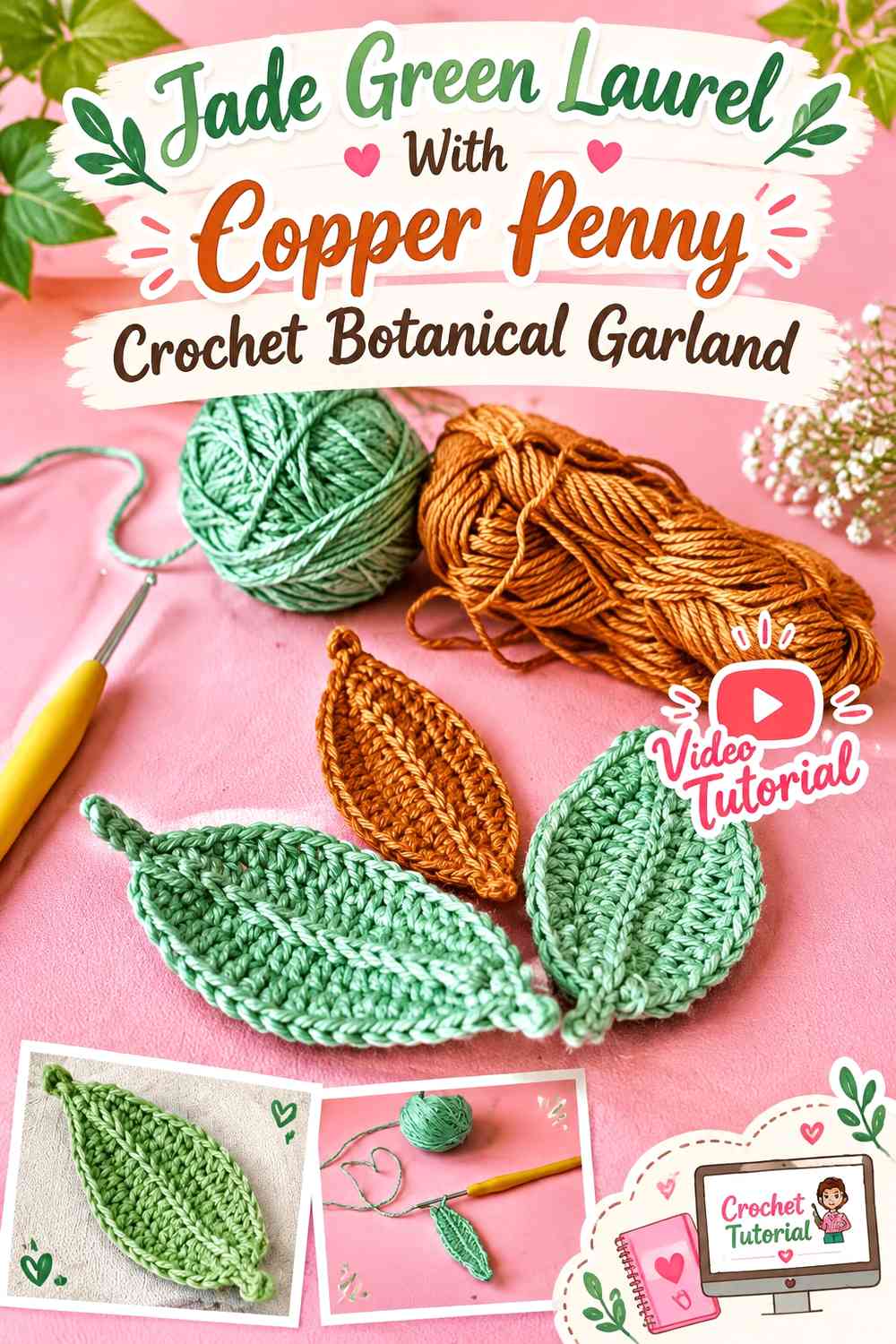
Laurel leaves create a cleaner, more elongated botanical line than broad maple or ginkgo shapes. Make jade green the principal leaf color, then introduce copper penny on selected laurel leaves or as short warm sections along the strand.
The simpler shape makes this palette suitable for a mantel where you want color variation without a highly decorative or crowded motif mix.
Jade Green Laurel Leaves Create a Cleaner Fireplace Outline
Repeat jade leaves through most of the strand and allow their narrow shape to establish direction. They can be placed more closely than broad maple leaves while still keeping individual outlines visible.
Check the garland against the mantel edge to make sure the green does not disappear into nearby foliage.
Copper Penny Laurel Leaves Can Create Controlled Warm Repetition
Instead of random copper placement, repeat the warm leaves at predictable but generous intervals. That gives the two-color scheme structure without making it look like strict striping.
If the copper feels too dominant, increase the number of jade leaves between each warm repeat.
Creator Credit: Giulia Pinky Time
13. Jade Green Holly With Copper Penny Berries Crochet Fireplace Garland

Holly gives the palette one of its strongest winter identities. Keep the pointed leaves jade green and replace the usual bright red berry emphasis with copper penny for a quieter, earthy fireplace arrangement.
Because the berries are small, they can be repeated frequently while jade remains unmistakably dominant.
Jade Green Keeps the Crochet Holly Garland Recognizably Botanical
Use jade on every main leaf if you want strong consistency across the fireplace. The pointed edges already provide plenty of visual variation, so the green does not need constant color changes.
Make sure neighboring leaves do not overlap so heavily that their points become hidden.
Copper Penny Berries Add Warmth Without Overpowering Jade Green Holly
Small copper penny berry clusters can repeat more often than large copper leaves because they occupy less visual area.
Test a cluster directly against the fireplace. On warm brick, positioning the berries over jade foliage rather than empty background gives them stronger separation.
Creator Credit: Cosy Rosie Crochet
14. Jade Green and Copper Penny Crochet Maple Leaf Banner Garland
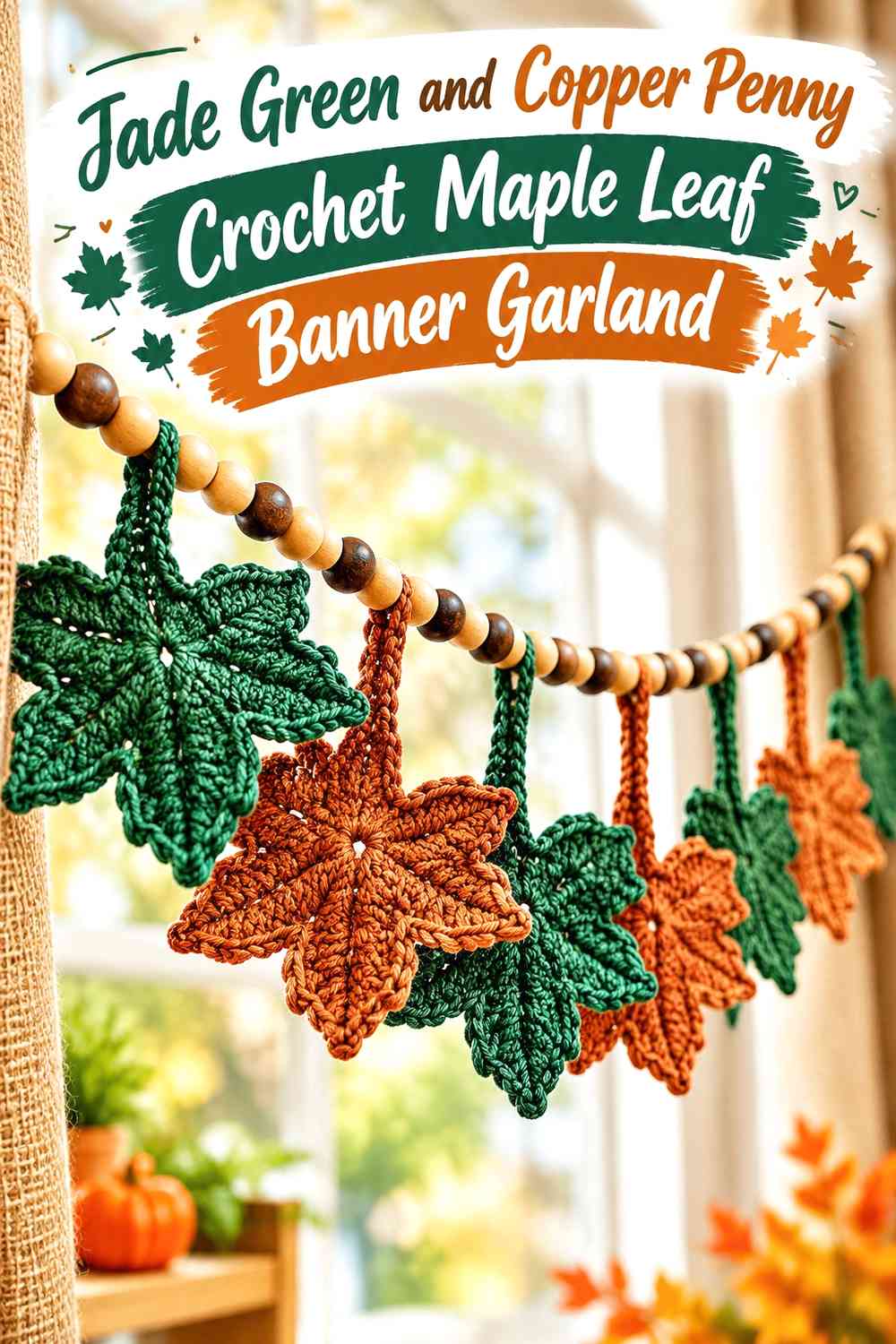
This final direction uses a clear banner-like arrangement with broad maple leaves in both signature colors. Instead of equal alternation, build the layout around a jade-and-copper center and gradually simplify the color rhythm toward both ends.
The strong maple outline works well when the mantel needs a defined decorative border rather than a loose trailing vine.
Jade Green Maple Leaves Can Anchor Both Ends of the Fireplace Garland
Using jade near the outer sections visually connects the banner with evergreen winter decor placed elsewhere in the room.
Keep the points clear by leaving enough background around each leaf instead of compressing the motifs into one continuous band.
Copper Penny Maple Leaves Can Build a Warmer Center Focal Point
Increase the share of copper penny toward the middle of the fireplace where the garland naturally receives the most attention.
This gives the warm color a purpose instead of distributing every shade evenly and creates a stronger visual relationship with the firebox below.
Creator Credit: The Crochet Crowd
Choosing Between the Jade Green and Copper Penny Garland Directions
For the greenest, most foliage-led fireplace, start with the jade-dominant leaf vine, mistletoe, laurel, holly, or oak-leaf options. These keep copper penny in a supporting role and work well when you want the mantel to read as winter greenery first.
For a warmer focal display, the copper maple leaves, copper oak leaves, poinsettias, pinecones, or acorn clusters give copper penny more visual area. They are especially useful when you want the garland to stand apart from other green decorations in the room.
If motif visibility is the priority, the maple, ginkgo, holly, and large-leaf versions provide clear silhouettes. For a softer line, choose the continuous vine, alternating leaf strand, mistletoe, or laurel direction.
Whichever version you choose, test several completed motifs at the fireplace before making the entire strand. The surrounding brick, stone, paint, wood, lighting, and other seasonal decor can change how close jade green and copper penny appear once they leave the worktable.
Conclusion
Jade green and copper penny can support many different winter botanical fireplace garlands without changing the core palette. Jade can dominate a trailing leaf vine, laurel strand, mistletoe arrangement, or holly garland, while copper penny can move into berries, pinecones, acorns, flowers, or larger statement leaves.
For the quietest result, keep jade green dominant and repeat copper penny only at focal intervals. For a warmer mantel statement, give copper larger shapes such as maple leaves, oak leaves, or poinsettias and use jade as the separating foliage.
The most important step is to judge the colors on the actual fireplace. Make a few motifs first, arrange them against the surround, and adjust the dominant-to-accent balance before committing to the full garland. Use each creator’s original tutorial for the exact crochet construction.
Frequently Asked Questions
Should jade green or copper penny dominate a winter fireplace garland?
Use jade green as the dominant color when you want the garland to resemble evergreen foliage. Let copper penny dominate larger motifs when you want a warmer decorative statement. A strict fifty-fifty split is not necessary.
How can I keep jade green and copper penny crochet leaves from blending together?
Compare the yarns side by side and from several feet away. If their light-dark values are too similar, separate them with a lighter neutral, a darker cord, or more background space between motifs.
Where should copper penny appear on a jade green fireplace garland?
Copper penny can work on selected leaves, berries, acorns, pinecones, flower bracts, borders, or motif centers. Concentrating it near the middle or lower draped sections can create deliberate focal points.
Can I add cream or ivory to jade green and copper penny?
Yes. A warm cream or ivory can provide lighter separation when jade green and copper penny both look relatively deep. Keep the neutral in a supporting role if you want the two named colors to remain the main palette.
Which botanical motif shows jade green and copper penny most clearly?
Broad maple and ginkgo leaves provide large areas for both colors, while holly, mistletoe, and laurel create a more foliage-heavy result. Pinecones and acorns are useful when you want copper penny to stay concentrated in smaller accents.
How do I stop a multicolor fireplace garland from looking too busy?
Give each color a clear role. Let one shade dominate, repeat the second at intentional intervals, and avoid changing color on every small detail. Motif spacing also matters: visible background between complex leaves can make the whole strand easier to read.
Should copper penny be used for the crochet garland cord?
It can be, especially when the leaves are mostly jade green. If the copper cord becomes too prominent against a warm fireplace surround, use jade green or a quiet neutral for the main connection and reserve copper penny for the botanical motifs.