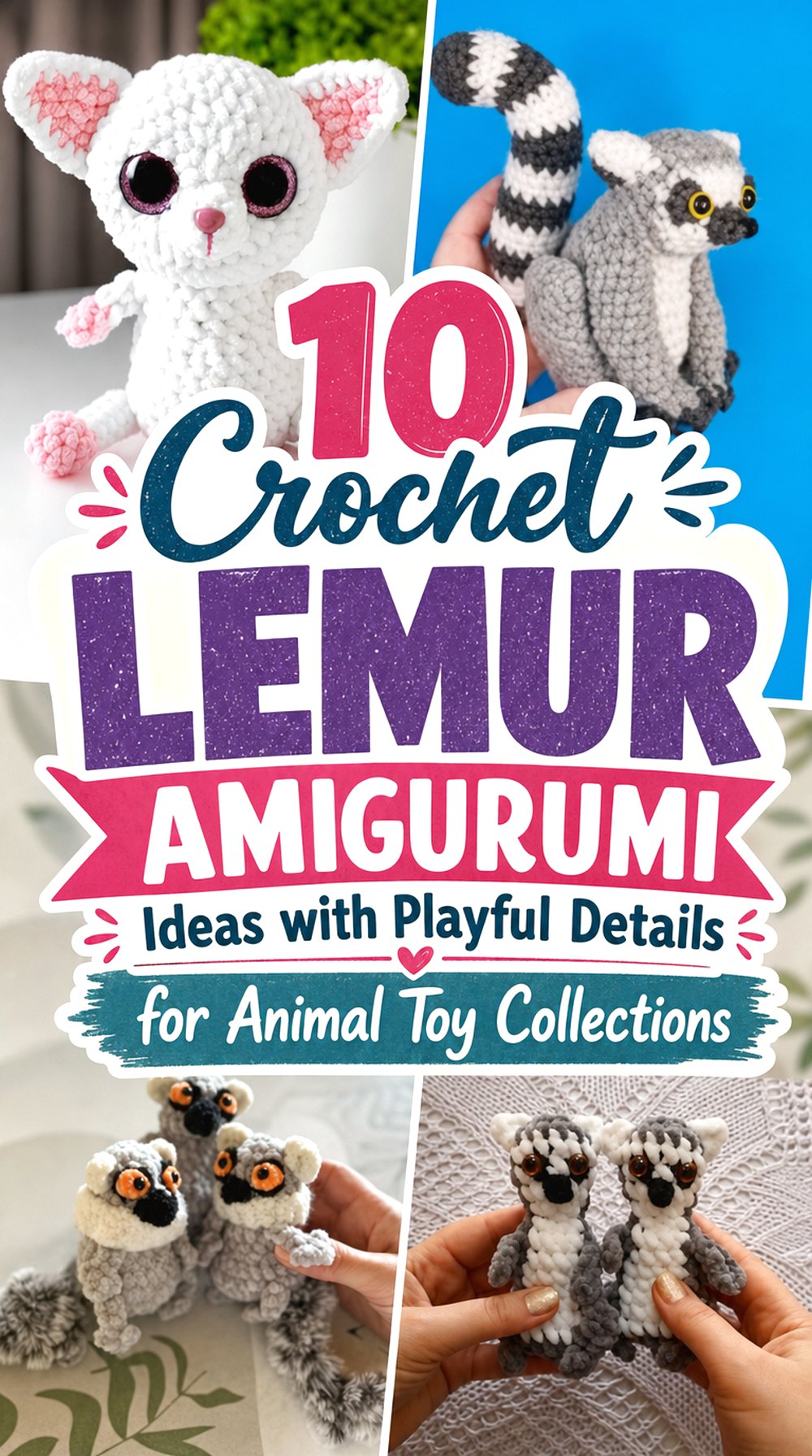

Crochet lemur amigurumi projects stand out because they give makers so many visible details to compare: striped tails, masked faces, big ears, plush bodies, expressive eyes, and character-inspired shapes. Some finished toys look like classic ring-tailed lemurs, while others lean into cartoon styling, soft plush proportions, or display-ready posing.
This collection brings together lemur tutorials with different project angles, from small cuddly forms to more detailed character pieces. Use it to choose by finished shape, amount of facial detail, tail style, assembly needs, and whether you want a compact toy, a decorative animal, or a more involved collector-style amigurumi.
Quick List
- Crochet Classic Ring-Tailed Lemur Amigurumi
- Crochet Soft Plush Lemur Amigurumi
- Crochet Rounded Mask-Face Lemur Amigurumi
- Crochet Tiny Plush Lemur Amigurumi
- Crochet Multi-Part Sitting Lemur Amigurumi
- Crochet Long-Eared Momo Lemur Amigurumi
- Crochet Articulated Lunar Lemur Amigurumi
- Crochet King Julien Lemur Amigurumi
- Crochet Textured Lemur Bath Toy
- Crochet Display Lemur Amigurumi
Why These Crochet Lemur Amigurumi Projects Are Worth Making
Lemurs work especially well as amigurumi because their most recognizable features can be shown in small, playful ways. A striped tail instantly changes the toy’s profile, while dark eye patches, rounded ears, and pale face sections give the head more expression. That makes each project useful for practicing animal character without turning the finished piece into a generic plush.
The variety also helps with choosing a project for a specific purpose. A small plush lemur may suit a shelf or gift basket, a character lemur can join a movie-inspired collection, and an articulated design may be better for display. Before starting, readers should check each creator’s material list, finishing notes, and any linked written instructions.
Crochet Classic Ring Tailed Lemur Amigurumi
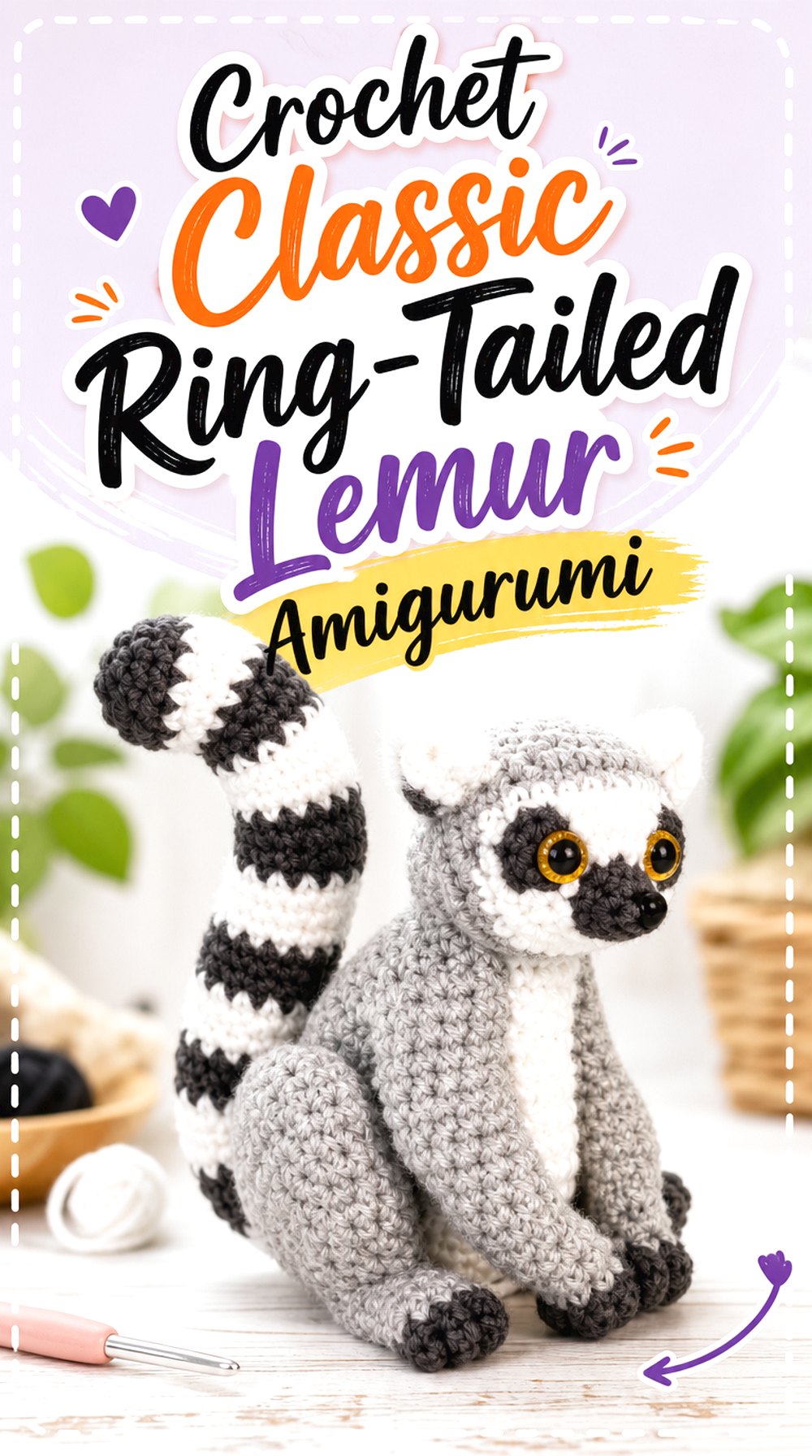
A long striped tail gives this crochet lemur the clearest ring-tailed look, while the face patch and small limbs make it feel lively without losing the animal shape. The finished toy is a good pick for readers who want the tail to be the main playful feature rather than a simple add-on. Compared with the softer plush options later in the list, this one has more defined body parts and a stronger focus on sewing the face, limbs, and tail neatly.
Watch the Tail and Body Balance
The striped tail is the feature that makes this lemur read clearly from across a room. Readers should look at how the tail sits in relation to the body and whether it feels proportionate to the head and limbs. A tail that is too visually heavy can pull attention away from the face, so the finished balance is worth checking before final assembly.
Check the Face Placement
The face has several visible sections, so placement matters more than it would on a plain round animal. Before attaching pieces permanently, readers may want to compare the eye area, muzzle shape, and ears from the front. This is especially useful for a lemur because a small shift in the facial pieces can change the expression from curious to uneven.
Prepare for the Sewing Stage
This project includes separate animal features, so the finishing stage is an important part of the result. Readers who prefer very low-sew amigurumi should review the full guide first. The sewing sections are useful for understanding how flat pieces and stuffed parts are attached, but the exact construction details should be followed from the creator’s original tutorial.
Original Tutorial and Creator Credit
Creator: ComplicatedKnots
Crochet Soft Plush Lemur Amigurumi
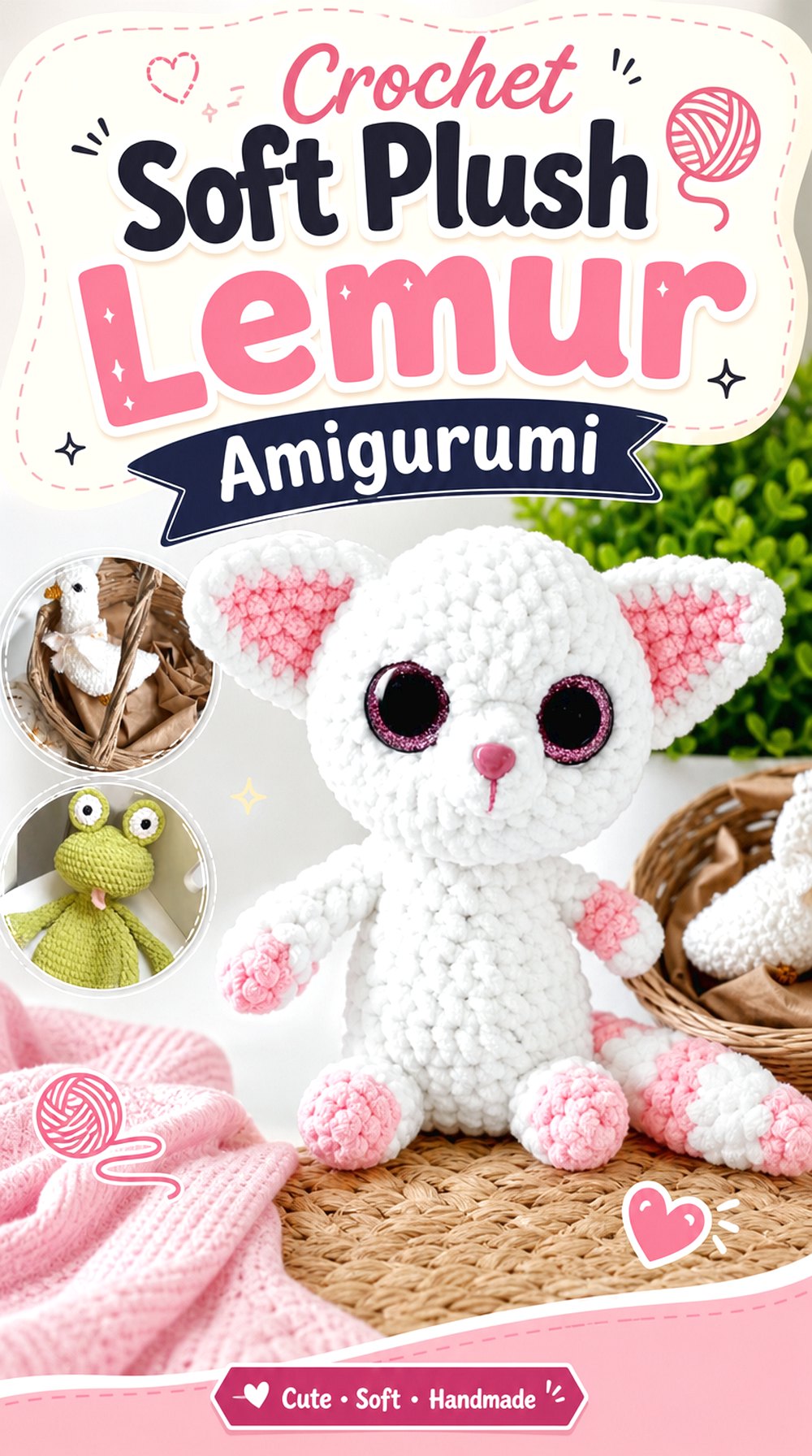
This plush lemur idea has a softer toy look, with a rounded body and a friendly animal face that makes it feel different from the more realistic ring-tailed version. The body appears more compact, so the appeal comes from the overall cuddly shape rather than a long pose or dramatic character styling. It may suit readers who want a lemur that feels simple in silhouette but still has enough contrast in the face and tail to identify the animal clearly.
Think About the Plush Shape
A plush lemur depends on softness and rounded proportions, so the finished outline matters. Readers should look for a body that feels evenly filled and a head that does not look too small beside the torso. Since plush toys can change shape depending on stuffing, the final look should be checked before closing or attaching the last details.
Confirm the Linked Pattern Details
The YouTube listing points readers toward a crochet plush lemur pattern, so it is worth checking what written support is included before choosing supplies. Some creators give more detail in a linked post than in the video description alone. Recording the material list from the original source helps avoid guessing yarn type, hook size, or finishing pieces.
Compare the Face and Tail Contrast
The strongest lemur cues are the face area and tail markings. If the colors are too close in value, those details may not show well in photos or on a shelf. Readers can use the original project image and video as the guide for how much contrast is needed, without copying the creator’s exact photo styling or thumbnail composition.
Crochet Rounded Mask Face Lemur Amigurumi
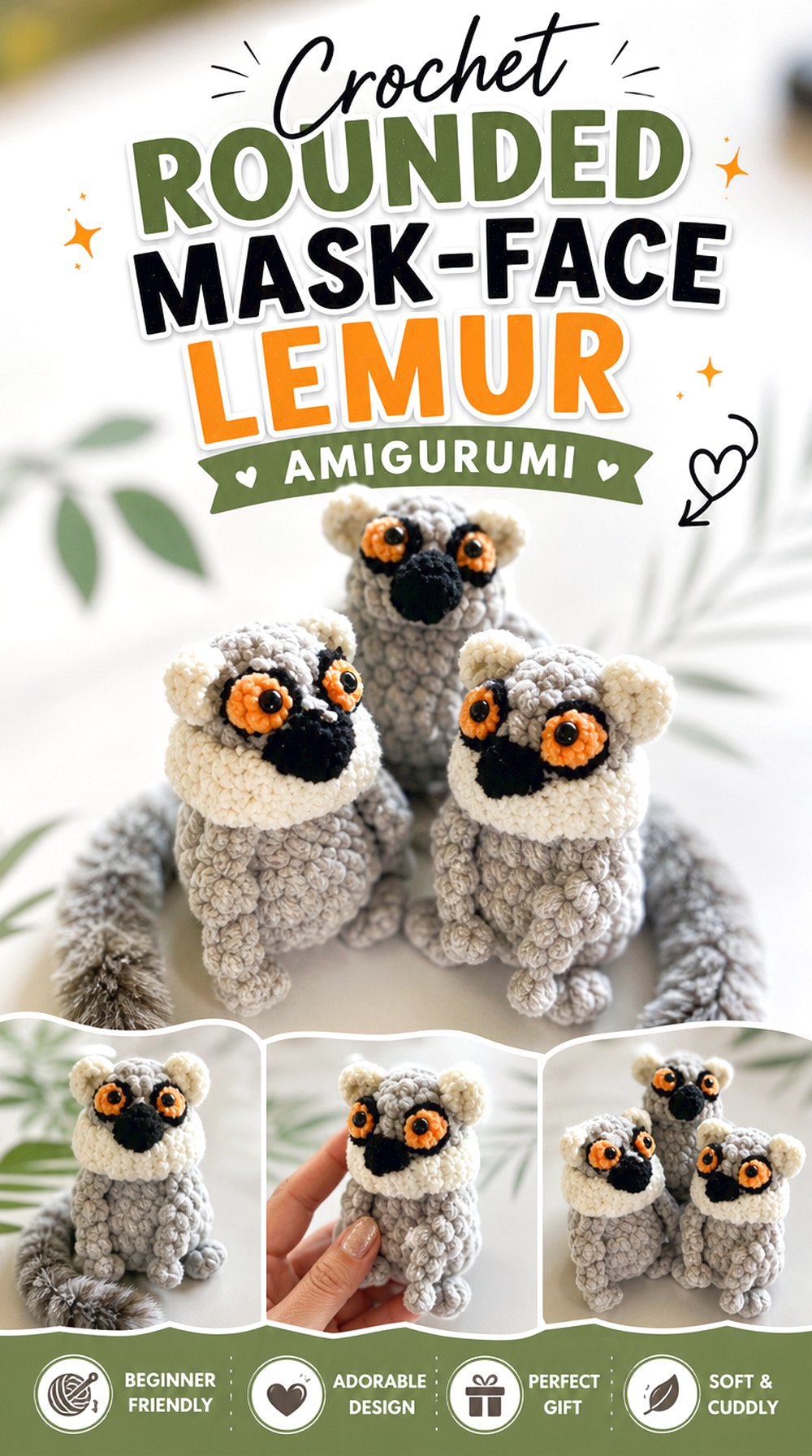
A rounded plush body and dark mask-style face details give this crochet lemur a bold, toy-like expression. The finished piece is different from the classic ring-tailed version because it leans more into soft plush proportions and a fuller face. This is a useful option for readers who want a lemur that looks gentle and displayable, with facial contrast doing most of the character work. The plush finish also makes the surface texture a key part of the final appearance.
Focus on the Masked Face
The masked face is the feature that gives this lemur its personality. Readers should pay attention to how the dark and light areas sit around the eyes and muzzle. A clear mask helps the toy look like a lemur instead of a general monkey or plush animal, especially when the body shape is simple and rounded.
Review the Plush Material Notes
The source describes this as a plush lemur project, so readers should confirm the creator’s material notes before buying yarn. Plush yarn can make details look larger and softer, and it can also hide small stitch definition. Rather than substituting blindly, it is safer to check whether the creator gives specific supply guidance or linked written instructions.
Check the Final Assembly View
Rounded toys can look very different before all the features are attached. A full final view helps readers understand where the ears, limbs, face pieces, and tail sit in relation to one another. Pausing at the assembly portions and comparing the toy from the front and side can help keep the finished lemur from looking lopsided.
Original Tutorial and Creator Credit
Creator: IRINELY Amigurumi
Crochet Tiny Plush Lemur Amigurumi
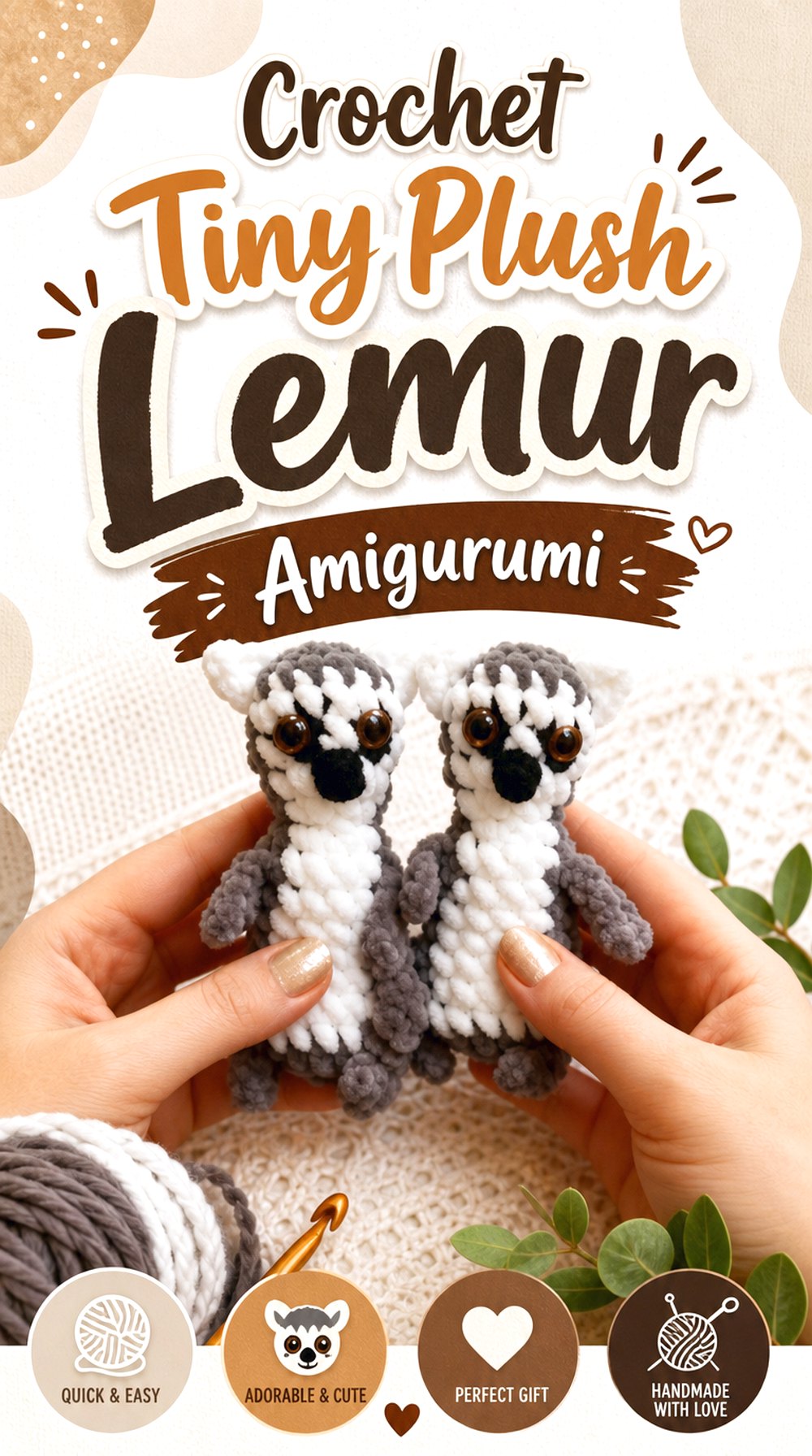
This small plush lemur is a compact option with a finished height stated as 12 cm in the available YouTube information, making it noticeably different from the larger display and character-style projects. The smaller size puts more pressure on clean facial placement, because the eyes, muzzle, ears, and tail all need to read clearly in a limited space. It may suit readers who want a shelf-sized lemur amigurumi rather than a large plush animal.
Confirm the Finished Size
The available listing states a 12 cm height, which makes this a useful project for readers who want a smaller lemur. That size can affect how the toy is displayed, packed as a gift, or stored with other amigurumi animals. Anyone planning a matching set should compare that finished height with the rest of the collection before starting.
Keep Small Details Clear
On a tiny plush toy, the face can become crowded if the features are too bulky or placed unevenly. The ears, muzzle, and eye area should stay readable from the front. Readers should rely on the original source for the exact finishing order, but it is wise to check each feature visually before final attachment.
Check Supplies Before Substituting
Small plush animals can change noticeably when a different yarn weight or texture is used. A thicker yarn may create a larger lemur, while a thinner one may make facial details harder to handle. The creator’s supply list should be reviewed first, especially if the finished size is important for a gift, display, or matching animal set.
Original Tutorial and Creator Credit
Creator: Ольга Мирос
Crochet Multi Part Sitting Lemur Amigurumi
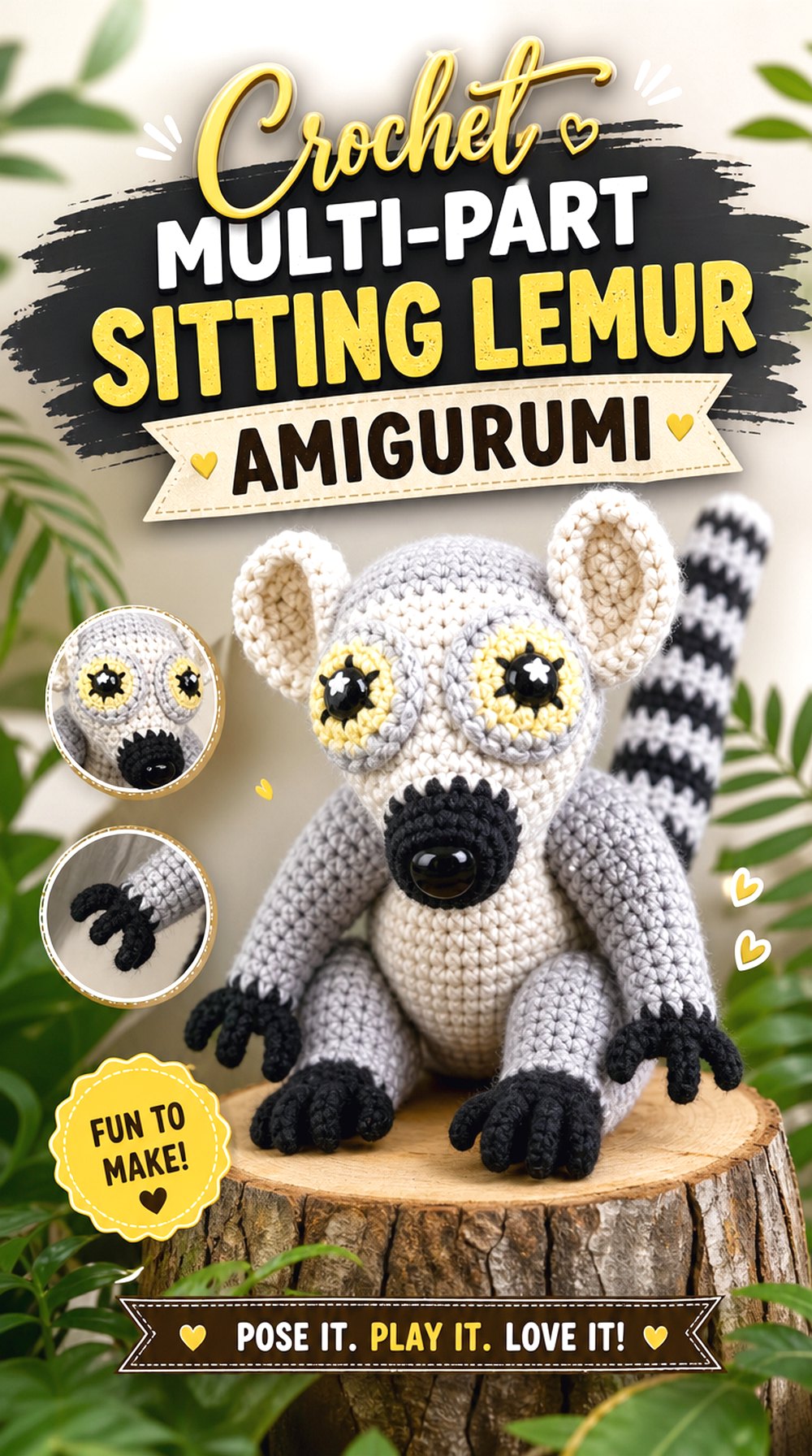
This sitting lemur project is presented as a multi-part guide, which makes it useful for readers who like slower, section-by-section amigurumi work. The format gives the project a different feel from a single short pattern video because the toy can be followed in stages. The finished idea fits well in an animal collection where posture matters, especially if the reader wants a lemur that sits neatly rather than stretching out through a long tail alone.
Plan Around Multiple Parts
A multi-part project needs a little more organization than a one-video tutorial. Readers should keep track of which section they have completed and where each part of the lemur belongs. A simple progress note can be helpful, especially when the toy includes separate body pieces that need to match in size and placement later.
Watch for Matching Pieces
Sitting amigurumi often depends on paired limbs, ears, or side pieces looking consistent. Before moving into final assembly, readers should compare matching parts beside each other. This does not replace the creator’s instructions, but it helps catch visible differences early, before the finished lemur is sewn together and harder to adjust.
Review the Full Series First
Because this project is split across several videos, it is worth reviewing the whole guide before starting. That helps readers see the final animal shape, the likely order of major sections, and any supplies or finishing pieces mentioned later. It also prevents surprises if important assembly details appear in a later part rather than the opening video.
Crochet Long Eared Momo Lemur Amigurumi
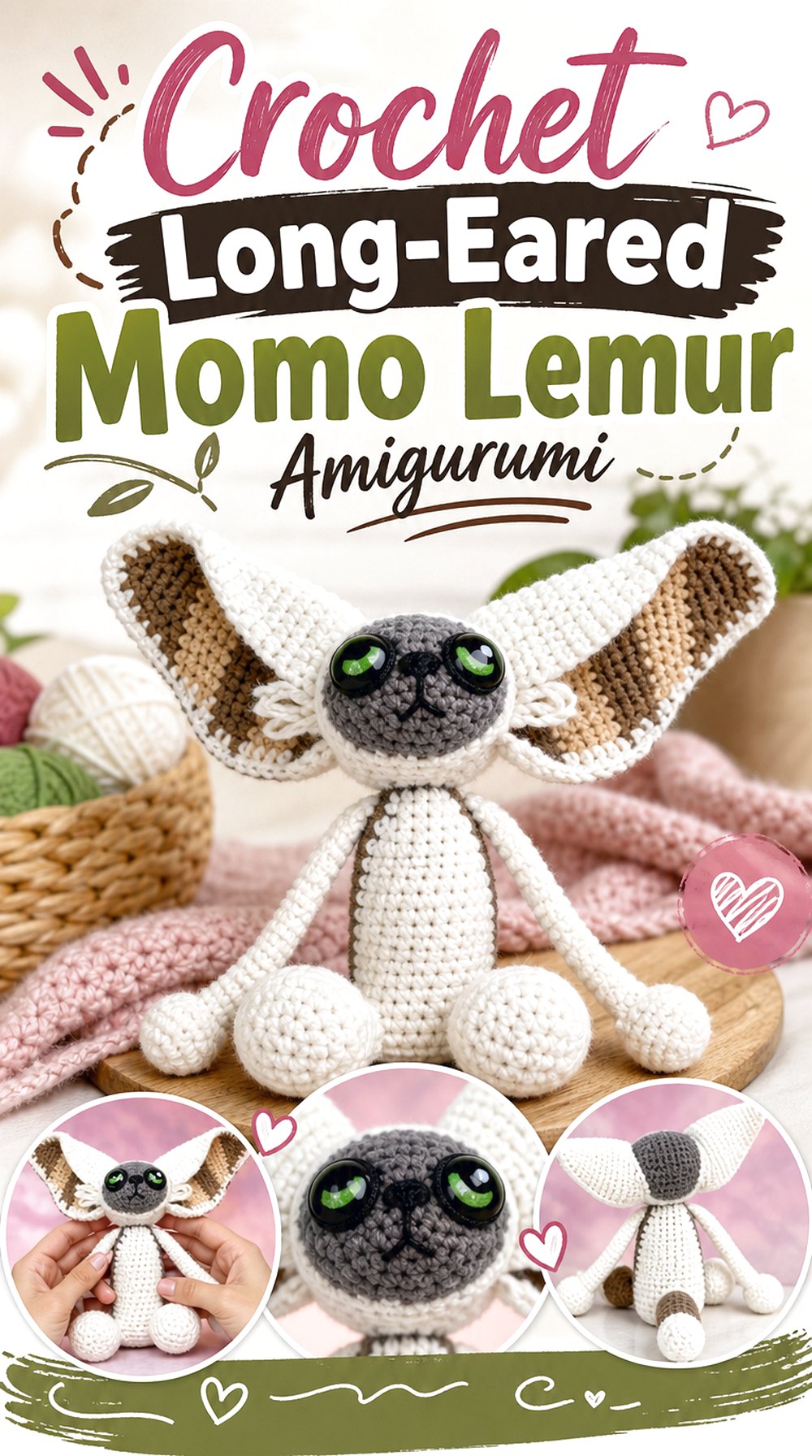
This Momo-inspired lemur has a more character-based shape, with long ears and a fantasy-animal profile instead of a classic ring-tailed body. It is a good contrast to the realistic and plush lemurs because the playful detail comes from recognizable character proportions. The project may appeal to readers who collect cartoon or fantasy amigurumi and want a lemur that looks more animated, expressive, and pose-ready than a simple jungle animal toy.
Look at the Ear Proportions
The long ears are central to this character-style lemur. Readers should check how the ears sit beside the head and whether they stay balanced with the body. If the ears dominate too much, the face can look hidden; if they are too small, the character shape may be less recognizable. The original guide should be used for exact placement.
Check the Assembly Sections
Character amigurumi often needs careful assembly because the personality depends on angles, not just separate pieces. The available information for this project notes a multi-part YouTube tutorial with process and assembly details. Readers should watch those finishing portions closely and avoid rushing the face, ears, limbs, and tail placement.
Confirm Language and Support
This tutorial is presented with Spanish and English cues in the available source information, so readers should check whether the teaching format works for them. Some makers may prefer a written pattern beside the video, especially for a character project. The linked creator page should be reviewed for any pattern notes or extra support before beginning.
Original Tutorial and Creator Credit
Creator: Patixy Crochet
Crochet Articulated Lunar Lemur Amigurumi
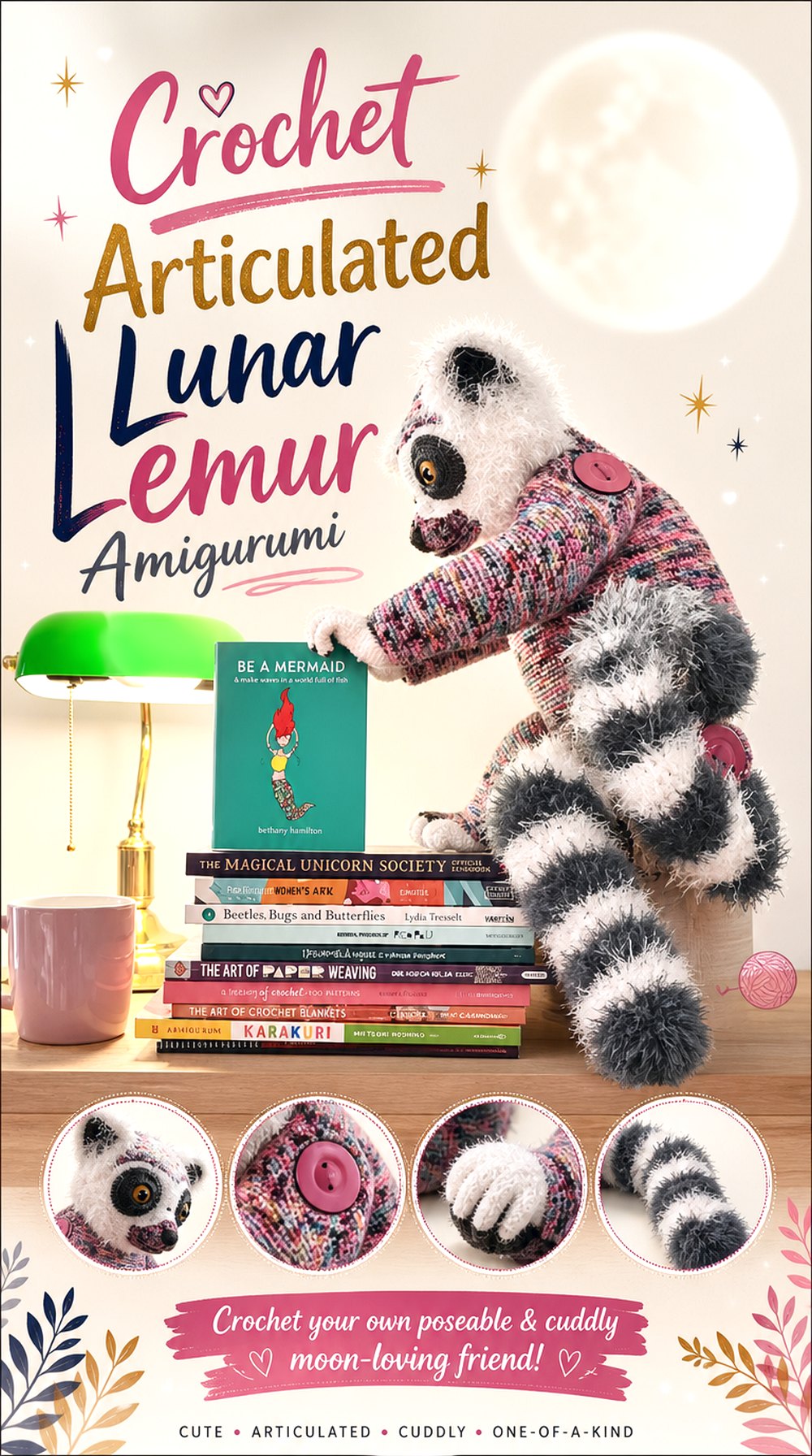
The Lunar lemur project is the most display-focused idea in this list, with a life-sized, articulated amigurumi style supported by supplemental YouTube videos. Unlike the small plush lemurs, this one is designed around realistic proportions and poseable structure, so it suits readers who want a more serious collector piece. Because the YouTube videos support a larger pattern rather than replacing it, readers should treat this as a guided advanced project and review the pattern requirements first.
Consider the Display Purpose
An articulated lemur is usually chosen for display rather than casual handling. Readers should think about where the finished piece will sit, how much space the tail and limbs may need, and whether a poseable design fits their collection. This is very different from a compact plush toy that can simply rest on a shelf.
Confirm the Pattern and Video Relationship
The available source describes free supplemental YouTube videos connected to the Lunar the Lemur pattern. That means the videos help with tricky sections, but readers should not expect them to replace the full pattern. Before starting, it is important to confirm what is included in the written pattern and what is demonstrated only as extra visual support.
Review Internal Structure Carefully
Poseable amigurumi may involve internal support or attachment decisions that affect the final look. Readers should use the creator’s exact guidance for any structure, joints, or finishing details. This is not a project to improvise from appearance alone, because the clean display result depends on how the hidden support and outer crochet work together.
Original Tutorial and Creator Credit
Creator: Projectarian
Crochet King Julien Lemur Amigurumi
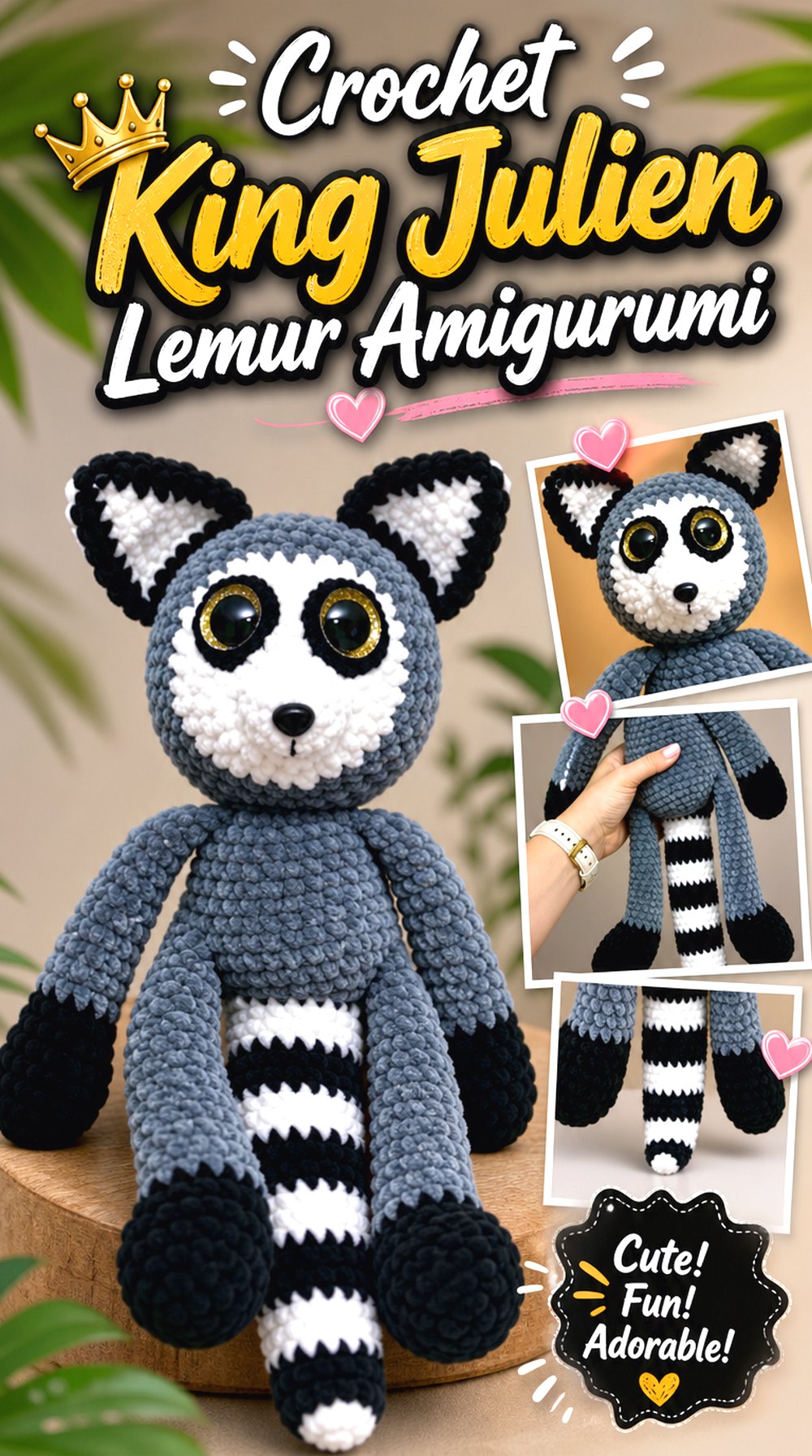
A King Julien-inspired lemur brings a playful cartoon angle to the collection, with a taller character look and a more dramatic expression than the natural animal versions. This idea works well for readers who want a lemur amigurumi that feels recognizable as a character instead of a general wildlife toy. The design is especially different from the soft plush options because the personality comes through the head shape, face styling, and character posture.
Decide on Character Accuracy
Character-inspired crochet depends on recognizable details, but readers should avoid copying protected images or thumbnails when sharing their own photos. The useful question is whether the finished toy has the right general character feel: tall head shape, expressive face, and playful lemur attitude. Exact construction should come from the original tutorial and any linked creator notes.
Check the Face Expression
The face is the main reason to choose this project over a standard lemur. Small changes in eye placement, muzzle shape, or brow direction can make the finished toy look cheerful, surprised, or uneven. Readers should pause before final attachment and compare the face from straight on, since character toys are less forgiving than simple round animals.
Review Creator Terms
Character projects can raise extra questions about selling, posting, or using finished items commercially. Readers should check the creator’s terms and any platform rules before making the toy for anything beyond personal use. Credit does not automatically give permission to reuse the creator’s images, pattern text, screenshots, or thumbnail design.
Original Tutorial and Creator Credit
Creator: СХЕМЫ АМИГУРУМИ ♡
Crochet Textured Lemur Bath Toy
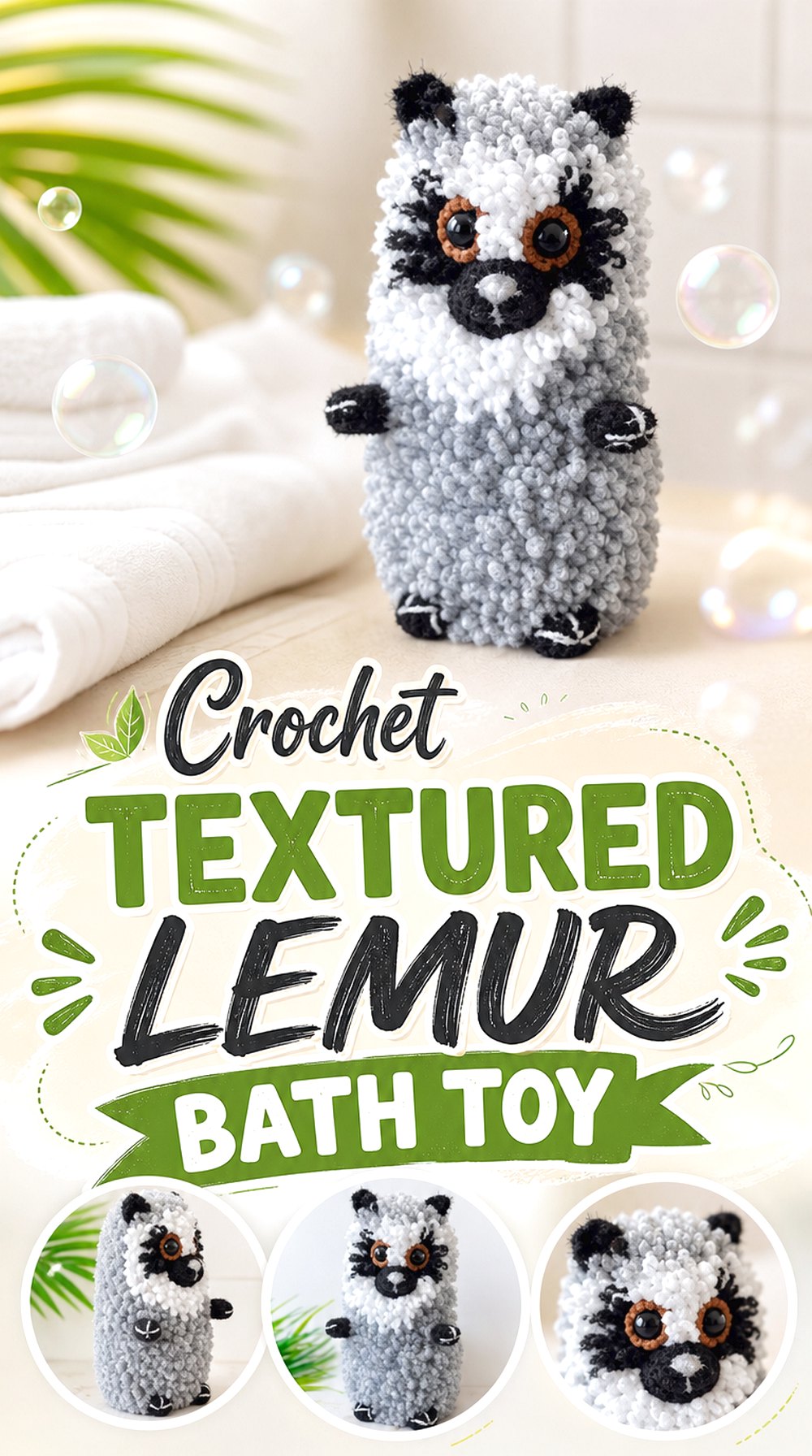
This lemur bath-toy project is different from the stuffed amigurumi options because the body is intended as a textured crochet washcloth-style toy. It still belongs in a playful lemur roundup because the animal face and toy shape give it character, but readers should choose it for a functional novelty angle rather than a classic stuffed amigurumi result. The standout detail is the surface texture, which changes how the lemur is used, stored, and checked after making.
Understand the Functional Shape
This is not the same kind of project as a filled shelf plush. A bath-toy or washcloth-style lemur needs to be viewed as a functional crochet item with an animal face. Readers should confirm whether the finished piece is meant for display, washing, or novelty use, and should avoid assuming it behaves like a stuffed toy.
Think About Cleaning and Drying
Because this item may be used around water, cleaning and drying matter more than they do for a standard amigurumi. Readers should check the creator’s notes and the yarn label instead of inventing care methods. Any crochet item used in a damp area should be allowed to dry properly according to the materials chosen.
Check the Texture Before Choosing
The textured body is the main reason to choose this lemur. Readers who want a smooth, stuffed animal may prefer one of the plush amigurumi options above. Those who like novelty crochet items should review the full guide first and decide whether the surface, shape, and intended use match what they want to make.
Original Tutorial and Creator Credit
Creator: @olga_knits3097
Crochet Display Lemur Amigurumi
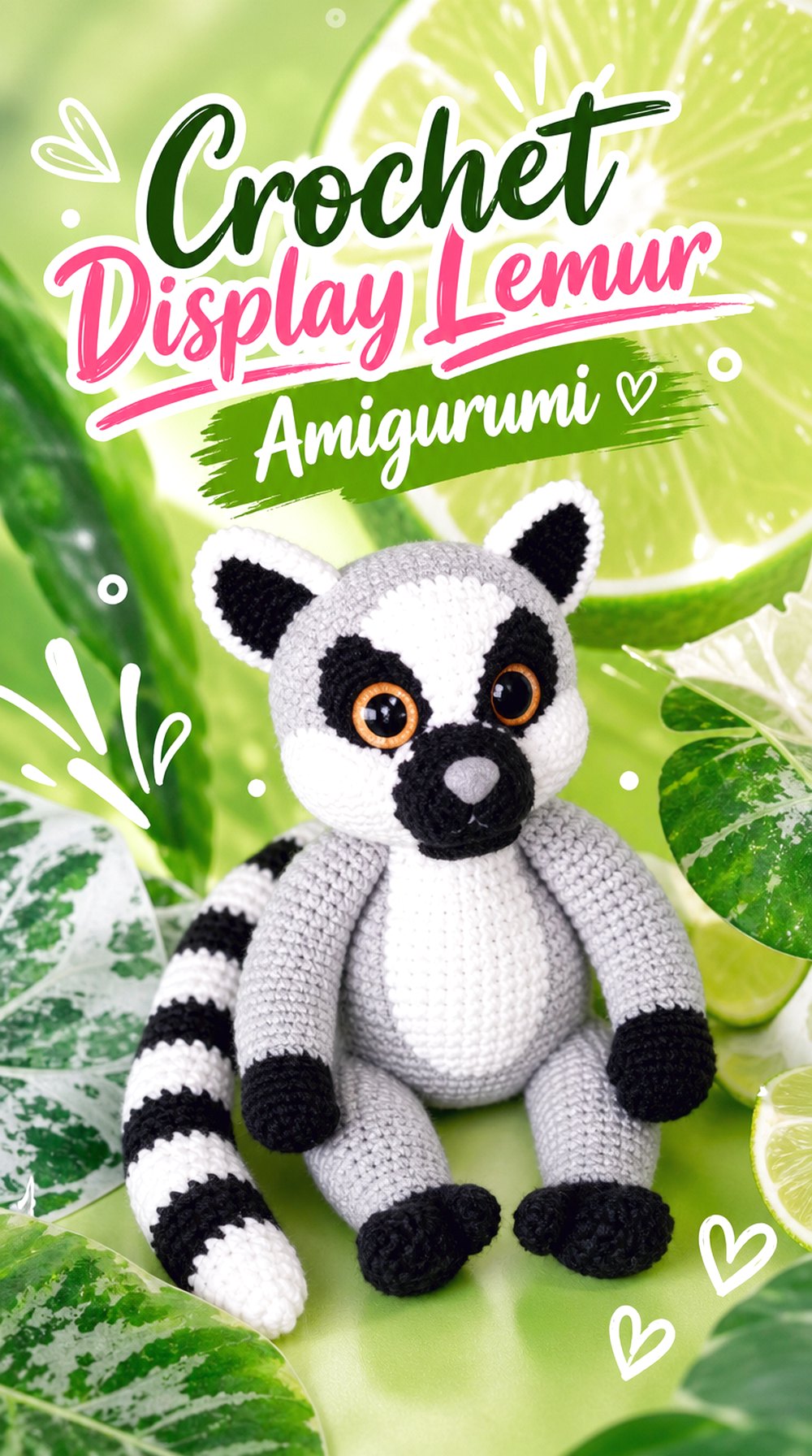
This display lemur idea is useful for readers who like seeing an author-style toy up close before deciding whether a similar lemur project fits their collection. The available YouTube information describes it as an overview of an original toy, so it should be approached as inspiration and source checking rather than a full replacement for written instructions. The value is in studying the finished proportions, animal personality, and visible design choices before committing to a more detailed lemur amigurumi project.
Treat It as Visual Research
The source information identifies this as an overview of the creator’s original toy. That makes it useful for looking at the finished lemur’s character, shape, and surface details, but readers should confirm whether a complete master class or pattern is available before relying on it. Visual research can inspire choices without copying protected instructions or photos.
Study the Finished Proportions
A display lemur needs a clear relationship between the head, limbs, and tail. Readers can look at the finished toy to decide whether they prefer a taller animal shape, a compact seated body, or a more cartoon-like face. Those proportion decisions are helpful when comparing the other lemur tutorials in this article.
Confirm Instructions Before Starting
Before buying yarn or planning a gift, readers should make sure they have access to the full instructions they need. If the YouTube source is only an overview, check whether the creator links a paid or written guide elsewhere. That keeps the project realistic and avoids trying to recreate the toy from appearance alone.
Original Tutorial and Creator Credit
Creator: @nastiknit_toys
Conclusion
These crochet lemur amigurumi ideas offer different reasons to start: a bold striped tail, a tiny plush size, a rounded face, a sitting body, a character-inspired shape, or a more serious articulated display style. For a classic animal look, start with the ring-tailed or soft plush lemurs. For playful personality, the Momo and King Julien projects bring stronger character details. For a larger collector piece, the articulated Lunar lemur needs more preparation. Use the original tutorials and creator notes for exact construction details before choosing supplies.
FAQs
How do I choose the right crochet lemur amigurumi tutorial?
Start by choosing the finished look you want: classic ring-tailed animal, soft plush toy, character lemur, or display piece. Then check the creator’s guide format, material list, and assembly support. A lemur with many facial pieces or a long striped tail may need more careful finishing than a simple rounded plush.
What lemur details should I check before starting?
Look closely at the tail, face mask, ears, muzzle, and limb placement. These details make the toy read as a lemur instead of a general monkey or plush animal. It is also worth checking whether the finished size is stated, especially if the toy is meant for a shelf, gift, or matching animal set.
Can I change the yarn for a crochet lemur amigurumi?
Only change yarn after reviewing the creator’s material notes. A different yarn can change the finished size, facial detail, stuffing shape, and tail texture. Plush yarn may soften the surface and hide stitch definition, while thinner yarn can make small parts harder to handle. The yarn label should guide care decisions.
Are crochet lemur amigurumi toys safe for children?
Do not assume any amigurumi toy is child-safe unless the creator clearly states age suitability and the materials support that use. Safety eyes, small sewn pieces, wires, buttons, and detachable parts may not be suitable for young children. For gifting, check the creator’s notes, local safety rules, and the materials used.
Can I sell finished crochet lemurs from these tutorials?
Check each creator’s terms before selling finished items. Some designers allow small-scale sales with credit, while others limit use to personal projects or require a separate license. Credit alone does not give permission to copy pattern text, reuse screenshots, recreate thumbnails, or sell items when the creator’s terms do not allow it.