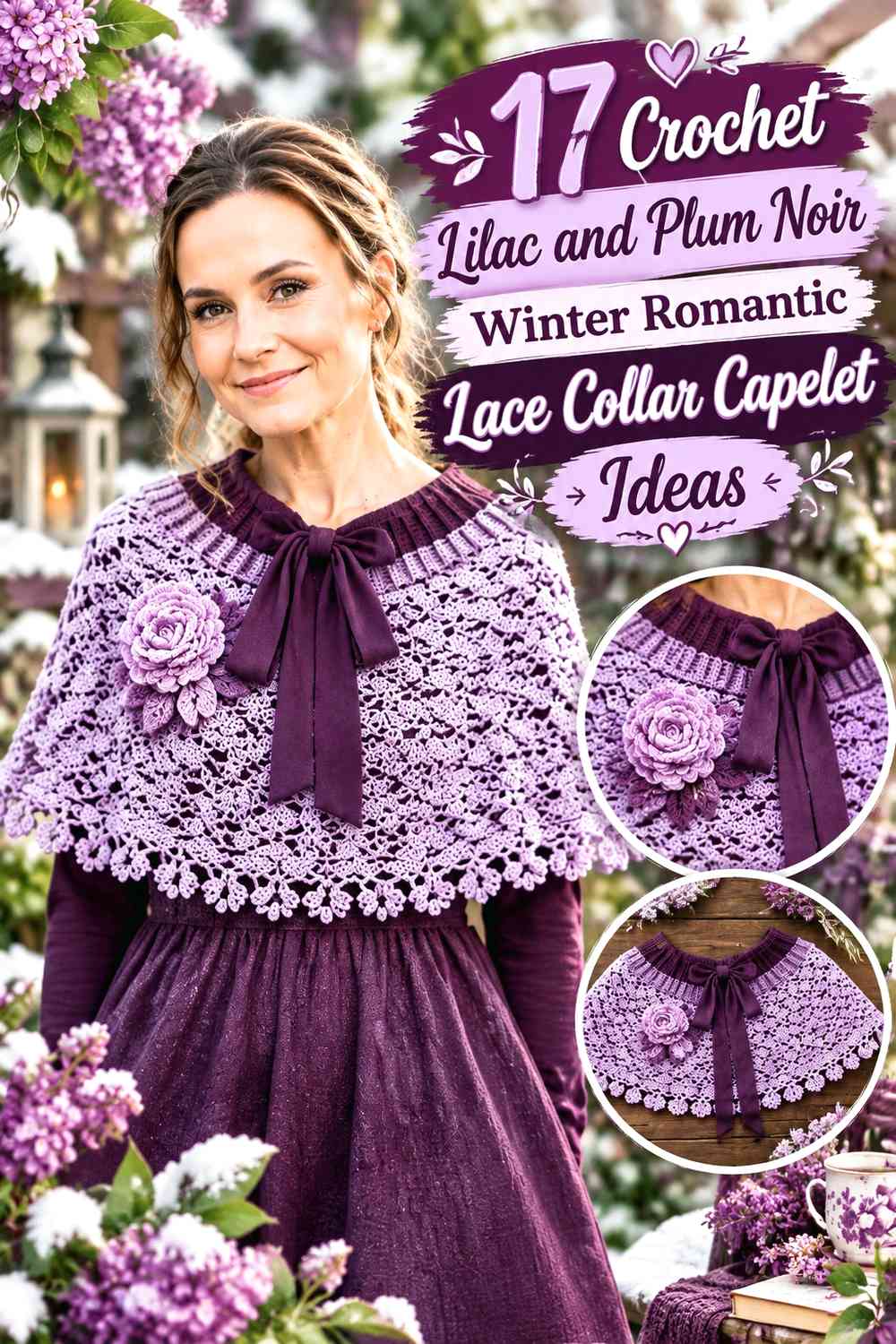

Lilac and plum noir give a crochet lace collar capelet enough contrast to make openwork visible while keeping the palette romantic and winter-ready. Lilac can spread across the shoulders as the softer lace color, while plum noir can define the neckline, front opening, scalloped hem, ties, or individual motifs.
The balance changes significantly on a capelet because the neckline and shoulder spread are both prominent. A narrow plum noir neckband around lilac lace creates a very different silhouette from a lilac collar flowing into a dark plum shoulder field. Even a small amount of plum noir can carry substantial visual weight when it follows the complete outer edge.
The tutorials credited below include lace shoulder capes, collar-capes, short capelets, and related shoulder-covering constructions. Use each original tutorial for its construction and fit. The lilac and plum noir color arrangements are independent adaptations rather than claims about the creators’ original palettes.
Quick List
- Plum Noir Neckline with Lilac Crochet Romantic Lace Collar Capelet
- Lilac Lace Crochet Collar Capelet with a Plum Noir Scalloped Edge
- Plum Noir Upper Crochet Capelet with Lilac Lower Lace Panels
- Lilac Floral Lace Crochet Capelet with Plum Noir Border Details
- Lilac Crochet Collar Capelet with a Plum Noir Closure
- Lilac Edwardian Lace Crochet Capelet with Plum Noir Ties
- Plum Noir Buttoned Crochet Collar Capelet with Lilac Lace Trim
- Lilac Bridal-Style Crochet Lace Capelet with Plum Noir Outer Edging
- Plum Noir Textured Crochet Capelet with a Lilac Romantic Lace Edge
- Plum Noir Filet Lace Crochet Capelet with a Lilac Neckline
- Lilac Openwork Crochet Capelet with a Plum Noir Lower Frame
- Lilac Romantic Crochet Capelet with Plum Noir Front Ties
- Plum Noir Vintage Crochet Capelet with Lilac Ribbon-Look Lace
- Plum Noir Hooded Crochet Collar Capelet with Lilac Lace Edging
- Plum Noir Crochet Collar Capelet with a Lilac Shoulder Field
- Lilac Lacy Crochet Capelet with Plum Noir Side Framing
- Lilac and Plum Noir Broad-Band Crochet Romantic Lace Collar Capelet
Decide Whether Lilac or Plum Noir Should Control the Shoulder Spread
The shoulder area occupies much more visual space than a narrow detachable collar. If lilac covers most of that spread, the capelet stays light and the openwork can create its own shadow pattern. Plum noir can then define smaller but visually important areas such as the neckband or outer hem.
A plum-noir-dominant shoulder field produces a deeper result. In that arrangement, lilac is especially useful on lace sections because the lighter shade can keep shells, fans, floral motifs, and scalloped edges from disappearing into one dark surface.
Avoid switching colors through every small lace repeat unless the stitch pattern is very simple. Detailed lace usually benefits from broader uninterrupted color sections.
Use Lilac and Plum Noir Around the Neckline Strategically
The neckline is close to the face and remains visible even when much of the capelet sits beneath a coat or scarf. That makes it one of the most effective places for the supporting color.
A plum noir neckline gives lilac shoulder lace a firm dark beginning. A lilac neckband above a plum noir cape has the opposite effect, creating a lighter transition before the garment spreads over the shoulders.
If both the neckline and lower edge use plum noir, keep at least one of those dark areas narrow enough for the lilac center to remain clearly dominant.
Let Lilac and Plum Noir Support the Lace Instead of Hiding It
Open crochet allows the garment underneath to become part of the finished appearance. Lilac lace over a dark top can look more defined than the same lace over a similar pale shade, while plum noir openwork can create strong graphic contrast over cream or light gray clothing.
Test a lace sample over likely winter layers before deciding that more color contrast is necessary. The blouse, dress, or sweater visible through the openings may already provide enough separation.
1. Plum Noir Neckline with Lilac Crochet Romantic Lace Collar Capelet
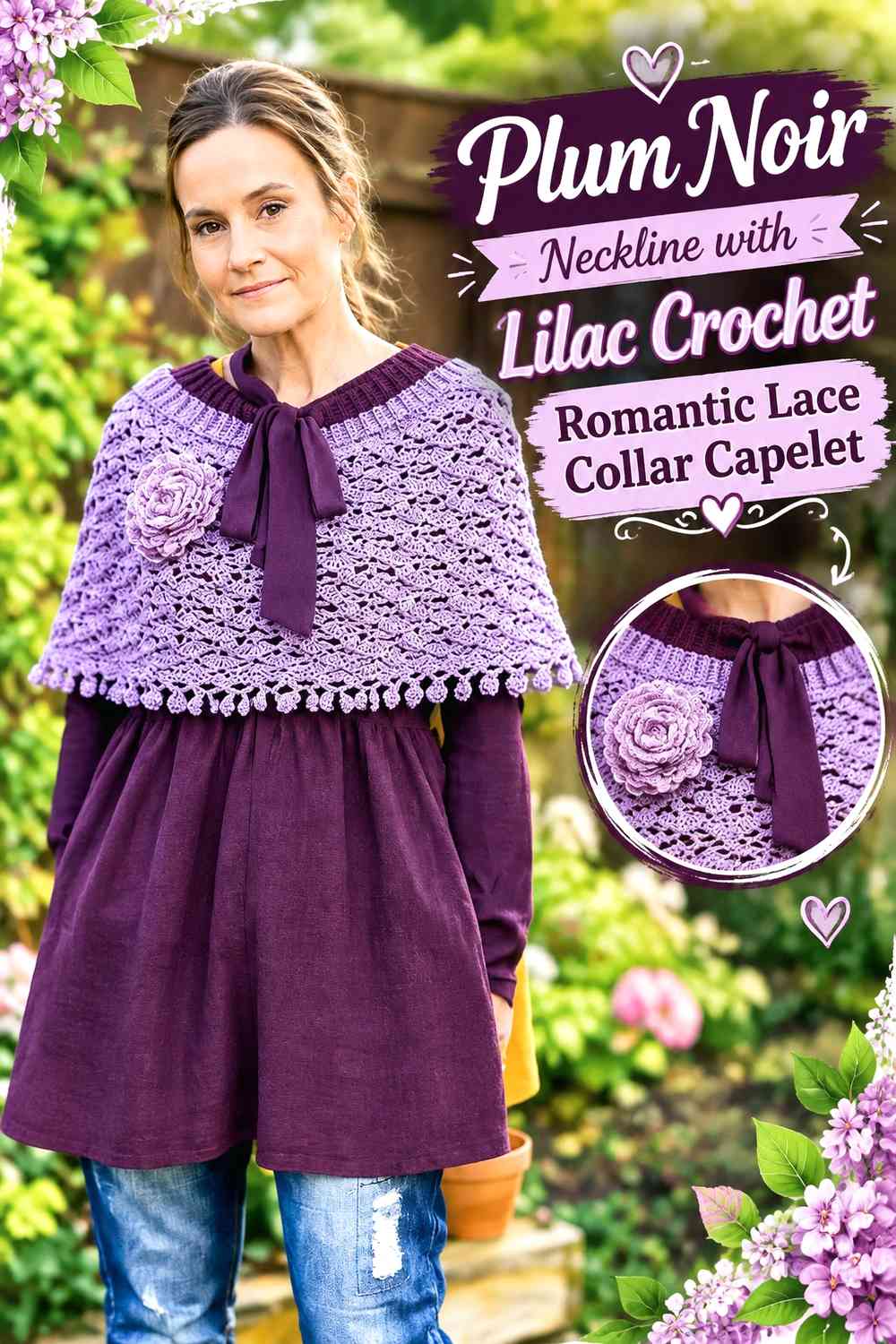
Begin with a plum noir neckline and let the capelet open into a broader lilac lace shoulder field. This places the deepest shade at the most structured part of the garment while keeping the expanding lace softer and lighter.
It is a useful arrangement when the collar shape deserves clear definition but you do not want plum noir to dominate the entire shoulder area.
Plum Noir Can Anchor the Lilac Crochet Capelet Neckline
Keep plum noir concentrated around the inner edge so the neckline forms one continuous dark frame. That strong beginning can make the transition into lilac lace easier to see.
Avoid extending plum noir too far down unless you want a dark yoke. On a short capelet, a deep neckline section can quickly occupy a large percentage of the total garment.
Lilac Should Spread Broadly Below the Plum Noir Collar
Use lilac through the principal openwork so the softer color controls the shoulders. Keeping this area uninterrupted lets shells, arches, or other lace details remain connected visually.
A narrow plum noir repeat at the very edge is optional, but the lilac shoulder field should still remain the largest area.
Creator Credit: Loopy Mabel Crochet
2. Lilac Lace Crochet Collar Capelet with a Plum Noir Scalloped Edge
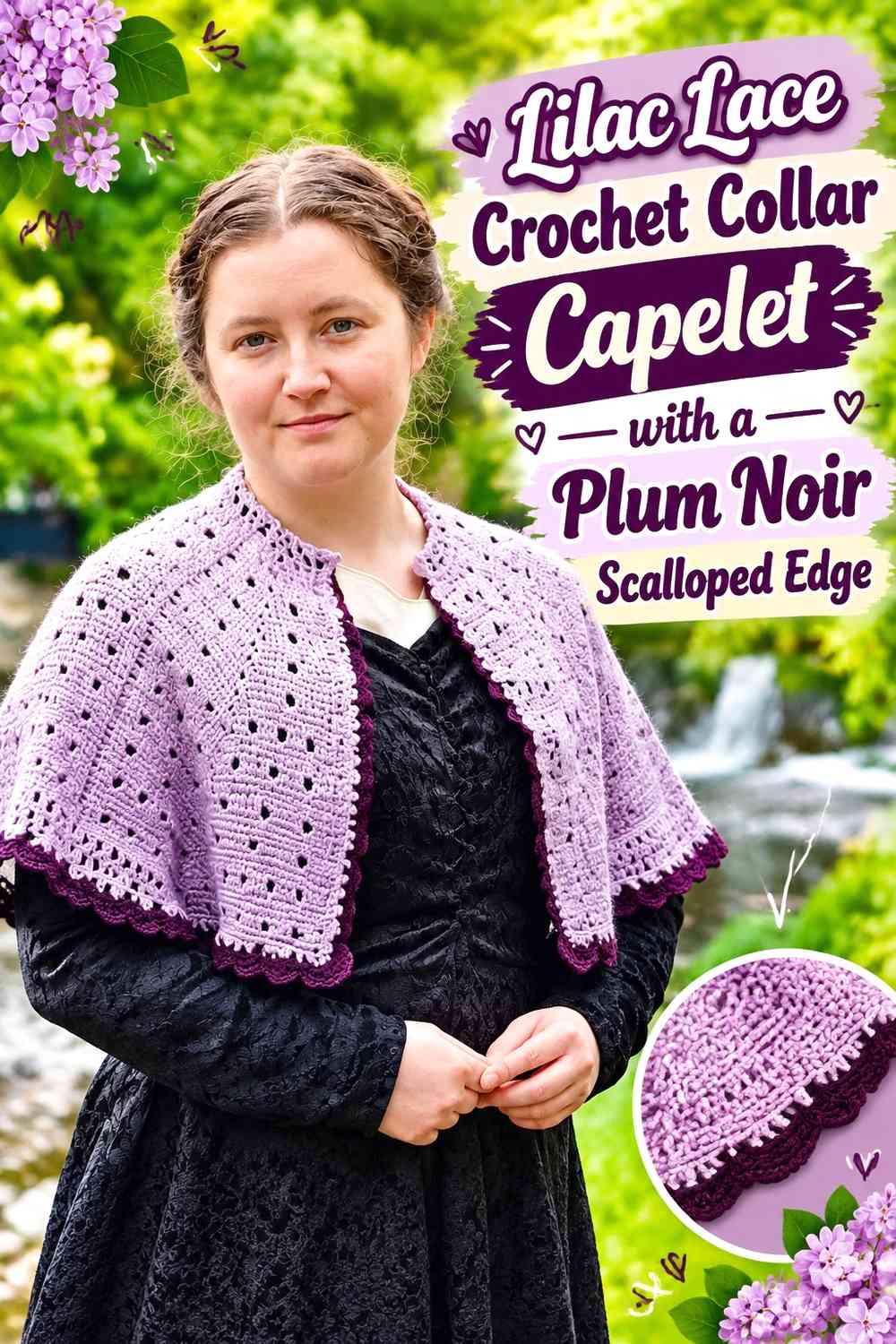
Let lilac cover the neckline and main shoulder lace, then introduce plum noir only along a scalloped lower edge. The dark finish makes each curve more noticeable while leaving most of the capelet soft in color.
This arrangement works particularly well when the lower border already contains enough decorative shaping to become a natural focal area.
Lilac Should Keep the Plum Noir Capelet Body Light
Run lilac continuously through the main lace field rather than inserting plum noir into every repeat. The uninterrupted color keeps the stitch pattern easier to follow from neckline to hem.
If the lace contains strong texture, the lilac field already has enough visual movement without internal striping.
Plum Noir Can Sharpen a Lilac Scalloped Capelet Hem
Use plum noir where each scallop reaches the outer silhouette. A dark edge can make shallow curves appear much more deliberate.
Keep the border proportional to the capelet depth. A very wide plum noir finish can turn the lower third into a dark band and reduce the romantic lilac effect.
Creator Credit: YarnAndy
3. Plum Noir Upper Crochet Capelet with Lilac Lower Lace Panels
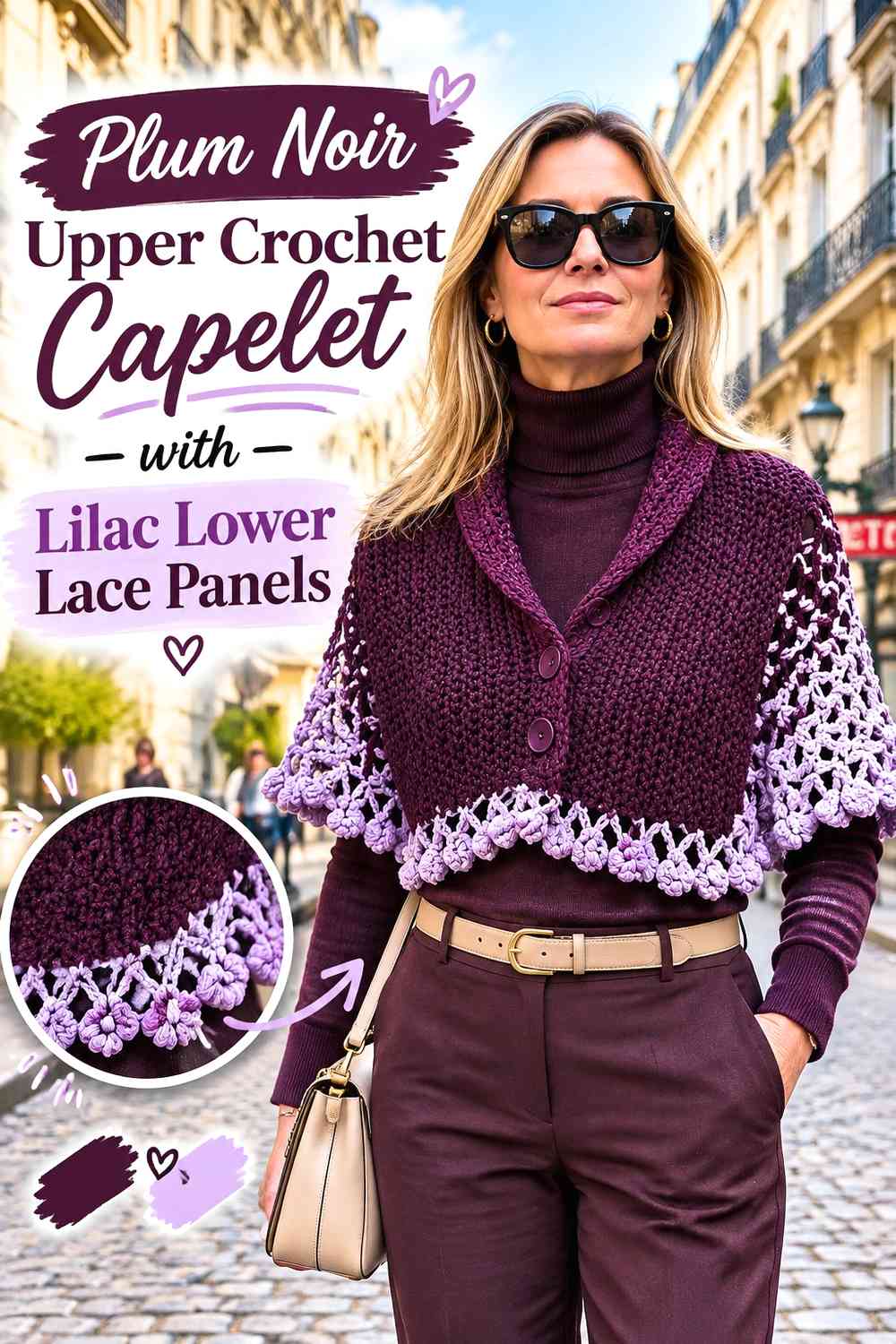
Use plum noir from the neckline through the denser upper section and transition into lilac as the cape opens into lace. This creates a dark-to-light movement from neck to shoulder edge and gives each construction zone its own color.
It is particularly effective when the source cape contains visibly different upper and lower textures.
Plum Noir Should Define the Upper Lilac Capelet Structure
Keep the yoke or upper body dark enough to form a recognizable section rather than using several narrow plum stripes.
The deeper color gives the neckline visual weight and leaves the lower lace free to become the softer feature.
Lilac Can Lighten the Plum Noir Capelet as the Lace Opens
Switch to lilac where the pattern becomes more open. The lighter yarn helps separate lower lace sections and prevents the complete shoulder spread from looking visually dense.
If the outermost border is already decorative, consider staying lilac rather than returning to another substantial dark band.
Creator Credit: Handwork diy
4. Lilac Floral Lace Crochet Capelet with Plum Noir Border Details
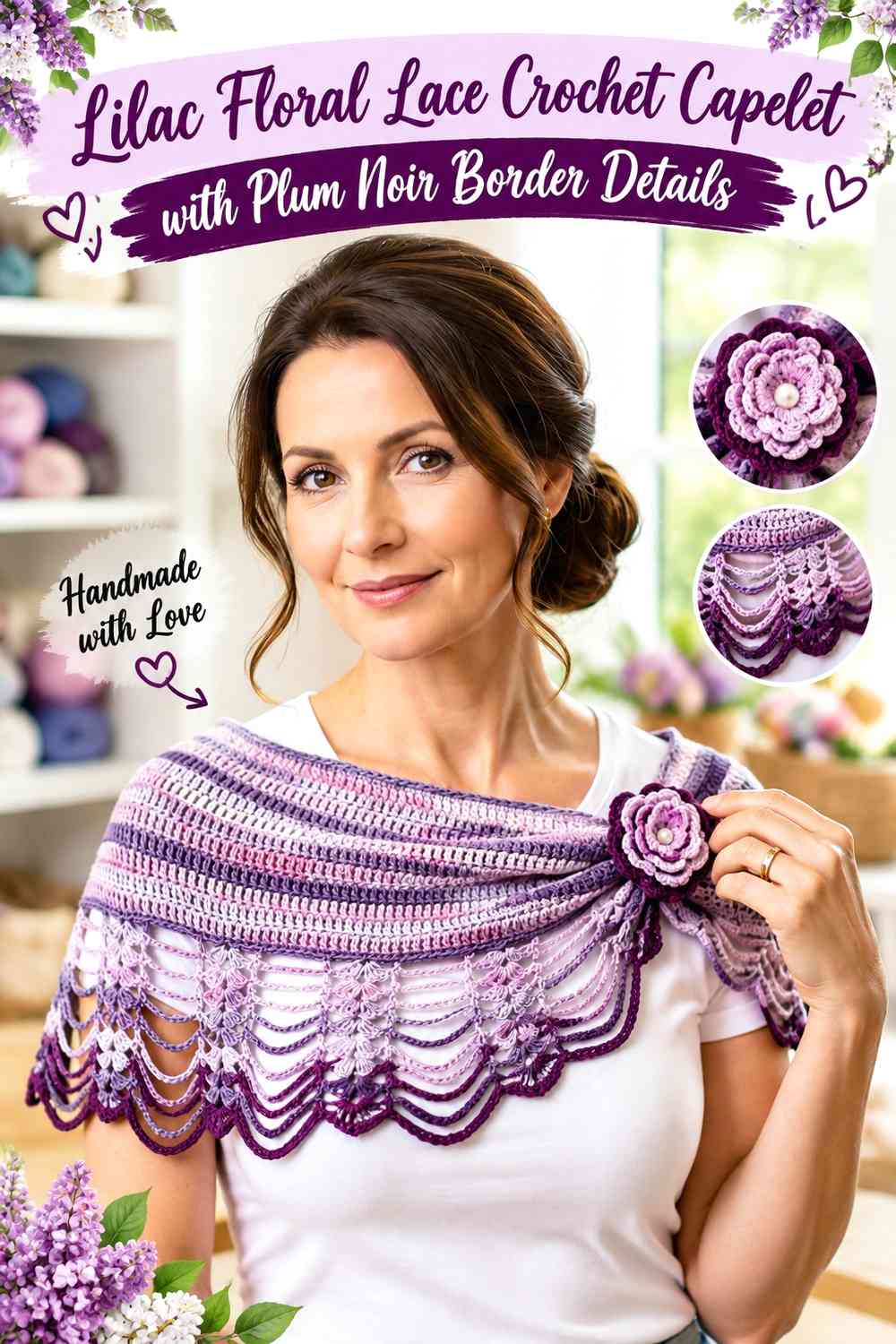
Let lilac carry ornamental or floral-style lace and reserve plum noir for selected borders or flower-adjacent details. Detailed motifs already create substantial visual information, so the limited palette helps their outlines remain readable.
This is one of the softer romantic options because plum noir functions more like punctuation than a second large field.
Lilac Should Keep Plum Noir Floral Lace Uncluttered
Use lilac continuously through the main floral or ornamental section. Switching colors repeatedly inside small motifs can make color changes compete with petal, arch, or shell shapes.
The lighter field also makes shadows around raised floral details more noticeable.
Plum Noir Can Define Selected Lilac Floral Capelet Edges
Place plum noir at a neckline, final edge, or one decorative feature rather than outlining every motif separately.
A single dark structural line is often enough to connect the romantic lilac lace with the deeper winter palette.
Creator Credit: Alextitia Tuto Crochet
5. Lilac Crochet Collar Capelet with a Plum Noir Closure
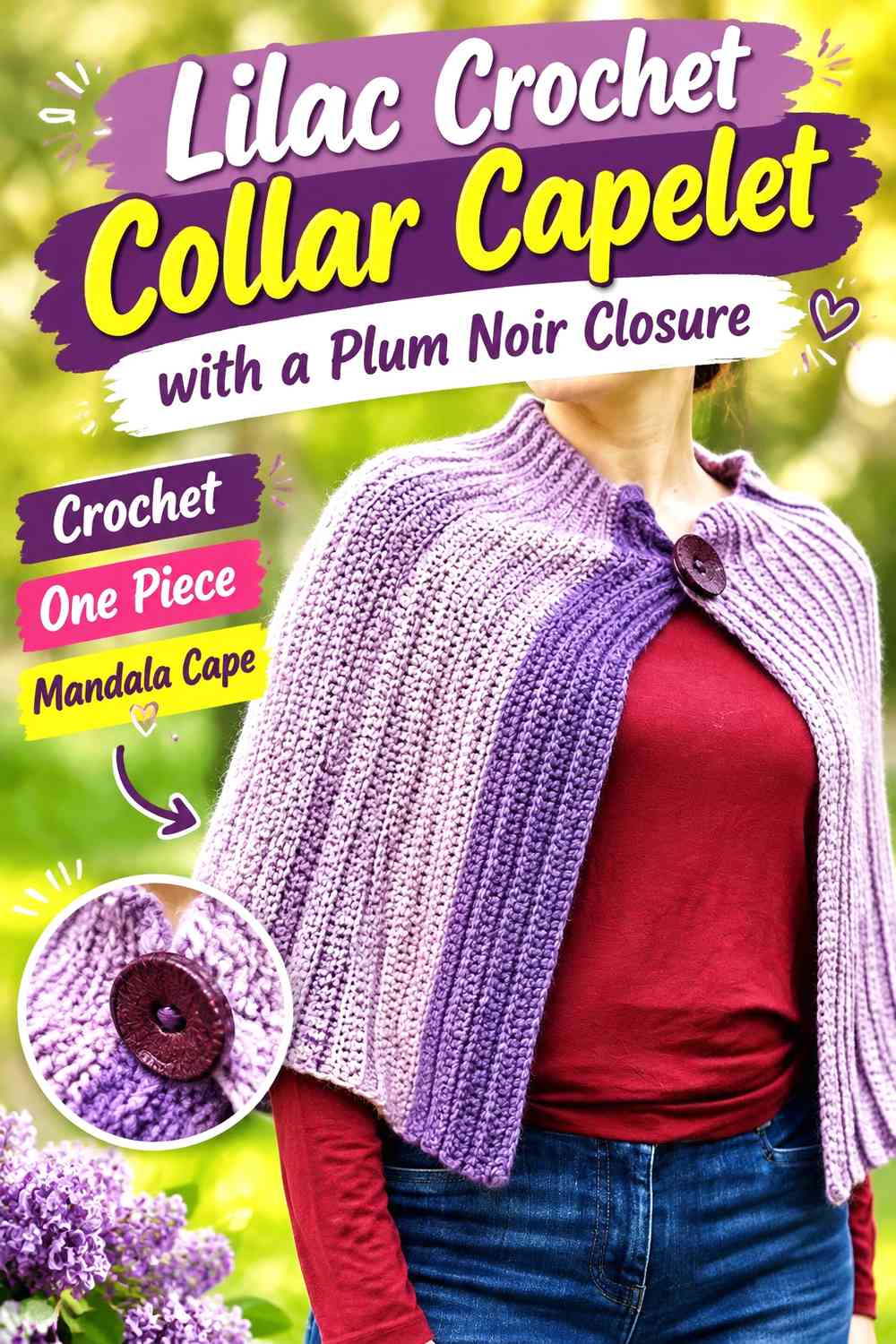
Use lilac throughout the body and let plum noir concentrate around the button or front fastening area. The closure becomes a small dark focal point without requiring a matching dark border around the complete capelet.
This is useful when you want the garment to remain mostly lilac but need a stronger visual center at the front.
Lilac Should Flow Continuously Around the Plum Noir Closure
Keep the shoulder field one lilac color from side to side. That continuity allows the capelet to read as one garment rather than several separate panels.
The plum noir closure then becomes easier to locate because it is not surrounded by other dark interruptions.
Plum Noir Can Mark the Front of a Lilac Collar Capelet
Use the dark shade around the button band, loop, or immediate front finishing where it has a structural purpose.
Keep the accent controlled. A large plum noir closure plus a wide plum noir hem can create two competing focal zones on a short capelet.
Creator Credit: Nana’s Crafty Home | Tonya Bush
6. Lilac Edwardian Lace Crochet Capelet with Plum Noir Ties
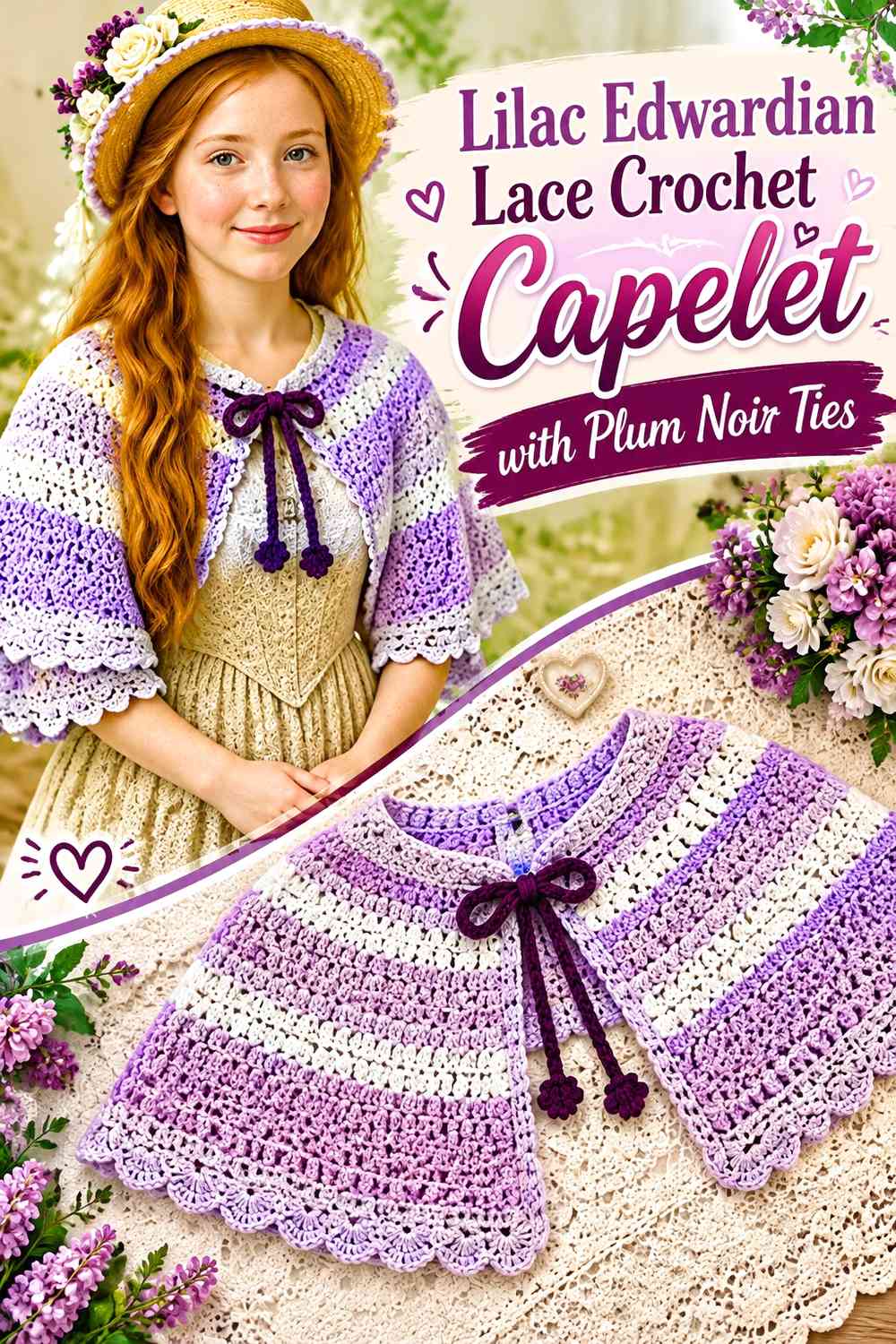
Make lilac the primary cape color and place plum noir on the front ties and perhaps a narrow neckline detail. The combination suits an old-fashioned romantic silhouette because the darker ties frame the opening without interrupting the shoulder lace.
The ties also create movement, so they do not need additional decorative color changes to remain noticeable.
Lilac Can Carry the Plum Noir Edwardian-Style Shoulder Lace
Let lilac remain uninterrupted across the broad cape section. Historical-looking lace already supplies enough ornament through its stitchwork and shape.
Keeping the main fabric light also gives the darker ties a clearer relationship to the center front.
Plum Noir Ties Can Frame a Lilac Crochet Capelet
Use matching plum noir on both front ties so the darker detail feels balanced. Unequal color treatment becomes especially noticeable because the ties hang close together.
If plum noir is repeated elsewhere, keep it to a narrow edge so the ties remain the main dark feature.
Creator Credit: Selina Veronique Crochet
7. Plum Noir Buttoned Crochet Collar Capelet with Lilac Lace Trim
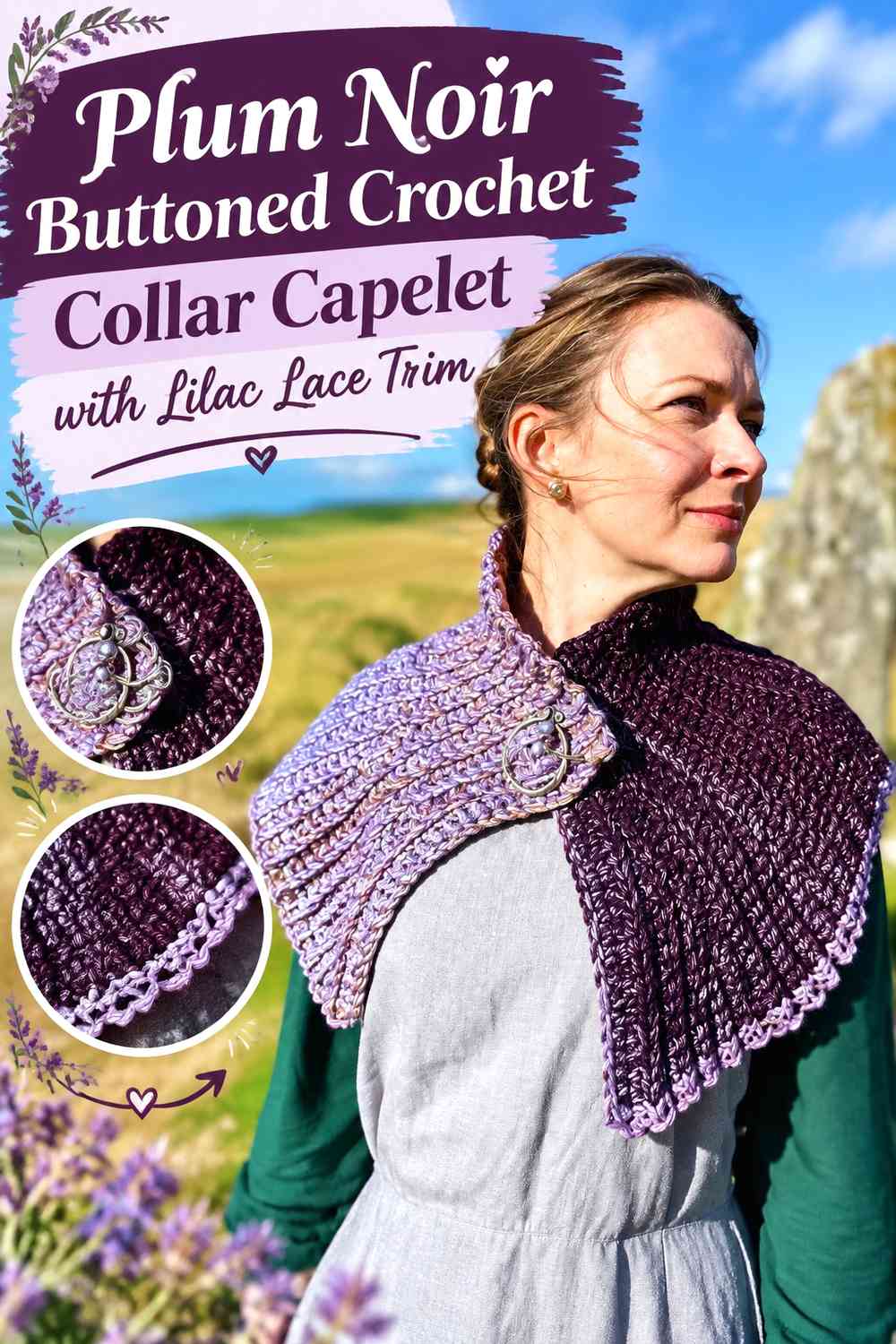
Keep the buttoned main body plum noir and let lilac soften the lower lace or scalloped edge. This produces a darker winter capelet while preserving a romantic detail where the garment spreads over the shoulders.
It is a practical arrangement when the upper construction is relatively solid and the lower edge supplies most of the ornament.
Plum Noir Should Ground the Lilac Buttoned Capelet Body
Use plum noir consistently across the closure and upper shoulder section. A continuous dark body emphasizes the silhouette and prevents the button area from looking disconnected.
If the fabric includes visible texture, let that texture create variation inside the dark field instead of inserting frequent lilac stripes.
Lilac Can Lighten the Plum Noir Lower Capelet Edge
Introduce lilac where the crochet begins to open or flare. A lighter lower section can keep the dark body from looking too visually heavy.
Make the lilac trim substantial enough to remain visible but not so deep that the capelet becomes equally divided between two unrelated blocks.
Creator Credit: Ophelia Talks Crochet
8. Lilac Bridal-Style Crochet Lace Capelet with Plum Noir Outer Edging
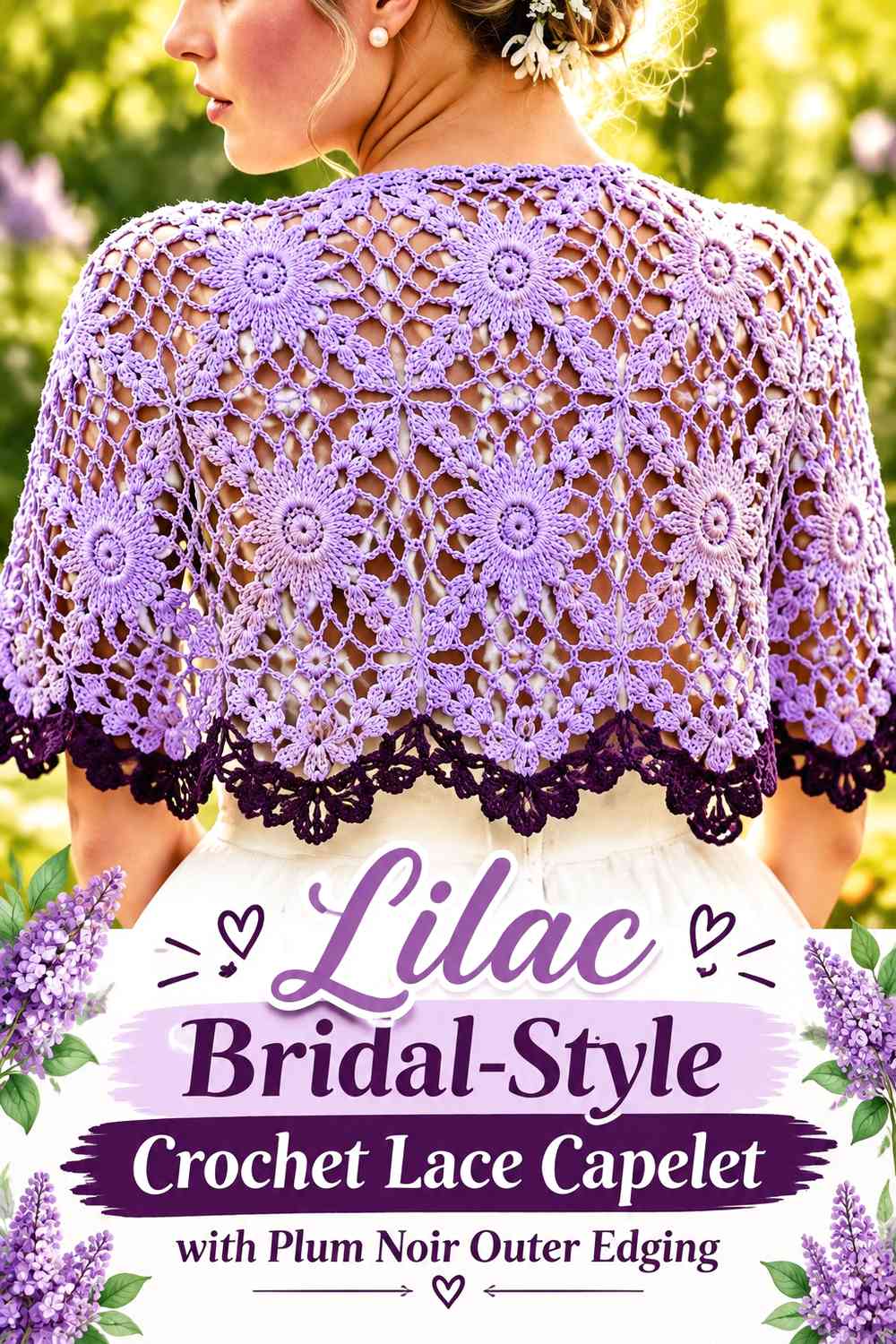
A pale lilac lace body can take on a more dramatic winter-romantic direction when the final edge switches to plum noir. Instead of using conventional pale-on-pale finishing, the dark outline emphasizes the complete shoulder silhouette.
This is particularly useful over a light dress or blouse where an all-lilac edge might visually disappear.
Lilac Should Remain the Main Plum Noir Bridal-Style Lace Field
Keep lilac throughout the widest openwork section so the garment remains soft despite the deep border.
Because clothing shows through the lace, test the lilac against the intended base garment before adding more dark detail.
Plum Noir Can Outline the Lilac Lace Capelet Without Overframing It
Use plum noir around the longest outer boundary, but consider keeping the inner neckline lilac. A dark line at both inner and outer edges can frame the entire lace field heavily.
One strong plum noir perimeter is enough when the contrast is already pronounced.
Creator Credit: Knitting World
9. Plum Noir Textured Crochet Capelet with a Lilac Romantic Lace Edge
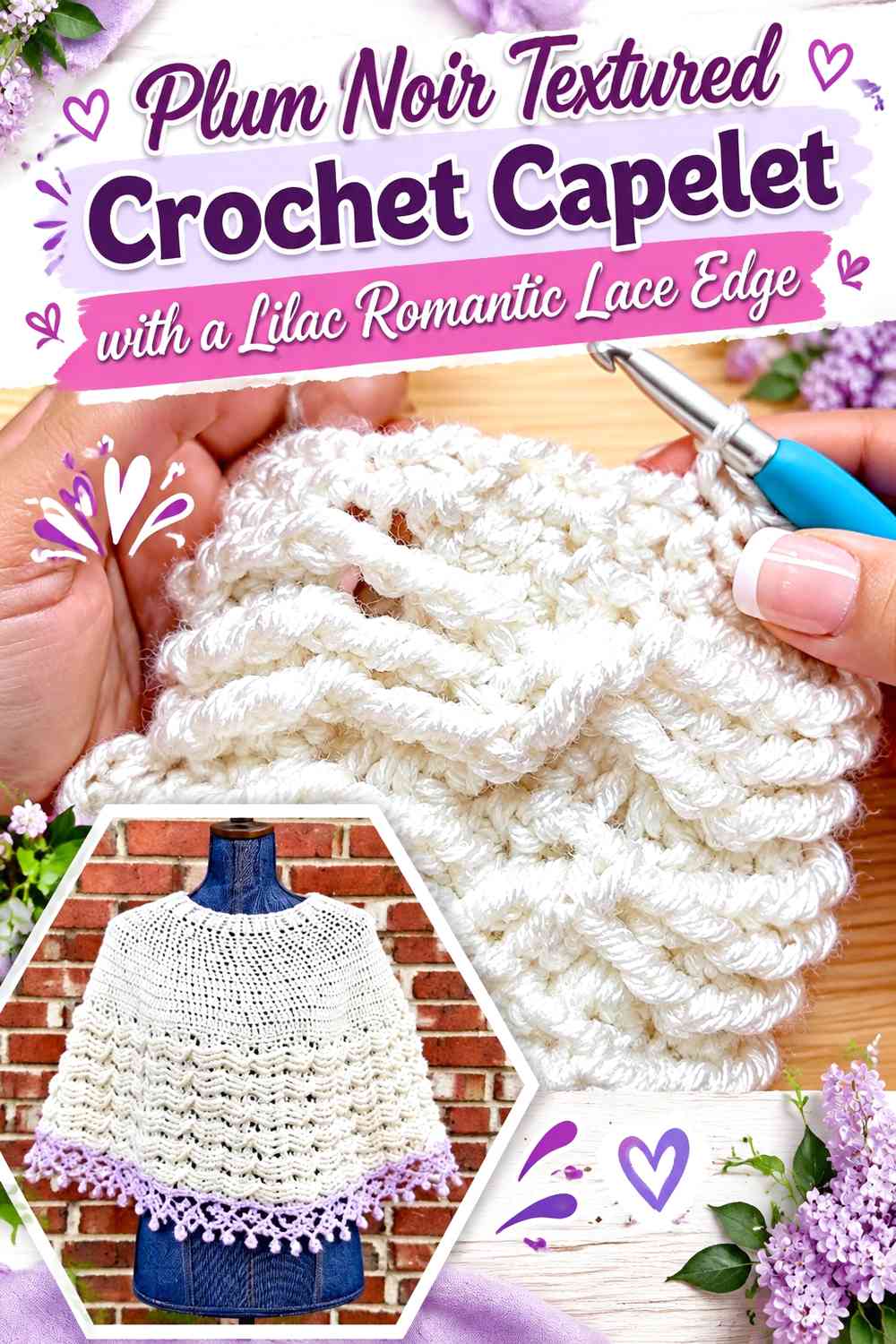
Let plum noir carry a more substantial textured capelet body and reserve lilac for the decorative lower finishing. This design relies on two kinds of contrast at once: dark versus light and dense texture versus open lace.
That distinction can make a winter capelet look romantic without turning its entire body into delicate openwork.
Plum Noir Texture Should Stay Continuous Above Lilac
Keep the dark body in one color so ribs or raised stitches create coherent lines across the shoulders.
Small lilac changes inside the plum noir texture could compete with the construction rather than enhance it.
Lilac Can Give Plum Noir Texture a Softer Capelet Finish
Use lilac once the garment reaches its decorative edge. The color shift helps separate the finishing section even when the lace itself is relatively subtle.
Keep the lilac depth smaller than the plum noir body if you want the capelet to remain dark overall.
Creator Credit: Stitches n Scraps
10. Plum Noir Filet Lace Crochet Capelet with a Lilac Neckline
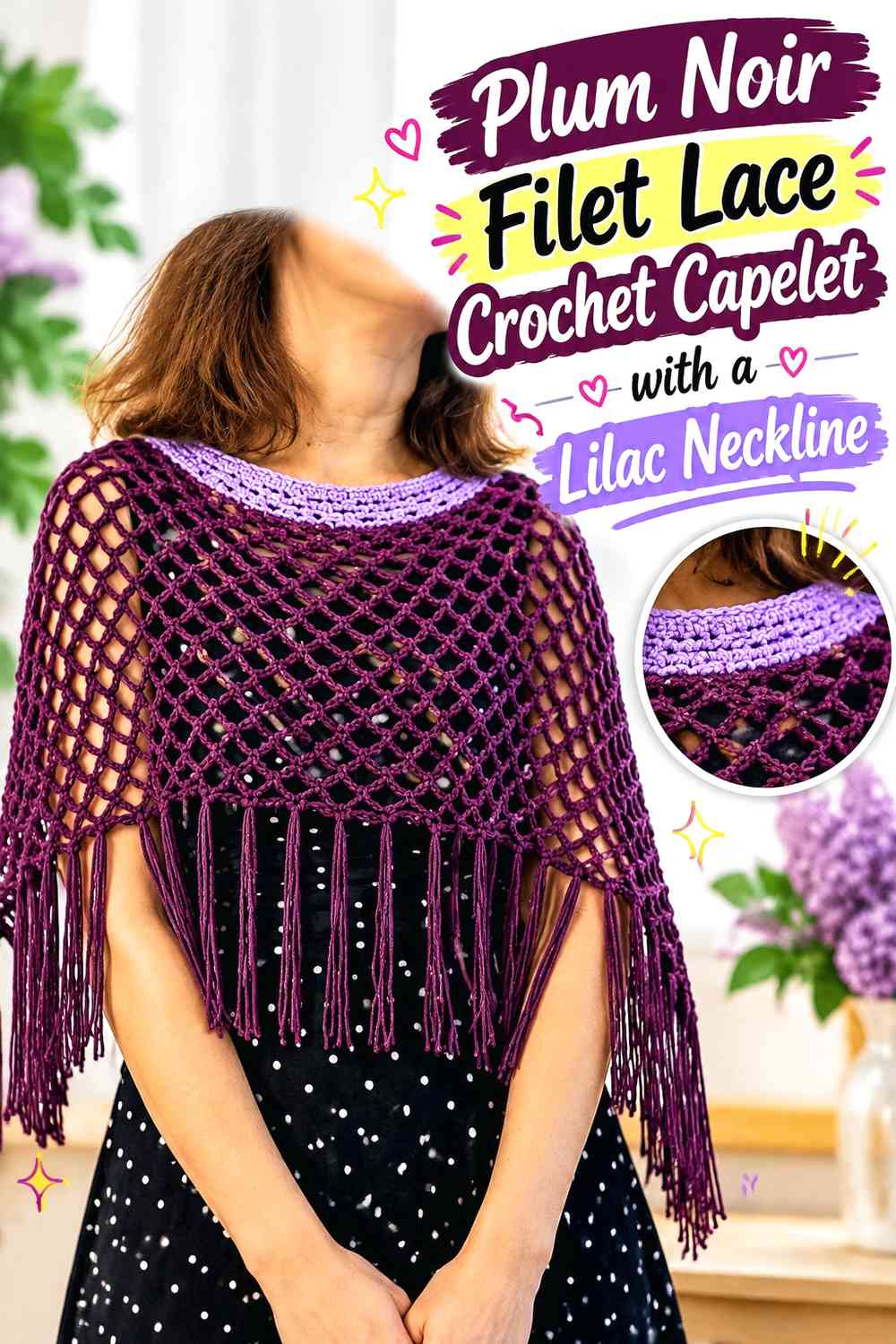
Use plum noir through the main filet or grid-like lace while keeping the neckline lilac. Open squares already create a consistent pattern, so a solid dark body lets the stitch structure remain the dominant surface feature.
The pale neckline provides a softer transition near the face without interrupting the mesh farther down.
Plum Noir Should Keep the Lilac Filet Lace Pattern Continuous
Work the main open grid in plum noir so the solid-and-open rhythm remains easy to follow.
When worn over a light sweater or dress, the background garment can provide additional contrast through the dark openings without another yarn color.
Lilac Can Soften the Plum Noir Capelet Neckline
Use lilac around the upper edge where it can separate the dark filet body from the neck.
If you repeat lilac at the hem, keep that second accent narrow so the main plum noir mesh remains the obvious focal field.
Creator Credit: Crazy Cool Crochet
11. Lilac Openwork Crochet Capelet with a Plum Noir Lower Frame
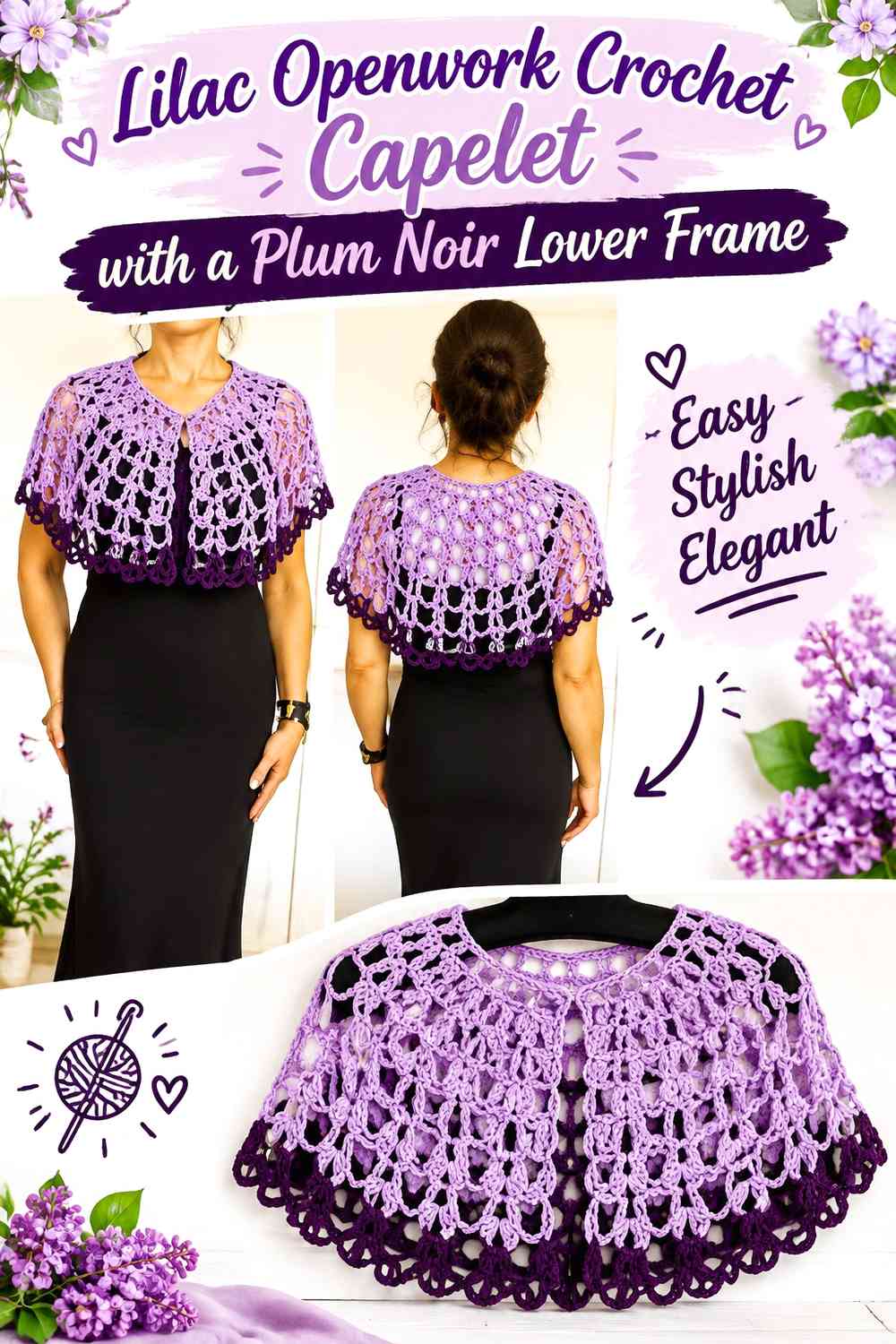
Use lilac across broad, relaxed openwork and place plum noir around the longest lower edge. This creates a clear romantic field above a strong dark boundary.
Unlike a tiny scalloped outline, the lower frame can be slightly broader, making the plum shade an obvious part of the palette without carrying the main body.
Lilac Openwork Needs Enough Space Above Plum Noir
Protect a substantial lilac center before starting the dark frame. A short capelet can become visually divided in half if the lower plum section grows too deep.
Look at the garment draped over the shoulders rather than flat because the lower edge expands across more visible width.
Plum Noir Can Give Lilac Openwork a Defined Winter Finish
A dark finishing band can make the lower silhouette easier to distinguish over pale winter clothing.
Keep the neckline mostly lilac if you want the dark visual weight concentrated toward the bottom rather than enclosing the lace on both sides.
Creator Credit: Hectanooga1
12. Lilac Romantic Crochet Capelet with Plum Noir Front Ties
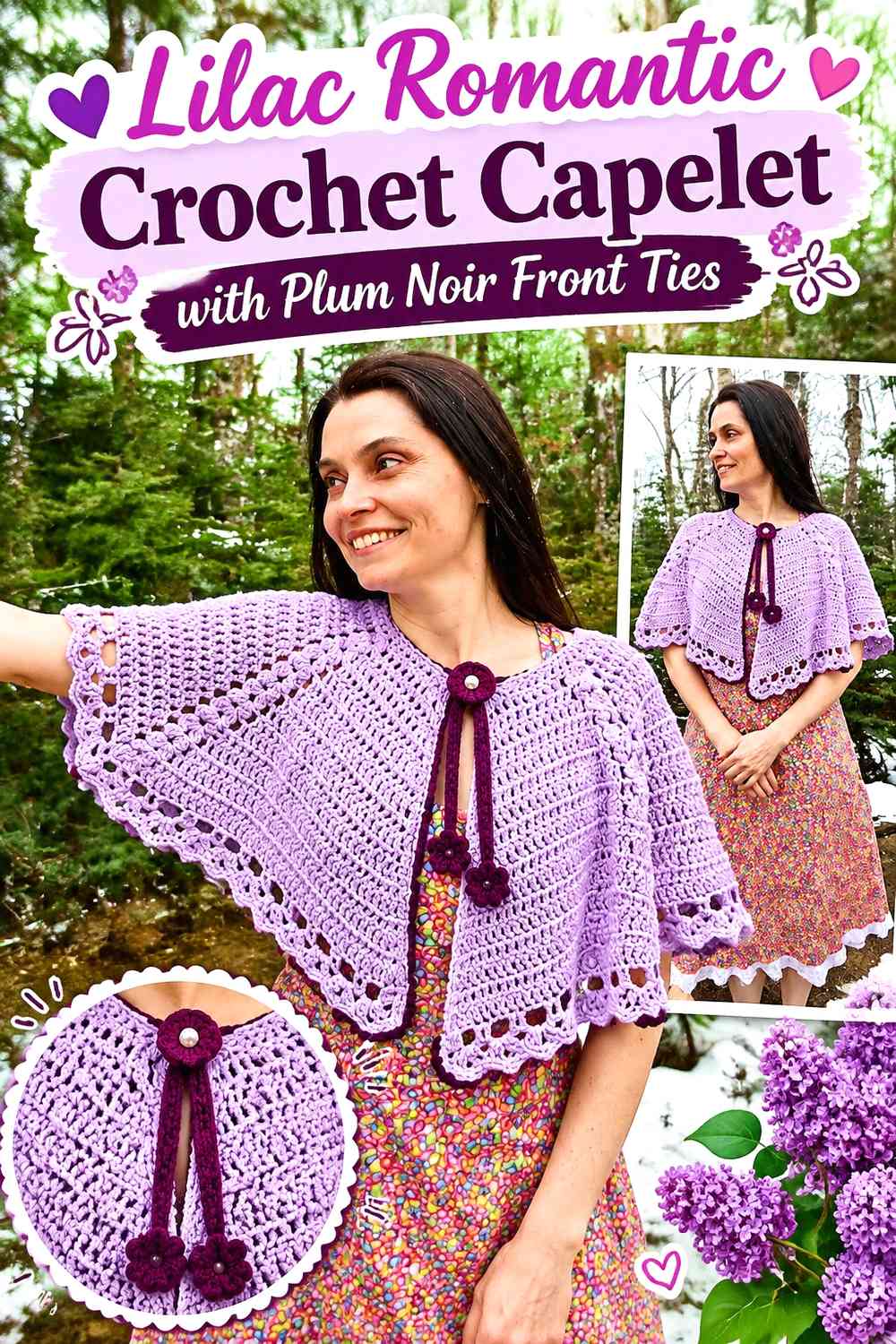
Keep the complete shoulder body lilac and place plum noir on the front ties or fastening details. This gives the palette its most concentrated dark treatment, leaving the lace almost entirely soft purple.
The ties create enough vertical contrast at the center front that an additional plum border may not be necessary.
Lilac Should Remain Broad Beside Plum Noir Front Details
Use lilac from neckline through outer edge when the goal is a light capelet. The single-color body gives the lace structure room to remain the decorative feature.
This approach is especially useful when the tutorial includes several visible stitch textures already.
Plum Noir Ties Can Center the Lilac Capelet Visually
Position the darker shade at both front edges so it guides the eye toward the closure.
If the ties are long, plum noir may occupy more visual area than expected. Judge the balance with them hanging naturally before repeating dark yarn elsewhere.
Creator Credit: Jayda InStitches
13. Plum Noir Vintage Crochet Capelet with Lilac Ribbon-Look Lace
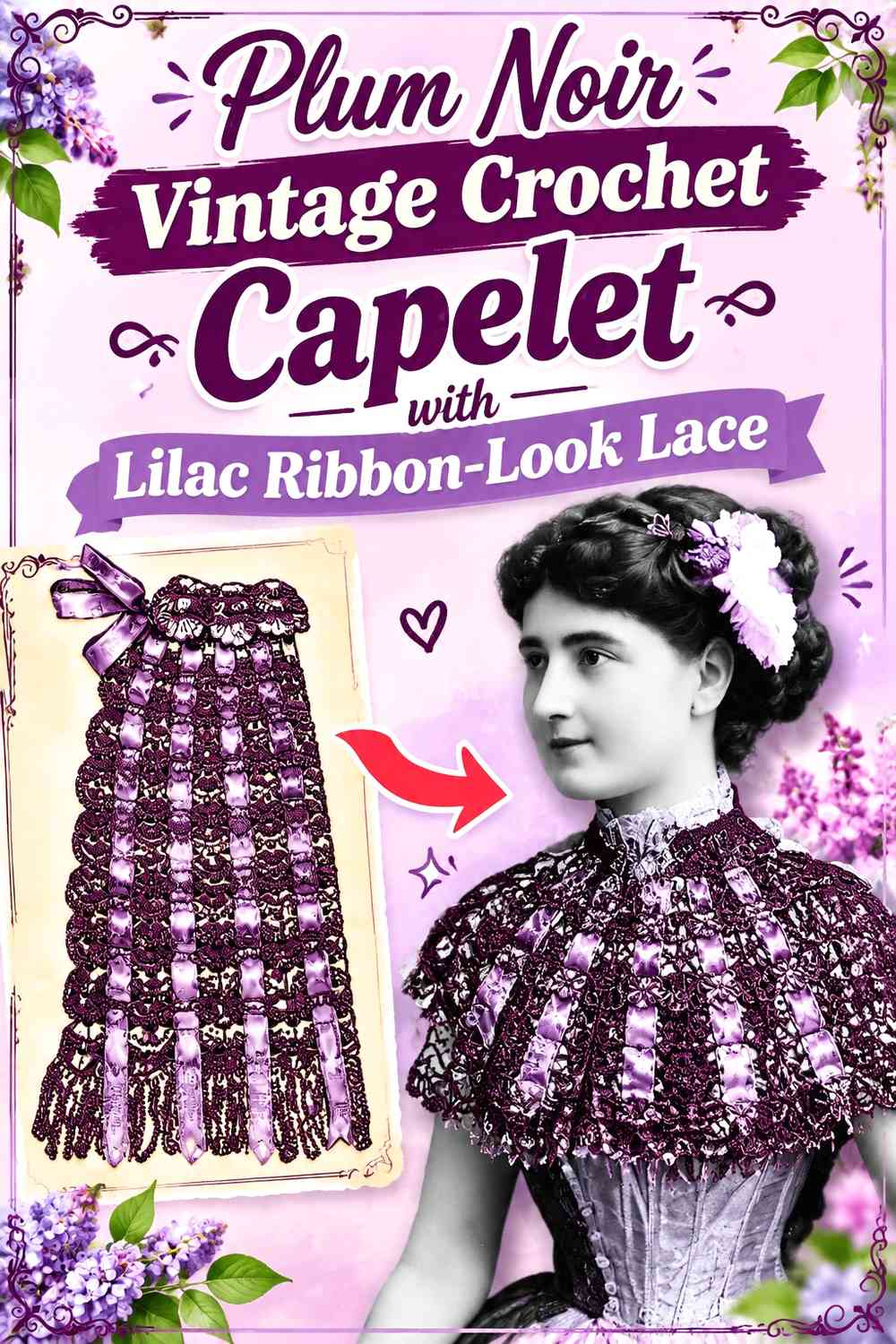
Use plum noir for the broad vintage-inspired body and introduce lilac along ribbon-like ties, woven-looking accents, or one defined lace path. The softer shade can suggest decorative trim without turning the complete shoulder cape pale.
This is useful when you want a richer winter palette with a clearly romantic historical accent.
Plum Noir Should Keep the Lilac Vintage Capelet Cohesive
Run the dark shade through most of the shoulder coverage so the silhouette stays visually connected.
If the source construction includes prominent openings or textured repeats, let them remain plum noir rather than switching yarn color repeatedly inside the same pattern.
Lilac Ribbon-Look Details Can Cross Plum Noir Selectively
Use lilac along one intentional route—a tie, narrow edging area, or repeated decorative line.
The accent becomes less distinctive if it is repeated along the neckline, hem, front opening, and every internal motif at once.
Creator Credit: Just Vintage Crochet
14. Plum Noir Hooded Crochet Collar Capelet with Lilac Lace Edging
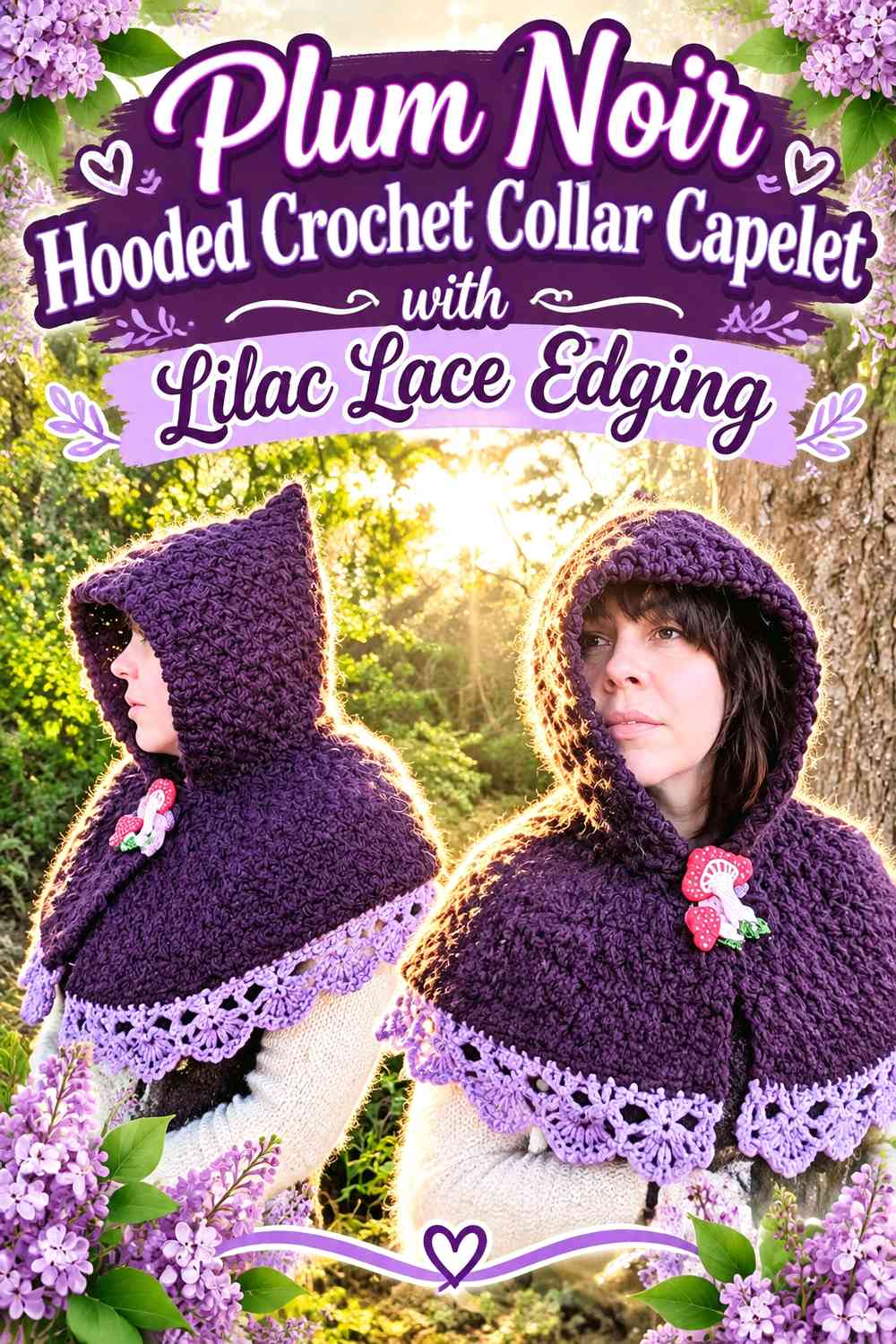
A hood or fuller collar substantially increases the amount of fabric near the head, so keep that larger structure plum noir and reserve lilac for the lower lace edge. The dark upper silhouette feels winter-ready while the lighter finishing keeps the capelet romantic.
This direction has more visual volume than a narrow lace collar, so color hierarchy becomes especially important.
Plum Noir Should Connect the Hood and Lilac Shoulder Cape
Use the same dark shade from hood through the main upper body. That continuity prevents the hood from looking like a separate accessory attached to the capelet.
Keeping plum noir around the neckline also lets the lighter edge remain farther from the face.
Lilac Can Lighten the Plum Noir Hooded Capelet Edge
Apply lilac around the outer shoulder spread where it can break up the dark garment without enlarging the already prominent hood.
If the capelet is shortened from a longer construction, reassess the lilac border depth so it remains proportional.
Creator Credit: Lizfaerie Crafts
15. Plum Noir Crochet Collar Capelet with a Lilac Shoulder Field
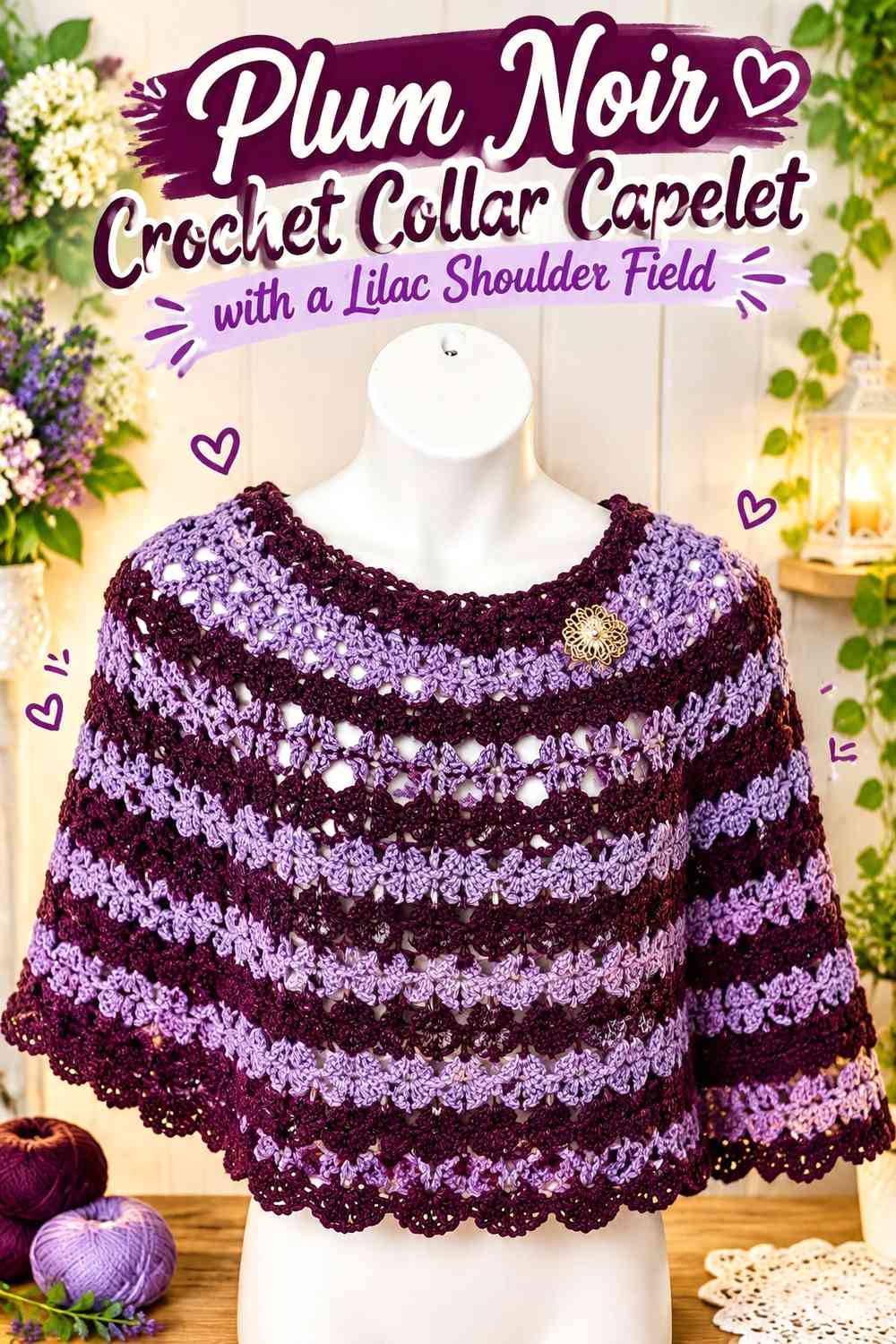
Use plum noir specifically at the collar and return to lilac for the majority of the capelet below. Compared with Idea 1, this version can support a broader, more substantial dark collar that acts as a distinct component rather than a narrow neckline band.
The wider collar creates a stronger frame near the face, so the lilac shoulder field needs enough depth to counterbalance it.
Plum Noir Can Make the Lilac Capelet Collar a Statement
Let the collar itself become clearly dark rather than restricting plum noir to a thin edge. This works when the collar has visible height, folds, or texture worth emphasizing.
Avoid another equally deep plum noir hem unless a strongly framed design is intentional.
Lilac Needs a Broad Shoulder Spread Below Plum Noir
Once the dark collar has substantial width, give lilac enough uninterrupted area across the shoulders to restore the softer romantic balance.
If the lower edge contains scallops or shells, keeping them lilac can extend the light field all the way to the silhouette.
Creator Credit: Bag-O-Day Crochet
16. Lilac Lacy Crochet Capelet with Plum Noir Side Framing
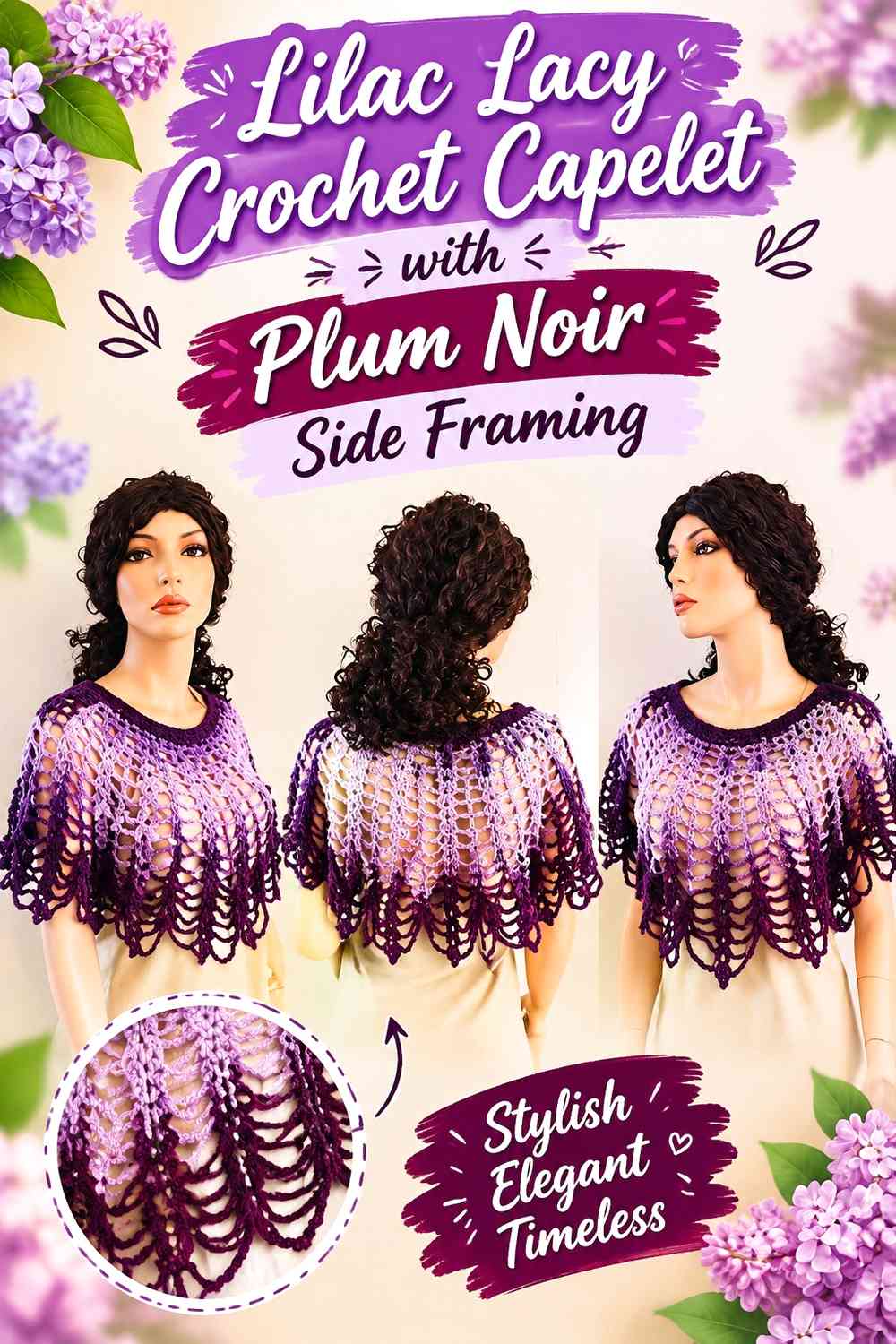
Keep lilac through the central openwork and place plum noir along side or arm-adjacent edges. This shifts the dark contrast away from both the neckline and hem, producing a different kind of framing.
The side treatment works especially well on capelet constructions that sit somewhere between a shoulder cape and a small shrug.
Lilac Should Stay Continuous Between Plum Noir Side Edges
Protect one broad lilac field across the back and shoulders. That uninterrupted area keeps the openwork cohesive even as the garment moves with the arms.
Several extra plum stripes through the center would reduce the clean side-framed effect.
Plum Noir Can Define Lilac Capelet Side Boundaries
Use the deep shade where the cape transitions toward arm openings or outer side edges. These are natural structural boundaries and therefore useful places for contrast.
Check both sides while worn so the plum noir framing appears balanced when the shoulders move.
Creator Credit: ThePatternfamily
17. Lilac and Plum Noir Broad-Band Crochet Romantic Lace Collar Capelet
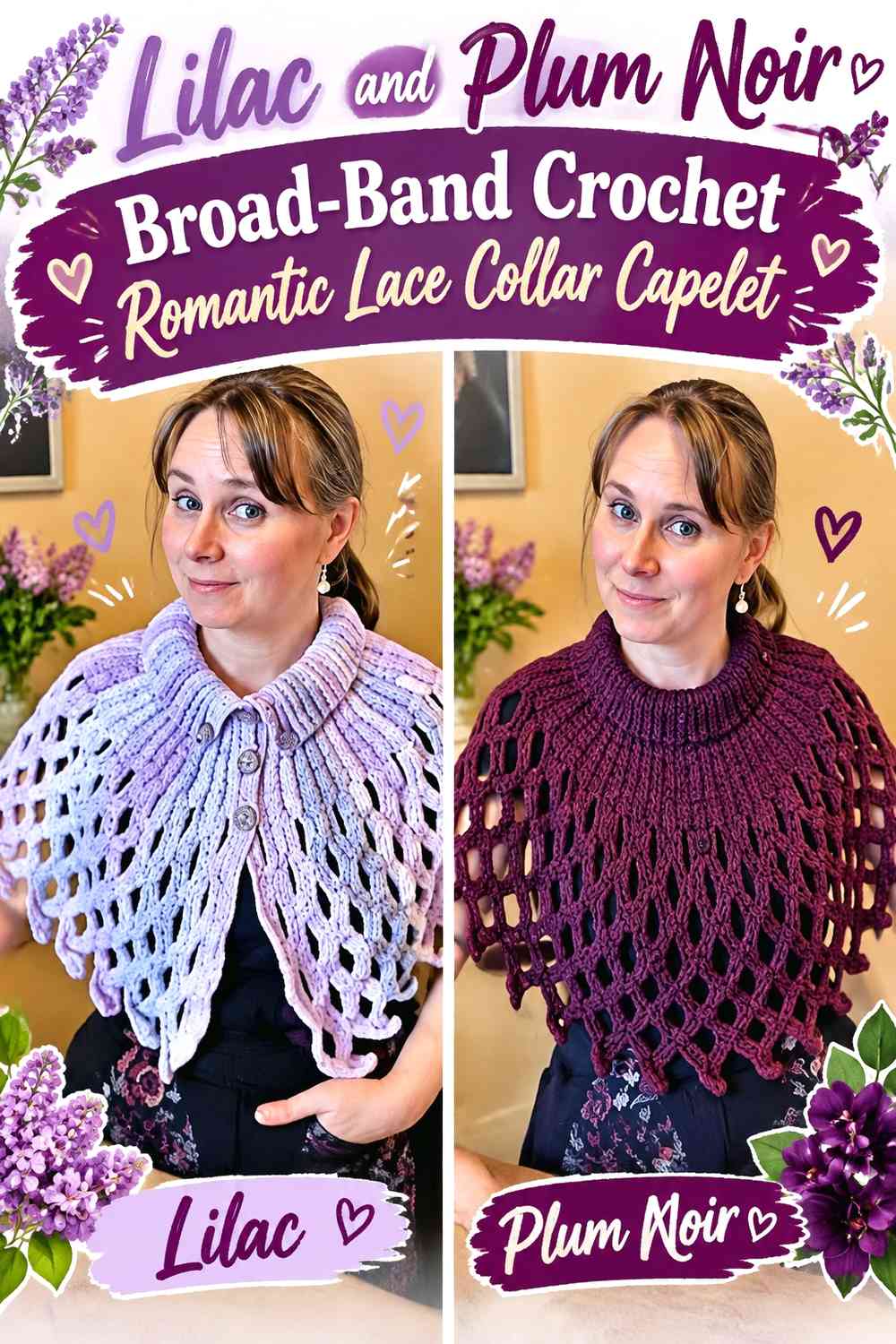
For the final idea, give lilac and plum noir a more balanced relationship through several broad sections rather than many narrow stripes. A plum noir neckline can flow into a broad lilac lace band, followed by a smaller plum section and a final lilac edge.
The broad spacing makes the two colors easy to distinguish while allowing lace texture to remain visible inside each section.
Lilac Bands Need Enough Width Beside Plum Noir
Keep the lilac sections substantial enough to carry visible openwork. If they become narrow separators between several dark areas, the capelet will still read predominantly plum noir.
Use the widest lilac area where the most intricate lace appears.
Plum Noir Bands Should Organize Lilac Rather Than Cut It Up
Limit the dark transitions to structural points where a change helps explain the shape of the capelet.
Several narrow plum lines can visually chop up delicate lilac lace, while one or two broad bands create a clearer romantic color rhythm.
Creator Credit: Sabrina Melodieuse
Choosing the Right Lilac and Plum Noir Romantic Capelet
For a lilac-dominant romantic look, Ideas 2, 4, 5, 6, 8, 12, and 16 keep the softer shade across most of the shoulder area. Plum noir is then reserved for borders, closures, ties, or side framing.
For a plum-noir-dominant winter capelet, Ideas 3, 7, 9, 10, 13, and 14 create a deeper garment with lilac used specifically to open up lace sections or soften outer edges.
Ideas 1 and 15 place most of the decision-making around the neckline. Choose a narrow plum noir neckband when you want lilac to take control quickly, or a broader dark collar when the neckline itself should become a statement feature.
Idea 17 gives the colors a more balanced presence through broad bands. Keep those sections generous rather than reducing them to frequent stripes, especially when the lace pattern is intricate.
Conclusion
Lilac and plum noir can create very different romantic crochet collar capelets depending on which shade controls the neckline, shoulder spread, and outer edge.
Use lilac across detailed openwork when you want lace to remain light and softly defined, then bring plum noir into a collar, scalloped border, tie, closure, or side frame. Reverse the hierarchy for a darker winter capelet where lilac becomes the feature that exposes shells, fans, and decorative lower sections.
Before committing to the complete color layout, drape the developing capelet over the clothing you are likely to wear underneath it. Open lace changes considerably against different background colors, and a wide contrasting border can occupy more visual space once the cape spreads over the shoulders. Follow the credited tutorials for their original construction and fit, and use the lilac-and-plum-noir placements here as independent color adaptations.
Frequently Asked Questions
Should lilac or plum noir dominate a romantic crochet lace capelet?
Lilac works well as the dominant shade when you want the openwork to feel lighter and softer. Plum noir is useful when you want a deeper winter silhouette. In either case, assign the supporting color to a specific area such as the collar, hem, ties, or lace panel.
Does plum noir make lilac crochet lace easier to see?
It can when plum noir sits beside the lilac as a border or neckline, but the clothing underneath also affects lace visibility. Lilac openwork worn over a dark garment may already have strong definition without extensive plum noir inside the lace itself.
Where should plum noir go on a lilac collar capelet?
Useful placements include the neckband, outer scalloped border, front ties, button area, side framing, or one lower lace band. Choose one or two related locations rather than outlining every section unless you specifically want a heavily framed design.
Can a lilac neckline work with a plum noir capelet body?
Yes. A lilac neckline softens the transition near the face while plum noir provides depth across the shoulders. Keep the lilac section wide enough to look intentional, particularly if the plum body begins immediately below it.
How can I keep lilac and plum noir lace from looking too busy?
Use larger uninterrupted color areas. Intricate shells, flowers, filet squares, fans, or arches already create pattern, so frequent color changes can obscure the stitch structure. Give one shade the main lace field and reserve the other for structural boundaries.
Should the plum noir lower edge be wide or narrow on a lilac capelet?
A narrow dark border gives the silhouette definition while preserving a lilac-dominant look. A broader plum noir band creates a stronger two-color garment and shifts more visual weight toward the shoulders’ outer edge. Judge the border after the capelet is draped rather than while it lies flat.
How can I substitute lilac or plum noir without losing the romantic palette?
Preserve their relationship. Choose a softened light-to-medium purple for the lilac role and a substantially deeper plum-purple for plum noir. Maintaining a clear light-versus-dark hierarchy is more important than matching any particular commercial yarn shade.