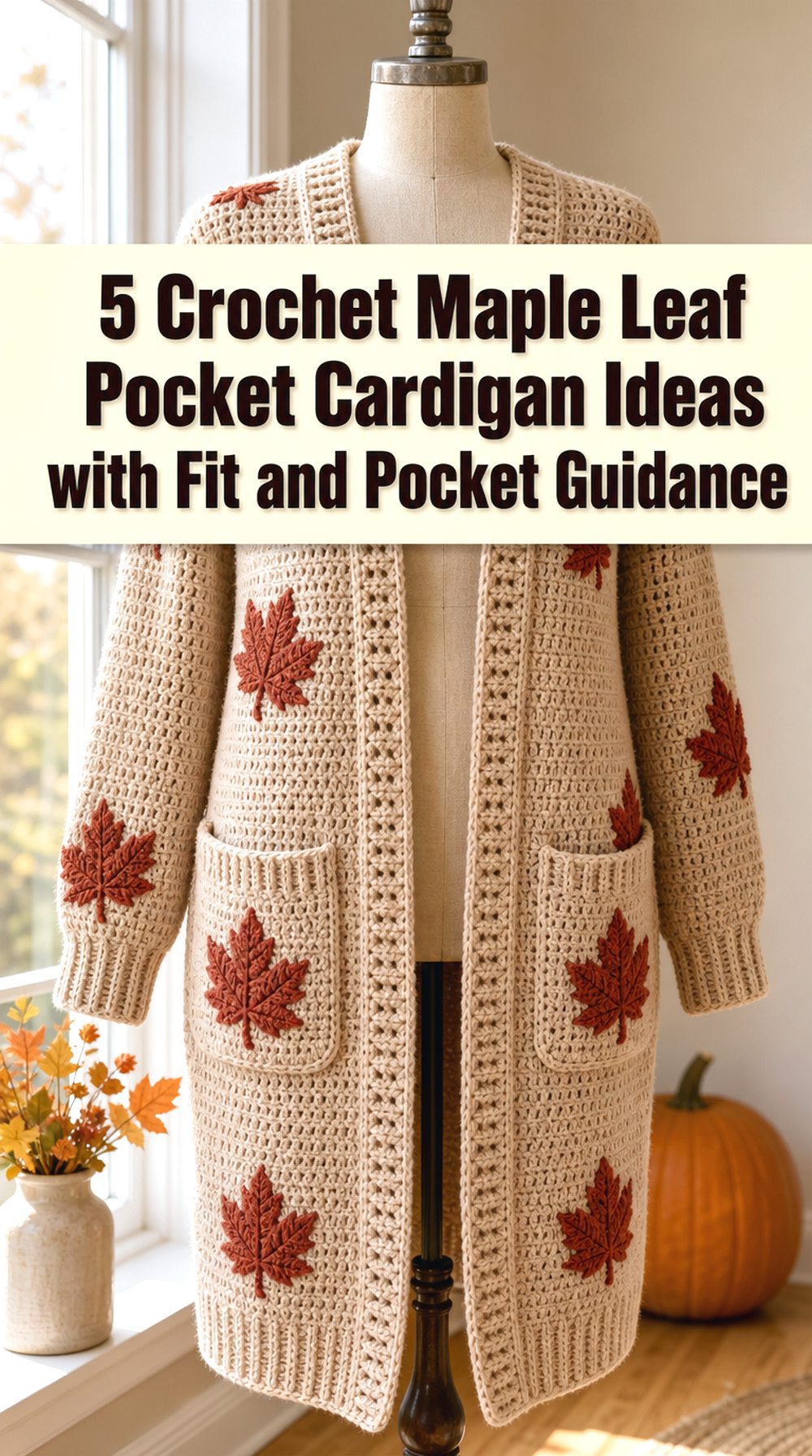

A Crochet maple leaf pocket cardigan combines seasonal imagery with practical storage, but the look can range from delicate leaf lace to bold appliqué pockets. These five ideas use verified cardigan tutorials as construction starting points, then show how maple-inspired colour, motif placement, and pocket shape can change the finished garment. You will find longline, oversized, hexagon, textured, and colour-blocked options, along with guidance on ease, sleeve comfort, pocket position, and yarn behaviour. Some linked designs already include pockets, while the maple-leaf treatment is a suggested customisation; the first tutorial supplies the leaf-inspired cardigan itself and can be adapted with added patch pockets. This guide keeps the Crochet details useful without reproducing the designers’ full instructions.
Quick List
- Crochet Maple Leaf Cardigan with Added Patch Pockets
- Crochet Maple Leaf Pocket Cardigan with Oversized Ribbing
- Crochet Maple Leaf Pocket Cardigan with Deep Textured Pockets
- Crochet Maple Leaf Pocket Cardigan with Hexagon Sleeves
- Crochet Maple Leaf Pocket Cardigan with Autumn Colour Blocks
How to Plan a Crochet Maple Leaf Pocket Cardigan for Fit and Daily Use
Start with fit rather than decoration. A pocket cardigan needs enough positive ease for comfortable layering, but excessive width can make loaded pockets swing forward. Compare the tutorial’s finished measurements with a cardigan you already wear, then check sleeve depth, body length, and front-panel width before choosing a size.
Pocket placement matters just as much. Pin finished pockets temporarily while wearing the cardigan; the opening should sit where your hand reaches naturally without pulling the front edge downward. A maple leaf appliqué adds weight and texture, so use a flat motif, secure every point, and avoid placing bulky leaves directly under the palm.
Match the yarn behaviour to the structure. Drapey yarn can suit longline or hexagon shapes, while a firmer fabric gives patch pockets better support. Swatch the cardigan stitch and the proposed leaf detail together, then wash or block the sample as the yarn label allows. Finally, keep colour contrast deliberate: rust, amber, burgundy, olive, and cream can suggest maple foliage without making every section compete.
Crochet Maple Leaf Cardigan with Added Patch Pockets
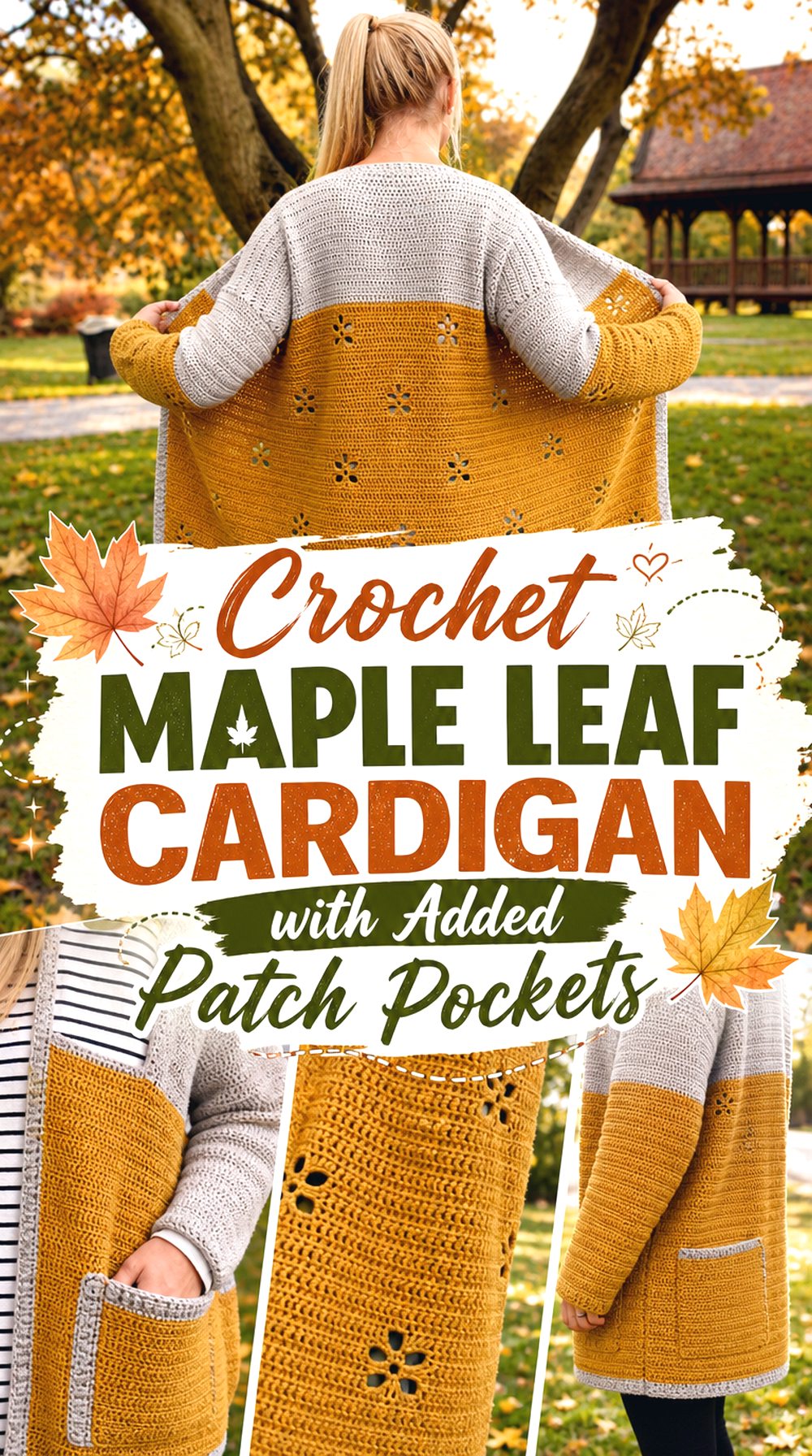
Design Details: The linked Maple Leaf Cardigan is a long, open-front garment with a solid upper section and a contrasting lower body worked in a leaf-like lace pattern. Its seamless construction continues into sleeves worked from the armholes, while ribbing finishes the garment neatly. The tutorial provides six adult sizes and stresses careful gauge and gentle blocking because the original yarn can bloom when wet.
Customisation Idea: Add two simple solid patch pockets in the upper colour, then place a small maple-leaf motif near one outside corner of each pocket. Keeping the pockets solid prevents small items from catching in the open lace. This Crochet option suits readers who want the leaf effect across the cardigan rather than only as an appliqué. Test pocket height while wearing it, and reinforce the top corners because the long body can amplify pocket movement.
Crochet Maple Leaf Pocket Cardigan with Oversized Ribbing
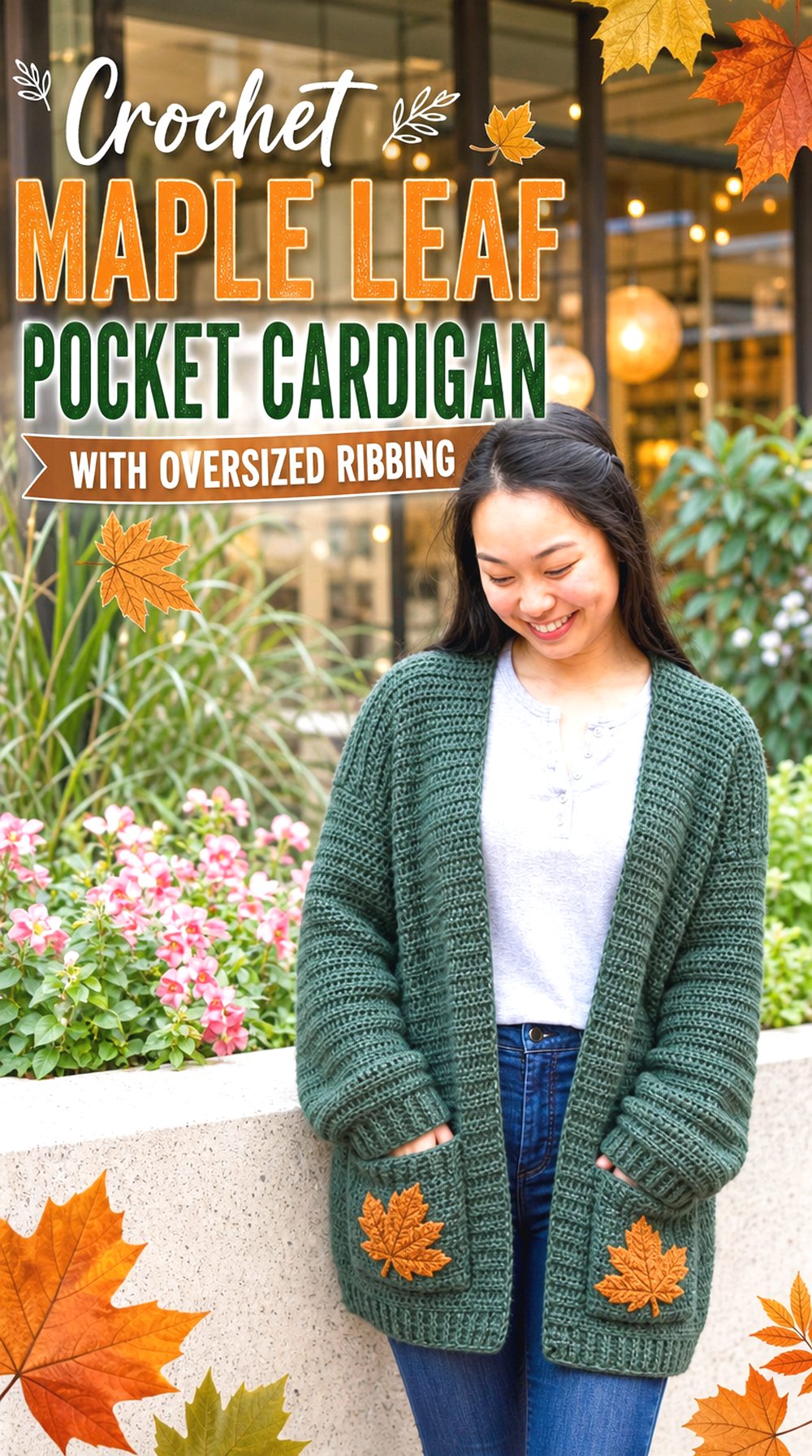
What Stands Out: The Briar Pocket Cardigan has an oversized, longline shape, loose sleeves, simple ribbing at the hem, and two generous patch pockets. The body is worked largely in one piece, while the sleeves are made separately and seamed before attachment. The tutorial also includes a video and shows how the pockets are pinned and stitched into place.
Best Use: Turn this relaxed Crochet base into a maple leaf version by working the cardigan in warm cream or charcoal and using rust, red, or gold for one flat leaf on each pocket. The roomy fit works well over everyday layers, but large pockets plus appliqués can add visual bulk at the hip. Keep the leaf smaller than the pocket opening, secure every pointed tip, and match the motif yarn weight to the cardigan fabric so the pocket front stays balanced.
Crochet Maple Leaf Pocket Cardigan with Deep Textured Pockets
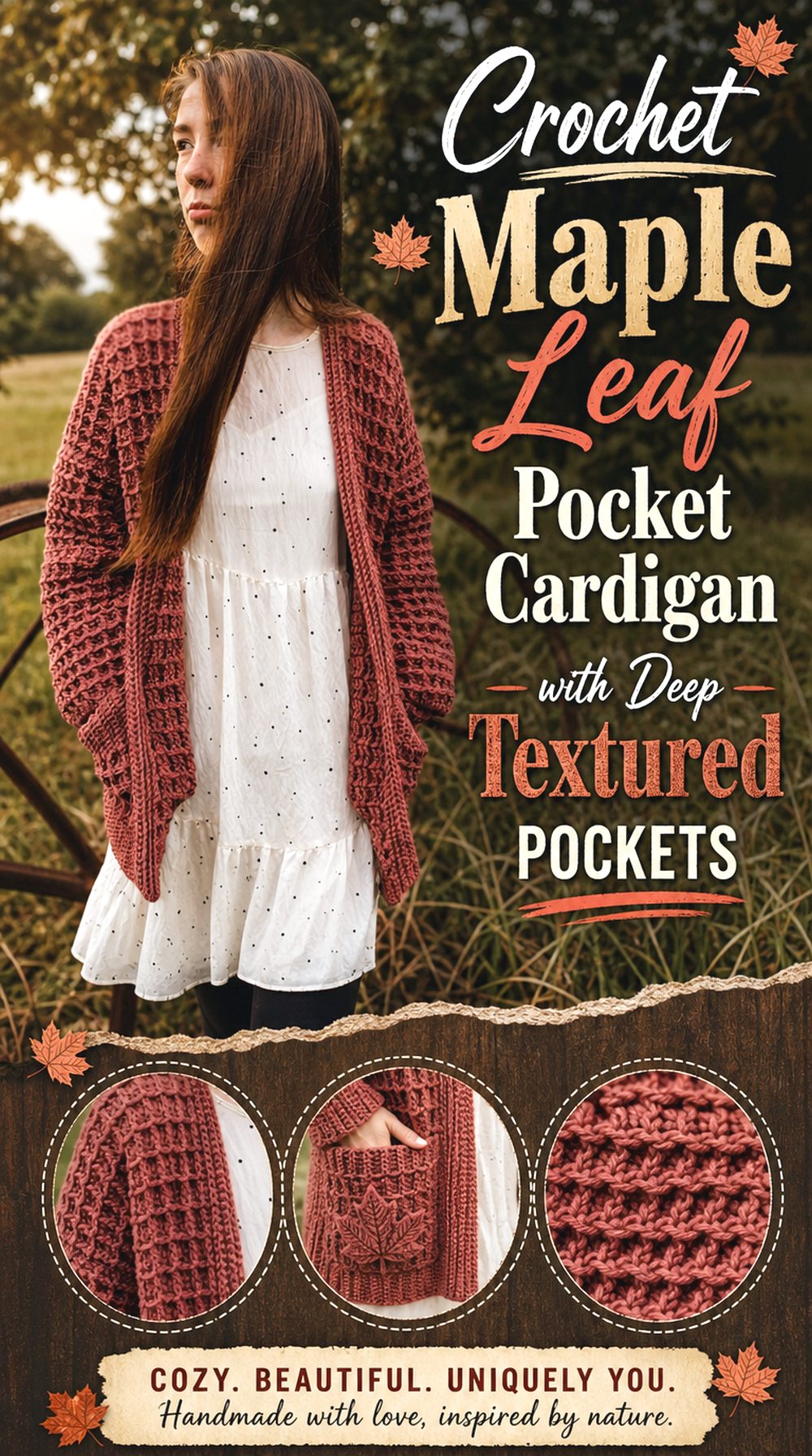
Construction Focus: The Fómhar Pocket Cardigan is designed with an oversized fit, loose sleeves, pronounced ribbed bands, and deep front pockets. Its back and two front panels are worked separately from the bottom upward, and the sleeves also begin at ribbed cuffs before the pieces are seamed. Double crochet and front-post texture give the surface a strong vertical rhythm.
Colour Direction: This Crochet base already carries an autumn identity, so a restrained maple treatment works well. Use one leaf shade for the pocket motifs and repeat it in the cuffs or front edging rather than scattering many colours across the body. Deep pockets are useful for hands and small essentials, but they may sag if filled heavily. Place appliqués on the upper outside portion, away from the hand-resting area, and consider a discreet lining when the chosen yarn feels especially stretchy.
Crochet Maple Leaf Pocket Cardigan with Hexagon Sleeves
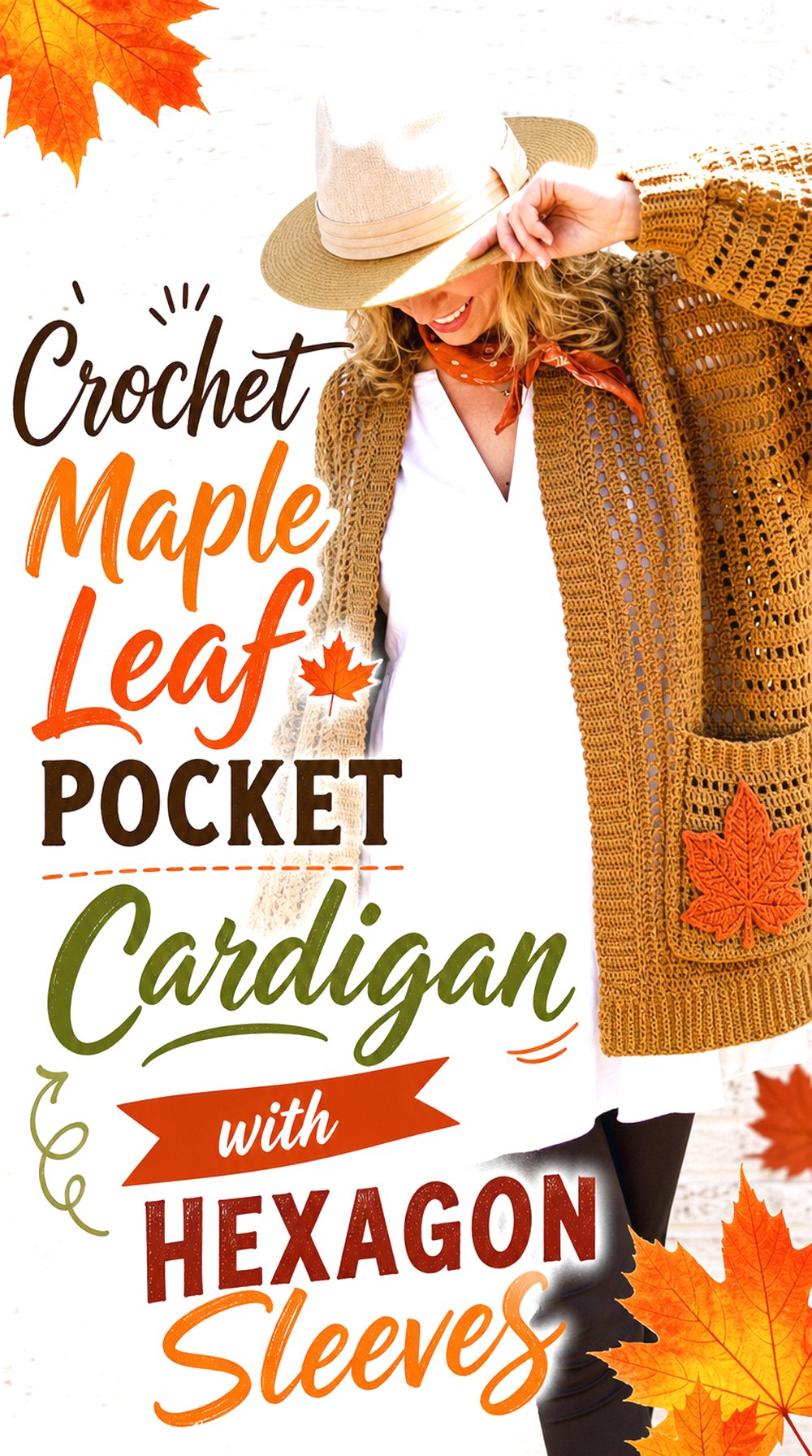
Why It Works: The Day Date Cardigan begins with two large Crochet hexagons that fold into the body and sleeves. The finished design includes roomy bishop sleeves and patch pockets, and the free instructions are divided into two parts with a supporting video. The tutorial is written in six adult sizes and encourages trying the shape on as it develops.
Customisation Idea: Use a quiet main colour and make the pockets the seasonal focus. A single maple leaf centred on each pocket can echo the geometry without competing with the open, repeating fabric. This shape suits readers who enjoy relaxed sleeves and less conventional construction. However, hexagon fabric can grow as rows are added, so check sleeve and body proportions before finishing. Block the pocket and leaf separately, pin them symmetrically, and confirm the openings remain level when the cardigan is worn.
Crochet Maple Leaf Pocket Cardigan with Autumn Colour Blocks
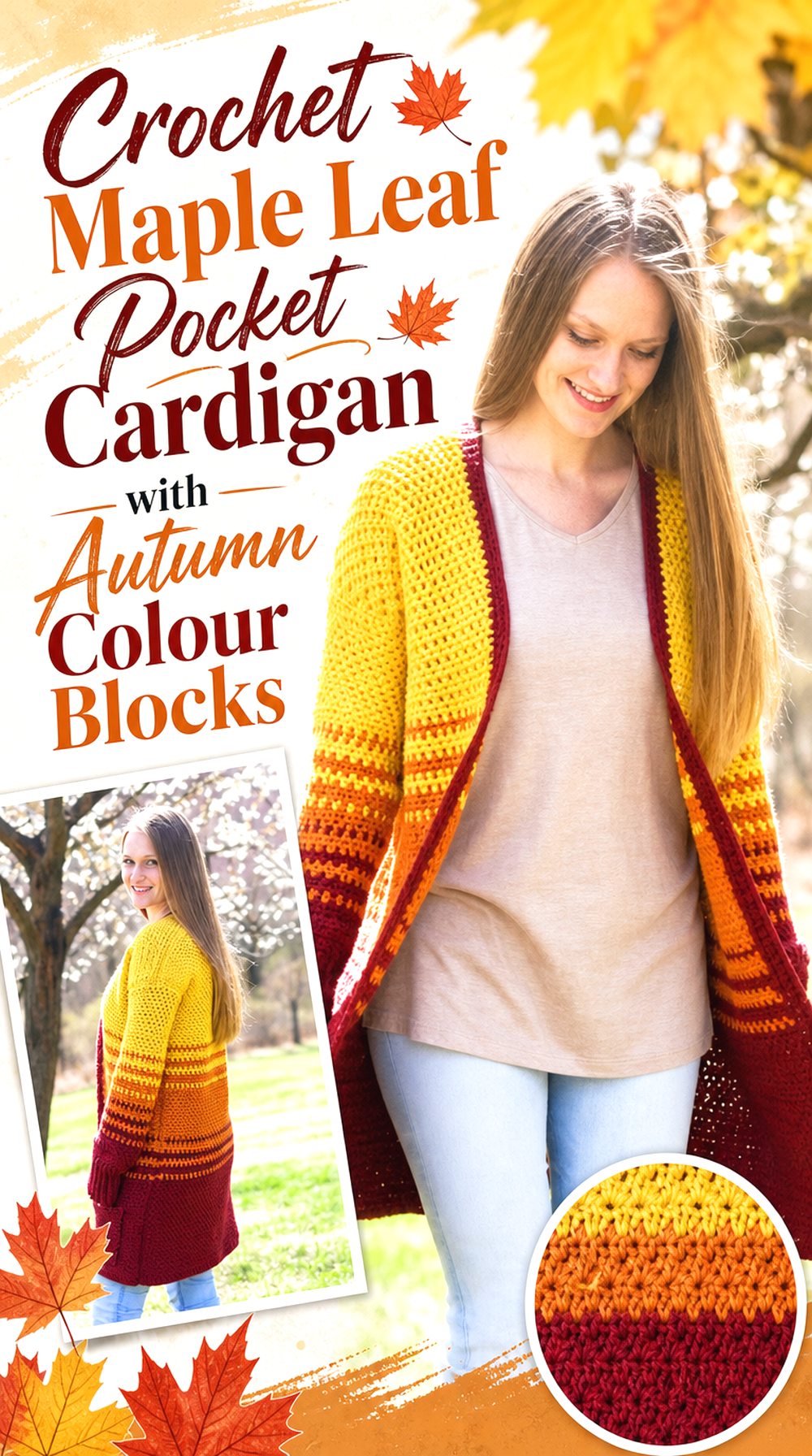
Design Details: The Holly Cardigan uses three colours in irregular horizontal sections, separate back and front panels, shaped sleeves with ribbed cuffs, and two patch pockets. The free tutorial covers adult sizes through 5X and describes a classic fit with extra room. It also suggests using the pocket pieces as a gauge check before starting the larger panels.
Practical Point: Its colour-block layout makes this Crochet cardigan a natural base for maple shades. Choose burgundy, mustard, and a quiet neutral, then keep the leaf motif in the darkest colour so it remains visible across changing stripes. Because the pockets are attached after assembly, their location can be adjusted to the wearer. The trade-off is a busy surface: simplify the leaf outline and avoid contrasting borders if the body already has several colour changes. Align both pockets with the same stripe before sewing.
Useful Crochet Notes
Stabilising the Pocket Opening
A maple leaf pocket can become decorative but less practical when the motif pulls on the fabric. Keep the leaf below the opening, sew around every point without puckering, and reinforce the pocket’s top corners. For stretchy yarn, a narrow lining or firm edging may help the opening retain its shape during regular use.
Checking Fit Before Sewing
Try the unfinished cardigan over the layers you expect to wear, then pin the pockets in place. Check that the fronts hang evenly, the sleeves allow comfortable movement, and your hands enter the pockets naturally. Pocket position that looks balanced on a flat garment may sit too low or too far outward on the body.
Planning Autumn Colour
Maple-inspired colour does not require every shade of fall. Choose one neutral for most of the cardigan, one dominant leaf colour, and one smaller accent. Repeat the leaf shade at the cuffs, ribbing, or pocket edging for cohesion. Strong contrast highlights the motif, while closely related shades create a quieter, more wearable effect.
Conclusion
Choose the original leaf-lace cardigan when the maple theme should shape the whole garment. Select the Briar or Fómhar bases for deep, relaxed pockets, the Day Date for hexagon construction and roomy sleeves, or the Holly for colour-block planning. Before committing, compare ease and length with a favourite cardigan, then decide whether the leaf should be a subtle pocket accent or the main visual feature.
FAQs
Should the maple leaf be crocheted into the pocket or sewn on later?
A separate appliqué is usually easier to position and replace, especially on an already completed pocket. An integrated colourwork leaf can look flatter, but it requires careful charting and tension control. Whichever method you choose, keep the pocket opening flexible and secure all pointed sections so they do not curl or catch.
What yarn works well for a Crochet maple leaf pocket cardigan?
Use a yarn that suits the linked cardigan’s gauge and intended drape. A smoother yarn shows leaf edges and stitch texture clearly, while very fuzzy yarn may soften the motif. For pockets, avoid substituting an unusually heavy yarn unless you also strengthen the attachment points and check how the added weight affects the fronts.
How large should the pockets be?
The opening should comfortably admit the wearer’s hand, while the pocket depth should hold small essentials without hanging below the cardigan hem. Make a paper or scrap-yarn template first, pin it to the front, and test it while standing. Oversized pockets can be useful, but they may add bulk and stretch when loaded.
How can I stop maple leaf points from curling?
Block the leaf according to the yarn label, shaping each point gently rather than overstretching it. Sewing the motif evenly around its outline can also keep the edges flatter. If the points still curl, use smaller leaves, a firmer yarn, or a simpler silhouette with fewer narrow tips instead of adding heavy stiffener.
Can I add a lining to the pockets?
Yes. A lightweight fabric lining can reduce stretching, keep small objects from pushing through open stitches, and protect the back of an appliqué. Cut the lining slightly smaller than the pocket, finish its raw edges, and hand-sew it inside without catching the cardigan front. Check that the lining does not restrict the opening.