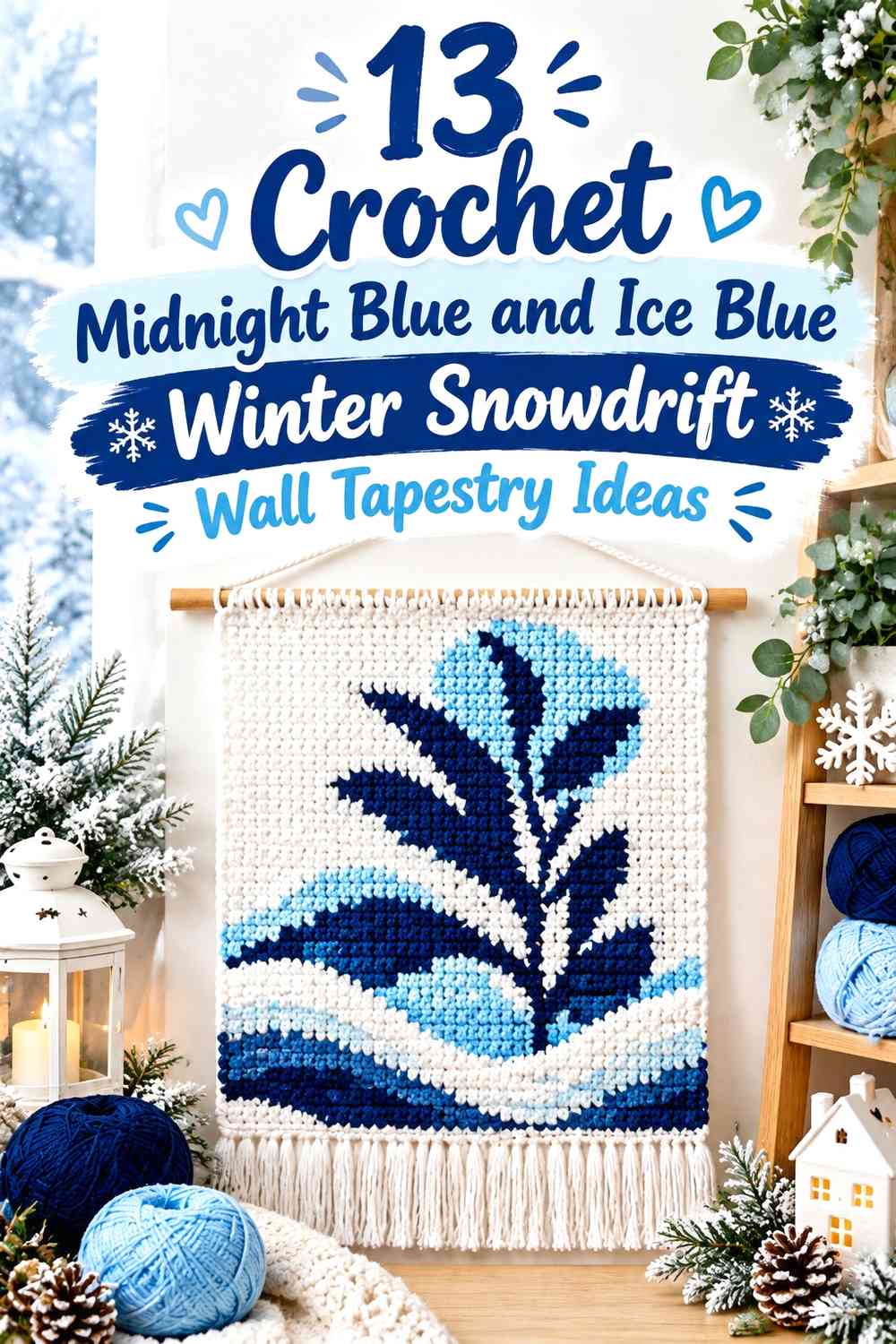

Midnight Blue and Ice Blue are especially useful for a winter wall tapestry because they can create depth without requiring a large palette. Midnight Blue can suggest the darkest part of a winter sky, distant shadows, or the spaces between drifts, while Ice Blue can define snowbanks, frost, snowflakes, and raised details.
The main challenge is separation. Two blues can look noticeably different as yarn but blend once they are worked into dense crochet, viewed from across a room, or displayed against a similarly colored wall. A good snowdrift tapestry therefore needs a clear light-and-dark hierarchy as well as deliberate color placement.
The tutorials paired with these ideas support different crochet wall-hanging, tapestry, motif, graph, and decorative construction concepts. The Midnight Blue and Ice Blue palettes below are independent adaptations, so the original creators do not necessarily use these exact colors.
Quick List
- Midnight Blue Sky and Ice Blue Layered Snowdrift Crochet Wall Tapestry
- Midnight Blue Pixel Sky and Ice Blue Snowbank Crochet Wall Tapestry
- Midnight Blue Branch and Ice Blue Cascading Snowflake Crochet Wall Tapestry
- Midnight Blue Hoop and Ice Blue Frost-Ring Crochet Wall Tapestry
- Ice Blue Tapered Snowbank and Midnight Blue Fringe Crochet Wall Tapestry
- Midnight Blue Geometric Drift and Ice Blue Textured Crochet Wall Tapestry
- Midnight Blue and Ice Blue Granny-Square Snowdrift Crochet Wall Tapestry
- Midnight Blue Graphic Field and Ice Blue Snowdrift Silhouette Crochet Wall Tapestry
- Midnight Blue Layered Drift and Ice Blue Ridge Crochet Wall Hanging
- Ice Blue Snow-Halo and Midnight Blue Mandala Crochet Wall Tapestry
- Midnight Blue Winter Vine and Ice Blue Frost-Flower Crochet Wall Tapestry
- Midnight Blue Winter Field and Ice Blue Snowflake Focal Crochet Wall Tapestry
- Midnight Blue Night Medallion and Ice Blue Snow-Ring Crochet Wall Tapestry
Build Snowdrift Depth With Midnight Blue and Ice Blue
For a recognizable snowdrift effect, give the two blues different visual jobs. Midnight Blue is most effective when it forms the deeper background, shadowed valleys, narrow dividing lines, or upper sky. Ice Blue can then move forward as the lighter snow surface.
Avoid alternating the colors mechanically in equal stripes unless a striped result is intentional. Snowdrifts usually read more clearly when Ice Blue areas change in width and when Midnight Blue appears between or above them as negative space.
Before starting a large tapestry, place sample swatches together and view them from the distance where the finished wall hanging will normally be seen. If Midnight Blue and Ice Blue merge from several feet away, preserve the same palette concept but increase the light-dark difference between the two yarns.
Decide Where Ice Blue Snow Ends and Midnight Blue Shadow Begins
Curved boundaries are useful for a snowdrift theme because they stop a rectangular tapestry from feeling like a stack of horizontal color bands. The boundary can be created through a graph, stepped colorwork, motifs, scalloped sections, textured bands, or overlapping decorative elements.
Ice Blue does not need to cover every area representing snow. A small Midnight Blue section beneath an Ice Blue ridge can suggest a deeper fold between two drifts and make the lighter section more noticeable.
Keep Midnight Blue and Ice Blue Texture Visible on the Wall
Texture changes how much visual weight a color carries. An Ice Blue raised detail may appear much more prominent than the same amount of Ice Blue worked flat, while Midnight Blue texture can become subtle under low room lighting.
Use the strongest texture where you want the eye to pause. On a snowdrift tapestry, that may be the edge of a snowbank, a snowflake, a frosted motif center, or the lower fringe rather than every section of the hanging.
1. Midnight Blue Sky and Ice Blue Layered Snowdrift Crochet Wall Tapestry
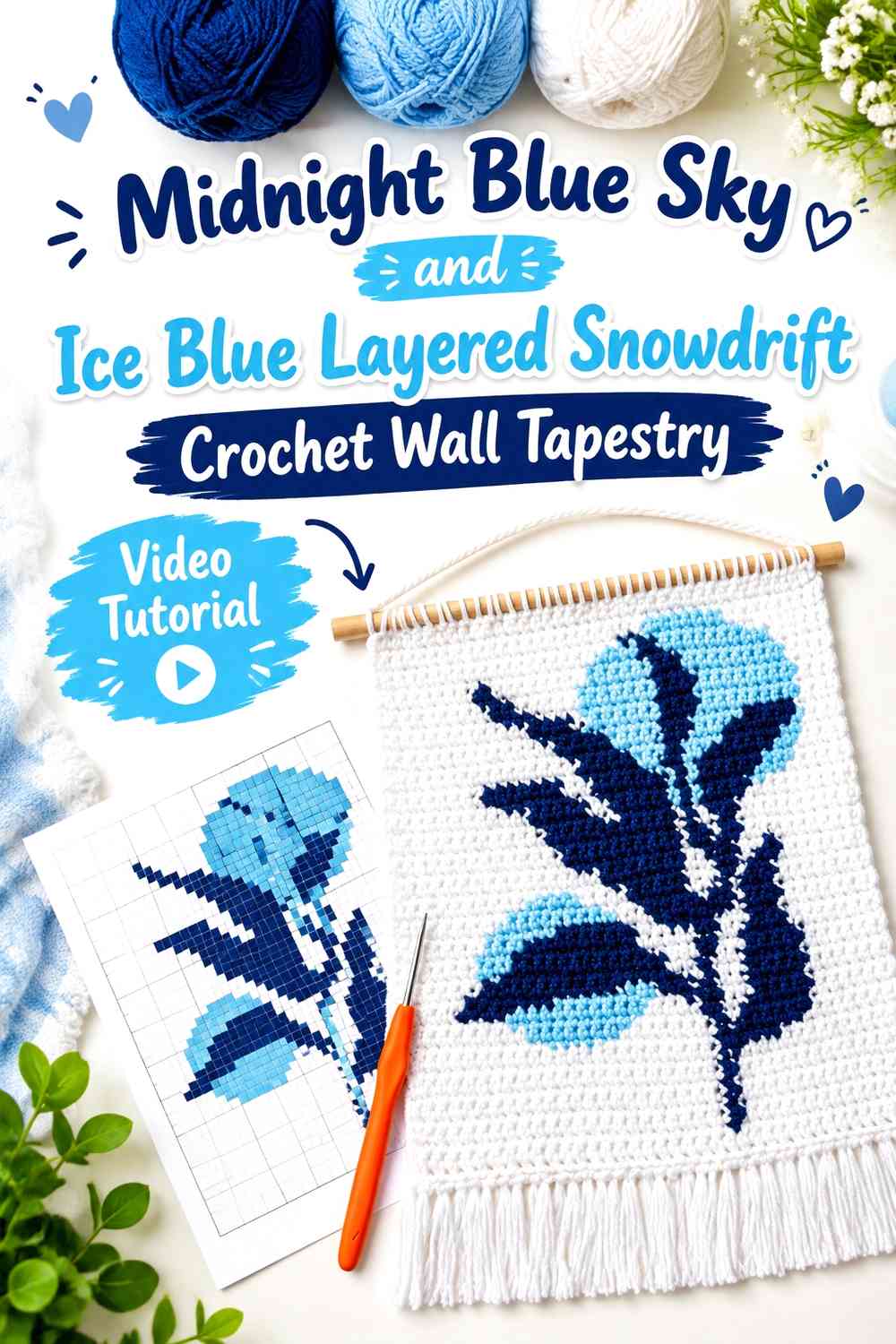
This version treats Midnight Blue as an uninterrupted winter sky and lets Ice Blue rise through the lower portion in uneven snowdrift layers. Keeping the darkest color above the drifts gives the tapestry a clear horizon, while small Midnight Blue gaps between Ice Blue layers prevent the snow from becoming one featureless block.
Let Midnight Blue Occupy More of the Upper Tapestry
Give Midnight Blue enough uninterrupted space for the lighter snowdrifts to read as distinct shapes. If Ice Blue climbs too far into every part of the background, the composition can lose the simple dark-sky-versus-light-snow relationship.
A broad Midnight Blue area also gives you space to decide later whether one small Ice Blue winter detail is needed above the horizon.
Stagger Ice Blue Snowdrifts Instead of Making Straight Bands
Vary where the Ice Blue sections rise and fall across the tapestry. Even small changes in width can separate one snowbank from another more effectively than several perfectly even horizontal stripes.
Where two Ice Blue drifts meet, leave a controlled Midnight Blue indentation or shadow line so their outlines remain visible from across the room.
Use Ice Blue Fringe Only Where It Extends the Snowdrift
If the tapestry includes fringe, Ice Blue along the lower portion can visually continue the snowy foreground beyond the crocheted panel. A fully mixed Midnight Blue and Ice Blue fringe creates a busier finish, so reserve Midnight Blue fringe for deliberate shadow sections if you want the snowbank shape to remain recognizable.
Creator Credit: Happy Heartsy
2. Midnight Blue Pixel Sky and Ice Blue Snowbank Crochet Wall Tapestry

A graphed or pixel-style tapestry gives the snowdrift edges a more angular character. Midnight Blue can form the majority of the grid, while Ice Blue moves upward in stepped shapes resembling banks of windblown snow. This is a useful direction when you prefer graphic winter decor over soft lace.
Use Midnight Blue Blocks to Separate Ice Blue Snowbanks
Keep narrow Midnight Blue sections between larger Ice Blue forms where two drifts would otherwise merge. In a grid-based design, even a small change in the boundary can make one snowbank read as being behind another.
Avoid scattering isolated Midnight Blue blocks through the Ice Blue snow unless they have a clear role as shadow or separation.
Keep Ice Blue Steps Large Enough to Read From a Distance
Very small Ice Blue changes can disappear when the wall hanging is viewed across a room. Larger stepped sections give the snowdrift silhouette a stronger outline and let the color contrast do more of the work.
Check the planned image at a reduced size before crocheting the full panel. If the drift is recognizable when the image is small, the major color masses are probably doing their job.
Creator Credit: Knitting With Katherine
3. Midnight Blue Branch and Ice Blue Cascading Snowflake Crochet Wall Tapestry

Instead of filling a rectangular surface, this idea uses Ice Blue snowflakes descending from a Midnight Blue support or connecting structure. Midnight Blue creates the dark winter framework, while the lighter motifs appear to float downward like snow accumulating into an irregular drift.
Make Ice Blue Snowflakes the Lightest Repeated Element
Keeping the snowflakes consistently Ice Blue creates an immediate hierarchy. The viewer can identify the pale motifs before noticing the darker suspension lines and support details.
If every snowflake alternates between Midnight Blue and Ice Blue, the snowy cascade becomes less distinct. Use Midnight Blue motifs only when you intentionally want a few shadowed flakes farther back.
Use Midnight Blue Between Ice Blue Snowflakes for Depth
Midnight Blue joining cords, connectors, or small secondary details can visually push those elements behind the Ice Blue motifs. This prevents the support system from competing with the snowflakes.
Arrange the Ice Blue motifs at varied heights rather than forming one straight lower edge. The uneven bottom silhouette strengthens the accumulated-snowdrift effect.
Creator Credit: Esperanza y Ana Celia Rosas – Tejiendo Perú
4. Midnight Blue Hoop and Ice Blue Frost-Ring Crochet Wall Tapestry
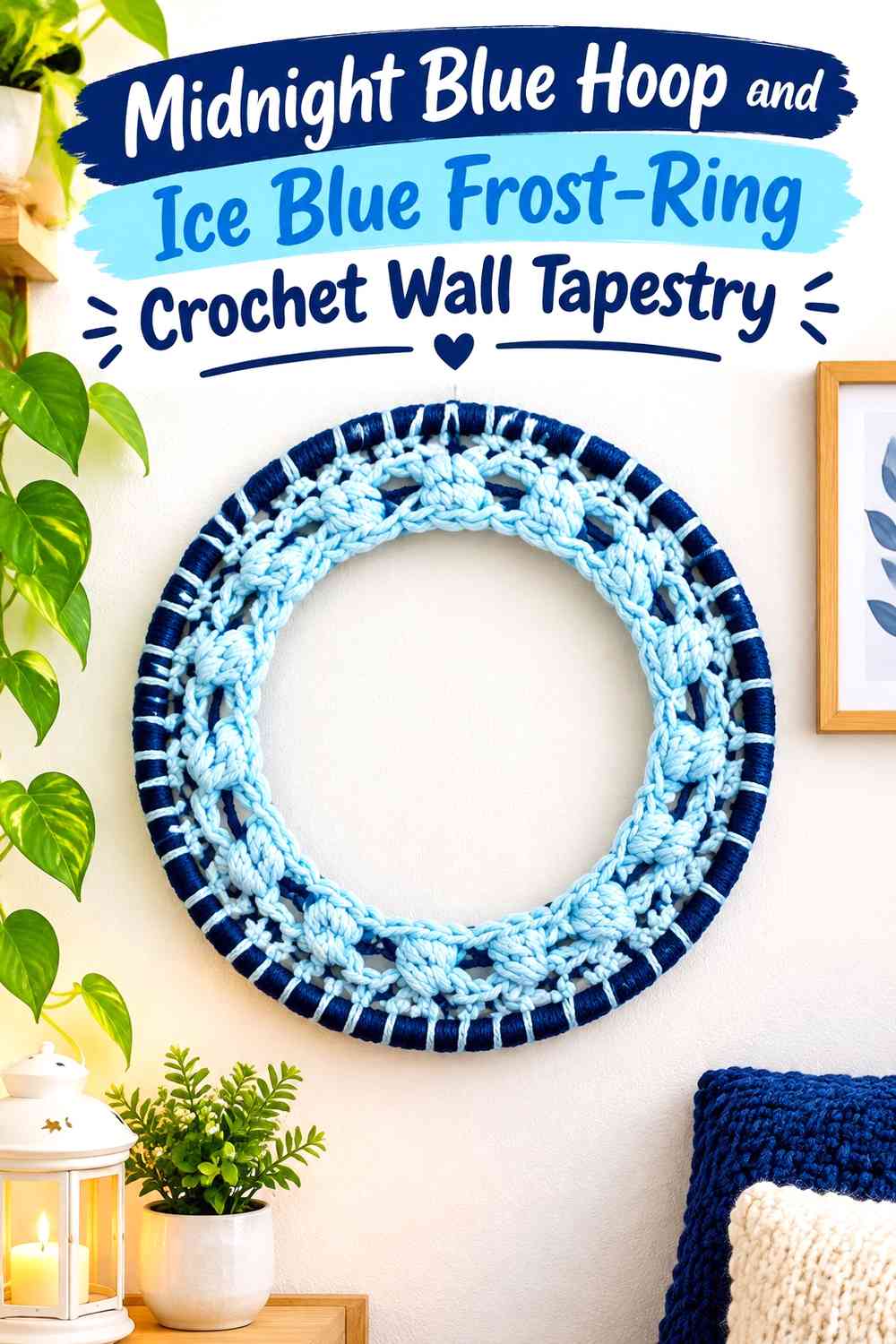
A circular wall piece changes the snowdrift theme from a landscape into a framed winter scene. Midnight Blue can dominate the inner field while Ice Blue follows part of the circular perimeter like frost collecting around a window.
Keep Midnight Blue Open Around the Ice Blue Frost Ring
Do not feel obligated to cover the full circumference with equal Ice Blue decoration. Concentrating the lighter color along the lower and side portions can suggest frost or snow accumulating naturally around the frame.
Leaving some Midnight Blue uninterrupted at the top also stops the circular composition from becoming visually uniform.
Let Ice Blue Texture Break the Smooth Midnight Blue Field
Use the lighter shade where raised, lacy, or dimensional details need to remain visible. Against a mostly Midnight Blue center, even a limited Ice Blue textured section can become the focal point.
If both colors contain equally strong texture everywhere, the circular shape may feel crowded. Give one area priority.
Creator Credit: Crochet With Julie
5. Ice Blue Tapered Snowbank and Midnight Blue Fringe Crochet Wall Tapestry

A tapered wall hanging can turn the entire silhouette into a descending snowbank. Ice Blue can dominate the crocheted body while Midnight Blue appears higher in the piece and returns in selected fringe, producing a lighter overall tapestry than the earlier dark-sky versions.
Let Ice Blue Dominate the Tapered Snowbank
Because the lower silhouette already narrows, a broad Ice Blue area helps the taper look like one continuous bank of snow instead of several unrelated sections. Keep major color interruptions toward the upper half if you want the lower point to remain visually light.
Openwork within Ice Blue can supply variation without requiring another color change.
Use Midnight Blue Fringe as Snowdrift Shadow
Midnight Blue fringe placed beneath selected Ice Blue areas can suggest the dark underside of a drift. Avoid alternating every strand if you want the foreground to remain calm.
A grouped Midnight Blue section creates a clearer shadow than evenly distributing the dark color throughout the fringe.
Creator Credit: You Should Craft
6. Midnight Blue Geometric Drift and Ice Blue Textured Crochet Wall Tapestry
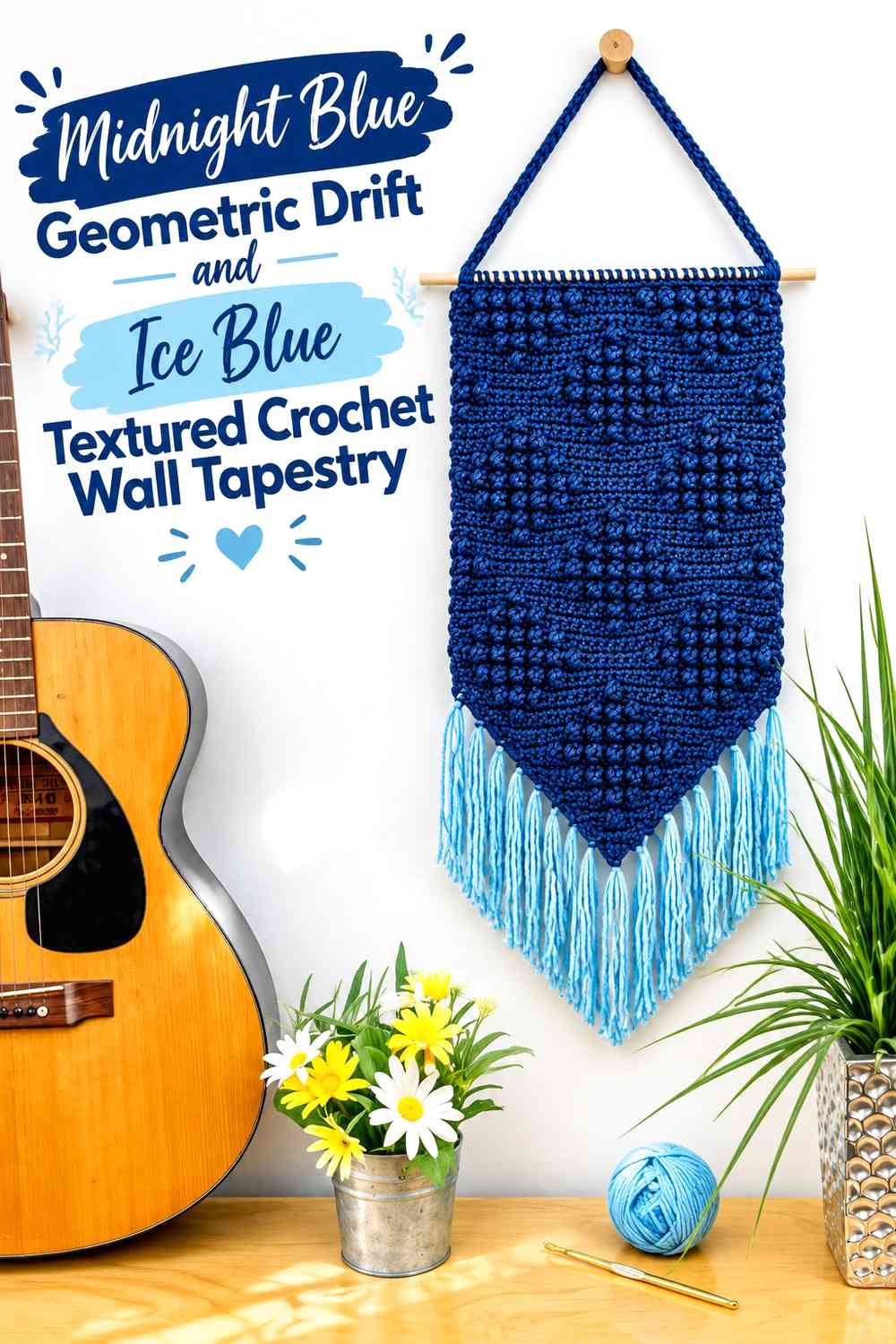
This approach interprets snowdrifts through geometric texture rather than literal scenery. Midnight Blue establishes the deep background, while Ice Blue highlights chevrons, raised bands, or other directional sections that can suggest wind-shaped ridges.
Put Ice Blue on the Strongest Snowdrift Texture
When a section already projects visually because of its texture, Ice Blue can reinforce that prominence. Use it on selected ridges rather than every textured area so there is an obvious foreground.
Midnight Blue can remain on flatter or quieter sections, giving the Ice Blue ridge room to advance visually.
Repeat Midnight Blue Between Ice Blue Ridges
Consistent Midnight Blue intervals keep several Ice Blue bands from combining into one large pale mass. These dark breaks can function like troughs between wind-shaped drifts.
If the tapestry begins looking striped rather than snowy, change the widths of the Ice Blue sections instead of adding another color.
Creator Credit: Jo to the World Creations
7. Midnight Blue and Ice Blue Granny-Square Snowdrift Crochet Wall Tapestry

Granny squares let the snowdrift emerge from placement rather than continuous colorwork. Midnight Blue squares can fill the upper field, while Ice Blue squares gradually climb upward from the bottom in an irregular stepped formation.
Arrange Midnight Blue and Ice Blue Squares Before Joining
Lay the complete color arrangement out first so the transition does not accidentally become a straight diagonal or checkerboard. Concentrate Ice Blue near the bottom, then let a smaller number of pale squares rise into the Midnight Blue field.
Photographing the layout can help you notice isolated squares that interrupt the snowdrift silhouette.
Use Midnight Blue Joins When Ice Blue Squares Need Separation
A Midnight Blue joining color can outline Ice Blue squares and keep adjacent pale motifs individually visible. This is particularly useful where several Ice Blue squares form one large snowbank.
For a softer, more continuous drift, use Ice Blue joins within the pale section and return to Midnight Blue only where the snow meets the sky.
Keep Ice Blue Motif Centers Consistent Within the Snowbank
If the squares contain multiple internal color areas, repeat Ice Blue at comparable points throughout the lower motifs. Too many different internal arrangements can compete with the larger snowdrift shape created by the square placement.
Creator Credit: HayHay Crochet
8. Midnight Blue Graphic Field and Ice Blue Snowdrift Silhouette Crochet Wall Tapestry
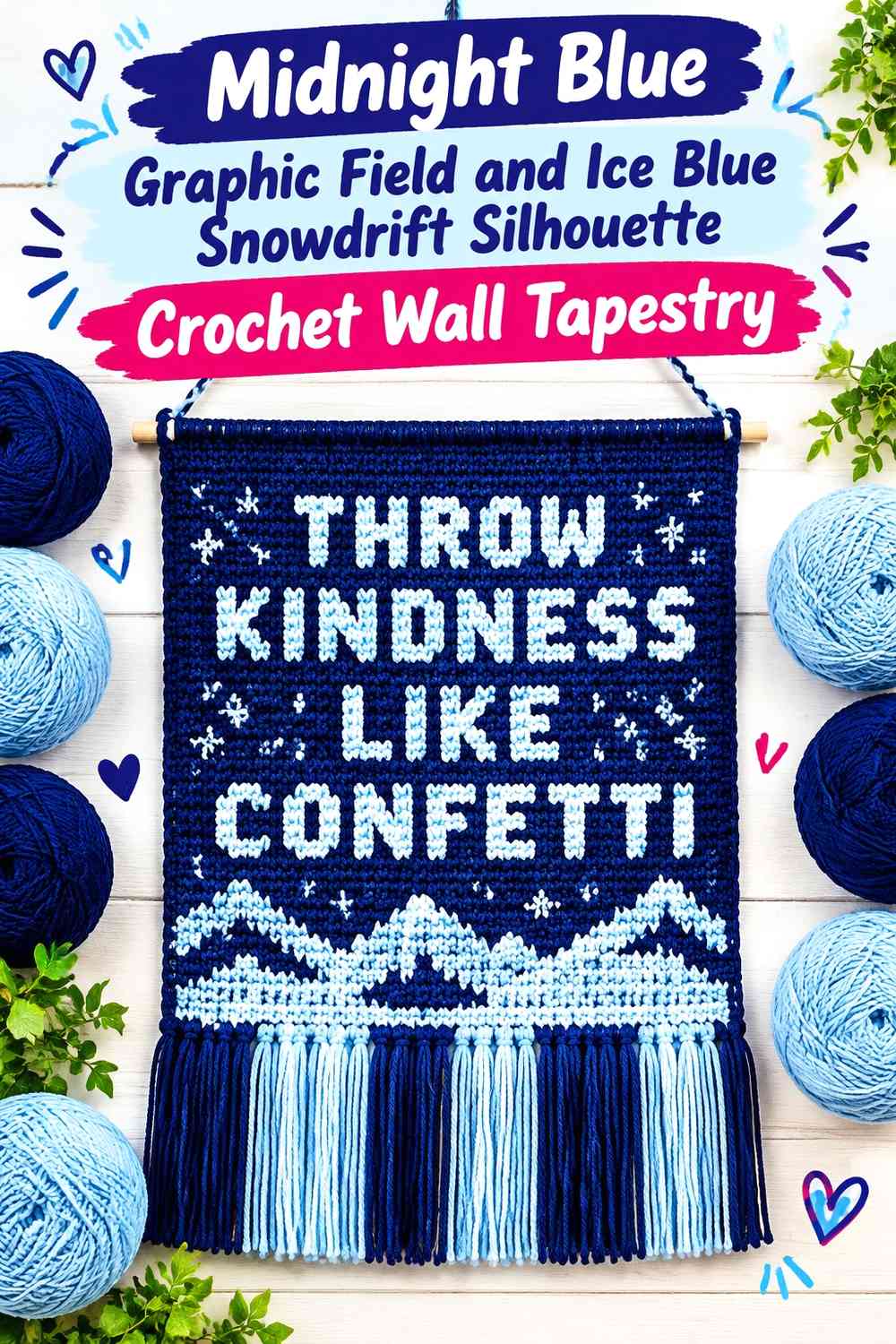
A graphic tapestry can reduce the winter landscape to one Ice Blue silhouette crossing a Midnight Blue field. This is one of the cleanest options when you want the snowdrift shape itself to be the focal point rather than additional snowflakes, motifs, or decorative borders.
Keep Midnight Blue Continuous Around the Ice Blue Silhouette
The Ice Blue shape needs enough dark area above and around it to maintain a readable edge. Small Midnight Blue interruptions inside the snowbank should be used only when they represent deliberate shadow pockets.
A mostly continuous background also makes the tapestry easier to coordinate with other winter decorations because the image remains simple.
Give the Ice Blue Snowdrift an Uneven Upper Edge
A perfectly level boundary reads as a stripe. Raising and lowering the Ice Blue silhouette at deliberate points makes the lower section feel more like accumulated snow.
Keep the changes large enough to notice from normal viewing distance instead of relying on tiny adjustments that disappear once the piece is hung.
Creator Credit: Loops and Love Crochet
9. Midnight Blue Layered Drift and Ice Blue Ridge Crochet Wall Hanging
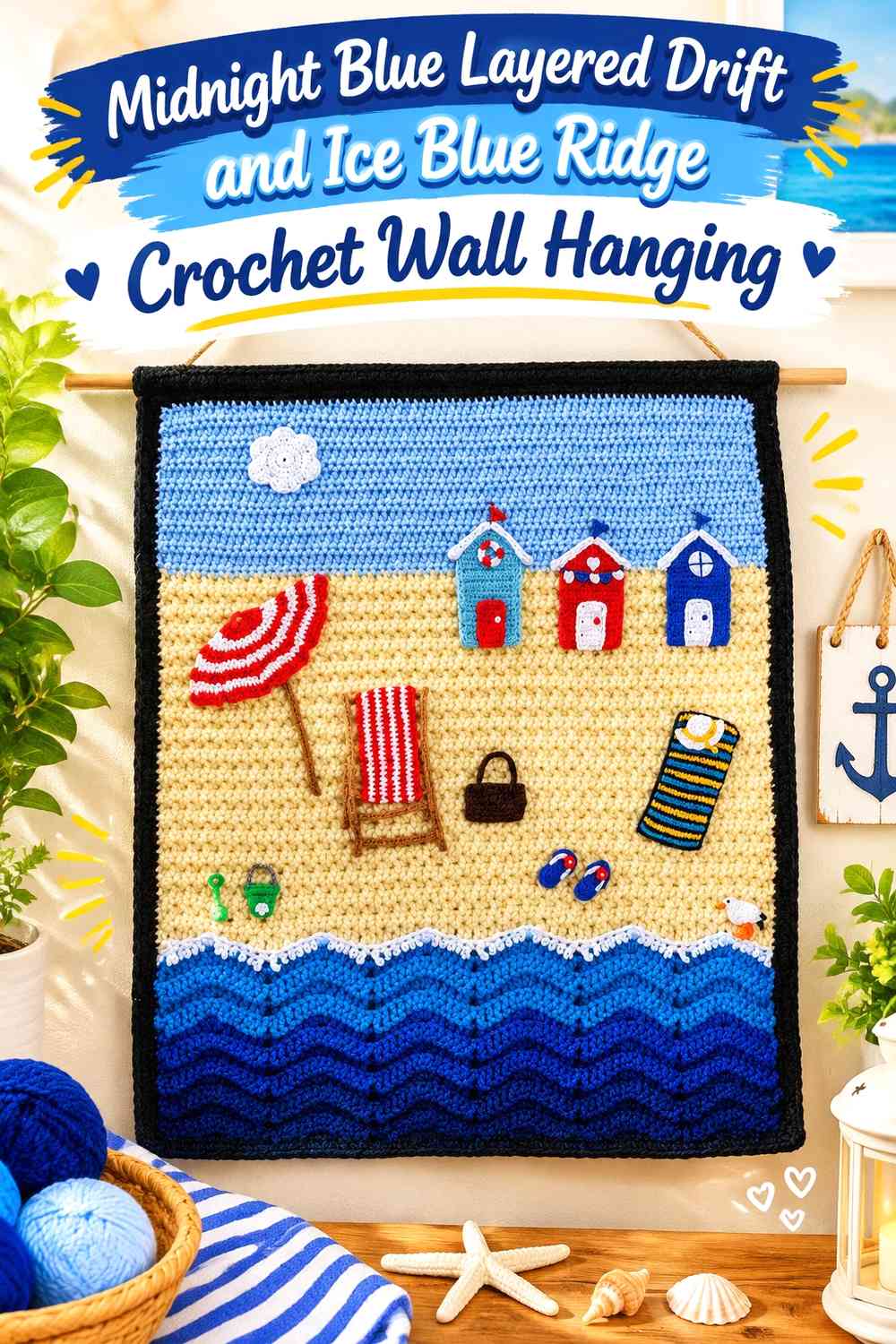
Layered wave-like sections can be recolored as winter snowdrifts. Use Midnight Blue in the recessed or lower-contrast bands and Ice Blue along selected ridges so the construction reads as overlapping snow rather than water.
Turn Ice Blue Ridges Into the Front Snowdrifts
Place Ice Blue on the sections you want to appear closest to the viewer. Repeating it along prominent edges can make several layers feel connected without turning the entire surface pale.
If every ridge uses Ice Blue equally, create depth by allowing some Midnight Blue sections to overlap visually between them.
Use Midnight Blue to Deepen the Gaps Between Ice Blue Layers
Dark bands are useful where one drift tucks beneath another. Keep these areas narrower than the primary Ice Blue snow surfaces if you want a predominantly snowy result.
Near the top, expanding Midnight Blue can gradually transform the layered foreground into a winter-night background.
Creator Credit: Kerri’s Crochet
10. Ice Blue Snow-Halo and Midnight Blue Mandala Crochet Wall Tapestry
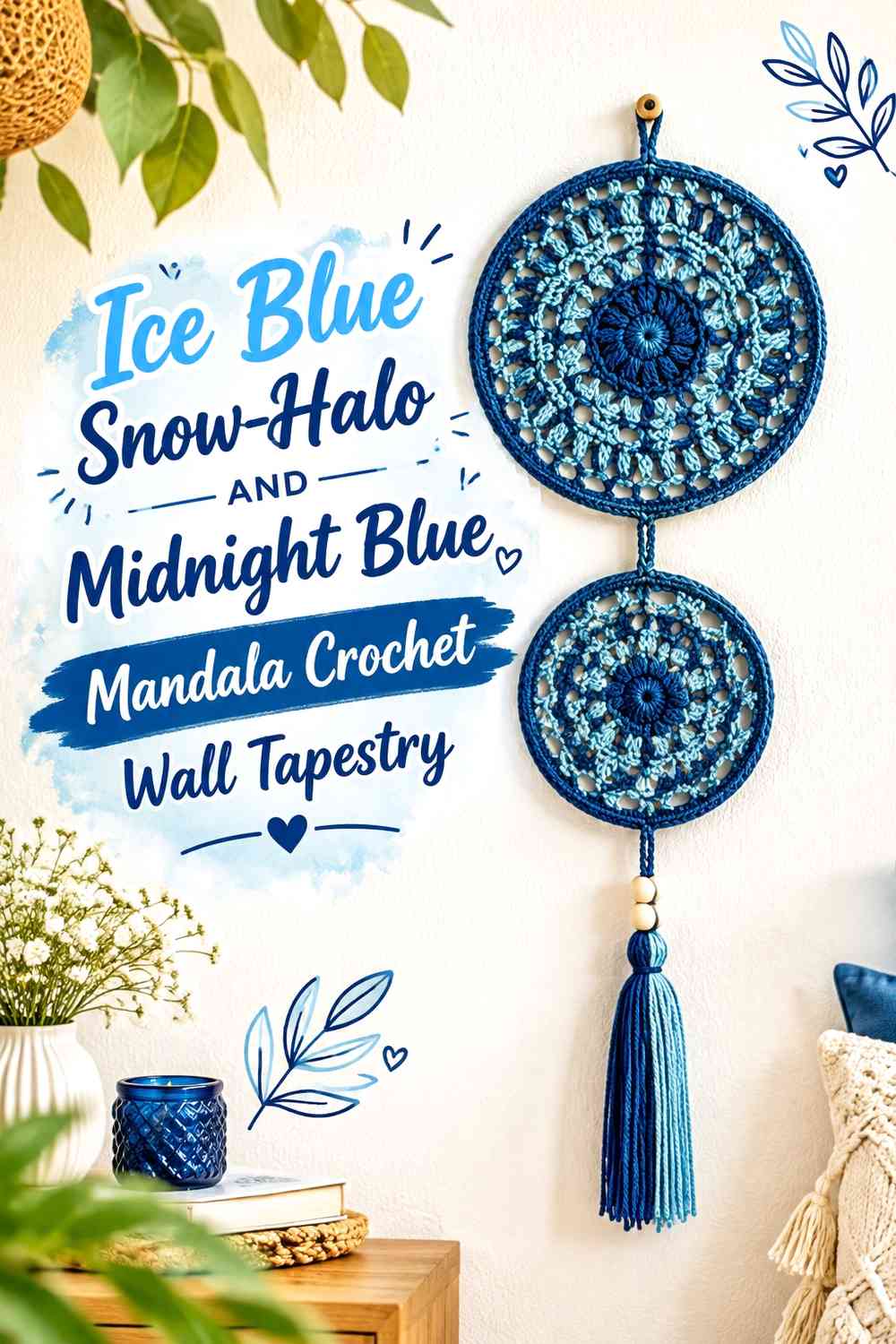
A mandala-style hanging can turn the snowdrift palette into a radial winter design. Ice Blue can form a pale central halo, while Midnight Blue moves outward through darker circular sections. This creates a snow-and-night effect without relying on a traditional landscape.
Keep Ice Blue Concentrated Near the Snow-Halo Center
A concentrated Ice Blue center gives the eye a clear starting point. Allow Midnight Blue to become increasingly visible farther out rather than alternating both colors evenly through every section.
This light-center-to-dark-edge transition is particularly useful when the tapestry will hang on a pale wall because the Midnight Blue perimeter can preserve the overall circular silhouette.
Use Midnight Blue to Frame the Ice Blue Mandala Details
Once Midnight Blue becomes dominant, a few repeated Ice Blue details can connect the outer area back to the center. Keep them small enough that the light halo remains the main focal zone.
If the Ice Blue repeat becomes too frequent toward the edge, the radial depth will flatten.
Creator Credit: mum2makes
11. Midnight Blue Winter Vine and Ice Blue Frost-Flower Crochet Wall Tapestry

A floral hanging can be pushed firmly into winter by changing the visual hierarchy. Midnight Blue vines, stems, or connecting forms become the shadowed framework, while Ice Blue flowers read as frost clusters rather than spring blossoms.
Make Ice Blue Flowers Stand Out From Midnight Blue Connections
Keep most of the connecting structure Midnight Blue so each Ice Blue flower has a defined dark surround. This is more effective for a frost effect than dividing every flower equally between the two blues.
If the floral forms are small, the stronger light-dark difference becomes especially important.
Group Ice Blue Flowers Like Snow Accumulation
Instead of spacing every Ice Blue flower at exactly equal intervals, use a few closer groupings where you want the appearance of accumulated frost. Balance those clusters with quieter Midnight Blue areas.
The irregular distribution keeps the wall hanging connected to the snowdrift theme even though the underlying motifs are botanical.
Creator Credit: Brunaticality
12. Midnight Blue Winter Field and Ice Blue Snowflake Focal Crochet Wall Tapestry

A larger snowflake can become the main image rather than one element in a repeated cascade. Place an Ice Blue snowflake against a Midnight Blue field and use smaller pale details sparingly near the lower portion to connect the focal motif with the snowdrift theme.
Give the Ice Blue Snowflake Enough Midnight Blue Space
Avoid crowding the central Ice Blue motif with many additional pale details. A wide Midnight Blue surround increases separation and allows the snowflake silhouette to remain recognizable at a distance.
This is especially useful if the snowflake itself contains open spaces that reveal the background.
Echo Ice Blue Below the Midnight Blue Snowflake Field
Repeat a limited amount of Ice Blue near the bottom as a shallow snowbank, fringe accent, or secondary motif. This prevents the central snowflake from feeling disconnected from the lower edge of the tapestry.
Keep the repeat smaller than the focal motif so the viewer still has one clear visual anchor.
Preserve Midnight Blue Between the Ice Blue Focal Areas
A dark gap between the large snowflake and lower snow section creates depth. Connecting them with continuous Ice Blue would turn two distinct layers into one tall pale shape.
Creator Credit: Blue Star Crochet
13. Midnight Blue Night Medallion and Ice Blue Snow-Ring Crochet Wall Tapestry

This final version reverses the light-center mandala idea. Midnight Blue fills the medallion center like a winter-night focal point, while Ice Blue expands around it in one or more outer rings resembling snow collecting along the edge.
Anchor the Center With Midnight Blue
Keeping the central medallion Midnight Blue gives the hanging a dark, concentrated focal point. Do not introduce large Ice Blue areas too early if you want that center to retain its visual weight.
A few small Ice Blue details can bridge the transition without changing which shade dominates the middle.
Let Ice Blue Expand Toward the Outer Snow Ring
Increase the visual share of Ice Blue as the design moves outward. This creates the impression that the darker center is being surrounded by frost or snow rather than simply alternating two colors.
The outermost Ice Blue area can also help separate the hanging from a dark-painted wall.
Return to Midnight Blue Only When the Ice Blue Edge Needs Definition
If the Ice Blue perimeter disappears against a pale wall, a narrow Midnight Blue finishing detail can restore the circular outline. On a darker wall, leaving Ice Blue at the outermost edge may provide stronger separation.
Judge this final decision against the actual wall rather than the yarn alone.
Creator Credit: Crochê no ponto
Choosing Between the 13 Midnight Blue and Ice Blue Snowdrift Tapestries
For a recognizable winter landscape, the layered snowdrift, pixel snowbank, graphic silhouette, and layered-ridge ideas give Ice Blue a clear role as snow against a Midnight Blue sky.
For a more decorative interpretation, choose the cascading snowflakes, granny-square mosaic, frost flowers, or central snowflake. These use repeated motifs rather than relying on a single landscape boundary.
The hoop and mandala directions work well when you prefer compact wall art with a strong outer silhouette. The tapered and geometric hangings place more emphasis on texture and fringe, so they can create winter movement without needing a literal snow scene.
Conclusion
Midnight Blue and Ice Blue are most effective in a winter snowdrift tapestry when they have separate responsibilities. Midnight Blue can establish depth, winter sky, shadow, joins, and framing, while Ice Blue can move forward through snowbanks, snowflakes, raised ridges, and frost details.
Choose the layered and graphic options when the snowdrift silhouette matters most. Choose motifs when you want the winter theme to come from repeated snowflakes or frosted forms, and use radial designs when you want a more abstract interpretation of snow and night.
Before committing to a large wall tapestry, test the two blues together against the wall where the finished piece will hang. Preserving enough light-dark separation will usually matter more than matching an exact named shade.
Frequently Asked Questions
Should Midnight Blue or Ice Blue dominate a winter snowdrift crochet tapestry?
Midnight Blue works well as the dominant color when you want a dark winter-night background with lighter snow in front. Ice Blue can dominate when the tapestry is meant to feel more snow-covered, with Midnight Blue appearing mainly as shadows, outlines, or fringe. Decide which effect you want before distributing the colors.
How can I tell whether Midnight Blue and Ice Blue have enough contrast?
Place the yarns together and view them from several feet away. You can also photograph them and check the image in grayscale. If the two shades become almost identical in grayscale, fine snowdrift boundaries or small motifs may not remain distinct.
Where should Ice Blue go in a Midnight Blue snowdrift tapestry?
Ice Blue is especially useful on the upper edge of snowbanks, snowflake motifs, raised ridges, frost flowers, or the outer portion of a winter medallion. Giving it one or two repeated jobs usually produces a clearer design than scattering small amounts everywhere.
Should crochet fringe be Midnight Blue or Ice Blue?
Use Ice Blue when the fringe is meant to continue a snowy foreground. Midnight Blue works well when the fringe should act as shadow or visually ground the bottom of the tapestry. A two-color fringe can work, but grouping the colors often preserves the snowdrift concept better than strict strand-by-strand alternation.
What if Ice Blue disappears against a pale wall?
Bring Midnight Blue to the outer edge, hanging loop area, border, or selected sections around the Ice Blue. The dark outline can restore separation without changing the main winter palette.
Can I replace Ice Blue with another blue and keep the snowdrift effect?
Yes. Preserve its role rather than its exact name. Choose a noticeably lighter blue than the Midnight Blue, particularly if small snowflakes, ridges, or snowbank edges need to remain visible. A softer gray-blue can also work if it still provides sufficient light-dark separation.