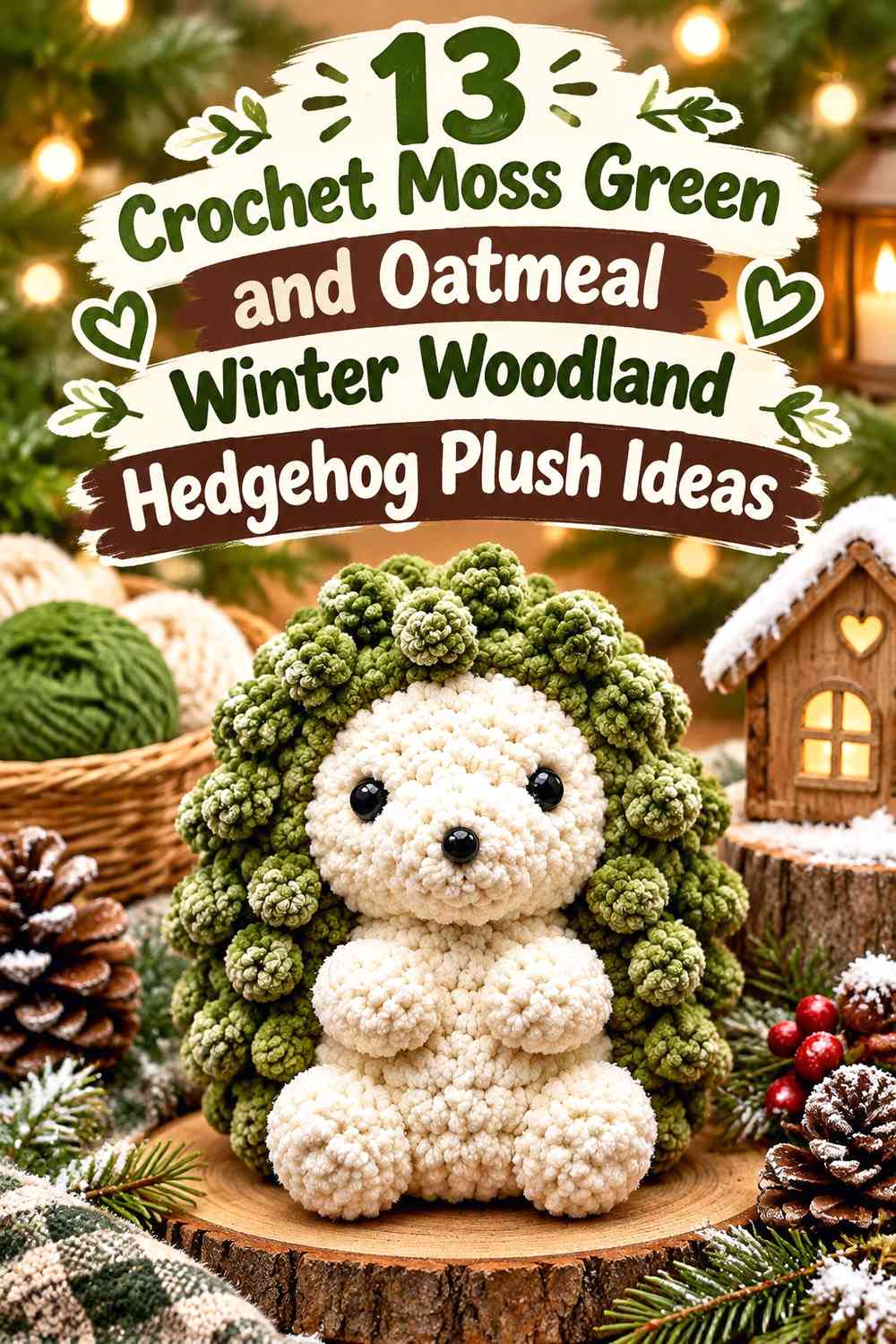

Moss green and oatmeal give a crochet hedgehog plush an unusual winter woodland palette without losing the animal’s recognizable contrast between face, belly, and textured back. Moss green can carry the spines or woodland accessories, while oatmeal can soften the muzzle, belly, paws, and inner ears.
The most important color decision is usually the division between the hedgehog’s smooth facial area and its textured or raised spine section. A broad oatmeal face against moss-green spines makes the silhouette easy to read, while reversing the colors creates a more stylized woodland character with a darker face and pale textured back.
Winter details can introduce a third shade through a scarf, tiny hat, leaf, mushroom-inspired accent, or small border around the spine area. Keep those additions secondary. A hedgehog already has several visual zones—face, ears, paws, belly, nose, and spines—so too many equal colors can make a small plush feel fragmented.
The credited tutorials below teach hedgehog plushes, amigurumi, softies, and ragdoll-style hedgehogs. Use each tutorial for its original construction and treat the moss-green, oatmeal, and winter woodland palettes as independent adaptations rather than assuming the creator used these exact colors.
Quick List
- Moss Green, Oatmeal, and Chestnut Brown Crochet Woodland-Spine Hedgehog Plush
- Oatmeal, Moss Green, and Snow White Crochet Frost-Tip Hedgehog Plush
- Moss Green, Oatmeal, and Rust Orange Crochet Woodland Hedgehog Plush
- Oatmeal, Moss Green, and Forest Green Crochet Tonal-Spine Hedgehog Plush
- Moss Green, Oatmeal, and Dusty Rose Crochet Winter-Scarf Hedgehog Plush
- Oatmeal, Moss Green, and Charcoal Crochet Face-Frame Hedgehog Plush
- Moss Green, Oatmeal, and Cinnamon Crochet Speckled-Spine Hedgehog Plush
- Oatmeal, Moss Green, and Icy Blue Crochet Winter Hedgehog Plush
- Moss Green, Oatmeal, and Cocoa Brown Crochet Woodland-Face Hedgehog Plush
- Oatmeal, Moss Green, and Burgundy Crochet Cabin-Scarf Hedgehog Plush
- Moss Green, Oatmeal, and Sage Green Crochet Layered-Spine Hedgehog Plush
- Oatmeal, Moss Green, and Warm Ivory Crochet Snowy-Woodland Hedgehog Plush
- Moss Green and Oatmeal Two-Color Crochet Winter Woodland Hedgehog Plush
Decide Whether Moss Green or Oatmeal Should Carry the Hedgehog Spines
The spine area is often the largest textured section of a crochet hedgehog, so its color has more visual weight than a tiny nose, ear, or paw accent. Moss-green spines create the strongest woodland direction and leave oatmeal available for the face and belly.
Oatmeal spines create a lighter, frostier plush. In that arrangement, moss green works well around the face, lower body, or accessories, but enough green should remain visible for the requested woodland palette to read clearly.
Judge the colors in the actual spine texture whenever possible. Bobbles, loops, fur-like yarn, clusters, or other raised details create shadow, which can make moss green look deeper and oatmeal more varied than they appear in a smooth swatch.
Keep Moss Green and Oatmeal Clear Around the Hedgehog Face
The face should not disappear into the spine area. If oatmeal covers the muzzle, leave a clean boundary before moss-green spines begin. If green covers the face instead, use oatmeal around the ears, belly, or paws to prevent the darker color from becoming one uninterrupted block.
Small facial features already create contrast, so avoid adding several extra colors immediately around the eyes and nose. Let the main green-and-oatmeal division explain the hedgehog shape first.
Use Moss Green and Oatmeal Winter Accents Without Hiding the Plush Shape
A scarf, hat, woodland leaf, or similar decorative detail can reinforce the winter theme, but it should not cover the most recognizable parts of the hedgehog. Keep the face, spine outline, and body silhouette readable.
When a third color is used on a scarf or accessory, repeat either moss green or oatmeal within that detail. That repetition keeps the accessory visually connected to the plush instead of looking like a separate miniature project.
1. Moss Green, Oatmeal, and Chestnut Brown Crochet Woodland-Spine Hedgehog Plush
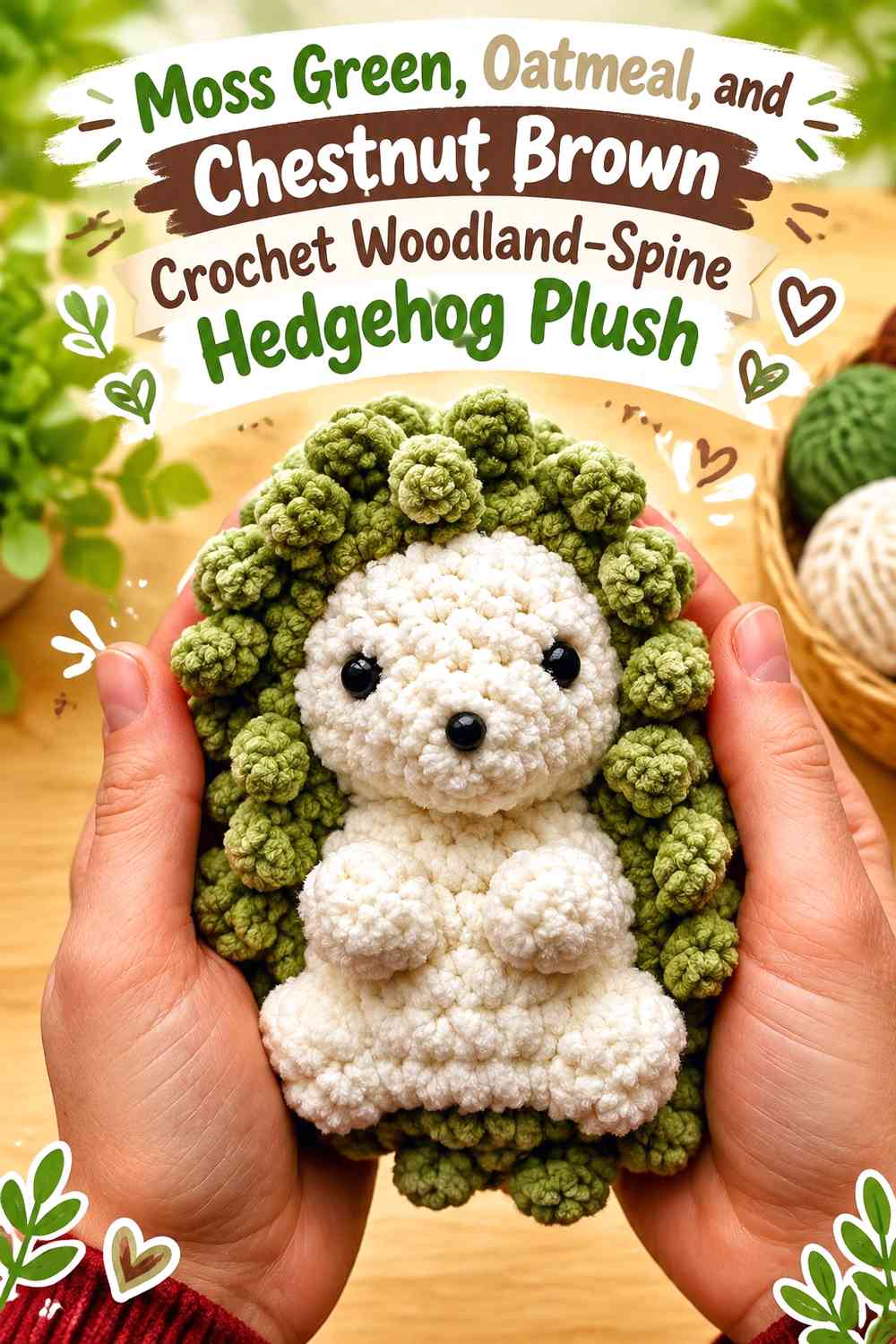
Moss green can dominate the textured spine area, oatmeal can cover the face and belly, and chestnut brown can deepen the nose, paws, or a small inner-spine detail. This is one of the earthiest versions because all three colors stay close to a woodland palette.
Moss Green Should Carry the Main Crochet Hedgehog Spines
Use moss green over most of the back so the raised spine texture becomes the largest woodland-colored feature. Keep the green reasonably continuous rather than interrupting every textured section with another brown.
That broad green area gives the plush a clear color identity even when viewed from the front at an angle.
Oatmeal Should Keep the Moss Green Hedgehog Face Light
Use oatmeal across the muzzle, belly, or other smoother body areas. The lighter color creates a clear visual break before the green spines begin and makes the head shape easier to distinguish.
Chestnut Brown Should Stay Smaller Than Moss Green and Oatmeal
Reserve chestnut for the darkest small details or selected lower-spine areas. If chestnut spreads across most of the back, the project becomes primarily brown-and-oatmeal rather than moss-green woodland.
Creator Credit: Ani Tugushi (Turtle Whicky)
2. Oatmeal, Moss Green, and Snow White Crochet Frost-Tip Hedgehog Plush
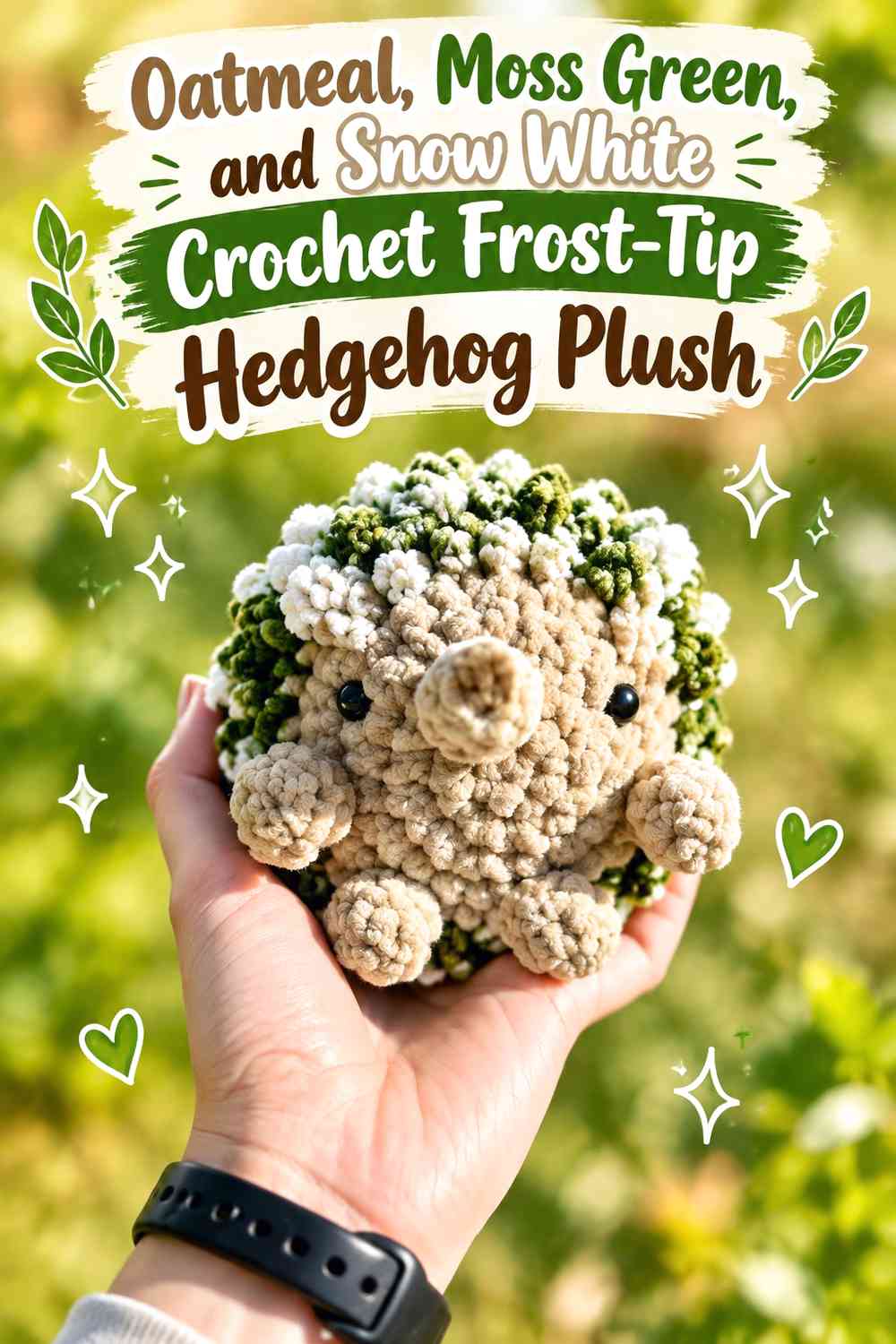
Oatmeal can lead across the face and main body, moss green can create the spines, and snow white can appear only at selected spine tips or winter accessory details. The result keeps the hedgehog warm and neutral while adding a small frosted contrast.
Oatmeal Should Stay Broad Beside Moss Green Crochet Spines
Keep the face and lower body largely oatmeal so the darker green back has a clearly different role. Avoid placing white between every green-and-oatmeal boundary; the two title colors should still meet directly in several areas.
Moss Green Spines Can Carry Small Snow White Frost Details
Use white sparingly on the outer back or a tiny winter accessory rather than throughout the entire spine field. A few light points create a frosted impression more effectively than turning half the green back white.
Snow White Should Not Replace Oatmeal Around the Moss Green Face
Oatmeal should remain the main light neutral. Snow white works better as the brighter accent so the plush retains a soft, muted winter direction.
Creator Credit: Craftylass_Crochet
3. Moss Green, Oatmeal, and Rust Orange Crochet Woodland Hedgehog Plush
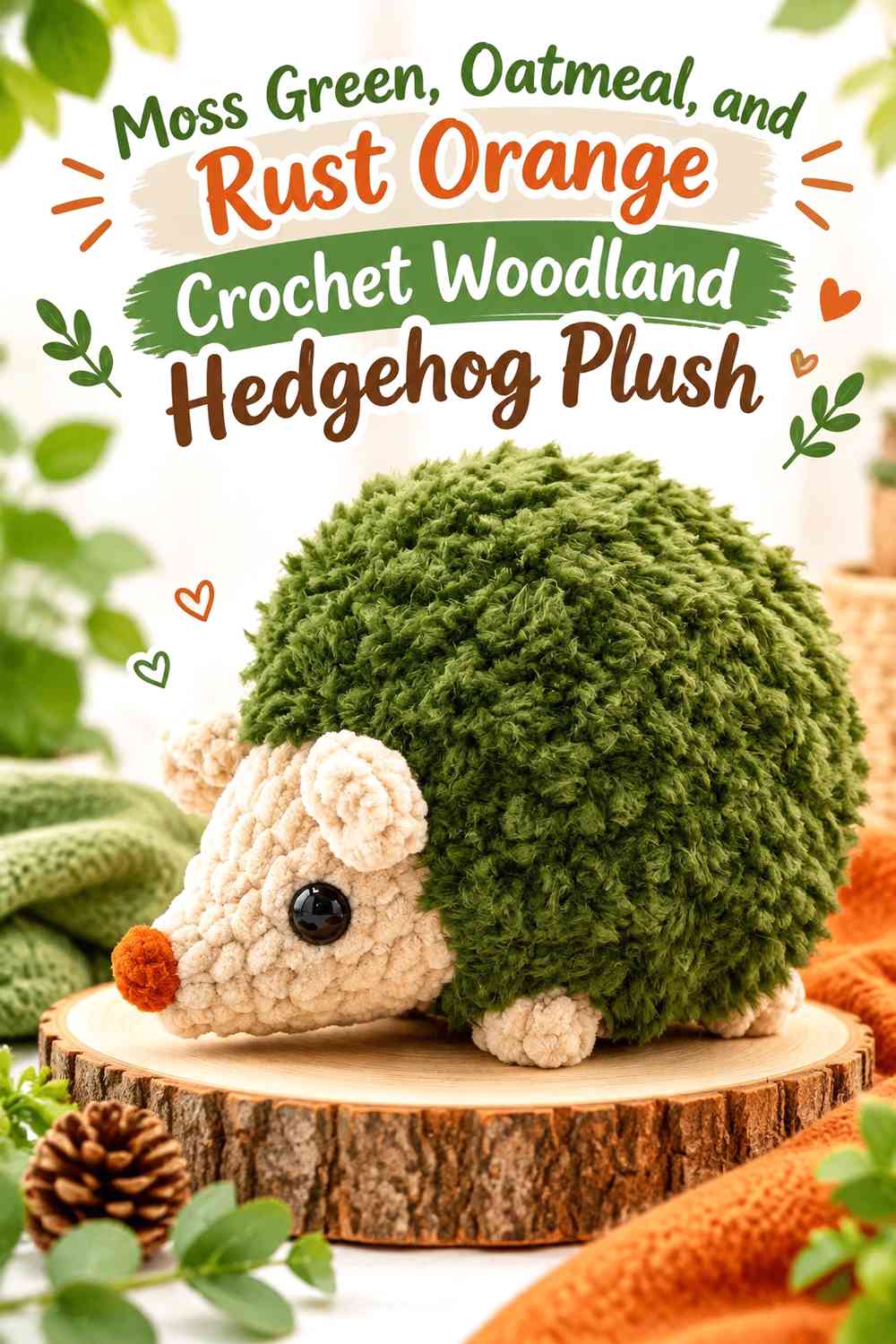
Rust orange adds a small warm accent to the moss-and-oatmeal base. Moss green can dominate the spines, oatmeal can cover the face, and rust can appear in a scarf, tiny woodland accessory, or selected spine detail.
Moss Green Should Remain Stronger Than Rust Orange on the Crochet Hedgehog
Give the green back substantially more area than the rust accent. Both colors are earthy, but equal amounts can make the plush feel autumnal rather than winter woodland.
Oatmeal Can Separate Moss Green From Rust Orange
Use the lighter face or belly area as visual breathing room between the two saturated earth tones. If rust appears on a scarf, leaving oatmeal visible around the neck and muzzle keeps that accessory from merging into the green body.
Rust Orange Should Have One Clear Job Beside Moss Green
Keep rust on one accessory or one repeated detail rather than spreading it across the paws, ears, scarf, and spines simultaneously.
Creator Credit: DIY Fluffies
4. Oatmeal, Moss Green, and Forest Green Crochet Tonal-Spine Hedgehog Plush
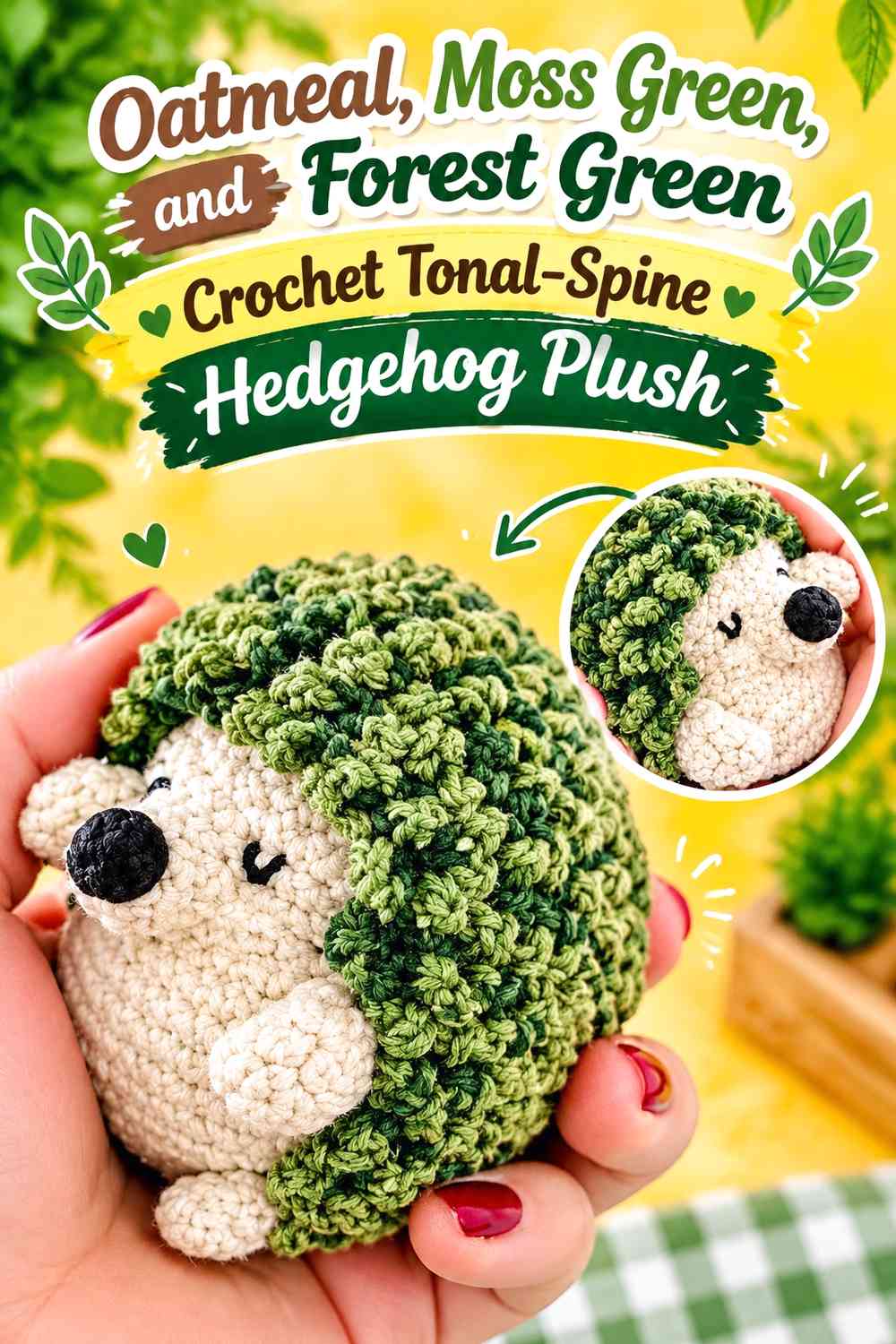
This palette uses two greens to create depth across the spine section. Oatmeal can dominate the face and belly, moss green can cover most spines, and forest green can deepen selected areas of the back.
Moss Green Should Remain Lighter Than Forest Green Across the Crochet Spines
Choose clearly different green values so the tonal effect remains visible after the raised texture creates its own shadows. If the greens are too similar, use forest only in larger sections instead of tiny alternating details.
Oatmeal Should Provide a Clean Break Before Moss Green and Forest Green
Keep the face comparatively simple. A broad oatmeal muzzle allows the two-green back to carry the visual complexity without making the whole plush look busy.
Forest Green Should Stay Secondary to Moss Green on the Hedgehog Back
Use forest green in a center strip, lower section, or selected spine clusters. Moss green should still make up most of the textured area.
Creator Credit: Gülay Işıklıoğlu atolye_masal
5. Moss Green, Oatmeal, and Dusty Rose Crochet Winter-Scarf Hedgehog Plush
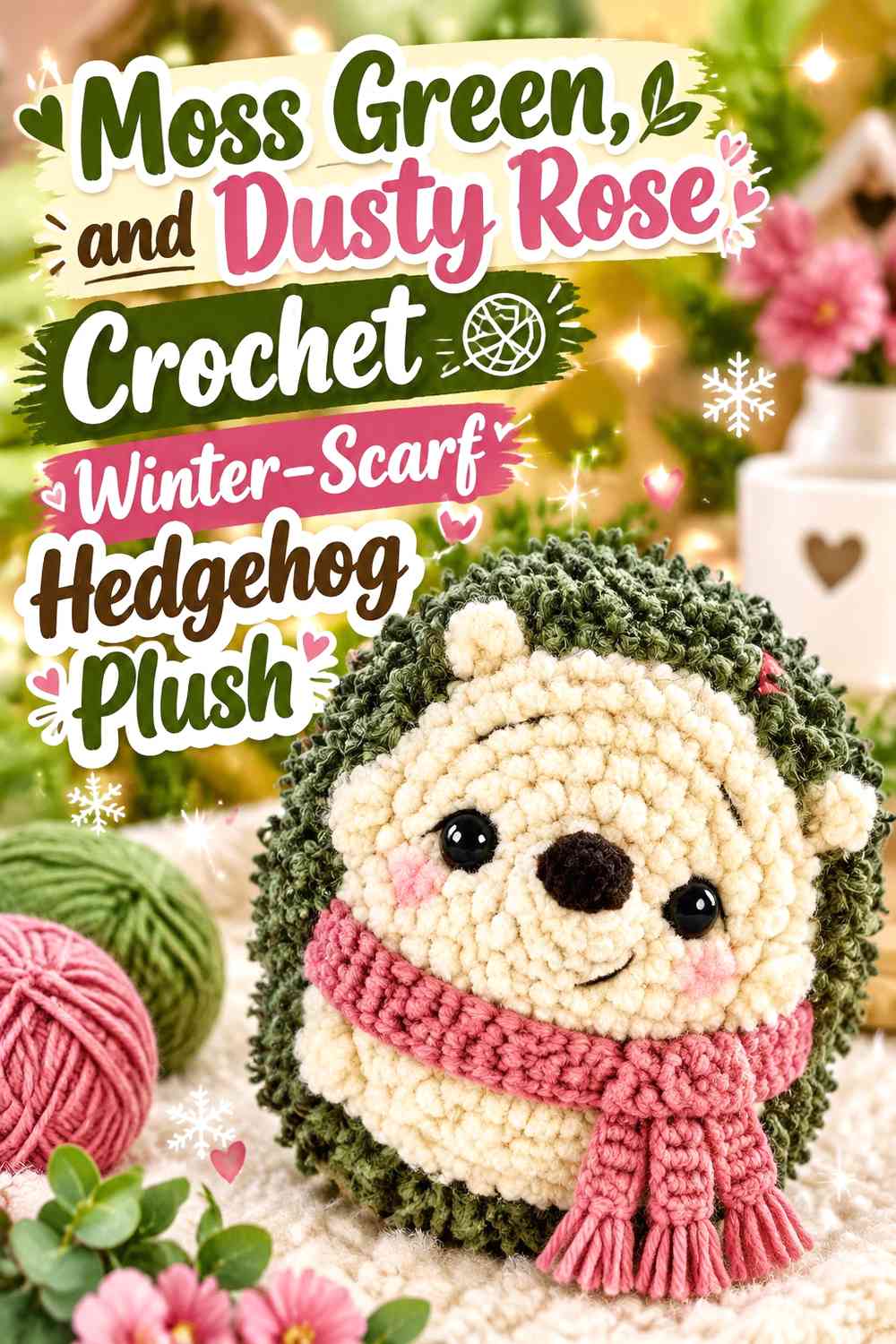
Dusty rose introduces a softer warm accent through a winter scarf or similarly small decorative feature. Moss green can remain on the spines, oatmeal can form the face and body, and rose can stay away from the core hedgehog coloring.
Moss Green Should Keep the Crochet Hedgehog Back Woodland-Led
Use green consistently through the spine section so the plush remains grounded in the title palette even when a noticeable scarf is added.
Oatmeal Can Give a Dusty Rose Scarf Space Beside Moss Green
A pale oatmeal neck, face, or chest area provides a quieter background for the scarf. Placing dusty rose directly over a heavily textured green section can make the accessory harder to distinguish.
Dusty Rose Should Stay Smaller Than Moss Green and Oatmeal
Use rose as a true accent. A broad rose body section would shift the plush toward a pink-and-green palette rather than a moss-and-oatmeal woodland character.
Creator Credit: СоТВОРИм-ка!
6. Oatmeal, Moss Green, and Charcoal Crochet Face-Frame Hedgehog Plush
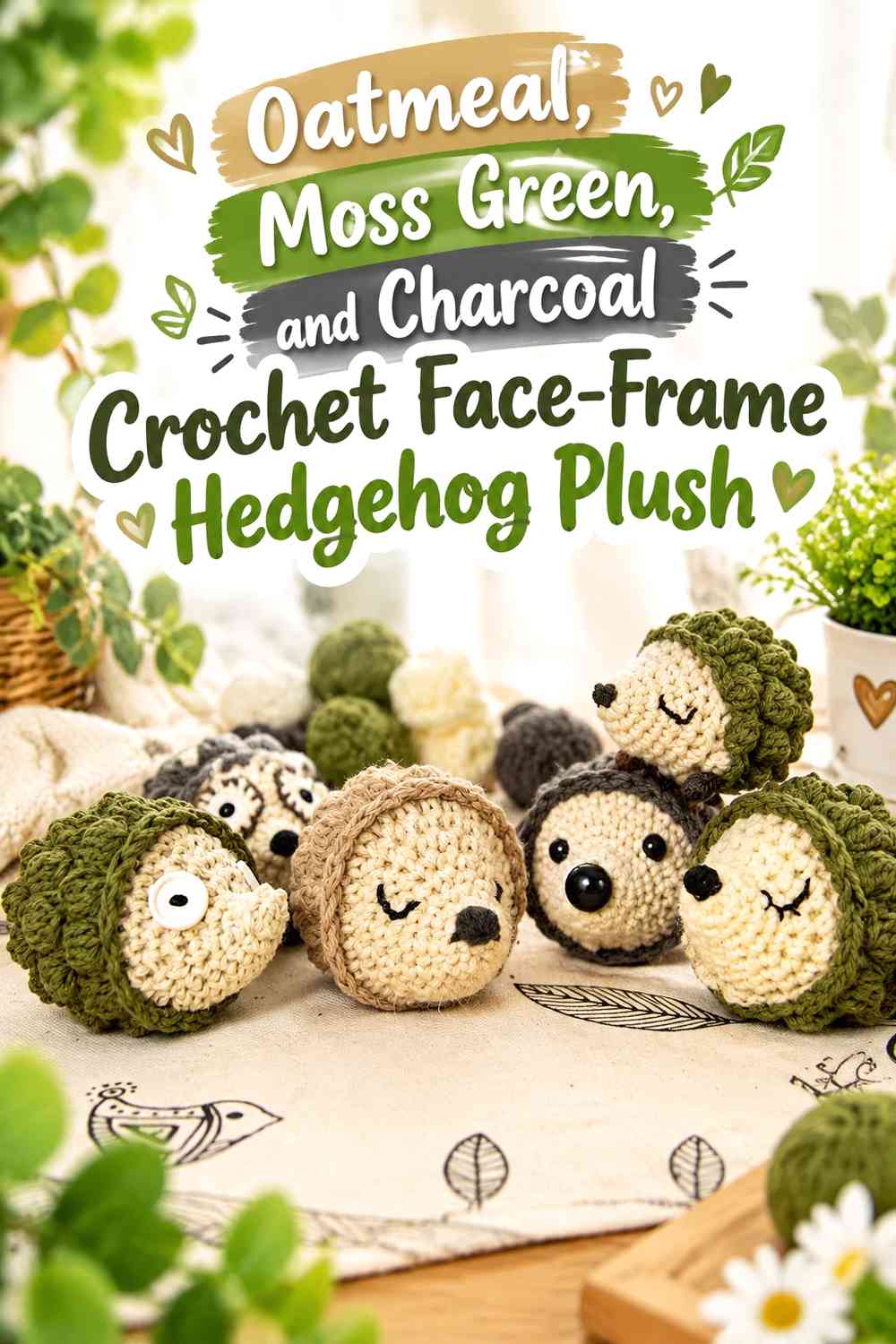
Charcoal gives the strongest dark definition in the collection. Oatmeal can carry the main face and belly, moss green can dominate the spines, and charcoal can be restricted to tiny facial or border details.
Oatmeal Should Keep Charcoal From Overpowering the Crochet Hedgehog Face
Leave most of the muzzle oatmeal and use charcoal only where a darker feature is needed. A broad charcoal face area can make the plush appear much heavier than the softer winter palette suggests.
Moss Green Spines Need Enough Distance From Charcoal Details
Allow oatmeal to separate the dark face accents from the green back whenever the construction permits. That keeps the eye focused on the hedgehog’s facial shape rather than one dark cluster.
Charcoal Should Stay Smaller Than Moss Green on the Plush
Treat charcoal as punctuation rather than another body color. The moss-green spine field should remain the darkest large section.
Creator Credit: Crochet Stitch Witch
7. Moss Green, Oatmeal, and Cinnamon Crochet Speckled-Spine Hedgehog Plush
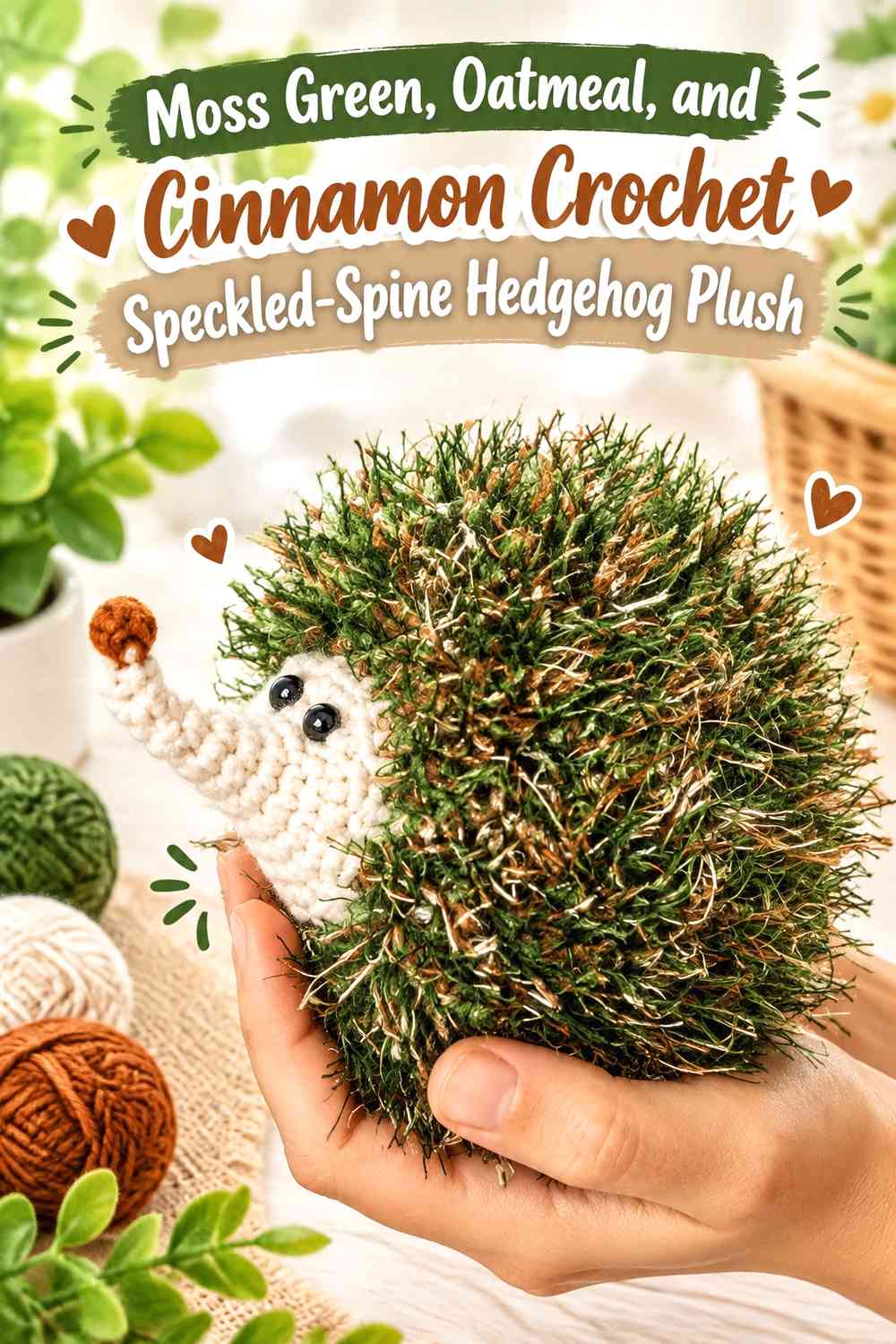
Cinnamon creates a warmer tonal variation inside the moss-green spines. Oatmeal remains the quieter facial color, while cinnamon can appear intermittently across the back instead of forming a separate large panel.
Moss Green Should Control Most of the Crochet Spine Texture
Use green as the continuous base and cinnamon as an occasional interruption. This keeps the back woodland-led and prevents the spine pattern from becoming visually spotty.
Oatmeal Should Stay Calm Beside Moss Green and Cinnamon
Keep the face, muzzle, and belly mostly oatmeal with minimal extra color. The mixed spine field already supplies enough variation.
Cinnamon Should Repeat Predictably Through Moss Green
If cinnamon appears in the back, distribute it in a controlled way rather than clustering all of the warm color on one side. Repetition helps the two-tone spine treatment look intentional.
Creator Credit: Canal crochet
8. Oatmeal, Moss Green, and Icy Blue Crochet Winter Hedgehog Plush
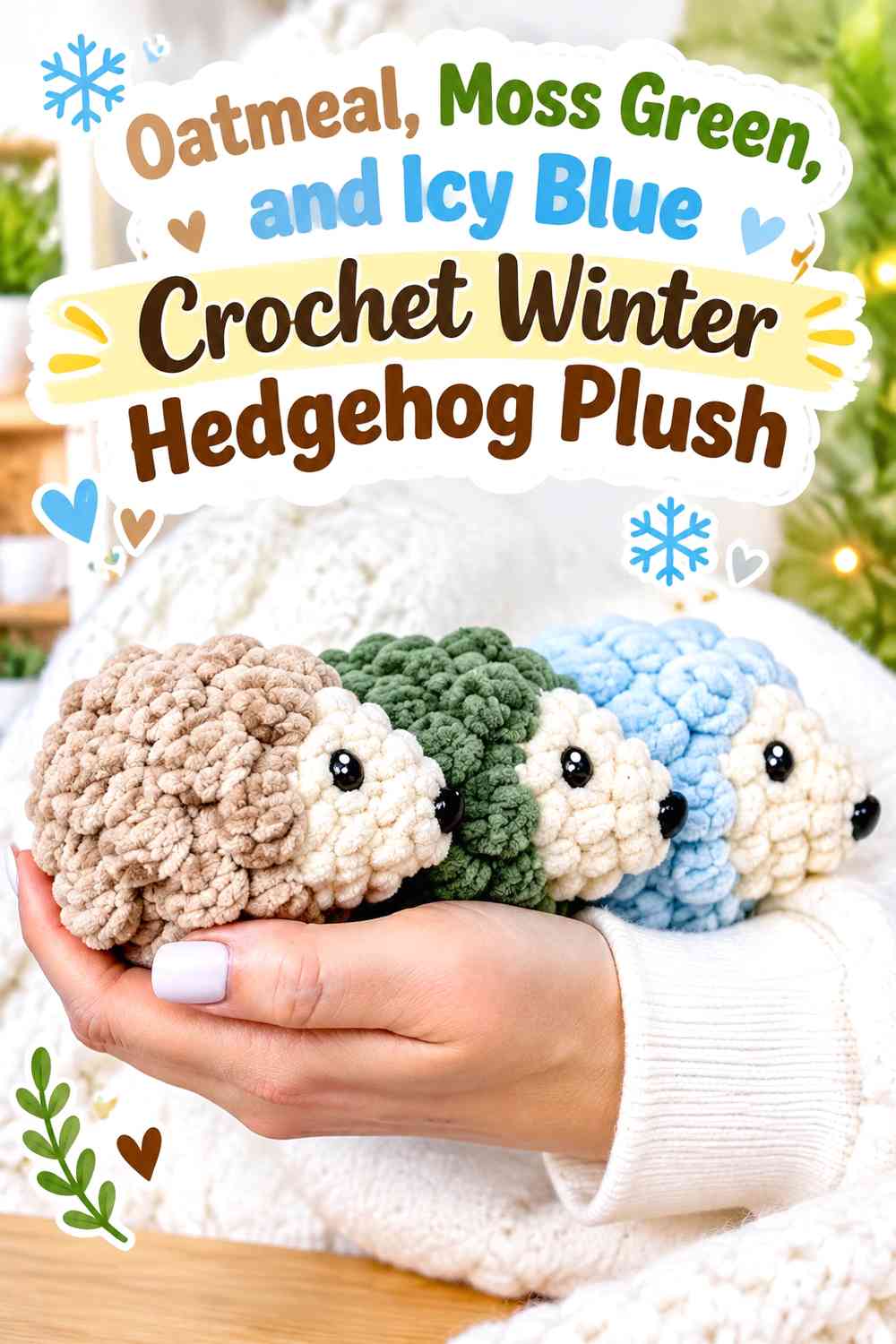
Icy blue pushes the plush toward a cooler winter direction. Oatmeal can dominate the face, moss green can cover the spines, and blue can appear through a small scarf, hat, or another restrained accessory.
Moss Green Should Keep Icy Blue From Replacing the Woodland Palette
Use green across the back and keep the blue accessory visibly smaller. Too much blue can turn the plush into a general winter character rather than a moss-green woodland hedgehog.
Oatmeal Can Soften the Moss Green and Icy Blue Contrast
The warm neutral face creates a useful buffer between the cool accent and darker green back. It also keeps the finished plush from becoming entirely cool-toned.
Icy Blue Should Stay Away From Most Moss Green Spines
Concentrate blue in one accessory or detail instead of scattering it throughout the raised back texture, where it can compete with the green spine pattern.
Creator Credit: The Design Hub
9. Moss Green, Oatmeal, and Cocoa Brown Crochet Woodland-Face Hedgehog Plush
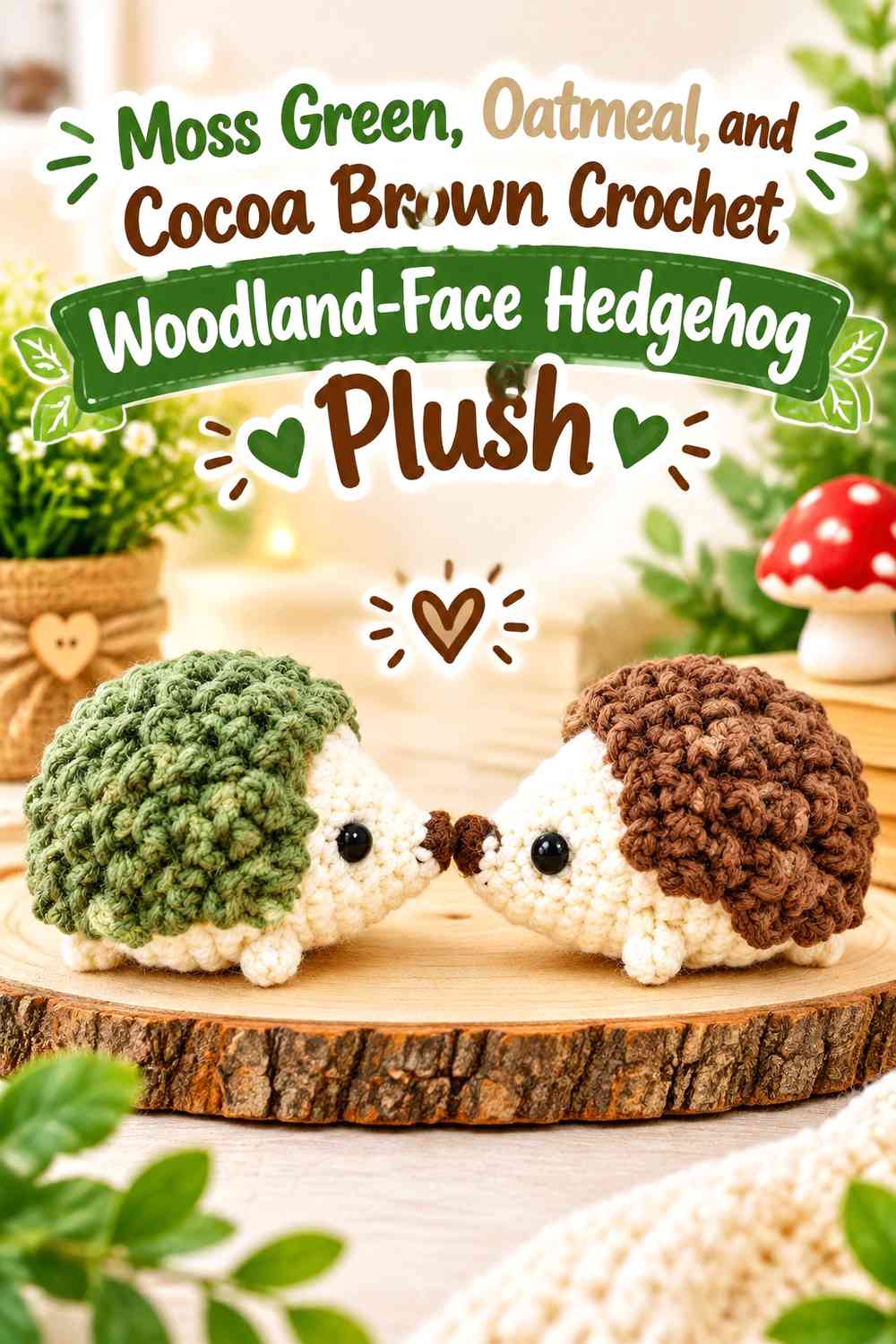
Cocoa brown creates a darker natural face accent while moss green remains the woodland spine color. Oatmeal can lighten the muzzle and belly so the plush does not become too brown-heavy.
Moss Green Should Remain the Main Crochet Spine Color Beside Cocoa Brown
Keep cocoa out of most of the back. Its strongest role is around the face, paws, or one narrow lower section where it can deepen the animal features without replacing green.
Oatmeal Can Break Up Cocoa Brown Around the Moss Green Hedgehog Face
Use oatmeal through the central muzzle or belly so cocoa remains an outline or secondary facial color rather than one large dark mask.
Cocoa Brown Should Stay Visually Separate From Moss Green
If the chosen brown and green are both deep and muted, place oatmeal between them where possible. That lighter boundary helps the back and face remain distinct.
Creator Credit: Heavenly Crochet Amigurumi
10. Oatmeal, Moss Green, and Burgundy Crochet Cabin-Scarf Hedgehog Plush
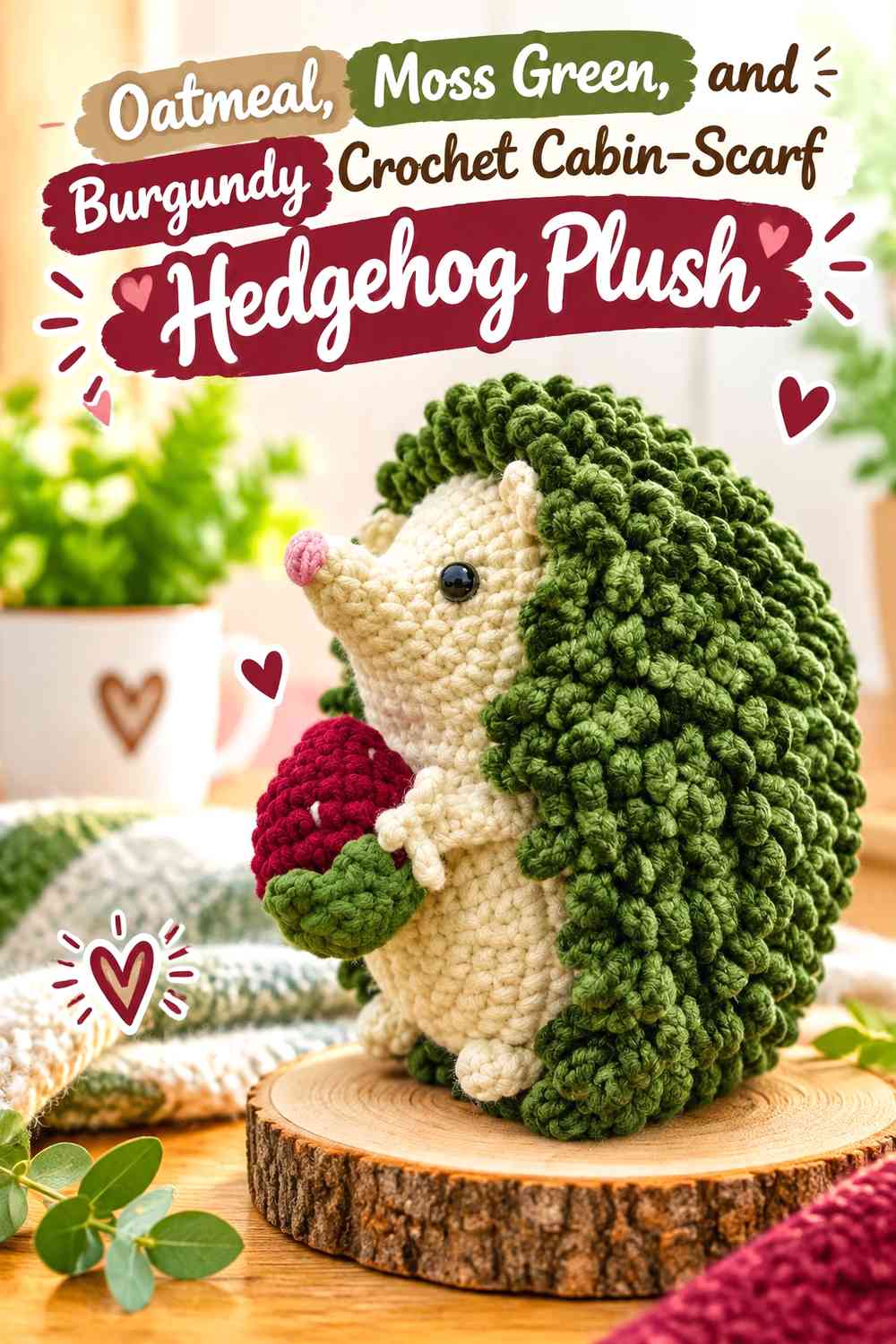
Burgundy creates a richer winter accessory color than dusty rose. Oatmeal can form the face and body, moss green can carry the spines, and burgundy can remain concentrated in a scarf or similarly small cabin-style accent.
Oatmeal Should Keep the Burgundy Crochet Scarf From Hiding the Face
Leave a clear oatmeal area around the muzzle and upper chest so the deeper accessory does not visually merge with the plush’s facial features.
Moss Green Should Remain Broad Beside Burgundy
Use green throughout the back so the two deeper colors have different jobs. Burgundy should not spread across the entire spine section.
Burgundy Can Repeat One Small Moss Green Detail
A narrow green stripe or tiny moss-colored section inside the burgundy accessory can visually connect it back to the hedgehog without creating another large color block.
Creator Credit: Let’s Crochet
11. Moss Green, Oatmeal, and Sage Green Crochet Layered-Spine Hedgehog Plush
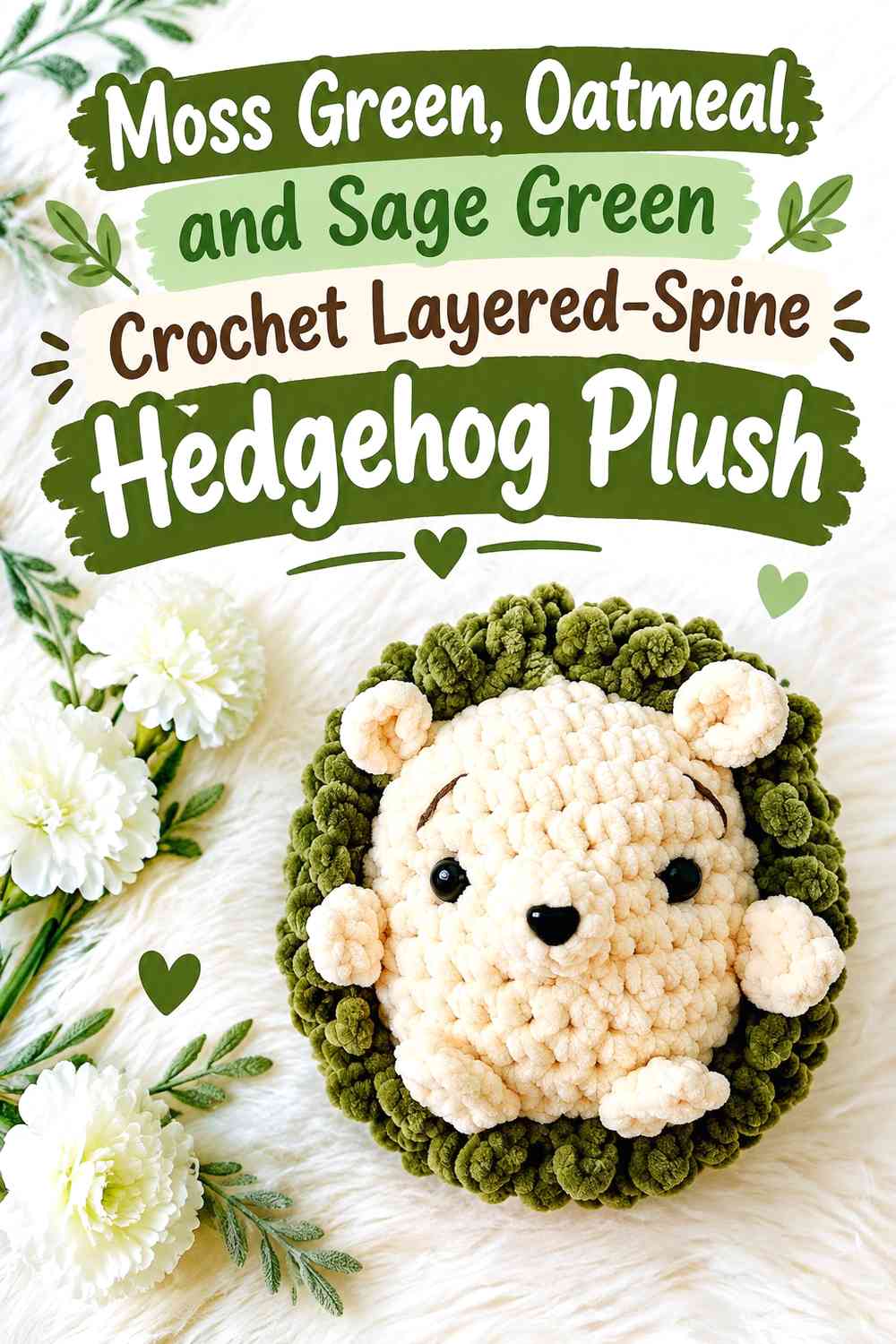
Sage green provides a softer second green than forest green. Moss can dominate the deeper spine areas, sage can lighten selected upper sections, and oatmeal can remain on the face and belly.
Moss Green Should Anchor the Sage Green Crochet Spines
Use moss across the larger or lower spine field and place sage in selected upper or outer sections. This gives the back a visible green hierarchy rather than an even two-color mixture.
Oatmeal Should Stay Lighter Than Sage Green Around the Hedgehog Face
Make sure the face remains distinct from the palest spine color. If oatmeal and sage are very close in value, keep a clear moss-green boundary around part of the face.
Sage Green Should Support Moss Green Rather Than Replace It
Treat sage as the lighter woodland accent. Moss green should remain the first green noticed when the plush is viewed from the side or back.
Creator Credit: Double Dutch Crochet
12. Oatmeal, Moss Green, and Warm Ivory Crochet Snowy-Woodland Hedgehog Plush
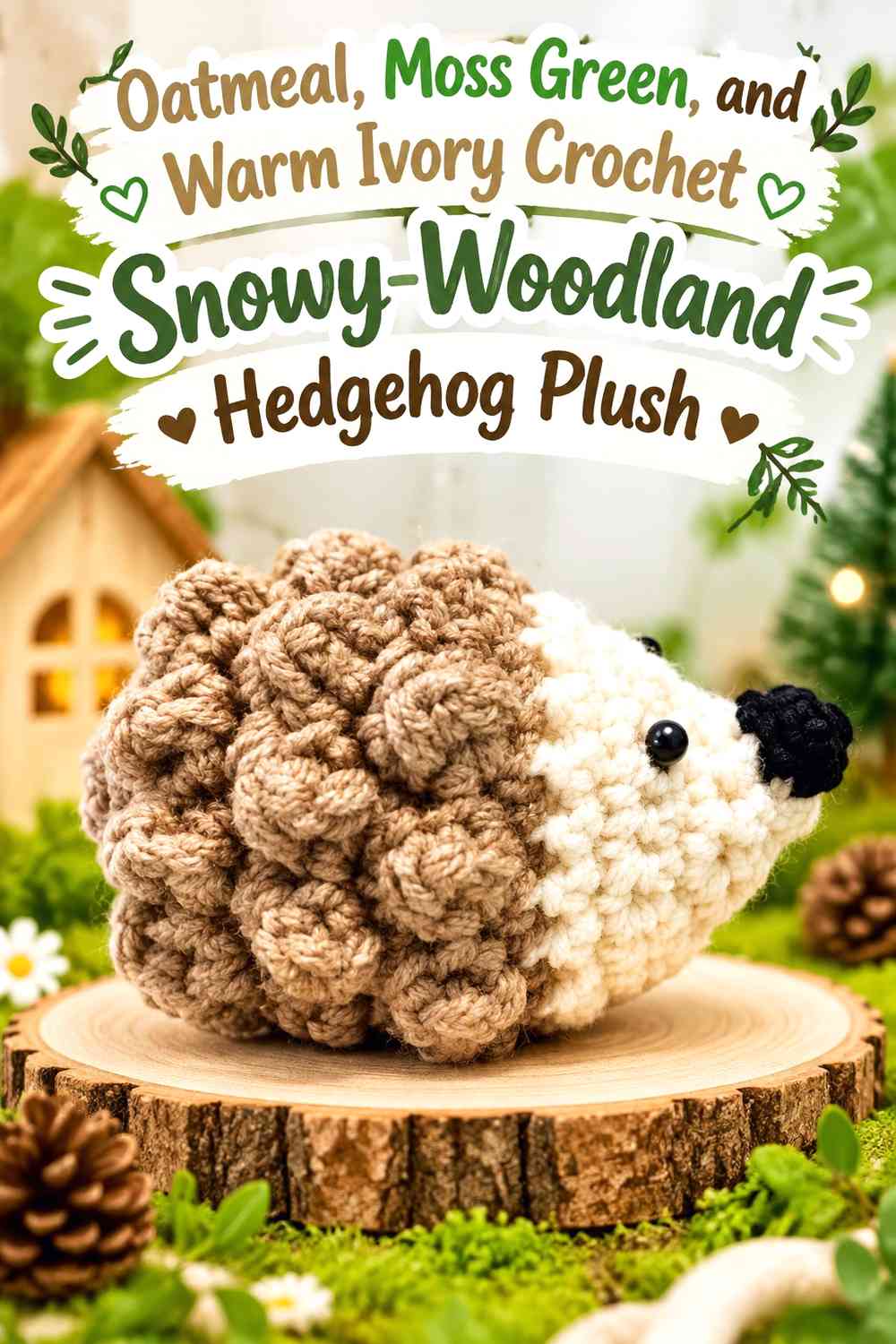
Warm ivory creates a gentler winter highlight than bright white. Oatmeal can cover the main face, moss green can form the back, and ivory can appear around the belly, ear interiors, or another small light section.
Oatmeal and Warm Ivory Need Different Roles on the Crochet Hedgehog
Because both are pale neutrals, avoid scattering them randomly. Use oatmeal for the main smooth body color and warm ivory for one clearly defined highlight area.
Moss Green Should Separate Oatmeal From Warm Ivory
A broad green spine field provides the strongest value and hue contrast in the palette. Keep enough green visible around the sides and upper back to prevent the two neutrals from dominating.
Warm Ivory Should Stay Smaller Than Oatmeal Beside Moss Green
Use ivory as a snowy highlight rather than another equal body color. The simpler hierarchy keeps the plush readable from a distance.
Creator Credit: Hectanooga1
13. Moss Green and Oatmeal Two-Color Crochet Winter Woodland Hedgehog Plush
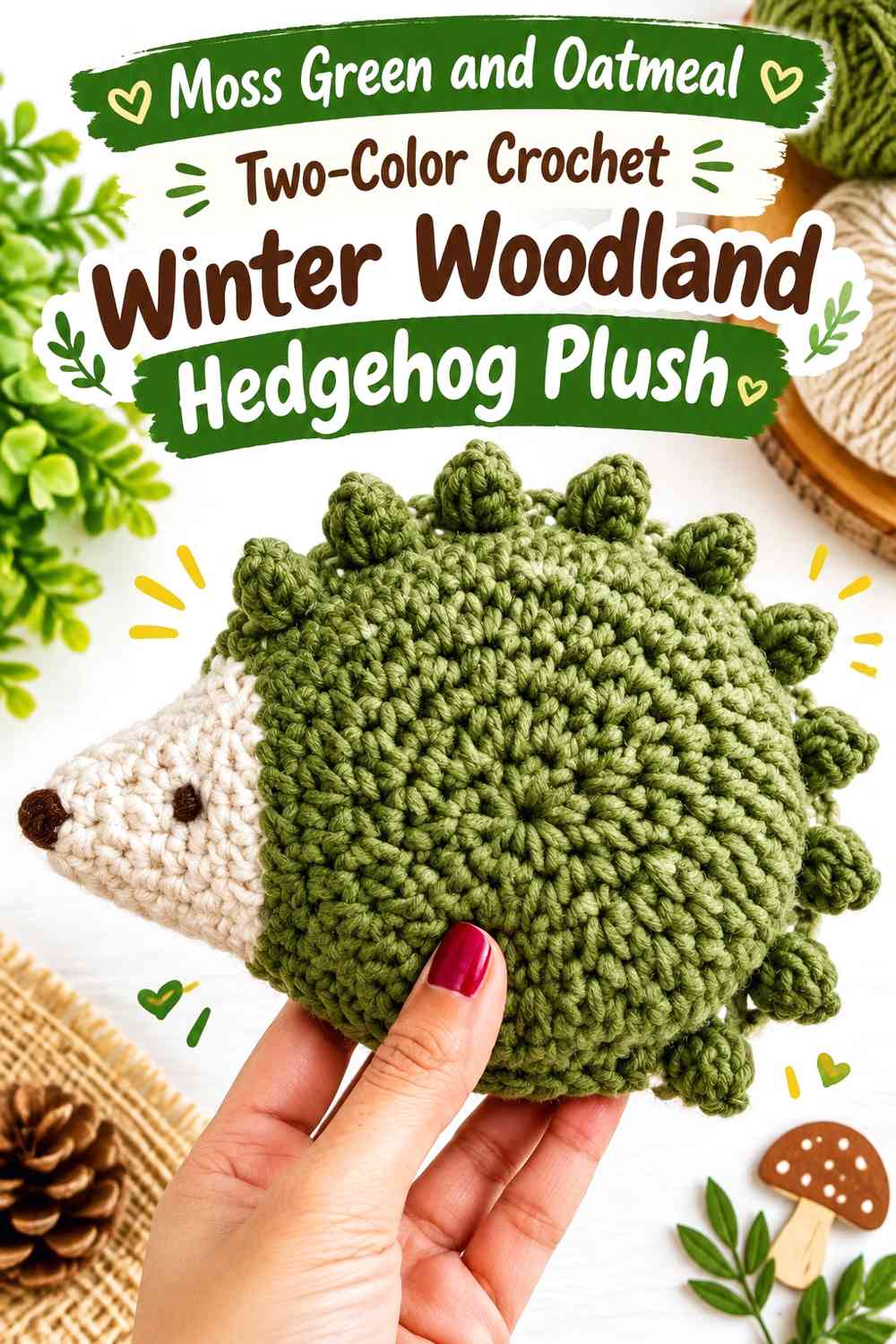
The final idea removes every accent shade and depends entirely on the contrast between moss-green spines and oatmeal body sections. This gives the plush the cleanest woodland palette and puts more attention on the actual hedgehog texture.
Moss Green Can Lead the Crochet Spines While Oatmeal Shapes the Face
Use moss green across the entire textured back and oatmeal across the muzzle, belly, ears, and paws where the construction allows. This is the clearest division between woodland texture and softer body sections.
Oatmeal Can Lead With Moss Green Framing the Hedgehog Back
For a lighter version, expand oatmeal across more of the body and keep moss concentrated on a defined spine cap. The green section should still be large enough to identify the hedgehog immediately from the side.
Moss Green and Oatmeal Should Be Checked in the Actual Spine Texture
Raised or fuzzy texture can make the green appear darker and the oatmeal more shadowed than they do in smooth yarn. Compare the two colors in a small textured sample before deciding whether they need more separation.
Creator Credit: Crochet For You
Which Moss Green and Oatmeal Woodland Hedgehog Palette Should You Choose?
For the most natural woodland direction, choose chestnut brown, cocoa brown, cinnamon, forest green, sage green, or the two-color version. These palettes keep the spine and body colors close to earthy greens and neutrals.
For a stronger winter effect, snow white, warm ivory, or icy blue introduces lighter or cooler contrast without changing the core moss-and-oatmeal relationship.
Dusty rose and burgundy work best when you want the winter theme to appear through an accessory rather than through the hedgehog body itself. Charcoal gives the strongest facial definition, while rust orange creates the warmest woodland accent.
If the hedgehog construction already has highly textured spines, favor a simpler palette. When the back is smoother or uses larger repeated stitches, a second green or occasional warm accent can create more depth without making the plush difficult to read.
Conclusion
Moss green and oatmeal give a crochet hedgehog plush a winter woodland identity while preserving the contrast that makes the animal recognizable. Moss green works especially well across the spine area, where texture increases its visual depth, while oatmeal can keep the face, muzzle, belly, and paws softer and easier to distinguish.
Third colors are most useful when they have one clear role. Brown and cinnamon deepen the woodland direction, forest and sage create tonal spines, white and ivory add winter highlights, and dusty rose, burgundy, or icy blue can carry a small seasonal accessory.
Keep the face-to-spine boundary clear and judge the palette in the finished texture rather than from yarn skeins alone. A raised, looped, clustered, or fuzzy back can change how light and dark each color appears.
Use the credited tutorials for their original hedgehog plush, softie, amigurumi, or ragdoll construction and adapt the moss-green, oatmeal, and winter woodland colors independently.
Frequently Asked Questions
Should Moss Green or Oatmeal Be the Main Color of a Crochet Hedgehog Plush?
Moss green works naturally across the textured spine area, while oatmeal is useful on the smoother face and belly. That division gives the hedgehog a clear woodland look without making the full plush dark.
You can reverse the balance, but keep enough contrast between the face and back for the silhouette to remain readable.
Where Should Moss Green Go on an Oatmeal Hedgehog Plush?
The spines, outer back, small woodland accessories, scarf accents, or selected ear and paw details can all carry moss green.
The spine section is usually the strongest location because it gives the green a large, recognizable area.
How Can I Keep Oatmeal From Disappearing Beside Moss Green Spines?
Use oatmeal in broad smooth sections rather than tiny scattered details. A full muzzle or belly creates a clearer light area than several small oatmeal marks inside the textured back.
If the two yarns still lack contrast, choose a deeper moss green or lighter oatmeal.
What Third Colors Work With Moss Green and Oatmeal for a Winter Woodland Hedgehog?
Chestnut, cocoa brown, cinnamon, forest green, sage green, warm ivory, snow white, burgundy, dusty rose, rust orange, charcoal, and icy blue can each serve different purposes.
Choose one based on whether you want deeper woodland tones, lighter winter contrast, or a small accessory color.
Can the Hedgehog Spines Use Two Shades of Green?
Yes. Moss green can remain the primary spine color while sage, forest, or another related green appears in selected sections.
Make sure the greens are visibly different enough in the actual textured stitches; shadows can reduce the apparent contrast.
Should a Winter Hedgehog Plush Have a Scarf or Hat?
It does not need one. The winter direction can come entirely from moss green, oatmeal, white, ivory, or cool accent colors.
If you add a scarf or hat as an adaptation, keep it small enough that the hedgehog’s face and spine silhouette remain the dominant features.
How Do I Keep a Three-Color Hedgehog Plush From Looking Too Busy?
Assign each shade one main job. For example, use moss green for the spines, oatmeal for the face and belly, and the third color only for a scarf or selected spine accent.
Avoid dividing the face, paws, ears, back, and accessories into separate equal colors.
Can I Use Any Hedgehog Amigurumi Tutorial for a Plush-Style Version?
Use the source tutorial for the construction it actually teaches. A small amigurumi, softie, ragdoll, and plush-yarn hedgehog can differ in structure and finishing.
Treat color placement as adaptable, but do not assume size, yarn, assembly, or texture can be changed without affecting the finished result.