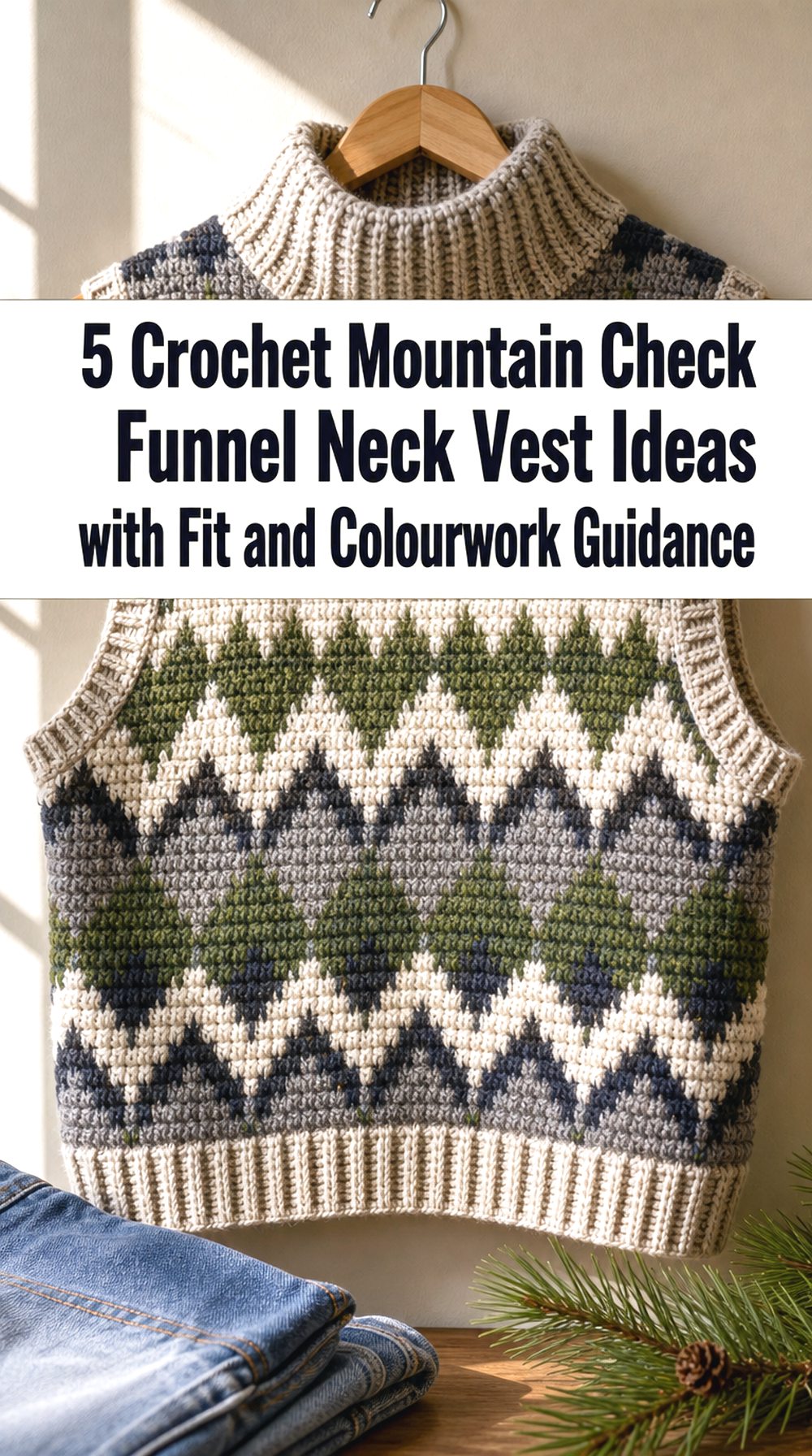

A Crochet mountain check funnel neck vest combines three strong features: outdoor-inspired colourwork, a bold checked surface, and a warm raised neckline. Finding one design that includes every detail can be limiting, so these five ideas approach the look from different directions. Some linked projects provide the mountain or checkerboard body, while others supply a ready-made cowl or textured winter vest shape. Each section clearly identifies which features appear in the original project and which funnel-neck or colourwork changes would be separate customisations. You will also find guidance on bust ease, armhole comfort, collar height, yarn behaviour, layering, and colour placement. Together, the ideas offer practical Crochet starting points for creating a graphic vest that feels suitable for cool-weather outfits rather than a thin list of unrelated links.
Quick List
- Crochet Mountain Scene Vest Base for a Funnel Neck Variation
- Crochet Checkerboard Vest Base for a Funnel Neck Variation
- Crochet Two-Tone Granite Stitch Funnel Neck Vest
- Crochet Soft-Drape Cowl Vest with Check-Inspired Colour
- Crochet Textured Alpine Vest Base for a Funnel Neck Variation
How to Choose a Crochet Mountain Check Funnel Neck Vest
Start with fit, because a high collar and dense colourwork can make a vest feel more substantial than an open-neck style. Check the finished bust against both your body and the shirt or knitwear you plan to wear underneath. Armholes should allow movement without exposing an excessive gap at the sides. For the funnel neck, measure around the head as well as the neck; a collar may look neat when worn yet still need enough stretch to pull on comfortably.
Next, consider fabric behaviour. Super-bulky yarn creates a strong mountain graphic and fast visual impact, while medium or DK yarn gives checks and textured stitches a finer appearance. Colour changes can tighten the fabric, so a washed or blocked swatch is especially useful. Finally, decide whether the collar, mountain motif, or checkerboard is the priority. The mountain and checkerboard sources below need a separately planned funnel neck, while the cowl designs already solve the raised-neck construction but require your own colour placement.
Crochet Mountain Scene Vest Base for a Funnel Neck Variation
What Stands Out
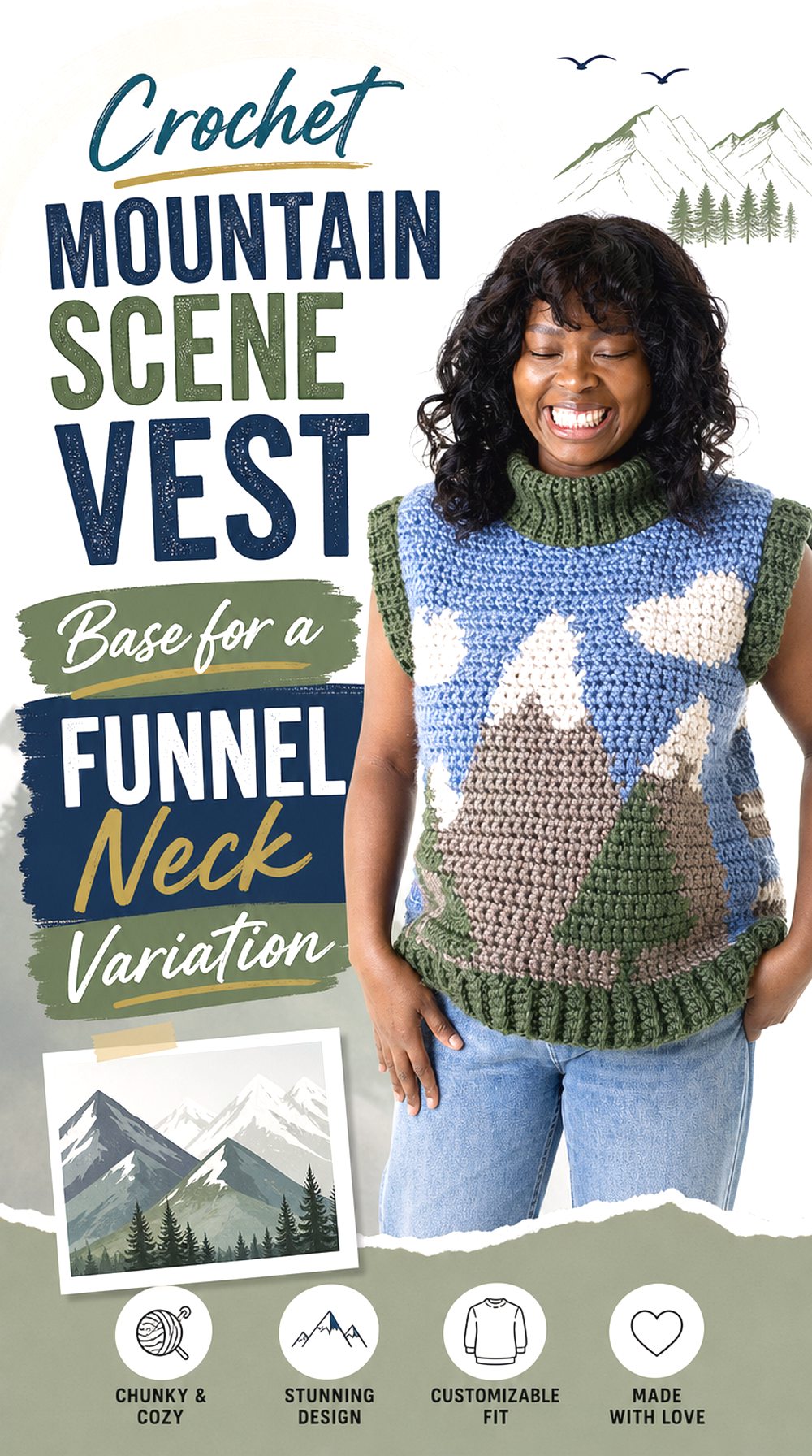
The linked Crochet vest places the outdoor theme directly into the garment through a large mountain scene worked in contrasting colours. Its substantial fabric and bold front graphic create the closest match to the “mountain” part of this article’s brief. The source identifies super-bulky yarn and offers two broad finished-size options, so it suits readers who prefer an oversized layer rather than finely detailed checks.
Before You Choose
The original design does not include a funnel neck or checkerboard body. Treat it as a scenic base: keep the mountain panel, then plan a separate ribbed or close-textured collar after checking the neck opening and head circumference. A narrow two-colour check at the hem could echo the motif without competing with it. The two-size grouping is the main trade-off, so compare the schematic and finished dimensions carefully before starting.
Crochet Checkerboard Vest Base for a Funnel Neck Variation
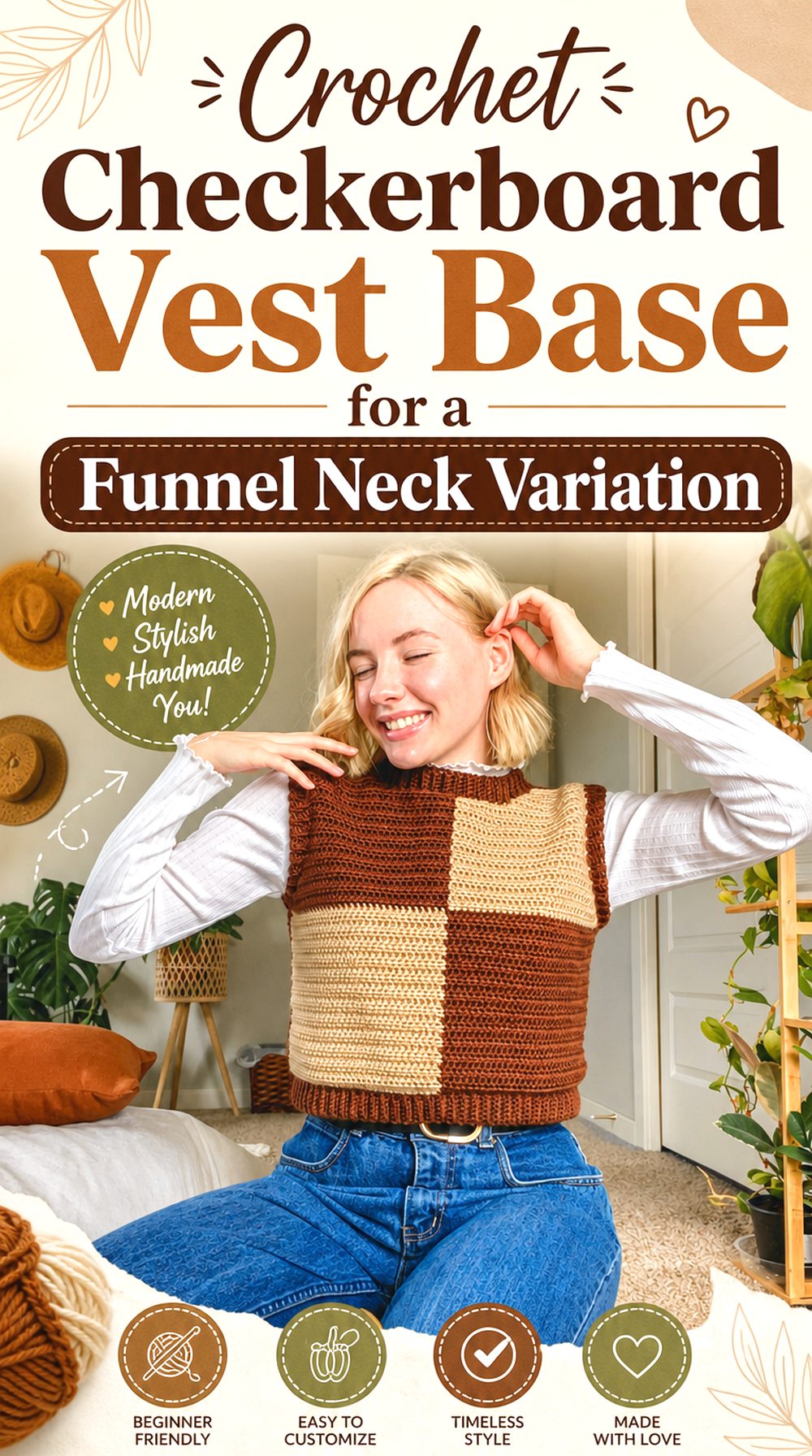
Design Details
Large two-colour blocks give this Crochet sweater vest a clear checkerboard identity. The linked design has a boxy, slightly oversized shape, ribbed finishing, and instructions spanning several grouped sizes. The pattern page also shows both a medium-weight version and notes for a lighter, fluffier interpretation, making it useful for comparing a crisp check with a softer surface.
Customisation Idea
For a mountain-check direction, reserve the checkerboard for the lower body and replace selected upper blocks with stepped peaks in the same two colours. A funnel neck would be an additional alteration rather than part of the tutorial; match its ribbing to the hem so the change looks intentional. Keep the collar colour simple when the body is already graphic. The main caution is colour tension: uneven carrying or pulling can distort the large blocks, so swatch the exact yarn pairing before sizing the garment.
Crochet Two Tone Granite Stitch Funnel Neck Vest
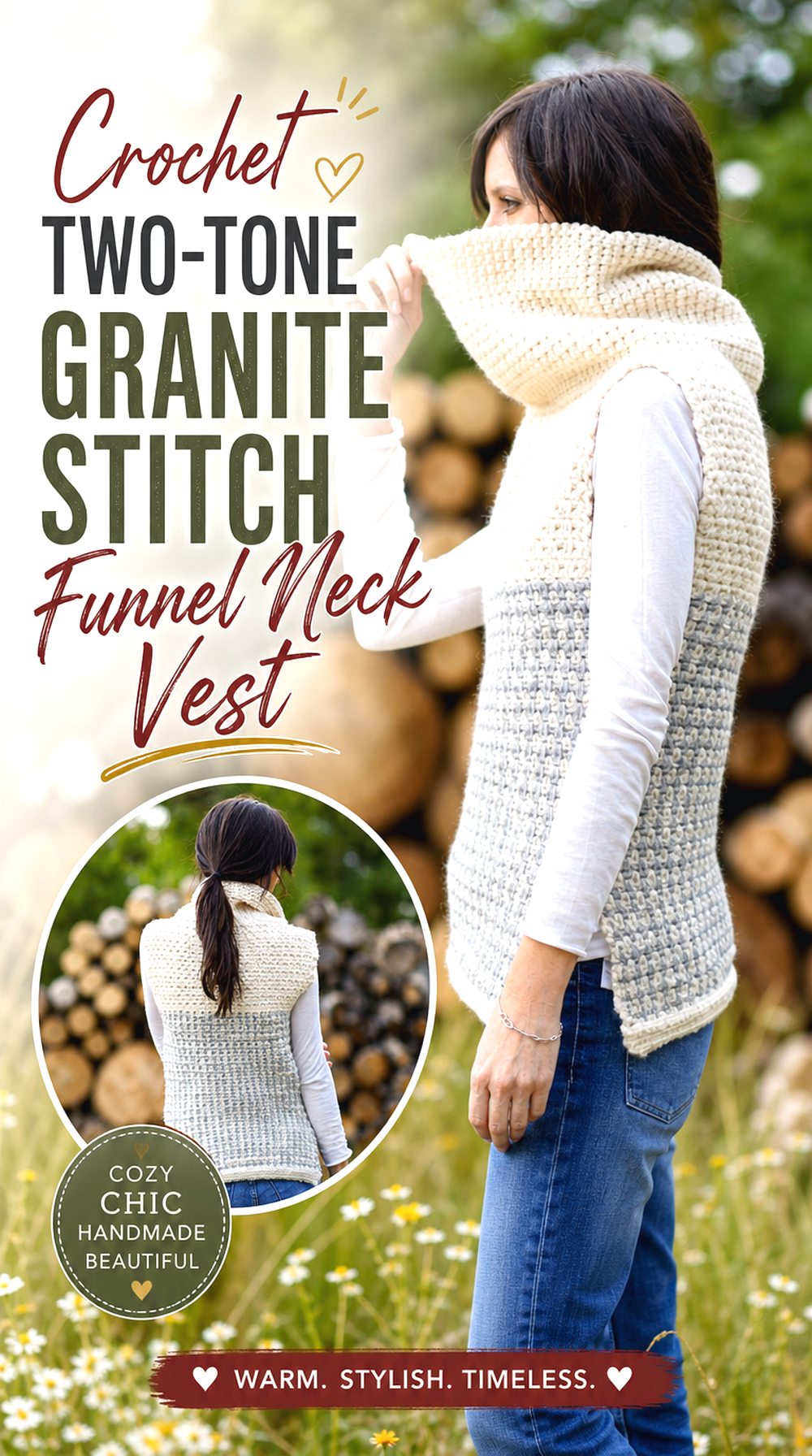
Why It Works
This source already provides the raised-neck silhouette. The Crochet vest is built from front and back rectangles, joined with seams, and finished with a large cowl worked afterwards. Granite stitch gives the body a close, woven-looking texture, while the published version uses two colours and a slip-stitch lower edging. Those features make it a practical base for a restrained mountain-check palette without redesigning the neckline.
Fit and Finish
Use the darker shade around the hem, shoulder, or collar to frame lighter mountain tones through the body. The source is written for a smaller base size with guidance for enlarging it rather than a fully graded range, so measure the panels against a well-fitting vest as you work. The stitch can become firm when made tightly; leave enough ease for a shirt underneath and confirm that the cowl opening passes comfortably over the head before fastening off.
Crochet Soft Drape Cowl Vest with Check Inspired Colour
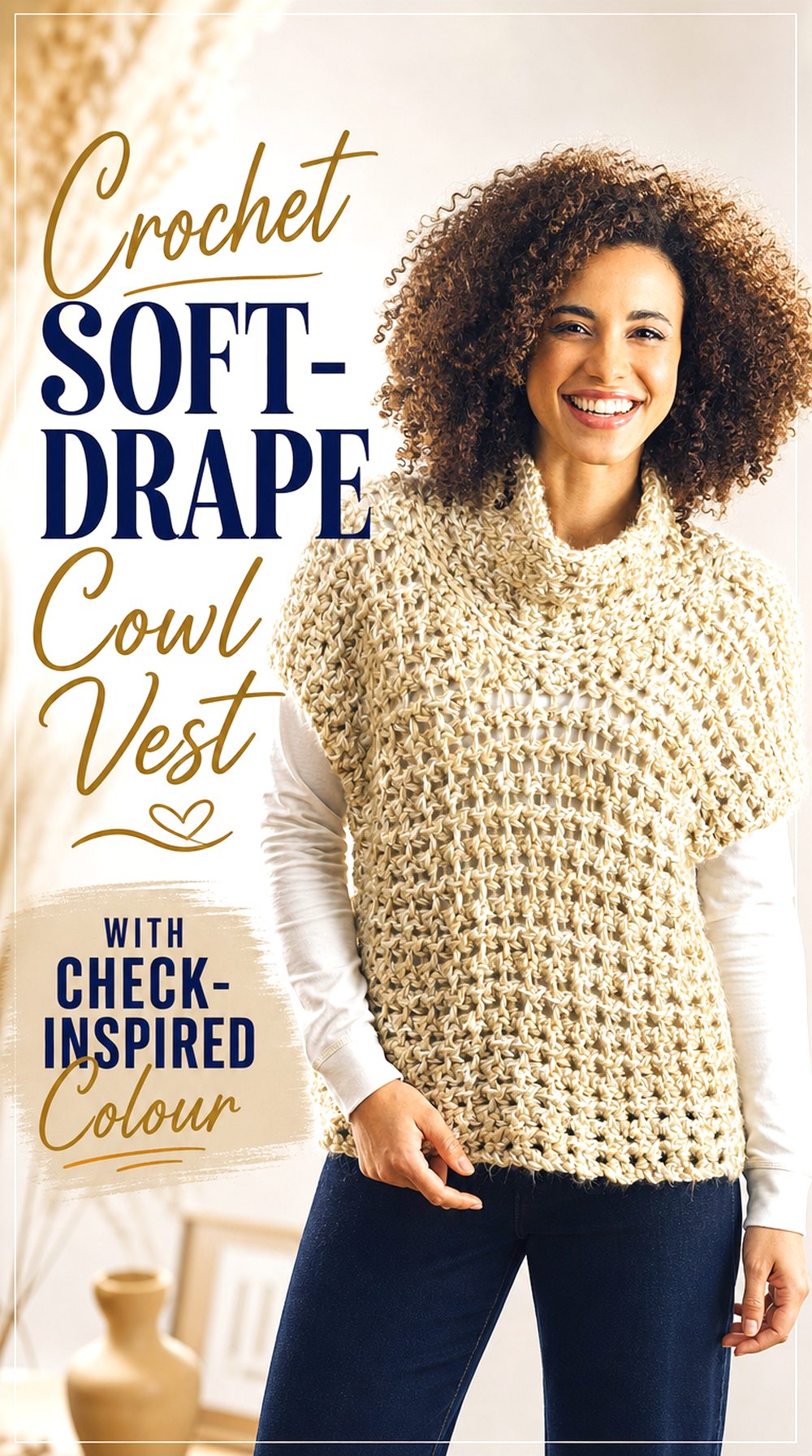
Best Use
The Caron cowl vest offers a softer route to the funnel-neck look. Its raised collar is integrated into the design, and the free download covers sizes from XS through 3XL. This Crochet option can work over a fitted long-sleeve top when you want the neckline to lead the outfit. The source also provides finished measurements and fibre-specific care guidance.
Colour Direction
Instead of rebuilding the body as a strict checkerboard, introduce checks through wide bands, a divided front, or a small repeated block near the hem. This preserves collar drape and reduces colour changes. Choose contrasting shades with similar yarn behaviour so one section does not hang differently. The tutorial is a solid-colour cowl vest, so any mountain or check arrangement must be planned separately.
Crochet Textured Alpine Vest Base for a Funnel Neck Variation
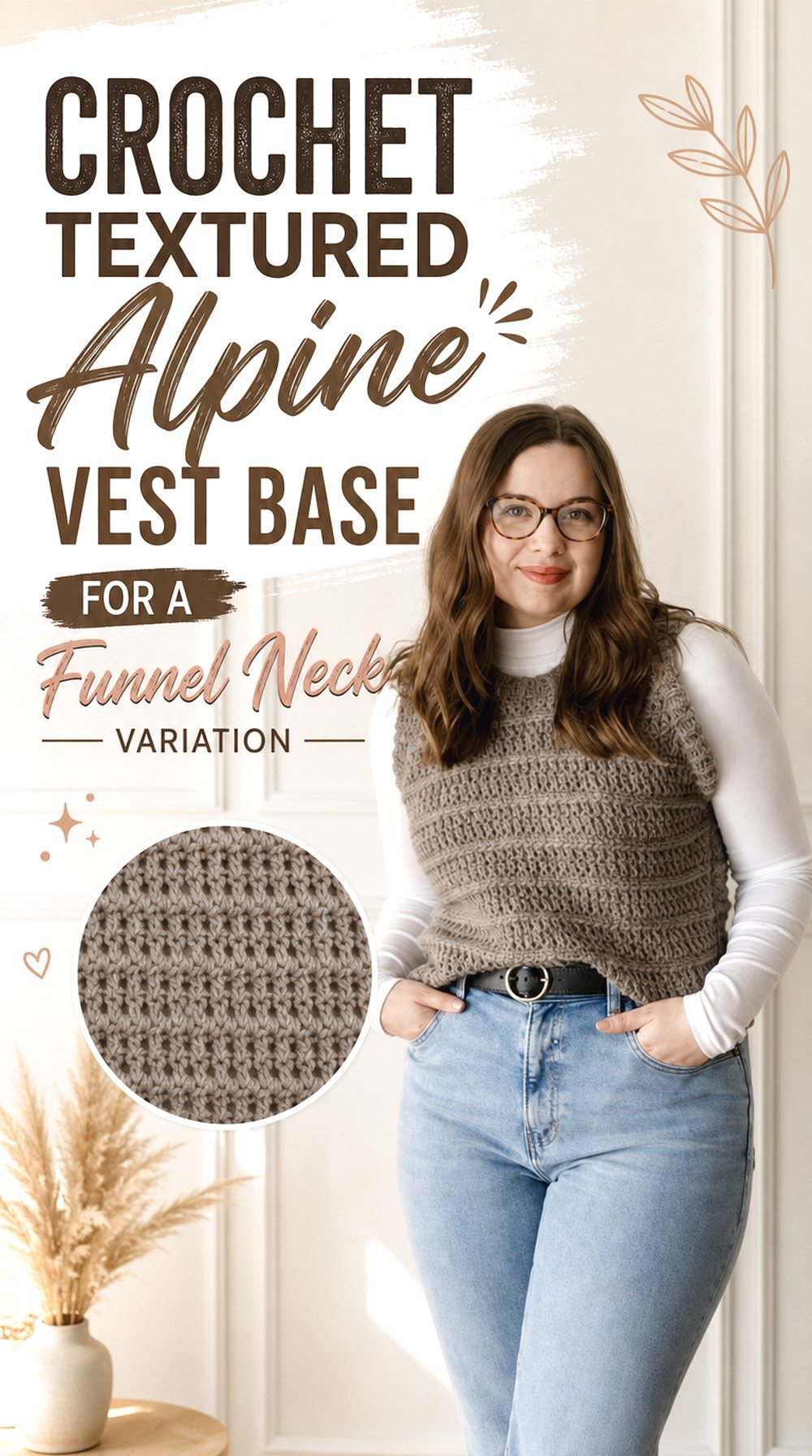
Construction Focus
The Alcott vest combines textured stitches and ribbing for a knit-like winter surface. Front and back panels are worked flat from the bottom up, shaped around the arms, neck, and shoulders, then seamed. Ribbing finishes the openings. The free Crochet instructions cover XS through 4X and include body-length adjustment guidance.
Practical Point
Use this base when texture matters more than a literal checkerboard. Work it in stone, forest, snow, or rust, then place a small mountain-check panel across the chest or lower front. A true funnel neck requires extending or replacing the published neck ribbing, so test the opening before adding height. Keep added colourwork simple because raised stitches and frequent colour changes may make the front look crowded and feel heavier.
Useful Crochet Notes
Swatch the Colourwork, Not Just the Main Stitch
A plain swatch may match the listed gauge while the mountain or check section works up tighter. Make a sample that includes the actual colour changes, edging, and intended yarn combination. Wash or block it as you will the finished vest, then compare width, flexibility, and colour definition before choosing a size.
Test the Funnel Neck Before Adding Height
Join a temporary collar round and confirm that it passes over the head without strain. Then fold or stand the sample at the intended height to check comfort at the jaw and chin. A taller collar needs enough flexibility to move, while a very loose opening may collapse more like a cowl than a structured funnel.
Plan Ease for the Underlayer
Measure over the shirt, blouse, or lightweight sweater you expect to wear beneath the Crochet vest. Dense stitches and super-bulky yarn leave less room to compress than an open fabric. Check bust ease, shoulder width, armhole depth, and hem movement together; adding width alone will not correct tight armholes or a restrictive neckline.
Conclusion
Choose the mountain scene base when the graphic matters most, the checkerboard design for bold geometric colour, or one of the cowl vests when a finished raised neckline is the priority. The textured Alcott route suits a quieter alpine look with broader size coverage. Before committing, decide which feature you are willing to adapt, then swatch the collar and colourwork together so the finished Crochet vest remains comfortable as well as visually balanced.
FAQs
Can one Crochet vest include both mountains and checkerboard blocks?
Yes, but the two motifs need a clear hierarchy. Use the mountain scene as the main panel and restrict checks to the hem, side sections, or a narrow chest band. Repeating both at equal scale can make the garment feel busy, especially when the funnel neck and edging add more visual structure.
How much ease should a funnel neck vest have?
Base the decision on the intended underlayer and the firmness of the fabric. A close-fitting vest worn over a thin top needs less room than a super-bulky layer worn over knitwear. Compare finished garment measurements with your clothed bust, then check armhole and shoulder dimensions rather than relying on bust width alone.
Which yarn gives the clearest mountain-check design?
A smooth yarn with visible stitch definition usually keeps stepped peaks and square blocks easier to read. Very fuzzy yarn can soften colour boundaries, while very bulky yarn creates fewer, larger motif units. Choose colours with clear value contrast and test them in the actual colourwork stitch before buying the full quantity.
Can I add a funnel neck to a crew-neck Crochet vest?
It is possible, but the alteration is not simply “more ribbing.” The neck opening must pass over the head, support the added collar, and sit comfortably at the front throat. Begin with a temporary round, test circumference, then build height gradually. The checkerboard, mountain, and Alcott tutorials do not include this modification.
How should a Crochet funnel neck vest be stored?
Fold the vest rather than hanging it for long periods, especially when the yarn or collar is heavy. Support the funnel neck in its natural shape and keep sharply folded colourwork panels from being crushed under heavier garments. Follow the yarn label and source care instructions, and dry flat when that is specified.