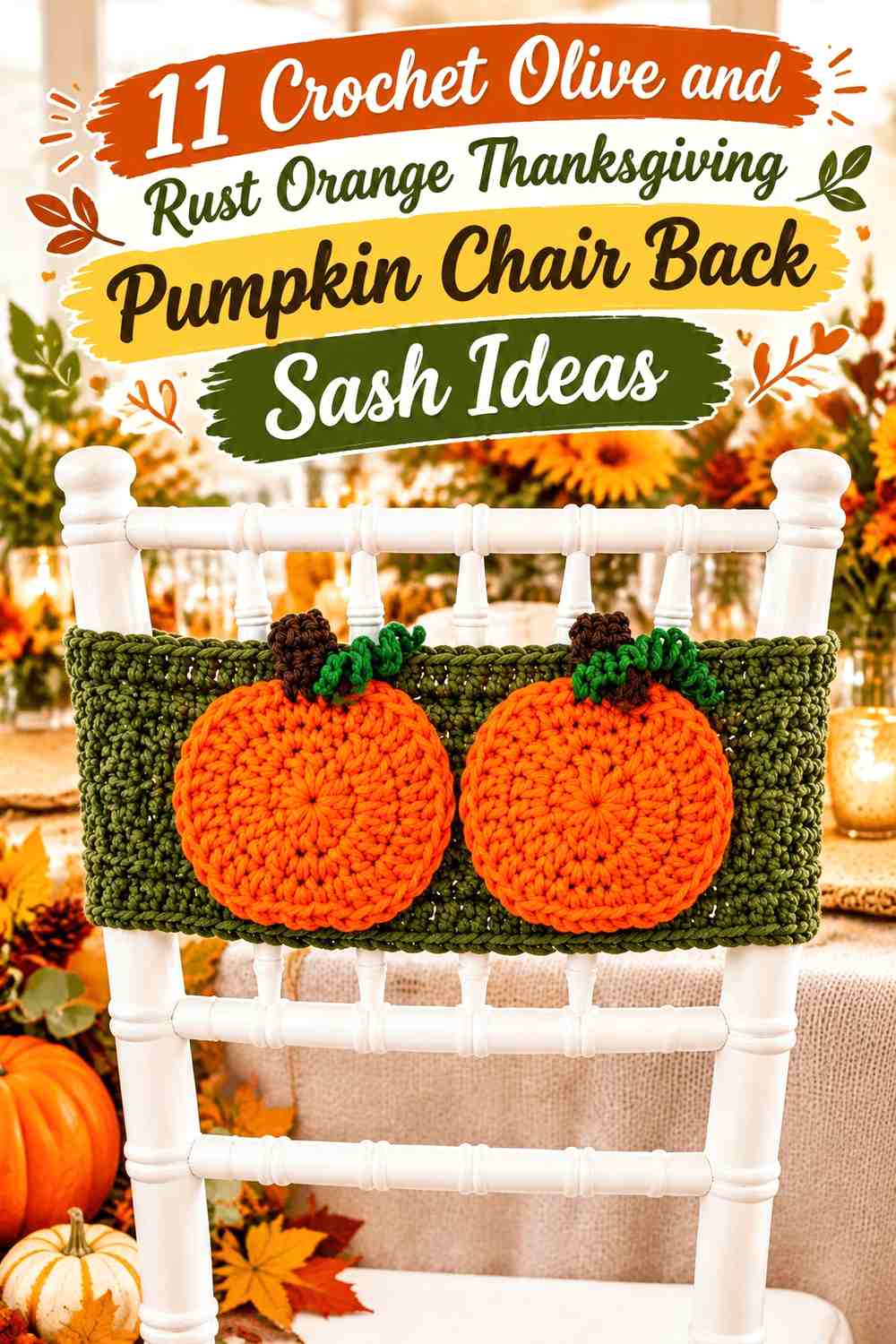

A crochet pumpkin chair back sash gives Thanksgiving dining chairs a seasonal detail without covering the entire chair. Olive and rust orange are especially useful together because each color can take a different visual role: rust orange can make the pumpkin immediately recognizable, while olive can define stems, leaves, sash bands, ties, or borders.
The main color decision is how much rust orange belongs in the pumpkin compared with the sash itself. A large rust-orange band plus a large pumpkin can make the whole chair back feel visually heavy. Using olive across the longer sash sections and concentrating rust orange in the central motif usually gives the pumpkin more separation. Reversing those roles creates a darker, earthier sash in which olive becomes part of the pumpkin design.
The tutorials linked throughout this article support pumpkin motifs, pumpkin squares, flat pumpkin decor, and related crochet constructions that can inform a chair-back sash adaptation. They are not all tutorials for the exact olive-and-rust-orange chair sash shown in these editorial ideas.
Quick List
- Rust Orange Pumpkin on an Olive Crochet Chair Back Sash
- Olive Pumpkin Leaves on a Rust Orange Crochet Chair Back Sash
- Rust Orange, Olive, and Cream Crochet Pumpkin Chair Back Sash
- Olive Sash Ties with a Rust Orange Crochet Pumpkin Center
- Rust Orange Pumpkin Granny Square on an Olive Crochet Chair Sash
- Olive Edging Around a Rust Orange Crochet Pumpkin Chair Back Sash
- Rust Orange Sash Ends with an Olive and Pumpkin Crochet Center
- Olive Pumpkin Panel with Rust Orange Crochet Chair Back Ties
- Rust Orange Pumpkin Trio on an Olive Crochet Thanksgiving Sash
- Olive and Rust Orange Striped Crochet Pumpkin Chair Back Sash
- Rust Orange Pumpkin with Olive Leaf Ends Crochet Chair Back Sash
Let Rust Orange Define the Pumpkin and Olive Organize the Chair Sash
A chair-back sash has two different visual zones: the decorative center that is visible from behind the chair and the longer sections that wrap, drape, or tie around it. Giving rust orange and olive separate jobs helps those areas remain clear.
Rust orange can dominate the pumpkin without needing to dominate the entire sash. Olive works naturally as a quieter supporting color across a band, border, leaf, stem, or tie. That arrangement also prevents the pumpkin from disappearing into a similarly colored background.
If you reverse the hierarchy and make rust orange the main sash color, give olive enough concentrated space around the pumpkin to separate the motif from the band.
Check Olive and Rust Orange Contrast at Dining-Chair Distance
Small crochet details that look distinct in your hands can merge when viewed from across a dining room. Compare the olive and rust orange yarns side by side before deciding whether tiny leaves, stems, ribs, or edging will be visible.
If the colors are close in lightness, avoid alternating them in very narrow strips. Larger color blocks, a small neutral separator, or open crochet space can make the pumpkin easier to read.
Plan Olive and Rust Orange Around the Chair Before Adding More Autumn Colors
Thanksgiving palettes can quickly expand into brown, mustard, cream, burgundy, and gold. Those additions can work, but a small chair sash does not need every autumn shade.
Start by deciding whether olive or rust orange leads. Add a third color only when it solves a specific problem, such as giving a pumpkin stem more contrast or separating the motif from the sash.
1. Rust Orange Pumpkin on an Olive Crochet Chair Back Sash
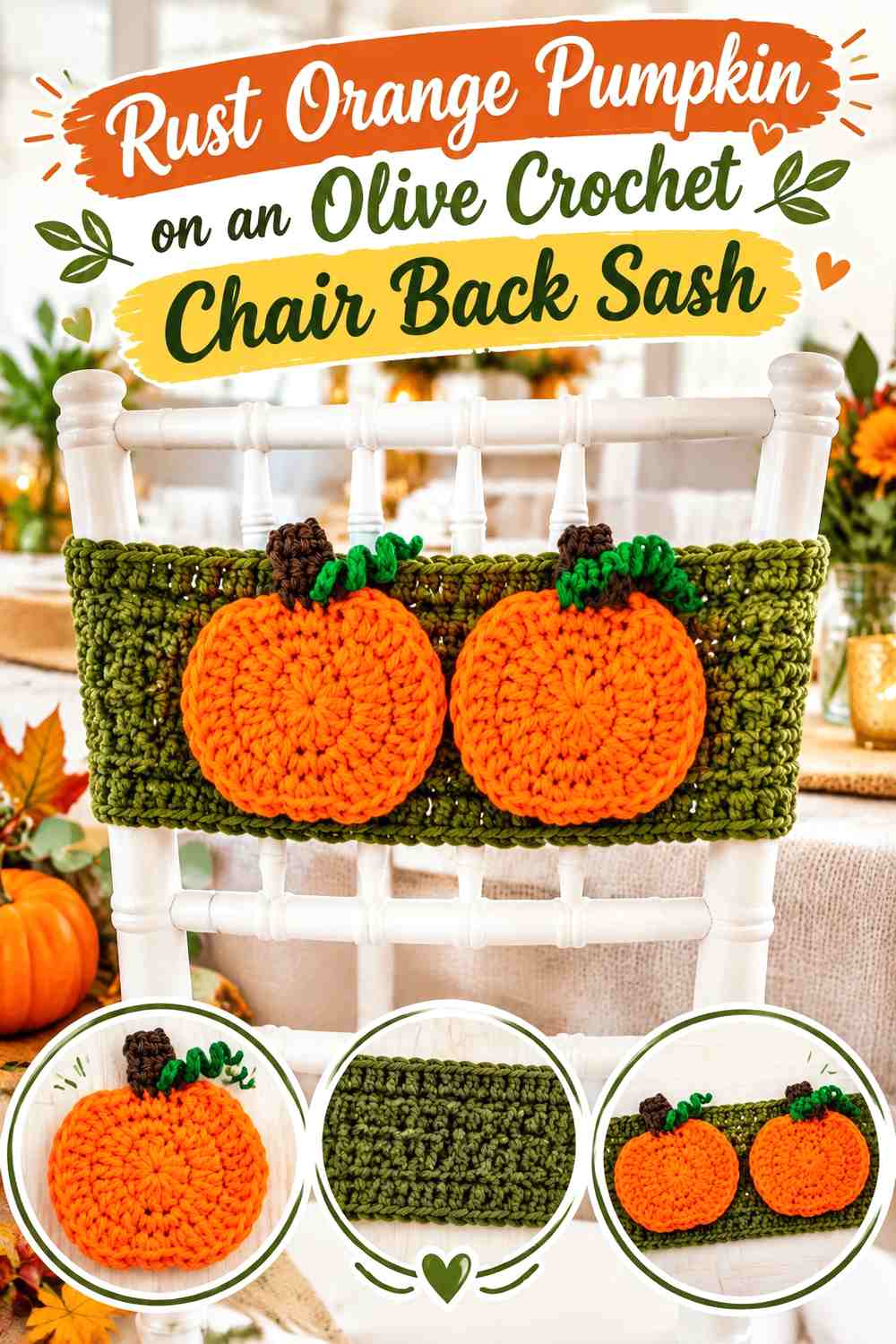
Make rust orange the focal color by concentrating it in one central pumpkin while olive covers most of the sash band and ties. This gives the Thanksgiving motif a clear visual hierarchy: the pumpkin is noticed first, while the greenish neutral keeps the longer chair-back sections from competing with it.
Rust Orange Should Carry Most of the Crochet Pumpkin Motif
Keeping the pumpkin predominantly rust orange helps its rounded silhouette remain recognizable against the olive band. If the pumpkin includes rib-like divisions, they do not all need another color; texture can provide part of that definition.
Olive Works Well Across the Longer Crochet Chair Sash Sections
Olive can cover the areas that extend toward the sides or back of the chair. Because these sections occupy more length than the pumpkin, a muted supporting color prevents the sash from becoming one uninterrupted orange strip.
Olive Can Repeat in the Rust Orange Pumpkin Stem
A small olive stem creates a direct connection between the pumpkin and sash. This repetition is enough to integrate the two colors without scattering olive through every part of the pumpkin.
Creator Credit: naztazia
2. Olive Pumpkin Leaves on a Rust Orange Crochet Chair Back Sash
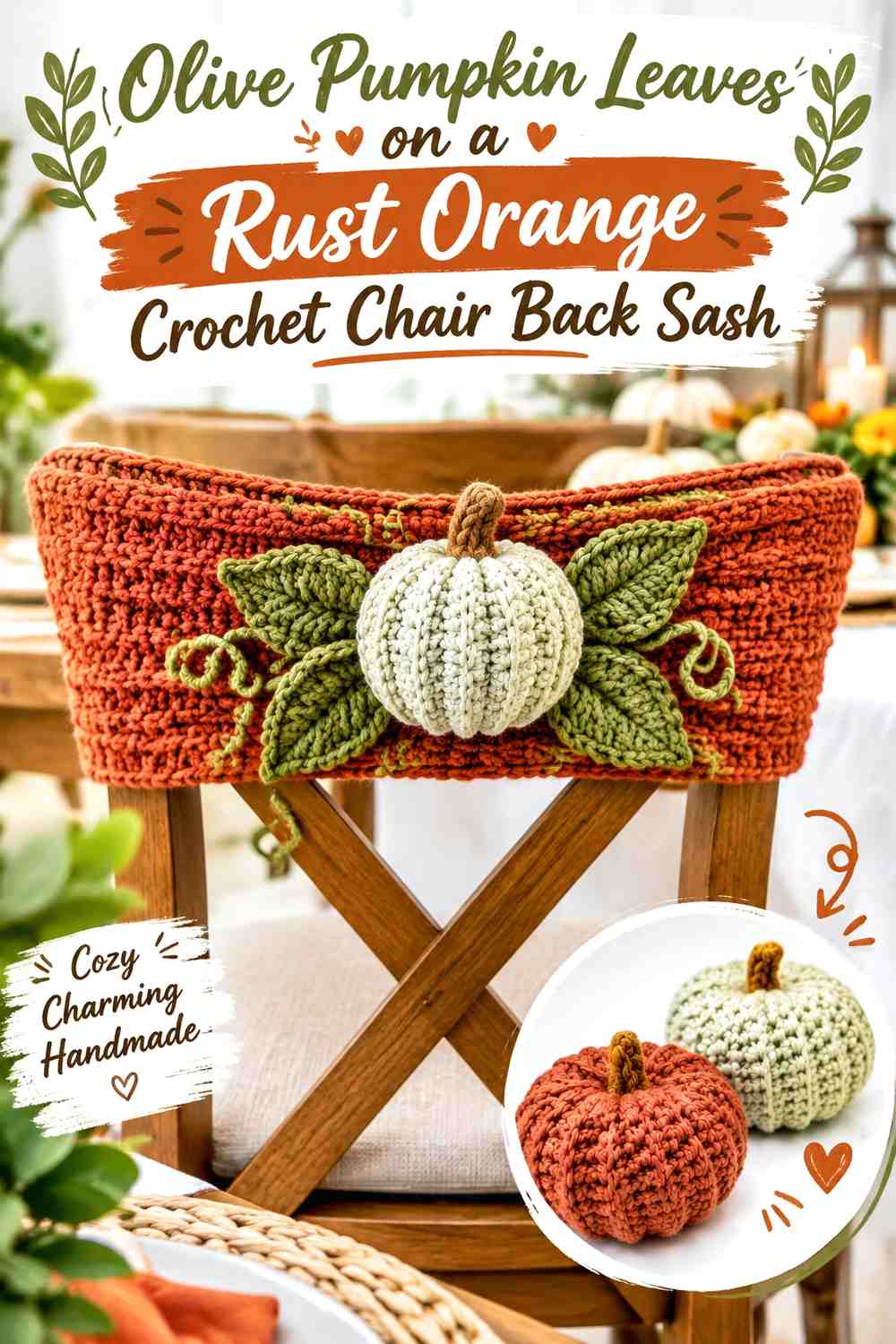
Reverse the balance by using rust orange over more of the sash and reserving olive for leaves, the pumpkin stem, and perhaps a narrow outline. The result is warmer overall, so the olive elements need to be placed where they can interrupt the orange field rather than disappear inside it.
Rust Orange Needs Uninterrupted Space Across the Crochet Sash Band
Keep portions of the sash solid rust orange instead of filling every section with green decoration. Those quieter stretches prevent the pumpkin area from competing with an overly busy band.
Olive Leaves Should Frame the Rust Orange Pumpkin
Place olive leaves near the pumpkin rather than evenly scattering them along the entire sash. Concentrating the green around the central motif gives the eye a distinct Thanksgiving focal area.
Olive Can Break Up a Large Rust Orange Chair Back Surface
If the chair is wide and the orange band feels visually dominant, a modest olive edge or repeated leaf detail can reduce that uninterrupted color area without requiring another shade.
Creator Credit: Bella Coco
3. Rust Orange, Olive, and Cream Crochet Pumpkin Chair Back Sash
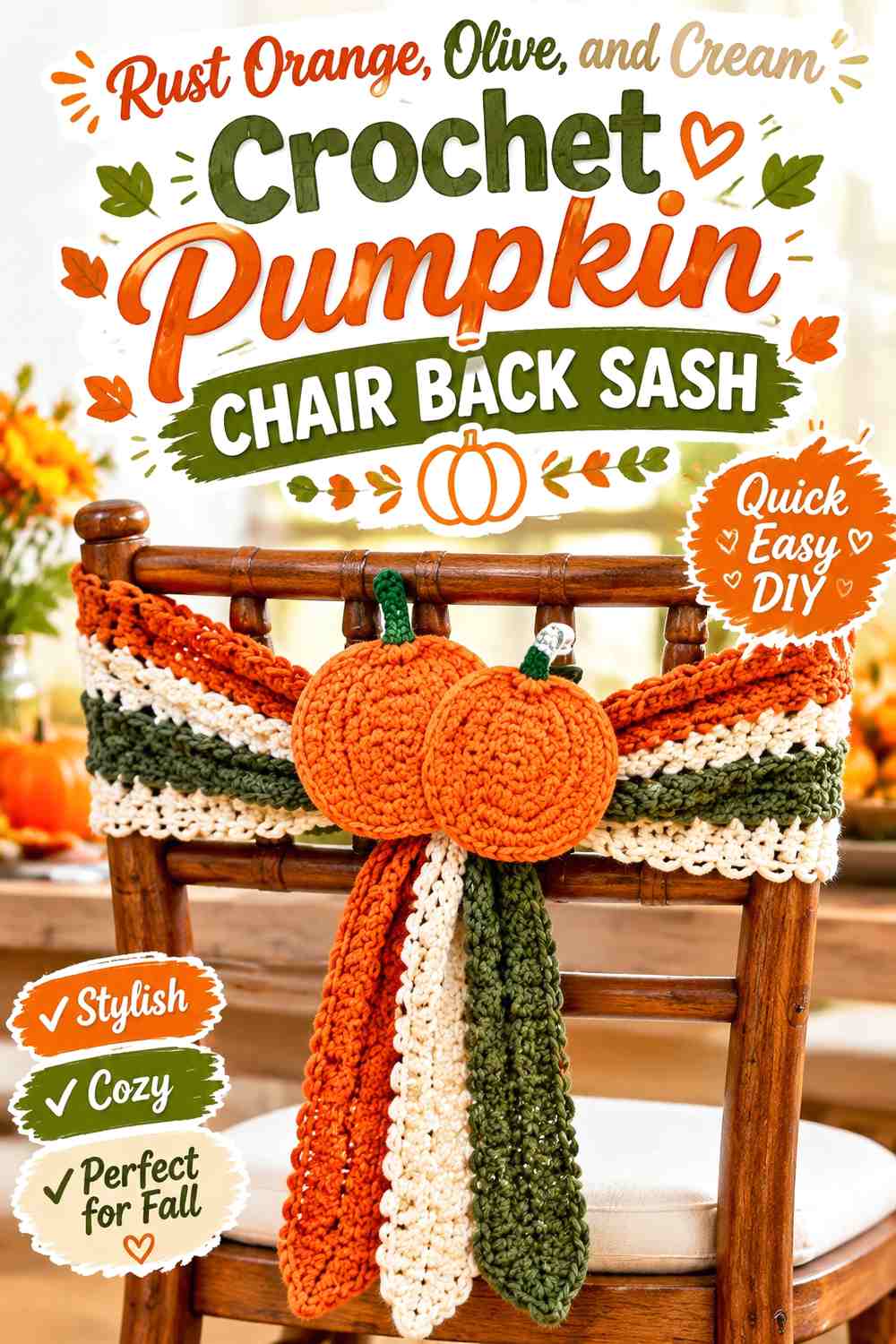
Cream is useful when rust orange and olive are similar enough in value that smaller pumpkin details disappear. Keep rust orange as the pumpkin color, olive as the sash or foliage color, and cream as a limited separator rather than dividing the chair sash equally among three shades.
Cream Can Separate a Rust Orange Pumpkin From an Olive Sash
A narrow cream outline around the central pumpkin can provide light/dark separation when the two main colors visually merge. It is especially useful around the lower pumpkin edge where the motif meets the band.
Rust Orange Should Remain More Prominent Than Cream on the Crochet Pumpkin
Too much cream can turn the third color into a competing focal point. Use it for outlining, a small central detail, or selected pumpkin ribs while leaving the broad pumpkin area rust orange.
Olive Keeps the Rust Orange and Cream Chair Sash Grounded
Use olive for the band, leaves, stems, or tie sections so cream remains an accent. That arrangement preserves the earthy Thanksgiving character of the palette.
Creator Credit: Crochet Jewel
4. Olive Sash Ties with a Rust Orange Crochet Pumpkin Center
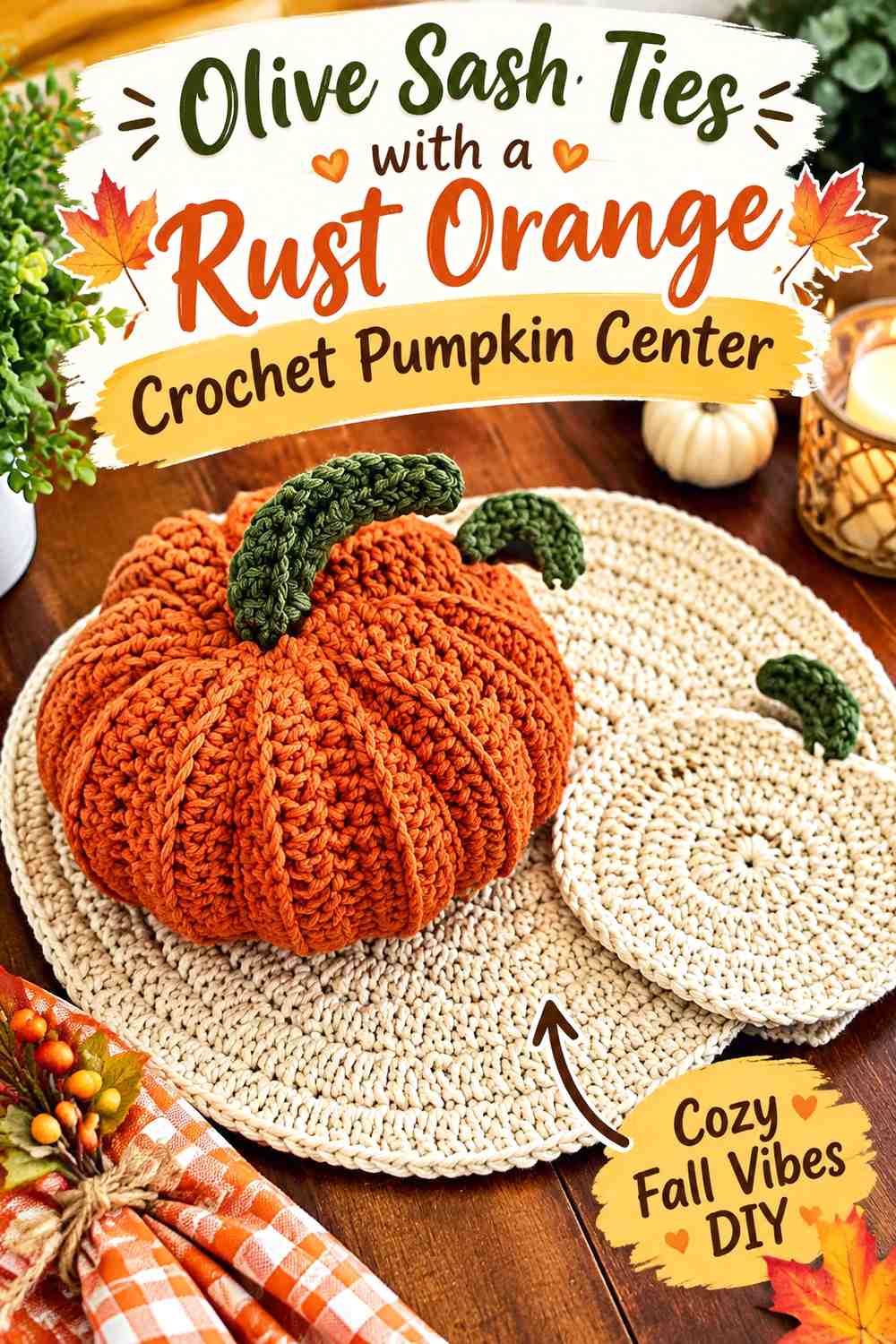
This layout concentrates color where the chair-back construction changes. Let the visible centerpiece contain most of the rust orange, then transition into olive ties or side bands that wrap around the chair.
Olive Makes the Crochet Chair Ties Visually Secondary
The tie sections are functional parts of the sash, so they do not need the same color emphasis as the pumpkin. Olive lets them frame the centerpiece without turning the knot or bow into a second focal point.
Rust Orange Can Stay Concentrated in the Crochet Pumpkin Center
A single rust-orange pumpkin creates stronger emphasis than scattering small orange sections all the way along the ties. This is particularly useful when the chair back itself has decorative woodwork or upholstery you do not want to obscure.
Olive Should Reappear Near the Rust Orange Pumpkin
Use a small olive stem, leaf, or narrow border close to the pumpkin. That repetition makes the transition from orange center to green ties feel intentional rather than abrupt.
Creator Credit: Heartfelt Crochets
5. Rust Orange Pumpkin Granny Square on an Olive Crochet Chair Sash
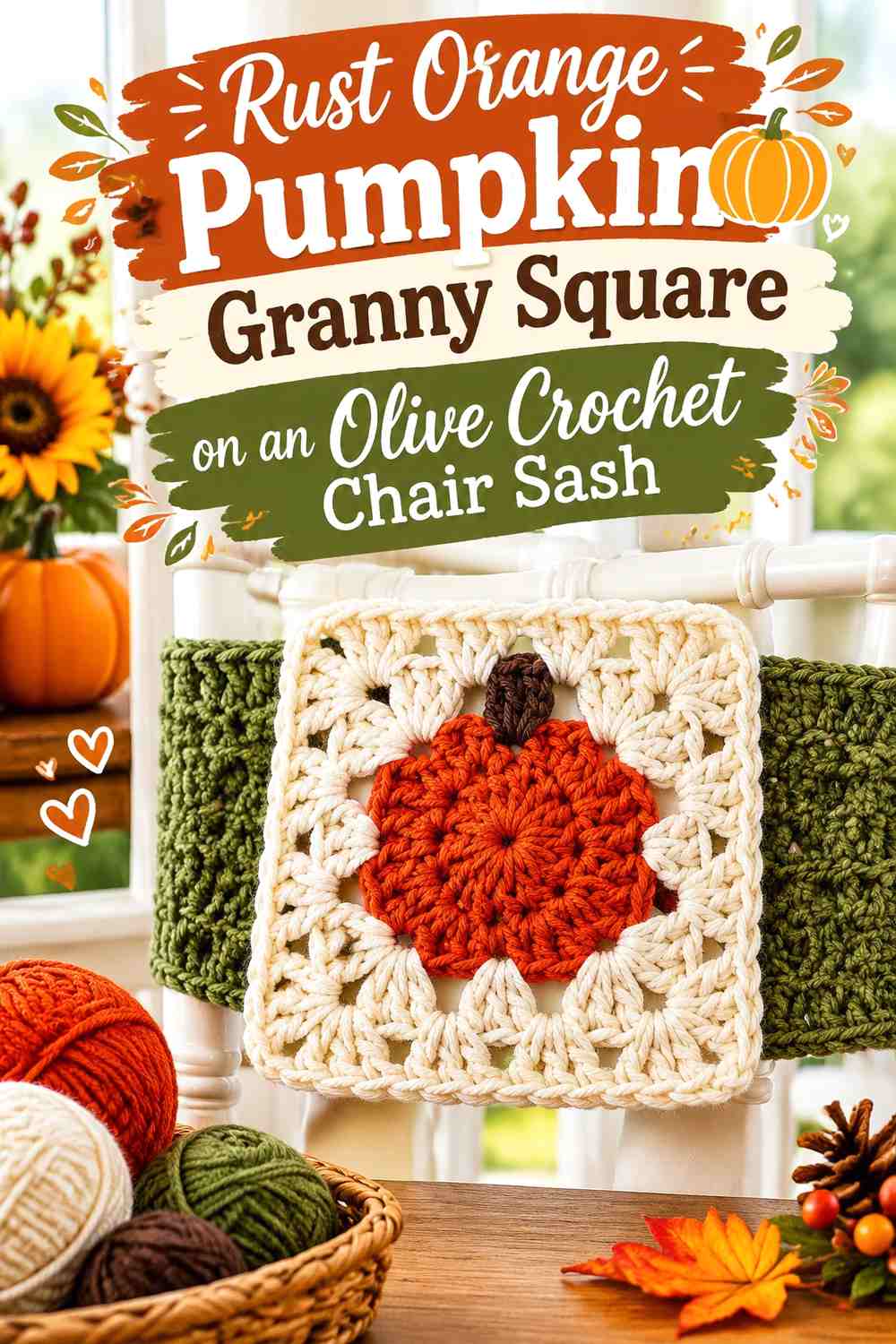
A pumpkin granny square gives the sash a clearly defined central panel. Use rust orange inside the pumpkin motif and olive either as part of the square background or across the bands extending from its sides.
Rust Orange Needs Enough Separation Inside the Crochet Pumpkin Square
If olive surrounds the pumpkin inside the same square, check that the pumpkin edge remains easy to follow. When the yarns are close in value, a small neutral transition or open spacing can help.
Olive Can Connect the Pumpkin Granny Square to the Crochet Sash Band
Using olive in both the square border and the adjoining sash creates a smoother visual transition. The square then reads as the decorative center rather than an unrelated patch attached to a different band.
Rust Orange Should Not Fill Every Round Around the Olive Sash
Keep orange concentrated near the pumpkin rather than continuing it through multiple surrounding borders. This protects the motif’s focal role.
Creator Credit: crochetcakes
6. Olive Edging Around a Rust Orange Crochet Pumpkin Chair Back Sash
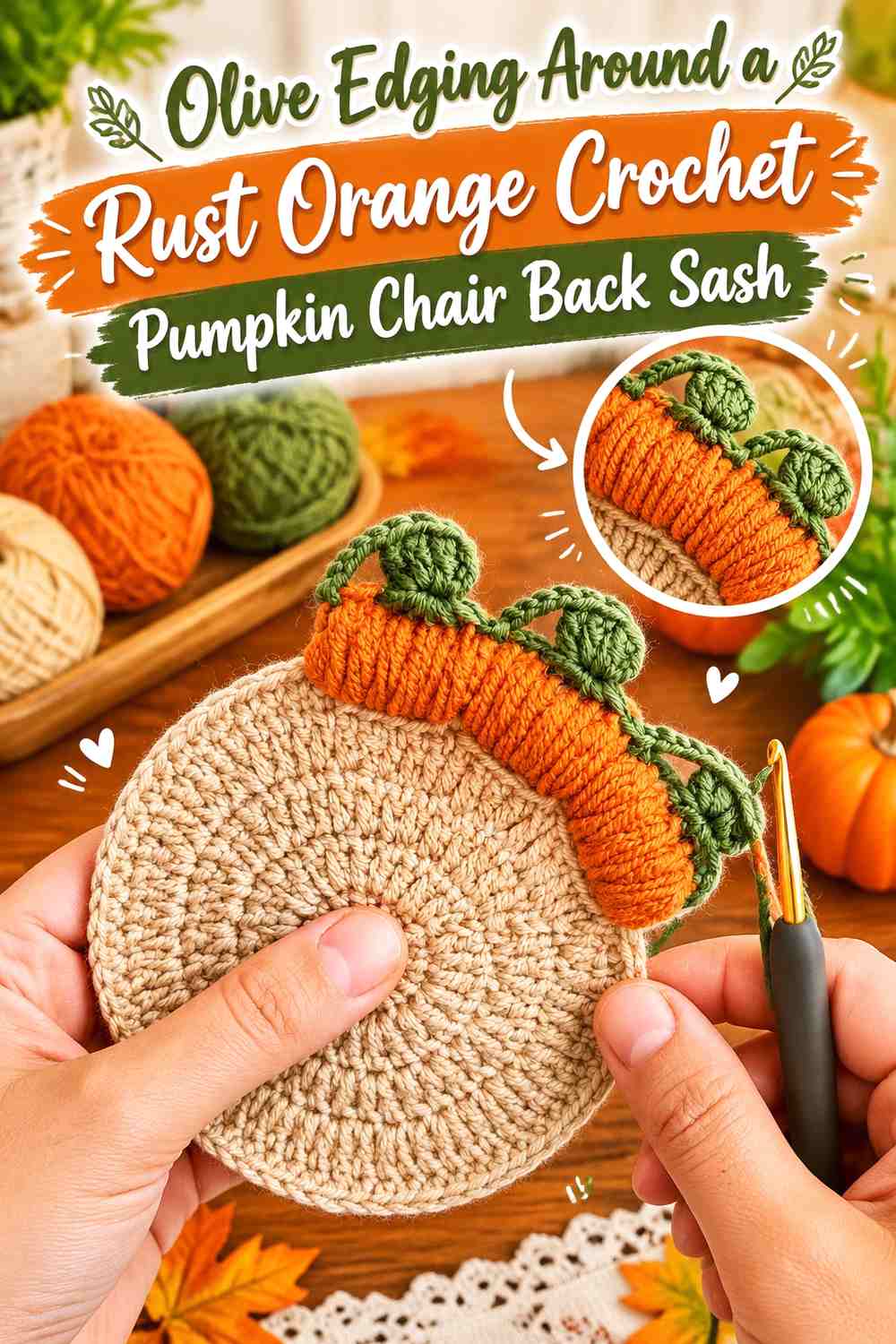
Use rust orange across the central band and pumpkin, then add olive as a narrow structural edge. This color placement works when you want the sash to feel distinctly warm while still giving its perimeter enough definition against the chair.
Olive Edging Can Define a Rust Orange Crochet Sash Without Taking Over
A narrow olive border gives the sash a visible outline from across the room. Keeping it slim allows rust orange to remain the leading Thanksgiving color.
Rust Orange Needs a Break Between the Crochet Pumpkin and Sash
When both the motif and its immediate background are orange, use texture, open space, or an olive outline to show where the pumpkin ends. Otherwise the motif may disappear into the band.
Olive Can Continue Into the Rust Orange Pumpkin Stem
Carrying the border color into the stem connects the edging with the central motif. You do not need additional green stripes if that small repetition already balances the palette.
Creator Credit: Knitting Love
7. Rust Orange Sash Ends with an Olive and Pumpkin Crochet Center
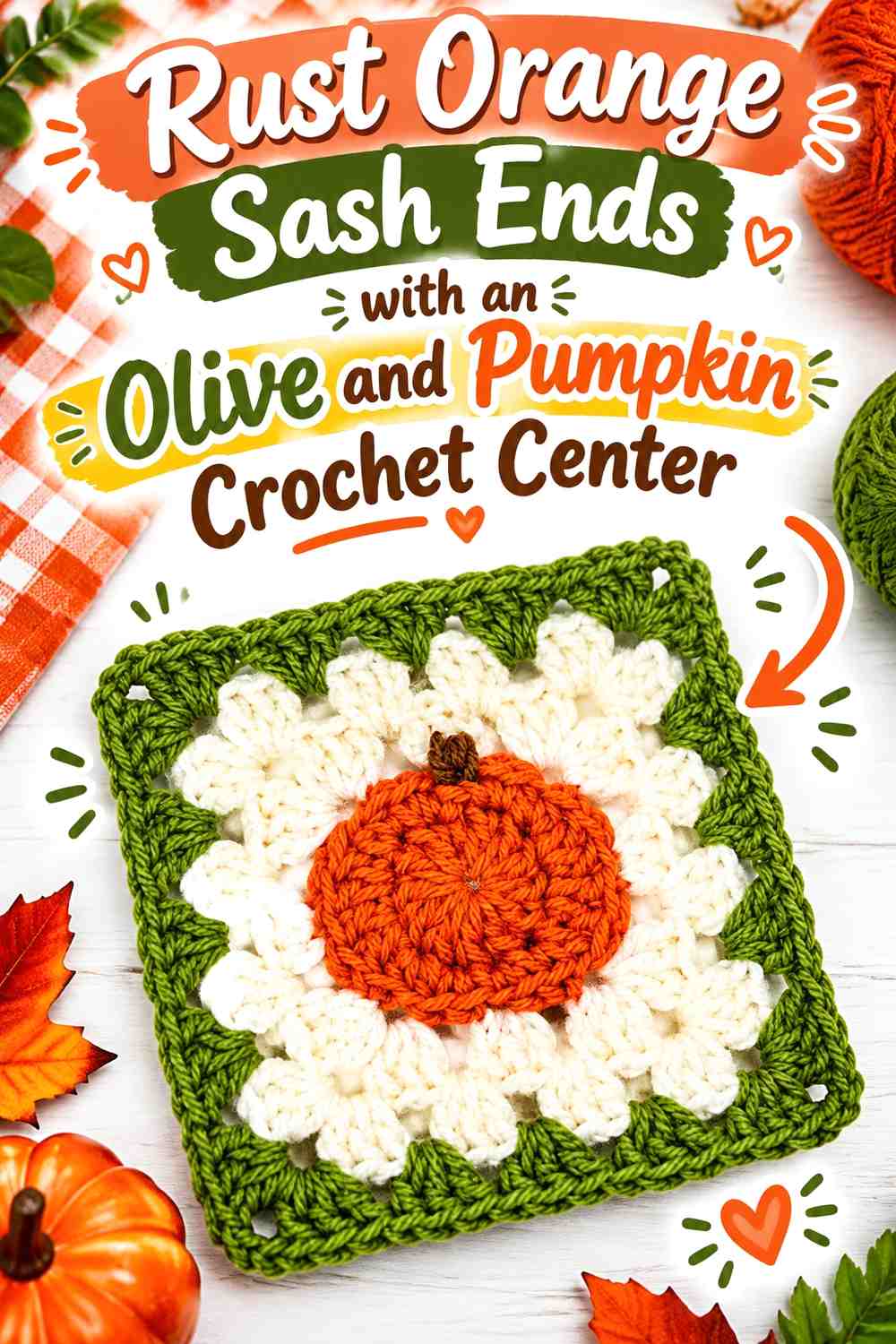
Instead of putting orange only in the pumpkin, repeat it at the far ends of the sash. Keep the central band mainly olive, place the pumpkin at the center, and use limited rust-orange finishing at each end.
Rust Orange Ends Can Echo the Crochet Pumpkin Without Filling the Whole Sash
Repeating rust orange at both outer ends creates a visual connection across the chair back. Because the color appears in separated zones, the middle olive section still has room to calm the palette.
Olive Should Occupy More of the Crochet Chair Band
Letting olive cover the majority of the long band prevents the three orange areas—the center and two ends—from merging into a single dominant block.
Rust Orange Needs Consistent Repetition Around the Olive Center
Make the orange end treatments comparable to one another. If one side uses much more orange than the other, the sash can look unintentionally unbalanced once tied to the chair.
Creator Credit: ElyseCrochets 💌
8. Olive Pumpkin Panel with Rust Orange Crochet Chair Back Ties
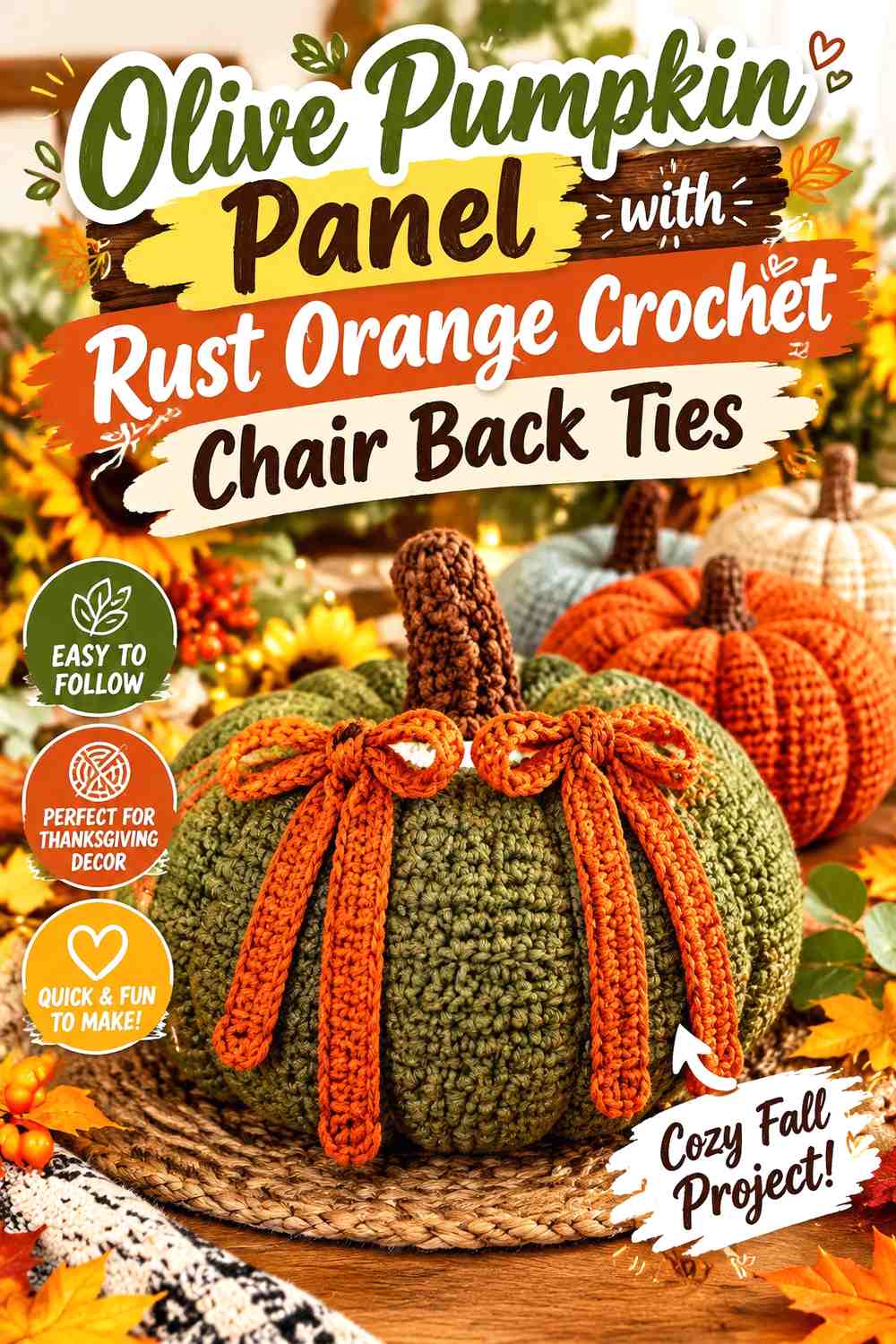
For a less conventional Thanksgiving palette, make olive the pumpkin’s primary color and let rust orange move to the tie sections or a narrow frame. The pumpkin shape must be especially clear because the green coloration gives fewer traditional visual clues.
Olive Needs a Strong Crochet Pumpkin Silhouette
Keep the pumpkin outline simple and recognizable if olive is the main motif color. Avoid surrounding it with numerous olive leaves that could blur the pumpkin into the background.
Rust Orange Can Frame an Olive Crochet Pumpkin Panel
A rust-orange border immediately distinguishes the green pumpkin from the rest of the sash. It also preserves the orange Thanksgiving note without forcing orange into the pumpkin itself.
Rust Orange Ties Can Balance a Large Olive Center
If the central olive panel is broad, orange tie sections provide color weight at both sides. Keep their treatment consistent so the panel remains centered visually.
Creator Credit: The Crochet Crowd
9. Rust Orange Pumpkin Trio on an Olive Crochet Thanksgiving Sash
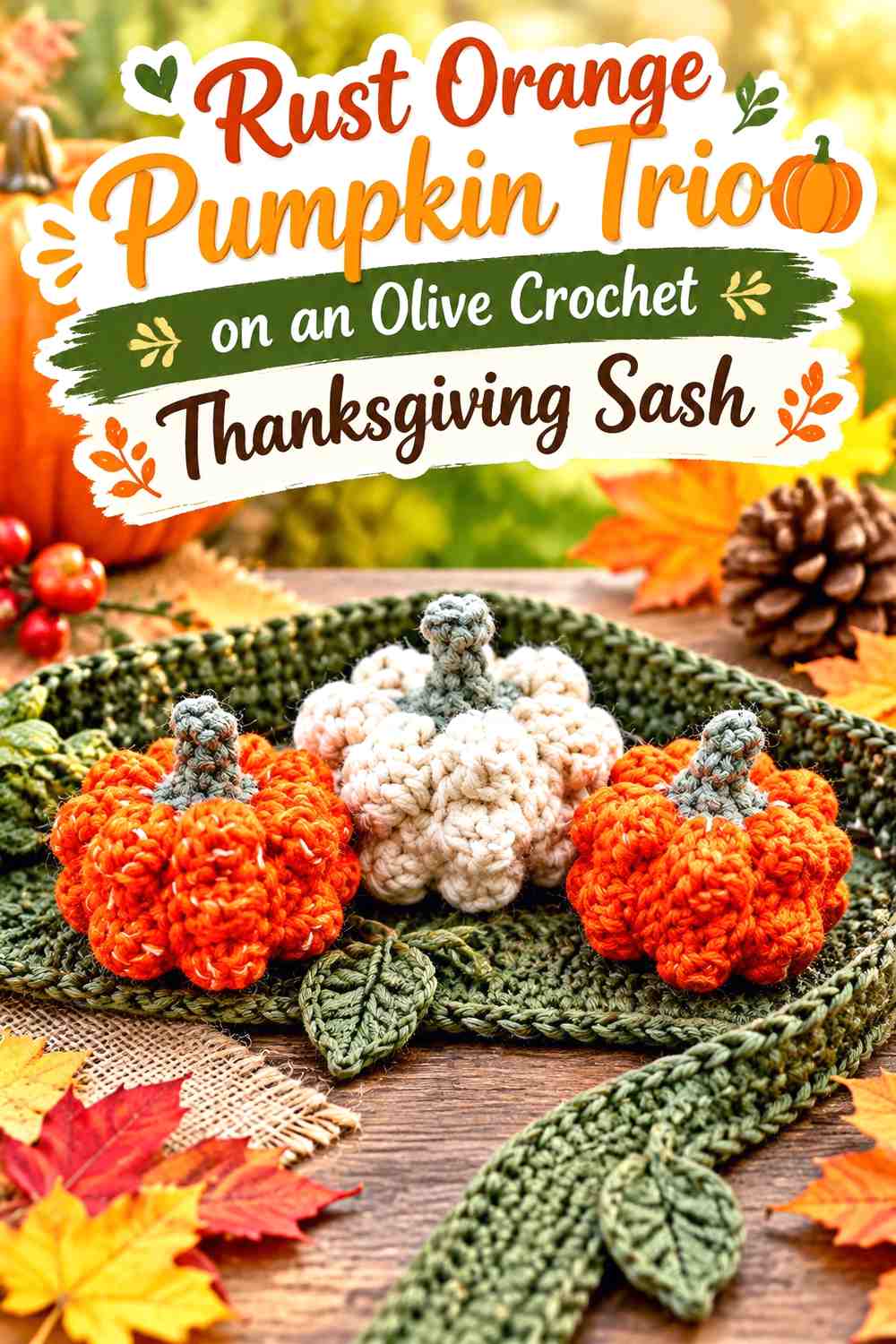
Three smaller pumpkins can spread the Thanksgiving motif across a wider chair back. Keep the sash mainly olive and let the rust-orange pumpkins appear as a central group rather than spacing them from edge to edge.
Rust Orange Pumpkins Need a Clear Hierarchy on the Olive Sash
Three identical, equally detailed motifs can compete with one another. Consider making the center pumpkin visually dominant through placement or surrounding space while keeping the side pumpkins quieter.
Olive Space Should Separate Each Rust Orange Crochet Pumpkin
Leave enough olive visible between motifs for each pumpkin silhouette to remain distinct. Packing three orange pumpkins tightly together can make them read as one irregular block.
Olive Stems Can Connect the Rust Orange Pumpkin Trio to the Sash
Using olive for all three stems creates repetition and ties the pumpkin cluster directly into the larger green band.
Creator Credit: Jayda InStitches
10. Olive and Rust Orange Striped Crochet Pumpkin Chair Back Sash
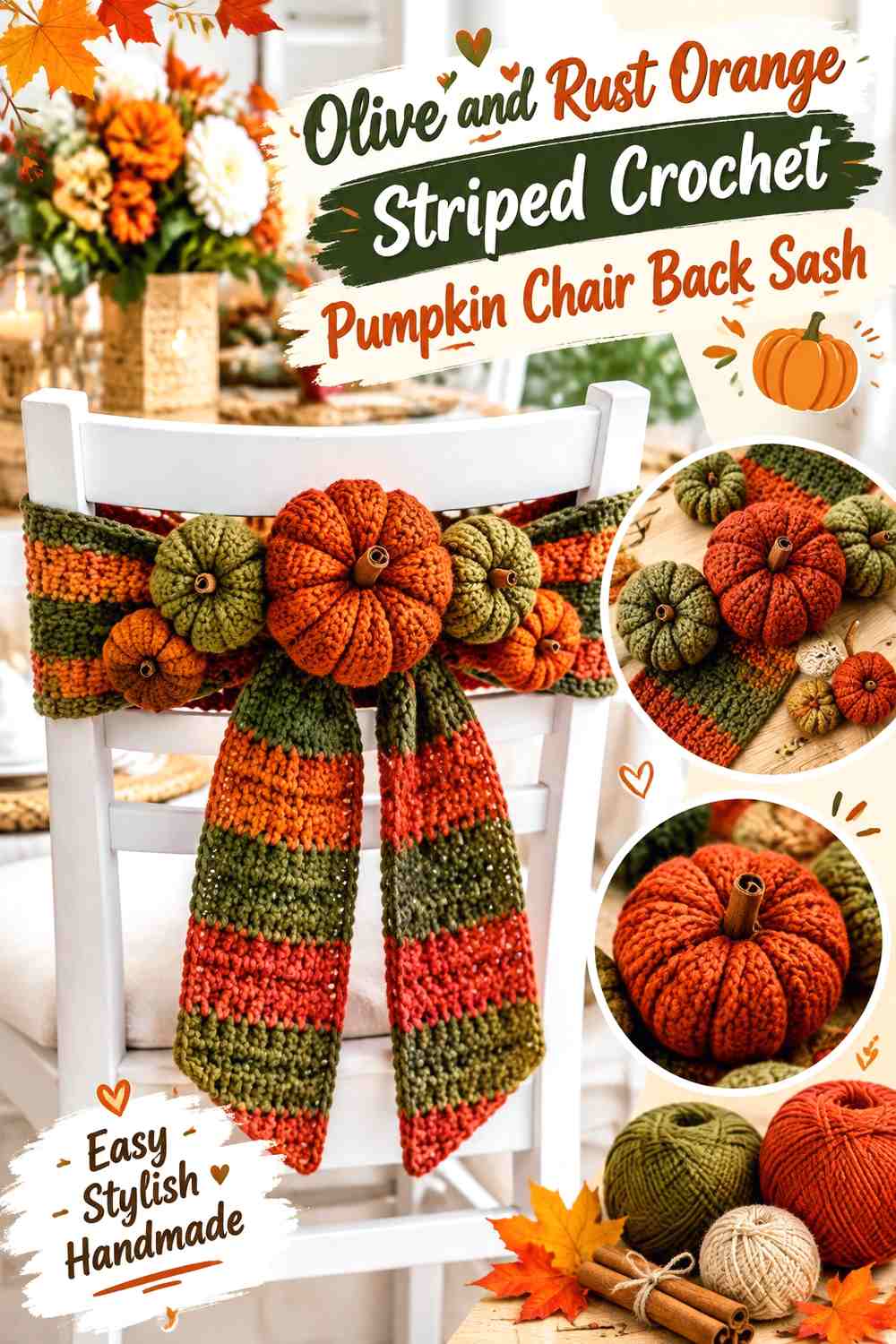
Use broader olive and rust-orange sections across the sash while keeping a distinct pumpkin motif at the center. The challenge is preventing the stripe pattern from overpowering the pumpkin, so the background should remain simpler around the focal area.
Olive and Rust Orange Stripes Need Unequal Visual Weight
Avoid alternating very narrow, equally strong stripes from one end of the chair to the other. Broader sections with one dominant shade produce a calmer background for the pumpkin.
Rust Orange Should Stay Uninterrupted Inside the Crochet Pumpkin
Even if the band uses both colors, a mostly rust-orange pumpkin gives the eye one stable shape. Continuing every background stripe through the motif can weaken its outline.
Olive Can Separate Rust Orange Sections Near the Chair Ties
Use olive where the sash transitions into the ties if the band already contains substantial orange. This gives the outer ends a quieter finish.
Creator Credit: MJ’s Off The Hook Designs
11. Rust Orange Pumpkin with Olive Leaf Ends Crochet Chair Back Sash
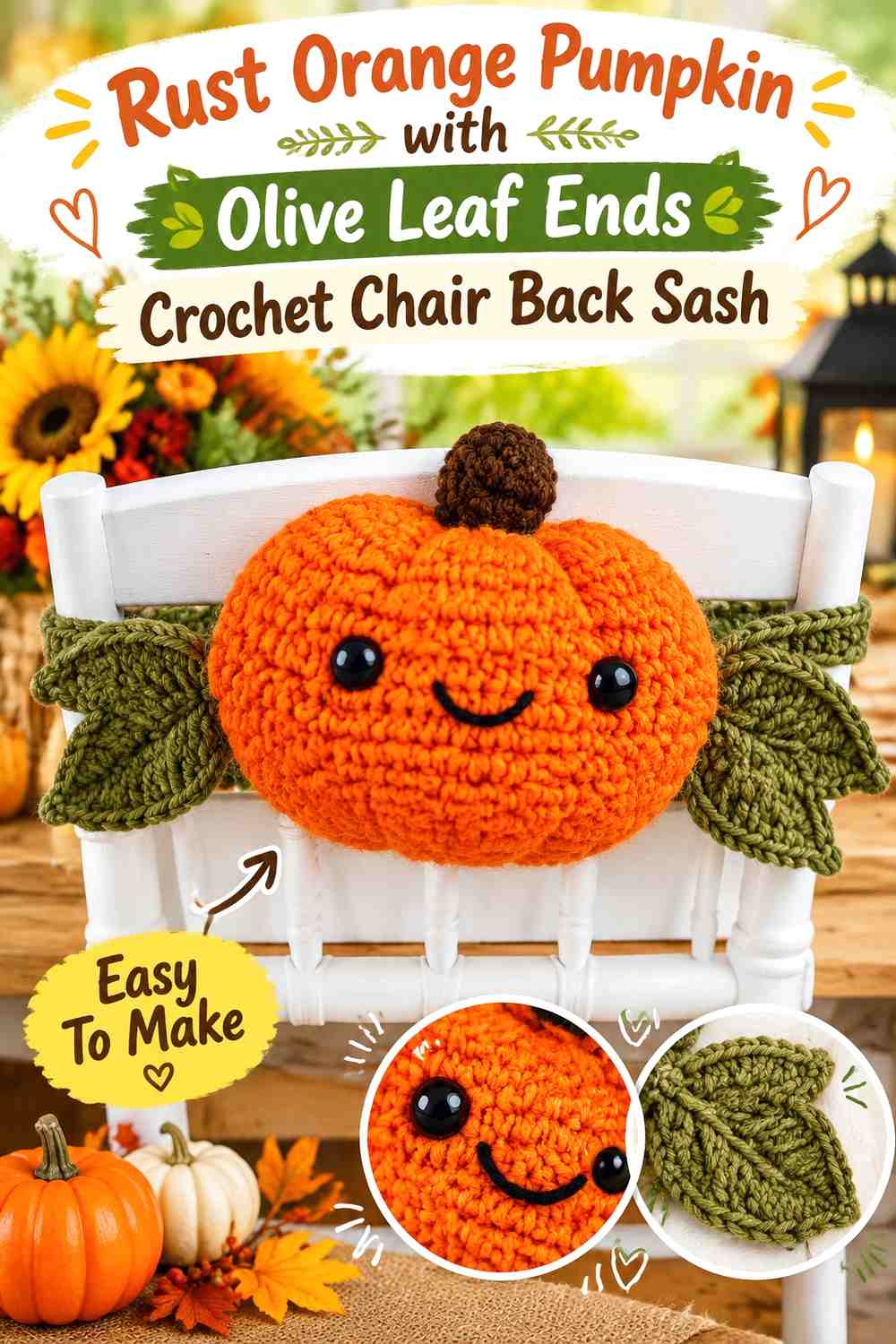
Finish the collection with a sash that places one rust-orange pumpkin in the center and olive leaf motifs toward both ends. This keeps the Thanksgiving imagery spread across the chair without repeating multiple pumpkins.
Rust Orange Should Remain the Largest Crochet Motif
Make the pumpkin visually larger or more solid than any single olive leaf. That difference tells the viewer which element is the centerpiece.
Olive Leaves Can Lead the Eye Toward the Rust Orange Pumpkin
Orient or arrange the leaf motifs so they visually move inward toward the middle rather than away from it. The green details then act as framing devices for the central pumpkin.
Olive Leaf Ends Need Breathing Room Around Rust Orange Details
Do not fill every remaining part of the sash with additional orange accents. Leaving portions of the band quiet helps the pumpkin and leaves remain distinct instead of turning into a continuous autumn pattern.
Creator Credit: Hooked by Robin
Which Olive and Rust Orange Pumpkin Chair Sash Works for Your Thanksgiving Table?
Choose a rust-orange pumpkin on an olive field if you want the pumpkin to be recognizable immediately. Ideas 1, 4, 5, 9, and 11 use that hierarchy most clearly.
Choose an orange-led sash if you want a warmer Thanksgiving dining setup. Ideas 2 and 6 let rust orange occupy more of the chair-back surface while olive controls the details or edging.
For more separation between the two earthy shades, Idea 3 adds cream. If you want something less traditional, Idea 8 turns olive into the pumpkin color. Ideas 7 and 10 distribute both colors farther across the chair and work well when you want the sash itself—not only the pumpkin—to contribute to the seasonal palette.
Conclusion
Olive and rust orange give a Thanksgiving pumpkin chair back sash enough seasonal color without requiring a large collection of autumn shades. The most effective decision is to establish a clear hierarchy before crocheting: decide whether rust orange belongs mainly to the pumpkin or across the sash, then let olive perform a supporting job through bands, ties, stems, leaves, borders, or background sections.
For a strong pumpkin focal point, keep rust orange concentrated in the center and give olive more of the long sash surface. For a warmer chair-back treatment, reverse the balance and use olive strategically to define edges and supporting motifs.
Before making several matching sashes for a dining set, test one color arrangement on an actual chair. Look at it from table distance and check whether the pumpkin is still identifiable, whether the ties compete with the center, and whether olive and rust orange have enough separation. Use the linked tutorials for their demonstrated crochet constructions and apply the color placement that suits your Thanksgiving chairs.
Frequently Asked Questions
Should Olive or Rust Orange Dominate a Crochet Thanksgiving Pumpkin Chair Sash?
Rust orange is a practical dominant color for the pumpkin because it makes the motif immediately distinct, while olive can occupy more of the sash band. If you prefer a warmer overall chair treatment, rust orange can dominate the sash as long as olive still provides enough contrast around the pumpkin.
Where Should Olive Go on a Rust Orange Crochet Pumpkin Chair Sash?
Olive can work on the pumpkin stem, leaves, border, side bands, or ties. These areas let it support the rust-orange focal motif without dividing the pumpkin into too many small color sections.
Can I Add Cream to an Olive and Rust Orange Crochet Chair Sash?
Yes. A limited amount of cream can separate olive and rust orange when they are similar in lightness. It is most useful as an outline, small border, pumpkin detail, or another narrow transition rather than an equal third color.
How Can I Keep a Rust Orange Pumpkin Visible on a Rust Orange Crochet Sash?
Use olive around the pumpkin outline, place the pumpkin on an olive central panel, or create visual separation with texture or open space. The motif needs a boundary that differs from the surrounding orange band.
Can the Crochet Pumpkin Be Olive Instead of Rust Orange?
Yes. Keep the pumpkin silhouette clear and use rust orange around it as a border, tie color, or nearby accent. Reducing other olive decorations near the pumpkin will help prevent the green motif from blending into surrounding leaves.
Should Olive and Rust Orange Be Used in Equal Amounts on a Chair Back Sash?
They do not need to be equal. Giving one color more visual area usually creates a clearer hierarchy. For example, an olive sash with a concentrated rust-orange pumpkin makes the seasonal motif easier to identify than an evenly alternating two-color design.
How Do I Check Olive and Rust Orange Before Making a Full Set of Thanksgiving Chair Sashes?
Crochet or arrange a small sample using both colors and view it on the actual chair from normal dining-room distance. If the two shades merge, increase the size of the color blocks, introduce open space, or use a small lighter separator before repeating the design across the full set.