Persimmon and sage give a crochet patchwork vest a distinctly autumnal two-color direction without requiring every block to introduce another harvest shade. Persimmon can provide the warmer focal squares and center panels, while sage can give the garment visual breathing room through alternating blocks, side panels, borders, or joins.
On a vest, patch placement matters as much as color choice. A persimmon square that looks balanced on a flat layout can become much more prominent when it lands at the center chest, shoulder, or neckline. Sage blocks placed along the sides can visually calm a warm front, while a sage back panel can prevent an all-over persimmon layout from feeling too dense.
“Quilted patchwork” here refers to the visual arrangement of crochet blocks, joined motifs, or deliberately divided garment panels. The tutorials below include true granny-square and patchwork vest constructions as well as strong vest constructions that can support a two-color panel adaptation. Use each creator’s tutorial for its original sizing, assembly, shaping, and edging guidance; the persimmon-and-sage block layouts are independent editorial color schemes.
Quick List
- Persimmon Center-Block and Sage Frame Crochet Patchwork Vest
- Sage Center-Block and Persimmon Frame Crochet Patchwork Vest
- Persimmon and Sage Checkerboard Crochet Patchwork Vest
- Persimmon Front and Sage Back Crochet Patchwork Vest
- Sage Front and Persimmon Back Crochet Patchwork Vest
- Persimmon Shoulder-Block and Sage Body Crochet Patchwork Vest
- Sage Shoulder-Block and Persimmon Body Crochet Patchwork Vest
- Persimmon Side-Panel and Sage Center Crochet Patchwork Vest
- Sage Side-Panel and Persimmon Center Crochet Patchwork Vest
- Persimmon-Dominant Granny Block and Sage Join Crochet Patchwork Vest
- Sage-Dominant Granny Block and Persimmon Join Crochet Patchwork Vest
- Persimmon and Sage Offset-Block Crochet Patchwork Vest
- Persimmon Lower-Panel and Sage Upper-Panel Crochet Patchwork Vest
- Sage-Dominant and Persimmon Accent Crochet Quilted Patchwork Vest
Let Persimmon Create the Autumn Focal Blocks and Sage Provide Rest
Persimmon naturally attracts more attention because it is warmer and more saturated than muted sage. On a vest made from repeated blocks, that means even equal quantities of the two colors may not look visually equal.
If you want a balanced garment, use sage around the neckline, sides, or joins to create quieter areas between persimmon patches. If you want a more dramatic autumn vest, concentrate persimmon through the center front and let sage support it around the perimeter.
Use Persimmon and Sage Across the Whole Vest, Not Just the Front
A patchwork vest is viewed from the side and back as well as straight on. Before joining blocks permanently, lay out the front, shoulders, side sections, and back together so one color does not accidentally collect in a single area.
Repeating a sage block from the front on the back, or carrying persimmon from one shoulder into a lower opposite panel, can make the color movement feel intentional without requiring perfect symmetry.
Let Persimmon and Sage Borders Unify Uneven Patchwork
A two-color quilted layout can become busy when every block has equal visual strength. Using one shade consistently for neckline ribbing, armhole finishing, or the lower hem can pull separate patches into one garment.
Choose the border color after laying out the blocks. Sage edging can soften a persimmon-heavy vest, while persimmon ribbing can give a sage-dominant garment a stronger autumn frame.
1. Persimmon Center-Block and Sage Frame Crochet Patchwork Vest

Place persimmon through the central front blocks and surround them with sage along the sides, shoulders, or outer edges. This creates a warm vertical focal area while the muted green keeps the perimeter calmer.
The layout works especially well when the vest is worn open or layered over a simple top because the persimmon center remains close to the face and torso.
Persimmon Should Form a Connected Center Through the Sage Vest
Keep the warm blocks close enough that the eye can follow them as one central arrangement rather than isolated orange patches.
If the neckline cuts through the upper center, make sure enough persimmon remains on both sides for the focal color to stay visually connected.
Sage Can Frame Persimmon Without Competing at the Edges
Use sage through side blocks, shoulder sections, or armhole-adjacent pieces. Those quieter areas prevent the warm center from expanding across the entire garment.
A sage neckline or hem can reinforce the outer frame if the main body already contains several persimmon blocks.
Creator Credit: crochet with parisa
2. Sage Center-Block and Persimmon Frame Crochet Patchwork Vest
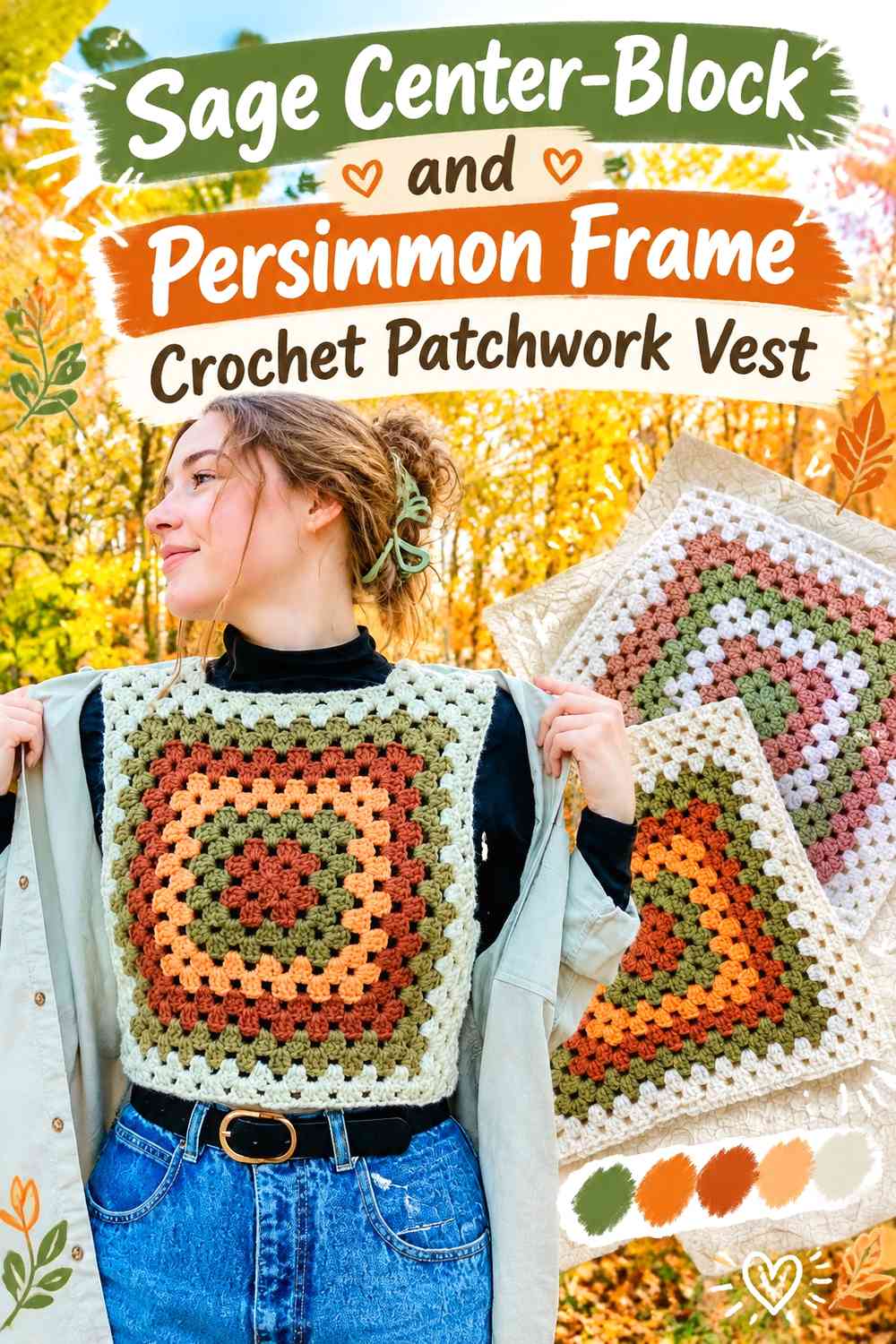
Reverse the arrangement by putting sage through the center front and using persimmon around the outer blocks and edging. The result feels more muted through the torso while the warmer color defines the garment silhouette.
This is useful when you want persimmon to remain noticeable without placing its strongest area directly at the center chest.
Sage Needs a Broad Center Inside the Persimmon Vest Frame
Give sage enough connected surface that it reads as the main interior field rather than a few isolated neutral patches.
If the vest has a V-neck, carry sage down both sides of the opening so the center remains visually coherent.
Persimmon Can Strengthen Sage Around the Shoulders and Hem
Use the warm shade at outer blocks, armhole-adjacent sections, or lower edging. These placements give the pale center a more defined boundary.
Avoid filling every border row with persimmon if the outer blocks already provide enough warm framing.
Creator Credit: HayHay Crochet
3. Persimmon and Sage Checkerboard Crochet Patchwork Vest

Alternate persimmon and sage in a clear checkerboard rhythm across the front and back. This gives both colors similar surface area while allowing their contrasting temperatures to create the patchwork effect.
The layout is most successful when the alternation continues logically around side seams rather than restarting independently on every panel.
Persimmon Checks Should Stay Separated by Sage
Avoid placing multiple persimmon blocks together unless you intentionally want a larger warm field. Regular sage spacing keeps the checkerboard easy to recognize.
Check the shoulder joins as well as the torso; two persimmon blocks meeting unexpectedly at the shoulder can disrupt an otherwise regular layout.
Sage Checks Need Consistent Placement Beside Persimmon
Use sage as the repeating counterweight rather than treating it as a filler wherever space remains.
Before seaming, photograph or sketch the final block order so the front and back maintain the intended alternation during assembly.
Creator Credit: Soni Valls
4. Persimmon Front and Sage Back Crochet Patchwork Vest

Use persimmon as the stronger color across most front-facing blocks and shift the back toward sage. This creates a vest that looks warm and vivid from the front but more subdued from behind.
Repeat at least a small amount of sage at the front neckline or sides so the back does not feel disconnected.
Persimmon Can Lead Across the Front Patchwork Panels
Keep the central and lower front predominantly persimmon, using sage only where a block needs separation.
Because the front is divided by a neckline or opening, compare both sides together so one does not accidentally become much warmer than the other.
Sage Should Carry Enough of the Back to Balance Persimmon
Use broad sage areas rather than a few small green squares. A quieter back panel gives the garment a genuine front-to-back color shift.
One or two persimmon back blocks can connect the two sides without making the back equally warm.
Creator Credit: Ravella Design
5. Sage Front and Persimmon Back Crochet Patchwork Vest

This reverse layout keeps the front calm and moves the strongest autumn color to the back. Sage becomes the color seen around the neckline and center torso, while persimmon creates a more surprising rear panel.
This works particularly well when you want the vest to layer easily over patterned shirts without adding another strong color across the front.
Sage Should Keep the Front Patchwork Visually Quiet
Use broad sage sections around the chest, neckline, and side fronts. The muted color gives the garment structure without making every block a focal point.
A small persimmon front square can hint at the back palette without taking over.
Persimmon Can Turn the Back Into the Main Autumn Feature
Use several connected persimmon blocks or one broad rear panel so the warm color is obvious from behind.
Keep the neckline edging either sage or narrowly persimmon depending on whether you want the back color to wrap visibly toward the front.
Creator Credit: Crochet Lovers
6. Persimmon Shoulder-Block and Sage Body Crochet Patchwork Vest

Place persimmon at the upper blocks around the shoulders and keep most of the torso sage. The warm color then sits closer to the face while the softer green dominates the larger body area.
This distribution is useful when you want persimmon to feel important without letting it cover half of every panel.
Persimmon Shoulder Blocks Should Repeat Across the Sage Vest
Use persimmon on both shoulders or in a deliberately mirrored upper arrangement. The repetition makes the warm color feel architectural rather than random.
If the neckline cuts deeply between the blocks, keep enough persimmon visible on each side to preserve the upper frame.
Sage Should Carry the Larger Body Beneath Persimmon
Let sage continue across the middle and lower torso with fewer interruptions. That broad muted field keeps the shoulder accents prominent.
A sage hem also reinforces the body color and prevents the lower edge from competing with the top.
Creator Credit: Kenikse Crochet
7. Sage Shoulder-Block and Persimmon Body Crochet Patchwork Vest
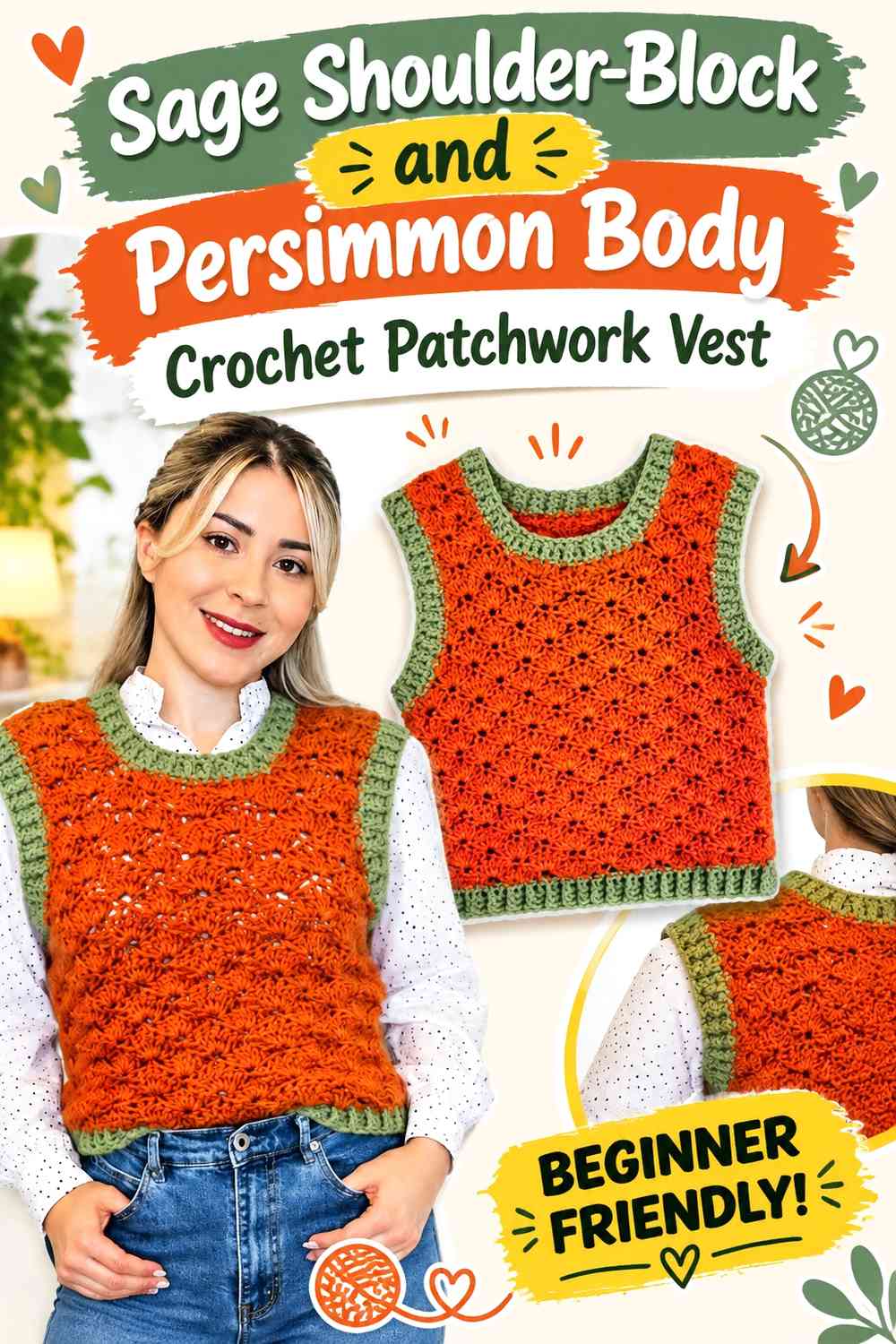
Reverse the emphasis by making the shoulders sage and letting persimmon spread across the torso. The green upper blocks soften the transition to the neckline, while the warmer body creates a stronger autumn statement.
This arrangement can be especially effective when the vest is layered over cream, oatmeal, or another light neutral.
Sage Should Give the Persimmon Vest a Softer Upper Frame
Use sage around shoulder and upper armhole sections so the neckline does not sit inside an uninterrupted field of warm color.
Keep those green areas substantial enough to read as shoulder blocks rather than narrow trim.
Persimmon Can Dominate the Body Below Sage
Run the warmer color through most of the center and lower patchwork. Broad persimmon sections make the garment feel intentionally autumnal rather than evenly two-tone.
If the body becomes too visually heavy, introduce one sage block near the lower side instead of changing every hem row.
Creator Credit: Brunaticality
8. Persimmon Side-Panel and Sage Center Crochet Patchwork Vest

Use sage through the central front and back while placing persimmon along the side panels. The warm side sections remain visible in profile and can create a stronger outline around the quieter center.
This is a useful patchwork direction when you want color blocking to follow the garment structure rather than forming a regular grid.
Persimmon Side Panels Should Stay Visible Beside Sage
Give the side blocks enough width that they remain noticeable from the front and back, not only directly from the side.
If the armhole edging is also persimmon, keep it narrow enough that the side block remains the larger warm feature.
Sage Can Keep the Center of the Persimmon-Framed Vest Calm
Use broad sage panels across the chest and back so the warmer outer color has a clear contrast.
A sage neckline helps connect the center front to the center back and reinforces the muted interior field.
Creator Credit: AC Crochets
9. Sage Side-Panel and Persimmon Center Crochet Patchwork Vest

This version puts persimmon through the center and sage along both sides. The arrangement gives the warm color a strong front-and-back path while using green to visually contain it.
It is more vertical than a checkerboard and can make a patchwork garment feel less busy.
Persimmon Should Create One Strong Center Between Sage Sides
Keep the central blocks close in color placement so they form a readable column or broad interior panel.
Avoid scattering additional large persimmon patches into the sage sides unless you intentionally want a less structured layout.
Sage Side Panels Can Contain the Persimmon Patchwork
Use sage consistently near the side seams and lower armholes. The cooler muted shade gives the warmer middle a stable edge.
A sage hem can connect both sides beneath the persimmon center if stronger framing is needed.
Creator Credit: TCDDIY
10. Persimmon-Dominant Granny Block and Sage Join Crochet Patchwork Vest
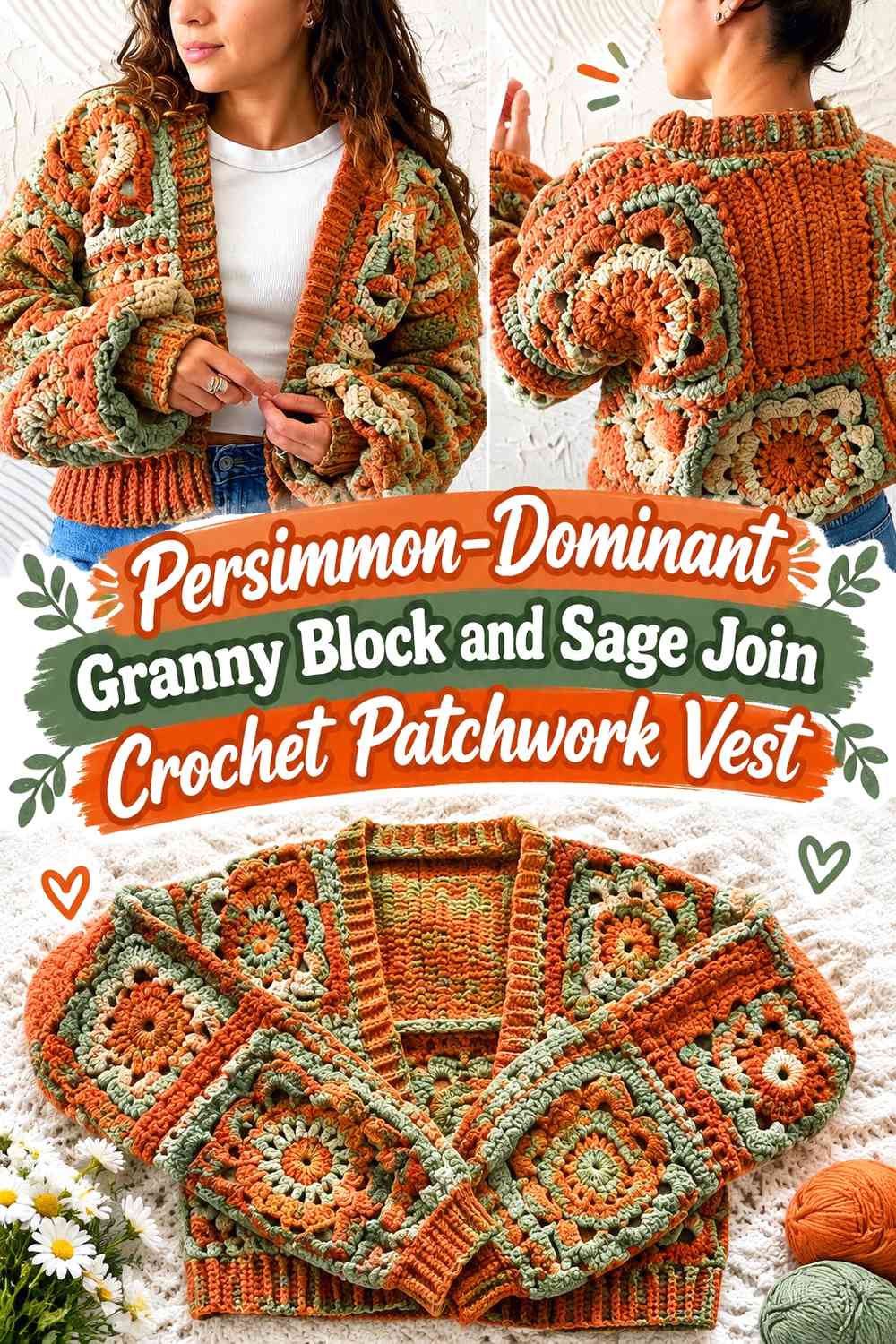
Make most individual squares persimmon and use sage primarily in the joining lines, outer edging, or selected motif rounds. The lighter green becomes the structure that separates one warm block from the next.
This approach is useful when you want a strongly persimmon vest but still need the individual patchwork units to remain visible.
Persimmon Blocks Should Stay Distinct Inside Sage Joins
Keep each major warm square visually intact. If sage enters every section of the block itself, the joining color may lose its special structural role.
The result should still show separate persimmon patches when viewed from a normal wearing distance.
Sage Joins Can Prevent Persimmon Blocks From Merging
Use sage consistently between motifs so adjoining warm squares do not visually collapse into one large orange field.
A matching sage armhole or neckline edge can connect those internal joining lines with the outside of the garment.
Creator Credit: Emma Warrender
11. Sage-Dominant Granny Block and Persimmon Join Crochet Patchwork Vest
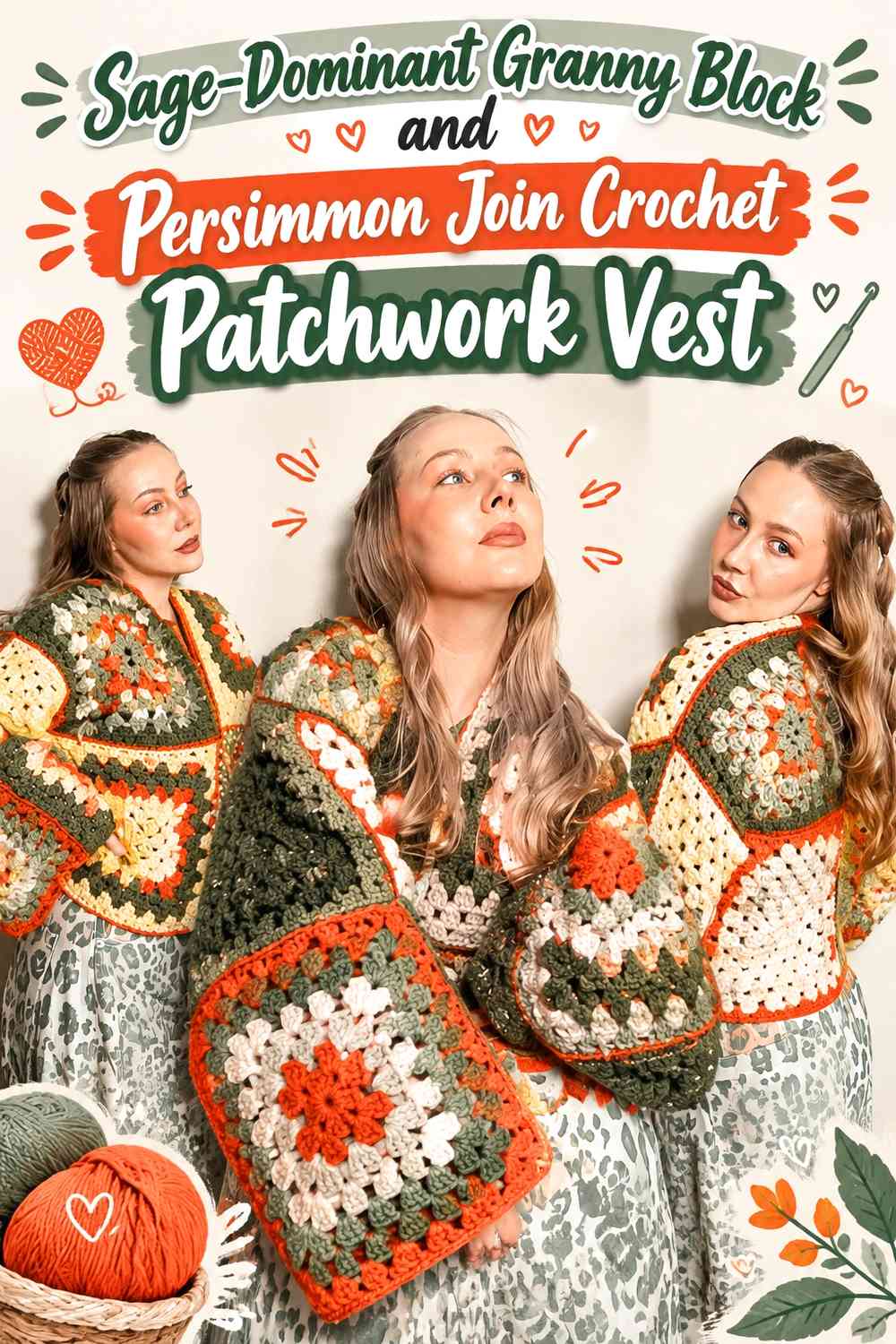
Reverse the previous hierarchy by using sage for most blocks and persimmon for the joins. The warmer seams create a visible network across the garment without requiring large orange squares.
This can give a quilt-grid effect because the join itself becomes part of the visual pattern.
Sage Blocks Need Enough Surface Around Persimmon Joins
Keep the centers of the motifs broadly sage so the warm joining lines have room to show.
If persimmon also appears inside every block, the grid can become visually dense and the joining structure less obvious.
Persimmon Joins Can Draw a Quilt-Like Grid Over Sage
Use the warm color consistently between blocks and around selected outer edges. The repeated lines help organize the muted green patches.
Check bulky intersections carefully in the finished layout; several persimmon join lines meeting at one point can become a stronger accent than a single seam.
Creator Credit: DIYGuru
12. Persimmon and Sage Offset-Block Crochet Patchwork Vest
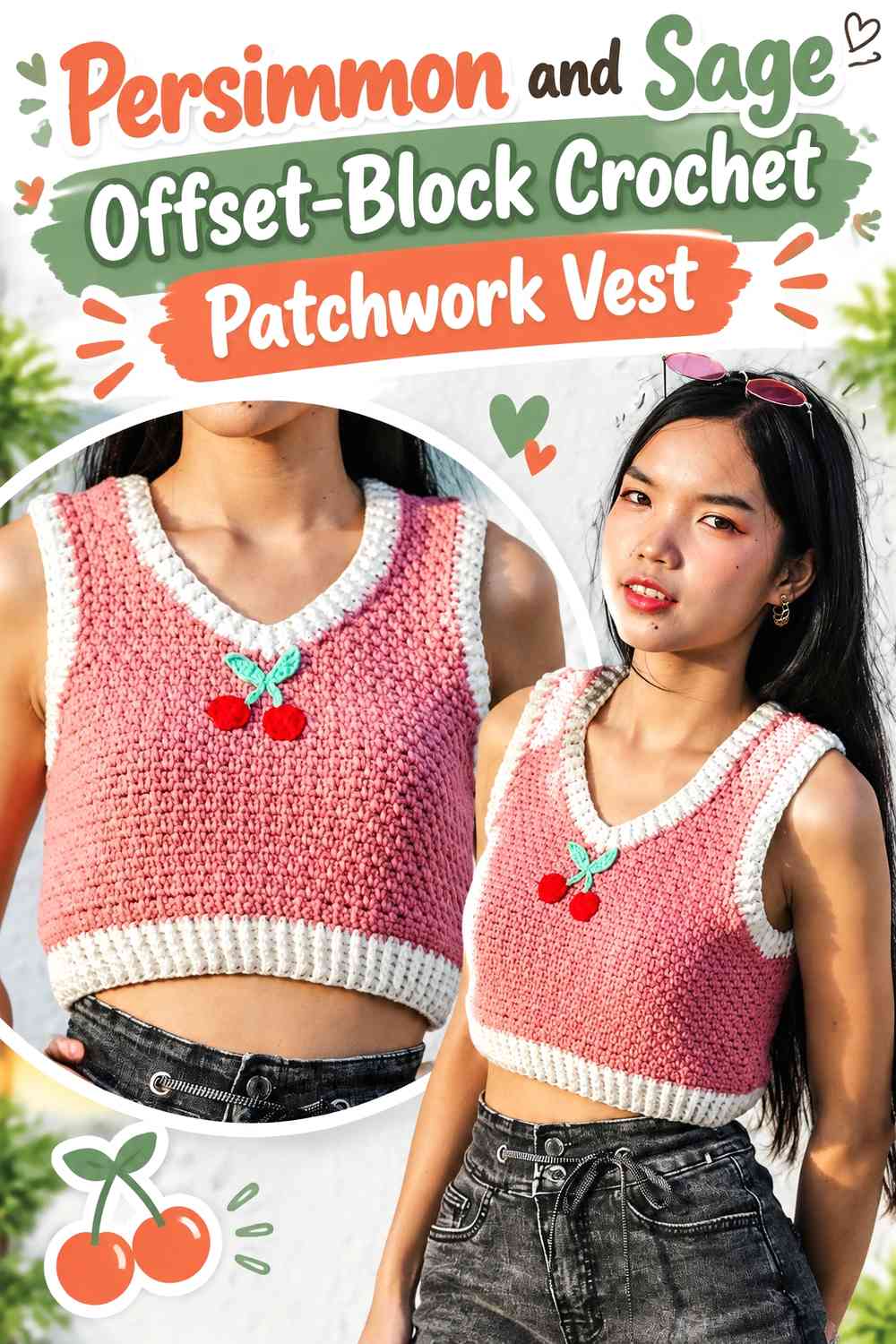
Instead of alternating colors in a strict checkerboard, offset the persimmon blocks so they travel diagonally or unevenly across a sage field. This creates a more relaxed patchwork appearance while still using a deliberate repeat.
The pattern needs enough repetition that the asymmetry looks planned rather than accidental.
Persimmon Blocks Should Form a Clear Offset Path Through Sage
Place each warm block in relation to the previous one—slightly higher, lower, or shifted to the opposite side—rather than scattering them without a visual connection.
A diagonal progression across the front can continue into the back if the block construction allows it.
Sage Should Supply Negative Space Around Persimmon
Keep enough consecutive sage surface that the warm offset path remains easy to follow.
If too many persimmon squares accumulate in one corner, move one before joining rather than trying to correct the balance later with edging.
Creator Credit: Chenda DIY
13. Persimmon Lower-Panel and Sage Upper-Panel Crochet Patchwork Vest

Divide the vest more horizontally by using sage across the chest and shoulders, then persimmon across the lower body. The warm color grounds the hem while the muted green keeps the neckline area lighter.
Patch seams or granny-block joins can soften the transition so it feels quilted rather than like one hard stripe.
Sage Should Stay Broad Above the Persimmon Lower Panels
Use sage across most of the upper front and back so the garment has a clear top section.
If a persimmon neckline is added, keep it narrow enough that the sage upper body remains dominant.
Persimmon Can Ground the Sage Vest Near the Hem
Use several connected warm blocks across the bottom rather than a few isolated orange patches. A continuous lower area gives the color placement a clear reason.
Check the vest length and original tutorial proportions before deciding how much of the lower body should switch color.
Creator Credit: passtschon
14. Sage-Dominant and Persimmon Accent Crochet Quilted Patchwork Vest

The final direction uses the least persimmon. Keep nearly all blocks sage and reserve the warm shade for selected chest, shoulder, lower-corner, or edging accents.
This produces a softer autumn vest and lets individual persimmon patches carry more visual importance.
Sage Should Remain Continuous Across Most of the Patchwork Vest
Use broad green areas across both front and back rather than adding persimmon merely to equalize the color quantities.
A mostly sage garment also gives granny texture, joins, and ribbing more room to provide visual variation without additional color changes.
Persimmon Accents Should Solve One Sage Focal Need
Place the warm blocks where the vest needs intentional emphasis: beside the neckline, on one mirrored shoulder pair, or across a small lower section.
Once those persimmon accents create a clear rhythm, leave the remaining sage panels quiet rather than filling every empty block.
Creator Credit: VivCrochets
Which Persimmon and Sage Quilted Patchwork Vest Should You Choose?
For the clearest quilt-inspired block pattern, start with the checkerboard, offset-block, or contrasting-join versions. These make the divisions between patches part of the visible design rather than relying only on large front and back panels.
For a stronger persimmon autumn statement, choose the persimmon center, persimmon body with sage shoulders, persimmon-front, or persimmon-dominant granny-block layouts. Sage remains present, but the warmer shade controls the first impression.
For a calmer sage-led vest, consider the sage center, sage front, sage shoulder, or sage-dominant accent layout. These use persimmon more selectively around edges, joins, or focal blocks.
If you prefer larger color areas rather than a busy grid, the side-panel and upper-versus-lower layouts give the garment a patchwork character through broad panels instead of many small alternating squares.
Conclusion
Persimmon and sage can make the same basic crochet vest feel very different depending on where the warm and muted blocks sit. Persimmon at the center creates an obvious autumn focal point, persimmon at the sides outlines the silhouette, and persimmon along the hem gives the garment more visual weight near the bottom.
Sage is particularly useful for creating negative space around warmer blocks. It can separate motifs, calm the shoulders and neckline, or provide a broad back panel when the front already contains substantial persimmon.
Lay out the complete front and back before committing to the joins, especially on a true granny-square or modular vest. Use the linked tutorials for their original vest construction, shaping, joining, and finishing guidance, then apply the persimmon-and-sage quilted patchwork arrangement independently.
Frequently Asked Questions
Should Persimmon or Sage dominate an autumn patchwork vest?
Persimmon is useful as the dominant shade when you want the vest to feel warmer and more harvest-focused. Sage produces a quieter botanical result. Choose the dominant shade first, then use the second color for blocks, joins, shoulders, sides, or edging.
How can I keep Persimmon and Sage patchwork from looking too busy?
Use larger connected areas or a repeatable block system. A checkerboard, center panel, side panel, or consistent joining color usually looks more organized than changing the color relationship independently in every square.
Should Persimmon and Sage blocks be arranged symmetrically?
They can be, but they do not have to be. Mirrored shoulders and side panels give a more balanced look, while an offset arrangement can feel intentionally quilted. With asymmetry, repeat enough of the placement logic that it looks planned.
Which color works better for joining Persimmon and Sage crochet squares?
Sage joins make persimmon blocks feel separated and slightly softer, while persimmon joins create a warmer visible grid across sage blocks. Choose the joining shade according to whether you want the seams to recede or become part of the patchwork design.
Should the neckline be Persimmon or Sage on a patchwork vest?
Use sage when the front already contains substantial persimmon and needs a quieter frame. Use persimmon when a sage-heavy body needs more definition around the face and neckline. Keep the edging consistent enough to unify neighboring blocks.
Can I adapt a plain Persimmon and Sage vest tutorial into a quilted patchwork vest?
A plain-panel vest tutorial can support overall garment shaping, neckline, armhole, and ribbing concepts, but it does not automatically provide a modular patchwork construction. If you want true joined blocks, use an appropriate granny-square or patchwork method for the body rather than assuming color changes alone recreate the same construction.
What can replace Persimmon without losing the Sage autumn palette?
Choose another warm muted orange or orange-red that remains clearly warmer and more saturated than sage. Burnt orange, softened terracotta, or another autumnal orange family can preserve the same warm-versus-botanical relationship.
What can replace Sage while keeping the Persimmon patchwork effect?
Choose another muted medium green that remains noticeably cooler than persimmon. An olive-gray, dusty green, or softened woodland green can keep the same autumn contrast without turning the vest into a bright complementary color scheme.