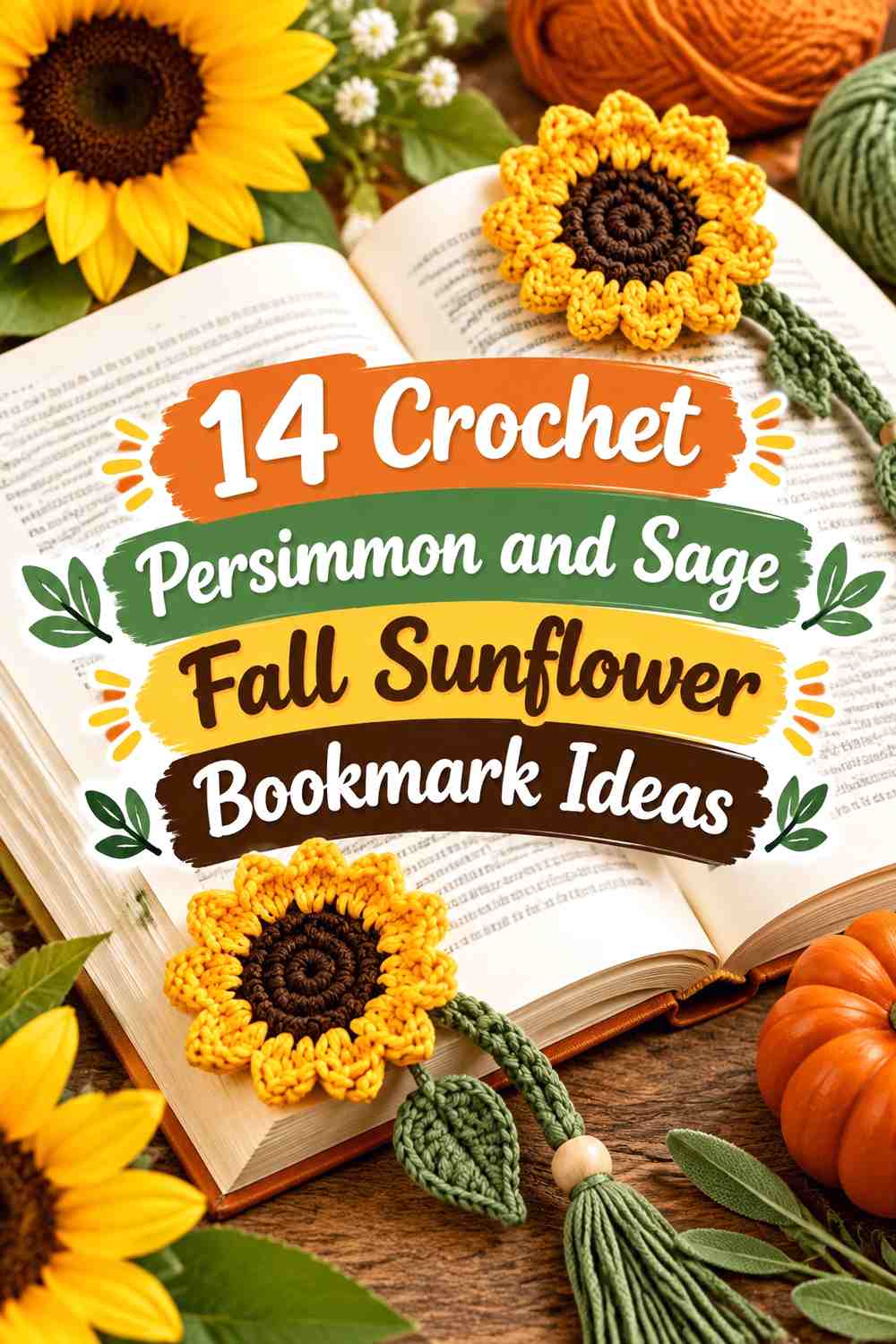

Persimmon and sage give a crochet sunflower bookmark an unmistakably autumnal direction without relying on the usual bright yellow-and-green combination. Persimmon brings warmth to the flower head, while sage gives stems and leaves a quieter botanical color that keeps the bookmark from becoming overly orange.
The important decision is not simply whether to use both colors, but where each one belongs. Persimmon can dominate the petals, move into the flower center, or appear only as an accent. Sage can stay on the stem and leaves, frame the flower head, or take a larger role in a more muted interpretation.
The tutorial links support the crochet construction, while the persimmon-and-sage palettes below are independent color adaptations. Follow the original creator for construction details, then use these ideas to plan your own fall color distribution.
Quick List
- Persimmon Petals, Sage Stem, and Chocolate Center Crochet Sunflower Bookmark
- Soft Sage Petals and Deep Persimmon Crochet Sunflower Bookmark
- Persimmon, Sage, and Burnt Mustard Crochet Sunflower Bookmark
- Cream-Tipped Persimmon and Sage Crochet Sunflower Bookmark
- Espresso, Persimmon, and Sage Crochet Sunflower Bookmark
- Oatmeal, Persimmon, and Sage Crochet Sunflower Bookmark
- Burgundy-Centered Persimmon and Sage Crochet Sunflower Bookmark
- Two-Tone Persimmon and Sage Crochet Sunflower Bookmark
- Olive, Persimmon, and Sage Crochet Sunflower Bookmark
- Charcoal, Muted Persimmon, and Gray-Sage Crochet Sunflower Bookmark
- Dusty Rose, Persimmon, and Sage Crochet Sunflower Bookmark
- Light Persimmon, Cream, and Sage Crochet Sunflower Bookmark
- Golden Mustard, Deep Persimmon, and Sage Crochet Sunflower Bookmark
- Plum, Persimmon, and Sage Crochet Sunflower Bookmark
How to Balance Persimmon and Sage on a Crochet Sunflower Bookmark
A bookmark gives each color relatively little visual space, so a clear hierarchy matters. If persimmon covers the petals and sage covers the stem and leaves, the flower naturally becomes the focal point. Using equal amounts of both colors in the flower head can make the result more graphic, but it also requires enough light-and-dark separation for the petal structure to remain readable.
The stem is especially useful for controlling color balance. A sage stem visually extends the cooler color through the length of the bookmark, so sage does not need to occupy much of the sunflower itself. If the flower head already contains substantial sage, a persimmon detail near the lower stem or leaf can repeat the warm color and connect the two ends.
Keep Persimmon and Sage Sunflower Details Visible
Persimmon and sage can differ strongly in hue while still being fairly close in lightness. Before committing to a two-color petal treatment, place the yarns next to each other and check whether the boundaries remain obvious from a short distance. A grayscale photo can also help reveal whether two different-looking hues have similar value.
Centers provide another opportunity for definition. Chocolate, espresso, plum, charcoal, cream, and oatmeal can all change the amount of separation around persimmon petals. The right choice depends on whether you want the center to create a dark focal point or blend more gently into the fall palette.
1. Persimmon Petals, Sage Stem, and Chocolate Center Crochet Sunflower Bookmark
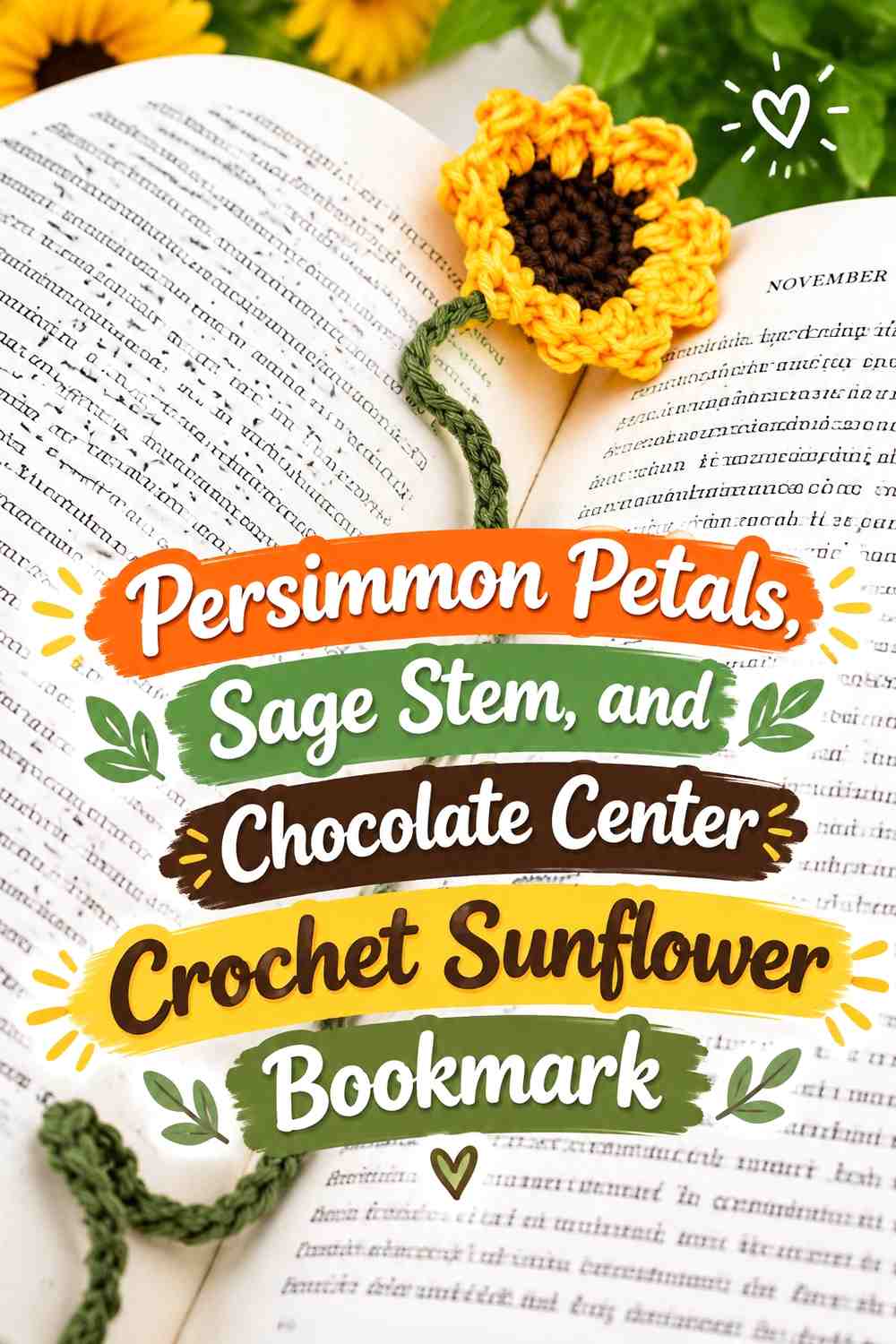
This is the clearest starting point for a persimmon-and-sage fall sunflower. Let persimmon cover the petals, use sage through the stem and leaves, and reserve chocolate for the center. The dark center gives the warm petals a definite inner boundary, while the separate sage stem prevents the flower head from turning into one uninterrupted block of autumn color.
Let Persimmon Lead the Crochet Sunflower Petals
Keeping persimmon across most or all of the petals makes the flower head the warmest part of the bookmark. This works especially well when the petals have enough individual shape or texture to create their own shadows. Before adding another petal color, check whether persimmon alone already gives the flower enough visual movement.
Use Sage to Separate the Stem From the Persimmon Flower
Run sage through the stem and leaves rather than scattering it randomly through the persimmon petals. That placement gives each color a clear job: persimmon identifies the flower, while sage identifies the botanical structure below it. A chocolate center then acts as the darkest point without competing with either main color.
Creator Credit: Thread Maker Studio
2. Soft Sage Petals and Deep Persimmon Crochet Sunflower Bookmark

Reverse the usual hierarchy by allowing softened sage to cover much of the flower head and moving deep persimmon into the center or smaller petal details. This produces a more unconventional sunflower, but the recognizable flower shape can still carry the concept. Keep the stem close to the sage used above so the finished bookmark feels intentionally tonal rather than randomly green.
Give Sage Enough Space to Read as an Intentional Sunflower Color
If sage appears on the petals, use enough of it to establish a deliberate color direction. A few isolated sage petals among mostly persimmon ones may look accidental unless the repetition is carefully planned. A full sage petal layer or repeated sage sections create a clearer system.
Keep Deep Persimmon Concentrated Around the Sage Flower Head
Deep persimmon works well as the warm counterweight to a sage-led flower. Place it near the center or in a repeated inner petal detail so the viewer sees one concentrated warm area instead of many unrelated orange accents. The contrast also keeps a muted sage sunflower from becoming visually flat.
Creator Credit: Crochet With Tiffany
3. Persimmon, Sage, and Burnt Mustard Crochet Sunflower Bookmark

Burnt mustard can bridge the gap between an autumnal persimmon flower and a muted sage stem. Rather than giving all three colors equal space, keep persimmon dominant, sage structural, and mustard secondary. The mustard can appear in an inner petal area or a narrow transition near the center.
Alternate Burnt Mustard Carefully With Persimmon Petals
If the sunflower construction allows distinct petals to be colored separately, burnt mustard can interrupt the persimmon at regular intervals. Consistent repetition matters more than the exact number of accents. An irregular cluster of mustard on only one side can make the flower head look unintentionally unbalanced.
Let Sage Stay Quiet Beside Persimmon and Mustard
Because persimmon and mustard already create two warm notes, sage does not need another competing accent in the stem. Keeping the stem and leaves consistently sage gives the eye a visual rest and maintains the botanical connection.
Creator Credit: Rich Textures Crochet
4. Cream-Tipped Persimmon and Sage Crochet Sunflower Bookmark

Cream can lighten a persimmon sunflower without replacing the fall palette. Use persimmon through the main part of the petals, introduce cream only near selected tips or outer details, and keep the stem in sage. The lighter edge helps individual petal shapes show when the persimmon yarn is dark or highly saturated.
Keep Cream Secondary to Persimmon on the Sunflower Petals
The cream should act as a highlight rather than becoming half of the flower unless a strongly two-tone result is intended. Concentrating the light shade near the outer edge lets the persimmon remain the identifying petal color while still creating visible separation between overlapping shapes.
Repeat Sage Below the Cream-and-Persimmon Flower
A consistent sage stem grounds the lighter cream details above it. Avoid introducing cream repeatedly down the stem unless you specifically want a striped or decorative tail, because too many light interruptions can pull attention away from the sunflower.
Creator Credit: Crochet Jewel
5. Espresso, Persimmon, and Sage Crochet Sunflower Bookmark
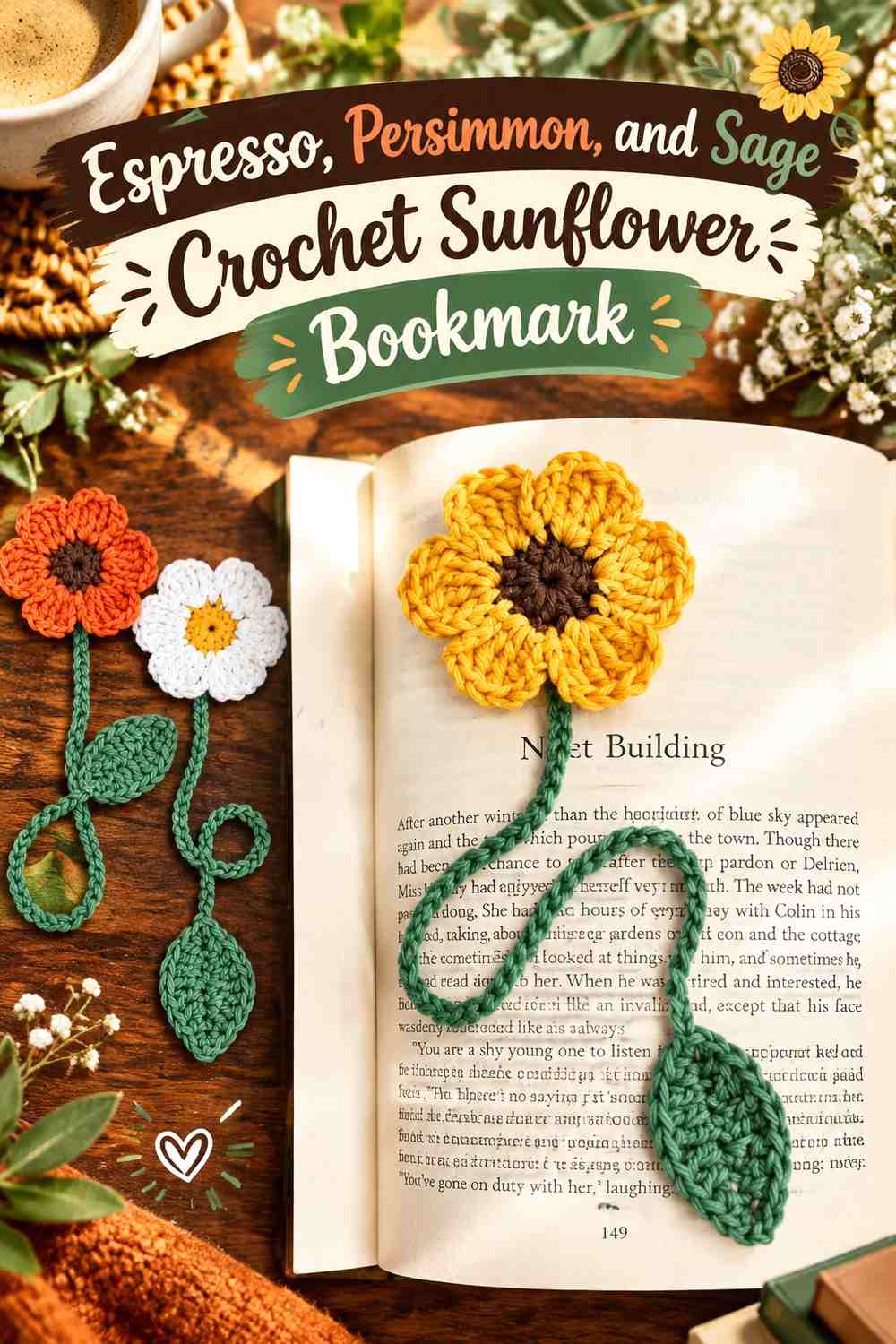
Choose espresso when you want the sunflower center to carry more visual weight. Deep brown creates a strong center against persimmon petals, while sage keeps the stem softer than the center. This gives the bookmark a clear dark-to-warm-to-muted hierarchy from the middle of the flower outward.
Use Espresso to Define the Persimmon Petal Base
A dark espresso center can make the inner edges of persimmon petals easier to distinguish. This is particularly useful when the flower head contains raised or overlapping details that might otherwise merge into one warm area. Keep the espresso concentrated rather than extending it into every part of the bookmark.
Keep Sage Lighter Than the Espresso Center
If the sage is also extremely dark, the bookmark can become heavy at both the top and bottom. A medium or softened sage lets the espresso remain the deepest anchor while still giving the stem enough contrast against light book pages.
Creator Credit: Hopeful Turns
6. Oatmeal, Persimmon, and Sage Crochet Sunflower Bookmark
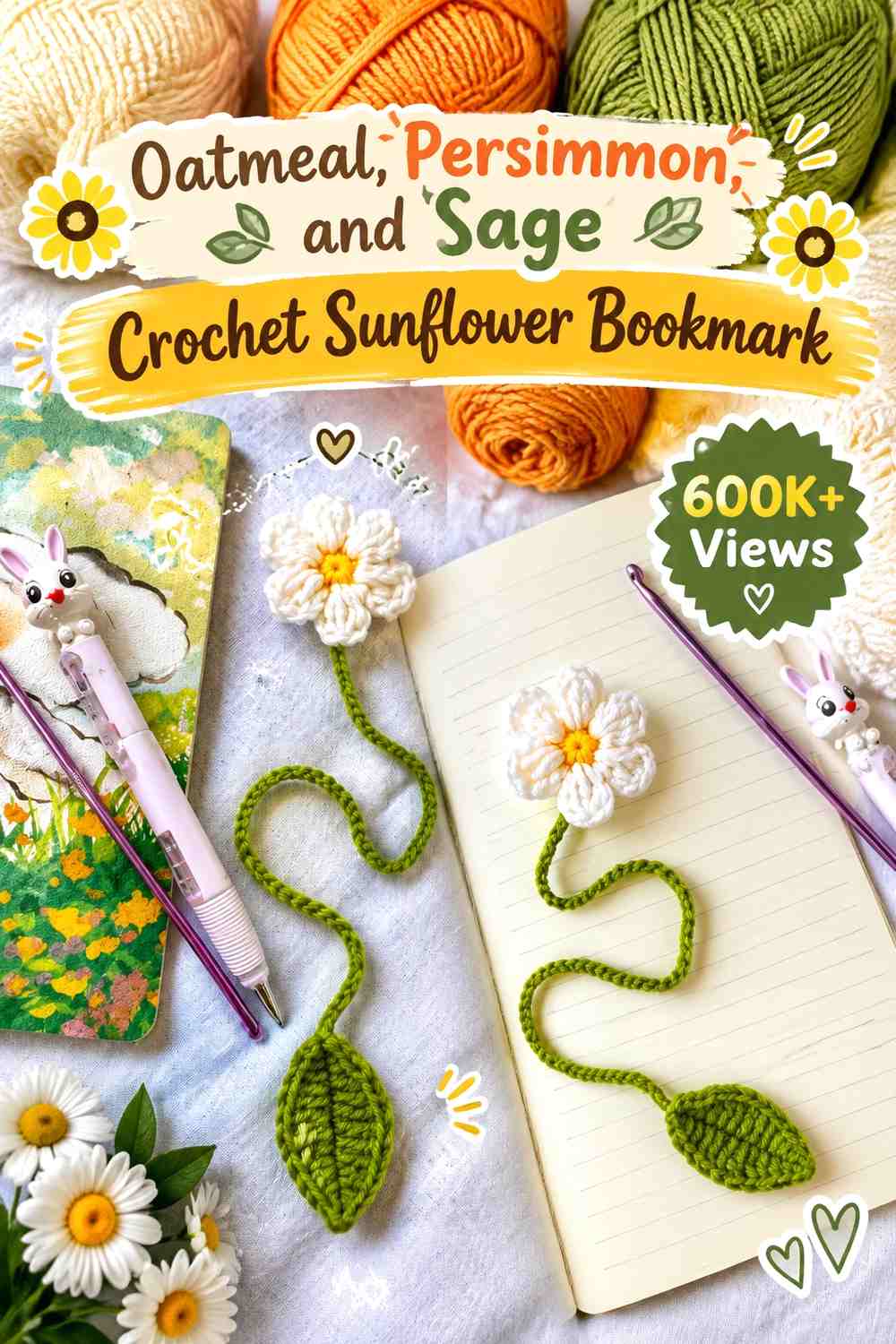
Oatmeal creates a quieter alternative to a dark sunflower center. Pair it with softened persimmon petals and sage greenery when you want an earthy bookmark with less dramatic value contrast. Because the center is lighter, the petal outlines and crochet texture need enough definition to prevent the flower head from looking washed together.
Choose a Persimmon That Still Separates From Oatmeal
For this palette, preserve a noticeable value difference between the oatmeal center and persimmon petals. If both are very light, the center can disappear into the flower head. A slightly deeper or more muted persimmon usually provides a clearer visual transition.
Let Sage Supply the Darker Botanical Definition
Sage can become the medium or darker shade in this softer palette. Use it consistently on the stem and leaf shapes so those narrow parts remain visible. If your sage is very pale, compare it with oatmeal before starting to make sure the two supporting colors do not merge.
Creator Credit: The Yarnling
7. Burgundy-Centered Persimmon and Sage Crochet Sunflower Bookmark

Burgundy pushes the palette toward the deeper side of fall. Use it at the center, let persimmon form the surrounding petals, and keep sage on the stem and leaves. The result has a darker focal point than a brown-centered version while still keeping both persimmon and sage easy to identify.
Keep Burgundy Inside the Persimmon Sunflower Head
Burgundy is strongest when it has a defined role. Limiting it mainly to the flower center stops it from competing with sage along the stem and makes the progression from dark burgundy to warm persimmon more deliberate.
Use Sage to Cool the Burgundy-and-Persimmon Combination
Burgundy and persimmon together create a concentrated warm area. Sage underneath gives the bookmark a softer botanical counterpoint. Avoid making every leaf persimmon as well, or the entire design may lose the useful visual break created by the green.
Creator Credit: Bella Coco
8. Two-Tone Persimmon and Sage Crochet Sunflower Bookmark
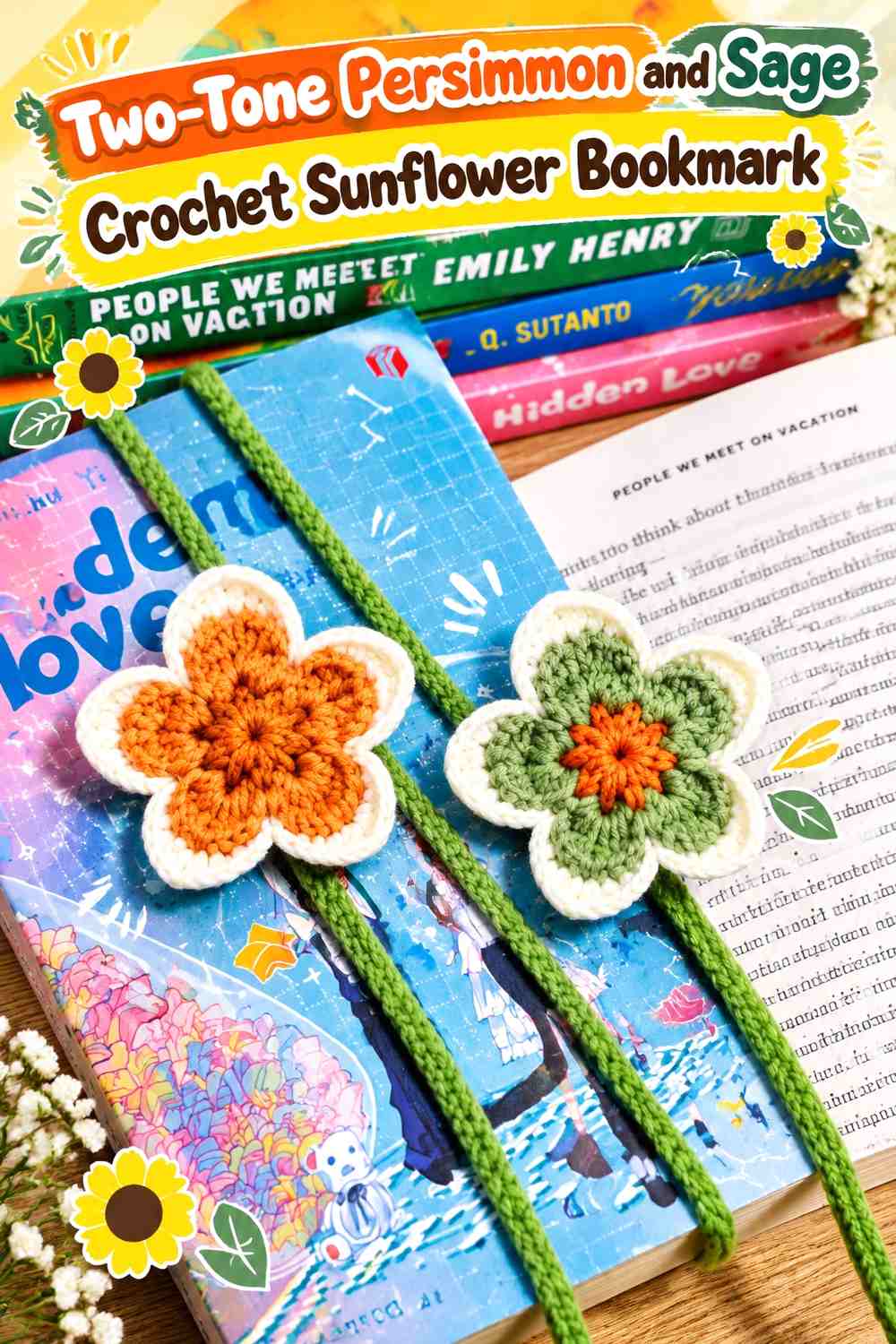
Instead of assigning persimmon only to the flower and sage only to the stem, bring both colors into the flower head. One can occupy an inner petal layer while the other appears on the outer layer, or the colors can repeat around distinct petal sections when the construction allows it.
Give Persimmon and Sage Different Petal Roles
A two-tone flower is easier to read when the color division follows the structure. For example, use persimmon on the visually larger petal area and sage on a smaller inner or outer detail. Randomly switching colors midway through similar shapes can weaken the sunflower outline.
Repeat Sage From the Flower Into the Bookmark Stem
Using sage in both the flower head and the stem creates continuity. Because sage already has a larger presence in this version, keep persimmon concentrated enough that the warm color still commands attention when the bookmark is lying inside a book.
Creator Credit: from littlespot
9. Olive, Persimmon, and Sage Crochet Sunflower Bookmark
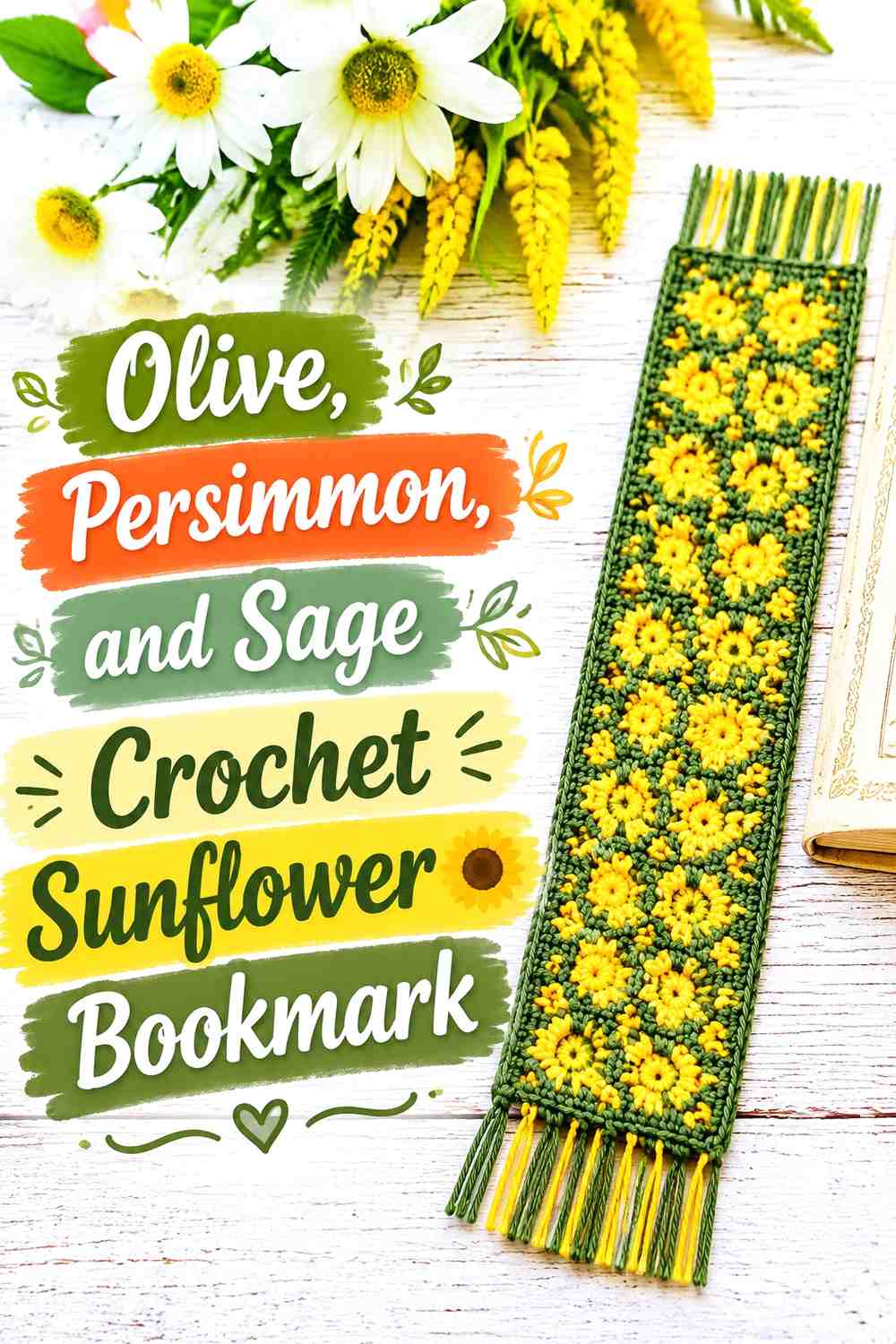
Adding olive gives the greenery more depth without introducing another warm flower color. Keep persimmon on the sunflower, use sage as the main stem color, and place olive on selected leaves or small botanical details. The two greens create a tonal fall direction while persimmon remains the obvious focal color.
Separate Sage and Olive Where the Bookmark Needs Definition
Sage and olive may sit close together in value, so check them side by side before using one leaf color against the other. If they blend, reserve olive for isolated leaves instead of trying to outline sage with it.
Keep Persimmon Away From Too Many Olive Details
Persimmon needs enough uninterrupted area to remain the flower color. If olive, sage, and persimmon all alternate repeatedly throughout the petals, the sunflower can become visually fragmented. Let the green variation stay mainly below or immediately around the flower head.
Creator Credit: HandmadebyRaine
10. Charcoal, Muted Persimmon, and Gray-Sage Crochet Sunflower Bookmark

A charcoal center changes the palette from rustic to more graphic. Pair it with muted persimmon rather than a highly vivid orange, then choose a gray-leaning sage for the stem. This keeps all three shades somewhat subdued while preserving a strong dark center.
Use Charcoal to Sharpen Muted Persimmon Petals
Muted persimmon benefits from a clearly darker neighboring color when the crochet flower contains compact details. Charcoal can define the center without introducing another warm hue, which keeps the petal color visually cleaner.
Choose Gray-Sage That Does Not Merge With Charcoal
A very dark gray-sage may sit too close to charcoal. If that happens, lighten the sage rather than adding a fourth color. The bookmark will retain its restrained palette while the stem remains distinguishable from the sunflower center.
Creator Credit: Crochet Craftsman
11. Dusty Rose, Persimmon, and Sage Crochet Sunflower Bookmark

Dusty rose softens the transition between warm persimmon and muted sage. Use it sparingly around the flower head—perhaps as a small repeated petal accent—rather than allowing all three shades to occupy identical amounts of space. Persimmon should still provide the stronger sunflower identity.
Keep Dusty Rose Smaller Than the Persimmon Areas
Persimmon and dusty rose are related warm colors, so equal coverage can make the flower look less clearly organized. Treat dusty rose as a repeated supporting accent and allow the deeper persimmon to define the main petal mass.
Let Sage Give the Persimmon-and-Rose Flower a Clear Stem
A straightforward sage stem prevents the upper palette from becoming too complicated. If dusty rose is already repeated several times in the flower, it does not need another appearance in the leaves or bookmark tail.
Creator Credit: Jayda InStitches
12. Light Persimmon, Cream, and Sage Crochet Sunflower Bookmark
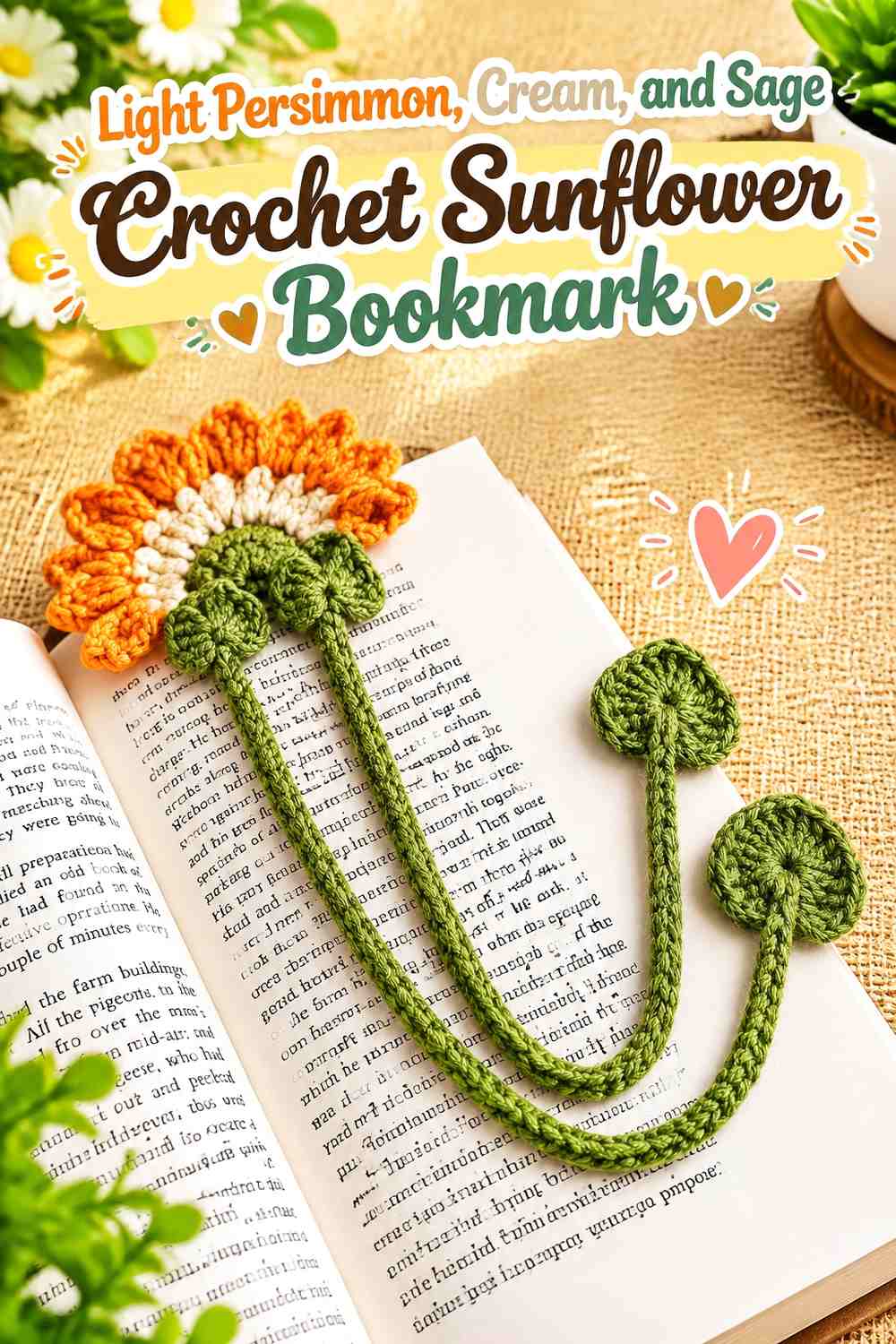
For the softest version in the collection, use light persimmon on the petals, cream in the center or small flower details, and sage below. This reduces the usual dark-center contrast of a sunflower, so the finished effect depends more heavily on the visible crochet shape of the petals.
Keep Light Persimmon Distinct From the Cream Center
Lay the two yarns together before crocheting. If light persimmon and cream are almost identical in value, choose a slightly deeper persimmon or a warmer cream so the center does not disappear into the petals.
Let Sage Become the Stronger Anchor in the Soft Palette
Sage may be the darkest color in this version, which makes the stem especially important. A visible sage leaf or two can balance the pale flower head and stop the bookmark from appearing visually top-heavy in light neutrals.
Creator Credit: Poplar Crochet
13. Golden Mustard, Deep Persimmon, and Sage Crochet Sunflower Bookmark

Golden mustard can return a hint of classic sunflower coloring while keeping the overall palette firmly in autumn. Use deep persimmon for most petals, place mustard in a smaller ring or selected petal details, and keep the stem and leaves in sage.
Keep Deep Persimmon Dominant Over Golden Mustard
If mustard occupies the entire petal layer, the project will read more like a traditional sunflower with persimmon accents. To keep the article’s persimmon direction visible, give the deeper orange shade the larger share of the flower head.
Use Sage as a Muted Counterpoint to Persimmon and Mustard
Both warm flower colors can attract attention, so sage should be comparatively restrained. A muted sage stem keeps the three-color design from feeling equally saturated from top to bottom.
Creator Credit: ElyseCrochets 💌
14. Plum, Persimmon, and Sage Crochet Sunflower Bookmark

Plum creates the most dramatic center in this group. Its cooler dark tone contrasts with warm persimmon while still sitting comfortably beside muted sage. Keep plum mainly at the center so the sunflower retains a clear color hierarchy rather than turning into a three-color floral motif with no dominant shade.
Surround Plum With Enough Persimmon to Preserve the Sunflower Focus
A small plum center framed by a wider area of persimmon creates a strong focal sequence. If plum spreads too far into the petals, the darkest color can overpower the warm sunflower effect and make the flower head feel visually dense.
Let Sage Balance the Plum-and-Persimmon Flower Below
Use sage for a continuous stem or repeated leaves so the cooler color family appears in more than one place without duplicating plum. Sage is softer than the center color, which allows it to balance the palette without creating a second dark focal point.
Creator Credit: Vardhman Knitworld
Choosing Between These Persimmon and Sage Sunflower Bookmark Palettes
For the clearest traditional sunflower structure, the persimmon-petal, sage-stem, and chocolate-center idea keeps every color role easy to understand. Espresso, burgundy, charcoal, and plum centers create progressively darker focal points, making them useful when you want stronger separation around the petals.
Oatmeal, cream, dusty rose, and light persimmon move in the opposite direction. Those palettes create gentler transitions, but they require closer attention to value so the flower center, petals, and stem remain distinct.
The olive and two-tone sage variations give green a larger visual role. Choose those when the botanical side of the bookmark is as important as the warm flower head. For the strongest harvest direction, persimmon paired with burnt or golden mustard keeps the project warm while sage prevents the bookmark from becoming entirely orange and yellow.
Conclusion
Persimmon and sage can support far more than one fall sunflower bookmark palette. The most important choice is deciding which color should control the flower head and which should provide structure.
For a straightforward autumn look, let persimmon dominate the petals and sage carry the stem. Add chocolate or espresso when you want a familiar dark sunflower center. Choose cream or oatmeal for softer contrast, burgundy or plum for greater depth, and mustard when you want a stronger harvest influence.
Whatever direction you choose, check the colors beside one another before starting the full bookmark. A small adjustment in lightness or saturation can make the sunflower petals, center, stem, and leaves much easier to distinguish. Use the credited tutorials for the exact crochet construction and treat these palettes as flexible color plans you can adapt to the yarn already in your collection.
Frequently Asked Questions
Can sage replace regular green in a persimmon crochet sunflower bookmark?
Yes. Sage works particularly well when you want the stem and leaves to look more muted than a bright or highly saturated green. The main checkpoint is contrast: make sure the sage remains visible beside any cream, oatmeal, olive, or gray used elsewhere.
How much persimmon should I use compared with sage?
If you want the sunflower head to be the immediate focal point, let persimmon occupy most of the flower while sage handles the narrower stem and leaves. A more experimental design can bring sage into the petals, but the two colors should still have clearly different roles or repeated placement.
What center color works with persimmon and sage?
Chocolate and espresso create an earthy dark center, burgundy and plum produce a richer fall direction, and charcoal creates a more neutral graphic contrast. Cream or oatmeal can also work when a softer, lighter sunflower is preferred.
How can I tell whether persimmon and sage have enough contrast?
Place the yarns next to each other and view them from farther away rather than judging only at close range. You can also photograph the yarns and convert the image to grayscale. If the shades become almost indistinguishable, increase the light-and-dark difference when you need clear petal or leaf separation.
Can I add mustard to a persimmon and sage sunflower bookmark?
Yes, but give mustard a supporting role if persimmon is supposed to remain the main flower color. A small inner ring, selected petals, or another repeated detail can introduce mustard without turning the design into a predominantly yellow sunflower.
How do I substitute a different persimmon or sage yarn color?
Preserve the relationship between the colors rather than chasing an exact shade name. For persimmon, look for a warm orange-red with a similar depth to your intended palette. For sage, choose a muted green that remains sufficiently different in value from the stem’s neighboring colors. Checking the replacement yarns together is more useful than evaluating either one by itself.
14 Crochet Persimmon and Sage Fall Sunflower Bookmark Ideas
Slug: crochet-persimmon-sage-fall-sunflower-bookmark-ideas
Meta Description: Explore 14 crochet persimmon and sage fall sunflower bookmark ideas with practical color placement, contrast, center, stem, and accent tips.
Persimmon and sage give a crochet sunflower bookmark an unmistakably autumnal direction without relying on the usual bright yellow-and-green combination. Persimmon brings warmth to the flower head, while sage gives stems and leaves a quieter botanical color that keeps the bookmark from becoming overly orange.
The important decision is not simply whether to use both colors, but where each one belongs. Persimmon can dominate the petals, move into the flower center, or appear only as an accent. Sage can stay on the stem and leaves, frame the flower head, or take a larger role in a more muted interpretation.
The tutorial links support the crochet construction, while the persimmon-and-sage palettes below are independent color adaptations. Follow the original creator for construction details, then use these ideas to plan your own fall color distribution.
Quick List
- Persimmon Petals, Sage Stem, and Chocolate Center Crochet Sunflower Bookmark
- Soft Sage Petals and Deep Persimmon Crochet Sunflower Bookmark
- Persimmon, Sage, and Burnt Mustard Crochet Sunflower Bookmark
- Cream-Tipped Persimmon and Sage Crochet Sunflower Bookmark
- Espresso, Persimmon, and Sage Crochet Sunflower Bookmark
- Oatmeal, Persimmon, and Sage Crochet Sunflower Bookmark
- Burgundy-Centered Persimmon and Sage Crochet Sunflower Bookmark
- Two-Tone Persimmon and Sage Crochet Sunflower Bookmark
- Olive, Persimmon, and Sage Crochet Sunflower Bookmark
- Charcoal, Muted Persimmon, and Gray-Sage Crochet Sunflower Bookmark
- Dusty Rose, Persimmon, and Sage Crochet Sunflower Bookmark
- Light Persimmon, Cream, and Sage Crochet Sunflower Bookmark
- Golden Mustard, Deep Persimmon, and Sage Crochet Sunflower Bookmark
- Plum, Persimmon, and Sage Crochet Sunflower Bookmark
How to Balance Persimmon and Sage on a Crochet Sunflower Bookmark
A bookmark gives each color relatively little visual space, so a clear hierarchy matters. If persimmon covers the petals and sage covers the stem and leaves, the flower naturally becomes the focal point. Using equal amounts of both colors in the flower head can make the result more graphic, but it also requires enough light-and-dark separation for the petal structure to remain readable.
The stem is especially useful for controlling color balance. A sage stem visually extends the cooler color through the length of the bookmark, so sage does not need to occupy much of the sunflower itself. If the flower head already contains substantial sage, a persimmon detail near the lower stem or leaf can repeat the warm color and connect the two ends.
Keep Persimmon and Sage Sunflower Details Visible
Persimmon and sage can differ strongly in hue while still being fairly close in lightness. Before committing to a two-color petal treatment, place the yarns next to each other and check whether the boundaries remain obvious from a short distance. A grayscale photo can also help reveal whether two different-looking hues have similar value.
Centers provide another opportunity for definition. Chocolate, espresso, plum, charcoal, cream, and oatmeal can all change the amount of separation around persimmon petals. The right choice depends on whether you want the center to create a dark focal point or blend more gently into the fall palette.
1. Persimmon Petals, Sage Stem, and Chocolate Center Crochet Sunflower Bookmark
This is the clearest starting point for a persimmon-and-sage fall sunflower. Let persimmon cover the petals, use sage through the stem and leaves, and reserve chocolate for the center. The dark center gives the warm petals a definite inner boundary, while the separate sage stem prevents the flower head from turning into one uninterrupted block of autumn color.
Let Persimmon Lead the Crochet Sunflower Petals
Keeping persimmon across most or all of the petals makes the flower head the warmest part of the bookmark. This works especially well when the petals have enough individual shape or texture to create their own shadows. Before adding another petal color, check whether persimmon alone already gives the flower enough visual movement.
Use Sage to Separate the Stem From the Persimmon Flower
Run sage through the stem and leaves rather than scattering it randomly through the persimmon petals. That placement gives each color a clear job: persimmon identifies the flower, while sage identifies the botanical structure below it. A chocolate center then acts as the darkest point without competing with either main color.
Creator Credit: Thread Maker Studio
2. Soft Sage Petals and Deep Persimmon Crochet Sunflower Bookmark
Reverse the usual hierarchy by allowing softened sage to cover much of the flower head and moving deep persimmon into the center or smaller petal details. This produces a more unconventional sunflower, but the recognizable flower shape can still carry the concept. Keep the stem close to the sage used above so the finished bookmark feels intentionally tonal rather than randomly green.
Give Sage Enough Space to Read as an Intentional Sunflower Color
If sage appears on the petals, use enough of it to establish a deliberate color direction. A few isolated sage petals among mostly persimmon ones may look accidental unless the repetition is carefully planned. A full sage petal layer or repeated sage sections create a clearer system.
Keep Deep Persimmon Concentrated Around the Sage Flower Head
Deep persimmon works well as the warm counterweight to a sage-led flower. Place it near the center or in a repeated inner petal detail so the viewer sees one concentrated warm area instead of many unrelated orange accents. The contrast also keeps a muted sage sunflower from becoming visually flat.
Creator Credit: Crochet With Tiffany
3. Persimmon, Sage, and Burnt Mustard Crochet Sunflower Bookmark
Burnt mustard can bridge the gap between an autumnal persimmon flower and a muted sage stem. Rather than giving all three colors equal space, keep persimmon dominant, sage structural, and mustard secondary. The mustard can appear in an inner petal area or a narrow transition near the center.
Alternate Burnt Mustard Carefully With Persimmon Petals
If the sunflower construction allows distinct petals to be colored separately, burnt mustard can interrupt the persimmon at regular intervals. Consistent repetition matters more than the exact number of accents. An irregular cluster of mustard on only one side can make the flower head look unintentionally unbalanced.
Let Sage Stay Quiet Beside Persimmon and Mustard
Because persimmon and mustard already create two warm notes, sage does not need another competing accent in the stem. Keeping the stem and leaves consistently sage gives the eye a visual rest and maintains the botanical connection.
Creator Credit: Rich Textures Crochet
4. Cream-Tipped Persimmon and Sage Crochet Sunflower Bookmark
Cream can lighten a persimmon sunflower without replacing the fall palette. Use persimmon through the main part of the petals, introduce cream only near selected tips or outer details, and keep the stem in sage. The lighter edge helps individual petal shapes show when the persimmon yarn is dark or highly saturated.
Keep Cream Secondary to Persimmon on the Sunflower Petals
The cream should act as a highlight rather than becoming half of the flower unless a strongly two-tone result is intended. Concentrating the light shade near the outer edge lets the persimmon remain the identifying petal color while still creating visible separation between overlapping shapes.
Repeat Sage Below the Cream-and-Persimmon Flower
A consistent sage stem grounds the lighter cream details above it. Avoid introducing cream repeatedly down the stem unless you specifically want a striped or decorative tail, because too many light interruptions can pull attention away from the sunflower.
Creator Credit: Crochet Jewel
5. Espresso, Persimmon, and Sage Crochet Sunflower Bookmark
Choose espresso when you want the sunflower center to carry more visual weight. Deep brown creates a strong center against persimmon petals, while sage keeps the stem softer than the center. This gives the bookmark a clear dark-to-warm-to-muted hierarchy from the middle of the flower outward.
Use Espresso to Define the Persimmon Petal Base
A dark espresso center can make the inner edges of persimmon petals easier to distinguish. This is particularly useful when the flower head contains raised or overlapping details that might otherwise merge into one warm area. Keep the espresso concentrated rather than extending it into every part of the bookmark.
Keep Sage Lighter Than the Espresso Center
If the sage is also extremely dark, the bookmark can become heavy at both the top and bottom. A medium or softened sage lets the espresso remain the deepest anchor while still giving the stem enough contrast against light book pages.
Creator Credit: Hopeful Turns
6. Oatmeal, Persimmon, and Sage Crochet Sunflower Bookmark
Oatmeal creates a quieter alternative to a dark sunflower center. Pair it with softened persimmon petals and sage greenery when you want an earthy bookmark with less dramatic value contrast. Because the center is lighter, the petal outlines and crochet texture need enough definition to prevent the flower head from looking washed together.
Choose a Persimmon That Still Separates From Oatmeal
For this palette, preserve a noticeable value difference between the oatmeal center and persimmon petals. If both are very light, the center can disappear into the flower head. A slightly deeper or more muted persimmon usually provides a clearer visual transition.
Let Sage Supply the Darker Botanical Definition
Sage can become the medium or darker shade in this softer palette. Use it consistently on the stem and leaf shapes so those narrow parts remain visible. If your sage is very pale, compare it with oatmeal before starting to make sure the two supporting colors do not merge.
Creator Credit: The Yarnling
7. Burgundy-Centered Persimmon and Sage Crochet Sunflower Bookmark
Burgundy pushes the palette toward the deeper side of fall. Use it at the center, let persimmon form the surrounding petals, and keep sage on the stem and leaves. The result has a darker focal point than a brown-centered version while still keeping both persimmon and sage easy to identify.
Keep Burgundy Inside the Persimmon Sunflower Head
Burgundy is strongest when it has a defined role. Limiting it mainly to the flower center stops it from competing with sage along the stem and makes the progression from dark burgundy to warm persimmon more deliberate.
Use Sage to Cool the Burgundy-and-Persimmon Combination
Burgundy and persimmon together create a concentrated warm area. Sage underneath gives the bookmark a softer botanical counterpoint. Avoid making every leaf persimmon as well, or the entire design may lose the useful visual break created by the green.
Creator Credit: Bella Coco
8. Two-Tone Persimmon and Sage Crochet Sunflower Bookmark
Instead of assigning persimmon only to the flower and sage only to the stem, bring both colors into the flower head. One can occupy an inner petal layer while the other appears on the outer layer, or the colors can repeat around distinct petal sections when the construction allows it.
Give Persimmon and Sage Different Petal Roles
A two-tone flower is easier to read when the color division follows the structure. For example, use persimmon on the visually larger petal area and sage on a smaller inner or outer detail. Randomly switching colors midway through similar shapes can weaken the sunflower outline.
Repeat Sage From the Flower Into the Bookmark Stem
Using sage in both the flower head and the stem creates continuity. Because sage already has a larger presence in this version, keep persimmon concentrated enough that the warm color still commands attention when the bookmark is lying inside a book.
Creator Credit: from littlespot
9. Olive, Persimmon, and Sage Crochet Sunflower Bookmark
Adding olive gives the greenery more depth without introducing another warm flower color. Keep persimmon on the sunflower, use sage as the main stem color, and place olive on selected leaves or small botanical details. The two greens create a tonal fall direction while persimmon remains the obvious focal color.
Separate Sage and Olive Where the Bookmark Needs Definition
Sage and olive may sit close together in value, so check them side by side before using one leaf color against the other. If they blend, reserve olive for isolated leaves instead of trying to outline sage with it.
Keep Persimmon Away From Too Many Olive Details
Persimmon needs enough uninterrupted area to remain the flower color. If olive, sage, and persimmon all alternate repeatedly throughout the petals, the sunflower can become visually fragmented. Let the green variation stay mainly below or immediately around the flower head.
Creator Credit: HandmadebyRaine
10. Charcoal, Muted Persimmon, and Gray-Sage Crochet Sunflower Bookmark
A charcoal center changes the palette from rustic to more graphic. Pair it with muted persimmon rather than a highly vivid orange, then choose a gray-leaning sage for the stem. This keeps all three shades somewhat subdued while preserving a strong dark center.
Use Charcoal to Sharpen Muted Persimmon Petals
Muted persimmon benefits from a clearly darker neighboring color when the crochet flower contains compact details. Charcoal can define the center without introducing another warm hue, which keeps the petal color visually cleaner.
Choose Gray-Sage That Does Not Merge With Charcoal
A very dark gray-sage may sit too close to charcoal. If that happens, lighten the sage rather than adding a fourth color. The bookmark will retain its restrained palette while the stem remains distinguishable from the sunflower center.
Creator Credit: Crochet Craftsman
11. Dusty Rose, Persimmon, and Sage Crochet Sunflower Bookmark
Dusty rose softens the transition between warm persimmon and muted sage. Use it sparingly around the flower head—perhaps as a small repeated petal accent—rather than allowing all three shades to occupy identical amounts of space. Persimmon should still provide the stronger sunflower identity.
Keep Dusty Rose Smaller Than the Persimmon Areas
Persimmon and dusty rose are related warm colors, so equal coverage can make the flower look less clearly organized. Treat dusty rose as a repeated supporting accent and allow the deeper persimmon to define the main petal mass.
Let Sage Give the Persimmon-and-Rose Flower a Clear Stem
A straightforward sage stem prevents the upper palette from becoming too complicated. If dusty rose is already repeated several times in the flower, it does not need another appearance in the leaves or bookmark tail.
Creator Credit: Jayda InStitches
12. Light Persimmon, Cream, and Sage Crochet Sunflower Bookmark
For the softest version in the collection, use light persimmon on the petals, cream in the center or small flower details, and sage below. This reduces the usual dark-center contrast of a sunflower, so the finished effect depends more heavily on the visible crochet shape of the petals.
Keep Light Persimmon Distinct From the Cream Center
Lay the two yarns together before crocheting. If light persimmon and cream are almost identical in value, choose a slightly deeper persimmon or a warmer cream so the center does not disappear into the petals.
Let Sage Become the Stronger Anchor in the Soft Palette
Sage may be the darkest color in this version, which makes the stem especially important. A visible sage leaf or two can balance the pale flower head and stop the bookmark from appearing visually top-heavy in light neutrals.
Creator Credit: Poplar Crochet
13. Golden Mustard, Deep Persimmon, and Sage Crochet Sunflower Bookmark
Golden mustard can return a hint of classic sunflower coloring while keeping the overall palette firmly in autumn. Use deep persimmon for most petals, place mustard in a smaller ring or selected petal details, and keep the stem and leaves in sage.
Keep Deep Persimmon Dominant Over Golden Mustard
If mustard occupies the entire petal layer, the project will read more like a traditional sunflower with persimmon accents. To keep the article’s persimmon direction visible, give the deeper orange shade the larger share of the flower head.
Use Sage as a Muted Counterpoint to Persimmon and Mustard
Both warm flower colors can attract attention, so sage should be comparatively restrained. A muted sage stem keeps the three-color design from feeling equally saturated from top to bottom.
Creator Credit: ElyseCrochets 💌
14. Plum, Persimmon, and Sage Crochet Sunflower Bookmark
Plum creates the most dramatic center in this group. Its cooler dark tone contrasts with warm persimmon while still sitting comfortably beside muted sage. Keep plum mainly at the center so the sunflower retains a clear color hierarchy rather than turning into a three-color floral motif with no dominant shade.
Surround Plum With Enough Persimmon to Preserve the Sunflower Focus
A small plum center framed by a wider area of persimmon creates a strong focal sequence. If plum spreads too far into the petals, the darkest color can overpower the warm sunflower effect and make the flower head feel visually dense.
Let Sage Balance the Plum-and-Persimmon Flower Below
Use sage for a continuous stem or repeated leaves so the cooler color family appears in more than one place without duplicating plum. Sage is softer than the center color, which allows it to balance the palette without creating a second dark focal point.
Creator Credit: Vardhman Knitworld
Choosing Between These Persimmon and Sage Sunflower Bookmark Palettes
For the clearest traditional sunflower structure, the persimmon-petal, sage-stem, and chocolate-center idea keeps every color role easy to understand. Espresso, burgundy, charcoal, and plum centers create progressively darker focal points, making them useful when you want stronger separation around the petals.
Oatmeal, cream, dusty rose, and light persimmon move in the opposite direction. Those palettes create gentler transitions, but they require closer attention to value so the flower center, petals, and stem remain distinct.
The olive and two-tone sage variations give green a larger visual role. Choose those when the botanical side of the bookmark is as important as the warm flower head. For the strongest harvest direction, persimmon paired with burnt or golden mustard keeps the project warm while sage prevents the bookmark from becoming entirely orange and yellow.
Conclusion
Persimmon and sage can support far more than one fall sunflower bookmark palette. The most important choice is deciding which color should control the flower head and which should provide structure.
For a straightforward autumn look, let persimmon dominate the petals and sage carry the stem. Add chocolate or espresso when you want a familiar dark sunflower center. Choose cream or oatmeal for softer contrast, burgundy or plum for greater depth, and mustard when you want a stronger harvest influence.
Whatever direction you choose, check the colors beside one another before starting the full bookmark. A small adjustment in lightness or saturation can make the sunflower petals, center, stem, and leaves much easier to distinguish. Use the credited tutorials for the exact crochet construction and treat these palettes as flexible color plans you can adapt to the yarn already in your collection.
Frequently Asked Questions
Can sage replace regular green in a persimmon crochet sunflower bookmark?
Yes. Sage works particularly well when you want the stem and leaves to look more muted than a bright or highly saturated green. The main checkpoint is contrast: make sure the sage remains visible beside any cream, oatmeal, olive, or gray used elsewhere.
How much persimmon should I use compared with sage?
If you want the sunflower head to be the immediate focal point, let persimmon occupy most of the flower while sage handles the narrower stem and leaves. A more experimental design can bring sage into the petals, but the two colors should still have clearly different roles or repeated placement.
What center color works with persimmon and sage?
Chocolate and espresso create an earthy dark center, burgundy and plum produce a richer fall direction, and charcoal creates a more neutral graphic contrast. Cream or oatmeal can also work when a softer, lighter sunflower is preferred.
How can I tell whether persimmon and sage have enough contrast?
Place the yarns next to each other and view them from farther away rather than judging only at close range. You can also photograph the yarns and convert the image to grayscale. If the shades become almost indistinguishable, increase the light-and-dark difference when you need clear petal or leaf separation.
Can I add mustard to a persimmon and sage sunflower bookmark?
Yes, but give mustard a supporting role if persimmon is supposed to remain the main flower color. A small inner ring, selected petals, or another repeated detail can introduce mustard without turning the design into a predominantly yellow sunflower.
How do I substitute a different persimmon or sage yarn color?
Preserve the relationship between the colors rather than chasing an exact shade name. For persimmon, look for a warm orange-red with a similar depth to your intended palette. For sage, choose a muted green that remains sufficiently different in value from the stem’s neighboring colors. Checking the replacement yarns together is more useful than evaluating either one by itself.