

Persimmon orange and dusty lilac give a crochet bolero an unusual warm-and-cool balance. Persimmon orange can create a strong body, sleeve, or border color, while dusty lilac softens the garment and can make a curved lower edge, neckline, cuff, or open front easier to distinguish.
A curved hem deserves particular attention because color can either emphasize or visually flatten the shaping. A contrasting dusty-lilac border around a persimmon-orange body makes the lower curve immediately visible, while using one continuous color across both body and edging creates a quieter transition. The same decision affects curved front corners, ties, and short bolero panels.
The tutorials supporting these ideas teach boleros and closely related shrugs with mesh, lace, open fronts, floral surfaces, sleeves, and different body constructions. Not every source includes the exact curved hem proposed here. Where the original garment has a straighter edge, treat the curved lower line as a separate design adaptation and test its shaping and drape rather than assuming the tutorial teaches that modification.
Quick List
- Persimmon Orange Mesh Crochet Bolero With a Dusty Lilac Curved Hem
- Dusty Lilac Crochet Bolero With a Persimmon Orange Curved Front
- Persimmon Orange One-Piece Crochet Bolero With Dusty Lilac Curved Edging
- Dusty Lilac Butterfly Crochet Bolero With a Persimmon Orange Curved Border
- Persimmon Orange Openwork Crochet Bolero With a Dusty Lilac Scalloped Curved Hem
- Dusty Lilac Lace Crochet Bolero With Persimmon Orange Sleeves and Curved Hem
- Persimmon Orange Pixie Crochet Bolero With a Dusty Lilac Rounded Edge
- Dusty Lilac Sleeve Crochet Bolero With a Persimmon Orange Curved Lower Band
- Persimmon Orange Floral Crochet Bolero With Dusty Lilac Curved Fronts
- Dusty Lilac Fine-Lace Crochet Bolero With Persimmon Orange Hem Definition
- Persimmon Orange Fishnet Crochet Bolero With Dusty Lilac Curved Cuffs and Hem
- Dusty Lilac Panel Crochet Bolero With a Persimmon Orange Curved Front Frame
- Persimmon Orange Summer Crochet Bolero With Dusty Lilac Curved Side Panels
- Two-Color Persimmon Orange and Dusty Lilac Open-Front Crochet Curved Hem Bolero
Decide Which Color Should Define the Curved Bolero Hem
If the curved hem is one of the garment’s main features, giving it a contrasting color makes that shaping easier to see. A dusty-lilac border against a persimmon-orange body creates a cooler outline, while persimmon orange around a lilac body produces a stronger, warmer frame.
You do not need a wide contrasting border. On a cropped garment, a very deep band can visually shorten the body panel and compete with the sleeves. Compare the proposed border depth with the completed bolero before repeating it around the entire curved edge.
Balance Persimmon Orange and Dusty Lilac Across the Sleeves and Fronts
Color distribution on a bolero is especially noticeable because the garment has relatively little torso coverage. Persimmon-orange sleeves attached to a mostly lilac body can become the largest visual area, while a narrow orange curved hem may remain a smaller accent.
Look at the garment from the front and back before making the final color decision. If one color already dominates both sleeves, consider repeating the second shade at the neckline, cuffs, curved front edges, or ties rather than adding another large body section.
Test Persimmon Orange and Dusty Lilac Where the Hem Changes Shape
A straight tutorial base should not simply be assumed to become a curved bolero by changing colors or shortening arbitrary rows. Curving a lower edge can change where the front panels end and how the garment hangs.
Establish the tutorial’s construction first, then decide whether a curved finish can be added without interfering with the armholes, front opening, or intended drape. A contrasting border is most useful after the underlying silhouette is working.
1. Persimmon Orange Mesh Crochet Bolero With a Dusty Lilac Curved Hem

Use persimmon orange throughout the main mesh field and reserve dusty lilac for the lower curved edge. The contrast makes the hemline easy to follow without interrupting the open lattice across the sleeves and upper body. Keep the lilac concentrated near the lower perimeter if you want orange to remain the garment’s dominant color.
Dusty Lilac Can Trace the Persimmon Orange Curved Hem
Place dusty lilac directly along the finished lower line so it reinforces the shape rather than creating an unrelated stripe above it. This works particularly well when the curve rises toward the front opening.
Keep the border visually consistent from one side to the other so the shaping—not uneven color depth—gets the attention.
Persimmon Orange Mesh Should Stay Continuous Above Dusty Lilac
A broad uninterrupted orange field lets the open crochet pattern remain easy to see. Frequent lilac changes through the mesh can make the garment look striped and reduce the impact of the contrasting curved edge.
If more lilac is needed, repeat it at the cuffs instead of breaking up the body.
Creator Credit: Alextitia Tuto Crochet
2. Dusty Lilac Crochet Bolero With a Persimmon Orange Curved Front

Make dusty lilac the main body and sleeve color, then use persimmon orange along the front edges and lower curve. Because the warm orange is more visually assertive, a comparatively narrow border can still give the open front strong definition.
Persimmon Orange Can Frame Dusty Lilac Curved Front Panels
Run the orange accent continuously from the neckline toward the lower front and into the hem when the construction allows. A connected frame looks more intentional than separate orange patches at the bottom corners.
Check both front sides together so the warm border has comparable visual weight.
Dusty Lilac Should Remain Broad Beside Persimmon Orange Edging
Leave enough lilac visible in each front panel for the garment to remain lilac-dominant. A very wide orange frame can visually consume a short cropped panel.
This is especially important when the bolero will be layered over another strongly colored top.
Creator Credit: Cherilyn Q
3. Persimmon Orange One-Piece Crochet Bolero With Dusty Lilac Curved Edging

A largely continuous bolero construction can carry persimmon orange from sleeve to sleeve, with dusty lilac reserved for the added visual finish around the curved lower edge. The limited color interruption suits a garment whose appeal comes from one continuous mesh surface.
Persimmon Orange Should Flow Across the One-Piece Bolero
Keep orange continuous through the shoulder and sleeve field so the construction reads as one connected garment. Large lilac blocks in only one sleeve or shoulder could disturb that visual continuity.
Use lilac where the silhouette naturally ends instead.
Dusty Lilac Can Separate the Persimmon Orange Hem From the Layer Underneath
A pale curved border can make the lower edge easier to identify when the bolero is worn over a similarly warm top. The edging acts as a boundary between the orange crochet and the clothing beneath.
Test the color contrast over the type of layer you expect to wear with the bolero.
Creator Credit: VivCrochets
4. Dusty Lilac Butterfly Crochet Bolero With a Persimmon Orange Curved Border

A shaped butterfly-style bolero already has a distinctive outline, so color can emphasize rather than complicate it. Use dusty lilac across the body and sleeves, then let persimmon orange follow the lower and front curves.
Persimmon Orange Should Follow the Dusty Lilac Butterfly Shape
Keep the orange directly attached to the most recognizable curved edges instead of introducing it as an unrelated band through the middle.
The warm outline can make the silhouette more noticeable while leaving the underlying shaping visible.
Dusty Lilac Needs Uninterrupted Space Inside the Persimmon Orange Border
Because the butterfly-style outline already supplies strong visual movement, keep the interior color comparatively calm. Large lilac sections allow the shape to remain the primary feature.
Avoid adding multiple additional orange motifs unless the border alone feels insufficient.
Creator Credit: Esperanza y Ana Celia Rosas (Tejiendo Perú)
5. Persimmon Orange Openwork Crochet Bolero With a Dusty Lilac Scalloped Curved Hem
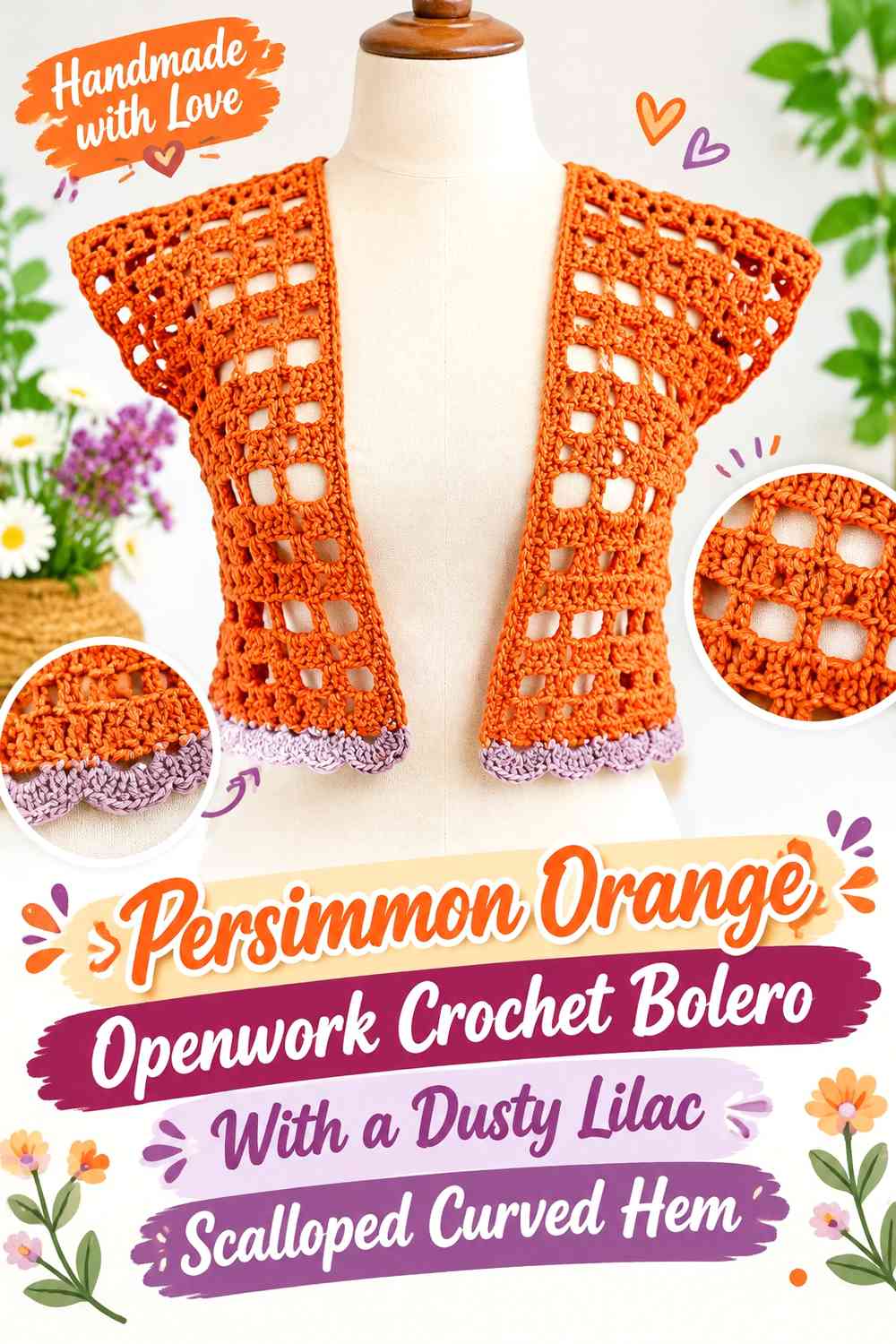
Use persimmon orange across the openwork body and dusty lilac for a scalloped or softly patterned edge along the curve. This gives the lower hem both color contrast and texture, so the rest of the garment can remain relatively restrained.
Dusty Lilac Scallops Can Soften a Persimmon Orange Hem
Keep the lilac treatment concentrated at the perimeter rather than repeating it through every openwork section. The cooler scallops create a softer visual finish against the warmer orange body.
Check the border on a short sample first because a decorative edge can influence how the hem hangs.
Persimmon Orange Openwork Needs Space Above Dusty Lilac Texture
Leave a plain orange zone immediately above the scalloped edge so the two stitch treatments do not compete. This makes both the openwork and border easier to distinguish.
The same orange can continue into the sleeves for a more unified garment.
Creator Credit: Crochet y Cintas
6. Dusty Lilac Lace Crochet Bolero With Persimmon Orange Sleeves and Curved Hem

Use dusty lilac for the main lace body and introduce persimmon orange on the sleeves or their flared lower sections. Repeat a controlled amount of orange at the curved body hem so the sleeve color connects back to the torso.
Persimmon Orange Sleeves Need Dusty Lilac Around the Shoulder Transition
A lilac shoulder or upper-body area creates a visual bridge between the orange sleeves and the main garment. Without that transition, two strongly colored sleeves can appear detached from a much paler body.
Keep the color boundary consistent on both arms.
Dusty Lilac Curved Hem Can Balance Persimmon Orange Sleeve Weight
If orange already dominates the sleeve area, keep more of the curved hem lilac and use orange only as a narrow finishing detail. This prevents the bottom edge and sleeves from competing for attention.
Judge the garment while worn because flared sleeves can carry substantial visual weight.
Creator Credit: HookedOnViktoriya
7. Persimmon Orange Pixie Crochet Bolero With a Dusty Lilac Rounded Edge
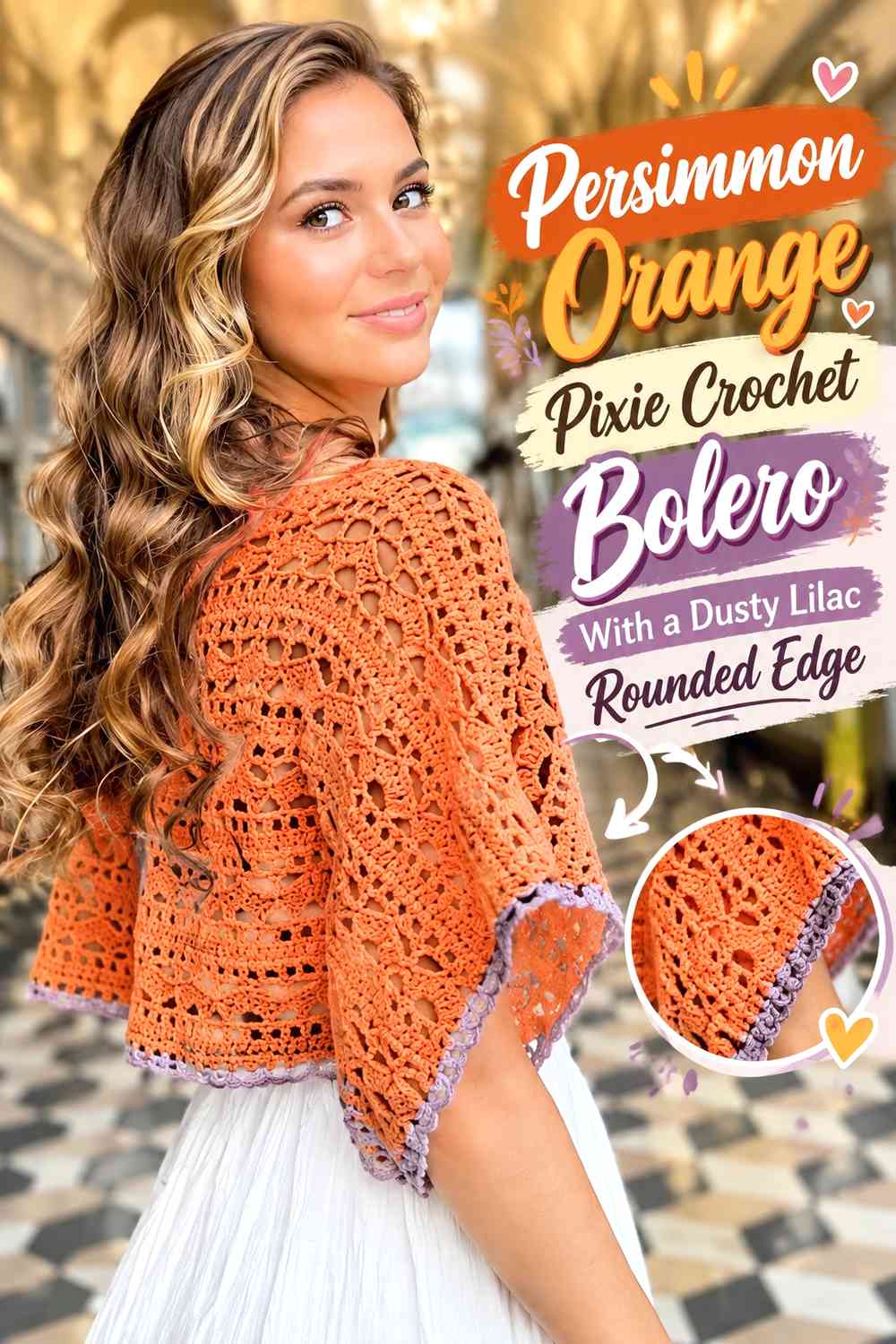
Let persimmon orange cover the softly draping body and use dusty lilac around the rounded lower perimeter. The cooler border can clarify the hem without interfering with the relaxed patterned fabric above it.
Dusty Lilac Should Emphasize the Persimmon Orange Curve Without Stiffening It Visually
Keep the lilac edge proportionate to the softer body shape. A very deep contrasting border can make the lower area appear heavier than the upper bolero.
A narrower finish usually keeps the color emphasis on the curve itself.
Persimmon Orange Should Remain Continuous Across the Dusty Lilac-Framed Body
Use orange as the connecting field across the shoulders and body so the lilac edge has one clear role. Multiple alternating blocks would make the curved border less distinctive.
If you want another lilac repeat, cuffs are a more controlled location.
Creator Credit: Ophelia Talks Crochet
8. Dusty Lilac Sleeve Crochet Bolero With a Persimmon Orange Curved Lower Band
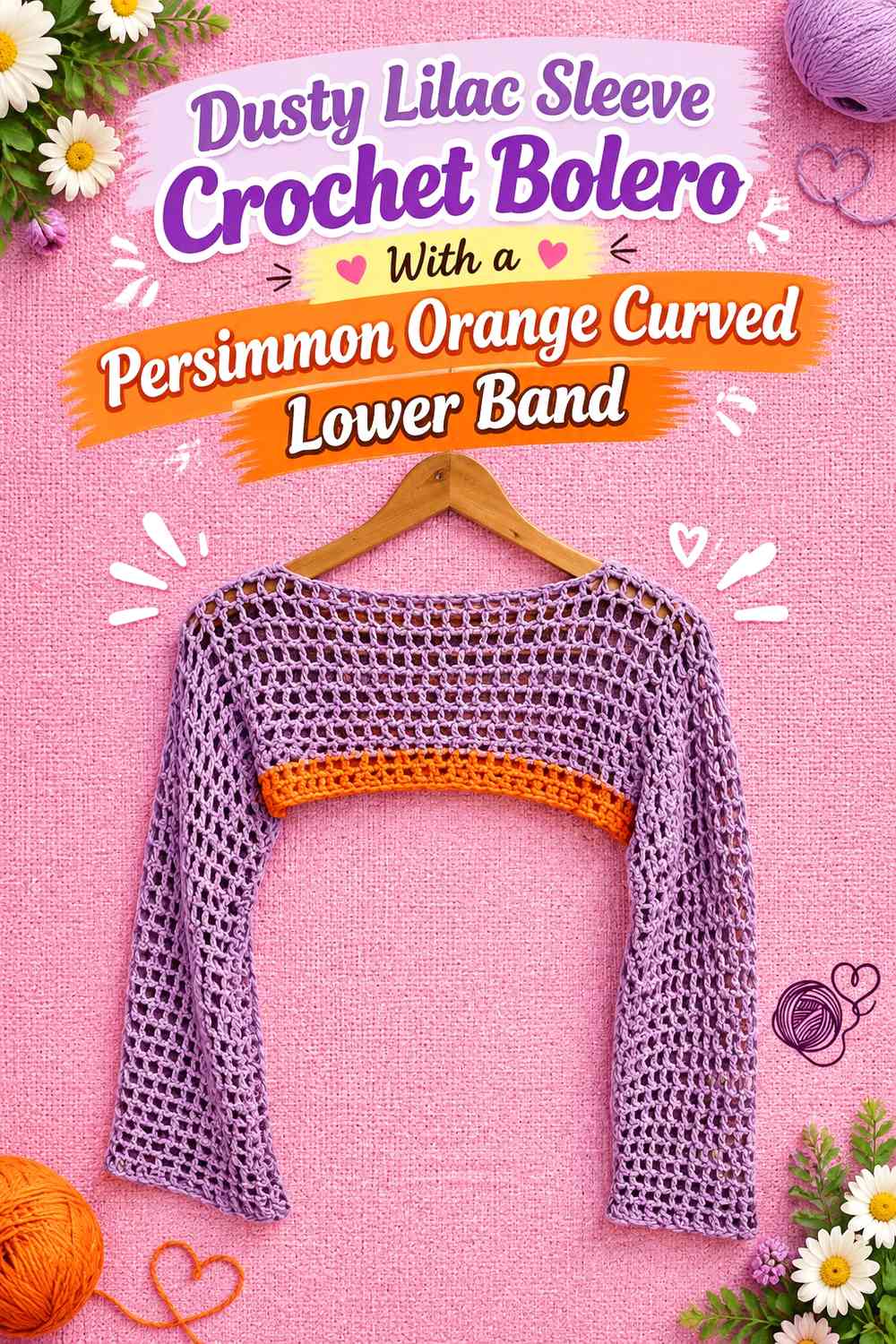
Use dusty lilac through the open sleeves and upper shoulder area, then place persimmon orange along the lower body or curved front band. The warm color sits closer to the torso while the cooler shade dominates the arm movement.
Dusty Lilac Sleeves Can Keep Persimmon Orange From Dominating the Bolero
Sleeves account for a large visible area, so using lilac there gives the cooler shade substantial presence even if orange appears strongly across the front.
This balance can make the bolero read as genuinely two-color rather than orange with minor lilac accents.
Persimmon Orange Curved Bands Need a Clear Dusty Lilac Transition
Place the orange where the garment begins changing toward its lower edge rather than inserting it unpredictably through the sleeves. A clear transition makes the curved hem easier to follow.
If the source construction is very sleeve-focused, establish the intended lower-body curve separately before applying the border.
Creator Credit: Crochet with Karu
9. Persimmon Orange Floral Crochet Bolero With Dusty Lilac Curved Fronts
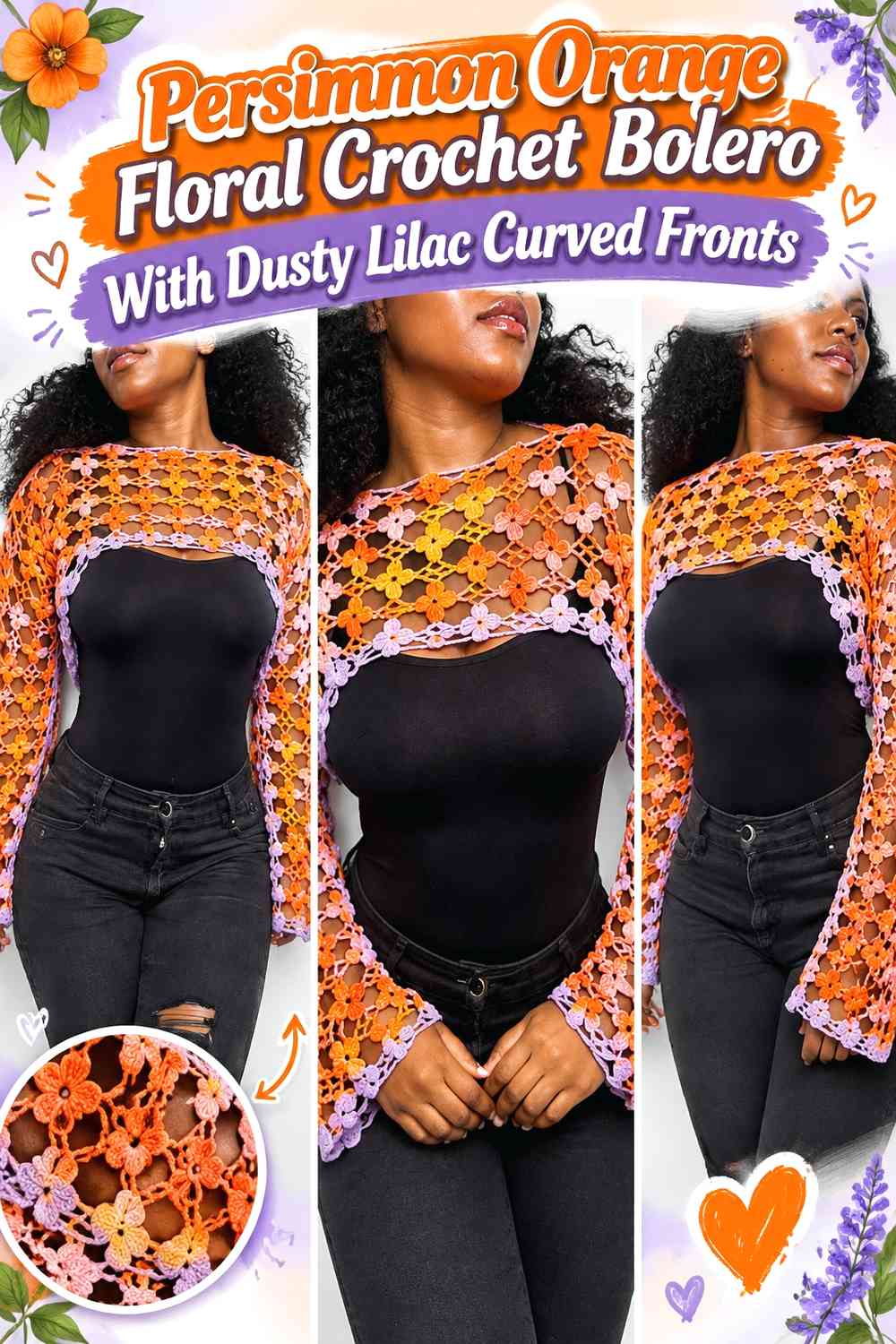
Use persimmon orange for most of the integrated floral surface and dusty lilac around the open front and lower curved edge. Because flowers already create considerable pattern, the color placement should stay relatively simple.
Dusty Lilac Curved Fronts Can Frame Persimmon Orange Flowers
Keep lilac around the garment outline rather than changing the color of every individual floral unit. This lets the flowers remain readable as texture while the cooler shade defines the silhouette.
A continuous lilac front edge can also connect the neckline and hem visually.
Persimmon Orange Flowers Need Enough Dusty Lilac-Free Space
Do not introduce lilac into every petal simply because it is the second palette color. A mostly orange floral field creates a stronger contrast with the lilac border.
If you want additional lilac repetition, place it in a small number of strategically positioned flowers rather than every motif.
Creator Credit: Priya Crochets
10. Dusty Lilac Fine-Lace Crochet Bolero With Persimmon Orange Hem Definition
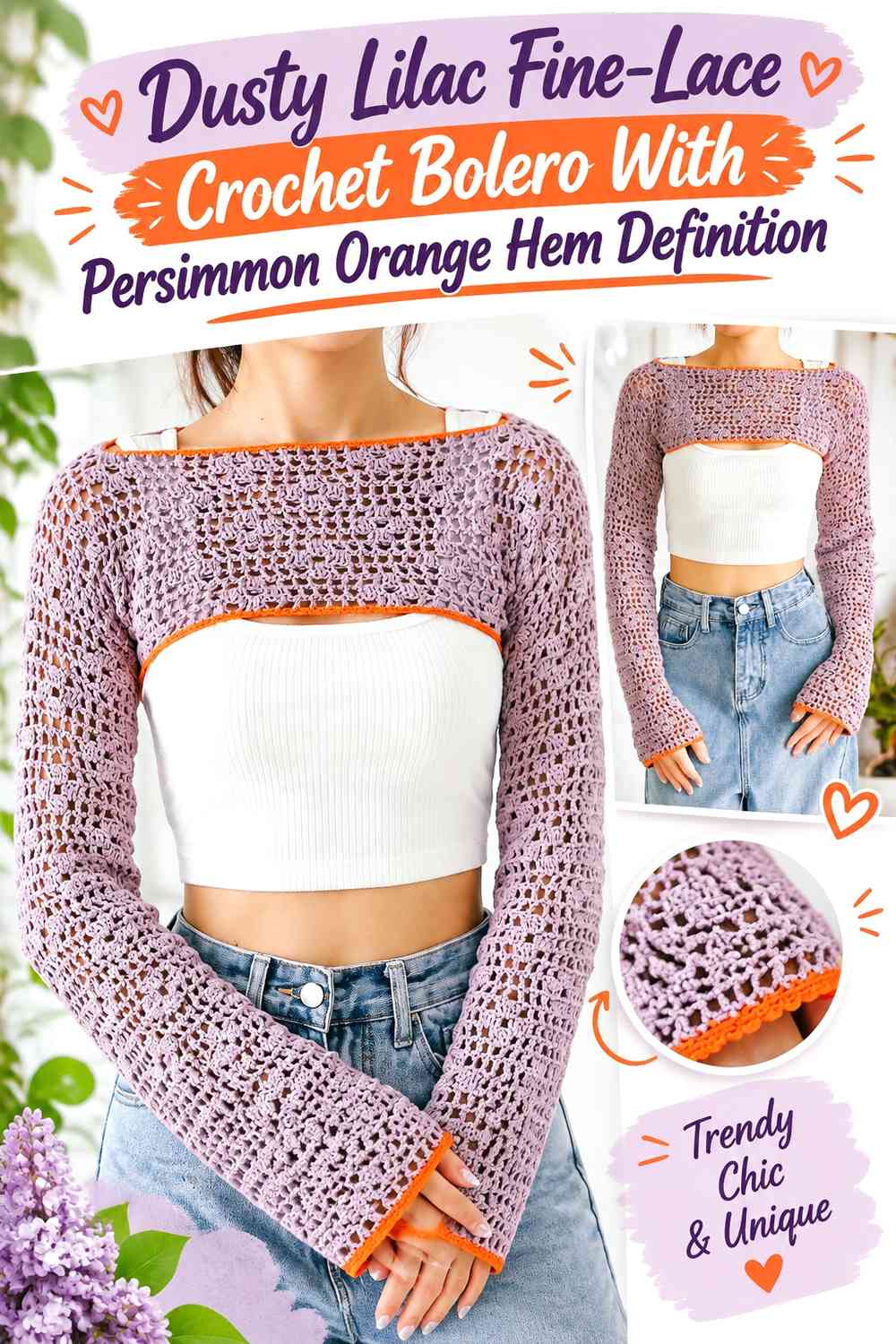
Make fine dusty-lilac lace the dominant fabric and use persimmon orange mainly to define the lower curved edge and perhaps the cuffs. This creates a lighter overall bolero while keeping the warm shade visible in the garment’s boundaries.
Persimmon Orange Can Make a Dusty Lilac Fine-Lace Curve Easier to See
Fine openwork may visually merge with the layer underneath. A controlled orange edge gives the hem a stronger boundary and makes the planned curve more apparent.
Keep the orange line consistent so the eye follows the silhouette instead of noticing irregular border depth.
Dusty Lilac Lace Should Remain the Main Field Above Persimmon Orange
Leave most of the patterned fabric lilac so its open spaces and stitch rhythm remain coherent. Frequent orange interruptions can make a fine repeat appear fragmented.
Use the contrast at edges where it adds information about garment shape.
Creator Credit: Chenda DIY
11. Persimmon Orange Fishnet Crochet Bolero With Dusty Lilac Curved Cuffs and Hem

Use persimmon orange across the larger fishnet sections and dusty lilac at the sleeve cuffs and curved body edge. Repeating the same lighter shade at both endpoints gives the open garment a clear frame.
Dusty Lilac Cuffs Can Anchor Persimmon Orange Fishnet Sleeves
A solid or more defined lilac cuff can visually finish an otherwise very open orange sleeve. Keep the cuff treatment related to the body hem so the two finishing areas feel intentional.
Do not make the cuffs so visually heavy that they overpower the open sleeves above them.
Persimmon Orange Fishnet Needs a Simple Dusty Lilac Curved Hem
Large mesh already creates a bold graphic surface. Use a straightforward lilac edge rather than adding several dense decorative elements to the lower curve.
This protects the contrast between open orange fabric and the cleaner lilac finishing line.
Creator Credit: 75 emma
12. Dusty Lilac Panel Crochet Bolero With a Persimmon Orange Curved Front Frame

Use dusty lilac across the main front and back panels and persimmon orange around the open front and proposed curved lower edge. A panelled construction gives the contrasting frame more surface to work around than a minimal sleeve shrug.
Persimmon Orange Can Connect Dusty Lilac Front Panels to the Curved Hem
Run orange along the front opening and continue it into the lower curve when the construction permits. The connected border gives the bolero a clear visual frame.
If the base garment is longer or straighter than your target silhouette, plan the shortened curve structurally before adding this border.
Dusty Lilac Panels Should Stay Broad Inside the Persimmon Orange Frame
Keep the lilac body areas large enough to maintain a clear cool field. A very wide orange frame can make a cropped adaptation feel smaller and heavier.
Check the front-panel proportions against a garment you already wear comfortably before committing to the final edge treatment.
Creator Credit: Kenikse Crochet
13. Persimmon Orange Summer Crochet Bolero With Dusty Lilac Curved Side Panels
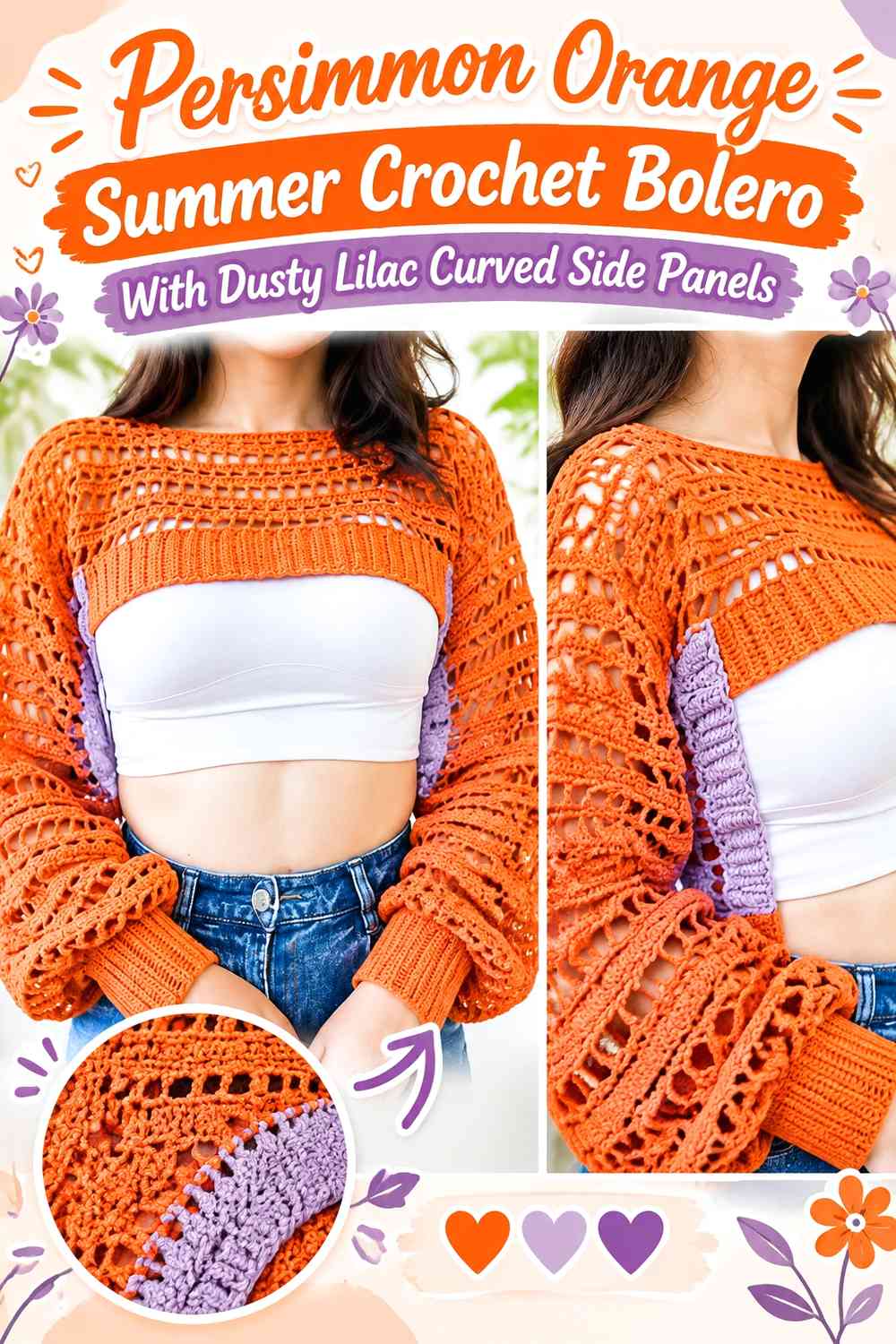
Use persimmon orange through the primary body and sleeves, then bring dusty lilac into the lower side areas where the hem curves upward toward the front. This makes the color transition follow the silhouette rather than cutting horizontally across the bolero.
Dusty Lilac Side Panels Can Emphasize the Persimmon Orange Hem Rise
Place lilac where the lower edge begins to change direction. The cooler color can visually mark that transition without requiring the entire hem to become lilac.
Keep the treatment balanced from left to right unless intentional asymmetry is part of the design.
Persimmon Orange Should Connect the Dusty Lilac Side Curves Across the Back
A continuous orange back keeps the garment unified when lilac appears mainly at the front-side edges. This also prevents the color changes from turning into separate patches.
Repeat a little lilac at the cuffs only if the side panels need a second point of connection.
Creator Credit: Yarnalina
14. Two-Color Persimmon Orange and Dusty Lilac Open-Front Crochet Curved Hem Bolero

Use only the two requested shades throughout the bolero. Persimmon orange can carry the main body, cuffs, or selected sleeve sections, while dusty lilac defines the open front, curved lower edge, and other finishing areas. Because there is no neutral third color, each shade needs a consistent role.
Persimmon Orange Should Establish the Main Bolero Structure
Choose the largest garment areas for orange rather than changing colors at every stitch pattern transition. The body or sleeves can provide enough warm surface for the palette to feel grounded.
Dusty lilac then has room to function as deliberate shaping contrast.
Dusty Lilac Should Follow the Persimmon Orange Curved Opening
Use lilac along meaningful boundaries such as the neckline, open fronts, and lower curve. A connected light border can make the shape easier to understand from the front.
Avoid scattering lilac through random body sections if the curved frame is meant to be the major contrast feature.
Persimmon Orange and Dusty Lilac Need a Full Garment Check Before Final Edging
Try on or position the developing bolero in its finished orientation before completing the border. Check whether one sleeve has more visible orange, whether the lilac curve sits at a similar level on both fronts, and whether the color balance still works over the intended underlayer.
If the tutorial’s original hem is straighter, treat the curved shape as a separate modification and establish that silhouette before relying on the contrasting color to define it.
Creator Credit: Natalie
Which Persimmon Orange and Dusty Lilac Curved Hem Bolero Should You Choose?
For the clearest curved-hem emphasis, start with the persimmon-orange body with dusty-lilac edging, dusty-lilac butterfly bolero with an orange border, or dusty-lilac panel bolero with an orange front frame. These place contrast directly where the silhouette changes.
For a more texture-led garment, the openwork, fine-lace, fishnet, and floral versions allow the crochet fabric to carry much of the visual interest while the second color remains concentrated at the garment edges.
If sleeves should be the strongest feature, consider the dusty-lilac sleeve bolero, lilac lace bolero with orange sleeves, or fishnet version with contrasting cuffs. The final strict two-color option gives the most controlled interpretation when you want the curved front, neckline, sleeves, and hem to stay entirely within persimmon orange and dusty lilac.
Conclusion
Persimmon orange and dusty lilac can change the appearance of a curved hem bolero substantially without requiring a complicated multicolor surface. Persimmon orange provides warmth and visual weight, while dusty lilac can soften broad panels and make curved fronts, cuffs, borders, and lower edges easier to distinguish.
The most useful color decision is often where the two shades meet. A contrast placed directly along the curved hem reinforces the silhouette, while a color change higher on the body can create an unrelated horizontal band and reduce the impact of the curve.
Establish fit and garment construction before altering a straight tutorial base into a curved one. Then evaluate the color distribution with the bolero in its worn orientation. Use the credited tutorials for the constructions they demonstrate and treat any changed hem shaping as a separate adaptation rather than assuming it is part of the creator’s original instructions.
Frequently Asked Questions
Should Persimmon Orange or Dusty Lilac Dominate a Curved Hem Crochet Bolero?
Persimmon orange works well as the dominant shade when you want a warmer, stronger garment with dusty lilac defining the edges. Dusty lilac can dominate when you want a softer bolero and prefer persimmon orange mainly at the curved front, cuffs, sleeves, or border.
Which Color Should I Use on the Curved Bolero Hem?
Use the color that needs stronger repetition and contrast. Dusty lilac creates a softer outline around a persimmon-orange body, while persimmon orange gives a lilac body a more pronounced warm frame.
How Can I Make a Persimmon Orange Curved Hem More Visible?
Use dusty lilac directly along the lower edge and keep enough uninterrupted orange above it. A continuous contrasting border makes the curve easier to see than scattered lilac details away from the hem.
Can I Turn a Straight-Hem Crochet Bolero Tutorial Into a Curved-Hem Bolero?
That requires a structural adaptation rather than a color change alone. Establish the tutorial’s body, front, and armhole proportions first, then plan and test the curved shaping separately. Do not assume that simply shortening selected areas will preserve the original fit and drape.
Should Dusty Lilac Be Used on Persimmon Orange Bolero Sleeves?
It can work particularly well at cuffs, sleeve ends, or selected upper sections. If the body already has a dusty-lilac curved border, repeating the same shade at the cuffs can connect the sleeve finishing to the garment hem.
Can a Persimmon Orange and Dusty Lilac Bolero Use Only Two Colors?
Yes. One color can cover the body or sleeves while the second defines the open front, cuffs, neckline, and curved hem. Clear placement roles usually create a stronger result than alternating the two shades throughout every stitch repeat.
What Should I Check Before Adding a Contrasting Curved Hem Border?
Check the bolero’s fit, front length, sleeve placement, and underlying hem shape first. Then place a short sample of the contrasting color along the edge and see how it affects the visual depth and drape before repeating it around the entire garment.