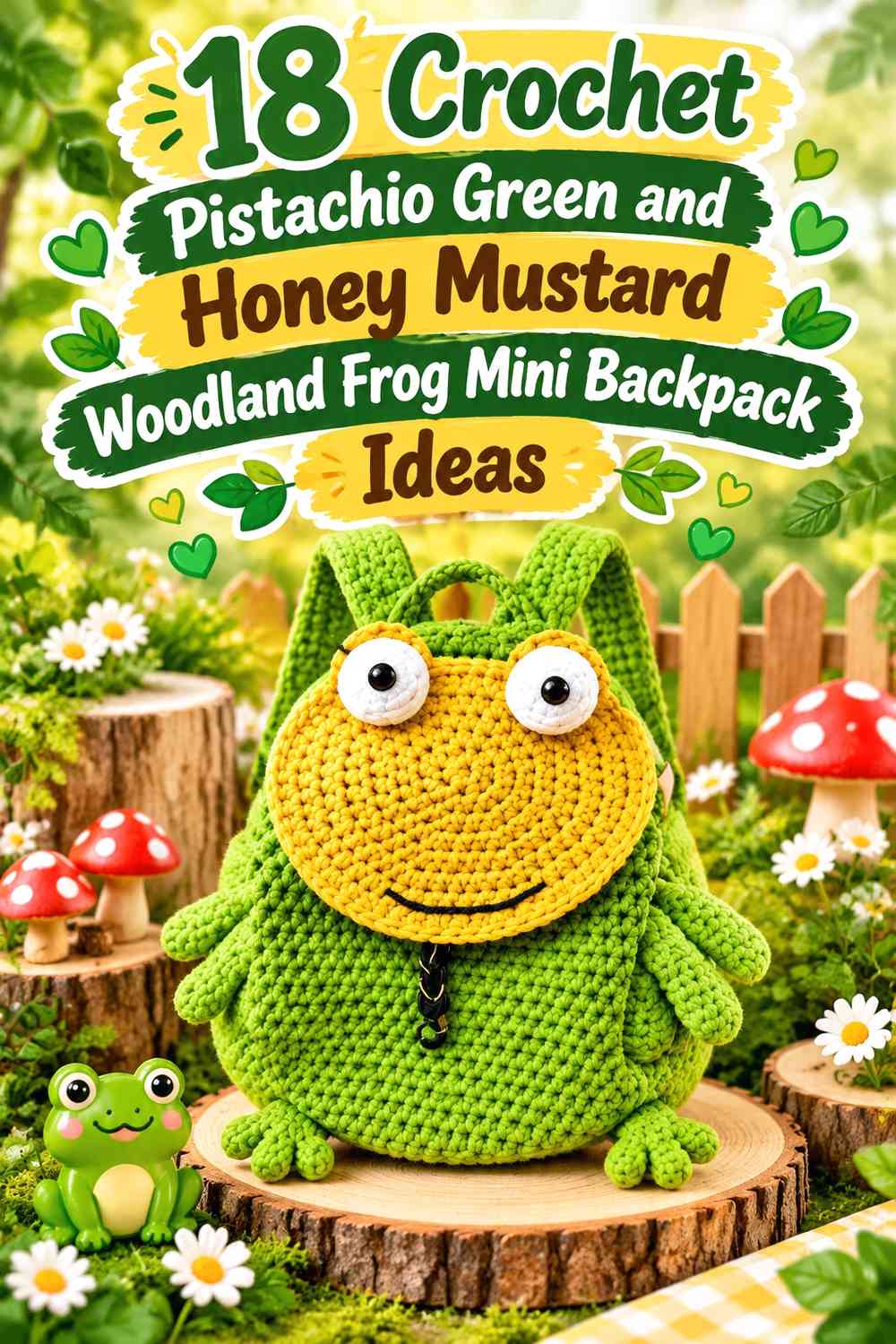

Pistachio green and honey mustard can give a crochet frog mini backpack a woodland look that feels warmer and more muted than a bright lime-and-yellow palette. Pistachio naturally suits the frog face and body, while honey mustard can define a flap, belly pocket, straps, drawstring, mushroom accents, or small botanical details.
On a mini backpack, color placement matters because the front flap, pocket, and frog face occupy much of the visible surface. A small honey mustard flap can become surprisingly prominent against a pistachio body, while mustard straps may barely show from the front but add considerable color when the backpack is viewed from behind.
These 18 ideas vary which color dominates, where the frog face appears, how woodland motifs are distributed, and whether honey mustard behaves as a structural color or a small accent. The supporting tutorials include frog bags, mini backpacks, granny-square backpacks, drawstring backpacks, and woodland-friendly motif bags that can support the construction concept; the pistachio-and-honey-mustard palettes are independent editorial adaptations.
Quick List
- Decide Whether Pistachio Green or Honey Mustard Should Lead the Frog Backpack
- Pistachio Green and Honey Mustard Crochet Woodland Frog Mini Backpack with Mustard Face Flap
- Pistachio Green and Honey Mustard Crochet Woodland Frog Mini Backpack with Green Face Panel
- Pistachio Green and Honey Mustard Crochet Woodland Frog Mini Backpack with Mushroom Flap
- Pistachio Green and Honey Mustard Crochet Woodland Frog Mini Backpack with Mustard Belly Pocket
- Pistachio Green and Honey Mustard Crochet Woodland Frog Mini Backpack with Mustard Straps
- Pistachio Green and Honey Mustard Crochet Woodland Frog Mini Backpack with Mustard Drawstring
- Pistachio Green and Honey Mustard Crochet Checkerboard Woodland Frog Mini Backpack
- Pistachio Green and Honey Mustard Crochet Granny-Square Woodland Frog Mini Backpack
- Pistachio Green and Honey Mustard Crochet Granny Woodland Frog Mini Backpack with Mustard Border
- Pistachio Green and Honey Mustard Crochet Woodland Frog Mini Backpack with Mustard Flowers
- Pistachio Green and Honey Mustard Crochet Structured Woodland Frog Mini Backpack
- Pistachio Green and Honey Mustard Crochet Woodland Frog Mini Backpack with Mustard Base
- Pistachio Green and Honey Mustard Crochet Tiny Woodland Frog Mini Backpack
- Pistachio Green and Honey Mustard Crochet Textured Woodland Frog Mini Backpack
- Pistachio Green and Honey Mustard Crochet Woodland Frog Mini Backpack with Front Pocket
- Balanced Pistachio Green and Honey Mustard Crochet Woodland Frog Mini Backpack
Decide Whether Pistachio Green or Honey Mustard Should Lead the Frog Backpack
Pistachio green is the most direct choice for the frog itself, but it does not have to cover the whole backpack. Keeping the face, eyes, or flap pistachio while allowing honey mustard to carry the bag body creates a noticeably warmer woodland result.
For a more recognizable frog-first design, let pistachio cover the main front surface and use honey mustard at structural points such as the pocket rim, straps, drawstring channel, or flap. That gives the second color a useful role without weakening the frog silhouette.
Coordinate Pistachio Green and Honey Mustard With Woodland Motifs
Mushrooms, leaves, flowers, and spots can reinforce the woodland theme, but they should remain secondary to the frog. If honey mustard already covers the flap, use it sparingly in mushroom caps or flowers. If the backpack is almost entirely pistachio, a few mustard woodland details can provide stronger repetition.
For a backpack intended for a young child, secure decorative parts appropriately and consider crocheted or embroidered facial details instead of relying on small detachable components.
2. Pistachio Green and Honey Mustard Crochet Woodland Frog Mini Backpack with Mustard Face Flap
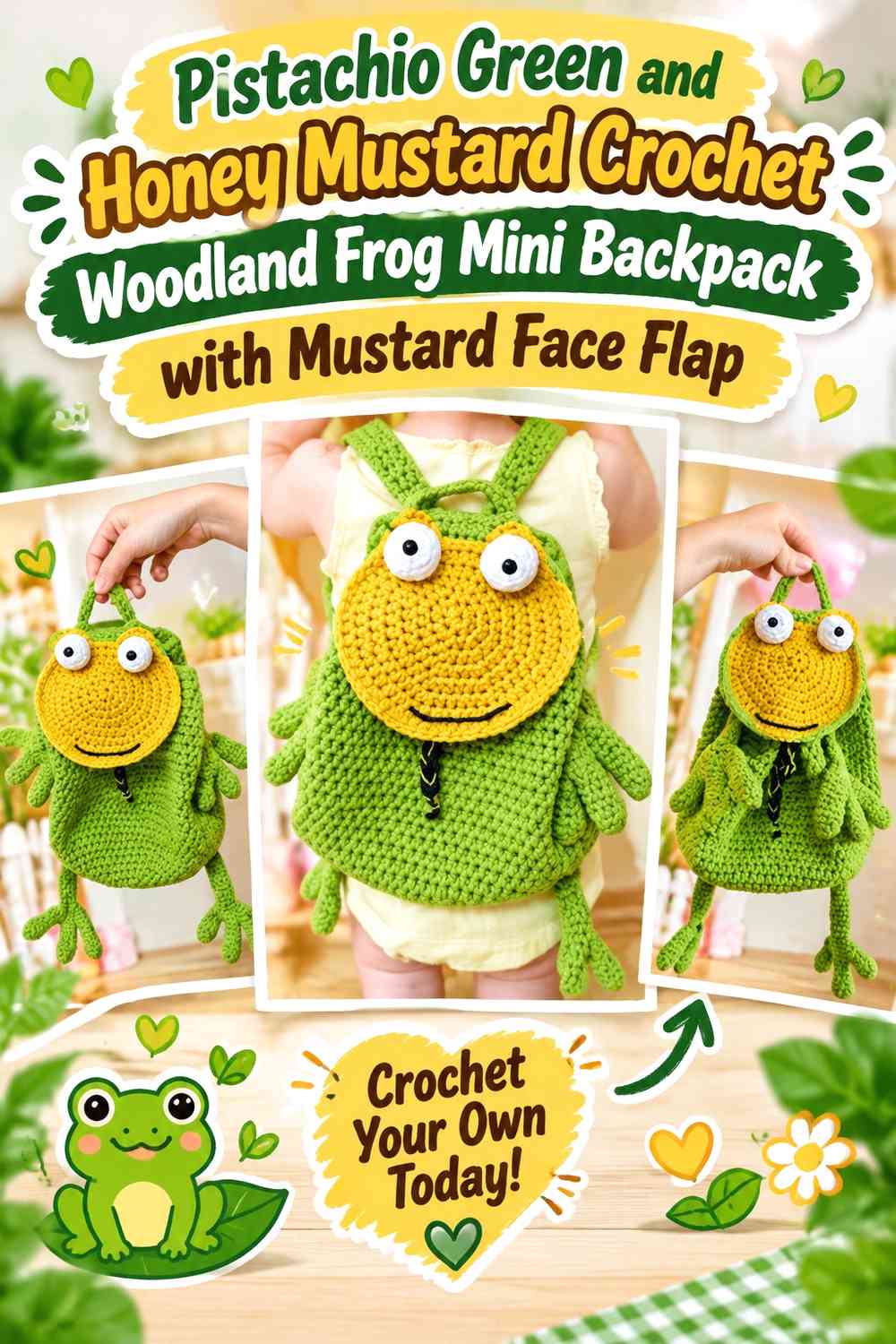
Let pistachio green cover the mini backpack body and use honey mustard for the front flap beneath or around the frog eyes. The warm flap breaks up the larger green surface while keeping the frog identity concentrated at the top of the bag.
Honey Mustard Should Separate the Pistachio Green Frog Face From the Body
Use enough mustard across the flap for its outline to remain clear when the backpack is closed. A very narrow mustard section can disappear beneath raised eyes or other frog details.
Keep pistachio around the upper face so the animal remains recognizable rather than making the complete flap mustard.
Pistachio Green Should Continue Beyond the Honey Mustard Flap
Let pistachio remain visible below the flap and around the sides. This prevents the backpack from reading as mustard-dominant from the front.
A pistachio pocket or lower panel can reinforce the frog body without requiring more facial decoration.
Creator Credit: Annadcrochet YouTube tutorial
3. Pistachio Green and Honey Mustard Crochet Woodland Frog Mini Backpack with Green Face Panel
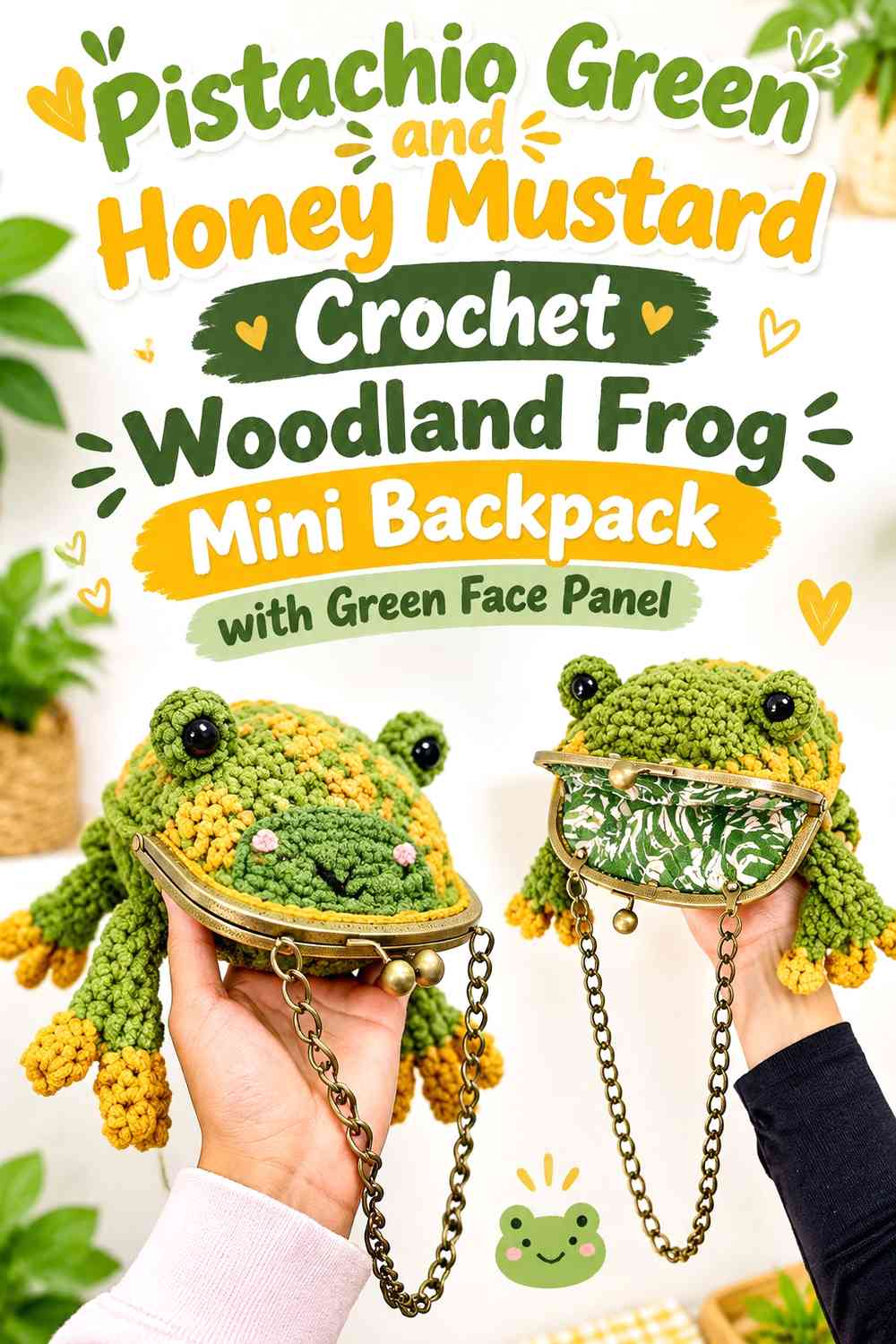
Reverse the hierarchy by using honey mustard for most of the backpack and concentrating pistachio green in a large frog-face panel or flap. This creates a warmer woodland accessory while keeping the most recognizable animal feature green.
Pistachio Green Needs Enough Area Against Honey Mustard to Read as a Frog Face
Keep the face panel broad rather than limiting green to tiny eyes or spots. A substantial pistachio section gives the front a recognizable frog focal point even when the bag itself is mustard.
Dark facial details can remain small because the green panel already establishes the animal.
Honey Mustard Should Frame Pistachio Green Without Crowding the Face
Leave visible mustard around the sides and below the frog panel. That framing gives the green shape a clear boundary and preserves the intentionally reversed palette.
Avoid adding large mustard motifs over the frog face itself.
Creator Credit: Alexandria Masse YouTube tutorial
4. Pistachio Green and Honey Mustard Crochet Woodland Frog Mini Backpack with Mushroom Flap
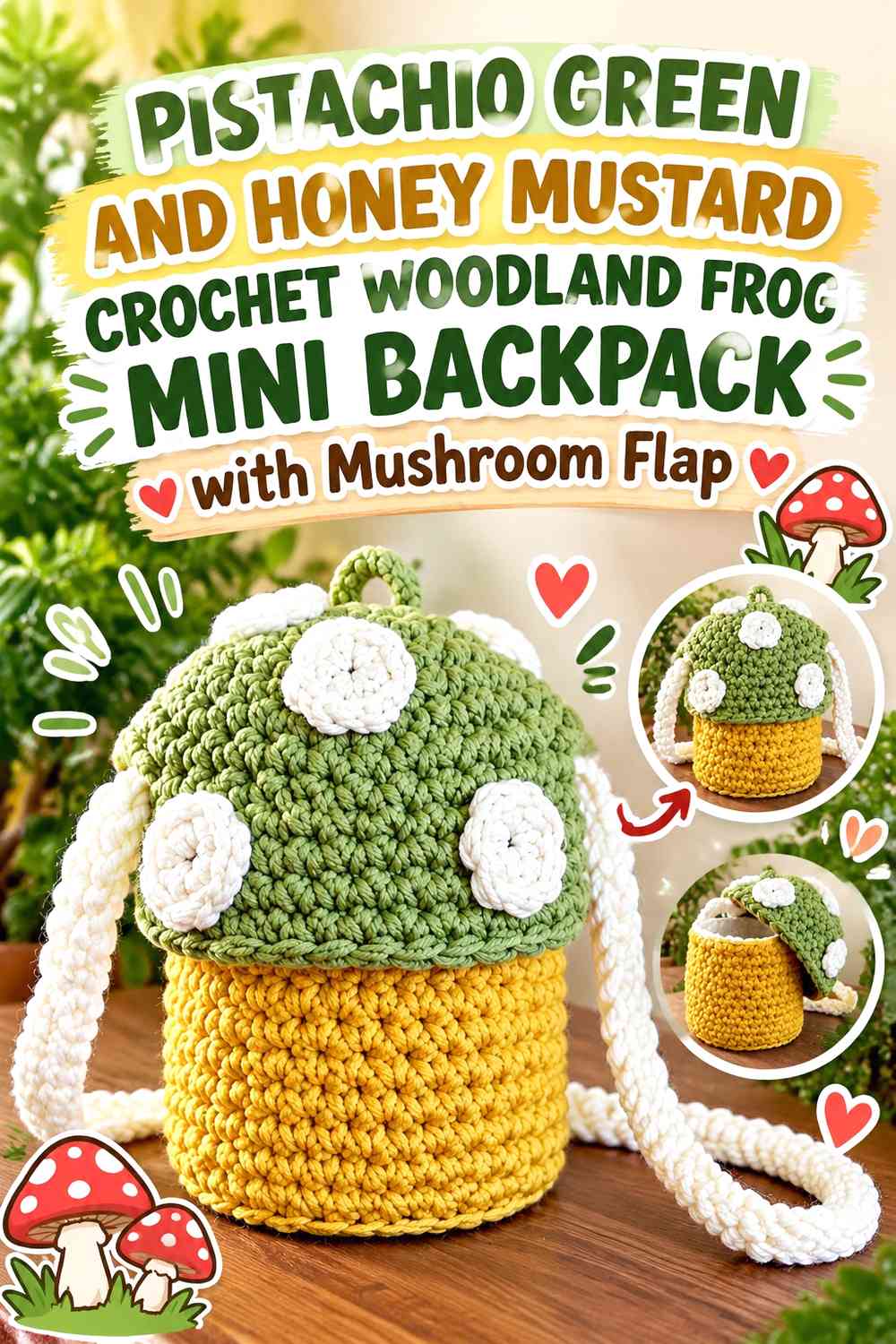
Use pistachio green for the frog backpack body and turn honey mustard into a woodland mushroom-inspired flap or cap detail. The warm color adds a forest-floor reference without replacing the frog as the main concept.
Honey Mustard Mushroom Details Need Pistachio Green Space Around Them
Keep the mushroom-inspired section concentrated at the flap so the backpack does not become equally frog- and mushroom-themed.
Visible pistachio around and beneath the mustard area keeps the frog body in control of the overall design.
Pistachio Green Should Connect the Honey Mustard Mushroom Flap to the Frog Face
Repeat pistachio in the eye area or flap border if the mustard section occupies most of the top.
This creates a visual path between the green body and green frog features instead of letting the mushroom detail split them apart.
Creator Credit: Teenie Crochets YouTube tutorial
5. Pistachio Green and Honey Mustard Crochet Woodland Frog Mini Backpack with Mustard Belly Pocket
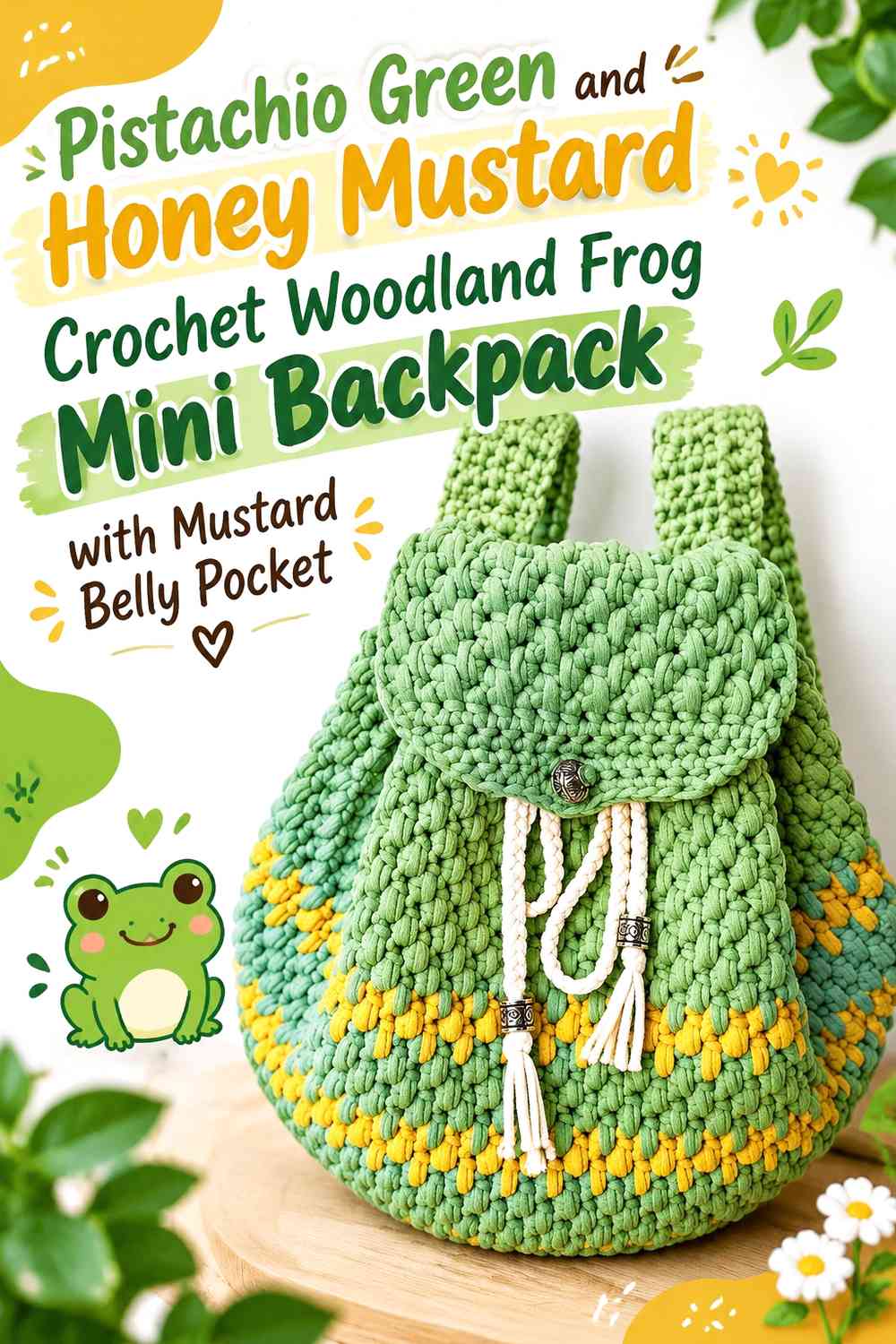
Let pistachio green cover the frog body while honey mustard forms a rounded or rectangular front pocket. The contrasting pocket can suggest a lighter belly area while also giving the color difference a functional purpose.
Honey Mustard Pocket Edges Should Stay Clear Against Pistachio Green
Keep a visible green border around the complete pocket so the mustard section does not look like part of the backpack body.
If the pocket has a decorative upper edge, keep the detailing simple enough that the opening remains obvious.
Pistachio Green Should Frame the Honey Mustard Belly Pocket Symmetrically
Check how much green remains on either side of the pocket before attaching it. An off-center mustard area is more noticeable on a small frog backpack than on a larger bag.
Balanced pistachio margins help the pocket reinforce the frog’s front-facing shape.
Creator Credit: HandmadebyRaine YouTube tutorial
6. Pistachio Green and Honey Mustard Crochet Woodland Frog Mini Backpack with Mustard Straps
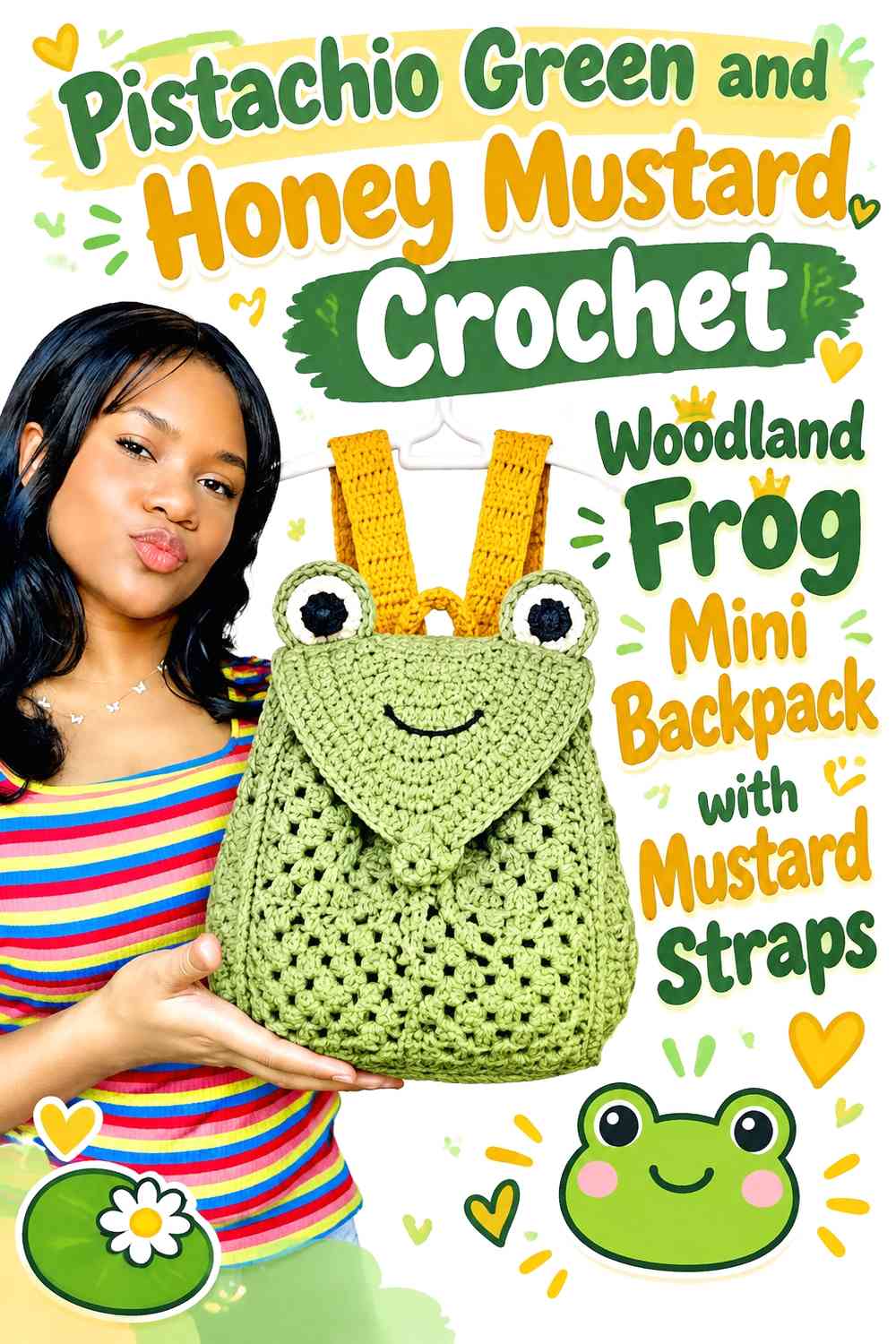
Keep almost the entire visible front pistachio green and place most of the honey mustard on the shoulder straps, top handle, and small back details. This produces one of the greenest frog designs from the front while giving the palette more variation from behind.
Honey Mustard Straps Should Connect Visually to the Pistachio Green Backpack
Repeat a small mustard feature on the front—perhaps the pocket rim or drawstring—so the straps do not seem unrelated when the backpack is set down.
The repeat can be narrow because the straps already contribute substantial color from the back.
Pistachio Green Should Stay Dominant Across the Frog Front
Keep the frog face, flap, and main body green if the purpose of this version is a clear animal-first silhouette.
Avoid adding another large mustard front panel simply to match the straps.
Creator Credit: WildxDandi Crochets YouTube tutorial
7. Pistachio Green and Honey Mustard Crochet Woodland Frog Mini Backpack with Mustard Drawstring
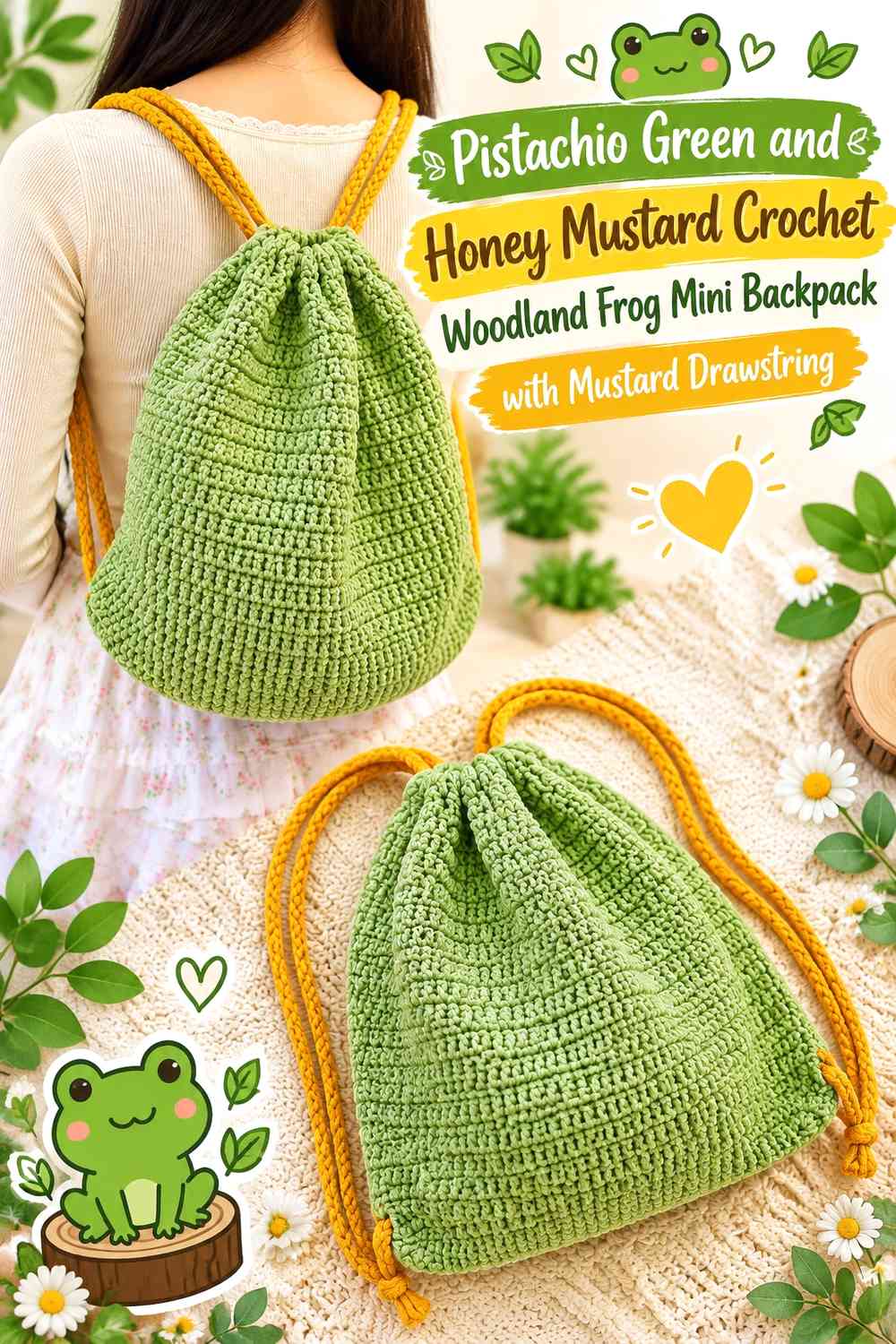
Use pistachio green from the base through the upper bag and make the drawstring or cinch cord honey mustard. The mustard line circles the opening and creates a smaller but highly functional color repeat.
Honey Mustard Drawstrings Need a Pistachio Green Channel Around Them
Keep the upper channel or eyelet area pistachio so the warm cord remains visible as it passes in and out of the bag.
If the channel itself also becomes mustard, the drawstring can visually disappear into it.
Pistachio Green Can Carry the Frog Face Below the Honey Mustard Opening
Place the frog eyes or face far enough below the drawstring channel that the closure does not interrupt the expression.
This keeps the mustard detail structural and the pistachio section character-focused.
Creator Credit: Alice’s Crochet Corner YouTube tutorial
8. Pistachio Green and Honey Mustard Crochet Checkerboard Woodland Frog Mini Backpack
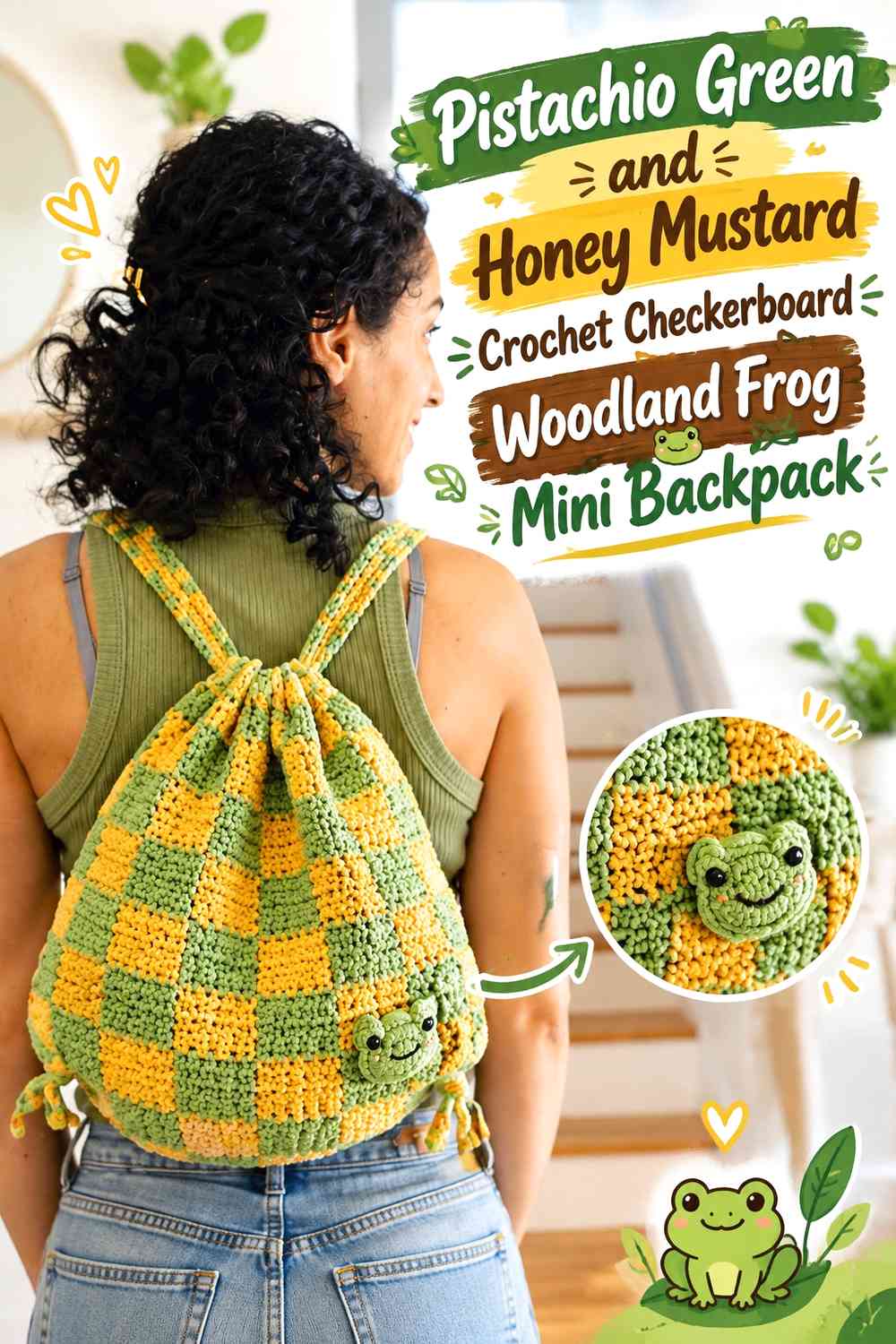
Use larger pistachio and honey mustard checks across the backpack body while keeping the frog face mainly pistachio. The checkerboard introduces a stronger retro-woodland pattern without adding more colors.
Pistachio Green Checks Should Connect to the Frog Face
Place at least one substantial pistachio section immediately around the face or flap so the animal detail feels integrated with the checkered body.
A frog face floating over an entirely mustard block can look more like a separate appliqué.
Honey Mustard Checks Need a Predictable Rhythm Against Pistachio Green
Use a regular alternating layout rather than varying the block sizes randomly. A small backpack has limited room for repeated motifs, so a controlled checkerboard keeps the frog details readable.
Let the straps remain solid if the body already contains strong patterning.
Creator Credit: Häkelwelt YouTube tutorial
9. Pistachio Green and Honey Mustard Crochet Granny-Square Woodland Frog Mini Backpack
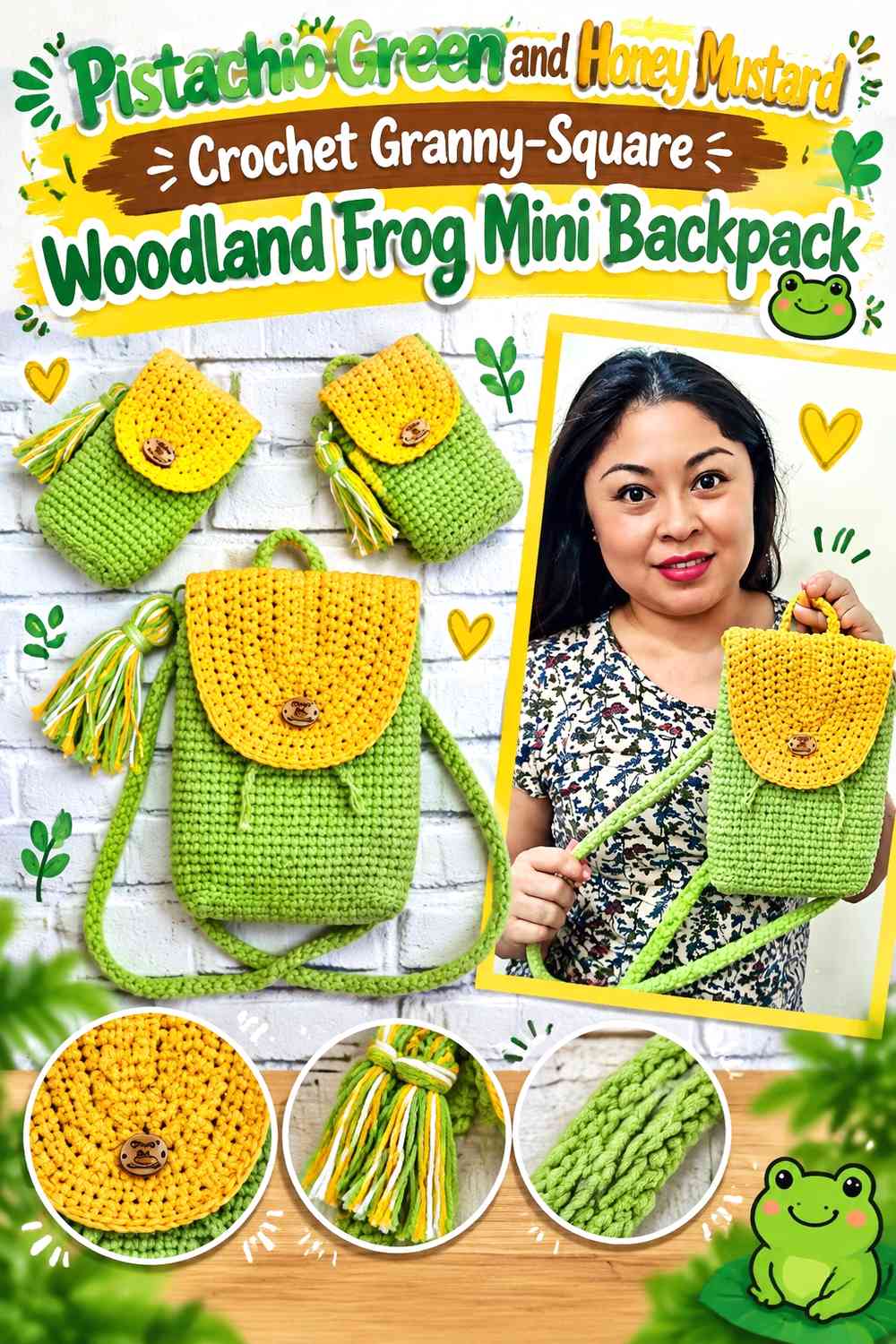
Use pistachio-dominant granny squares with honey mustard centers or selected outer rounds, then place the frog face on the front flap or central square. This creates a handmade woodland patchwork effect without introducing a broad multicolor palette.
Honey Mustard Granny Centers Should Repeat Through Pistachio Green Squares
Give mustard the same role from one square to the next. Consistent centers create a clear motif rhythm and stop the bag from looking like random leftover squares.
Keep pistachio through the largest part of each square if the frog theme should remain green-led.
Pistachio Green Joins Can Keep Honey Mustard Granny Squares Connected
A shared green joining shade visually links the motifs and provides a calmer background for the frog face.
If mustard already appears in every square center, avoid using it heavily in the joins as well.
Creator Credit: MaríaDCrochet YouTube tutorial
10. Pistachio Green and Honey Mustard Crochet Granny Woodland Frog Mini Backpack with Mustard Border
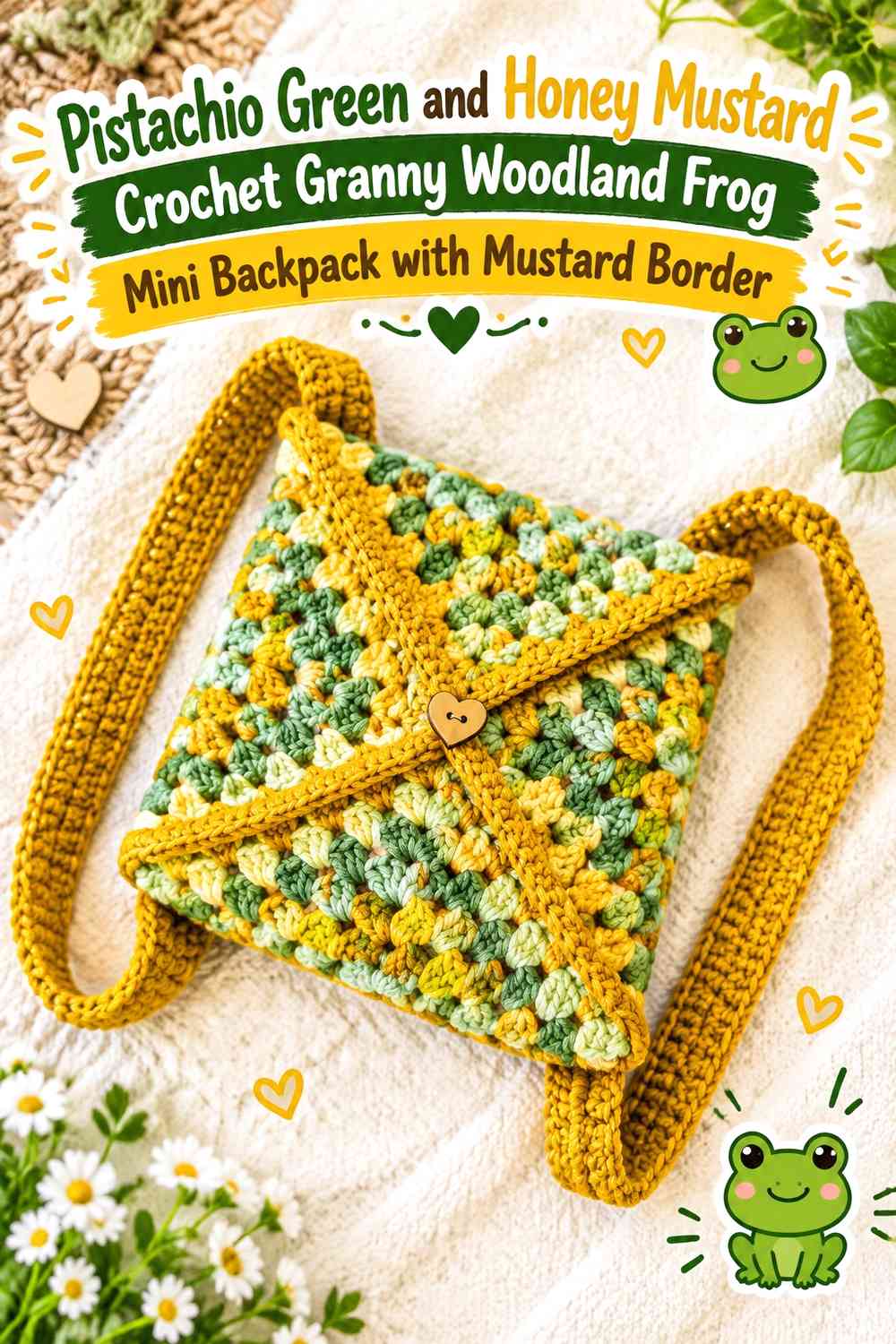
Let pistachio green carry most of a granny-style mini backpack and introduce honey mustard mainly around the flap, bottom edge, or final motif border. This creates a simpler color hierarchy than alternating every square.
Honey Mustard Border Should Define Pistachio Green Granny Texture
Place the mustard where the backpack silhouette needs a clear ending. A narrow warm edge can make the green granny surface easier to distinguish without adding more pattern inside it.
Repeat the same border color on the flap if the front needs stronger connection.
Pistachio Green Should Remain Continuous Inside the Honey Mustard Frame
Keep the body predominantly green so the woodland frog identity remains obvious.
If the mustard border becomes broad, reduce mustard elsewhere rather than allowing both colors to compete in every granny section.
Creator Credit: WoolyWondersCrochet YouTube tutorial
11. Pistachio Green and Honey Mustard Crochet Woodland Frog Mini Backpack with Mustard Flowers
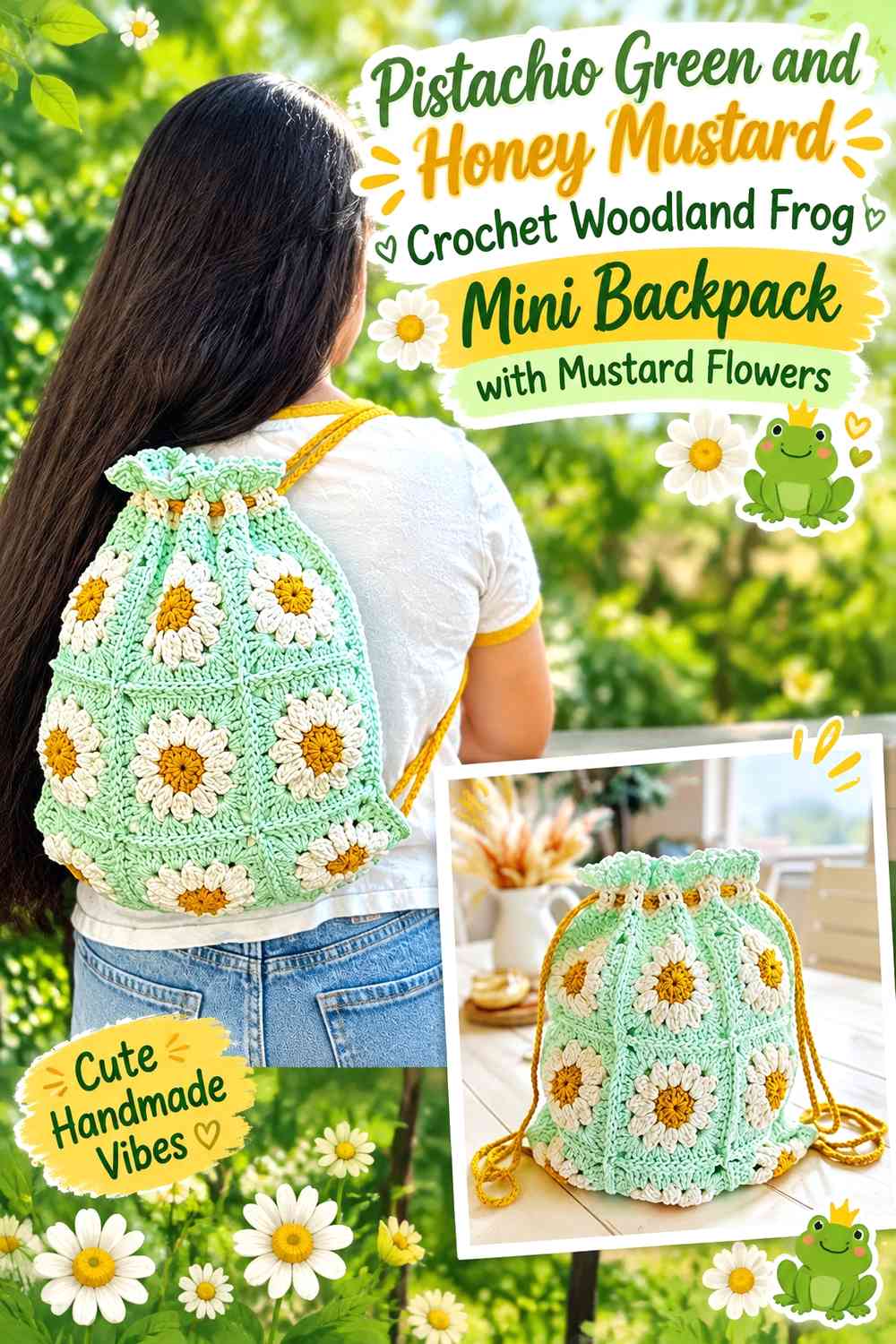
Use pistachio green as the frog and backpack base, then repeat small honey mustard flowers across selected squares or one lower panel. The warm floral accent can reinforce a meadow or woodland-floor theme without distracting from the frog face.
Honey Mustard Flowers Need Pistachio Green Negative Space
Leave green around each flower so individual petals or centers remain recognizable. Packing several mustard motifs tightly can turn the decoration into one broad yellow-brown patch.
Keep the flower area secondary to the frog’s eyes and face.
Pistachio Green Should Connect the Honey Mustard Flowers to the Frog
Use pistachio through the square backgrounds, joins, or stems so the botanical detail belongs naturally to the same woodland palette.
The frog face can then remain almost entirely green without needing extra mustard outlines.
Creator Credit: Erica Arndt YouTube tutorial
11. Pistachio Green and Honey Mustard Crochet Woodland Frog Mini Backpack with Floral Granny Panels
Use pistachio green in the square frames and honey mustard in selected floral centers, then adapt the main front motif into a frog face or frog-themed panel. This creates a more decorative woodland backpack while still limiting the palette to two principal shades.
Honey Mustard Floral Centers Should Stay Secondary to the Pistachio Green Frog
Keep the largest honey mustard concentration away from the frog’s eyes and mouth if you want the face to remain the obvious focal point.
A repeated mustard floral center can provide enough warmth without becoming another competing character motif.
Pistachio Green Frames Can Organize Honey Mustard Woodland Motifs
Use green consistently around each square so the floral sections form one backpack rather than separate patches.
That shared frame also creates useful space for attaching a frog-face flap without adding another background color.
Creator Credit: A Crafty Concept YouTube tutorial
12. Pistachio Green and Honey Mustard Crochet Structured Woodland Frog Mini Backpack
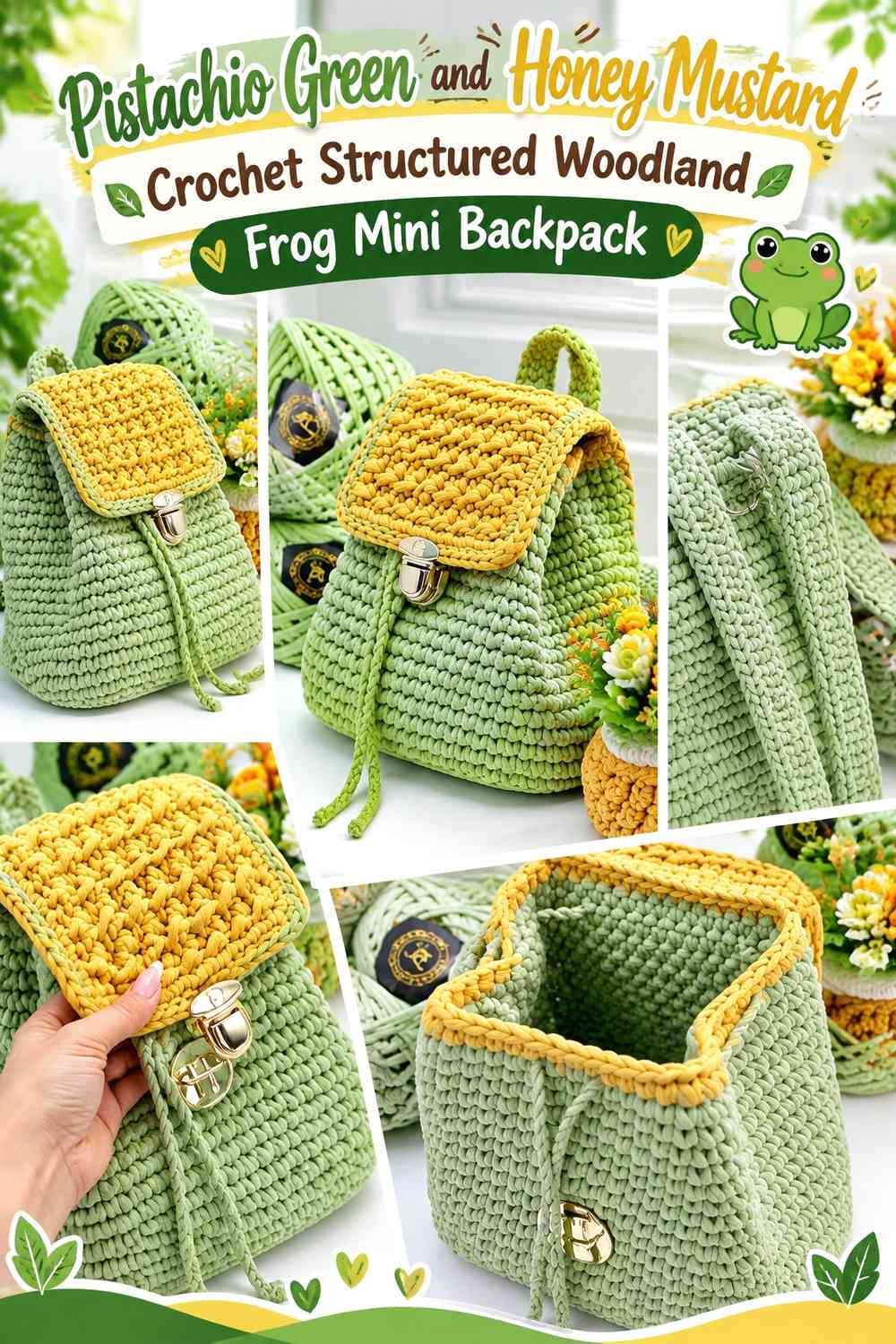
Use pistachio green on the main structured body and honey mustard on the flap, closure area, or bottom trim. A more defined backpack silhouette gives the two colors larger uninterrupted areas and can make the woodland frog theme feel less toy-like.
Honey Mustard Flaps Should Stay Distinct Against Pistachio Green
Give the flap a clear warm field instead of breaking it into many tiny green-and-mustard sections.
Pistachio frog eyes or a small face detail can then sit on the flap without eliminating the honey mustard background.
Pistachio Green Should Carry the Main Structured Backpack Shape
Use green across the broad front, sides, and back when you want the frog theme to remain obvious from multiple angles.
Honey mustard can stay concentrated around the closure and trim, where it gives the structured shape more definition.
Creator Credit: Nitka kz YouTube tutorial
13. Pistachio Green and Honey Mustard Crochet Woodland Frog Mini Backpack with Mustard Base
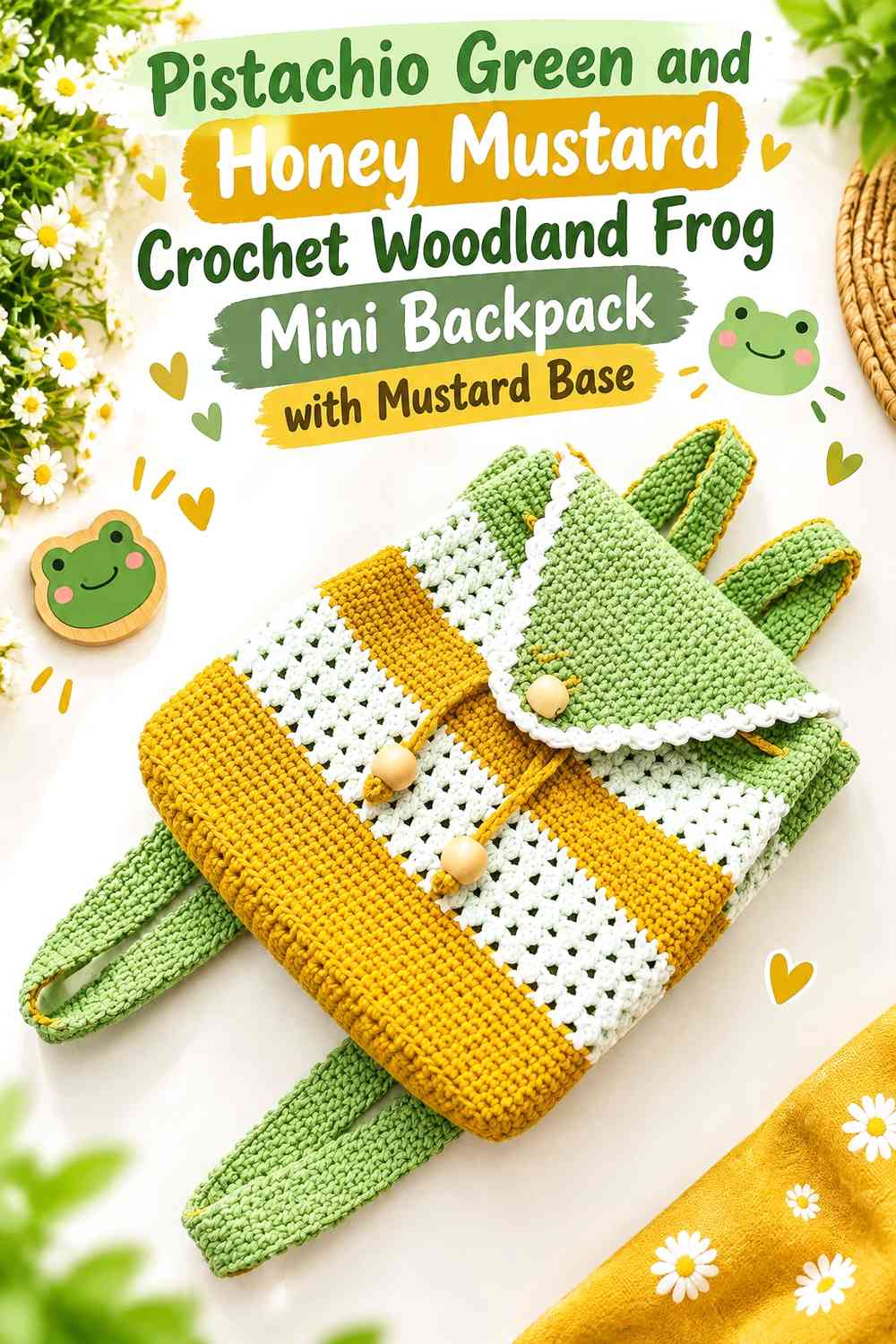
Use honey mustard across the backpack base and lower wall while pistachio green takes over the upper body and frog face. The two horizontal zones can suggest a frog sitting above a warm woodland-floor color.
Honey Mustard Should Ground the Pistachio Green Frog Backpack Base
Keep the warm shade concentrated near the bottom instead of carrying it all the way into the face panel.
The lower placement gives the backpack visual weight without competing with the green animal feature.
Pistachio Green Should Begin Clearly Above Honey Mustard
Make the transition deliberate enough that the frog body reads as a separate upper field. A narrow green or mustard intermediate stripe is unnecessary when the two main sections already provide contrast.
Repeat mustard once at the drawstring or handle if the lower base feels too isolated.
Creator Credit: Chompu Handicrafts YouTube tutorial
14. Pistachio Green and Honey Mustard Crochet Tiny Woodland Frog Mini Backpack
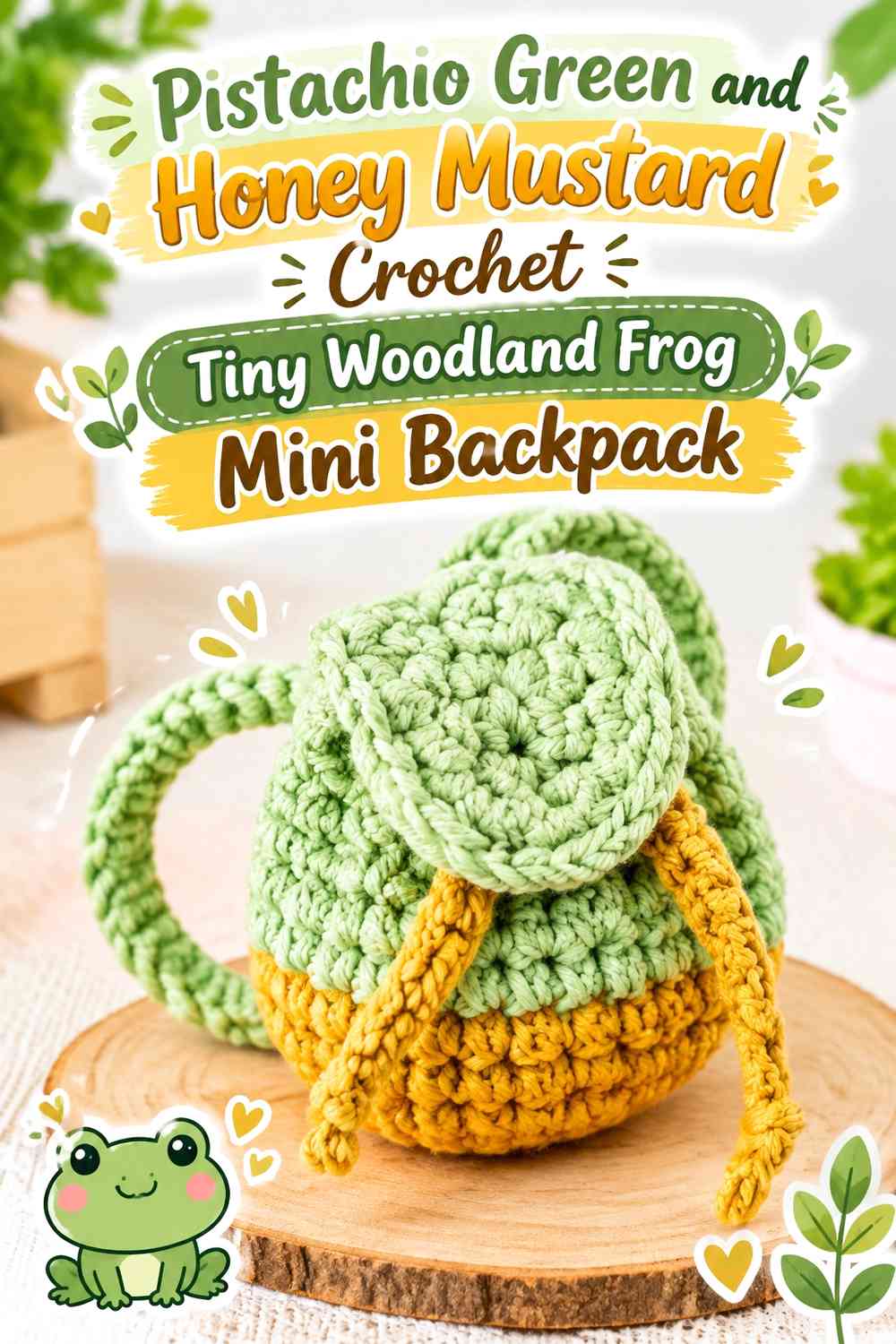
For an especially small backpack, use pistachio green across most of the body and reserve honey mustard for the flap edge and tiny pocket detail. Restrained color placement is useful at miniature scale because too many blocks can make the frog face hard to read.
Honey Mustard Details Should Stay Simple on a Pistachio Green Mini Backpack
Use the warm shade for one or two clear features rather than several tiny stripes. A mustard flap border and button area can provide enough visible contrast.
The smaller the backpack becomes, the more valuable larger uninterrupted color fields are.
Pistachio Green Should Preserve the Frog Face at Mini Scale
Keep the main face panel green and avoid surrounding the eyes with excessive color changes.
A clear pistachio field lets small facial details remain recognizable without requiring complicated outlining.
Creator Credit: Crochet Mama YouTube tutorial
15. Pistachio Green and Honey Mustard Crochet Textured Woodland Frog Mini Backpack
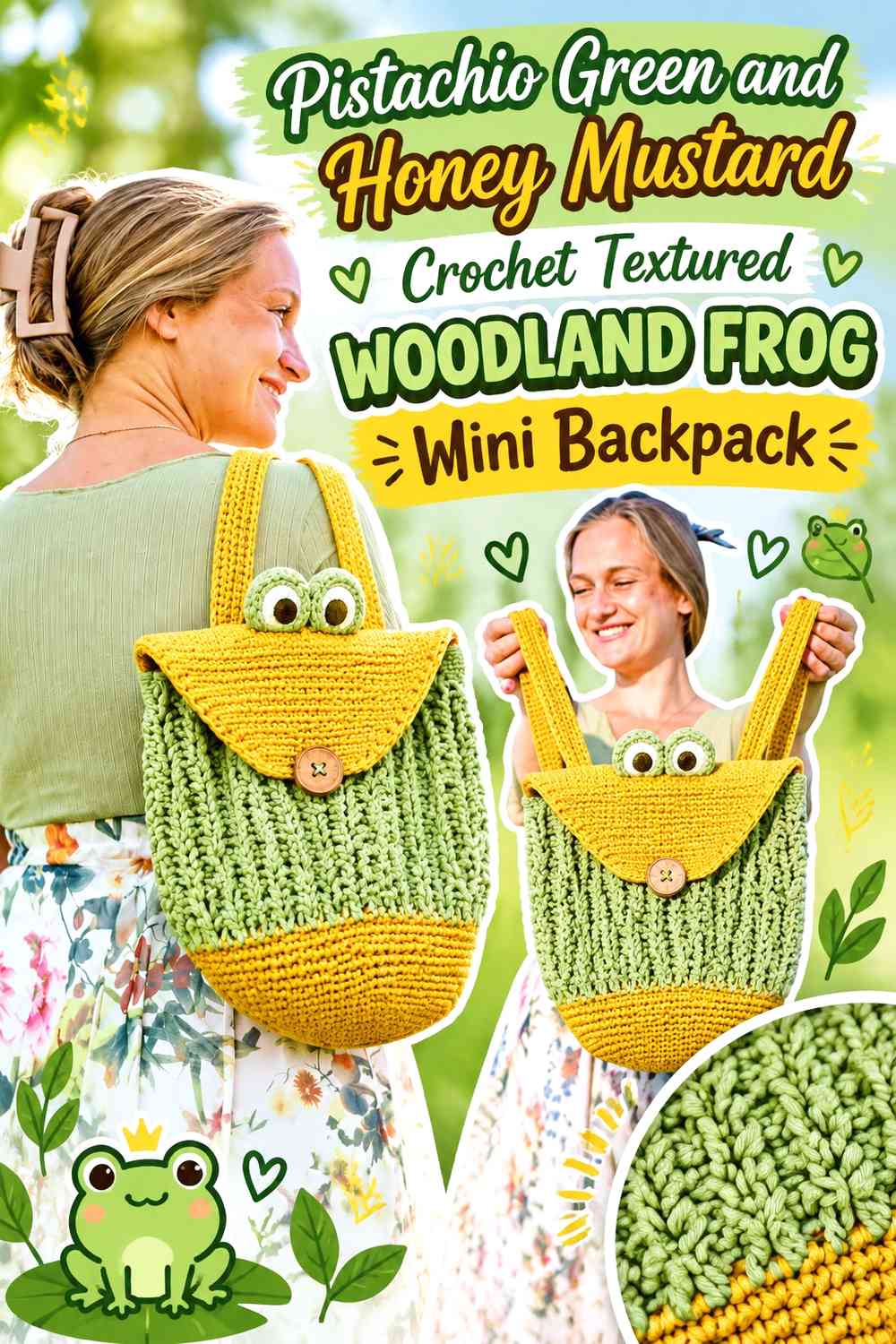
Use pistachio green across a textured bag body and honey mustard on a smoother flap or trim. The difference in surface treatment adds visual variety without needing another shade.
Honey Mustard Flap Can Calm a Textured Pistachio Green Body
A relatively simple mustard flap gives the eye a quieter area above raised or patterned green stitches.
Place the frog eyes mainly on the flap or directly above it so they do not compete with heavy body texture.
Pistachio Green Texture Should Stay Continuous Below Honey Mustard
Keep broad stretches of the textured section green so the stitch pattern can be appreciated as one surface.
Frequent mustard stripes through the texture would divide the body and reduce the usefulness of the solid contrasting flap.
Creator Credit: Life and Yarn YouTube tutorial
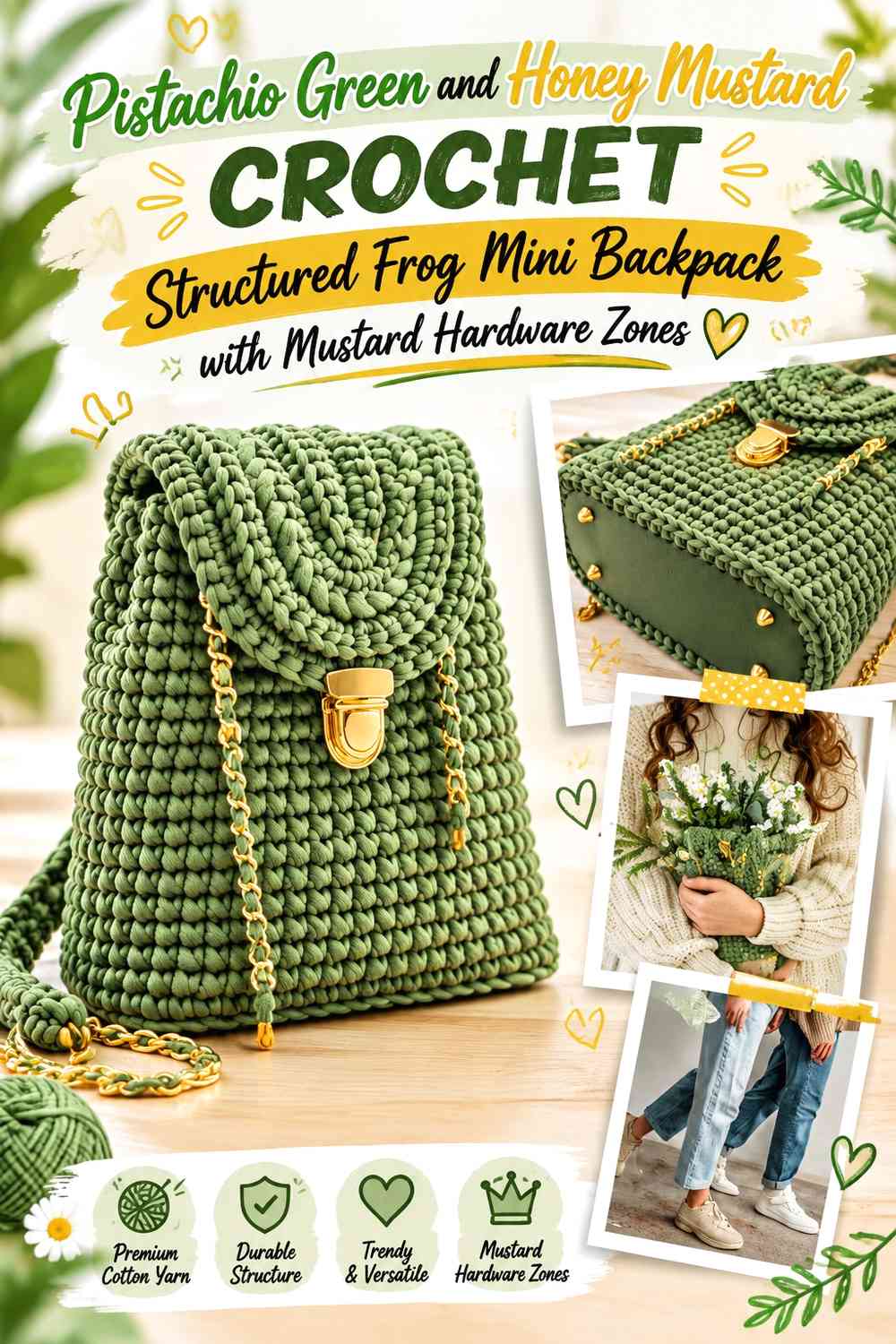
16. Pistachio Green and Honey Mustard Crochet Structured Frog Mini Backpack with Mustard Hardware Zones
Use pistachio across most of the backpack and place honey mustard near the flap edge, fastening area, and strap attachment zones. This makes the second shade behave like visual hardware even when the actual closures are neutral.
Honey Mustard Should Mark Functional Areas Against Pistachio Green
Concentrate the warm color where the flap closes or straps attach rather than scattering it over the whole body.
Those small repeated zones can visually explain how the mini backpack is structured while keeping the frog face clear.
Pistachio Green Should Remain Broad Between Honey Mustard Details
Preserve large green areas on the front and sides so the warm accents do not break the backpack into many disconnected blocks.
The frog face can occupy the largest uninterrupted pistachio section.
Creator Credit: Cathérine Crochet YouTube tutorial
16. Pistachio Green and Honey Mustard Crochet Woodland Frog Mini Backpack with Front Pocket
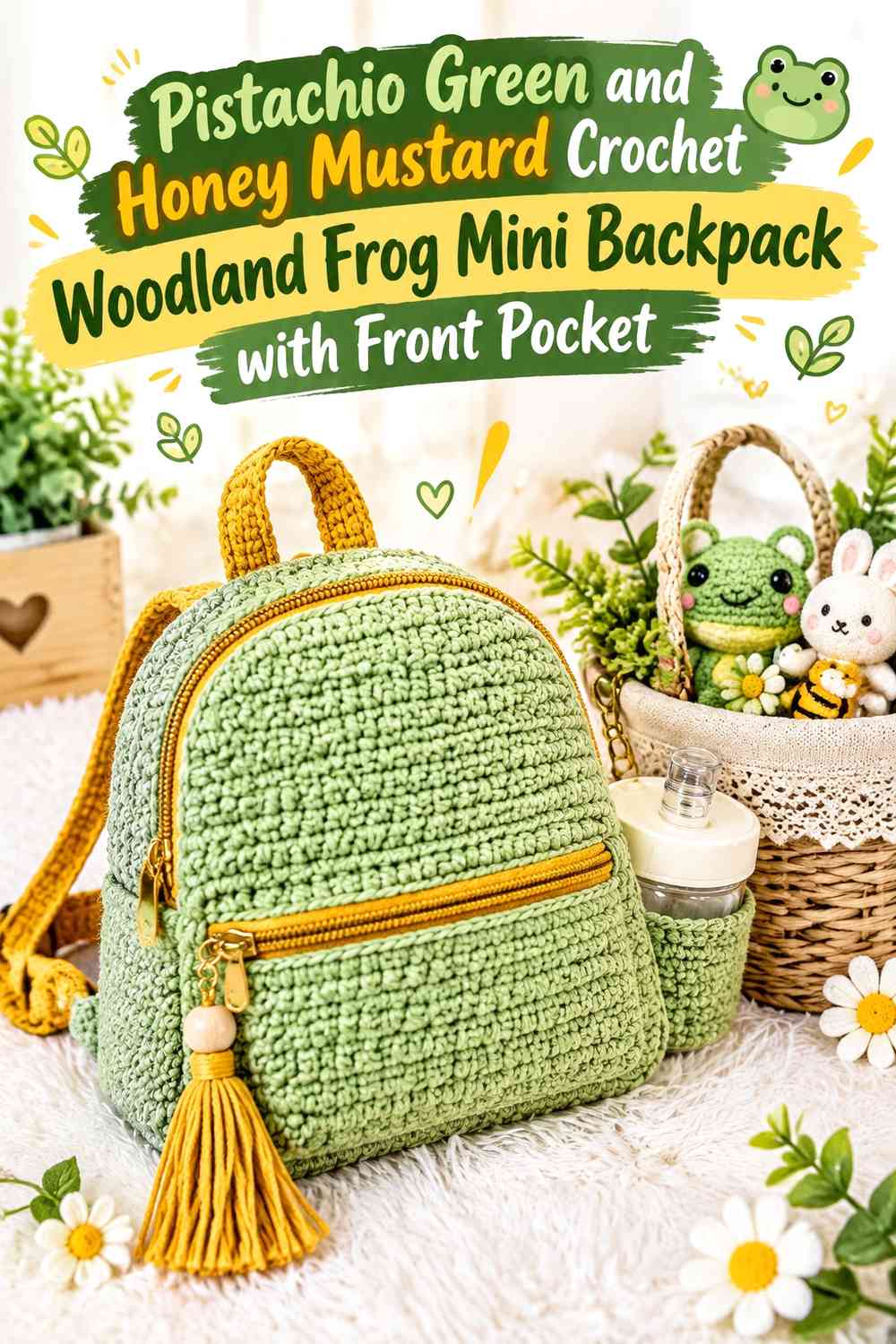
Use pistachio green for the main frog body and create a honey mustard outline or upper edge around a practical front pocket. The pocket gives the accent color a functional role while leaving most of the frog face above it uninterrupted.
Honey Mustard Pocket Outlines Should Stay Visible Against Pistachio Green
Keep the warm edge continuous enough to reveal where the pocket begins. Random mustard fragments around the pocket can make the opening harder to identify.
A clean outline is especially useful when the pocket and backpack body use the same stitch texture.
Pistachio Green Should Connect the Frog Face to the Pocket Body
Let green continue from the face into the pocket front so the bag still reads as one frog rather than a character head sitting above an unrelated mustard pouch.
The honey mustard should frame the storage feature, not replace the frog body.
Creator Credit: Dana B YouTube tutorial
17. Balanced Pistachio Green and Honey Mustard Crochet Woodland Frog Mini Backpack
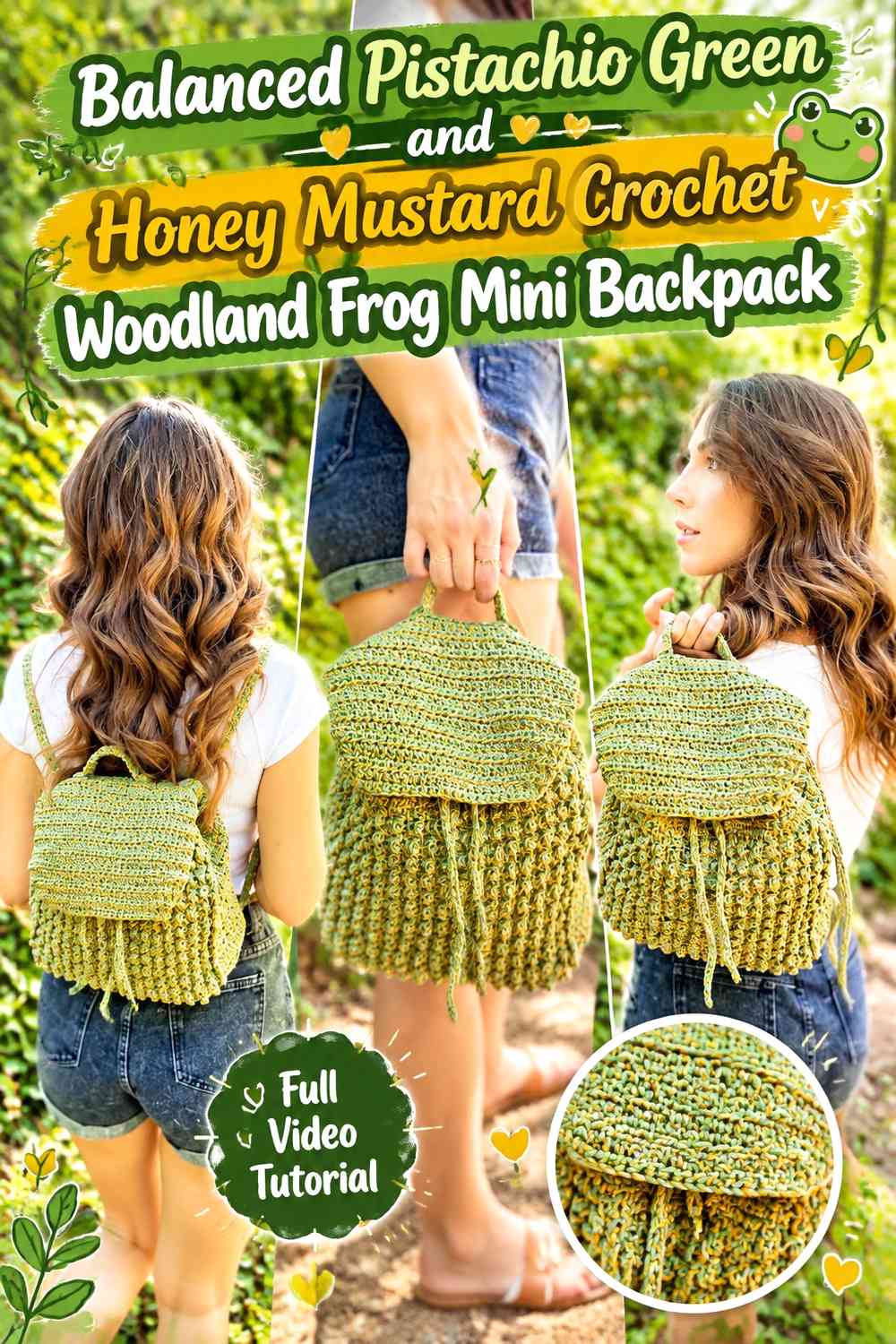
Give pistachio green and honey mustard similar overall visual importance while assigning each color distinct areas. Pistachio can cover the frog face, one side panel, and part of the straps, while honey mustard takes the pocket, opposite panel, and drawstring.
Pistachio Green and Honey Mustard Need Defined Backpack Zones
Balanced color works better through larger sections than constant small alternation. Decide which shade belongs to the frog, pocket, flap, sides, and straps before distributing the palette.
This keeps the mini backpack readable even when neither color clearly dominates.
Honey Mustard Can Correct a Pistachio Green-Heavy Frog Backpack
If the green face and body make the finished bag darker or greener than planned, expand mustard through the pocket rim or flap rather than inserting random warm stitches into completed panels.
A broad functional feature can change the overall balance cleanly.
Pistachio Green Can Restore the Frog Identity Against Honey Mustard
If the warm shade begins to dominate after the straps, pocket, and trim are added, repeat pistachio around the flap or upper face.
Keeping the animal-defining area green preserves the woodland frog concept even in an intentionally balanced palette.
Creator Credit: Evelyn And Peter Crochet YouTube tutorial
Comparing the Pistachio Green and Honey Mustard Woodland Frog Directions
For the clearest frog-first backpack, use pistachio green across most of the body and concentrate honey mustard in the flap, pocket, straps, drawstring, or small woodland motifs. The green remains immediately recognizable while the warmer shade prevents the project from becoming one continuous color block.
For a more unusual woodland palette, let honey mustard dominate the body and keep pistachio green in the face or frog panel. Because the frog features occupy a prominent front position, the character can remain recognizable even when green covers less total area.
Granny squares, checks, flowers, and mushroom motifs create the strongest decorative woodland effects. Solid pistachio bodies with mustard structural details are quieter and put more emphasis on the frog face itself.
Conclusion
Pistachio green and honey mustard work well for a woodland frog mini backpack because the colors can divide animal details from practical backpack features without requiring a large palette. Pistachio naturally supports the frog face and body, while honey mustard can emphasize flaps, pockets, straps, drawstrings, woodland flowers, mushroom details, and lower panels.
Choose a pistachio-dominant arrangement when you want the frog identity to read immediately. Use honey mustard more broadly when you want a warmer, earthier accessory with the frog concentrated in one green focal panel.
Before finalizing the colors, view the backpack from the front, back, and sides. Straps, flap edges, and drawstrings can contribute much more color from certain angles than they do when the bag lies flat. Use the credited tutorials for their original frog-bag or backpack construction, then adapt the pistachio-green-and-honey-mustard woodland treatment independently.
Frequently Asked Questions
Should pistachio green or honey mustard dominate a woodland frog mini backpack?
Pistachio green is the most direct dominant choice because it keeps the frog immediately recognizable. Honey mustard can dominate when you want a warmer woodland look, provided a sufficiently large pistachio face or frog panel remains visible.
Where should honey mustard go on a pistachio green frog backpack?
Useful placements include the flap, front-pocket rim, straps, drawstring, bottom panel, mushroom details, or small flowers. Assign it a few deliberate roles instead of scattering tiny mustard stitches across every frog feature.
Can honey mustard be used for the frog belly or front pocket?
Yes. A honey mustard front pocket can create a lighter belly-like area while also providing usable storage. Leave enough pistachio around it for the frog body to remain clear.
How can I make a pistachio green frog face stand out on a green backpack?
Give the face a defined boundary through a honey mustard flap, pocket edge, or surrounding trim. You can also separate the face from the body through texture rather than adding several more colors.
Can pistachio green and honey mustard work with mushroom details?
Yes. Honey mustard can be used for mushroom caps, spots, or small woodland accents while pistachio remains the frog and background color. Keep mushroom motifs secondary so the finished project still reads as a frog backpack.
Should the backpack straps be pistachio green or honey mustard?
Pistachio straps create a more continuous frog-colored bag. Honey mustard straps introduce stronger contrast from the back and sides. If you use mustard straps, repeating that shade once on the front helps connect the complete palette.
Are plastic safety eyes necessary for a crochet frog backpack?
No. Crocheted or embroidered eye details can also create a frog face. If the backpack is intended for a young child, consider the security and suitability of any small detachable embellishments before use.