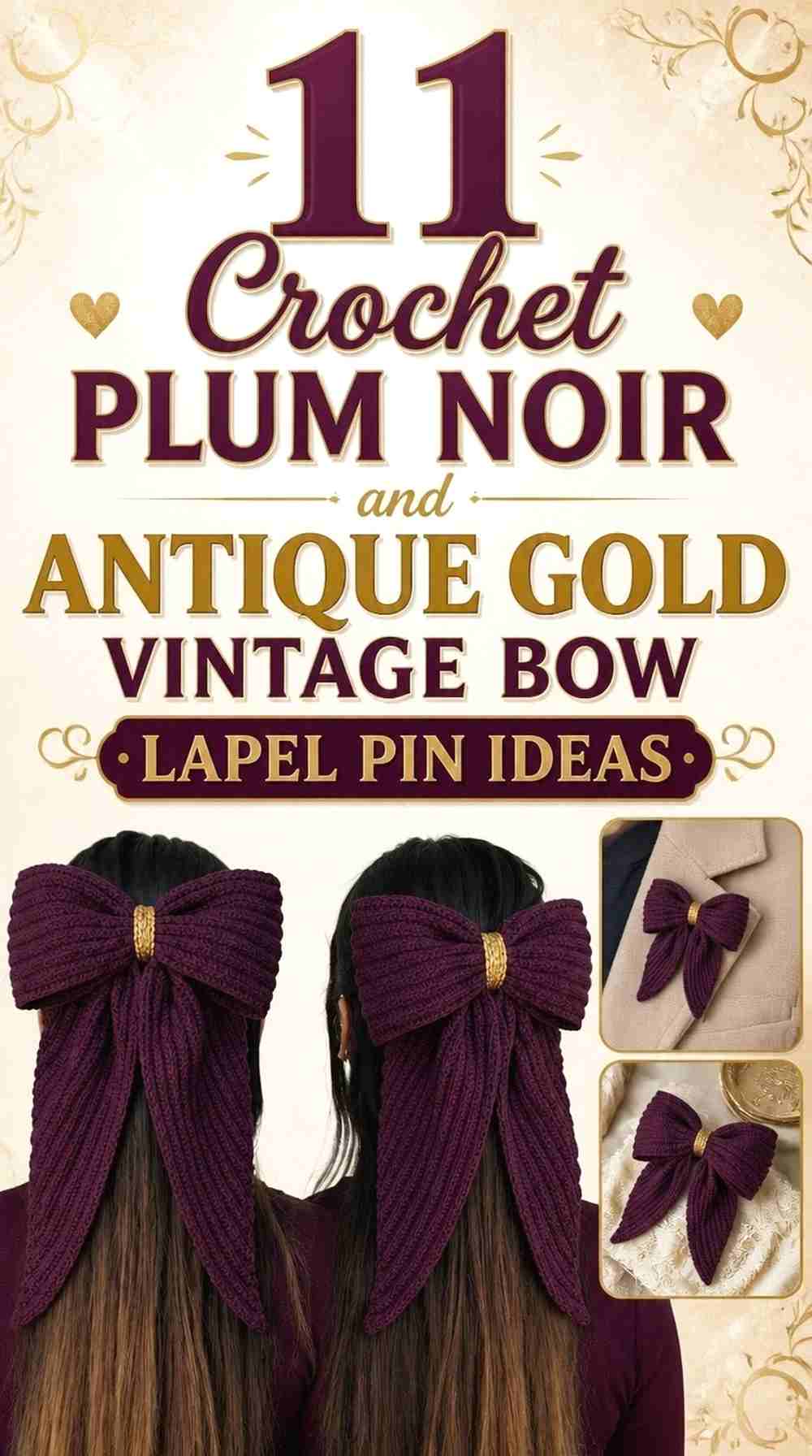

Plum Noir and Antique Gold make a useful vintage palette for crochet bow lapel pins because the two colors can divide the bow into clear structural parts. Plum Noir can create the shadowed loops, tails, or background, while Antique Gold defines the center wrap, perimeter, or selected ribbon edges. Reversing those roles produces a lighter heritage-style bow with dark plum providing concentrated definition.
For these ideas, Antique Gold describes a muted warm-gold color direction; it does not require metallic yarn. On a small lapel accessory, even a narrow Antique Gold center band can become prominent, so the strongest designs give each shade one recognizable responsibility rather than alternating both colors through every stitch.
The supporting tutorials include direct bow pins and a bow with brooch attachment as well as bow appliqués and hair-accessory constructions whose bow shapes can be adapted to lapel use with an appropriate pin backing. The Plum Noir and Antique Gold palettes below are independent editorial adaptations rather than claims about the colors used by the creators.
Quick List
- Plum Noir and Antique Gold Classic Ribbon Crochet Bow Lapel Pin
- Antique Gold and Plum Noir Heritage Crochet Bow Lapel Pin
- Plum Noir and Antique Gold Long-Tail Crochet Bow Lapel Pin
- Plum Noir and Antique Gold Ribbed Vintage Crochet Bow Lapel Pin
- Antique Gold and Plum Noir Soft-Ribbon Crochet Bow Lapel Pin
- Plum Noir and Antique Gold Mini Crochet Bow Lapel Pin
- Plum Noir and Antique Gold Granny-Texture Crochet Bow Lapel Pin
- Antique Gold and Plum Noir Double-Loop Crochet Bow Lapel Pin
- Plum Noir and Antique Gold Framed Crochet Bow Lapel Pin
- Antique Gold and Plum Noir Tail-Accent Crochet Bow Lapel Pin
- Plum Noir and Antique Gold Brooch-Back Crochet Bow Lapel Pin
Let Plum Noir Give the Crochet Bow Its Vintage Depth
Plum Noir works well across the largest bow surfaces when you want the lapel pin to look dark, formal, and slightly aged rather than bright. Broad bow loops give the deep shade enough room to show crochet texture, while Antique Gold can be reserved for the parts that explain the construction.
The center wrap is especially useful. A small Antique Gold band around two Plum Noir loops can make the bow structure immediately readable without turning the entire accessory into a two-color stripe pattern.
Use Antique Gold to Define Plum Noir Bow Edges and Centers
Antique Gold can act like vintage trim when it follows a real boundary: the center wrap, the bottom of the tails, the outer loop edge, or a narrow frame around the bow. These placements make more sense on a lapel pin than scattered gold stitches with no relationship to the bow shape.
If Antique Gold is light compared with Plum Noir, keep the edging narrow. A broad pale outline can visually overtake a small pin even when Plum Noir technically uses more yarn.
Check Plum Noir and Antique Gold at Lapel-Pin Scale
A bow that looks balanced while lying on a table may feel too wide, too long, or too heavily trimmed once it sits on a jacket lapel. Judge the color distribution with the bow positioned upright and with the tails hanging in their intended direction.
Also check the backing before final attachment. A brooch pin should sit where the bow remains level on the garment rather than pulling one Antique Gold-trimmed side noticeably lower than the other.
1. Plum Noir and Antique Gold Classic Ribbon Crochet Bow Lapel Pin
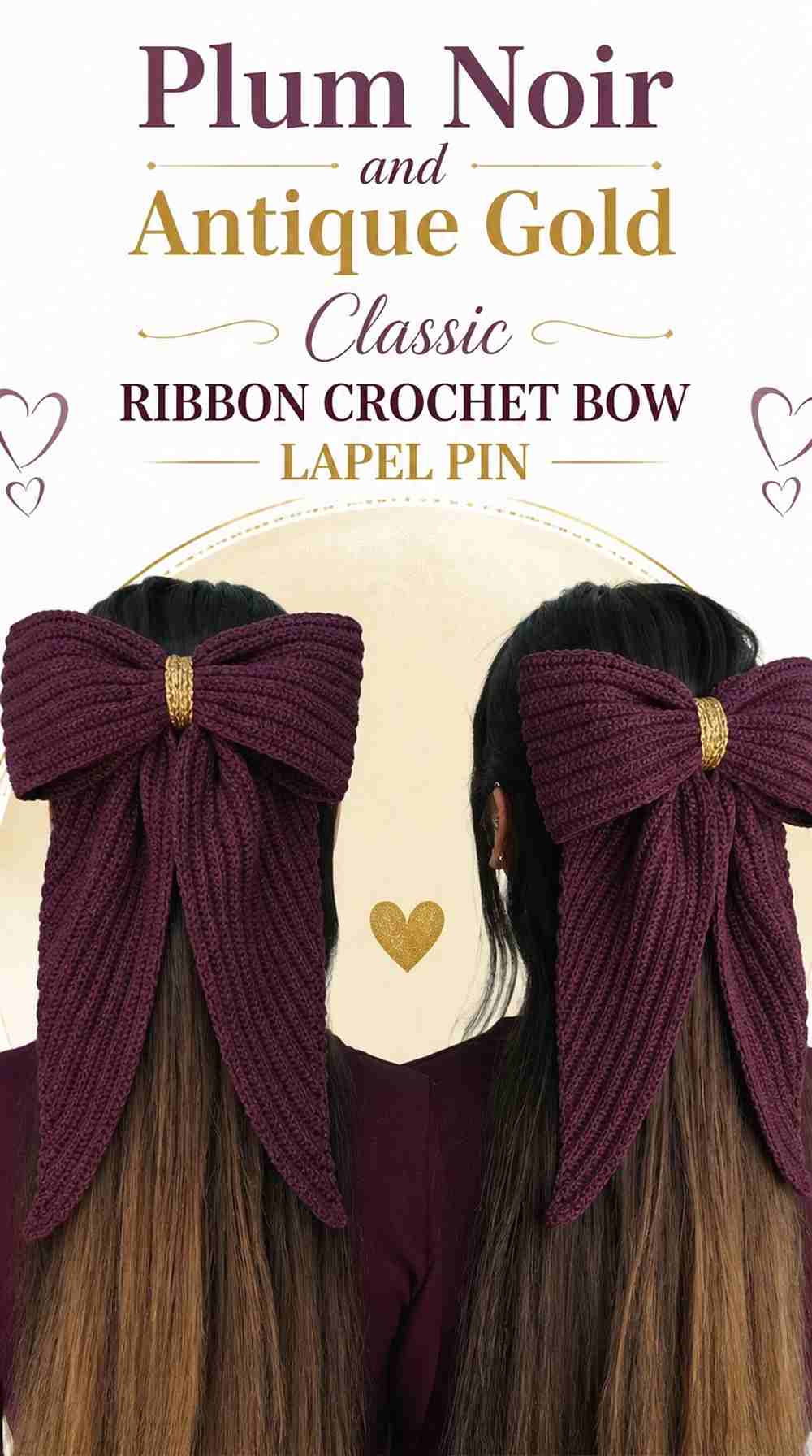
This version uses Plum Noir for both large bow loops and lets Antique Gold occupy the center wrap. It is the simplest way to make the palette feel vintage because the dark field stays uninterrupted while the warm gold marks the exact point where the bow gathers.
Plum Noir Should Keep Both Crochet Bow Loops Visually Connected
Use Plum Noir continuously from one loop to the other so the bow reads as one dark ribbon form. Alternating loop colors would create a more playful two-tone effect and weaken the shadowed vintage direction.
If the bow includes tails, keep them Plum Noir as well when you want the center wrap to remain the only strong contrast.
Antique Gold Can Turn the Plum Noir Bow Center Into the Focal Point
Use Antique Gold around the center wrap where the loops narrow. The small warm band can organize the entire pin because it sits at the point where both sides meet.
Avoid adding an equally wide Antique Gold border around the loops unless you deliberately want the trim—not the dark ribbon—to lead.
Creator Credit: isabella.crochett
2. Antique Gold and Plum Noir Heritage Crochet Bow Lapel Pin
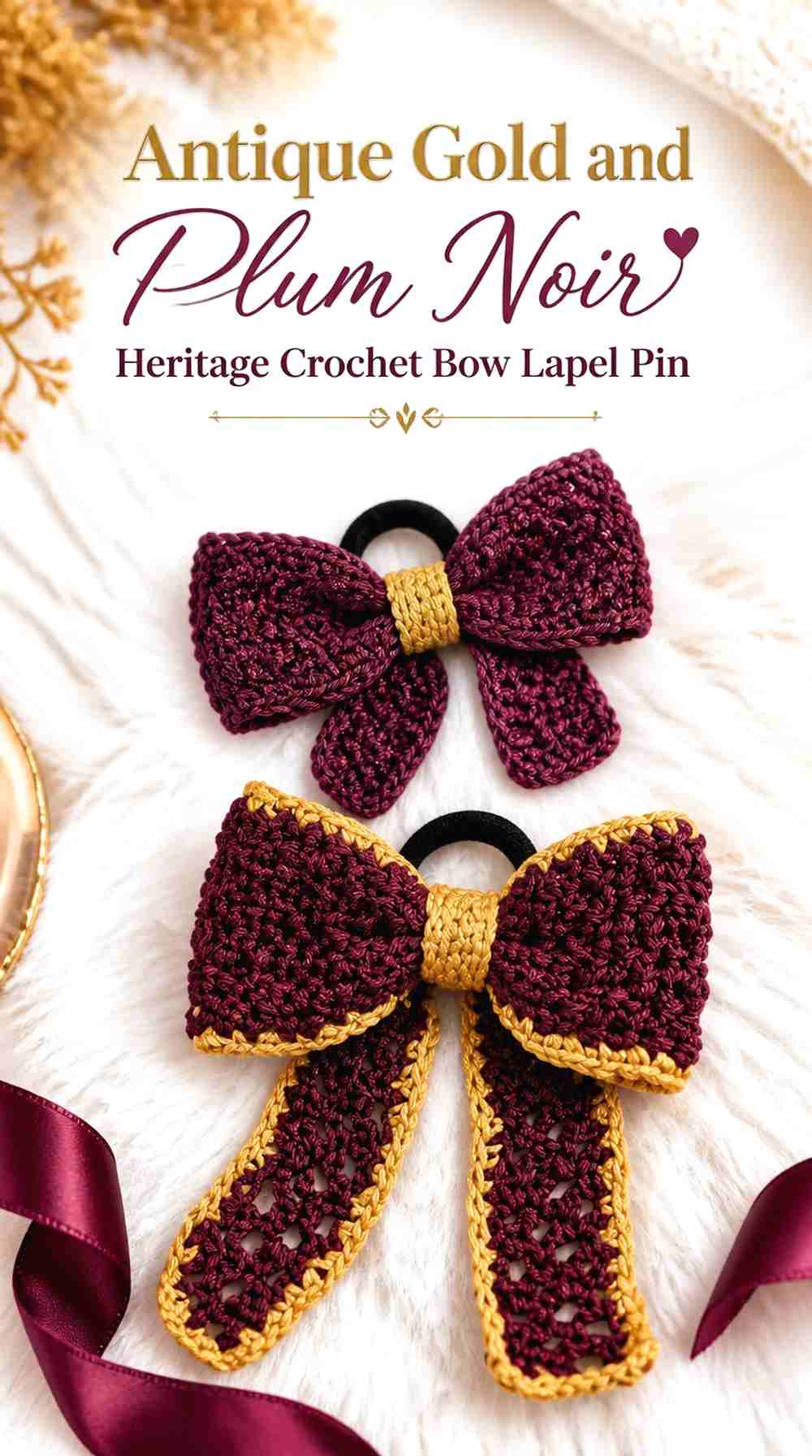
Reverse the hierarchy by making Antique Gold the primary bow color and using Plum Noir at the center. The result feels lighter and more ornamental, while the dark middle keeps the warm bow from appearing visually flat against a cream, brown, gray, or black jacket.
Antique Gold Should Fill the Main Crochet Bow Loops
Keep both broad loops Antique Gold so the warm vintage shade reads as one continuous ribbon.
Because Antique Gold is the larger field here, extra gold edging is unnecessary. Let the crochet texture itself create variation inside the loops.
Plum Noir Can Give the Antique Gold Bow a Strong Center
Use Plum Noir for the center band and, if useful, a narrow tail detail. The dark wrap makes the bow’s gathering point easier to distinguish.
Keep the Plum Noir area concentrated rather than outlining every edge; the contrast is strongest when the dark color has a clear purpose.
Creator Credit: Yarnvi🧶
3. Plum Noir and Antique Gold Long-Tail Crochet Bow Lapel Pin
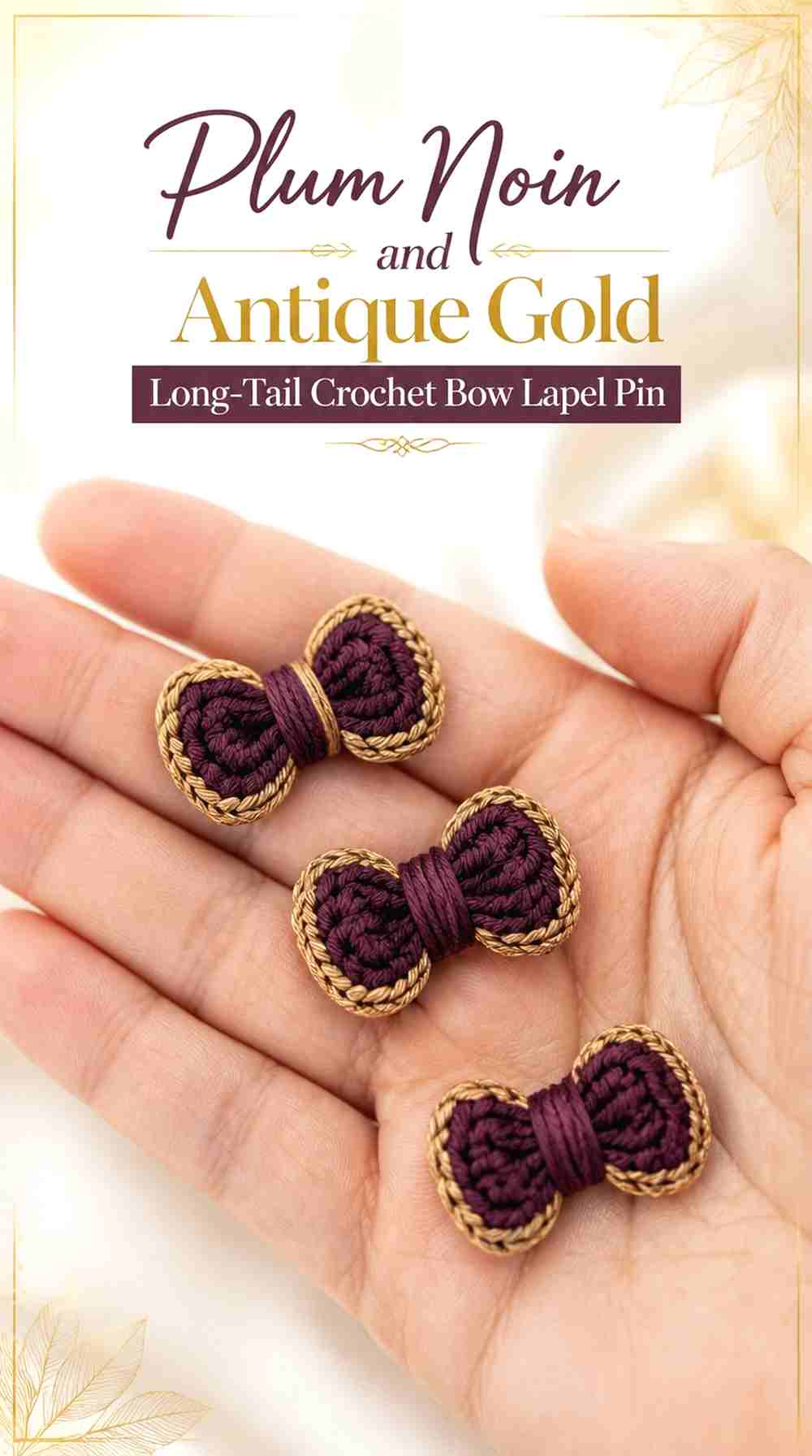
Longer tails create another place to use Antique Gold without disturbing the main loops. Keep the bow itself Plum Noir and place Antique Gold only near the tail ends. This draws attention downward and gives the pin a ribbon-like vintage silhouette.
Plum Noir Should Dominate the Crochet Bow Loops and Tails
Use Plum Noir from the loop area through most of each tail so the accessory remains visually unified.
The darker continuity is especially useful on a longer bow because several color blocks could otherwise make the small lapel piece look segmented.
Antique Gold Can Finish the Plum Noir Bow Tails
Add Antique Gold at corresponding tail ends or in a narrow lower trim. Matching placement on both sides keeps the bow balanced when worn vertically.
Check the tails against the lapel before making the gold section too deep. On a small pin, a short contrasting finish can already be conspicuous.
Creator Credit: Neuzy Santana
4. Plum Noir and Antique Gold Ribbed Vintage Crochet Bow Lapel Pin
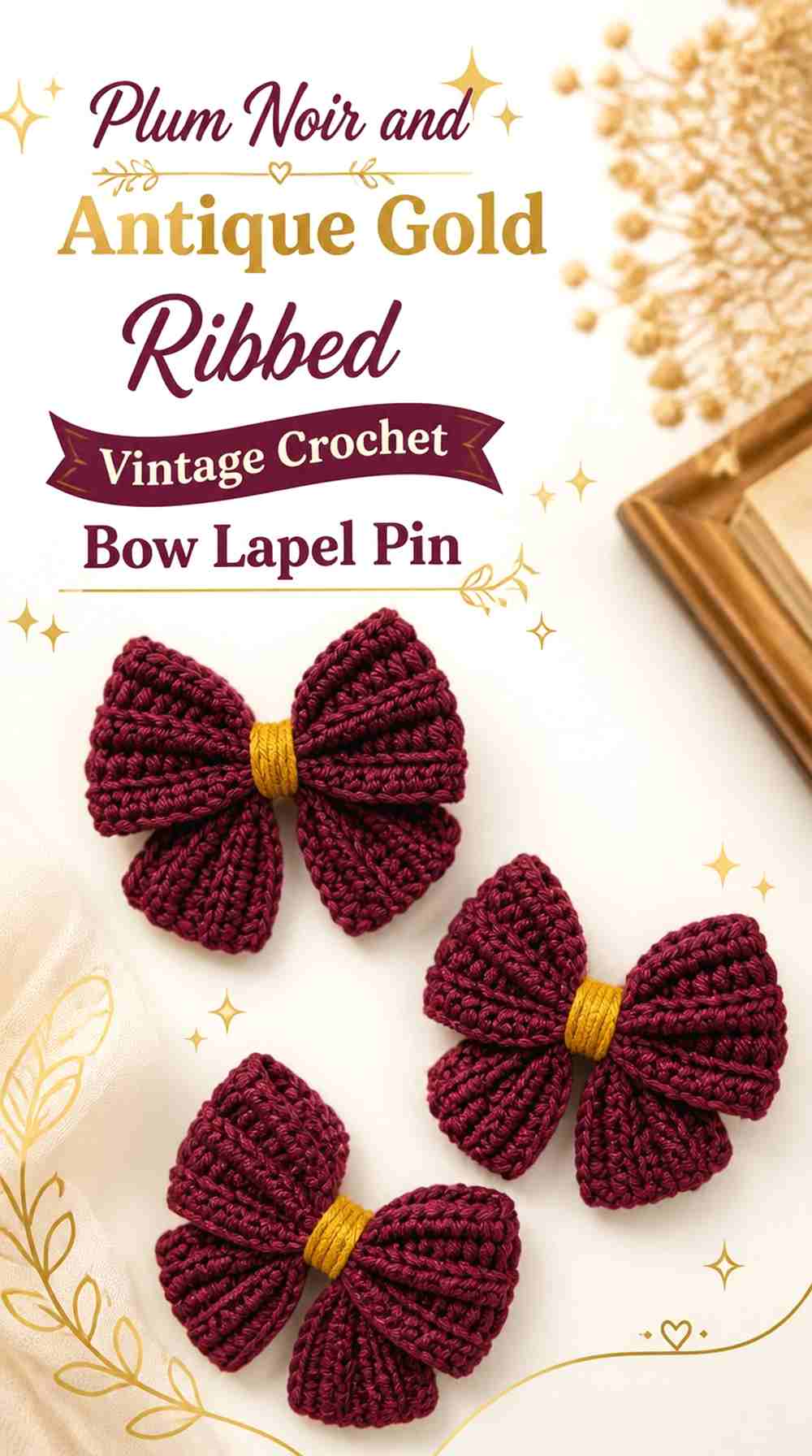
A ribbed bow already has strong surface definition, so the palette should stay controlled. Let Plum Noir carry the ribbed loops and place Antique Gold only around the center and perhaps one narrow outside boundary.
Plum Noir Lets Ribbed Crochet Texture Create Vintage Depth
Use Plum Noir across consecutive ribbed sections so the raised lines remain easy to follow.
Changing between Plum Noir and Antique Gold across every rib could make the bow look striped rather than textured.
Antique Gold Can Separate the Plum Noir Ribbed Bow Center
Use Antique Gold where the ribbing compresses into the center. This creates a clean visual interruption between the two dark loops.
If you add a gold perimeter, keep it considerably narrower than the center wrap so the focal hierarchy remains clear.
Creator Credit: Ngochan Crochet
5. Antique Gold and Plum Noir Soft-Ribbon Crochet Bow Lapel Pin
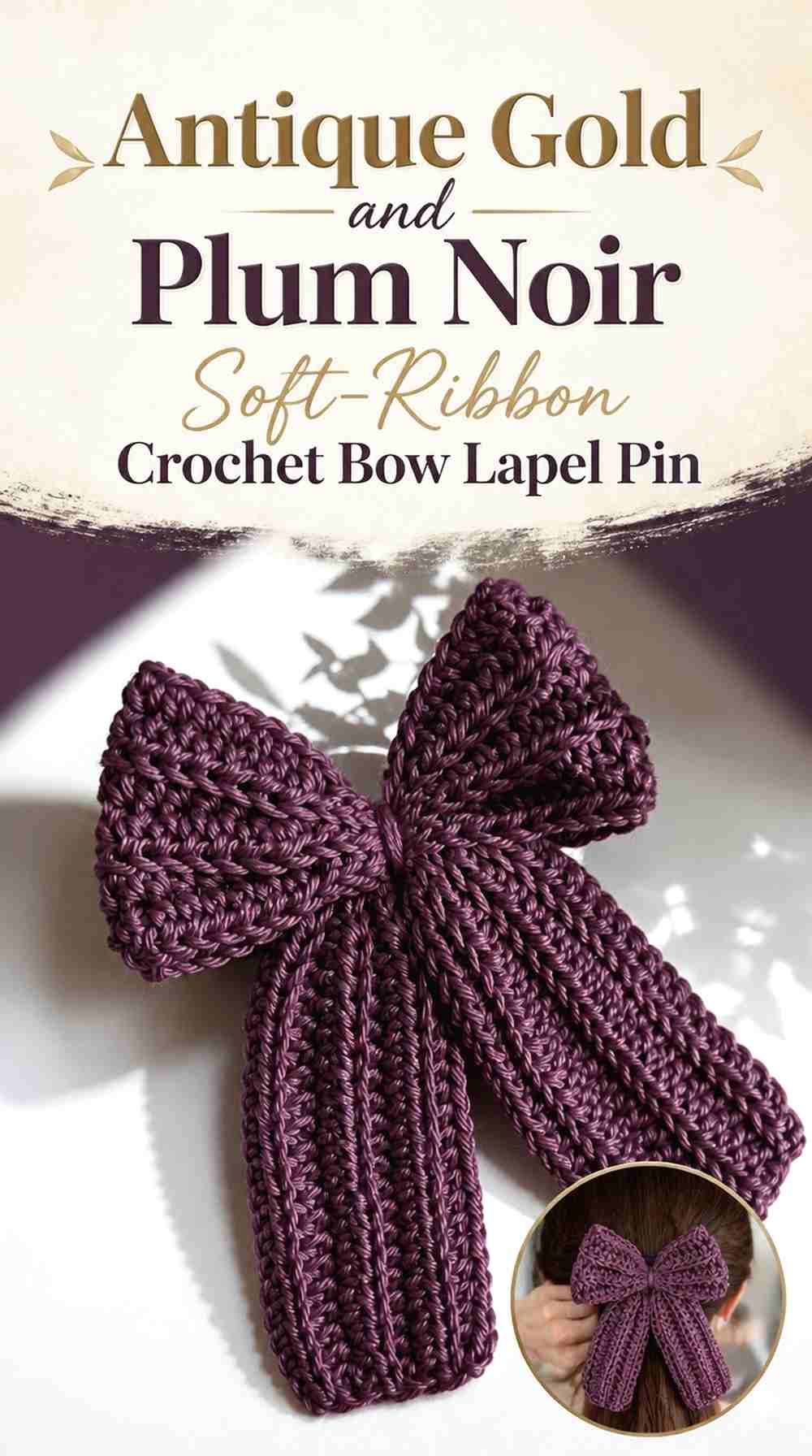
This idea uses Antique Gold across a softer ribbon-style bow and Plum Noir around the center plus selected tail sections. The warmer dominant color creates an antique textile effect, while Plum Noir prevents the bow from becoming visually washed out.
Antique Gold Should Keep the Crochet Ribbon Bow Broad and Continuous
Use Antique Gold across the principal ribbon sections so the bow looks like one folded warm-gold band.
Avoid scattering Plum Noir through every loop. Broad uninterrupted Antique Gold areas better preserve the ribbon impression.
Plum Noir Can Add Shadow to the Antique Gold Bow Tails
Use Plum Noir at the center and return it in smaller sections near the tails. The repeated dark accents give the bow depth without dividing the broad loops.
If the tail accents become too large, reduce them before changing the center; the dark center is the more important structural feature.
Creator Credit: kavume handmade
6. Plum Noir and Antique Gold Mini Crochet Bow Lapel Pin
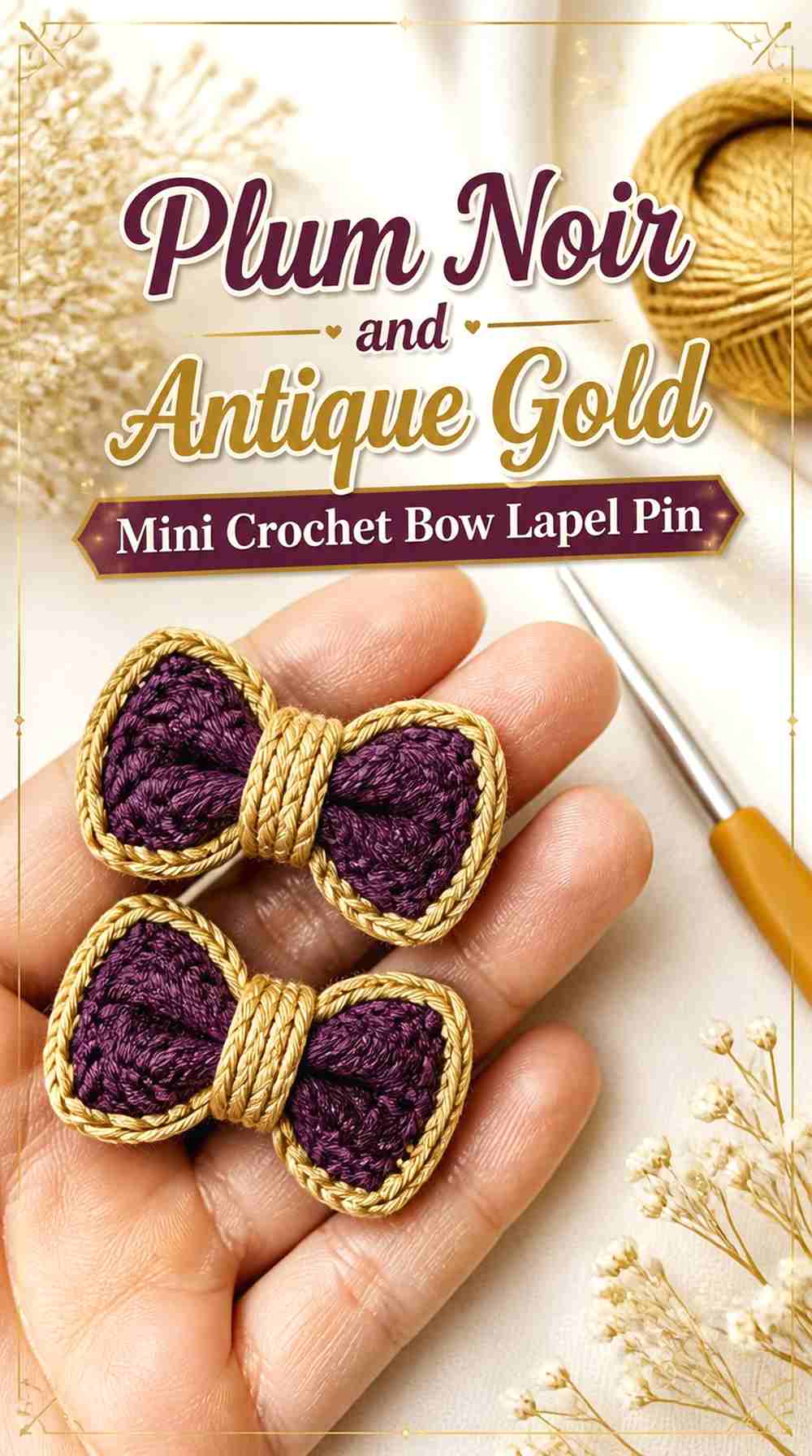
A mini bow requires simpler color placement because there is little room for multiple borders and tail treatments. Keep the bow Plum Noir and give Antique Gold only the center wrap. The limited palette keeps the silhouette readable at lapel-pin scale.
Plum Noir Should Keep the Mini Crochet Bow Shape Clear
Use Plum Noir across the complete loops so the viewer sees the bow shape before noticing individual stitch detail.
On a small accessory, alternating colors inside the loops can break the silhouette into pieces.
Antique Gold Should Stay Concentrated on the Plum Noir Mini Bow
Place Antique Gold solely at the center or another equally compact structural point. That small contrast can be enough to establish the two-color vintage palette.
A mini bow usually does not need both gold edging and a gold center unless the two shades have very little contrast.
Creator Credit: The Art Zone
7. Plum Noir and Antique Gold Granny-Texture Crochet Bow Lapel Pin
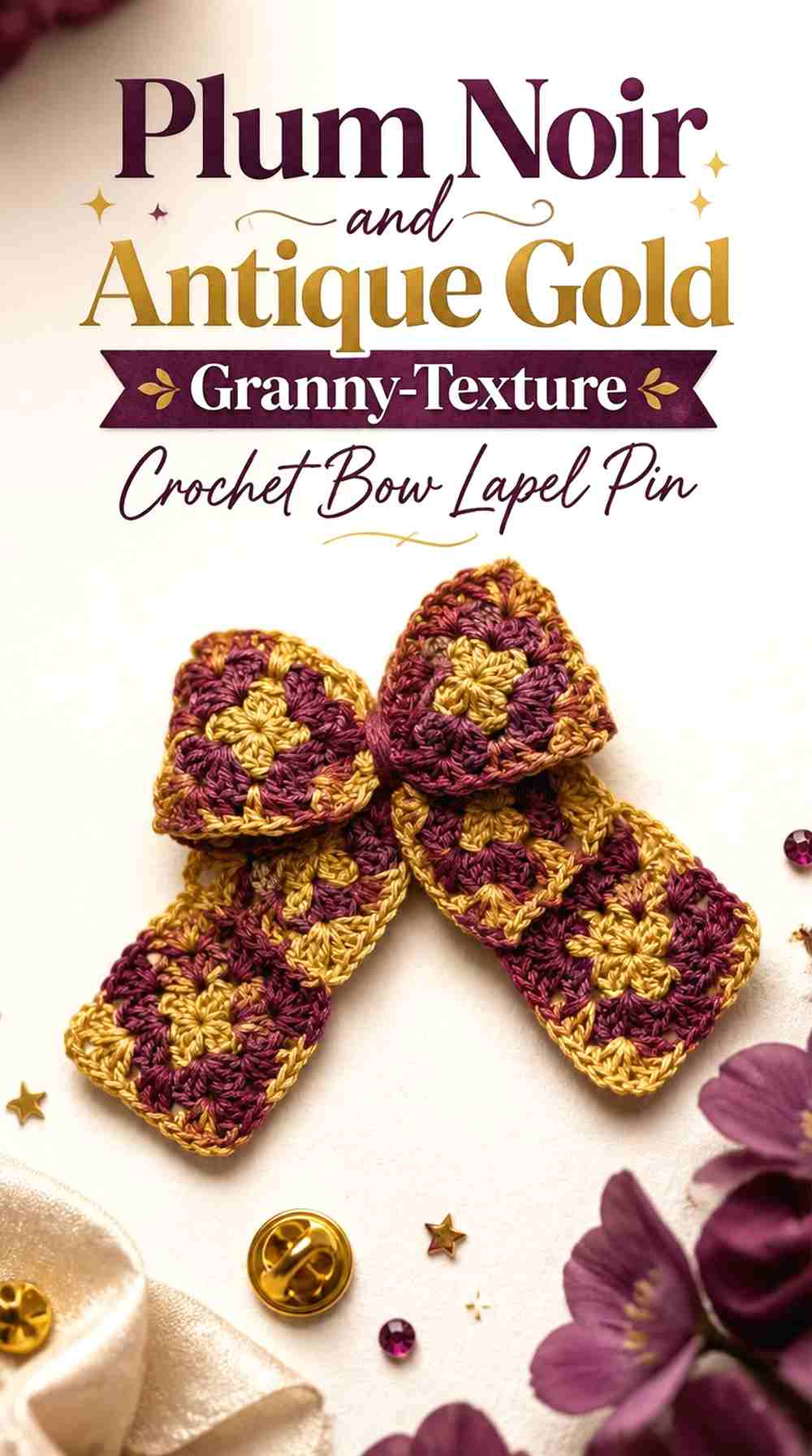
A granny-derived bow gives the palette small openings and clustered texture rather than a smooth ribbon surface. Use Plum Noir through most of the granny construction and Antique Gold around the center and outer edge. The gold can help contain the open structure so it still reads as a tailored lapel accessory.
Plum Noir Should Connect the Granny Crochet Bow Clusters
Keep several consecutive cluster areas Plum Noir so the openwork reads as one dark bow rather than a patchwork motif.
The negative space already adds visual movement; frequent color changes are unnecessary.
Antique Gold Can Frame the Plum Noir Granny Bow
Use Antique Gold around the outer edge or center band where it can create a recognizable boundary.
A narrow frame is particularly useful when the open Plum Noir crochet will be worn against another dark color, because it separates the bow from the jacket.
Antique Gold Should Not Overwhelm the Plum Noir Granny Texture
Check the completed bow from normal viewing distance. If the gold perimeter becomes the first thing you notice, reduce its visual width so the open Plum Noir texture remains the main surface.
Creator Credit: OhMeOhMyCrochet
8. Antique Gold and Plum Noir Double-Loop Crochet Bow Lapel Pin
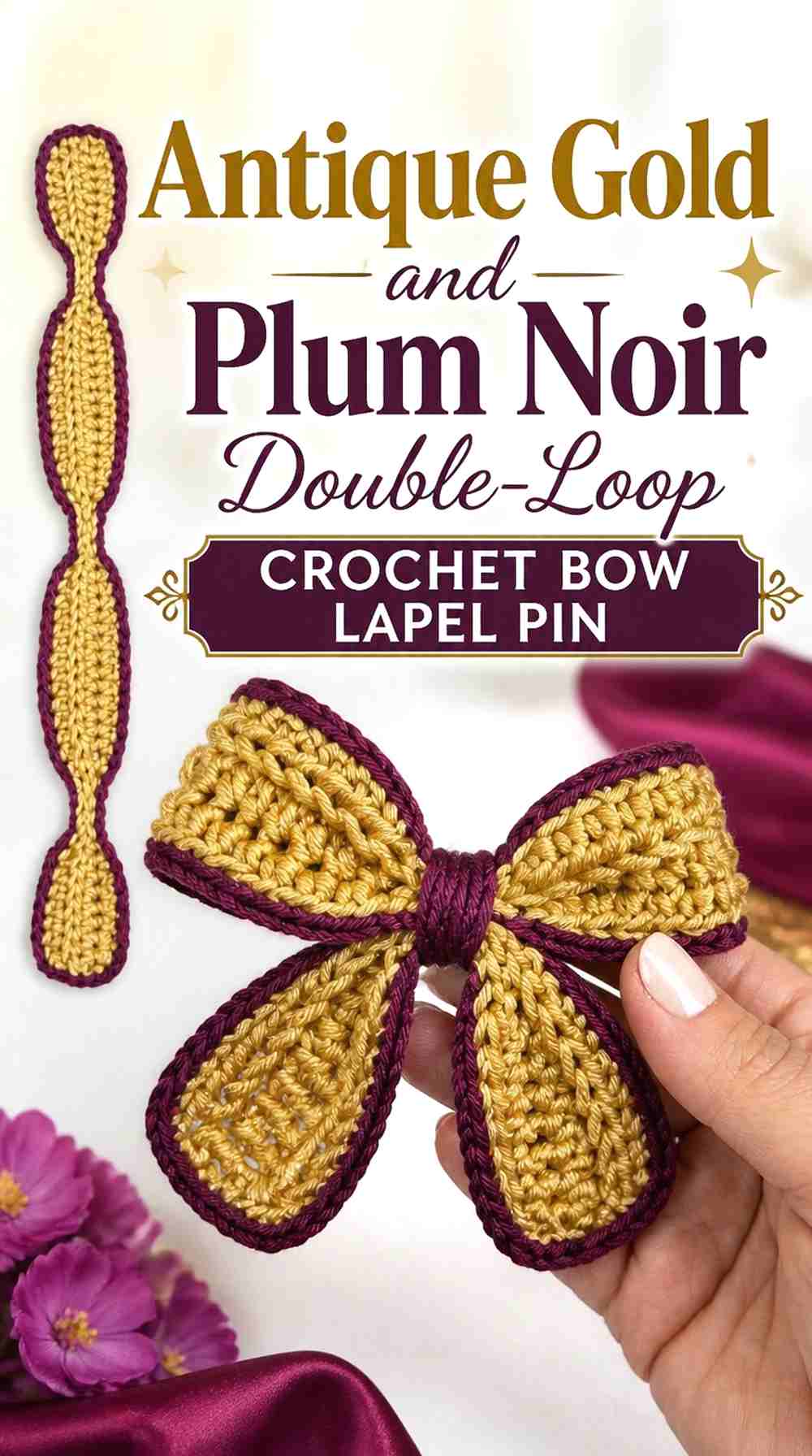
This version lets Antique Gold cover two broad loops while Plum Noir forms the tails and center wrap. Separating the colors by bow component produces a stronger vintage color-block effect than simple edging.
Antique Gold Should Stay Consistent Across Both Crochet Bow Loops
Make both loops Antique Gold so the upper half of the pin looks balanced.
Using one gold loop and one Plum Noir loop would create an intentionally mismatched bow, which is a different visual direction from this symmetrical vintage design.
Plum Noir Can Ground Antique Gold With Dark Crochet Tails
Use Plum Noir from the center downward through the tails. The deep lower section counterbalances the light loops and makes the bow easier to distinguish against pale clothing.
Keep the center wrap Plum Noir as well so the dark tail color appears connected to the upper structure.
Creator Credit: Brunaticality
9. Plum Noir and Antique Gold Framed Crochet Bow Lapel Pin
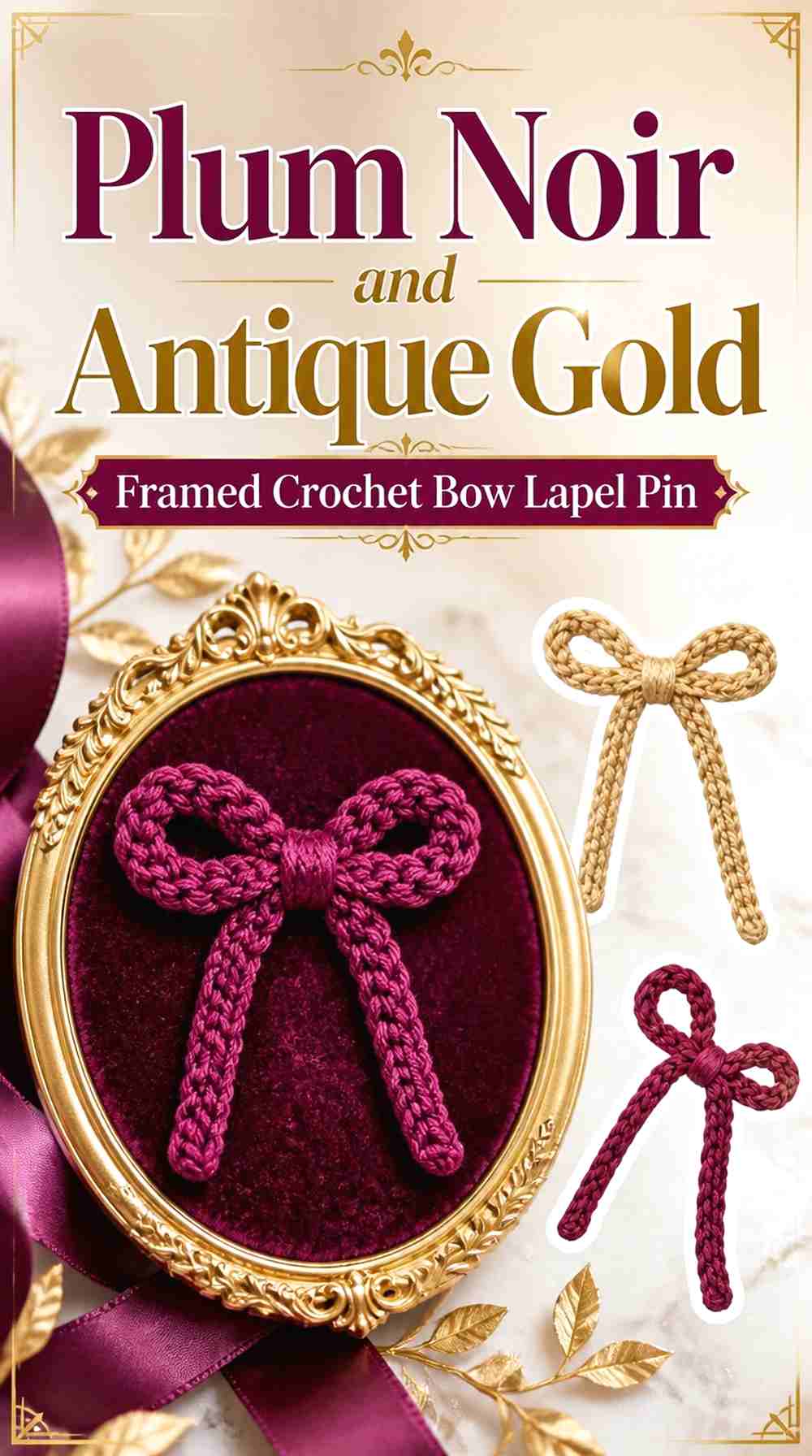
Here Plum Noir fills the bow while Antique Gold follows a narrow perimeter. The edging creates a vintage framed-ribbon effect and can make a dark bow more visible on a black or charcoal lapel.
Plum Noir Should Fill the Interior of the Crochet Bow
Use Plum Noir across the large loop surfaces and tails. Maintaining one dark interior gives the Antique Gold outline something clear to frame.
If the bow is heavily textured, avoid adding separate gold stripes inside the framed area.
Antique Gold Can Outline the Plum Noir Bow Without Taking Over
Keep Antique Gold narrow and consistent around corresponding outer sections. Uneven trim can make one loop appear larger even when the bow construction is symmetrical.
Consider leaving the center Plum Noir if the gold perimeter is already prominent; not every boundary needs the accent color.
Creator Credit: ElyseCrochets 💌
10. Antique Gold and Plum Noir Tail-Accent Crochet Bow Lapel Pin
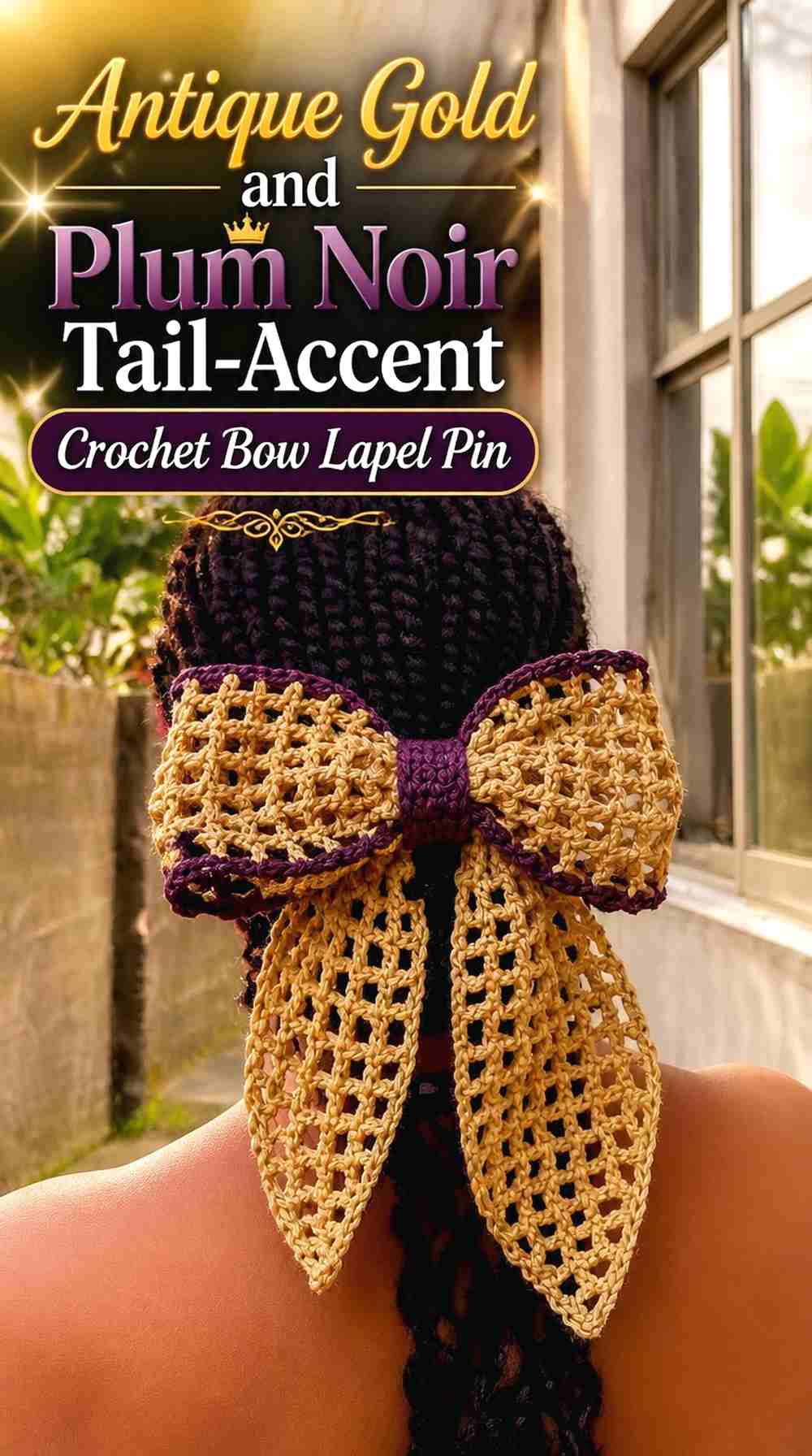
This color layout places Antique Gold across the primary bow shape and reserves Plum Noir for long tail accents and the center. It creates a brighter pin than the Plum Noir-led designs while retaining enough dark color for a vintage rather than pastel effect.
Antique Gold Can Make the Main Crochet Bow Look Like Vintage Ribbon
Use Antique Gold across both loops as one uninterrupted surface. The warm hue can carry the decorative role without extra embellishment.
If the yarn has strong stitch texture, let that texture remain visible instead of introducing more color blocks.
Plum Noir Tails Can Add Depth Beneath the Antique Gold Bow
Use Plum Noir on the lower tails or their ends so the darkest shade draws the eye downward.
Check the balance while the pin is held upright. Dark tails can look visually heavier than they do when the bow lies flat.
Plum Noir Should Repeat in the Antique Gold Bow Center
Keeping the center wrap Plum Noir connects the tails with the upper portion of the bow and prevents the dark lower sections from feeling detached.
Creator Credit: ToriaCrochet_
11. Plum Noir and Antique Gold Brooch-Back Crochet Bow Lapel Pin
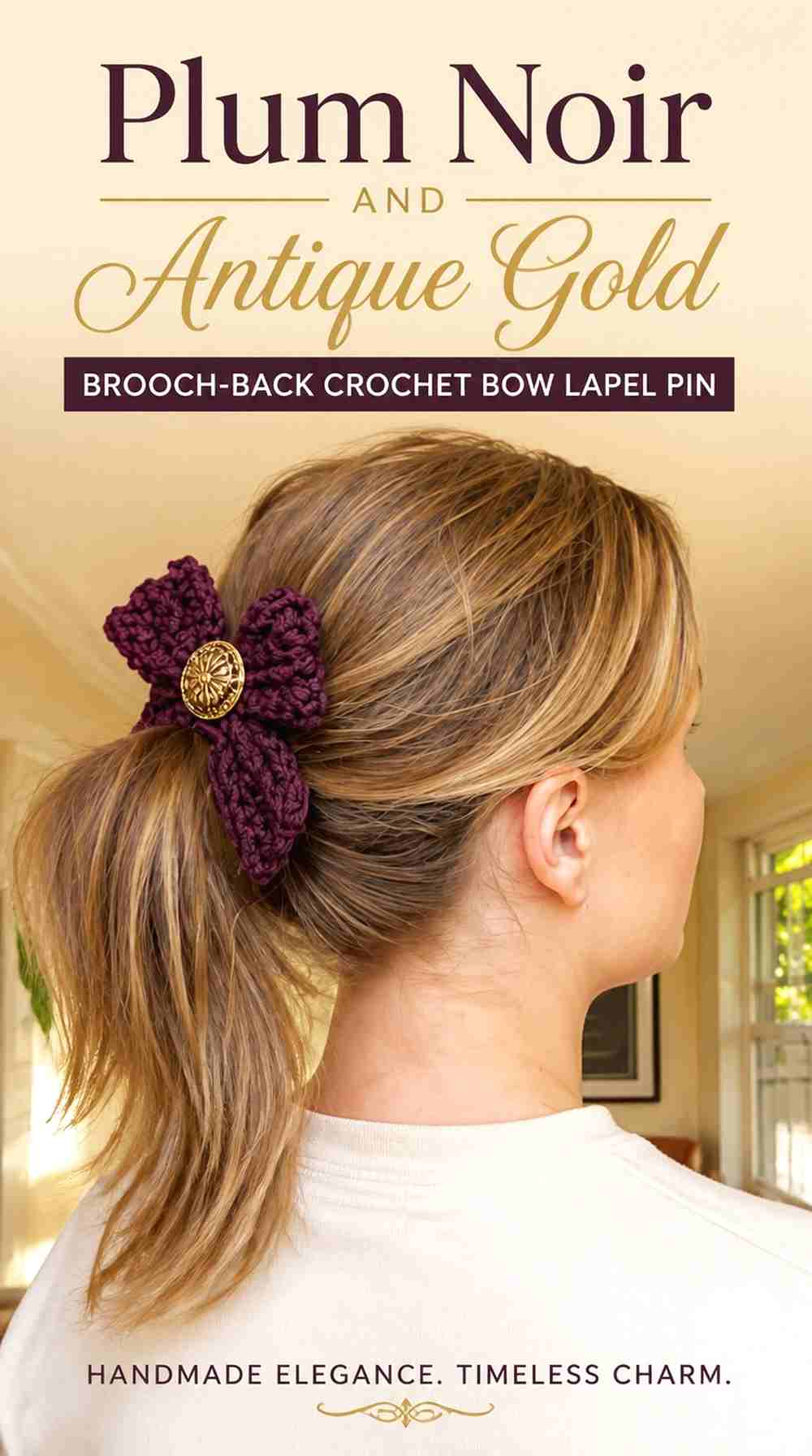
The final direction uses Plum Noir for the main ribbon bow and Antique Gold in a center band plus small edge highlights. It is especially suited to a lapel-pin interpretation because the color plan stays symmetrical around the point where the backing should support the bow.
Plum Noir Should Keep the Crochet Bow Balanced Around the Pin Back
Use Plum Noir across both loops and major tail sections so the visual weight remains comparable on either side of the center.
Before attaching the backing, hold the bow in its wearing orientation and check whether one loop or Antique Gold accent appears heavier.
Antique Gold Can Mark the Plum Noir Bow Center Above the Brooch Back
Use Antique Gold at the center so the focal point visually aligns with the main support area behind the bow.
This placement also helps hide the fact that the attachment point is functional: from the front, the eye sees a deliberate decorative center.
Antique Gold Edge Details Should Stay Smaller Than the Plum Noir Bow Center
If you repeat gold on the tail ends or loop edges, keep those accents narrower than the center wrap. This protects a clear hierarchy of Plum Noir ribbon first, Antique Gold center second, and edge detail third.
Creator Credit: Kate
Comparing the Plum Noir and Antique Gold Vintage Bow Lapel Pins
For the darkest vintage effect, Ideas 1, 3, 4, 6, 7, 9, and 11 keep Plum Noir across most of the bow. Antique Gold behaves like old ribbon trim, a center clasp, or a narrow decorative frame.
Ideas 2, 5, 8, and 10 make Antique Gold the larger field. These produce a warmer lapel pin while Plum Noir supplies shadow around the center or tails.
If you prefer the cleanest tailored shape, Ideas 1, 6, and 11 keep the contrast concentrated around the center. Ideas 3 and 10 use the tails more actively, while Ideas 7 and 9 make edging and surface texture a larger part of the vintage effect.
Conclusion
Plum Noir and Antique Gold work especially well on crochet bow lapel pins when the color scheme follows the anatomy of the bow. Plum Noir can fill the loops and tails, Antique Gold can mark the center wrap, or the relationship can be reversed for a lighter heritage-style accessory.
For a restrained vintage result, use one dominant bow color and place the second shade only at the center. Add tail tips or narrow edging when you want more contrast, but avoid giving every bow boundary equal emphasis.
Before attaching the pin backing, view the bow upright against the kind of jacket, cardigan, coat, or vest where it will be worn. Check whether the loops remain symmetrical, whether Antique Gold is visible against the garment, and whether the pin sits level. Use the credited tutorials for their original bow constructions, then apply the Plum Noir and Antique Gold lapel-pin palette independently.
Frequently Asked Questions
Should Plum Noir or Antique Gold dominate a vintage crochet bow lapel pin?
Plum Noir works well when you want a dark, formal bow with Antique Gold acting as trim. Antique Gold can dominate when you prefer a warmer heritage look with Plum Noir concentrated in the center or tails.
Where should Antique Gold go on a Plum Noir crochet bow?
The center wrap is the clearest location. Antique Gold can also work on tail ends or a narrow perimeter, but using all three areas heavily may make the gold more dominant than intended.
Does Antique Gold need to be metallic yarn for a crochet lapel pin?
No. Antique Gold can simply be a muted warm-gold color. Metallic or specialty yarn may behave differently from the yarn used in a tutorial, so choose it for more than color alone.
How can I make a Plum Noir bow visible on a dark jacket?
Use Antique Gold around the center, selected outer edges, or tail tips to create separation. A narrow pale trim can be enough to distinguish the bow without changing its dark overall character.
Should both crochet bow loops use the same Plum Noir and Antique Gold placement?
Usually, matching placement gives the lapel pin a more formal and vintage appearance. Deliberate asymmetry can work, but accidental differences in edging or color area can make one loop appear larger.
Can a crochet hair-bow tutorial be converted into a lapel pin?
Yes, when the finished bow is an appropriate size and shape for the intended garment, but the backing is a separate finishing decision if the creator teaches a barrette or hair clip. Attach suitable brooch hardware securely and position it so the bow hangs level.
How do I keep a Plum Noir and Antique Gold bow lapel pin from looking too busy?
Give the colors fixed roles. A Plum Noir bow with an Antique Gold center, or an Antique Gold bow with Plum Noir tails, is usually clearer than alternating both shades through every loop, border, and tail.