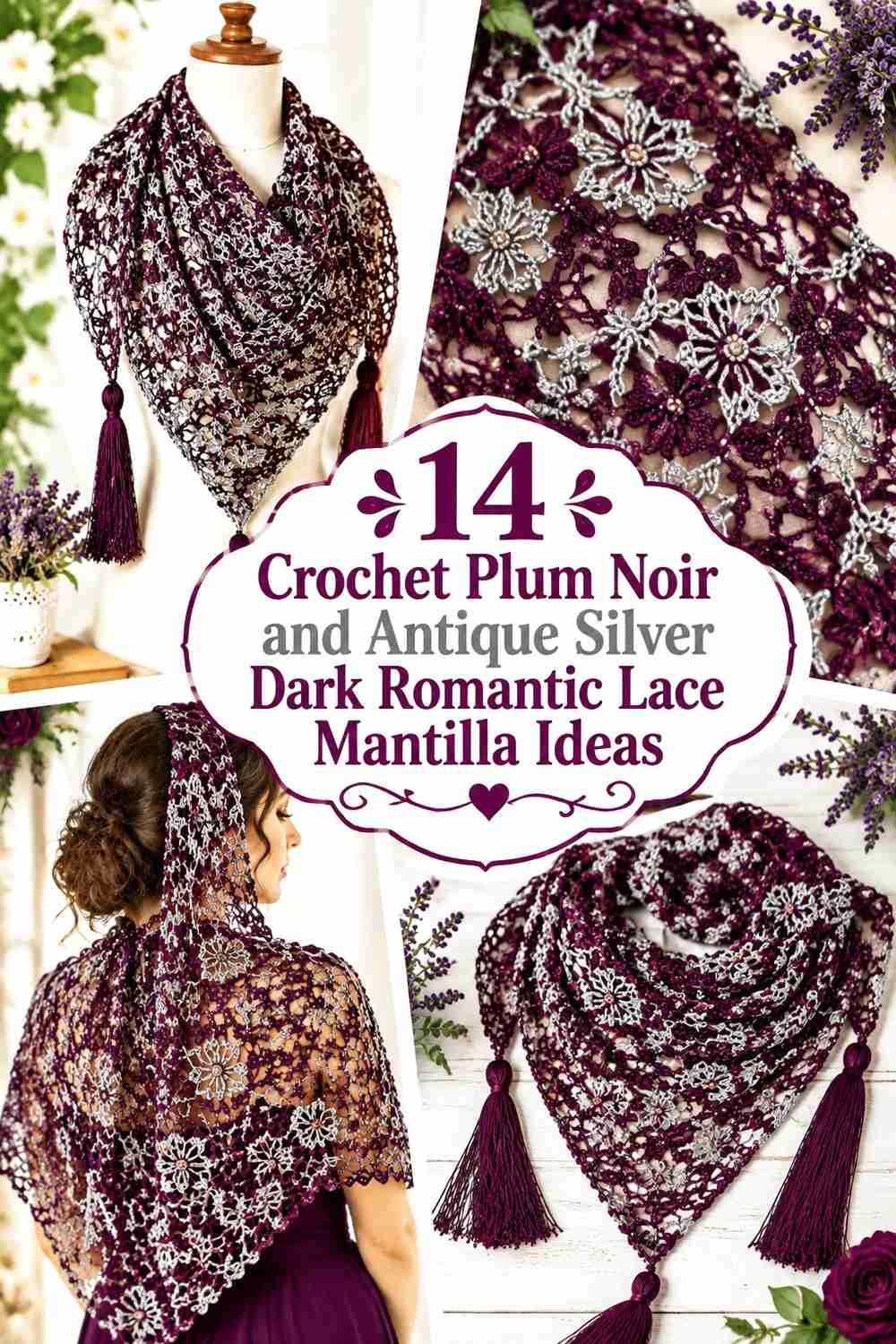

Plum Noir and Antique Silver create a strong dark romantic palette for a crochet lace mantilla because they can separate the shadowed lace field from the details that need greater definition. Plum Noir can carry most of the veil or triangular drape, while Antique Silver can outline scallops, floral motifs, picots, center spines, and face-framing edges.
A mantilla-style piece also needs different color planning from an ordinary shawl. The area nearest the face is seen differently from the lace falling behind the shoulders, and openwork can change appearance depending on the hair, garment, or background underneath it. A narrow Antique Silver border can become much more noticeable near the face than the same amount of color buried inside the lower lace.
Exact full crochet mantilla tutorials are limited, so the sources below include lace triangle shawls, shawlettes, openwork wraps, and crescent constructions that can support the veil-like drape. The Plum Noir and Antique Silver palettes, head-covering placement, and dark romantic styling are independent adaptations rather than claims that the creators made historical or traditional mantillas.
Quick List
- Plum Noir and Antique Silver Crochet Scalloped Triangle Mantilla
- Plum Noir and Antique Silver Crochet Cathedral-Lace Mantilla
- Antique Silver and Plum Noir Crochet Reverse-Lace Mantilla
- Plum Noir and Antique Silver Crochet Airy Border Mantilla
- Plum Noir and Antique Silver Crochet Picot-Edge Mantilla
- Plum Noir and Antique Silver Crochet Deep-Triangle Mantilla
- Plum Noir and Antique Silver Crochet Night-Lace Mantilla
- Plum Noir and Antique Silver Crochet Granny-Lace Mantilla
- Plum Noir and Antique Silver Crochet Fine Triangle Mantilla
- Plum Noir and Antique Silver Crochet Beaded-Look Lace Mantilla
- Plum Noir and Antique Silver Crochet Floral-Bud Mantilla
- Antique Silver and Plum Noir Crochet Center-Spine Mantilla
- Plum Noir and Antique Silver Crochet Butterfly-Lace Mantilla
- Plum Noir and Antique Silver Crochet Crescent Gothic Mantilla
Let Plum Noir Carry Most of the Crochet Mantilla
Plum Noir works well as the dominant shade because a dark continuous field makes the triangular or crescent silhouette easy to read even when the lace itself is highly open. It also gives Antique Silver enough contrast to function as a deliberate highlight instead of another competing body color.
Avoid alternating the two shades through every lace repeat unless you specifically want a striped effect. On a head-covering piece, broad uninterrupted color areas usually preserve the drape better visually and make small motifs or scallops easier to distinguish.
Use Antique Silver Where Plum Noir Lace Needs Definition
Antique Silver is most useful around details that would disappear if they stayed Plum Noir: narrow picots, floral centers, tiny shells, edge points, or the face-framing border.
If the two yarn colors are closer in value than expected, enlarge the silver area instead of scattering more tiny accents. A clear Antique Silver edge or motif band is generally easier to read than many isolated silver stitches placed inside dark lace.
Check Plum Noir and Antique Silver Against Hair and Clothing
Open crochet reveals whatever sits underneath it. Plum Noir lace may appear very distinct against pale hair or clothing but quieter against dark hair, while Antique Silver can either stand out strongly or blend with a light background.
Hold a swatch against the hair color, neckline, dress, or layer you expect beneath the mantilla. That simple check can help you decide whether Antique Silver belongs mainly around the face, along the lower border, or in larger decorative sections.
1. Plum Noir and Antique Silver Crochet Scalloped Triangle Mantilla
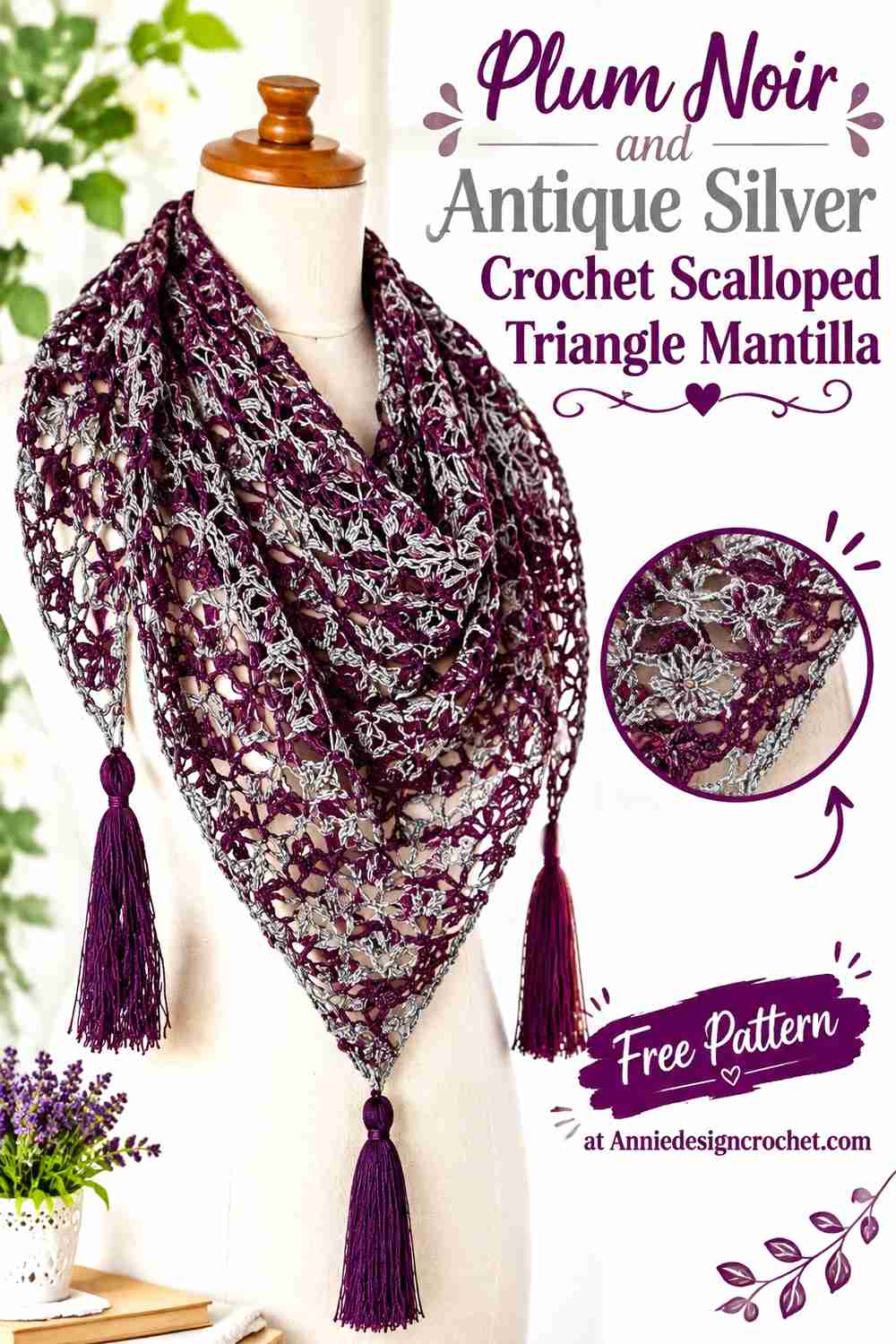
This version gives Plum Noir the full triangular lace field and reserves Antique Silver for the scalloped lower edge. The arrangement keeps the mantilla dark from crown to shoulder while giving the outer perimeter enough contrast to stay visible against dark clothing.
Plum Noir Should Cover the Main Crochet Triangle
Keep Plum Noir continuous through the central triangle so the veil retains a strong dark silhouette. Frequent Antique Silver stripes through the body would interrupt the flow from the head toward the lower point.
This is especially useful if the lace contains several open sections, because the single dark yarn color keeps those different stitch areas visually connected.
Antique Silver Can Define the Plum Noir Scalloped Border
Use Antique Silver only where the scallops begin if you want the lower edge to become the decorative focal point. The lighter shade can make every curve easier to distinguish without taking over the body of the mantilla.
If the scallops are deep, avoid adding another broad Antique Silver band immediately above them.
Plum Noir Can Return at the Antique Silver Outer Edge
A slim Plum Noir finishing line can frame Antique Silver scallops when the veil will be worn over a pale garment. Keep that final dark line narrow so the silver still reads as the principal border color.
Creator Credit: Carmen
2. Plum Noir and Antique Silver Crochet Cathedral-Lace Mantilla
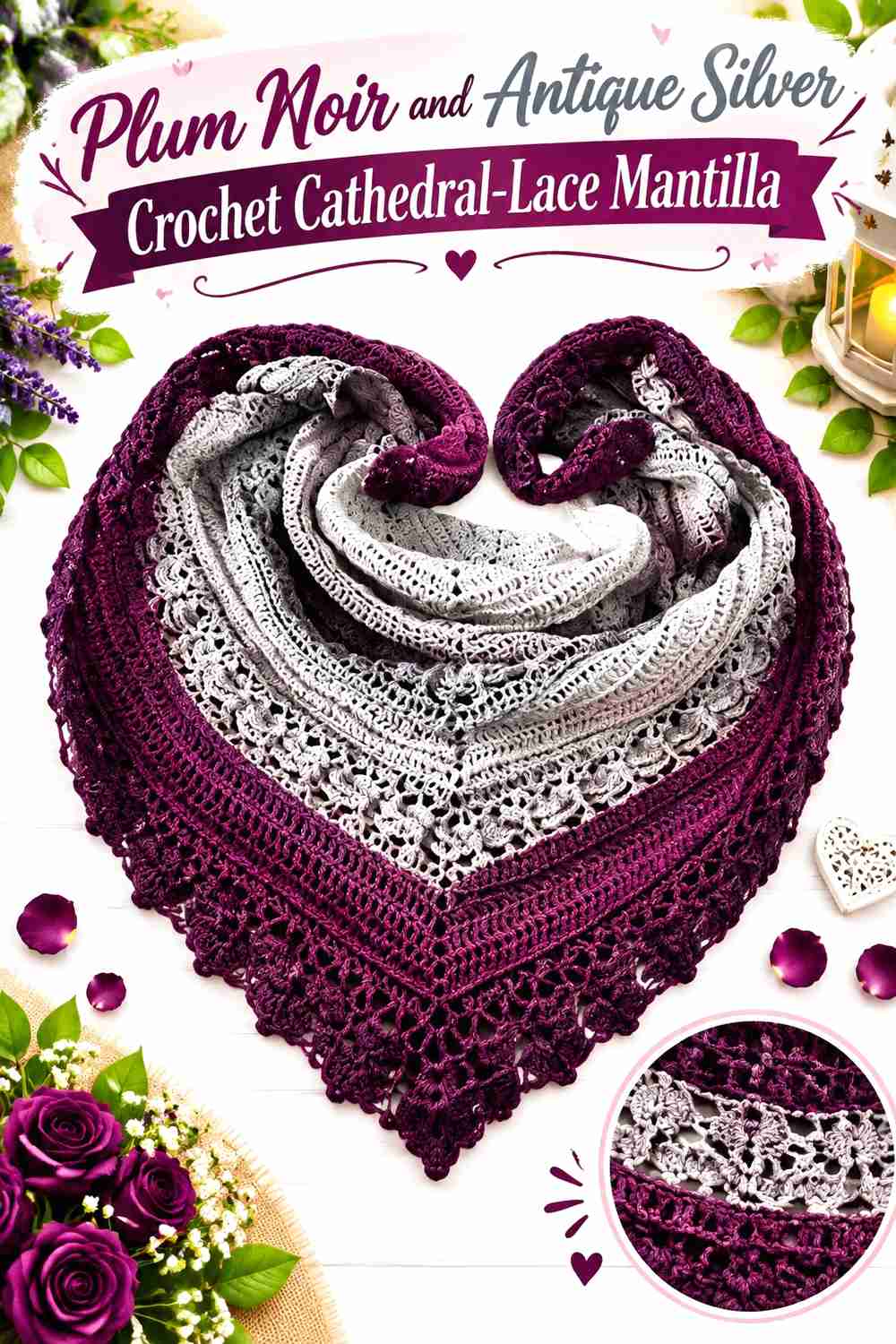
This idea uses a lighter, more open triangular lace surface while keeping Plum Noir dominant. Antique Silver can emphasize the widest arches or the last decorative section near the hem, giving the lower portion a cathedral-window effect without introducing a third color.
Plum Noir Should Keep the Crochet Lace Architecture Connected
Use Plum Noir across several consecutive lace repeats so the vertical and diagonal openwork remains easy to follow. Switching color at every motif can make the pattern look more fragmented than dramatic.
Antique Silver Can Highlight Larger Plum Noir Lace Openings
Place Antique Silver around the broadest arches or final openwork section rather than on every small chain space. Larger silver details remain visible from normal viewing distance and reinforce the veil’s ornamental lower edge.
Creator Credit: Alicja Crocheting
3. Antique Silver and Plum Noir Crochet Reverse-Lace Mantilla
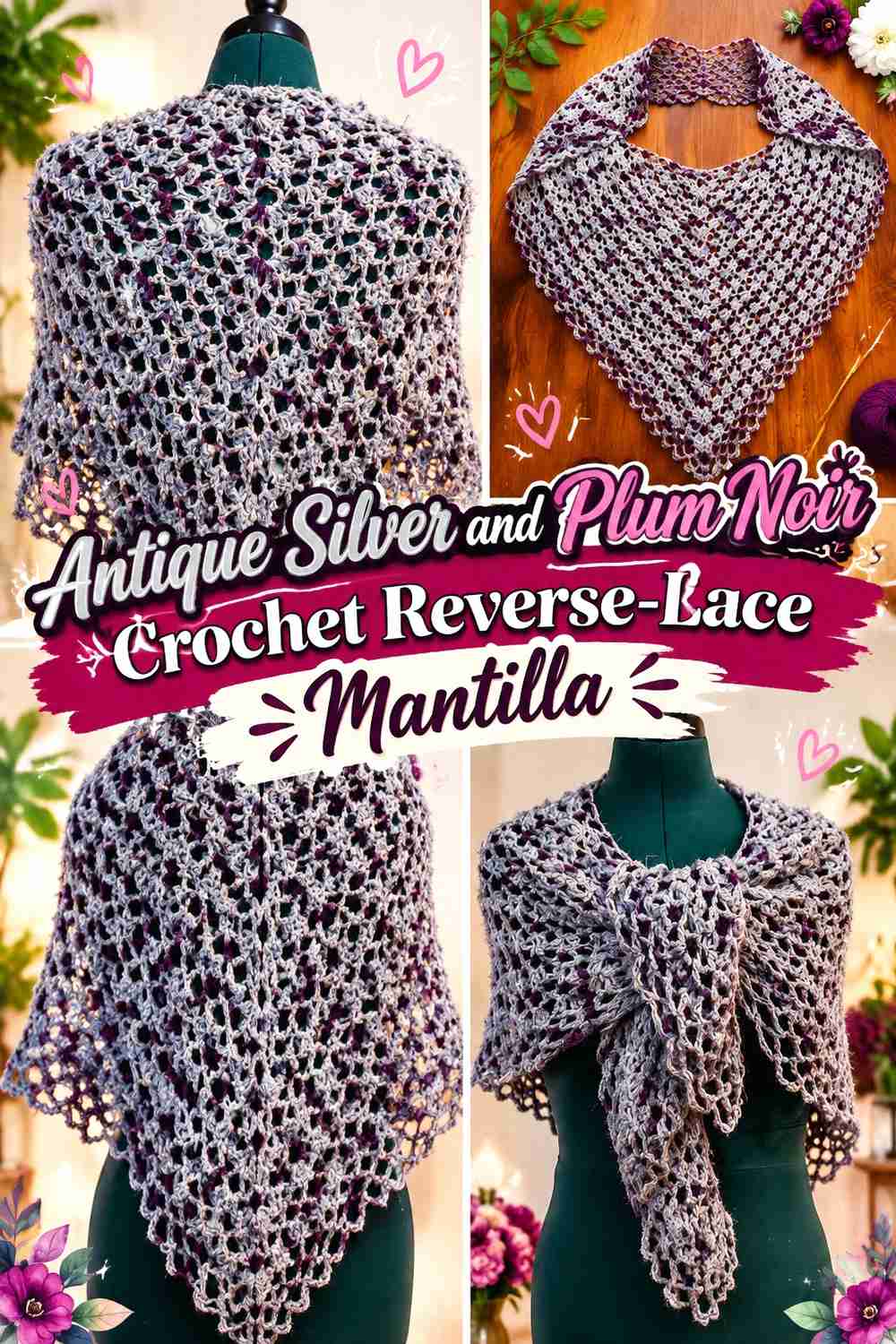
This lighter interpretation reverses the hierarchy. Antique Silver becomes the main lace field and Plum Noir frames the face, outer edge, and lower point. The result still feels dark romantic because the deepest color is concentrated around the boundaries.
Antique Silver Should Remain Broad Across the Crochet Mantilla Body
Give Antique Silver enough uninterrupted area to establish the piece as silver-dominant. If Plum Noir repeatedly cuts across the center, the reverse-palette idea loses its distinction.
Plum Noir Can Frame the Antique Silver Face Edge
Use Plum Noir around the section nearest the hairline or face when you want a stronger visual boundary. A narrow dark line can separate pale lace from light hair or a pale head covering underneath.
Plum Noir Can Anchor the Antique Silver Lower Point
Repeat the dark color at the lowest point or outer edge so the face-framing line does not look isolated. Keep the repeat smaller than the main Antique Silver field.
Creator Credit: Katia Creates
4. Plum Noir and Antique Silver Crochet Airy Border Mantilla
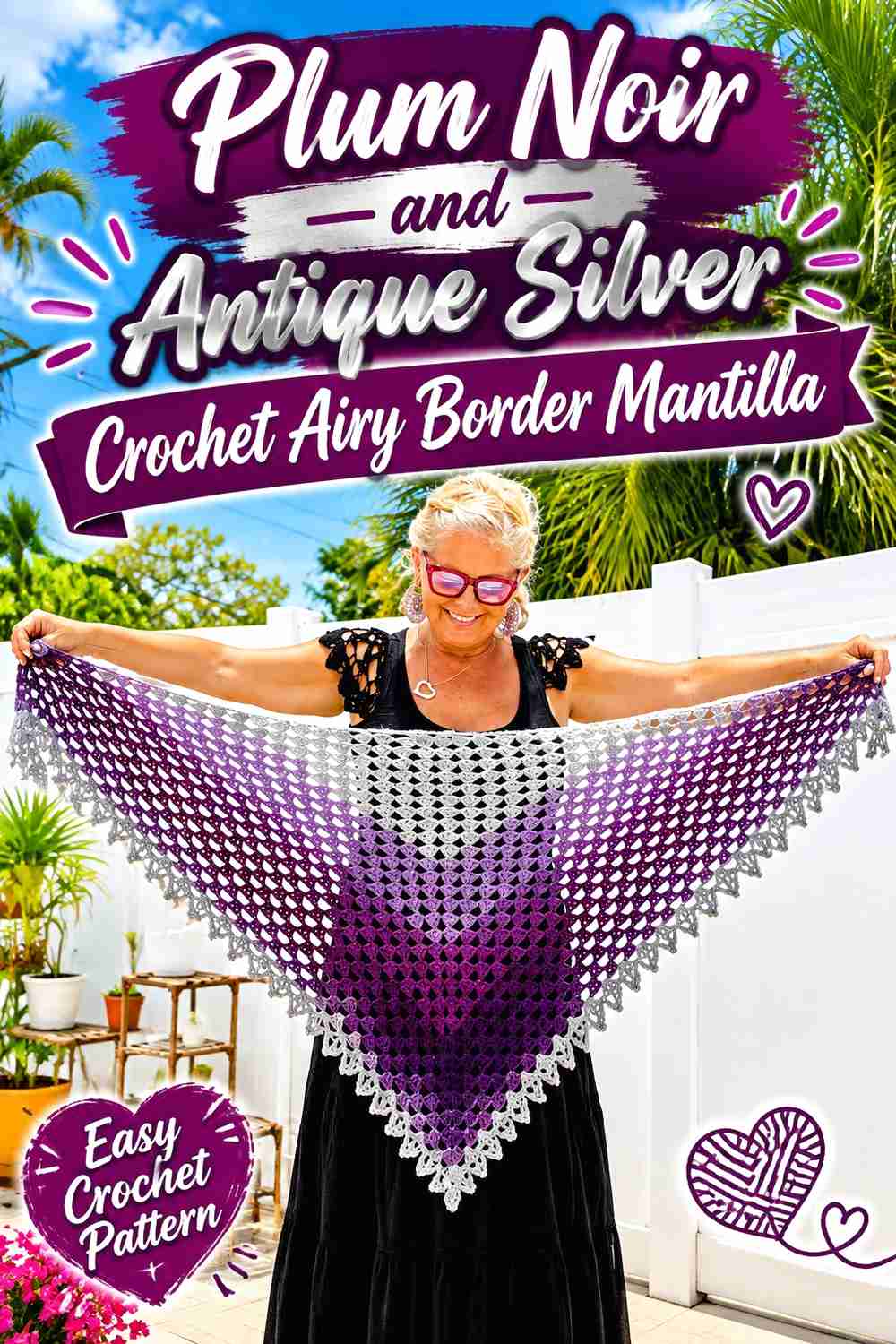
An especially open lace construction can use Plum Noir through the center and Antique Silver only at the outermost border. Because the mesh already creates plenty of visual space, the two-color treatment should remain restrained.
Plum Noir Should Stay Continuous Through Airy Crochet Lace
Use one dark color across the main openwork so the negative spaces themselves become the pattern. Frequent silver changes would compete with the airy effect.
Antique Silver Can Finish the Plum Noir Mantilla Without Making It Heavy
Choose a narrow Antique Silver edge when the lace is already delicate. A broad contrasting border can visually outweigh an otherwise light mantilla and make the lower edge appear much heavier than the center.
Plum Noir Should Remain Visible Beside Antique Silver Near the Face
If Antique Silver also appears around the face, leave enough Plum Noir immediately behind it to preserve the dark romantic character.
Creator Credit: Kristin Omdahl
5. Plum Noir and Antique Silver Crochet Picot-Edge Mantilla
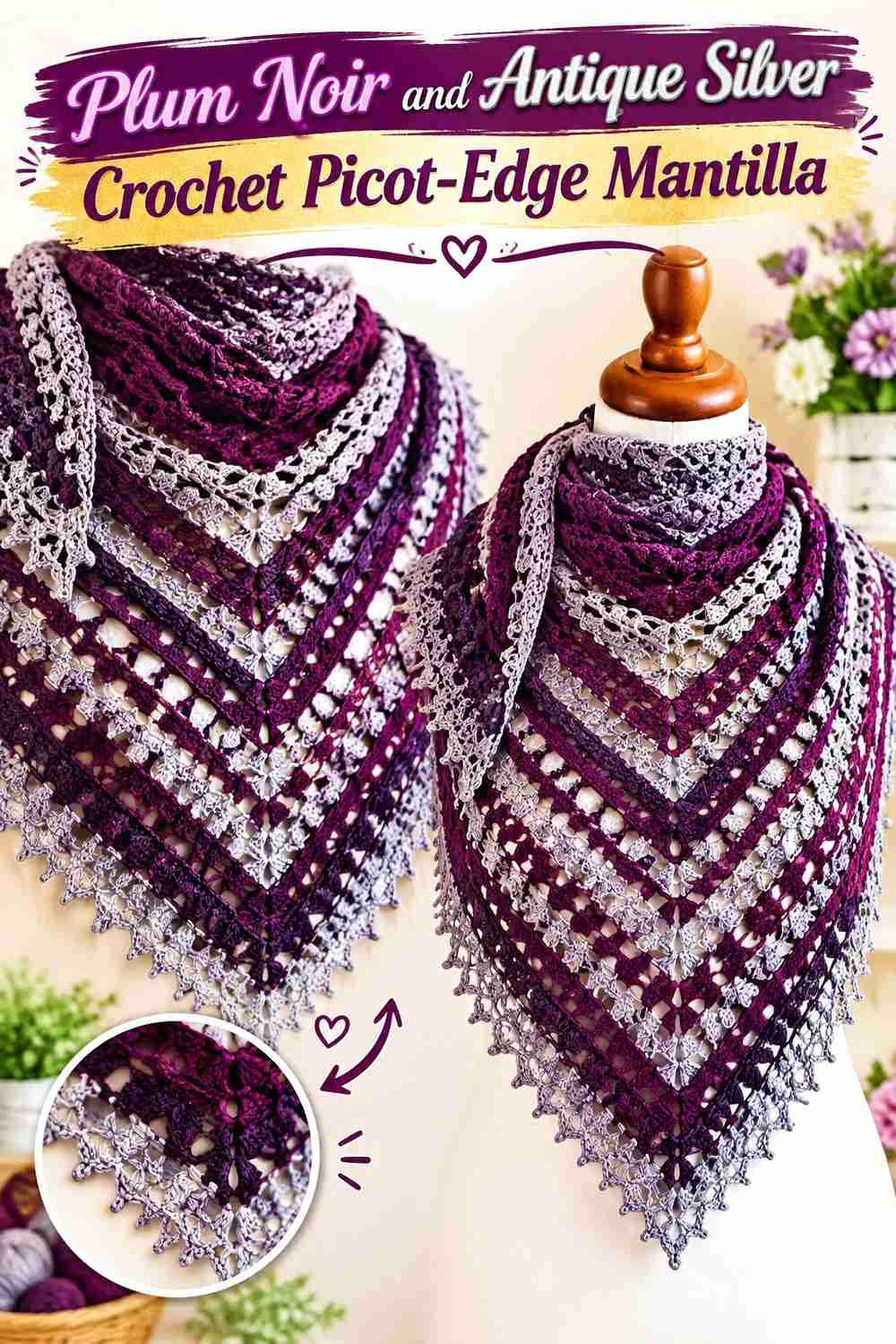
A picot border naturally suits Antique Silver because the small points benefit from strong light-and-dark separation. Plum Noir can cover the complete eyelet field, leaving Antique Silver concentrated in the final pointed edging.
Plum Noir Should Dominate the Crochet Eyelet Field
Keep the main eyelet rows Plum Noir so the small openings form a consistent dark lace pattern. Alternating the eyelets between colors can distract from the sharp outer border.
Antique Silver Can Make Plum Noir Picots More Visible
Use Antique Silver for the picots when you want every point to remain legible along the veil edge. The lighter color is particularly effective where the mantilla falls over a dark dress or dark hair.
Antique Silver Should Stay Narrow Against a Plum Noir Triangle
A picot is already visually active. Avoid extending Antique Silver too far into the body unless you want the border to become a large decorative band.
Creator Credit: Hooked by Robin
6. Plum Noir and Antique Silver Crochet Deep-Triangle Mantilla
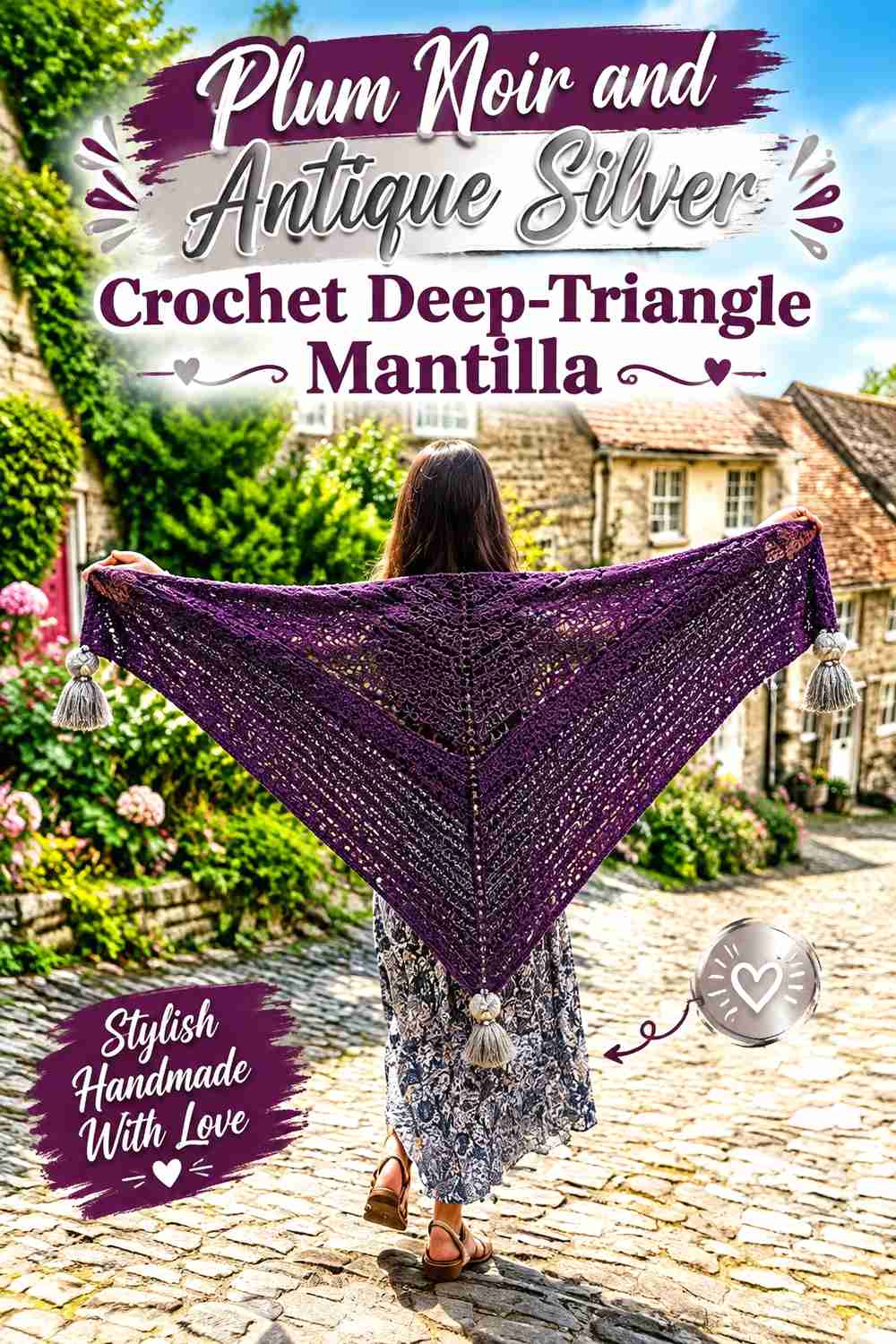
A deeper triangular construction gives Plum Noir more vertical space from crown to lower point. Antique Silver can be placed closer to the outer wings and lower edge, leaving the center dark and uninterrupted.
Plum Noir Can Emphasize the Crochet Mantilla’s Deep Center Point
Keep the central descent Plum Noir so the eye follows one continuous dark line toward the lower tip. This works particularly well when the mantilla is intended to drape beyond the shoulders.
Antique Silver Can Lighten the Plum Noir Side Wings
Place the lighter shade nearer the outer wings rather than through the center. This gives the broadest areas visual lift while preserving the dark central axis.
Plum Noir Should Reappear Beyond Antique Silver Side Accents
If Antique Silver becomes a visible band on each side, finish the outermost edge in Plum Noir or repeat a narrow dark detail so the silver does not look detached.
Creator Credit: Ophelia Talks Crochet
7. Plum Noir and Antique Silver Crochet Night-Lace Mantilla
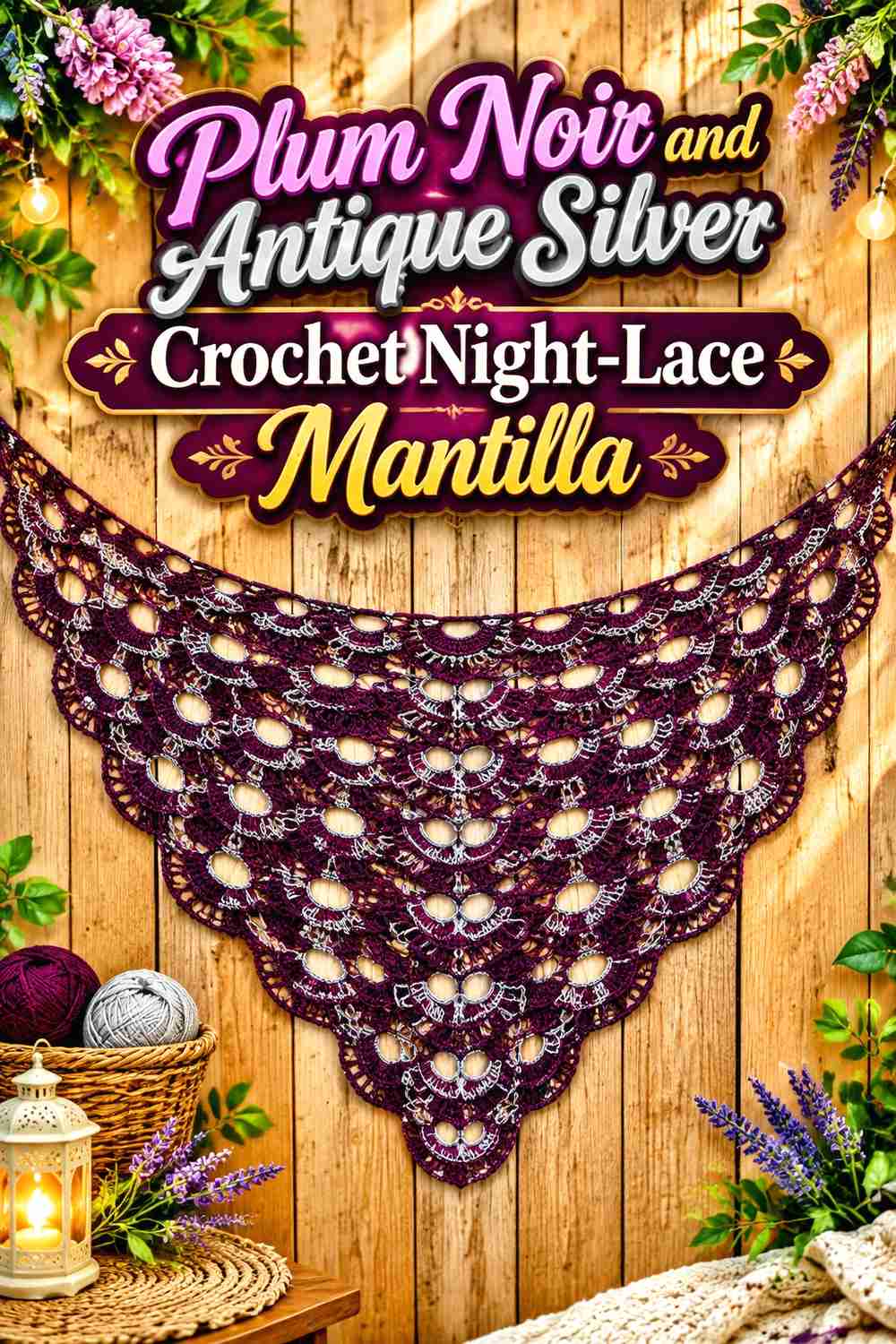
This is one of the darkest options. Plum Noir covers nearly the entire lace construction, with Antique Silver limited to a small center line, lower point, or narrow edging detail. The restraint gives the finished piece a stronger nocturnal appearance.
Plum Noir Should Cover Nearly the Entire Crochet Mantilla
Use Plum Noir through the body, sides, and most of the edge when you want the lace pattern itself—not the color contrast—to carry the detail.
The large dark field also works well if the wearer plans to place the mantilla over a lighter garment because the open pattern remains visible through contrast with the background.
Antique Silver Should Be a Precise Accent Against Plum Noir
Choose one area for Antique Silver, such as the lower point or a slim face edge. One strong accent often has more impact than many scattered silver stitches.
Plum Noir Should Surround Antique Silver on Both Sides
When silver is used as a center line or narrow motif band, keep dark crochet adjacent to it so the lighter color remains clearly contained.
Creator Credit: Bag-O-Day Crochet
8. Plum Noir and Antique Silver Crochet Granny-Lace Mantilla
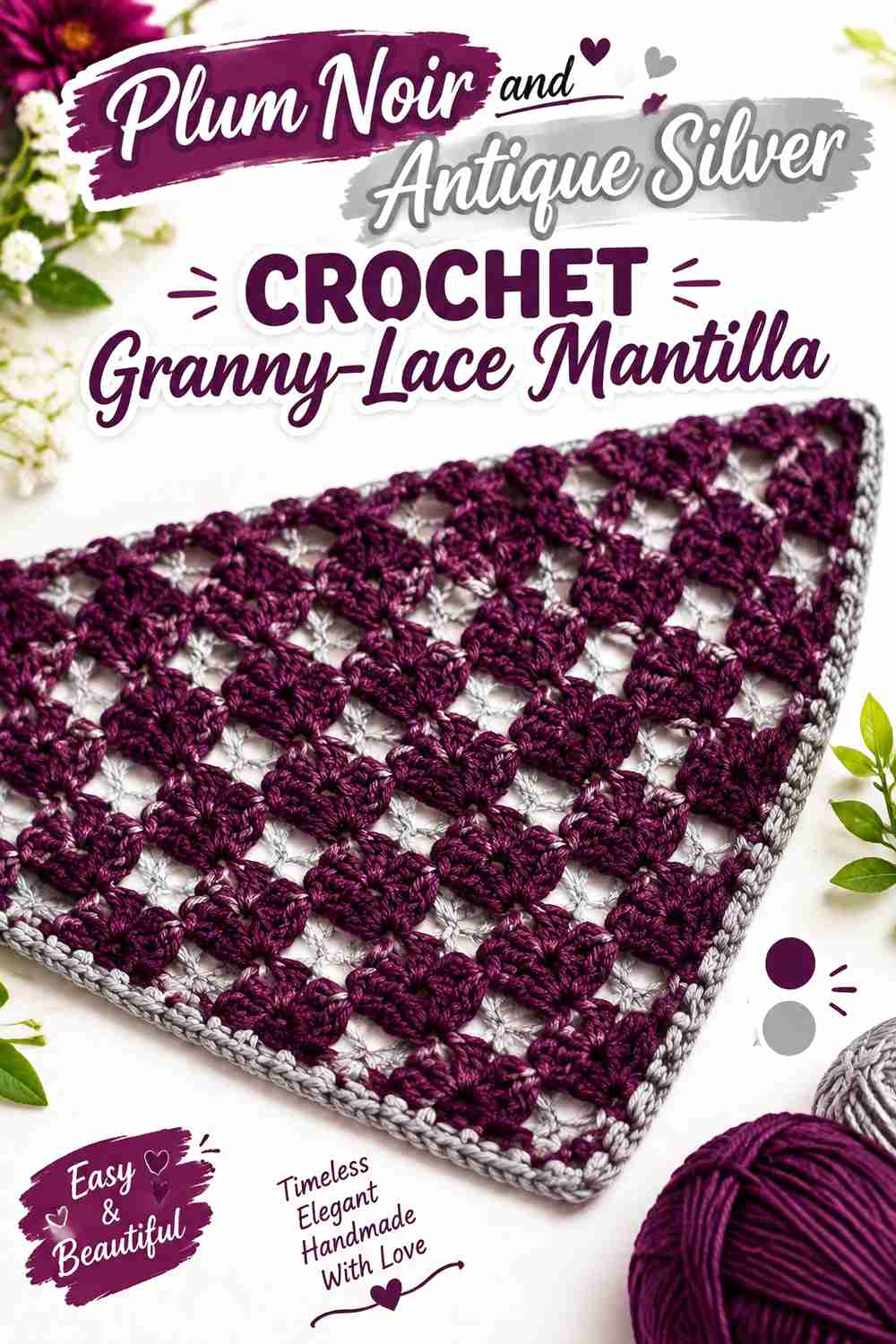
A granny-triangle structure creates larger open groups and a recognizable geometric rhythm. Plum Noir can cover most of the triangle while Antique Silver appears at selected outer sections or in one deliberate final band.
Plum Noir Should Keep the Crochet Granny Triangle Cohesive
Use Plum Noir through several rows at a time instead of alternating colors row by row. Broad dark areas keep the triangle from looking like a conventional striped shawl.
Antique Silver Can Mark the Final Plum Noir Granny-Lace Band
Introduce Antique Silver near the outer edge where the open clusters are widest and most visible. The lighter band can visually separate the final section without interrupting the whole interior.
Plum Noir Can Finish an Antique Silver Granny Edge
A narrow Plum Noir outer row can contain the lighter section and restore a dark outline around the finished mantilla.
Creator Credit: Bella Coco
9. Plum Noir and Antique Silver Crochet Fine Triangle Mantilla
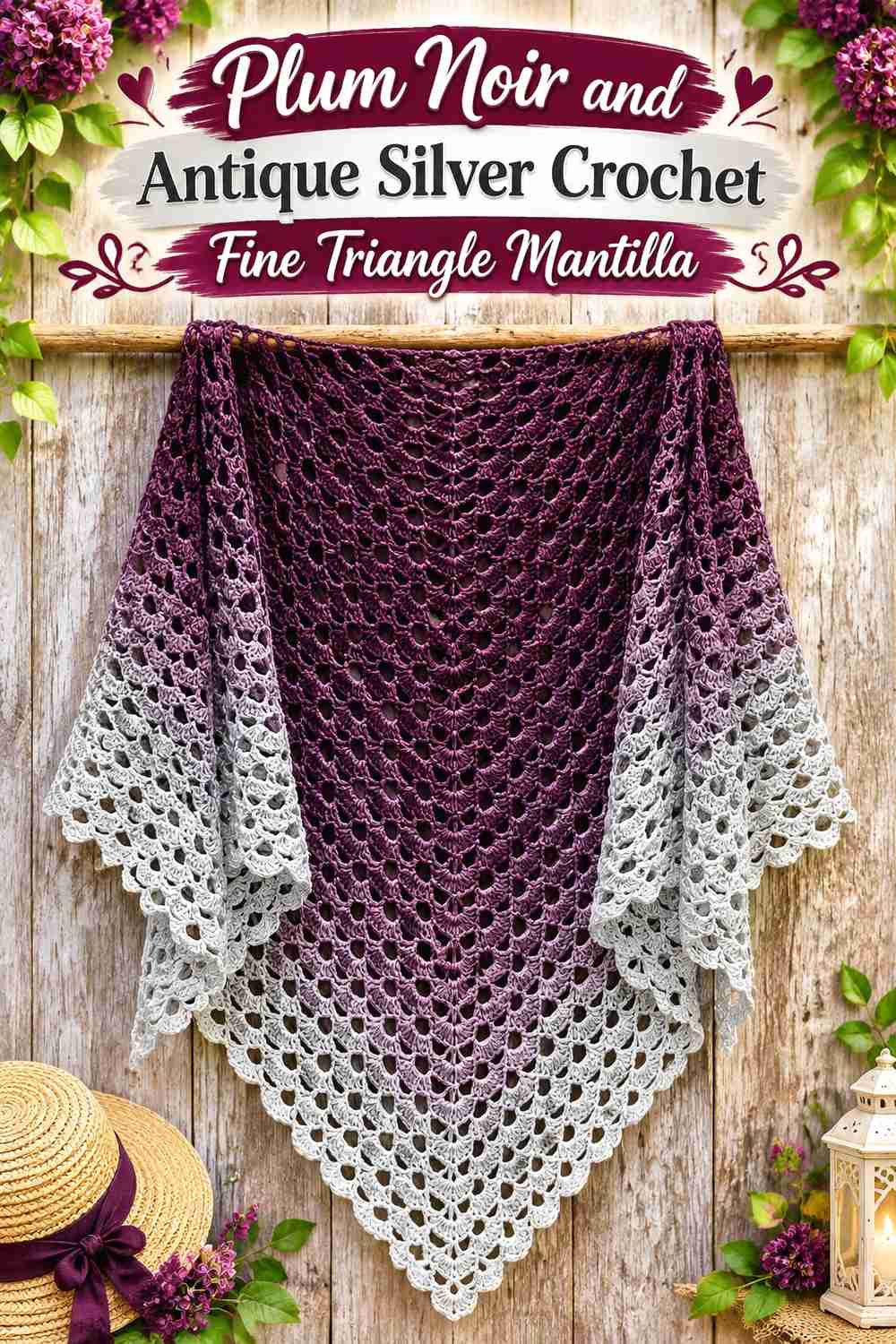
This direction uses a more refined, regular triangle with Plum Noir as the main field and Antique Silver concentrated around the face-framing edge. The result is less border-heavy than a full silver hem.
Plum Noir Should Stay Continuous Across Fine Crochet Lace
Keep the primary lace pattern one dark color so the repeated openings and narrow stitch lines remain the focus. Fine lace can lose clarity when small color changes are introduced too frequently.
Antique Silver Can Frame the Plum Noir Mantilla Near the Face
Use Antique Silver along the section that sits closest to the hairline or cheeks. A lighter inner border can brighten the face while the back and lower portion remain strongly Plum Noir.
Plum Noir Can Keep Antique Silver Face Trim From Looking Too Pale
Leave a visible dark line immediately outside the silver trim so the lighter color remains connected to the dark body rather than appearing like a separate headband.
Creator Credit: Kristines Crochets (Kristine Salmina)
10. Plum Noir and Antique Silver Crochet Beaded-Look Lace Mantilla
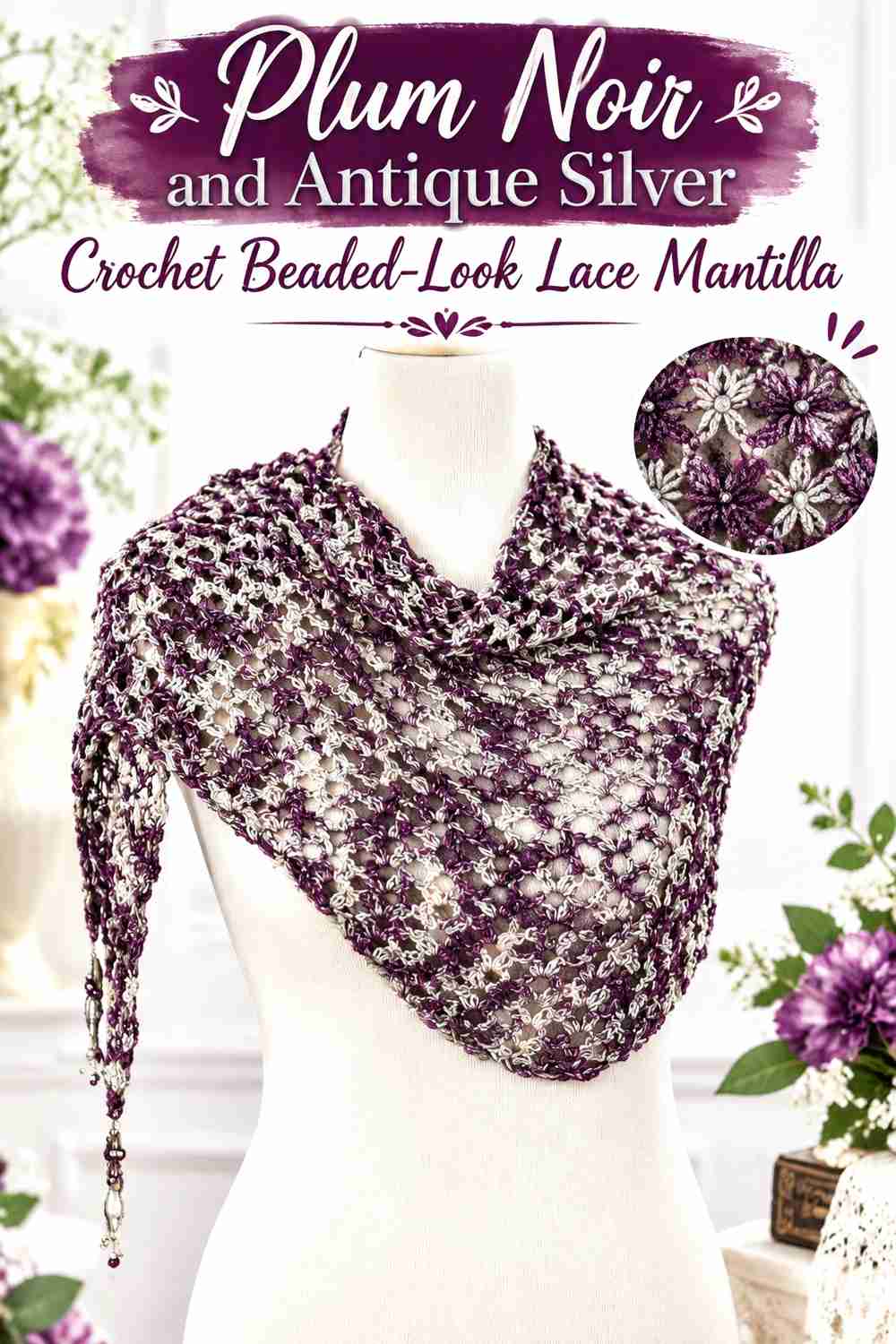
This idea takes inspiration from an airy shawlette with decorative end details. Plum Noir can form the open lace body, while Antique Silver yarn accents can be concentrated at the ends or lower corners to suggest jewelry-like detail without requiring actual beads.
Plum Noir Should Carry the Open Crochet Mantilla Field
Use Plum Noir through the broad lace surface so the repeated fans or shells remain visually consistent. The dark body provides enough contrast that even small Antique Silver accents can remain noticeable.
Antique Silver Can Emphasize Plum Noir Mantilla Corners
Place Antique Silver near the two outer ends or lower points where decorative accents remain visible beside the shoulders. This creates a more jewelry-inspired finish than a continuous border.
Antique Silver Should Not Overload the Plum Noir Lace Surface
If the corners already carry strong light accents, keep the center mostly dark. Several additional silver motifs through the body can weaken the concentrated end treatment.
Creator Credit: Fiber Flux
11. Plum Noir and Antique Silver Crochet Floral-Bud Mantilla
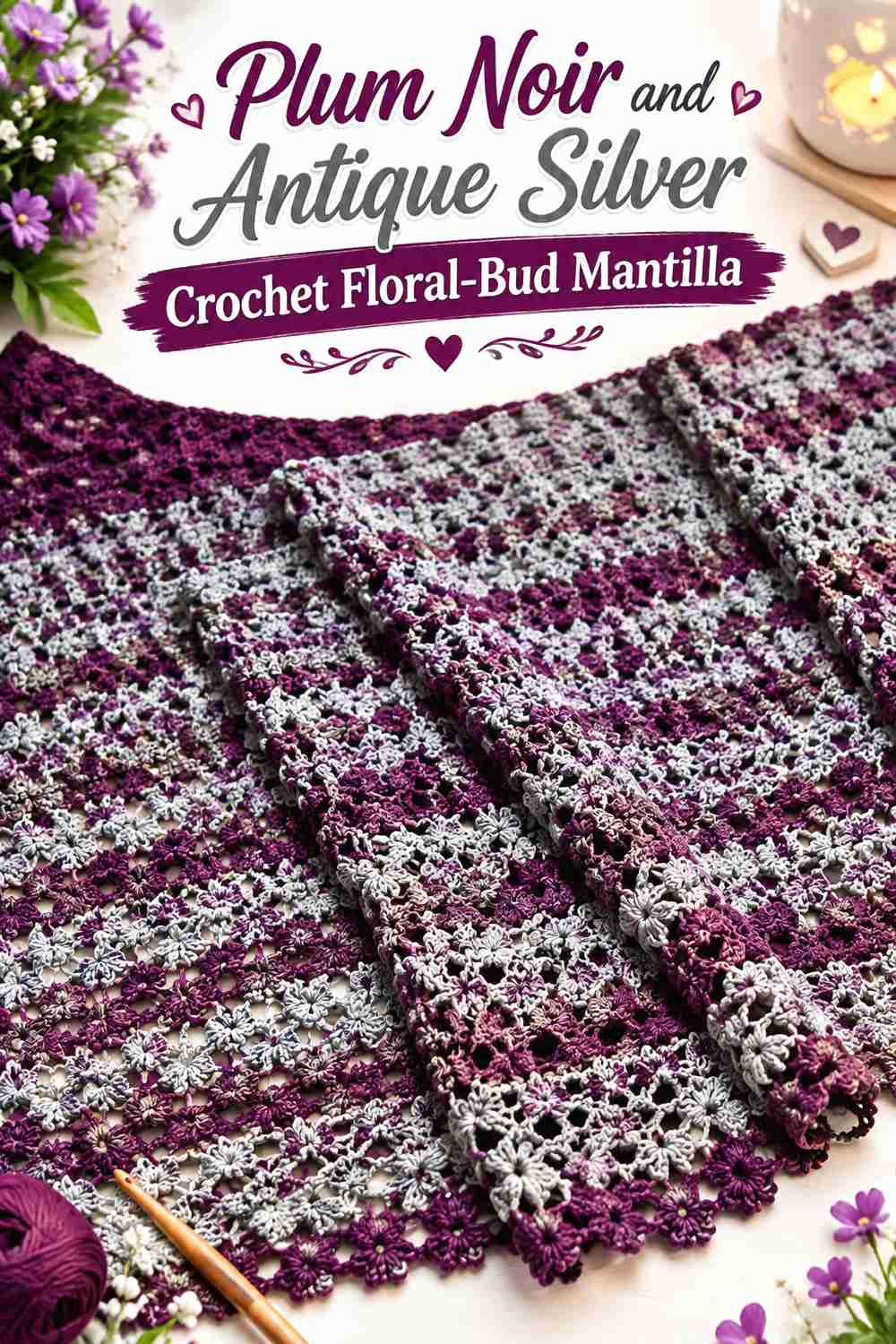
A floral-bud lace pattern gives Antique Silver a clear place to work as a highlight. Plum Noir can cover the background structure while silver is reserved for selected bud-like sections or the final picot border.
Plum Noir Should Remain the Main Crochet Floral Background
Use Plum Noir through the rows connecting the floral details. A broad dark field allows each decorative section to remain distinct instead of turning the entire mantilla into an equal two-color pattern.
Antique Silver Can Highlight Plum Noir Floral Buds
Choose only some of the most visible floral sections for Antique Silver rather than changing every motif. This creates a controlled dark-romantic effect and keeps the flowers from appearing overly busy.
Antique Silver Picots Can Echo Plum Noir Floral Details
If silver appears within the floral sections, repeat it at a few outer picots so the internal highlights connect visually to the edge.
Creator Credit: Rich Textures Crochet
12. Antique Silver and Plum Noir Crochet Center-Spine Mantilla
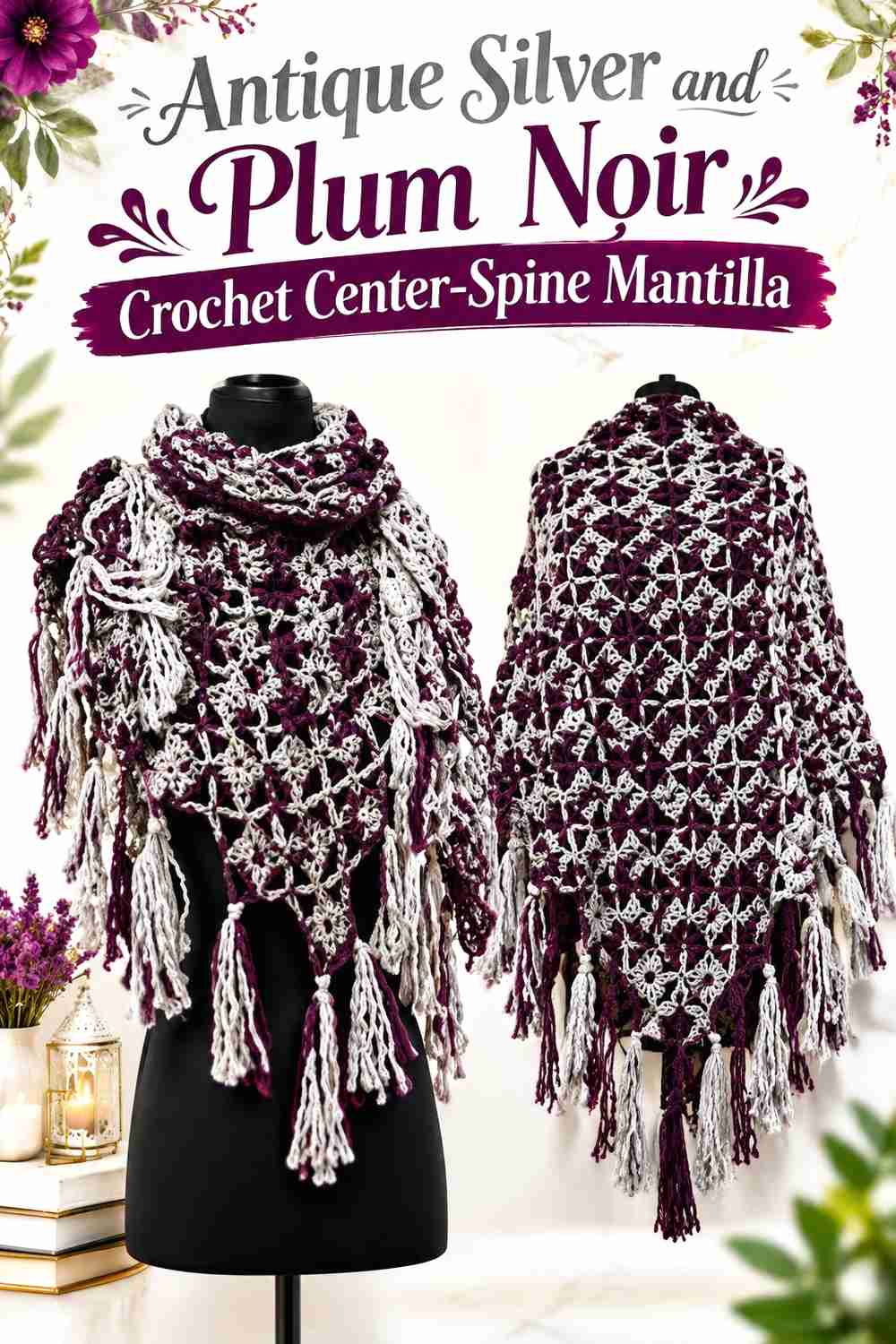
This version uses Antique Silver as a narrow central spine through a predominantly Plum Noir triangle. The placement draws the eye downward and creates one strong structural line without changing the overall dark palette.
Plum Noir Should Cover Both Sides of the Crochet Center Spine
Keep the majority of the triangle Plum Noir so the silver remains a narrow focal feature. Equal silver-and-plum side panels would create a very different split-color effect.
Antique Silver Can Define the Plum Noir Triangle’s Center
Use Antique Silver along the center line or central increase area where the triangular shape naturally develops. The lighter shade reinforces the vertical direction and makes the lower point easier to locate visually.
Plum Noir Should Finish Around the Antique Silver Lower Point
Return to Plum Noir along the outer edge if you want the silver spine to remain enclosed within the dark silhouette.
Creator Credit: oana’s crochet channel
13. Plum Noir and Antique Silver Crochet Butterfly-Lace Mantilla
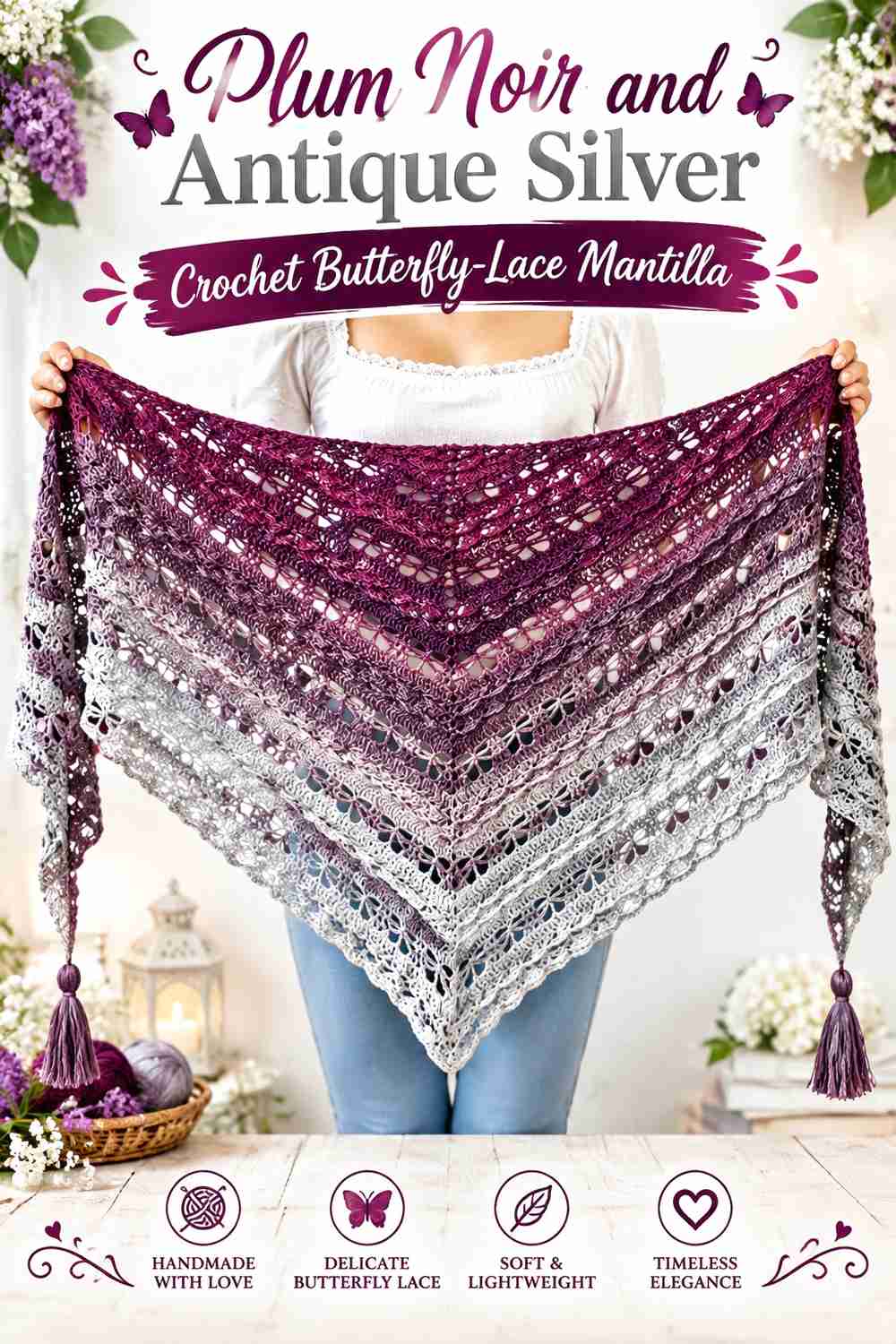
Butterfly-inspired openwork creates a more ornate dark romantic surface. Plum Noir can cover the entire triangle, while Antique Silver is limited to selected motif outlines or the final border so the butterfly shapes remain readable.
Plum Noir Should Keep the Crochet Butterfly Motifs Connected
Use Plum Noir continuously through the repeated butterfly sections. Changing every motif to Antique Silver would turn the surface into a patchwork rather than a cohesive veil.
Antique Silver Can Highlight Selected Plum Noir Butterfly Details
Choose a narrow motif band or the outermost butterfly section for Antique Silver if you want the decorative lace to become more noticeable near the hem.
Plum Noir Should Separate Antique Silver Butterfly Accents
Leave dark mesh or stitch sections between lighter motifs. The negative space helps each Antique Silver element retain its shape.
Creator Credit: Wilma Westenberg
14. Plum Noir and Antique Silver Crochet Crescent Gothic Mantilla
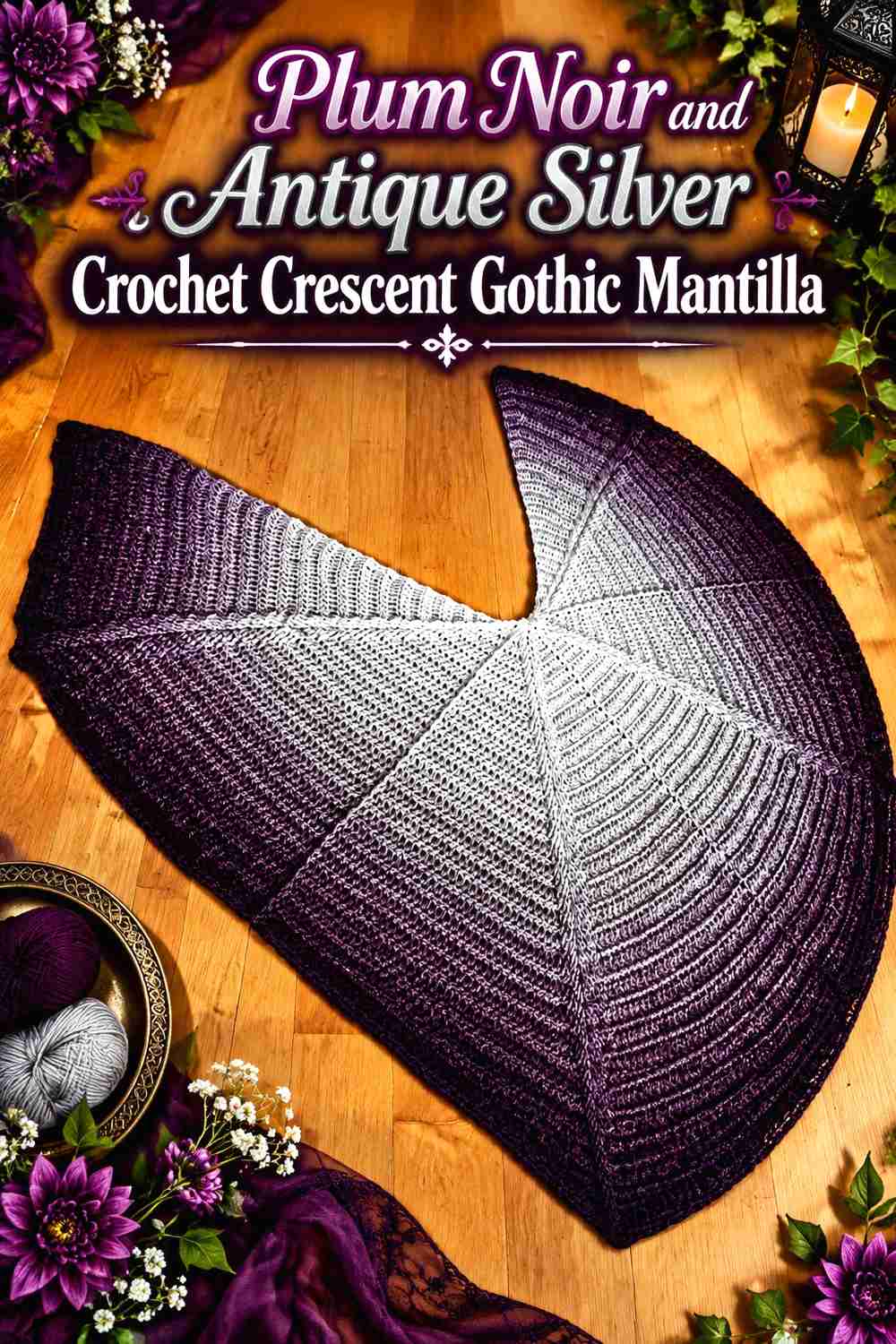
The final idea uses a crescent-style lace construction rather than a strict triangle. Plum Noir can cover most of the curved body, while Antique Silver follows the lower crescent edge and selected butterfly-inspired sections. The shape gives the mantilla a softer shoulder line while preserving the dark gothic palette.
Plum Noir Should Define the Crochet Crescent From Side to Side
Use Plum Noir continuously across the upper curved section so the entire mantilla reads as one dark sweeping shape. This is especially important on a crescent because several competing horizontal color bands can flatten the curve visually.
Antique Silver Can Follow the Plum Noir Crescent Edge
Place the lighter shade along the lower arc where it can emphasize the curve from one side to the other. A silver crescent border creates a different effect from a silver triangular point and gives this final design its own visual direction.
Plum Noir Can Frame Antique Silver Butterfly-Lace Details
If Antique Silver enters the lower motif area, retain Plum Noir between decorative sections so the border does not become one continuous pale mass.
Creator Credit: Meladora’s Creations
Comparing the Plum Noir and Antique Silver Mantilla Directions
For the darkest overall effect, choose the night-lace, deep-triangle, or center-spine versions. These keep Plum Noir across nearly all of the visible fabric and use Antique Silver in a narrow supporting role.
For stronger edge definition, the scalloped, picot, airy-border, and crescent versions give Antique Silver more space around the perimeter. These are useful when the mantilla will be worn over dark clothing because the pale edge remains visible even when the Plum Noir lace blends more closely with the background.
The reverse-lace design creates the lightest direction by making Antique Silver the main field and Plum Noir the frame. The butterfly and floral-bud versions put more emphasis on surface motifs, while granny and eyelet constructions rely more heavily on open geometric repetition.
If you want the face to receive the most contrast, concentrate Antique Silver along the inner edge. If the lower veil should be the focal point, keep the face area Plum Noir and move silver toward scallops, picots, flowers, or the crescent hem.
Conclusion
Plum Noir and Antique Silver can create a dark romantic crochet mantilla without requiring complicated color changes throughout the lace. Plum Noir works especially well as the broad veil field because it keeps openwork, triangles, crescents, and floral motifs visually connected. Antique Silver is most effective when it has one clear purpose: face framing, scalloped edging, a center spine, floral highlights, butterfly motifs, or a lower border.
For the darkest result, keep silver minimal and let Plum Noir carry nearly the whole piece. For a more ornamental finish, expand Antique Silver around the outer edge or selected motif bands. Reverse the palette when you want a lighter mantilla with a dark gothic frame.
Before committing to the final color arrangement, hold a lace swatch against the hair, clothing, or background that will show through it. Openwork changes dramatically depending on what sits beneath it, so the most useful contrast decision is made in the context in which the mantilla will actually be worn.
Use each creator tutorial for its demonstrated shawl or lace construction. The Plum Noir and Antique Silver placement, head-covering use, and dark romantic mantilla styling remain independent adaptations.
Frequently Asked Questions
Should Plum Noir or Antique Silver Be the Main Color of a Crochet Mantilla?
Plum Noir is the stronger dominant choice when you want a dark romantic veil with Antique Silver used for definition. Antique Silver can become the main color when you prefer a lighter lace field framed by darker Plum Noir edges.
Where Should Antique Silver Go on a Plum Noir Crochet Mantilla?
Antique Silver is especially useful around scallops, picots, the face-framing edge, flower centers, butterfly motifs, a central spine, or the lower crescent border. These placements emphasize details that can otherwise disappear inside a dark lace field.
How Can I Keep Plum Noir Lace Visible Over Dark Hair?
Use Antique Silver near the face or in selected upper motifs to create separation from the hair. You can also rely on larger open spaces in the Plum Noir lace so the pattern remains readable through differences in texture and negative space.
Can Plum Noir and Antique Silver Be Used in a Crochet Triangle Shawl Adapted as a Mantilla?
Yes, when the finished shape and drape work for your intended head-covering style. The tutorials in this collection primarily teach shawls and lace wraps, so assess the finished width, depth, and edge treatment before deciding how to position the piece over the head.
Should Antique Silver Be Used on Every Plum Noir Lace Motif?
Not necessarily. Repeating silver on every motif can make the design busy and reduce the dominance of Plum Noir. Highlighting one motif band, the final border, or selected details usually creates a clearer hierarchy.
How Do I Choose Between a Plum Noir Triangle and Crescent Mantilla?
A triangle creates a more obvious lower point and stronger vertical direction, while a crescent creates a curved lower line and broader side-to-side flow. Choose according to the silhouette you want rather than color alone; both can use the same Plum Noir and Antique Silver palette effectively.
How Can I Check Plum Noir and Antique Silver Contrast Before Making the Whole Mantilla?
Crochet a small lace sample using both colors and hold it against the hair, garment, or layer that will show through the finished piece. You can also photograph the sample in grayscale to see whether the two shades differ enough in lightness for small borders and motifs to remain visible.