Plum noir and dusty mauve create a strong Gothic palette for a crochet table lamp skirt because the two shades can separate the shadowy lace structure from softer Victorian-inspired details. Plum noir can carry the main lace body, upper fitting band, pointed motifs, and deeper scallops, while dusty mauve can define floral medallions, fan sections, picot edging, or a lighter lower border.
The most useful color decision is how much dusty mauve should interrupt the dark lace. A narrow mauve scallop along a plum-noir skirt creates a restrained contrast, while alternating floral medallions produce a much more decorative result. On open lace, even relatively small color changes can become prominent because light and background color show through the stitches.
The credited tutorials include two direct crochet lampshade constructions and several lace doily tutorials that support circular motifs, radial lace, floral medallions, openwork, scallops, and vintage-style edging. Follow each creator for the construction or motif actually demonstrated. The table-lamp-skirt shaping and plum-noir-and-dusty-mauve palettes below are independent adaptations.
Treat every crochet lamp skirt as decorative textile, not as heat shielding. Keep crochet clear of the bulb, socket, wiring, ventilation openings, and other heat-producing or electrical parts, and follow the lamp manufacturer’s clearance and material requirements. Do not drape crochet over a bare bulb or improvise attachment directly to electrical components.
Quick List
- Plum Noir Lacy Crochet Table Lamp Skirt With Dusty Mauve Scallops
- Plum Noir Doily-Medallion Crochet Table Lamp Skirt With Dusty Mauve Joins
- Plum Noir Radial Lace Crochet Table Lamp Skirt With Dusty Mauve Floral Rounds
- Dusty Mauve Floral Crochet Table Lamp Skirt With Plum Noir Framing
- Plum Noir Picot Lace Crochet Table Lamp Skirt With a Dusty Mauve Hem
- Plum Noir Wave-Lace Crochet Table Lamp Skirt With Dusty Mauve Gothic Bands
- Plum Noir Color-Block Crochet Table Lamp Skirt With Dusty Mauve Doily Rounds
- Plum Noir Vintage Lace Crochet Table Lamp Skirt With Dusty Mauve Pointed Edging
- Plum Noir Victorian Crochet Table Lamp Skirt With Dusty Mauve Floral Panels
- Plum Noir Circular Lace Crochet Table Lamp Skirt With Dusty Mauve Fan Borders
- Plum Noir Vintage Doily Crochet Table Lamp Skirt With a Dusty Mauve Layered Edge
- Plum Noir Geometric Lace Crochet Table Lamp Skirt With Dusty Mauve Scallop Framing
Let Plum Noir Carry the Gothic Lamp Skirt Structure
Plum noir works well across the largest lace areas because it creates a deep visual frame around the lamp while leaving dusty mauve free to highlight selected details. Use it through the upper fitting area, long vertical lace repeats, main medallion outlines, or the deepest part of a scalloped hem.
That dark foundation is particularly useful on an illuminated shade. Open crochet already creates changing light and shadow, so using several equal color bands can make the skirt feel busier than it does in daylight.
If dusty mauve becomes the dominant shade, preserve a plum-noir top band or outer border so the lamp skirt still retains the darker Gothic direction.
Use Dusty Mauve to Reveal Plum Noir Lace Details
Dusty mauve is useful where individual lace shapes need separation. It can identify flower centers, alternate medallions, final fan rounds, narrow picot edging, or one band immediately above a pointed hem.
Avoid placing mauve inside every small chain space. Larger, deliberate sections are easier to read against dark plum and create a more controlled Victorian-inspired palette.
Because both colors may be relatively muted, compare the actual yarns together. If they are close in value, use dusty mauve in broader areas instead of relying on extremely thin outlines.
Keep Plum Noir and Dusty Mauve Away From Lamp Hardware
Plan the decorative skirt around an existing safe shade or approved lamp-cover structure rather than around the bulb itself. The crochet should remain a removable decorative layer where the fixture design permits one.
Before finishing the lower border, view the skirt on the lamp and check how far it hangs. Long plum-noir points or mauve scallops should not fall toward switches, cords, sockets, or ventilation openings.
Also consider how the lace behaves when the lamp is on. The openwork may become visually stronger under transmitted light, so a subtle dusty-mauve band in daylight can appear much more prominent when illuminated.
1. Plum Noir Lacy Crochet Table Lamp Skirt With Dusty Mauve Scallops
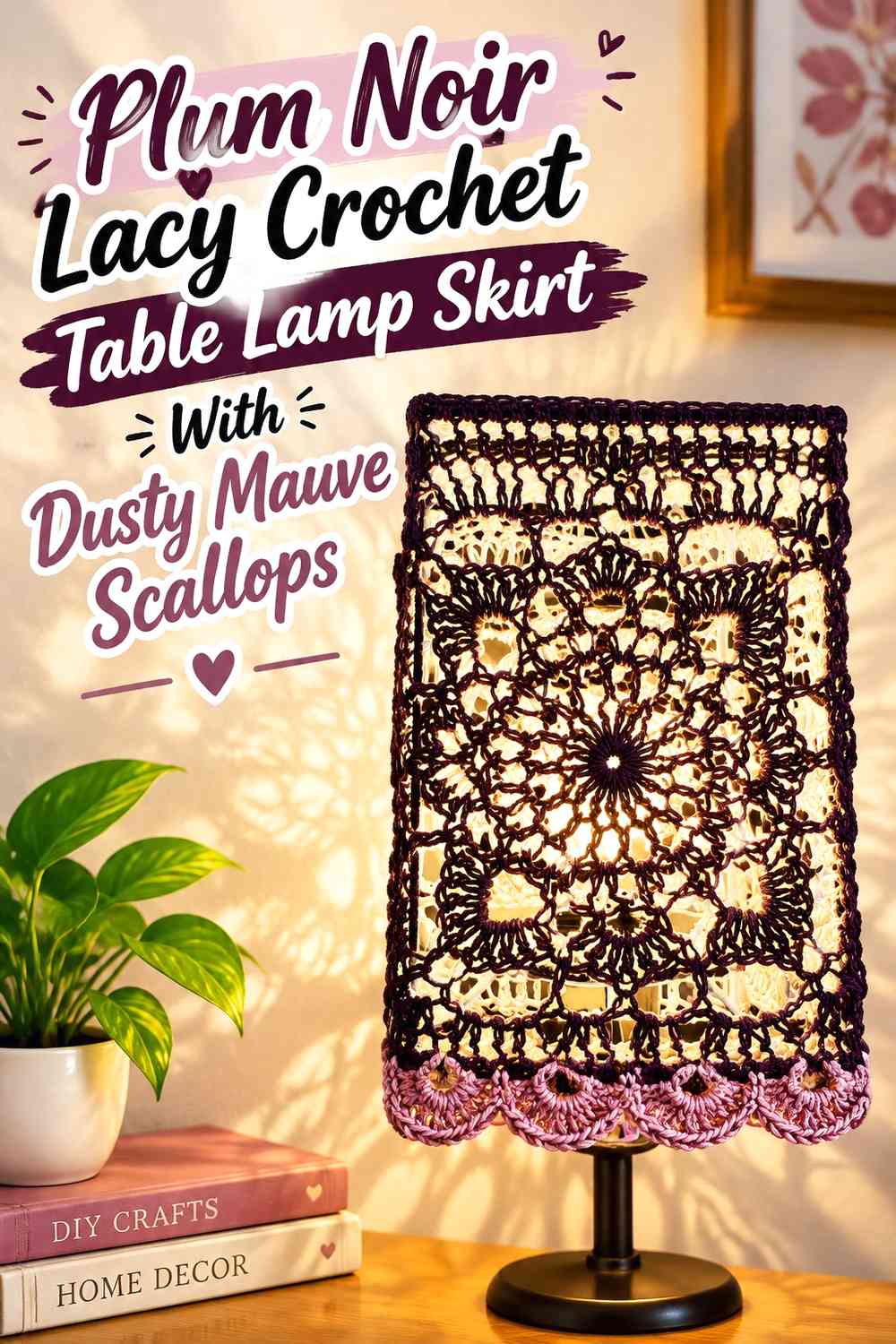
A true lacy lamp-cover construction provides the most direct starting point for this idea. Keep the main cover plum noir and introduce dusty mauve only at the lower scalloped section so the darkest color defines the complete shade before the softer edge begins.
Dusty Mauve Scallops Should Clearly Finish the Plum Noir Lamp Skirt
Use the mauve where the lace reaches its final decorative edge rather than changing color repeatedly through the body.
That single lighter boundary helps reveal the scalloped silhouette against the darker plum-noir field.
Plum Noir Should Stay Broad Above the Dusty Mauve Hem
Leave enough uninterrupted dark lace that the skirt remains Gothic rather than evenly two-tone.
If more mauve is needed, repeat it as one narrow upper line instead of introducing another deep band.
Dusty Mauve Length Should Stay Controlled Beneath Plum Noir
Do not extend the scallops simply to make them more dramatic. Check the actual lamp and existing shade so the decorative lower edge remains well clear of electrical and heat-producing components.
Creator Credit: Ophelia Talks Crochet
2. Plum Noir Doily-Medallion Crochet Table Lamp Skirt With Dusty Mauve Joins

A doily-built lampshade concept creates an intentionally layered, antique effect. Use plum noir for most medallions and dusty mauve where individual lace pieces meet so the joining network becomes part of the color design.
Dusty Mauve Joins Should Separate Plum Noir Lace Medallions
Keep a visible mauve connection between neighboring dark motifs when their outer lace edges would otherwise merge.
The lighter joins make each plum-noir medallion easier to distinguish and give the skirt a patchworked Victorian feel.
Plum Noir Medallions Should Remain Larger Than Dusty Mauve Connections
Let the dark motifs carry most of the visual surface.
If mauve joins become broad panels, the skirt can lose the impression of separate Gothic lace pieces assembled together.
Dusty Mauve Should Not Hide the Plum Noir Openwork
Position the lighter joining areas around medallion edges rather than filling the lace holes themselves.
This preserves the transparency and individual structure of each dark motif.
Creator Credit: Make it Coats
3. Plum Noir Radial Lace Crochet Table Lamp Skirt With Dusty Mauve Floral Rounds
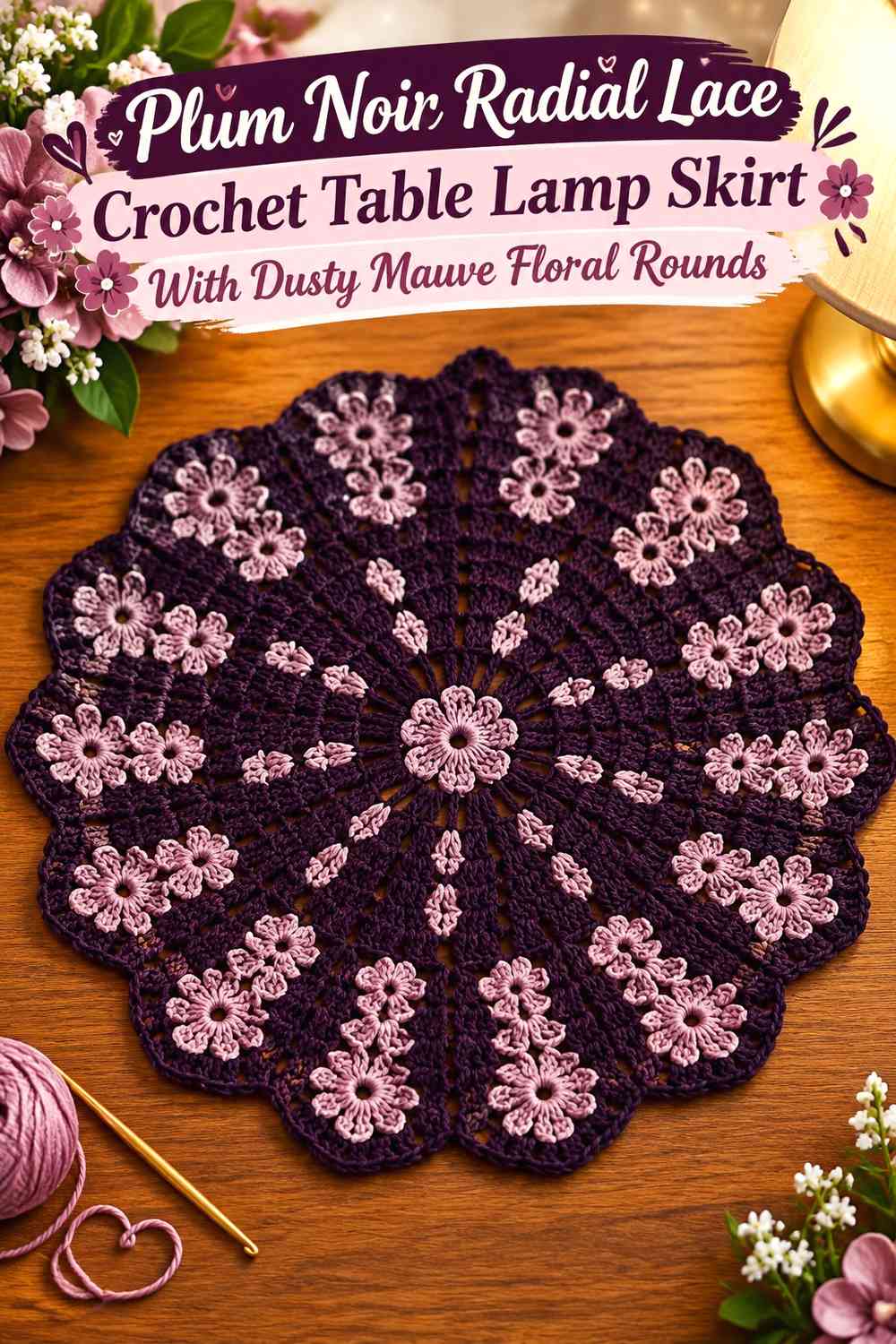
A circular doily motif can be adapted into repeated radial sections around a lamp skirt. Work the strongest spoke-like or outer lace sections in plum noir and use dusty mauve in a controlled floral round.
Dusty Mauve Floral Rounds Need Plum Noir Above and Below
Frame the lighter floral section with dark lace so it reads as one deliberate band.
Without that plum separation, several mauve rounds may merge visually into a wide pale center around the lamp.
Plum Noir Radial Lines Can Organize Dusty Mauve Flowers
Keep the strongest radiating structure dark.
Those plum lines can visually divide the mauve floral elements and reinforce the Gothic geometry even when the motif itself is delicate.
Dusty Mauve Should Stay Secondary to the Plum Noir Lamp Silhouette
Use the lighter color to reveal the floral portion rather than allowing it to cover most of the skirt.
Creator Credit: NotikaLand crochet and knitting
4. Dusty Mauve Floral Crochet Table Lamp Skirt With Plum Noir Framing
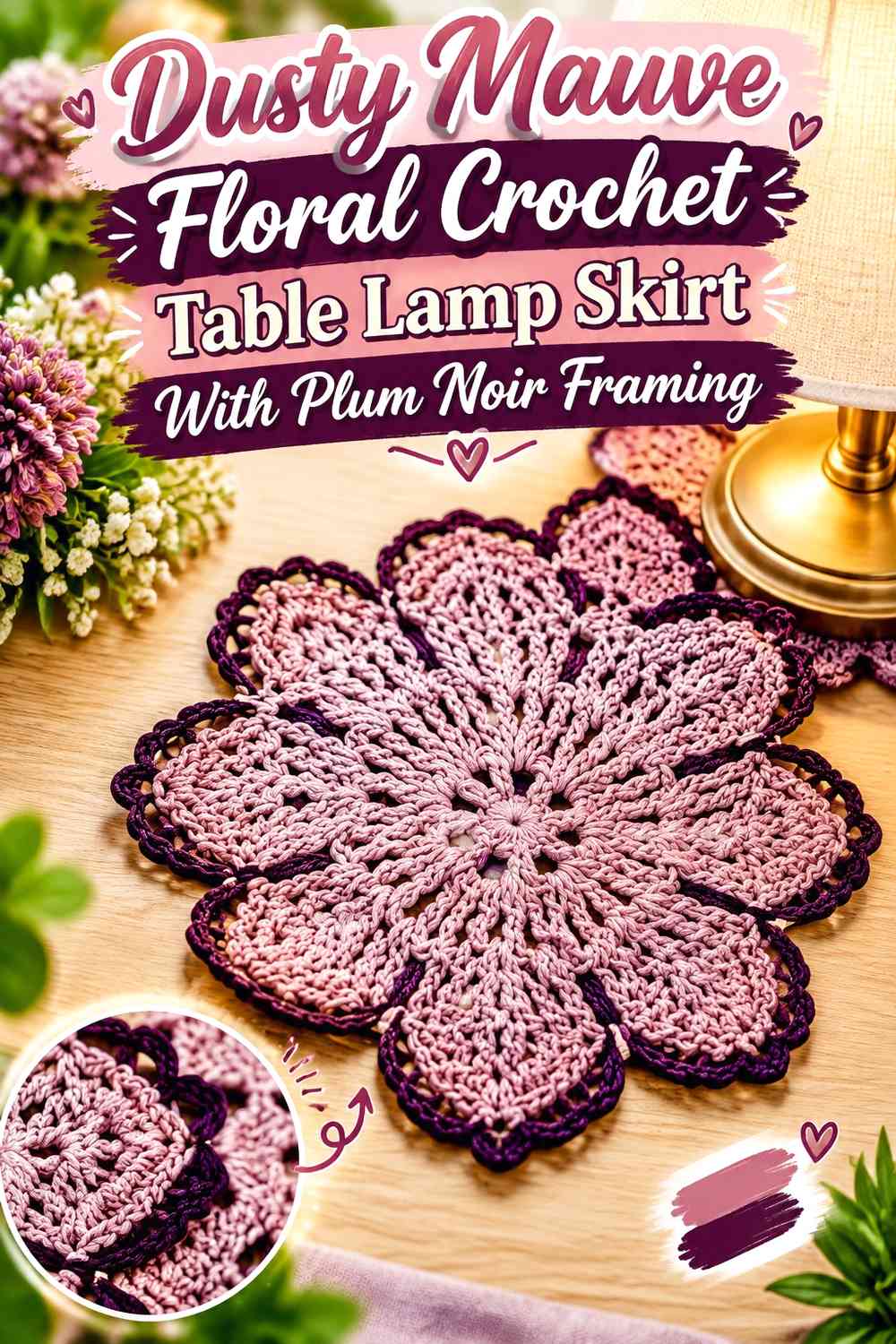
Reverse the palette by giving dusty mauve the larger flower sections while plum noir forms the upper band, motif outlines, and lower framing. The result is softer overall but still anchored by dark Gothic boundaries.
Plum Noir Frames Should Contain the Dusty Mauve Floral Lace
Use dark plum around the top and outer edges so the mauve flowers remain visually contained.
This prevents the lighter shade from blending into a pale wall or existing light-colored lampshade.
Dusty Mauve Should Stay Broad Inside Plum Noir Boundaries
Once the dark frame is established, allow the flower areas to remain clearly mauve.
Changing individual petals back and forth between colors can make the floral motif difficult to read.
Plum Noir Can Return Beneath the Dusty Mauve Flower Band
A narrow final dark edge can balance the upper framing without covering the softer floral section.
Creator Credit: Jayda InStitches
5. Plum Noir Picot Lace Crochet Table Lamp Skirt With a Dusty Mauve Hem
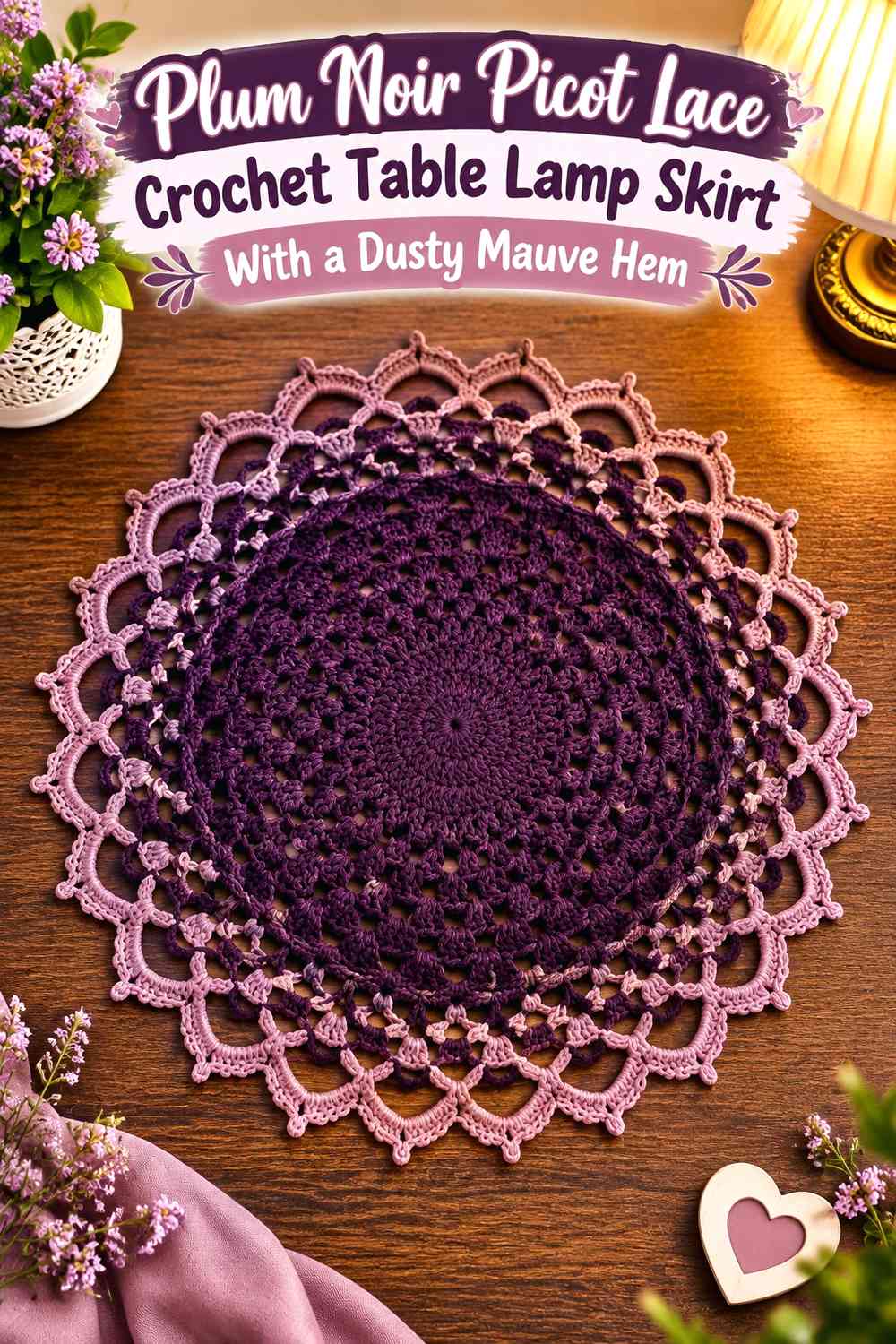
A relatively simple round doily pattern is useful when the color treatment should provide most of the Gothic character. Use plum noir through the main openwork and dusty mauve only in a final picot or delicate lower border.
Dusty Mauve Picots Should Stay Small Against Plum Noir Lace
Tiny pointed edging works best when it remains a finish rather than a second large motif layer.
The mauve points can lighten the bottom silhouette without changing the skirt into a pastel-led design.
Plum Noir Should Continue Almost to the Dusty Mauve Edge
Leave the majority of the lower lace dark.
That long plum-noir field makes the narrow mauve picot much more visible than if several lighter bands precede it.
Dusty Mauve Picots Should Follow the Plum Noir Skirt Evenly
Check the finished edge around the entire lamp rather than judging only the front.
An uneven final border becomes especially noticeable when transmitted light emphasizes the silhouette.
Creator Credit: Kristines Crochets
6. Plum Noir Wave-Lace Crochet Table Lamp Skirt With Dusty Mauve Gothic Bands

A doily inspired by wave-like movement can translate into a lamp skirt with repeating horizontal lace sections. Keep plum noir dominant and use dusty mauve in selected bands rather than every repeat.
Dusty Mauve Bands Need Wide Plum Noir Intervals
Separate the lighter rows with substantial dark lace so each one remains an accent.
Closely alternating mauve and plum can make the skirt read as conventionally striped rather than Gothic lace.
Plum Noir Waves Should Remain Continuous Around Dusty Mauve
If the lace has a strong directional repeat, keep that primary structure dark even when selected rounds change color.
This allows the stitch movement to remain easy to follow around the full shade.
Dusty Mauve Should Not Compete With the Plum Noir Lower Edge
Choose either a strong mauve band or a broad mauve hem as the main lighter feature, not both at equal depth.
Creator Credit: Yarnspirations
7. Plum Noir Color-Block Crochet Table Lamp Skirt With Dusty Mauve Doily Rounds
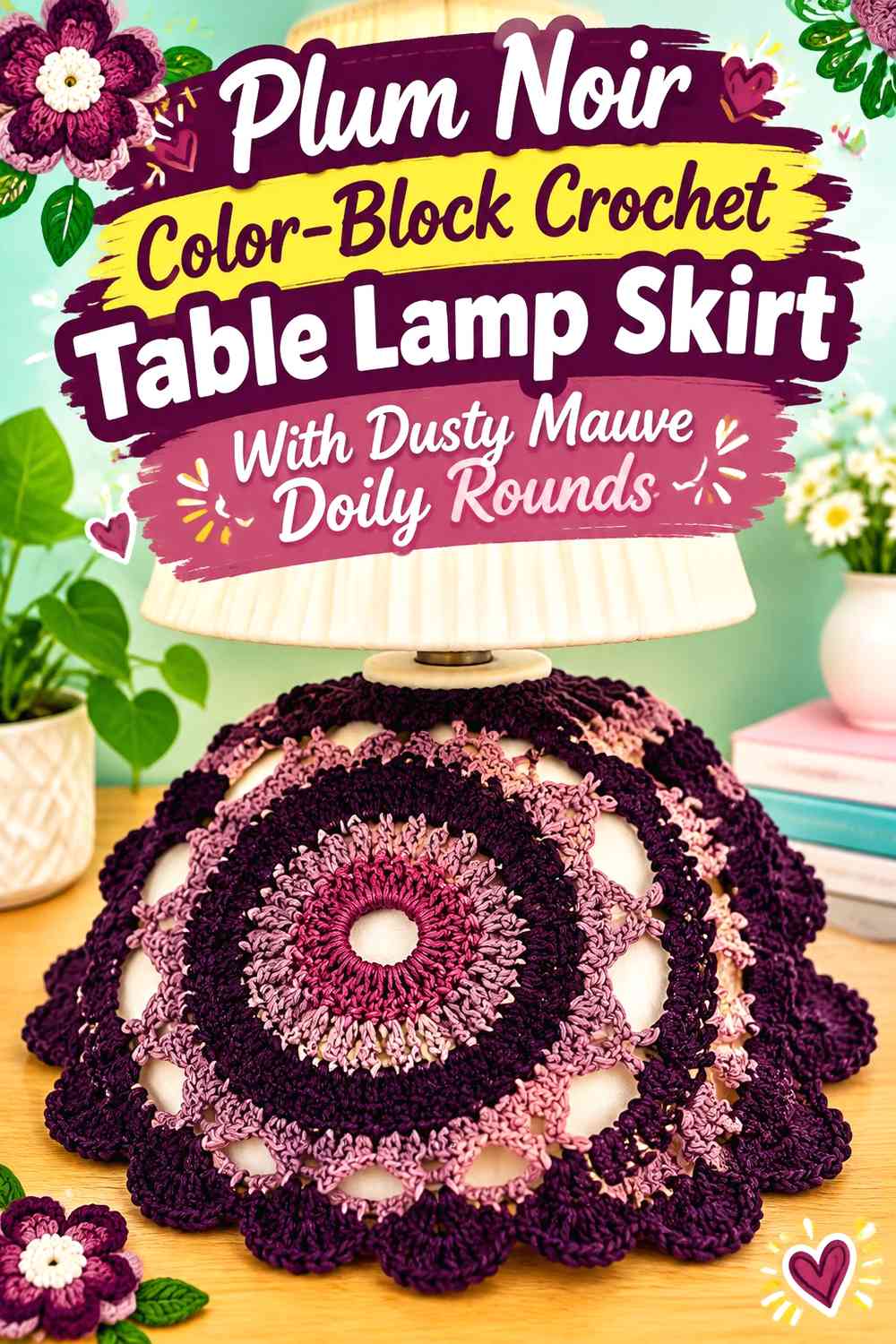
A colorful doily construction can be reduced to a two-color Gothic palette by using plum noir for the dominant rounds and dusty mauve for a few selected transitions.
Dusty Mauve Rounds Should Break the Plum Noir Pattern Strategically
Place the lighter color where the lace changes texture or motif direction.
A color transition tied to a stitch transition appears more deliberate than changing shades at arbitrary intervals.
Plum Noir Should Occupy More Rounds Than Dusty Mauve
Keeping the dark sections broader preserves the noir direction despite multiple color changes.
If each band is equal, the skirt becomes a balanced stripe design instead of a dark lamp skirt with muted accents.
Dusty Mauve Can Highlight One Plum Noir Scalloped Round
Use the lighter color where the lower lace begins expanding if you want to draw attention to the skirt shape rather than its center.
Creator Credit: The Crochet Crowd
8. Plum Noir Vintage Lace Crochet Table Lamp Skirt With Dusty Mauve Pointed Edging
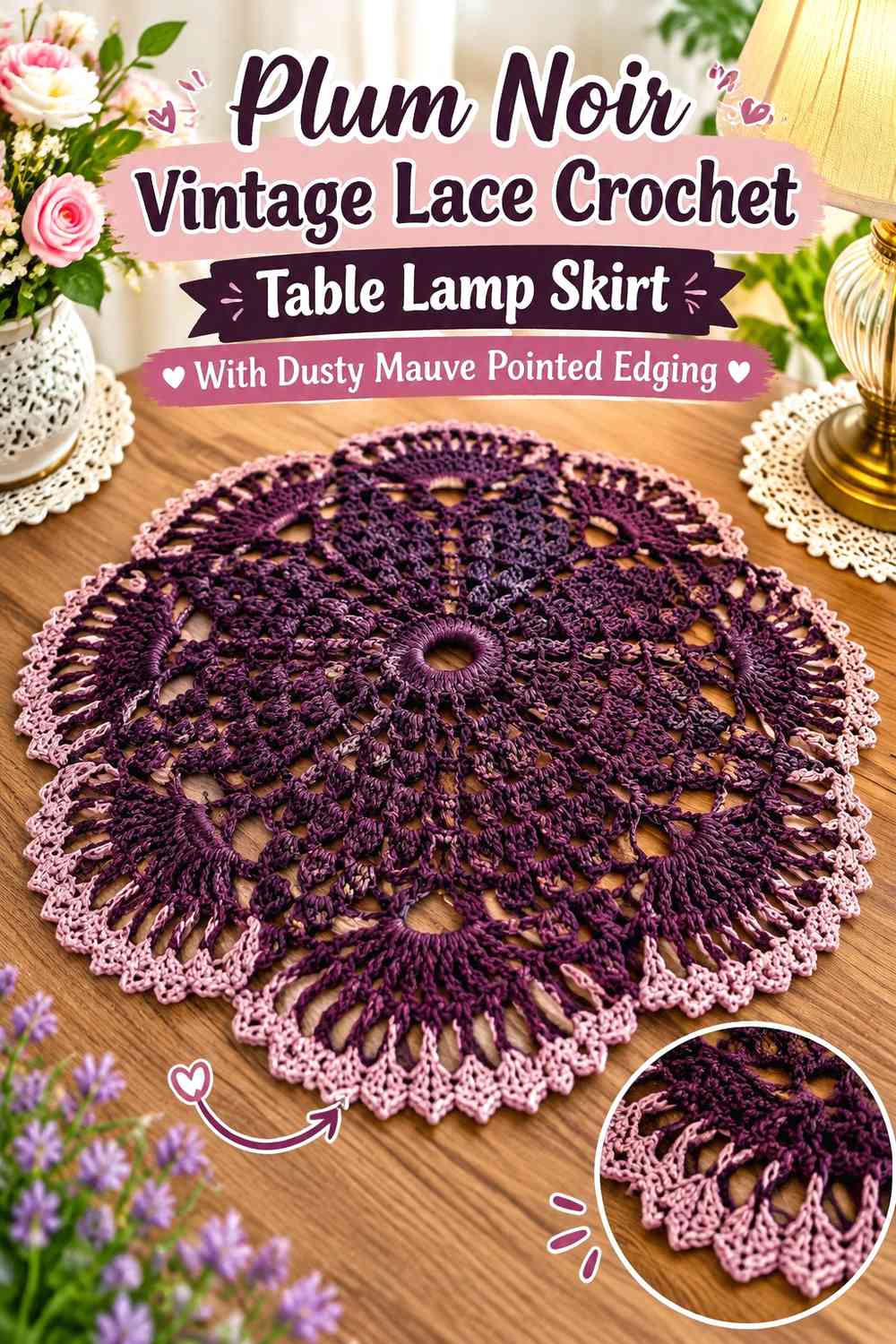
A vintage-looking lace doily suits a more formal Gothic lamp skirt. Use plum noir through the central lace body and shift to dusty mauve only when the final pointed shapes begin.
Dusty Mauve Points Should Extend From Plum Noir, Not Replace It
Keep the base of each pointed section dark and introduce mauve toward the tips.
This creates a gradual lightening at the edge and allows the plum-noir body to remain visually connected to every point.
Plum Noir Negative Space Should Separate Dusty Mauve Tips
Leave dark lace between neighboring mauve peaks where the pattern permits.
That separation makes individual points easier to distinguish when the lamp is illuminated.
Dusty Mauve Points Need a Controlled Length Beneath Plum Noir
A dramatic pointed hem should still fit the physical lamp safely.
Evaluate the longest points on the actual fixture before treating the edge as finished.
Creator Credit: Knitting Love 💗
9. Plum Noir Victorian Crochet Table Lamp Skirt With Dusty Mauve Floral Panels

A vintage floral doily can be divided conceptually into repeating panels around the lampshade. Use plum noir for the outer panel framework and dusty mauve for selected inner flowers.
Dusty Mauve Flowers Need Plum Noir Panel Borders
Give each floral section a visible dark boundary so neighboring flowers do not merge into a continuous mauve band.
The framed arrangement produces a more architectural Victorian look.
Plum Noir Should Connect Every Dusty Mauve Floral Panel
Keep the upper band and joins dark so the complete lamp skirt reads as one piece.
This is particularly useful when several round motifs are adapted into a larger circumference.
Dusty Mauve Should Stay Focused Inside the Plum Noir Gothic Grid
Avoid repeating large mauve borders around every panel once the flowers already carry the lighter color.
Creator Credit: Crochet World Creations
10. Plum Noir Circular Lace Crochet Table Lamp Skirt With Dusty Mauve Fan Borders
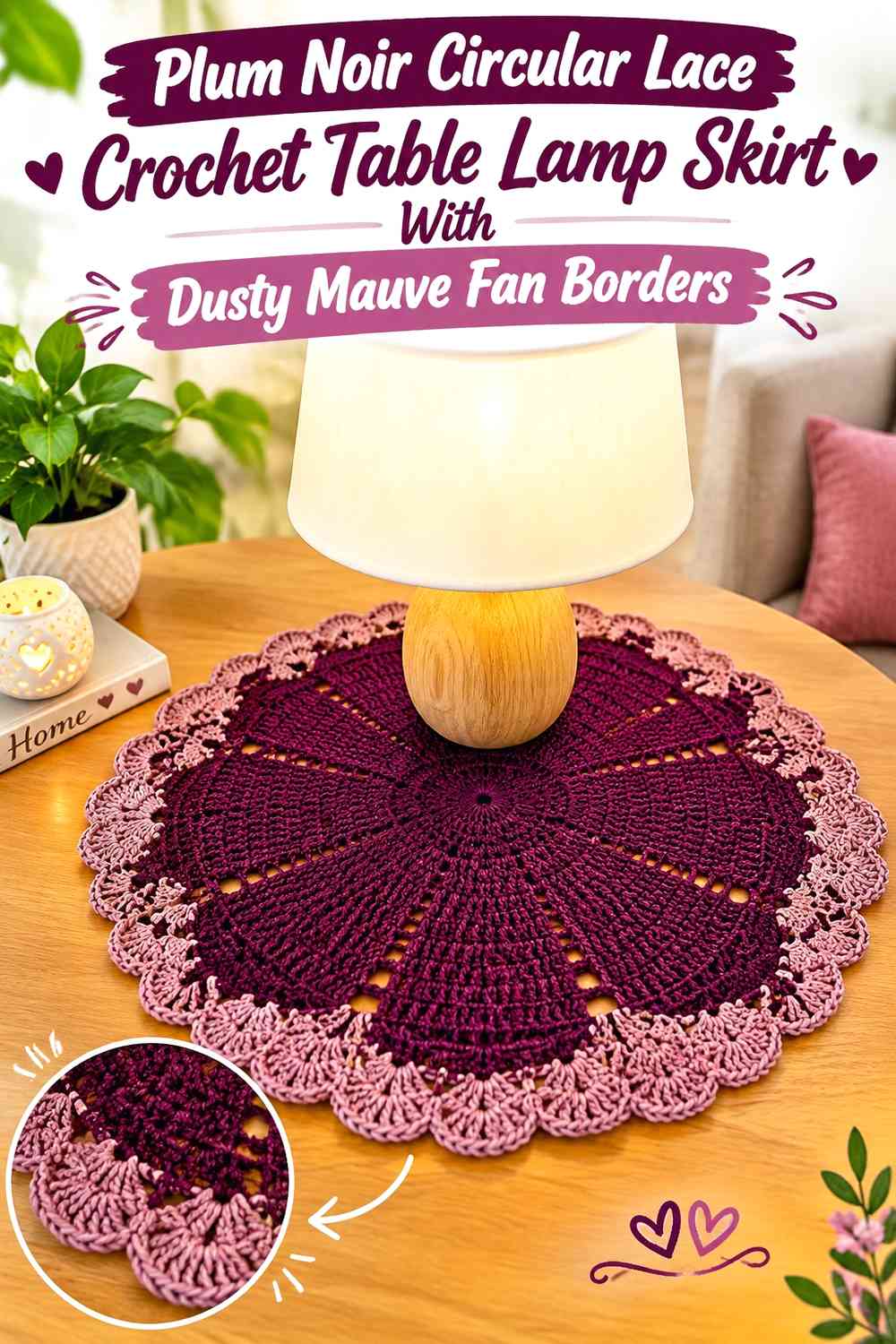
A simple circular doily provides a useful base for a cleaner Gothic lamp skirt. Keep the main circular lace plum noir and turn the outer fan or shell-like rounds dusty mauve.
Dusty Mauve Fans Should Open Outward From Plum Noir
Introduce mauve where the lace becomes broader or more decorative toward the edge.
This uses the lighter shade to emphasize expansion rather than interrupting the tighter central structure.
Plum Noir Should Remain Dense Enough Above Dusty Mauve Fans
A substantial dark section gives the lower fans a strong visual foundation.
If the plum section becomes too narrow, the mauve border may dominate the complete lamp skirt.
Dusty Mauve Fan Repeats Should Stay Consistent Around Plum Noir
Check the border after fitting the textile to the lampshade.
The fan rhythm should remain visually even rather than stretching noticeably at one side of the skirt.
Creator Credit: Sirin’s Crochet
11. Plum Noir Vintage Doily Crochet Table Lamp Skirt With a Dusty Mauve Layered Edge

A larger vintage doily motif offers enough visual depth for a two-stage border. Use plum noir through most of the lace, then introduce dusty mauve in one outer layer before returning to a narrow plum finish if desired.
Dusty Mauve Layers Should Sit Clearly Between Plum Noir Sections
Use the lighter shade as one contained border zone.
A plum-dark body, mauve middle edge, and narrow final plum line create stronger hierarchy than frequent alternating rows.
Plum Noir Should Control the Dusty Mauve Vintage Lace
Keep the upper and central parts of the motif dark so the edge remains an accent rather than half of the lamp skirt.
Dusty Mauve Should Highlight the Plum Noir Pattern Change
Place the color transition where the vintage lace noticeably opens, points, or changes repeat.
This links color to construction and makes the mauve layer look intentional.
Creator Credit: Em’s crochet
12. Plum Noir Geometric Lace Crochet Table Lamp Skirt With Dusty Mauve Scallop Framing

A round doily with repeated geometric spaces can produce a less floral, more architectural Gothic skirt. Work the main openwork in plum noir and use dusty mauve to frame the final scallops or repeating outer arches.
Dusty Mauve Scallop Frames Need Plum Noir Inside Them
Keep the interior of each outer lace section dark and place mauve on the boundary.
That arrangement lets the lighter shade draw the shape without filling every geometric opening.
Plum Noir Geometry Should Remain the Main Surface Beside Dusty Mauve
Broad dark lace preserves the Gothic direction and allows the repeating holes or arches to provide texture.
Avoid adding additional mauve bands through the middle if the outer framing is already prominent.
Dusty Mauve Should Finish the Plum Noir Lamp Skirt Without Excess Drape
Use the scalloped frame to clarify the silhouette rather than substantially lengthening it.
Check the fitted skirt against the lamp’s existing safe shade and clearances before finalizing the border.
Creator Credit: Branda Crochet
Comparing Plum Noir and Dusty Mauve Gothic Lamp Skirt Styles
For the darkest and most restrained treatment, choose a plum-noir lace body with dusty mauve used only in the lower scallops, picots, or pointed tips. These arrangements preserve the strongest Gothic character and let the muted mauve operate as a finishing detail.
For a more Victorian-inspired result, use floral medallions, doily panels, layered borders, or dusty-mauve flowers inside plum-noir framing. Those options distribute the softer color farther across the lamp while keeping dark joins and borders visible.
The doily-medallion version creates the most visibly assembled antique-lace effect, while one continuous lacy cover produces a cleaner fitted skirt. Radial and geometric doilies provide alternatives when you want the lamp to feel Gothic without relying heavily on floral imagery.
Also consider the lamp when deciding between them. A highly decorative existing base may benefit from a simpler plum-noir skirt, while a plain table lamp can visually support more elaborate mauve medallions or a pointed vintage border.
Conclusion
Plum noir and dusty mauve can turn a crochet table lamp skirt into anything from a restrained dark lace cover to a heavily Victorian-inspired arrangement of medallions, flowers, and pointed scallops. The strongest designs make plum noir responsible for the structure and let dusty mauve reveal selected details.
Use a narrow mauve border when the lace pattern itself is already complex. Increase dusty mauve through floral panels or outer fan rounds when a simple plum-noir body needs more visible contrast. If several medallions are joined, dark plum connections can keep the individual motifs organized.
Fit the decorative textile only to a lamp and shade arrangement that can safely accommodate it. Keep all crochet away from bulbs, sockets, wiring, ventilation, and other electrical or heat-producing parts, and follow the fixture manufacturer’s guidance. Follow each credited tutorial for the lamp-cover or lace motif it demonstrates and treat the Gothic lamp-skirt shaping and plum-noir-and-dusty-mauve placement as independent adaptations.
Frequently Asked Questions
Should plum noir or dusty mauve dominate a Gothic crochet table lamp skirt?
Plum noir is the stronger dominant choice when you want a dark Gothic result. Dusty mauve works well in scallops, floral medallions, fan rounds, or edging because those areas remain visible without making the complete skirt lighter.
Where should dusty mauve go on a plum noir lace lamp skirt?
Useful placements include the lower scallops, flower centers, final fan rounds, medallion joins, pointed tips, or one narrow horizontal band. Choose one main mauve area before adding smaller repeats elsewhere.
How can I make dusty mauve visible against plum noir lace?
Compare the yarns for value contrast and use the mauve in complete motif sections rather than isolated stitches. If the shades are close in darkness, broaden the dusty-mauve border or flower area so its shape remains clear.
Can a crochet doily tutorial be adapted into a table lamp skirt?
A doily tutorial can provide radial lace, floral motifs, medallions, and edging ideas, but it does not automatically provide a safe or correctly fitted lamp cover. Establish the lamp-cover structure and clearances separately and adapt only the decorative lace concept.
Should a plum noir lamp skirt be tightly fitted or draped?
The decorative textile should follow a safe existing shade or appropriate support structure rather than hanging loosely toward electrical or heat-producing components. Avoid free drape near the bulb, socket, wiring, switches, or ventilation areas.
Can I use metallic-looking yarn with dusty mauve and plum noir?
You can use a specialty yarn if it is suitable for the crochet project and the lamp-cover application permitted by the fixture, but metallic appearance is not necessary. The Gothic palette works with ordinary matte yarn as long as plum noir and dusty mauve remain visually distinct.
Are long plum noir scallops safe around a table lamp?
Length alone is not the deciding factor. The finished crochet must remain clear of the lamp’s bulb, socket, wiring, heat-producing areas, ventilation, and controls. Check the actual fixture and manufacturer guidance rather than assuming a decorative edge is safe because it hangs below the shade.
How can I make a plum noir and dusty mauve lamp skirt look more Victorian?
Use controlled floral medallions, layered lace, scalloped borders, pointed edges, radial doily motifs, or framed floral panels. Keep plum noir as the structural color so multiple Victorian-style details do not turn the small lampshade into an indistinct lace surface.
How do I substitute plum noir or dusty mauve without losing the Gothic palette?
Replace plum noir with another very deep muted purple or wine-black shade and dusty mauve with a softer, lighter muted purple-pink. Preserve enough value difference for narrow lace edging and medallion boundaries to remain visible.