Pumpkin Orange and Espresso Brown give a crochet acorn window hanging enough contrast to make the small autumn shapes readable from across a room. Pumpkin Orange can brighten the acorn bodies, leaves, or decorative drops, while Espresso Brown gives caps, stems, cords, hoops, and borders a darker visual anchor.
Window decor needs slightly different color planning from tabletop crochet. The hanging may be viewed against bright daylight, from both sides, or from several feet away. Tiny color changes can disappear against the window, while a simple Pumpkin Orange body beneath a clearly darker Espresso Brown cap usually creates a much stronger silhouette.
The tutorials supporting these ideas include crochet acorns, oak leaves, garlands, ring hangings, dreamcatchers, mandalas, and fall wreath structures. Not every tutorial is specifically a window hanging or uses acorns. Those sources provide construction concepts that can be combined with separately crocheted acorn motifs. The Pumpkin Orange and Espresso Brown palettes below are independent color adaptations rather than claims about the creators’ original colors.
Quick List
- Pumpkin Orange Acorn and Espresso Brown Cap Crochet Window Hanging
- Espresso Brown Acorn Cluster with Pumpkin Orange Crochet Accents
- Pumpkin Orange Triple-Acorn and Espresso Brown Cord Crochet Window Hanging
- Pumpkin Orange Acorn and Espresso Brown Oak-Leaf Crochet Window Hanging
- Espresso Brown Hoop with Pumpkin Orange Crochet Acorn Drops
- Pumpkin Orange and Espresso Brown Autumn Leaf-and-Acorn Crochet Garland
- Espresso Brown Ring with Pumpkin Orange Center-Acorn Crochet Window Hanging
- Pumpkin Orange Acorn Crochet Dreamcatcher with Espresso Brown Tassels
- Espresso Brown Double-Ring and Pumpkin Orange Acorn Crochet Hanging
- Espresso Brown Autumn Hoop with Pumpkin Orange Crochet Acorn Cluster
Use Pumpkin Orange and Espresso Brown for Backlit Acorn Contrast
A window can make a crochet motif look flatter because strong daylight reduces the importance of subtle yarn differences. Give Pumpkin Orange and Espresso Brown clearly separate jobs if you want the acorn silhouette to remain recognizable. A Pumpkin Orange lower body with an Espresso Brown cap is the most direct arrangement, but reversing the colors can work when the cap has enough shape to remain obvious.
View your sample against the actual window before making several motifs. Two colors that look strongly separated on a table may appear much closer when light comes through or around the stitches.
Keep Pumpkin Orange and Espresso Brown Visible from Both Sides
Window hangings often rotate slightly, so the back matters more than it would on a wall-only decoration. Plan joins, hanging cords, and motif placement so the main Pumpkin Orange and Espresso Brown relationship remains understandable from either direction.
This is especially important with layered acorn-and-leaf arrangements. If an Espresso Brown leaf sits directly behind an Espresso Brown cap, the two shapes can merge from one side. Offset overlapping elements or place Pumpkin Orange beside the darkest sections to preserve each silhouette.
1. Pumpkin Orange Acorn and Espresso Brown Cap Crochet Window Hanging

Start with the clearest two-color interpretation: a Pumpkin Orange acorn body beneath an Espresso Brown cap and stem. Suspend one substantial acorn as the focal point and let the darker brown continue into the hanging loop so the structural parts of the piece share one color.
Pumpkin Orange Should Carry the Main Crochet Acorn Body
Giving Pumpkin Orange the largest part of the acorn makes the warm autumn color visible even when the hanging is viewed from several feet away. Keep the body largely uninterrupted rather than breaking it into several tiny brown stripes.
If the crochet surface has noticeable texture, a single broad Pumpkin Orange area also gives that texture more room to show against the window.
Espresso Brown Can Connect the Crochet Acorn Cap and Hanging Loop
Continue Espresso Brown from the cap into the stem or suspension area so the dark color has a clear structural role. This creates a visual line from the top of the acorn toward whatever supports the decoration.
Avoid adding large amounts of Espresso Brown to the lower body if the orange acorn is intended to remain the main focal point.
Creator Credit: Floral Feather Fiber Art
2. Espresso Brown Acorn Cluster with Pumpkin Orange Crochet Accents
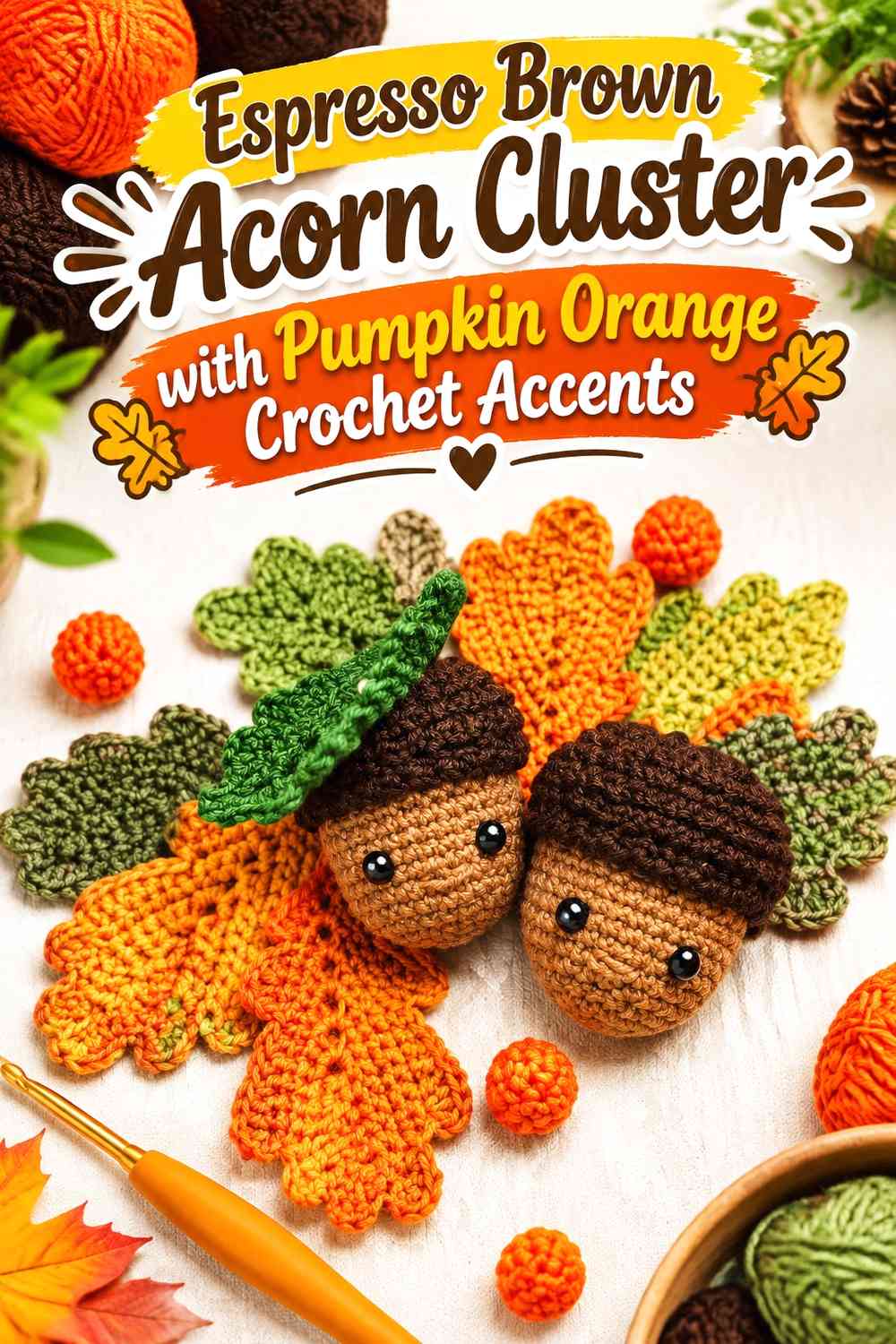
Reverse the balance by making several Espresso Brown acorns and adding Pumpkin Orange through selected caps, small leaves, or connecting details. This creates a darker hanging in which orange functions as the high-visibility accent.
Espresso Brown Acorns Need Pumpkin Orange Separation
Several dark acorns hanging close together can visually merge, especially against a shaded window. Place Pumpkin Orange between or beside them rather than grouping every brown shape into one dense cluster.
The orange can appear as a small leaf, cap, or connector; it does not need to equal the brown surface area to improve separation.
Pumpkin Orange Should Repeat Through the Crochet Cluster
One isolated Pumpkin Orange detail may look accidental. Repeat the warm shade in at least two separated parts of the hanging so the viewer can trace it through the composition.
Keep Espresso Brown on the main cord or upper attachment if you want the overall hanging to remain dark-dominant.
Creator Credit: Crochet Oli
3. Pumpkin Orange Triple-Acorn and Espresso Brown Cord Crochet Window Hanging
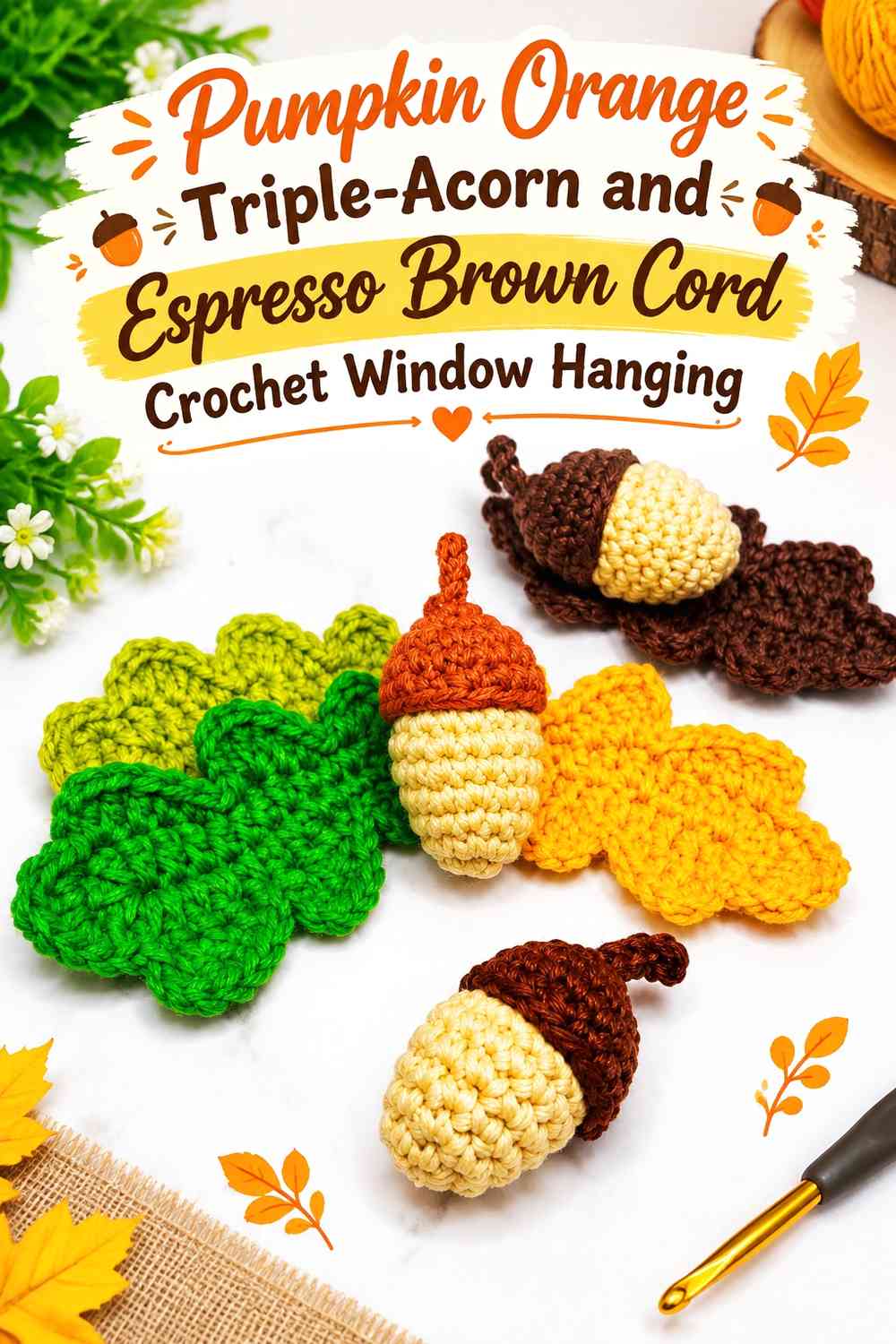
Arrange three Pumpkin Orange acorns vertically on an Espresso Brown hanging cord. Change their spacing rather than their basic colors so repetition becomes the main design feature.
Pumpkin Orange Repetition Makes the Crochet Acorns Read as a Set
Using the same Pumpkin Orange body color on all three acorns creates continuity from top to bottom. Espresso Brown caps can repeat that rhythm without requiring every acorn to have a different palette.
If the shapes vary slightly, the consistent colors will help the three pieces still read as one coordinated hanging.
Espresso Brown Cord Should Stay Visible Between Pumpkin Orange Acorns
Leave enough visual space between the acorns for the dark connecting cord to be seen. If the Pumpkin Orange motifs overlap heavily, the design can become one large warm shape instead of a vertical sequence.
Espresso Brown is particularly useful here because it can define the gaps without competing with the orange focal pieces.
Espresso Brown Caps Can Control the Pumpkin Orange Visual Weight
Three orange bodies introduce a considerable amount of warm color. Repeating Espresso Brown across all three caps keeps the darker shade present throughout the full length rather than concentrating it only at the top cord.
Creator Credit: Hopeful Turns
4. Pumpkin Orange Acorn and Espresso Brown Oak-Leaf Crochet Window Hanging

Pair a Pumpkin Orange acorn with one or more Espresso Brown oak leaves for a woodland-inspired hanging. The different shapes let the palette create contrast without requiring multiple colors inside every motif.
Pumpkin Orange Keeps the Crochet Acorn Separate from Espresso Brown Leaves
Position the orange acorn where its full rounded outline can be seen beside the darker leaves. Avoid placing most of the Pumpkin Orange body directly behind an Espresso Brown element.
An offset layout gives each motif its own readable edge while still allowing them to form one cluster.
Espresso Brown Oak Leaves Can Frame the Pumpkin Orange Acorn
Place one brown leaf above or to either side of the acorn to create a darker frame. Because oak leaves have a more irregular silhouette than the acorn body, they can add detail without requiring another accent color.
Keep the brown leaves from surrounding every edge of the acorn if you want Pumpkin Orange to remain the first color noticed.
Creator Credit: Tuba Crochet
5. Espresso Brown Hoop with Pumpkin Orange Crochet Acorn Drops

Use an Espresso Brown-covered or brown-dominant hoop as the stable upper shape, then hang Pumpkin Orange acorns below it. This separates the design into a dark structural circle above and warmer moving motifs beneath.
Espresso Brown Gives the Crochet Window Hoop a Defined Outline
A window hanging benefits from a clear outer shape, and Espresso Brown can provide that definition around the hoop. Keeping the ring mainly dark also prevents it from competing with the Pumpkin Orange motifs suspended below.
If crochet fills part of the center, repeat enough open space that the hoop still reads as a frame rather than a solid brown disk.
Pumpkin Orange Acorns Should Hang at Different Levels Below Espresso Brown
Staggering the Pumpkin Orange drops creates separation between individual acorns. It also prevents several orange bodies from aligning into one horizontal block.
Keep their Espresso Brown caps or connecting cords visible so the lower motifs remain linked to the hoop color.
Creator Credit: Crochet with Clare
6. Pumpkin Orange and Espresso Brown Autumn Leaf-and-Acorn Crochet Garland
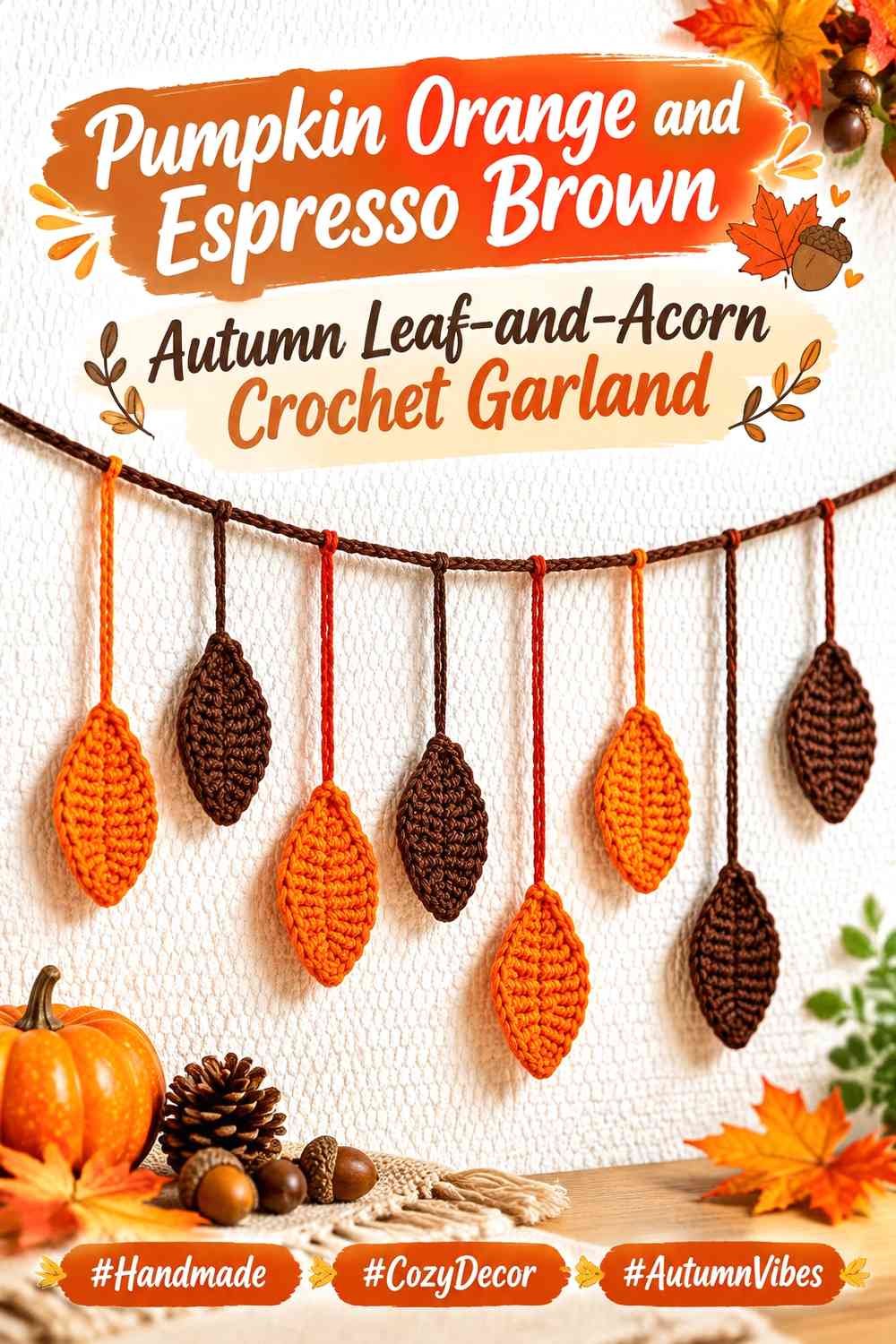
Turn the window hanging into a horizontal swag by alternating Pumpkin Orange acorns with Espresso Brown leaves along a darker connecting strand. This works especially well across the upper portion of a window where a vertical drop would not suit the space.
Alternate Pumpkin Orange Acorns with Espresso Brown Crochet Leaves
Alternation stops either motif from forming an uninterrupted color block. Pumpkin Orange supplies rounded warm focal points, while Espresso Brown creates darker intervals between them.
Lay out the complete sequence before attaching the motifs. A cluster of several brown leaves in one section can make an otherwise balanced garland appear uneven.
Espresso Brown Can Keep the Pumpkin Orange Crochet Garland Connected
Use Espresso Brown for the main strand if you want the support structure to recede behind the motifs. Because the brown already appears in the leaves or acorn caps, the connecting line will feel part of the same palette.
A Pumpkin Orange strand would create a brighter continuous line and shift the color balance considerably toward orange.
Pumpkin Orange End Motifs Can Finish the Espresso Brown Garland
Consider using Pumpkin Orange at both outer ends so the warm color visually brackets the display. This is especially useful when Espresso Brown dominates the connecting cord and several central motifs.
Creator Credit: 기억해 크로쉐-rmb crochet
7. Espresso Brown Ring with Pumpkin Orange Center-Acorn Crochet Window Hanging

Make a ring the main structural element and place one Pumpkin Orange acorn in or just below its center. Espresso Brown can cover most of the ring and suspension cord, leaving the warm acorn as the singular focal point.
Pumpkin Orange Should Stay Uncrowded Inside the Espresso Brown Crochet Ring
A centered acorn needs open space around it to remain readable. Avoid filling every part of the ring with additional brown motifs if the Pumpkin Orange acorn is intended to appear suspended within the frame.
The empty area becomes part of the color strategy because it separates the two yarn colors visually.
Espresso Brown Can Form a Strong Crochet Circle Around Pumpkin Orange
The dark circular frame gives the eye a boundary before it reaches the orange focal piece. Keep its color consistent around most of the ring to preserve the simple framed composition.
If you want a little more Pumpkin Orange above the acorn, repeat it in one small ring detail rather than dividing the entire frame into alternating sections.
Creator Credit: Cute Crochet
8. Pumpkin Orange Acorn Crochet Dreamcatcher with Espresso Brown Tassels
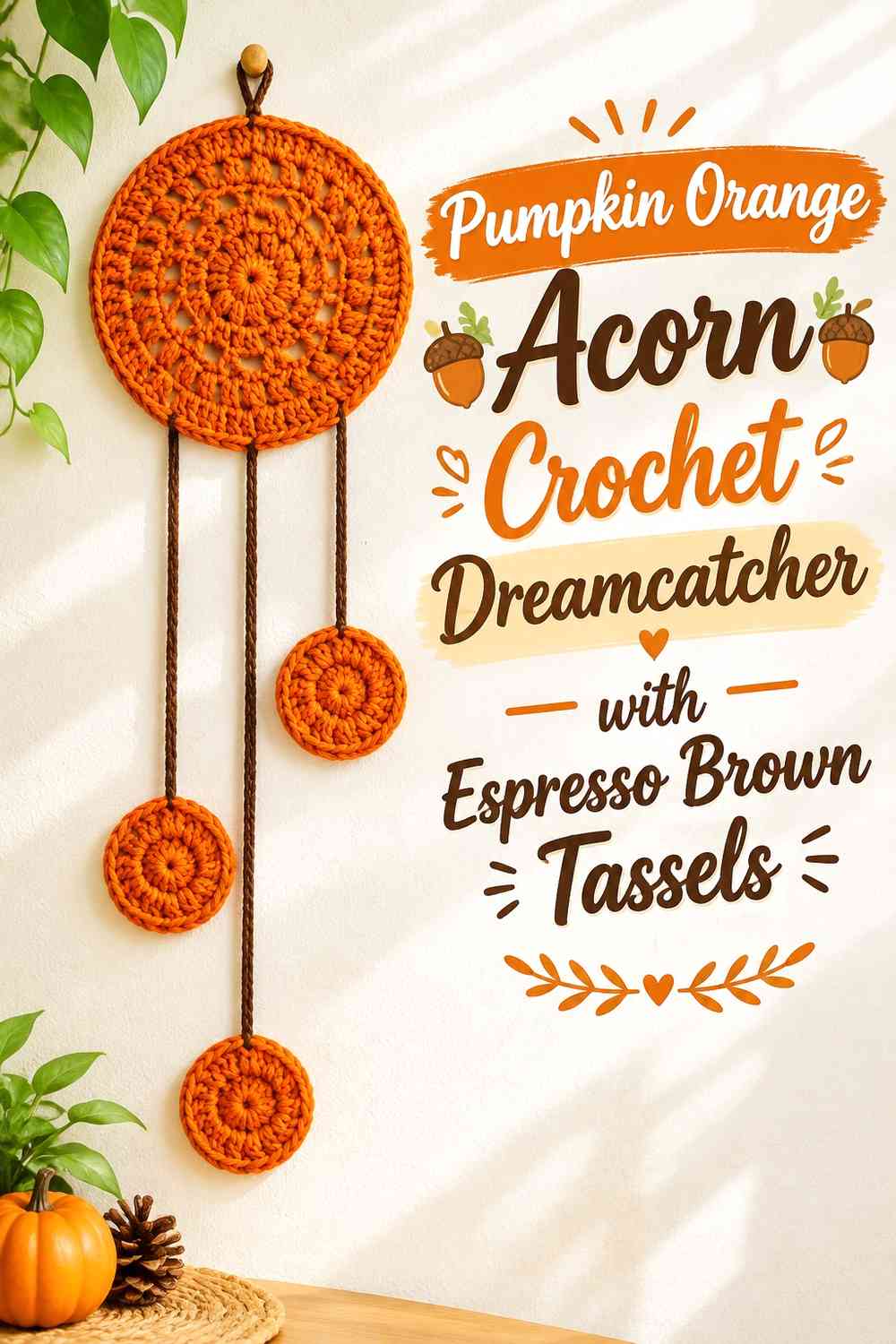
Adapt a ring-and-tassel hanging by replacing or supplementing lower decorative elements with Pumpkin Orange acorns. Let Espresso Brown dominate the ring, cords, and tassels so the acorns remain the warmer accents.
Pumpkin Orange Acorns Need Space Between Espresso Brown Tassels
Dense tassels can conceal small motifs when the hanging moves. Position the Pumpkin Orange acorns slightly apart from the heaviest brown fringe so their rounded shapes remain visible.
Another option is to let the acorn drops end at a different height from the tassels. The vertical separation can be as useful as color contrast.
Espresso Brown Tassels Can Ground the Pumpkin Orange Crochet Drops
Because tassels occupy a large moving area, Espresso Brown can establish a dark lower edge without adding more crochet motifs. This lets Pumpkin Orange stay concentrated in a few recognizable acorns.
Keep the tassel color consistent if the central ring already contains detailed crochet. Multiple alternating tassel colors could make the bottom busier than the focal acorns.
Creator Credit: mum2makes
9. Espresso Brown Double-Ring and Pumpkin Orange Acorn Crochet Hanging

Use two stacked rings to create a taller window decoration, with Pumpkin Orange acorns positioned between or below them. Espresso Brown can unify both circular structures so the repeated geometry does not compete with the motifs.
Espresso Brown Should Connect Both Crochet Rings Visually
Using the same dark shade on both rings makes them read as parts of one hanging rather than unrelated circles. The connecting area can remain brown as well, creating a continuous structural spine.
Pumpkin Orange can then occupy the spaces created by that structure instead of being scattered randomly across it.
Pumpkin Orange Acorns Can Mark the Space Between Espresso Brown Rings
A Pumpkin Orange acorn suspended between the two dark circles creates a strong center focal point. Additional orange drops can sit below the lower ring, but keep enough spacing that the central acorn retains its importance.
Pumpkin Orange Should Not Overfill the Espresso Brown Double-Ring Layout
Two rings already create considerable visual structure. Use fewer, larger orange focal areas rather than attaching many tiny acorns to every edge.
This gives the viewer time to read both the circular frame and the autumn motifs.
Creator Credit: Crochê no ponto
10. Espresso Brown Autumn Hoop with Pumpkin Orange Crochet Acorn Cluster

For the fullest display, use an Espresso Brown hoop or wreath-style frame and concentrate several Pumpkin Orange acorns toward one portion of the circle. This asymmetrical arrangement leaves part of the dark frame visible rather than decorating every inch equally.
Pumpkin Orange Acorns Should Form One Clear Cluster on Espresso Brown
Grouping the orange motifs gives them enough collective weight to compete with the larger brown frame. Keep the cluster concentrated rather than spreading individual acorns evenly around the entire circle.
An off-center grouping can also leave useful open space, which is especially effective when the hanging will be viewed against daylight.
Espresso Brown Needs Visible Frame Space Around the Pumpkin Orange Cluster
Do not cover the entire hoop with Pumpkin Orange motifs. Leaving a substantial stretch of Espresso Brown exposed makes the color hierarchy easier to understand and keeps the circular outline recognizable.
If additional decoration is wanted, use Espresso Brown leaves along part of the remaining frame instead of filling every gap with more orange.
Pumpkin Orange Can Repeat Below the Espresso Brown Hoop
One small acorn drop beneath the frame can connect the upper cluster to the vertical center of the window. Keep that lower accent simpler than the main cluster so it supports rather than competes with it.
Creator Credit: Julie’s Wreath Boutique
Comparing the Pumpkin Orange and Espresso Brown Window Hanging Directions
For the clearest acorn-first display, Ideas 1, 3, and 4 keep the Pumpkin Orange acorn silhouette central and use Espresso Brown mainly for caps, cords, leaves, or framing. These work well when you want the motif itself to remain immediately recognizable.
Ideas 5, 7, 9, 10, and 11 give the hanging a stronger structural frame through hoops or rings. These are useful when you want the decoration to occupy a larger portion of the window without simply enlarging the acorn.
For a wider display, Idea 6 turns Pumpkin Orange acorns and Espresso Brown leaves into a horizontal garland. Idea 8 emphasizes movement below a ring through tassels and hanging motifs. Idea 2 is the darkest direction, using Espresso Brown as the main acorn color and Pumpkin Orange as the repeating accent.
The amount of daylight behind the hanging should also influence the choice. Simple, separated acorns and broad color blocks remain easier to read when strongly backlit, while detailed mandalas and layered clusters usually show more of their color relationships when the window receives softer light.
Conclusion
Pumpkin Orange and Espresso Brown suit an autumn acorn window hanging because they can divide the motif into clear, useful visual roles. Pumpkin Orange can carry the acorn body, focal leaves, or decorative drops, while Espresso Brown can define caps, stems, hoops, cords, tassels, and outer frames.
For a simple display, use a Pumpkin Orange acorn beneath an Espresso Brown cap and let the dark color continue into the suspension cord. For something larger, frame several orange acorns with a brown hoop, mandala, or double-ring structure. A horizontal leaf-and-acorn garland works when the goal is to decorate the width of the window rather than create one vertical focal point.
Whichever composition you choose, view the sample against the actual window before producing all the motifs. Check that Pumpkin Orange and Espresso Brown remain distinct in the available light and that overlapping caps, leaves, cords, and acorns do not merge into unclear silhouettes. Use the original tutorials for their specific construction details, then apply the two-color arrangement as your own autumn window-decor plan.
Frequently Asked Questions
Should Pumpkin Orange or Espresso Brown dominate an acorn crochet window hanging?
Pumpkin Orange is useful as the dominant color when you want the acorns to be the first feature noticed. Espresso Brown works well as the supporting shade for caps, stems, cords, hoops, and leaves. Reverse the hierarchy when you want a darker display with smaller Pumpkin Orange accents.
How can I keep Pumpkin Orange acorns visible against a bright window?
Use clear spacing between motifs and avoid surrounding every orange edge with similarly sized decorative pieces. An Espresso Brown cap or frame can help define the shape, while open space around the acorn prevents the silhouette from becoming crowded.
Should an Espresso Brown acorn cap always be darker than the Pumpkin Orange body?
It does not have to be, but a noticeable light-and-dark difference can make the cap easier to distinguish from the body. Compare the actual yarns together because color names alone do not guarantee a particular value contrast.
Can Pumpkin Orange and Espresso Brown oak leaves be added to the same window hanging?
Yes. Decide whether the leaves should frame the acorns or act as equal focal motifs. Espresso Brown leaves around Pumpkin Orange acorns produce a clear shape distinction, while alternating orange and brown leaves can create a busier woodland display.
How can I make a Pumpkin Orange and Espresso Brown acorn window hanging less busy?
Reduce the number of small color changes and increase the open space between motifs. Use Pumpkin Orange for complete acorn bodies and Espresso Brown for complete caps or structural areas rather than switching colors repeatedly inside every small element.
Is a hoop useful for a Pumpkin Orange and Espresso Brown crochet acorn display?
A hoop can give the hanging a clear outer shape and provide several attachment points for acorns, leaves, cords, or tassels. Keeping the hoop Espresso Brown and the primary hanging motifs Pumpkin Orange is one straightforward way to maintain a clear color hierarchy.
How should I substitute Pumpkin Orange or Espresso Brown yarn colors?
Preserve their roles rather than matching the names exactly. Choose a warm orange that remains visibly distinct from a deep brown, then compare them under the same window lighting where the finished hanging will be displayed. If they blend from a distance, increase their light-and-dark separation or place more open space between the colored motifs.