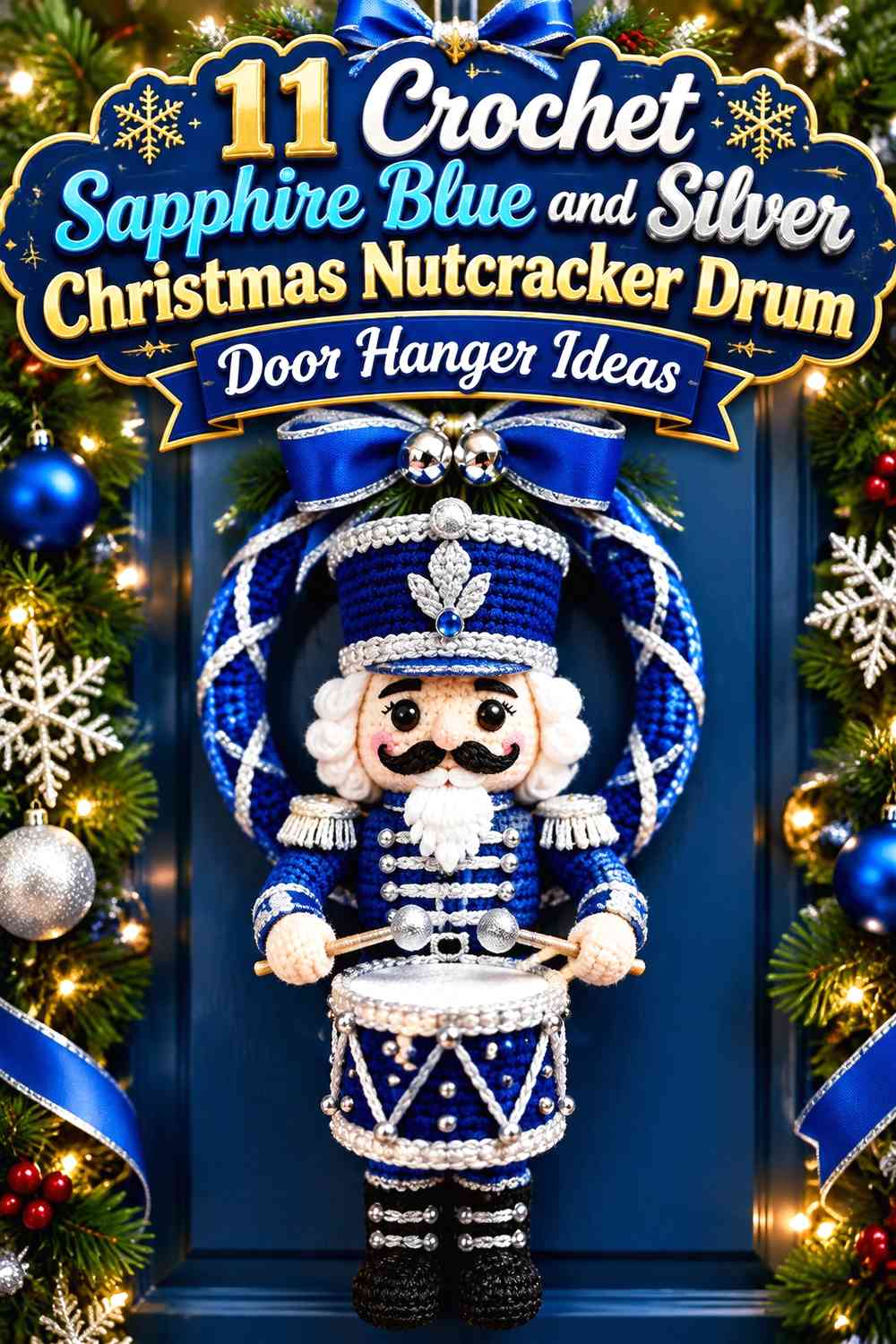

Sapphire blue and silver give a crochet nutcracker drum door hanger a colder, more formal Christmas palette than the familiar red, green, and gold combination. Sapphire blue has enough visual weight to define the round drum body from across an entryway, while silver can highlight rims, diagonal lacing, hanging cords, drumsticks, or nutcracker-inspired uniform details.
The important decision is where each color belongs on a hanging drum. A completely sapphire shell with silver rims reads differently from a striped drum with equal amounts of both colors. The hanging cord matters too: it creates a vertical line above the drum and can either blend into the door or become part of the decoration.
The tutorials credited below support crochet drums, nutcracker or toy-soldier motifs, and compatible Christmas hanging constructions. The sapphire blue and silver door-hanger palettes are independent adaptations; the creator credit does not mean the original tutorial uses the color scheme described here.
Quick List
- Sapphire Blue and Silver Crochet Nutcracker Drum Door Hanger
- Sapphire Blue and Silver Crochet Striped Nutcracker Drum Door Hanger
- Sapphire Blue and Silver Crochet Cross-Laced Nutcracker Drum Door Hanger
- Sapphire Blue and Silver Crochet Nutcracker Drum with Blue Top and Bottom
- Sapphire Blue, Silver, and Winter White Crochet Nutcracker Drum Door Hanger
- Sapphire Blue, Silver, and Navy Crochet Nutcracker Drum Door Hanger
- Sapphire Blue, Silver, and Cranberry Crochet Christmas Nutcracker Drum Door Hanger
- Sapphire Blue, Silver, and Evergreen Crochet Christmas Nutcracker Drum Door Hanger
- Sapphire Blue, Silver, and Charcoal Crochet Nutcracker Drum Door Hanger
- Sapphire Blue and Silver Crochet Double-Drum Nutcracker Door Hanger
- Comparing the Sapphire Blue and Silver Nutcracker Drum Directions
Decide Whether Sapphire Blue or Silver Should Define the Drum Shell
The drum shell occupies the largest uninterrupted area, so its color establishes the door hanger before viewers notice smaller nutcracker details. A sapphire blue shell creates a strong focal shape and gives pale silver rims and cords a clear background.
A silver shell produces a lighter result. In that version, sapphire blue becomes more important around the upper and lower rims, diagonal lacing, or hanging attachment because those darker lines prevent the drum from disappearing against a pale door.
Avoid dividing both colors equally across every component. Giving sapphire blue one role and silver another usually makes the drum easier to recognize from several feet away.
Use Sapphire Blue and Silver to Clarify the Drum’s Round Structure
A crochet drum depends on the distinction between its cylindrical shell and the circular top and bottom. Color can reinforce that structure without adding complicated decoration.
For example, sapphire blue can cover the vertical shell while silver defines both horizontal rims. Alternatively, a silver body with blue upper and lower edges creates the reverse hierarchy. Keep the same rim treatment around the drum rather than changing colors frequently, because a continuous edge helps preserve the cylindrical shape.
Diagonal lacing can introduce the second color across the shell, but check its value contrast first. If silver and sapphire remain clearly separated from a normal doorway viewing distance, the lacing can be fairly narrow. If they visually merge, increase the width of the accent rather than adding several new shades.
Plan Sapphire Blue and Silver Around the Door-Hanging Cord
The hanging cord is visually connected to the drum even though it sits above the main shape. A sapphire blue cord gives the hanger a stronger vertical line and can work well against a white door. Silver creates a quieter attachment when you want the drum to appear more prominent than the suspension.
Also consider the point where the cord meets the drum. Repeating the cord color on the top rim, bow, nutcracker hat detail, or another nearby feature makes the transition feel deliberate.
Before finishing the hanger, hold both yarn colors against the actual door. Silver that looks distinct on a table may become almost invisible against white or pale gray paint.
1. Sapphire Blue and Silver Crochet Nutcracker Drum Door Hanger
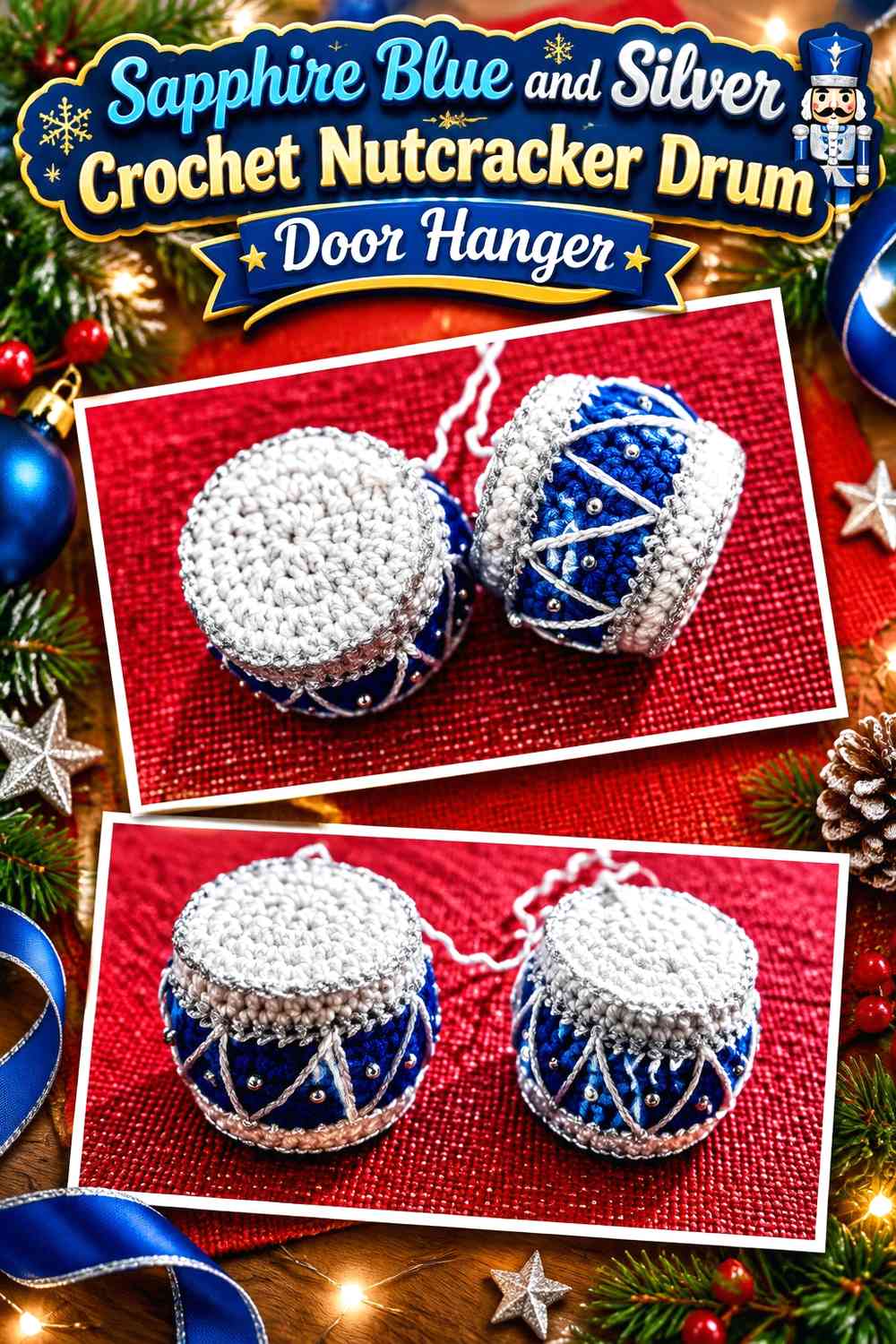
Let sapphire blue cover the main drum shell and use silver on the upper and lower rims. This gives the cylindrical body one clear dominant color while the lighter neutral defines its boundaries. For a nutcracker-inspired finish, small silver surface details can echo uniform trim without breaking up the broad sapphire field.
Let Sapphire Blue Carry the Main Drum Shell
Keep the central drum body largely sapphire blue so the shape remains visible from across the entryway. A broad, uninterrupted color field also gives any crochet texture enough space to be seen instead of competing with frequent color changes.
If you want additional decoration, place it over the blue selectively rather than converting the entire shell into narrow stripes.
Use Silver to Define the Sapphire Blue Drum Rims
Silver works well around the top and bottom boundaries because the repeated light edge visually separates the shell from the circular ends.
Keep both rims consistent. A silver top combined with an unrelated bottom color can weaken the clean drum outline unless the asymmetry is deliberate.
Repeat Silver Near the Sapphire Blue Hanging Point
Bring a small amount of silver into the upper attachment, bow, or cord transition. This keeps the rim color connected to the door-hanging structure instead of leaving two silver bands isolated around the drum.
Creator Credit: Club Crafteria
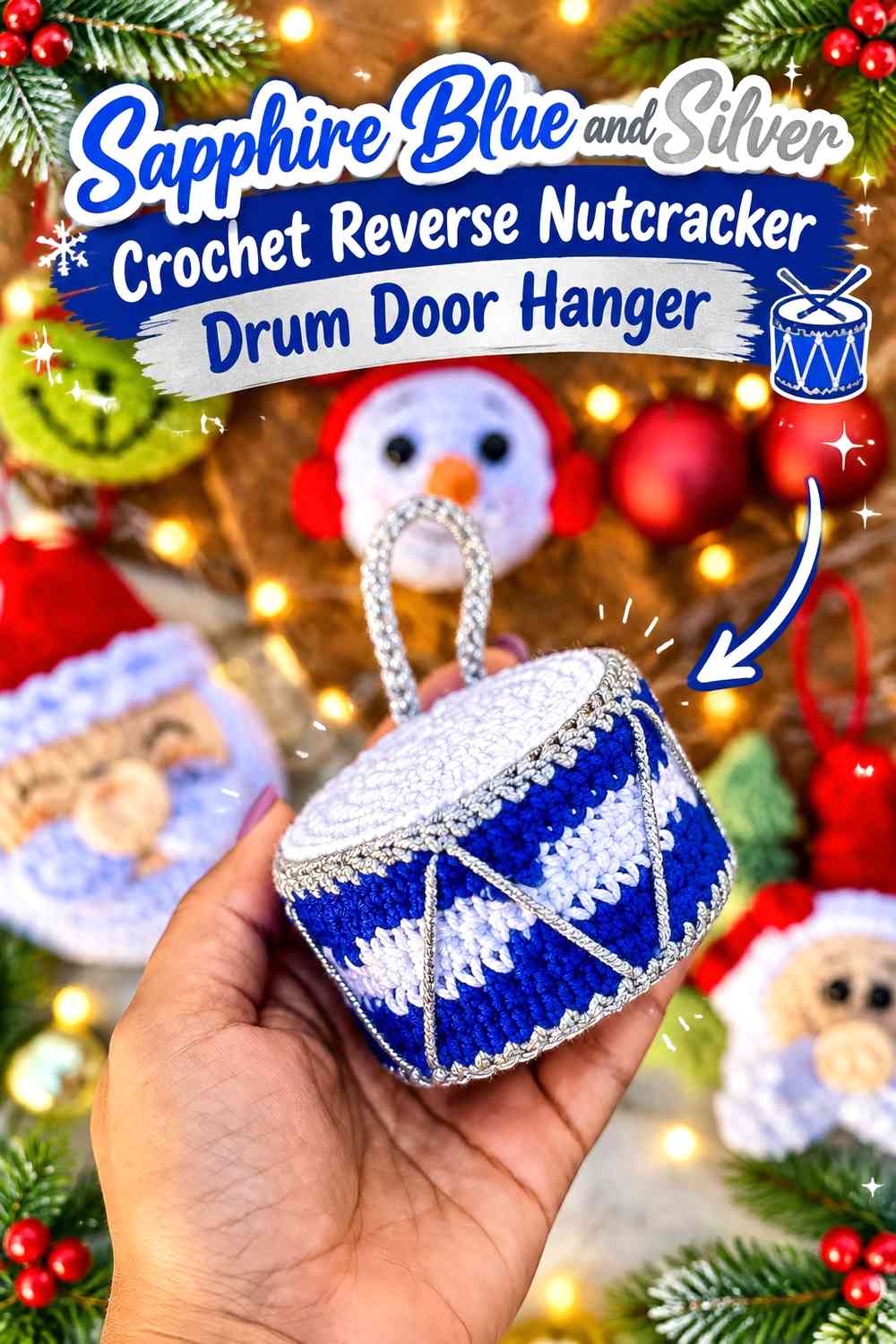
2. Sapphire Blue and Silver Crochet Reverse Nutcracker Drum Door Hanger
This idea reverses the hierarchy with silver across the drum shell and sapphire blue around the rims, cord, and nutcracker-inspired details. The darker blue structure becomes especially important if the silver yarn is pale or the door itself is white.
Frame the Silver Drum Shell With Sapphire Blue
Use sapphire blue continuously around both horizontal rims so the silver center has a clearly defined beginning and end.
This treatment is particularly useful on a light-colored door, where a silver drum without darker boundaries could lose much of its silhouette.
Keep Silver Broad Between the Sapphire Blue Rims
Avoid covering the silver field with so many blue embellishments that the reverse palette stops being recognizable. Let the shell remain predominantly silver and concentrate sapphire around structural areas.
The contrast between a broad light center and dark edges is what makes this arrangement different from the first idea.
Use Sapphire Blue on the Silver Drum Hanging Cord
A sapphire cord extends the darker outline upward from the drum and makes the attachment easier to see.
If you want the cord to be less prominent, introduce a short silver transition near the top of the drum rather than changing the entire hanging strand.
Creator Credit: Creative Crochet
3. Sapphire Blue and Silver Crochet Striped Nutcracker Drum Door Hanger
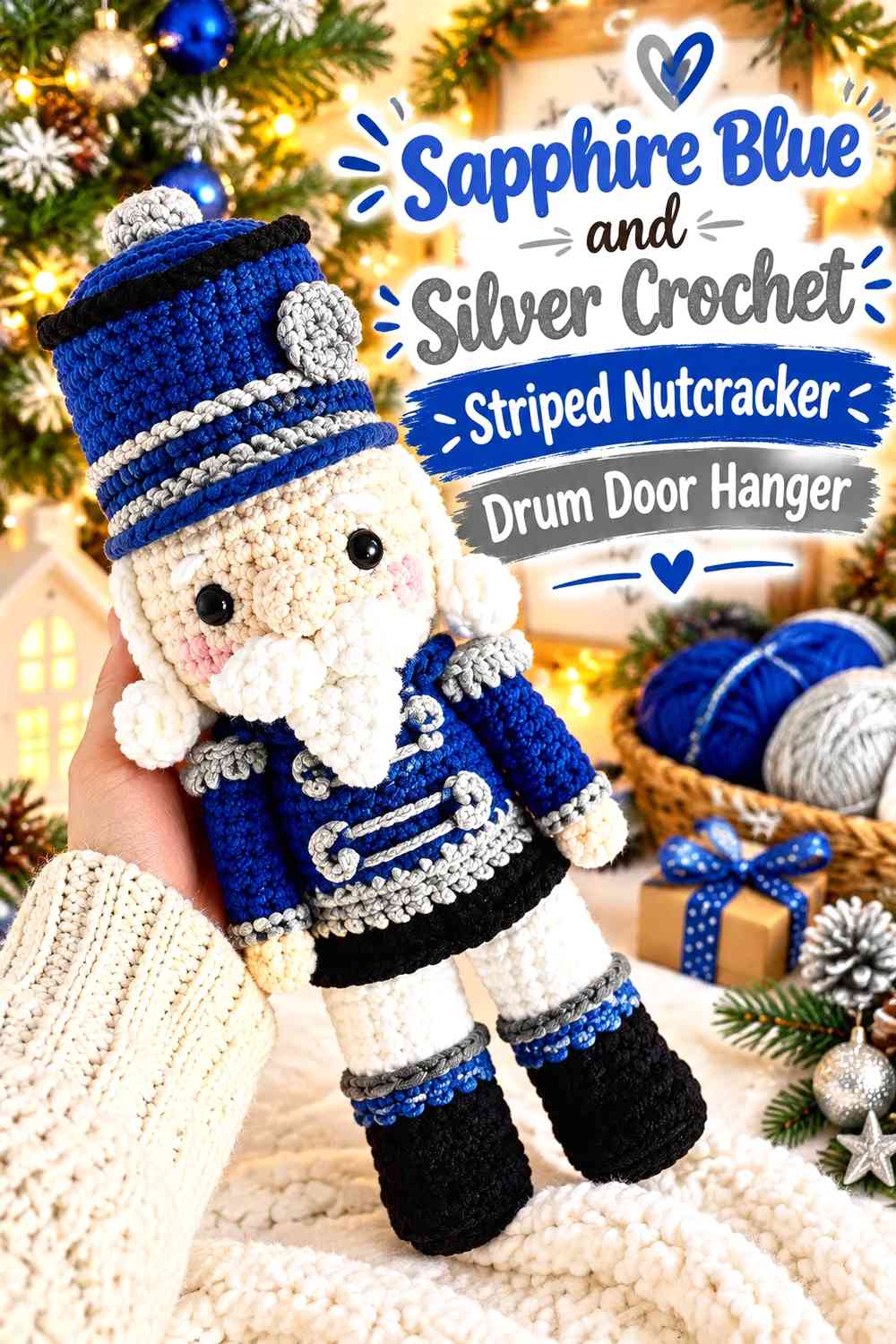
Horizontal sapphire blue and silver bands can give the drum a more decorative marching-band appearance. Use unequal stripe widths so the palette still has a dominant shade rather than becoming a visually busy one-for-one repeat.
Make Sapphire Blue Wider Than the Silver Drum Stripes
Broad sapphire bands keep the drum visually grounded, while narrower silver sections create lighter breaks across the shell.
Equal narrow stripes can make a small hanging drum look fragmented from a distance. Fewer, wider bands usually preserve the overall drum silhouette more clearly.
Keep Silver Away From Too Many Sapphire Blue Nutcracker Details
Once silver already appears repeatedly as a stripe, avoid adding it to every possible trim area. Reserve additional silver for one or two structural details such as the rims or hanging loop.
This prevents the neutral from becoming unexpectedly dominant through repetition.
Repeat Sapphire Blue at the Top and Bottom of the Silver Stripes
Finishing both ends of the striped shell with sapphire blue can visually contain the pattern.
That repeated dark boundary helps the striped center read as one drum rather than several separate horizontal color blocks.
Creator Credit: Bonito día Crochet
4. Sapphire Blue and Silver Crochet Cross-Laced Nutcracker Drum Door Hanger
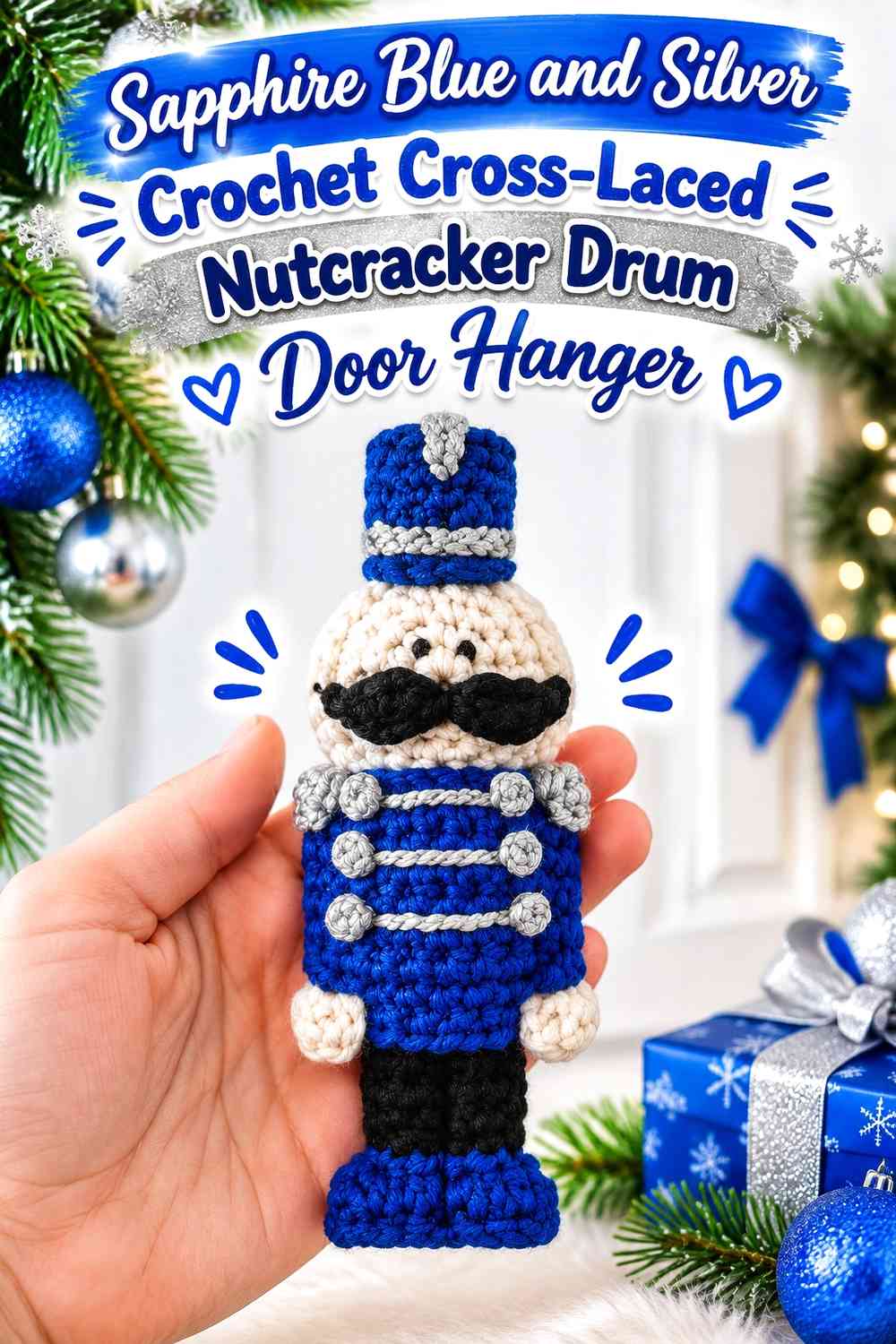
Keep the drum body sapphire blue and let silver create diagonal or crossing visual lines over the shell. The silver lacing becomes the main decorative feature, so the surrounding blue should stay relatively quiet.
Give Silver Lacing Plenty of Sapphire Blue Background
Leave enough uninterrupted sapphire blue between crossing lines that the lacing pattern remains distinct.
If silver lines are positioned too closely, they can cover much of the shell and turn the drum into a light-colored lattice rather than a blue drum with silver decoration.
Keep Sapphire Blue Visible Beside Every Silver Crossing
The contrast works because the silver sits directly against a larger blue field. Avoid introducing a third color between every crossing and the shell.
A simple two-color relationship usually gives small decorative lines more clarity than a complicated multicolor background.
Connect Silver Lacing to the Sapphire Blue Drum Rims
Let the silver surface detail visually meet or approach a silver rim, or repeat a small amount of silver around the rim if the edge is mainly sapphire.
That connection makes the lacing look integrated into the drum structure rather than added independently afterward.
Creator Credit: Ahuyama Crochet
5. Sapphire Blue and Silver Crochet Nutcracker Drum with Blue Top and Bottom
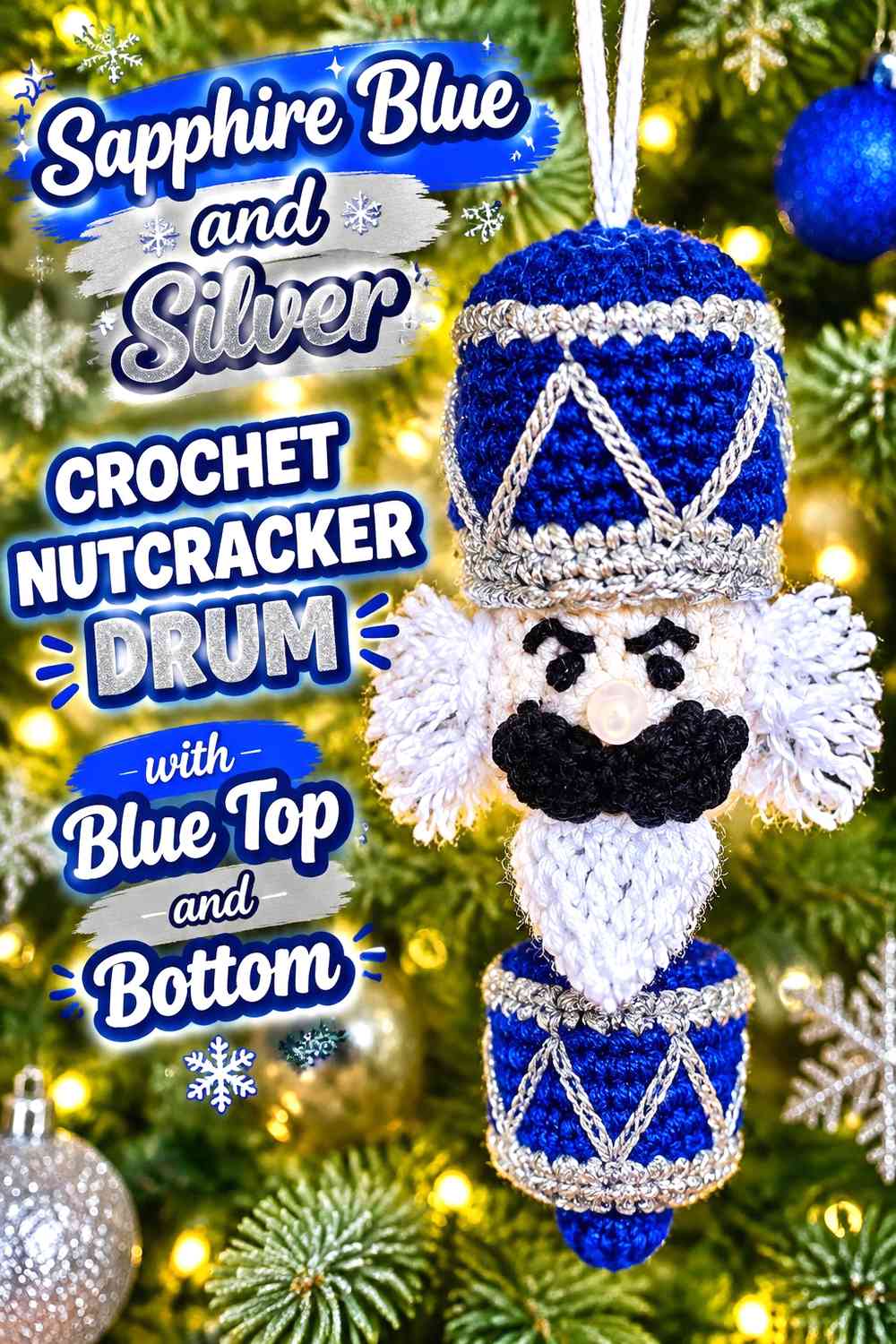
Use silver across the vertical shell but make the circular top and bottom visibly sapphire blue. This gives the hanger a strong dark cap at each end while keeping the broad center lighter.
Use Sapphire Blue to Separate the Silver Drum Ends
A sapphire top and bottom create clear visual boundaries around the silver shell. This is useful when the door background is pale because the darker circular sections help establish the drum’s full shape.
Keep the edges clean rather than breaking each end into several tiny colors.
Let Silver Remain Continuous Between the Sapphire Blue Ends
The center shell should stay broad enough to read as a deliberate silver area. If blue lacing is added, keep it narrower than the remaining silver spaces.
That preserves the reverse-color structure instead of gradually turning the shell back into a sapphire-led design.
Repeat Sapphire Blue Above the Silver Drum in the Hanging Loop
Carry sapphire from the top circular section into the hanging cord or a small upper bow. The color repetition gives the drum a visual path toward the door hook.
Silver can then remain concentrated on the body rather than having to appear throughout the suspension.
Creator Credit: Nicki’s Homemade Crafts
6. Sapphire Blue, Silver, and Winter White Crochet Nutcracker Drum Door Hanger
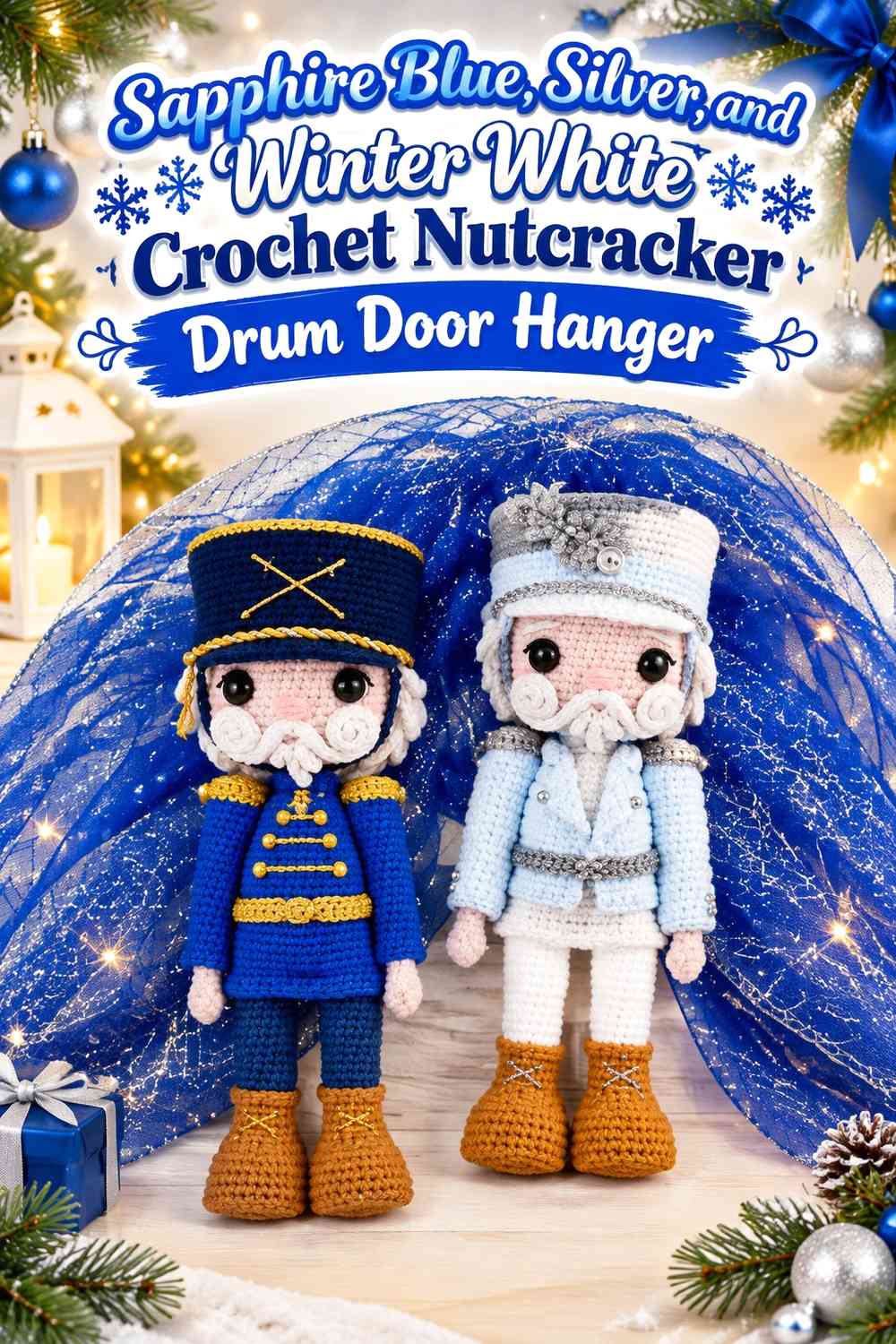
Winter white adds another pale value, so it needs a clearly different role from silver. Keep sapphire blue dominant, use silver for structural trim, and reserve winter white for the drumhead, nutcracker-inspired moustache details, or a limited central accent.
Keep Winter White Separate From Silver on the Sapphire Blue Drum
Silver and winter white may look distinctly different in the skeins yet merge once worked into narrow crochet areas.
Assign them to different components instead of alternating tiny white and silver lines. For example, winter white can define the drumhead while silver appears on the rim immediately outside it.
Use Sapphire Blue Between Winter White and Silver Details
A narrow sapphire section can provide additional separation where two pale colors meet.
This is particularly useful around the top of the hanger, where a winter white element, silver trim, and the door itself might otherwise create one large light area.
Let Silver Support the Sapphire Blue and Winter White Nutcracker Theme
Keep silver as trim rather than a third equal body color. It can repeat through edging, small uniform-style accents, or diagonal lacing while sapphire and winter white handle the larger surfaces.
Creator Credit: Agugurumi Ar
7. Sapphire Blue, Silver, and Navy Crochet Nutcracker Drum Door Hanger
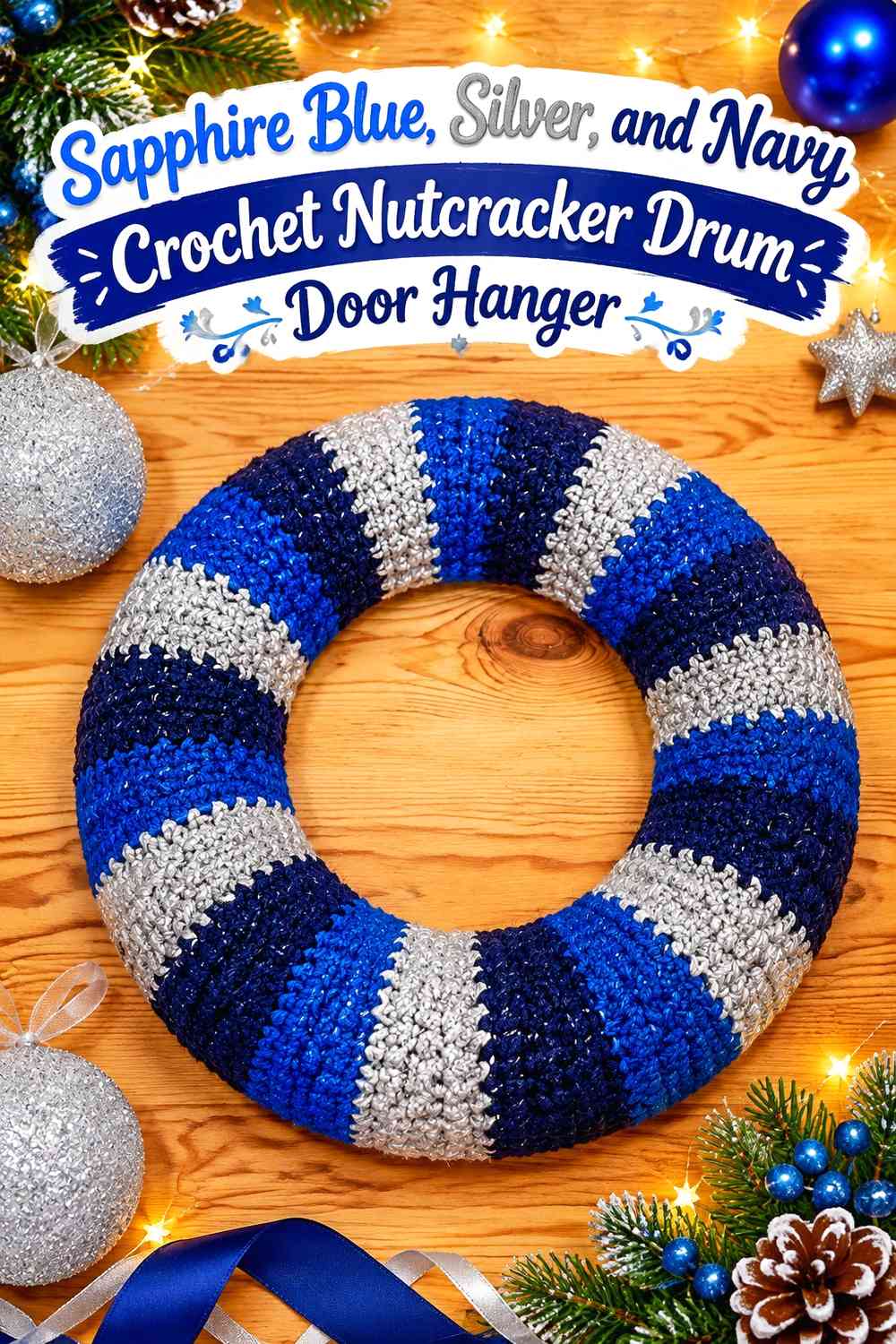
Navy deepens the blue side of the palette without introducing a warm color. Use sapphire blue as the main shell, silver for contrast, and navy only where the drum or hanging structure needs a stronger dark anchor.
Keep Navy Smaller Than Sapphire Blue on the Silver-Trimmed Drum
Place navy around a narrow lower edge, small nutcracker-inspired hat section, or central hanging connection.
If navy covers too much of the shell, it can become difficult to tell which blue is intended to dominate.
Use Silver Between Sapphire Blue and Navy When Their Values Are Close
Sapphire and navy may remain distinguishable in large areas but blend in narrow adjoining details. A silver separator can make their roles clearer.
This is especially useful at the rims, where several narrow color changes may otherwise visually collapse.
Repeat Sapphire Blue Above the Navy and Silver Drum Details
Return to sapphire on the hanging cord or upper decorative section. That repetition prevents the darkest navy from becoming the visual endpoint of the design.
Creator Credit: Blossom Crochet
8. Sapphire Blue, Silver, and Cranberry Crochet Christmas Nutcracker Drum Door Hanger
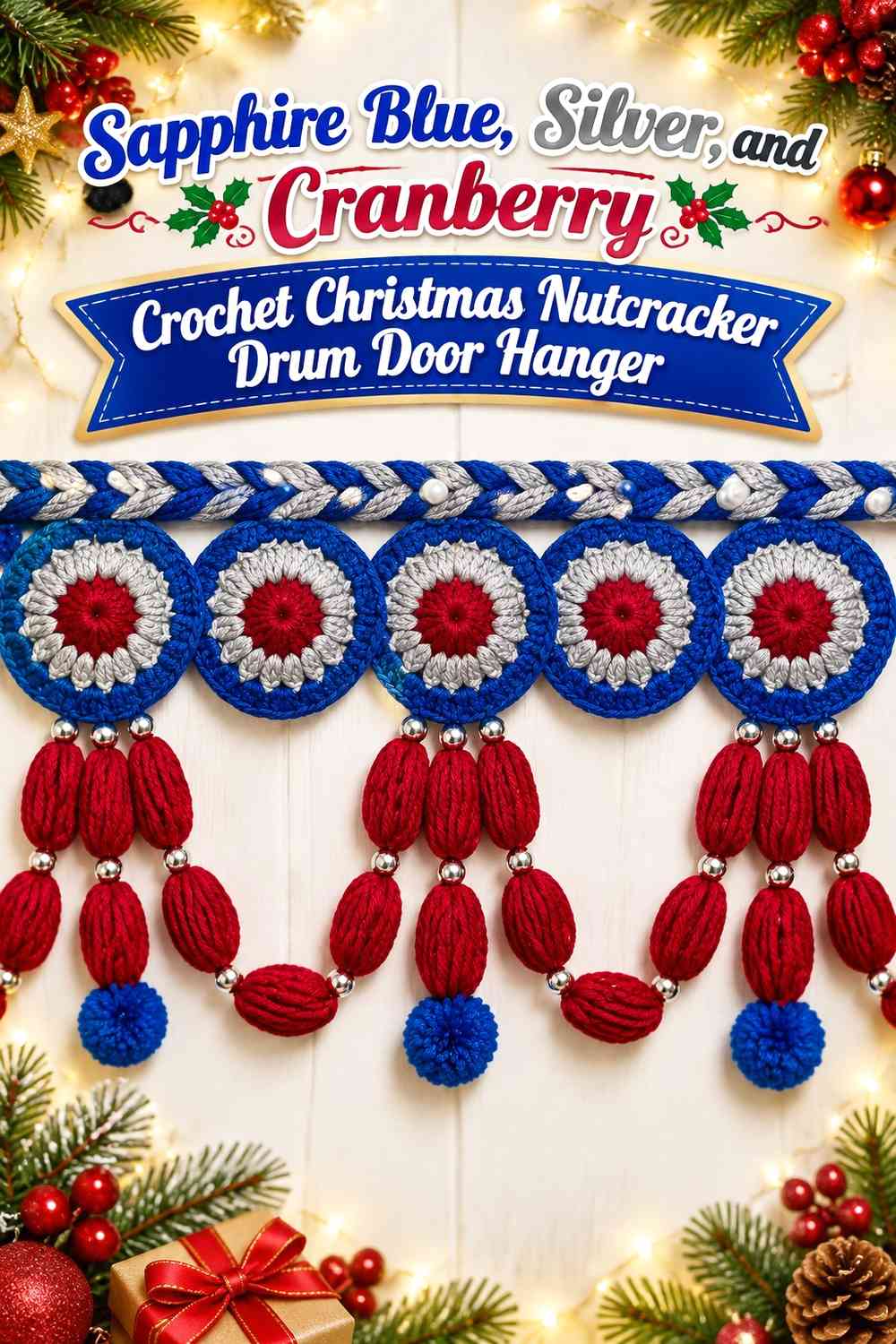
Cranberry introduces a traditional Christmas accent while leaving sapphire blue and silver in control of the drum. Because cranberry is a strong warm contrast, use it in small, repeated areas rather than on a third of the entire shell.
Keep Cranberry Smaller Than Sapphire Blue on the Silver Drum
Use cranberry on one narrow central band, tiny nutcracker uniform detail, tassel-like accent, or small bow above the drum.
A limited warm color can be enough to make the hanger feel more traditionally Christmas without changing its blue-and-silver identity.
Let Silver Separate Cranberry From Sapphire Blue
Silver can provide a neutral transition between the warm cranberry and cool sapphire.
A narrow silver rim or line between the two stronger colors reduces the chance that the drum becomes a hard red-versus-blue color block.
Repeat Sapphire Blue Around the Cranberry Door-Hanger Accent
If cranberry appears near the hanging point, bring sapphire blue back immediately around or below it.
That repetition ensures the small red detail reads as an accent rather than the beginning of an unrelated top section.
Creator Credit: HOMEMADE CREATIONS
9. Sapphire Blue, Silver, and Evergreen Crochet Christmas Nutcracker Drum Door Hanger
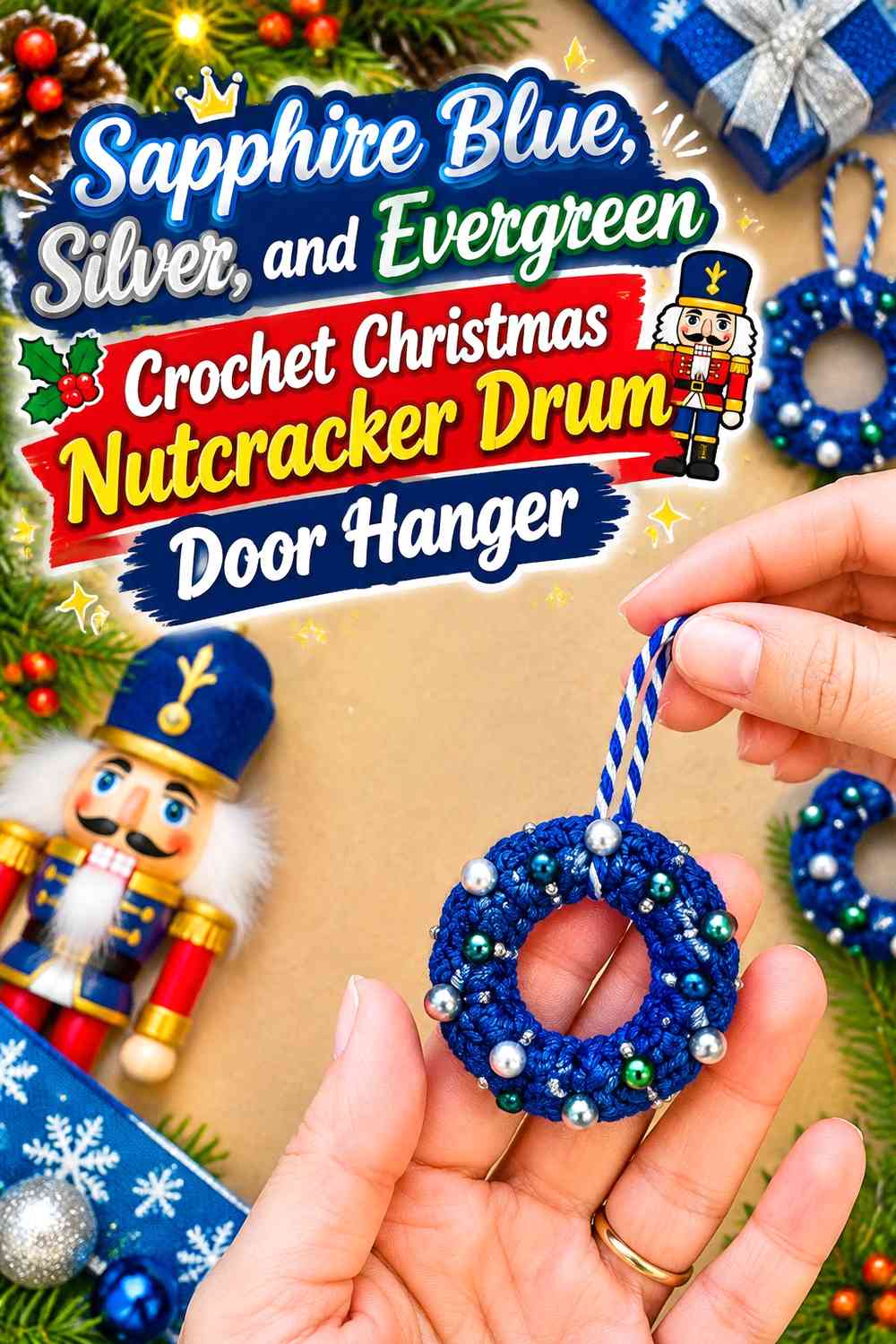
Evergreen can connect the icy blue-and-silver drum with traditional wreaths or greenery already used around the entryway. Keep green on supporting details instead of mixing it throughout the drum shell.
Use Evergreen Around the Sapphire Blue and Silver Hanging Point
An evergreen bow, short connector, or small upper motif can visually link the drum to nearby Christmas greenery.
Keeping the green above the drum rather than across its entire body allows the sapphire shell and silver trim to stay recognizable.
Let Silver Separate Evergreen From Sapphire Blue
Dark evergreen and saturated sapphire can have similar visual weight. Silver between them provides a lighter break and makes each cool hue easier to identify.
Use the separator strategically around the hanging transition rather than inserting silver between every green and blue detail.
Keep Sapphire Blue Dominant Below the Evergreen Accent
Once the eye moves down to the actual drum, return clearly to sapphire blue. This keeps the door hanger from looking like a green decoration with a blue attachment.
Creator Credit: Sapri Design
10. Sapphire Blue, Silver, and Charcoal Crochet Nutcracker Drum Door Hanger
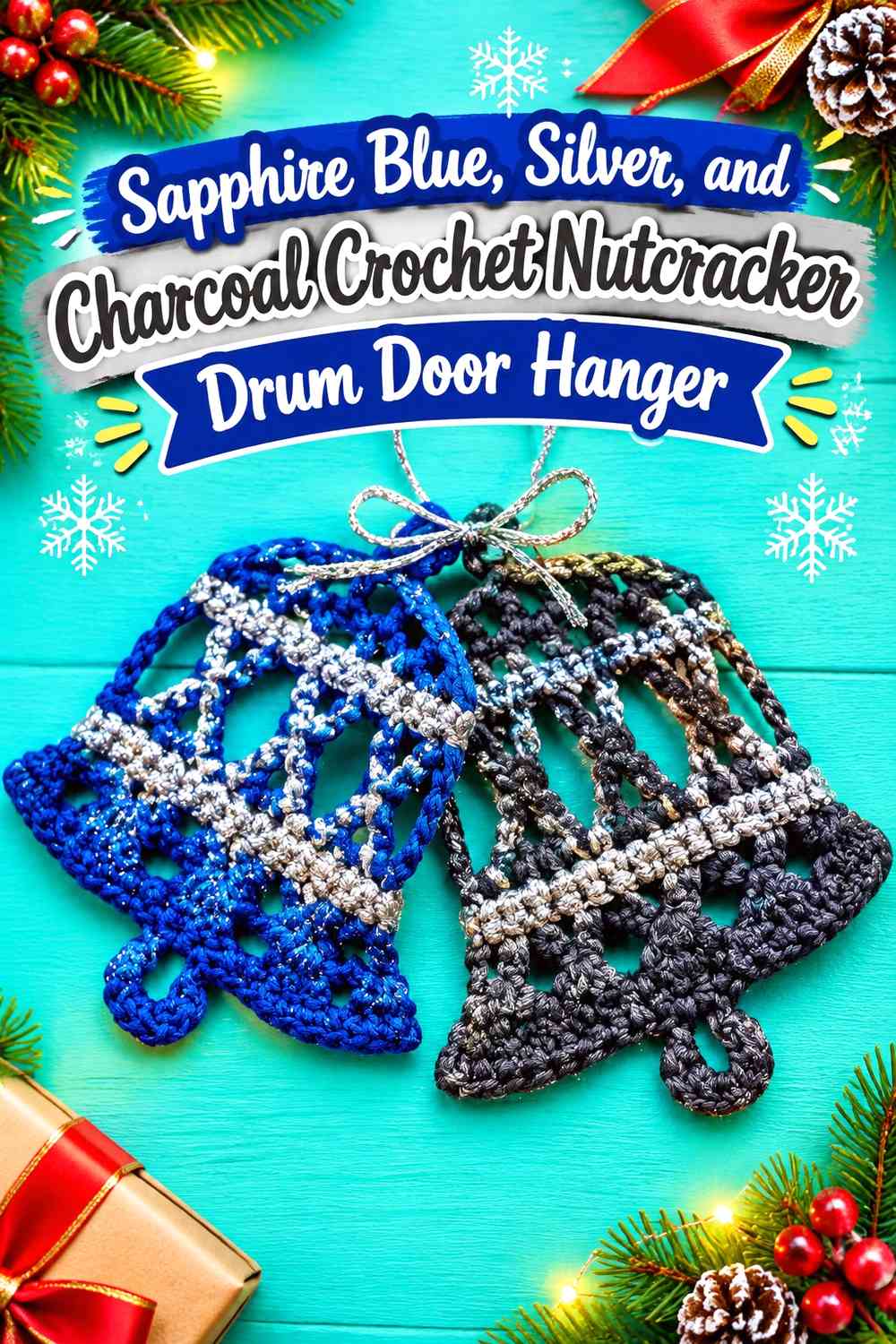
Charcoal provides the strongest dark neutral in the collection. It can sharpen drumsticks, nutcracker-inspired outlines, or hanging details without introducing another hue.
Reserve Charcoal for Small Silver and Sapphire Blue Details
Use charcoal where the hanger genuinely needs additional definition, such as a narrow outline or small crossed drumstick detail.
Large charcoal panels can make the finished drum substantially darker and reduce the visual importance of sapphire blue.
Put Silver Between Charcoal and Sapphire Blue When the Edge Feels Heavy
A silver line can soften the transition from deep charcoal to saturated blue. This works well on rims or structured edging where three narrow roles can remain visually organized.
Avoid repeating all three colors in equal-width stripes; the palette is clearer when charcoal remains the smallest component.
Keep Sapphire Blue Broad Around the Charcoal Nutcracker Accents
Maintain an uninterrupted sapphire background behind smaller dark details. The blue field gives charcoal a specific outlining function instead of allowing it to blend into a generally dark shell.
Creator Credit: Crochet with Tuula Maaria
11. Sapphire Blue and Silver Crochet Double-Drum Nutcracker Door Hanger
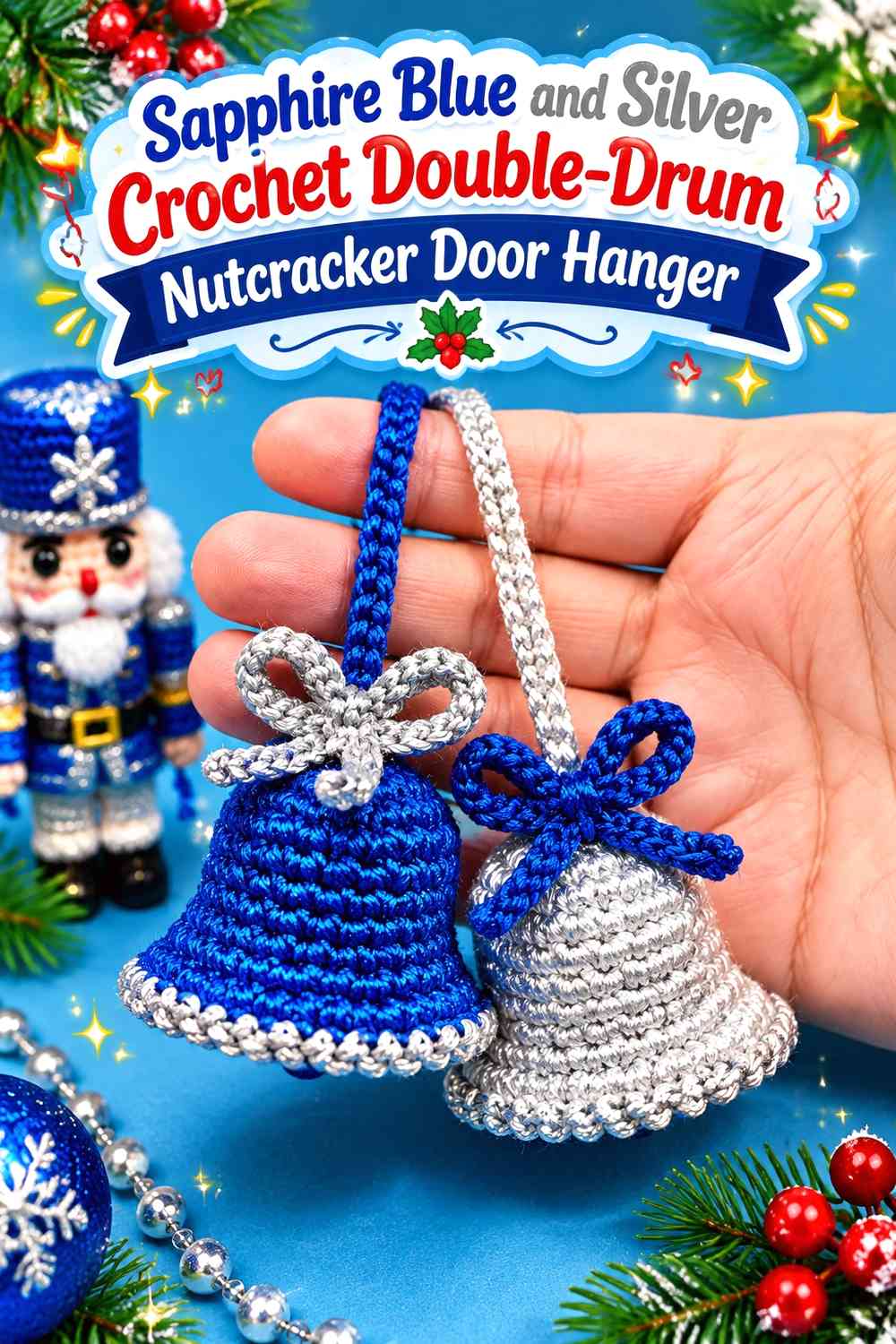
Instead of one central drum, hang two coordinated drums vertically or as a compact paired arrangement. Use the same sapphire blue and silver palette on both but reverse the dominance so the pair has variation without looking mismatched.
Make One Drum Sapphire Blue and the Other Silver
Let the first drum use a sapphire shell with silver rims, then reverse the hierarchy on the second.
The relationship is immediately understandable because the same two colors repeat, while the reversal gives each drum an individual identity.
Repeat Sapphire Blue Across Both Silver Drum Hanging Connections
Use sapphire blue in the central connector or hanging cord even if one drum is predominantly silver. The repeated blue line visually links the separate pieces into one door hanger.
If the drums are arranged one below another, this connection becomes especially important because the eye follows the vertical line through the decoration.
Keep Silver Rims Consistent Across Both Sapphire Blue Drum Variations
Even when the body colors reverse, repeating silver in a comparable structural position can unify the pair.
For example, both drums can retain some silver around a rim or connector while sapphire coverage changes elsewhere. A shared detail often creates more cohesion than making the two drums completely identical.
Creator Credit: Crochet Joy
Comparing the Sapphire Blue and Silver Nutcracker Drum Directions
For the clearest two-color door hanger, start with a sapphire blue shell and silver rims, the reverse silver shell with blue framing, or the cross-laced sapphire drum. These options give each color a specific structural job and remain readable from a doorway viewing distance.
The striped and double-drum versions create more color movement without adding another hue. Wide stripes produce a regular marching-band rhythm, while two reversed drums give the palette variation through placement rather than extra colors.
Winter white creates the lightest extension of the palette, but keep it physically separate from pale silver when their values are close. Navy and charcoal move in the opposite direction by giving the hanger darker definition.
Cranberry and evergreen provide the strongest traditional Christmas cues. Use either one sparingly if sapphire blue and silver should remain the first colors viewers notice.
Conclusion
Sapphire blue and silver work especially well on a crochet nutcracker drum because the two colors can follow the object’s structure. Sapphire blue can define the cylindrical shell, hanging cord, or darker rims, while silver can highlight the drumheads, edging, lacing, and small nutcracker-inspired trim.
For the strongest color clarity, assign the two shades different jobs rather than splitting every surface equally. Choose a sapphire shell with silver edges for a dark, defined drum, reverse those roles for a lighter display, or use silver lacing over blue when you want more decorative detail.
Winter white, navy, and charcoal can adjust the light-dark balance without moving far from the cool palette. Cranberry and evergreen are better when you want the hanger to coordinate with more traditional Christmas decorations around the doorway.
Before final assembly, view the drum against the actual door. Check whether silver remains visible, whether sapphire blue outlines the shape clearly, and whether the hanging cord looks connected to the drum rather than like a separate piece. Use the credited tutorial for its original construction guidance and apply the color placement that best suits your door-hanger design.
Frequently Asked Questions
Should Sapphire Blue or Silver dominate a crochet nutcracker drum door hanger?
Sapphire blue is a useful dominant shade when you want a strong drum silhouette, particularly against a pale door. Silver can dominate when the background is dark enough to keep the lighter shell visible. Whichever you choose, give the second color a clear supporting job such as rims, lacing, or the hanging cord.
Where should Silver go on a Sapphire Blue crochet drum?
Silver works especially well on the upper and lower rims, diagonal lacing, top or bottom drumhead, hanging transition, and small nutcracker-inspired uniform details. Repeating it in a few deliberate structural locations usually looks clearer than scattering tiny silver accents everywhere.
How can I keep Silver visible on a white door?
Place sapphire blue beside the silver wherever possible, particularly around the outer edge or hanging point. You can also give silver a larger visual area rather than relying on very narrow lines. Check the yarn against the actual door from several feet away before completing all the details.
Can Sapphire Blue and Silver work without traditional Christmas red or green?
Yes. The drum and nutcracker theme already establishes the seasonal subject, so the color scheme does not require red or green. Keeping the palette to sapphire blue and silver can create a cooler, more formal Christmas direction.
What third color works with Sapphire Blue and Silver on a nutcracker drum?
Winter white keeps the palette light and icy, navy provides deeper blue definition, and charcoal adds a dark neutral. Cranberry or evergreen can provide a small traditional Christmas accent. Keep the third shade subordinate if sapphire blue and silver should remain the main identity.
Should Sapphire Blue or Silver be used for the hanging cord?
A sapphire blue cord is more visible against many pale doors and can extend the strong color line above the drum. Silver creates a quieter suspension and may work well against a darker door. Repeating the cord color somewhere on the drum helps the hanging section feel integrated with the main design.
How can I make two Sapphire Blue and Silver crochet drums look coordinated?
Keep at least one color role consistent across both pieces. You might reverse the shell colors while using silver rims on both, or use sapphire blue in both hanging connections. Repetition of one structural color creates unity even when the two drums are not identical.