

Slate Blue and Oatmeal can give a crochet pet bed cover a quiet winter-cabin look without relying on brighter lodge colors. Slate Blue supplies the deeper visual anchor, while Oatmeal keeps individual checks visible and softens the overall surface. Together, they can move from crisp checkerboard layouts to larger buffalo-check-inspired blocks, modular squares, or subtle plaid effects.
A pet bed cover needs different color planning from a decorative pillow. Much of the center may be hidden while a pet is resting, side panels often remain visible, and loose decorative additions can be inappropriate for pets that chew or pull at fabric. The check pattern therefore needs to work across the full bed rather than depend on one central detail.
Some tutorials paired with these ideas demonstrate complete pet beds, while others teach removable cushion covers, checkerboard surfaces, gingham, plaid, or modular construction that can be adapted to an existing pet-bed cushion. The Slate Blue and Oatmeal layouts below are independent color adaptations.
Quick List
- Slate Blue and Oatmeal Classic Checkerboard Crochet Pet Bed Cover
- Slate Blue-Dominant and Oatmeal Cabin Gingham Crochet Pet Bed Cover
- Oatmeal-Dominant and Slate Blue Windowpane Crochet Pet Bed Cover
- Slate Blue and Oatmeal Oversized-Checker Crochet Pet Bed Cover
- Slate Blue and Oatmeal Modular Checker-Square Crochet Pet Bed Cover
- Oatmeal Granny Checks With Slate Blue Crochet Pet Bed Cover Joins
- Slate Blue Plaid Bands With Oatmeal Cabin-Check Crochet Pet Bed Cover
- Reversible Slate Blue and Oatmeal Checkered Crochet Pet Bed Cover
- Chunky Slate Blue and Oatmeal Oversized-Check Crochet Pet Bed Cover
- Slate Blue and Oatmeal Round Checkered Crochet Pet Bed Cover With a Solid Rim
- Slate Blue Sidewall and Oatmeal Checkered Crochet Pet Bed Cover
- Oatmeal Plush Rim and Slate Blue Checkered Crochet Pet Bed Cover
- Slate Blue and Oatmeal Mixed-Scale Cabin Plaid Crochet Pet Bed Cover
Balance Slate Blue and Oatmeal Checks Across the Whole Pet Bed
Equal Slate Blue and Oatmeal squares create the clearest checkerboard, but an equal split is not the only option. Making Slate Blue larger or more frequent gives the bed a deeper winter-cabin direction, while an Oatmeal-dominant surface looks lighter and allows the blue to function as definition.
Before committing to the complete cover, sketch the full bed shape. A check that looks generously sized in a small swatch may become visually busy when repeated across a large rectangular cushion, while very large blocks can disappear as a recognizable checker pattern on a small pet bed.
Also consider which areas remain visible during use. The center may be covered by the pet, so repeating the palette at the front edge, sidewall, or outer row of checks keeps the color scheme recognizable.
Keep Oatmeal Visible Against Slate Blue, Fur, and the Room
Oatmeal can provide valuable light-dark separation from Slate Blue, but its effect depends on the surrounding environment. A pale floor, cream rug, or light bed insert may make an Oatmeal outer edge visually disappear, while Slate Blue usually produces a stronger silhouette against light surroundings.
Pet fur also changes how the surface reads in daily use. Rather than trying to choose a color that supposedly hides all shedding, focus on keeping the checker pattern clear even when some of the surface is visually interrupted.
If the two yarns seem close in value, photograph a sample in grayscale. A stronger difference in lightness can help the checks stay distinct from across the room.
Make Slate Blue and Oatmeal Checkered Covers Practical for Pets
A removable cover can make sense for a cushion-style bed when the underlying construction supports one, but do not assume every pillow-cover technique will transfer directly to every pet bed. Measure the existing cushion, foam, or bed base and plan the adapted cover around that shape.
For pets that chew or pull at textiles, avoid loose tassels, fringe, unsecured appliqués, large exposed loops, or other detachable decoration. Keep yarn ends and joins secure, and consider where any closure will sit in relation to the animal.
Do not assume a crochet surface will provide particular durability, traction, or wash behavior based on appearance alone. Those properties depend on the actual yarn, construction, finishing, and intended use.
1. Slate Blue and Oatmeal Classic Checkerboard Crochet Pet Bed Cover
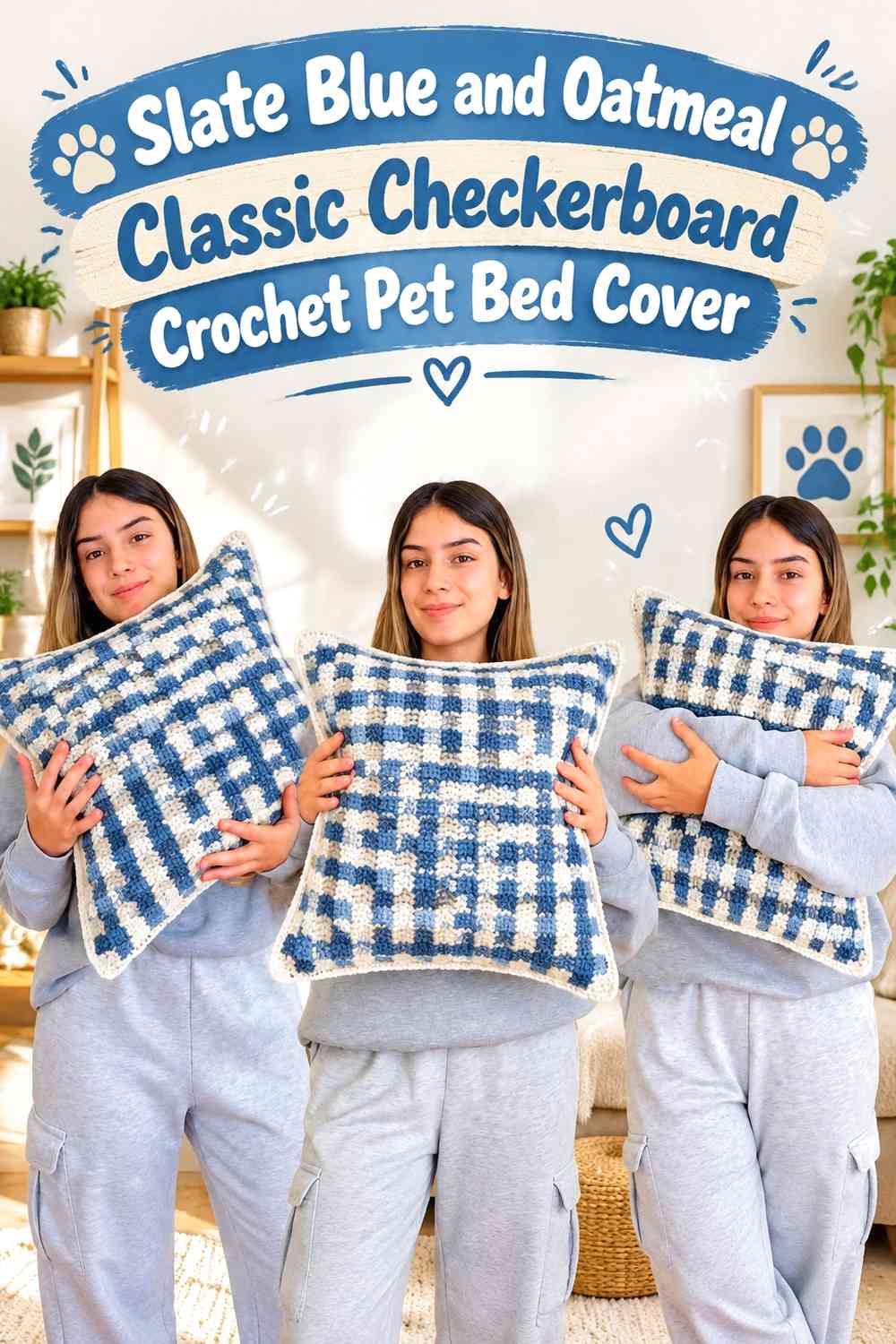
A straightforward checkerboard lets both colors carry equal visual responsibility. Alternate Slate Blue and Oatmeal in clearly defined blocks across the top panel, then choose one color for the side or back so the checkered surface remains the focus. This is the most graphic interpretation of the winter-cabin theme.
Keep Slate Blue and Oatmeal Checks Large Enough for the Pet Bed
Use a block scale that can still be recognized once the pet is lying on part of the surface. Very small checks may turn into visual texture rather than a clear cabin checkerboard when viewed across the room.
Lay a sample across the existing bed before deciding how often the colors should alternate.
Let Slate Blue Define the Oatmeal Outer Checks
If the final row includes several Oatmeal blocks, a Slate Blue edge can keep the pale squares from visually dissolving into a light floor or bed base.
The dark finishing color does not need to become a wide border. Its job is simply to give the checkerboard a clear endpoint.
Repeat Oatmeal Against Slate Blue on the Visible Front Edge
If the bed has a deep front panel, carry at least part of the two-color pattern downward. A completely solid front can make the top and side look like separate pieces unless that contrast is intentional.
Creator Credit: crochet daniela
2. Slate Blue-Dominant and Oatmeal Cabin Gingham Crochet Pet Bed Cover

This variation shifts the balance toward Slate Blue. Use broader or more frequent Slate Blue areas while Oatmeal appears in lighter repeating blocks. The effect is moodier than an equal checkerboard and can suit a cabin-inspired room where you want the bed to feel grounded rather than pale.
Let Slate Blue Carry More of the Cabin Check Surface
Keep enough continuous Slate Blue that it becomes the first color noticed. Oatmeal should interrupt and clarify the dark field rather than divide it into equal halves.
This approach is useful when a full one-to-one checkerboard feels too busy for the bed’s size.
Use Oatmeal to Separate Large Slate Blue Checks
Place Oatmeal where adjacent dark areas need clear boundaries. A smaller amount of the light shade can still have strong visual impact because it contrasts with the larger Slate Blue field.
Keep Slate Blue Consistent Around the Oatmeal Check Pattern
A Slate Blue outer edge can unify a gingham-inspired top and keep the pattern from feeling unfinished at corners or seams.
Creator Credit: Sigoni Macaroni
3. Oatmeal-Dominant and Slate Blue Windowpane Crochet Pet Bed Cover
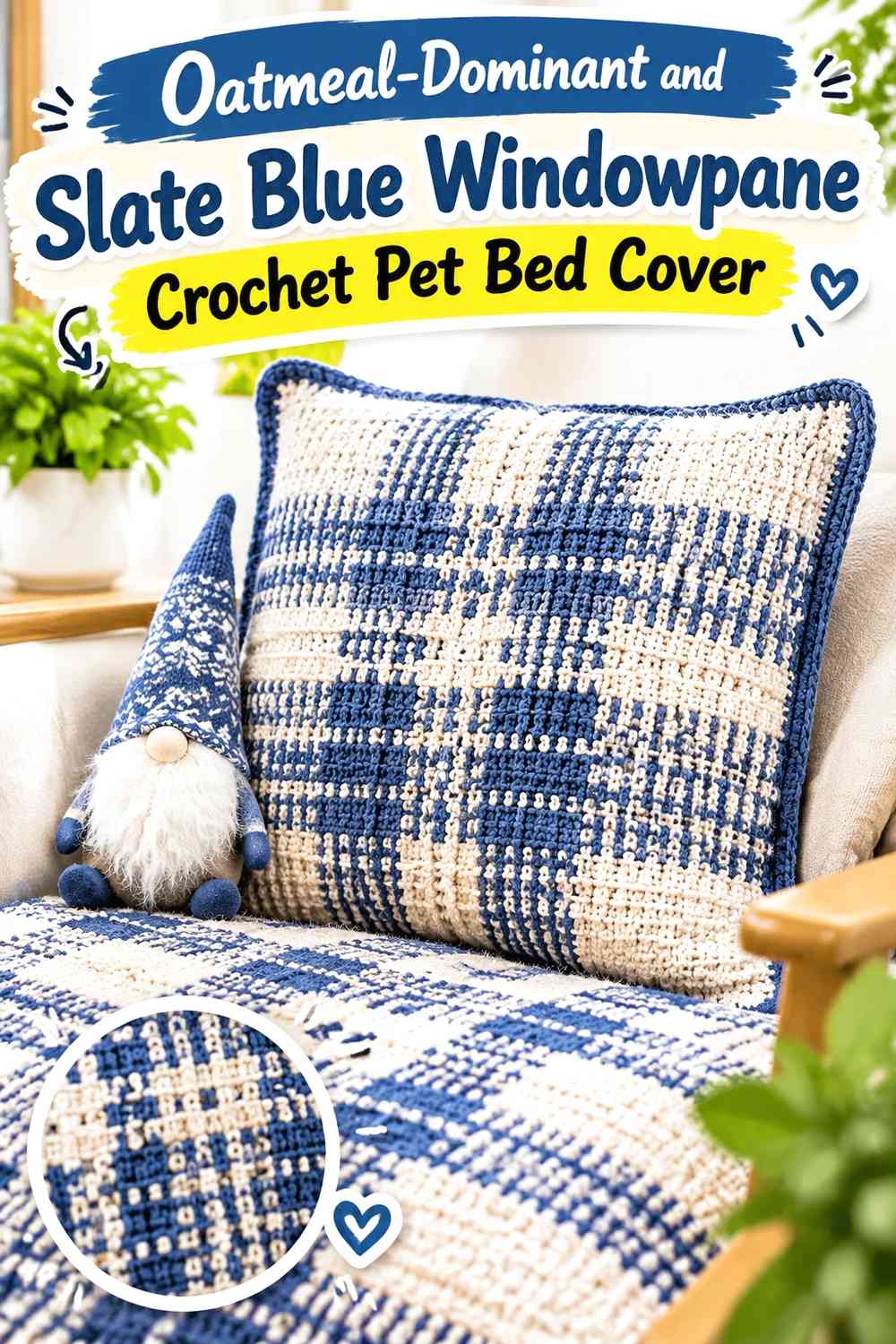
For a lighter winter-cabin bed, reverse the hierarchy. Oatmeal can form most of the surface while Slate Blue appears as repeated crossing bands or smaller check sections. The darker lines give the cover structure without making the bed look predominantly blue.
Give Oatmeal Enough Space Between Slate Blue Lines
Broad Oatmeal areas make the lighter color feel intentional rather than like narrow gaps between dark stripes. This also prevents a windowpane treatment from becoming visually dense.
Keep Slate Blue Lines Consistent Across the Oatmeal Surface
If Slate Blue functions as the grid, use it predictably. Irregular dark lines can make the pattern look broken rather than deliberately checkered.
Check intersections carefully from a distance because those areas will naturally carry more Slate Blue visual weight.
Return Oatmeal Outside the Slate Blue Grid
An Oatmeal edge can soften the complete bed when the internal Slate Blue framework is already strong. On a very pale floor, however, a narrow Slate Blue finishing line may give the cover a clearer silhouette.
Creator Credit: Just Be Crafty
4. Slate Blue and Oatmeal Oversized-Checker Crochet Pet Bed Cover
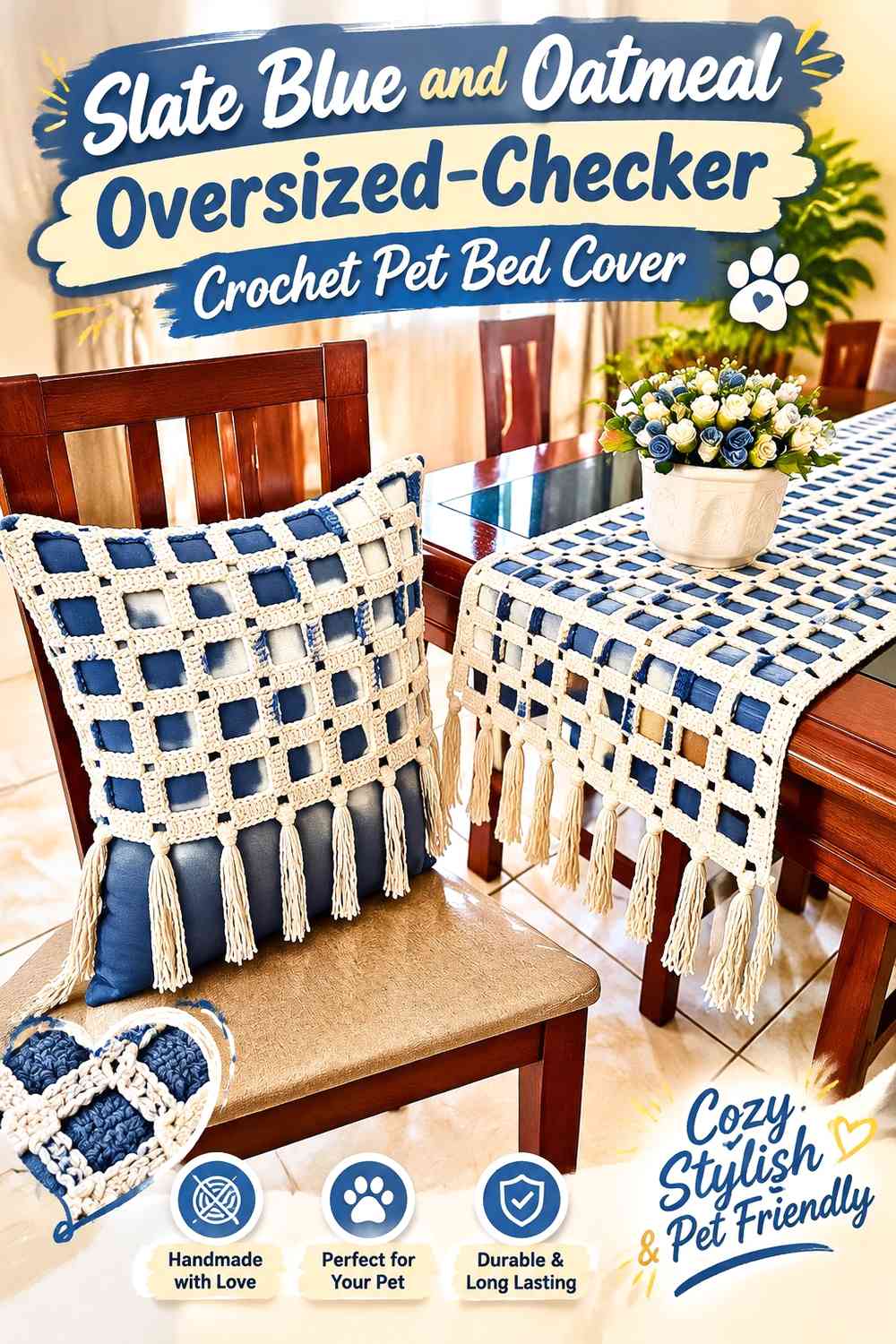
Large checks can suit a pet bed particularly well because only a limited number of blocks are needed to establish the pattern. Make the alternating Slate Blue and Oatmeal areas broad enough that each remains recognizable even when part of the bed is occupied.
Make Slate Blue and Oatmeal Blocks Proportional to the Bed
An oversized check should still repeat enough times to look intentional. If each color appears only once, the cover may read as simple color blocking rather than a checkerboard.
Sketch the full top panel before choosing the block size.
Use Oatmeal Around Slate Blue Checks That Need More Separation
When several darker blocks collect near one side, Oatmeal can restore balance by increasing the light visual area in the next part of the repeat.
Keep Slate Blue or Oatmeal Tassels Off a Pet Bed Cover
A checkerboard does not need tassels or fringe to feel finished. For pets that may pull or chew at loose fibers, a plain secured edge is a more appropriate adaptation than carrying decorative tassels from a home-decor cushion concept.
Creator Credit: Passo a Passo Crochê & Artes
5. Slate Blue and Oatmeal Modular Checker-Square Crochet Pet Bed Cover
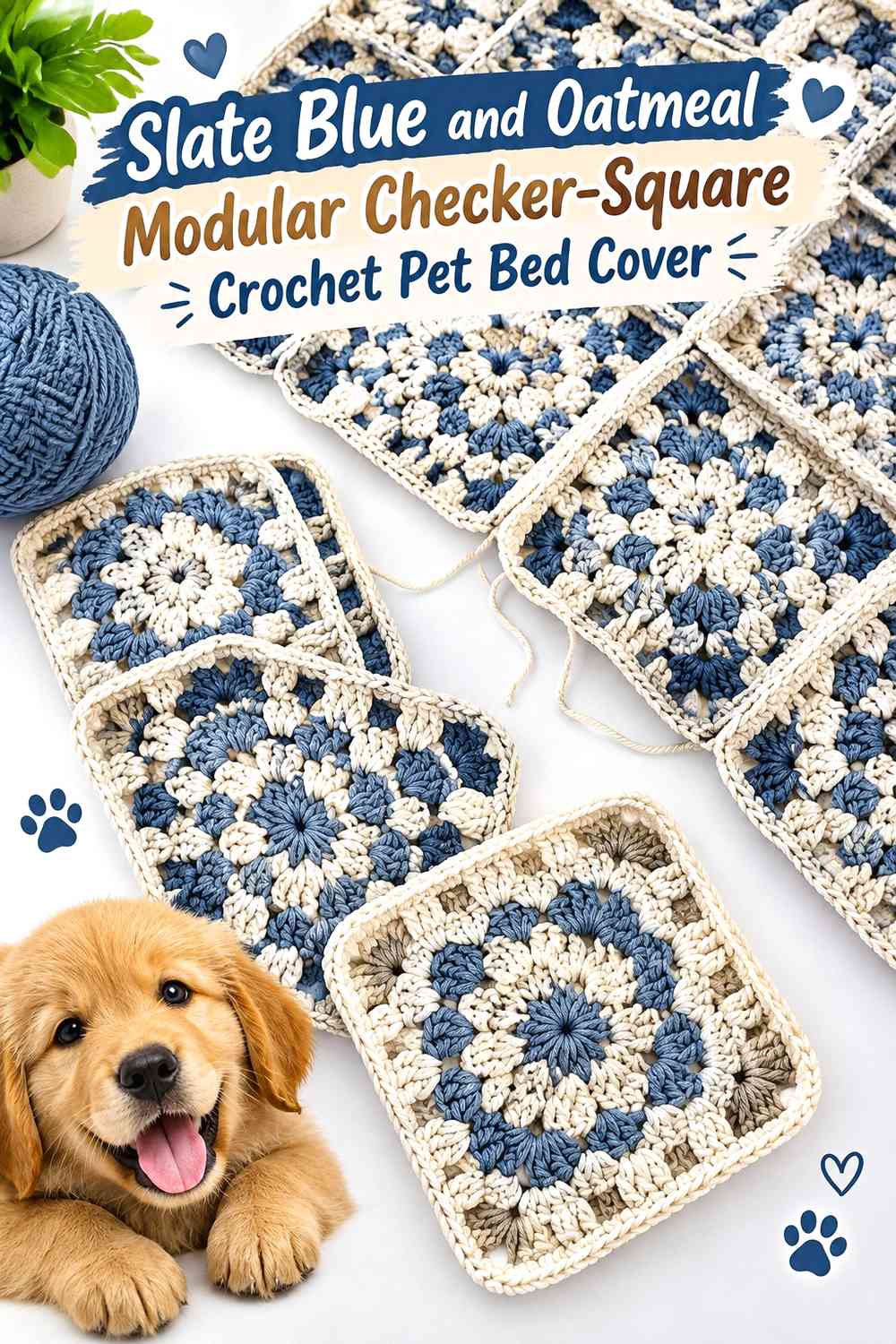
Crocheting separate squares gives you control over the color layout before the full cover is joined. Alternate Slate Blue and Oatmeal modules, or create two square types and arrange them into a larger checkerboard. This makes it easier to change the overall dimensions without changing the palette concept.
Arrange Slate Blue and Oatmeal Squares Before Joining
Lay out the complete top panel first. Modular pieces are easy to move, so use that flexibility to check that neither color forms an unintended stripe or cluster.
Viewing the arrangement as a whole is especially important on rectangular pet beds, where the number of squares may differ across the two directions.
Choose Slate Blue or Oatmeal Joins Deliberately
Slate Blue joins make each pale square feel more framed and can strengthen the cabin look. Oatmeal joins create a lighter grid and may soften dark Slate Blue blocks.
Use one joining strategy consistently unless a deliberate border change is part of the design.
Repeat Slate Blue and Oatmeal on the Pet Bed Edge
If the cover needs additional depth around its sides, pull colors from the top rather than introducing a third shade. A Slate Blue side with an Oatmeal finishing edge, or the reverse, keeps the modular top connected to the rest of the cover.
Creator Credit: Crochet For You
6. Oatmeal Granny Checks With Slate Blue Crochet Pet Bed Cover Joins
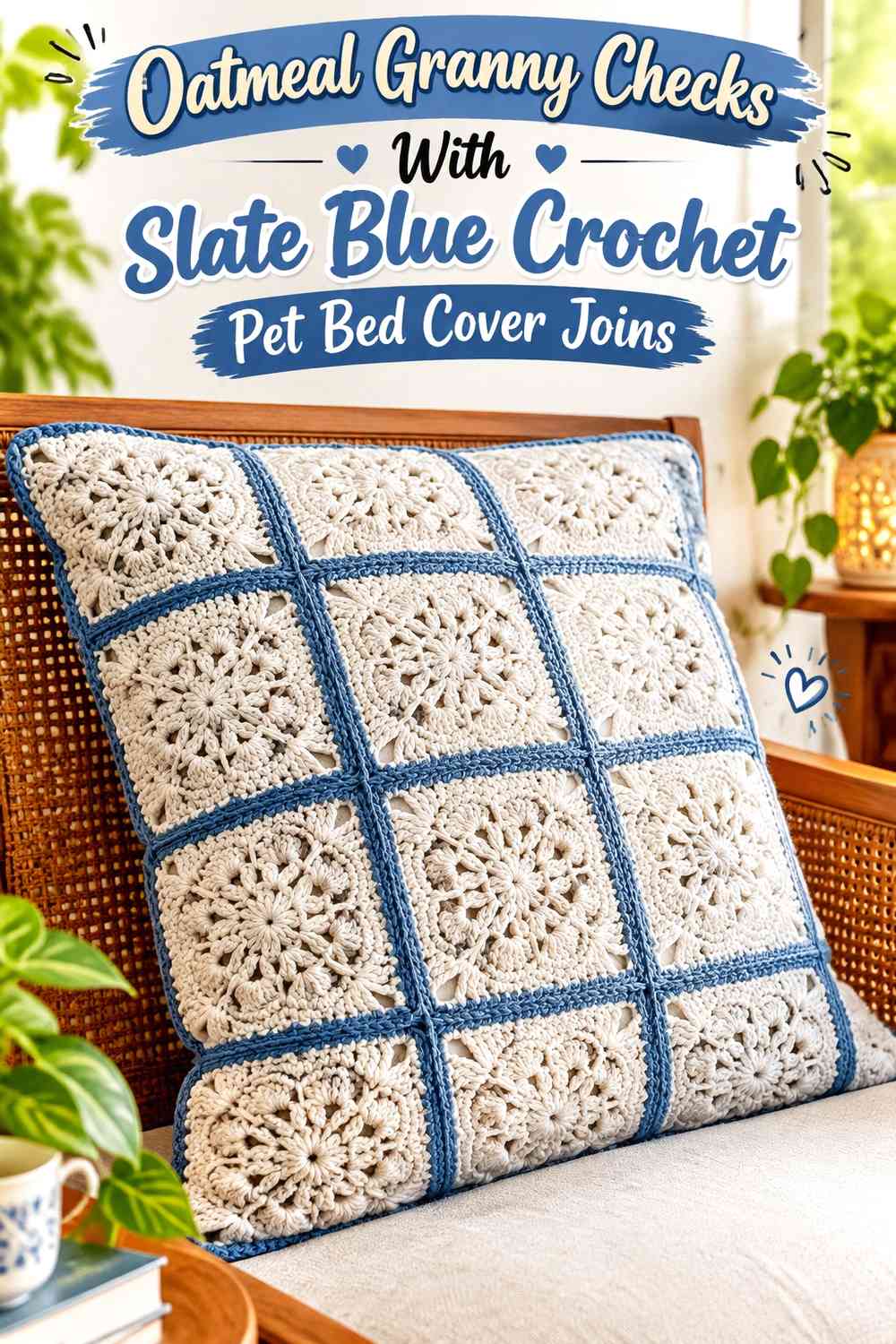
Granny-square construction can make the checkered effect softer and more textured. Use Oatmeal-dominant squares beside Slate Blue-dominant squares, then give Slate Blue the joining role so the individual modules remain easy to distinguish.
Keep Oatmeal Centers Consistent Inside Slate Blue-Joined Squares
If Oatmeal is the main center color, repeat it in comparable parts of each light motif. Too many internal variations can compete with the larger checkerboard created by the square arrangement.
Let Slate Blue Joins Frame the Oatmeal Granny Checks
Dark joins can make individual squares easier to see and create a clear grid across the pet bed. This is useful when the motifs themselves contain open or textured stitchwork.
Check Oatmeal Openwork Against the Bed Insert
If the granny construction has visible openings, the insert or cushion beneath may become part of the color effect. Test the finished motif over the actual bed rather than judging it only against your work surface.
Creator Credit: Tres Agujas Artesanas
7. Slate Blue Plaid Bands With Oatmeal Cabin-Check Crochet Pet Bed Cover
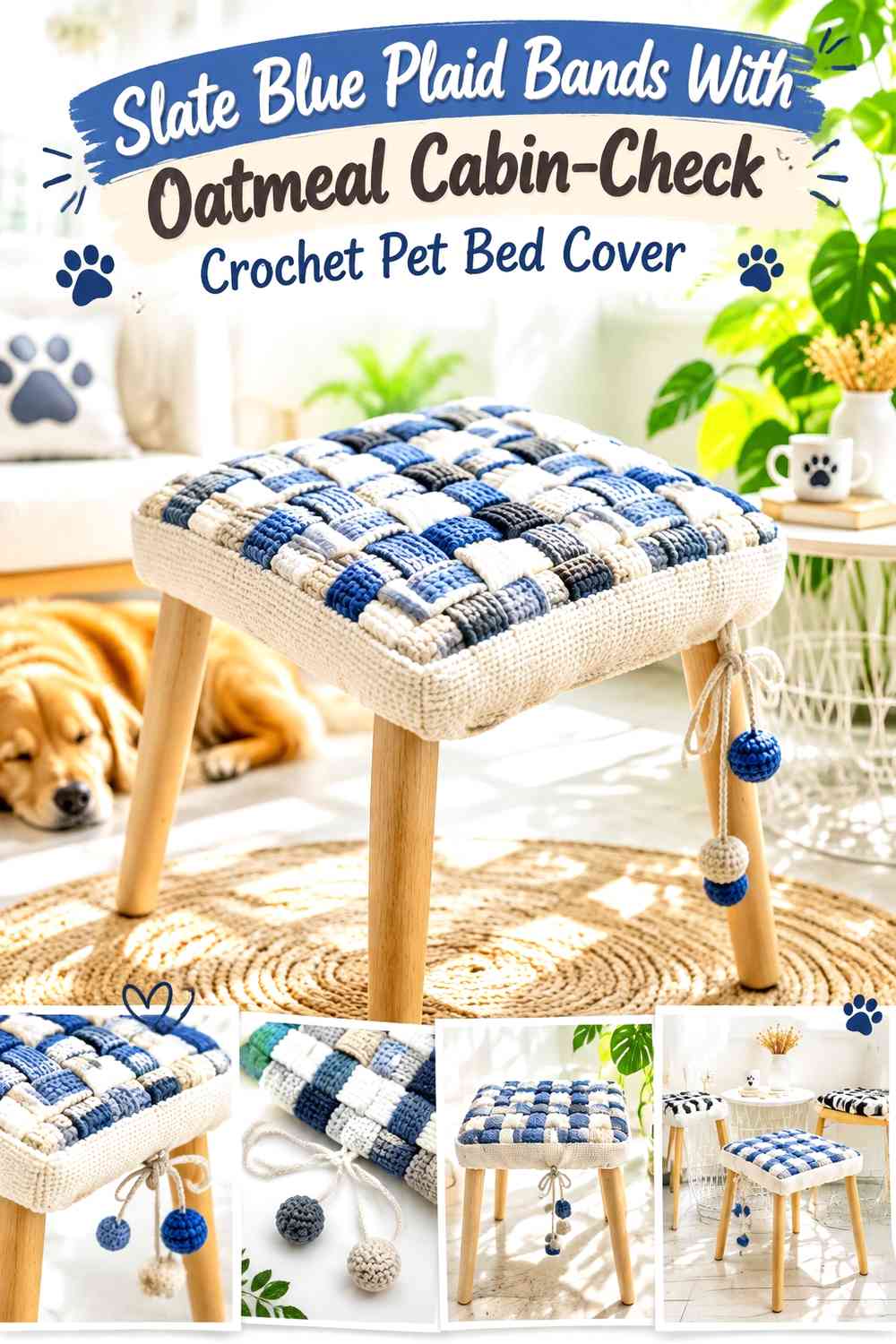
A plaid-style cover introduces longer horizontal and vertical color movement. Let Slate Blue carry the main dark bands and reserve Oatmeal for lighter crossings or background blocks. This creates more movement than a simple alternating checkerboard while staying within two colors.
Keep Slate Blue Plaid Bands Strong Across Oatmeal
Use Slate Blue consistently where the darker lines are meant to travel across the cover. Breaking those bands too frequently can make the plaid structure difficult to follow.
Let Oatmeal Keep Slate Blue Intersections From Becoming Too Heavy
Plaid intersections naturally collect more visual weight. Surround them with enough Oatmeal that the darker crossing points remain deliberate focal areas rather than turning the whole bed dark.
Carry Oatmeal to the Slate Blue Pet Bed Edge
A lighter outer section can soften a strongly patterned center. If the Oatmeal edge blends into the floor, finish with a narrow Slate Blue line for definition.
Creator Credit: Crochet Beauty
8. Reversible Slate Blue and Oatmeal Checkered Crochet Pet Bed Cover
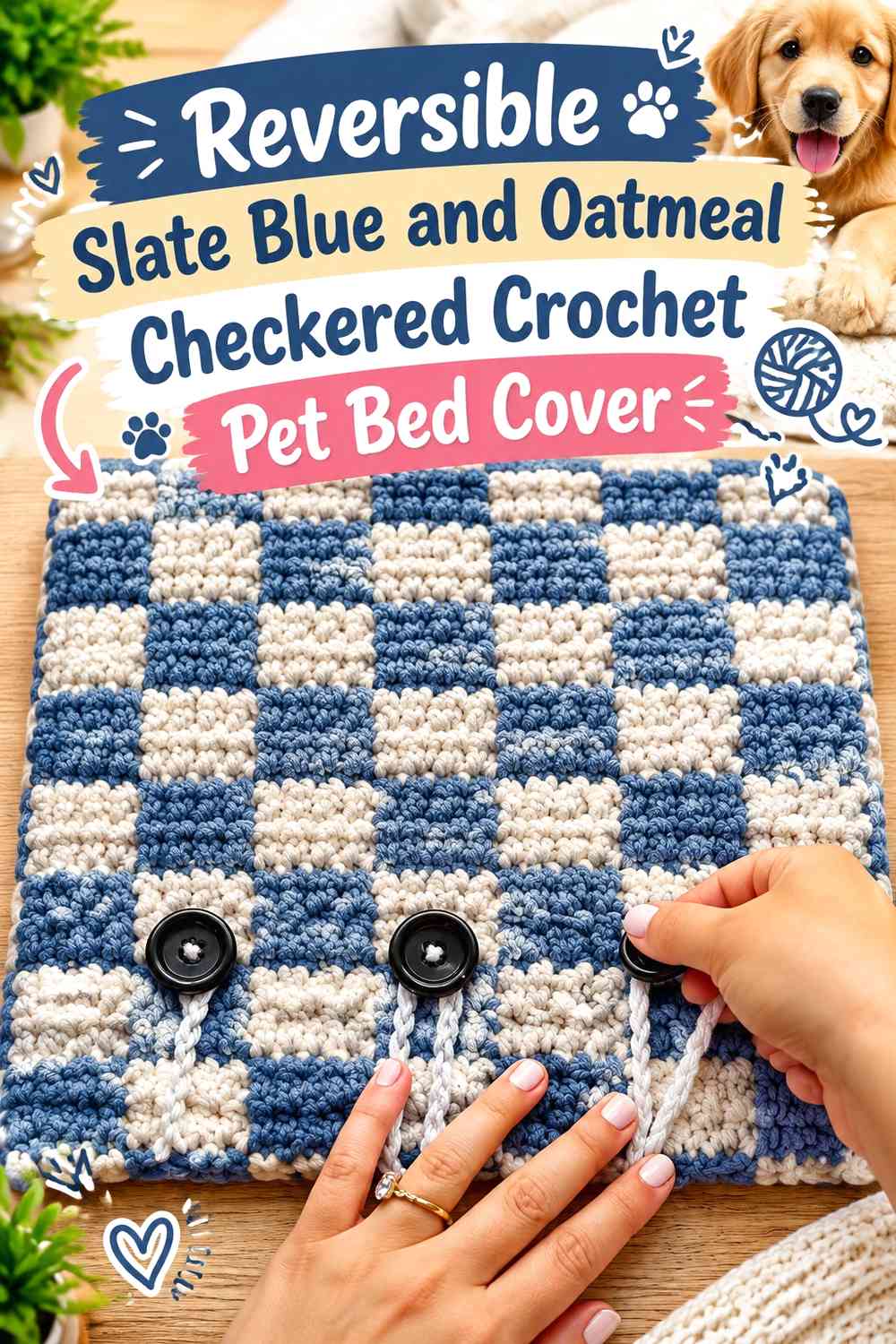
A removable two-sided cover can use the same palette in opposite proportions. One face can be Slate Blue dominant with Oatmeal checks, while the reverse is mostly Oatmeal with smaller Slate Blue blocks. This changes the visual weight without introducing additional colors.
Make Slate Blue Dominant on One Oatmeal Checkered Side
Use the darker face when you want the bed to feel more grounded. Keep Oatmeal repeated clearly enough that the checker pattern does not disappear into a mostly solid blue surface.
Reverse Oatmeal and Slate Blue on the Second Side
On the opposite face, allow Oatmeal to take over the larger areas while Slate Blue becomes the accent check. Preserve a related block scale so the two sides still feel like versions of one design.
Keep Slate Blue and Oatmeal Closures Away From Loose Decoration
A removable-cover concept should prioritize a secure, unobtrusive finish rather than decorative ties or dangling elements when those could attract a pet that chews or pulls at fabric.
The exact closure choice should suit the bed construction and the animal using it.
Creator Credit: Maria’s Blue Crayon
9. Chunky Slate Blue and Oatmeal Oversized-Check Crochet Pet Bed Cover
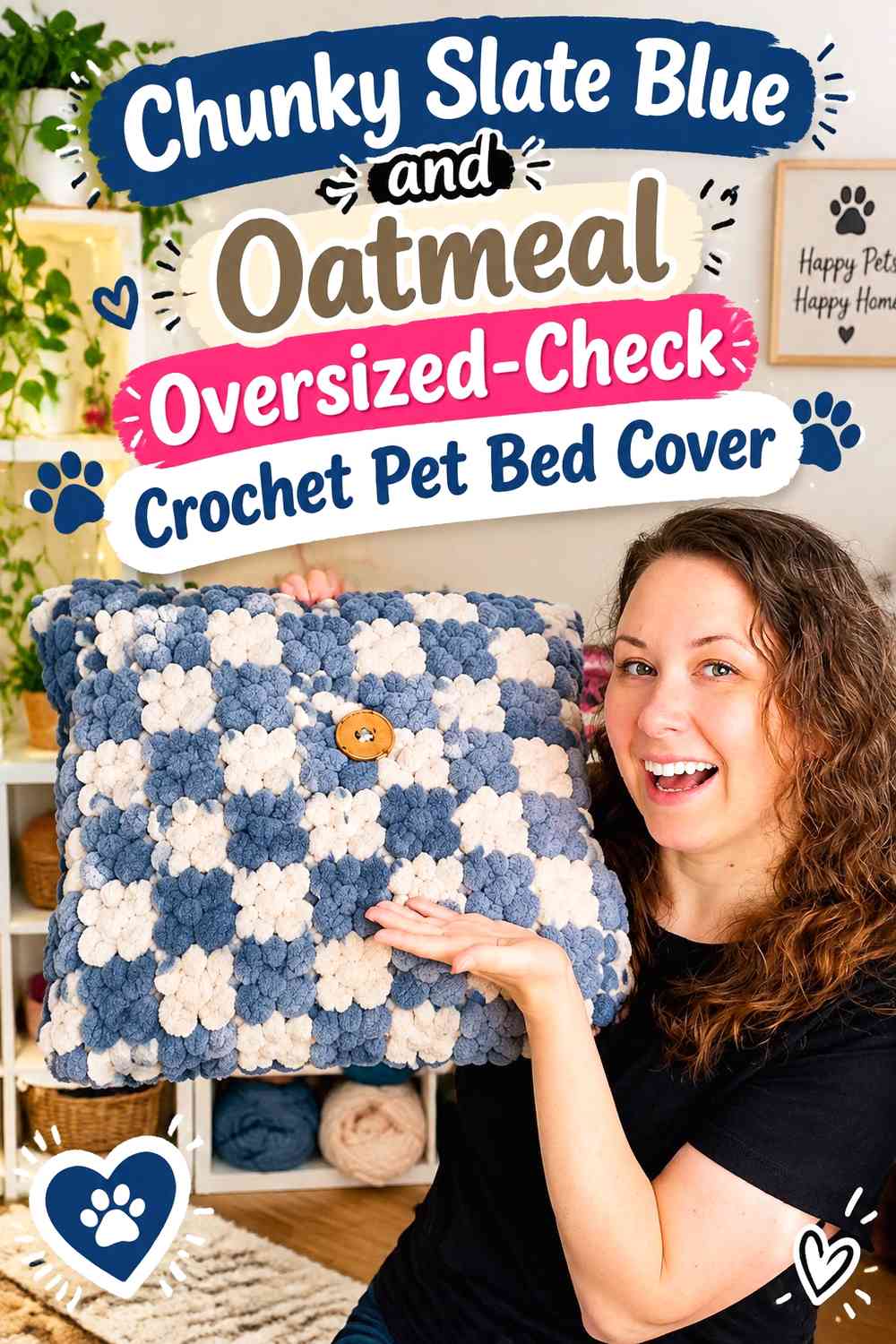
A chunkier crochet surface makes each check visually substantial, so the palette can stay simple. Alternate large Slate Blue and Oatmeal blocks and avoid layering small decorative details over them. The strong texture already gives the cover enough presence.
Make Slate Blue Checks Broad on a Chunky Oatmeal Surface
Chunky stitches can reduce the apparent precision of very small color blocks. Larger Slate Blue sections allow the checkerboard to remain recognizable despite the substantial stitch scale.
Keep Oatmeal Checks Simple Beside Slate Blue Texture
Avoid adding strong raised details to every Oatmeal block when the stitch scale is already prominent. The light-dark alternation should remain the main visual feature.
Test Slate Blue and Oatmeal Bulk Around the Cover Edge
A very thick crocheted fabric can create extra bulk where panels meet or overlap. Evaluate a sample edge before adapting a chunky removable pillow construction to the dimensions of the pet-bed insert.
Creator Credit: Yarn Stash with Marching North
10. Slate Blue and Oatmeal Round Checkered Crochet Pet Bed Cover With a Solid Rim
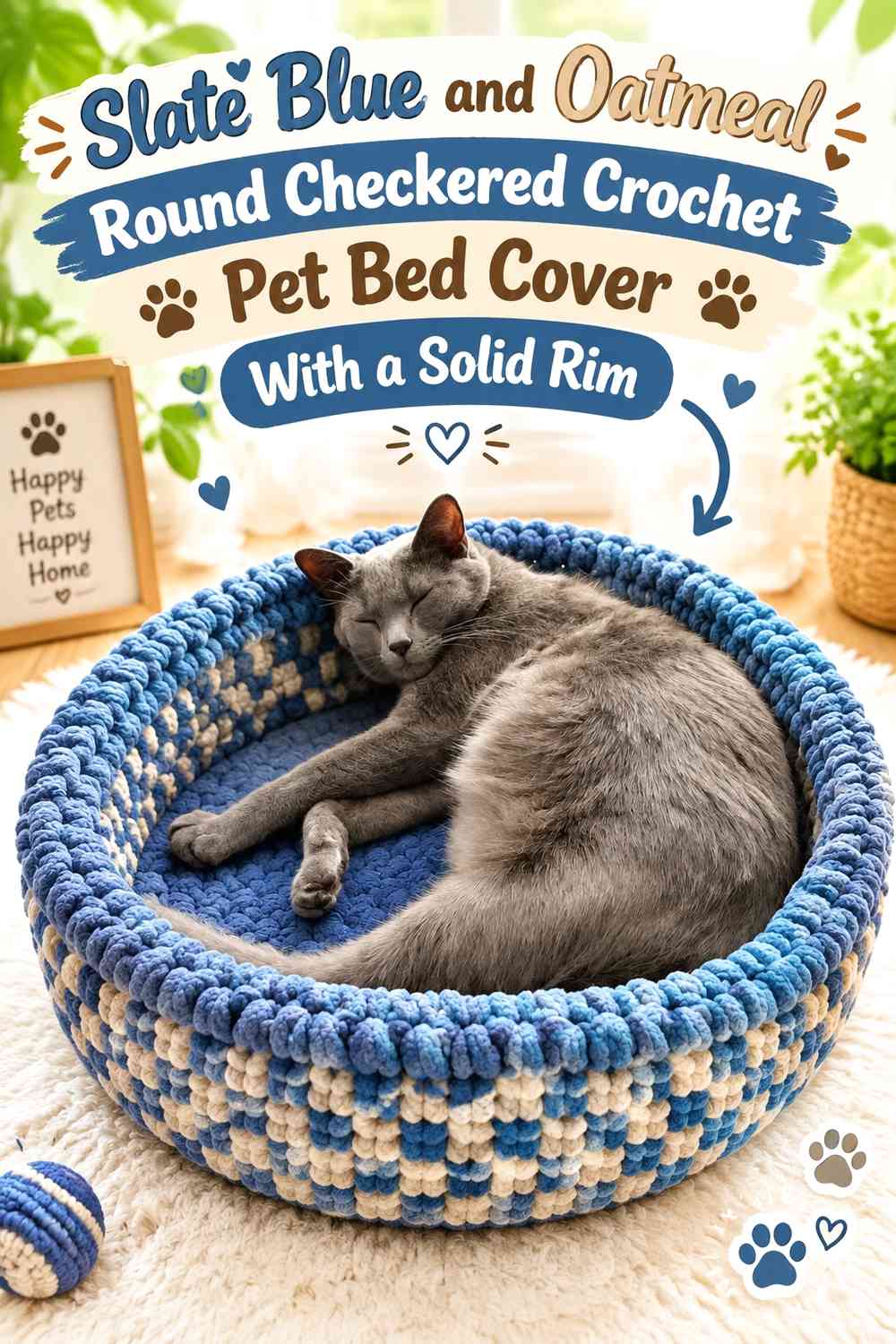
A round pet bed needs a different treatment from a rectangular cushion. Instead of forcing a checkerboard through every part of the circular shape, concentrate Slate Blue and Oatmeal blocks across the main resting surface and allow one color to simplify the outer rim.
The tutorial supports the round pet-bed construction; the checker layout is an independent color adaptation.
Keep Slate Blue and Oatmeal Checks Inside the Main Round Surface
Concentrating the pattern toward the flatter center prevents the changing circumference from making the check sizes look increasingly distorted near the edge.
The pattern does not need to reach every outer round to remain recognizable.
Use Slate Blue Around the Oatmeal Checkered Center
A solid Slate Blue rim can visually contain the lighter checkerboard and give the round bed a strong cabin-style outline.
If the bed sits on a dark floor, consider bringing a narrow Oatmeal detail to the outermost visible edge.
Repeat Oatmeal Once Against the Slate Blue Rim
A small Oatmeal transition can connect the checkered center to the solid dark sidewall without extending the full grid through the curved edge.
Creator Credit: Katia Creates
11. Slate Blue Sidewall and Oatmeal Checkered Crochet Pet Bed Cover
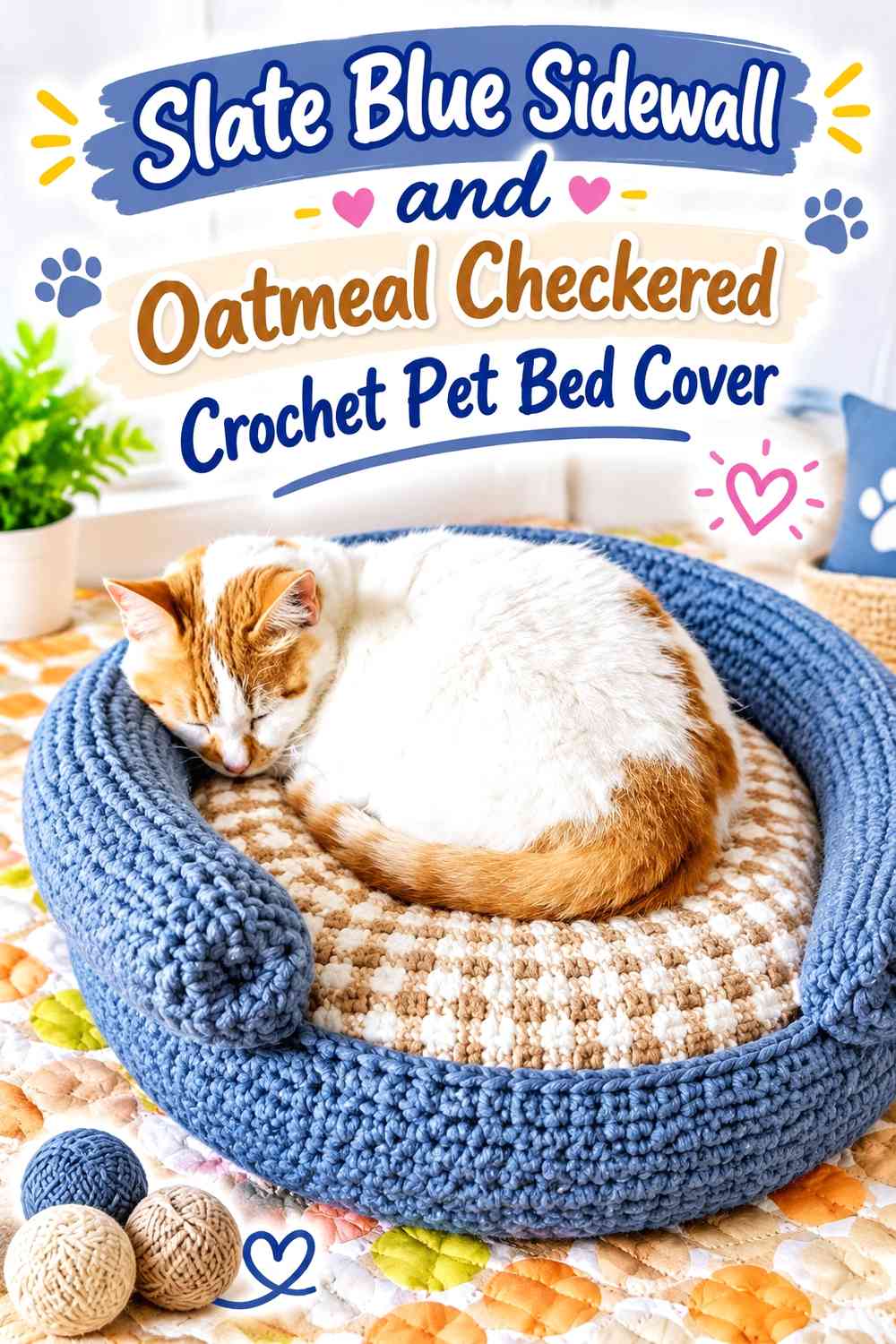
This layout deliberately separates the resting area from the surrounding structure. Use Slate Blue across the sidewall while the upper surface alternates Oatmeal and Slate Blue checks. The solid dark side keeps the bed grounded even when the top is largely hidden during use.
Let Slate Blue Make the Pet Bed Sidewall Visually Continuous
A solid Slate Blue side can make a checkered upper panel feel more contained. It also prevents color changes along a curved or shaped edge from becoming overly busy.
Keep Oatmeal Visible Around the Slate Blue Top Checks
Because the sidewall is already dark, maintain enough Oatmeal on the top to keep the complete bed from becoming Slate Blue dominant.
Place some Oatmeal blocks near the outer top edge where they remain visible around a resting pet.
Use Slate Blue to Connect Oatmeal Checks to the Sidewall
A narrow dark transition around the top can visually tie the patterned surface to the solid side without requiring the checkerboard to continue vertically.
Creator Credit: Crochet MC
12. Oatmeal Plush Rim and Slate Blue Checkered Crochet Pet Bed Cover
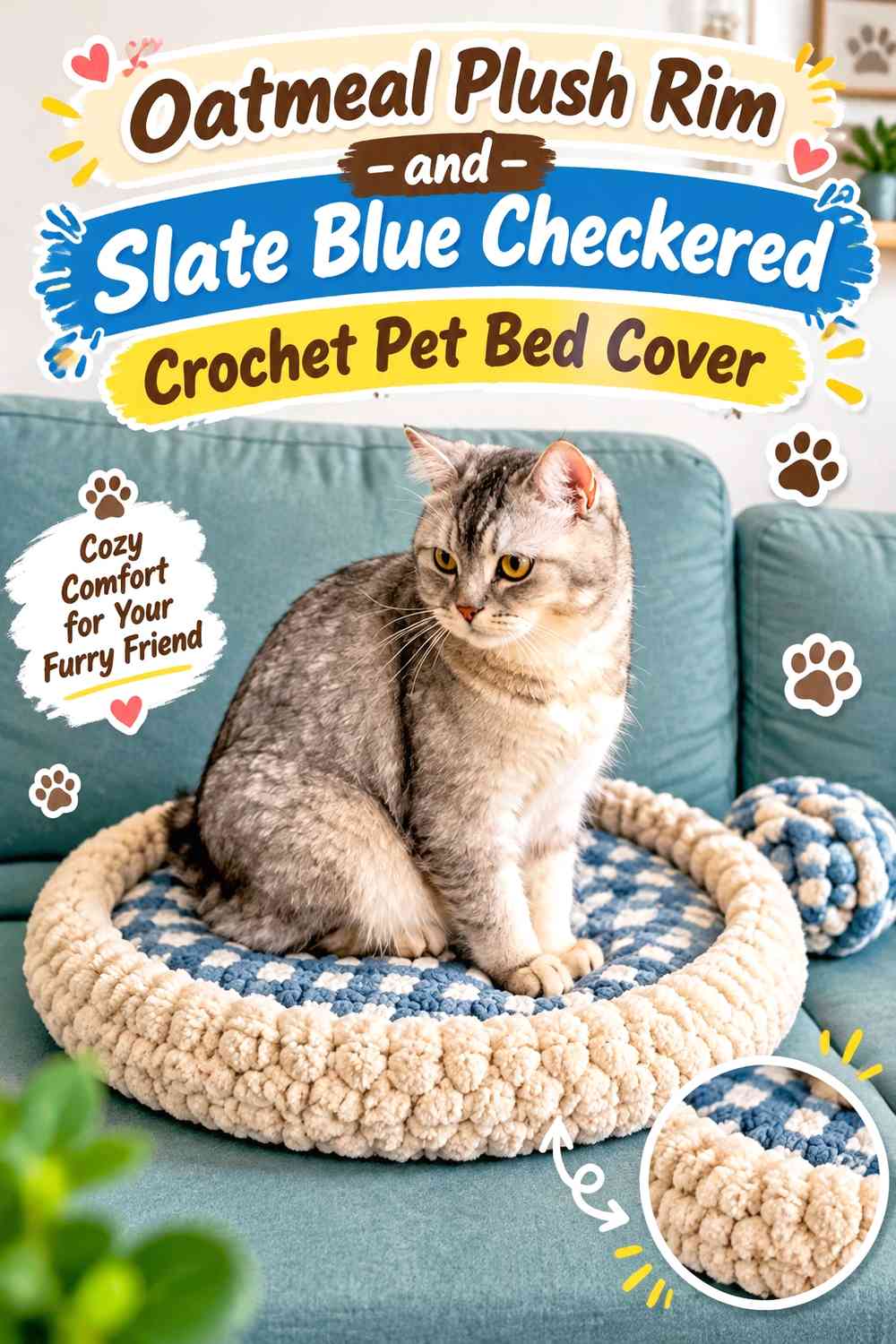
Reverse the previous structure for a lighter bed. Use a Slate Blue-and-Oatmeal checker pattern on the resting surface, then give Oatmeal the larger role around the rim. The pale perimeter softens the bed while Slate Blue keeps the center pattern defined.
Let Oatmeal Carry the Outer Pet Bed Rim
A broad Oatmeal rim can visually lighten the whole piece, even when Slate Blue occupies a substantial part of the center.
If the Oatmeal yarn has a plush surface, keep the rim construction visually simple because strong texture already attracts attention.
Keep Slate Blue Checks Strong Inside the Oatmeal Rim
Use Slate Blue in large enough center blocks that the checkerboard remains visible beside the pale perimeter. Tiny dark marks may look disconnected from a broad Oatmeal border.
Repeat Oatmeal Within the Slate Blue Checker Field
Oatmeal should appear regularly inside the central surface so the rim does not look like a separate piece added to an otherwise dark bed.
The source demonstrates a plush round cat-bed construction; the checkered two-color surface is the independent adaptation here.
Creator Credit: Crocheted by Julia
13. Slate Blue and Oatmeal Mixed-Scale Cabin Plaid Crochet Pet Bed Cover
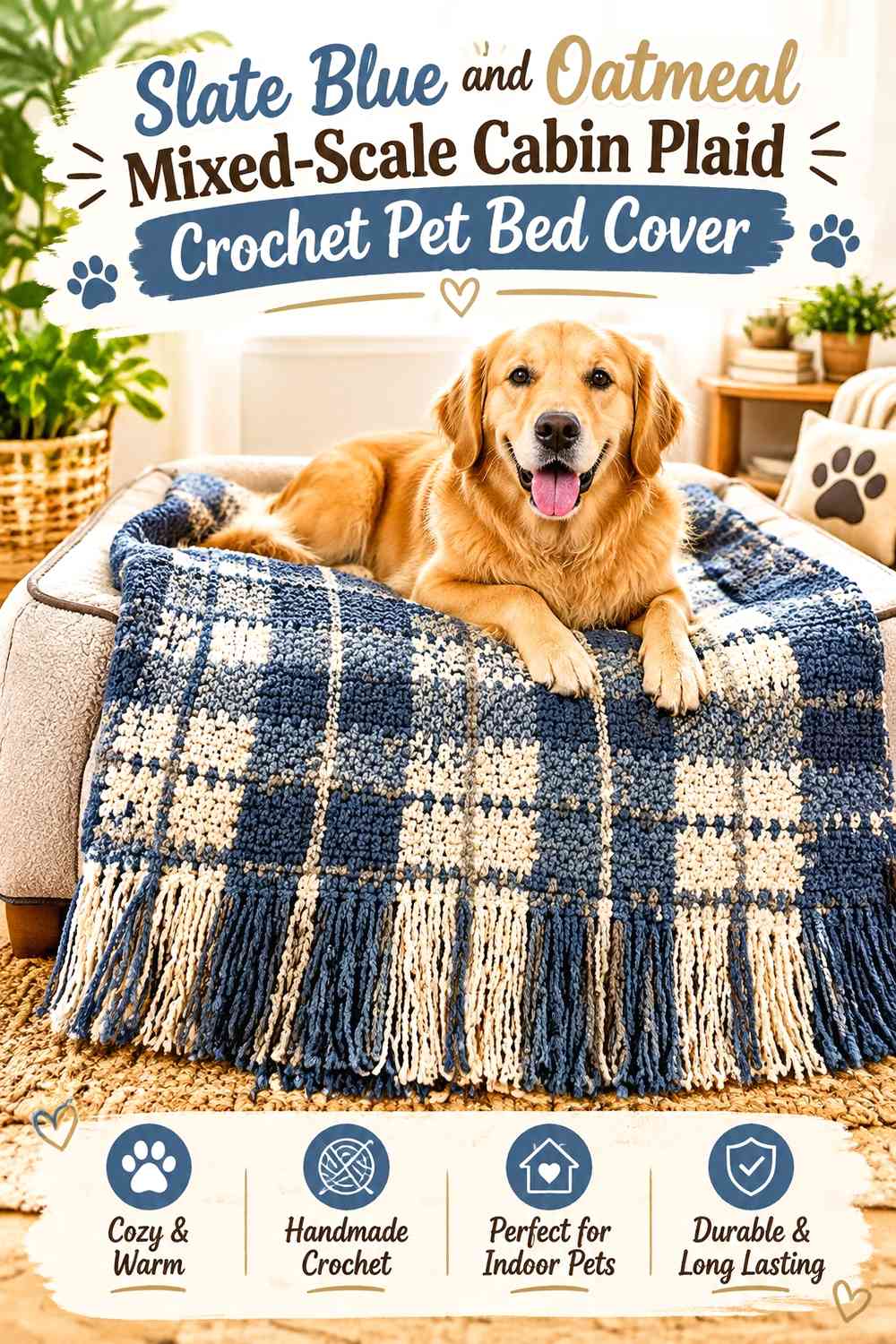
The final idea combines larger and smaller check relationships. Use broad Slate Blue and Oatmeal cabin blocks across the central resting surface, then transition to a narrower plaid or check treatment near the outer portion. The scale change adds detail without introducing another color.
Keep Slate Blue and Oatmeal Checks Larger in the Pet Bed Center
Broad central blocks create a calmer resting surface and keep the main cabin pattern recognizable even when the bed is occupied.
Reserve the smaller visual rhythm for the outer area where more of it remains visible.
Use Slate Blue Lines to Organize the Oatmeal Outer Plaid
Near the edge, narrower Slate Blue lines can create additional check divisions inside the lighter Oatmeal area. Keep those lines consistent so the outer section reads as a deliberate scale change rather than an unrelated border.
Return Oatmeal Around the Slate Blue Cabin Edge
A final Oatmeal repeat can stop a dark plaid section from becoming too heavy. If the floor is similarly pale, a narrow Slate Blue finishing line can restore the bed’s outline.
The source demonstrates a plaid blanket construction; here the colorwork concept is adapted to a measured pet-bed cover rather than copied as a blanket layout.
Creator Credit: The Crochet Crowd
Which Slate Blue and Oatmeal Checkered Pet Bed Cover Should You Choose?
For the clearest cabin checkerboard, start with the classic, oversized-check, or modular-square versions. These keep Slate Blue and Oatmeal in obvious alternating blocks and make the two-color pattern easy to recognize from across the room.
For a softer look, choose an Oatmeal-dominant windowpane, granny-square layout, or pale outer rim. These increase the lighter neutral without losing the winter-blue definition.
If the bed has visible raised sides, the solid Slate Blue sidewall and Oatmeal-rim ideas make better use of that structure than trying to wrap a checkerboard continuously across every surface.
For a more layered cabin aesthetic, the plaid-band and mixed-scale plaid concepts create additional horizontal and vertical movement. The reversible cover offers the most flexibility because the same two colors can switch dominant roles without changing the surrounding room palette.
Conclusion
Slate Blue and Oatmeal work well for a winter cabin pet bed because they can create strong checks without the visual intensity of black-and-white checkerboard. Slate Blue brings depth and structure, while Oatmeal opens the pattern and helps individual blocks remain distinguishable.
The most useful choice is not simply which color you prefer, but where each one belongs on the actual bed. A checkered top may benefit from a solid Slate Blue sidewall, an Oatmeal rim can lighten a dark center, and modular squares let you test the complete arrangement before joining.
For beds used by pets that chew or pull at textiles, keep the finish restrained and avoid loose decorative elements. Follow the credited tutorials for their original pet-bed, cushion-cover, checkerboard, or plaid construction concepts, then size and adapt the Slate Blue and Oatmeal layout to the specific bed you intend to cover.
Frequently Asked Questions
Should Slate Blue or Oatmeal dominate a winter cabin pet bed cover?
Slate Blue works well as the dominant shade when you want a deeper, more grounded cabin look. Oatmeal can dominate when you want a lighter bed with Slate Blue providing check definition. Unequal color balance is often more visually relaxed than a strict fifty-fifty split.
How large should Slate Blue and Oatmeal checks be on a pet bed?
Choose the scale according to the full bed surface rather than a small swatch. The checks should repeat often enough to establish a pattern but remain large enough to be recognized when a pet covers part of the center.
Can I turn a crochet pillow-cover tutorial into a pet bed cover?
A pillow-cover tutorial can provide a useful panel, joining, or removable-cover concept, but the dimensions and closure need to be adapted to the actual pet-bed insert. Measure the bed rather than relying on the tutorial’s pillow measurements.
Should the pet bed sidewall be Slate Blue or Oatmeal?
Slate Blue gives the bed a darker, more defined outer structure and works well when the top contains many Oatmeal checks. An Oatmeal sidewall creates a softer appearance and can balance a darker Slate Blue-dominant center.
How can I tell whether Slate Blue and Oatmeal have enough contrast?
Place the yarns side by side and view them from across the room. A grayscale photo is also useful for checking their difference in lightness. If the checks merge, preserve the same palette direction but choose a lighter Oatmeal or deeper Slate Blue.
Are tassels or fringe useful on a checkered pet bed cover?
They are unnecessary for establishing the cabin look, and loose decoration may be unsuitable for pets that chew, pull, or mouth textile elements. A secured crocheted edge can finish the checkerboard without adding dangling pieces.
How can I make a Slate Blue and Oatmeal pet bed look more cabin-inspired without adding another color?
Change the scale and placement of the two existing colors. Oversized checks, darker joins, windowpane lines, plaid intersections, or a solid Slate Blue sidewall can strengthen the cabin direction while keeping the palette limited to Slate Blue and Oatmeal.