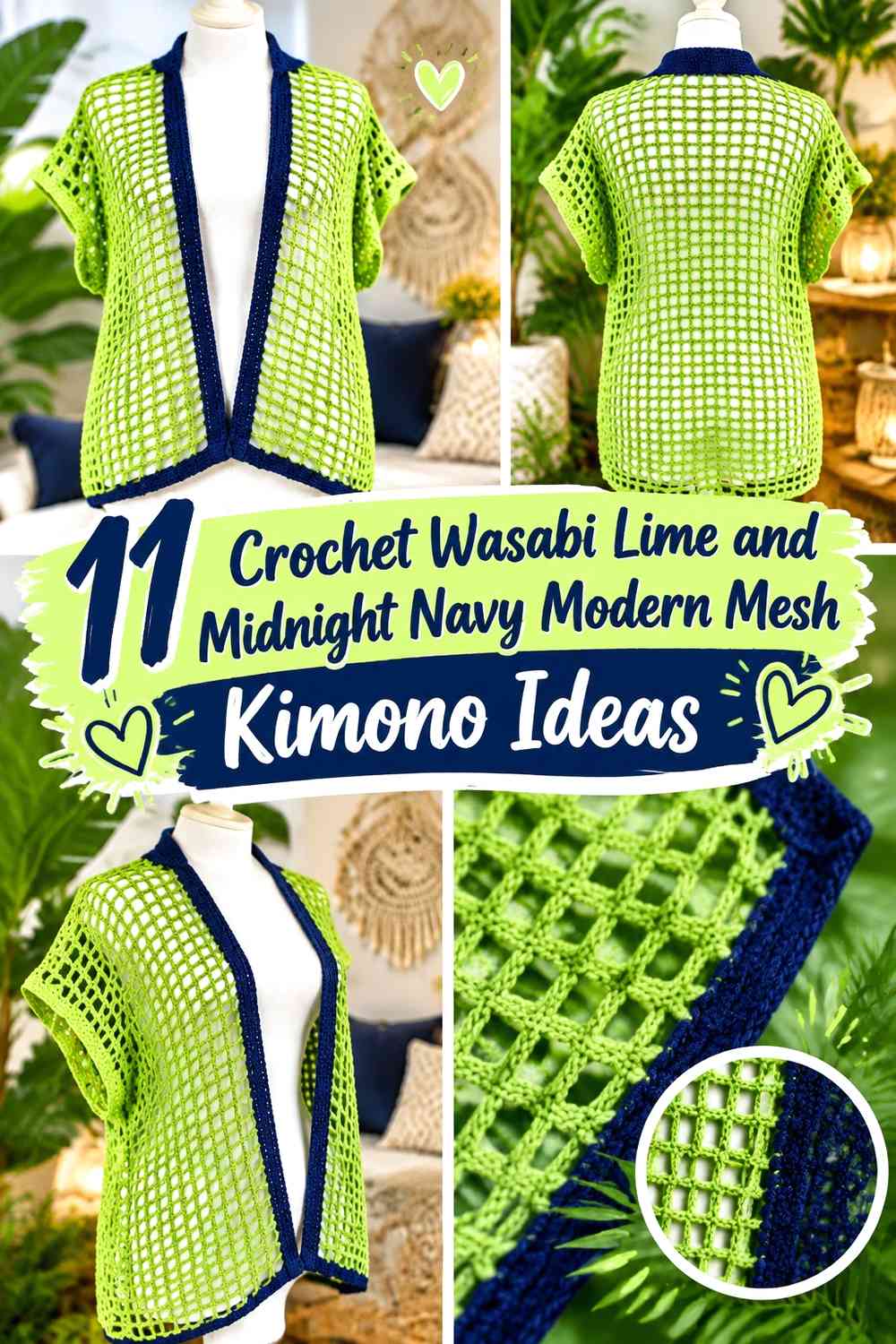

Wasabi Lime and Midnight Navy create a high-contrast palette that works especially well with a modern crochet mesh kimono. Wasabi Lime brings energy to open grid stitches and long vertical panels, while Midnight Navy can stabilize edges, cuffs, side seams, and front borders so the airy garment still has clear structure.
Here, Wasabi Lime describes a lively yellow-green direction rather than a specific commercial yarn shade. Midnight Navy means a very deep blue direction. Because the colors differ strongly in both lightness and mood, even a narrow navy border can have considerable visual weight against a lime mesh body.
Mesh changes color perception too. The clothing underneath remains visible through the openings, so a Wasabi Lime mesh panel may appear brighter or darker depending on the layer beneath it. Midnight Navy mesh can look much lighter once open spaces interrupt the dark surface. Evaluate the palette in the actual stitch pattern rather than judging only from the yarn.
The tutorials below include true mesh kimonos, lace kimonos, open cardigans, granny-motif kimonos, and related airy layering constructions. The Wasabi Lime and Midnight Navy placements are independent color adaptations rather than palettes attributed to the creators.
Quick List
- Wasabi Lime Mesh Crochet Kimono with Midnight Navy Front Borders
- Midnight Navy Mesh Crochet Kimono with Wasabi Lime Sleeve Cuffs
- Wasabi Lime and Midnight Navy Split-Panel Crochet Mesh Kimono
- Midnight Navy V-Stitch Crochet Mesh Kimono with Wasabi Lime Side Slits
- Wasabi Lime Open-Grid Crochet Kimono with Midnight Navy Sleeve Bands
- Midnight Navy Lace Crochet Kimono with Wasabi Lime Outer Edging
- Wasabi Lime Granny-Mesh Crochet Kimono with Midnight Navy Joins
- Midnight Navy Cape-Style Crochet Mesh Kimono with Wasabi Lime Perimeter
- Wasabi Lime Short Crochet Mesh Kimono with Midnight Navy Hem Band
- Midnight Navy Longline Crochet Mesh Kimono with Wasabi Lime Front Panels
- Wasabi Lime and Midnight Navy Color-Block Crochet Mesh Kimono
Decide Whether Wasabi Lime or Midnight Navy Should Lead the Mesh
Wasabi Lime works well as the dominant shade when you want the open stitch pattern to become the most noticeable part of the kimono. Midnight Navy can then define the front opening, cuffs, hem, and selected seams without requiring broad dark sections.
A Midnight Navy-dominant kimono feels much deeper. Wasabi Lime becomes an especially strong accent when it is limited to one front border, a sleeve band, or several vertical panels. Because lime is visually assertive, it does not need equal surface area to balance the navy.
Use Midnight Navy to Give Wasabi Lime Mesh a Clear Frame
Open mesh can visually dissolve at the edges, particularly when worn over a similarly bright layer. Midnight Navy is useful around front openings, sleeve ends, lower hems, and side slits because the dark line clarifies where the kimono fabric ends.
Avoid making every border equally heavy. A deep Midnight Navy front band plus equally deep cuffs and hem can turn a Wasabi Lime kimono into a dark-framed garment rather than a lime-led one.
Plan Wasabi Lime and Midnight Navy Around the Layer Underneath
Unlike dense crochet, mesh reveals a significant amount of the outfit beneath it. A white or pale underlayer can increase the apparent brightness of Wasabi Lime, while dark clothing can make Midnight Navy mesh appear more continuous.
When deciding where to place contrast, try the mesh over the kind of clothing you expect to wear with the kimono. This is especially important for large side panels and sleeves, where the background can influence the perceived color balance.
1. Wasabi Lime Mesh Crochet Kimono with Midnight Navy Front Borders
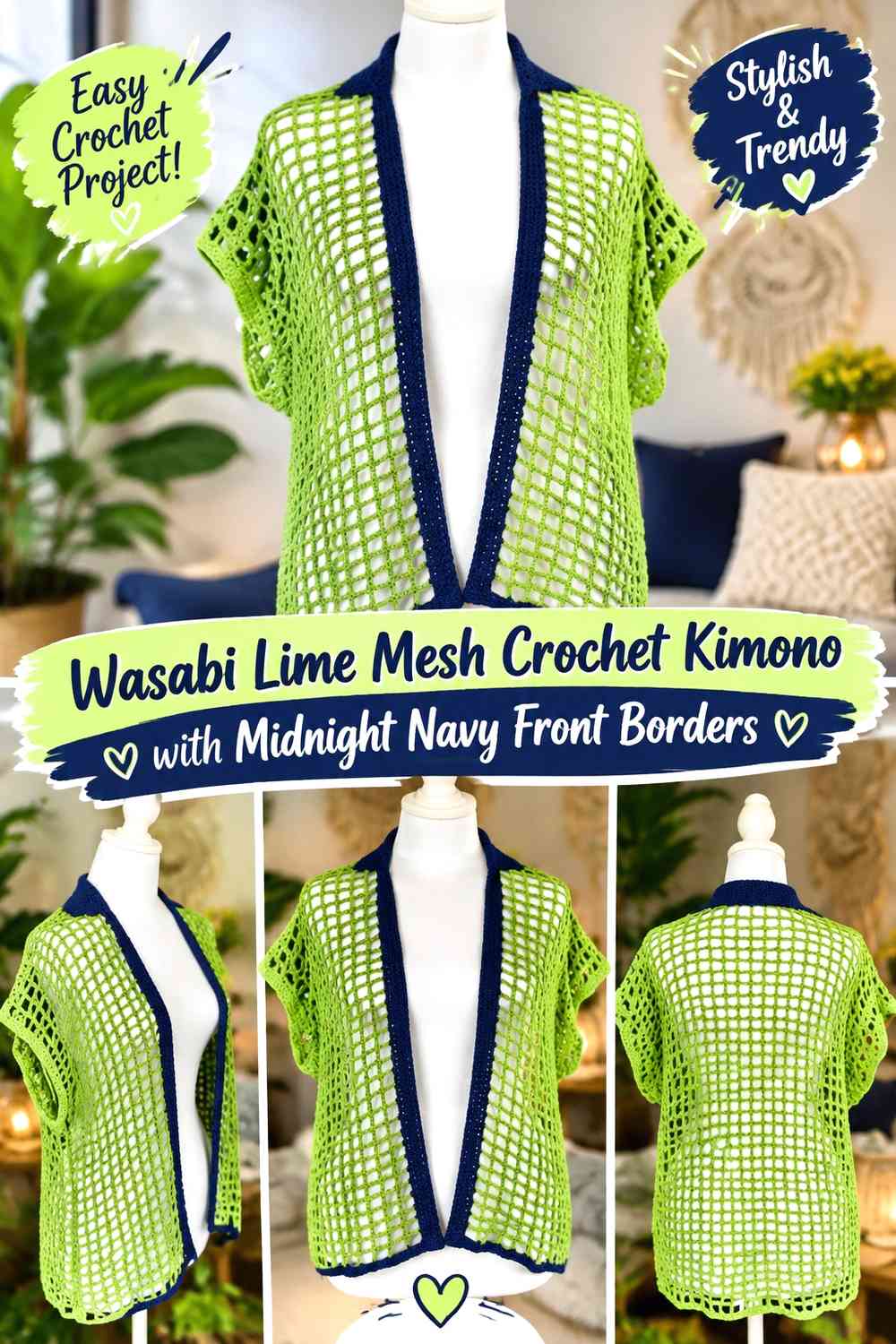
This version keeps Wasabi Lime across the broad back, front panels, and sleeves while Midnight Navy traces the open front. The dark vertical borders give the bright mesh structure without interrupting the airy surface with repeated stripes.
Wasabi Lime Should Carry the Main Midnight Navy-Framed Mesh
Keep the majority of the mesh Wasabi Lime so the garment remains clearly lime-led from both front and back. Broad Midnight Navy side panels would reduce the amount of uninterrupted open green fabric.
Midnight Navy Front Borders Can Lengthen the Wasabi Lime Kimono
Use Navy in narrow vertical bands along the opening when you want a clean modern frame. Because those lines run almost the full garment length, they can appear substantial even when the actual border is relatively narrow.
Creator Credit: CrochetDre
2. Midnight Navy Mesh Crochet Kimono with Wasabi Lime Sleeve Cuffs
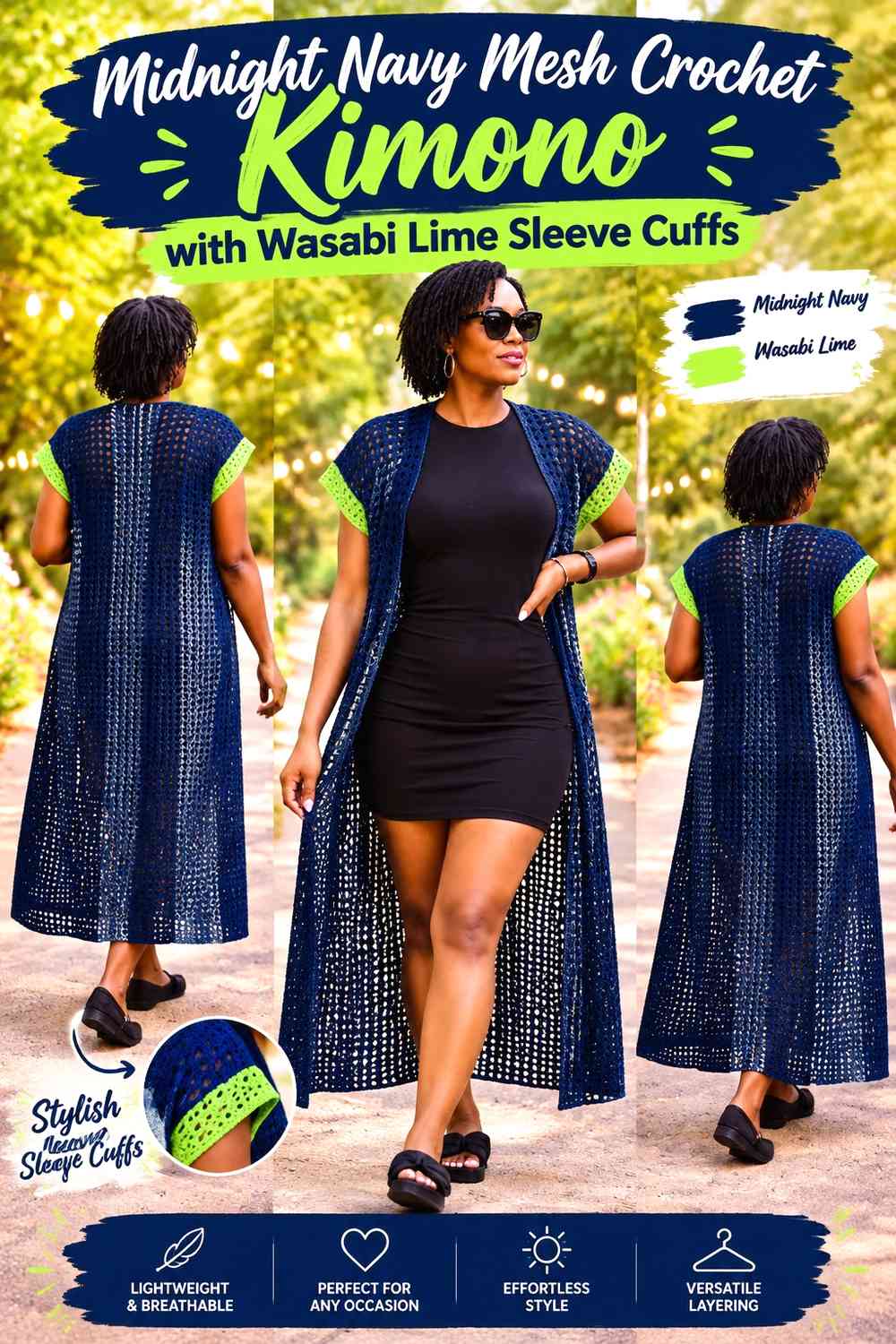
A Midnight Navy mesh body creates a dark open layer, while Wasabi Lime cuffs provide concentrated brightness at the wrists. This is useful when you want the lime to remain a deliberate accent rather than spread through the whole garment.
Midnight Navy Should Stay Continuous Above Wasabi Lime Cuffs
Keep the sleeve mesh navy from shoulder toward wrist so the long open sleeve remains one visual field. Several lime bands above the cuff can weaken the impact of the final contrast.
Wasabi Lime Cuffs Can Brighten the Midnight Navy Sleeves
A lime cuff creates a sharp finish against the deep mesh. If the cuffs are wide, keep other Wasabi Lime details smaller so the sleeves remain the primary bright feature.
Creator Credit: LaDenser Crochets
3. Wasabi Lime and Midnight Navy Split-Panel Crochet Mesh Kimono
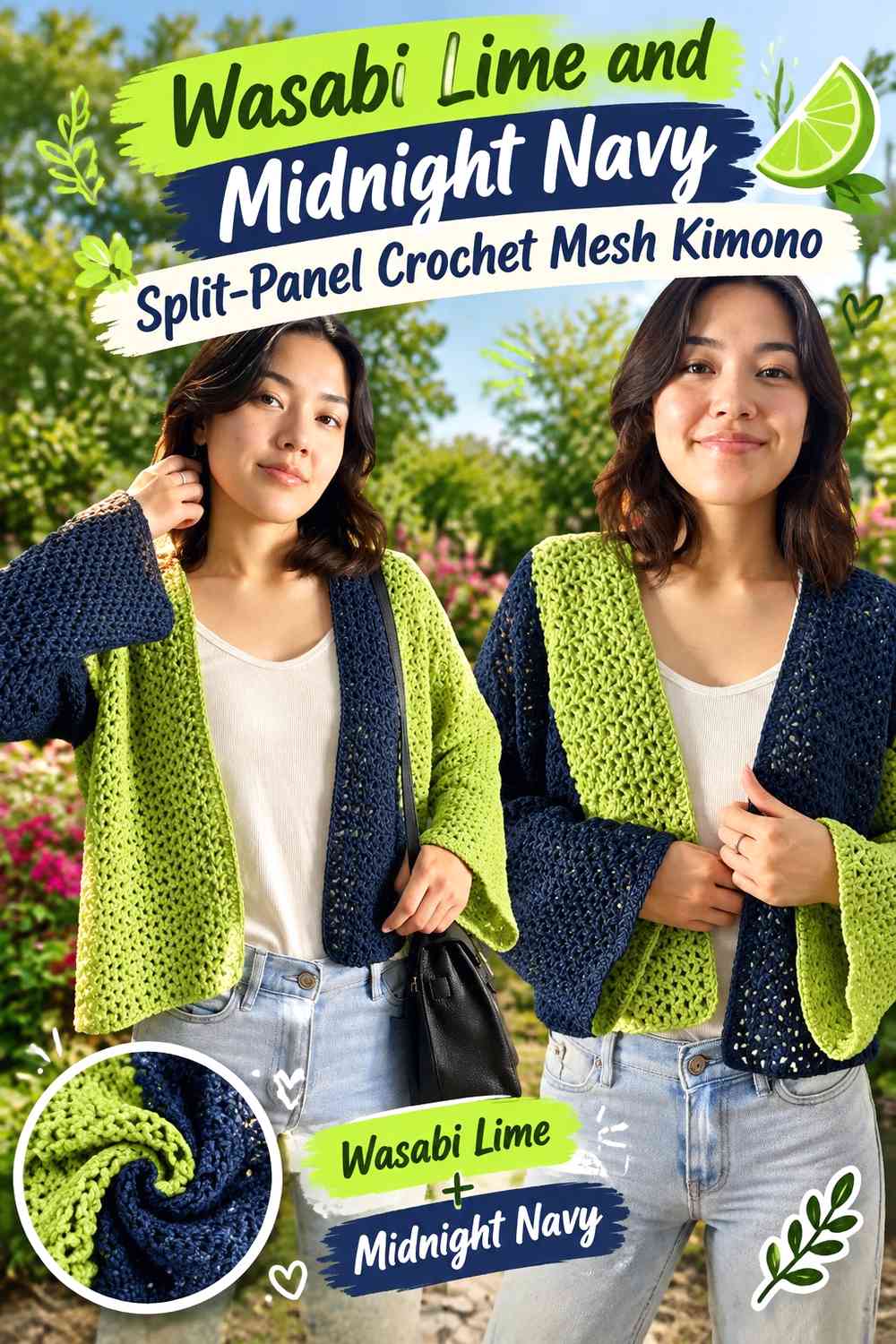
This design gives the two colors larger structural areas rather than using one only for trim. One front panel can lean Wasabi Lime while the other uses Midnight Navy, with the back combining both in a controlled vertical arrangement.
Wasabi Lime Panels Should Follow the Midnight Navy Kimono Structure
Align major color changes with actual panel edges or seams rather than stopping halfway through a continuous mesh field. Structural color blocking looks cleaner on an open garment than arbitrary interruptions.
Midnight Navy Needs Enough Width Beside Wasabi Lime
A very narrow navy strip beside a large lime panel will behave like trim rather than true color blocking. Give both sections enough surface area if you want the split-panel idea to remain visible from a distance.
Creator Credit: VivCrochets
4. Midnight Navy V-Stitch Crochet Mesh Kimono with Wasabi Lime Side Slits
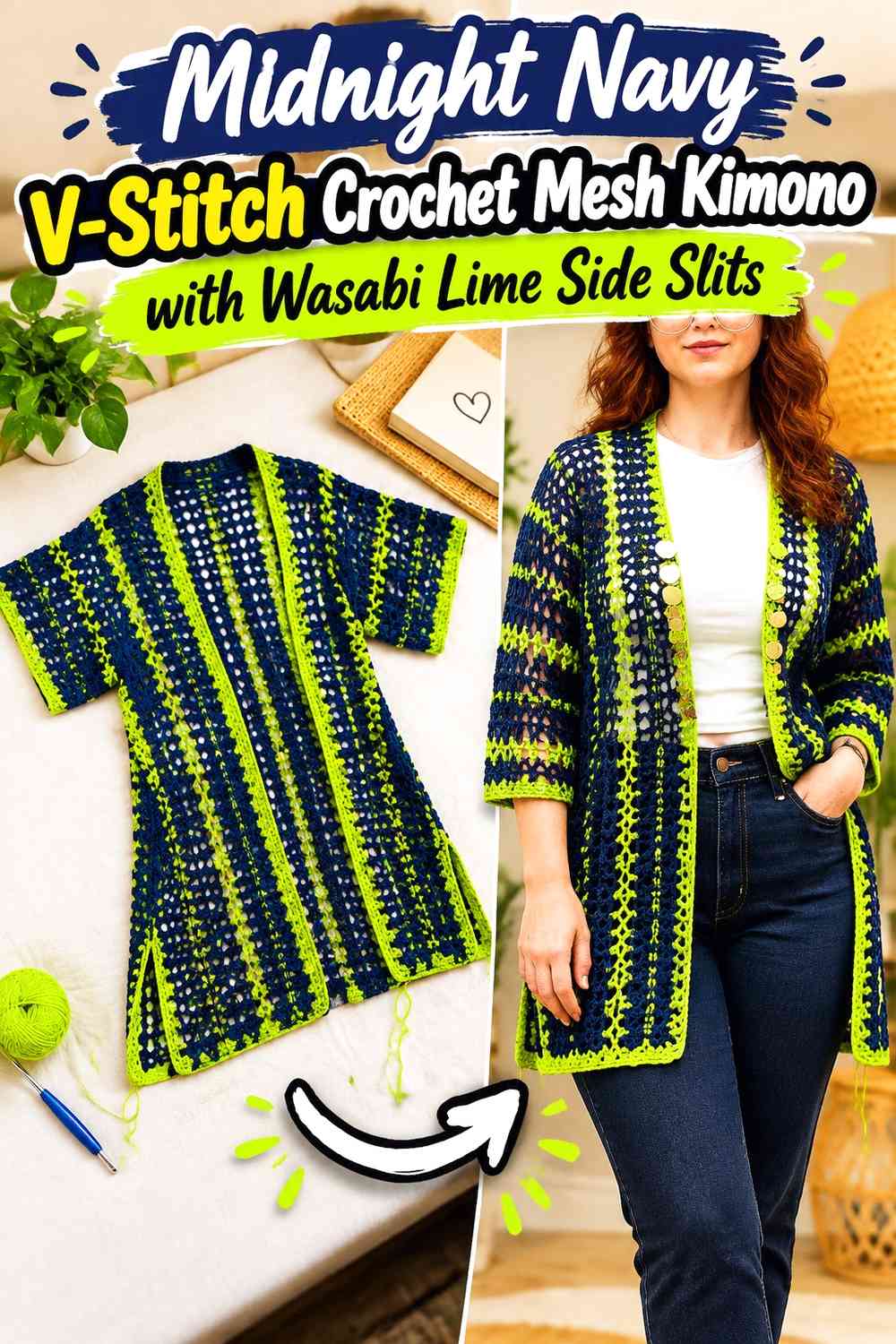
A V-stitch mesh gives Midnight Navy plenty of open texture while Wasabi Lime can define the lower side openings. The bright slit edging draws attention to movement at the hem without breaking up the central body.
Midnight Navy V-Stitch Mesh Should Remain Broad Around Wasabi Lime
Keep the main side and back panels Navy so the V-stitch texture reads continuously. Frequent Wasabi Lime row changes can make the garment look striped rather than mesh-focused.
Wasabi Lime Side Slits Can Break Up the Midnight Navy Hem
Use the bright color along the vertical edges of each slit or in a narrow lower border. Matching the placement on both sides helps the contrast look intentional when the kimono moves.
Creator Credit: Brunaticality
5. Wasabi Lime Open-Grid Crochet Kimono with Midnight Navy Sleeve Bands
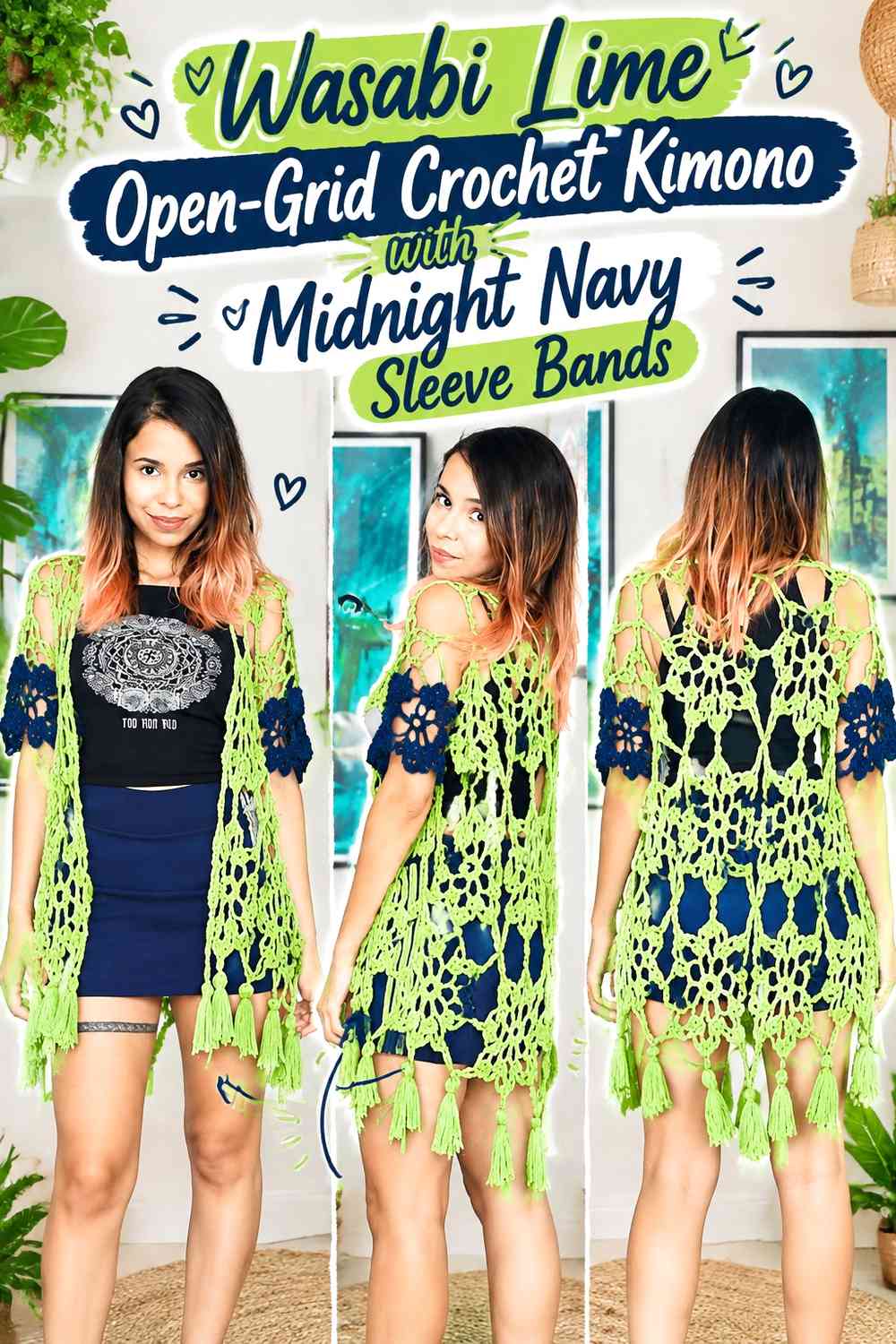
This arrangement keeps a Wasabi Lime open-grid body and introduces Midnight Navy through one or two stronger sleeve bands. The darker sections interrupt the bright mesh selectively instead of outlining every edge.
Wasabi Lime Open Grid Needs Space Between Midnight Navy Bands
Leave generous lime sections above and below each dark sleeve band. Closely spaced Midnight Navy stripes can visually shorten the sleeve and compete with the grid itself.
Midnight Navy Sleeve Bands Should Repeat Clearly on Wasabi Lime
Place the bands at corresponding heights on both sleeves. Because a kimono has a broad relaxed shape, asymmetric band placement can look accidental unless asymmetry is part of the design.
Creator Credit: Marie Castro
6. Midnight Navy Lace Crochet Kimono with Wasabi Lime Outer Edging
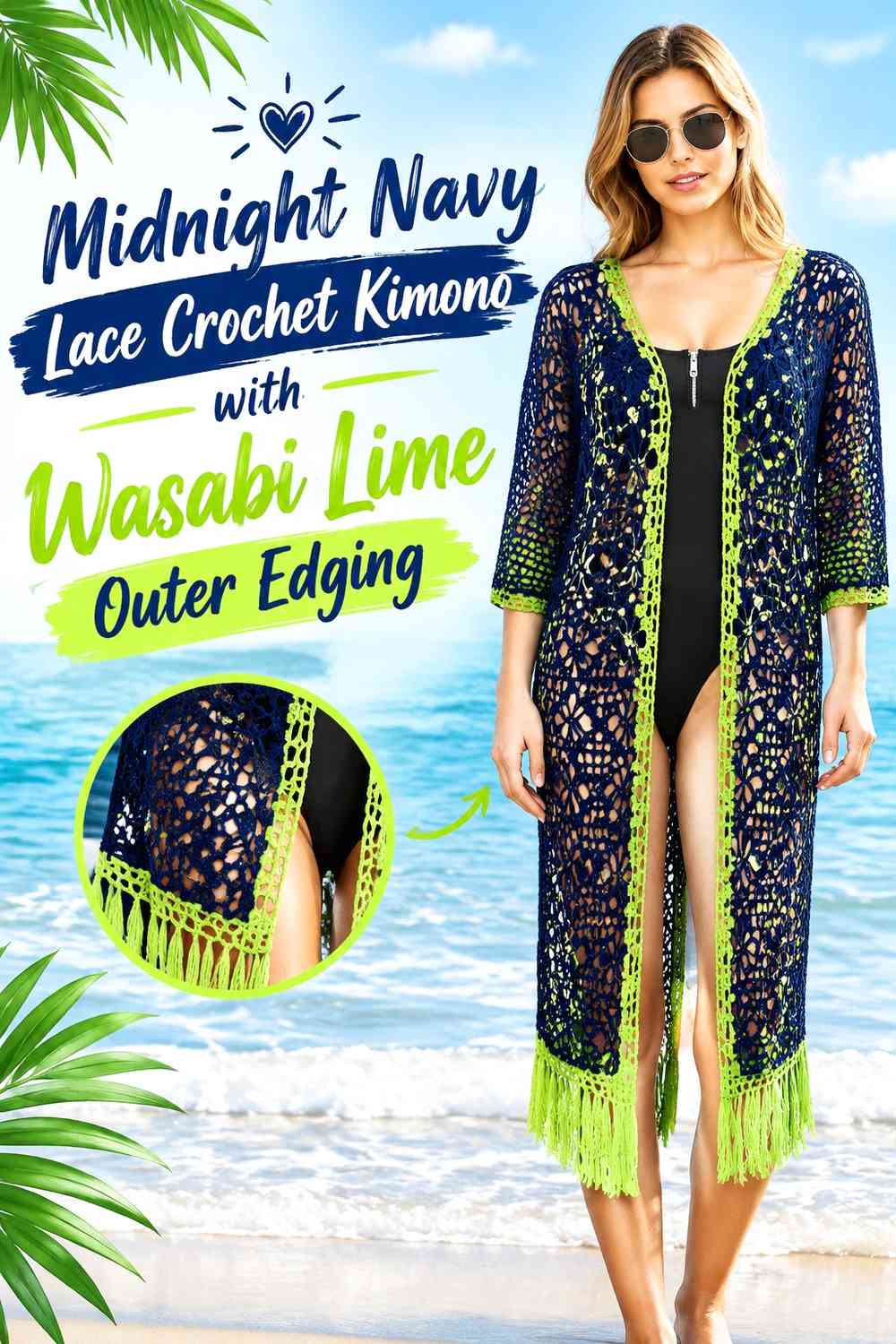
A predominantly Midnight Navy lace kimono can use Wasabi Lime as a sharp outline around the lower edge, sleeves, or front opening. The lime border helps reveal the silhouette of dark openwork.
Midnight Navy Lace Should Stay Calm Inside Wasabi Lime Edging
Let the lace pattern remain mostly navy so its openings and repeats stay connected. Adding Wasabi Lime inside every motif can make the surface visually dense.
Wasabi Lime Edging Can Reveal the Midnight Navy Kimono Shape
Use lime along the sections that benefit most from a clear boundary. One continuous front-and-hem line can feel more modern than separate bright bands around every opening.
Creator Credit: Mamie Crochet
7. Wasabi Lime Granny-Mesh Crochet Kimono with Midnight Navy Joins
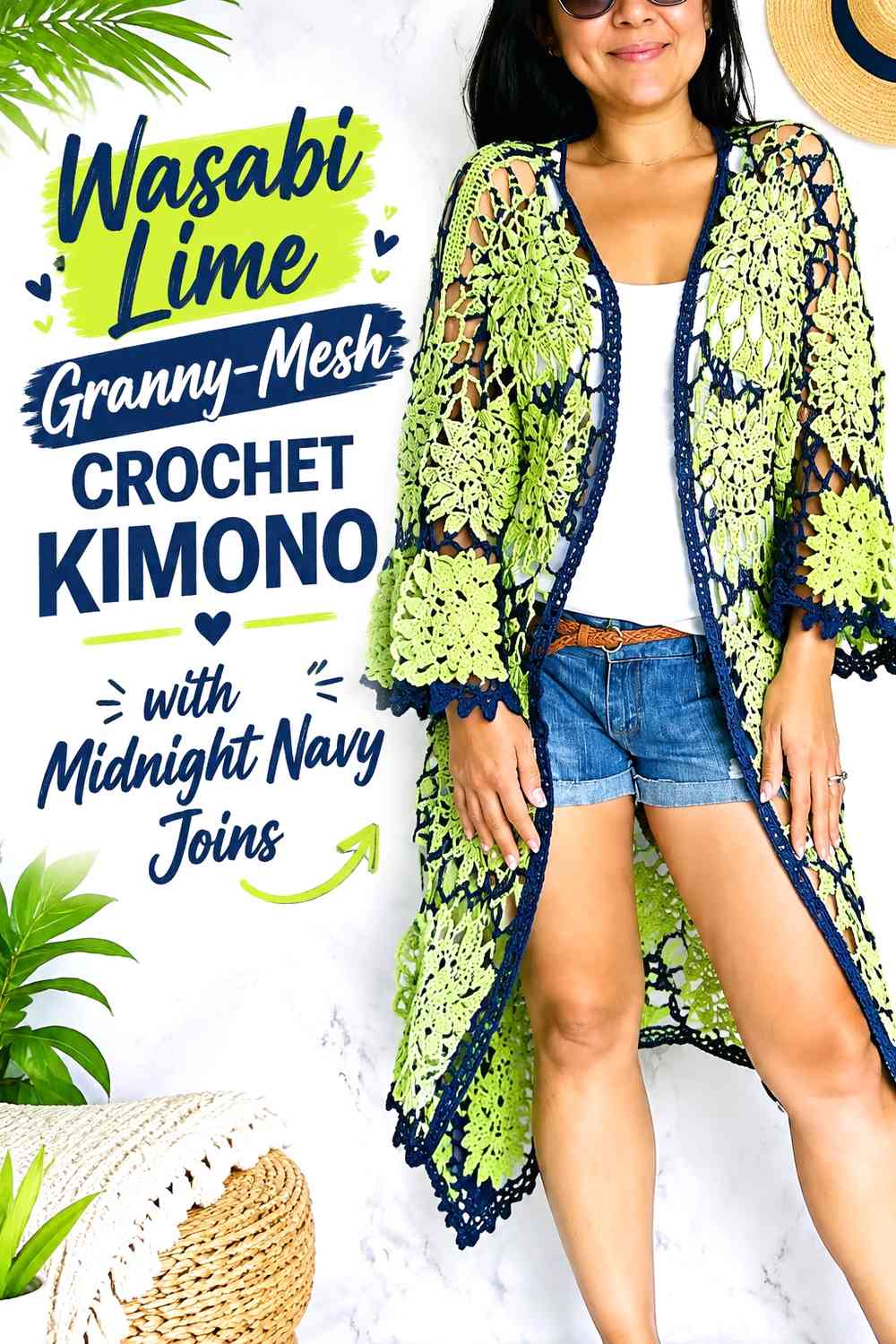
Granny motifs give the two colors a modular way to interact. Wasabi Lime can cover most motif faces while Midnight Navy forms the joins and selected outer rounds, creating a dark grid between brighter open squares.
Wasabi Lime Motifs Need Consistent Midnight Navy Connections
Repeat Midnight Navy in the same structural locations across the squares so the motifs assemble into one garment. Dark joins are especially useful when the lime shapes vary slightly from one section to another.
Midnight Navy Joins Can Organize Wasabi Lime Mesh Without Heavy Borders
Because the joining lines repeat across the whole kimono, they may provide enough dark contrast without an additional deep navy hem. Check the assembled garment before adding more framing.
Creator Credit: The Knotty Lace
8. Midnight Navy Cape-Style Crochet Mesh Kimono with Wasabi Lime Perimeter
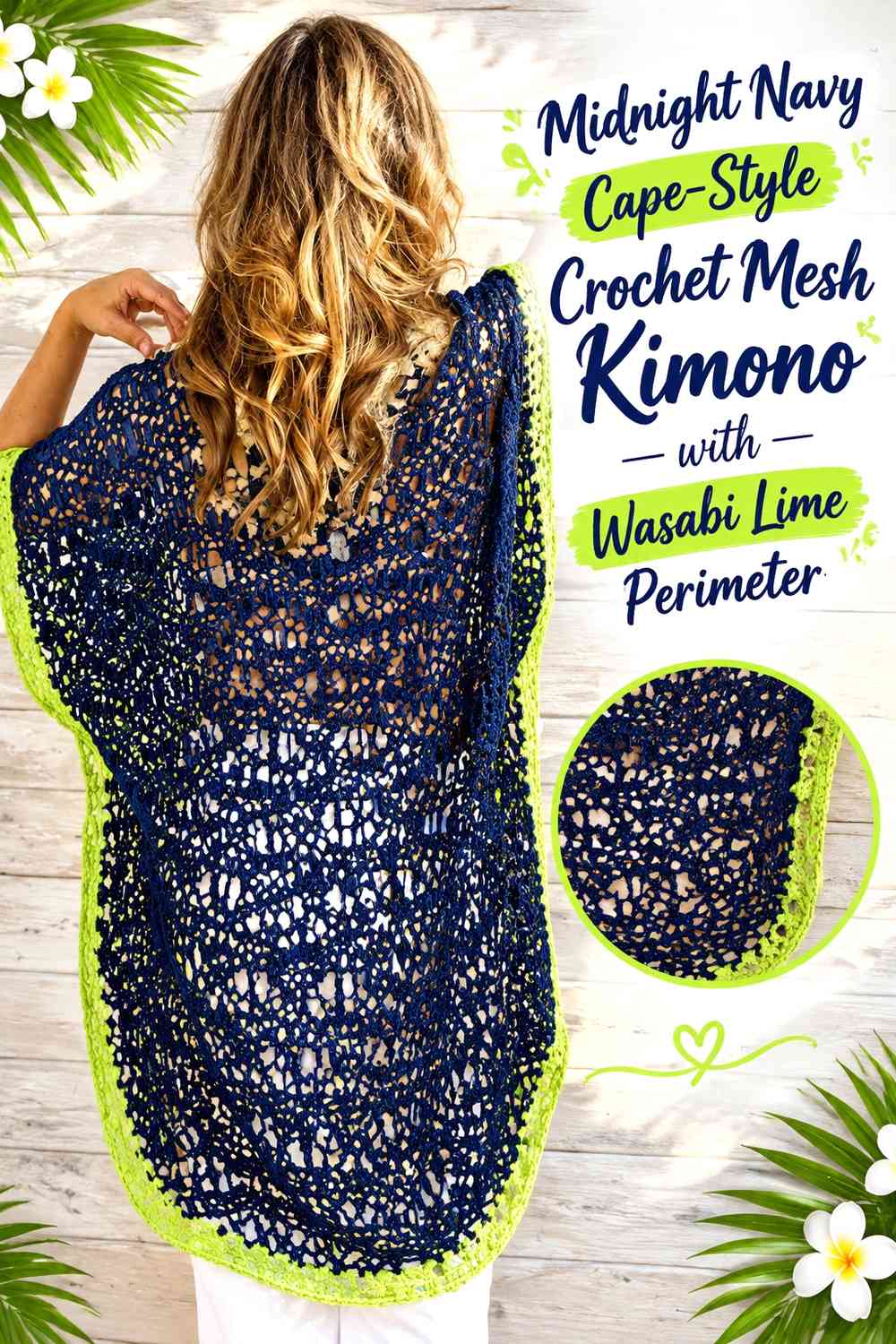
A cape-like kimono has a broad uninterrupted shape, making Midnight Navy useful across the main openwork field. Wasabi Lime can follow the perimeter and emphasize the width without dividing the center into multiple colors.
Midnight Navy Should Preserve the Wide Wasabi Lime-Edged Shape
Keep the large central field one dark color so the cape-style silhouette remains clear. Horizontal lime bands through the middle can visually break that broad shape into stacked sections.
Wasabi Lime Can Trace the Midnight Navy Outer Edge
A continuous lime perimeter makes the open fabric easier to distinguish from dark clothing underneath. Keep the edge controlled if the design already has a strong geometric mesh motif.
Creator Credit: Lakeside Loops
9. Wasabi Lime Short Crochet Mesh Kimono with Midnight Navy Hem Band
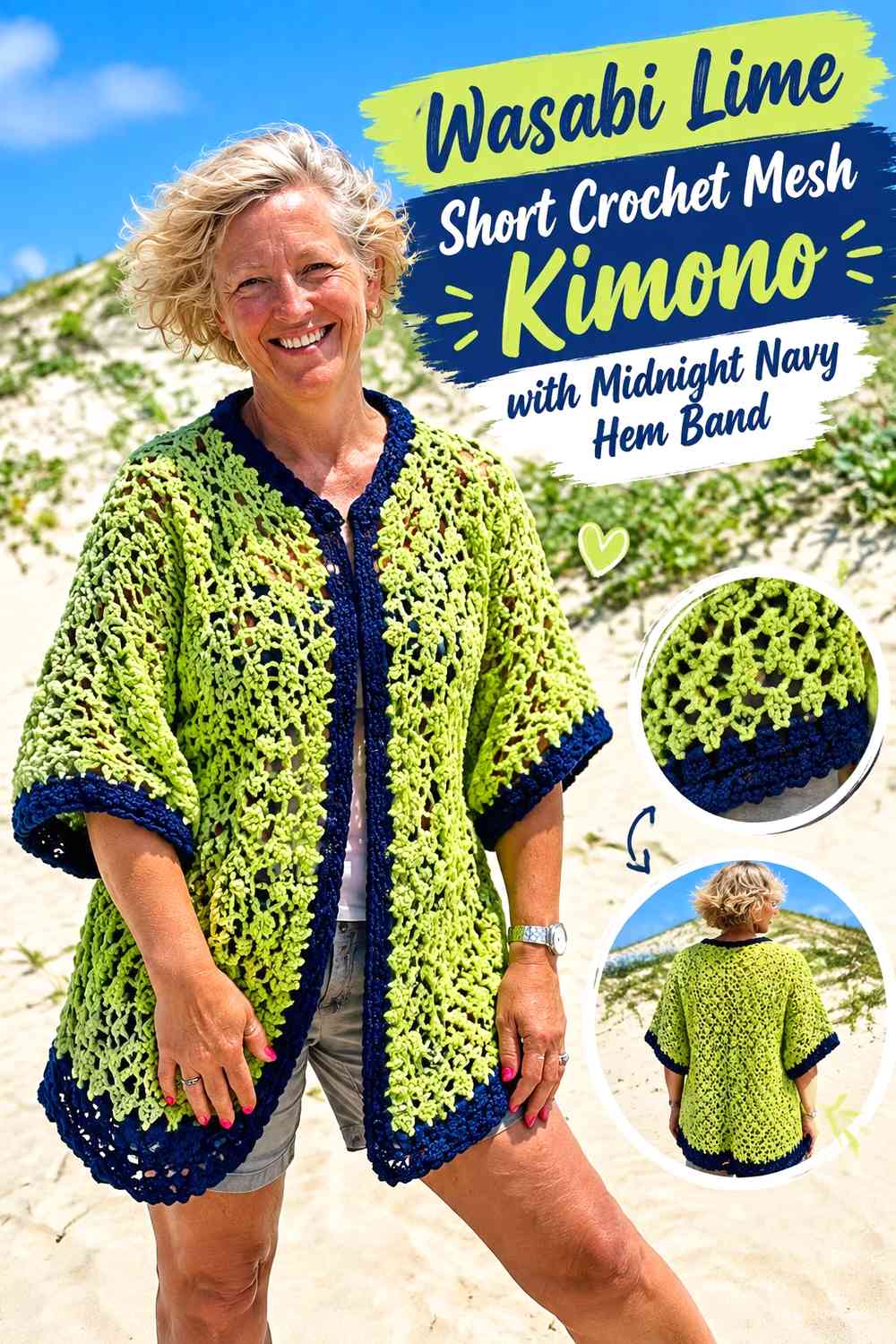
A shorter kimono has less vertical space, so each contrasting section occupies a larger percentage of the garment. Wasabi Lime can dominate the body while one Midnight Navy hem band creates a clear lower finish.
Wasabi Lime Should Remain Broad Above the Midnight Navy Hem
Keep most of the torso and sleeves lime so the short construction does not become visually divided into equal blocks. A deep dark band can make an already cropped kimono appear even shorter.
Midnight Navy Hem Depth Should Suit the Wasabi Lime Length
Judge the band against the entire garment rather than as an isolated detail. If the hem begins to dominate, narrow it and repeat a small amount of Navy at the sleeve edge instead.
Creator Credit: Laurie Carle
10. Midnight Navy Longline Crochet Mesh Kimono with Wasabi Lime Front Panels
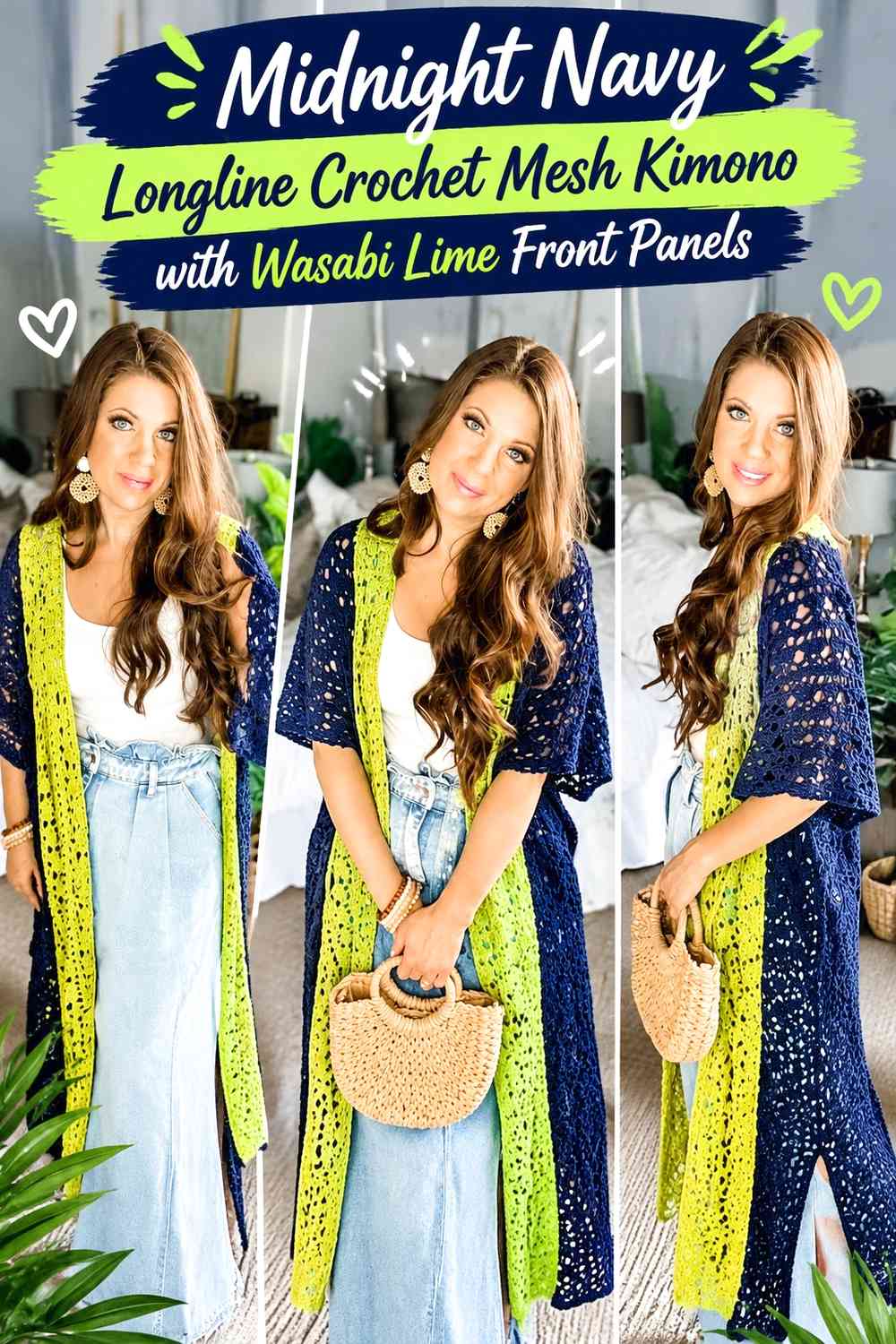
A longline kimono provides enough vertical distance for Wasabi Lime front sections to become strong design features. Midnight Navy can dominate the back and sides while lime travels down the open front.
Midnight Navy Can Ground Long Wasabi Lime Front Panels
Keep the back and side areas dark so the bright vertical fronts do not overwhelm the full garment. This also creates a strong contrast when the kimono is viewed from an angle.
Wasabi Lime Front Panels Can Emphasize Midnight Navy Length
Use lime continuously rather than breaking the front into many short blocks. Long vertical color lines suit a duster-style kimono better than frequent horizontal changes when the goal is to emphasize length.
Creator Credit: MJ’s Off The Hook Designs
11. Wasabi Lime and Midnight Navy Color-Block Crochet Mesh Kimono
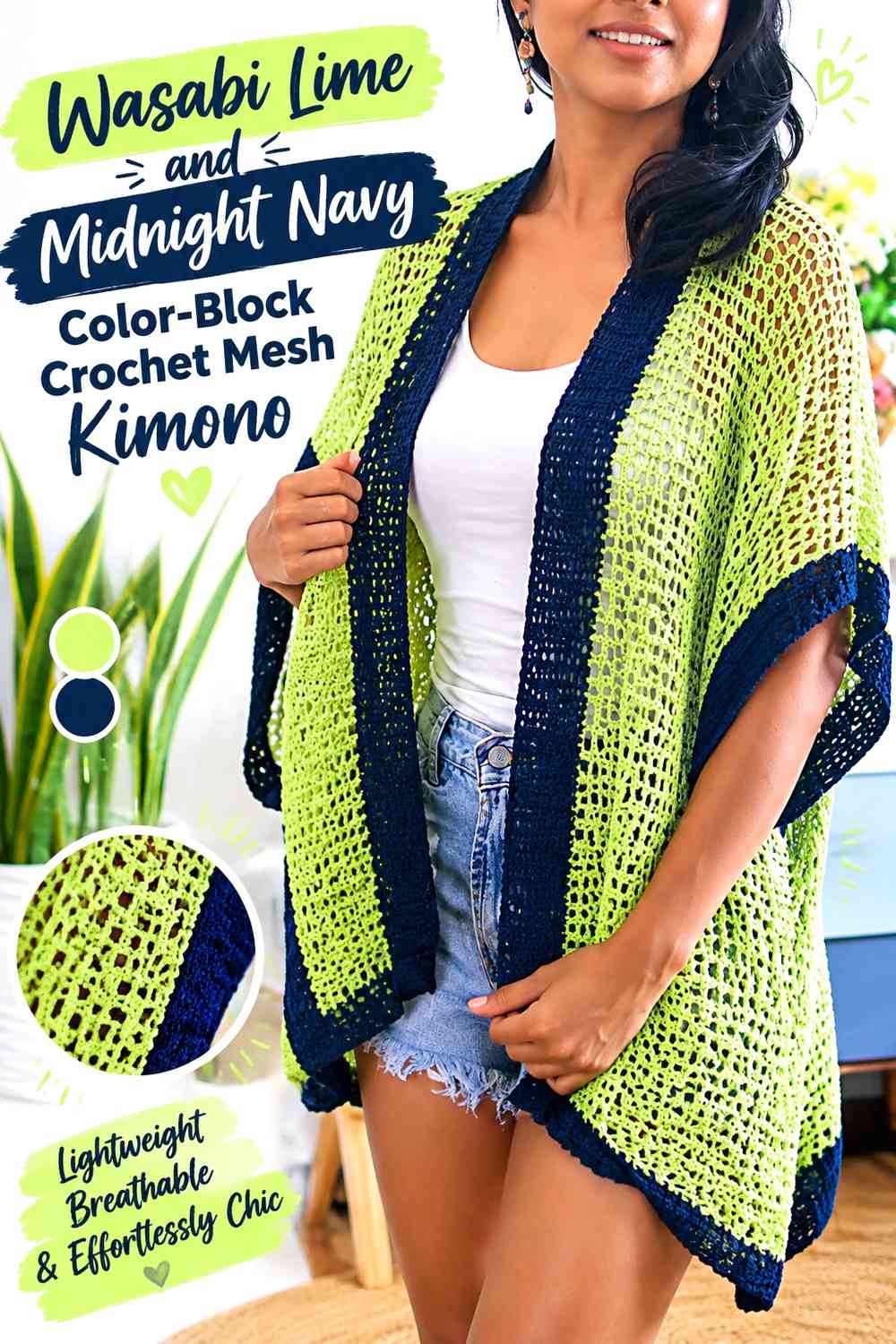
The final idea uses large Wasabi Lime and Midnight Navy zones across the body and sleeves. One sleeve can repeat the body color while the opposite section reverses it, or the back can remain navy while lime controls both front panels.
Wasabi Lime Color Blocks Should Follow Midnight Navy Mesh Boundaries
Place changes at shoulders, panel seams, cuffs, or side sections where the garment already has a structural division. Large blocks look cleaner when their edges have a reason to occur.
Midnight Navy Should Balance Wasabi Lime Across the Full Kimono
Assess the piece from front, side, and back before adding another dark or bright section. A color that seems limited on one flat panel can occupy much more visual area once the kimono is assembled and draped.
Creator Credit: Jenny And Teddy
Which Wasabi Lime and Midnight Navy Modern Mesh Kimono Should You Choose?
For the cleanest modern result, use Wasabi Lime as the main mesh color and Midnight Navy only along the front border, hem, or cuffs. The dark shade gives enough structure to the open fabric without turning the garment into heavy color blocking.
For a deeper look, reverse the hierarchy. Midnight Navy mesh with Wasabi Lime cuffs, front panels, or side-slit edging creates a strong contrast while preserving a dark overall silhouette.
If you want both colors to carry substantial visual weight, split-panel and large color-block versions are more effective than frequent narrow stripes. They allow the mesh texture to remain visible inside each color area.
Granny motifs and geometric lace provide the most surface detail, so keep their palette rules especially consistent. Repeating Midnight Navy joins around Wasabi Lime motifs is generally easier to read than reversing colors unpredictably from one square to the next.
Conclusion
Wasabi Lime and Midnight Navy can make a crochet mesh kimono feel sharply modern because the colors naturally divide into bright and grounding roles.
Use Wasabi Lime through the main mesh when you want the open fabric to be the most energetic feature, then add Midnight Navy to the front opening, cuffs, hem, or side slits. Reverse the arrangement for a darker kimono with lime concentrated into a few highly visible details.
Mesh itself should guide the color plan. The more open the stitch pattern, the more the clothing underneath will affect how the colors appear. Strong borders can help define open fabric, but too much dark framing can overpower a bright main color.
Check the assembled kimono from several angles before adding final edging. Front panels, sleeves, side openings, and long hems can change the apparent balance once the garment hangs on the body. Use the original creator tutorial for its specific kimono or cardigan construction, then adapt the Wasabi Lime and Midnight Navy placement around that finished structure.
Frequently Asked Questions
Should Wasabi Lime or Midnight Navy Be the Main Color of a Mesh Kimono?
Use Wasabi Lime as the dominant shade when you want a brighter statement layer with Midnight Navy defining the structure. Choose Midnight Navy when you want a darker kimono and let Wasabi Lime become a concentrated accent on cuffs, borders, panels, or slits.
Where Should Midnight Navy Go on a Mostly Wasabi Lime Crochet Kimono?
Useful placements include the front border, sleeve cuffs, hem, side slits, panel joins, and selected sleeve bands. Choose two or three related structural areas instead of outlining every edge equally.
Can Wasabi Lime Work as a Small Accent on Midnight Navy Mesh?
Yes. Because Wasabi Lime is visually strong, it can remain limited to cuffs, a front panel, edge band, or side detail and still noticeably change the finished kimono.
How Can I Keep Wasabi Lime and Midnight Navy Mesh From Looking Too Busy?
Use larger uninterrupted color zones. Let one shade carry most of the mesh and place the other on borders or structural panels rather than switching colors in every row.
Should a Wasabi Lime Mesh Kimono Have a Midnight Navy Hem?
It can, especially when the open lime fabric needs a strong lower boundary. Keep the hem relatively narrow if the front opening and cuffs are already Midnight Navy.
How Does the Layer Underneath Affect Wasabi Lime and Midnight Navy Mesh?
The underlying clothing shows through the open stitches and can change the perceived brightness or depth of both shades. Test the mesh over the kinds of colors you expect to wear beneath the kimono.
Can Wasabi Lime and Midnight Navy Work in Granny-Mesh Kimono Motifs?
Yes. One controlled approach is to make Wasabi Lime the main motif color and use Midnight Navy for outer rounds or joins. The repeated dark framework helps organize the brighter squares.
What Can I Substitute for Wasabi Lime?
Choose another lively yellow-green, chartreuse-leaning green, or bright olive-lime direction. Keep enough contrast from Midnight Navy for borders and panel divisions to remain obvious.
What Can I Substitute for Midnight Navy?
Choose another very deep blue or blue-black direction. It should remain dark enough beside Wasabi Lime to provide clear framing around mesh, cuffs, seams, and edges.