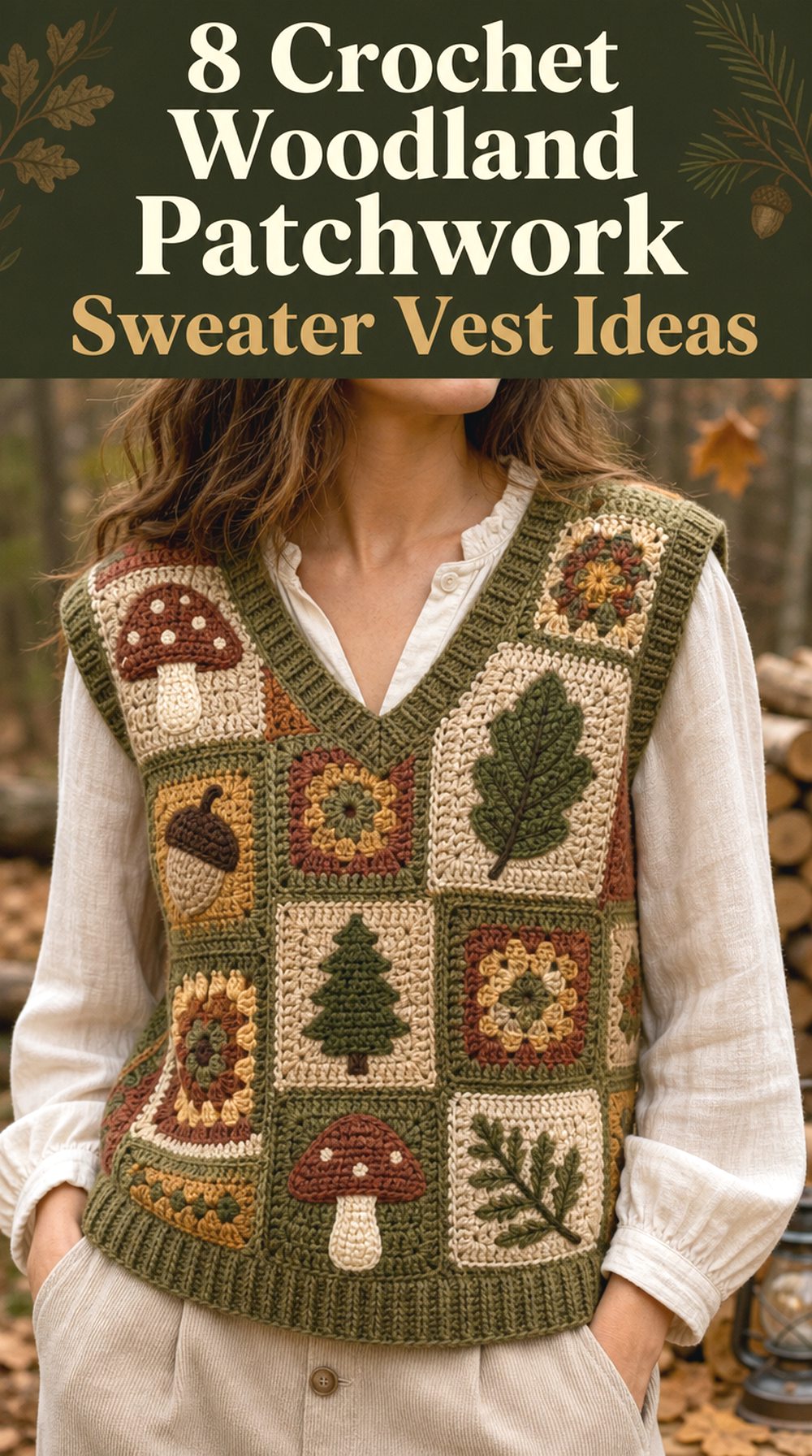

A woodland patchwork sweater vest can lean into mushrooms, pumpkins, daisies, earthy checkerboards, or granny-square blocks without every project looking the same. This collection focuses on crochet vest tutorials that give readers different ways to approach a forest-inspired patchwork look, from motif-heavy designs to simpler color-blocked shapes.
Some ideas are directly woodland themed, while others work well as a base for mossy greens, bark browns, cream, rust, burgundy, or soft floral colors. The goal is to help readers compare fit, front shape, patch layout, edges, and finishing details before choosing the vest style that best matches their wardrobe.
Why These Crochet Woodland Patchwork Sweater Vests Are Worth Making
Woodland patchwork vests are useful layering pieces because the sleeveless shape keeps the focus on color, motif placement, and the front outline. A mushroom vest feels more storybook and decorative, while a checkerboard or granny-square version can feel easier to style with plain shirts, dresses, or long sleeves.
The patchwork structure also gives readers room to plan a palette carefully. Smaller motifs can highlight flowers, pumpkins, or scrap-yarn contrast, while larger squares create a bolder vest surface. Because fit and sizing vary by creator, each original tutorial should be checked for measurements, size notes, and exact construction details before supplies are chosen.
Crochet Forest Mushroom Tie Side Patchwork Vest
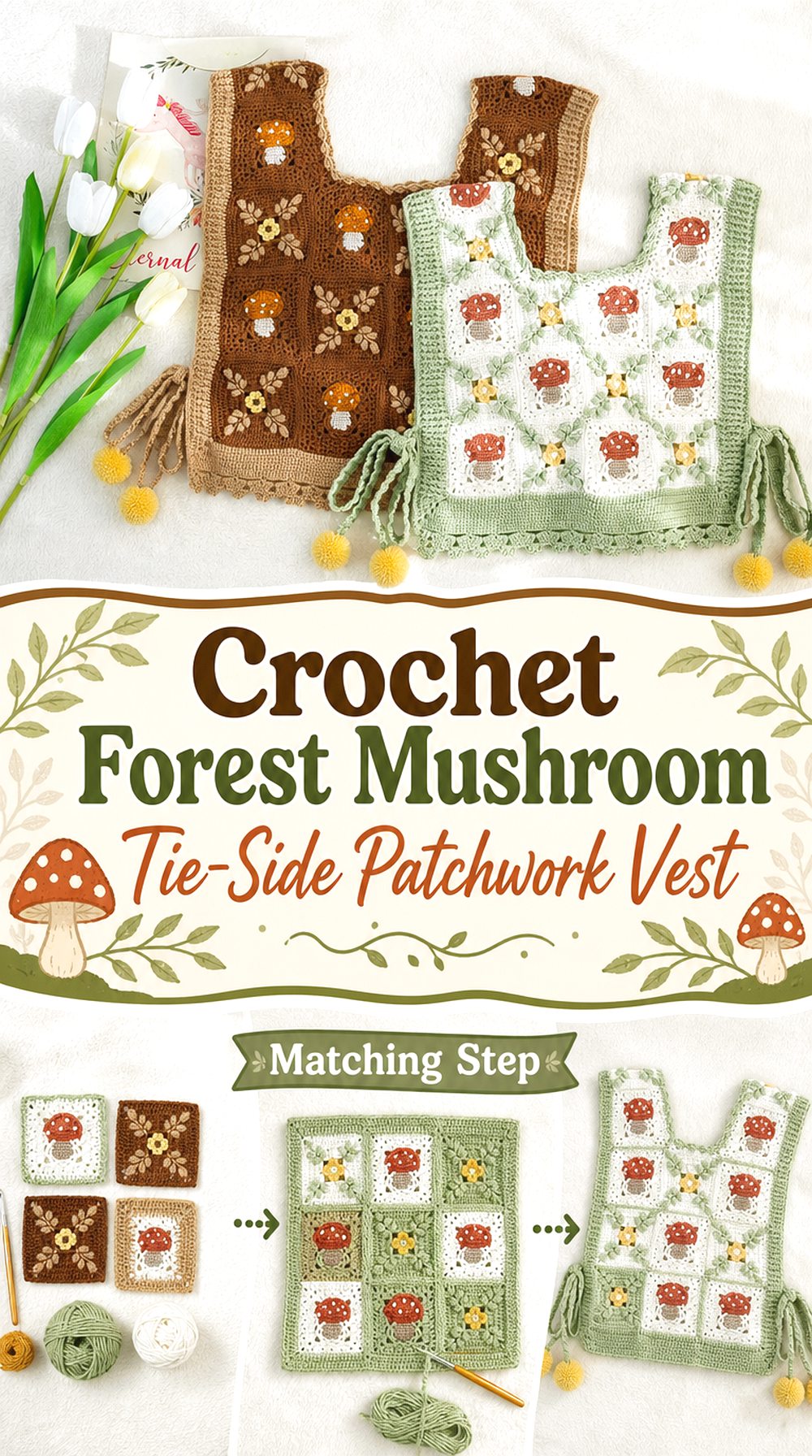
Mushroom and flower elements make this vest the most clearly woodland-focused option in the list. The body is built around motif pieces, with separate front and back sections and ties at the sides, giving it a softer, more open layering shape than a closed pullover vest.
This idea suits readers who want a storybook forest look rather than a plain color-blocked garment. The side-tie format also makes the finished outline feel different from ribbed sweater vests, checkerboards, and cropped patchwork tops.
Check the Side-Tie Shape
The side ties are an important part of this vest’s wearing style. They can change how open the vest feels at the sides and how it sits over shirts, dresses, or fitted tops. Readers planning this project should look closely at how the front and back pieces meet, then decide whether that open-side style fits their own layering needs.
Watch the Motif Placement Closely
Because the vest uses mushroom and flower elements, placement matters more than it would on a plain square vest. A motif-heavy design can look balanced only when the repeated pieces are arranged clearly across the body. Before committing to colors, readers should review the full layout and make sure they understand which motifs belong on the front and back.
Review the Size Options First
The available information for this design includes adult and child size options, so readers should compare those notes with their own measurements before starting. A vest with side ties may feel more adjustable than a fully closed garment, but that does not replace checking the creator’s sizing guidance. The original source is the safest place to confirm fit details.
Original Tutorial and Creator Credit
Creator: Susan’s Family 蘇蘇姐家
Crochet Pumpkin Patchwork Button Sweater Vest
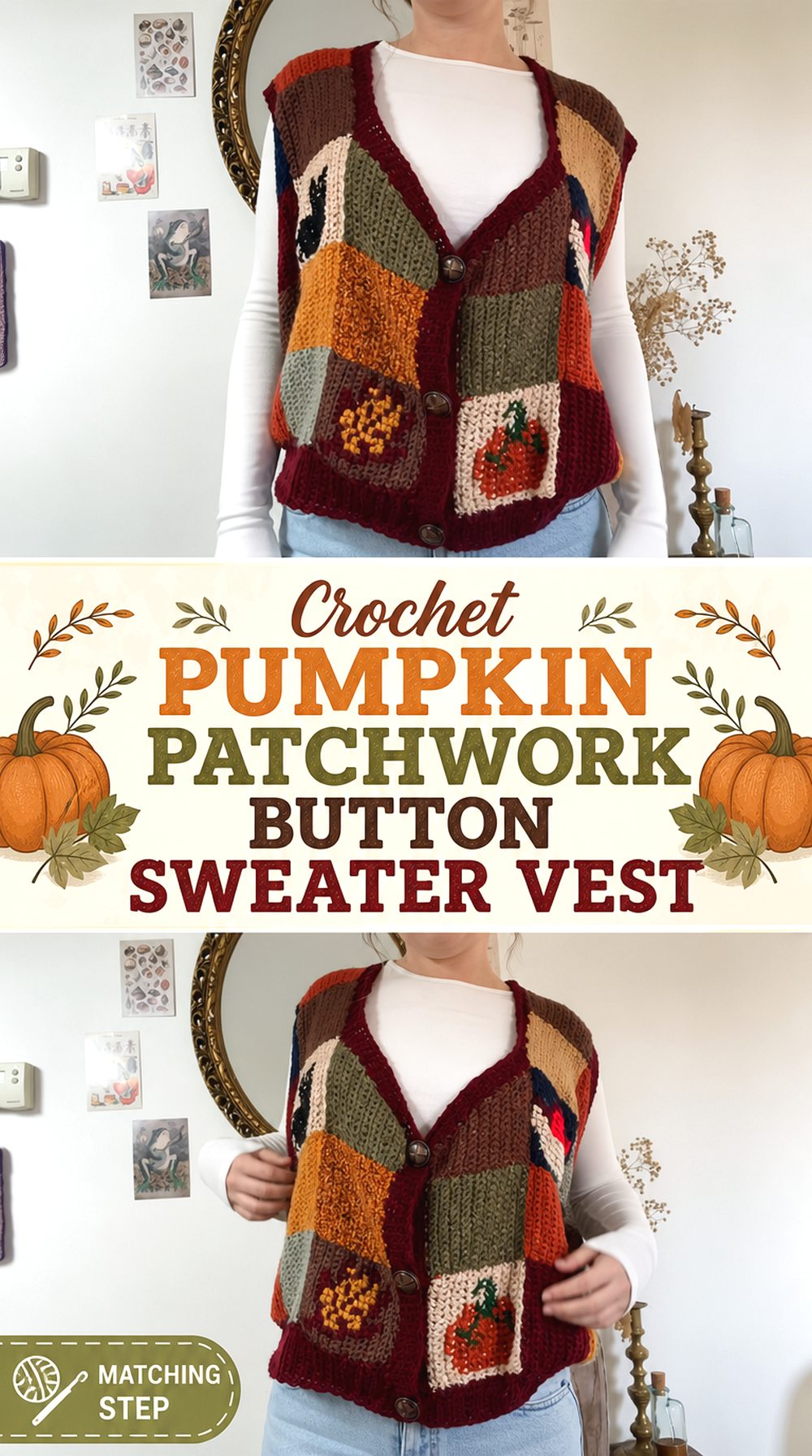
This pumpkin patchwork sweater vest brings a cozy autumn woodland feeling through its vintage-style patch layout and front-panel planning. It includes normal squares, angular squares, a back panel, ribbing, and buttonholes, which gives it a more garment-like finish than a simple open vest.
The pumpkin theme makes this a strong choice for readers who want a seasonal piece without moving away from wearable layering. It also stands apart from the mushroom vest because the front closure and panel structure create a more closed sweater-vest shape.
Look Closely at the Front Panel
The front panel is a key feature because it carries the patchwork look and helps define the vest’s theme. Readers should review how the panel is planned before choosing colors, especially if they want the pumpkin detail to stay clear. A woodland design can lose impact when the contrast is too soft or when the featured area is hard to read.
Confirm the Buttonhole Section
Buttonholes affect both the look and the function of this vest. They can make the piece feel more finished, but they also require careful checking so the front closure lines up neatly. Readers should pay attention to the creator’s buttonhole section and confirm what extra pieces or notions are needed before buying supplies.
Plan for Ribbed Edges
The hem, inside edge, and armhole ribbing are part of the finished sweater-vest look. Those edges can make the patchwork body feel more polished, especially when the vest is worn over a simple base layer. Readers should follow the original guide for exact ribbing details rather than trying to guess spacing or stitch counts from the finished photo.
Original Tutorial and Creator Credit
Creator: thisfairymade
Crochet Meadow Daisy Granny Square Vest
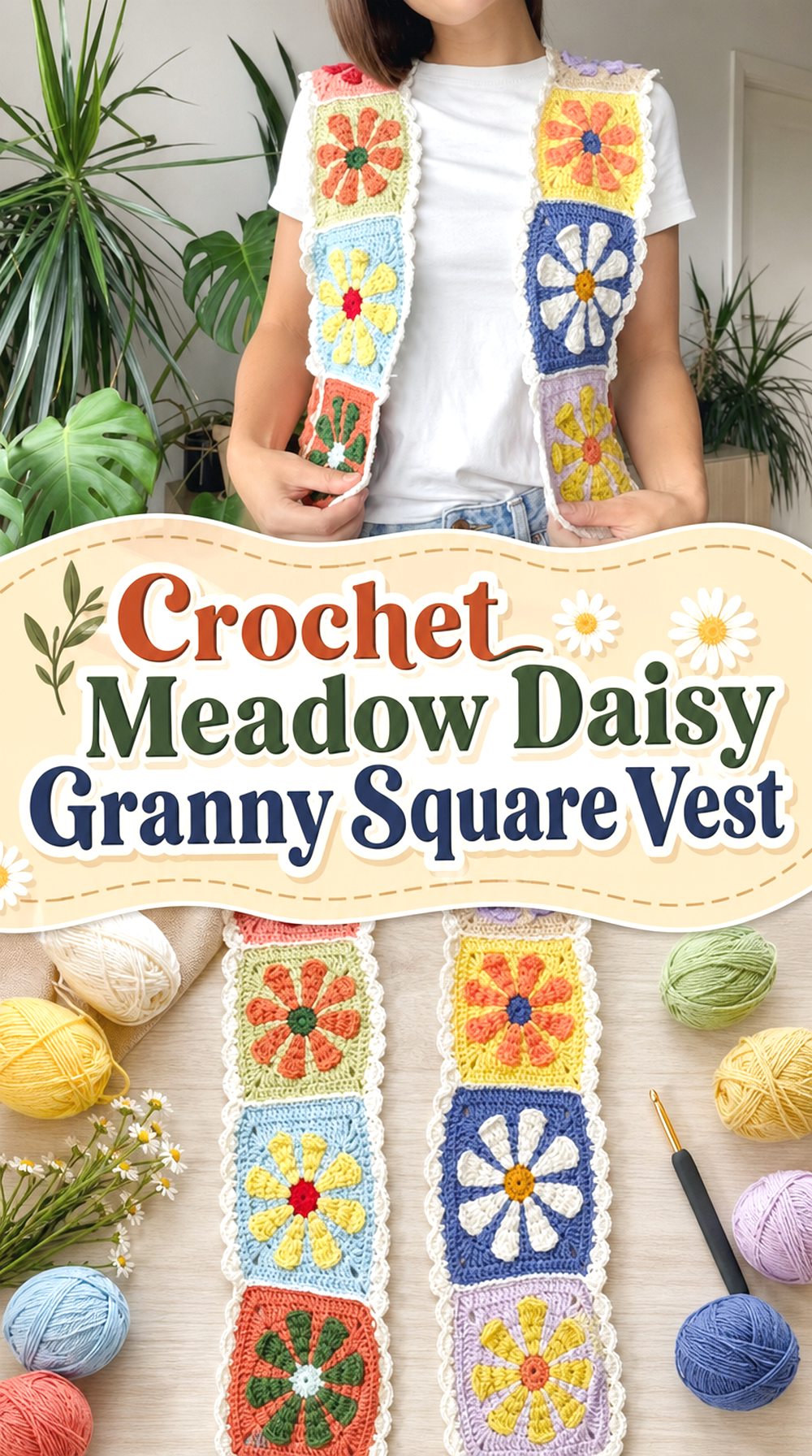
Daisy granny squares give this vest a lighter woodland-meadow direction. Instead of mushrooms or pumpkins, the focus is on repeated floral squares joined into a wearable vest shape. That makes it a useful idea for readers who like woodland styling but want a brighter, garden-edge version of the theme.
The finished concept is different from the darker forest vest options because the floral motif does most of the visual work. It may pair especially well with simple underlayers that let the daisy squares stay visible.
Keep the Daisy Squares Visible
The daisy motif is the main reason to choose this vest, so contrast deserves careful planning. If the flower center, petals, and square background sit too close in tone, the finished patchwork may look flatter from a distance. Readers should use the creator’s example and material notes as a guide, then choose colors that keep the floral pattern easy to see.
Check the Square Count and Sizing
A granny-square vest depends heavily on the number and size of squares used. Before starting, readers should review the sizing section and compare the finished plan with their own preferred fit. This matters even more for a patchwork vest because changing square size can affect the width, length, armholes, and overall balance of the garment.
Review the Joining Stage
The joining stage turns separate daisy squares into a vest, so it is worth watching carefully before assembly begins. Readers should check the layout direction, front shape, and how the borders are added after the squares are connected. The exact joining method belongs in the original tutorial, not in a summary, so the source should stay open during that stage.
Original Tutorial and Creator Credit
Creator: by Kristine
Crochet Retro Granny Square Woodland Vest
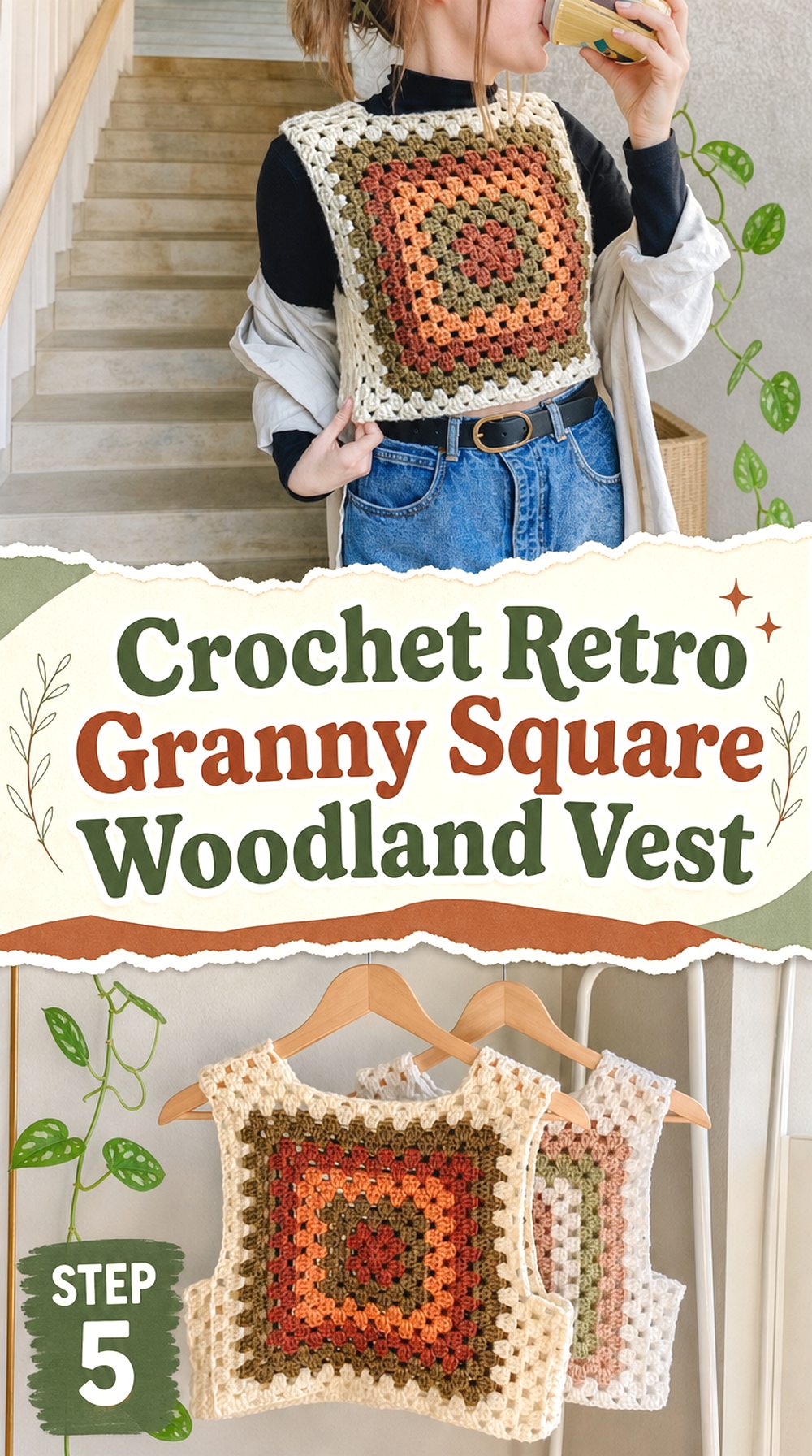
A 70s-inspired granny square vest works well for readers who want a classic patchwork base that can be pushed toward woodland colors. The square layout gives plenty of room for leftover yarns, and the finished vest can feel playful or earthy depending on the palette.
This idea differs from the daisy and mushroom options because the motif is simpler and more traditional. Instead of a picture-based design, the patchwork effect comes from repeated granny squares and color placement across the whole vest.
Think About the Scrap-Yarn Palette
This vest is described as a scrap or leftover yarn project, which makes color planning especially important. For a woodland version, readers may want to group scraps into forest, bark, leaf, cream, or berry-like shades before starting. Sorting colors first can help the finished vest feel intentional rather than random, while still keeping the patchwork character.
Review the Written Size Range
The creator notes a written pattern with sizes XS through 5XL, so readers should use those size notes before deciding on a finished fit. Granny-square garments can change shape when the square size shifts. A size chart or written guide helps readers avoid relying only on the look of the sample vest.
Watch How the Squares Become a Vest
The main project decision is not just making squares; it is turning them into a wearable shape. Readers should watch how the squares are arranged and joined around the body, neckline, and armholes. That step is where the vest changes from a pile of motifs into a garment, so it deserves more attention than the color changes alone.
Original Tutorial and Creator Credit
Creator: HayHay Crochet
Crochet Earth Tone Checkerboard Sweater Vest
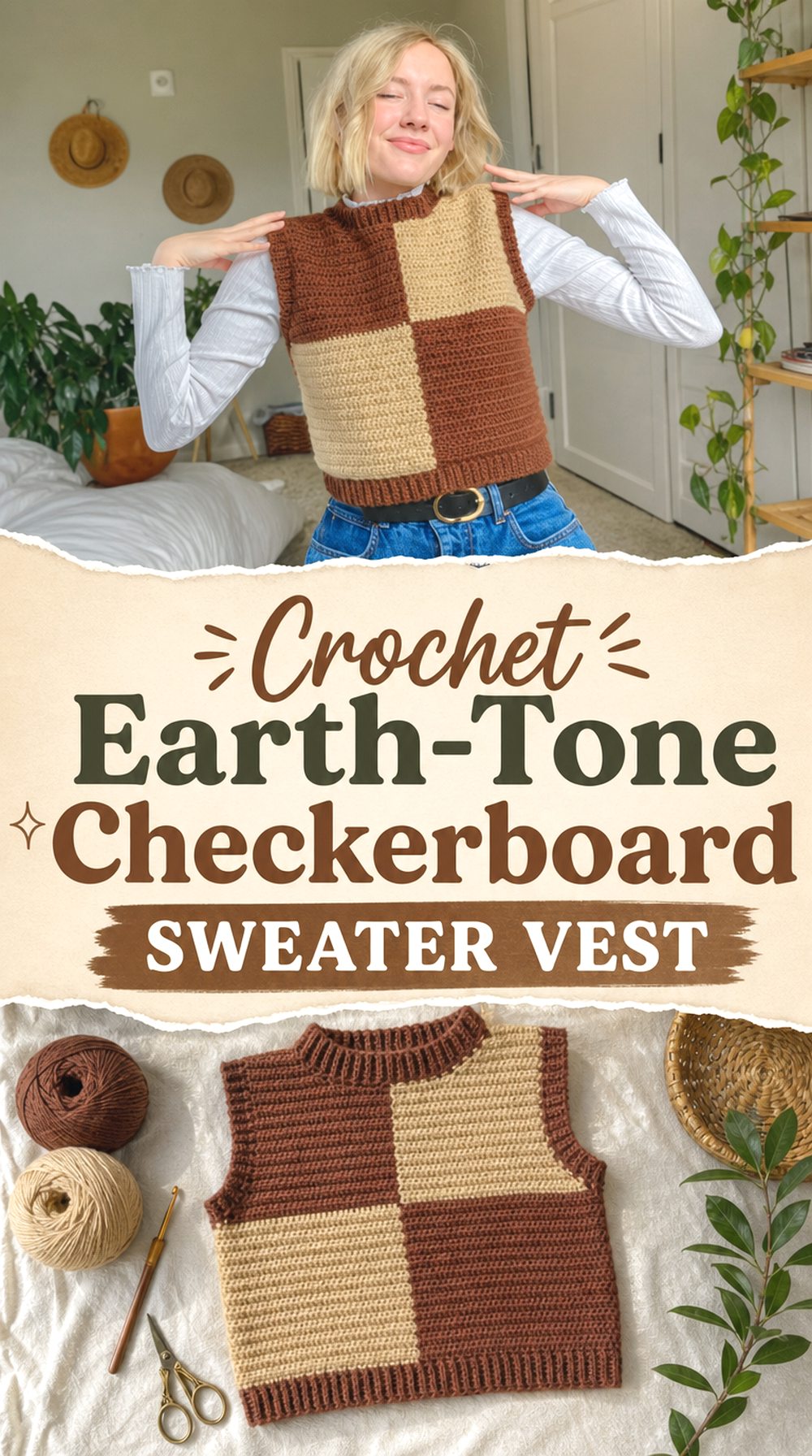
A checkerboard sweater vest gives woodland patchwork a cleaner, more graphic direction. The source uses cocoa and almond colors, which makes it easy to imagine this style in bark, cream, acorn, or moss-inspired shades without needing picture motifs.
This is a strong option for readers who prefer a pullover sweater-vest shape over loose side ties or heavily joined granny squares. The repeated blocks create patchwork rhythm, while the overall silhouette stays simpler than the mushroom, pumpkin, and daisy designs.
Compare the Checkerboard Scale
Checkerboard crochet depends on the size and spacing of the color blocks. A larger check can feel bold and retro, while a smaller check may read as a tighter texture from a distance. Readers should look at the finished sample and decide whether the scale matches the kind of woodland styling they want.
Check the Size Notes
The creator links a written pattern with sizes S through 3XL, which is useful for readers planning a wearable vest. Because this is a pullover shape, bust measurement, garment length, and armhole comfort matter. Readers should confirm the available size guidance before changing yarn, colors, or hook size.
Plan the Ribbed Finish
The checkerboard body needs a clean finish so the graphic blocks do not look unfinished at the edges. Readers should pay attention to the neckline, armholes, and hem in the original guide. Those areas frame the colorwork and help the vest sit more neatly over a shirt or lightweight top.
Original Tutorial and Creator Credit
Creator: HayHay Crochet
Crochet Cropped Patchwork Sweater Vest with Mixed Shapes
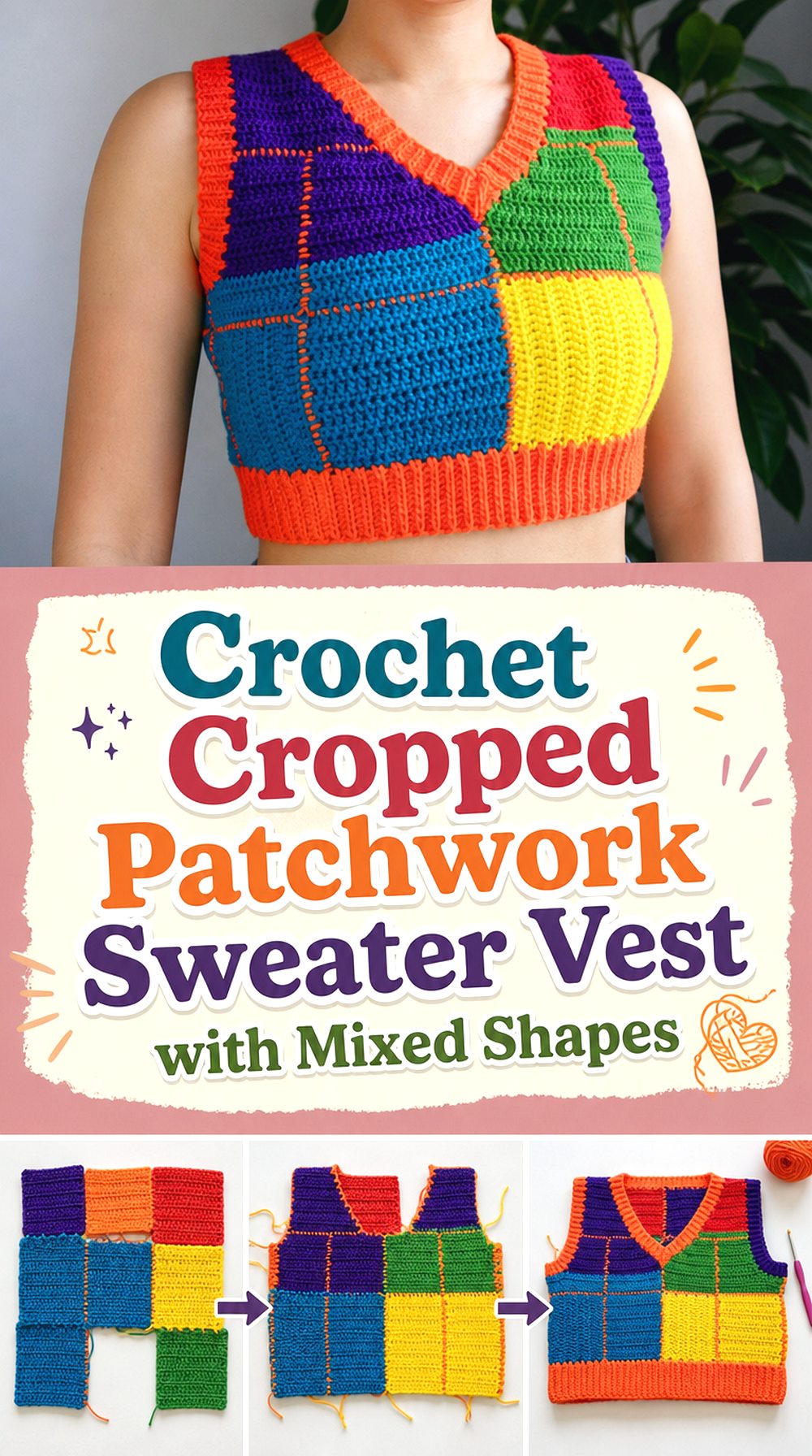
This cropped patchwork sweater vest uses more than simple repeated squares. The tutorial includes square, L-shaped, modified square, modified triangle, and rectangle sections, giving the garment a more puzzle-like patchwork structure.
That mixed-shape approach makes it useful for readers who want a woodland vest with irregular blocks rather than a neat grid. A cropped shape also sets it apart from longer granny-square vests, especially for styling over dresses, high-waisted skirts, or fitted long-sleeve tops.
Check the Cropped Length
The cropped shape is part of this vest’s identity, so readers should decide early whether that length suits their wardrobe. A shorter sweater vest can look balanced over high-waisted pieces, but it may not give the same coverage as a longer layering vest. The original tutorial should be checked for any measurement or adjustment notes.
Follow the Mixed Patch Shapes Carefully
This project includes several patch shapes, which makes it more varied than a repeated-square vest. Readers should review each shape category before starting so the layout does not become confusing later. Because the shapes are part of the design, it is safer to follow the creator’s structure rather than replacing pieces without understanding the garment layout.
Review the Neckline and Armhole Finish
A cropped vest still needs tidy edges around the neckline and armholes. Those finishing areas can affect how the garment sits on the shoulders and how clean the patchwork looks when worn. Readers should watch the finishing sections closely and use the creator’s exact instructions for counts, placement, and edge shaping.
Crochet Scrap Yarn Granny Patch Vest
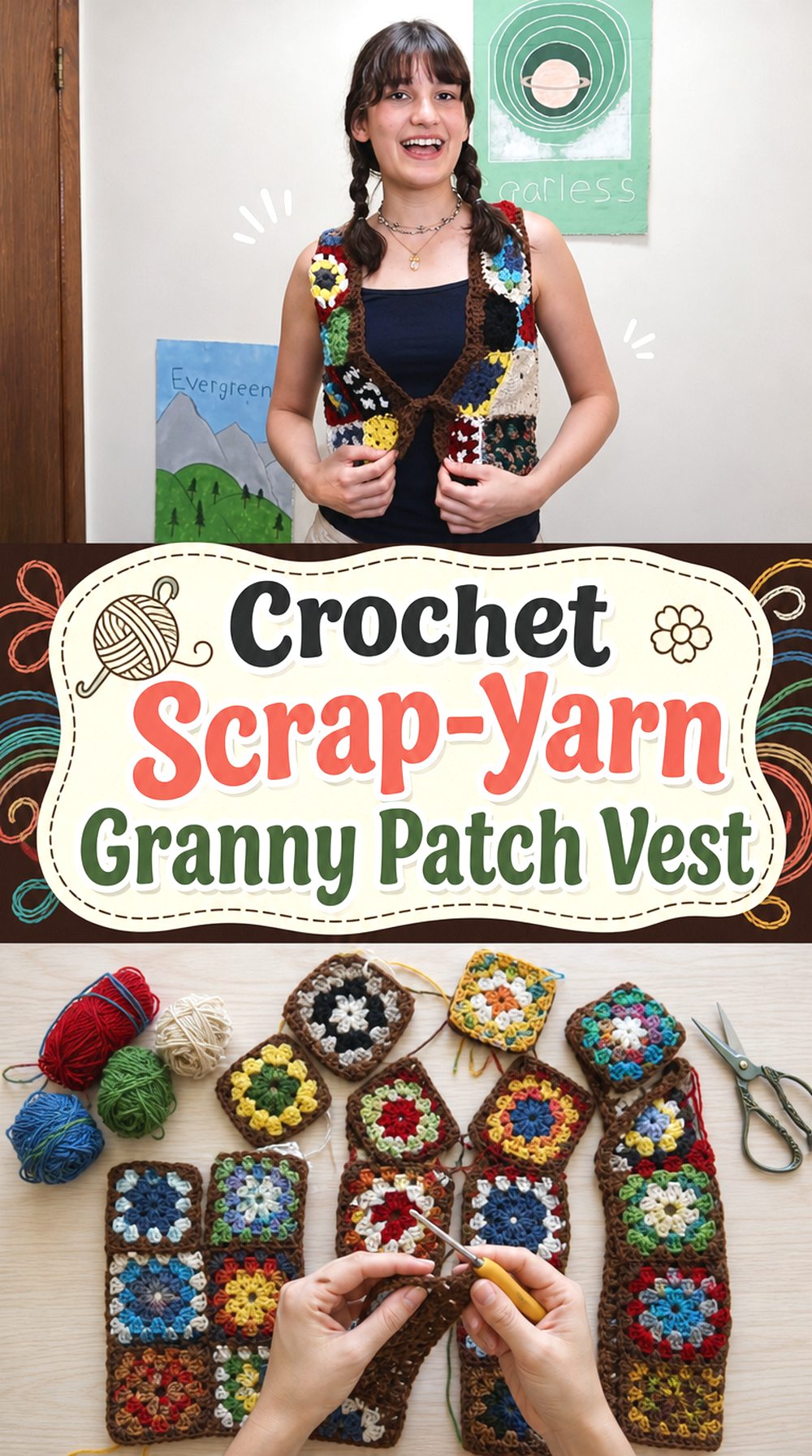
This patchwork granny vest is a useful pick for readers who want a looser, scrap-friendly woodland look. Instead of relying on one featured motif, the idea comes from combining saved yarns into a vest with a handmade patchwork feel.
It differs from the 70s granny vest because the emphasis is on a soft scrap-yarn mood rather than a specific retro layout. For a woodland version, readers can plan groups of green, tan, brown, rust, cream, or muted floral scraps before following the original guide.
Sort the Scraps Before Starting
A scrap-yarn vest can look calm or busy depending on how the colors are grouped. Readers who want a woodland effect should sort yarn by tone before beginning, then decide where the darkest and lightest patches may sit. This keeps the project connected to the forest-inspired theme while still making use of yarn already on hand.
Confirm the Vest Structure
The project is a patchwork vest, so the reader should check how the separate pieces become a wearable garment. It is especially helpful to look for the front opening, shoulder area, side shape, and lower edge before starting. Those details affect how the vest layers and whether the finished piece feels cropped, relaxed, or more open.
Keep a Simple Layout Note
Patchwork projects are easier to manage when the maker tracks placement while working. A simple sketch or note can help readers remember which colors or squares are planned for each section. This does not replace the tutorial, but it can prevent confusion when several similar patches are being prepared for one garment.
Original Tutorial and Creator Credit
Creator: Calluna Crochet
Crochet Ribbed Edge Granny Square Sweater Vest
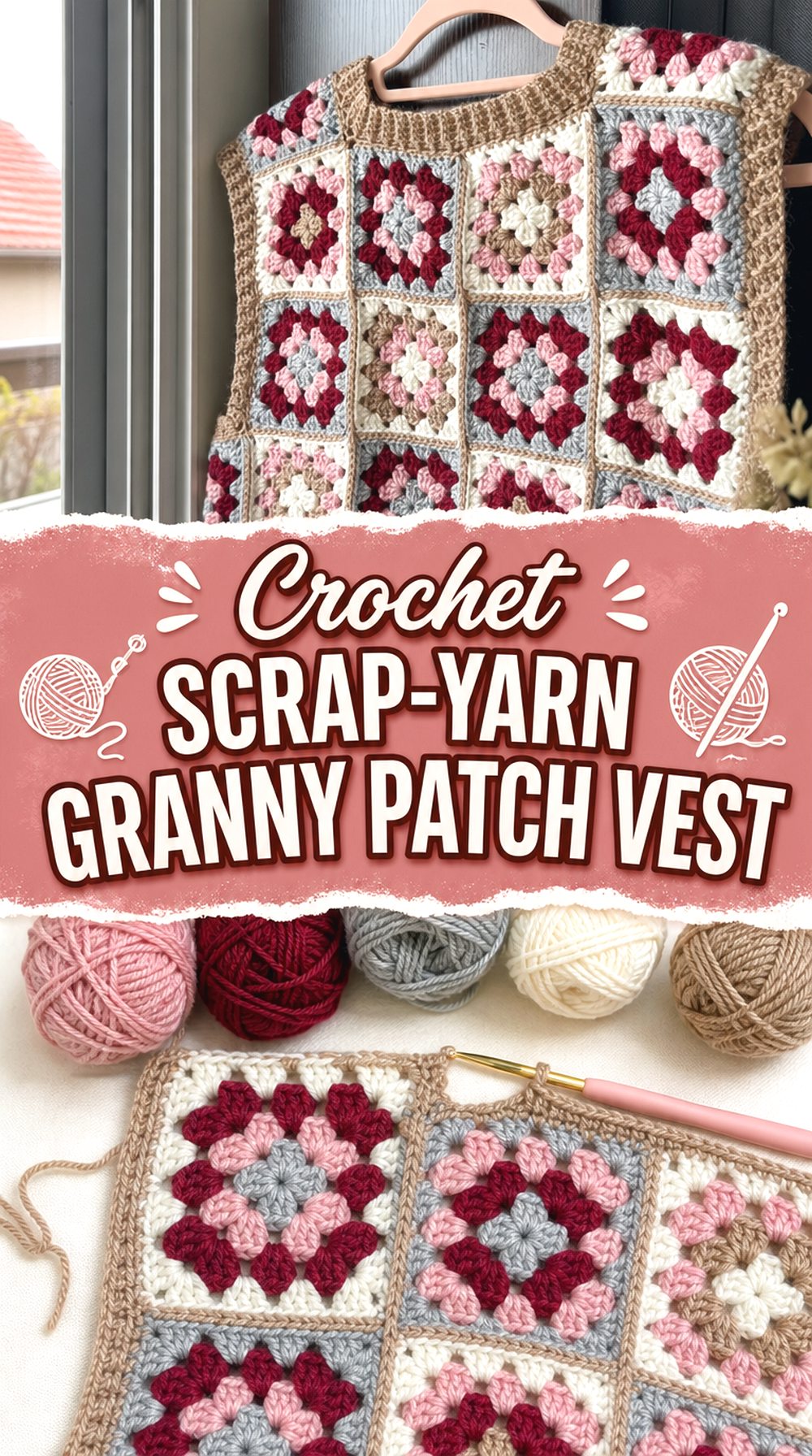
This granny square sweater vest has a clear garment finish because the tutorial includes laying out the pattern, connecting granny squares, and adding ribbing for the collar, cuffs, and bottom edge. The listed colors include Aran, burgundy, soft rose, pale gray, and almond, which can support a softer woodland-inspired palette.
The ribbed edges make this option feel more sweater-like than an open scrap vest. It is a helpful choice for readers who want patchwork squares but still prefer a defined neckline and finished borders.
Look at the Ribbed Border Areas
The ribbing around the collar, armholes, and bottom edge gives this vest a more complete sweater-vest finish. Readers should pay attention to how those borders frame the granny squares. A strong border can help patchwork look organized, especially when the square colors vary across the garment.
Plan the Square Layout
The square layout affects the front, back, and overall color balance. Readers should review the layout section before joining pieces so the strongest colors do not accidentally cluster in one area. For a woodland look, darker shades can be placed thoughtfully, while lighter squares can keep the finished vest from feeling too heavy.
Check the Final Result Before Adjusting
The original guide includes a final-result section, which is useful for judging the overall shape before making personal changes. Readers should compare the neckline, armhole space, and lower edge with their preferred fit. Any changes to square size or border depth should be made only after checking the creator’s full construction details.
Conclusion
These crochet woodland patchwork sweater vest ideas give readers several directions to choose from. The mushroom and pumpkin vests feel the most directly forest and autumn inspired, while the daisy vest offers a meadow-style version of the same theme. The checkerboard, granny-square, mixed-shape, and scrap-yarn options work well for readers who want to control the palette and patch layout themselves. For exact sizing, stitch counts, joining, shaping, and finishing, use the original tutorials linked in each credit section.
FAQs
How do I choose a woodland patchwork vest style?
Start with the main look you want. Mushroom, pumpkin, and daisy motifs create a more decorative woodland theme, while checkerboard and granny-square layouts feel more wearable for everyday layering. Also compare the vest shape: side-tie, buttoned, pullover, cropped, open, or ribbed-edge styles will fit and layer differently.
What colors work well for a woodland crochet sweater vest?
Woodland palettes often include greens, browns, creams, rust, burgundy, almond, gray, and soft floral shades. The safest choice is to review the creator’s color notes first, then decide whether you want high contrast or a muted forest look. Avoid changing yarn weight or hook size without checking how it may affect fit.
Should I choose motifs or simple patchwork squares?
Motifs are better when you want the vest to clearly show mushrooms, pumpkins, daisies, or another themed detail. Simple squares are better when color, texture, and layout matter more than pictures. Motif projects may require closer placement checks, while square-based vests often make palette planning the biggest decision.
What fit details matter most for crochet sweater vests?
Check the bust, garment length, armholes, neckline, shoulder area, and front closure. A cropped vest, side-tie vest, and pullover checkerboard vest will not sit the same way. Always compare the creator’s size notes with your own measurements before starting, especially when the project uses joined motifs or fixed square sizes.
Can I sell a vest made from a YouTube tutorial?
Do not assume that a finished vest can be sold just because the tutorial is public. Check the creator’s written terms, video description, linked pattern page, or shop policy. Some creators allow finished-item sales, some add limits, and some only allow personal use. Credit does not replace permission.