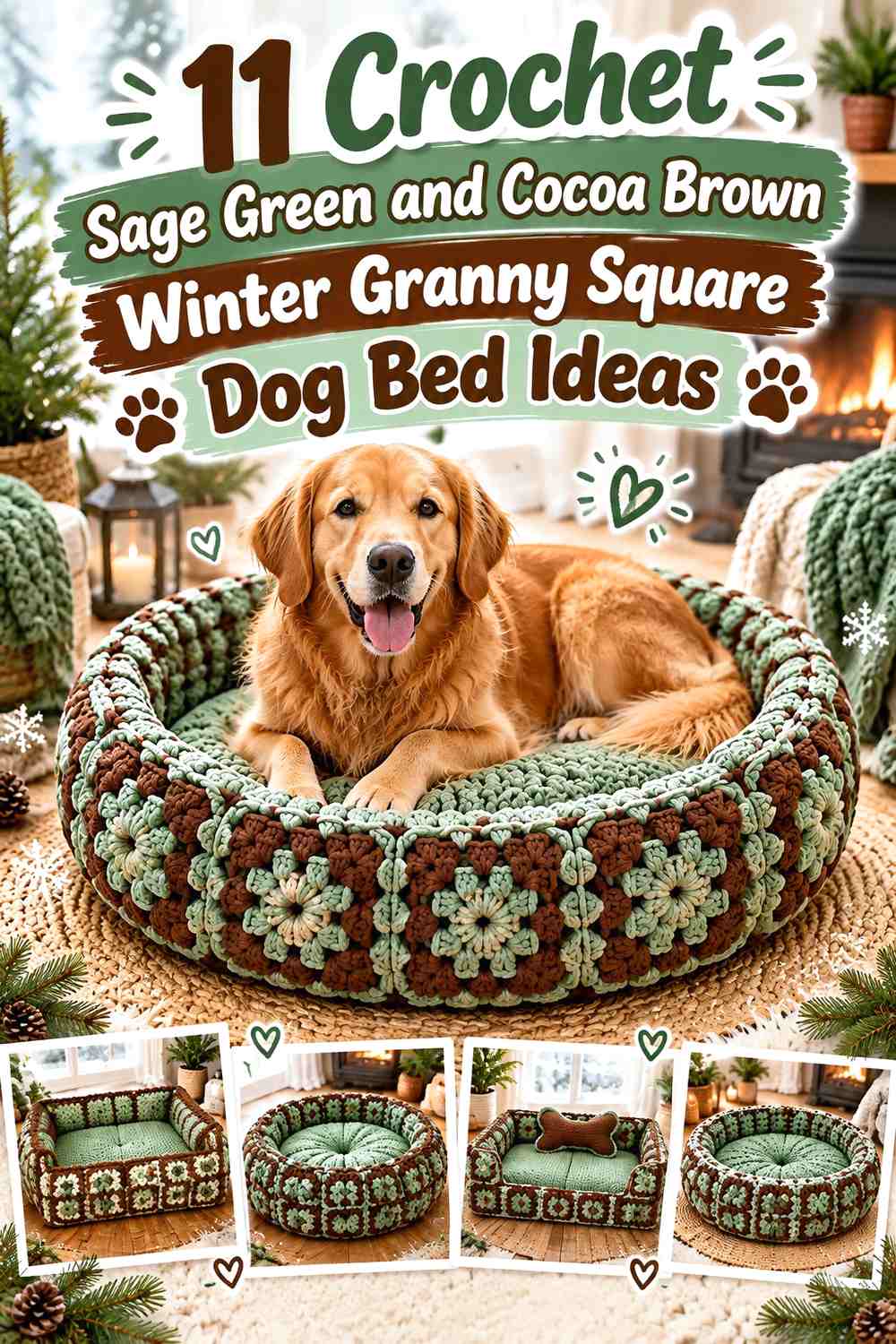

Sage green and cocoa brown give a crochet granny square dog bed a calm winter palette that feels warmer than stark black-and-white color blocking. Sage green can cover broad cushion panels or square centers, while cocoa brown provides enough depth to define joins, borders, side walls, corners, and the lower edge of the bed.
A dog bed also gives granny squares a different job than a blanket. The squares may form a flat sleeping surface, raised side panels, an outer cover, or a decorative top over a separate cushion. Color placement should help those sections read clearly instead of turning the entire bed into an equally busy patchwork.
The linked tutorials include complete crochet pet beds as well as granny-square cushions, individual squares, and joining techniques. Use the pet-bed sources for the bed structure they actually demonstrate and the granny-square sources for panel and joining concepts. Adapt the final size to the individual dog rather than assuming a tutorial sample will suit every pet.
Quick List
- Sage Green Granny Square Crochet Dog Bed With Cocoa Brown Joins
- Cocoa Brown Granny Square Crochet Dog Bed With Sage Green Centers
- Sage Green and Cocoa Brown Checkerboard Crochet Dog Bed
- Sage Green Crochet Dog Bed With Cocoa Brown Raised Side Walls
- Cocoa Brown Crochet Dog Bed With Sage Green Granny Square Cushion
- Sage Green Sunburst Granny Square Crochet Dog Bed With Cocoa Brown Borders
- Cocoa Brown Solid Granny Square Crochet Dog Bed With Sage Green Joining
- Sage Green Crochet Dog Bed With Cocoa Brown Corner Squares
- Cocoa Brown Crochet Dog Bed With Sage Green Outer Granny Square Border
- Sage Green and Cocoa Brown Continuous Granny Square Crochet Dog Bed
- Sage Green C2C Granny Square Crochet Dog Bed With Cocoa Brown Framing
Decide Whether Sage Green or Cocoa Brown Should Lead the Dog Bed
Sage green is useful as the dominant color when you want the sleeping surface to feel lighter and visually softer. Cocoa brown can then define the seams, raised sides, lower border, or selected squares without covering half of the bed.
A cocoa-brown-led bed creates a deeper winter look. In that arrangement, give sage green a substantial role through square centers, a removable-looking cushion panel, or a broad outer border. Tiny green details alone may disappear against a large brown bed.
Use Sage Green and Cocoa Brown to Separate the Cushion From the Side Walls
A dog bed is easier to read visually when the center and perimeter are clearly different. A sage-green granny-square cushion inside cocoa-brown walls creates an obvious sleeping area, while a cocoa center surrounded by sage sides gives the bed a lighter outer profile.
If the colors are close in value, use broader blocks rather than narrow outlines. A full cocoa-brown wall will remain clearer than a thin brown line separating similarly valued sage squares.
Plan Sage Green and Cocoa Brown Granny Squares for Everyday Pet Use
Granny-square texture can be decorative without covering the bed in raised embellishments. Keep loose decorative additions away from the main sleeping area, especially if the dog tends to paw, scratch, or chew bedding.
Before committing to a large set of squares, make a sample panel and compare it with the intended bed size. Also check the yarn’s care instructions and choose the final construction around the cleaning routine you expect to use.
1. Sage Green Granny Square Crochet Dog Bed With Cocoa Brown Joins
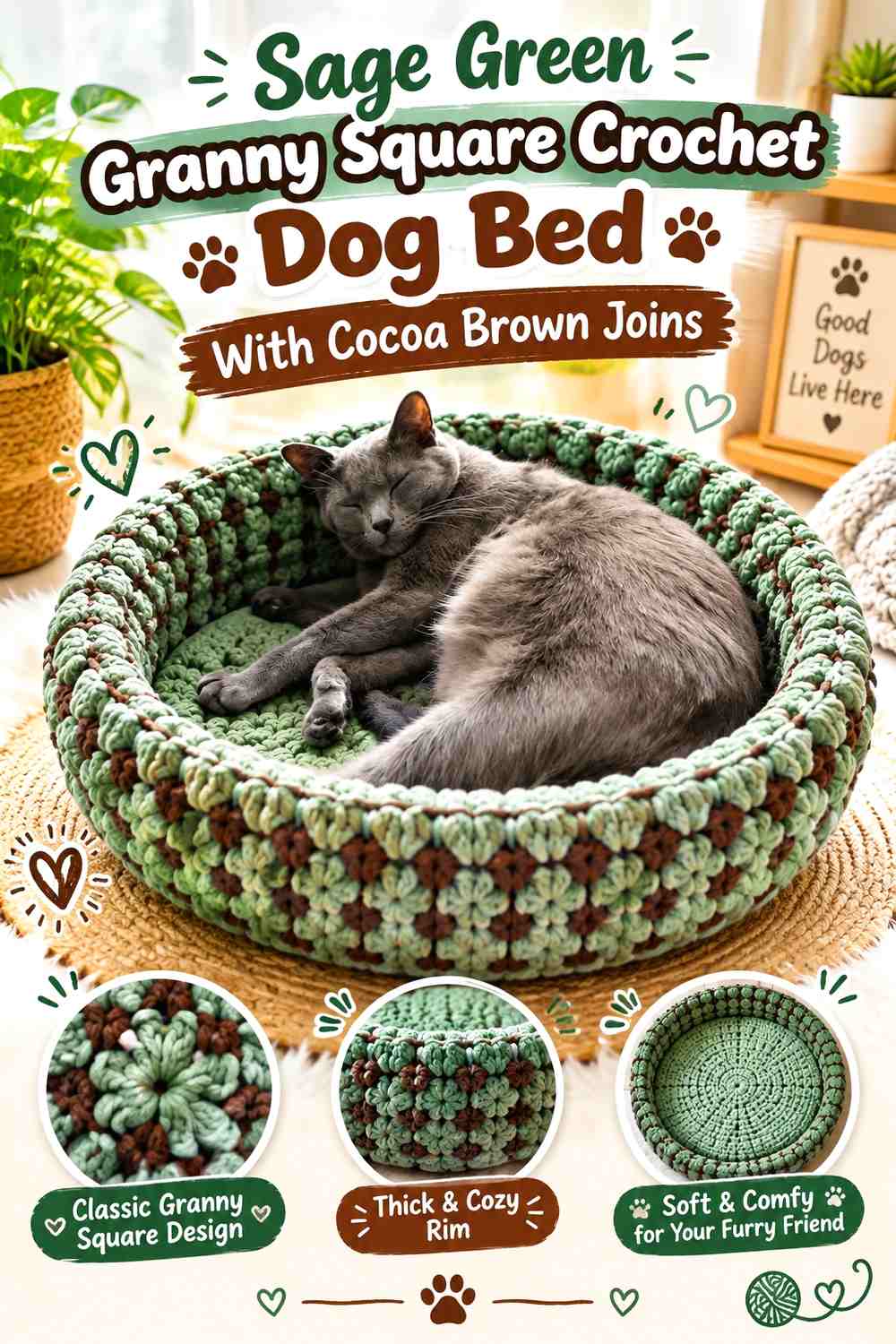
This design gives sage green most of the sleeping surface and uses cocoa brown specifically between the squares. The darker joining creates a visible grid without taking over the broad, calming green center.
Keep Sage Green Broad Across the Cocoa Brown Grid
Use sage green for the majority of each square so the completed bed reads as green first. Cocoa brown should separate the panels rather than dividing each square internally into many competing sections.
Use Cocoa Brown Joins to Define Sage Green Squares
A consistent dark join makes individual granny squares easier to see once they are assembled into the cushion. This can be especially useful with simple solid or traditional square constructions.
Repeat Cocoa Brown Around the Sage Green Bed Edge
Carry the joining color into the outer border so the internal grid feels connected to the finished perimeter. Keep the border proportional rather than making it much heavier than the seams.
The linked tutorial demonstrates a complete crochet pet bed, making it useful for planning the base and raised-bed proportions while the granny-square surface remains an independent adaptation.
Creator Credit: Katia Creates
2. Cocoa Brown Granny Square Crochet Dog Bed With Sage Green Centers

This version makes cocoa brown the dominant surface and places sage green in the middle of each square. The repeating green centers lighten the darker bed without weakening the warm winter base.
Let Cocoa Brown Surround the Sage Green Square Centers
Keep the outer rounds or larger area of each square brown so the bed maintains a connected dark field after assembly.
Make Sage Green Large Enough Inside Cocoa Brown
A tiny sage center may nearly disappear once the squares are joined and viewed from across the room. Give the green enough area to establish a repeated pattern.
Keep Cocoa Brown Strong Around the Sage Green Bed Perimeter
Use brown through the side walls or outer border so the darker dominant shade remains structurally important rather than appearing only inside the squares.
The supporting tutorial demonstrates a complete crochet pet bed. Apply the granny-square color arrangement separately while using the bed construction for overall form.
Creator Credit: Pookie Doodle Crafts
3. Sage Green and Cocoa Brown Checkerboard Crochet Dog Bed

Alternating complete sage-green and cocoa-brown squares creates the strongest graphic pattern in the collection. Because the checkerboard already has substantial contrast, the joining and outer border should remain comparatively simple.
Alternate Sage Green and Cocoa Brown Squares Predictably
Use a consistent checkerboard sequence rather than placing the colors randomly. An orderly arrangement keeps the bed visually balanced even when several rows of squares are needed.
Choose Sage Green or Cocoa Brown for the Joining Color
Do not introduce another shade solely for the seams. Cocoa brown creates a darker grid, while sage green softens the transitions between alternating squares.
Keep Sage Green and Cocoa Brown Side Walls Simpler Than the Center
If the sleeping surface carries a full checkerboard, consider mostly solid side walls. Repeating the same busy arrangement vertically can make the bed look fragmented.
The tutorial demonstrates a complete adjustable pet bed and can support the overall bed form while the checkerboard granny-square surface is adapted independently.
Creator Credit: Bag-O-Day Crochet
4. Sage Green Crochet Dog Bed With Cocoa Brown Raised Side Walls
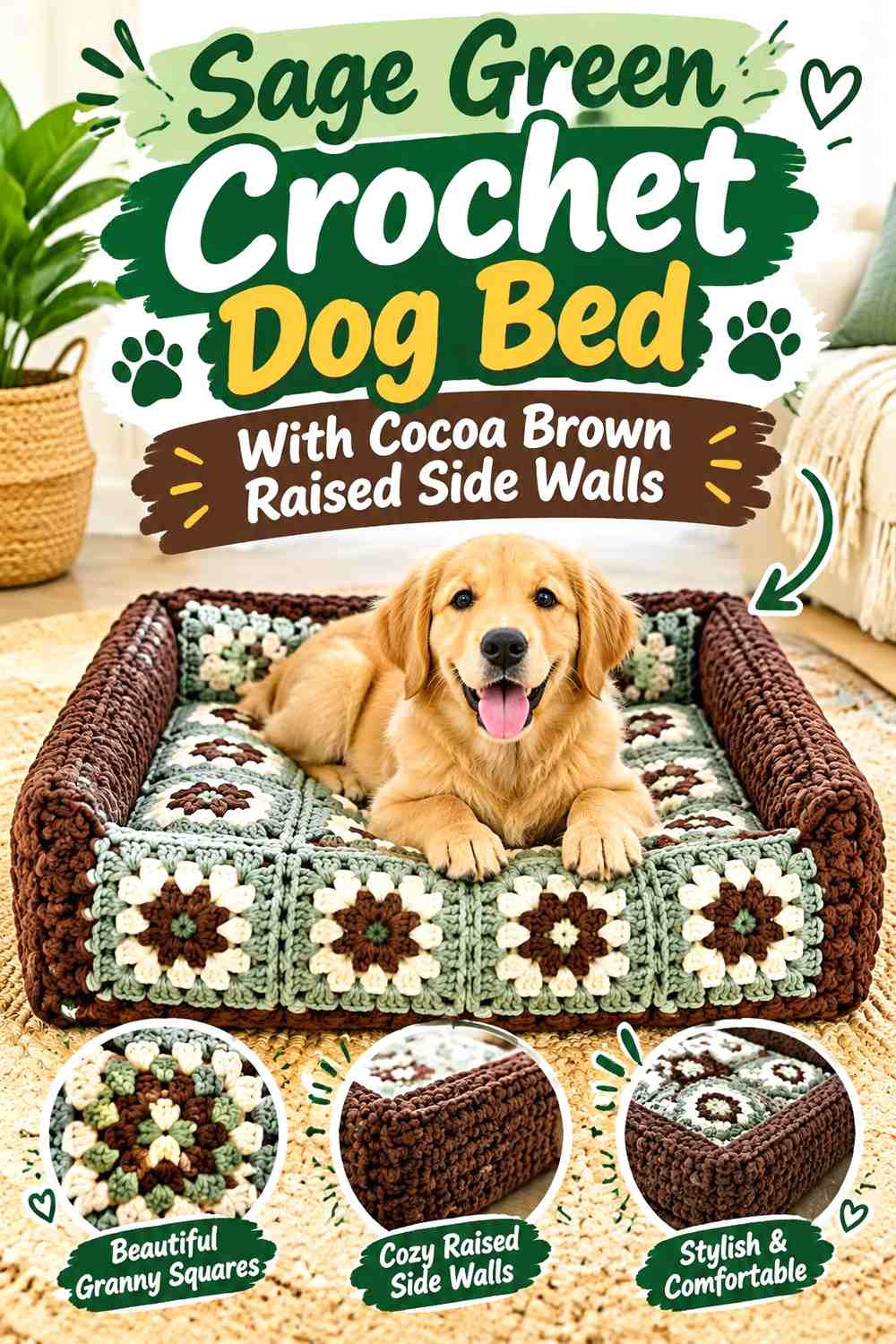
This design separates the bed into two clear zones. Sage-green granny squares cover the central cushion, while cocoa brown forms the raised side walls around it. The result keeps the patchwork concentrated where the dog lies.
Use Sage Green Granny Squares Across the Cocoa Brown Interior Frame
Keep the central panel light and cohesive by giving most squares the same sage-dominant treatment. The surrounding brown walls already provide strong contrast.
Let Cocoa Brown Define the Raised Sage Green Bed Walls
A solid or nearly solid dark side wall creates a clear boundary around the granny-square center. This also prevents the outer structure from competing with the panel arrangement.
Repeat Cocoa Brown Between Sage Green Cushion Squares Sparingly
If the walls are already brown, the joins do not need to be unusually thick. A restrained seam is enough to connect the center to the perimeter.
The supporting tutorial demonstrates a lined granny-square pillow construction, which is useful for thinking about a contained cushion panel rather than a complete pet-bed wall system.
Creator Credit: Erica Arndt
5. Cocoa Brown Crochet Dog Bed With Sage Green Granny Square Cushion
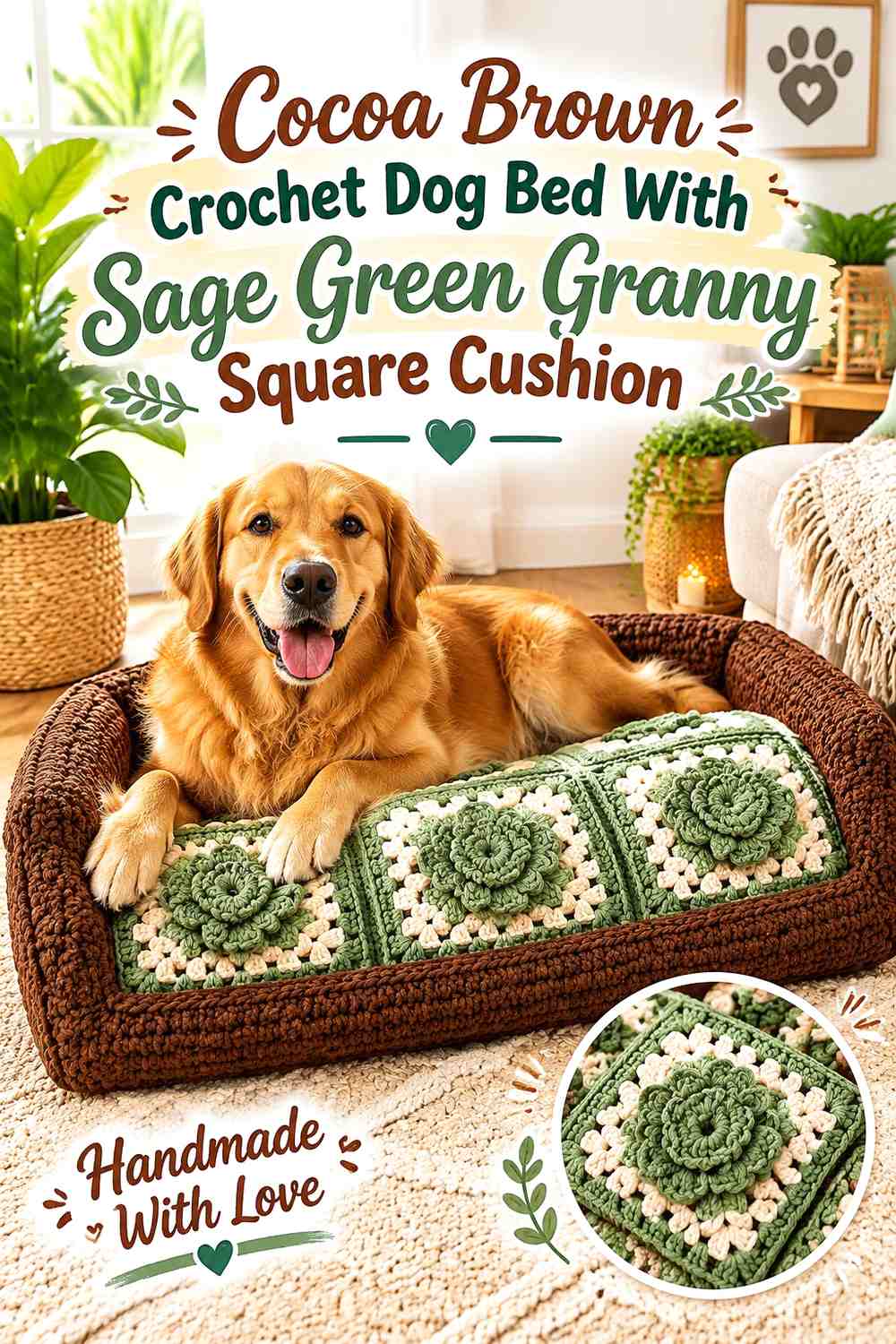
This arrangement makes the surrounding bed almost entirely cocoa brown and turns the sage-green granny-square cushion into a distinct insert-like focal area. It is especially useful when you want the bed frame to feel understated.
Keep Cocoa Brown Continuous Around the Sage Green Cushion
Use the darker shade across the outer walls and lower perimeter so the green cushion appears intentionally nested inside the bed.
Let Sage Green Dominate the Granny Square Cushion
Avoid adding so much cocoa color to the squares that the cushion begins to merge with the surrounding bed. Sage should remain the clear center color.
Add Cocoa Brown Only Where Sage Green Cushion Panels Need Definition
Use brown for selected joins or a narrow cushion border. The surrounding frame already contributes plenty of cocoa brown.
The tutorial demonstrates a granny-square cushion cover and joining process; use it as a panel reference rather than as an exact dog-bed construction.
Creator Credit: Crochet House 55
6. Sage Green Sunburst Granny Square Crochet Dog Bed With Cocoa Brown Borders
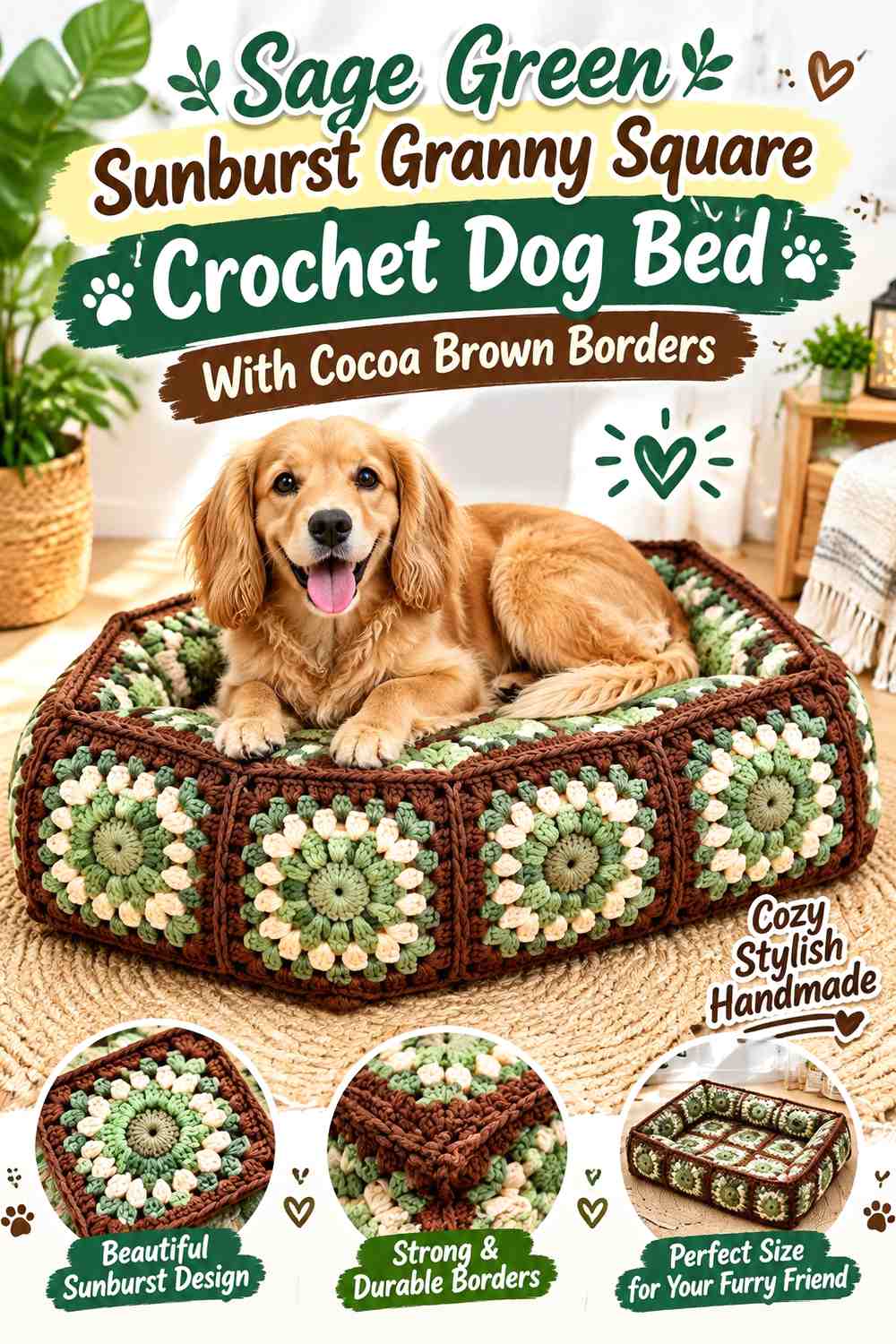
Sunburst-style squares create more internal texture and color movement than basic granny squares. Keep the burst itself predominantly sage green and use cocoa brown at the outer rounds so each motif has a consistent dark frame.
Keep Sage Green Central in the Cocoa Brown Sunburst Squares
Use sage green across the most visually active center portions. This keeps the burst motif light enough to remain recognizable once several squares are placed together.
Frame Sage Green Sunbursts With Cocoa Brown
A dark final round around each square gives the motifs equal boundaries and makes joining easier to coordinate visually.
Keep Cocoa Brown Joins Narrow Between Sage Green Sunbursts
Because every square already has a brown frame, another heavy seam can create overly wide dark lines. Let the existing border do most of the separation work.
The linked tutorial demonstrates a sunburst granny square. Use the motif as the cushion-panel construction and plan the dog-bed base or sides separately.
Creator Credit: Meema Makes
7. Cocoa Brown Solid Granny Square Crochet Dog Bed With Sage Green Joining
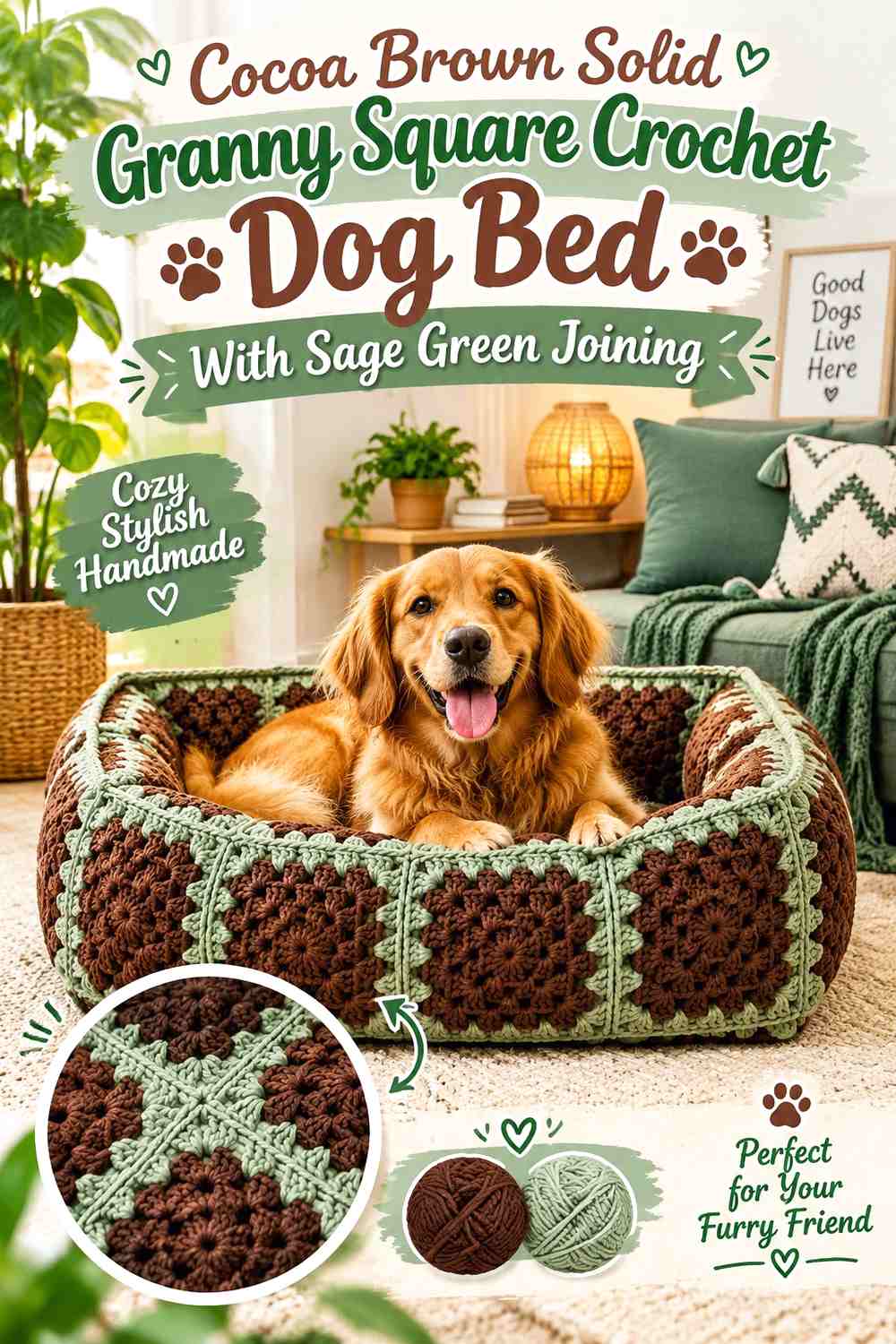
Solid granny squares create a denser-looking sleeping surface than more open traditional motifs. Cocoa brown can fill each panel, while sage-green joins form a softer grid across the bed.
Let Cocoa Brown Fill the Main Sage Green-Joined Squares
Keep the square interiors nearly solid brown so the construction feels substantial and calm. The texture should come mainly from the square structure rather than multiple internal color changes.
Use Sage Green to Separate Cocoa Brown Squares
A green seam prevents the dark squares from merging into one large brown panel. Keep the joining width consistent throughout the cushion.
Repeat Sage Green Around the Cocoa Brown Outer Edge
Using the join color as the final border creates a clear frame and gives sage enough total area to balance the darker square field.
The supporting tutorial demonstrates an enlarged granny-square cushion concept, useful for planning a denser panel or cover over a separately constructed pet bed.
Creator Credit: by somi handmade
8. Sage Green Crochet Dog Bed With Cocoa Brown Corner Squares
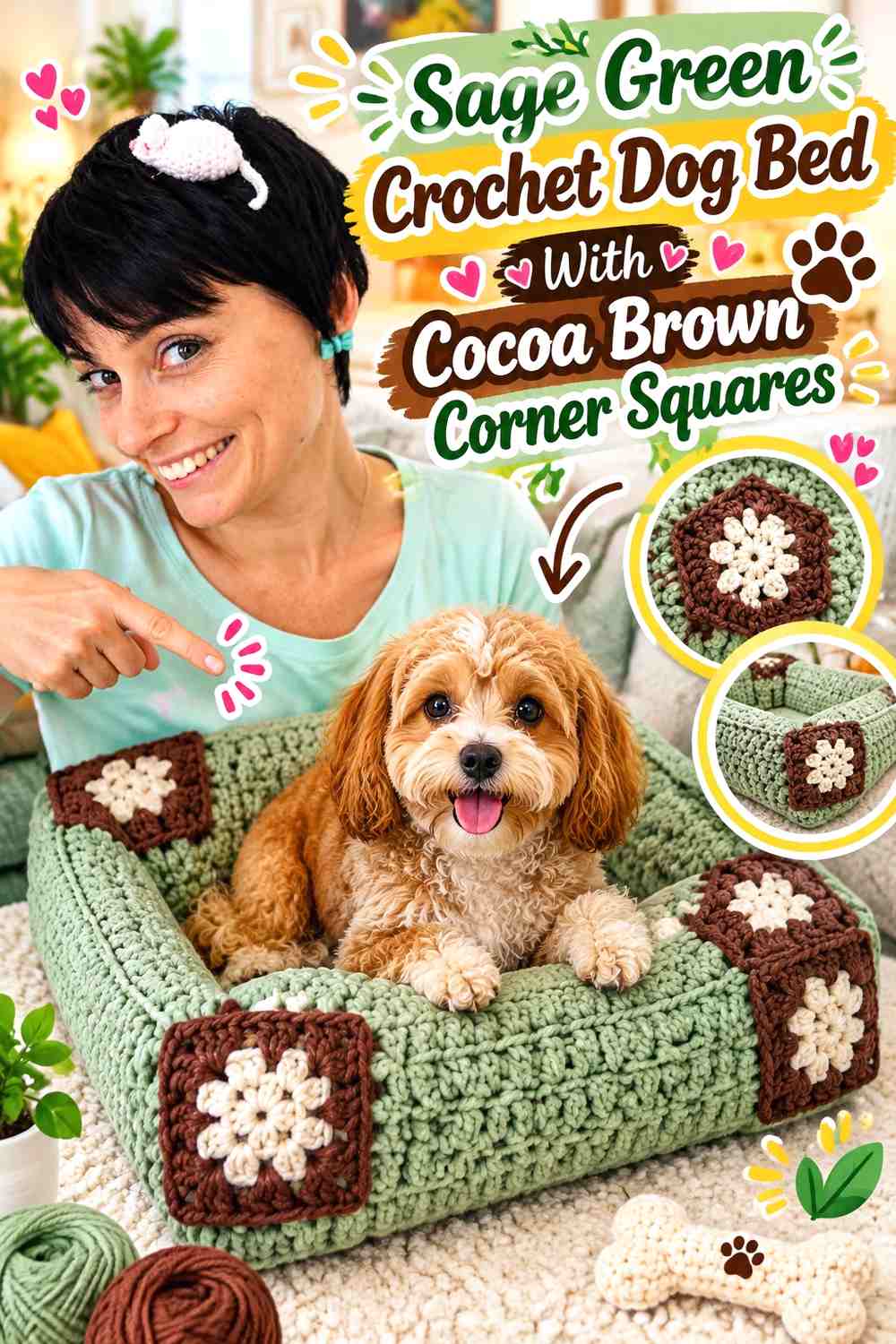
Instead of distributing cocoa brown evenly across the full surface, this layout concentrates the dark color at the corners. Sage-green squares dominate the sleeping area, while cocoa-brown corner panels visually anchor the cushion.
Let Sage Green Fill Most of the Cocoa Brown-Cornered Bed
Use sage through the center and side-adjacent squares so the dark corners remain clearly secondary.
Make Cocoa Brown Corner Squares Match Each Other
Keep all four corner panels consistent unless you intentionally want an asymmetrical arrangement. Matching dark corners give the bed a stable visual frame.
Use Sage Green Joins Between Cocoa Brown Corners
A lighter seam keeps the corners from visually spreading inward and maintains the sage-led character of the sleeping surface.
The credited tutorial demonstrates several granny-square joining approaches, which can support assembling a corner-accented cushion panel.
Creator Credit: Jayda InStitches
9. Cocoa Brown Crochet Dog Bed With Sage Green Outer Granny Square Border
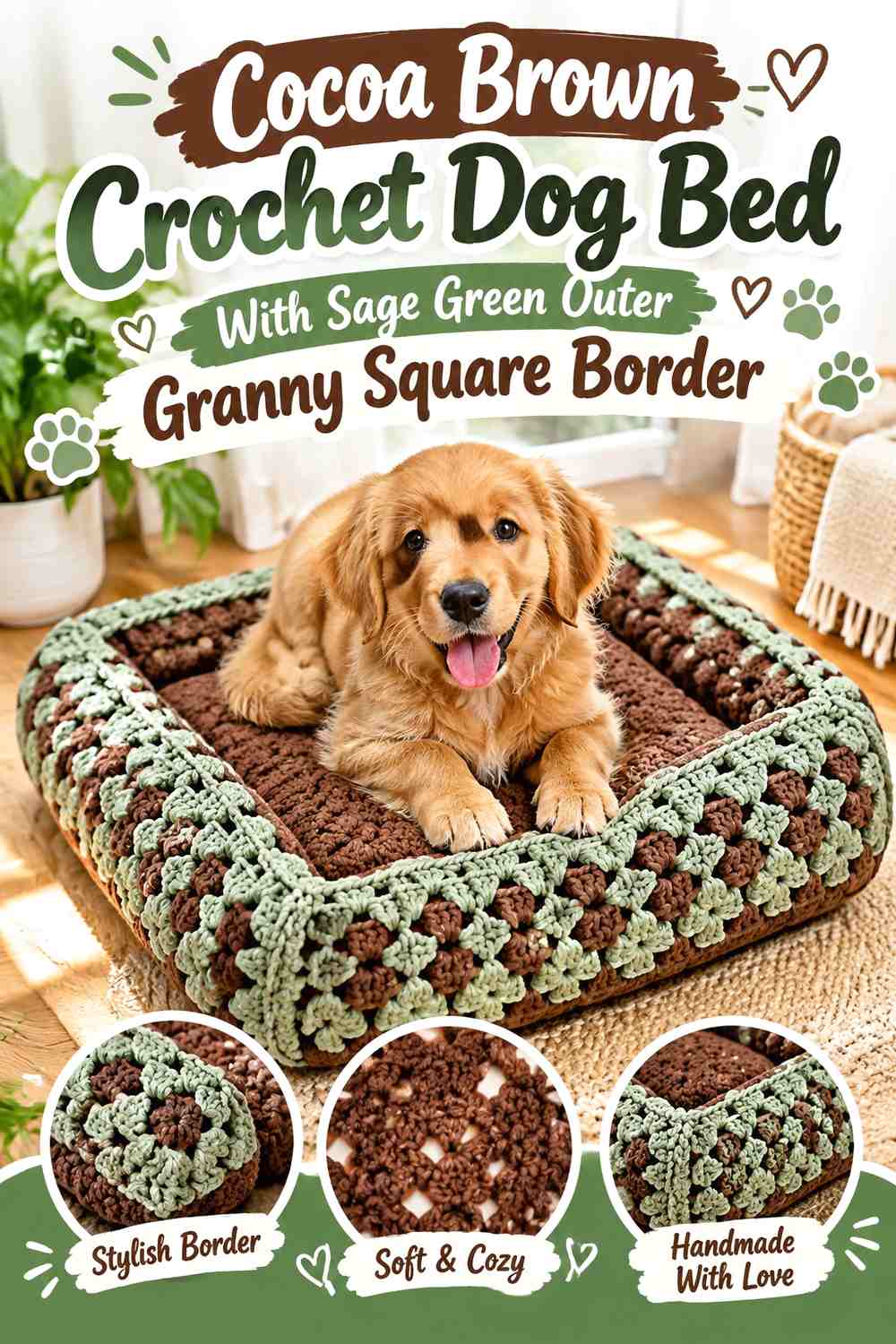
This version keeps the center darker and moves sage green to the outside. Cocoa-brown squares fill the main sleeping panel, while a row of sage-green squares or rounds frames the perimeter.
Keep Cocoa Brown Broad Inside the Sage Green Border
Give the central area enough width that the bed still reads as cocoa-led. A very narrow brown center surrounded by several green rows would reverse the intended hierarchy.
Use Sage Green Around Cocoa Brown as a Full Perimeter
Carry the green consistently around all sides so it looks like an intentional border rather than several unrelated accent squares.
Keep Cocoa Brown Side Walls Distinct From Sage Green
If the bed includes raised sides, returning to cocoa brown outside the green border creates a clear center-border-wall sequence.
The supporting tutorial teaches the basic granny-square construction that can be repeated and assembled into the bordered bed panel.
Creator Credit: Bella Coco
10. Sage Green and Cocoa Brown Continuous Granny Square Crochet Dog Bed

A single continuously enlarged granny square avoids many small seams. Sage green can dominate the broad center rounds while cocoa brown appears at deliberate intervals and around the outermost edge.
Give Sage Green More Rounds Than Cocoa Brown
Use wider sage sections if you want green to remain dominant. Equal alternating bands can make the center look strongly striped rather than like one expanded granny-square panel.
Place Cocoa Brown at Structural Sage Green Transitions
Use brown to mark selected stages of the growing square, particularly near the outer portion where a darker band can frame the cushion.
Finish the Sage Green and Cocoa Brown Square With a Dark Outer Edge
A final cocoa-brown round can visually contain the entire large square and connect it with darker bed sides or a base.
The supporting tutorial demonstrates growing a granny square continuously, making it useful for a one-panel cushion approach instead of a multi-square surface.
Creator Credit: The Crochet Crowd
11. Sage Green C2C Granny Square Crochet Dog Bed With Cocoa Brown Framing
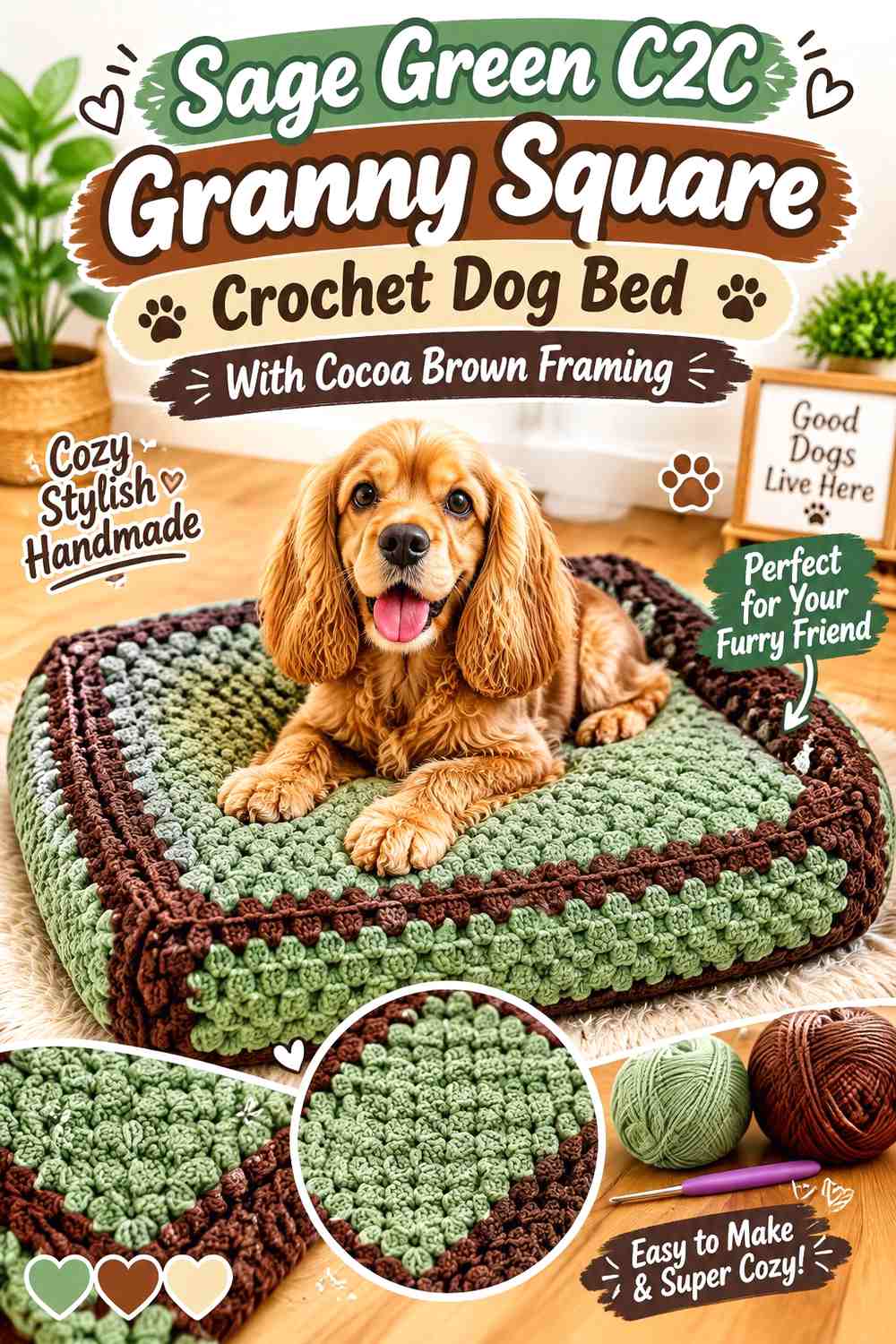
The final idea uses C2C-style granny-square panels for a more directional texture. Sage green carries most of the panel surface, while cocoa brown frames each section and can continue around the complete cushion.
Keep Sage Green Dominant Inside Cocoa Brown C2C Panels
Use broad green fields so the directional cluster texture remains visible. Too many alternating color changes can compete with the diagonal construction.
Frame Sage Green C2C Squares With Cocoa Brown
A dark boundary gives each panel a clear edge before it is joined and helps several C2C pieces read as one organized bed surface.
Use Cocoa Brown Consistently Between Sage Green Panels
Keep the joining treatment similar across the entire cushion. Unequal dark seams can make some panels look farther apart than others.
Check Sage Green and Cocoa Brown Placement With the Dog Bed Assembled
Color balance can change once the flat panel becomes part of a three-dimensional bed. Lay the cushion inside the planned sides and check whether sage still dominates as intended before completing the outer border.
The linked tutorial demonstrates a C2C granny-square join-as-you-go approach, which can support the panel assembly rather than the pet-bed structure itself.
Creator Credit: Hooked by Robin
Which Sage Green and Cocoa Brown Granny Square Dog Bed Should You Choose?
For the clearest classic granny-square look, Ideas 1, 2, 3, 6, and 8 make the individual squares easy to see through contrasting centers, joins, borders, or checkerboard placement.
Ideas 4, 5, and 9 use the colors to distinguish the sleeping cushion from the raised sides or surrounding frame. These are useful when you want the overall dog-bed structure to remain visually clear rather than covering every surface in the same square pattern.
Idea 10 is the simplest direction if you prefer one enlarged square instead of joining many motifs. Idea 11 introduces a more directional C2C texture while keeping the sage-green-and-cocoa-brown palette controlled.
Conclusion
Sage green and cocoa brown work particularly well on a winter granny square dog bed when the colors help distinguish the sleeping surface, joins, borders, and side walls. Sage green can keep a large cushion visually lighter, while cocoa brown gives the seams and perimeter enough depth to frame the bed.
For a traditional patchwork effect, alternate the colors across individual granny squares or use cocoa joins around sage motifs. For a calmer bed, keep most of the center sage green and reserve brown for the side walls and outer edge. You can reverse that relationship when you prefer a darker winter bed with a lighter green cushion or border.
Use the pet-bed tutorials for the complete bed structures they demonstrate and the granny-square tutorials for their panels, square styles, and joining techniques. Size the finished project around the individual dog and check the yarn’s care information before deciding how the bed will be cleaned and maintained.
Frequently Asked Questions
Should Sage Green or Cocoa Brown Be the Main Color of a Granny Square Dog Bed?
Sage green creates a lighter sleeping surface and works well with cocoa-brown joins or side walls. Cocoa brown creates a deeper winter look and can be balanced with sage centers, borders, or a separate-looking cushion panel.
Where Should Cocoa Brown Go on a Sage Green Granny Square Dog Bed?
Useful placements include the joins, outer border, corner squares, raised side walls, and lower base. Concentrating brown in structural areas usually gives the bed more definition than scattering tiny brown details through every square.
Can Sage Green and Cocoa Brown Alternate as Complete Granny Squares?
Yes. A checkerboard arrangement gives both colors substantial space and makes the square construction immediately visible. Keep the joining color simple so it does not compete with the alternating panels.
Are Solid Sage Green or Cocoa Brown Granny Squares Better for a Dog Bed?
Solid squares create a denser visual surface, while traditional or sunburst squares create more visible openings and texture. Choose the square construction based on the bed design you want to make and the suitability of the finished fabric for your dog rather than color alone.
Can I Use One Large Sage Green Granny Square Instead of Many Small Squares?
Yes. A continuously enlarged square can create the main cushion panel without numerous joins. Cocoa brown can appear in selected outer rounds or as the surrounding side-wall color.
How Can I Keep Sage Green and Cocoa Brown From Looking Too Dark Together?
Give sage green a larger share of the sleeping surface or place the colors in broad separate zones. If the actual yarns are similar in value, a grayscale photo can help reveal whether narrow joins will remain visible.
What Should I Check Before Making the Full Sage Green and Cocoa Brown Dog Bed?
Check the planned dimensions against the individual dog, test a square or panel for the intended texture, decide how the cushion and sides will be constructed, and review the yarn’s care instructions. If the dog tends to chew or pull fibers, avoid loose decorative additions and keep the bed design comparatively simple.