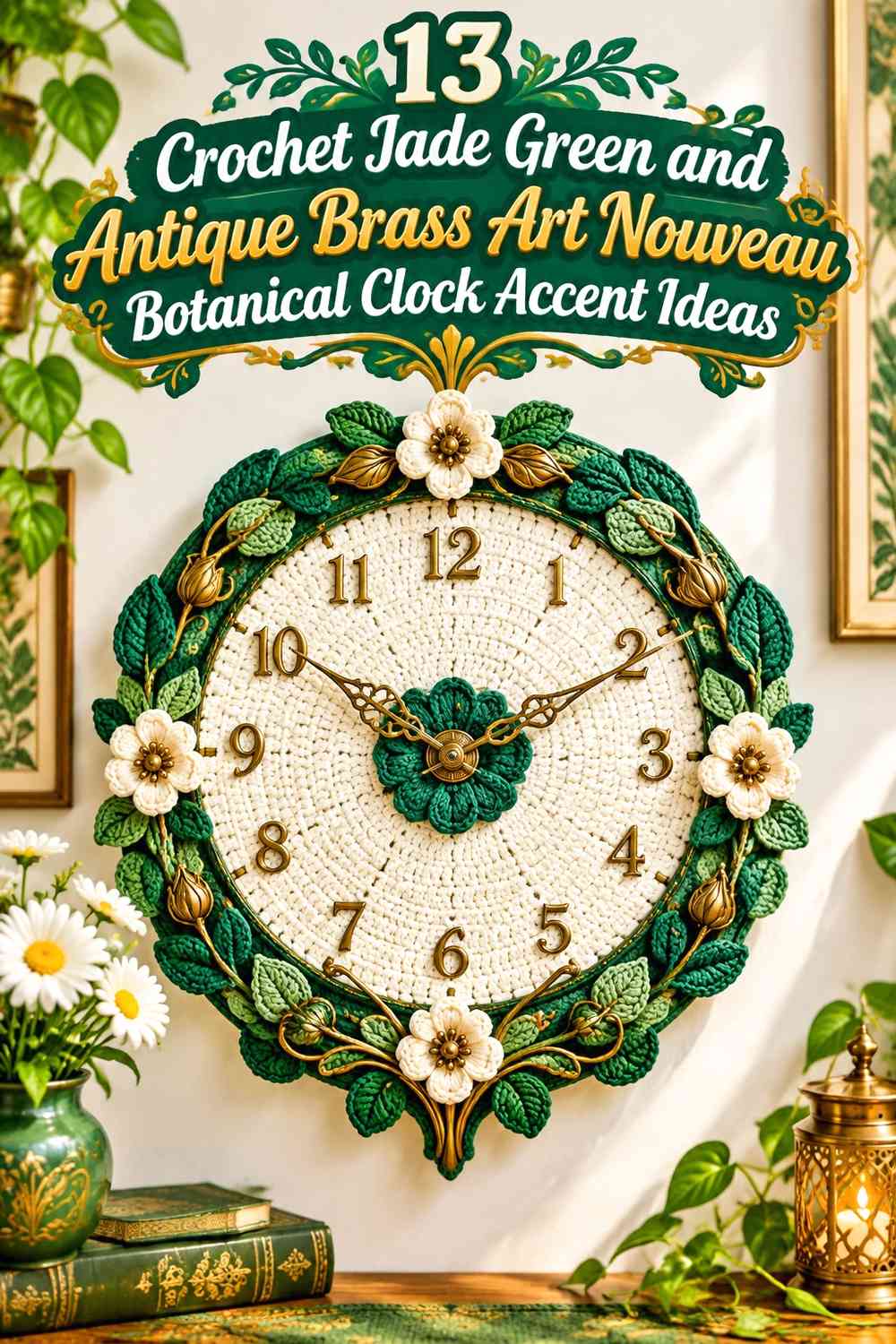

A jade green and antique brass palette is especially useful for an Art Nouveau-inspired crochet clock because the two colors can handle different jobs. Jade green can carry the larger botanical shapes, while antique brass can outline curves, mark flower centers, frame the clock face, or punctuate smaller details. That separation keeps the foliage readable instead of turning the entire clock surround into one dense mass of color.
The ideas below focus on different botanical silhouettes and different ways to distribute the same core palette. Some emphasize leaves, others flowers or flowing vines, and several introduce cream, charcoal, muted teal, or parchment as supporting shades. The tutorials support the crochet clock or botanical construction concept; the jade green and antique brass color directions are adaptations you can apply to your own piece.
Quick List
- Jade Green and Antique Brass Floral Halo Crochet Clock
- Jade Green Petal Ring and Antique Brass Crochet Clock Frame
- Jade Green Monstera and Antique Brass Crochet Clock Accent
- Jade Green Rose Vine and Antique Brass Crochet Clock Crescent
- Jade Green Oak Leaves and Antique Brass Acorn Crochet Clock
- Jade Green Botanical Rosette and Antique Brass Crochet Clock
- Jade Green Lavender Sprays and Antique Brass Crochet Clock
- Jade Green Calla Lily and Antique Brass Crochet Clock Flourish
- Jade Green Ginkgo Fans and Antique Brass Crochet Clock
- Jade Green Leaf Garland and Antique Brass Crochet Clock Border
- Jade Green Wisteria Vine and Antique Brass Crochet Clock
- Jade Green Mini Flower Garland and Antique Brass Crochet Clock
- Jade Green Leaf Appliqué and Antique Brass Crochet Clock Wreath
Let Jade Green Carry the Botanical Structure
For this palette, jade green works most naturally across the larger leaves, stems, and background botanical forms. Giving it the greatest visual area creates continuity around the clock and keeps the plant theme recognizable even when several different motifs are combined.
Antique brass can then operate as the smaller contrasting voice. Try it around flower centers, narrow edging, stems, selected leaf veins, or the inner boundary nearest the clock face. If both shades occupy exactly the same amount of space, the composition can become visually fragmented instead of reading as green foliage with warm ornamental definition.
Use Antique Brass to Define the Clock Face
A botanical clock needs enough separation between decoration and the area where the time is read. Antique brass is useful here because its warm brown-gold direction can visually divide jade foliage from the central face without requiring a severe black outline.
Consider repeating antique brass in more than one place. A narrow inner ring can connect to small flower centers, leaf tips, or intermittent vine details. Repetition keeps the brass color integrated with the crochet rather than making it look like a separate ring added after the botanical section was planned.
Shape Jade Green Motifs Into Art Nouveau Curves
Art Nouveau-inspired botanical decoration benefits from sweeping, directional movement rather than evenly scattered motifs. Before joining leaves and flowers, arrange them around the clock and look for long curves that lead the eye around the circular form.
Jade green vines can form those larger paths. Antique brass can appear at turns, intersections, flower centers, or the ends of selected tendrils. Keeping the brass details smaller prevents them from breaking the continuous green movement.
1. Jade Green and Antique Brass Floral Halo Crochet Clock
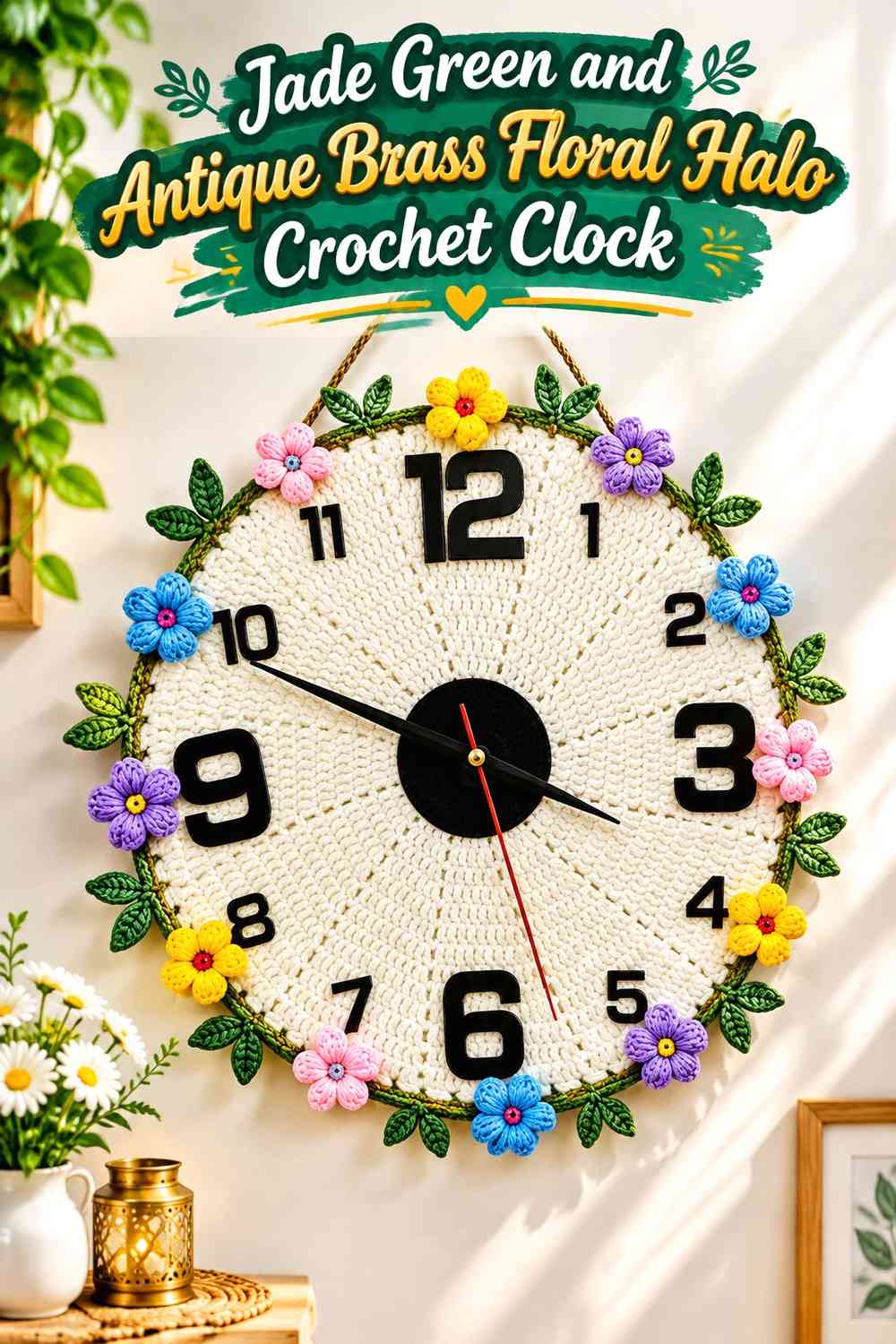
This version puts the botanical decoration around most or all of the clock perimeter. Jade green can dominate the foliage and larger flower shapes, while antique brass forms a restrained inner frame and selected floral details. The full halo makes this one of the richer options, so leaving a little visual space between major motifs helps the circular outline remain clear.
Jade Green Should Control Most of the Floral Halo
Use jade green across the largest leaves and repeated floral shapes rather than alternating green and brass evenly around the entire clock. A strong green majority gives the halo one recognizable botanical field and allows the center face to remain the visual anchor.
If the crochet surface contains raised petals or layered foliage, compare the jade sections from several feet away. Details that look separated at close range can blend together once the clock is on a wall, so strategic antique brass breaks may be useful between closely packed motifs.
Antique Brass Can Form the Inner Crochet Clock Boundary
A slim antique brass edge between the jade halo and the central clock area gives the greenery a stopping point. It can also be repeated in selected flower centers so the inner ring does not appear unrelated to the surrounding decoration.
Avoid expanding the brass band until it competes with the botanical work. In this idea, antique brass works better as definition than as the largest field.
Creator Credit: Crochet Academy
2. Jade Green Petal Ring and Antique Brass Crochet Clock Frame
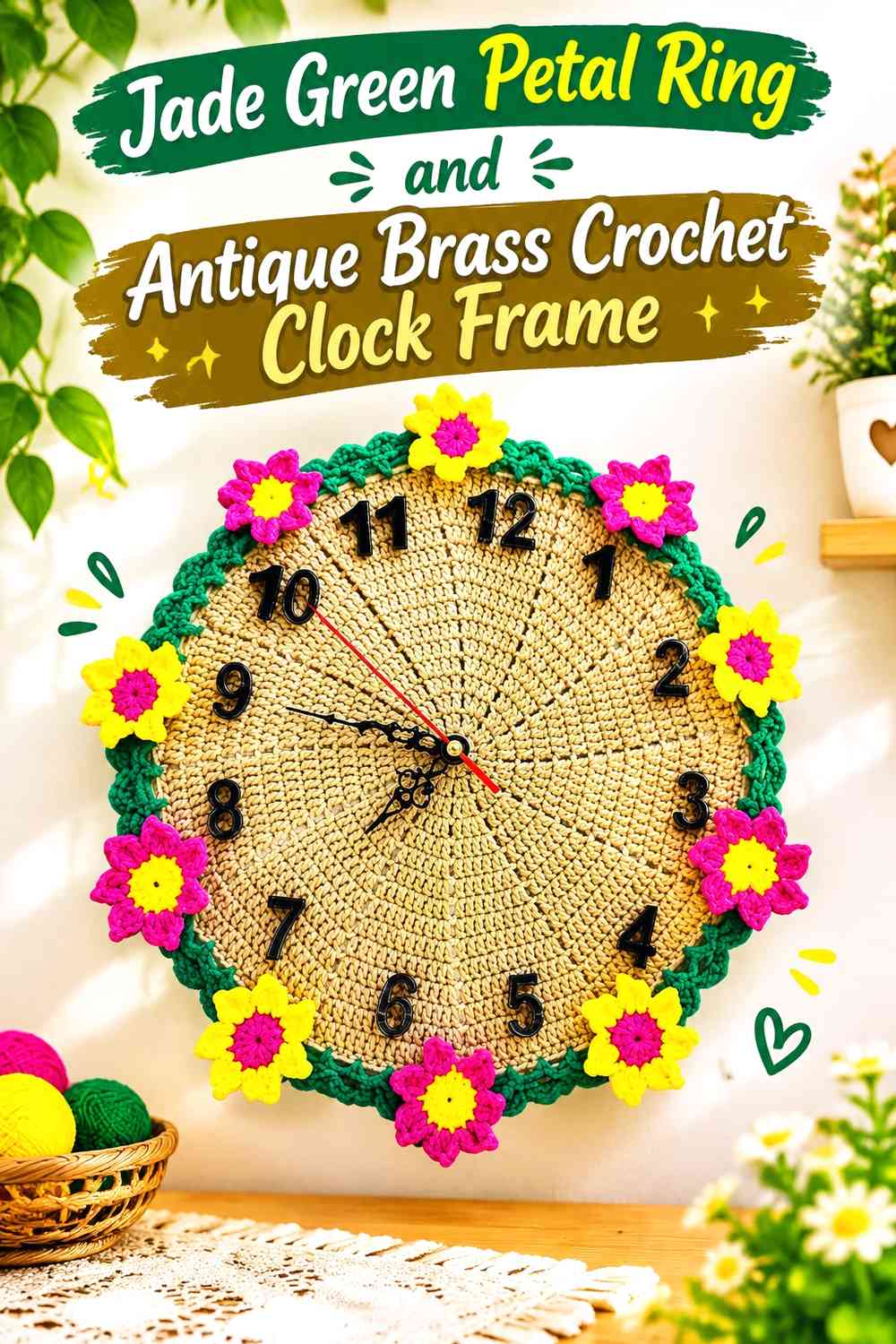
A more controlled flower ring gives the clock an orderly botanical border while still leaving room for Art Nouveau styling. Use jade green for repeated petals or leafy connectors, then introduce antique brass at the inner ring and selected flower centers. The repetition creates structure, while the two colors prevent the perimeter from looking flat.
Jade Green Petals Keep the Crochet Clock Ring Connected
Repeating jade green across the outer petals gives the clock a continuous circumference even when individual flowers are visible. This approach is useful when you want floral detail without the irregular density of a mixed botanical wreath.
For more depth, a slightly darker or lighter green can appear in occasional leaf sections while jade remains dominant. Preserve enough difference from antique brass so the warm accent remains easy to identify.
Antique Brass Flower Centers Can Echo the Crochet Clock Frame
Use antique brass in small centers and again along the face boundary. Connecting these two areas creates a deliberate color rhythm from the middle of each flower back toward the clock itself.
If the brass centers become too large, they can turn the flower ring into a dotted band. Reducing their area keeps the petals responsible for the overall botanical impression.
Creator Credit: Crafting Wheel
3. Jade Green Monstera and Antique Brass Crochet Clock Accent
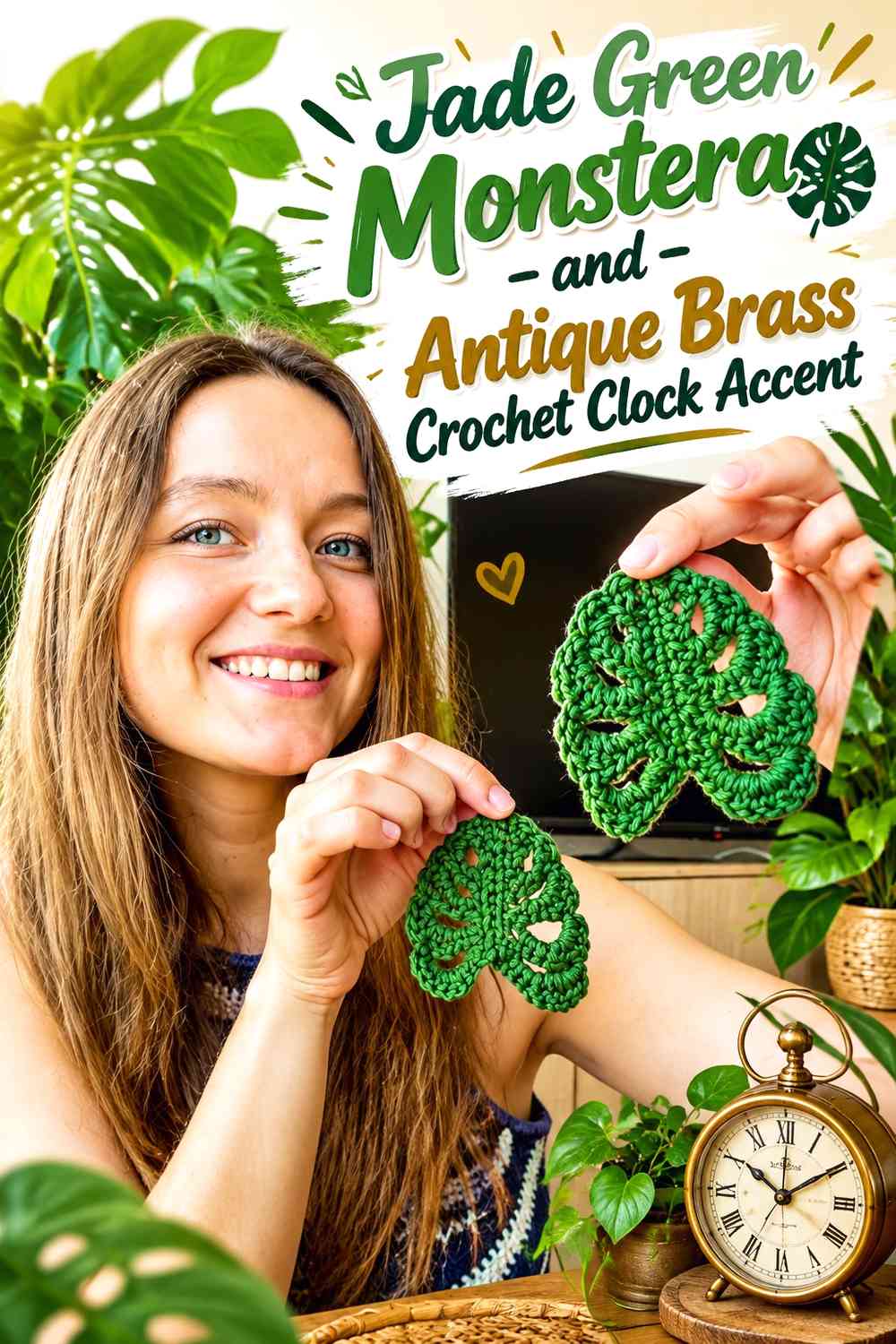
Monstera-inspired leaves create broader shapes than small floral appliqués, making this direction useful for an asymmetrical clock. Place a cluster along one side or across the lower portion rather than covering the entire perimeter. Jade green should carry the leaf surfaces, with antique brass used sparingly to define the cluster and connect it to the clock face.
Jade Green Monstera Leaves Need Breathing Room Around the Clock
Broad jade leaves can quickly cover too much of the clock outline. Leave deliberate gaps between overlapping shapes so individual leaf silhouettes remain visible and the clock still reads as a circle rather than a dense green wall hanging.
An offset arrangement also suits the flowing botanical direction better than forcing identical leaves into a perfectly even ring. Let one or two shapes extend farther while smaller foliage tapers back toward the clock.
Antique Brass Can Trace the Jade Green Monstera Cluster
Instead of filling entire leaves with antique brass, use the warmer color as a narrow supporting detail near stems, joins, or the inner boundary of the cluster. This preserves the strong jade leaf identity while making the arrangement feel connected to the rest of the clock.
A parchment or warm cream clock face can provide additional separation if both jade and brass are relatively deep in value.
Creator Credit: by Kristine
4. Jade Green Rose Vine and Antique Brass Crochet Clock Crescent
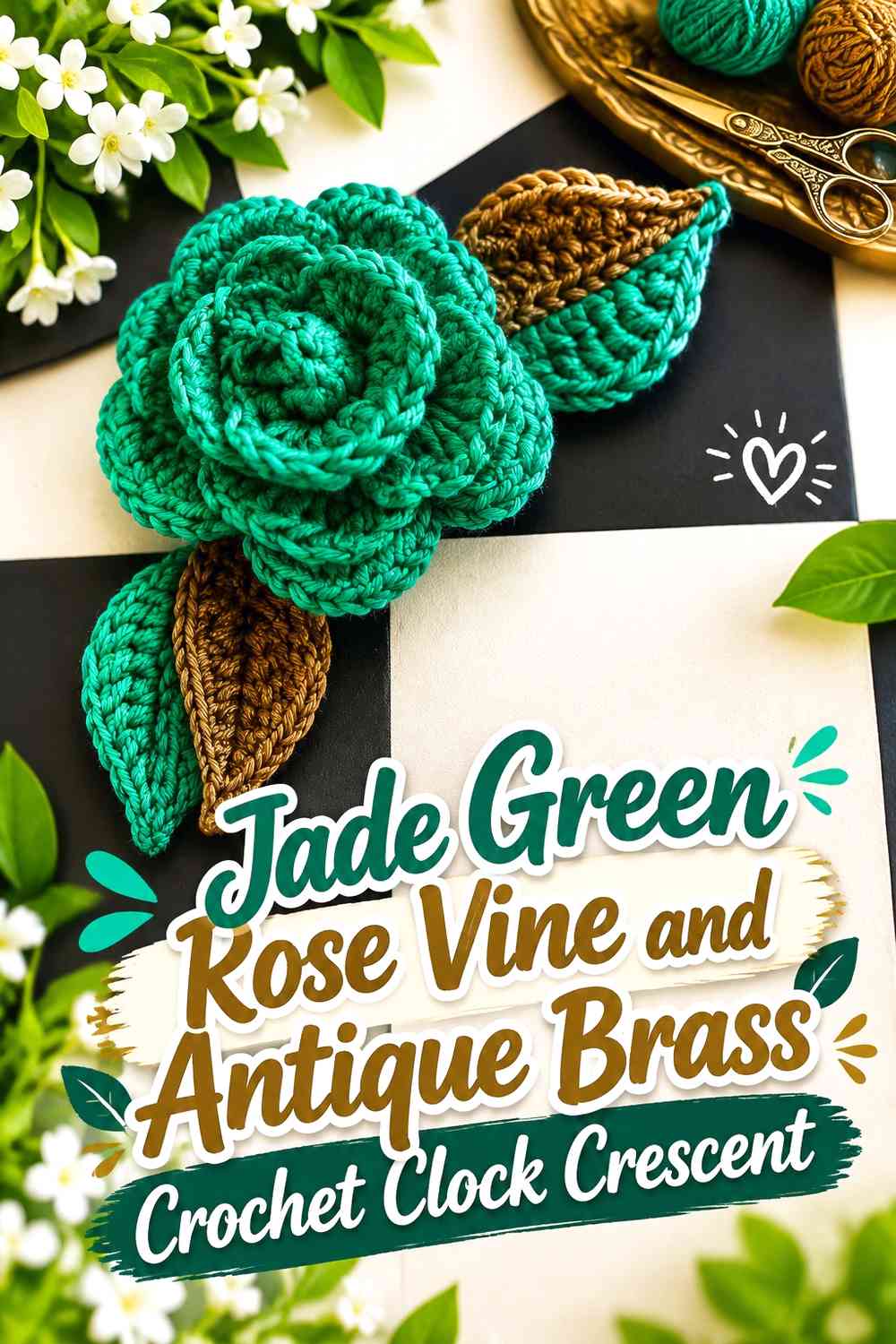
A rose-and-leaf crescent concentrates the decoration along the lower side of the clock instead of surrounding the whole circumference. Jade green can cover leaves and much of the vine, while antique brass appears inside selected flower centers, outlining petals, or marking the crescent’s inner curve.
Jade Green Leaves Should Carry the Crochet Rose Crescent
Keep most leaves jade green so they create one sweeping base underneath the roses. Changing every leaf to a different shade can interrupt the curved movement, while a consistent green makes the flowers look intentionally placed along one botanical stem.
Arrange larger leaves near the broadest portion of the crescent and reduce visual weight as the design tapers upward. That gradual change makes the accent feel more like a growing vine than a row of separate appliqués.
Antique Brass Should Stay Smaller Than the Jade Green Rose Foliage
Antique brass can define rose centers or small petal sections, but it does not need to fill every flower. Using the warm shade selectively gives the floral area highlights without turning it into a mostly brown-gold arrangement.
If you want a third shade, muted cream can lighten a few petals while jade continues to dominate the foliage and brass repeats near the clock face.
Creator Credit: OhMeOhMyCrochet
5. Jade Green Oak Leaves and Antique Brass Acorn Crochet Clock
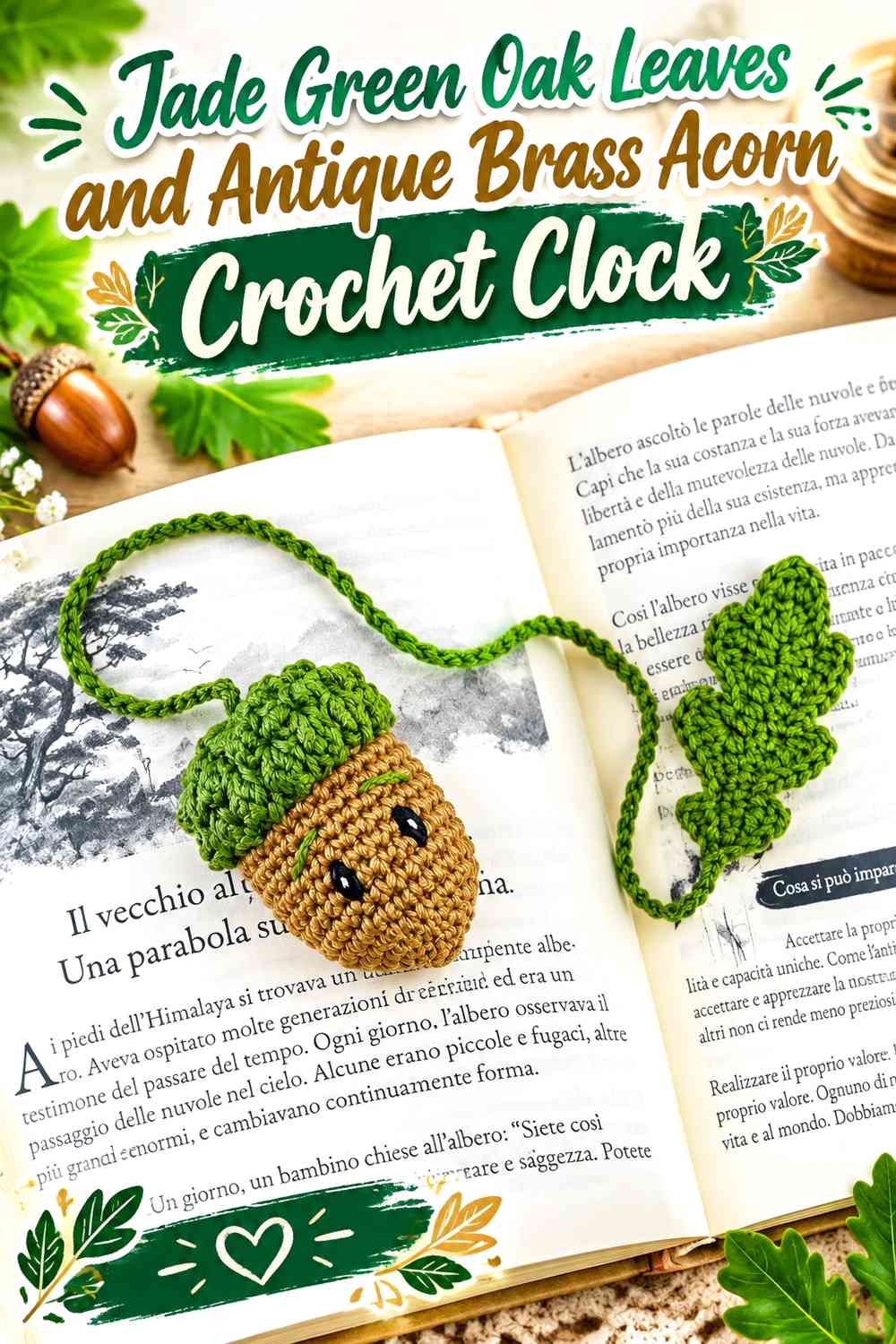
Oak leaves and acorn forms give the clock a more structured woodland botanical direction. Jade green can cover the lobed leaves, while antique brass works naturally as the darker, warmer accent on acorn forms, narrow borders, or connecting stems.
Jade Green Oak Leaves Create a Strong Crochet Clock Silhouette
Because oak-inspired leaves have pronounced edges, their shape can provide much of the decoration without requiring many additional flowers. Position several jade leaves along one sweeping branch and allow the negative space between lobes to remain visible.
Avoid stacking too many leaves directly on top of one another. The distinctive outline is part of the value of this motif, and heavy overlap can make several carefully shaped leaves read as one irregular green patch.
Antique Brass Acorn Accents Give Jade Green Leaves a Focal Point
Keep the antique brass acorn elements smaller than the jade leaf cluster. Their warmer color will already create distinction, so they do not need to occupy a large area.
Repeating a little antique brass near the clock center connects the woodland accent to the functional face. This is more cohesive than introducing brass only in the acorns and nowhere else.
Creator Credit: Francesca Uncinettando Crochet&Love
6. Jade Green Botanical Rosette and Antique Brass Crochet Clock
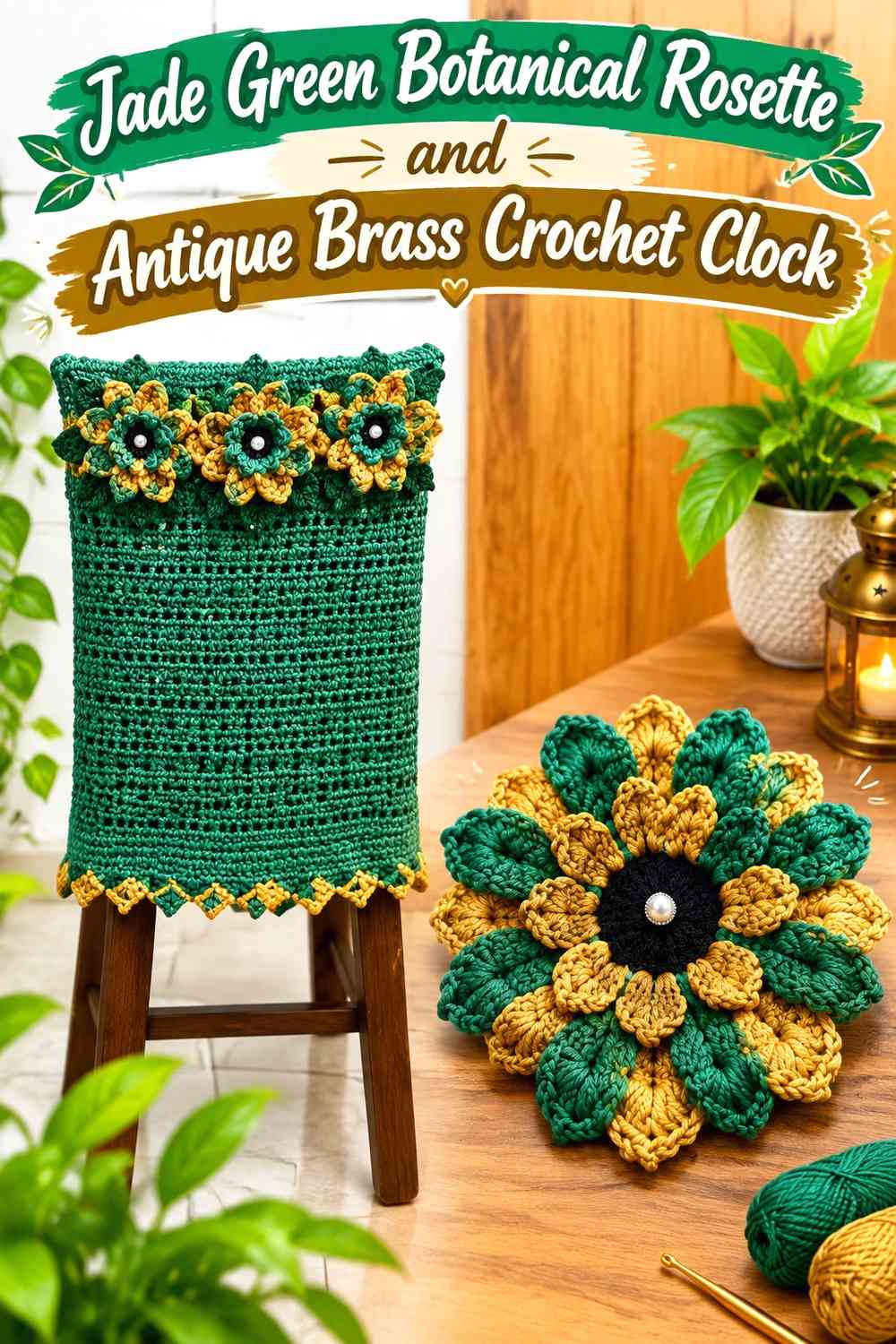
A large rosette can become the primary floral statement rather than repeating many small flowers. Rework the familiar radiating flower silhouette in jade green and antique brass so it reads as an ornamental botanical medallion instead of relying on traditional flower colors.
Jade Green Can Turn the Rosette Into a Botanical Clock Medallion
Use jade green across most petals when you want the flower to merge visually with surrounding leaves. This keeps the clock firmly within the green-and-brass scheme and prevents the rosette from looking like an unrelated bright flower added to a muted design.
For stronger separation between petals, leave small openings or use a contrasting center instead of introducing many additional yarn colors.
Antique Brass Gives the Jade Green Rosette a Defined Center
An antique brass center establishes a warm focal point and can visually connect the flower to the clock hands or inner decorative ring when those areas use a similar color direction.
Keep the antique brass concentrated. Extending it into every petal can reduce the distinction between the central disk and the surrounding jade structure.
Creator Credit: Geovana Artes em Crochê
7. Jade Green Lavender Sprays and Antique Brass Crochet Clock
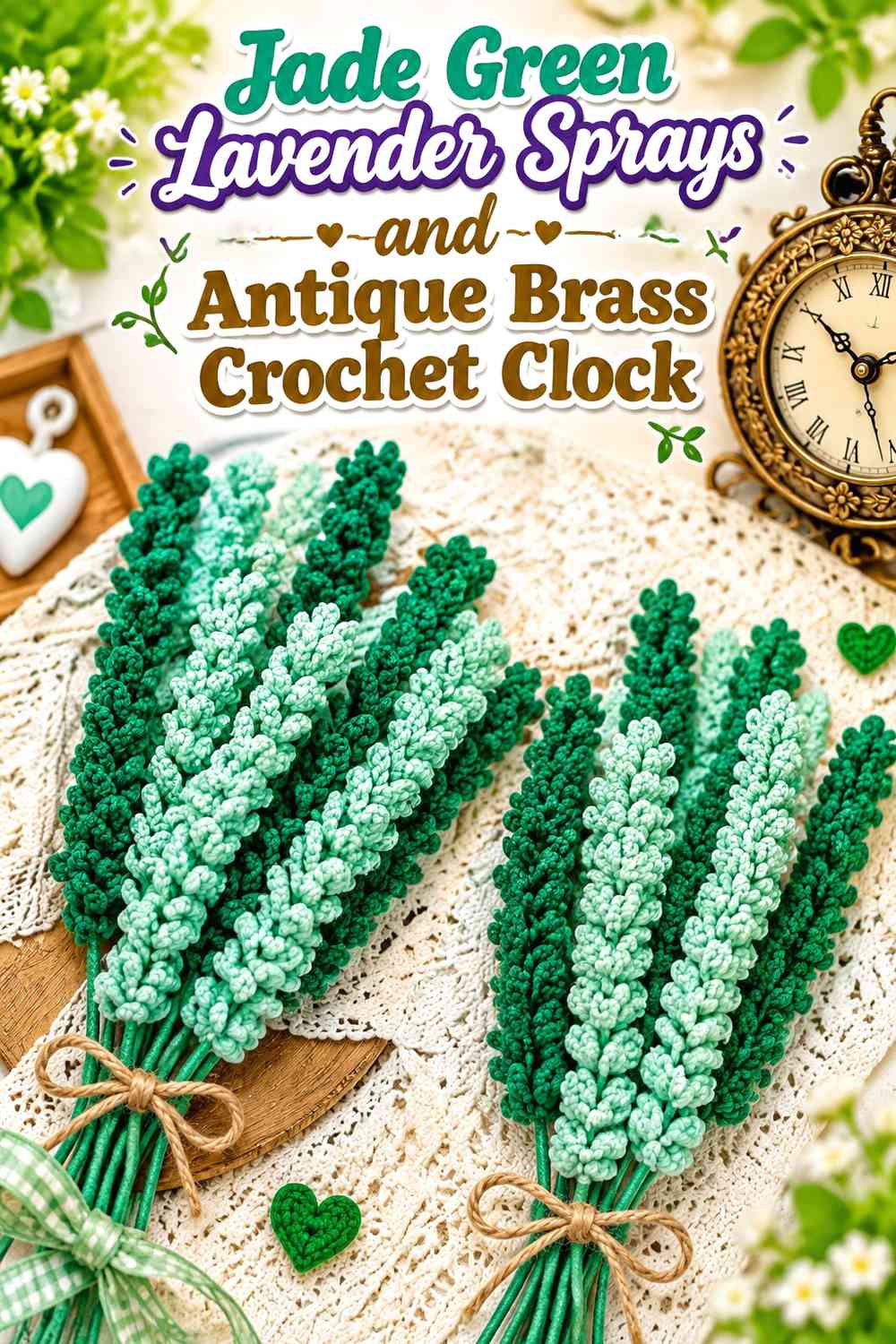
Tall, narrow floral sprays can create elegant vertical movement beside a round clock. Instead of using literal lavender coloring, translate the clustered floral form into jade green with antique brass tips, buds, or connecting details. This makes the shape botanical while keeping the requested palette intact.
Jade Green Sprays Can Lengthen the Crochet Clock Composition
Arrange jade green stems so they extend upward from one side of the clock or rise from a lower crescent. Their narrower form creates vertical movement without adding the visual bulk of broad leaves.
Varying the lengths of the sprays makes the arrangement less rigid. Keep the direction related so they still appear to emerge from the same botanical composition.
Antique Brass Tips Should Punctuate the Jade Green Sprays
Small antique brass sections can break up a long run of jade without overpowering the delicate motif. Place them near selected tips, small buds, or the point where the sprays meet the clock border.
If every small element becomes brass, the eye may follow the warm dots instead of the overall plant form. A restrained distribution keeps jade green responsible for the main silhouette.
Creator Credit: Betty’s.Crochi
8. Jade Green Calla Lily and Antique Brass Crochet Clock Flourish
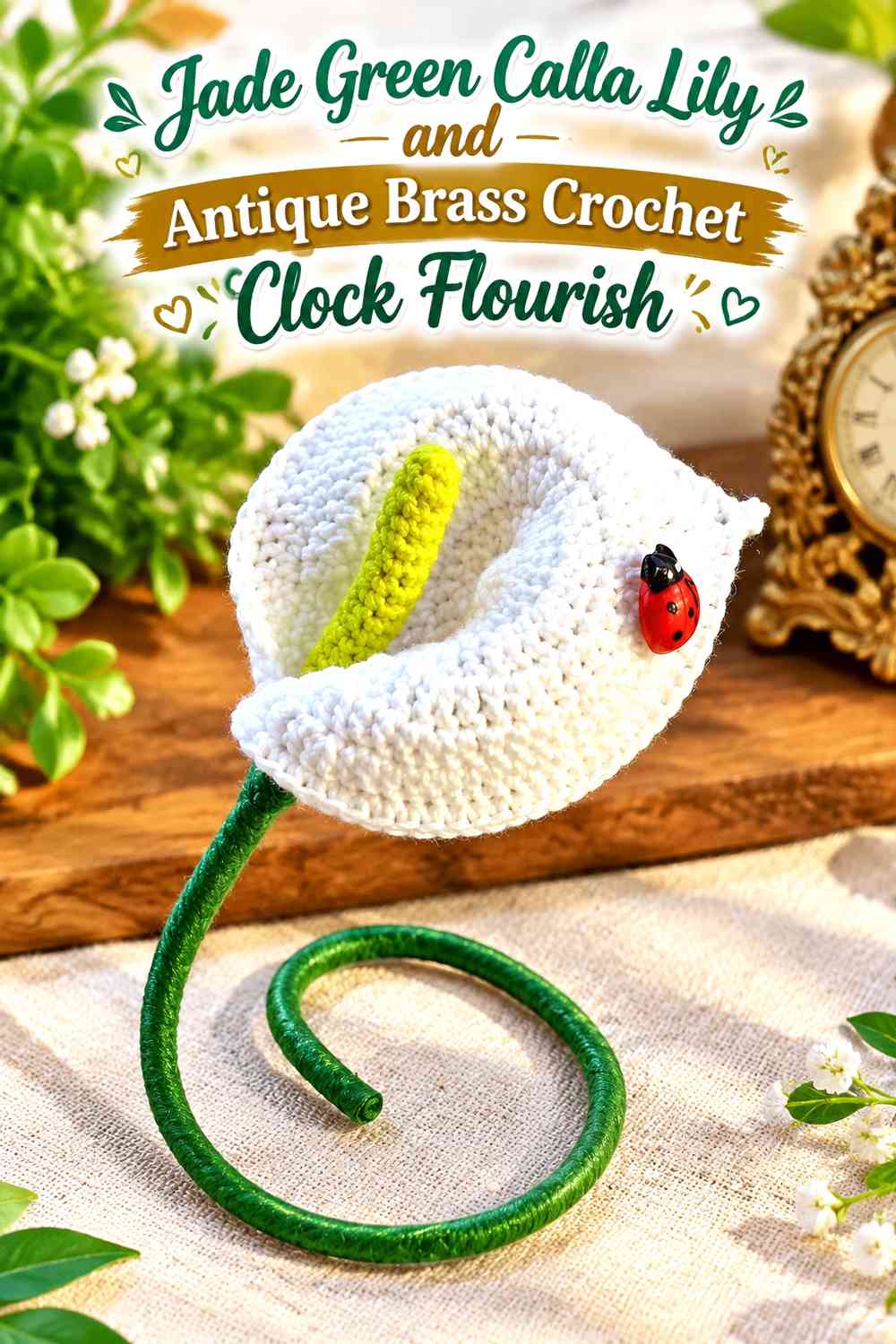
Calla-inspired shapes bring long, curving lines that fit easily into an Art Nouveau direction. Use jade green for the outer floral forms or accompanying leaves, then place antique brass within the narrow centers and along selected stems.
Jade Green Calla Shapes Can Follow the Crochet Clock Curve
Position the flowers so their long lines bend with the clock rather than pointing randomly away from it. Two or three directional forms can be more effective than covering the perimeter with identical flowers.
Jade green allows those shapes to blend into the surrounding foliage while their curved silhouettes create the differentiation. This is useful when you want a botanical accent without introducing many extra colors.
Antique Brass Centers Give Jade Green Calla Forms Definition
A narrow antique brass center creates enough contrast to clarify each flower without dividing the entire motif into equal green and gold sections.
Repeat a little antique brass along the inner clock ring or at the base of the stems. That repetition prevents the flower centers from becoming isolated warm marks.
Creator Credit: World Of Amigurumi
9. Jade Green Ginkgo Fans and Antique Brass Crochet Clock
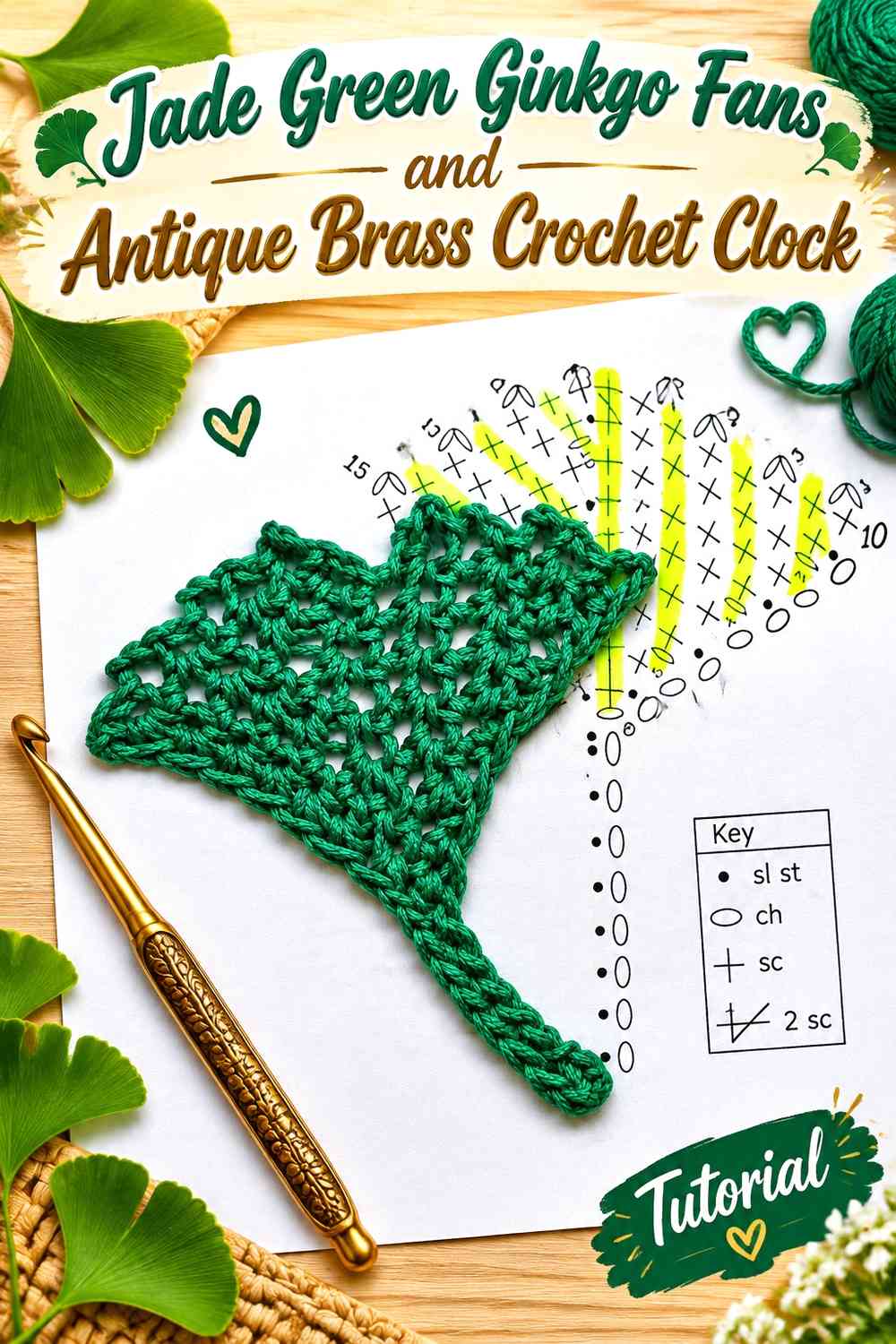
Ginkgo-inspired fan shapes offer a distinctive alternative to pointed leaves. Their broad upper edges can be arranged like decorative fans around part of the clock, giving the botanical surround a more graphic Art Nouveau character.
Jade Green Ginkgo Fans Create a Softer Crochet Clock Edge
Use jade green across the fan-shaped leaves and leave small intervals between them. Those spaces keep each silhouette identifiable and stop the edge of the clock from becoming one solid scalloped mass.
An uneven cluster can work especially well: place larger visual weight toward one lower corner and allow smaller or more widely spaced leaves to travel upward.
Antique Brass Can Define the Jade Green Ginkgo Stems
Keep antique brass mainly on stems, small joins, or an inner ring. The narrow warm lines contrast with the broad jade fans and help distinguish the structural part of the botanical arrangement.
If the two yarn colors appear similar in lightness, place them side by side before committing to the full clock. Strong hue difference does not always guarantee equally strong light/dark separation.
Creator Credit: Stitches n Scraps
10. Jade Green Leaf Garland and Antique Brass Crochet Clock Border
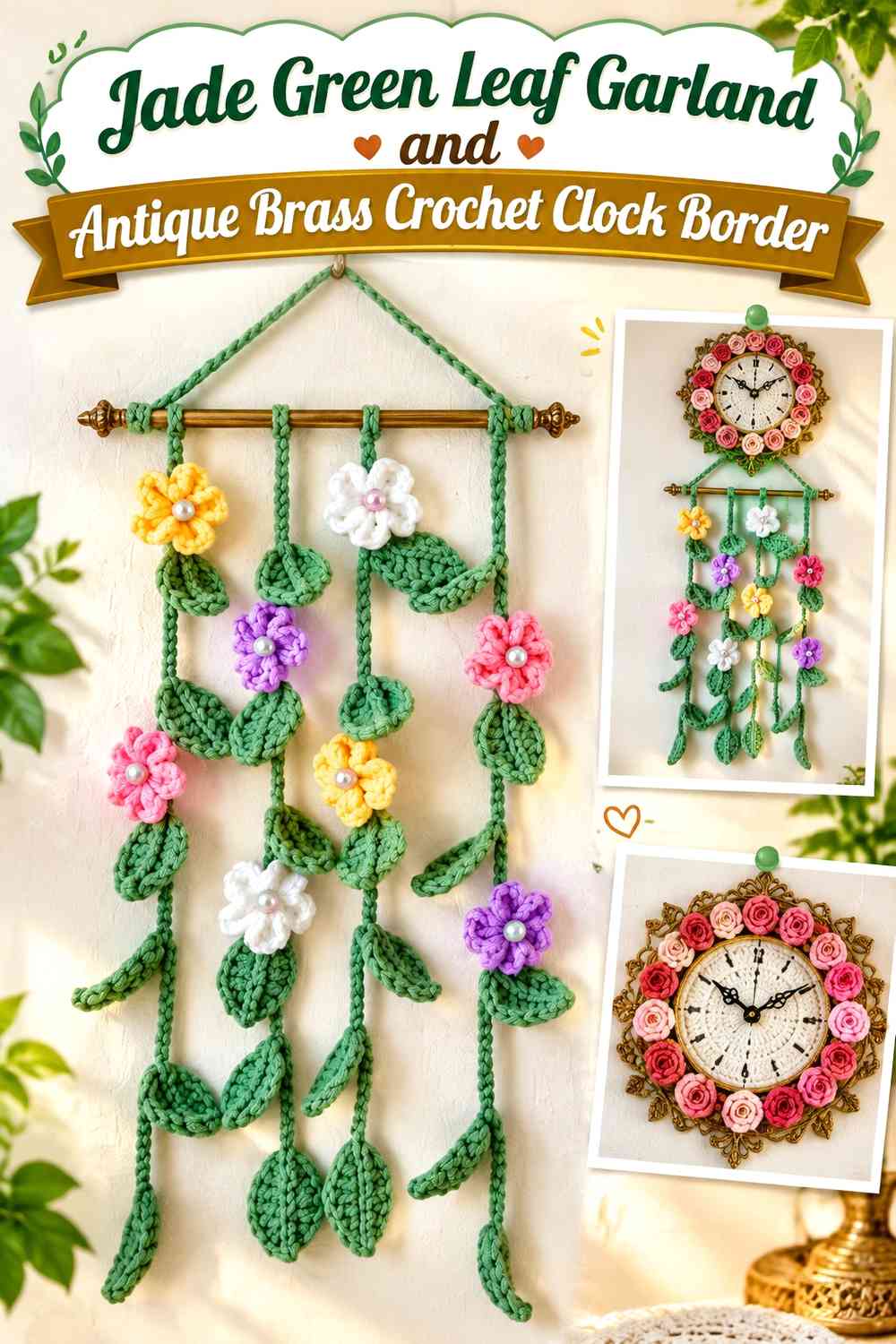
A leaf garland can follow the circumference more closely than separate appliqués, making it useful when you want an obvious botanical frame. Jade green should form most leaves and connectors, while antique brass can appear at intervals rather than alternating with green on every motif.
Jade Green Should Form the Continuous Crochet Clock Garland
Keep the primary connecting line and most leaves jade green. That continuity makes the garland look like one growing vine rather than individual decorations attached around a circle.
Before fixing the garland in place, arrange it loosely around the clock and check where the curves naturally fall. Forcing every leaf into identical spacing can make the botanical border feel more geometric than flowing.
Antique Brass Can Mark Turns in the Jade Green Garland
Place antique brass near selected flowers, junctions, or major changes in direction. These warmer points can create visual pauses while the jade vine continues around the clock.
A small number of repeated brass details usually creates more clarity than inserting the color into every leaf. The goal is a green garland with ornamental brass definition, not a striped garland.
Creator Credit: vvw.studio
11. Jade Green Wisteria Vine and Antique Brass Crochet Clock
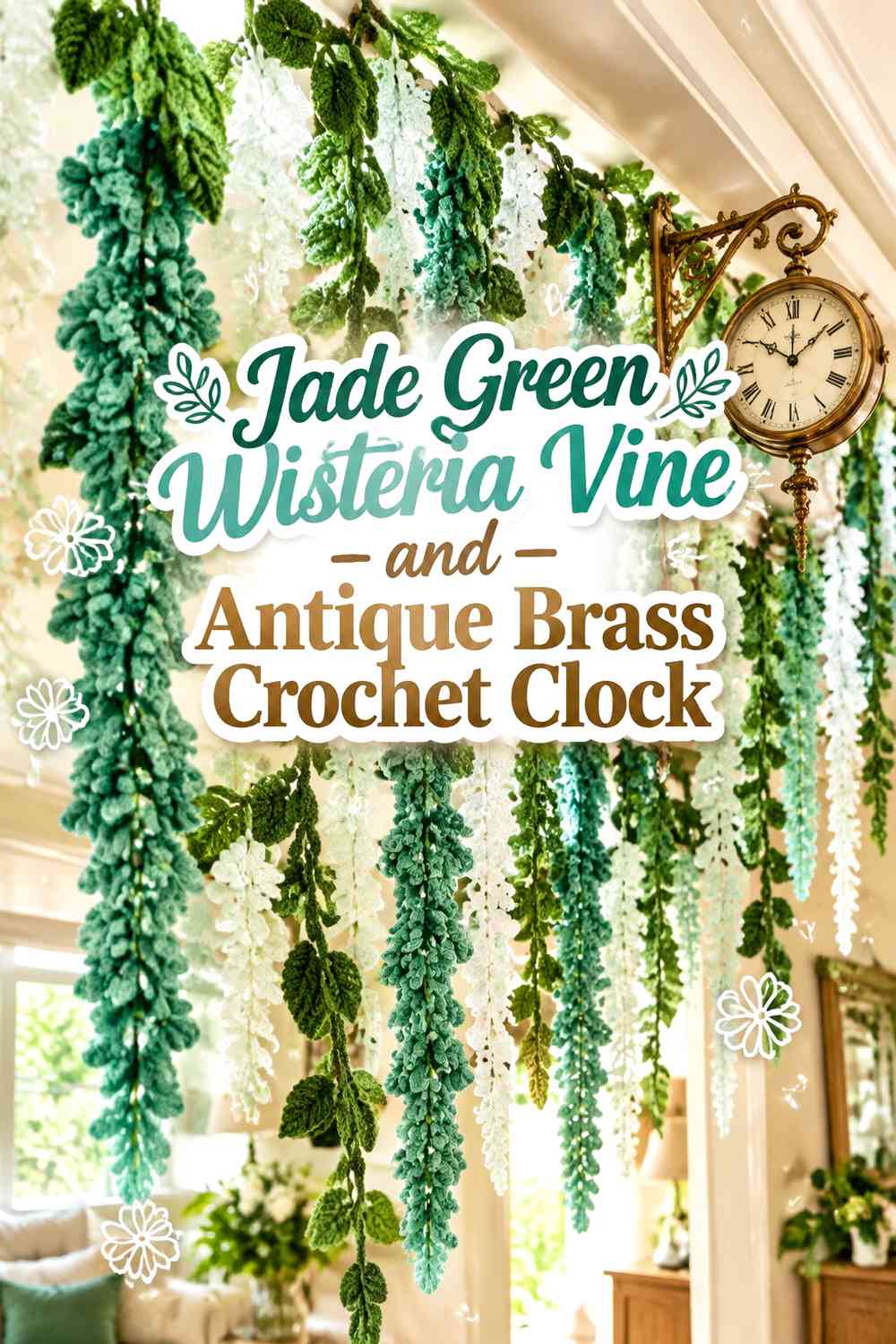
A cascading vine changes the clock from a symmetrical wall accent into a more directional composition. Let jade green stems and leaves move down one side while antique brass appears in selected clustered flowers or small connecting details.
Jade Green Vines Can Create the Main Art Nouveau Clock Movement
Begin with the overall path rather than individual flowers. A jade vine that bends around part of the clock and then drops downward creates a continuous line that can organize all the smaller motifs attached to it.
Keep enough open wall space around the cascade. The trailing shape is easier to appreciate when it does not have to compete with an equally dense cluster on the opposite side.
Antique Brass Clusters Should Break Up the Jade Green Cascade
Use antique brass in short intervals rather than as one large block. Small clustered accents can interrupt the green vine while preserving the sense that the entire arrangement grows from one continuous stem.
If the cascade begins to look spotty, reduce the number of brass sections and repeat jade between them. The warmer accent works most clearly when it remains secondary.
Creator Credit: Bellaskeins
12. Jade Green Mini Flower Garland and Antique Brass Crochet Clock
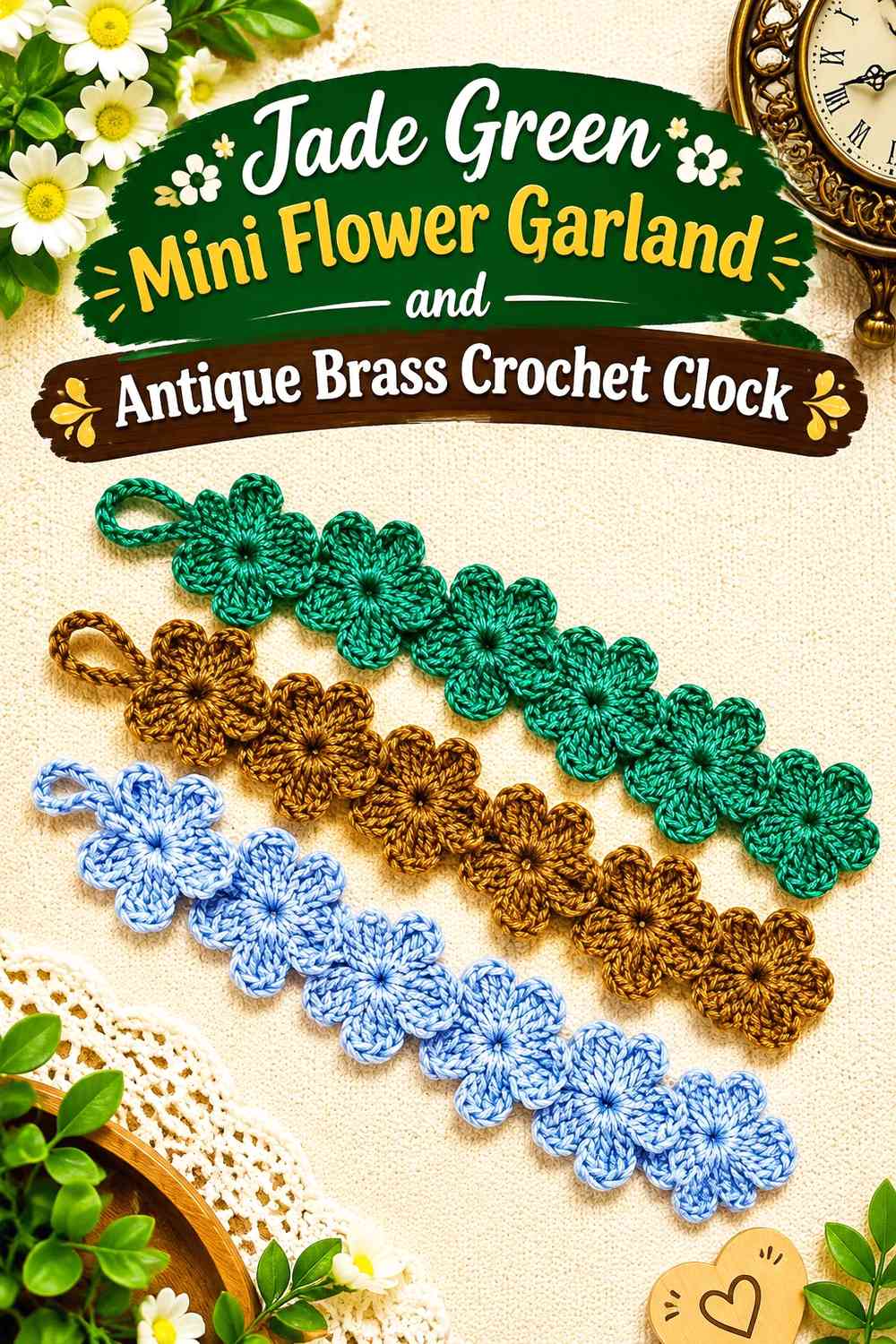
Small repeated flowers create a finer, more decorative border than large leaf motifs. This direction works well if you want the clock to retain a clean circular outline while gaining a lace-like botanical edge.
Jade Green Mini Flowers Can Keep the Crochet Clock Border Light
Use jade green for most petals or alternating flower sections, but allow a little space between repetitions. Small motifs can become visually busy when packed tightly around an entire circumference.
One option is to concentrate the flower garland along the upper half or lower half of the clock and leave the opposite area cleaner. That asymmetry can reinforce the Art Nouveau direction without changing the flower construction itself.
Antique Brass Centers Unite the Jade Green Mini Flowers
Small antique brass centers give repeated green flowers enough variation to be distinguishable. Because each center occupies little visual area, the brass color can repeat many times without necessarily overtaking the jade field.
Carry the same antique brass tone into the inner clock border. Repeating it in both areas makes the miniature centers feel connected to the overall design.
Creator Credit: Raji’s Craft Hobby
13. Jade Green Leaf Appliqué and Antique Brass Crochet Clock Wreath
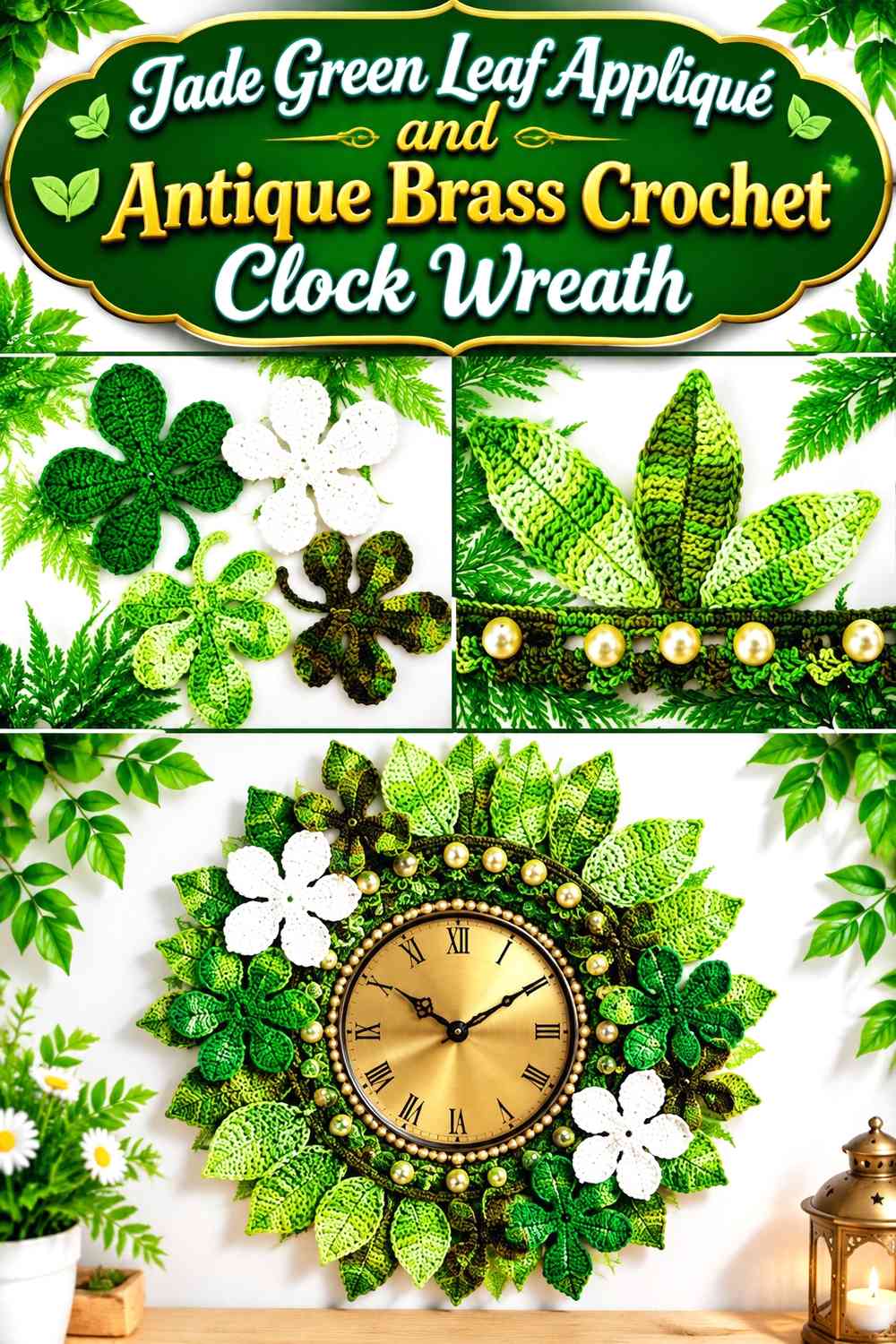
Individual leaf appliqués offer the most flexible layout because they can be arranged before being fixed into the final composition. Use them to create an uneven wreath, a side cluster, or a sweeping branch that crosses only part of the clock perimeter.
Jade Green Leaf Appliqués Let You Test the Crochet Clock Layout First
Make or arrange the jade green leaves as movable elements before deciding on their final positions. Start with the largest visual curve, then fill only the gaps that need additional foliage.
Rotate neighboring leaves rather than pointing them all in the same direction. Small shifts in orientation can suggest a growing branch while still keeping jade green consistent across the arrangement.
Antique Brass Can Separate Overlapping Jade Green Leaves
Where several jade leaves overlap, a narrow antique brass connector, stem, or nearby accent can prevent the cluster from becoming visually flat. Concentrate the brass where separation is needed instead of automatically outlining every leaf.
This idea also makes substitution straightforward. If your chosen jade is unavailable, preserve the medium-to-deep green role; if the antique brass changes, keep it warmer and visibly distinct from the foliage so the hierarchy remains intact.
Creator Credit: Edinir Croche
Comparing the 13 Jade Green and Antique Brass Clock Directions
Choose the full floral halo or petal-ring versions when you want crochet decoration to surround most of the clock. The monstera, oak, ginkgo, and individual-leaf ideas put more attention on foliage and recognizable leaf silhouettes.
For stronger flowing movement, the rose crescent, calla flourish, lavender sprays, and wisteria cascade give you a directional composition rather than an even frame. The leaf and miniature-flower garlands sit between those approaches: they can follow the circular clock edge closely but still be concentrated on only part of it.
If antique brass is meant to stay subtle, the monstera, ginkgo, and leaf-appliqué versions make it easy to reserve the warm shade for stems and edging. If you want the brass color repeated more visibly, flower centers, rosettes, garlands, and acorn accents provide more natural places to distribute it without taking the dominant role away from jade green.
Conclusion
For the clearest jade green and antique brass Art Nouveau clock palette, decide first whether the botanical decoration should form a full frame or an asymmetrical flourish. That single choice will narrow the 13 ideas quickly.
Choose the floral halo, petal ring, or mini flower garland for a more complete circular border. Use monstera, ginkgo, oak leaves, or individual leaf appliqués when leaf silhouettes should dominate. Rose, calla, lavender, and wisteria directions work better when you want the eye to travel along a sweeping botanical curve.
Whichever structure you choose, keep jade green responsible for most of the plant form and let antique brass define, connect, and punctuate it. That hierarchy gives both colors a clear purpose while protecting the readability of the clock and the detail of the crochet.
Frequently Asked Questions
Should jade green or antique brass dominate a crochet botanical clock?
Jade green is usually the stronger candidate for the dominant role because leaves, vines, and larger botanical sections can share one continuous color. Antique brass can then define centers, stems, borders, and smaller ornamental details. Reversing that balance is possible, but it produces a much warmer, more brass-led clock.
How can I tell whether jade green and antique brass have enough contrast?
Place the yarns directly beside each other and look at them from farther away as well as close up. You can also photograph them and check the image in grayscale. If the two shades become nearly indistinguishable without their hue, use a lighter or darker version of one color where small details need stronger separation.
Where should antique brass go on a jade green crochet clock?
Useful positions include the inner clock border, flower centers, narrow stems, motif joins, selected leaf details, or small recurring accents. Avoid spreading it everywhere simply because it is the secondary color. Concentrated repetition usually creates a clearer relationship with the jade foliage.
Can I add a third color to jade green and antique brass?
Yes. Warm cream, parchment, muted teal, deep green, or another subdued supporting shade can help, but give it a specific job. A light neutral may separate the clock face from dark decoration, while a deeper green can add tonal depth inside foliage. Keep jade and antique brass identifiable as the central palette.
How can I keep a jade green botanical clock from looking too crowded?
Plan the silhouette before permanently attaching every motif. Leave open areas between broad leaves, reduce motif density near the clock face, and allow one section to carry more decoration than another when an asymmetrical layout suits the design. More botanical pieces do not automatically produce a stronger Art Nouveau effect.
Should every flower on the crochet clock contain antique brass?
No. Repeating antique brass in selected centers is enough to connect the palette. If every flower, leaf, stem, and border receives the accent equally, the color hierarchy disappears and the clock can become visually busy.
What should I preserve if I substitute a different jade green or antique brass shade?
Preserve the relationship between the two colors rather than chasing an exact commercial shade. Keep the green clearly botanical and dominant, and choose a warm brass-like brown or muted gold that remains distinct enough to mark smaller details. Check their light/dark relationship before committing to a large number of motifs.