

Warm ecru and terracotta suit a winter cable pet blanket because each color can handle a different visual job. Warm ecru makes raised cable texture easier to read across a larger surface, while terracotta can add depth around borders, cable columns, joins, or selected panels without requiring a complicated multicolor palette.
The key is deciding where the darker terracotta should interrupt the lighter field. A small pet blanket has less surface area than a full throw, so too many color changes can compete with the cable texture. These 11 ideas use different balances—from mostly ecru blankets with terracotta framing to terracotta-dominant fields with lighter cables.
The tutorials linked below support the blanket, cable, block, braid, or crossover construction concepts. Use each creator’s tutorial for exact construction details, then plan the warm ecru and terracotta palette independently and adjust the finished size for the pet blanket you intend to make.
Quick List
- Warm Ecru Cable Field and Terracotta Border Crochet Pet Blanket
- Terracotta Field and Warm Ecru Braided Cable Crochet Pet Blanket
- Warm Ecru and Terracotta Alternating Cable-Column Crochet Pet Blanket
- Warm Ecru Cabled Blocks and Terracotta Join Crochet Pet Blanket
- Terracotta Celtic Cable and Warm Ecru Frame Crochet Pet Blanket
- Warm Ecru Crinkle Cable Blocks and Terracotta Accent Crochet Pet Blanket
- Warm Ecru Hidden Cable and Terracotta Edge Crochet Pet Blanket
- Terracotta Cable Center and Warm Ecru Border Crochet Pet Blanket
- Warm Ecru Braided Cable and Terracotta Side-Panel Crochet Pet Blanket
- Warm Ecru and Terracotta Crossover Texture Crochet Pet Blanket
- Warm Ecru Mock Cable and Terracotta Stripe Crochet Pet Blanket
Let Warm Ecru Show Off Chunky Cable Texture
Cable texture depends on shadow as much as color. A broad warm ecru field can make twists, crossings, and raised columns easier to distinguish because the surface is not being divided by frequent color changes.
That does not mean the entire pet blanket needs to be ecru. Terracotta can frame the texture or mark selected structural sections. On a smaller blanket, concentrating terracotta at the perimeter or in a few repeated cable areas often gives the cables more visual room than alternating colors constantly.
Use Terracotta to Organize the Pet Blanket Surface
Terracotta has more visual weight than warm ecru, so its placement can change which part of the blanket attracts attention first. A terracotta border visually contains an ecru cable field, while terracotta side panels can make a light central cable look narrower and more prominent.
Before committing to a large section, place both yarn colors next to each other and check their light/dark difference. If your particular ecru and terracotta are close in value, small cable details may blend more than expected even though the hues are clearly different.
Keep Warm Ecru and Terracotta Practical for a Pet Blanket
Cable texture can be highly raised, moderately textured, or comparatively subtle. Consider how the finished surface will actually be used. For a pet that tends to catch claws in pronounced loops or textured surfaces, a flatter cable arrangement may be more practical than extremely open or projecting details.
Borders deserve similar attention. A defined edge can help the blanket hold a visually tidy shape, but loose fringe and dangling decorative additions are unnecessary for this color concept. Warm ecru and terracotta already provide enough contrast to make the edge part of the design.
1. Warm Ecru Cable Field and Terracotta Border Crochet Pet Blanket

This approach gives warm ecru most of the blanket surface so the chunky cable pattern remains the main visual feature. Terracotta stays around the perimeter, creating a warm frame without repeatedly interrupting the raised texture. It is a useful starting point if you want the winter cable look to matter more than the two-color effect.
Warm Ecru Lets the Main Crochet Cables Stay Continuous
Keep the central cable field warm ecru rather than changing colors inside every crossing. Continuous color allows the relief of the cable itself to create the pattern, which is especially useful on a compact pet blanket where several color breaks could make the center feel crowded.
If you want a little more terracotta inside the blanket, add it only at clearly separated structural points instead of following every cable twist.
Terracotta Gives the Warm Ecru Pet Blanket a Defined Outer Edge
A terracotta border creates a clear stopping point around the pale center and can help the blanket look deliberate when folded over a pet bed, crate pad, or protected sofa area.
Keep the border proportional to the smaller finished object. A very deep terracotta frame can visually shrink the warm ecru cable field, while a narrower border lets the texture remain dominant.
Warm Ecru and Terracotta Need a Clean Transition at the Border
Pay attention to where the cable field ends and the border begins. A simple visual break between the ecru texture and terracotta frame keeps the two areas readable instead of making the border appear to cut through unfinished cable shapes.
Creator Credit: MJ’s Off The Hook Designs
2. Terracotta Field and Warm Ecru Braided Cable Crochet Pet Blanket

Reversing the hierarchy creates a much richer winter palette. Let terracotta cover most of the ground while warm ecru follows prominent braided cable sections. The lighter cable color can make the raised structure easier to follow across the darker field.
Terracotta Can Carry Most of the Crochet Pet Blanket Surface
A terracotta-dominant blanket has stronger visual weight than an ecru-dominant version. Use it across the flatter background sections so the blanket reads as one warm field rather than alternating stripes of equal importance.
That larger terracotta area also gives the ecru cable columns a clear background against which to stand out.
Warm Ecru Makes Braided Crochet Cables the Focal Feature
Reserve warm ecru for one or several important braid-like cable areas. The lighter yarn can turn the cable paths into the primary design feature without requiring another accent color.
Avoid making every minor textured line ecru. If too many light elements compete across the surface, the distinction between the main braid and supporting texture disappears.
Terracotta Side Areas Can Balance the Warm Ecru Braids
If the ecru braid runs through the center, repeat similar amounts of terracotta on either side when you want a visually stable layout. For a less formal arrangement, shift the ecru cable away from the exact middle while keeping enough terracotta around it to make the placement look intentional.
Creator Credit: The Crochet Crowd
3. Warm Ecru and Terracotta Alternating Cable-Column Crochet Pet Blanket
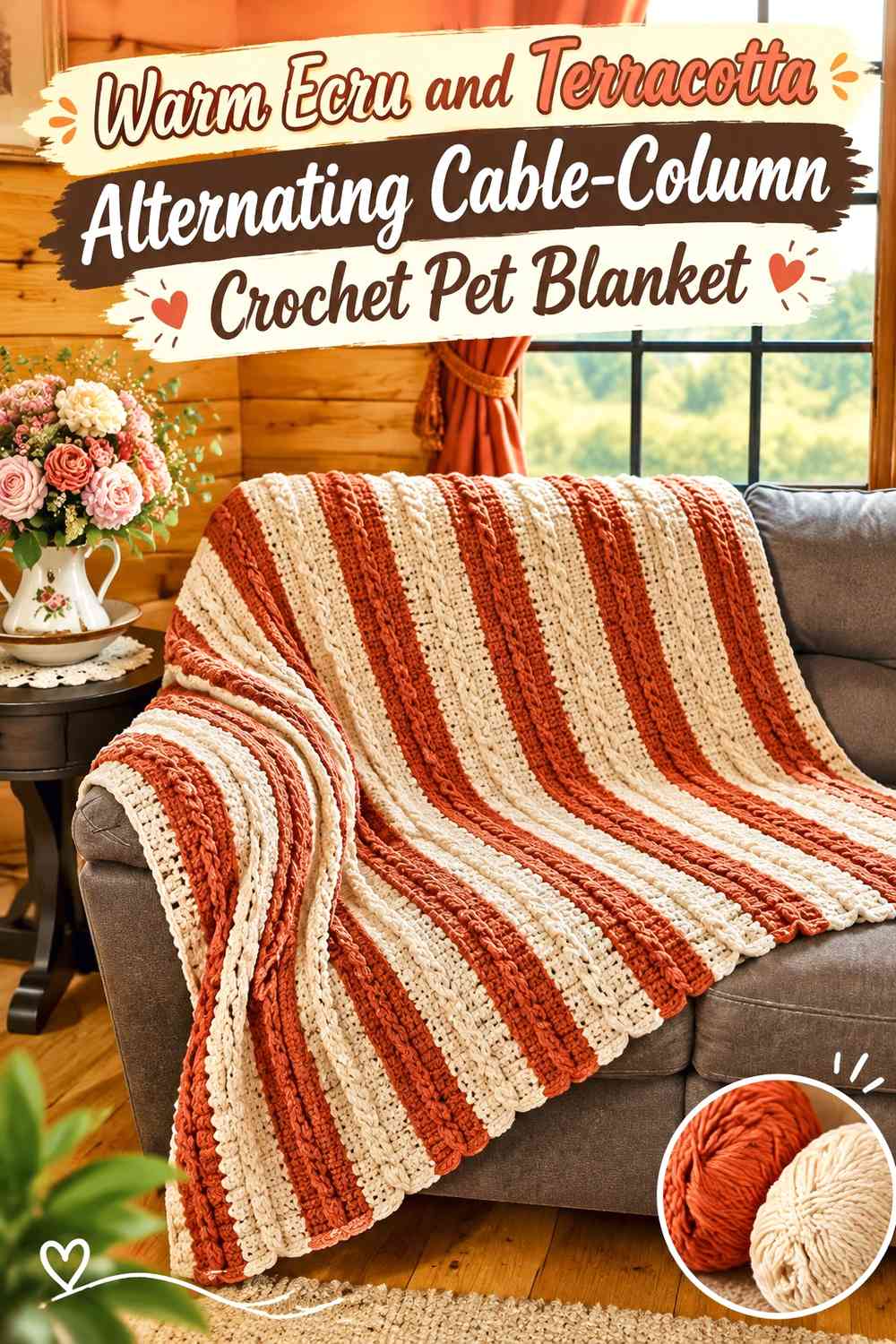
This idea gives the two colors a more balanced role. Instead of using terracotta only at the edge, divide the surface into broader cable columns or panels and alternate their color selectively. The important word is broad: frequent narrow stripes could obscure the chunky cable character.
Warm Ecru Cable Columns Keep the Lighter Areas Textured
Use warm ecru on complete cable columns rather than changing color halfway through an important raised motif. Keeping each major column intact makes the cable easier to follow from one end of the pet blanket to the other.
A light column can also provide relief between two visually heavier terracotta sections.
Terracotta Cable Columns Need Enough Width to Read Clearly
Give terracotta panels enough visual area to look intentional. Tiny terracotta slivers between large ecru cables may resemble separators rather than genuine parts of the palette.
If the terracotta itself contains pronounced cable work, compare it under normal room lighting to make sure the darker yarn still shows the raised structure clearly enough for your preference.
Warm Ecru and Terracotta Should Not Alternate Too Frequently
A pet blanket offers a limited viewing area. If every narrow section changes color, the viewer notices striping before cabling. Reducing the number of changes keeps the palette bold while allowing the texture to remain important.
Creator Credit: Bag-O-Day Crochet
4. Warm Ecru Cabled Blocks and Terracotta Join Crochet Pet Blanket
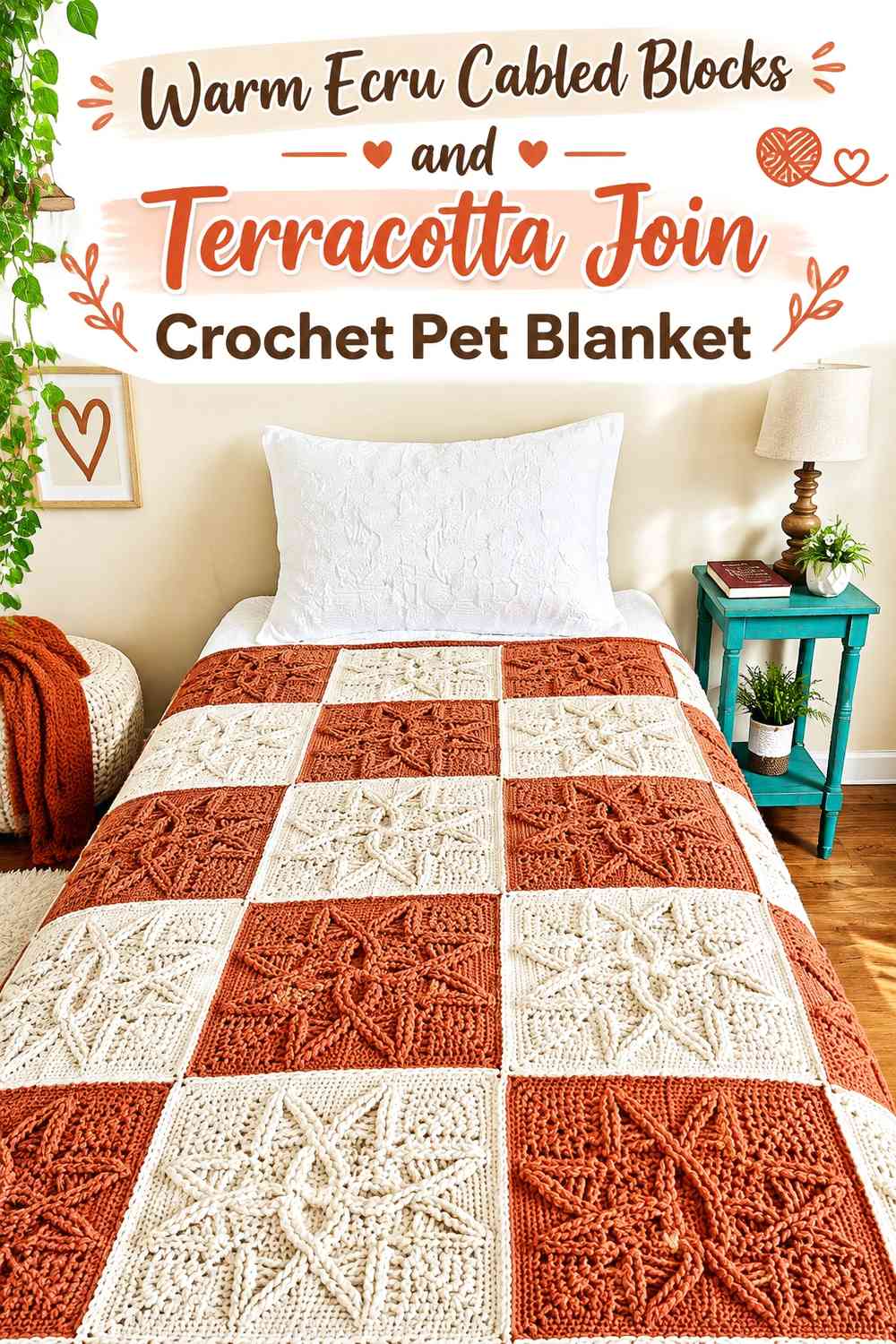
A block-based cable blanket gives the palette a different type of structure. Warm ecru can dominate individual cabled squares while terracotta appears at joins, selected blocks, or the outer frame. This makes color placement modular rather than dependent on long continuous stripes.
Warm Ecru Keeps Individual Cabled Crochet Blocks Easy to Compare
Using warm ecru across most cabled blocks lets the repeated texture connect from square to square. It also gives you a consistent background against which occasional terracotta sections can be evaluated before the blanket is fully assembled.
For a quiet result, keep all major cable centers ecru and let color changes happen around them.
Terracotta Joins Can Outline Warm Ecru Crochet Blocks
Terracotta between ecru blocks creates a visible grid. That is useful when you want the construction to become part of the finished color design rather than disguising the joins.
Keep the grid narrow if cable texture should lead. A wide terracotta joining area can make the blanket look more like color-block patchwork than a continuous cable surface.
Terracotta Blocks Can Break Up a Large Warm Ecru Field
One or a few terracotta blocks can provide deliberate punctuation without requiring every square to alternate. Test the layout before final joining so the darker blocks are distributed intentionally rather than clustering accidentally on one side.
Creator Credit: A Crocheted Simplicity – Jennifer Renaud
5. Terracotta Celtic Cable and Warm Ecru Frame Crochet Pet Blanket
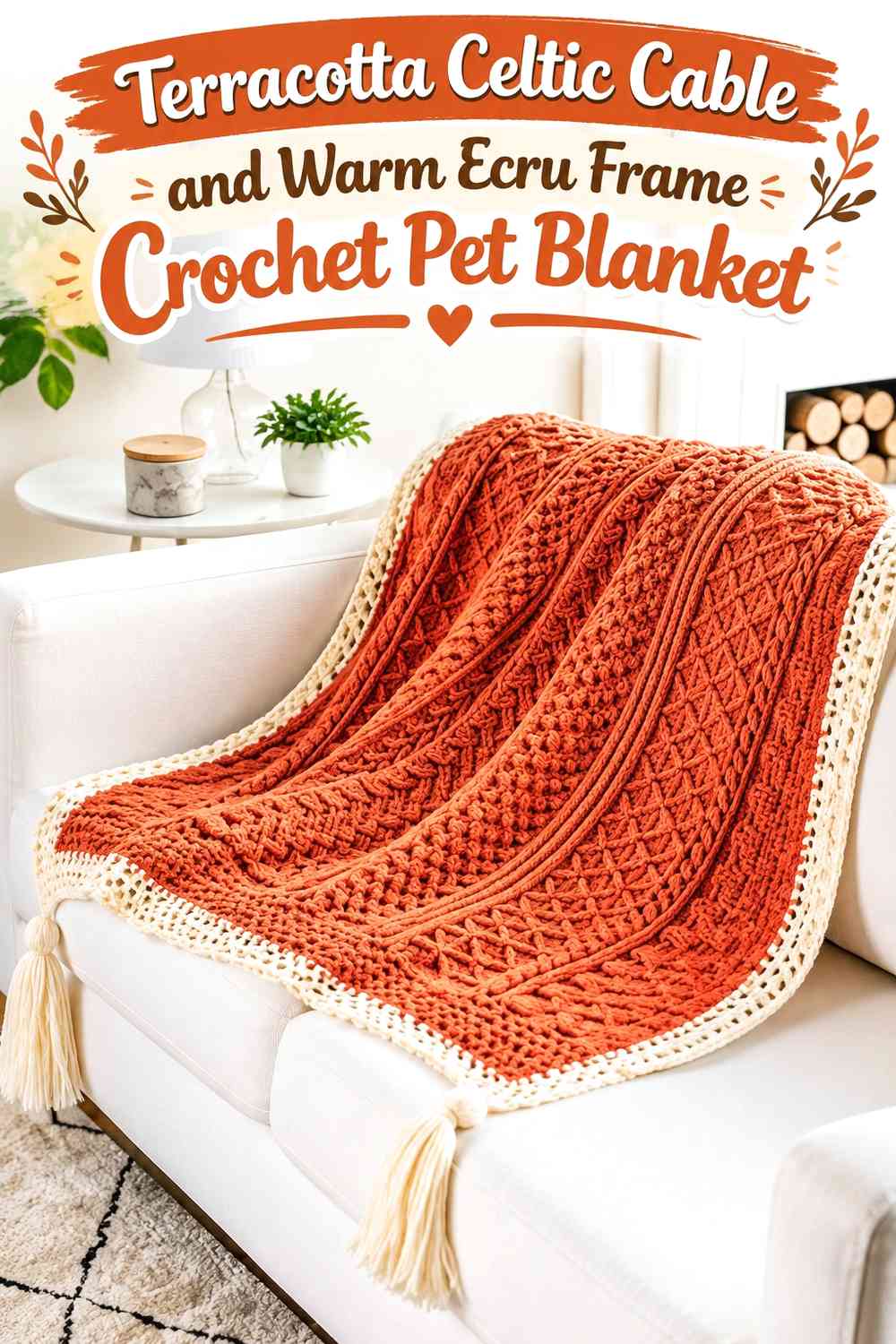
Detailed interlacing creates plenty of visual information on its own, so this palette can work well with terracotta across the cable field and warm ecru limited to framing areas. The result emphasizes a deeper, more traditional winter color direction without adding a third shade.
Terracotta Gives Celtic-Style Crochet Cables More Visual Weight
Use terracotta where you want the interlaced cable work to feel substantial. Because the color is darker than warm ecru, highlights and shadows within the raised texture may appear more subdued, so check a sample in the lighting where the blanket will normally be seen.
If the texture looks too visually dense, increase the amount of ecru around it rather than adding more colors.
Warm Ecru Can Separate the Terracotta Cable Field From the Edge
A warm ecru frame creates a lighter transition around a dark central section. This can keep the entire pet blanket from feeling visually heavy, particularly when terracotta occupies most of the center.
Repeat the ecru consistently around the perimeter instead of introducing it in unrelated small patches.
Terracotta and Warm Ecru Work Best With a Clear Cable Hierarchy
Detailed cable motifs already compete for attention. Keep one color responsible for the main interlacing and the other responsible for framing or supporting areas. Equal amounts scattered through every part of the motif can make a complex surface harder to read.
Creator Credit: BonnieBayCrochet
6. Warm Ecru Crinkle Cable Blocks and Terracotta Accent Crochet Pet Blanket
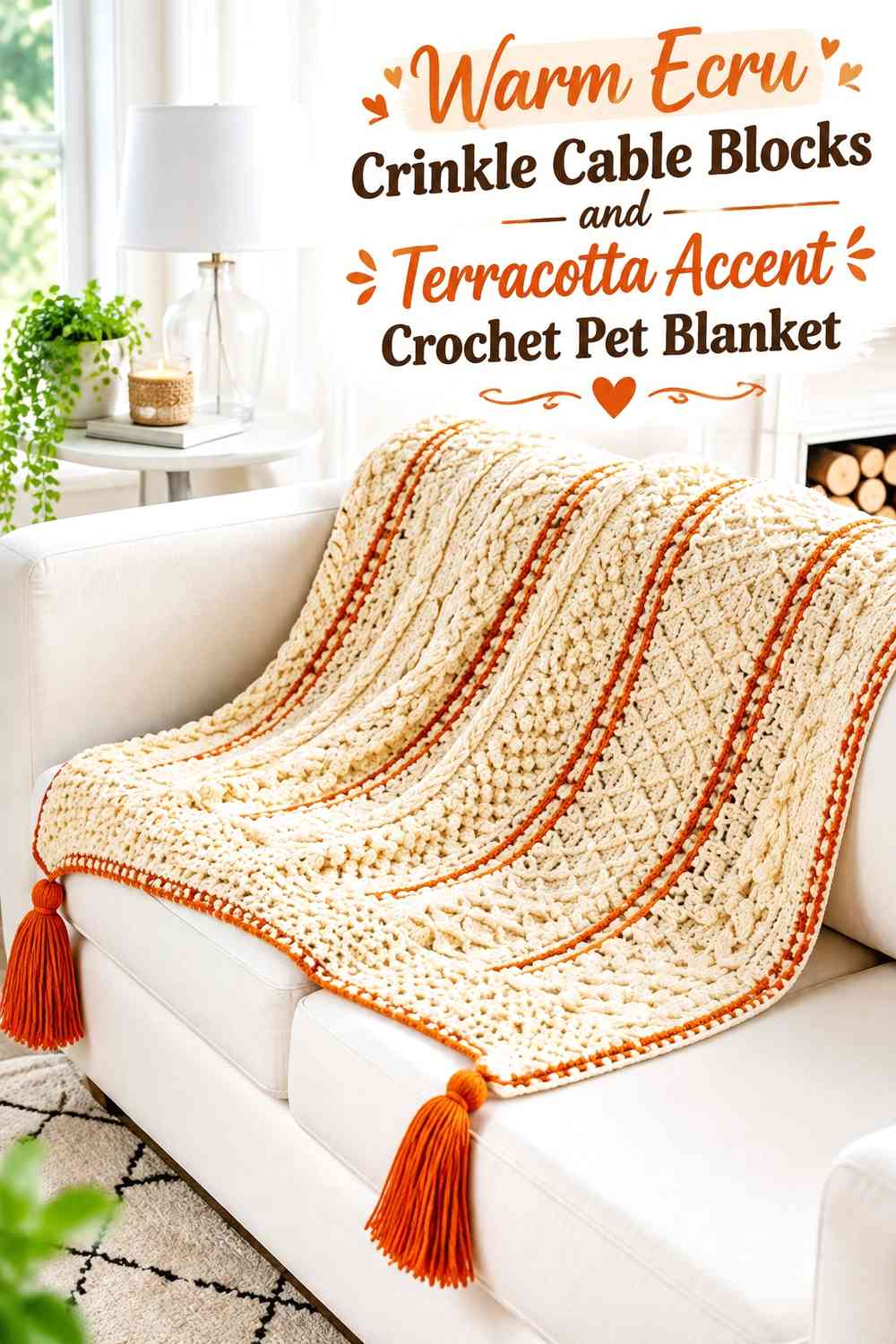
A cable-block arrangement gives you more freedom to distribute terracotta without breaking individual cable motifs. Warm ecru can cover the majority of textured squares, while terracotta appears in selected blocks or around the outside.
Warm Ecru Keeps Crinkle Cable Texture Visible Across the Pet Blanket
Use warm ecru for the blocks where you most want the raised texture to show. A consistent light field lets shadow provide much of the detail rather than relying on color contrast alone.
This is particularly helpful when several textured blocks sit next to each other and you want them to feel related.
Terracotta Accent Blocks Need Deliberate Spacing Among Warm Ecru
If terracotta appears in only a few blocks, distribute those darker sections before joining. A balanced arrangement can repeat the accent across the blanket, while an intentionally asymmetric placement can create one strong focal area.
What matters is avoiding accidental clustering that makes one corner look much heavier than the rest.
Warm Ecru or Terracotta Can Control the Final Crochet Border
Choose the border based on what the block layout needs. Warm ecru extends the lighter field and softens the outside edge; terracotta encloses the whole patchwork and repeats the darkest accent.
Avoid adding a completely new border color unless it solves a specific contrast problem.
Creator Credit: Rich Textures Crochet
7. Warm Ecru Hidden Cable and Terracotta Edge Crochet Pet Blanket
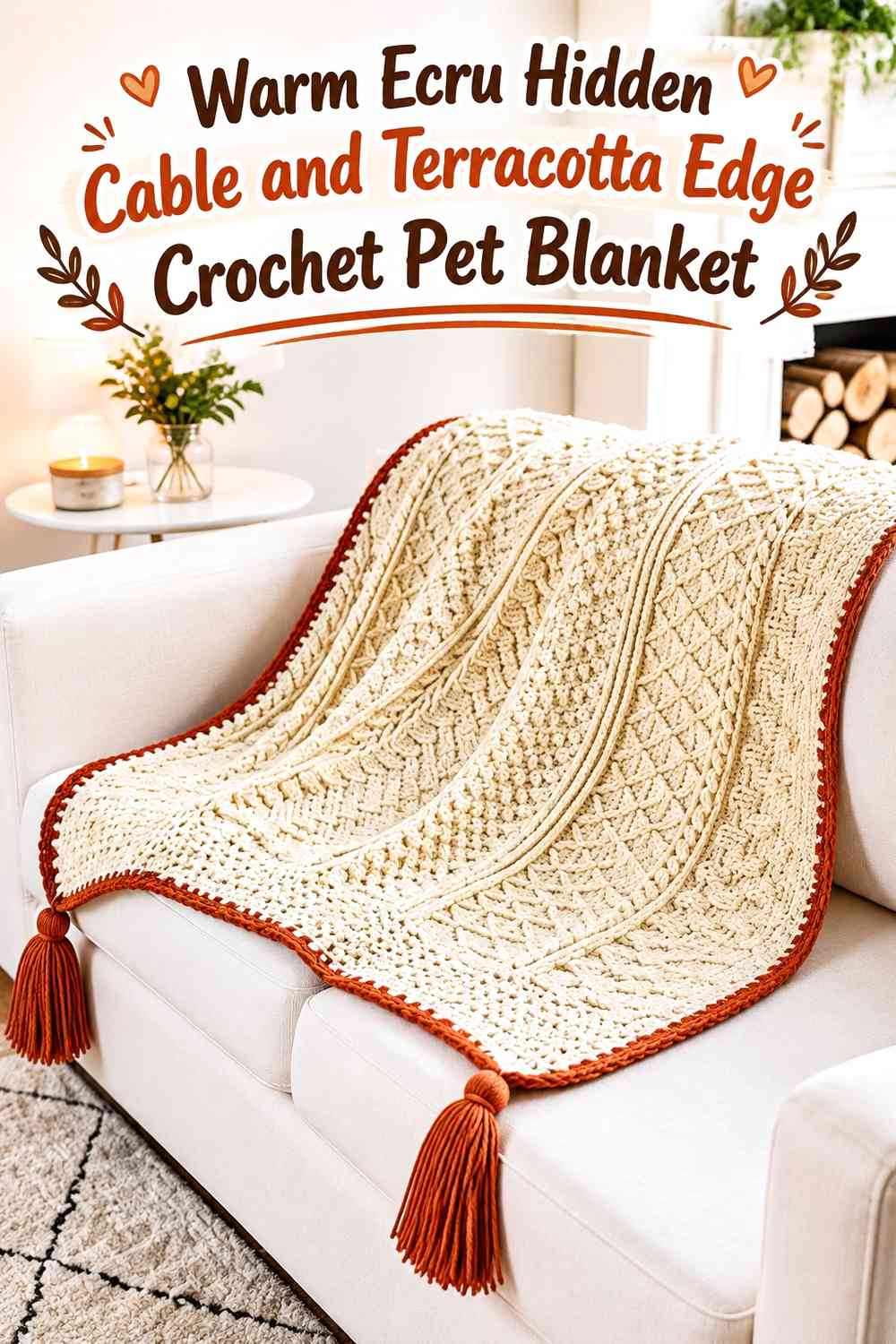
This direction puts nearly all attention on texture. Use warm ecru across the hidden-cable surface, then confine terracotta to a narrow perimeter or a small repeated edge detail. It is one of the calmer two-color options in the group.
Warm Ecru Makes Hidden Crochet Cables the Main Pet Blanket Detail
Keeping the central field one warm ecru color prevents the cable structure from competing with striping. Let changes in relief distinguish the surface while the palette stays quiet.
This can be especially effective on a smaller pet blanket where a complicated cable pattern already supplies enough visual interest.
Terracotta Should Act as a Small Accent Around Warm Ecru
A thin terracotta edge gives the blanket a winter color contrast without taking over the design. Repeat the accent around the full perimeter when you want an even frame, or use it inside a simple layered border when the construction allows.
If the terracotta border becomes too broad, it can change this from an ecru cable blanket into a two-color block blanket.
Warm Ecru and Terracotta Can Be Checked in Grayscale Before Finishing
Photograph the two yarns together and view the image without color if you are uncertain about contrast. If their values are very close, the edge will look softer; a stronger value difference will make the terracotta frame more defined.
Either result can work, but it helps to know which one you are creating before finishing the whole perimeter.
Creator Credit: Marly Bird
8. Terracotta Cable Center and Warm Ecru Border Crochet Pet Blanket
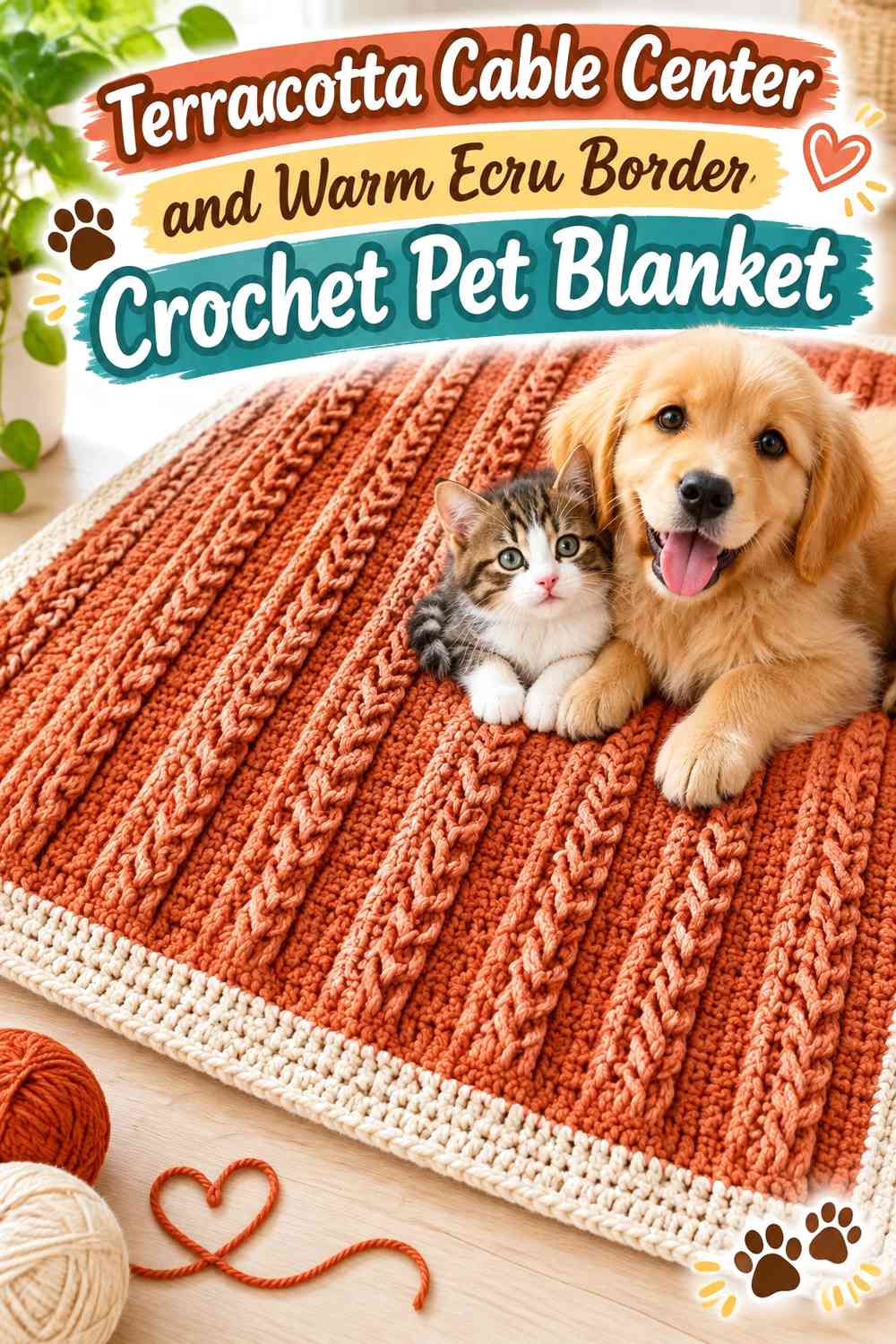
Here the central cable field becomes the strongest color block. Terracotta fills most of the textured area, while warm ecru surrounds it with a lighter edge. Compared with Idea 1, this reverses both visual weight and color placement.
Terracotta Makes the Central Crochet Cable Field Feel More Substantial
Give terracotta enough uninterrupted space for the cable repeat to register. Frequent ecru interruptions inside the center would weaken the strong central-field effect.
If the raised pattern becomes hard to distinguish in the darker color, increase lighting contrast or consider using ecru on only the most important cable section rather than scattering it across the surface.
Warm Ecru Lightens the Outer Edge of the Terracotta Pet Blanket
A warm ecru border gives the eye a break after the darker central field. It also makes the outer silhouette easy to distinguish when the blanket is placed against darker bedding or upholstery.
Keep the border visually related to the center by using the same warm ecru consistently instead of mixing several similar neutrals.
Terracotta Can Reappear Inside the Warm Ecru Border
A narrow terracotta line within an ecru border can reconnect the edge to the center if the two areas otherwise feel too separate. Use this as repetition rather than as another large block of color.
Creator Credit: Sirin’s Crochet
9. Warm Ecru Braided Cable and Terracotta Side-Panel Crochet Pet Blanket
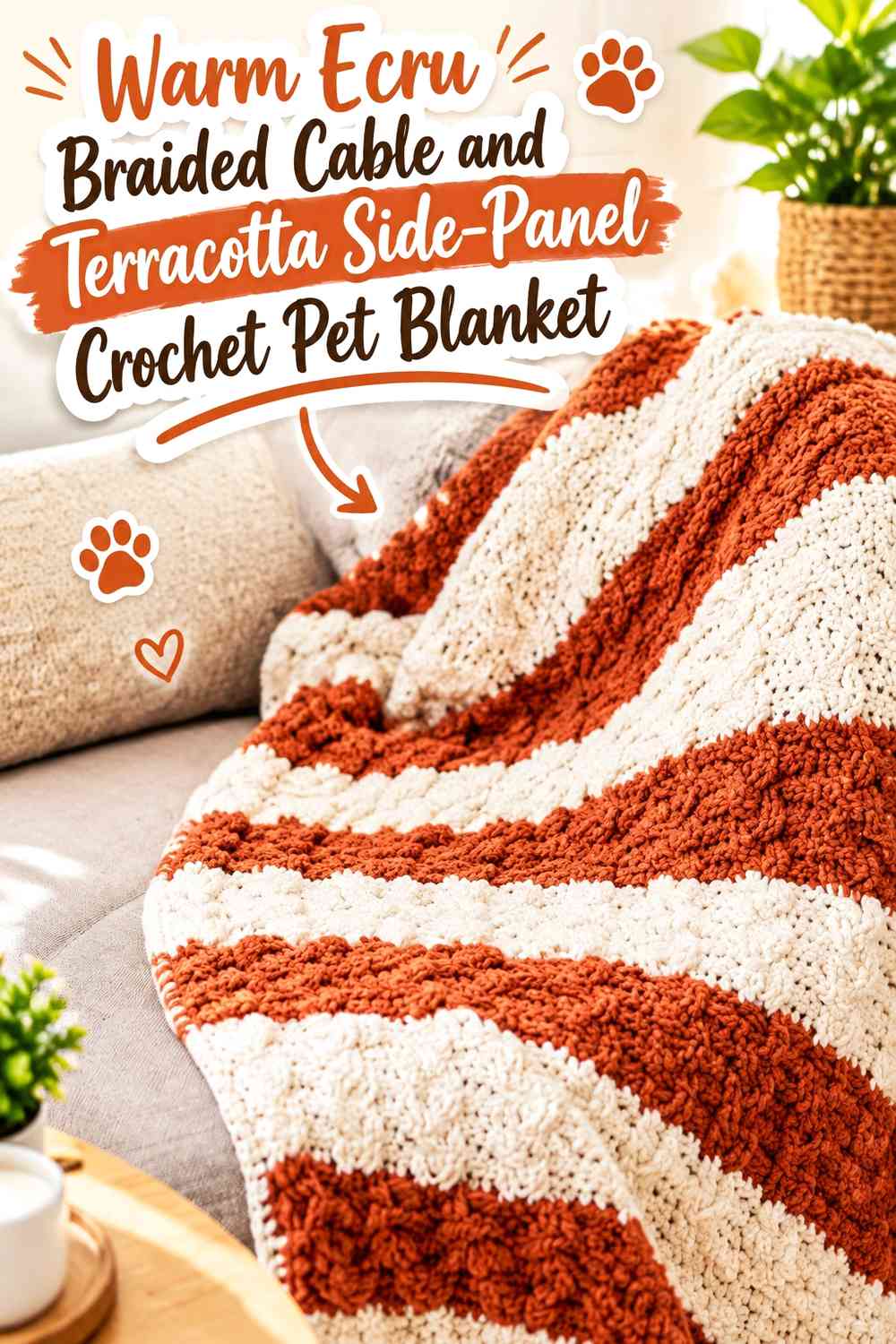
This layout concentrates the most decorative cable in one long warm ecru area and uses terracotta to flank it. The side panels provide broad, quiet color fields so the cable does not have to compete with additional motifs.
Warm Ecru Can Highlight the Main Braided Crochet Cable
Place the most prominent braid in warm ecru and allow it to run as one uninterrupted visual feature. The lighter color separates it clearly from terracotta side panels and makes the cable itself the center of attention.
For a compact pet blanket, one strong central braid may create more clarity than several equally elaborate cable columns.
Terracotta Side Panels Frame the Warm Ecru Cable Without a Border
Broad terracotta panels can perform the framing job before the outer edge is added. They visually narrow the central ecru area and give the blanket a strong vertical organization.
Keep the two terracotta areas similar when you want symmetry, or use one wider panel if an intentionally offset cable better suits your layout.
Warm Ecru Edging Can Connect the Cable to Terracotta Panels
If the sides feel too visually separate from the center, an ecru outer edge can repeat the cable color around the whole blanket. A terracotta edge instead reinforces the side panels and makes the center look more inset.
Choose whichever relationship you want before adding the finishing border.
Creator Credit: YarnHookNeedles
10. Warm Ecru and Terracotta Crossover Texture Crochet Pet Blanket
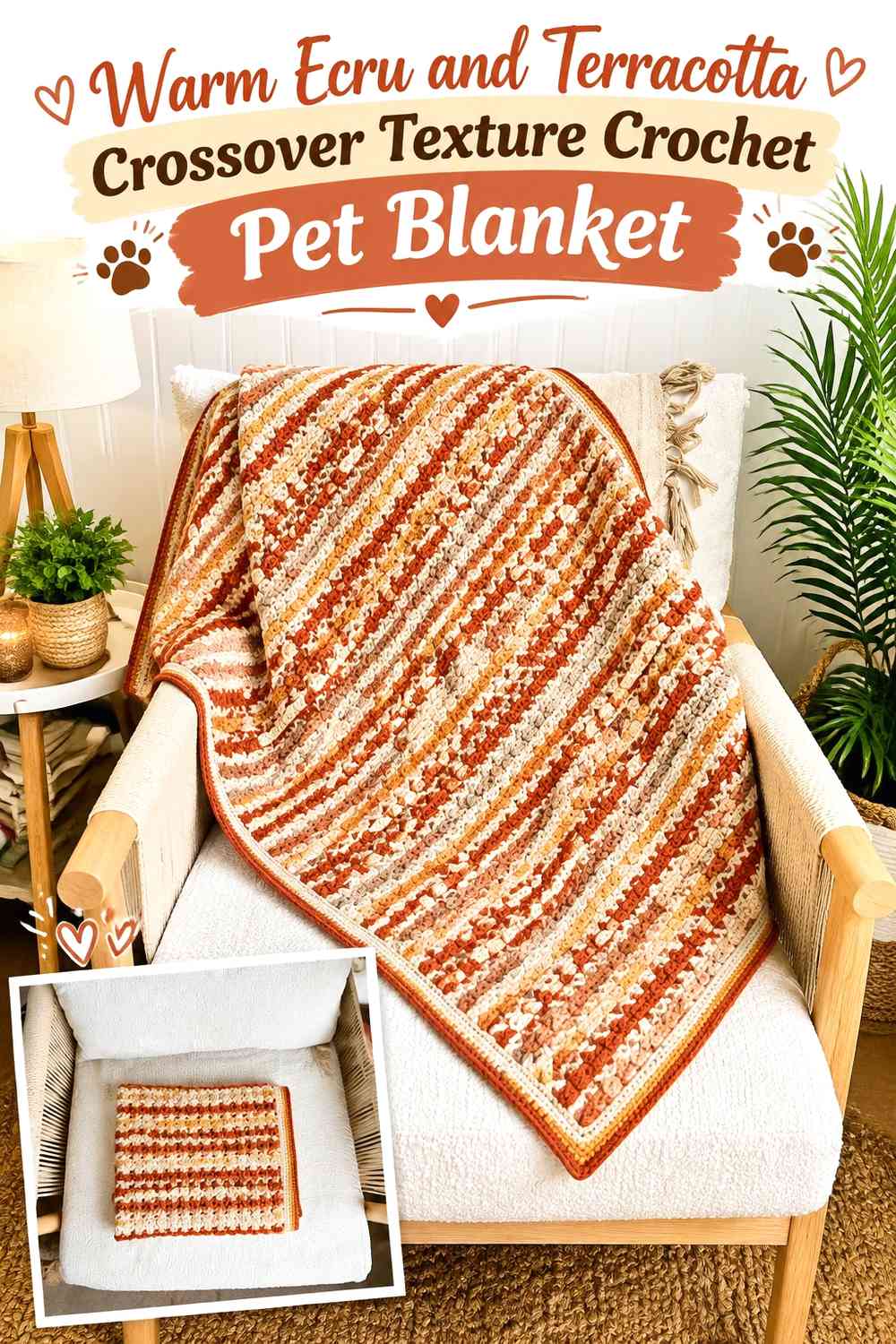
A crossover-textured blanket provides a quieter alternative to very heavy braided cables. Use broad warm ecru areas for the raised crossings and terracotta as spaced bands, panels, or an outer frame. The two colors can remain clearly visible without turning every textured crossing into a color change.
Warm Ecru Keeps the Crossover Crochet Texture Calm
Warm ecru works well across repeated crossover sections because it lets the texture create its own shadow pattern. Maintain continuous ecru sections if you want the blanket to look more tonal and less striped.
This color direction suits a design where the texture should be noticed gradually rather than dominated by high-contrast color changes.
Terracotta Bands Should Interrupt Warm Ecru Only at Planned Points
Instead of alternating every repeat, place terracotta after broader stretches of ecru. These occasional darker bands can divide the pet blanket into visual sections without disguising the crossover texture.
Keep the spacing consistent if you want an orderly layout, or place the terracotta mainly near each end for a simpler central field.
Warm Ecru and Terracotta Can Shift the Blanket From Tonal to Graphic
More ecru creates a softer, texture-first result. Increasing terracotta gives the same two-color concept a more graphic appearance because the color blocks become easier to see from a distance.
Decide which effect you prefer before dividing the surface equally between both shades.
Creator Credit: HanJan Crochet
11. Warm Ecru Mock Cable and Terracotta Stripe Crochet Pet Blanket
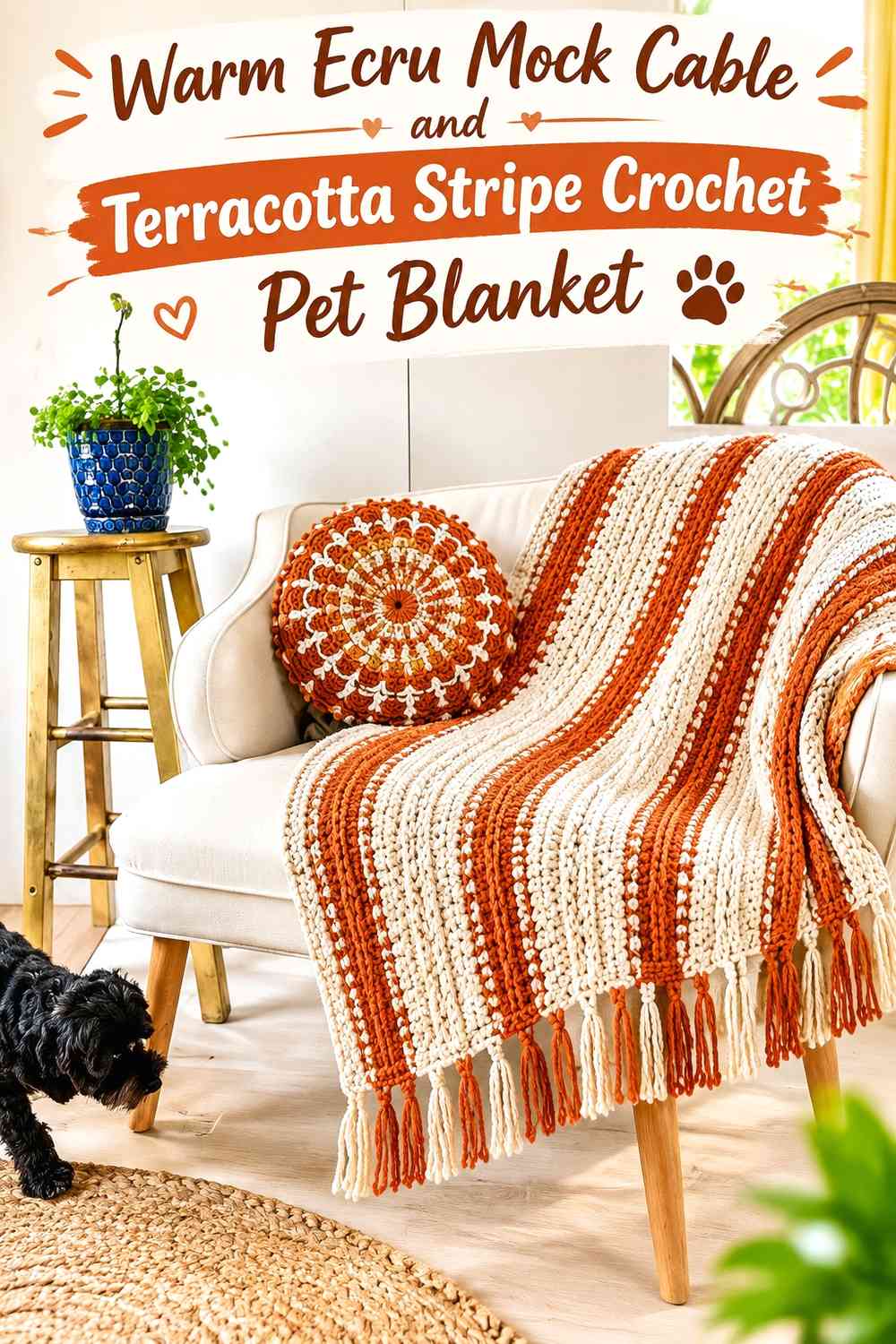
Mock-cable texture offers another way to get a cable-inspired winter surface without making every area visually dense. Warm ecru can serve as the continuous ground, while terracotta follows selected vertical or horizontal paths to create a controlled stripe system.
Warm Ecru Gives the Mock Crochet Cables a Unified Background
Use warm ecru across most of the blanket so the repeated mock-cable texture connects from section to section. A continuous neutral ground also makes it easier to introduce terracotta in a controlled way.
If the blanket already contains numerous raised lines, resist adding terracotta to every one of them.
Terracotta Stripes Should Emphasize Selected Warm Ecru Cable Paths
Choose a few structural lines for terracotta rather than coloring all repeated elements. This turns the warm accent into a guide for the eye while preserving the quieter ecru texture elsewhere.
On a small pet blanket, two or three strong color zones can be clearer than many narrow alternating stripes.
Warm Ecru Around Terracotta Keeps the Crochet Pet Blanket From Looking Too Busy
Leave ecru space on both sides of important terracotta sections. That separation prevents adjacent darker lines from merging into a large block and helps each accent feel deliberate.
A warm ecru outer edge can finish the layout softly, while a terracotta edge gives the striped sections a stronger visual endpoint.
Creator Credit: Sugar Joye
Comparing the 11 Warm Ecru and Terracotta Pet Blanket Palettes
For the lightest overall appearance, Ideas 1 and 7 keep warm ecru across most of the cable field and limit terracotta to the edge. Ideas 2, 5, and 8 reverse that balance, making terracotta responsible for more of the blanket’s visual weight.
If you want color integrated into the construction rather than simply added around it, consider Ideas 3, 4, 6, 9, 10, and 11. Their columns, blocks, joins, side panels, bands, or selected stripes provide defined places for both colors.
For maximum cable visibility, favor a design where one color remains uninterrupted across the principal cable. For stronger two-color impact, use larger neighboring ecru and terracotta sections rather than repeatedly changing colors inside small cable details.
Conclusion
Warm ecru and terracotta can produce very different winter pet blankets depending on which color controls the surface. Choose an ecru-dominant layout when cable shadows and raised texture should be the main feature. Choose a terracotta-dominant design when you want a deeper, warmer field with ecru providing contrast.
For something between those two extremes, divide the colors into complete columns, blocks, borders, or side panels. Those larger color zones keep a chunky cable blanket readable and make the palette easier to organize on a smaller pet-sized surface.
Before beginning the full blanket, compare the yarns together and consider both contrast and the height of the chosen cable texture. Then use the original tutorial for exact construction details while adapting the dimensions and color distribution to the pet blanket you actually need.
Frequently Asked Questions
Should warm ecru or terracotta dominate a chunky cable pet blanket?
Use warm ecru as the dominant shade when you want cable shadows and raised texture to stay especially visible. Let terracotta dominate when you prefer a darker, warmer overall blanket and want ecru to emphasize selected cables, borders, or panels.
How much terracotta should I use with warm ecru?
There is no required ratio. A small terracotta border creates a subtle accent, while broad side panels or a terracotta center produce a much stronger two-color effect. On a compact pet blanket, start by assigning each color a specific role rather than trying to divide the yarn visually in half.
Will warm ecru show chunky cables better than terracotta?
It can make shadows around raised stitches easier to notice under many lighting conditions, but the result depends on the exact yarn colors and texture. Work a small sample in each shade if cable definition is important to your finished look.
How do I stop warm ecru and terracotta stripes from hiding the cable pattern?
Keep the main cables within larger uninterrupted color sections. Frequent narrow color changes can become the first thing the eye notices, especially on a smaller blanket. Broader panels, spaced stripes, or a contrasting border preserve more of the cable design.
Should a terracotta border be darker than the warm ecru center?
It does not have to be, but a noticeable light/dark difference produces a more defined frame. If your ecru and terracotta are similar in value, the result will look more blended. Comparing a grayscale photo of the two yarns is a simple way to check the difference.
Is very raised cable texture suitable for every pet blanket?
Not necessarily. Consider the individual pet and how the blanket will be used. If claws tend to catch in pronounced loops or very open texture, a flatter cable or crossover surface may be the more practical direction. Also check the finished blanket regularly for damaged or loose yarn.
Can I add a third color to warm ecru and terracotta?
Yes, but the blanket usually does not need one. If you add another shade, give it a limited role such as a narrow edge or occasional block. Keeping warm ecru and terracotta clearly dominant preserves the winter two-color identity and prevents the cable surface from becoming visually overloaded.