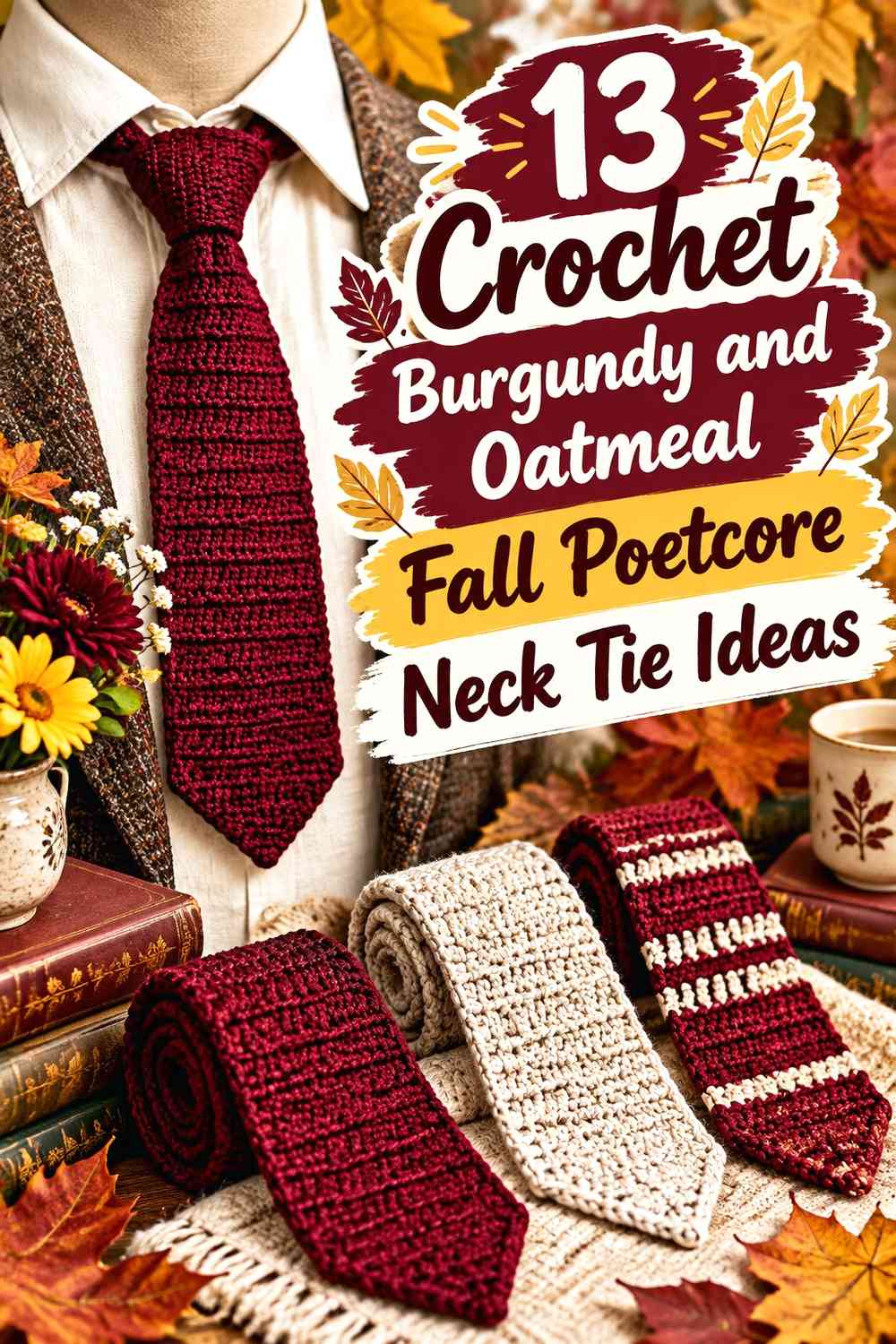

Burgundy and Oatmeal give a crochet neck tie a softer fall character than a conventional solid dark tie. Burgundy supplies the richer visual weight, while Oatmeal can expose stitch texture, lighten narrow stripes, frame a pointed end, or keep a handmade tie from becoming one uninterrupted dark column.
That balance works especially well for a poetcore direction. A crocheted tie worn with button-down shirts, cardigans, waistcoats, soft jackets, or layered knitwear already has more texture than a woven tie, so the color placement does not need to be complicated. One dominant shade and one carefully repeated supporting neutral can usually create more character than constant striping.
The tutorial references below primarily teach crochet neckties. The final few sources demonstrate narrow neck scarves or tie-like accessories that can support softer poetcore variations. The Burgundy and Oatmeal palettes, fall styling, color blocking, and vintage-inspired details are independent adaptations rather than claims about the creators’ original colors.
Quick List
- Burgundy and Oatmeal Crochet Classic Pointed Poetcore Neck Tie
- Burgundy and Oatmeal Crochet Narrow Poetcore Neck Tie
- Burgundy and Oatmeal Crochet Bordered Vintage Neck Tie
- Burgundy and Oatmeal Crochet Textured Fall Neck Tie
- Burgundy and Oatmeal Crochet Rib-Look Poetcore Neck Tie
- Burgundy and Oatmeal Crochet Fine-Stripe Fall Poetcore Neck Tie
- Burgundy and Oatmeal Crochet Deep Burgundy Neck Tie With Cream
- Burgundy and Oatmeal Crochet Vintage Neck Tie With Camel
- Burgundy and Oatmeal Crochet Fall Neck Tie With Moss Green
- Burgundy and Oatmeal Crochet Tonal Poetcore Neck Tie With Plum
- Burgundy and Oatmeal Crochet Soft Scarf-Tie Poetcore Neck Tie
- Burgundy and Oatmeal Crochet Ascot-Inspired Poetcore Neck Tie
- Burgundy and Oatmeal Crochet Lace Skinny Poetcore Neck Tie
Decide Whether Burgundy or Oatmeal Should Lead the Crochet Neck Tie
Burgundy is the natural dominant choice when you want the tie to look richer, darker, and more clearly autumnal. It can cover most of the length while Oatmeal appears near the point, in narrow stripes, or along a border that exposes the crochet texture.
An Oatmeal-dominant tie creates a lighter result and makes Burgundy act more like ink on a page: smaller amounts become highly noticeable. Burgundy stripes, a dark point, or a narrow central panel can therefore carry plenty of visual weight without covering half of the tie.
Avoid dividing the full length into many equal Burgundy and Oatmeal stripes unless a graphic striped tie is the goal. On a narrow accessory, repeated horizontal changes can make the tie look shorter and busier. Larger sections usually suit a quieter poetcore look.
Use Burgundy and Oatmeal to Emphasize the Pointed Tie Shape
The lower point is one of the most noticeable parts of a necktie because it interrupts the otherwise narrow vertical line. Changing color there can make the shape much more prominent.
An Oatmeal point beneath a Burgundy body creates the strongest light interruption. A Burgundy point on an Oatmeal tie produces the reverse: the darkest color gathers at the bottom and gives the accessory a more grounded finish.
Borders need similar restraint. Oatmeal edging around a Burgundy tie can expose the full outline, but a wide pale border may make the center look unusually narrow. A slim contrasting edge usually keeps the proportion clearer.
Coordinate Burgundy and Oatmeal With Fall Poetcore Layers
A crochet tie will rarely be seen by itself. The shirt, cardigan, jacket, vest, or sweater around it effectively becomes part of the palette.
Burgundy and Oatmeal can sit comfortably beside common fall neutrals such as brown, cream, camel, charcoal, faded denim, or muted olive, but the amount of contrast matters. If the shirt is already Oatmeal-colored, an Oatmeal-heavy tie may visually merge into it. A Burgundy-dominant tie would provide a clearer vertical line.
Likewise, an open cardigan can expose more of the full tie length than a buttoned jacket. Plan color changes with the portion of the tie that is actually likely to remain visible.
1. Burgundy and Oatmeal Crochet Classic Pointed Poetcore Neck Tie
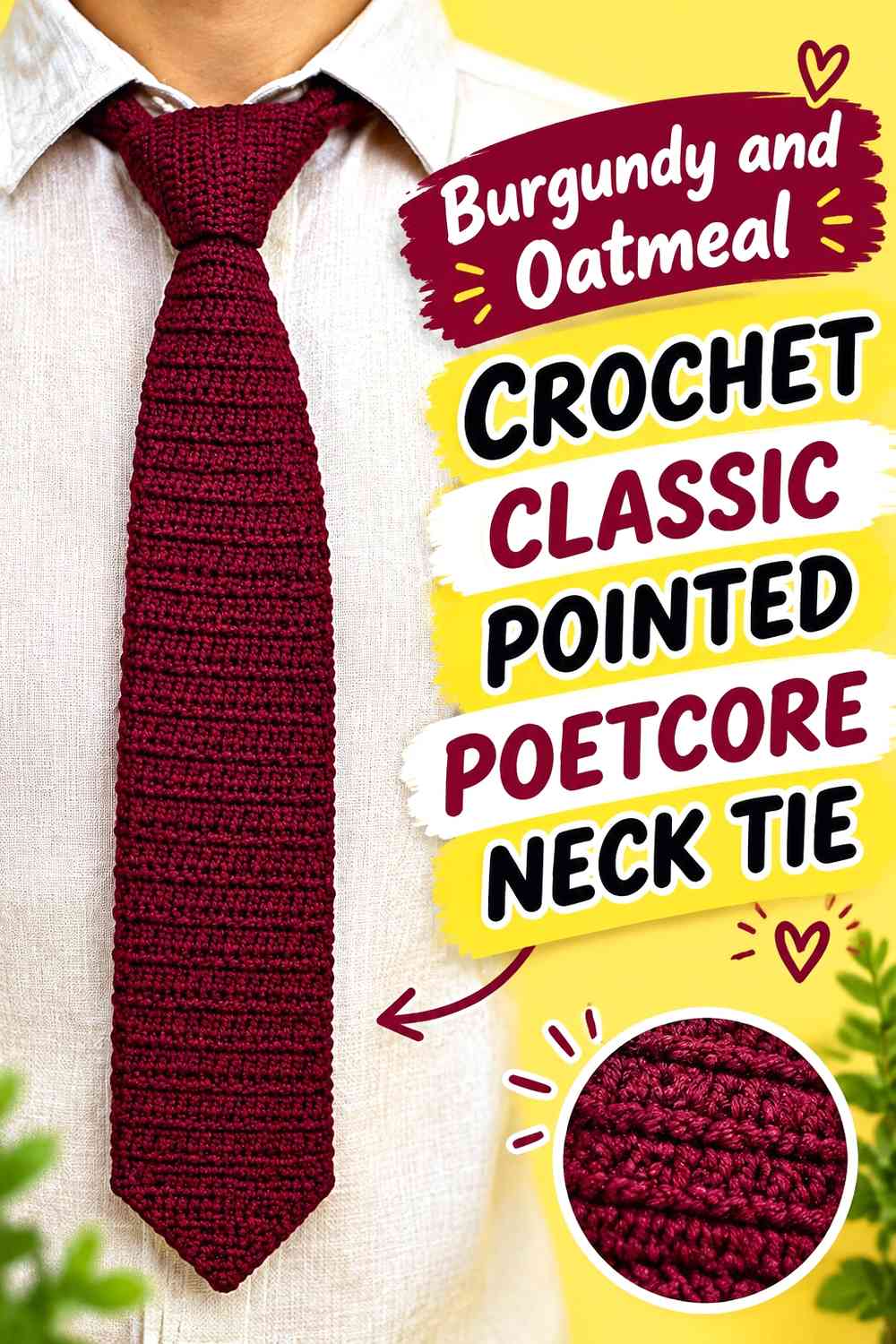
Let Burgundy cover most of the length and move Oatmeal toward the final point and one restrained upper detail. This keeps the tie recognizably dark and autumnal while giving the handmade pointed end enough contrast to stand apart from a dark shirt, vest, or cardigan.
Burgundy Should Carry Most of the Classic Neck Tie Length
A broad Burgundy field creates the long uninterrupted vertical line associated with a conventional tie. Crochet texture will already add surface variation, so the color does not need constant changes to remain interesting.
Use Oatmeal only after Burgundy has established the main body. This prevents the neutral from dividing the tie into several unrelated sections.
Oatmeal Can Make the Burgundy Point More Visible
Place Oatmeal in the lower section or immediately above the Burgundy point if you want to emphasize the taper.
The contrast is strongest when the neutral has enough area to be noticed but does not climb too far up the tie. One controlled Oatmeal section keeps the vintage handmade quality without turning the accessory into broad color blocking.
Creator Credit: Planet Pelo
2. Burgundy and Oatmeal Crochet Narrow Poetcore Neck Tie
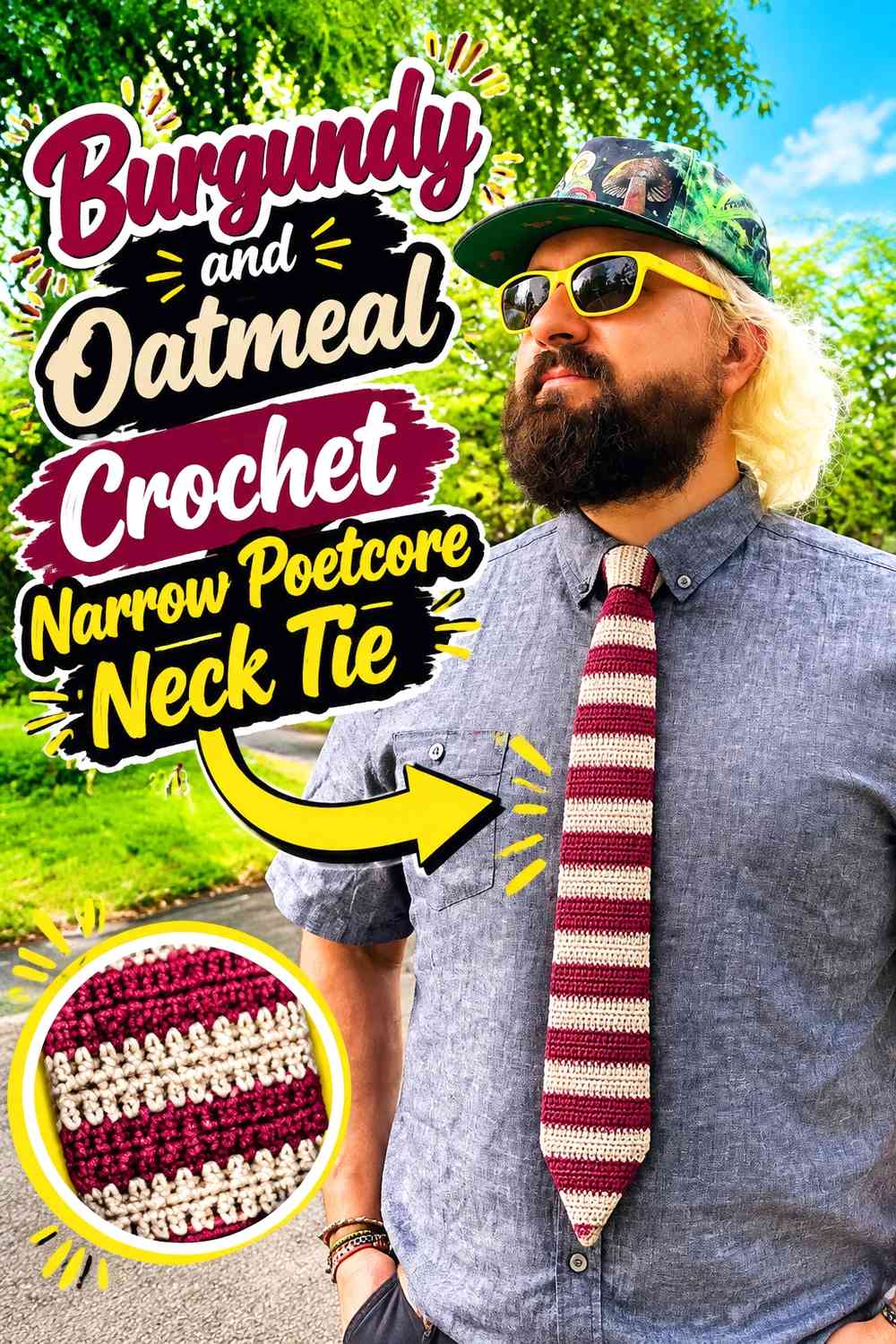
A narrower tie suits a softer poetcore outfit because it can sit beneath an open cardigan or relaxed collar without dominating the whole chest. Burgundy can remain the primary shade while Oatmeal appears in fine repeated lines or one longer central section.
Burgundy Keeps a Narrow Oatmeal Neck Tie From Looking Too Delicate
A slim crocheted shape has less yarn surface than a broad tie, so Burgundy provides useful visual weight.
Keep most of the outer silhouette Burgundy if the accessory will be worn over a pale shirt. The darker edges help the narrow tie remain visible even when Oatmeal is used through the center.
Oatmeal Can Lengthen the Burgundy Tie Through Vertical Placement
Instead of horizontal striping, consider using Oatmeal as a longer visual section that follows the direction of the tie.
A vertical or elongated color treatment reinforces the length of the accessory and feels quieter than many small bands, which suits understated poetcore styling.
Creator Credit: Last Minute Laura
3. Burgundy and Oatmeal Crochet Bordered Vintage Neck Tie
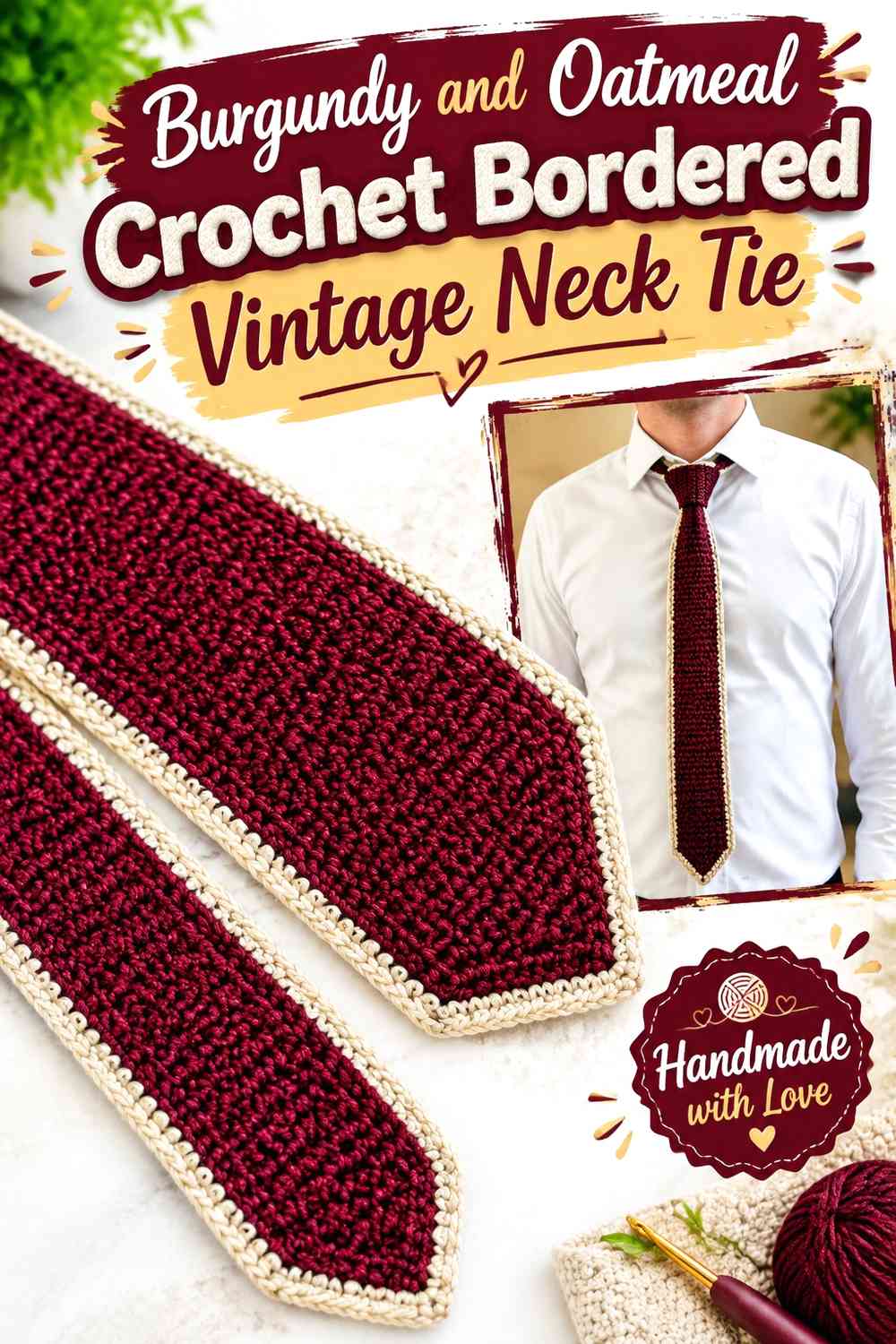
Use Burgundy for the central body and Oatmeal as a restrained border around selected edges. The light outline can make the handmade tie shape easier to read, especially against brown, charcoal, or other dark fall layers.
Oatmeal Should Keep the Burgundy Border Narrow
A narrow Oatmeal edge defines Burgundy without reducing it to a thin central stripe.
Check the full tie from several feet away before widening the border. On a narrow accessory, even a small edging can occupy a noticeable percentage of the total width.
Burgundy Should Continue Through the Oatmeal-Bordered Point
Keeping Burgundy through the pointed end connects the lower shape to the main body.
If Oatmeal surrounds the point completely, the edge becomes more decorative. If you want a quieter poetcore finish, stop the pale border slightly before the point or keep it especially slim there.
Creator Credit: Handmade by Appy
4. Burgundy and Oatmeal Crochet Textured Fall Neck Tie
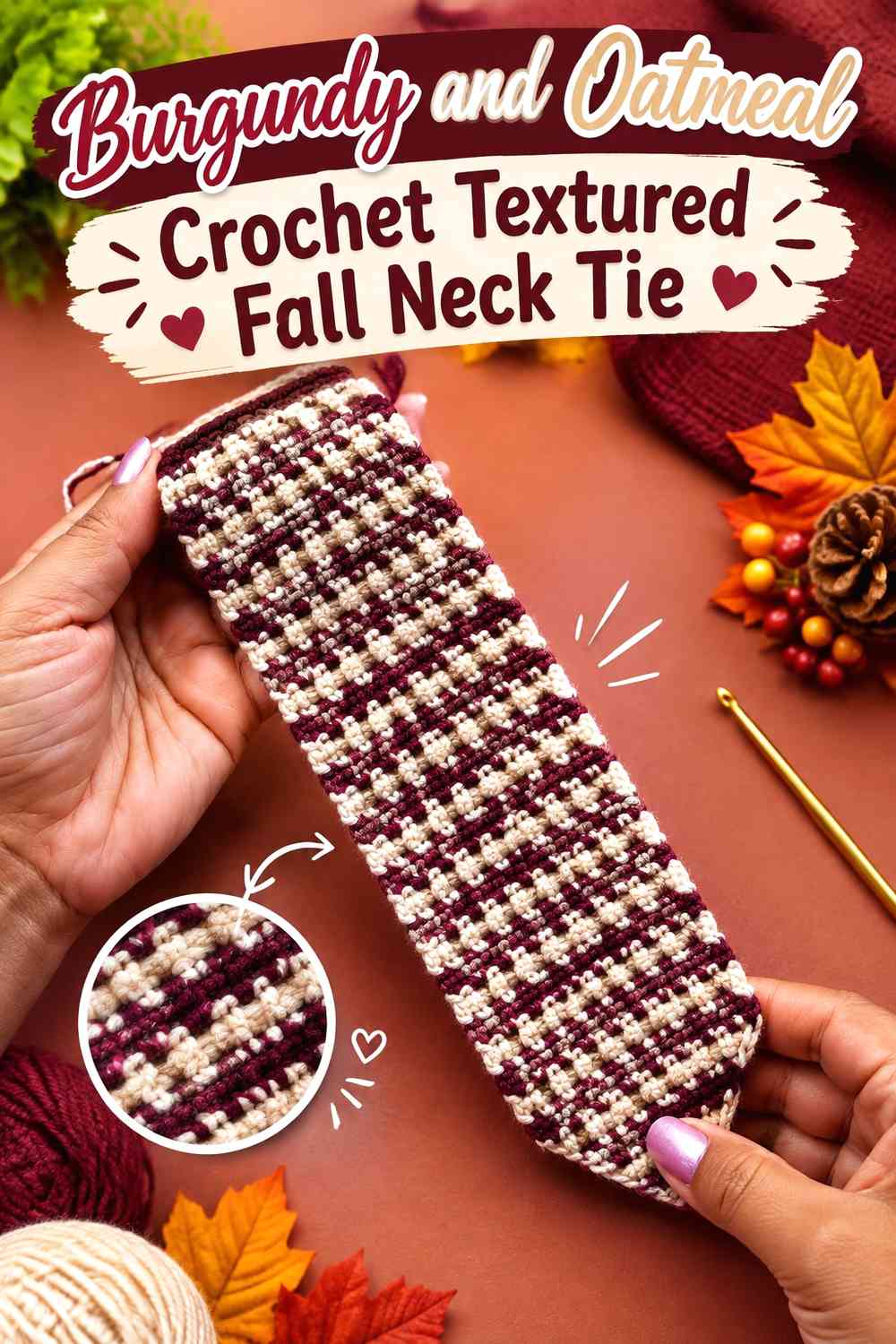
This version relies on visible crochet texture rather than elaborate color changes. Burgundy can occupy most of the tie, while Oatmeal is concentrated where you want the stitch definition to become easiest to inspect, such as the point or a single middle band.
Oatmeal Makes Burgundy Crochet Texture Easier to Compare
Pale yarn often reveals shadows around raised or dimensional stitches differently from a dark color. An Oatmeal section can therefore create a useful change in texture visibility without requiring a different stitch pattern.
Keep the section broad enough that the effect looks deliberate. A very thin Oatmeal line may read only as a stripe rather than as a textural contrast.
Burgundy Can Keep an Oatmeal Texture Band From Breaking the Tie Apart
Place enough Burgundy above and below the pale section that the full accessory still reads as one long neck tie.
This is especially useful when wearing the tie beneath a vest, because part of the center may be hidden. A Burgundy-dominant plan remains coherent even when only the upper and lower portions are visible.
Creator Credit: Pittys Arts
5. Burgundy and Oatmeal Crochet Rib-Look Poetcore Neck Tie
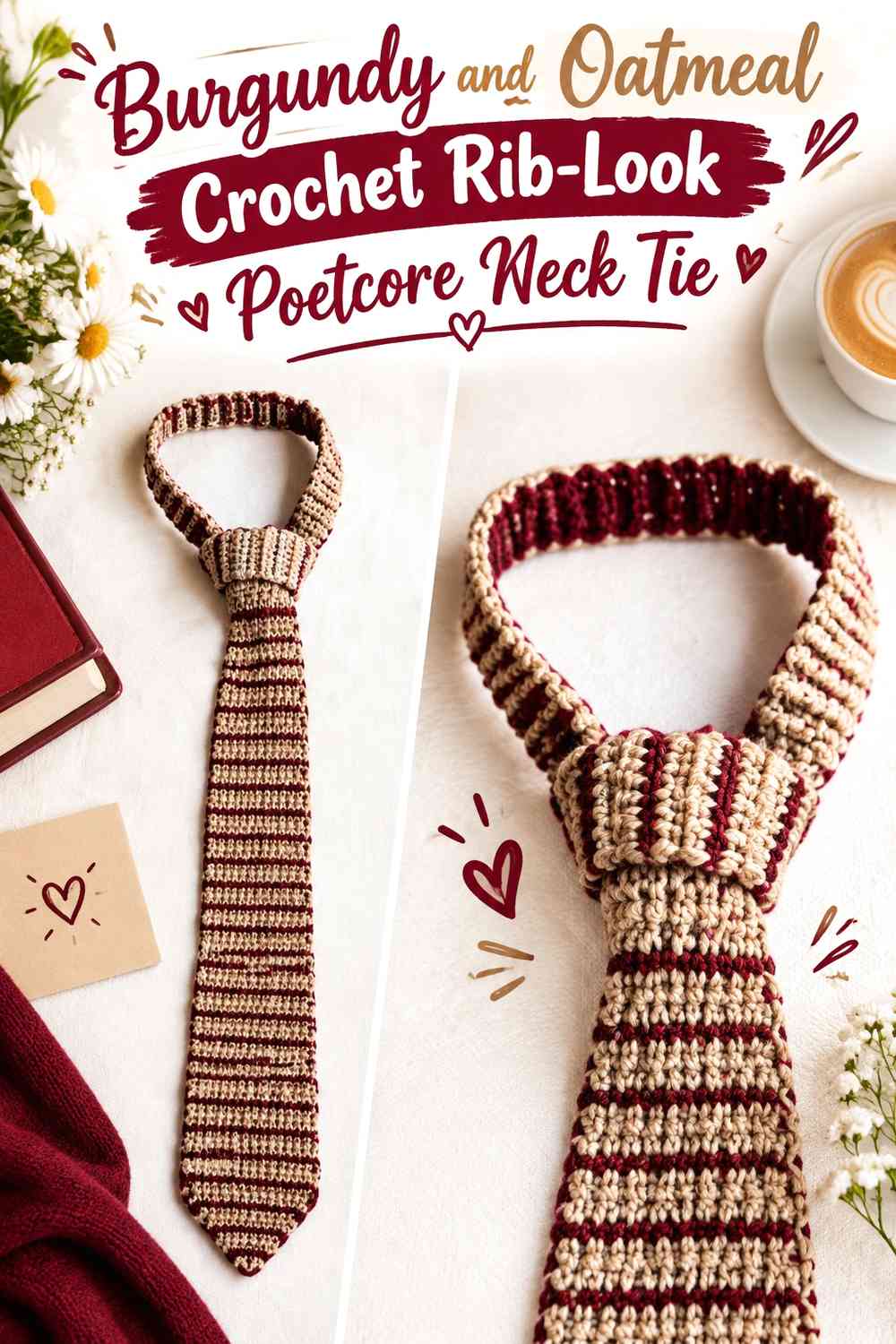
A more linear stitch texture pairs naturally with a restrained two-color palette. Keep Burgundy broad and use Oatmeal near the outer edges, at the lower point, or in one section where the directional texture can remain visible.
Burgundy Can Emphasize the Long Rib-Like Neck Tie Line
Long vertical texture already encourages the eye to travel down the tie. A continuous Burgundy field strengthens that effect.
Avoid inserting many short Oatmeal stripes across it. Horizontal color changes can interrupt the length created by the stitch direction.
Oatmeal Can Highlight Burgundy Texture Near the Point
Move the neutral toward the lower section when you want the pointed end to feel more handcrafted and visible.
A small repeated Oatmeal detail higher on the tie can connect the palette, but it does not need to match the lower accent in size.
Creator Credit: Lu’s Handicrafts
6. Burgundy and Oatmeal Crochet Fine-Stripe Fall Poetcore Neck Tie
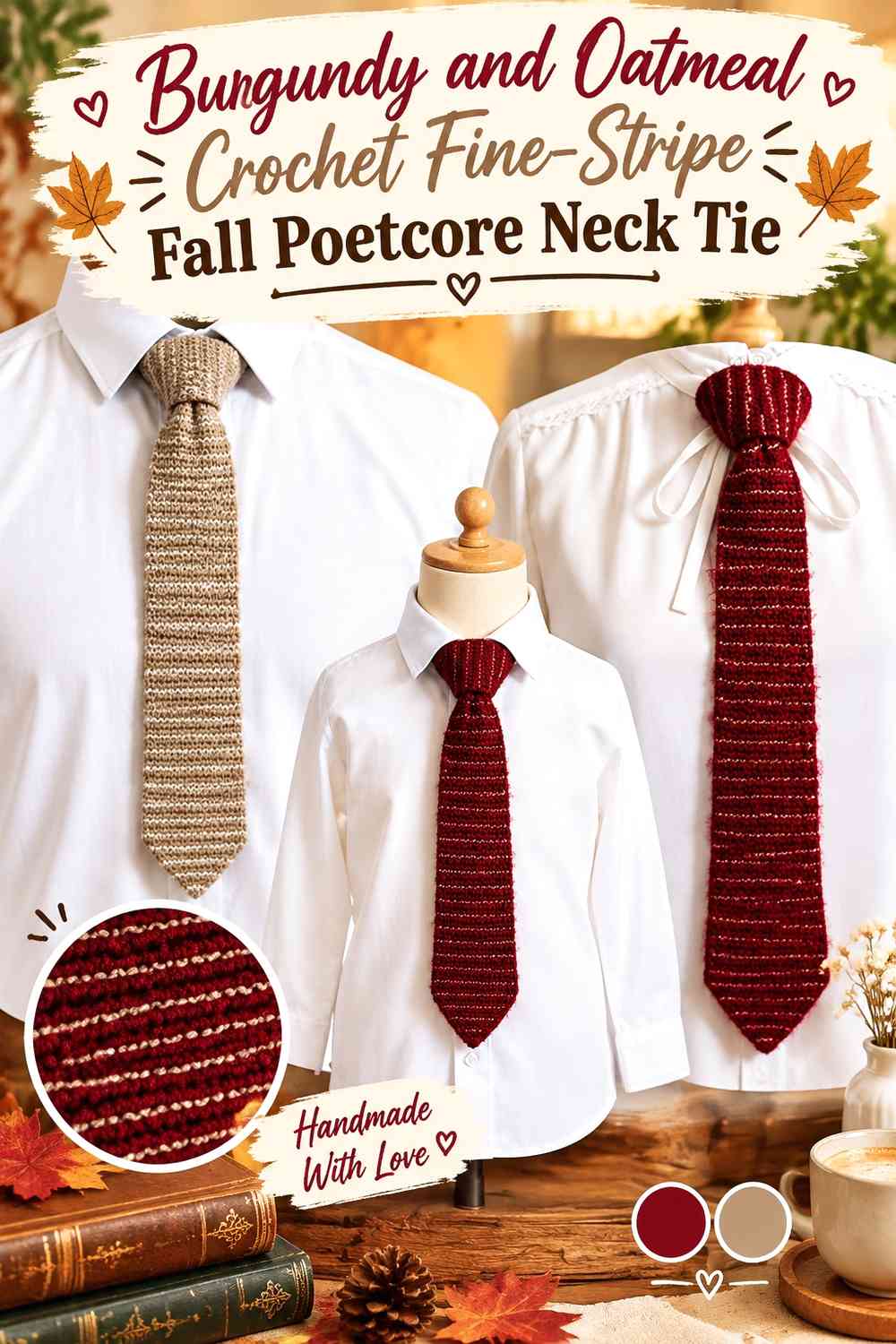
Fine striping can work when the bands are deliberately unequal. Let Burgundy occupy wider sections and use Oatmeal as narrow interruptions so the accessory retains its dark fall character.
Burgundy Stripes Should Outweigh Oatmeal on the Neck Tie
Equal-width Burgundy and Oatmeal bands create a more graphic effect. For a quieter poetcore tie, increase the Burgundy share and reduce the neutral to narrow repeated lines.
This also makes small irregularities in color transitions less visually dominant because Burgundy still forms the main surface.
Oatmeal Stripes Need Consistent Spacing Against Burgundy
If Oatmeal appears several times, decide whether those lines will be evenly spaced or intentionally concentrated near the bottom.
Random spacing can work, but preview the full tie before finishing. On a narrow accessory, an extra pale band in one area can create more visual weight than expected.
Creator Credit: Sevginin Günlüğü
7. Burgundy and Oatmeal Crochet Deep Burgundy Neck Tie With Cream
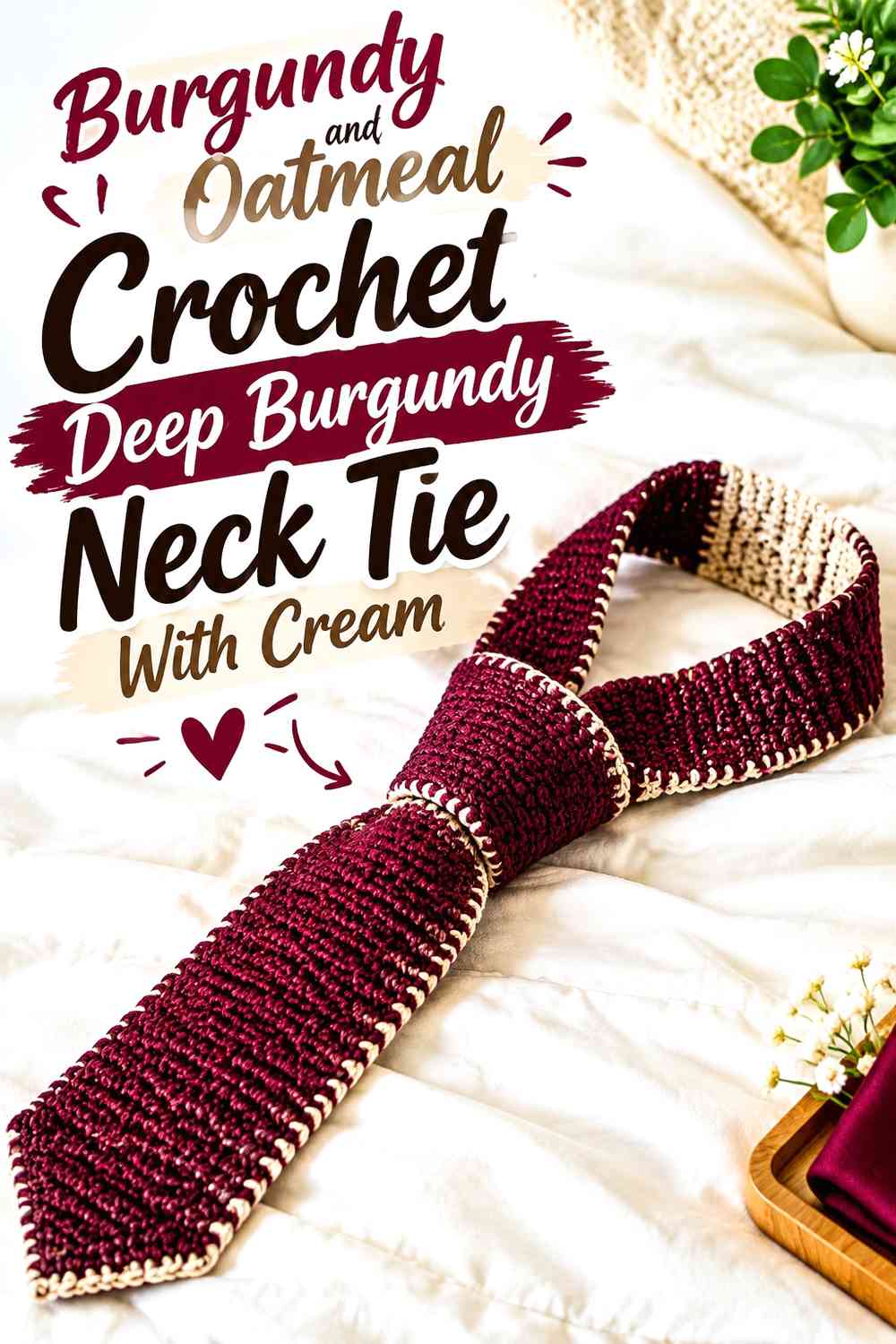
Cream adds a slightly lighter third note while Oatmeal remains the softer warm neutral. Use Burgundy as the body color, Oatmeal for a substantial secondary section, and Cream only where you want a small highlight around the point or edge.
Deep Burgundy Should Stay Dominant Over Oatmeal and Cream
Two pale neutrals can quickly occupy more space than expected if both appear in stripes, borders, and the point.
Keep the broad central tie Burgundy. Give Oatmeal the larger supporting role and restrict Cream to one precise job.
Oatmeal Should Bridge Burgundy and Cream on the Neck Tie
Place Oatmeal between the darkest Burgundy and lightest Cream when a direct contrast feels too abrupt.
The resulting dark-medium-light progression can suit a vintage layered outfit, but keep each zone purposeful rather than repeating all three colors throughout the entire length.
Creator Credit: CrochicaNBF
8. Burgundy and Oatmeal Crochet Vintage Neck Tie With Camel
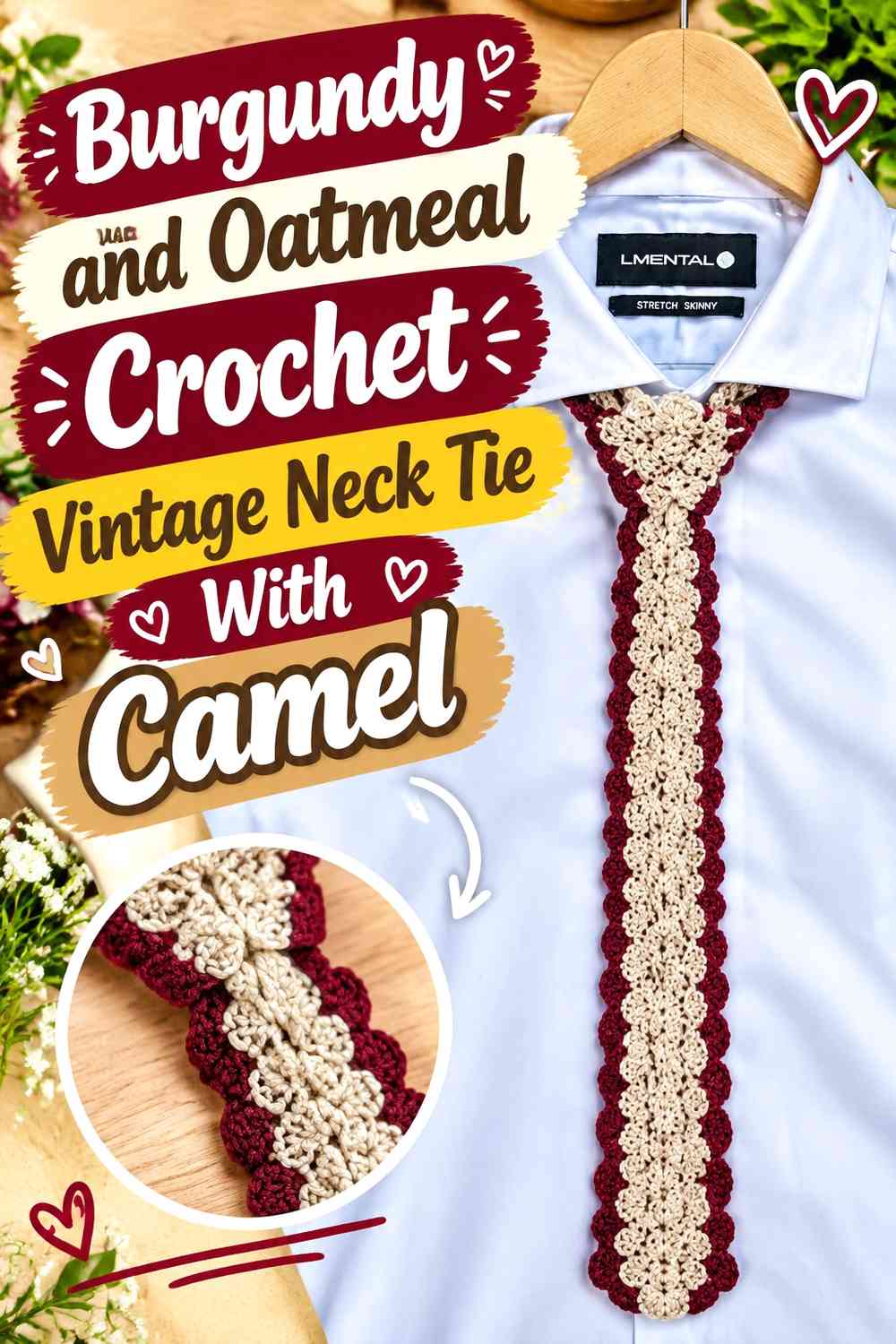
Camel warms the palette without creating the very light break of Cream. Burgundy can cover most of the tie, Oatmeal can mark the point or stripe, and Camel can be used near the knot area or in one secondary band.
Camel Can Bridge Burgundy and Oatmeal Without Strong Contrast
Use Camel where the change from dark Burgundy to pale Oatmeal would otherwise feel unusually sharp.
A middle-value warm brown is especially useful in a fall palette, but keep it smaller than both main shades so the tie does not become a three-color stripe exercise.
Burgundy Should Anchor the Oatmeal and Camel Neck Tie Ends
Repeating Burgundy near the upper and lower parts of the tie gives the supporting neutrals a consistent dark reference.
If Camel is near the knot and Oatmeal appears near the point, Burgundy through the long center can keep those two lighter areas visually connected.
Creator Credit: Laura Cepeda English
9. Burgundy and Oatmeal Crochet Fall Neck Tie With Moss Green
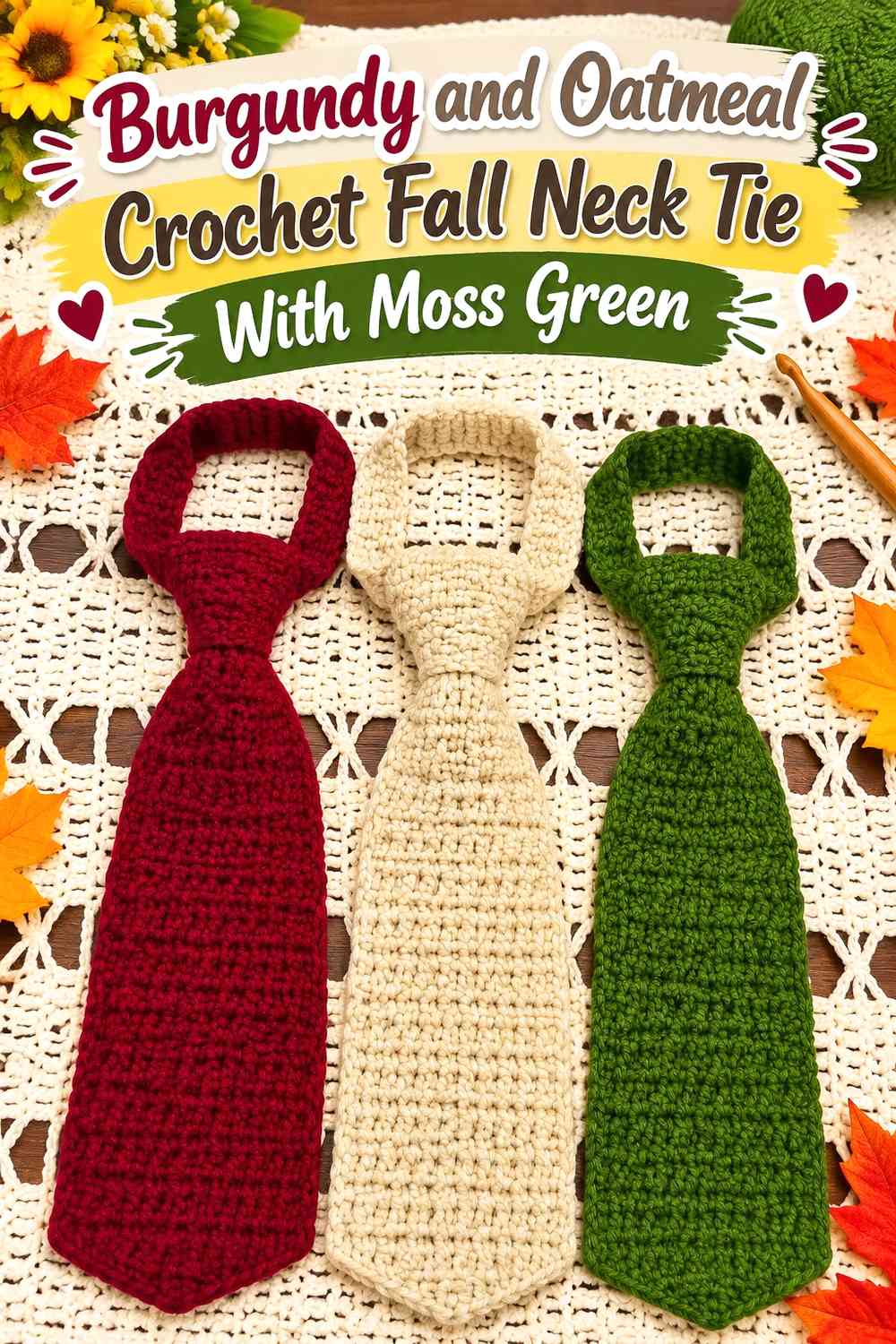
Moss Green adds a muted botanical note that suits the autumn palette but should remain secondary. Use Burgundy as the main body, Oatmeal to provide light contrast, and Moss Green on one narrow band or lower detail.
Moss Green Should Stay Smaller Than Burgundy on the Neck Tie
Burgundy and Moss Green can both attract attention, particularly when used in similar amounts.
Keeping Burgundy broader preserves the rich red-purple direction while Moss Green works as a small fall accent rather than a second dominant color.
Oatmeal Can Separate Burgundy From Moss Green Cleanly
A slim Oatmeal line between the two deeper hues can prevent them from visually merging.
Use that separator only where the colors meet. Repeating pale outlines around every Burgundy and Moss section would make the neutral more prominent than necessary.
Creator Credit: Crocheting in style
10. Burgundy and Oatmeal Crochet Tonal Poetcore Neck Tie With Plum
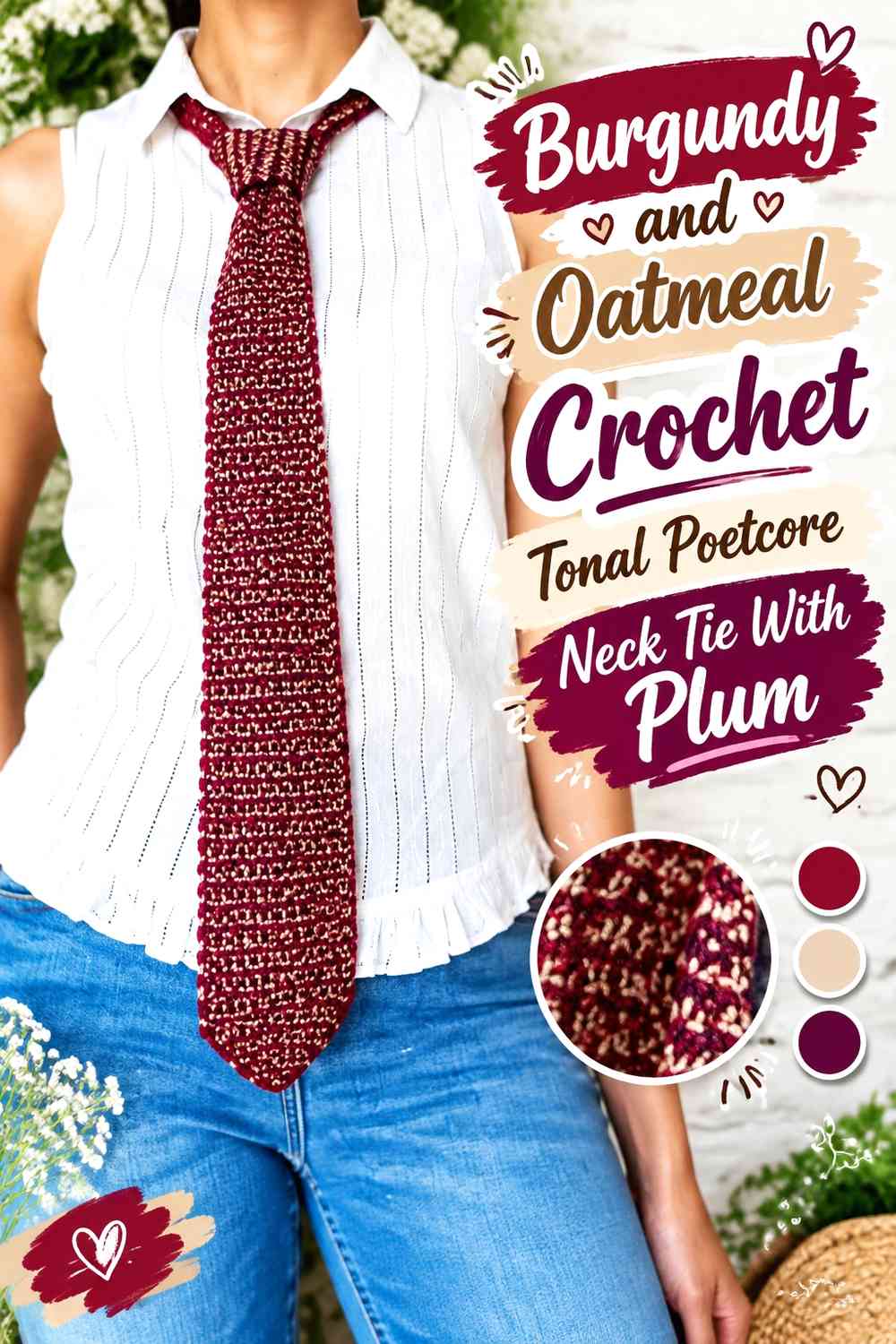
Plum deepens the red-purple side of the palette. Use Burgundy as the dominant color, Plum for a darker point or one larger tonal section, and Oatmeal where you need enough contrast to keep those related dark shades distinct.
Plum Needs to Stay Distinct From Burgundy on the Neck Tie
Compare the finished crochet colors before committing to a very narrow tonal stripe. Burgundy and Plum may look different in the yarn but merge when worked into textured fabric.
If the contrast is subtle, use Plum in a larger lower section so the tonal change has enough area to register.
Oatmeal Can Divide Burgundy and Plum Without Over-lightening the Tie
A narrow Oatmeal separator makes the relationship between the two dark shades easier to see.
Keep the neutral line thin if the goal is a moody poetcore palette. Too much Oatmeal would shift attention away from the layered Burgundy and Plum effect.
Creator Credit: Ribca Crochet – ርብቃ የክር እጅ ስራ
11. Burgundy and Oatmeal Crochet Soft Scarf-Tie Poetcore Neck Tie
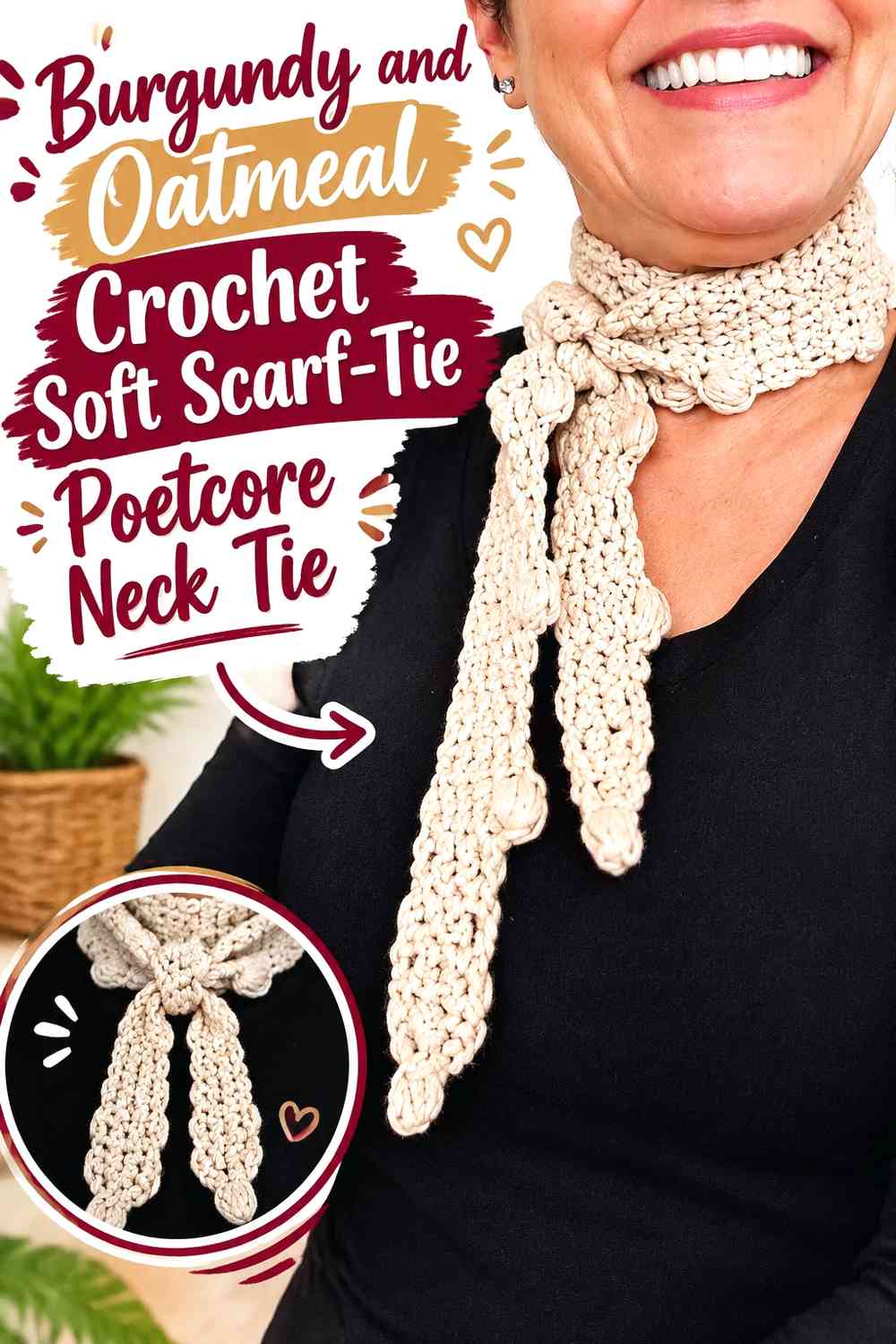
For a less formal poetcore variation, adapt a narrow scarf-tie construction rather than a conventional pointed necktie. Burgundy can carry most of the length while Oatmeal appears at both ends, making the accessory look intentionally softer and more relaxed.
Burgundy Can Keep an Oatmeal Scarf-Tie From Looking Too Casual
A deep Burgundy field gives the narrow neck accessory enough visual weight to work with collared shirts, waistcoats, or structured cardigans.
Because the shape is softer than a standard tie, the dark color helps maintain a clear vertical focal point.
Oatmeal Ends Can Give Burgundy a Balanced Scarf-Tie Finish
Repeat Oatmeal at both ends rather than placing a pale accent only on one side.
The symmetry keeps the accessory visually controlled when it is tied loosely or allowed to hang with both ends visible.
Creator Credit: Jackie Fonseca Croche
12. Burgundy and Oatmeal Crochet Ascot-Inspired Poetcore Neck Tie
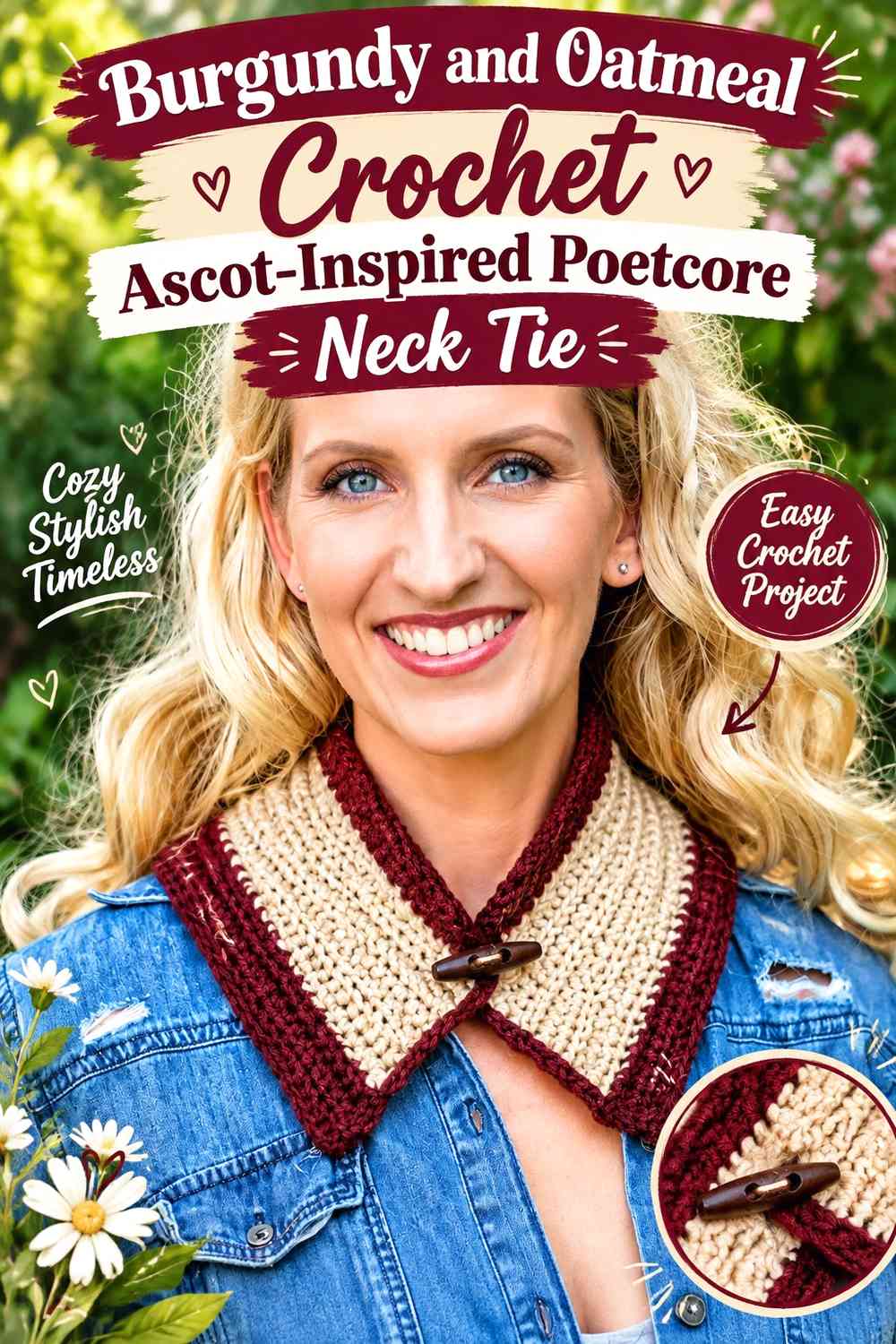
A compact neck scarf can be adapted toward an ascot-inspired poetcore accessory, especially when worn closer to the collar. Oatmeal can form the main textured neck section while Burgundy creates the ends or a stronger center detail.
Oatmeal Can Keep the Burgundy Ascot-Inspired Neck Tie Soft
Using Oatmeal near the neck prevents the accessory from becoming one heavy dark band beneath the collar.
Burgundy can then gather attention toward the visible ends or center, where a smaller amount of the deep color has more impact.
Burgundy Should Repeat Clearly Across the Oatmeal Neck Tie
If Burgundy appears on one end, repeat it on the other or at another visible point so the color placement feels intentional when the tie is arranged.
This matters particularly with a compact neck accessory, where folding or tying may conceal part of the original color layout.
Creator Credit: naztazia
13. Burgundy and Oatmeal Crochet Lace Skinny Poetcore Neck Tie
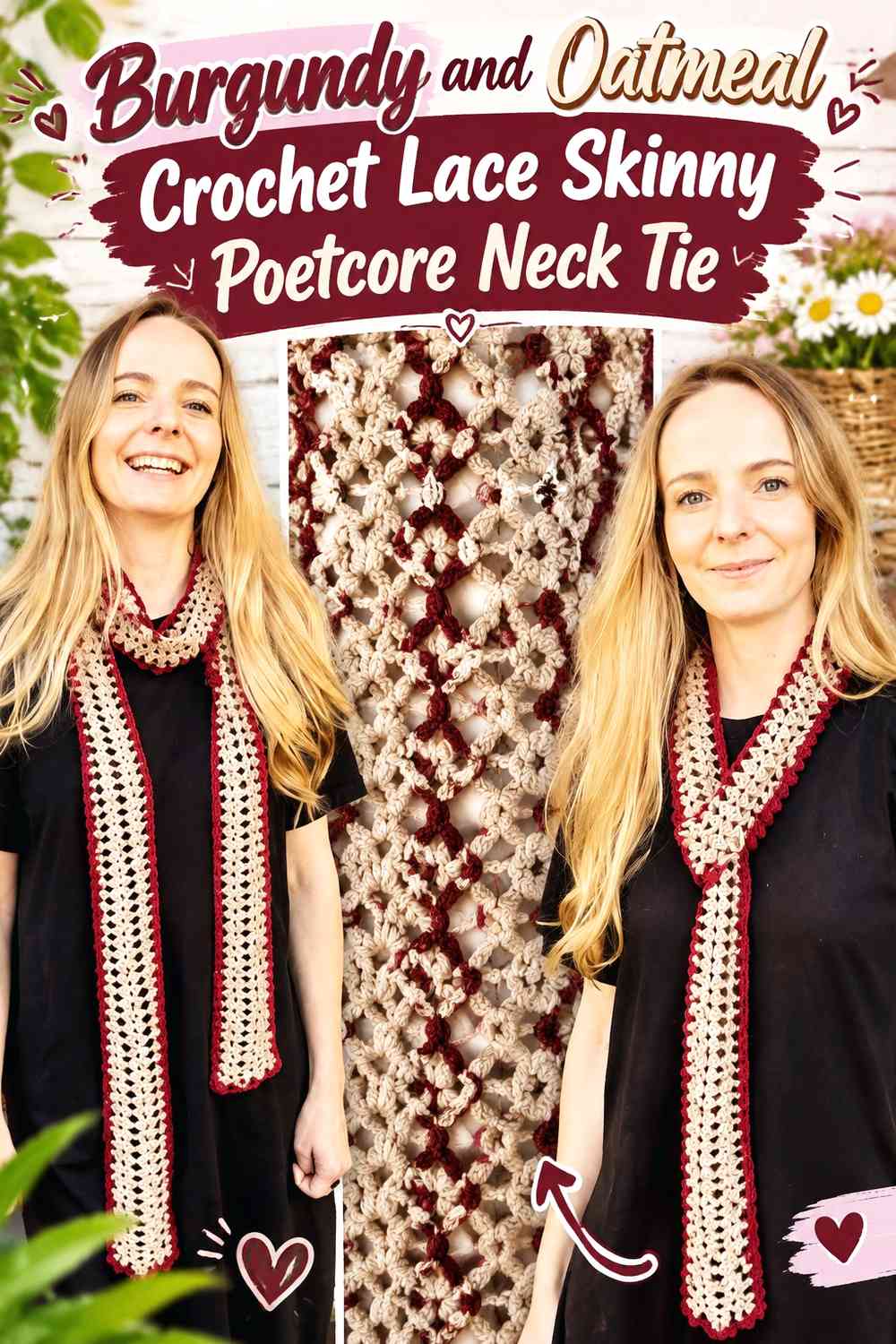
A narrow lace scarf construction can become the softest neck-tie variation in the collection. Use Burgundy for most of the lace length and Oatmeal at the ends or in one restrained center section. The openwork makes the shirt underneath part of the visible color scheme, so simple yarn placement works better than several competing shades.
Burgundy Keeps Oatmeal Lace Visible Against a Fall Shirt
Burgundy provides a strong outer color even when the lace itself contains plenty of open space.
If the tie is worn over an Oatmeal or cream shirt, keep enough Burgundy through the center so the accessory does not visually disappear into the layer beneath it.
Oatmeal Should Highlight Burgundy Lace Without Filling Every Opening
Use Oatmeal in a solid section, narrow band, or tie end rather than trying to alternate colors throughout every lace repeat.
The open stitch pattern already creates visual detail. Keeping the color plan restrained lets that texture remain one of the defining poetcore features.
Creator Credit: Crochet with Tuula Maaria
Comparing Burgundy and Oatmeal Poetcore Neck Tie Palettes
Color DirectionMain Visual EffectUseful PlacementBurgundy + OatmealClassic fall poetcore contrastBody and pointed endBurgundy + Oatmeal narrow tieQuieter academic stylingLong central sectionsBurgundy + Oatmeal borderStrong silhouette definitionSlim outer edgeBurgundy + Oatmeal texture blocksStitch-focused lookOne broad contrast sectionBurgundy + Oatmeal rib lookStrong vertical emphasisPoint and edgingBurgundy + Oatmeal fine stripesMost graphic two-color optionNarrow repeated bandsBurgundy + Oatmeal + CreamClearest pale contrastSmall edge highlightBurgundy + Oatmeal + CamelWarm vintage transitionKnot area or one bandBurgundy + Oatmeal + Moss GreenBotanical autumn directionSmall stripeBurgundy + Oatmeal + PlumDarkest tonal optionLower section or pointBurgundy + Oatmeal scarf-tieRelaxed poetcore stylingContrasting endsBurgundy + Oatmeal ascot-inspired tieSoftest collar-focused optionNeck section and endsBurgundy + Oatmeal lace tieLightest openwork versionLace body and end accents
Conclusion
A Burgundy-dominant tie is the strongest choice when you want the accessory to create a clear dark vertical line through layered fall clothing. Oatmeal can then reveal the point, border, stripe placement, or crochet texture without taking over the entire accessory.
An Oatmeal-heavy design feels lighter and more handmade, but Burgundy needs to be placed where it will remain visible against the shirt underneath. Camel can warm the transition between the two colors, Cream can increase light contrast, Moss Green introduces a botanical fall accent, and Plum produces the deepest tonal variation.
The most convincing poetcore versions are not necessarily the ones with the most color changes. A broad Burgundy body, one Oatmeal interruption, a clean pointed end, and visible crochet texture can already create a strong vintage-academic effect. Use the direct necktie tutorials for exact tie construction and the narrow neck-accessory references for the softer scarf-tie interpretations.
Frequently Asked Questions
Should Burgundy or Oatmeal dominate a fall poetcore crochet neck tie?
Burgundy is useful when you want the tie to create a richer, more defined line over a light shirt or under an open cardigan. Oatmeal works when you want a softer handmade look and plan to use Burgundy for the point, stripes, border, or other concentrated details.
Where should Oatmeal go on a Burgundy crochet neck tie?
The point, a narrow border, one larger center band, or a few controlled stripes are useful choices. Oatmeal is especially effective where you want the crochet texture or the taper of the tie to become easier to see.
How can I stop a Burgundy and Oatmeal crochet tie from looking too striped?
Use larger color blocks and fewer transitions. Keep most of the length Burgundy or Oatmeal, then assign the second shade to one clearly defined job such as the lower point, border, or a limited group of stripes.
What fall colors can support Burgundy and Oatmeal in a poetcore tie?
Camel, Cream, Moss Green, muted brown, Charcoal, or deep Plum can extend the palette without replacing the two main colors. Give the third shade one limited role so the tie does not become visually fragmented.
Does an Oatmeal border work around a Burgundy crochet neck tie?
Yes, especially when the Burgundy body needs clearer definition against dark clothing. Keep the border proportional to the tie width; on a narrow tie, even a small Oatmeal edge can become visually prominent.
How should I coordinate a Burgundy and Oatmeal crochet tie with a shirt?
Consider contrast first. A Burgundy-dominant tie will usually remain more visible over cream, Oatmeal, or other light neutrals. If the shirt is dark Burgundy, brown, or another deep fall color, adding more visible Oatmeal to the tie can provide separation.
Can a narrow crochet scarf be styled as a poetcore neck tie?
A narrow neck scarf can support a softer tie-like or ascot-inspired interpretation when its proportions and drape suit that styling. It will not have exactly the same construction or silhouette as a traditional pointed necktie, so treat it as a related poetcore neck accessory rather than an identical substitute.