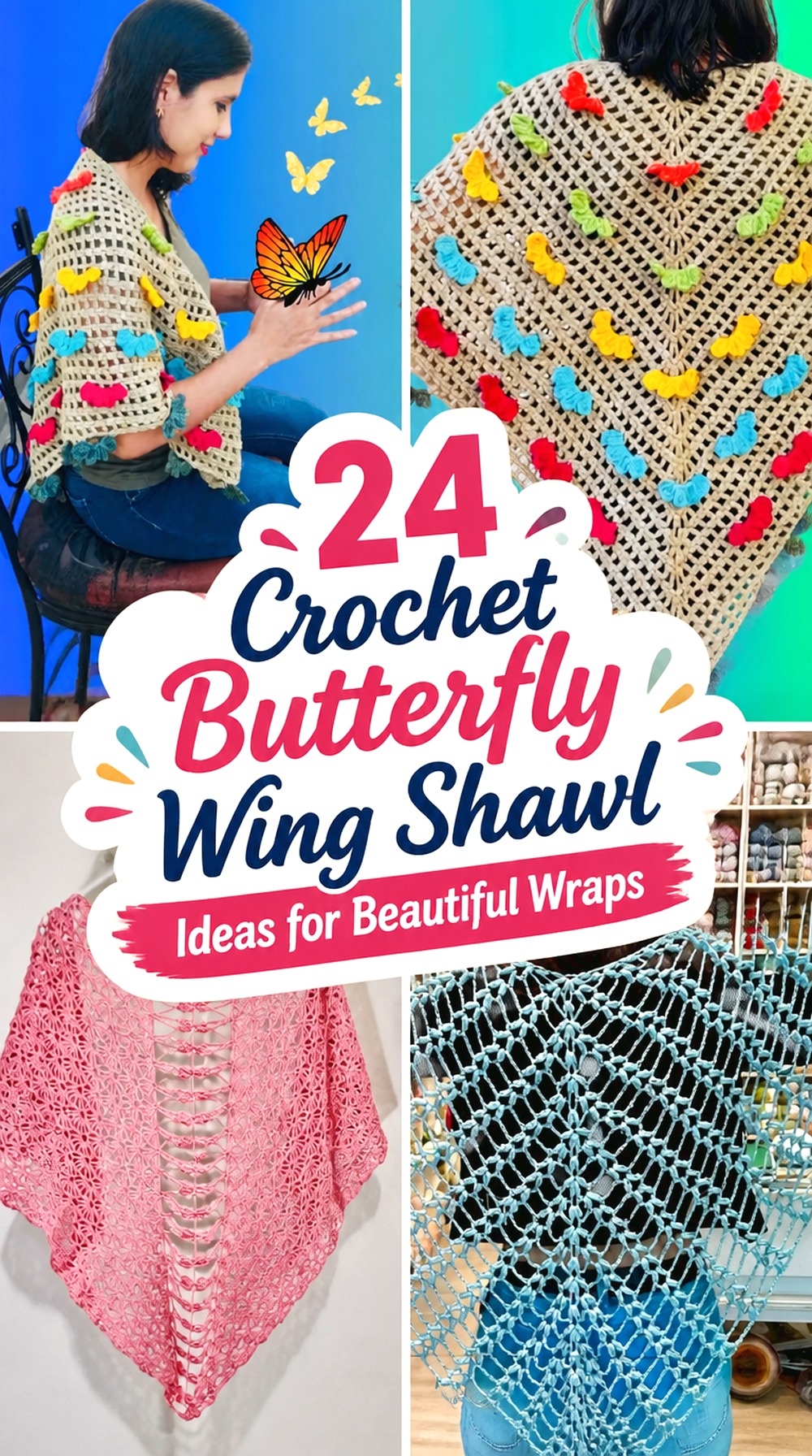

A crochet butterfly wing shawl can take several very different forms. Some designs create an unmistakable pair of spreading wings, while others build the butterfly effect through openwork motifs, shaped lace, scalloped edges, or repeating butterfly stitches. There are also poncho-shawl hybrids and smaller wraps that give the shoulders a wing-like outline without copying a literal butterfly.
The 24 ideas below deliberately cover that wider range. That matters because the right project depends on more than the colors you like. Drape, shoulder coverage, motif scale, edge shape, yarn weight, and construction direction can completely change how a butterfly-inspired shawl wears. Not every linked tutorial creates a literal insect-wing silhouette, so each idea explains what kind of butterfly effect the source actually supports and what to check before adapting it.
Quick List
- Monarch-Inspired Crochet Butterfly Wings Shawl
- Sculpted Openwork Crochet Butterfly Wing Shawl
- Flowing Crochet Butterfly-Wing Triangle Shawl
- Wave-and-Butterfly Crochet Lace Shawl
- Crochet Butterfly-Stitch Border Shawl
- Airy Linen-Look Crochet Butterfly Triangle Shawl
- Crochet Butterfly Cluster Shoulder Shawl
- Gradient Crochet Butterfly Wing Shawl
- Lightweight Crochet Butterfly Summer Shawl
- Crochet Butterfly Poncho-Shawl Wrap
- Fan-Lace Crochet Butterfly Shawl
- Pointed Crochet Butterfly Lace Shawl
- Crochet Butterfly Motif Triangle Wrap
- Draped Crochet Butterfly Shoulder Shawl
- Convertible Crochet Bat-terfly Shawl
- Bow-Texture Crochet Butterfly Shawl
- Modern Crochet Butterfly-Stitch Shawl
- Beaded Crochet Butterfly Evening Shawl
- Bottom-Up Crochet Moon Butterfly Shawl
- Two-Way Crochet Butterfly Poncho Wrap
- Fine-Thread Crochet Butterfly Lace Shawl
- Repeating-Motif Crochet Butterfly Wrap
- Two-Panel Crochet Papillon Lace Wrap
- Compact Crochet Butterfly Bandana Shawlette
Choose the Butterfly Effect Before Choosing the Yarn
A literal wing shawl and a butterfly-stitch shawl solve very different design problems. A wing-shaped piece depends heavily on the outer contour, symmetry, and how the fabric spreads across the back. A motif shawl can keep a conventional triangle or rectangular shape while putting most of the visual interest inside the fabric.
Decide which effect matters most before changing materials. If the outline is the main feature, an overly stiff fabric can make the shawl sit more like a costume panel than a wearable wrap. If small butterfly motifs provide the detail, very fuzzy yarn can soften their definition. A poncho-style version needs another consideration: how comfortably the fabric settles around the neck and shoulders when the wearer is not holding the “wings” open.
Drape and Motif Definition Need to Work Together
Butterfly shawls often combine open spaces with denser sections. That contrast is what makes wings, bodies, or lace motifs readable, but it also means the fabric can react noticeably to yarn substitutions. A lighter, smoother yarn may emphasize openwork and movement, while a thicker or loftier yarn can make the same concept warmer and visually heavier.
Before committing to a full shawl, look at a small section of the chosen stitch pattern and consider how it behaves after gentle blocking. The important checkpoint is not simply whether the stitches look attractive on the hook. Check whether openings remain distinct, curved sections relax rather than buckle, and the fabric still has enough movement to wrap comfortably around the shoulders.
Check Construction Direction Before Changing the Size
Butterfly shawls can grow from a point, from the top center, across a rectangular panel, through joined sections, or around a poncho neckline. Those differences affect how safely you can alter the final scale. A repeat-based triangle may offer an obvious place to continue, while a carefully shaped wing outline may depend on proportions that should not be changed casually.
Before enlarging any project, confirm how the creator handles increases, repeats, borders, and the finishing edge. Also check whether the tutorial is designed to stand alone or accompanies a written pattern. When a video concentrates on special stitches rather than every row of the finished piece, use it for the technique it actually demonstrates and consult the creator’s accompanying instructions for construction.
Monarch Inspired Crochet Butterfly Wings Shawl
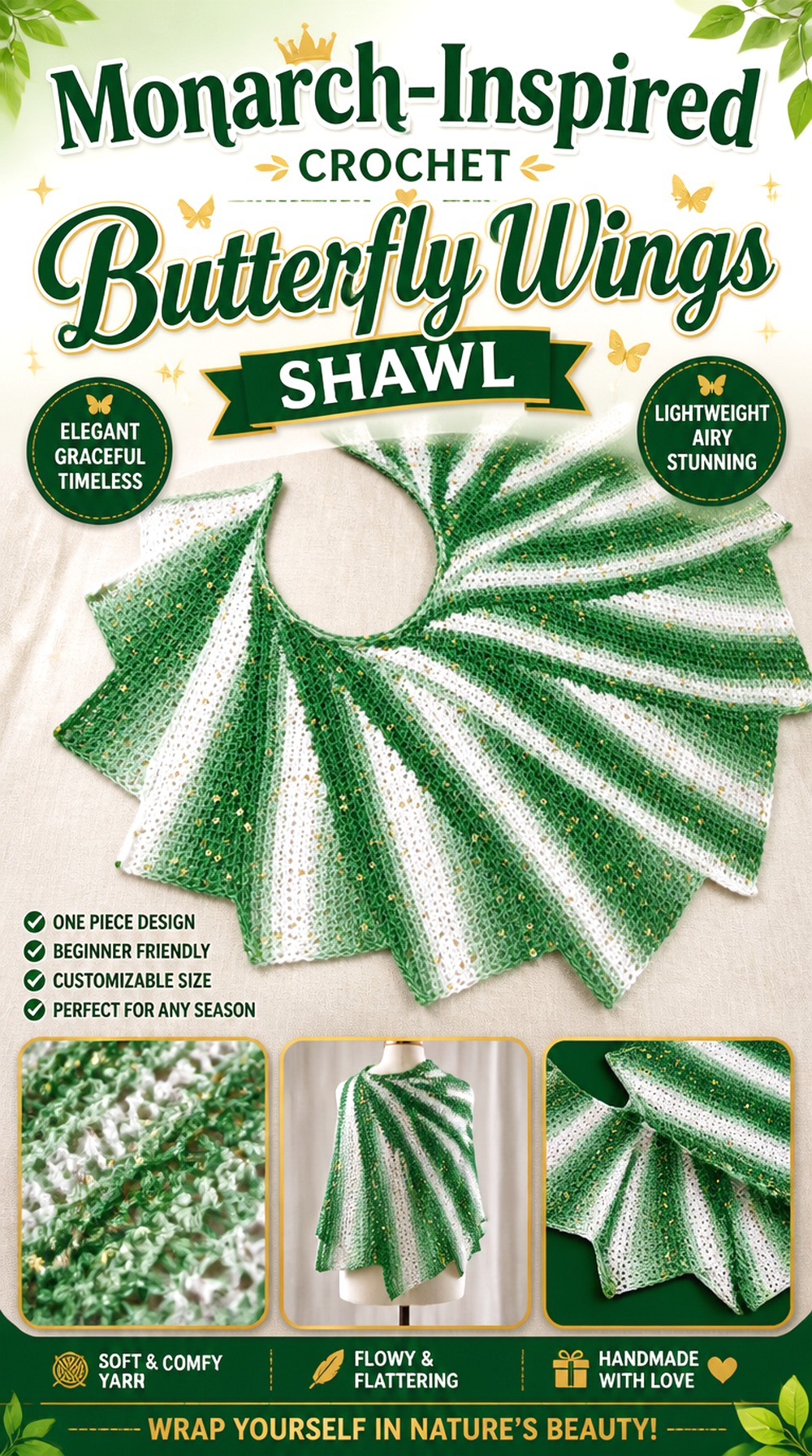
This option comes closest to the dramatic image many people have in mind when searching for a crochet butterfly wing shawl. The broad back spreads outward into two recognizable wing areas, making the silhouette itself the main design feature rather than relying only on butterfly motifs inside a standard triangle. It works particularly well when you want the finished piece to look striking while open but still function as a shoulder wrap when the arms are lowered.
Because the outline carries so much of the design, pay attention to how the lower edges hang naturally. A beautiful spread-open shape is only half the decision; the shawl should also fold and drape without turning into an awkward stack of fabric.
Wing Proportion Matters More Than Extra Width
With a literal wing design, simply making the project wider does not automatically make it more wearable. Extra fabric added in the wrong area can move the widest point too far down the body or make the tips drag. If you want a larger version, first identify where the tutorial establishes the central back, upper wing, and lower wing proportions. Any size adaptation should preserve that overall visual balance.
Strong Color Changes Can Define the Wing Sections
A butterfly-inspired palette does not have to copy a real species, but color placement can help readers understand the structure at a glance. High contrast around an outer edge can make the silhouette more pronounced, while softer transitions keep the fabric looking more like an everyday shawl. Before choosing several shades, decide whether the color changes will support the existing wing divisions or compete with the openwork.
Check the Shawl With Your Arms Down
A spread-open photograph shows the wings at their most dramatic, but most wear happens with the arms relaxed. Before final finishing, place the shawl around the shoulders and check where the wing tips, longest points, and denser sections fall. This simple fit check tells you much more about everyday comfort than judging the piece only while it is stretched fully open.
Sculpted Openwork Crochet Butterfly Wing Shawl
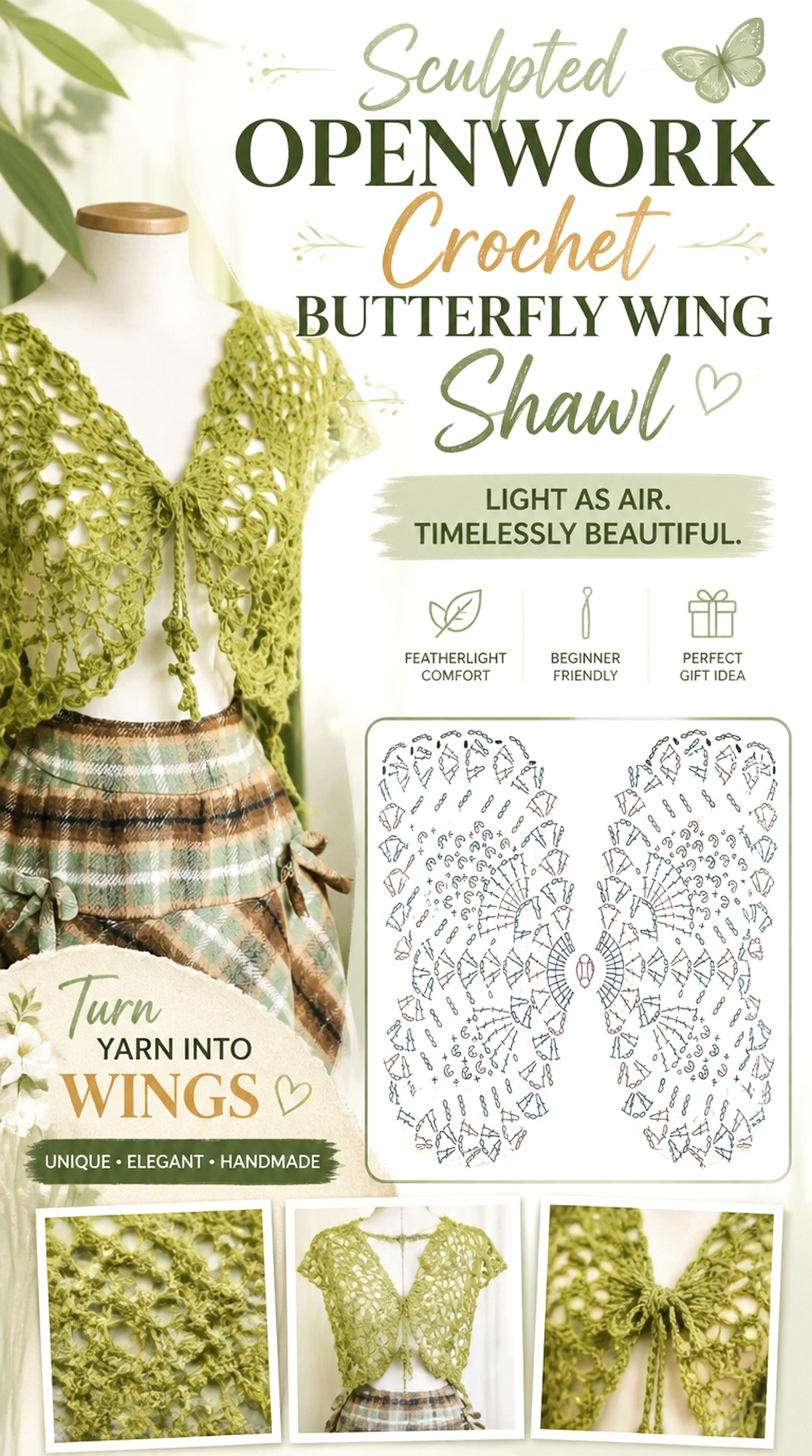
This design takes a lighter, more lace-oriented route to the butterfly shape. Rather than depending on a heavy solid fabric, the finished shawl uses open spaces and repeated shaping to create a broad, elegant outline with clear bilateral balance. It is a useful choice if you like the theatrical spread of butterfly wings but want the result to remain visually airy.
The main planning question is how clearly the structure shows in your chosen yarn. When the fabric contains both openwork and shaped edges, stitch definition becomes important. A yarn that hides the internal lines may leave the shawl looking like a general lace triangle instead of emphasizing its butterfly-inspired form.
Symmetry Is the First Visual Checkpoint
With a centered butterfly shape, small differences between the left and right sides are easier to notice than they would be in an irregular lace wrap. Periodically lay the work flat without stretching it aggressively. Compare the angle and depth of both sides. Catching a tension difference early is easier than trying to force two mismatched wings into alignment during blocking.
Openwork Needs Enough Drape to Relax
Large decorative openings can look compressed while the project is still on the hook. Blocking may help the lace open, but it should not be expected to fix severe tension problems. If the fabric feels unusually stiff, evaluate the hook-and-yarn combination before completing the entire shawl. The goal is a wing that spreads clearly while still falling softly when wrapped around the shoulders.
Original Tutorial and Creator Credit
Creator: anxin_crochet
Flowing Crochet Butterfly Wing Triangle Shawl
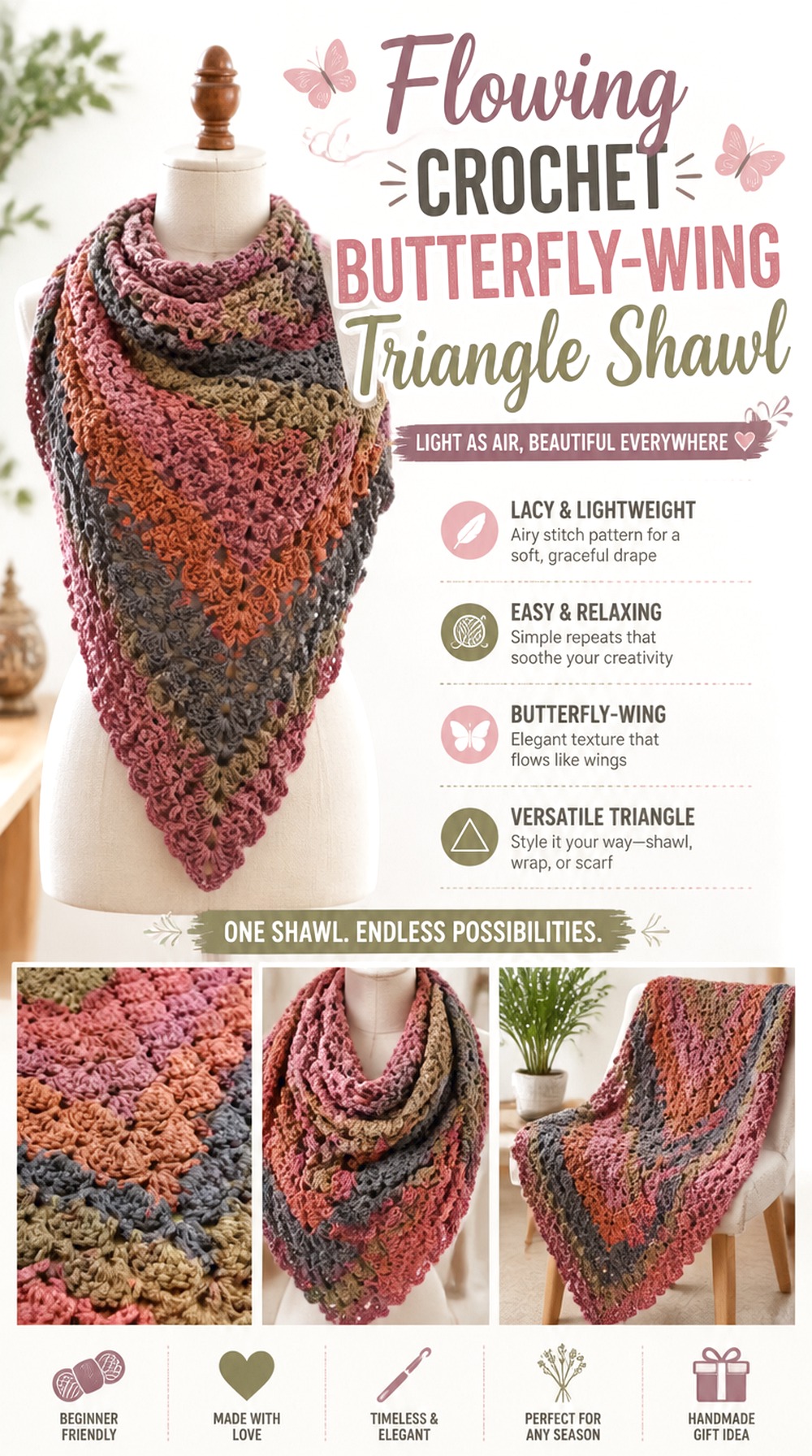
A triangular butterfly shawl offers an easier everyday silhouette than a full costume-style wing while still giving the back a strong butterfly association. The center point creates a familiar shawl shape, and the decorative pattern spreads toward both shoulders like paired wings. This makes it a practical choice when you want the theme to remain noticeable without requiring the shawl to be displayed fully open.
Think about how you normally wear shawls before adjusting the scale. A deep triangle gives more back coverage, while a shallower, wider version can feel easier to wrap around the arms. The tutorial should guide the actual construction; use your preferred wearing position to decide when the proportions feel right.
The Center Spine Should Stay Visually Clean
In a triangle, the eye naturally follows the center from neckline to lower point. If tension changes noticeably around that line, the whole shawl can appear to lean even when the stitch work is technically correct. Lay the piece flat occasionally and check whether both halves open at comparable angles. This is especially helpful before adding a border that could make an imbalance harder to correct.
Decide Whether You Want a Wrap or a Back Statement
A long central point emphasizes the design when the shawl hangs down the back. More width across the upper edge makes it easier to pull the ends forward or wrap them around the body. Neither proportion is universally better. Choose according to whether you want the butterfly effect to be primarily decorative from behind or useful as a conventional shoulder layer.
Original Tutorial and Creator Credit
Creator: Fiber Spider
Wave and Butterfly Crochet Lace Shawl
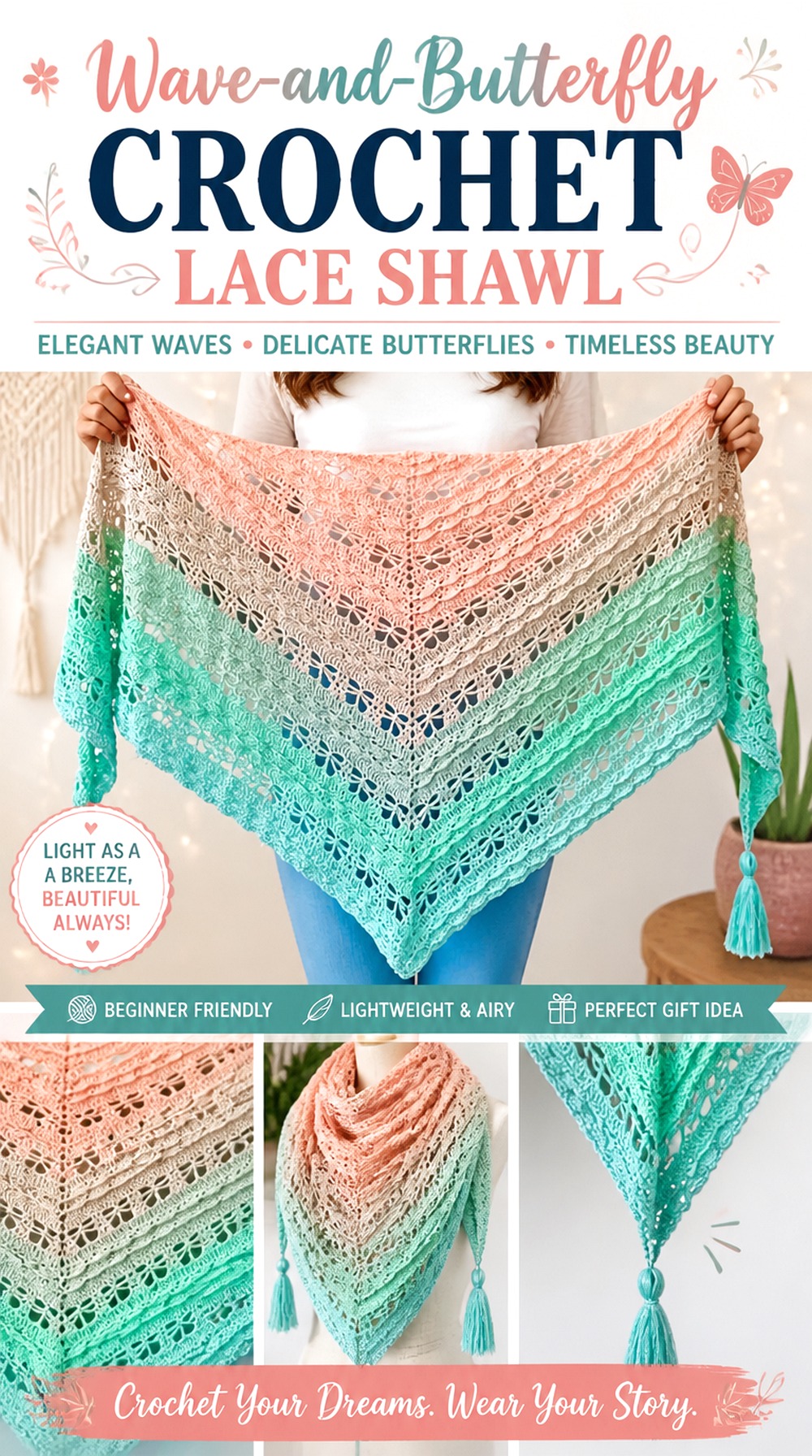
This shawl focuses more on butterfly-inspired lace than on a literal wing outline. The repeating decorative fabric gives the surface movement, so the finished piece reads as a polished lace accessory first and a butterfly design second. That makes it easier to pair with everyday clothes and gives the motif room to stand out without turning the entire outer edge into an insect silhouette.
It is a good direction if you prefer pattern detail over costume drama. The most important comparison is motif visibility: check the stitch definition in your yarn before investing in a long project. Strong color variation can be attractive, but it may also compete with the smaller butterfly details.
Let the Lace Pattern Carry the Visual Interest
When the stitch pattern already includes waves, openings, and butterfly forms, extra decorative additions can make the surface harder to read. Consider keeping fringe, tassels, and contrasting borders restrained unless they serve a clear purpose. A simpler finish lets the repeated motifs remain the feature readers notice first.
Watch How the Fabric Changes After Blocking
Lace shawls can look considerably denser before finishing. Instead of judging motif spacing only from the unblocked work, make a representative sample and see how the openings relax. You want enough definition for the butterfly elements to remain recognizable without stretching the surrounding fabric so severely that the edges lose their intended shape.
Original Tutorial and Creator Credit
Creator: Wilma Westenberg
Crochet Butterfly Stitch Border Shawl
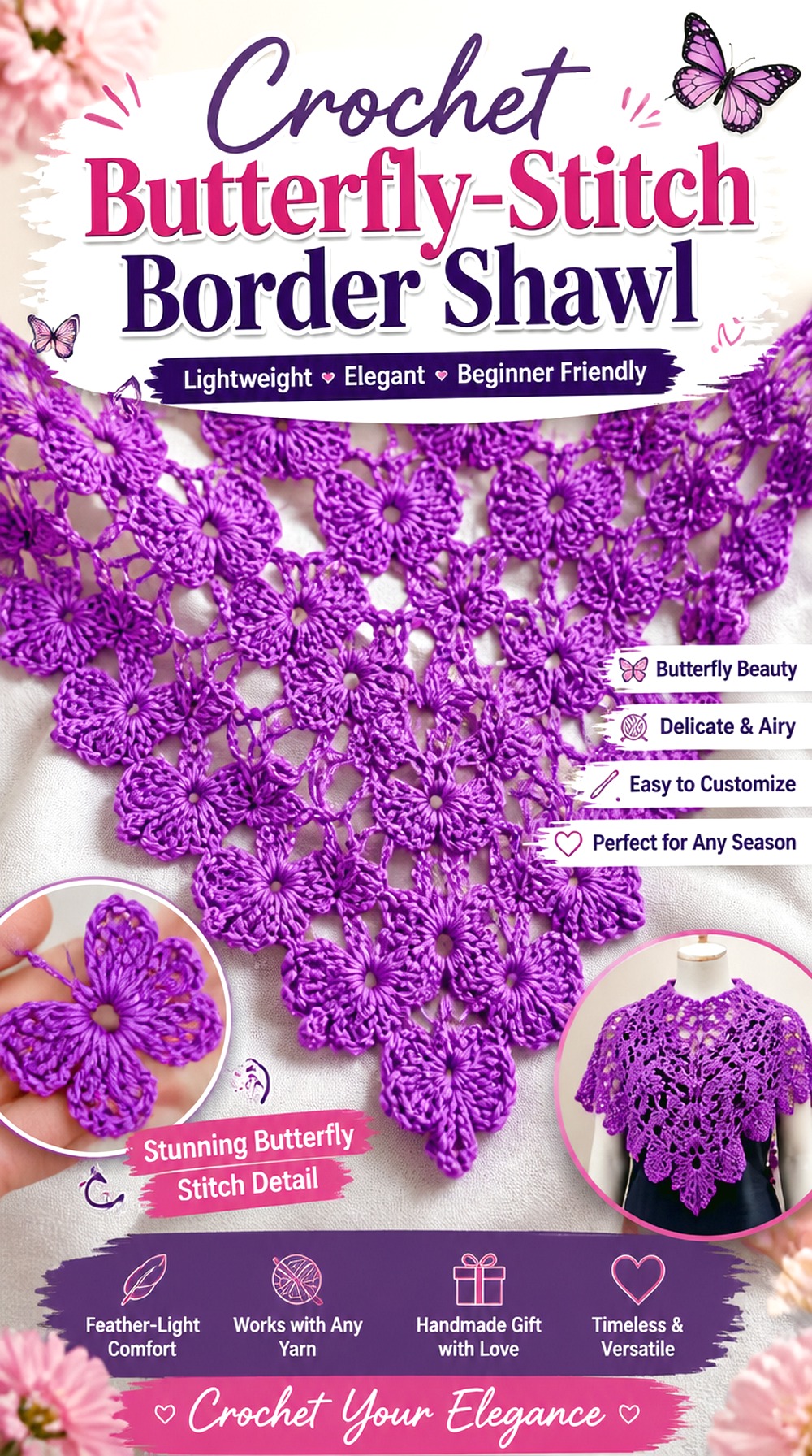
This idea shifts the butterfly detail toward the outer portion of the shawl. A decorative butterfly border creates a strong finish without requiring every section of the fabric to carry the same motif. Visually, that gives the eye a quieter center and a more detailed edge, which can be appealing when you want the shawl to frame an outfit rather than dominate it.
Border-focused designs also make finishing especially important. If the last section becomes tighter than the main fabric, the edge may pull inward; if it becomes too loose, it can ripple more than intended. Check the developing edge on a flat surface instead of waiting until the final row to evaluate it.
The Border Should Follow the Main Shawl, Not Fight It
A decorative edge works best when it settles naturally along the existing shape. If you notice cupping or excessive flare, compare your border tension with the body of the shawl. The goal is not to stretch the butterflies into place afterward. A balanced transition between the main fabric and the motif section gives a cleaner result before blocking begins.
Choose Yarn That Keeps Small Butterflies Readable
Highly textured novelty yarn or a strong halo can soften the fine spaces that make a small butterfly stitch recognizable. If the motif is the reason you chose the project, test it before buying or committing a large amount of yarn. Smooth stitch definition usually makes small decorative openings easier to see, particularly along a busy border.
Original Tutorial and Creator Credit
Creator: Crochet stitches
Airy Linen Look Crochet Butterfly Triangle Shawl
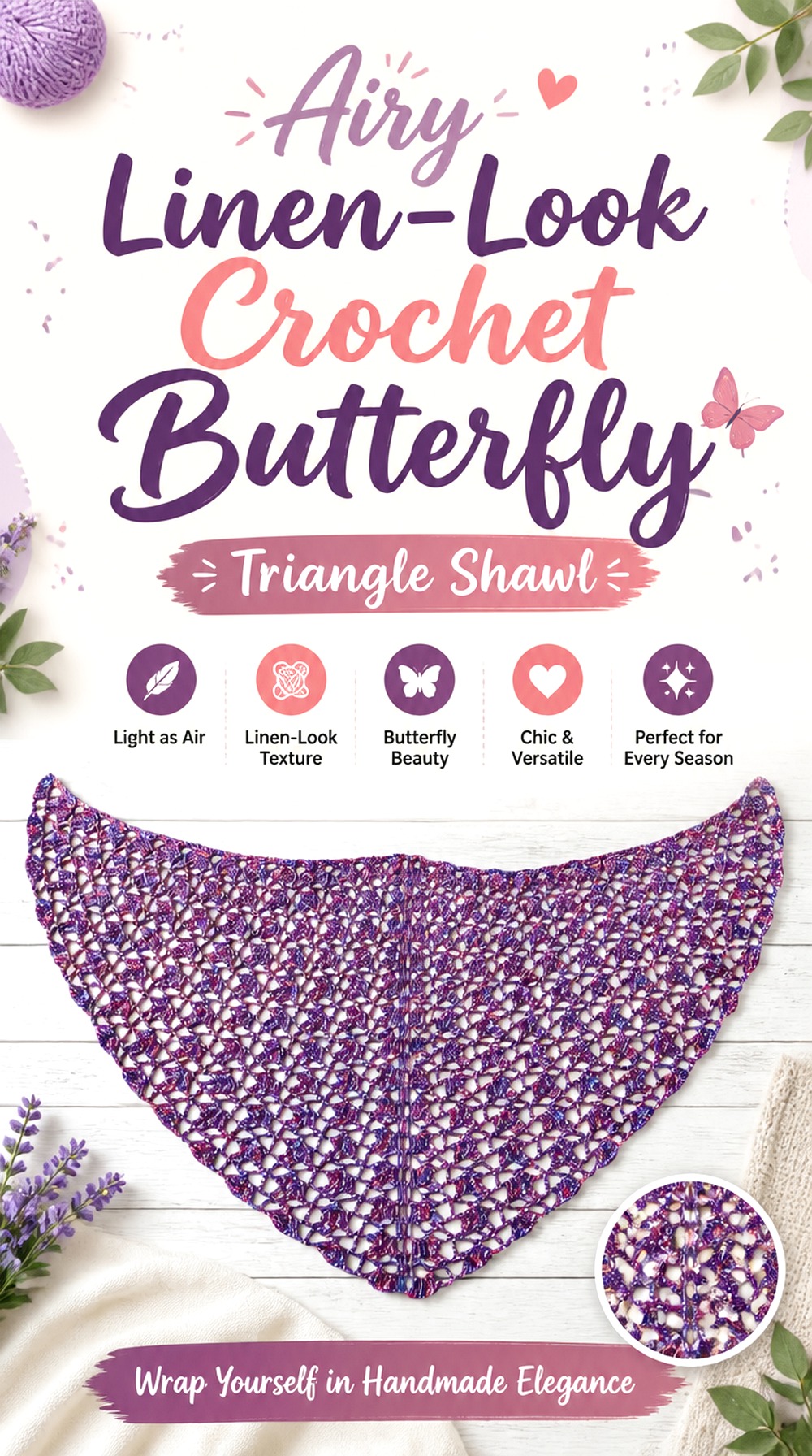
This version has the relaxed feel of an open triangular wrap, making it a strong option for warmer-weather styling or indoor layering. The butterfly identity comes through the lace arrangement rather than an exaggerated outer contour. That gives the finished piece enough versatility to work as a conventional shoulder shawl while still offering a decorative theme when viewed from the back.
A lighter fabric makes tension consistency particularly noticeable. Uneven open spaces can interrupt the visual rhythm more than they would in dense crochet. When considering a yarn substitution, compare not only fiber content but also how clearly the strand holds the long, open sections of the lace.
A Lightweight Shawl Still Needs Edge Stability
Airy fabric can stretch under its own weight, especially at points and long outer edges. Before deciding to lengthen the shawl substantially, see how the completed portion behaves when held vertically. If the center becomes much longer than expected, additional repeats may change the proportions more than the flat measurements suggest.
Keep Decorative Additions Proportional to the Fabric
Heavy fringe, large beads, or a dense border can overpower an otherwise light shawl and pull on delicate openwork. If you want extra decoration, compare its weight with the body fabric first. A restrained finish usually preserves the floating quality that makes this type of butterfly shawl appealing.
Original Tutorial and Creator Credit
Creator: Hobby Crochet
Crochet Butterfly Cluster Shoulder Shawl
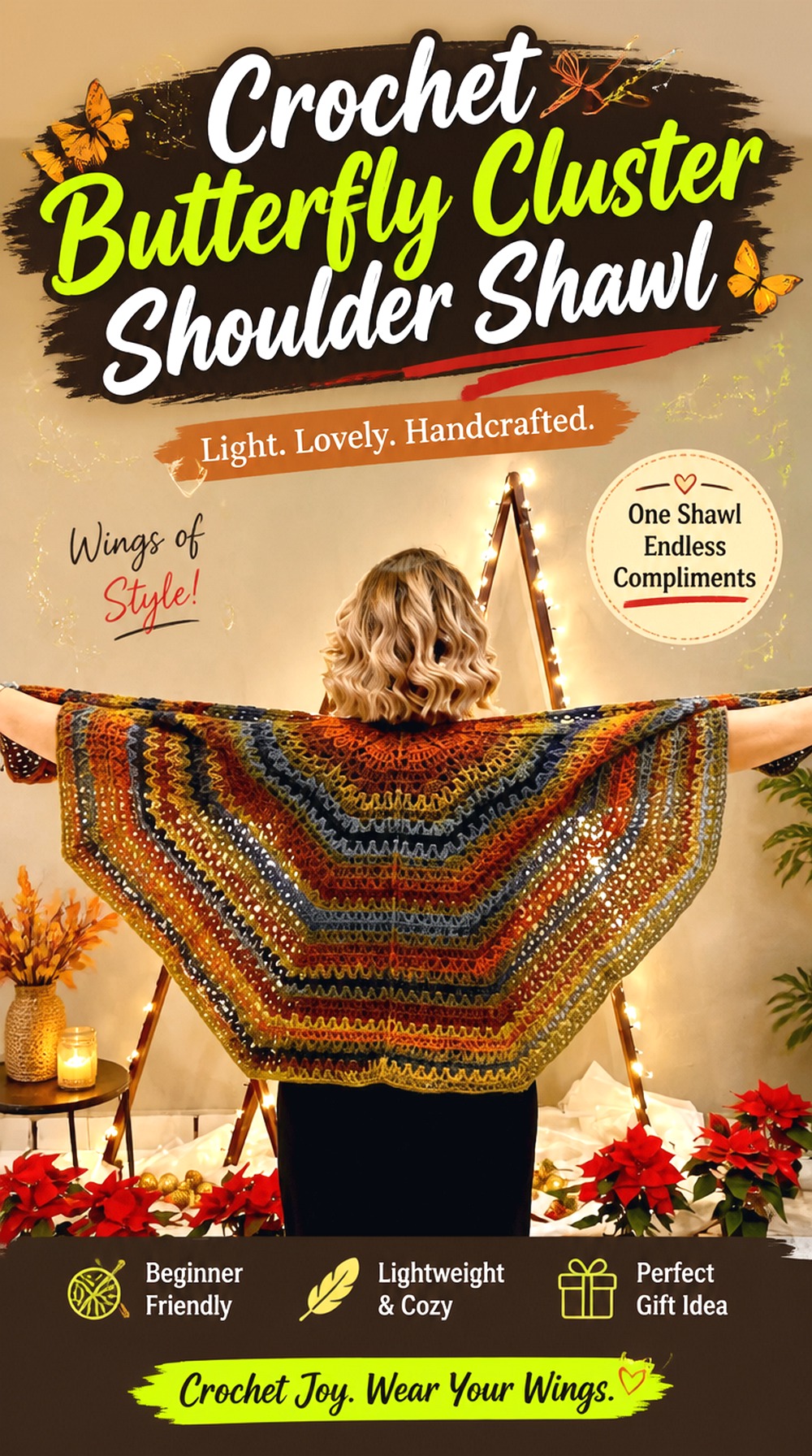
Here the butterfly look comes from repeated clustered sections arranged through a triangular shawl. The effect is more textural than a large graphic wing, making this a useful choice for readers who want obvious crochet detail without an oversized novelty silhouette. When worn around the shoulders, the motifs become part of the overall fabric instead of requiring the wearer to hold the piece open.
This kind of shawl benefits from yarn with enough definition to separate neighboring clusters. If the yarn is extremely fuzzy or heavily marled, the overall color may become more noticeable than the stitch architecture. Decide whether motif clarity or blended color is your priority before choosing materials.
Clustered Motifs Can Change the Fabric Weight
Areas containing more stitches may feel denser than adjacent open spaces. As the shawl grows, check whether those denser portions are causing the fabric to pull downward or lose its intended line. This matters most if you plan to use a heavier yarn than the creator demonstrates, because the difference can become more pronounced over a large surface.
Compare the Center and Side Motifs as You Work
Repeated motifs are easiest to correct before many more sections depend on them. Occasionally spread the shawl flat and compare the spacing around the center with both side areas. You are looking for consistent visual rhythm rather than a mathematically perfect photograph. If one side begins compressing, investigate tension before continuing the full length.
Original Tutorial and Creator Credit
Creator: Miss Chunches Estambres
Gradient Crochet Butterfly Wing Shawl
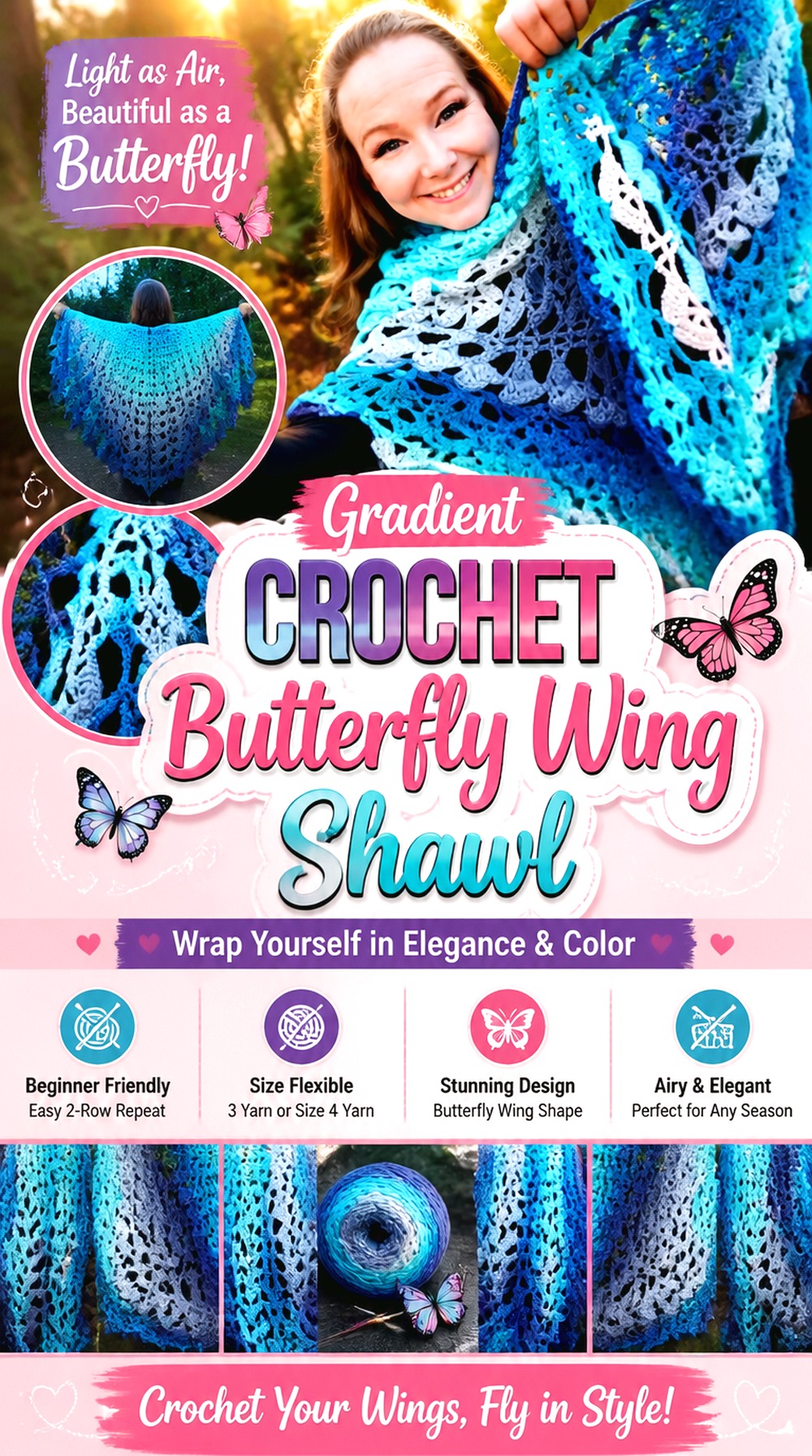
A color-changing yarn can amplify the wing effect without requiring separate color changes throughout the project. This approach works especially well when the shawl grows outward in a way that lets the gradient travel naturally from the neckline or center toward the outer edges. The result can look complex even when the color sequence is doing much of the visual work.
The important decision is where you want the strongest contrast to land. With a long-repeat gradient, the final outer color may become the dominant frame around the shawl. If that edge color matters to you, check the yarn cake before starting rather than assuming the transition will finish exactly where you want.
Let the Gradient Follow the Construction
A gradient looks most intentional when its direction supports the way the shawl grows. Before starting, identify the beginning and ending colors and decide which should sit closest to the face or at the widest outer section. Reversing the cake can change the character of the same shawl dramatically without changing any crochet construction.
Avoid Hiding the Color Story With Too Much Trim
A wide contrasting border can interrupt a gradual color transition right where it becomes most dramatic. If you want an additional edge, first look at the finished body by itself. Sometimes a narrow finish is enough to stabilize the shawl while allowing the final gradient shade to remain the visual frame.
Original Tutorial and Creator Credit
Creator: Fiber Fox Studios
Lightweight Crochet Butterfly Summer Shawl
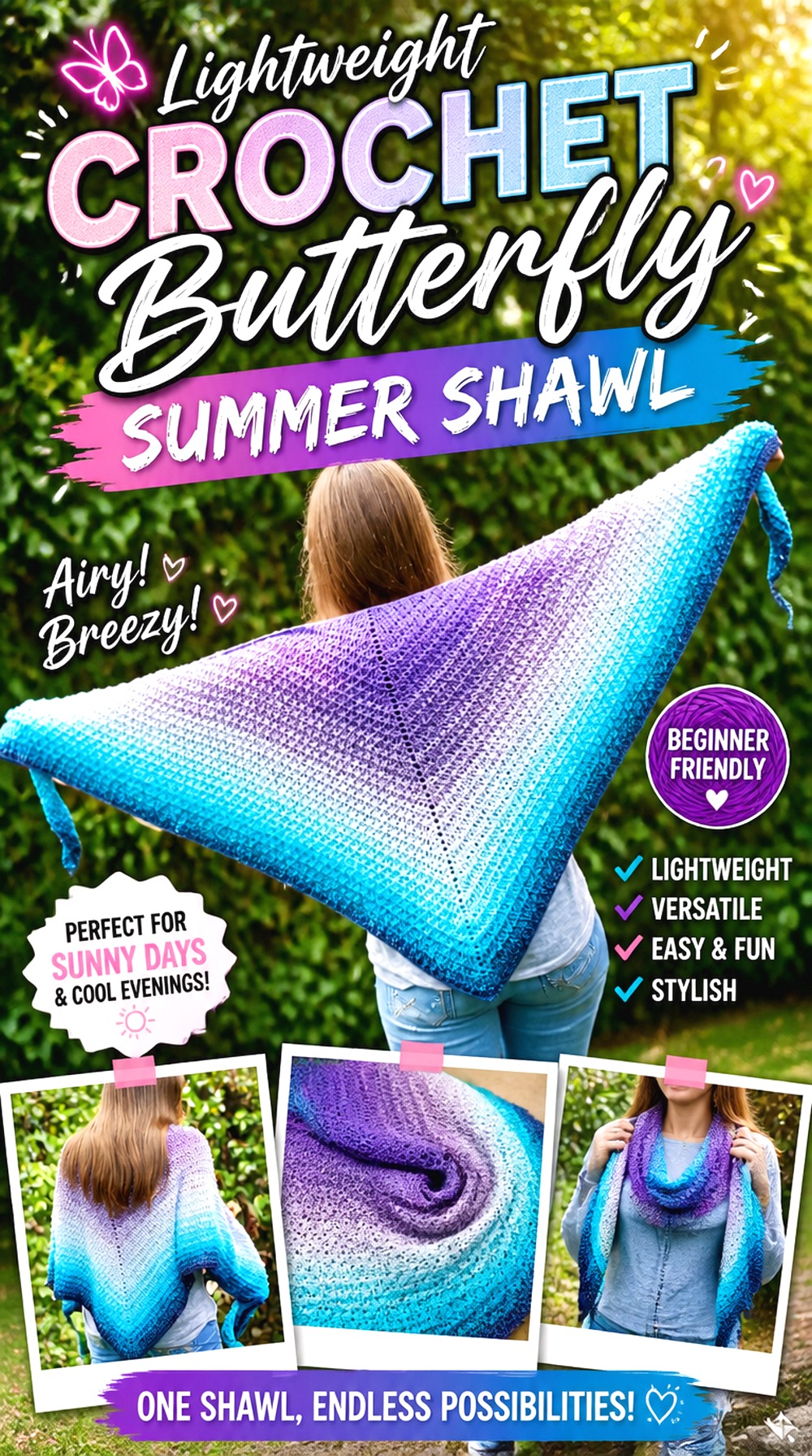
A summer-weight butterfly shawl places more emphasis on airflow and drape than on maximum coverage. The silhouette can still feel decorative and substantial, but open stitch spacing keeps it from reading like a winter wrap. This is a practical direction when the shawl is intended for sleeveless outfits, warm evenings, or indoor air-conditioned spaces.
Instead of asking only whether a yarn feels soft, consider how it hangs. A very limp fabric may lose some stitch definition, while an overly firm one can make a light shawl stand away from the shoulders. The useful middle ground is a fabric that displays the pattern clearly and still folds comfortably around the body.
Summer Fabric Should Move Without Looking Fragile
Openwork does not need to feel unstable. Check the longest open spaces and outer points to see how they react when the shawl is lifted and wrapped. If the fabric distorts easily, be cautious about adding heavy tassels or embellishments. Keeping the edge light helps preserve the intended movement.
Think About How Much Shoulder Coverage You Actually Want
A summer shawl may work better when it covers the upper back without creating a thick bundle at the front. Before extending the project, try the developing piece around your shoulders. If the ends already meet your preferred styling position, adding more depth may give you weight and bulk you do not need.
Original Tutorial and Creator Credit
Creator: Bag-O-Day Crochet
Crochet Butterfly Poncho Shawl Wrap
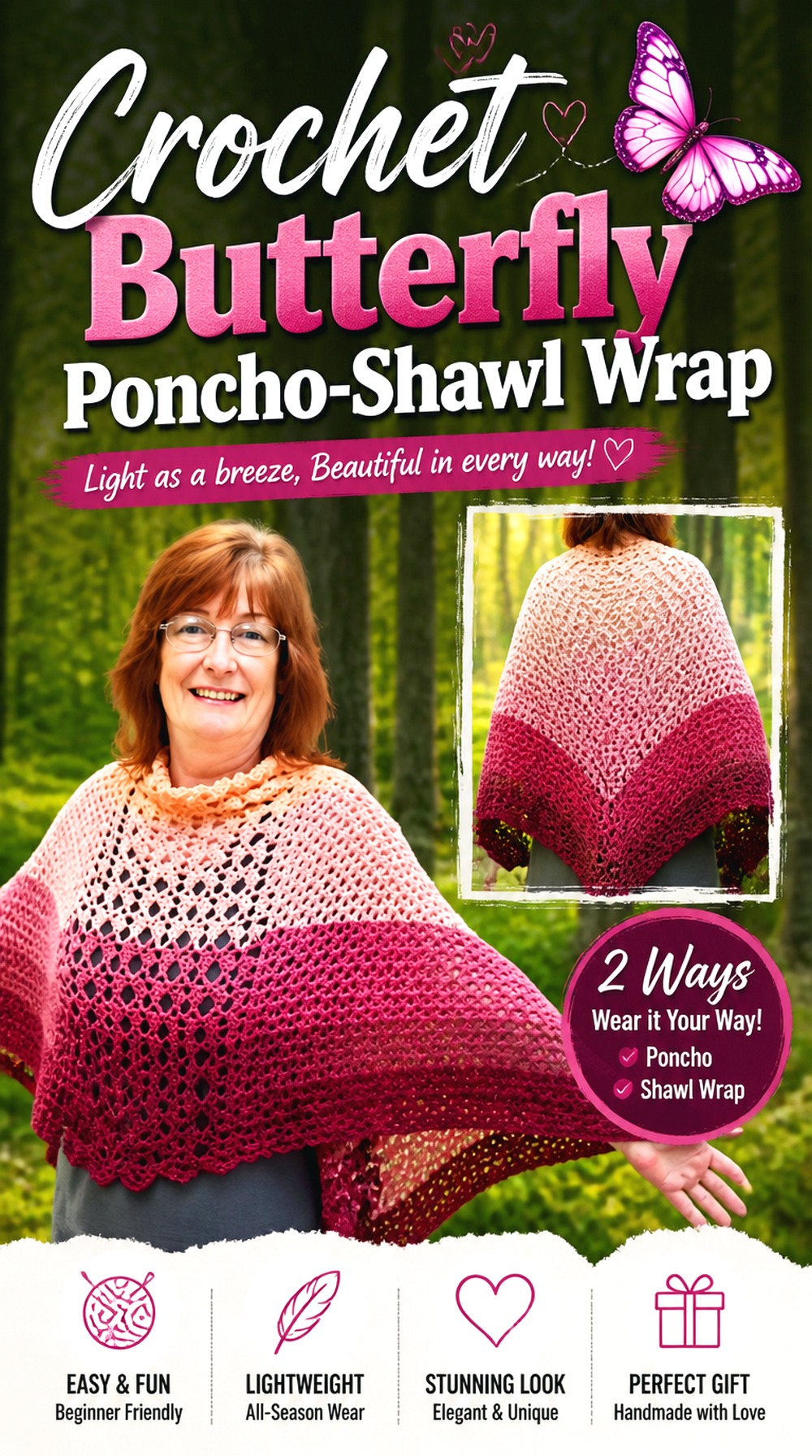
A poncho-shawl hybrid changes how the butterfly idea behaves because the garment stays positioned on the body without needing to be held or wrapped in the same way as a conventional shawl. The shoulder line becomes part of the design, and the fabric can create a soft wing effect as it falls down the arms. This makes the project worth considering for someone who likes butterfly styling but finds loose shawl ends inconvenient.
The key decision is mobility. Look at how far the fabric extends over the arms and where the lower points fall. More coverage can feel cozy, but it also changes how easily the wearer reaches, carries a bag, or layers a coat over the piece.
Neckline Comfort Becomes a Construction Priority
A poncho sits differently from an open shawl because the neckline controls much of its position. Before making size changes, confirm how the opening is formed and whether the tutorial gives a clear adjustment method. Making the entire body larger does not necessarily create a better neckline, so treat those two fit decisions separately.
Check the Shape While Moving Your Arms
A butterfly poncho can look beautifully balanced while standing still but behave differently when reaching forward or lifting the arms. Try the developing garment over the shoulders before investing in extra length. Watch whether the points stay clear of the hands and whether the neckline remains comfortable rather than being pulled backward.
The Two-Way Styling Changes What “Front” Means
When a poncho can be oriented more than one way, examine which direction emphasizes the butterfly effect and which gives the most practical coverage. A neckline or point that looks dramatic in one orientation may sit more comfortably in another. Consider both before adding permanent embellishment that would visually lock the piece into one direction.
Original Tutorial and Creator Credit
Creator: Crafty Yarn Owl with Darla
Fan Lace Crochet Butterfly Shawl
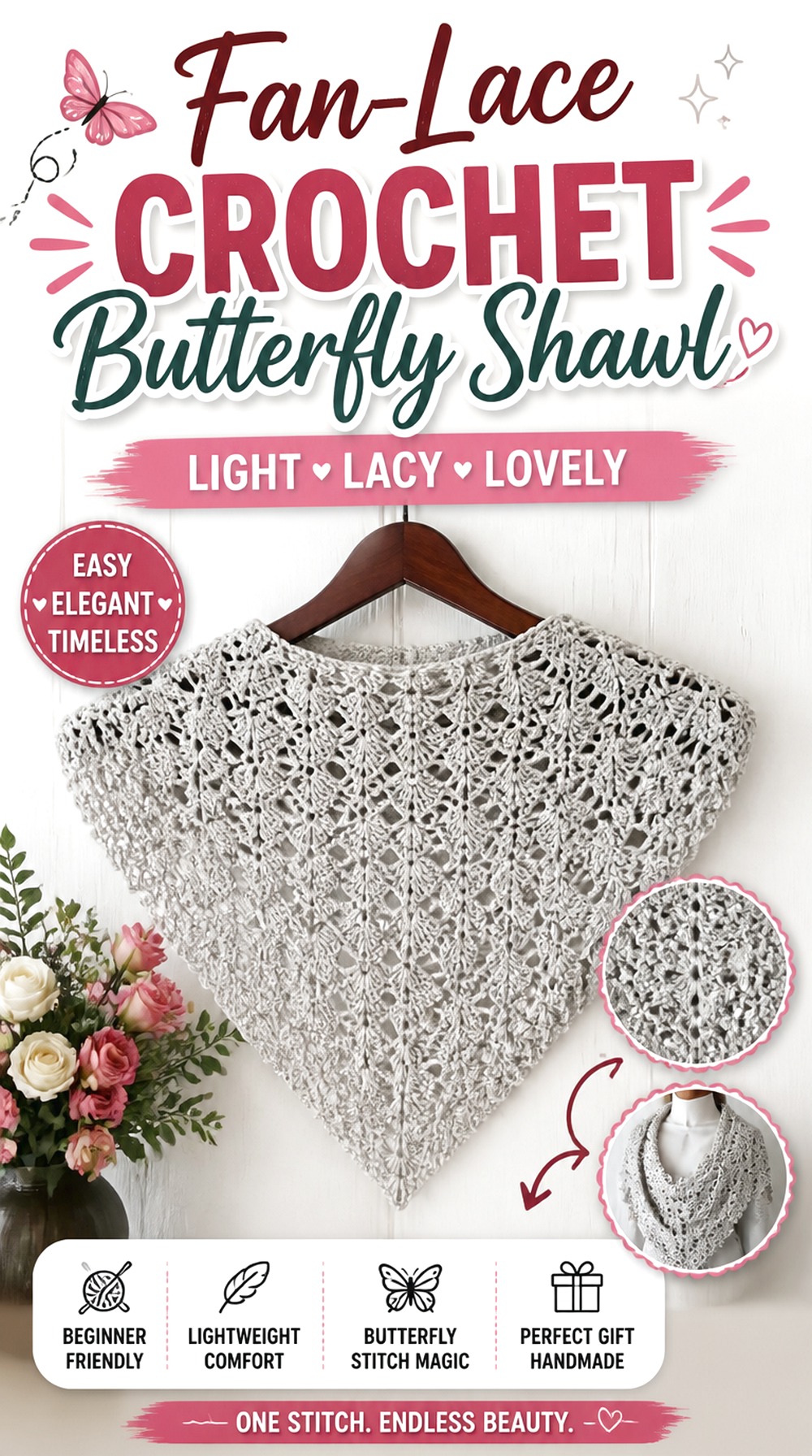
This shawl is a good example of using expanding lace to suggest butterfly movement without building a literal wing outline. The open fan-like areas create visual lift and give the piece a decorative edge when spread over the back. It suits readers who want a recognizable lace statement but still prefer a conventional shawl that can be folded, wrapped, and stored easily.
With repeating openwork, the most useful checkpoint is consistency. If one section is worked much more tightly than another, the difference can show as a change in the angle of the outer edge. Check the full shape periodically rather than focusing only on individual stitch groups.
Fan Sections Need Room to Open
Dense tension can compress an otherwise graceful lace motif. If the developing fabric refuses to relax, compare your sample with the tutorial’s visible drape before simply continuing. A small hook adjustment or different yarn may be more useful than expecting aggressive blocking to create all of the missing openness later.
A Simple Color Can Highlight Complicated Lace
Multiple color changes are not necessary when the stitch arrangement already supplies strong visual movement. A solid or slowly changing color can make the butterfly and fan forms easier to read from a distance. Choose more dramatic striping only if you want color to become an equal feature rather than a background for the lace.
Original Tutorial and Creator Credit
Creator: Papatyanın Örgü Dünyası
Pointed Crochet Butterfly Lace Shawl
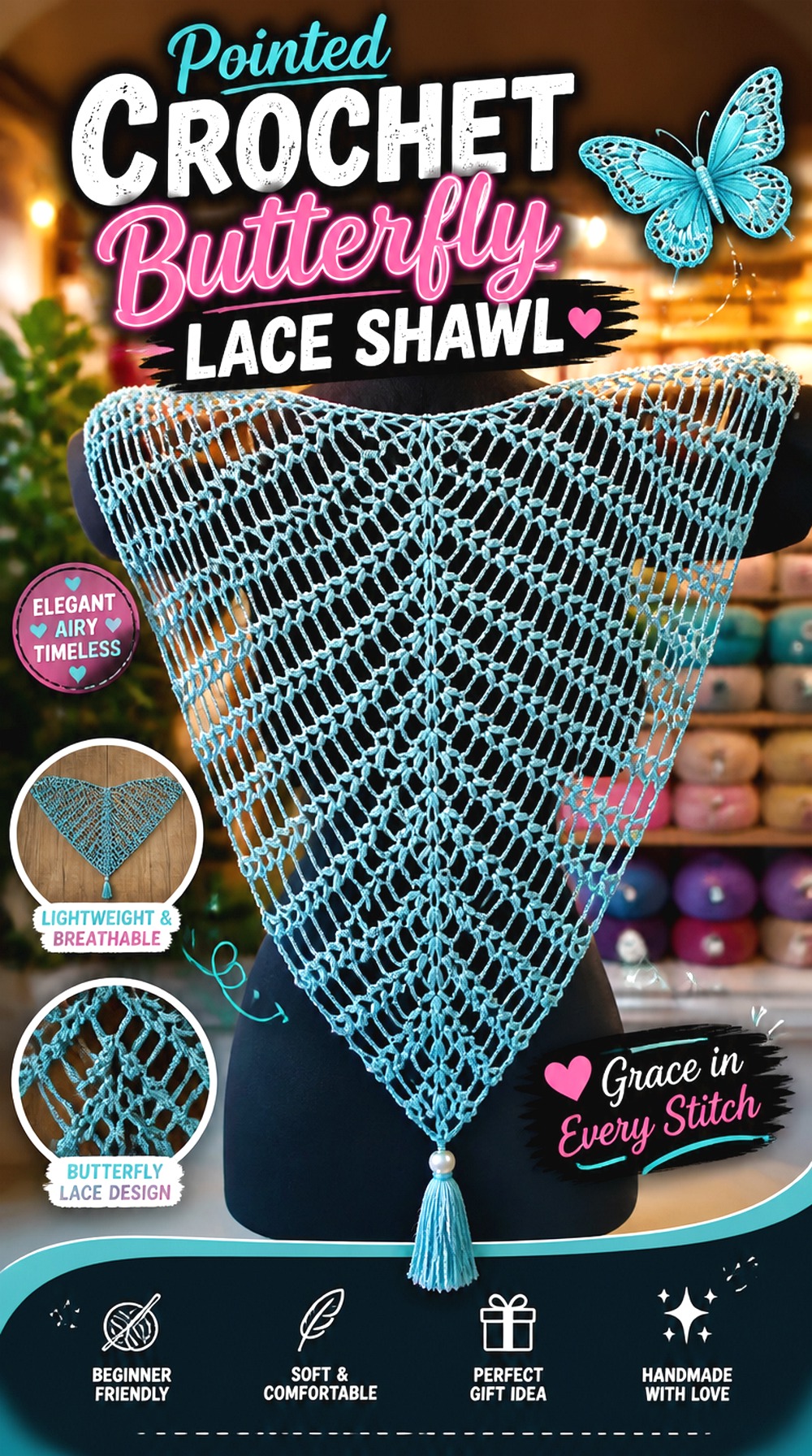
A pronounced lower point gives this butterfly shawl a strong vertical line, which can make it feel longer and more dramatic without requiring a literal pair of wings. Butterfly-inspired openings repeat through the fabric, while the overall triangle keeps the project wearable with dresses, tops, or outer layers.
This shape is worth considering if you like back coverage more than front wrapping. A deep center point naturally draws the eye downward, so extra edging at the tip can become visually dominant. Before adding tassels, beads, or fringe, decide whether you want the point itself or an embellishment to be the final focal feature.
Use the Deep Point as a Styling Feature
The central point can be positioned directly down the back for symmetry or moved slightly to one side for a scarf-like effect. Try both before deciding on final length. If you mainly plan to wear the shawl asymmetrically, extreme depth may be less useful than additional width around the shoulders.
Keep the Outer Corners From Becoming Too Heavy
Long triangle ends often receive fringe or tassels, but those additions can stretch the corners over time. If the lace is particularly light, consider whether the finished fabric already provides enough movement. Decorative weight should enhance the drape rather than pulling the two ends noticeably lower than the rest of the upper edge.
Original Tutorial and Creator Credit
Creator: ganchillartt
Crochet Butterfly Motif Triangle Wrap
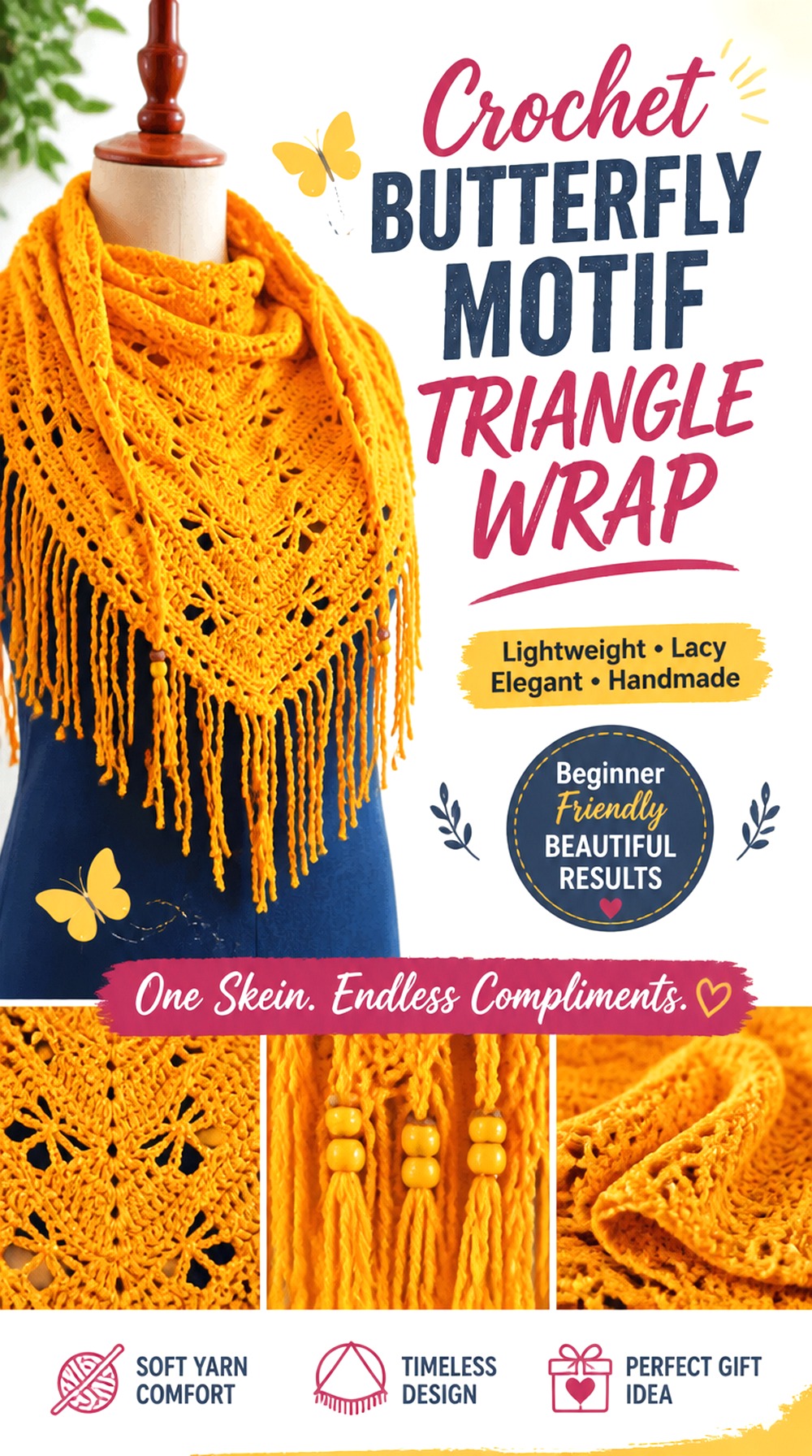
This triangle uses the butterfly theme as a repeating visual element across the shawl rather than relying on a single large image. Repetition gives the fabric an organized rhythm and allows the motif to remain visible whether the shawl is fully open or folded around the shoulders. It is a practical alternative to a literal butterfly-wing costume piece.
The main planning issue is scale. If a yarn substitution makes every motif substantially larger, the entire shawl can become deep more quickly than expected. Instead of assuming you can simply stop at the same visual point as the tutorial, evaluate how your own motif size changes the developing proportions.
Repeated Butterflies Magnify Tension Differences
One irregular motif may be barely noticeable, but a full field of repeats creates obvious comparison points. If some butterflies are noticeably narrower or taller, check your working tension before adding many more. Consistency is particularly important when motifs line up in visible rows or diagonal paths.
Border Choice Can Either Frame or Interrupt the Pattern
A quiet edge keeps attention on the repeated butterflies. A more decorative border can add drama but may compete with a busy interior. Before choosing an adaptation, spread the almost-finished shawl flat and decide whether the body looks visually complete. If it does, a restrained finishing edge may be the stronger choice.
Original Tutorial and Creator Credit
Creator: Örgücü Şirin
Draped Crochet Butterfly Shoulder Shawl
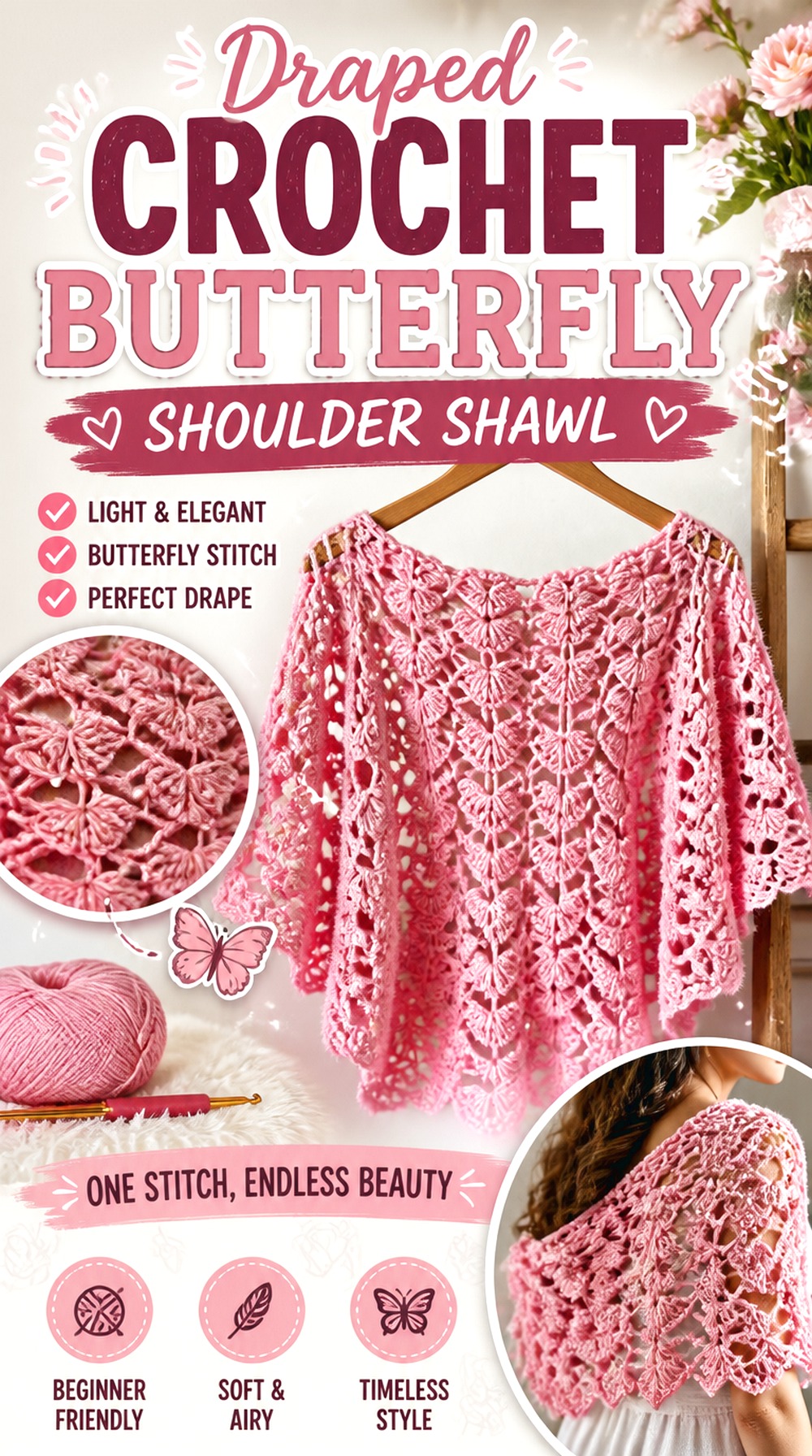
This idea emphasizes how a butterfly-patterned shawl sits over the shoulders rather than creating an exaggerated wing outline. It is suited to readers who want a recognizable decorative motif but need the finished project to behave like a conventional wrap. The fabric can be spread to show the full pattern or gathered closer to the neck when more compact styling is preferred.
Because the shawl is meant to drape, judge it vertically as well as flat. A fabric that looks balanced on a table can lengthen or narrow once gravity pulls on the openwork. Try the developing piece on before deciding that it needs several more repeats.
Shoulder Drape Can Reveal Hidden Stretch
Hold the shawl from its upper edge and see how much the center drops. If the fabric lengthens considerably, the final project may provide more back coverage than its flat measurements suggest. This is especially important when switching to a heavier yarn or making the shawl much larger than the demonstrated version.
Finish the Edge According to How It Will Be Worn
If you expect to wrap the ends around the neck, bulky fringe may become inconvenient. If the shawl will usually hang open, a decorative edge may contribute more to the butterfly effect. Choose the finishing treatment after deciding on the primary wearing style rather than treating edging as a purely decorative afterthought.
Original Tutorial and Creator Credit
Creator: Ören Hanım
Convertible Crochet Bat terfly Shawl
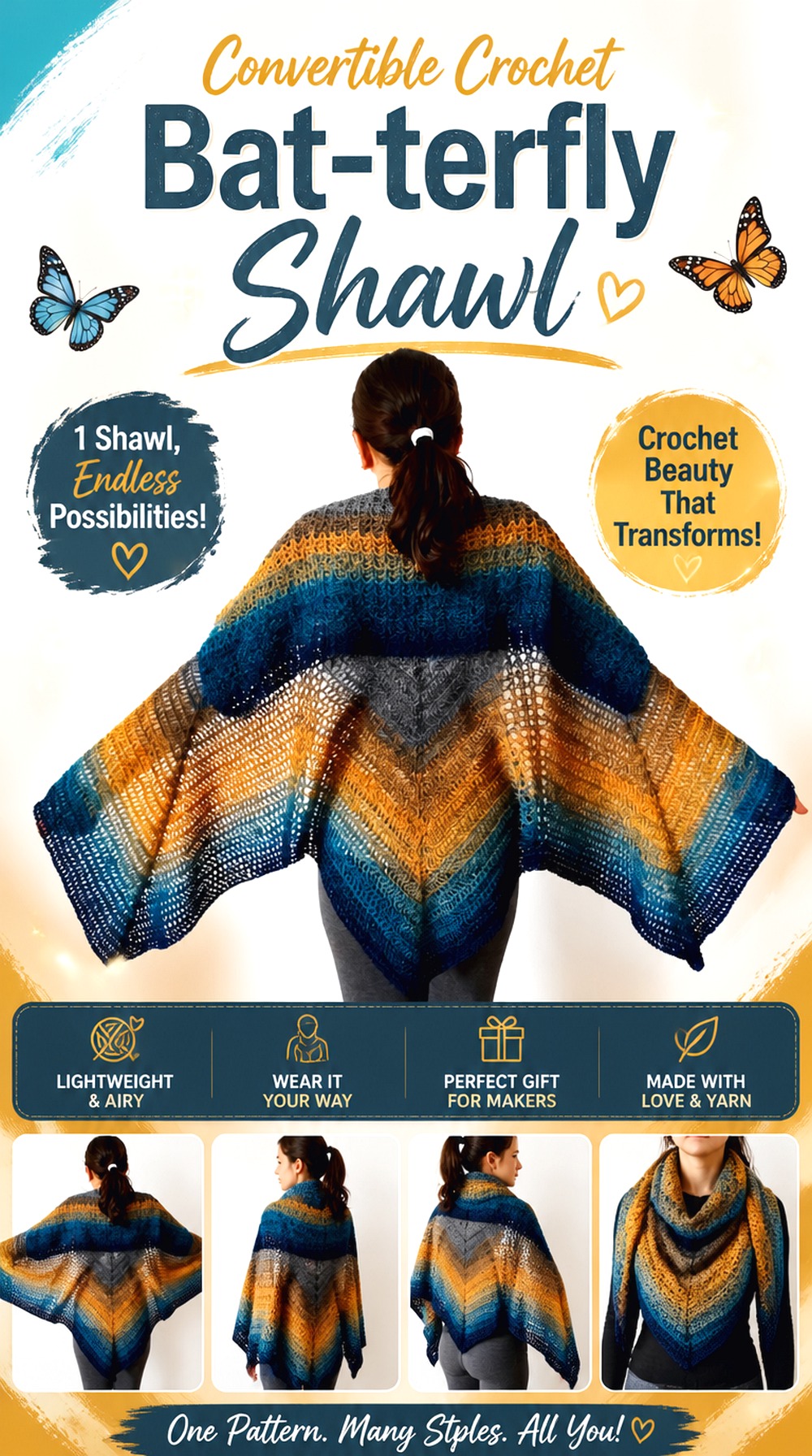
A convertible shawl earns its place in this collection because it offers more than a decorative butterfly reference. The finished shape can be styled in different ways, giving the fabric a wing-like spread when open while allowing a more compact arrangement when extra drama is not needed. This makes it appealing for readers who enjoy statement pieces but still want versatility from the finished crochet.
Before choosing this type, look carefully at where the longest sections and openings sit. Features that create a dramatic silhouette may also determine how the piece folds or wraps. Any modification should preserve those functional relationships rather than enlarging isolated sections.
Convertible Shapes Need Flexible Fabric
A stiff shawl may display beautifully in one position but resist folding into alternate styles. If multiple wearing options are important, prioritize a fabric that bends and gathers comfortably. Make a sample large enough to assess drape, not just stitch appearance, before replacing the demonstrated yarn with something much thicker or firmer.
Decorative Points Need to Stay Out of the Way
Long points can enhance the bat-or-butterfly silhouette, but they should still work when the shawl is worn normally. Check whether the ends interfere with the hands, seating, or a shoulder bag. If you plan to shorten anything, identify which points are purely decorative and which are essential to the intended convertible styling first.
Do Not Judge the Shape in Only One Position
A convertible wrap should be evaluated in every arrangement you expect to use. An edging that looks ideal when the wings are spread may bunch when the shawl is folded. Pin or temporarily position embellishments before attaching them permanently so you can see how they behave through different styling options.
Original Tutorial and Creator Credit
Creator: Meladora’s Creations for Crochet
Bow Texture Crochet Butterfly Shawl
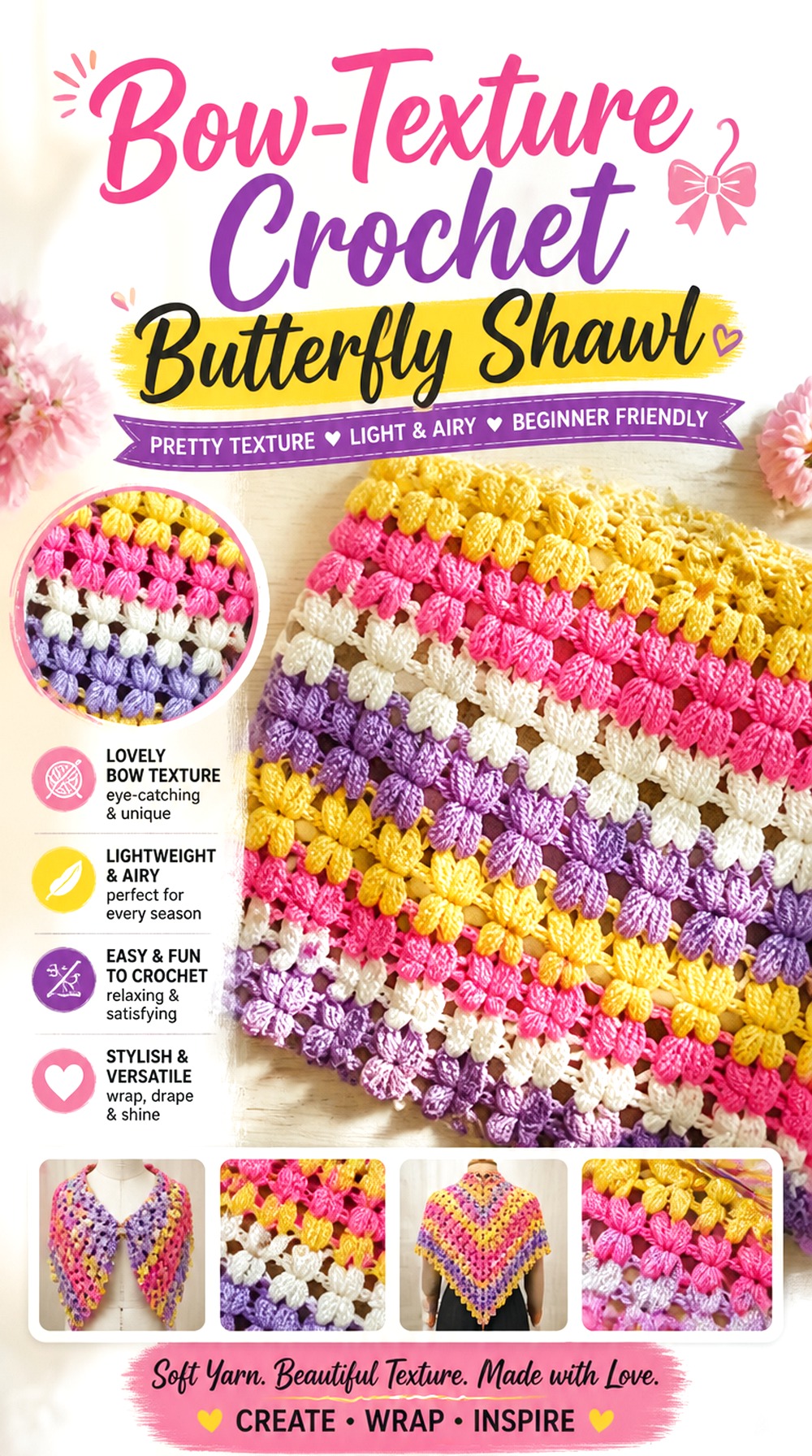
This design uses a butterfly-or-bow-like textured motif to create the theme across a shawl fabric. It is less literal than a monarch-style wing, which makes it useful when you want the butterfly reference to emerge through crochet texture rather than the full outline. The repeated motif can also make the shawl interesting at closer viewing distances, even when it is folded around the shoulders.
Because textured motifs contain denser stitch concentrations, compare the weight of the motif area with the surrounding fabric. A thicker yarn can turn a subtle texture into a much heavier surface, so swatching becomes especially helpful if you are changing yarn category.
Texture Needs Light and Shadow to Read Clearly
Strongly variegated yarn can sometimes hide the relief that defines a dimensional motif. If the butterfly or bow texture is your priority, compare a calmer color with a multicolor option before beginning. You may find that a relatively simple shade makes the stitch architecture look more intricate.
Avoid Overblocking Raised Details Flat
Blocking should help the overall shawl settle, but heavily flattening a textured motif can reduce the dimension that attracted you to the project. Follow the care needs of the actual fiber and shape the fabric gently. The aim is an even shawl with readable texture, not a perfectly pressed surface.
Original Tutorial and Creator Credit
Creator: Crochet Örgü Atölyesi
Modern Crochet Butterfly Stitch Shawl
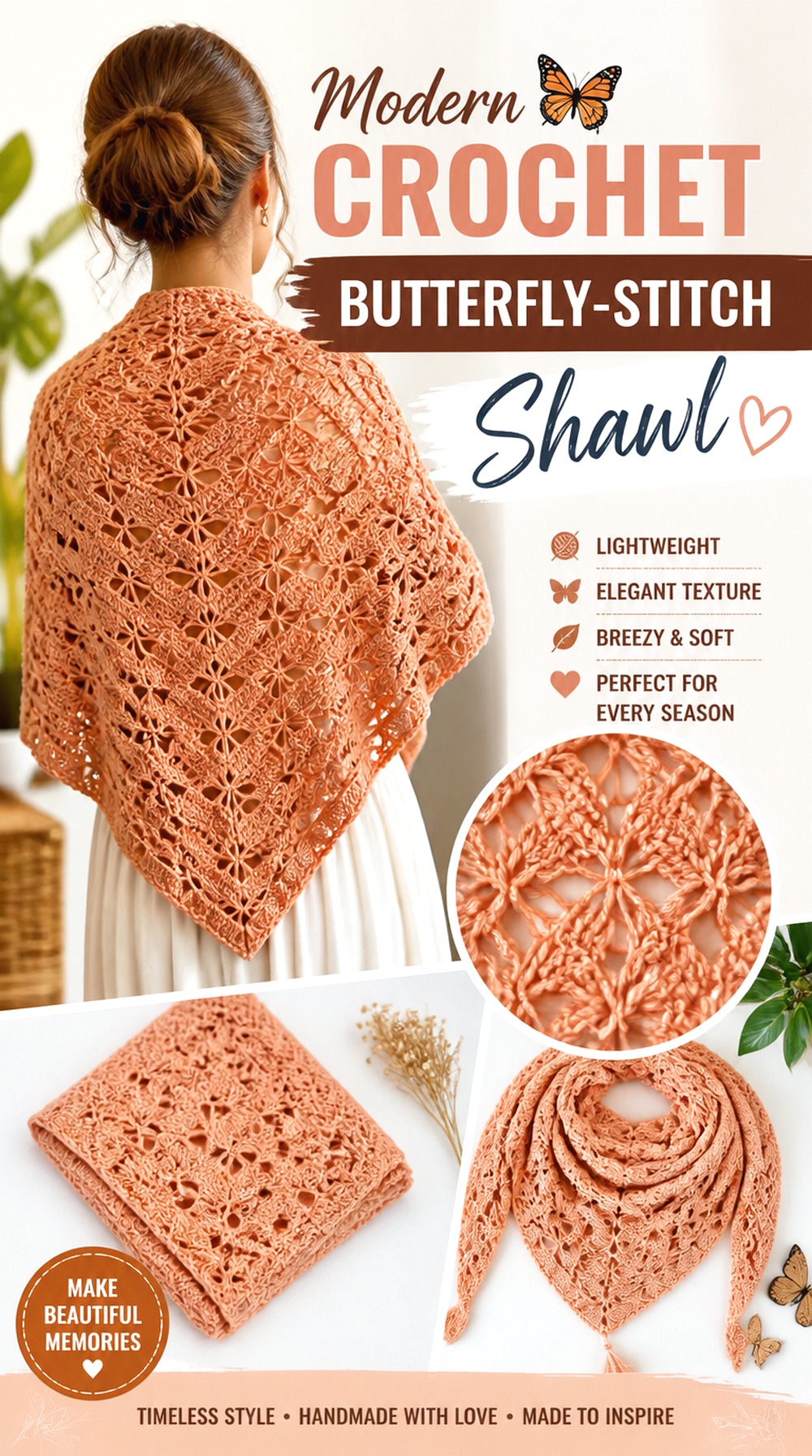
This version centers the butterfly stitch itself, making it a useful project for readers who want the motif to be immediately identifiable in the fabric. The finished piece remains a wearable shawl rather than turning into costume wings, so it can fit naturally into an everyday wardrobe. Repeated openings also create a lighter visual effect than dense colorwork.
The important checkpoint is whether the butterfly stitch remains clear at your chosen scale. Moving to a much heavier yarn changes not only the finished size but also the visual proportion of every motif. Make a small test section before assuming that any yarn will preserve the same appearance.
Motif Spacing Controls the Overall Visual Density
Closely repeated butterflies create a busy decorative surface, while more surrounding open or plain fabric lets individual motifs stand out. Follow the tutorial for construction, but use the finished sample as a guide when deciding whether this type of pattern suits the level of visual detail you want.
Consistency Matters at the Butterfly Centers
The eye tends to notice the point where each butterfly shape is gathered or defined. Uneven tension there can make neighboring motifs look surprisingly different. Slow down for the distinctive part of the repeat until your hands develop a consistent rhythm, especially before working a large field of the motif.
Original Tutorial and Creator Credit
Creator: K Rod Crochet
Beaded Crochet Butterfly Evening Shawl
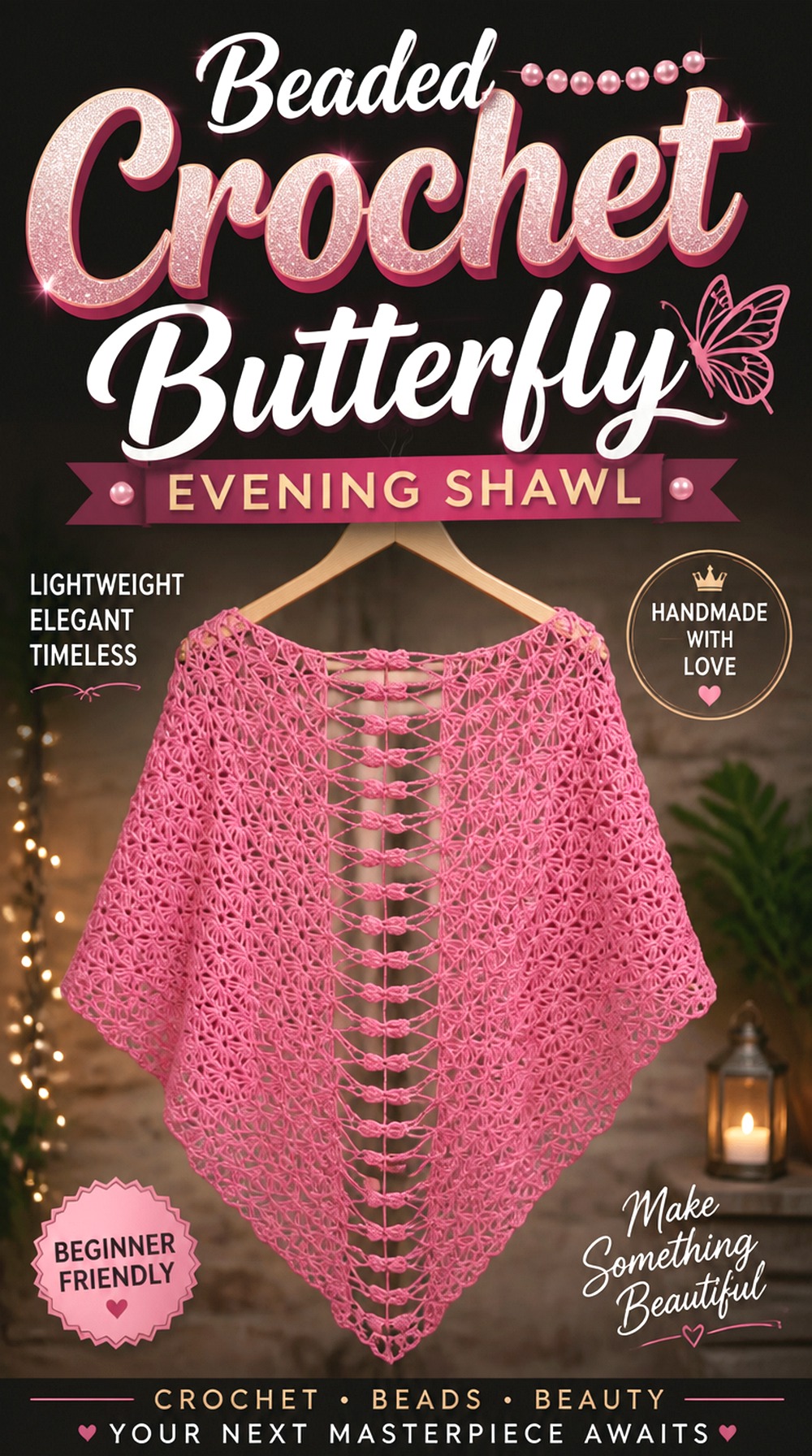
Beads can change a butterfly shawl from a casual lace accessory into something that reads more like an evening wrap. In this tutorial, the butterfly shawl concept is paired with decorative bead details, giving you an example of how small reflective accents can emphasize selected parts of the design without covering the crochet itself.
Beading adds both visual and physical weight, so placement matters. Concentrating too much weight along delicate points can pull them downward. If you change the beads or yarn, test a small section first and compare how the embellished area hangs beside the unembellished fabric.
Decide Whether the Beads Outline or Accent the Butterflies
A few well-placed beads can guide the eye toward motif centers or edges. Too many can make the underlying lace harder to see. Before altering the demonstrated arrangement, decide whether you want sparkle to frame the crochet or become the dominant feature. That choice should control bead size, contrast, and frequency.
Consider the Finished Shawl’s Intended Use
A beaded evening wrap may be handled differently from an everyday shawl. Beads can catch on loosely woven fabrics, jewelry, or delicate clothing depending on their shape and attachment. Check the finished surface against the kinds of garments you plan to wear underneath before adding more embellishment than the design needs.
Original Tutorial and Creator Credit
Creator: TEJIENDO CON MERRY CARDIEL
Bottom Up Crochet Moon Butterfly Shawl
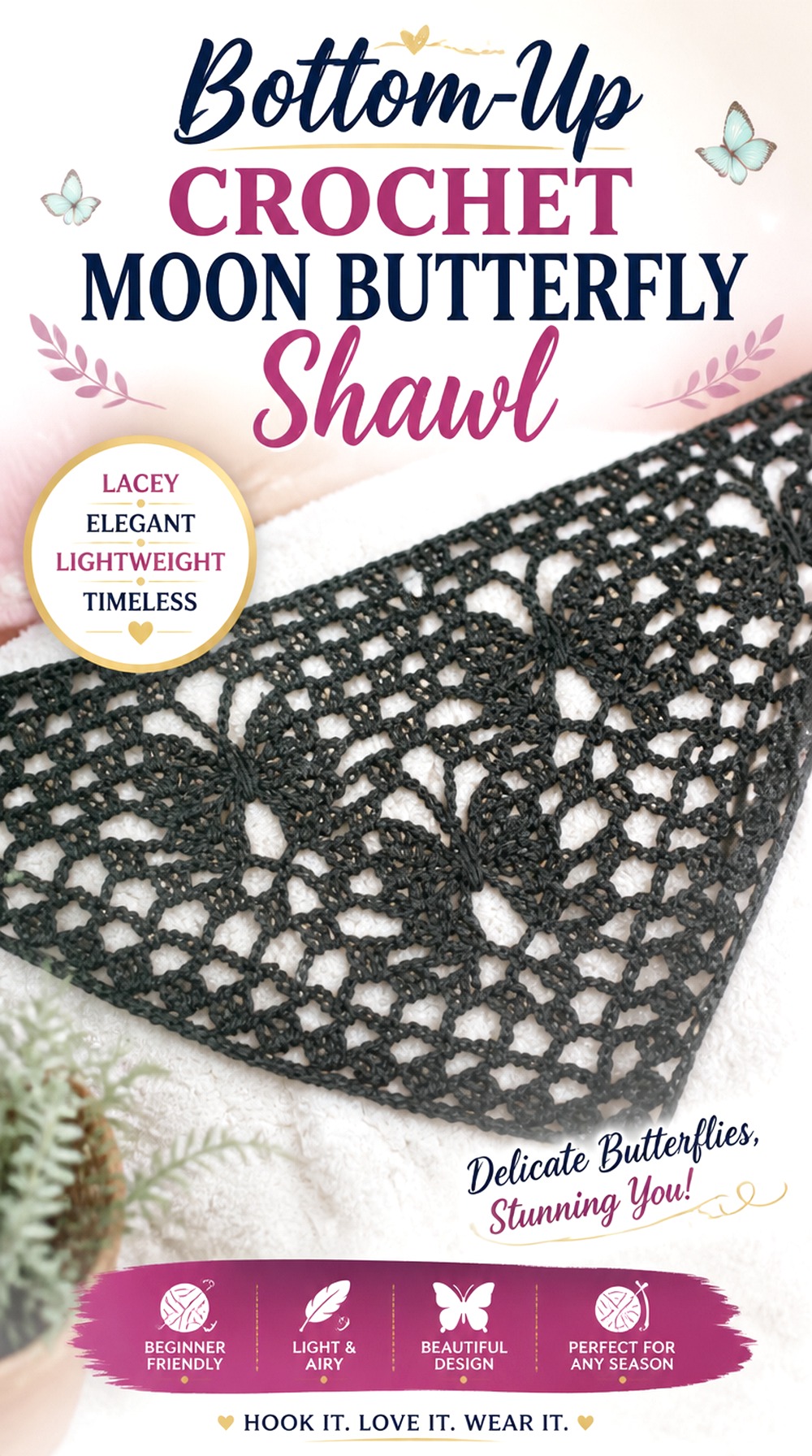
This shawl stands apart because its construction develops from the lower area rather than relying on the familiar top-center growth of many triangular shawls. Butterfly motifs become part of the expanding composition, creating a clear visual progression as the fabric grows. That makes it useful for readers who want a different construction experience as well as a butterfly theme.
Construction direction affects adaptation. If you normally decide shawl size simply by stopping a top-down repeat, do not assume the same logic applies here. Review how the motif arrangement expands and where the final upper edge is established before changing the intended dimensions.
Bottom-Up Growth Changes the Sizing Checkpoint
When the project starts near the lower point, the final shoulder width develops later. That means early progress may not tell you much about how widely the shawl will wrap. Use the creator’s construction guidance rather than estimating final fit from the first few motif sections.
The Butterfly Layout Becomes Part of the Structure
Here the butterflies are not simply decorations placed on a finished triangle. Their arrangement participates in the visual expansion of the shawl. If you consider altering the repeat or replacing motifs, first determine how that change would affect the surrounding spacing and overall shape.
Original Tutorial and Creator Credit
Creator: Crochet by Ellej
Two Way Crochet Butterfly Poncho Wrap
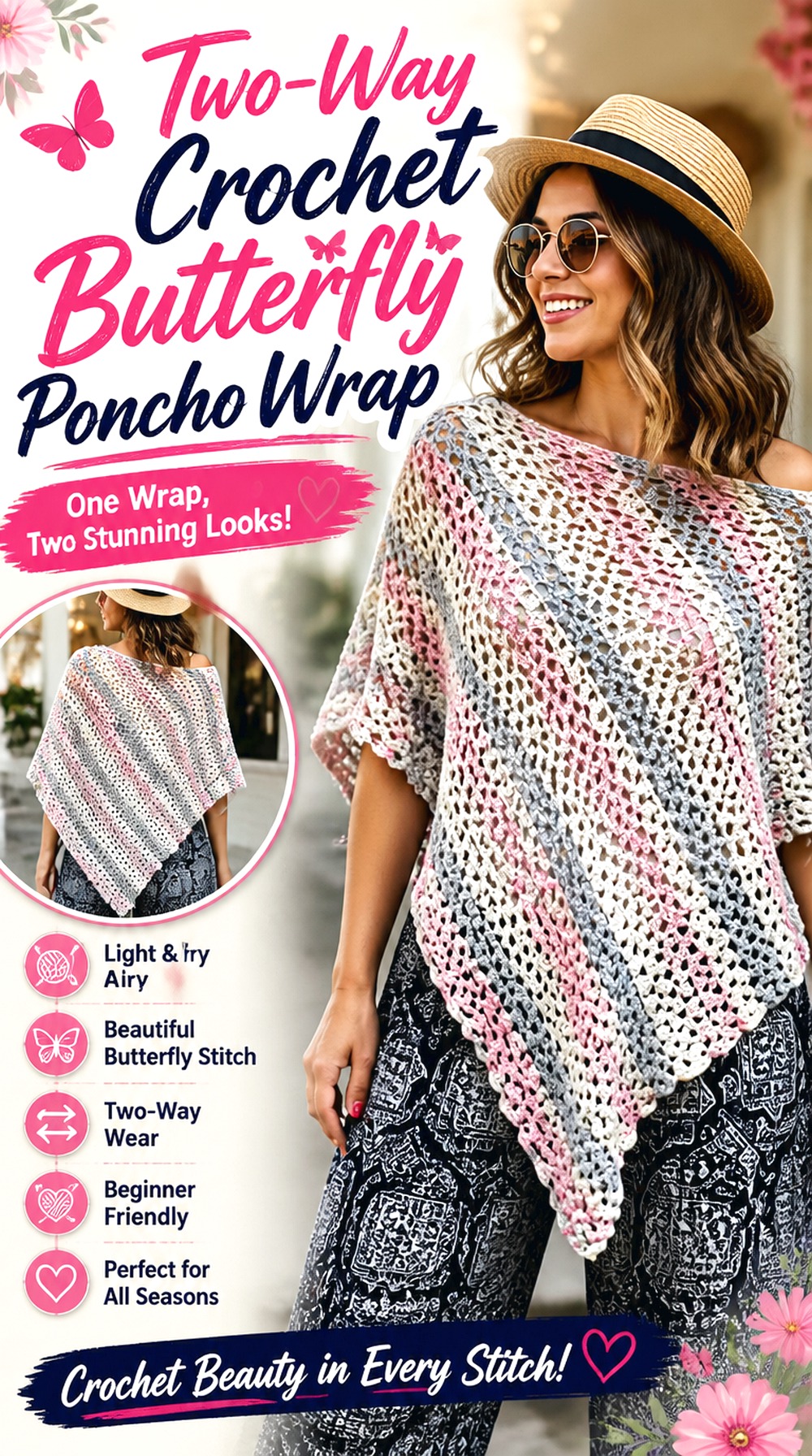
This butterfly project gives readers a useful choice between shawl-like drape and poncho-style security. Instead of managing two loose ends every time it is worn, the poncho construction helps the fabric stay around the shoulders. The butterfly stitch remains decorative, while the garment shape handles the practical side of wearing it.
That combination makes this idea especially relevant for outdoor events or situations where a loose shawl might need frequent adjustment. Before adapting it, decide whether your priority is maximum shoulder coverage or a lighter, more open effect. Changing yarn weight can alter both the warmth and the way the poncho hangs.
Treat the Poncho and Shawl Versions as Different Wearing Experiences
Even when they share a stitch concept, a loose shawl and a closed poncho do not fit the body in the same way. The shawl can be repositioned freely, while the poncho depends more on the neckline and body depth. Decide which behavior you want before making structural adaptations.
Check the Side Drop Before Adding Length
Extra length on a poncho may extend farther down the arms and sides than expected. Try the developing piece on and move your arms naturally. If the side points are already near your preferred position, additional repeats may add inconvenience rather than useful coverage.
Matching Accessories Can Change the Overall Styling
The source also presents the butterfly concept as part of a coordinated look. If you plan matching pieces, keep the main shawl or poncho as the visual anchor. Repeating every decorative detail at the same scale can make the set feel busy; a smaller echo of the motif may create a more balanced result.
Original Tutorial and Creator Credit
Creator: HelenMay Crochet
Fine Thread Crochet Butterfly Lace Shawl
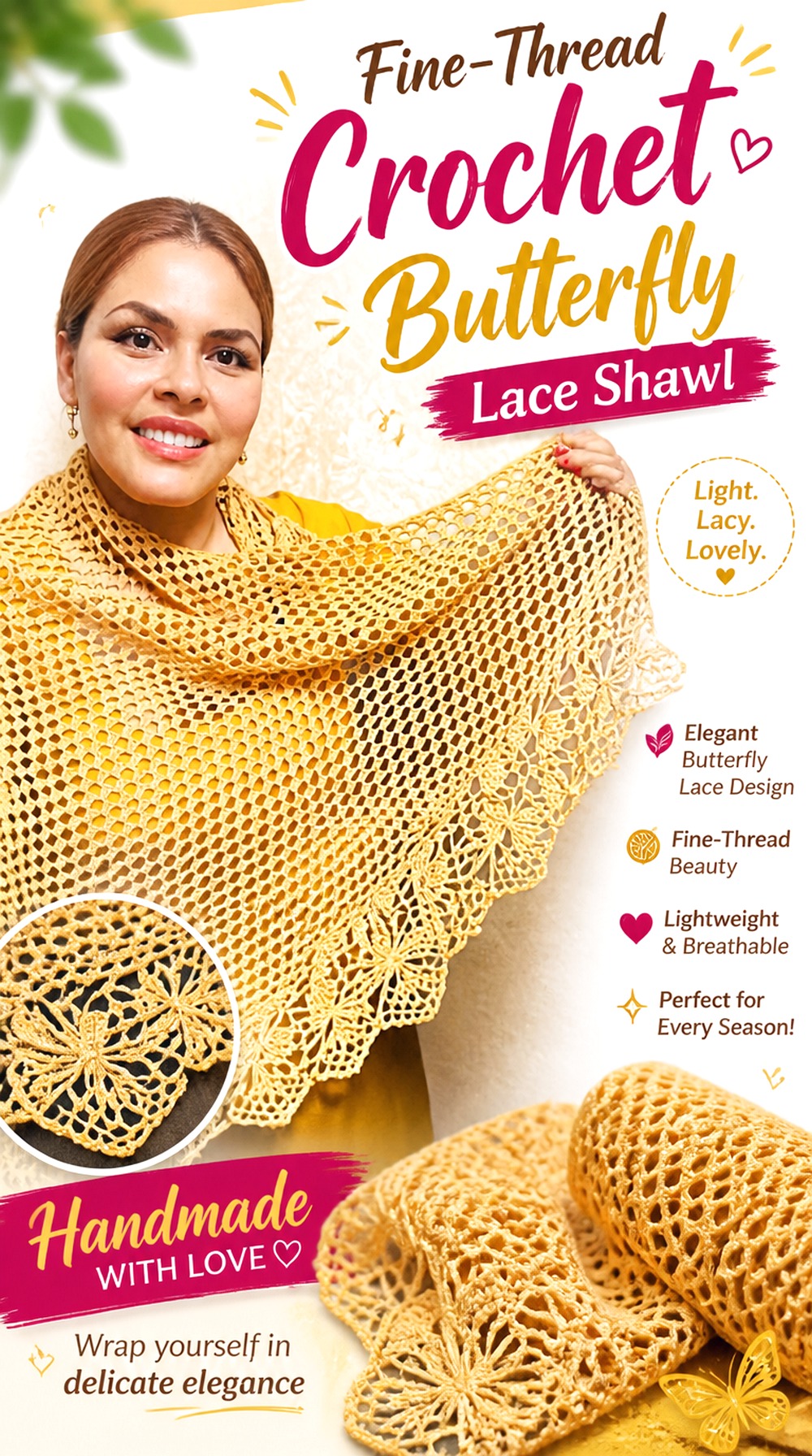
Fine thread gives this shawl a distinctly delicate character. The butterfly details can appear crisp and intricate, while the overall fabric remains light enough to function as a decorative wrap rather than a bulky layer. This makes the idea particularly appealing for dressier styling or for crocheters who enjoy smaller-scale stitch definition.
The trade-off is that fine crochet rewards consistency. Small tension changes can affect motif proportions, and a large shawl contains many opportunities for those differences to accumulate. Rather than rushing to match the finished dimensions of another project, prioritize even fabric and check the drape as the piece grows.
Fine Yarn Makes Small Irregularities Easier to See
When stitches are compact and motifs repeat across a broad area, an inconsistent section can stand out against otherwise precise lace. Use good lighting and periodically spread the work flat. This is less about perfection than catching a significant tension shift before it continues through multiple repeats.
Keep Added Weight Especially Restrained
Fine-thread points and openwork can be visually delicate. Heavy tassels or large beads may pull them out of proportion. If you want embellishment, test it temporarily on the finished edge and hold the shawl vertically. You should be able to see immediately whether the addition supports the drape or overwhelms it.
Original Tutorial and Creator Credit
Creator: Saris Crochet
Repeating Motif Crochet Butterfly Wrap
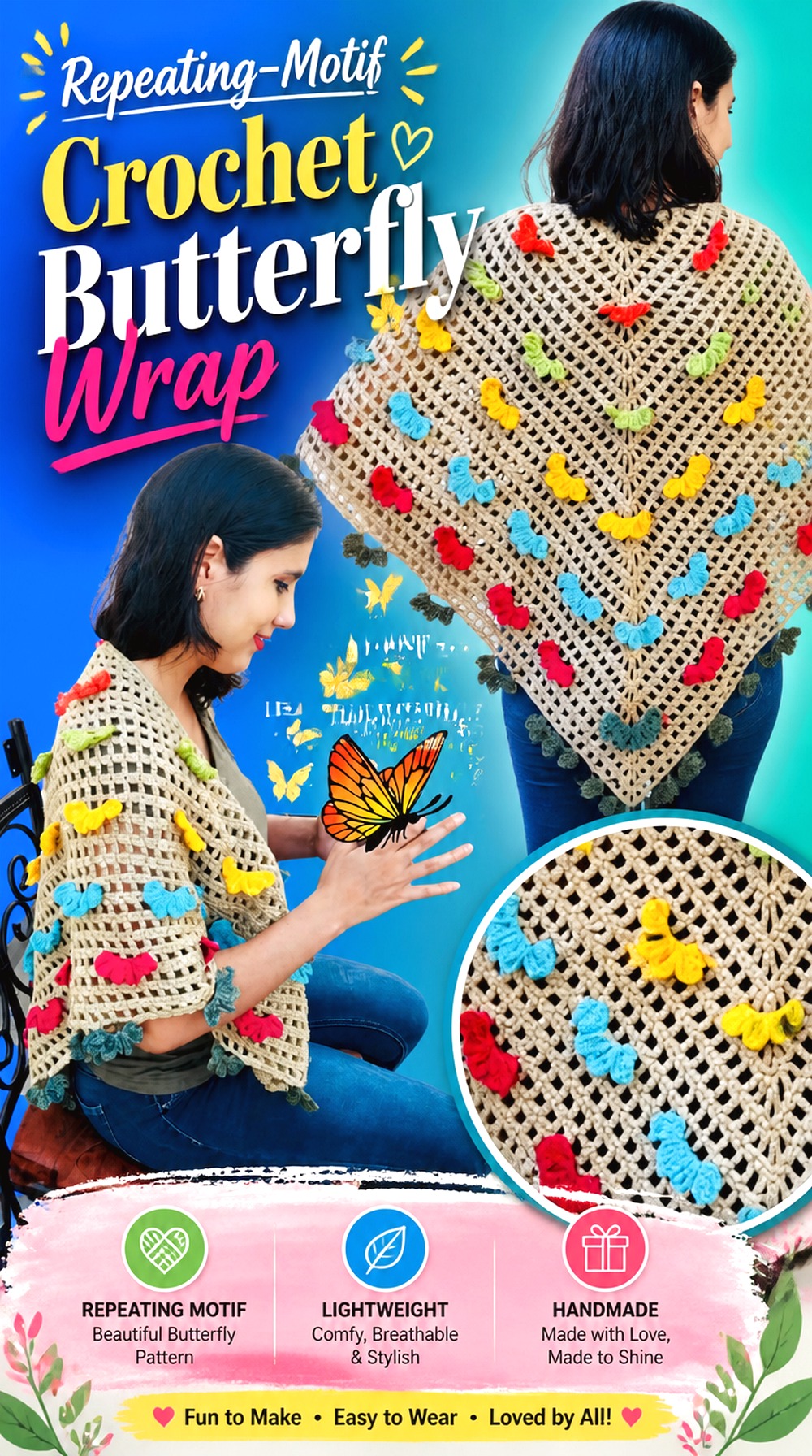
This project uses repeated butterflies across a full shawl surface, creating a stronger motif-driven appearance than designs with only a butterfly border or isolated accent. It is a good choice when you want the theme to remain visible regardless of how the shawl is folded. The repeated pattern also creates a more graphic finished texture when viewed from a distance.
For adaptations, the key decision is how busy you want the surface to feel. Strong multicolor yarn plus a dense field of motifs can create competing visual signals. A quieter color treatment allows the repeated butterflies to become the pattern, while deliberate striping can push the design toward a bolder statement.
Repetition Rewards Careful Early Corrections
If the first few motifs differ noticeably in width or spacing, do not assume the inconsistency will disappear when the shawl becomes larger. Repetition usually makes differences more visible. Compare neighboring butterflies early, identify whether tension or stitch placement is causing the variation, and correct the underlying issue before continuing.
Fold the Shawl to See Which Motifs Stay Visible
A motif layout that looks striking while fully spread may change significantly when worn around the shoulders. Before deciding on added border details, drape the nearly finished shawl in your usual wearing position. Notice which parts remain visible and place any optional accents where they will actually contribute during wear.
Two Panel Crochet Papillon Lace Wrap
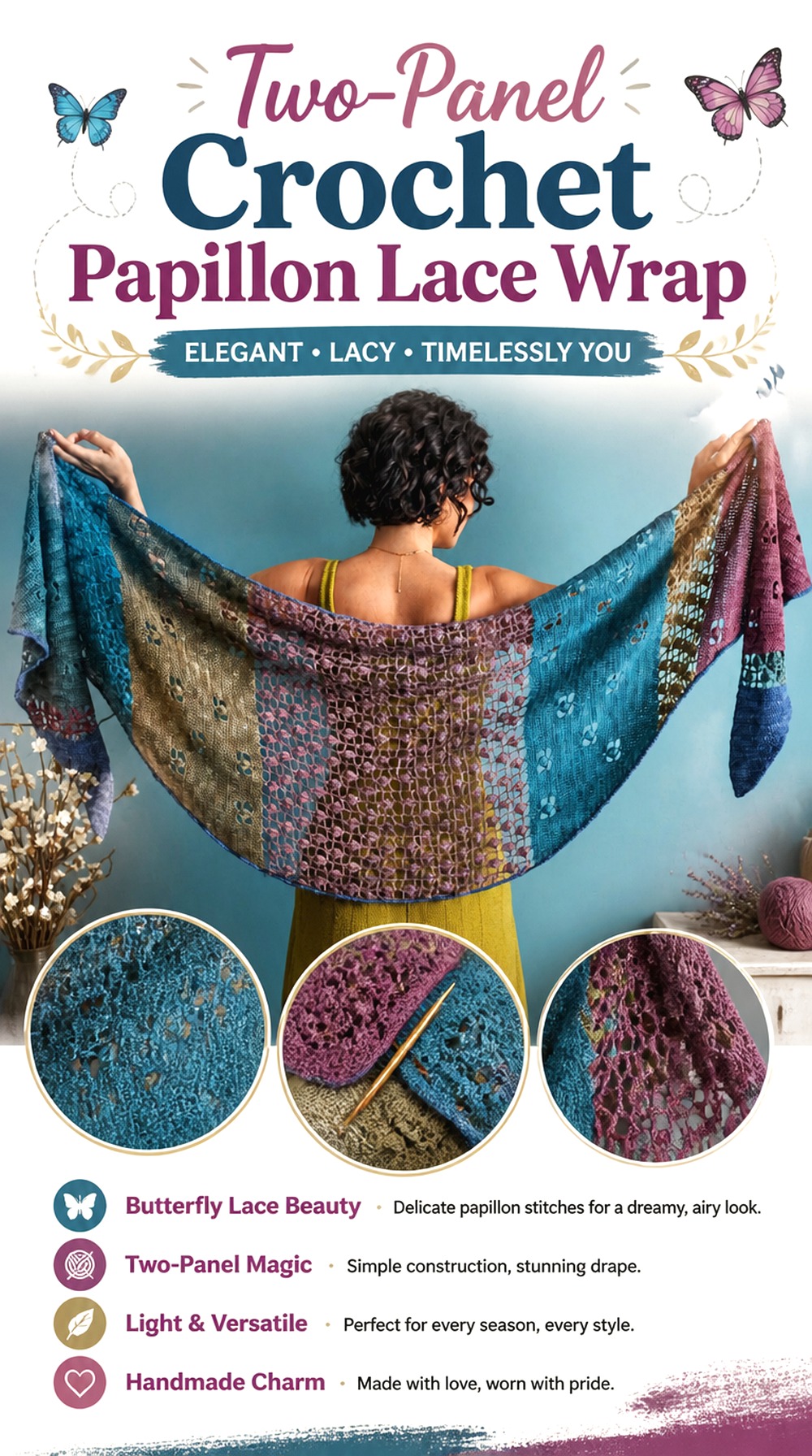
This is one of the most structurally different ideas in the collection. Instead of depending on a simple triangle, the Lavande Papillon design uses paired panel construction and multiple butterfly-related lace effects. That gives the finished wrap a longer, more stole-like character and makes the butterfly theme part of the interior fabric rather than the outside silhouette alone.
Because the accompanying video concentrates on the special stitches used in the shawl, treat it as technique support rather than a replacement for the complete written construction. The designer’s project information explains that the shawl uses two panels that are ultimately joined, so panel consistency becomes especially important.
Matching Two Panels Requires an Early Tension Check
Two sections intended to join should develop at compatible dimensions. If you know your tension tends to change during long projects, compare the panels periodically rather than discovering a large difference at the final seam. Blocking can refine dimensions, but it should not be expected to compensate for major inconsistencies.
Butterfly Wing Stitches Create Interior Structure
The butterfly effect here comes from specialized openwork sections and floating butterfly details instead of a single giant wing outline. That makes yarn definition important. If the strand is too fuzzy to show the special stitches clearly, much of the design’s intended contrast can disappear into the overall texture.
The Joining Area Deserves as Much Attention as the Lace
When separate panels form one finished wrap, the join becomes part of the final visual line. Before finishing, align both sections and make sure their lengths and edges cooperate naturally. A carefully handled join prevents an elaborate lace project from looking pulled or uneven through the center.
Original Tutorial and Creator Credit
Creator: ExpressionFiberArts
Compact Crochet Butterfly Bandana Shawlette
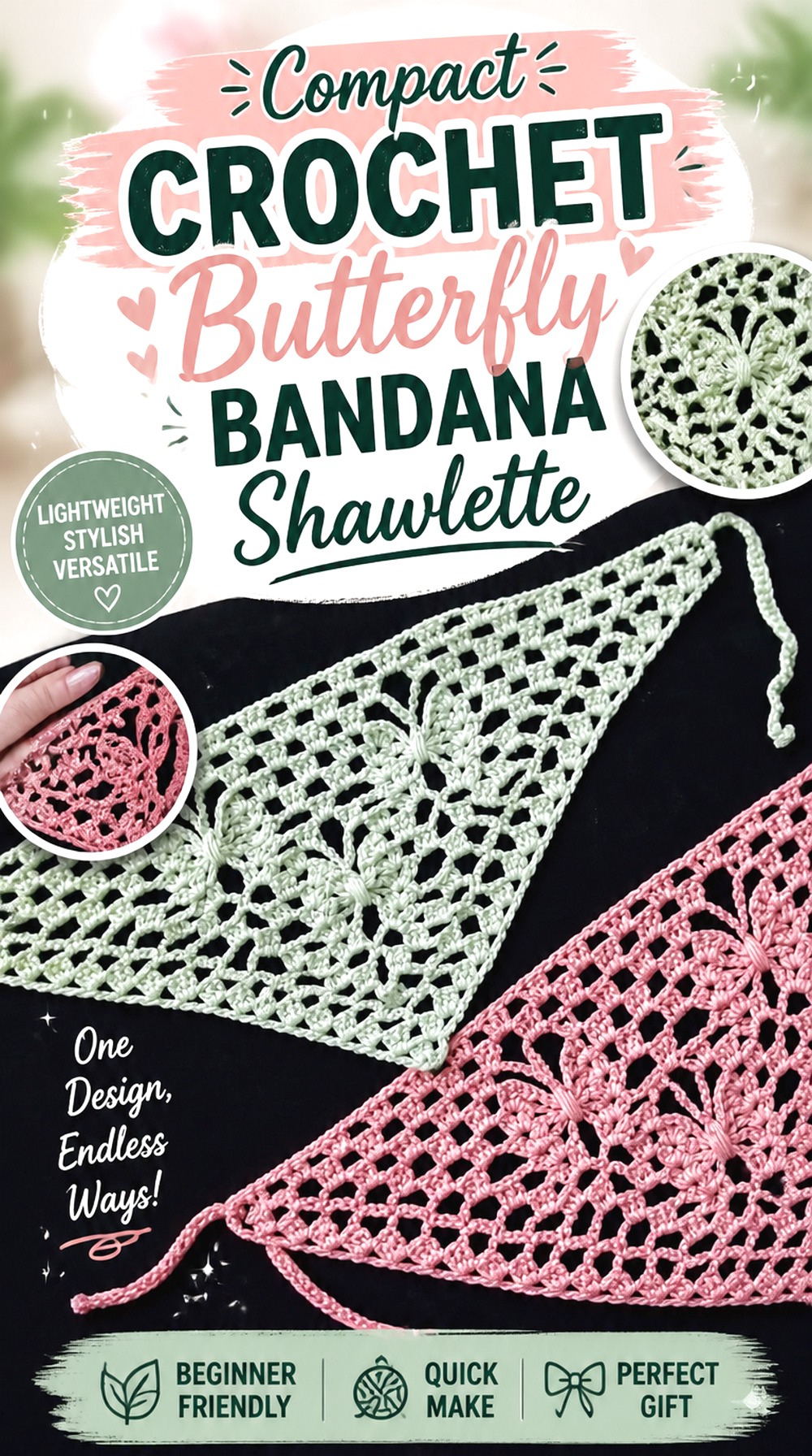
A smaller butterfly shawlette is useful when you like the motif but do not want the time, weight, or coverage of a full shoulder wrap. This bandana-style project concentrates the butterfly effect into a compact triangle that can be worn closer to the neck or enlarged conceptually only when the construction supports it. It also gives the collection a different scale from the dramatic wing pieces above.
Treat it as a compact finished accessory rather than assuming it is simply a miniature full-size shawl. If you want more shoulder coverage, first confirm how the repeat grows. Extending a design that was planned for a bandana may change the proportions of the motif and edging.
Small Scale Makes the Butterfly the Focal Point
Because there is less surrounding fabric, the central or repeated butterfly detail receives more attention. Choose yarn that keeps the motif readable and avoid adding so many extra decorative features that the small triangle becomes visually crowded.
Enlargement Should Follow the Construction, Not Guesswork
A bandana can inspire a shawlette, but not every small triangle can be extended indefinitely without adjustment. Before adding repeats beyond the demonstrated size, determine how increases and edge shaping work. If the creator does not provide an enlargement method, use the tutorial at its intended scale rather than assuming a universal sizing formula.
Original Tutorial and Creator Credit
Creator: Jasmine Tea Crochet
How These Butterfly Shawls Compare
For the strongest literal wing effect, start with the MilArt Marroquin or anxin_crochet projects, where the overall silhouette does much of the visual work. The Fiber Spider, Wilma Westenberg, Crochet stitches, Crochet by Ellej, Saris Crochet, and Karen Valladares options suit readers who prefer a recognizable shawl shape with butterfly detail inside the fabric.
For more secure shoulder coverage, the Crafty Yarn Owl with Darla and HelenMay Crochet poncho options are the clearest alternatives to loose shawl ends. The ExpressionFiberArts wrap stands apart because of its two-panel structure, while the Jasmine Tea Crochet version is the smallest-scale choice. If warm-weather drape matters most, compare the lighter triangular and summer-wrap constructions rather than choosing solely by motif complexity.
Conclusion
The right crochet butterfly wing shawl depends on what you want the butterfly idea to do. Choose a literal wing silhouette when the back view is the main statement, a butterfly-stitch triangle when everyday wrapping matters more, or a poncho-style construction when you want the fabric to stay securely around the shoulders. Fine lace and bead details lean dressier, while lighter openwork and gradient yarns can make the theme feel more relaxed.
Before changing yarn or size, check how the particular shawl grows and which parts control its proportions. The original tutorials linked with each idea are the place to follow exact construction details, special stitches, and creator-specific finishing. That keeps adaptations practical without losing the structure that makes each butterfly design distinct.
Frequently Asked Questions
What is the difference between a butterfly wing shawl and a butterfly-stitch shawl?
A butterfly wing shawl usually gets its identity from the overall silhouette: when spread open, the outer shape resembles a pair of wings. A butterfly-stitch shawl can have an ordinary triangle, rectangle, or poncho shape while using butterfly-like motifs within the fabric. Decide which feature matters more before choosing a tutorial because the construction and sizing logic can be very different.
Which yarn qualities work well for visible butterfly details?
Clear stitch definition is particularly useful when small butterfly motifs, lace openings, or wing veins are important to the design. Softer or fuzzier yarn can still create a beautiful shawl, but it may blur fine details. Drape also matters: a literal wing shawl usually needs enough flexibility to fall comfortably when it is not spread open. Test the chosen yarn in a representative motif before committing to the entire project.
Can I make a butterfly shawl larger by adding more repeats?
Sometimes, but not universally. Repeat-based triangles may offer straightforward expansion, while shaped wings, paneled wraps, and ponchos can depend on carefully coordinated proportions. Before adding repeats, identify how width, depth, neckline placement, and outer shaping develop. If the creator does not give an enlargement method, do not assume that repeating the final section indefinitely will preserve the intended fit.
Should a crochet butterfly shawl be blocked?
Many lace and openwork shawls benefit from appropriate finishing because it can help the fabric settle and make decorative openings easier to see. The exact method depends on the fiber and construction, so check the yarn’s care information and the creator’s recommendations. Blocking can refine an already consistent shawl, but it should not be relied on to correct major tension differences, mismatched panels, or severely distorted wing shaping.
How can I keep a butterfly wing shawl from looking too costume-like?
Choose a conventional triangle, crescent, rectangular wrap, or poncho construction and let butterfly stitches provide the theme instead of making the entire outer contour resemble wings. A restrained palette and simple finishing can also make a dramatic motif easier to wear with everyday clothing. If you do prefer literal wings, using a softer drape and avoiding excessive embellishment can keep the project closer to a wearable shawl than a costume accessory.
What should I check before substituting a different yarn?
Compare more than the label category. Look at stitch definition, fabric weight, stretch, drape, and how well open spaces remain visible. A thicker substitute may make a shawl reach its desired coverage sooner, while a heavier finished fabric can stretch differently on the shoulders. Make a sample, evaluate it after the finishing treatment appropriate for the fiber, and use the tutorial’s construction method rather than assuming the substitution will behave exactly like the original yarn.