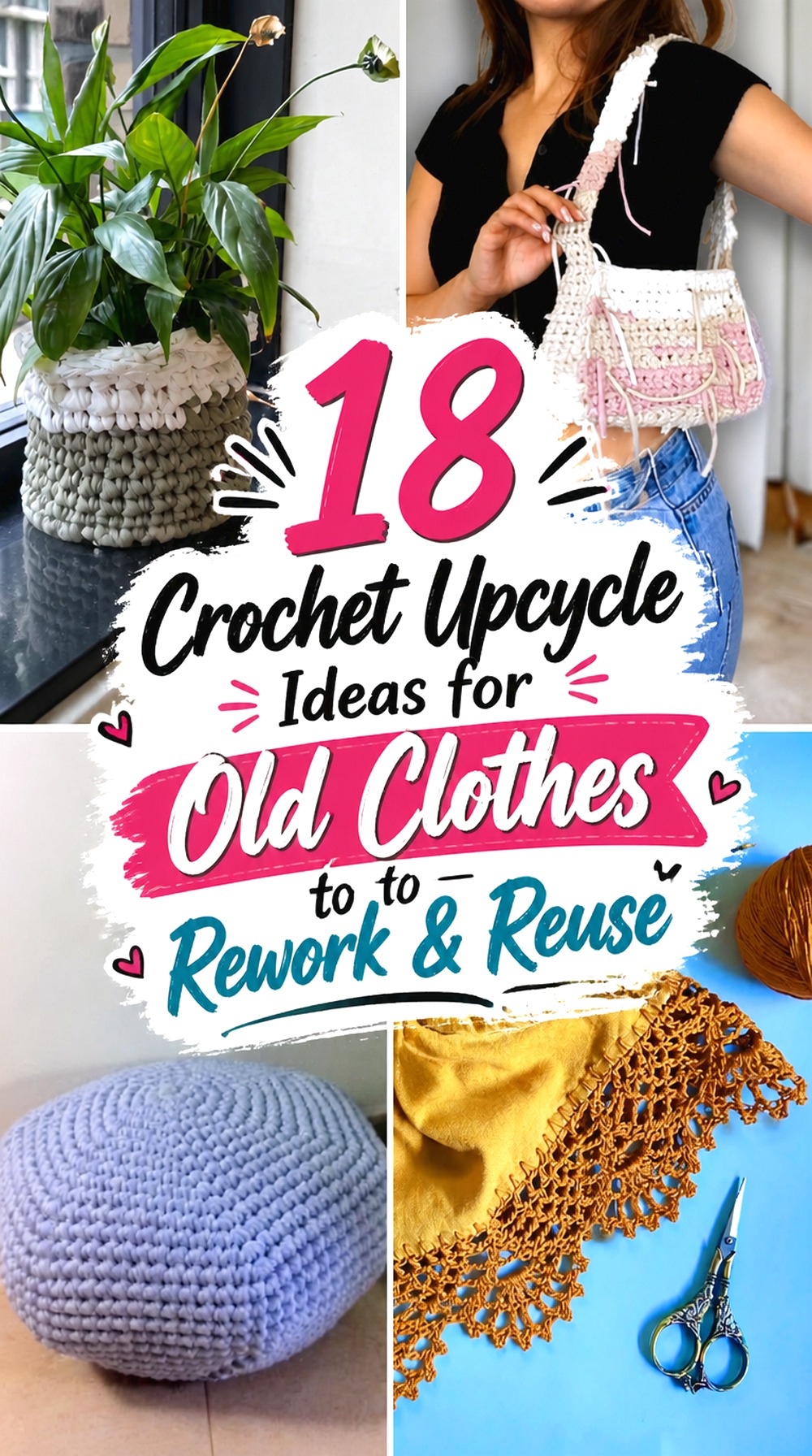

Old clothes do not all reach the end of their useful life in the same way. A pair of jeans may still fit but have damaged knees, a favorite T-shirt may feel too tight, and a sweatshirt may have a good body but worn or uninspiring sleeves. Crochet can address those problems in very different ways: covering damage, replacing fabric, adding room, extending a hem, or turning unusable jersey into new fabric yarn.
These 18 crochet upcycle ideas range from subtle jeans repairs to substantial garment rebuilds and home projects made from old T-shirts. The comparisons below focus on what matters before you cut anything: fabric condition, stretch, attachment areas, added weight, fit, and how much of the original garment is worth preserving. Each idea also points to an original creator tutorial for the exact construction details.
Quick List
- Crochet Lace-Hem Jeans Refresh
- Crochet Granny-Insert Jeans Makeover
- Crochet Flower-Appliqué Jeans Update
- Crochet Knee-Patch Jeans Repair
- Crochet Trim Denim Shorts Upcycle
- Crochet-Sleeve Denim Jacket Rebuild
- Crochet-Sleeve Sweatshirt Refresh
- Crochet Side-Panel Graphic T-Shirt Refit
- Crochet T-Shirt Poncho Refashion
- Crochet Motif-Yoke T-Shirt Renewal
- Crochet Rebuilt T-Shirt Neckline
- Crochet Collar-and-Cuff Sweater Refresh
- Crochet Lace-Hem Shirt Extension
- Crochet T-Shirt Rag Rug
- Crochet T-Shirt Yarn Storage Basket
- Crochet T-Shirt Yarn Purse
- Crochet Denim-and-Yarn Bag Rebuild
- Crochet T-Shirt Yarn Pouf
Start With the Part of the Garment You Can Still Trust
An upcycle works better when the remaining clothing is strong enough to support the new crochet. A localized hole, stained section, worn hem, or unwanted sleeve can leave plenty of usable fabric around it. Widespread thinning is different: attaching crochet to fabric that is already breaking down can simply move the stress to another weak point.
Before planning the design, inspect the area where crochet will meet cloth. Side seams, stable hems, sturdy denim around a damaged section, and intact garment panels can provide more reliable transition zones than fraying edges. Also decide whether the original fit is worth preserving. If the garment already fits well, a decorative alteration may make more sense than cutting apart major seams.
Match Crochet Weight and Stretch to the Original Fabric
Denim, sweatshirt fleece, jersey, and sweater fabric react differently when crochet is attached to them. Lightweight T-shirt jersey can stretch under a dense or heavy crochet panel, while rigid denim may overpower a very soft insert unless the transition is planned carefully. Crochet that is considerably less stretchy than the original cloth can also make a formerly flexible area feel restricted.
Check the project both flat and in the position where it will actually be used. For wearables, that means trying the garment on and moving in it rather than judging only from a tabletop. If two different fibers are combined, their care requirements matter too. Check the original clothing label and the yarn label before assuming the finished upcycle can be washed exactly as the garment was before.
Decide Whether to Alter the Garment or Harvest It for Yarn
A mostly intact garment usually offers more value as a garment. Jeans with one damaged knee can become a visible-mending project, while a favorite shirt that has become too narrow may be a better candidate for crochet side panels. These approaches preserve recognizable parts of the original item.
Clothes that are no longer practical to wear can take a different route. Usable jersey from old T-shirts can be cut into fabric yarn for rugs, baskets, purses, or larger home pieces. Consistency becomes more important here. Thick seams, heavily printed sections, holes, and major changes in fabric stretch can interrupt the resulting yarn. Sort the usable sections first rather than assuming every inch of an old shirt needs to become part of the new project.
Crochet Lace Hem Jeans Refresh

A pair of jeans can remain almost completely intact while crochet changes the visual weight of the lower leg. This version uses lace at the hem, making it a useful option when the denim body still fits and the main goal is to refresh a plain, worn, or altered bottom edge rather than reconstruct the pants.
The contrast between rigid denim and open crochet is the feature to plan around. Because the addition sits at the lowest part of the garment, its depth and movement affect how the jeans meet shoes and how the legs hang. This is a much smaller intervention than replacing panels or covering multiple damaged areas.
Let the Denim Carry the Structure
The crochet does not need to replace the structural role of the jeans. Keep enough healthy denim above the new edge to support the added trim, particularly if the original hem has been cut away. If the fabric is already shredding upward from the bottom, attaching directly to those weak fibers may produce an unstable transition.
Balance the Lace Along Both Leg Openings
Two pant legs make small differences easier to notice. Before treating the first finished leg as the final reference, compare both openings and consider how the crochet will sit when the jeans are hanging naturally. The goal is visual balance rather than forcing a damaged or uneven fabric edge to dictate the final appearance.
Test the New Hem Against Shoes and Movement
An attractive lace depth on a table may behave differently once the jeans are worn. Check whether the crochet brushes the floor, catches on footwear, or changes the intended trouser length. If the jeans will be worn with several shoe types, testing those combinations before committing to a deeper border can prevent an impractical finish.
Crochet Granny Insert Jeans Makeover
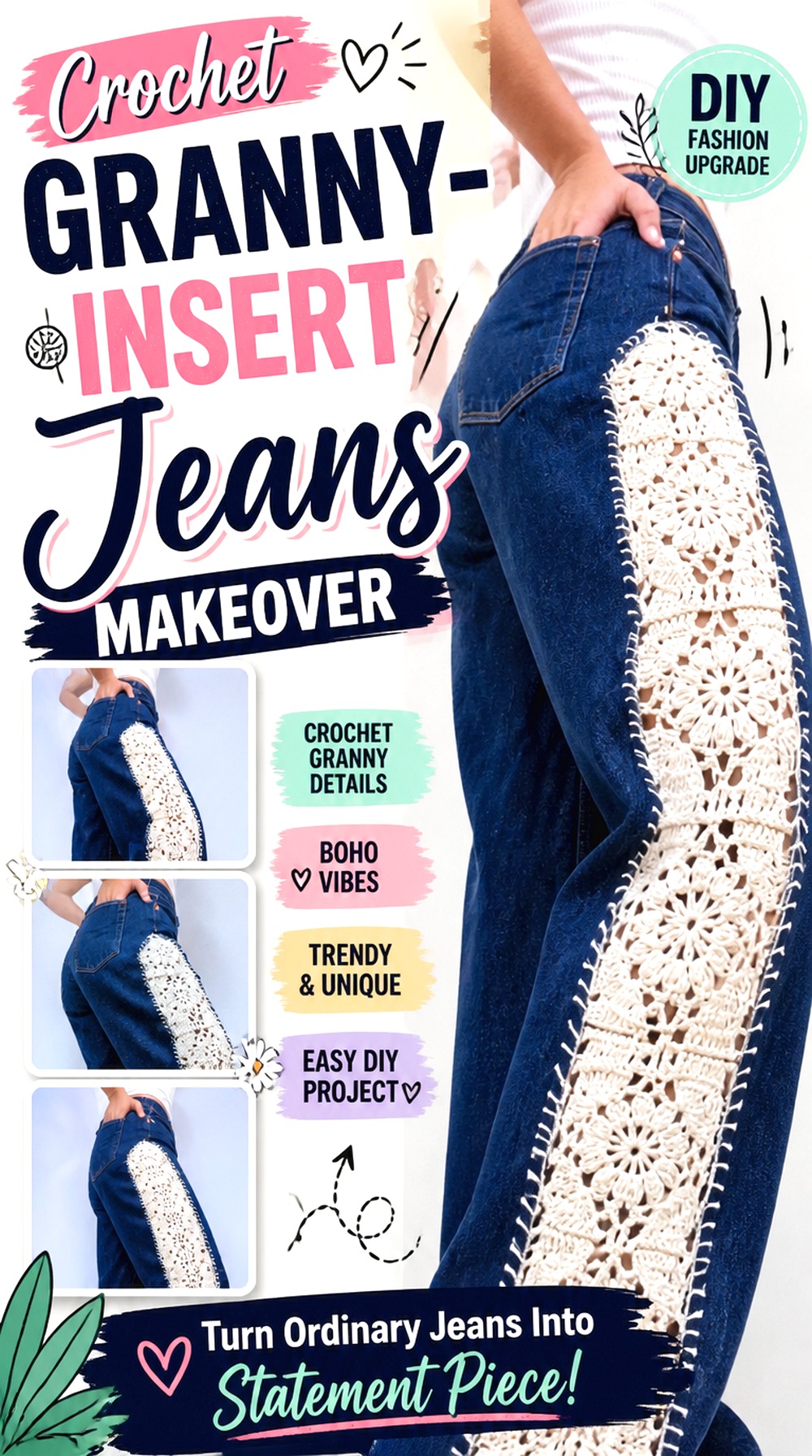
This upcycle makes crochet part of the jeans themselves by replacing selected areas with granny-style inserts. It creates a more noticeable reconstruction than a hem treatment and suits clothing where you want the textile contrast to be a major design feature.
The important decision is how much denim to remove. A small insert behaves differently from a large opening that crosses a flexible part of the leg. Motif dimensions, placement, and the amount of intact denim surrounding them all influence how convincing the finished alteration looks. It is also an idea that can adapt to different motif aesthetics without requiring every crochet section to cover the whole garment.
Motif Size Determines How Much Denim You Replace
Choose or make the crochet element before treating the cutout as fixed whenever possible. A motif that is smaller than the intended opening creates an unnecessary gap to solve, while one that is substantially larger can distort when forced into place. Comparing the blocked crochet dimensions with the proposed opening gives you a more useful planning reference.
Keep High-Movement Areas Flexible
Jeans bend repeatedly at the hips and knees. A dense insert placed across one of those areas may behave very differently from the original woven fabric. Before committing to placement, consider whether the crochet can flex enough for the movement expected there or whether a quieter section of the leg would make the alteration easier to wear.
Join the Squares to Sound Fabric, Not Fray
A decorative opening can look intentionally distressed, but the attachment itself benefits from stronger material. If the edge surrounding a planned insert is already unraveling, trim or stabilize the layout so the crochet connects beyond the weakest portion rather than depending on loose threads to hold the modification.
Original Tutorial and Creator Credit
Creator: The knitting diary
Crochet Flower Appliqué Jeans Update
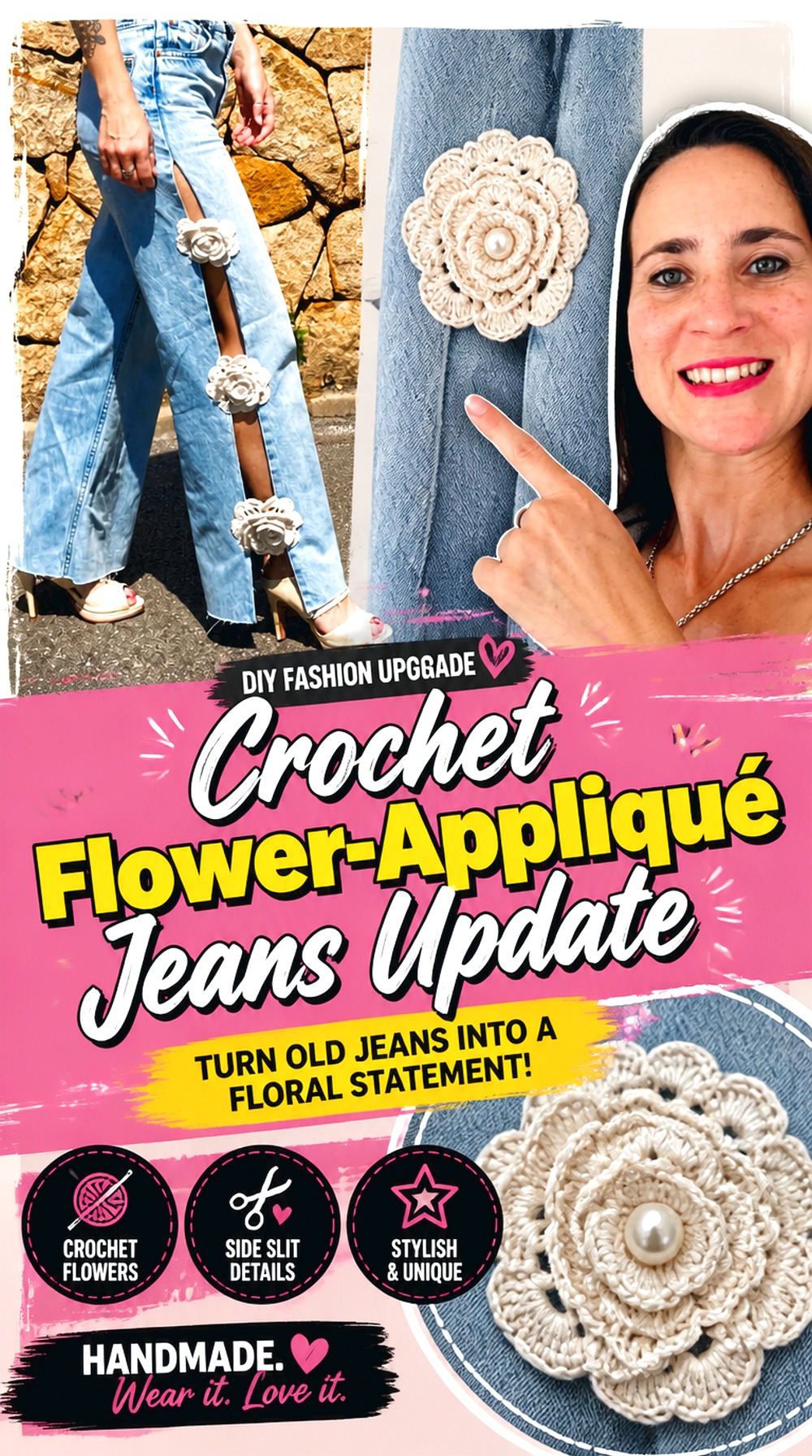
Crochet flowers offer a lower-commitment route for jeans that are structurally fine but visually tired. Instead of opening the denim or replacing a panel, individual motifs become surface details. That makes the concept useful for highlighting a pocket area, redirecting attention from a cosmetic flaw, or creating an intentionally scattered design.
Placement matters more than quantity. A few dimensional motifs can become strong focal points, while covering every available area may make the garment heavier and more difficult to style. This project is therefore less about major reconstruction and more about controlling repetition, scale, and where raised crochet makes sense on a frequently worn piece of clothing.
Map the Flower Cluster Before Attachment
Arrange the finished motifs on the jeans before permanently securing them. Look at the garment from a normal viewing distance rather than judging one flower at a time. A cluster may need more breathing room around pockets, seams, or other details than it appears to need when the denim is spread flat on a work surface.
Keep Raised Motifs Away From Constant Friction
Dimensional crochet can rub against chairs, bags, or neighboring fabric. Consider how each area of the jeans is used before placing a raised flower there. A visually appealing spot is not automatically the most practical one if it receives constant abrasion whenever you sit, walk, or carry something against the garment.
Use Repetition Without Covering the Denim
The existing fabric is part of the upcycle, not just a backing sheet. Leaving deliberate spaces between motifs lets the original jeans remain recognizable and reduces unnecessary added weight. If several flower sizes or shapes are used, test the complete arrangement first so the repetition feels intentional rather than like isolated patches added one by one.
Original Tutorial and Creator Credit
Creator: Maison Saint Bonnet
Crochet Knee Patch Jeans Repair
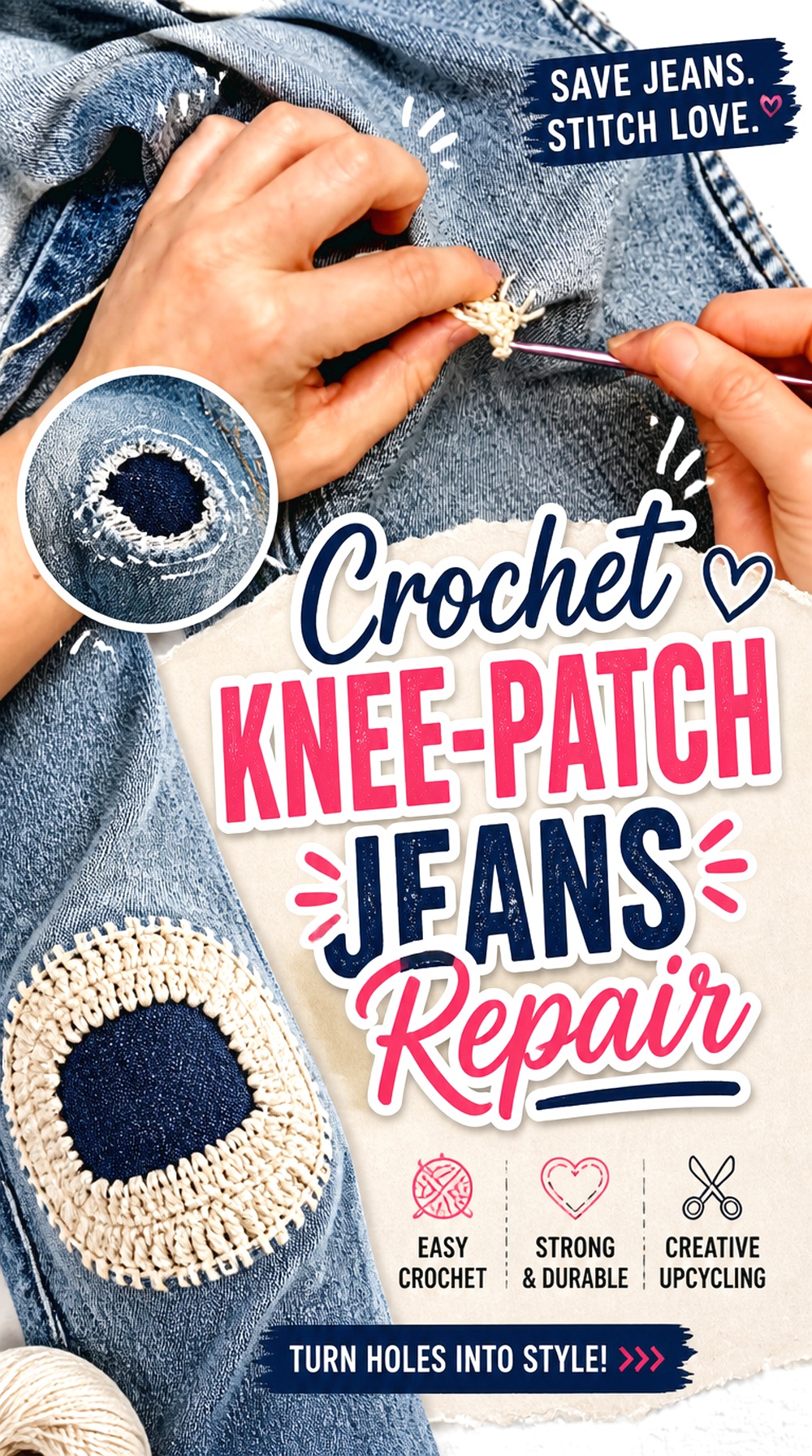
Jeans with localized knee holes are good candidates for visible mending when the surrounding denim is still worth saving. A crochet patch turns the repair into a design feature instead of trying to disguise that the garment was damaged.
This option differs from a decorative appliqué because the crochet has a practical role: it covers an opening that already exists. That makes placement largely predetermined, but there is still room to control the patch shape, contrast, and how much healthy denim it overlaps. The knee also moves more than many other parts of jeans, so a repair that looks neat while flat should still be checked while the leg is bent.
Extend the Patch Beyond the Damaged Threads
The visible hole is not always the full weak area. Examine the denim around it for thin or separating fibers before deciding where the repair should end. A patch that overlaps stronger cloth has a more sensible attachment zone than one whose edge sits directly on the same worn threads that created the hole.
Bend the Knee Before Finalizing Placement
A knee patch changes shape as the wearer sits, kneels, and walks. Position the garment naturally and check whether the crochet remains comfortable through that movement. An overly rigid repair can solve the hole while creating a new restriction, especially when the original denim already fits closely around the leg.
Decide Whether the Mend Should Blend or Contrast
Visible repair can be subtle or deliberately graphic. A related yarn color keeps attention on texture, while a contrasting patch makes the mend part of the garment’s identity. Make that decision before choosing the rest of the embellishment because the patch already occupies one of the most visually noticeable points on the leg.
Crochet Trim Denim Shorts Upcycle

Old denim shorts are useful for experimentation because their basic fit can stay unchanged while crochet alters the finish. A pair already sitting unworn in the closet can become a mixed-textile piece without requiring the waistband, fly, and upper construction to be rebuilt.
This route sits between surface decoration and reconstruction. The original denim remains responsible for fit, while crochet creates the new visual detail. Pay particular attention to where that addition meets leg openings and seams: shorts encounter repeated movement and friction, and a decorative edge that looks balanced when flat can shift once the garment is worn.
Preserve the Waistband Fit While You Decorate
If the shorts already fit comfortably at the waist and hips, avoid introducing changes that accidentally tighten those areas. Keeping the crochet intervention lower on the garment lets you preserve the existing engineered fit while still changing the appearance. Try the shorts on again after any major alteration rather than assuming untouched-looking areas remain unaffected.
Keep Crochet Clear of the Inner-Leg Rub Zone
The inner leg receives much more friction than the outer side or front. Decorative crochet that extends into that zone may wear differently or feel bulky against the opposite leg. Consider concentrating prominent details where they can be seen without constantly rubbing during normal movement.
Judge the Leg Opening While Standing and Sitting
A leg opening can appear loose on a hanger yet pull when the wearer sits. Before committing to any border or trim that changes its flexibility, check the shorts in both positions. The crochet should complement the existing opening rather than unintentionally turning a comfortable edge into a restrictive band.
Original Tutorial and Creator Credit
Creator: TCDDIY
Crochet Sleeve Denim Jacket Rebuild
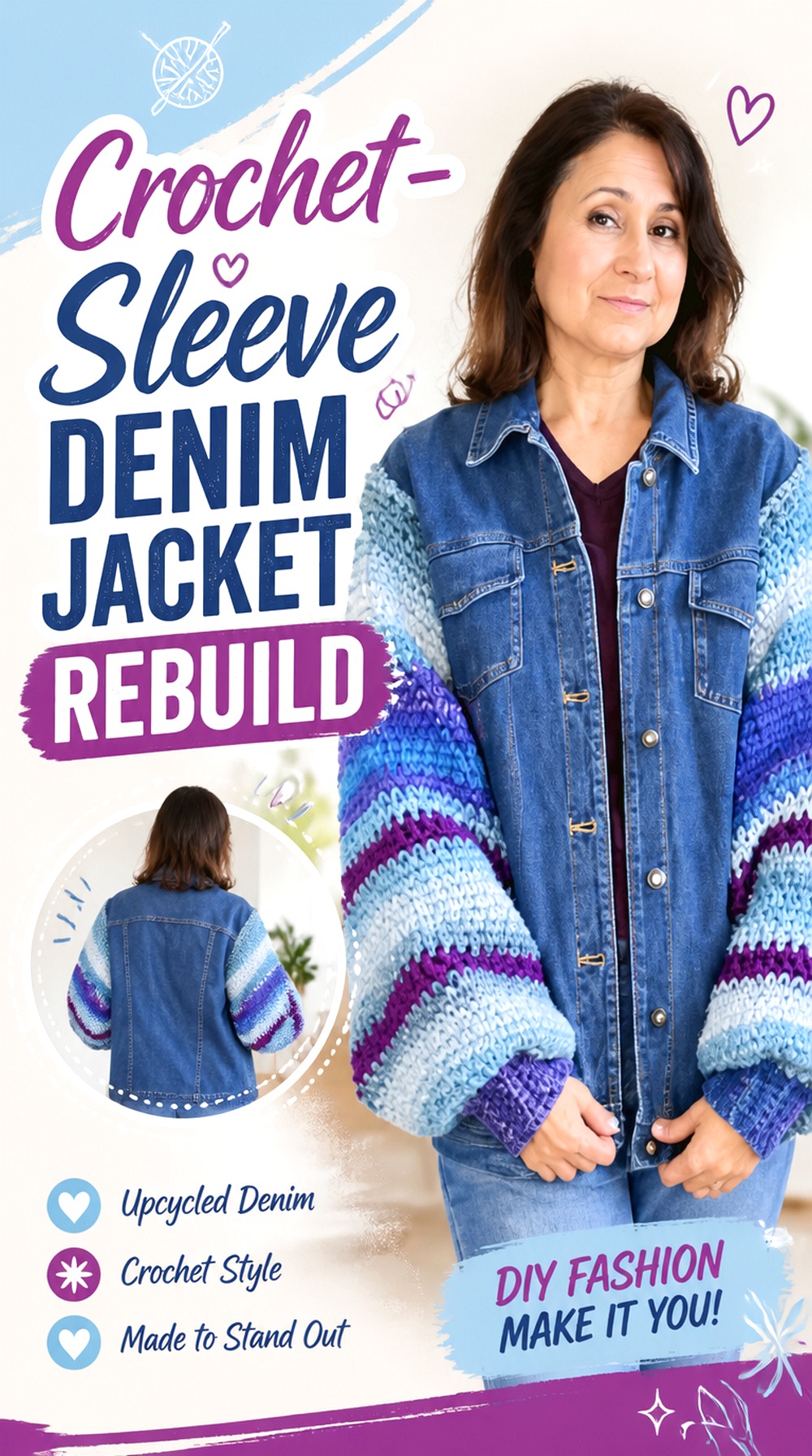
When the body of a denim jacket is still useful but the original sleeves are the part you want to change, replacing them with crochet creates a much larger transformation than adding trim. The familiar collar, front, pockets, and denim torso remain, while the arms introduce an entirely different texture.
This is a strong option for a jacket that deserves more than a small embellishment but does not need to be dismantled completely. Sleeve replacement also adds fit considerations that decorative patches do not have. Armhole size, shoulder movement, sleeve length, and the weight hanging from the shoulder all need attention before the new sections are treated as finished.
Use the Removed Sleeve as a Shape Reference
An original sleeve contains useful information about the jacket’s proportions even if you do not want to reproduce it exactly. Compare its overall length and upper-arm shape with the crochet replacement so the new sleeve has a relationship to the existing armhole rather than being planned as an isolated tube.
Check Reach Before Permanently Joining the Armhole
Raise and extend your arms while assessing the replacement. A sleeve that appears correct with the arms resting by the body can pull across the shoulder when reaching forward. That movement check is more useful than relying only on flat measurements because the jacket body and crochet may respond differently.
Watch the Shoulder for Added Crochet Weight
Depending on the yarn and fabric density, a crochet sleeve can hang differently from a denim one. Notice whether the shoulder seam begins to droop or the jacket body is pulled outward. If weight becomes a concern, reconsidering the density or scale of the crochet section is more useful than simply forcing the attachment tighter.
Original Tutorial and Creator Credit
Creator: Crazy Cool Crochet
Crochet Sleeve Sweatshirt Refresh
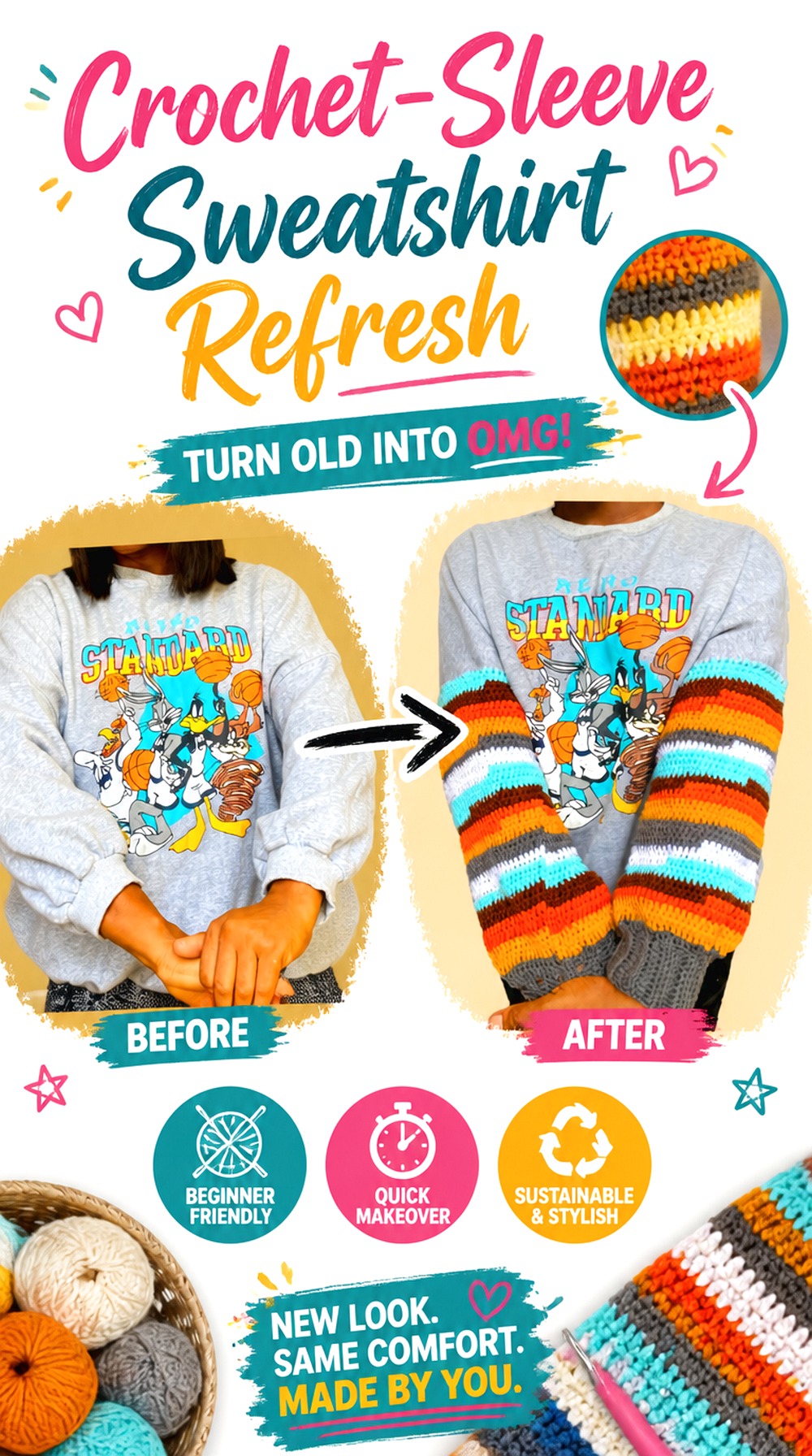
A favorite sweatshirt can stay familiar through the body while new crochet sleeves change its texture and character. This works particularly well as an upcycle concept when the torso, neckline, and overall fit are still worth keeping but the sleeves are damaged, unwanted, or simply the part chosen for transformation.
Compared with denim-jacket sleeves, sweatshirt fabric introduces much more softness and stretch. The transition needs to accommodate that difference rather than treating both textiles as interchangeable. The finished garment should still move like casual clothing, so armhole bulk, sleeve flexibility, and the relationship between the crochet and any retained ribbing deserve attention.
Make the Sleeve Fabric Agree With the Soft Body
Sweatshirt material usually has more give than rigid woven fabric. If the crochet replacement is extremely dense or firm, the arms may feel disconnected from the softer body. Compare how both materials bend and stretch before choosing the final crochet fabric, particularly near the upper arm where movement is frequent.
Keep the Armhole Transition From Turning Bulky
The armhole already contains multiple fabric layers and seams. Adding a thick crochet attachment can build extra bulk in an area that sits directly against the body. Check the inside as carefully as the outside and watch for a ridge that becomes uncomfortable even though it looks tidy from the exterior.
Reuse Existing Cuffs Only When They Still Function
An intact sweatshirt cuff can potentially become part of an upcycle plan, but age matters. Stretched-out or damaged ribbing may undermine otherwise fresh sleeves. Evaluate retained components because they still need to perform their job; keeping an original feature is useful only when its condition justifies keeping it.
Original Tutorial and Creator Credit
Creator: ToriaCrochet_
Crochet Side Panel Graphic T Shirt Refit
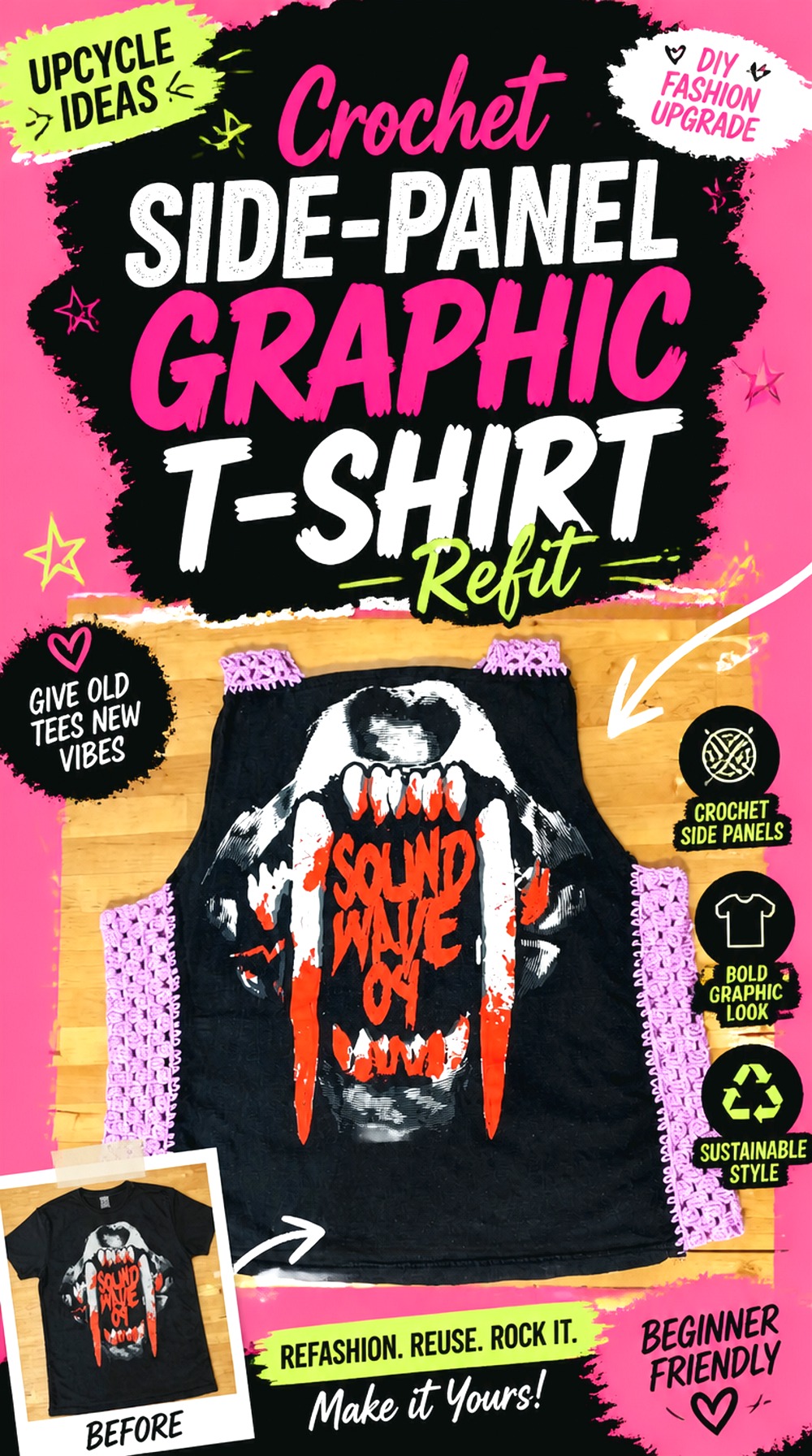
Some old shirts are difficult to replace because the print or memory attached to them matters, even when the fit no longer does. Crochet side panels offer a way to keep the recognizable front and back while introducing extra fabric through the sides. That makes this idea particularly relevant to concert, event, or graphic shirts that have become too narrow.
Unlike a purely decorative upcycle, the crochet changes garment dimensions. The new panel therefore has to solve the fit problem without causing a second one at the armholes, hem, or shoulders. The shirt’s stretch and the crochet’s stretch also need to cooperate once the garment is worn.
Let the Insert Solve a Real Fit Problem
Start by identifying where the shirt actually feels restrictive. Extra width through the torso will not automatically correct a neckline or armhole problem. Side inserts are most useful when additional circumference is what the garment needs, so diagnose the fit before deciding that cutting the side seam is the right intervention.
Check Panel Width With the Shirt Hanging
Jersey and crochet can both change when gravity acts on them. A panel that seems proportionate when spread flat may lengthen or narrow once suspended between the front and back of a shirt. Periodically assess the garment hanging naturally—and preferably on the body—before committing to the final width.
Stretch Mismatch Shows Up First at the Side Seam
The side transition has to move whenever the torso moves. If the original jersey stretches freely but the insert does not, the seam can become the point where tension concentrates. Compare the fabrics gently before joining and avoid assuming that similar-looking widths will produce similar behavior in wear.
Original Tutorial and Creator Credit
Creator: Shiny Crochet
Crochet T Shirt Poncho Refashion
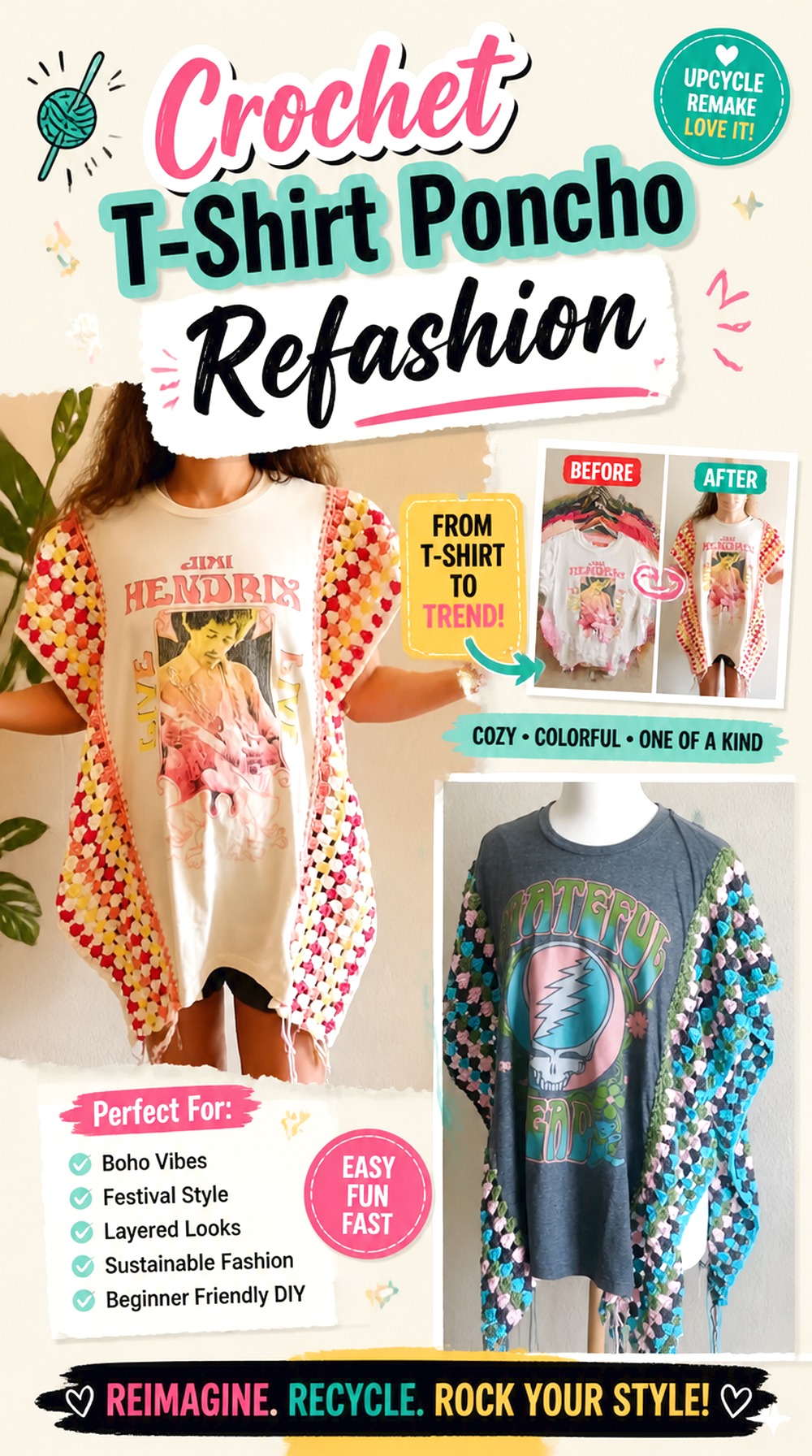
This project takes a more dramatic approach to an old T-shirt by changing its silhouette rather than merely repairing one area. The shirt becomes the central fabric portion of a loose poncho-style piece, with crochet contributing the expanded sides and flowing shape.
It is a useful choice for a tee whose print or central fabric is worth keeping but whose standard fitted-shirt silhouette is no longer wanted. Because the conversion intentionally adds openness and drape, it belongs in a different category from a side-panel refit. Instead of trying to recreate a conventional T-shirt fit, the crochet helps the garment move toward a broader, more relaxed form.
Start With Enough Shirt Width for the New Drape
The original shirt still determines the central width across the torso. A very narrow base may require more intervention than a roomy tee if the goal is a relaxed poncho effect. Look at the shirt’s existing shoulder and body proportions before cutting so the central fabric remains useful within the wider silhouette.
The Crochet Should Fall, Not Pull the Jersey Upward
A side section that is too tight can draw the lightweight shirt fabric toward it and create unexpected folds. As the new fabric develops, let the piece hang to see whether the jersey remains smooth. The relationship between materials matters more here than achieving a perfectly flat appearance on the worktable.
Side Openings Control How Poncho-Like It Feels
The amount of openness around the arms influences whether the finished piece reads as a modified shirt or a true poncho-style top. Consider coverage, layering, and freedom of movement when evaluating that space. This is a silhouette decision, not merely a decorative one.
Original Tutorial and Creator Credit
Creator: The Snugglery
Crochet Motif Yoke T Shirt Renewal

A crochet yoke shifts attention to the upper portion of an old T-shirt. Instead of widening the sides or replacing sleeves, this upcycle integrates motifs around the neckline and shoulder area, giving the upper garment a new textile identity while retaining much of the original shirt below.
This route works best when the body of the T-shirt is still useful and you intentionally want the crochet concentrated near the face and shoulders. It also demands careful planning because the yoke interacts with several fit-sensitive zones at once. Its dimensions influence the neckline opening, shoulder position, and how the remaining jersey hangs from the crochet.
A Yoke Changes Both Neckline and Shoulder Load
The upper crochet is not simply decoration sitting on an unaffected garment. Its shape can influence where the shirt hangs from the shoulders. Assess the finished yoke as part of the garment’s support structure and watch whether the jersey below remains balanced rather than twisting or pulling toward one side.
Match Motif Scale Before Cutting the Shirt
When a repeated motif forms the yoke, its finished size affects how easily the crochet can fit the intended neckline area. Plan with the actual crochet dimensions rather than an imagined grid. Cutting the T-shirt first leaves much less flexibility if the completed motif arrangement turns out larger or smaller than expected.
Keep the Upper Crochet Light Enough for Jersey
The shoulders carry everything below them. Very heavy crochet around a light shirt can pull the neckline downward or alter how the garment hangs. Consider the cumulative weight of repeated motifs, not just the feel of one sample, before committing to a dense upper section.
Original Tutorial and Creator Credit
Creator: Kristin Omdahl
Crochet Rebuilt T Shirt Neckline
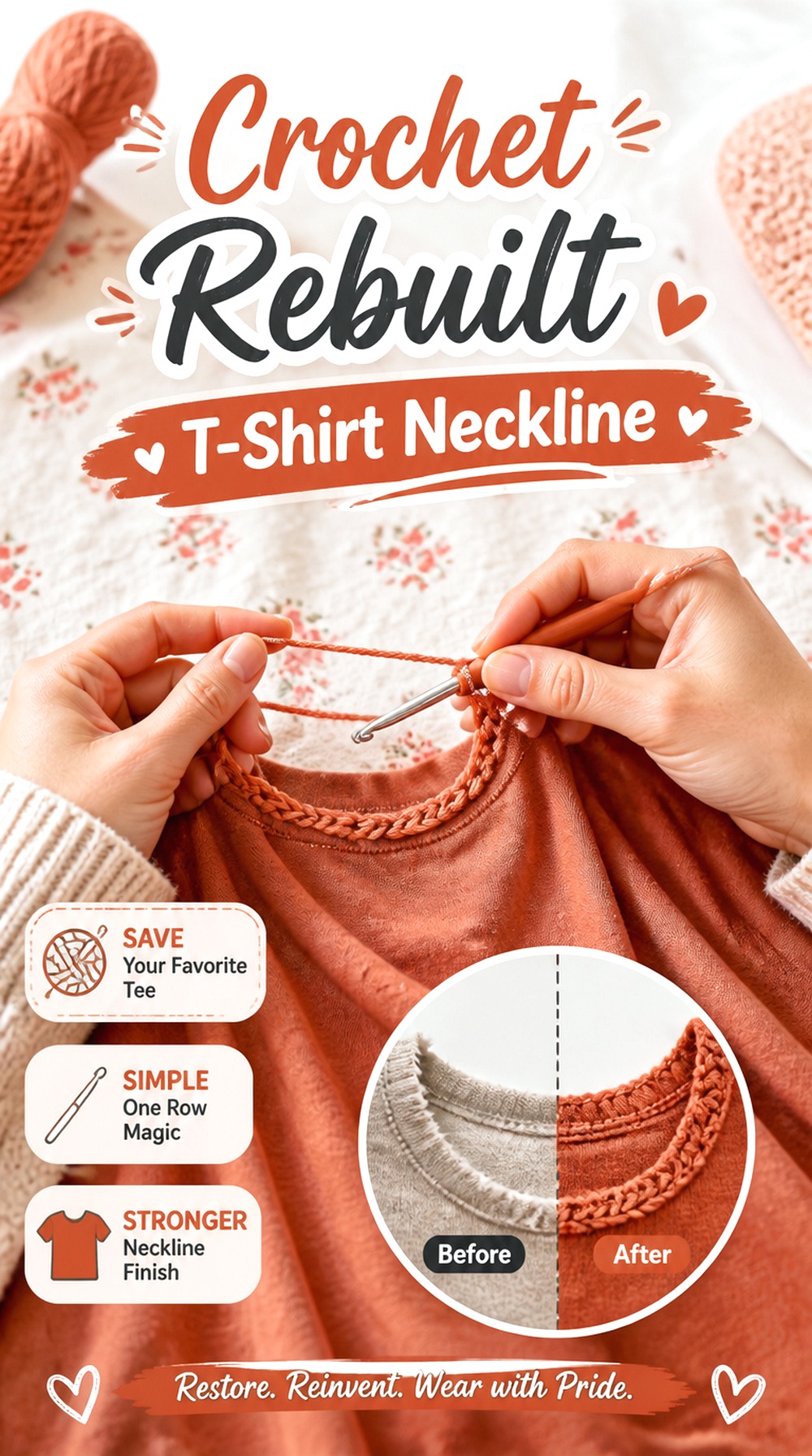
An old T-shirt with an uninspiring, damaged, or unwanted neckline can be rebuilt around that upper edge instead of discarded. Crochet becomes part of the new opening, creating a strong focal feature without requiring the entire torso to be replaced.
The small physical area can make this look like a simple alteration, but necklines are sensitive to small changes. An opening that is too tight affects dressing and comfort; one that stretches excessively may no longer sit where intended. The surviving jersey also needs enough integrity to support the new edge. This makes neckline reconstruction a useful project for careful upcycling rather than a good place for impulsive cutting.
Mark the New Neckline Before Removing Fabric
Once jersey is cut away, restoring the original shape is difficult. Evaluate how much you actually want the opening to change and mark the intended area while the shirt is still intact. This provides a visual checkpoint before the irreversible part of the upcycle begins.
Keep Enough Stable Jersey for the Crochet Anchor
Avoid placing the attachment entirely in stretched, curling, or damaged fabric. The crochet needs a consistent edge to meet. If the original neckline area is severely worn, consider whether the proposed new opening can extend into healthier fabric without becoming larger than you want.
Check That the Opening Lies Flat When Worn
A neckline can appear neat on a table while standing away from the body or pulling when worn. Try the developing garment on and look at both the front and shoulder areas. Any unwanted rippling is easier to address before additional crochet makes the edge less flexible to change.
Original Tutorial and Creator Credit
Creator: ThreadBanger
Crochet Collar and Cuff Sweater Refresh
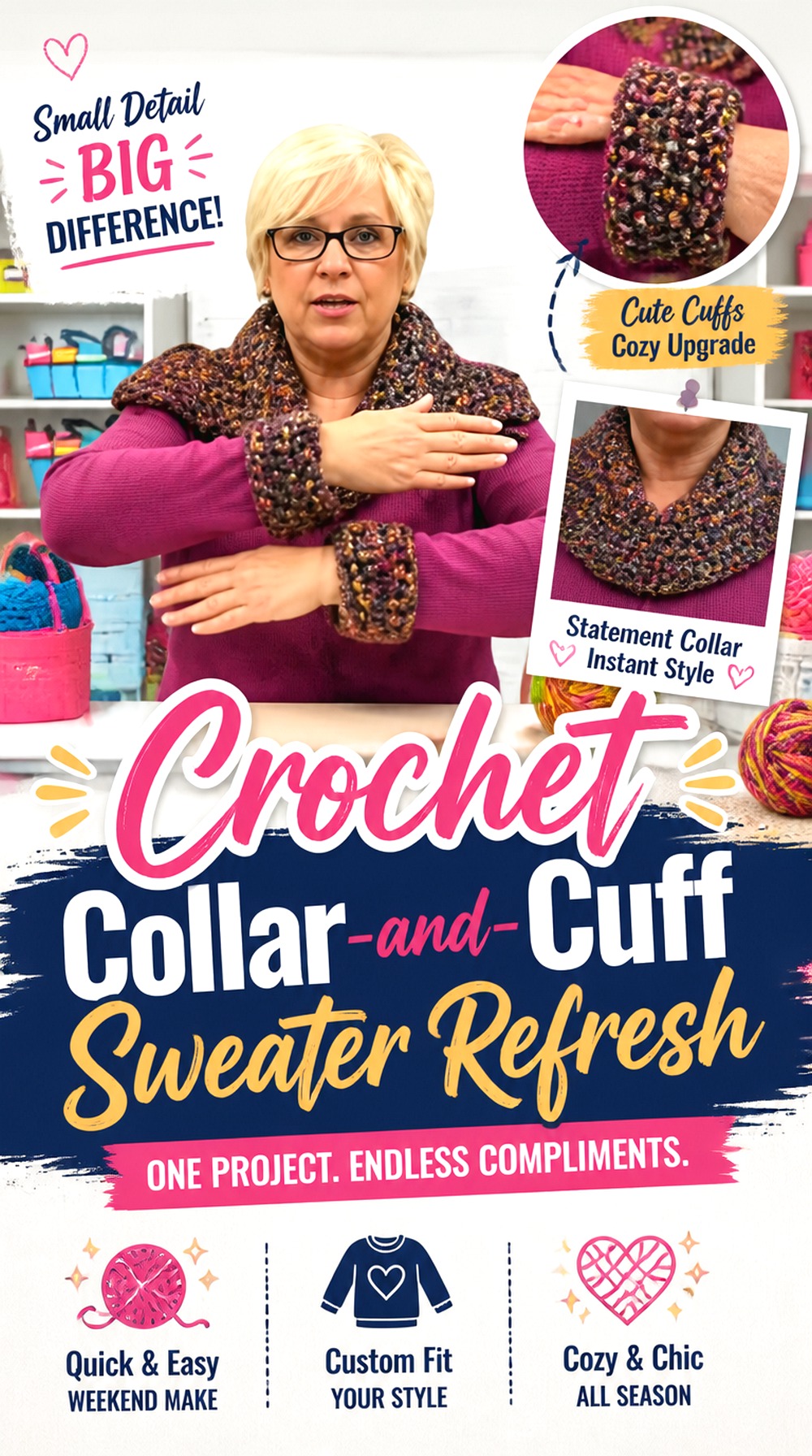
Not every old sweater needs to become a completely different garment. Adding crochet at the collar and cuffs concentrates the change where it will be seen while preserving the original knitted body, sleeves, and fit.
This is useful when the sweater is structurally sound but feels plain or when its edge details are the areas that would benefit from a visual update. The paired placement also creates intentional repetition: crochet appears at the neck and sleeve ends rather than randomly across the body. Because the base is already a soft textile, the new trim needs to work with the sweater’s existing elasticity and care needs instead of competing with them.
Let the Cuffs Follow the Existing Sleeve Shape
A cuff that is much firmer than the sleeve can create a sharp change in how the fabric gathers at the wrist. Before finalizing the crochet, compare the opening with the sweater’s natural sleeve width and consider whether the garment is supposed to fit closely or remain relaxed there.
A New Collar Can Change the Sweater’s Proportions
Even a relatively narrow addition near the face can alter the visual balance of the whole sweater. A prominent collar draws attention upward, while a quieter border preserves more of the original look. Choose the scale in relation to the neckline and body rather than considering the crochet detail by itself.
Mixed Fibers Need a Shared Care Plan
The sweater and new yarn may have different washing or drying requirements. Check both sets of care information before the materials are permanently combined. For the finished piece, following the more restrictive care requirement is a cautious approach when the two components cannot be separated for cleaning.
Original Tutorial and Creator Credit
Creator: CrochetSoiree
Crochet Lace Hem Shirt Extension
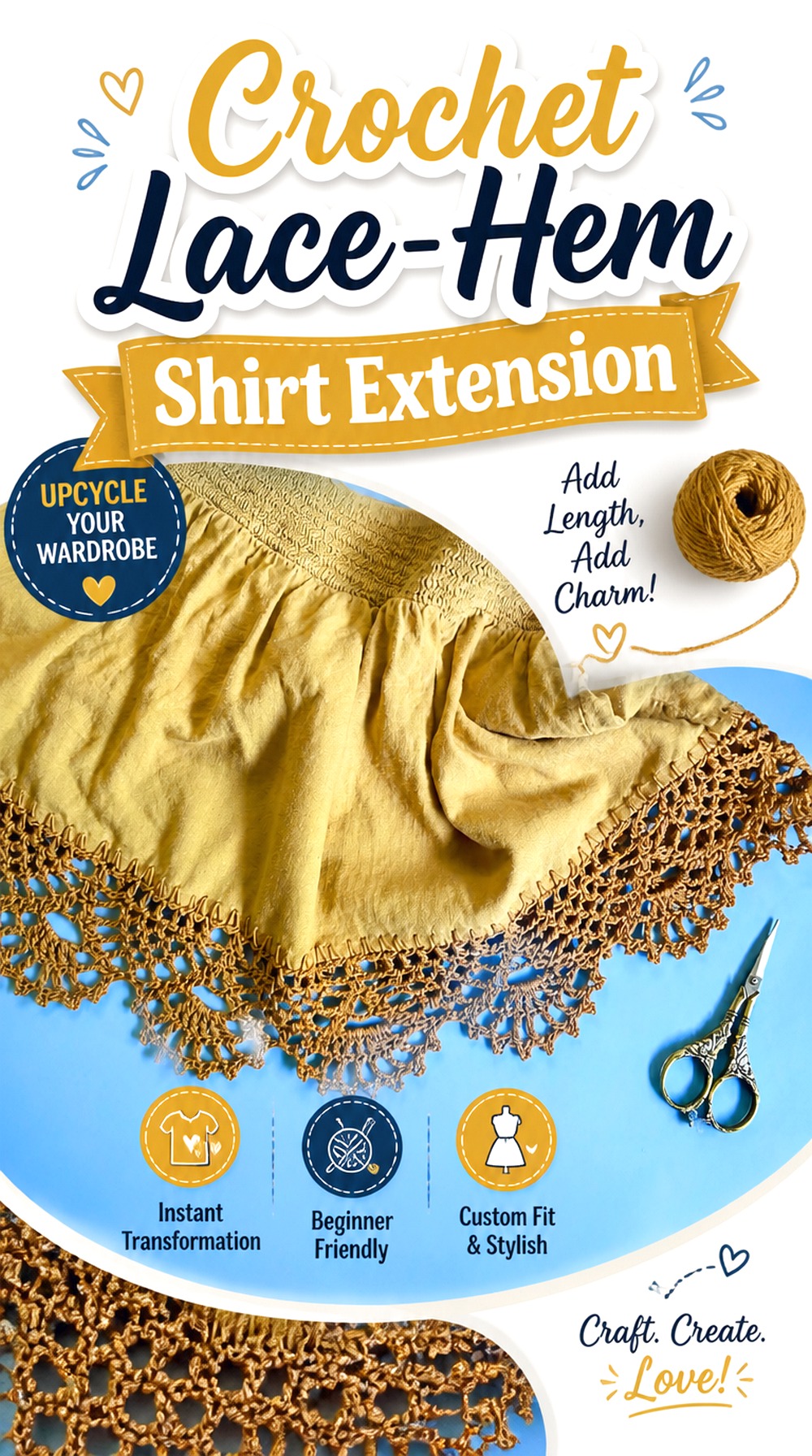
A shirt that still fits through the shoulders and torso can be worth keeping even when it feels shorter than you want. Adding a crochet lace section at the lower edge gives the garment extra visual and physical length without changing its upper construction.
This differs from simply decorating a hem because the new crochet can become a meaningful part of the finished proportion. A deeper addition creates more of a mixed-fabric look, while a narrow one reads as trim. The base shirt’s weight and stretch should guide that choice. Lightweight jersey can be distorted by an overly heavy border, so the most attractive lace on its own is not automatically the most compatible option.
Add Length Without Overloading a Light Shirt
Think about the total weight of the completed border across the full circumference. A crochet sample may feel almost weightless in your hand but behave differently when repeated all the way around a soft shirt. Let the developing garment hang periodically to see whether the added section begins pulling the original hem downward unevenly.
Even Attachment Spacing Prevents a Rippling Hem
An inconsistent transition can cause one material to gather while the other flares. Before building a deeper border, focus on whether the first connection between shirt and crochet lies evenly. Correcting that foundation early is usually more practical than trying to disguise a distorted edge with additional decorative rows later.
Choose Border Depth After Trying the Shirt On
The amount of added length changes more than coverage; it changes the shirt’s overall proportion with pants, skirts, and the wearer’s torso. Hold or develop enough of the border to judge it on the body before deciding that the deepest possible extension is the best choice.
Original Tutorial and Creator Credit
Creator: Creative Crochet Corner
Crochet T Shirt Rag Rug
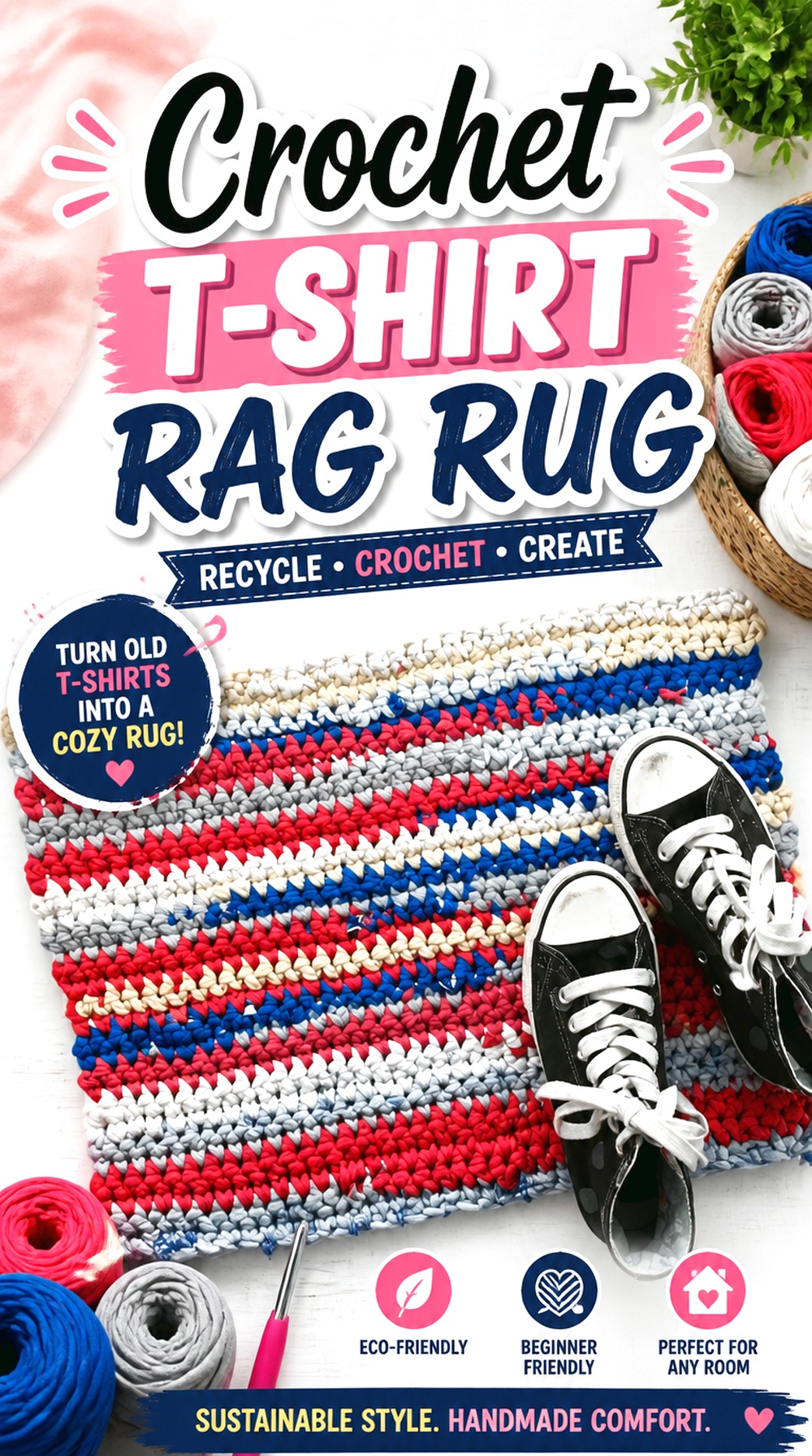
When an old T-shirt is no longer worth preserving as clothing, the usable jersey can become material instead. A rag rug is one of the clearest examples because the original garments disappear into thick fabric yarn and re-emerge as a completely different household object.
This route can absorb shirts with outdated graphics, awkward fit, or isolated damage as long as enough usable fabric remains. It also behaves differently from ordinary yarn crochet. Fabric strips are bulky and can vary from one garment to another, so consistency and flatness become central planning issues. The project is less about preserving the look of the old shirt and more about recovering useful textile material from it.
Sort Old Shirts by Stretch Before Making Yarn
Two shirts that look similar may behave quite differently once cut into strips. Very stretchy jersey can elongate while firmer fabric resists, creating changes in thickness and tension. If several garments will share one rug, grouping materials with reasonably compatible behavior can make the crocheting more predictable.
Fabric Yarn Becomes Bulky Faster Than Skein Yarn
A short length of fabric strip occupies much more physical space than many conventional yarns. Expect the project to feel substantial as it grows and avoid assuming that a rug made from old clothes will behave like a lightweight yarn mat. The material itself should influence the scale you choose.
Flatness Is the Main Checkpoint as the Rug Grows
A circular or shaped rug should be assessed on the floor throughout the project. If the outer area begins cupping or developing excess waves, continuing without reassessing the fabric behavior can exaggerate the problem. The surface where the finished object will live is the most useful place to judge its shape.
Original Tutorial and Creator Credit
Creator: mypoppetblogs
Crochet T Shirt Yarn Storage Basket
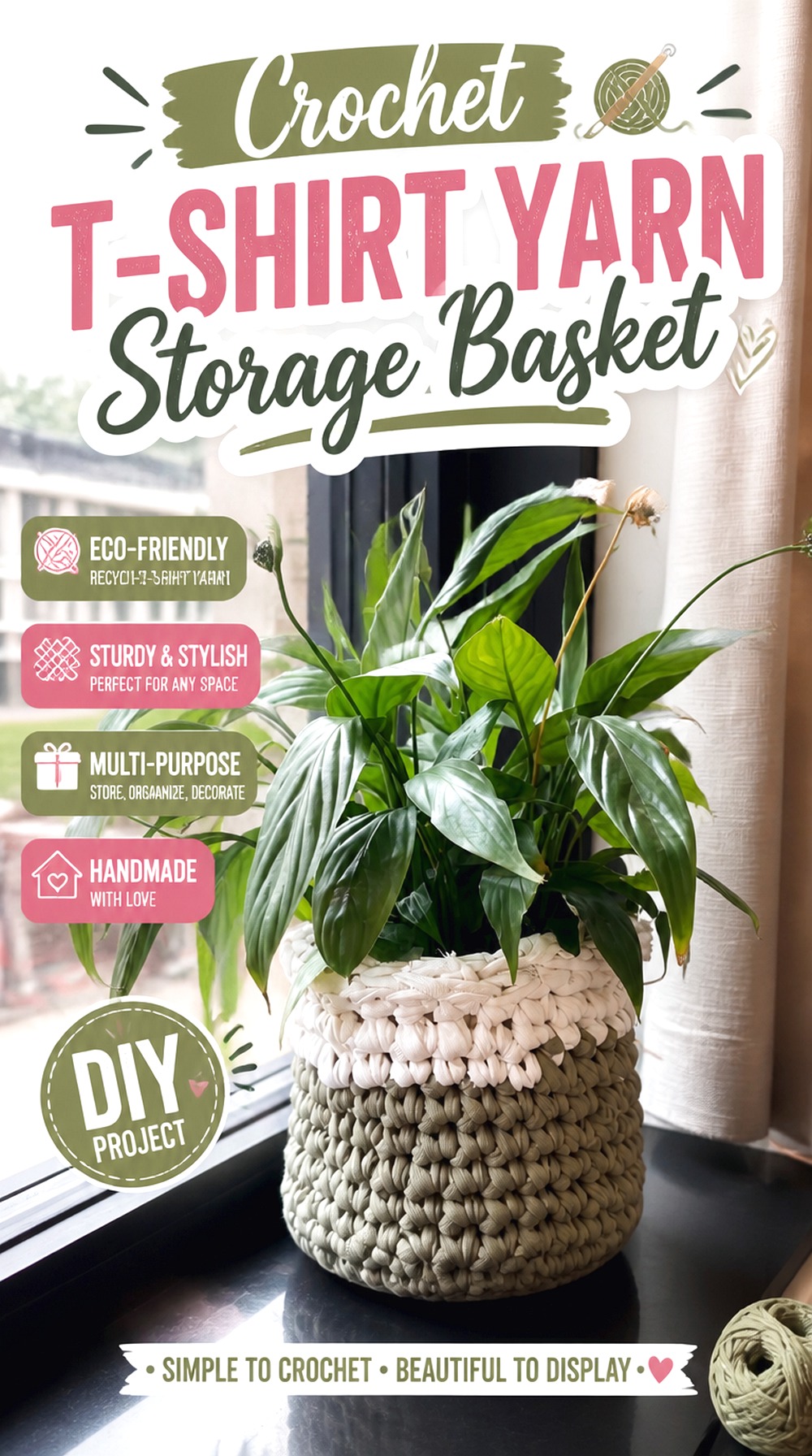
Old T-shirts can also become a soft storage basket rather than a flat floor piece. The thick fabric yarn gives the crochet more body than lightweight yarn typically provides, while the basket shape turns discarded jersey into something functional for organizing lightweight household items.
This project rewards consistency because vertical walls expose changes in tension and strip thickness more visibly than a loose pile of fabric yarn does. It is a good route when several useful portions of old shirts can be converted into continuous material. Unlike a wearable upcycle, precise garment fit no longer matters; the main decisions shift to wall structure, overall scale, and whether your available material suits the basket you are imagining.
Consistent Fabric Strips Help the Walls Look Even
Sudden changes in strip thickness can create visible ridges or softer sections in the basket wall. Homemade fabric yarn does not have to be factory-perfect, but sorting out thick seams and highly irregular pieces before crocheting can make the final structure more coherent.
Dense Crochet Gives Soft Jersey More Body
T-shirt fabric remains flexible even after it becomes yarn. A basket therefore needs enough fabric density to stand in the way you expect. If your sample feels very loose or collapses immediately, reassess the crochet fabric before building much height rather than hoping additional rows alone will create structure.
Size the Basket Around the Material You Actually Have
Old-clothes yarn is finite. A basket planned around an arbitrary finished dimension can leave you searching for a nearly identical shirt at the end. Instead, consider your material supply first and allow the available fabric to influence the diameter and height, especially when color continuity matters to the design.
Original Tutorial and Creator Credit
Creator: ColorPop Knits
Crochet T Shirt Yarn Purse
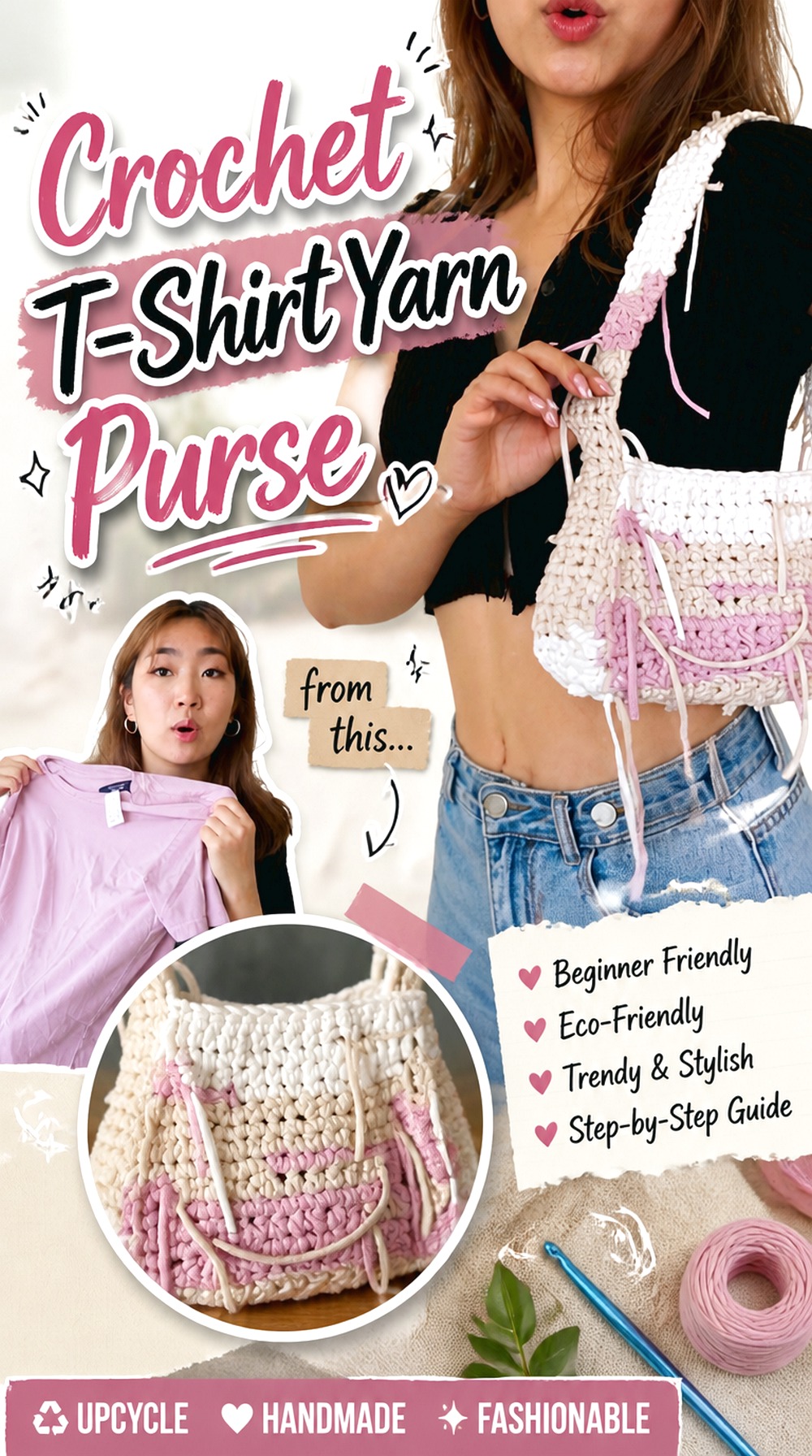
A T-shirt-yarn purse turns a relatively small amount of old jersey into a wearable accessory. It is more compact than a rug or pouf, making it useful when one old shirt has good fabric but there is not enough material for a large home project.
Because the finished piece will be carried and opened repeatedly, the stress points differ from those in a basket. Handles, the upper edge, and any closure area deserve more attention than purely decorative parts of the body. The fabric yarn gives the purse a recognizable chunky texture, but it can also stretch. Keep the intended use realistic and avoid assuming a soft recycled-fabric bag has a particular carrying capacity unless its construction has been evaluated for that purpose.
The Handle Area Needs More Attention Than the Body
A purse concentrates load where the handle joins the bag. Even if the body looks dense and stable, check those upper attachment points separately. Stretch or distortion there can change how the whole bag hangs, so handle design should not be treated as a decorative afterthought.
Opening Shape Changes How Secure the Purse Feels
A broad open top is convenient for access but exposes contents differently from a narrower or closable opening. Decide how you expect to use the purse before choosing its final top shape. If security matters, verify whether the tutorial’s construction includes a closure or whether an adaptation would be needed.
Use Shirt Color Changes as Part of the Design
When one garment does not provide enough yarn, the transition to a second T-shirt can become deliberate rather than hidden. Contrast, stripes, or distinct sections allow the material change to read as part of the purse. Test the two fabric yarns together first if their thickness or stretch differs noticeably.
Original Tutorial and Creator Credit
Creator: JENerationDIY
Crochet Denim and Yarn Bag Rebuild
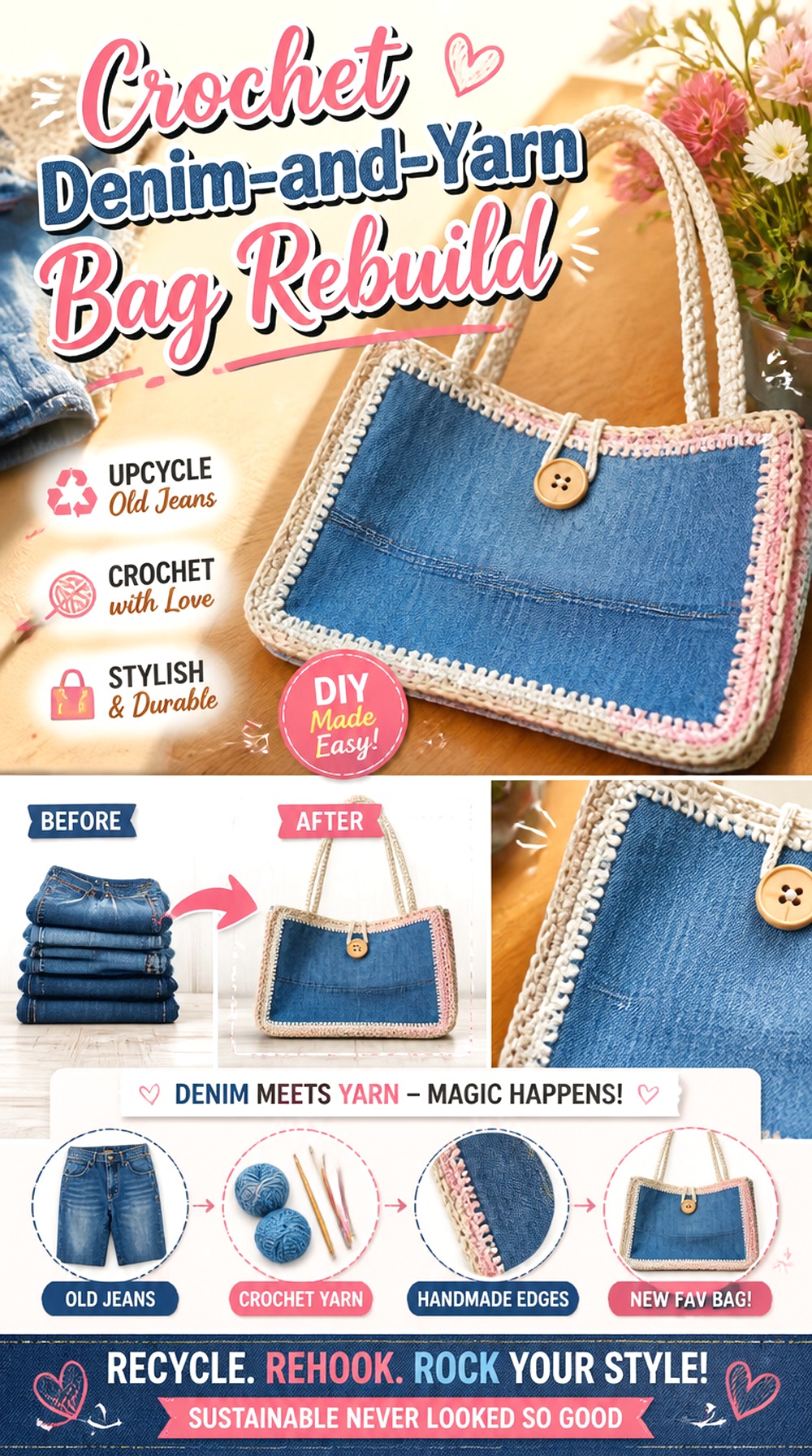
Old jeans contain large, durable-looking panels of fabric that can be reused even when the pants are no longer wearable. Combining those sections with crochet creates a bag that visibly preserves the denim instead of cutting the jeans into yarn.
This mixed construction offers a different balance from an all-crochet purse. Denim can form substantial fabric sections while crochet provides contrast and shape elsewhere. The key planning issue is the junction between the two materials. A neat crochet panel cannot compensate for a fraying or weak fabric edge, and the intended interior organization should be considered before the exterior is treated as complete.
Flat Denim Sections Make Cleaner Bag Components
Inspect the jeans for the largest sound areas before cutting. Portions heavily shaped by worn knees, curved seams, or damage may be less convenient than flatter leg sections for a bag panel. Existing pockets can also influence where you want to preserve the original denim rather than treating every section as interchangeable scrap.
Reinforce the Fabric-to-Crochet Transition
The seam between crochet and denim is a major structural change in the bag. Make sure the fabric edge used there is sound and that the connection does not rely on frayed threads. Check the join from both sides as the bag takes shape, especially around areas likely to be handled frequently.
Plan the Interior Before Final Assembly
If you want lining, internal pockets, or another interior feature, decide early enough that the exterior construction does not make those additions unnecessarily awkward. The original jeans may already offer useful pocket components, but whether they fit the new bag layout depends on where the denim is cut and positioned.
Original Tutorial and Creator Credit
Creator: Superb Craft Ideas
Crochet T Shirt Yarn Pouf
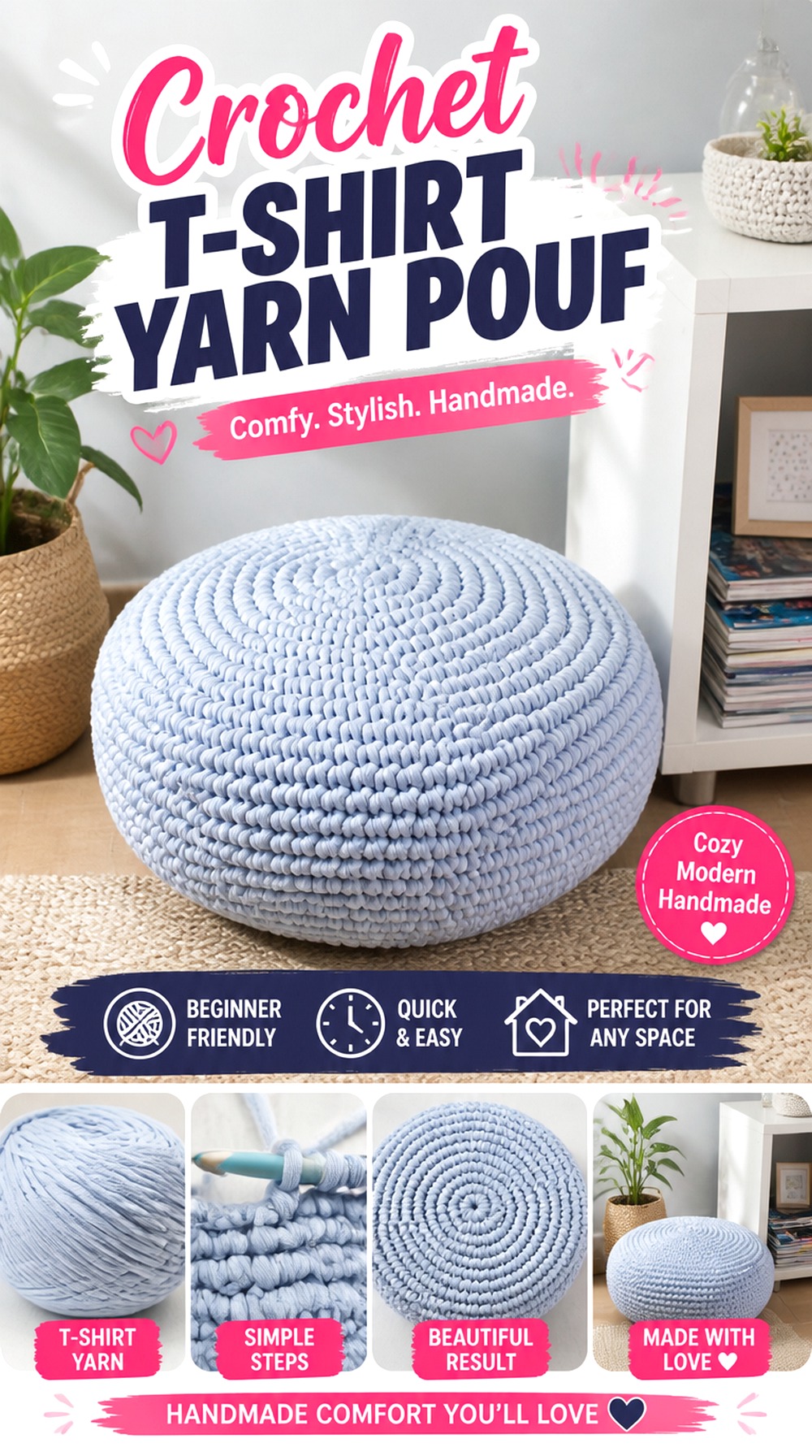
A pouf takes recycled T-shirt yarn into a much larger three-dimensional form. Instead of preserving any recognizable garment sections, several usable pieces of old jersey can contribute to a thick crochet shell designed around a separate inner filling.
This is a material-intensive direction compared with a purse or small basket, so it makes the most sense when you have enough compatible fabric yarn or are comfortable with visible color changes. The tutorial demonstrates a pouf made with T-shirt yarn; when using yarn cut from old clothes, the extra upcycling decision is how consistent your homemade material needs to be before following the construction concept.
Homemade T-Shirt Yarn Needs Reasonable Consistency
Large three-dimensional surfaces make major changes in yarn thickness more noticeable. Remove or work around bulky garment seams and severely weakened fabric when preparing old shirts. A small variation can become part of the handmade texture, but abrupt material changes may affect the shell as well as its appearance.
A Pouf Magnifies Bulk and Weight Quickly
T-shirt yarn already has substantial physical volume, and a pouf uses it across a broad surface. Consider the finished object’s location before choosing an ambitious scale. Moving, storing, and cleaning a large textile piece are practical concerns that do not matter nearly as much with a small recycled-fabric accessory.
Plan the Inner Filling Separate From the Crochet Shell
The crochet exterior and whatever supports its shape perform different jobs. Decide how the inner component will be contained and accessed rather than assuming loose filling alone will behave as intended. If the pouf needs occasional cleaning, the relationship between shell and interior is especially worth confirming before closure.
Which Kind of Crochet Upcycle Fits Your Old Clothes?
| Condition of the old clothing | Upcycle direction to consider | Main checkpoint |
|---|---|---|
| Mostly sound but visually tired | Lace edging, flowers, collar, or cuff details | Added weight, placement, and care compatibility |
| Damaged in one localized area | Crochet patch, insert, or replacement section | Attachment should extend into healthy fabric |
| Still meaningful but no longer fits | Side panels, yoke work, sleeve replacement, or poncho conversion | Stretch, movement, ease, and how the garment hangs |
| Too worn to wear but the fabric is still usable | T-shirt-yarn rug, basket, purse, or pouf | Strip consistency, material supply, and finished bulk |
| Jeans are unwearable but large denim panels remain sound | Mixed denim-and-crochet bag | Strong fabric edges and a secure material transition |
Conclusion
The most useful crochet upcycle is the one that matches what is actually wrong with the old clothing. Local knee damage points toward a patch; an otherwise good pair of jeans can take lace or motif details; a favorite shirt with a fit problem may justify side panels, a new yoke, or a larger silhouette. When the garment itself is beyond saving, T-shirt yarn opens a different route through rugs, baskets, purses, and poufs.
Inspect the original fabric before cutting, and pay particular attention to stretch, added weight, and the places where crochet meets cloth. For exact construction methods, attachment techniques, and project-specific instructions, use the original creator tutorials linked with each idea.
Frequently Asked Questions
Which old clothes are worth upcycling with crochet?
Look for garments with enough sound material left to support the new work. Localized holes, a damaged hem, an unwanted sleeve, a fit problem, or a dated detail can all leave plenty worth preserving. Clothing that is thin or disintegrating across large areas is less suitable for a structural crochet attachment, although undamaged sections may still be harvested for fabric-yarn projects.
How do I stop crochet from puckering a T-shirt?
Puckering often signals that the crochet edge and stretchy jersey are not behaving at compatible lengths or tensions. Avoid pulling the shirt while establishing the attachment, and assess the work with the garment relaxed rather than stretched across a table. Let it hang and try it on periodically. If the fabric gathers early, address that transition before adding a larger crochet panel that can make the distortion more difficult to correct.
Can I attach crochet directly to denim?
Yes, several types of crochet upcycles intentionally connect crochet to denim, including edging, patches, inserts, and mixed-fabric bags. The exact attachment method depends on the project and tutorial. The important general checkpoint is fabric condition: attach to sound denim rather than expecting loose, fraying threads around a hole to carry the new crochet. Also consider where the join sits and how much movement it will experience.
What yarn should I pair with old clothing?
There is no single yarn that is right for every upcycle. Consider the original fabric’s weight and stretch, the location of the crochet, how much drape or structure you want, and whether the yarn will touch the skin. A lightweight shirt and rigid denim jacket present very different requirements. Also compare the yarn’s care information with the garment label before permanently joining materials that may need incompatible washing or drying conditions.
Can every old T-shirt be turned into T-shirt yarn?
Not every part of every shirt is equally useful. Thick seams, damaged areas, very heavy prints, or sections with noticeably different stretch can interrupt otherwise consistent fabric strips. Inspect and sort the usable material before cutting. If several shirts are combined, compare their thickness and stretch so major changes do not appear unexpectedly in the rug, basket, purse, or other finished crochet fabric.
Should crochet-upcycled clothes be washed differently?
Possibly. Once two materials are permanently combined, the finished garment has to accommodate both. Check the care label on the original clothing and the care information for the yarn rather than assuming the old washing routine still applies. When their requirements differ, using the more restrictive compatible care approach is a cautious choice. Also consider whether embellishments, mixed seams, or heavy fabric-yarn sections may change drying time or shape.
Is lining useful for bags made from old clothes and crochet?
It can be, particularly when the crochet fabric is open, stretches more than desired, or the interior needs pockets or a cleaner separation from the outer shell. It is not automatically required for every bag. Decide based on the bag’s actual construction and intended contents. If you want a lining, planning it before the exterior is completely closed can make fitting and attachment substantially easier.