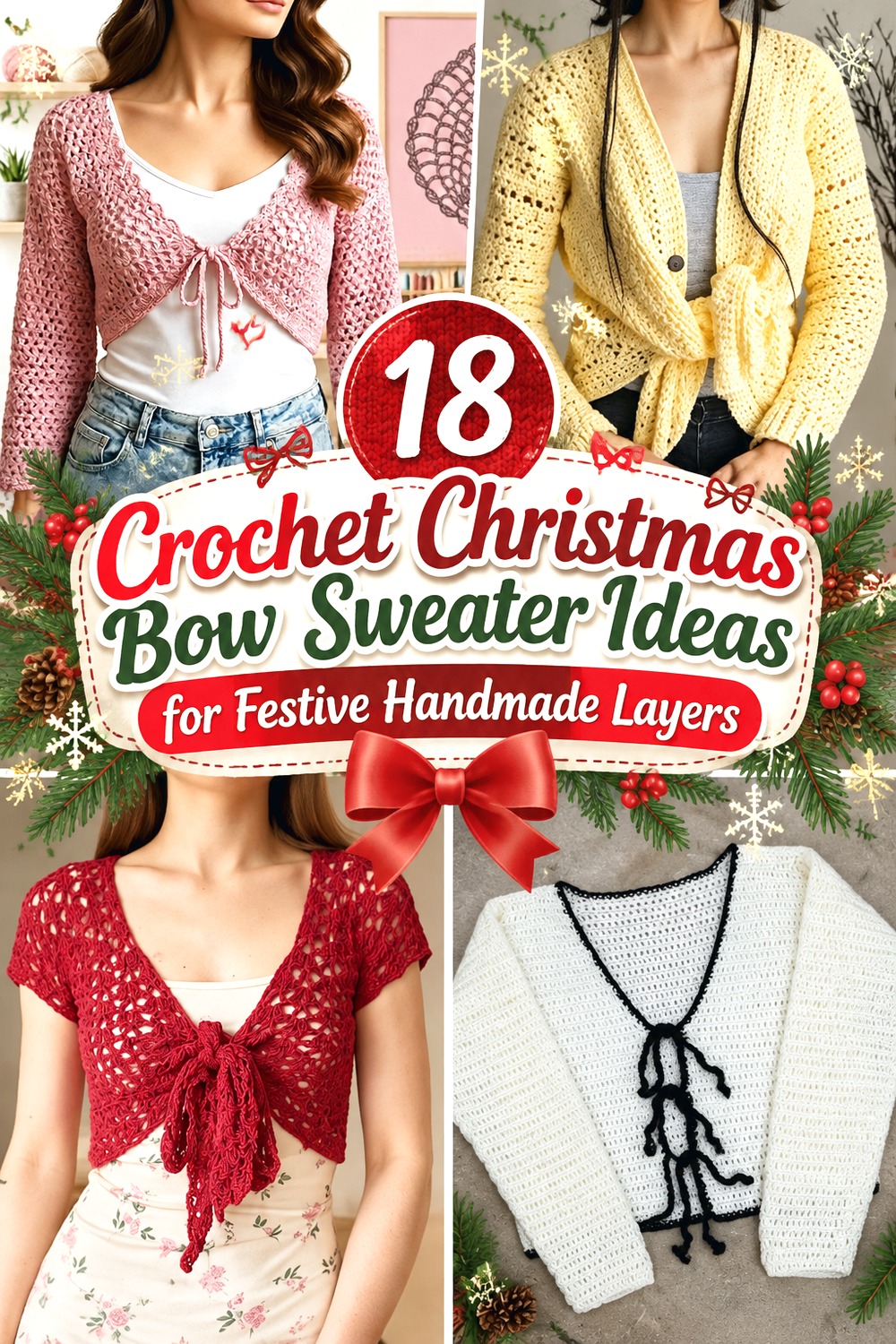

A crochet Christmas bow sweater can be much more than a red cardigan with a ribbon added at the end. The bow might close the center front, appear as repeated sleeve ties, decorate a chunky cardigan, or become one of several removable closures. The sweater itself can be dense and cozy, cropped and dressy, airy enough for indoor layering, or built from granny squares.
The tutorials below reflect that range. Some were designed specifically around bows, while others are tie-front cardigans whose ties naturally form the bow and can be translated into a Christmas palette. A few lighter designs are better thought of as festive layering pieces rather than cold-weather sweaters. The comparisons focus on fit, structure, bow placement, and adaptation choices so you can choose the right silhouette before using the original tutorial for exact construction.
Quick List
- Crochet Cozy Center-Bow Christmas Cardigan
- Crochet Bow-Appliqué Christmas Sweater Cardigan
- Crochet Bow-Sleeve Christmas Pullover
- Crochet Dark Coquette Christmas Bow Cardigan
- Crochet Lacy Holiday Bow-Tie Cardigan
- Crochet Ribbed Christmas Bow Cardigan
- Crochet Bell-Sleeve Christmas Bow Cardigan
- Crochet Granny-Square Christmas Bow Cardigan
- Crochet Triple-Bow Christmas Cardigan
- Crochet Mesh Christmas Bow Bolero Cardigan
- Crochet Airy Cropped Christmas Bow Cardigan
- Crochet Shell-Stitch Christmas Bow Cardigan
- Crochet Contrast-Edge Christmas Bow Cardigan
- Crochet Made-to-Measure Christmas Bow Cardigan
- Crochet Textured Cropped Christmas Bow Cardigan
- Crochet Minimal Front-Bow Christmas Cardigan
- Crochet Classic Long-Sleeve Christmas Bow Cardigan
- Crochet Short Christmas Bow Bolero Sweater
Decide What the Bow Is Supposed to Do
There are three very different bow treatments in this collection. A functional front bow holds two cardigan edges together, so its length, placement, and attachment point affect fit. A decorative appliqué bow can be placed more freely because it does not need to control the garment opening. A sleeve bow changes the silhouette without affecting center-front coverage.
Make that decision before choosing yarn or holiday colors. If a front bow will actually hold the sweater closed, inspect the fabric around its attachment point. Very open or stretchy crochet may distort if a narrow tie repeatedly pulls against it. Decorative bows have fewer structural demands, although an oversized embellishment can still drag on lightweight fabric.
For a Christmas version, color can reinforce the design without changing the underlying construction: cream with red bows, deep green with ivory, burgundy with blush, or a quieter monochrome combination can all work.
Check Fit Before Making the Bow the Focal Point
A bow attracts the eye directly to its placement. On a tie-front cardigan, that means uneven front panels, an uncomfortable neckline, or excess pulling becomes more visible after the closure is tied.
Before finishing the decorative details, check the sweater over the type of clothing you expect to wear underneath. A cropped cardigan over a dress may need different proportions from a cozy layer worn over a thicker top. Also look at where the two front edges naturally rest before forcing them together. If tying the bow noticeably changes the shoulder position or drags the neckline downward, the underlying fit deserves attention first.
For made-to-measure tutorials, use your actual body and desired layering ease as the reference rather than copying the creator’s finished dimensions. Block or otherwise finish the main fabric as recommended before making final placement decisions when the fabric is likely to relax.
Match Yarn Behavior to the Christmas Sweater You Want
Dense fabric and open lace create very different Christmas garments even when both use the same red bow. A fuller, less open fabric provides more visual weight and usually makes the sweater read as a substantial seasonal layer. Mesh, shell, and lace constructions can look more delicate and work especially well over dresses, camisoles, or party outfits indoors.
Bow behavior matters too. Soft, fluid yarn may create a relaxed tie with drooping loops, while firmer fabric can produce a more defined bow but may also look bulky if the ties are oversized. Fuzzy yarn emphasizes softness while hiding some stitch definition. If you substitute yarn from the original tutorial, make a small sample and compare drape, stretch, surface texture, and recovery rather than choosing by color alone.
Crochet Cozy Center Bow Christmas Cardigan
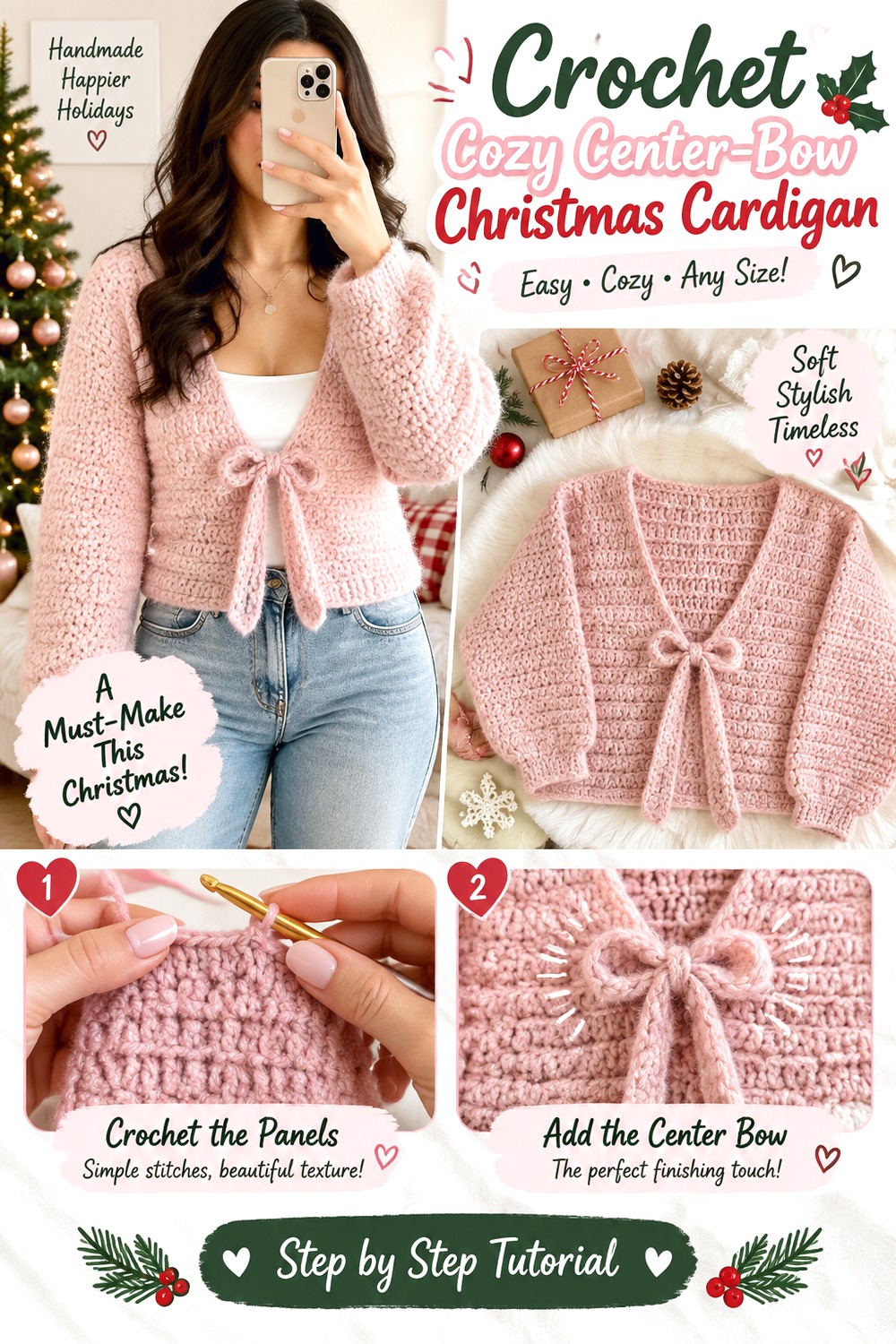
This idea puts one generous front bow at the center of the entire look. Mahum’s cardigan is specifically designed as a front-tie bow cardigan and uses a made-to-measure approach, so the silhouette can be adjusted rather than tied to one fixed finished size. For a Christmas version, the bow can become the seasonal focal point while the body stays comparatively simple.
This is one of the better choices for readers who want the bow to feel integral to the sweater instead of applied afterward. Decide first whether you want a close, neat fit or a roomier cardigan for layering, because that choice changes how the front panels meet around the bow.
Let the Front Edges Hang Naturally First
Do not judge the tie length in isolation. Put the cardigan in its intended wearing position and look at where the two front edges fall without pulling them inward. A bow should secure the shape you want rather than compensate for front panels that are too narrow. If the shoulders shift noticeably when you tie it, reassess the fit before making the closure more dramatic.
A Large Bow Needs Visual Breathing Room
Because this design already makes the center tie the main feature, extra Christmas embellishment can quickly compete with it. If you choose a bold red-and-cream palette, consider keeping the torso relatively uncluttered. Small trim changes can still frame the sweater, but the strongest composition usually comes from deciding whether the bow or the surface decoration should receive first attention.
Compare Fitted and Oversized Versions Before Starting
The tutorial’s made-to-measure format gives you room to change the overall proportion. A fitted version places more emphasis on the bow and waist area, while a roomier version reads more like a cozy cardigan. Think about the layer underneath and the sleeve volume you want before settling on body width; adding extra width at the end can change where the bow sits.
Original Tutorial and Creator Credit
Creator: mahum 🎀
Crochet Bow Appliqué Christmas Sweater Cardigan
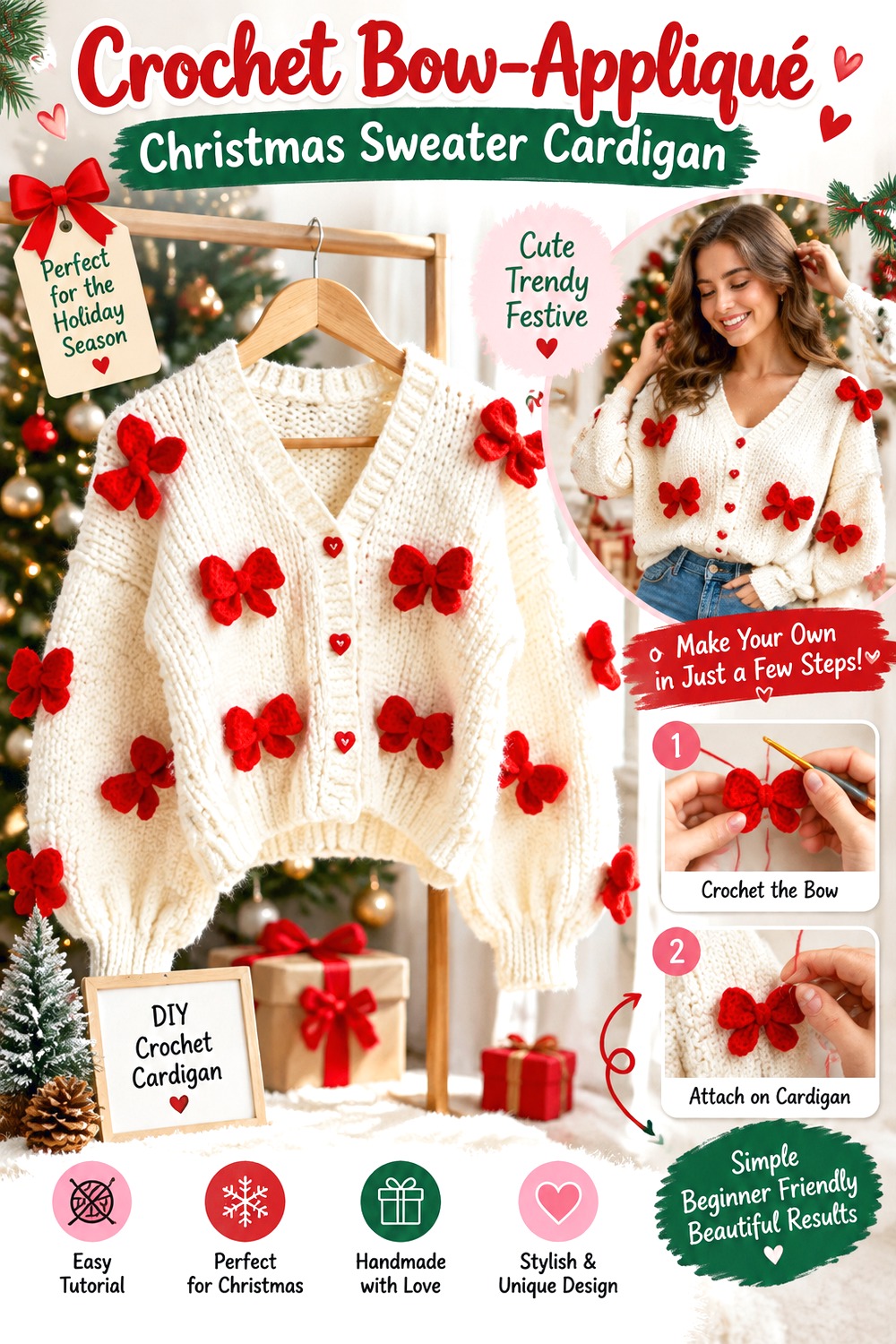
Instead of using the bow only as a closure, this version treats bows as surface decoration. Priya Crochets’ tutorial focuses specifically on making and attaching crochet bow embellishments to a chunky knit-look cardigan. That makes it a useful direction for a Christmas sweater with several small bows rather than one large central tie.
The biggest advantage is placement freedom. Bows could be concentrated near the front, arranged more sparsely, or used as a controlled accent rather than covering every area. Because the tutorial focuses on embellishing an existing cardigan construction, check the related cardigan instructions before assuming the bow video alone covers the whole garment.
Map the Bow Placement Before Sewing Anything
Lay the finished cardigan flat and temporarily position the bows before attaching them. This lets you compare symmetry, spacing, and visual weight without committing too early. Remember that a garment changes shape when worn; a bow placed perfectly on a flat panel can shift toward the side of the body. Check both the flat layout and the worn position.
Keep Heavier Decoration Away From Weak Edges
Multiple crochet bows add more material to the sweater. If the cardigan fabric is especially soft or open, avoid concentrating every embellishment on one narrow edge. Spread decorative weight across stable areas and inspect how the fabric hangs after the bows are pinned in place. If a panel starts sagging before attachment, reducing the number or scale of bows may produce a cleaner result.
Christmas Color Can Come From the Bows Alone
The cardigan body does not have to be bright red or green to read as seasonal. A cream, charcoal, or neutral base with controlled red, green, or metallic-looking yarn accents can make the embellishments easier to see. This approach is also useful if you want the sweater to remain wearable beyond December: the body stays versatile while the bow treatment supplies most of the festive character.
Original Tutorial and Creator Credit
Creator: Priya Crochets
Crochet Bow Sleeve Christmas Pullover
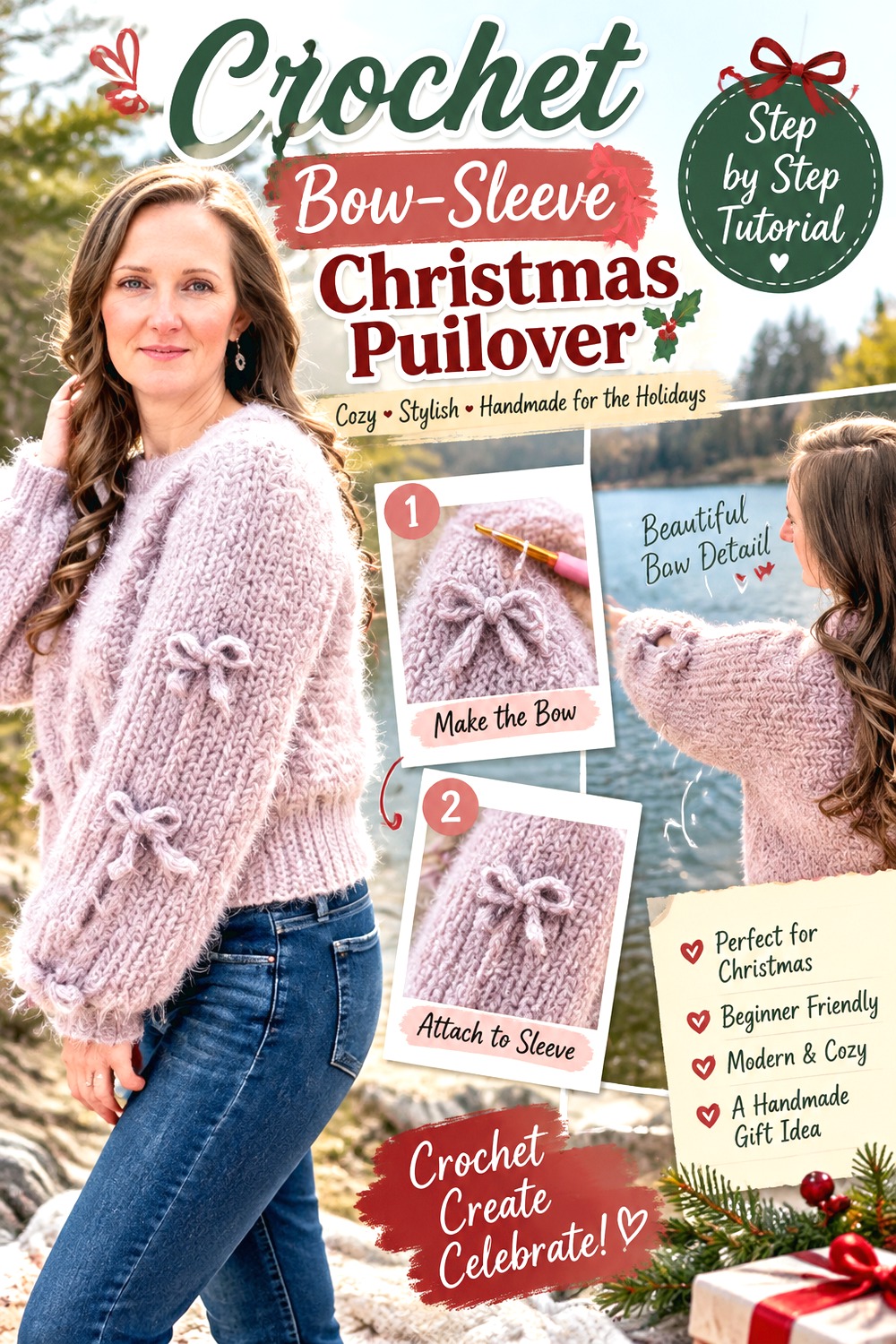
Kismet Crochet moves the bow away from the cardigan opening entirely. The source design is a semi-cropped pullover with slits at the tops of the sleeves, each finished with tied bows. The tutorial also uses a bulky eyelash yarn and a herringbone single crochet fabric, giving the sweater a denser, fuzzier appearance than the airy cardigans elsewhere in this list.
For a Christmas interpretation, those sleeve bows can become the festive element while the body remains one solid color. This design is particularly useful if you like bows but do not want an open front. The sleeve openings, fabric weight, and ribbed finishes make the overall construction meaningfully different from a standard tie cardigan.
Sleeve Bows Change the View From Every Angle
A front bow is mainly visible head-on, while these ties sit along the upper sleeves. Check the sweater from the side and back as well as from the front before deciding on contrasting bow colors. Strong contrast will emphasize the openings and shoulder area; matching yarn creates a quieter texture-driven effect that reveals itself more gradually.
Bulky Fuzzy Fabric Can Hide Small Details
The source uses bulky eyelash yarn, which contributes softness and warmth but naturally reduces crisp stitch visibility. If you adapt the color scheme, remember that a very small decorative element may disappear against a fuzzy surface. The existing sleeve ties work because they create shape as well as texture. If you substitute a smoother yarn, expect the same construction to look visually sharper.
Keep the Sleeve Opening Practical
The bow detail relies on sleeve slits, so consider what you will wear underneath. A fitted long-sleeve base may give a different result from bare skin or a loose layer. Before enlarging either the slit or the bows for extra Christmas drama, consider movement around the shoulder and upper arm; decoration should not make normal arm motion feel restricted.
Original Tutorial and Creator Credit
Creator: Kismet Crochet
Crochet Dark Coquette Christmas Bow Cardigan
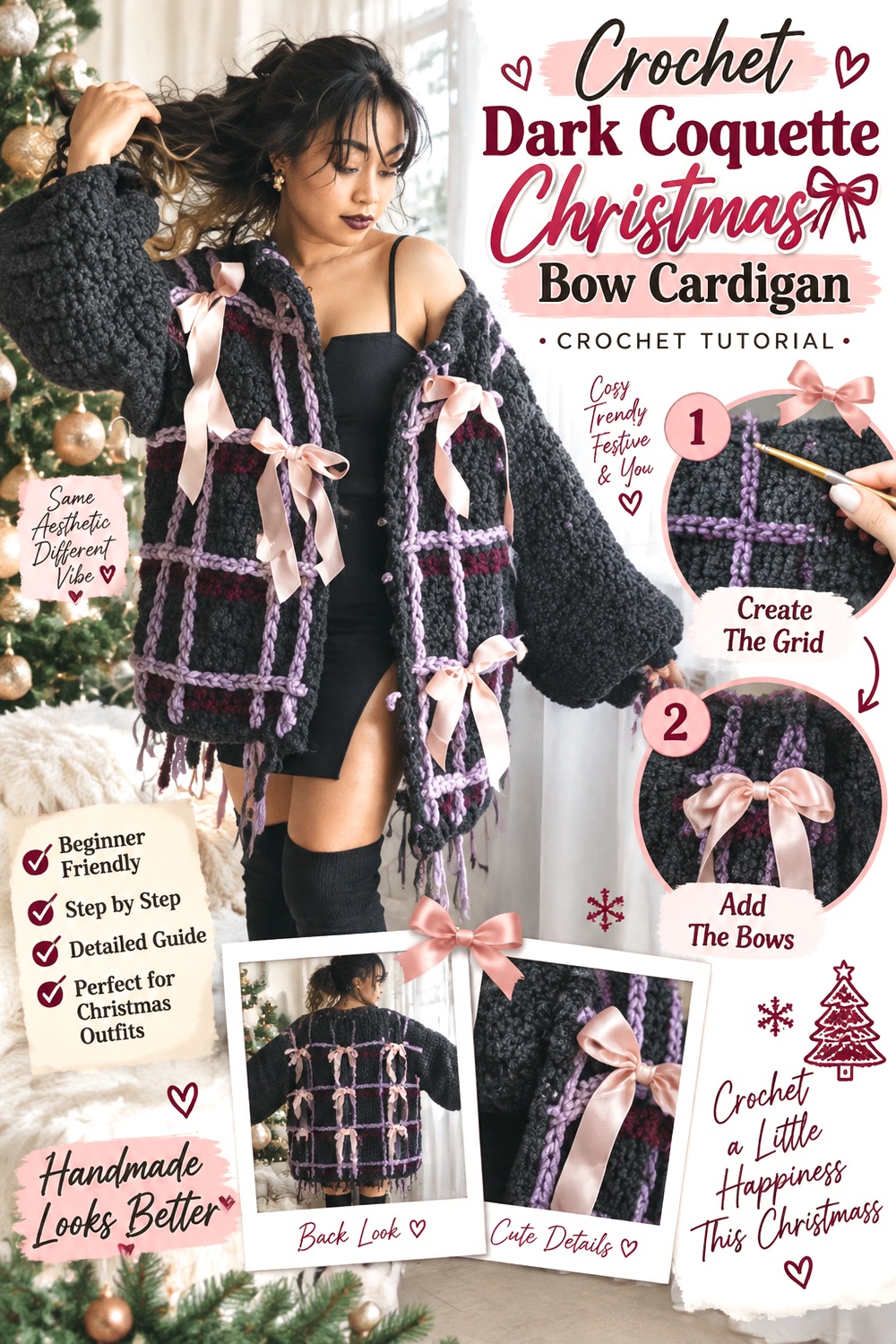
A Christmas bow sweater does not need a bright candy-cane palette. Yommycrochetlogy’s gothic coquette cardigan provides a darker route, pairing a crochet cardigan with prominent bow styling and ribbon details. Translated into a Christmas wardrobe, the same direction could use black with burgundy, deep evergreen, wine, or muted cream instead of relying on conventional bright holiday colors.
This option stands out because the bow treatment can mix crochet texture with actual ribbon rather than making every detail from yarn. That contrast gives the closure a sharper, more polished appearance. It also means the ribbon should be chosen with the crochet fabric in mind rather than treated as an interchangeable decoration.
Ribbon and Crochet Should Move Together
A smooth ribbon can behave very differently from a stretchy crocheted tie. Before permanently attaching ribbon, test how the cardigan edge responds when the bow is tied and untied. If the ribbon is much less flexible than the surrounding fabric, repeated pulling can concentrate stress at one point. A secure attachment area matters more than making the bow as large as possible.
Dark Holiday Colors Need Texture Separation
Deep burgundy, black, and forest green can look rich in person but may visually merge when the textures are similar. If you want the bow to remain visible, separate it through sheen, value, or material rather than adding numerous extra colors. A smooth ribbon against textured crochet can create enough distinction without turning the sweater into a highly multicolored garment.
Decide How Much Coquette Detail You Actually Want
The source aesthetic is intentionally decorative. For a more wearable Christmas version, you can let one or two bow areas carry the theme and keep the rest restrained. For a stronger statement, repeat the ribbon language in small controlled places. Either way, establish one dominant focal point first; otherwise sleeve, neckline, bow, and color accents can all compete.
Original Tutorial and Creator Credit
Creator: Yommycrochetlogy
Crochet Lacy Holiday Bow Tie Cardigan
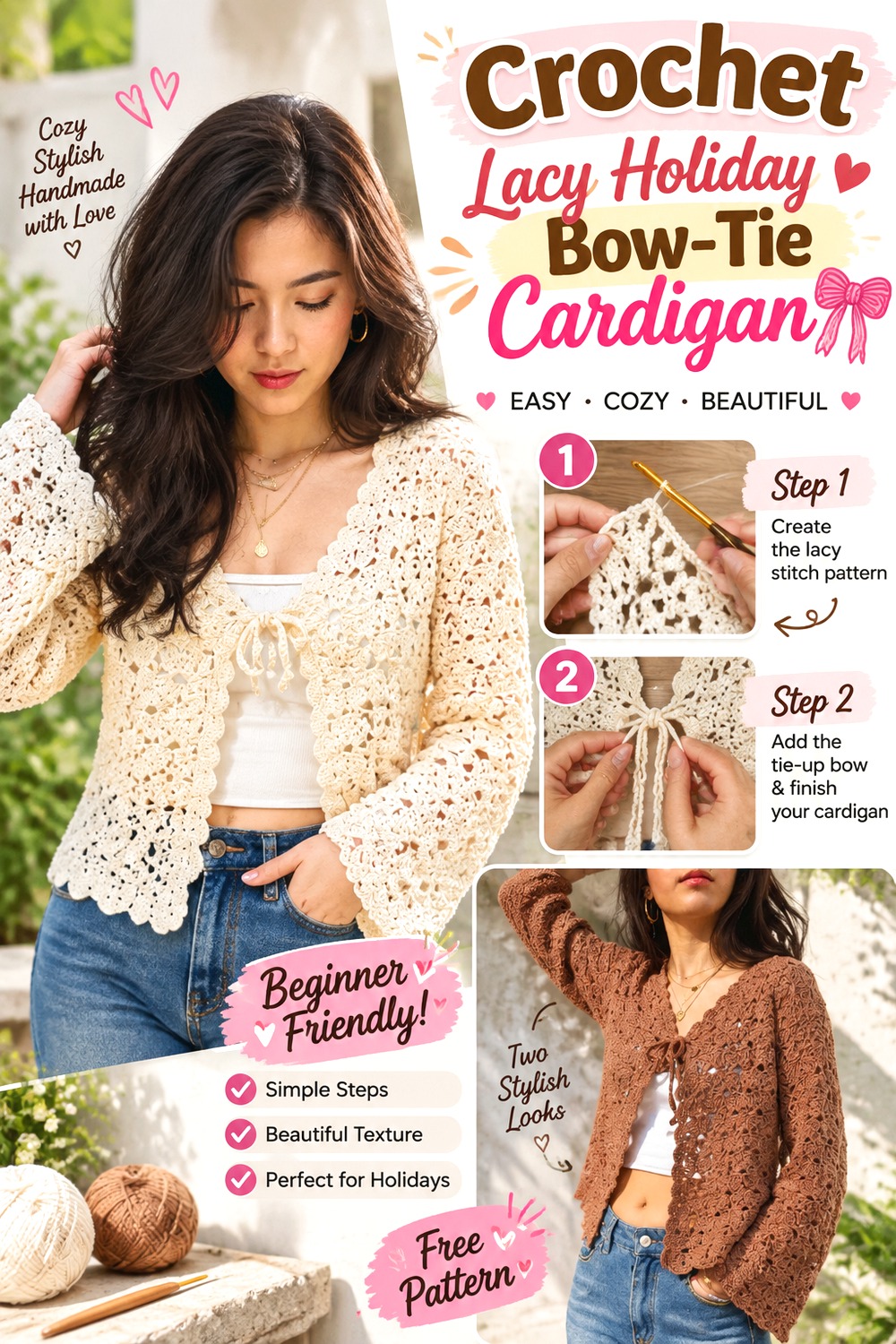
Kiks and Jack Crochet offers one of the most directly seasonal sources in the collection. Their lacy tie-front cardigan was presented as a holiday design and combines a light fabric, neckline shaping, and a front fastening rather than a dense winter-sweater surface. The corresponding tutorial demonstrates the lacy stitch pattern and shaping around the front.
This is the option to consider when Christmas gatherings are mostly indoors and you want a festive cardigan that can sit over a dress or top without the bulk of a heavy pullover. The lacy surface already carries substantial texture, so the bow works best as part of the composition rather than an oversized addition.
Lace Makes the Underlayer Part of the Design
Open fabric means the color and neckline of whatever you wear underneath will remain visible. Plan the cardigan and base layer together. A high-contrast underlayer emphasizes every opening in the crochet, while a similar color produces a quieter texture. This matters especially for Christmas styling because adding several festive colors beneath lace can make the surface appear busier than expected.
Protect the Front Tie From Edge Distortion
A narrow tie attached to a lacy edge creates a concentrated pull point. Examine the tutorial’s finished border and neckline before substituting a dramatically heavier yarn or much larger bow. If your swatch stretches easily, check whether the front edge returns to shape after gentle tension. A decorative bow is not worth permanently pulling the cardigan opening out of line.
Shimmer Is Optional, Not Structural
The published holiday design uses yarn with a subtle sparkle, but the festive character does not depend on copying that material. You can get a Christmas effect through color, bow contrast, or the layer beneath. This is useful when you prefer easier-care fibers or dislike metallic texture. Choose yarn first for fabric behavior and comfort, then decide how much visual sparkle the garment actually needs.
Original Tutorial and Creator Credit
Creator: kiksandjackcrochet
Crochet Ribbed Christmas Bow Cardigan
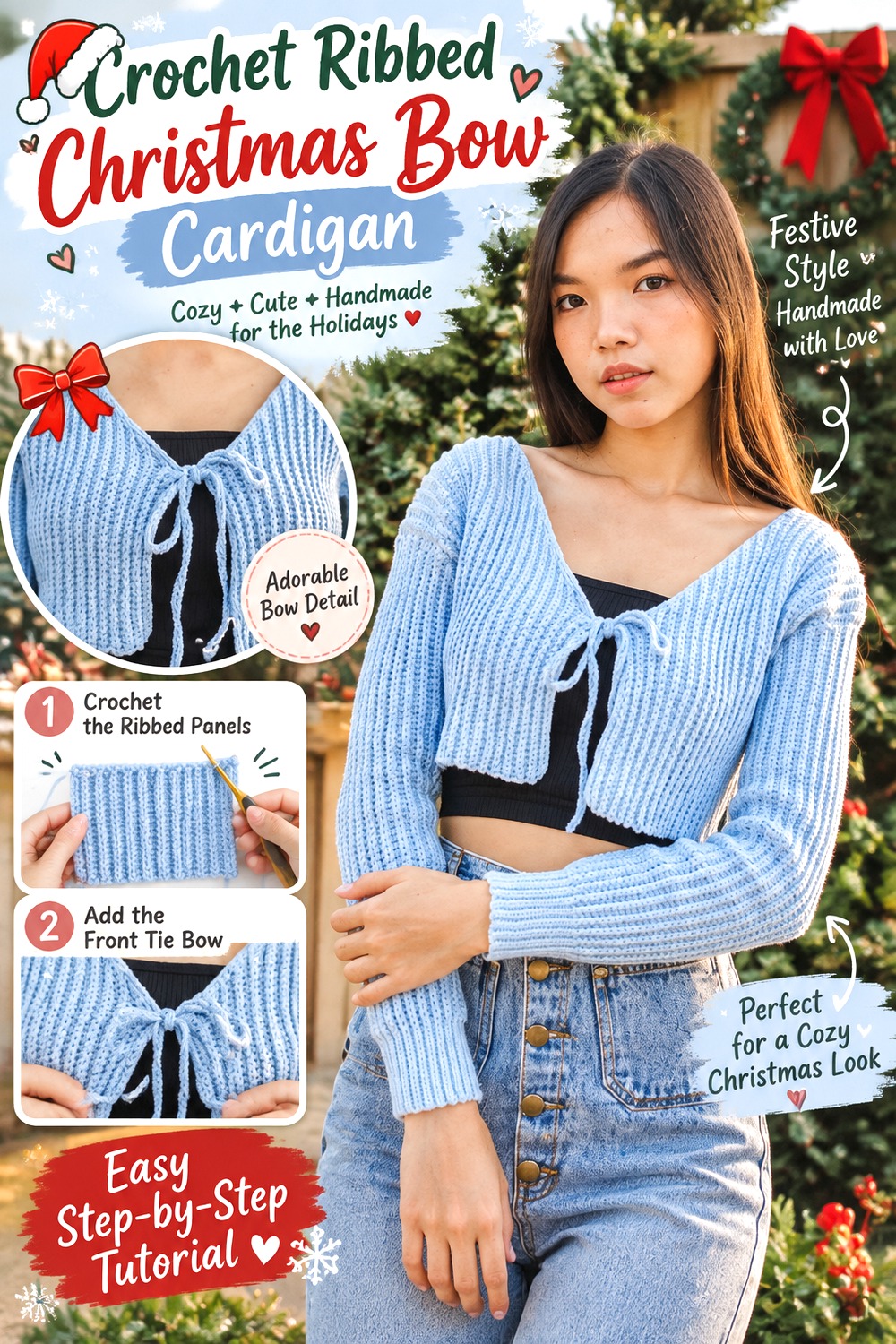
Chenda DIY’s front-tie cardigan gives the bow a more structured setting through visible ribbing. Compared with lace or granny-square fabric, a ribbed surface creates long vertical or horizontal lines that can make a contrasting bow look especially deliberate. The tutorial is specifically for a ribbed front-tie cardigan, giving this idea a cleaner, more streamlined holiday character.
For Christmas, consider using the ribbing itself as the main texture and keeping embellishment minimal. One bow closure in a contrasting shade can be enough. This is a practical choice for readers who like the seasonal bow trend but do not want appliqués, ribbons, granny motifs, or elaborate surface decoration competing with the sweater shape.
Keep the Rib Lines Even at the Opening
Because ribbing creates strong visual lines, any pulling around the closure can be easier to notice. Tie the bow only firmly enough to hold the front where you want it. If the ribs flare or angle sharply toward the tie, the closure may be doing too much structural work. Fit and front-panel width should establish the silhouette first.
Contrast Edging Can Frame a Simple Holiday Palette
A ribbed cardigan does not need many colors. A single contrast at the bow or front edge can outline the garment while preserving the clean texture. Before carrying contrast around every cuff and hem, look at the whole sweater. If the front tie already draws enough attention, repeating the secondary color everywhere may reduce its impact.
Original Tutorial and Creator Credit
Creator: Chenda DIY
Crochet Bell Sleeve Christmas Bow Cardigan
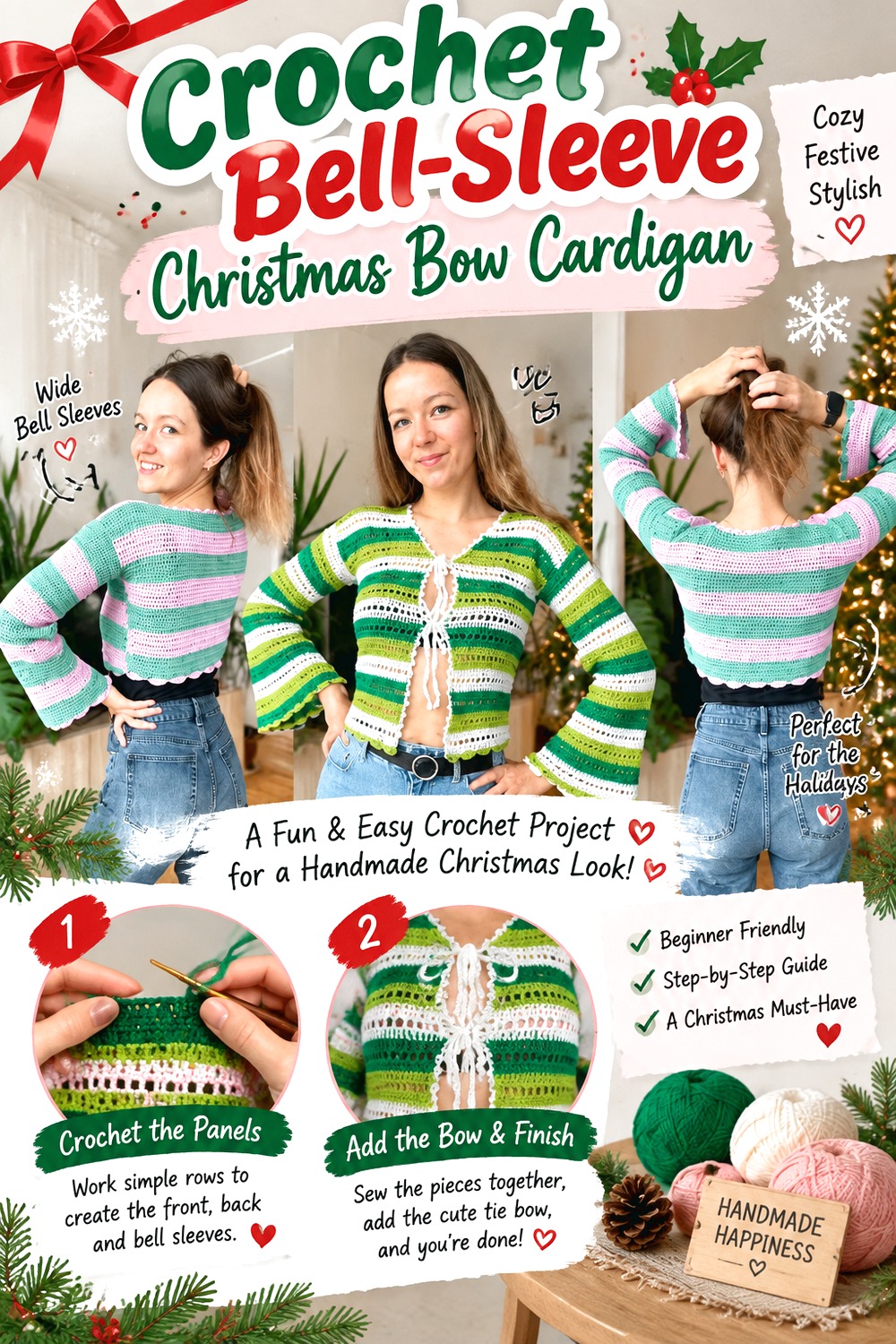
The bell sleeves in by Kristine’s tie-front cardigan create the drama before the Christmas color scheme even enters the picture. The source design has a front tie and wide sleeves, so it suits a festive sweater where movement at the arms is more important than repeated bow embellishments.
A rich solid color with a lighter bow can emphasize the silhouette without making it visually crowded. This style works particularly well as a visible outer layer at an indoor gathering, where the sleeves can remain uncovered. If you intend to wear another coat over it, check that your outer sleeves have enough room; compressing a generous crochet bell sleeve can create uncomfortable bunching.
Let the Sleeves Be the Statement Detail
Bell sleeves already add considerable visual width. A very large center bow can compete with them and make the garment feel overloaded. Compare the full silhouette before increasing tie size. A narrower bow often provides enough Christmas character while allowing the flared sleeves to remain the feature that distinguishes this cardigan from straighter designs.
Think About What the Cuffs Will Touch
Wide sleeves are attractive but less contained during meals, crafting, or other hand-heavy activities. If this is intended for Christmas dinner rather than a photo-only outfit, consider how far the cuff extends and how easily it can be kept clear of tableware. Practical use is a better guide than making the flare as dramatic as possible.
Original Tutorial and Creator Credit
Creator: by Kristine
Crochet Granny Square Christmas Bow Cardigan
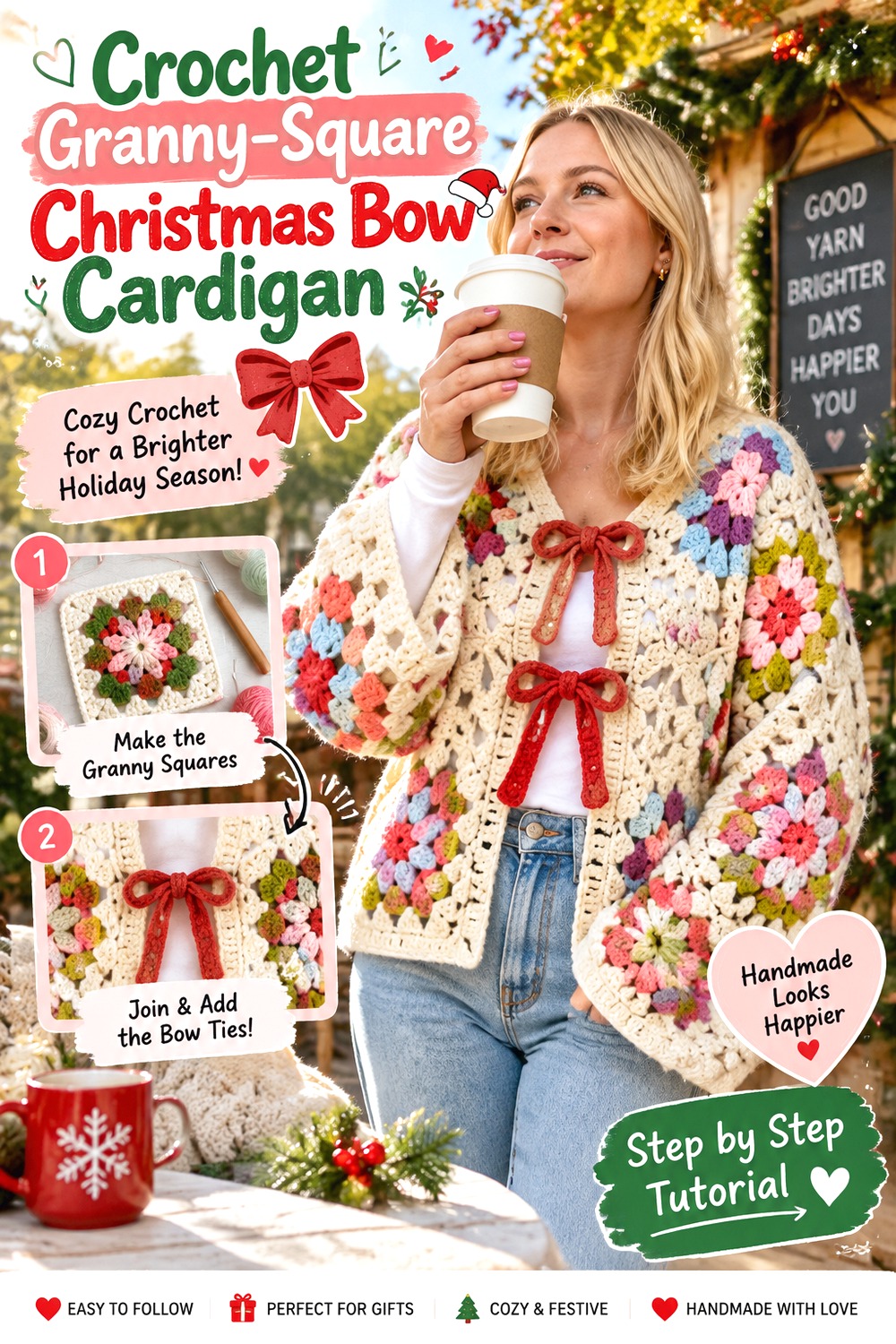
Laura Crochets brings modular construction into the collection with a granny-square tie-front cardigan. Instead of relying on one continuous field of stitches, the garment is assembled around crocheted squares, then finished with a front tie. That makes Christmas color planning much more flexible because the seasonal palette can be distributed across individual motifs rather than confined to the bow.
This is a strong choice if you enjoy colorwork but still want a recognizable bow closure. It also demands more layout planning: the squares create a visible grid, so color placement and motif direction matter across the front, back, shoulders, and sleeves. Plan that arrangement before joining rather than deciding one square at a time.
Block and Compare Motifs Before Final Layout
Squares that look similar while fresh from the hook may not finish at exactly the same dimensions. Compare the blocked size and shape of the motifs before joining large garment sections. Small differences can accumulate across a panel and make front edges harder to align, which becomes especially noticeable when a central bow visually connects the two sides.
Use the Bow to Calm or Intensify the Colorwork
If the granny squares already alternate red, green, cream, and other holiday shades, a neutral tie can give the eye somewhere to rest. If the motifs are mostly quiet, a bright bow can become the seasonal accent. Choose one strategy deliberately; making both the motif grid and closure equally high-contrast can leave the sweater without a clear focal point.
Check Motif Direction Around the Front Opening
A square cardigan has visible orientation. Before sewing or joining the final front layout, stand back and check whether prominent motif elements point in conflicting directions. A symmetrical bow tends to highlight differences between the two sides. Mirroring important motifs near the opening can create a more intentional appearance even when the rest of the cardigan uses a freer arrangement.
Original Tutorial and Creator Credit
Creator: Laura Crochets
Crochet Triple Bow Christmas Cardigan
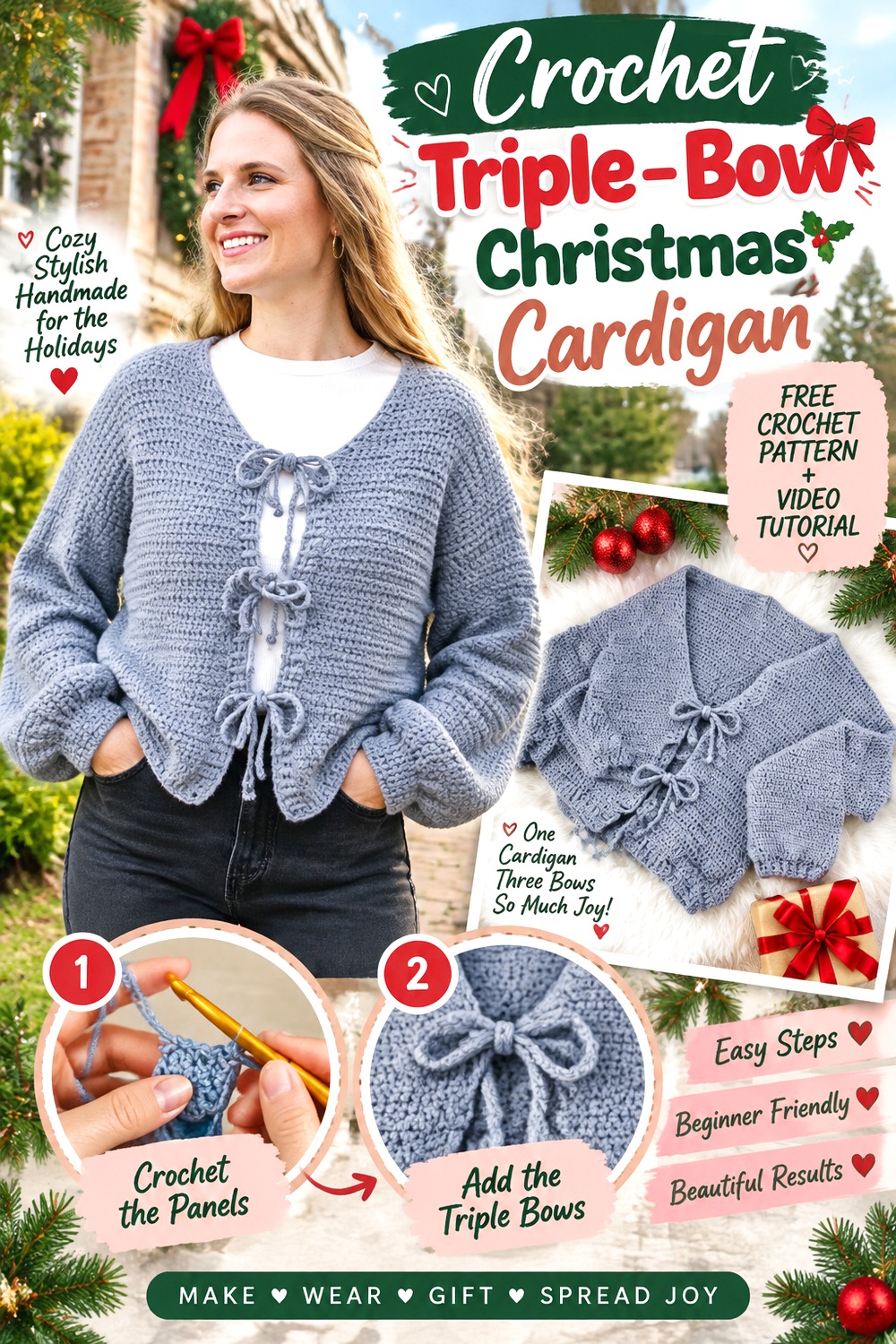
Instead of one central closure, Cozy Nooks Designs uses three removable ties on the Triple Tie Cardi. The source design can be worn open, tied at all three positions, or with a mixture of open and closed points, making the closures unusually adjustable. It is also worked largely as one piece with minimal seaming.
For Christmas styling, three smaller bows can create a repeated vertical detail without adding separate appliqués. This is a useful middle ground between a simple single tie and an all-over bow cardigan. Because every tie controls a different point along the opening, the placement also affects how much of the layer underneath remains visible.
Three Closures Let You Control Coverage
Tying only the upper closure creates a different neckline and front opening from securing all three. Try the cardigan over your planned holiday outfit before deciding that every tie must always be used. The removable design is valuable precisely because the closures can respond to the underlayer and occasion rather than fixing the cardigan into one shape.
Repetition Works Better When Bow Scale Is Consistent
With three bows arranged vertically, small differences in tie length and loop size become easier to see. Aim for a visually consistent bow scale unless you intentionally want a graduated effect. If one closure is significantly larger, it may look accidental and draw attention away from the overall sweater.
Color Blocking Can Work With the Closure Rhythm
The source construction also lends itself to color planning beyond a single solid body. If you introduce a second Christmas shade, relate it to the repeated ties or a clear garment section rather than scattering small color changes everywhere. The three closures already create a strong rhythm, so an organized palette usually complements them better than many unrelated accents.
Original Tutorial and Creator Credit
Creator: Cozy Nooks Designs
Crochet Mesh Christmas Bow Bolero Cardigan
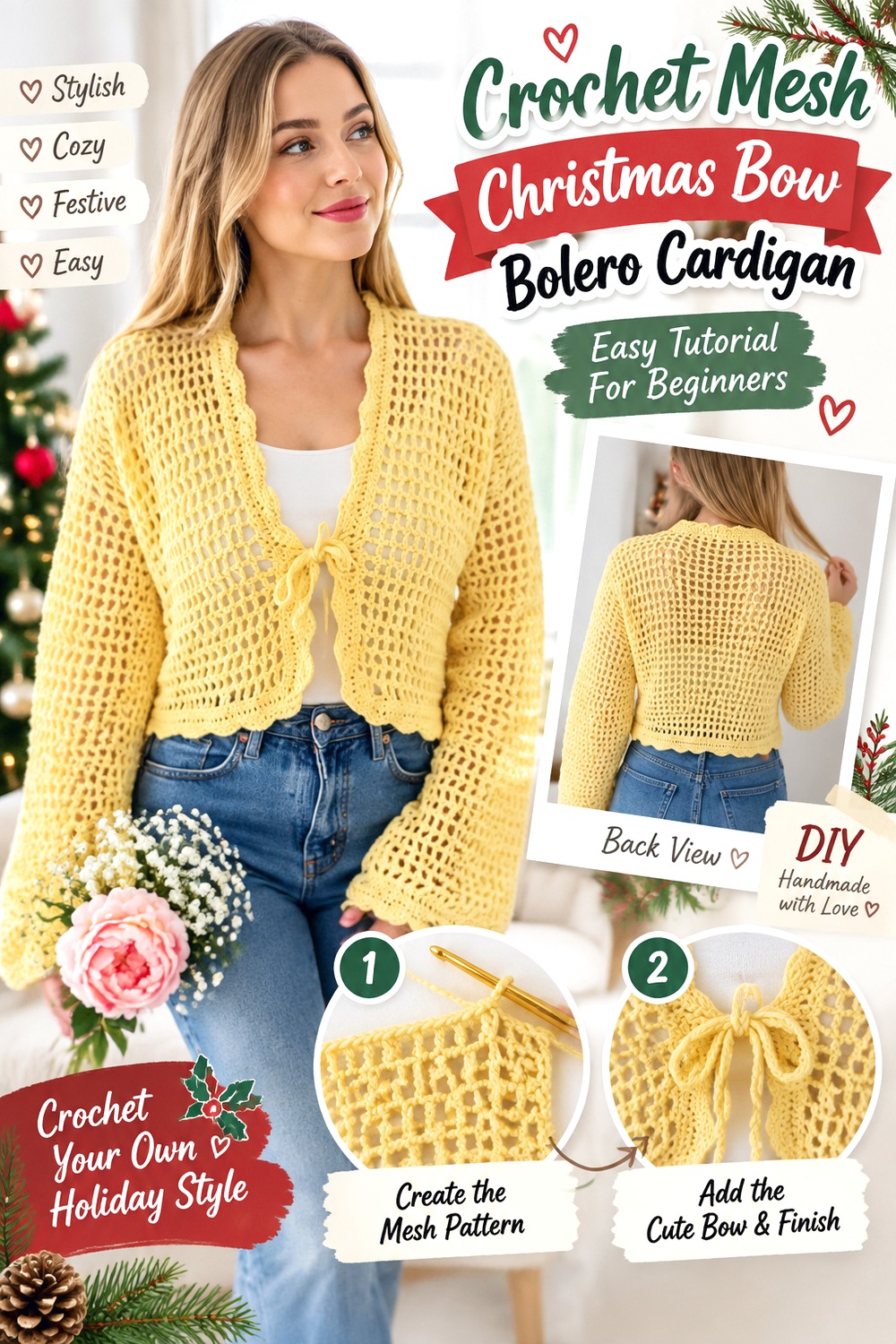
Selina Veronique Crochet’s mesh cardigan combines an airy body, shell-stitch edging, and a small front tie that forms a bow. That mix gives it a softer, more delicate finish than the ribbed or bulky sweaters in the collection. The source is specifically presented as a lightweight lacy bolero-style cardigan rather than a heavy winter layer.
For Christmas, this makes sense over a fitted dress or simple top at an indoor event. The open mesh allows the underlayer to participate strongly in the color scheme, while the small bow keeps the front romantic without closing off the whole garment. Treat it as festive layering rather than expecting pullover-level warmth.
Plan the Underlayer Before Choosing Yarn Color
Mesh exposes a large percentage of what sits beneath it. A cream cardigan over red creates a very different effect from red over cream even though the same two colors are involved. Put yarn beside the actual dress or top you expect to wear before committing. The interaction between crochet openings and background color can be stronger than the yarn shade by itself.
Shell Edging Already Supplies Ornament
The scalloped shell-style finish adds decorative movement around the cardigan, so the bow does not need to be oversized. If you add beads, extra trim, or multiple colors on top of the edging, the clean mesh may lose its visual lightness. Let either the edging or the added Christmas decoration take the lead rather than asking every detail to be festive.
Watch Stretch Where Mesh Meets the Tie
An open mesh panel can move more than a dense border. When the front tie is pulled, check whether the attachment area stays flat or begins to lengthen. The ideal bow tension is enough to position the cardigan without forcing the two fronts into a shape the fabric does not naturally want to hold.
Original Tutorial and Creator Credit
Creator: Selina Veronique Crochet
Crochet Airy Cropped Christmas Bow Cardigan
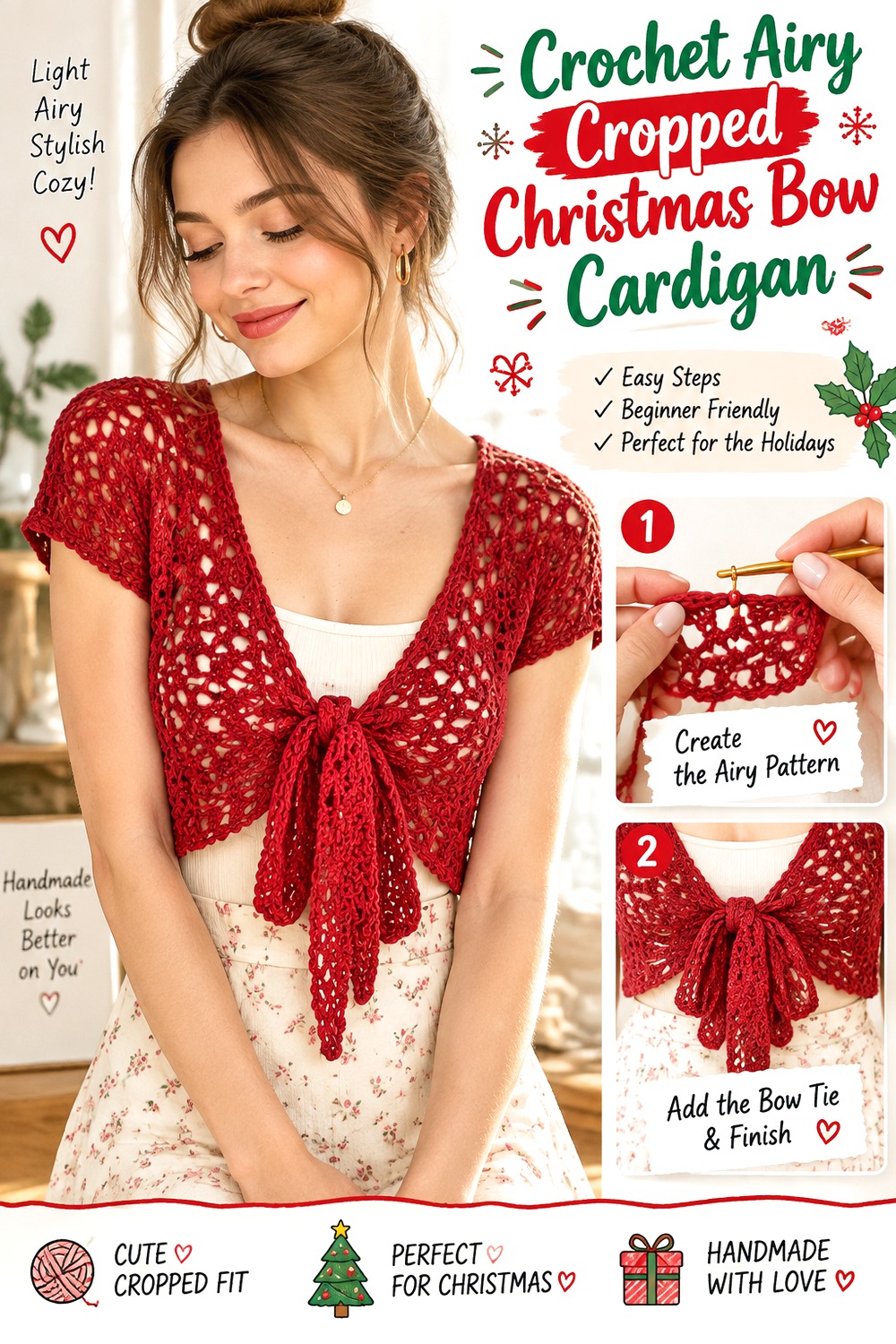
Alona crochets’ tie-front cardigan is cropped and built around an airy stitch pattern. The creator presents it as a light summer layer and shows a cotton sample, so a Christmas version should be viewed as a dressy indoor cardigan rather than automatically converted into a heavy winter sweater.
The short body gives the bow more visual importance because there is less fabric below the closure. It can work particularly well over a high-waisted skirt, dress, or fitted top where the underlayer supplies coverage. If you substitute a much thicker yarn to chase warmth, remember that the open stitch pattern and proportions may behave differently from the original design.
Cropped Length Changes Where the Bow Lands
The relationship between hem, waist, and bow matters more on a short cardigan than on a long one. Try the planned underlayer with the cardigan before finalizing the closure. If the bow lands directly on a waistband or other bulky garment detail, the two layers may compete. A small length adjustment can change the overall balance substantially.
Do Not Expect Openwork to Behave Like Dense Fabric
A more substantial yarn does not automatically turn an airy stitch pattern into a traditional warm sweater. Open spaces still affect coverage, drape, and wind resistance. Choose this idea because you like the light visual texture and layering effect, not because you expect it to perform exactly like the denser pullover elsewhere in the list.
Original Tutorial and Creator Credit
Creator: Alona crochets
Crochet Shell Stitch Christmas Bow Cardigan
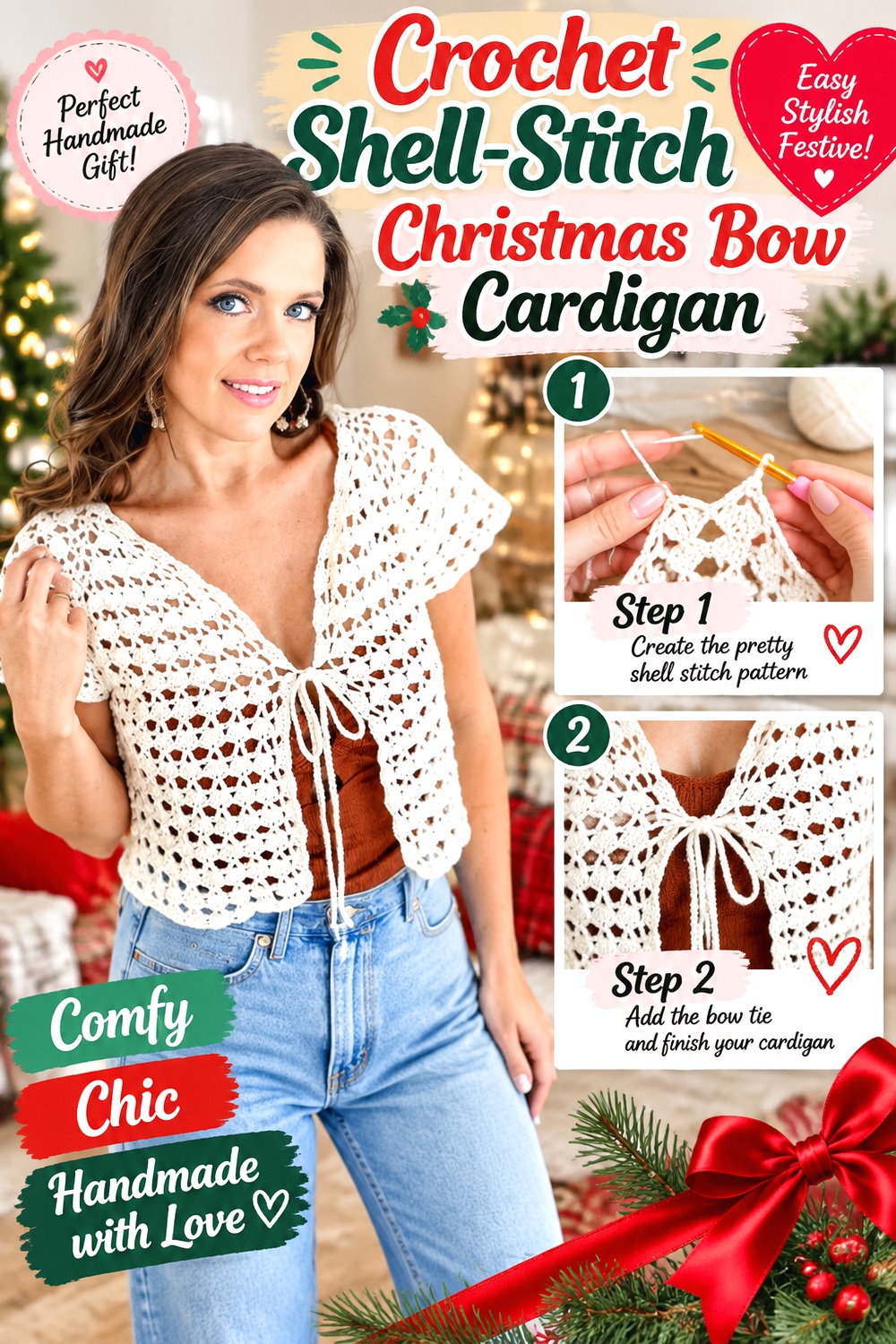
The Solea cardigan from MJ’s Off The Hook Designs offers another light option, but its construction is notably different: the published design is worked seamlessly from the top down and uses shell and V-stitch texture with feminine front ties. The design can also be made with different sleeve lengths.
That makes this Christmas adaptation useful if you want decorative stitch texture without granny-square assembly or a heavily ribbed surface. A deep jewel tone can let the shell pattern provide most of the detail, while a contrasting bow emphasizes the opening. Because the source is designed as a breathable layering cardigan, keep expectations about warmth separate from its visual suitability for holiday outfits.
Top-Down Construction Creates Useful Fit Checkpoints
One advantage of a top-down garment is the opportunity to assess the upper-body fit before all the lower length has been added. Pay particular attention to the yoke and armhole area because a beautiful bow cannot correct shoulders that sit uncomfortably. Make fit decisions while the structure is still easy to evaluate rather than saving every adjustment for the finishing stage.
Shell Texture Needs Space to Read Clearly
A shell pattern already creates repeated curved forms. Highly variegated yarn or too many contrasting trims can obscure that texture. For a Christmas version, a solid or restrained palette can allow the stitches and bow to share attention. If you want sparkle or a strong accent color, reserve it for a limited area rather than covering every structural line.
Sleeve Length Changes the Seasonal Role
The source provides short- and long-sleeve possibilities, which can shift the cardigan from a light party layer toward something with more coverage. Choose based on the environment where it will actually be worn. A long sleeve may look more wintry, but overall warmth still depends on the yarn and open stitch structure, not sleeve length alone.
Original Tutorial and Creator Credit
Creator: MJ’s Off The Hook Designs
Crochet Contrast Edge Christmas Bow Cardigan
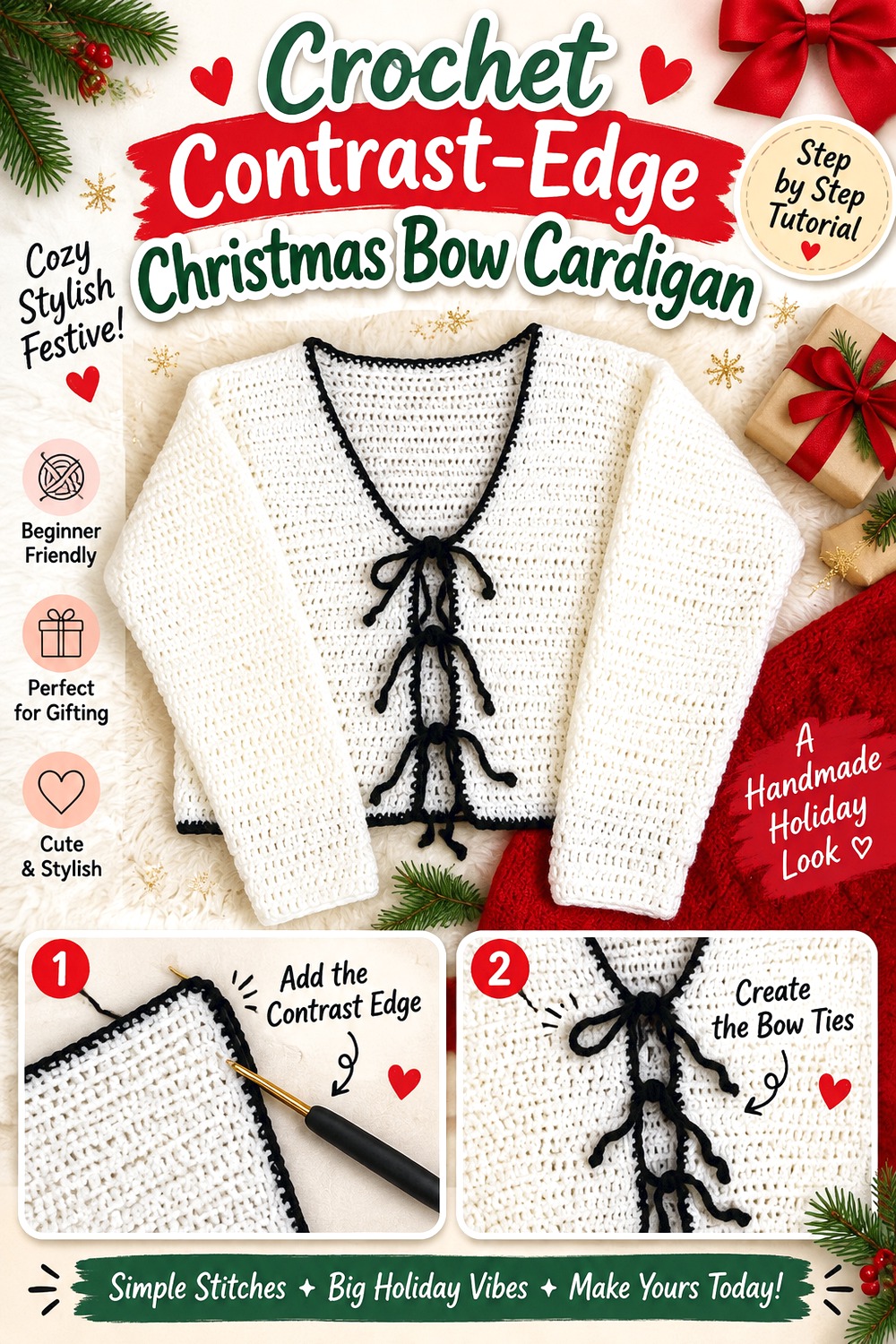
Kenikse Crochet’s front-tie cardigan uses a main color with a smaller amount of accent color and finishes the front with a border and ties. That gives Christmas color placement a built-in framework: instead of making the whole sweater multicolored, the accent can concentrate around the edges and bow.
This makes the project useful for a clean red-and-cream or green-and-cream interpretation where contrast outlines the garment rather than filling every panel. Since the tie grows out of the finishing treatment, check the edge tension carefully. A border that is noticeably tighter or looser than the body can alter how the cardigan hangs before the bow is even tied.
Use Contrast Where It Clarifies the Shape
A secondary color is most effective when it makes the front opening and closure easier to read. If you repeat it across too many unrelated sections, the crisp outline effect can disappear. Start with the border and bow, then decide whether cuffs or another small area genuinely improve the balance before adding more.
Check Border Tension Before Judging the Fit
An edge treatment can change the apparent length and drape of front panels. Lay the cardigan flat after finishing a section of border and make sure the edge neither ripples nor pulls upward. Correcting that problem before completing both sides is easier than trying to hide uneven tension with a tighter bow.
Original Tutorial and Creator Credit
Creator: Kenikse Crochet
Crochet Made to Measure Christmas Bow Cardigan
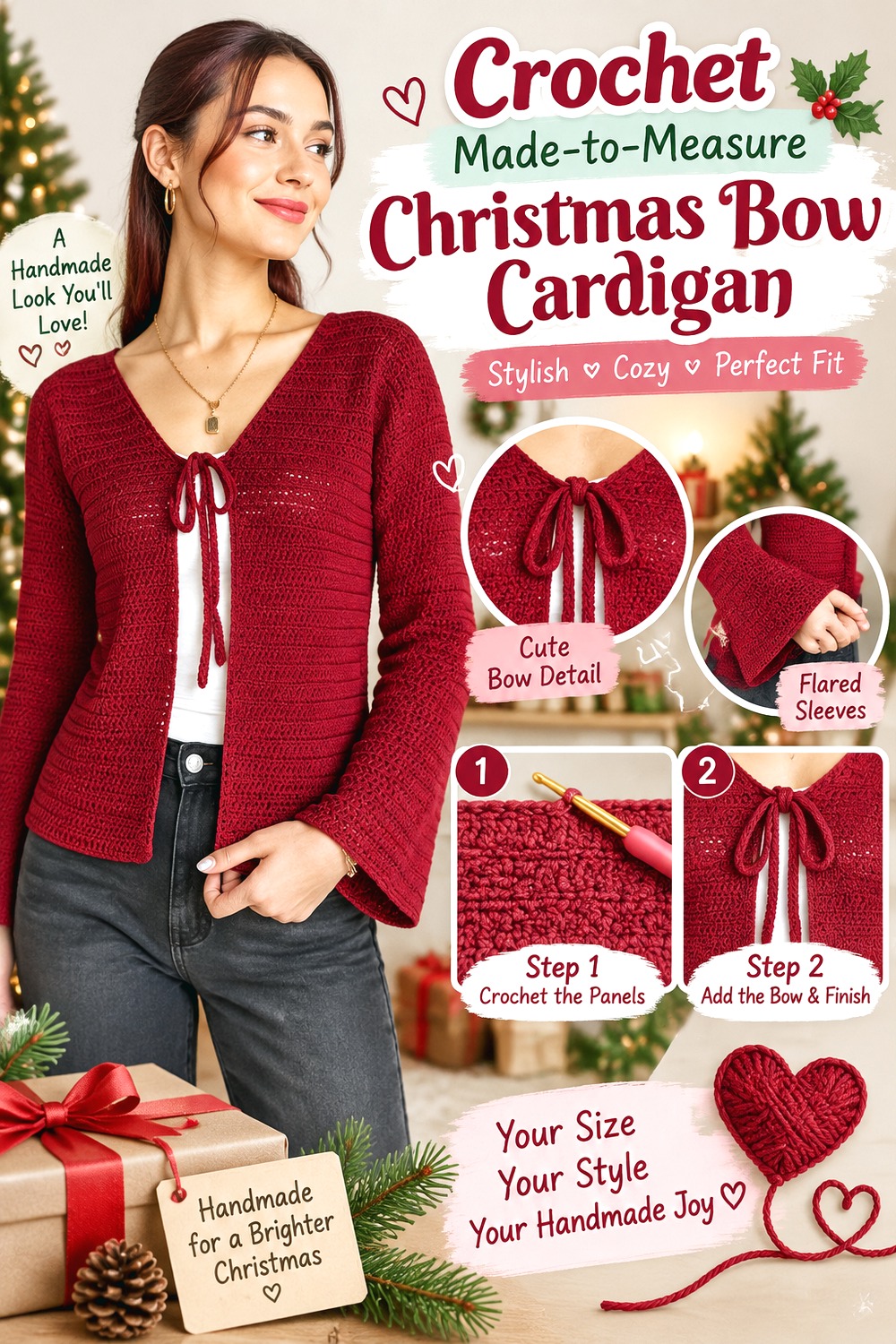
Granny Gaia’s front-tie cardigan is presented as a made-to-measure project, allowing the wearer’s measurements to guide the garment rather than relying only on a fixed sample. The tutorial covers separate front and back areas, sleeves, and the tie section.
That makes it a useful Christmas bow sweater when fit matters more than decorative complexity. The front remains simple enough for a single bow to stand out, while the proportions can be planned around your intended layering. A longer body gives a cozier cardigan impression; a shorter version feels more outfit-focused. In either case, settle the shoulder, sleeve, and body dimensions before treating the bow as the final styling solution.
Measure Over the Right Kind of Clothing
If the cardigan will sit over a winter top, take fit decisions with a comparable layer underneath. Measurements taken over a thin camisole may produce a different feel once a thicker shirt is added. Made-to-measure construction is useful only when the measurements reflect the way you actually plan to wear the garment.
Keep Both Front Panels in Agreement
A centered bow makes asymmetry obvious. Compare the front panels as you work and again before adding ties. Look at length, edge shape, and where each side approaches the center. Small differences are easier to address before finishing than after a high-contrast Christmas bow has been added between them.
Original Tutorial and Creator Credit
Creator: Granny Gaia
Crochet Textured Cropped Christmas Bow Cardigan
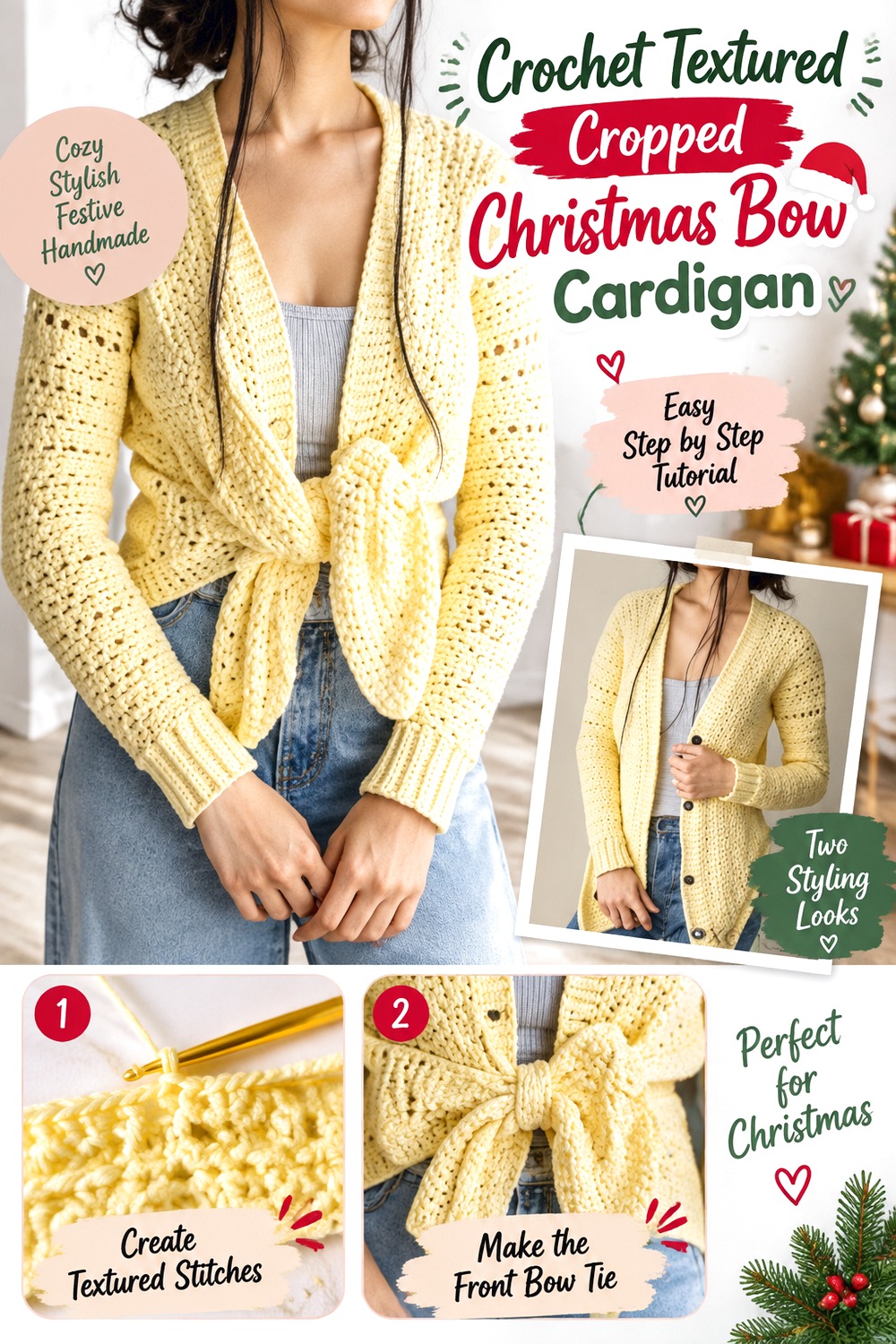
TCDDIY’s front-tie cardigan gives this roundup another cropped option, but with a more structured, textured character. Secondary pattern information associated with the tutorial describes a cropped shape with long flared sleeves and a tied front, creating more visual weight than the very airy cropped cardigan above.
For a Christmas adaptation, this is a good candidate for one strong body color and a controlled contrasting closure. The combination of cropped body, texture, and sleeve shape already provides enough design interest. Before altering the yarn dramatically, compare the fabric you produce with the tutorial’s finished result; changes in thickness can affect both the texture and the way the cropped hem sits.
Texture Can Make a Small Sweater Feel Visually Full
A short cardigan does not need many extra motifs when the stitch surface is already pronounced. Adding appliqué bows, several border colors, and a large tie at once may crowd the limited body area. Choose the closure as the main Christmas feature, then add only the amount of secondary decoration needed to support it.
Match the Cropped Hem to Your Wardrobe
Check the finished-length goal against the dresses, skirts, or pants you intend to pair with the cardigan. A hem that looks balanced with one rise or waist position may feel awkward with another. Planning from actual outfits is more reliable than selecting a crop length only because it matches a tutorial sample.
Original Tutorial and Creator Credit
Creator: TCDDIY
Crochet Minimal Front Bow Christmas Cardigan
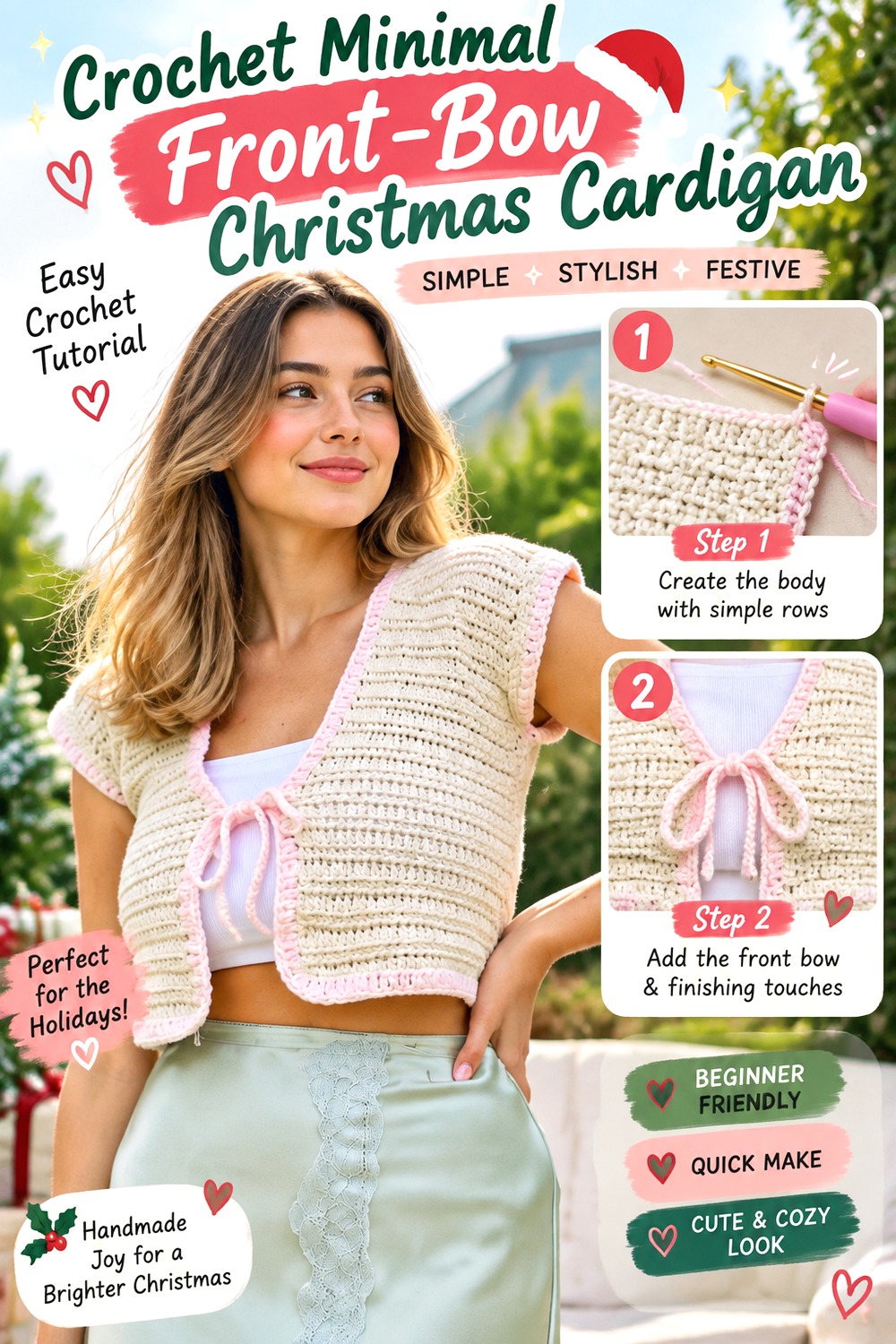
Emma P’s tie-cardigan tutorial provides a simple route for anyone who wants the bow trend without making the sweater heavily decorative. The source centers on a straightforward tie-front cardigan, leaving plenty of room to create the Christmas identity through yarn color, the bow itself, or the clothes underneath rather than through additional motifs.
That restraint is valuable in a list full of granny squares, lace, sleeve bows, and multiple closures. A minimal cardigan can also remain easier to style after the holidays if the body uses a versatile shade. For the most seasonal impact, let the tie provide the contrast instead of automatically adding decoration to every edge.
One Bow Makes Proportion More Noticeable
When there are few competing details, the width and length of the center tie matter more. Before finishing the closure, experiment with the visual scale of the bow against the entire cardigan. A tiny bow may disappear; an oversized one can dominate the torso. Aim for a proportion that complements the neckline and body length.
Restraint Can Make the Christmas Detail Clearer
A neutral cardigan with one deep red bow may communicate the theme more cleanly than a garment using several festive motifs at once. If year-round wear matters, this is also one of the easiest concepts to tone down. Think of the bow as punctuation: it should complete the design rather than require every other part of the sweater to repeat the same message.
Original Tutorial and Creator Credit
Creator: Emma P
Crochet Classic Long Sleeve Christmas Bow Cardigan
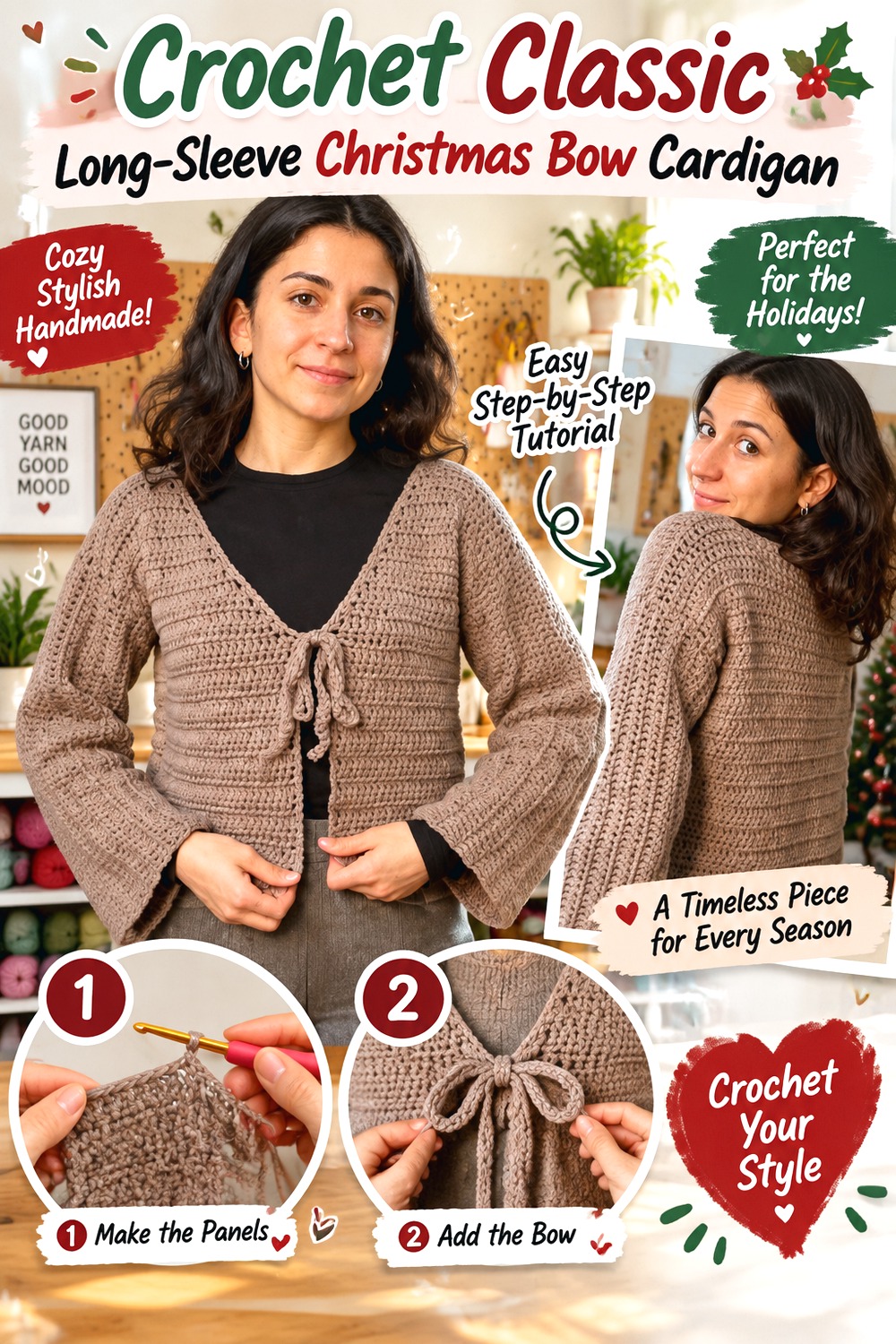
The cardigan from vivi e cuci offers a classic long-sleeve tie-front shape and is presented as workable in either wool or cotton. That gives the concept a broader seasonal range than the explicitly summery openwork projects, although the final warmth still depends on the specific yarn and fabric you produce.
A Christmas version could stay traditional with a solid body and one bow, making this an approachable alternative to the more specialized silhouettes. The long sleeves give it more coverage than a bolero while the open front keeps it flexible for layering. Use the creator’s measurement discussion rather than assuming another cardigan’s proportions will transfer directly.
Fiber Choice Changes More Than Warmth
Wool and cotton can differ in drape, elasticity, surface feel, and recovery. If you change fiber from the tutorial sample, compare a finished swatch before committing to the full garment. A bow tie made from a yarn with little recovery can hang differently from one made with a springier fiber, even when both use the same construction.
Keep the Classic Shape From Becoming Too Busy
This cardigan works well as a quiet foundation. If you want traditional Christmas colors, consider concentrating contrast at the tie, cuffs, or one other deliberate zone rather than adding motifs everywhere. The uncomplicated silhouette is part of its appeal and provides a useful counterpoint to the more decorative ideas in the collection.
Original Tutorial and Creator Credit
Creator: vivi e cuci
Crochet Short Christmas Bow Bolero Sweater
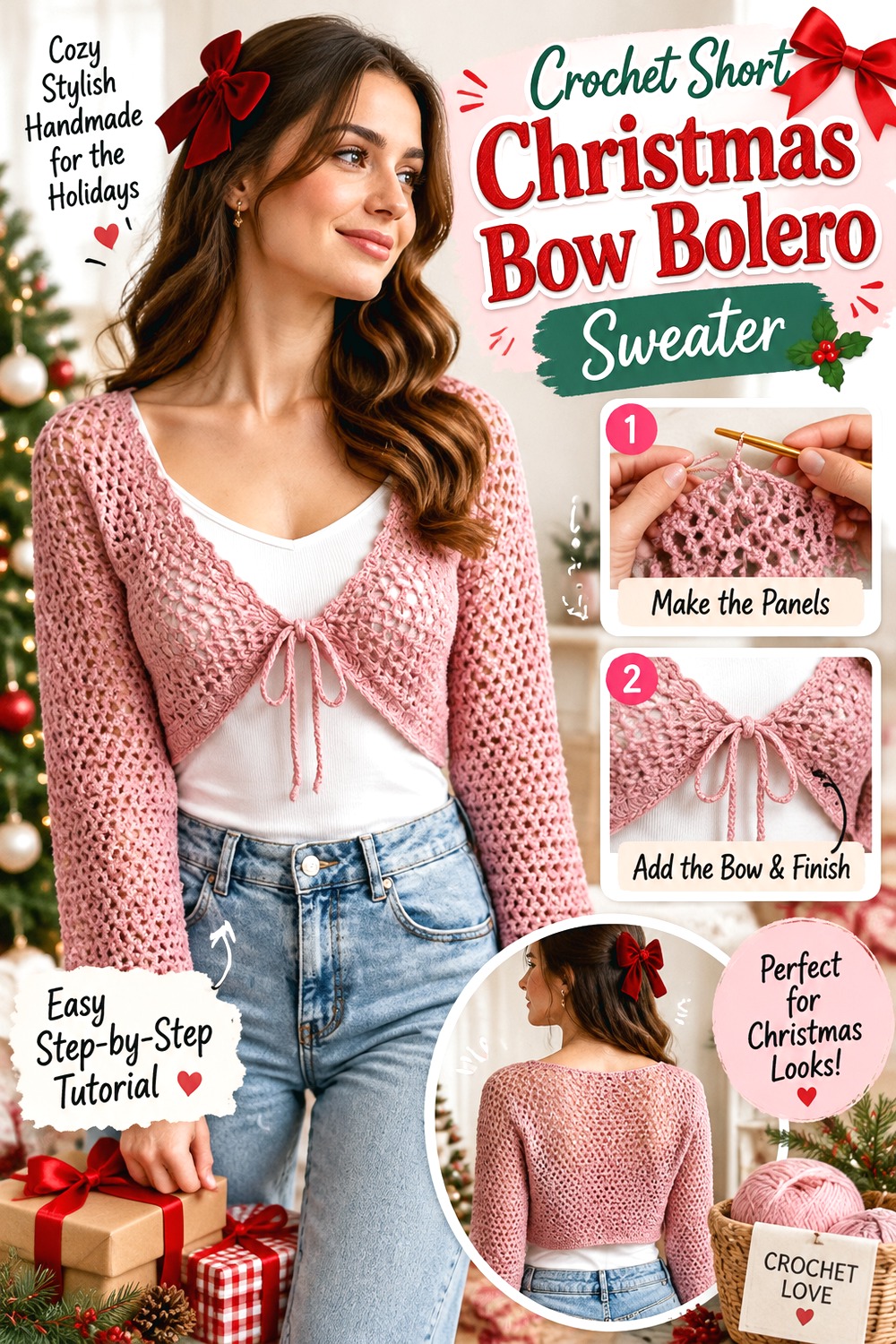
Lady_Anika – Szydełkowe Światło closes the collection with a bolero-style tie-front cardigan. The abbreviated body gives it a distinctly different role from the longer cozy cardigans: this is primarily a shoulder-and-arm layer that can sit over a Christmas dress or fitted top while leaving much of the outfit visible.
Because there is less crocheted fabric across the torso, the front tie becomes a strong visual anchor. This makes the bolero useful when you want a bow sweater look without covering the dress underneath. It also means fit around the shoulders and upper arms deserves particular attention; there is less lower body fabric to visually balance problems higher up.
Coordinate the Bolero With the Neckline Underneath
A short tie-front layer frames the upper chest and neckline of the garment below it. Compare both pieces together before finalizing bow placement. A busy dress neckline plus a large crochet bow may compete, while a simple underlayer can support a more dramatic closure. Treat the two garments as one finished outfit rather than styling each independently.
Shorter Does Not Automatically Mean Simpler to Fit
A bolero removes much of the torso length, but shoulder width, armhole comfort, sleeve movement, and front-edge position still determine whether it sits correctly. Check those areas before spending time perfecting a decorative Christmas bow. If the shoulder line shifts whenever the tie is tightened, address the garment fit rather than relying on the closure to hold everything in place.
Original Tutorial and Creator Credit
Creator: Lady_Anika – Szydełkowe Światło
Which Christmas Bow Sweater Style Should You Choose?
Choose by where you want the visual emphasis, not only by your favorite Christmas color.
| Style | Main Feature | Most Useful When |
|---|---|---|
| Center-bow cardigan | One prominent front tie | You want the bow to define the whole sweater |
| Bow-appliqué cardigan | Repeated decorative bows | You want flexible motif placement |
| Bow-sleeve pullover | Ties away from the center front | You prefer a closed sweater with unusual detailing |
| Triple-tie cardigan | Several adjustable closures | You want control over front coverage |
| Granny-square bow cardigan | Motif grid plus tie | You want Christmas color distributed across the garment |
| Lace or mesh bow cardigan | Openwork and a delicate closure | You need a lighter indoor or party layer |
| Ribbed or textured cardigan | Strong fabric surface with simple tie | You prefer a cleaner, more structured holiday look |
| Bolero bow sweater | Short body framing an underlayer | The dress or top underneath should remain visible |
The most important distinction is functional versus decorative bows. A front tie affects how the cardigan closes, while appliqué and sleeve bows can be positioned with fewer fit consequences.
Conclusion
These 18 crochet Christmas bow sweater ideas range from a true bow-sleeve pullover and bow-appliqué cardigan to ribbed, lacy, granny-square, cropped, triple-tie, and bolero constructions. For the strongest cozy-sweater effect, start with the denser center-bow, ribbed, classic long-sleeve, or bow-sleeve options. Choose lace, mesh, shell, or cropped designs when you want a lighter Christmas layer over another outfit.
If colorwork is the attraction, the granny-square cardigan offers the most room for a planned festive palette, while the minimal and contrast-edge versions keep the bow more prominent. Once the silhouette suits your needs, use the original tutorials for exact measurements, materials, construction, and finishing details.
Frequently Asked Questions
Does a tie-front crochet cardigan count as a Christmas bow sweater?
It can when the front ties are intentionally tied into a visible bow and the garment is styled for the Christmas season. The distinction matters because a tie-front cardigan uses the bow as a functional closure, while some bow sweaters use decorative appliqués or sleeve bows instead. In this roundup, those constructions are identified separately so you can choose based on how much the bow should affect fit.
How can I stop a front bow from pulling a crochet cardigan out of shape?
First check the cardigan fit without tension on the tie. The front panels should naturally sit close to their intended positions before the bow is tightened. If the closure has to drag the edges several inches inward, the panels or fit may need adjustment. Openwork fabric deserves extra attention because a narrow tie can concentrate force on a small, stretchy area.
What yarn makes a crochet bow look crisp rather than floppy?
There is no universal fiber that guarantees a particular bow shape because yarn thickness, twist, stitch structure, tie width, and tension all contribute. In general, a firmer fabric tends to hold a more defined bow, while very soft or fluid material can create relaxed loops. Make a small sample with the intended yarn and tie construction, then see whether the bow holds its shape after being tied for a while.
Can I add crochet bow appliqués to any sweater?
Not automatically. Decorative bows work best when the underlying fabric can support their weight without sagging or distorting. A dense cardigan may tolerate larger embellishments better than very open lace, but the bow size and attachment method also matter. Temporarily pin the embellishments to the finished garment, try it on, and check how the fabric hangs before making the placement permanent.
Should I finish the sweater before deciding exactly where the bows go?
For decorative appliqués, usually yes: final placement is much easier to judge once the garment has reached its finished shape. For functional tie closures, follow the tutorial’s construction order, but still verify the fit before deciding to enlarge or reposition the bow. The important checkpoint is to evaluate the actual worn garment rather than relying only on flat measurements.
How can I make a bow sweater look Christmas-themed without using bright red and green everywhere?
Use the seasonal color in one controlled focal area. A cream cardigan with burgundy bows, forest green with ivory ties, charcoal with deep red, or a neutral granny-square layout with selected holiday accents can read clearly as festive without becoming heavily multicolored. Texture can do part of the work too: ribbing, fuzzy yarn, lace, or a defined bow can create seasonal richness without extra motifs.
Are mesh and lace bow cardigans warm enough for Christmas?
They are better considered layering pieces unless the specific yarn, fabric, and environment provide the warmth you need. Open stitches allow more air through than dense crochet, and a thicker yarn does not necessarily remove those openings. For an indoor Christmas gathering, lace or mesh can work well over another garment. For colder outdoor use, compare actual coverage and fabric density rather than judging warmth from the holiday appearance alone.