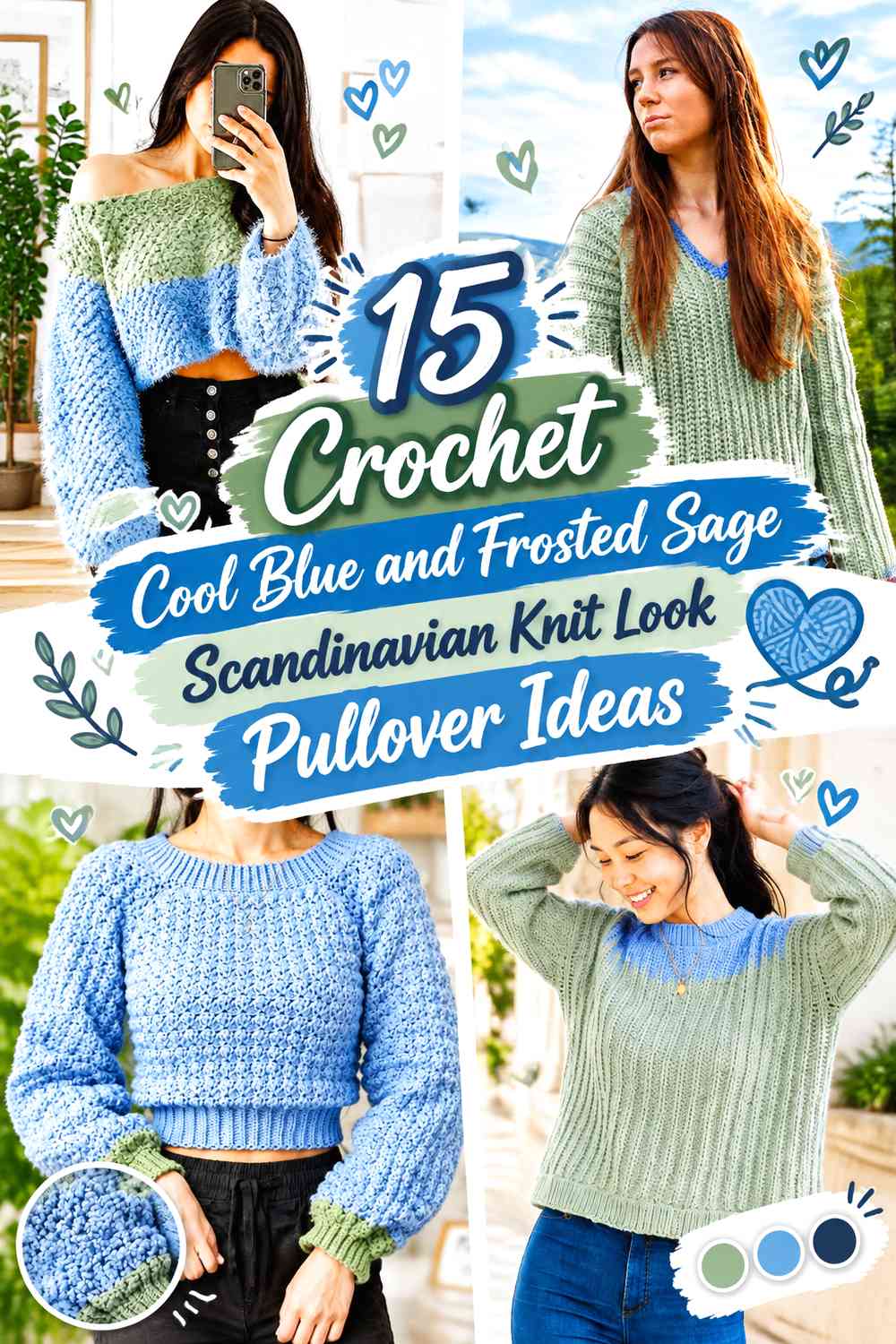

Cool blue and frosted sage create a quiet winter palette that suits a Scandinavian-inspired crochet pullover especially well. The colors are different enough to build geometric bands, yoke motifs, stripes, and contrasting ribbing without depending on a stark dark-and-white combination. Cool blue can provide the clearer focal color, while frosted sage can soften the body or work as the quieter supporting shade.
The knit-look effect deserves just as much attention as the palette. Dense crochet stitches, slip-stitch ribbing, split single crochet, third-loop textures, and carefully organized colorwork can all make a crocheted sweater visually reference knitted fabric. You do not need to force every construction into traditional Nordic colorwork; a clean pullover with knit-like ribs and restrained geometric color placement can carry the Scandinavian direction just as effectively.
The credited tutorials below provide crochet sweater and pullover construction references. The cool blue and frosted sage placements, geometric bands, and Scandinavian-inspired styling are independent adaptations. Where a tutorial does not include colorwork or Nordic motifs, use it for the garment construction and add color only after considering gauge, fabric behavior, and fit.
Quick List
- Cool Blue and Frosted Sage Fair-Isle-Look Crochet Pullover
- Frosted Sage Crochet Knit-Look Pullover With Cool Blue Yoke
- Cool Blue Crochet Knit-Look Pullover With Frosted Sage Ribbing
- Frosted Sage Crochet Raglan Pullover With Cool Blue Shoulder Lines
- Cool Blue and Frosted Sage Nordic-Band Crochet Pullover
- Cool Blue Crochet Textured Pullover With Frosted Sage Cuffs
- Frosted Sage Crochet Knit-Look Pullover With Cool Blue Hem
- Cool Blue and Frosted Sage Wide-Stripe Crochet Pullover
- Cool Blue Crochet Pullover With Frosted Sage Sleeve Motifs
- Frosted Sage Crochet Pullover With Cool Blue Center Motif Band
- Cool Blue and Frosted Sage Raglan-Stripe Crochet Pullover
- Cool Blue Crochet Alpine-Texture Pullover With Frosted Sage Ribbing
- Frosted Sage Crochet V-Neck Knit-Look Pullover With Cool Blue Trim
- Cool Blue Crochet Cropped Knit-Look Pullover With Frosted Sage Bands
- Frosted Sage and Cool Blue Scandinavian Color-Block Crochet Pullover
Decide Whether Cool Blue or Frosted Sage Should Be the Scandinavian Base Color
A two-color winter pullover usually looks more controlled when one shade occupies most of the body. Cool blue creates a clearer icy direction and makes frosted sage useful for secondary geometric bands, ribbing, or sleeve details. Frosted sage as the body color gives the sweater a quieter, more neutral appearance while cool blue becomes the sharper colorwork accent.
You do not need equal amounts of both colors. A narrow blue yoke band can become the main focal feature on a sage sweater, while sage cuffs can remain clearly visible on an otherwise blue pullover. Color hierarchy matters more than a 50/50 split.
Use Cool Blue and Frosted Sage to Build a Knit-Look Colorwork Effect
For a Scandinavian knit-look direction, place contrast where knitted colorwork commonly creates strong visual structure: around the yoke, across the upper chest, near sleeve ends, or in restrained repeating bands. Keep the motif arrangement broad enough that it can be read from normal wearing distance.
Avoid inventing a complicated multicolor chart just because the sweater is Scandinavian-inspired. With only cool blue and frosted sage, simple diamonds, chevrons, stepped forms, or other geometric relationships can create the visual idea without overwhelming the crochet texture. If you are adapting an existing sweater construction, make a colorwork swatch first because changing stitch techniques can change gauge.
Check Cool Blue and Frosted Sage in the Actual Crochet Texture
Knit-look stitches can alter the apparent color because dense surfaces and raised ribs create different shadows than ordinary crochet. A muted cool blue may look deeper in tightly textured fabric, while frosted sage can appear lighter across raised ribs.
Make a representative swatch using the stitch you actually plan to use. Compare both colors side by side and, if you are planning a motif band, test a small section of the color change. The finished pullover will be more predictable when color and texture are evaluated together rather than separately.
1. Cool Blue and Frosted Sage Fair-Isle-Look Crochet Pullover
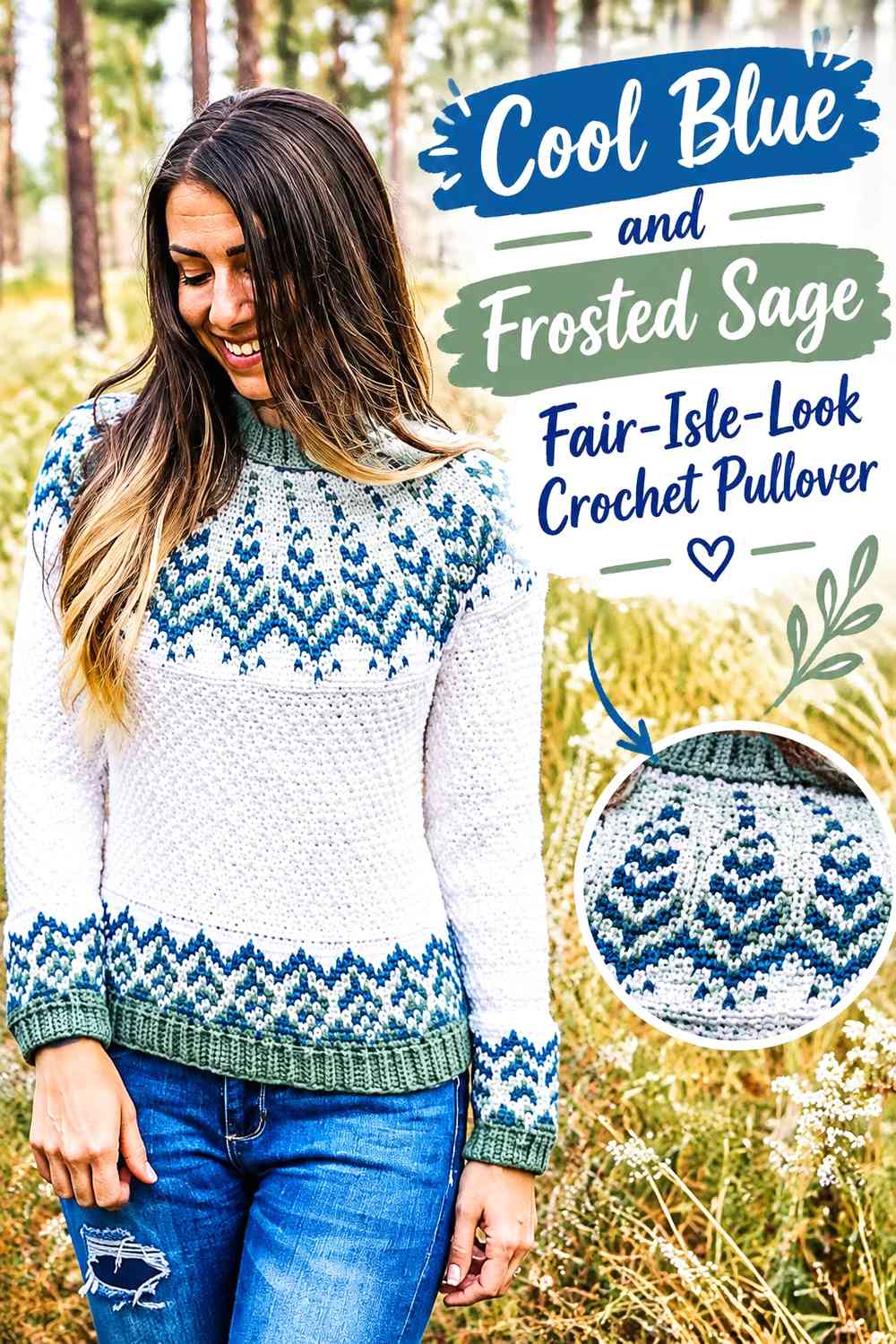
This direction places the strongest Scandinavian-inspired colorwork around the yoke. Use frosted sage for most of the body and cool blue for a geometric upper band, then repeat small amounts of blue near the cuffs or lower edge if you want the motif area to feel connected to the rest of the sweater. A knit-look crochet colorwork construction is especially effective here because the motif can read like stranded knitting while remaining fully crocheted.
Cool Blue Can Lead the Frosted Sage Crochet Yoke
Keep cool blue concentrated through the upper motif band so the eye is drawn toward the shoulders and neckline. Frosted sage should remain visible between blue shapes rather than becoming only a tiny background line.
When planning a geometric motif, preserve clear repeats instead of improvising every few stitches. The Scandinavian look depends more on organized rhythm than on complicated imagery.
Frosted Sage Should Stay Calm Beneath the Cool Blue Colorwork
Let frosted sage continue through most of the torso once the yoke pattern ends. This gives the detailed upper section a quieter field underneath and prevents the whole sweater from becoming visually dense.
If you want a second blue accent, repeat a modest version near the sleeve ends rather than adding another full chest band.
Creator Credit: Briana K
2. Frosted Sage Crochet Knit-Look Pullover With Cool Blue Yoke
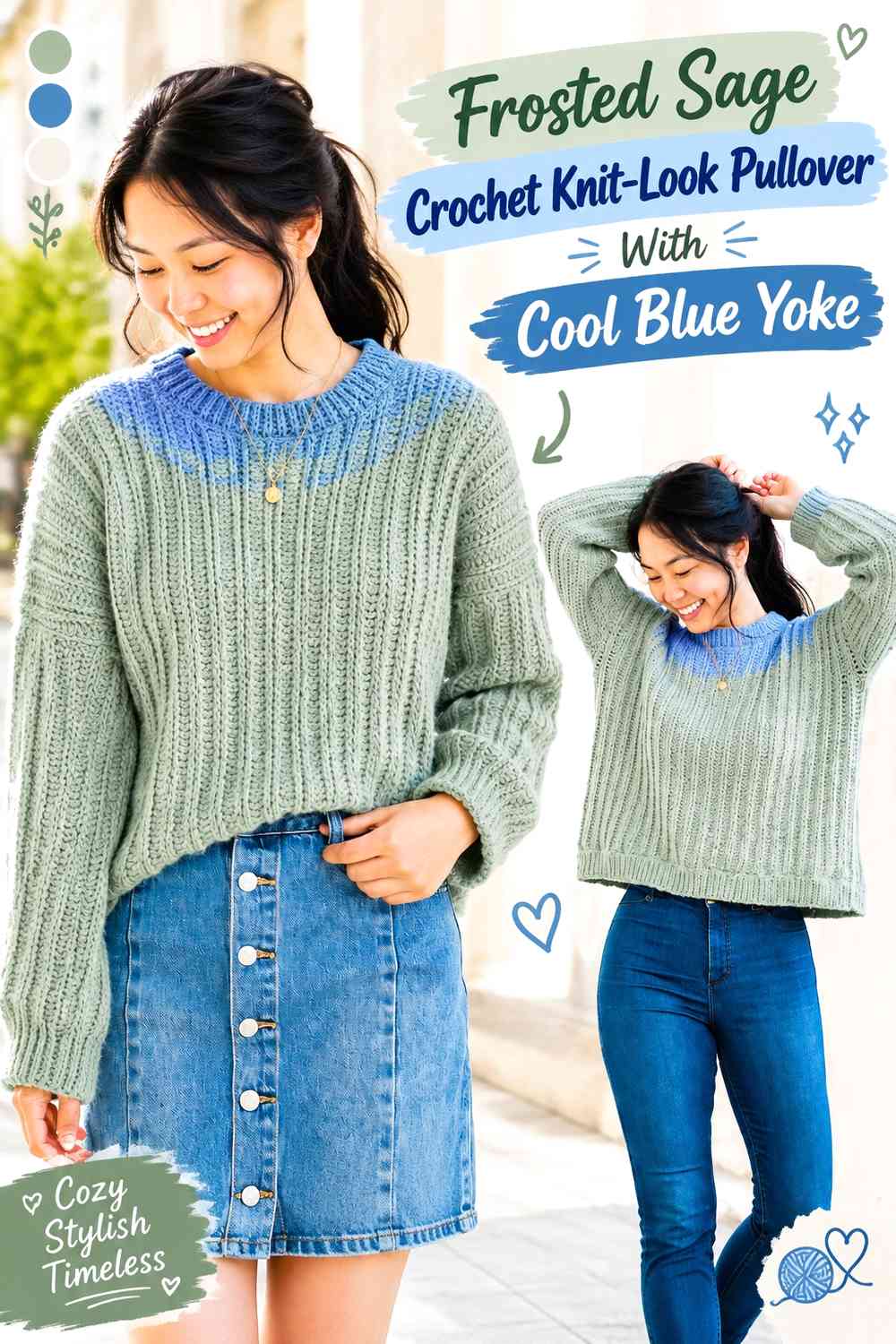
This version uses a strong knit-like ribbed texture rather than dense all-over colorwork. Frosted sage carries most of the sweater, while cool blue creates a broad yoke or upper-chest section. The clean two-zone layout suits a Scandinavian-inspired palette when you want something quieter than a detailed fair-isle effect.
Frosted Sage Can Show the Crochet Knit-Look Ribs Across the Body
Use sage continuously across the torso so the vertical or lengthwise texture becomes the main surface feature. Avoid interrupting every rib with blue, because the knit-like effect depends on the fabric reading as one coherent field.
Check the sage swatch in the same direction the finished sweater will be constructed. Some ribbed crochet fabrics change appearance noticeably when worked side to side.
Cool Blue Can Form a Clean Scandinavian Band Above Frosted Sage
Place cool blue around the upper body, neckline, or shoulder area as one broad color block. The contrast provides a winter focal point without requiring a detailed motif chart.
Keep the boundary between blue and sage deliberate. An uneven transition can draw attention away from the knit-look ribs.
Creator Credit: forthefrills
3. Cool Blue Crochet Knit-Look Pullover With Frosted Sage Ribbing
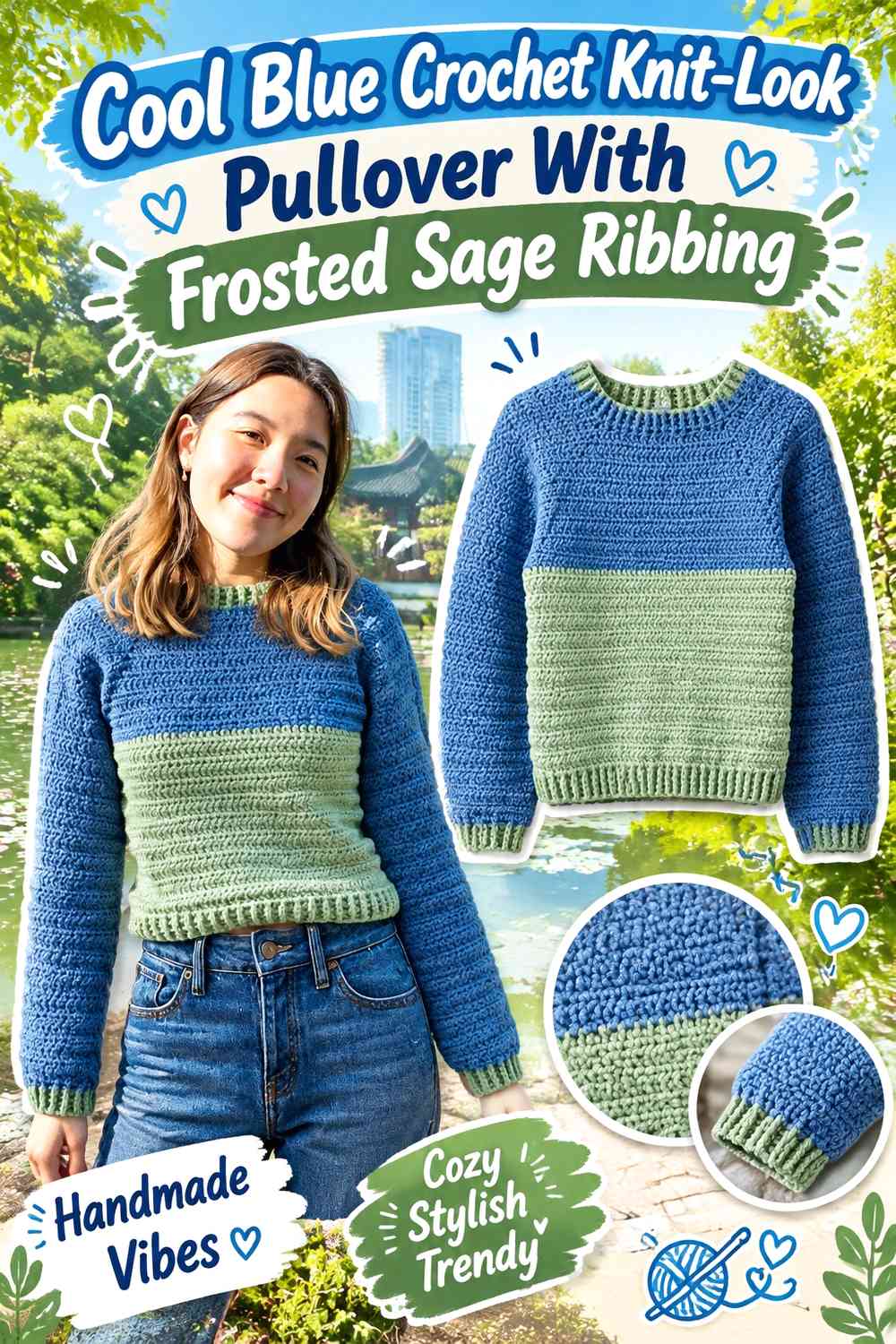
A cool-blue body paired with frosted-sage neckline, cuffs, and hem gives the sweater a framed finish. This is a practical way to create a Scandinavian-inspired two-color pullover without altering the main body construction. The ribbing becomes the supporting color system that ties all the edges together.
Cool Blue Should Carry the Main Crochet Pullover Surface
Keep cool blue uninterrupted across most of the torso and sleeves. A broad blue field gives the fabric enough space to show stitch texture without constant color changes.
If the tutorial uses a smooth body stitch, resist adding geometric motifs everywhere. The contrast ribbing alone can provide enough Nordic restraint.
Frosted Sage Can Connect Cool Blue Cuffs, Hem, and Neckline
Use frosted sage consistently at the garment edges so the three areas look intentionally related. If one cuff is much deeper than the hem, the palette can feel unbalanced even when the colors match.
The sage ribbing should complement the blue body rather than become a set of oversized bands that visually shorten the pullover.
Creator Credit: VivCrochets
4. Frosted Sage Crochet Raglan Pullover With Cool Blue Shoulder Lines
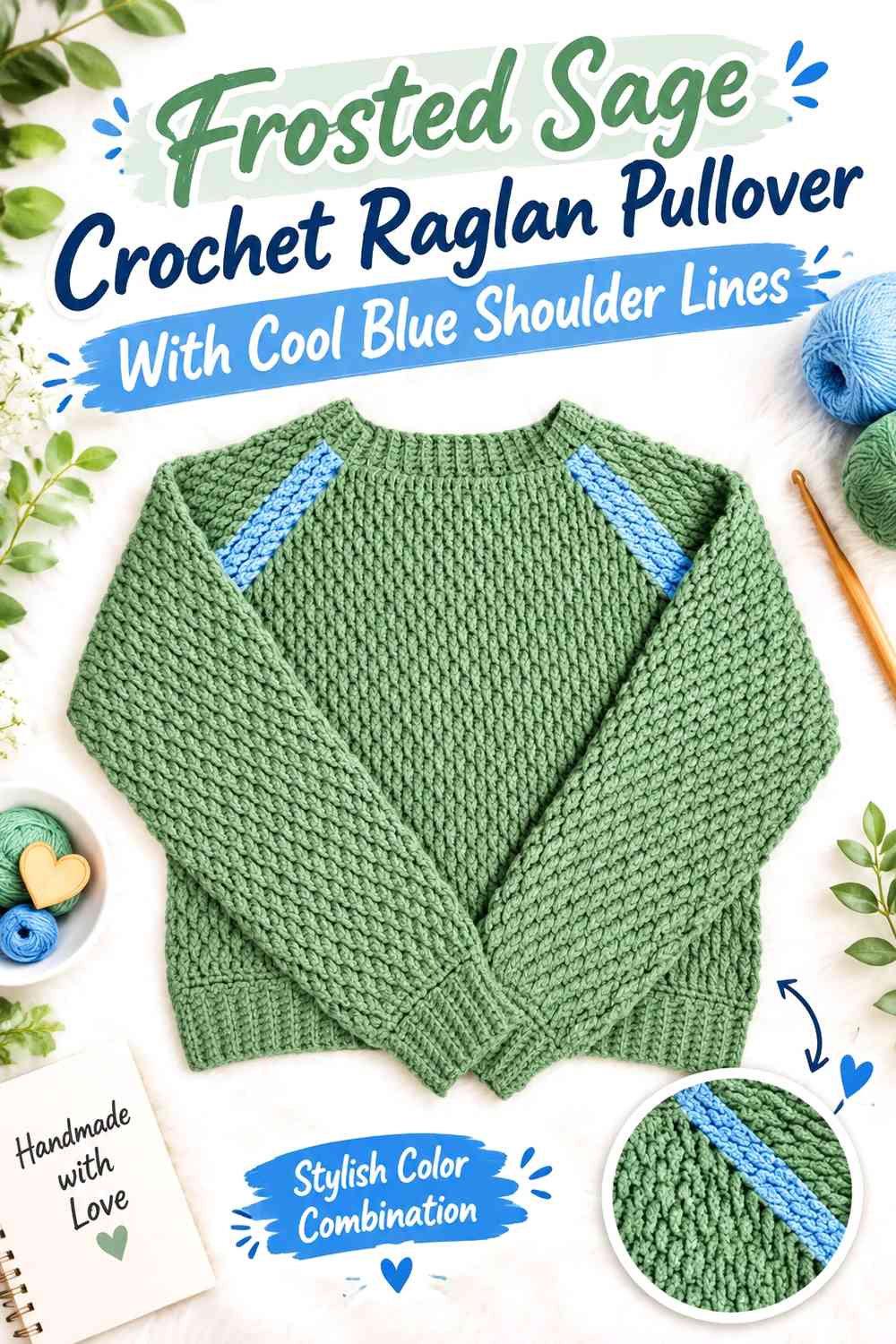
Raglan construction naturally creates diagonal lines from the neckline toward the underarms. Use frosted sage for the main pullover and cool blue to emphasize those lines or the upper raglan area. This gives the two-color palette a structural purpose instead of adding arbitrary stripes.
Cool Blue Can Emphasize the Frosted Sage Crochet Raglan Shape
Place blue along or near the raglan transitions where the garment already creates strong diagonals. A narrow repeated blue section can visually trace the construction without requiring large amounts of contrast color.
Keep the placement comparable across all raglan lines so the upper body remains balanced.
Frosted Sage Should Remain the Main Cool Blue Raglan Background
Let sage cover most of the yoke, body, and sleeves. The lighter muted field gives the blue shoulder accents enough room to stay noticeable.
If you repeat blue at the cuffs, keep those areas restrained so the diagonal shoulder treatment remains the distinguishing feature.
Creator Credit: Brenda DIY
5. Cool Blue and Frosted Sage Nordic-Band Crochet Pullover
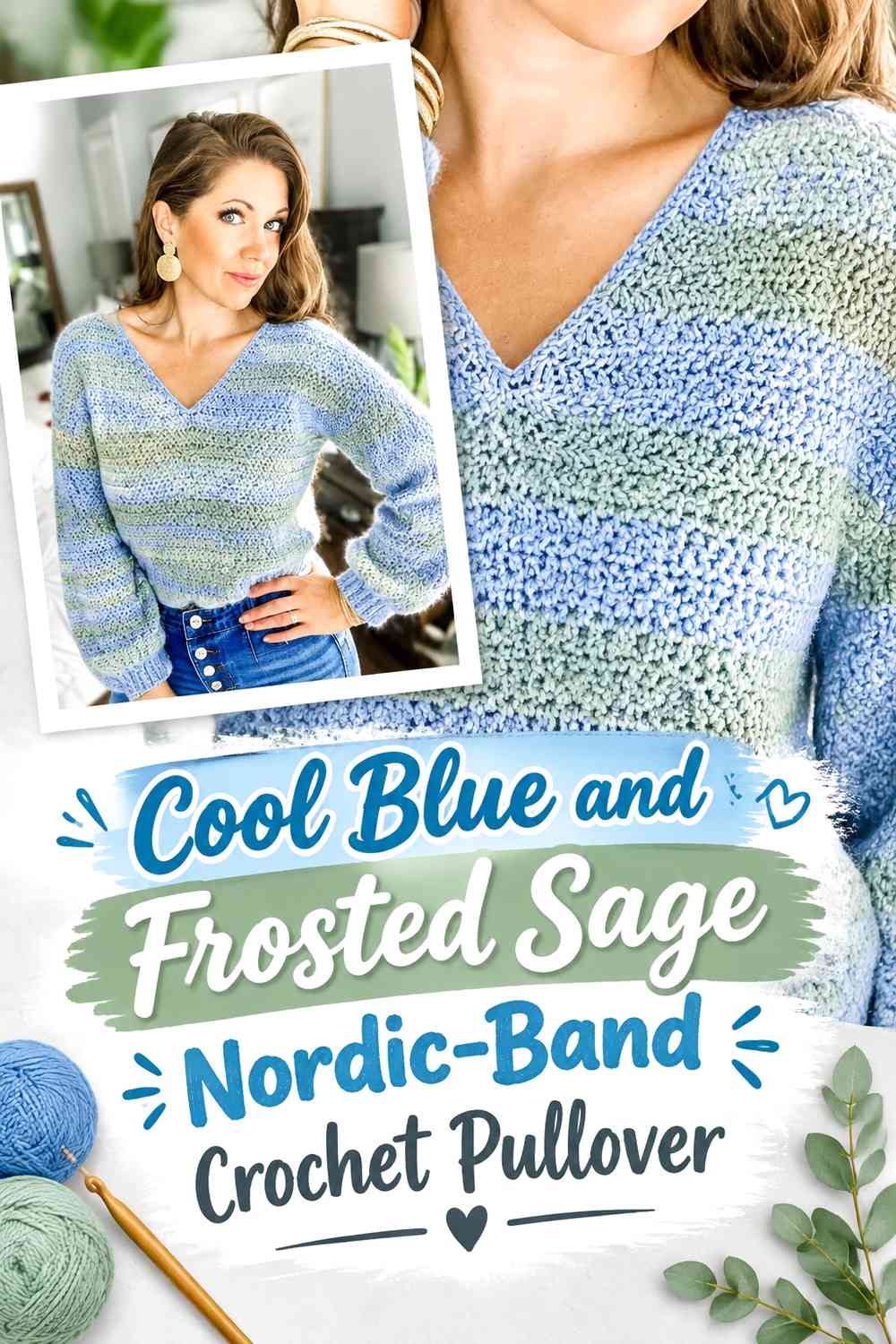
This idea concentrates geometric colorwork in two or three broad horizontal areas rather than around a circular yoke. Use cool blue as the main body color and frosted sage for Nordic-inspired bands across the chest and sleeve ends. The repeated placement can reference traditional winter knitwear while remaining straightforward to plan.
Frosted Sage Can Create Clear Nordic Bands Across Cool Blue
Give each sage band enough depth for its geometric shapes to remain legible. Very shallow color changes may look like ordinary stripes rather than intentional motif sections.
Keep the band design consistent across the front and back where the construction allows. A motif that changes unexpectedly at the side can disrupt the Scandinavian rhythm.
Cool Blue Should Separate the Frosted Sage Crochet Motif Zones
Leave substantial blue areas between patterned bands so each sage section has visual breathing room. The dark or cooler base color should remain the first impression of the sweater.
If several motif zones are used, keep them related rather than making each band a completely different design.
Creator Credit: MJ’s Off The Hook Designs
6. Cool Blue Crochet Textured Pullover With Frosted Sage Cuffs
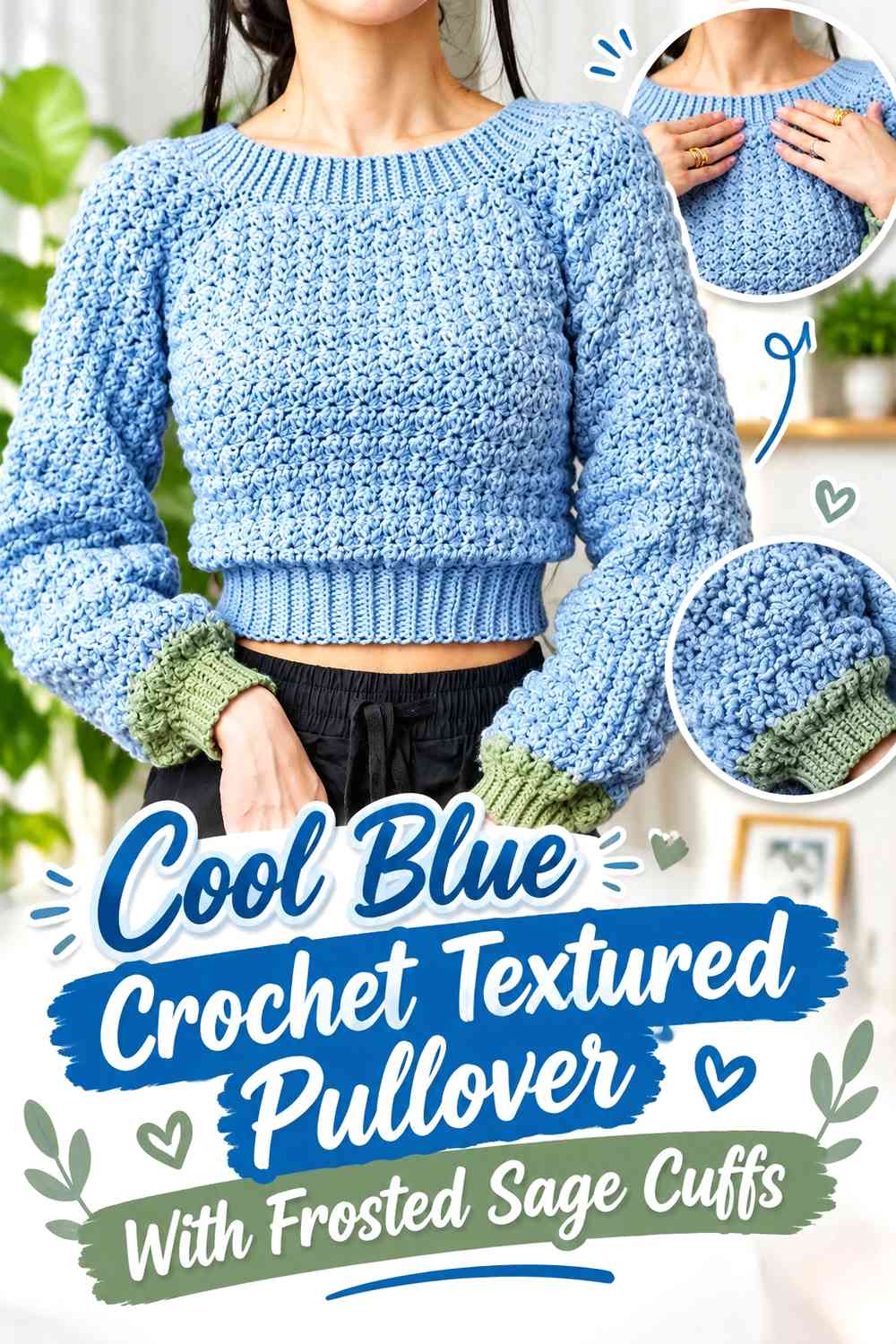
This direction relies on texture more than elaborate colorwork. Let cool blue cover the body and sleeves while frosted sage appears only at the cuffs and neckline. A dense, substantial crochet texture can provide the knit-look character, while the pale sage edges introduce the Scandinavian palette quietly.
Cool Blue Can Keep the Textured Crochet Pullover Visually Unified
Use blue across the complete textured body so raised or recessed stitch details remain easy to follow. Frequent sage changes would compete with the texture itself.
View the blue fabric from several feet away. If the texture already creates a strong surface pattern, you may need very little additional colorwork.
Frosted Sage Can Give Cool Blue Crochet Cuffs a Lighter Finish
Use sage on both sleeve ends with matching depth, then consider a smaller repeat at the collar. The light edging can soften the blue without changing the pullover’s dominant color.
Avoid automatically adding a sage hem as well if the sweater already has enough contrast at the wrists and neckline.
Creator Credit: TCDDIY
7. Frosted Sage Crochet Knit-Look Pullover With Cool Blue Hem
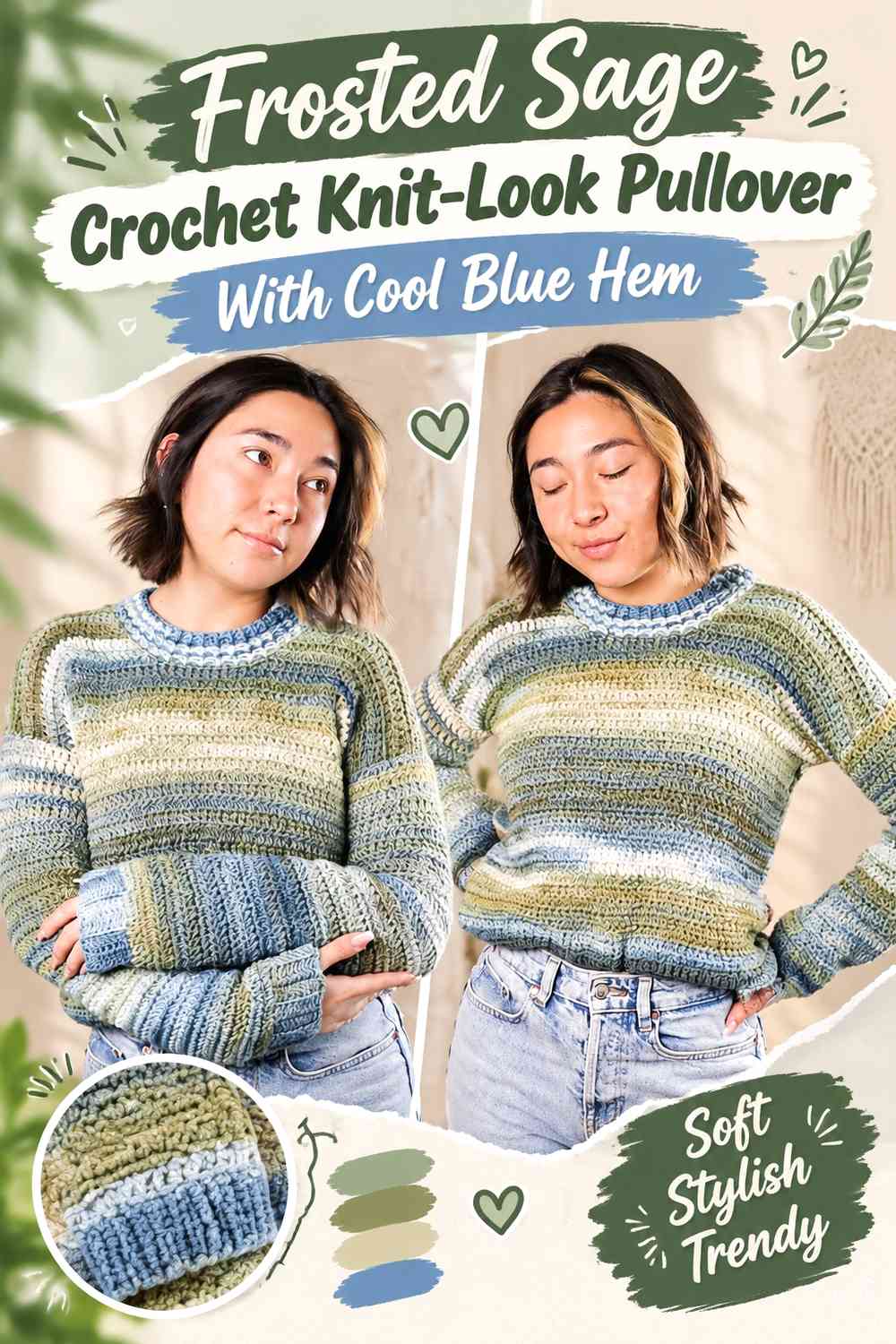
Putting the contrast at the bottom changes the visual weight of the sweater. Frosted sage covers the torso and sleeves, while cool blue forms a substantial lower band or ribbed hem. This anchors the lighter body without interrupting the upper chest or shoulder area.
Frosted Sage Should Stay Continuous Above the Cool Blue Crochet Hem
Let sage run from the neckline through most of the torso so the sweater retains a calm, light field. The uninterrupted color also makes a knit-look texture easier to appreciate.
Decide where the blue begins only after considering the finished pullover length. A band that looks modest in isolation can occupy a large percentage of a cropped sweater.
Cool Blue Can Ground the Frosted Sage Scandinavian Pullover
Use cool blue across the hem as one deliberate lower section rather than several small stripes. The darker color can give the bottom edge more visual weight and create a clear end to the sage body.
If you repeat blue elsewhere, cuffs are more coherent than scattered body accents because they echo another garment edge.
Creator Credit: it’s erin b.
8. Cool Blue and Frosted Sage Wide-Stripe Crochet Pullover
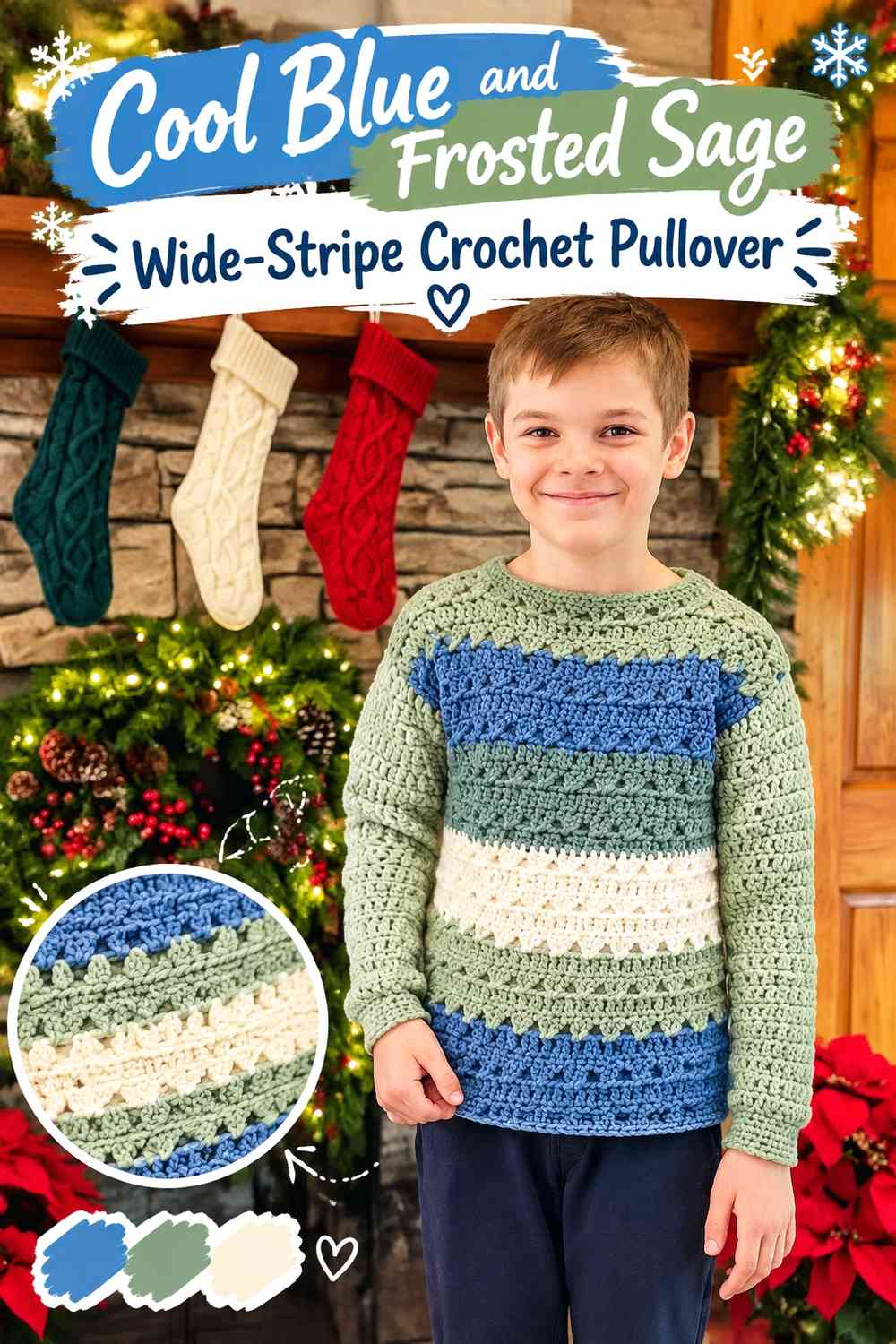
Wide stripes offer a simpler Scandinavian knitwear direction than detailed fair-isle motifs. Alternate substantial cool-blue and frosted-sage sections across the torso and sleeves, keeping each area large enough for the crochet texture to remain visible.
Cool Blue and Frosted Sage Need Deliberate Stripe Proportions
Choose whether the two colors should have equal widths or whether one should clearly dominate. Equal broad stripes create a stronger graphic sweater, while wider blue sections with narrower sage breaks keep the palette cooler overall.
Plan where the neckline and hem will fall within the sequence so the finished garment does not end with an accidental sliver of one color.
Frosted Sage Can Soften Repeated Cool Blue Crochet Stripes
If cool blue feels too dominant, make the sage bands slightly broader rather than adding a third shade. The muted green can act as a visual pause between stronger blue sections.
Keep sleeve stripe placement related to the body, but it does not have to be an exact row-for-row continuation if the sleeve proportions differ.
Creator Credit: Bag-O-Day Crochet
9. Cool Blue Crochet Pullover With Frosted Sage Sleeve Motifs
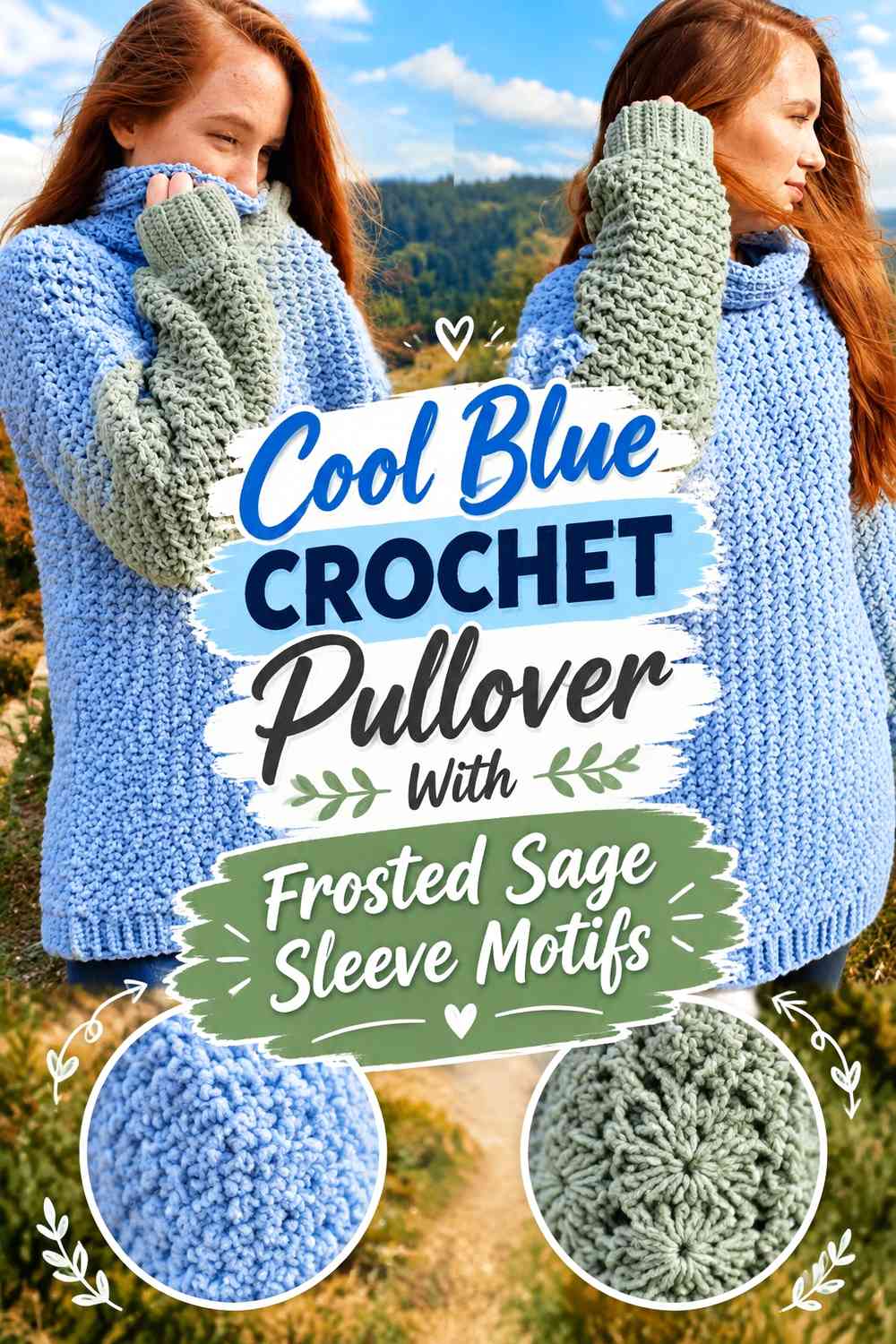
This sweater keeps the torso mostly solid and moves the Scandinavian-inspired colorwork to the arms. Cool blue covers the body, while frosted sage forms repeated geometric bands or simple motifs around the sleeves. It is a useful option when you want colorwork without making the chest the focal area.
Cool Blue Should Keep the Frosted Sage Sleeve Motifs From Spreading Everywhere
Maintain a solid blue torso so the sleeves have a distinct decorative role. If the same motif is repeated extensively across the body, the design loses its sleeve-focused identity.
A small sage neckline detail is enough if you want to connect the sleeves to the rest of the sweater.
Frosted Sage Motifs Need Consistent Placement on Cool Blue Sleeves
Plan the sage bands at matching heights on both arms. Because sleeves hang side by side, even a modest difference in motif position can be noticeable.
Try the pullover on before finalizing a lower motif band so the pattern does not land awkwardly at an elbow bend or disappear under the cuff.
Creator Credit: Hey Carrie
10. Frosted Sage Crochet Pullover With Cool Blue Center Motif Band
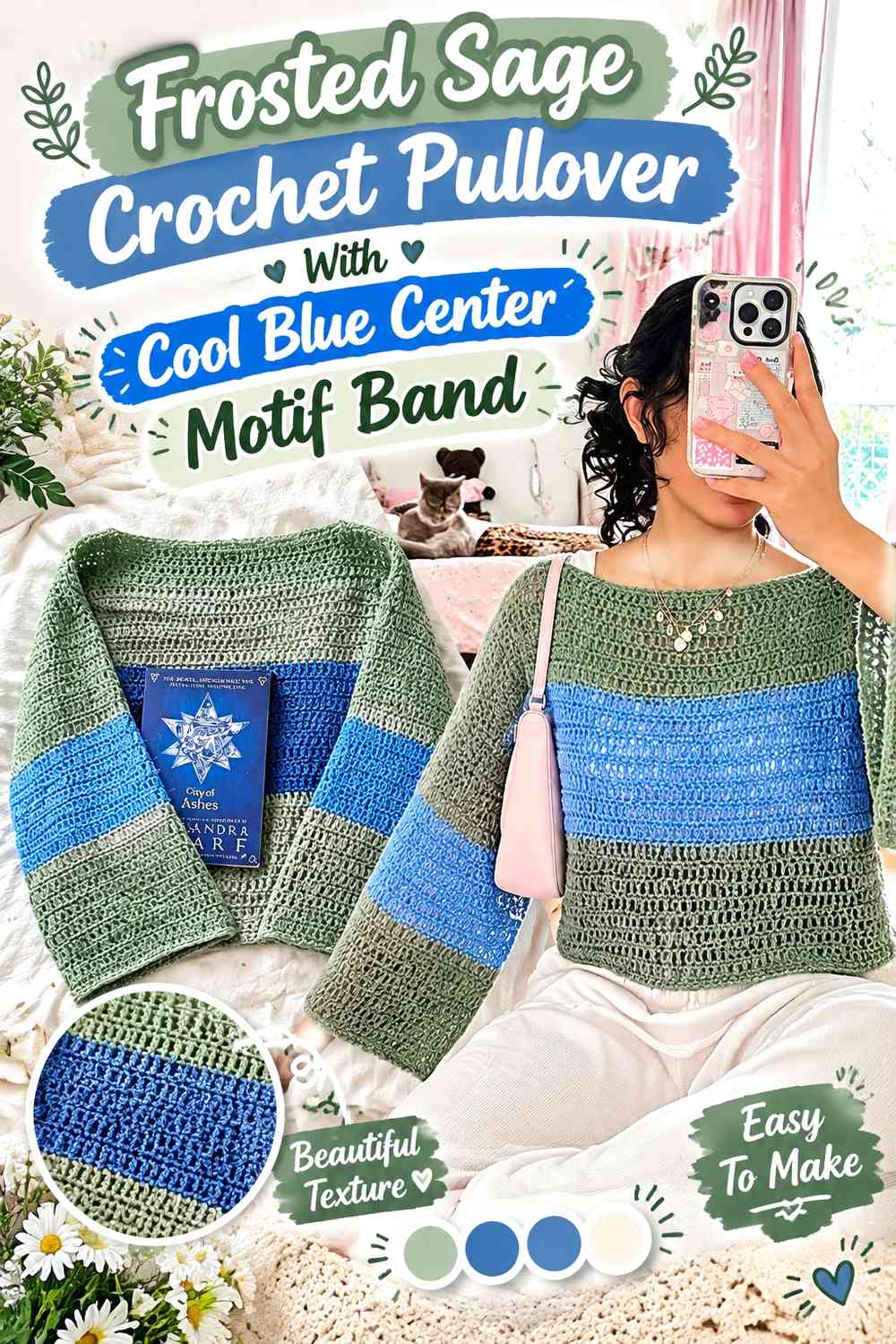
A centered horizontal motif gives the sweater a more graphic Nordic appearance. Keep the body frosted sage and use cool blue through one substantial patterned band across the chest, then return to sage for the lower body.
Cool Blue Can Make One Frosted Sage Crochet Motif Band the Focal Point
Give the blue band enough height to read as a deliberate design section instead of a thin stripe. Simple diamonds, stepped forms, or restrained geometric repeats suit the two-color palette without needing additional colors.
Avoid placing several unrelated motif bands above and below it. One strong section can have more impact than many smaller competing patterns.
Frosted Sage Should Frame the Cool Blue Scandinavian Band Above and Below
Keep sage visible on both sides of the motif area so the blue pattern sits inside a clear background field.
If the sweater is cropped, check the motif position carefully. A wide chest band can consume much of a shorter torso if it begins too low.
Creator Credit: mahum 🎀
11. Cool Blue and Frosted Sage Raglan-Stripe Crochet Pullover
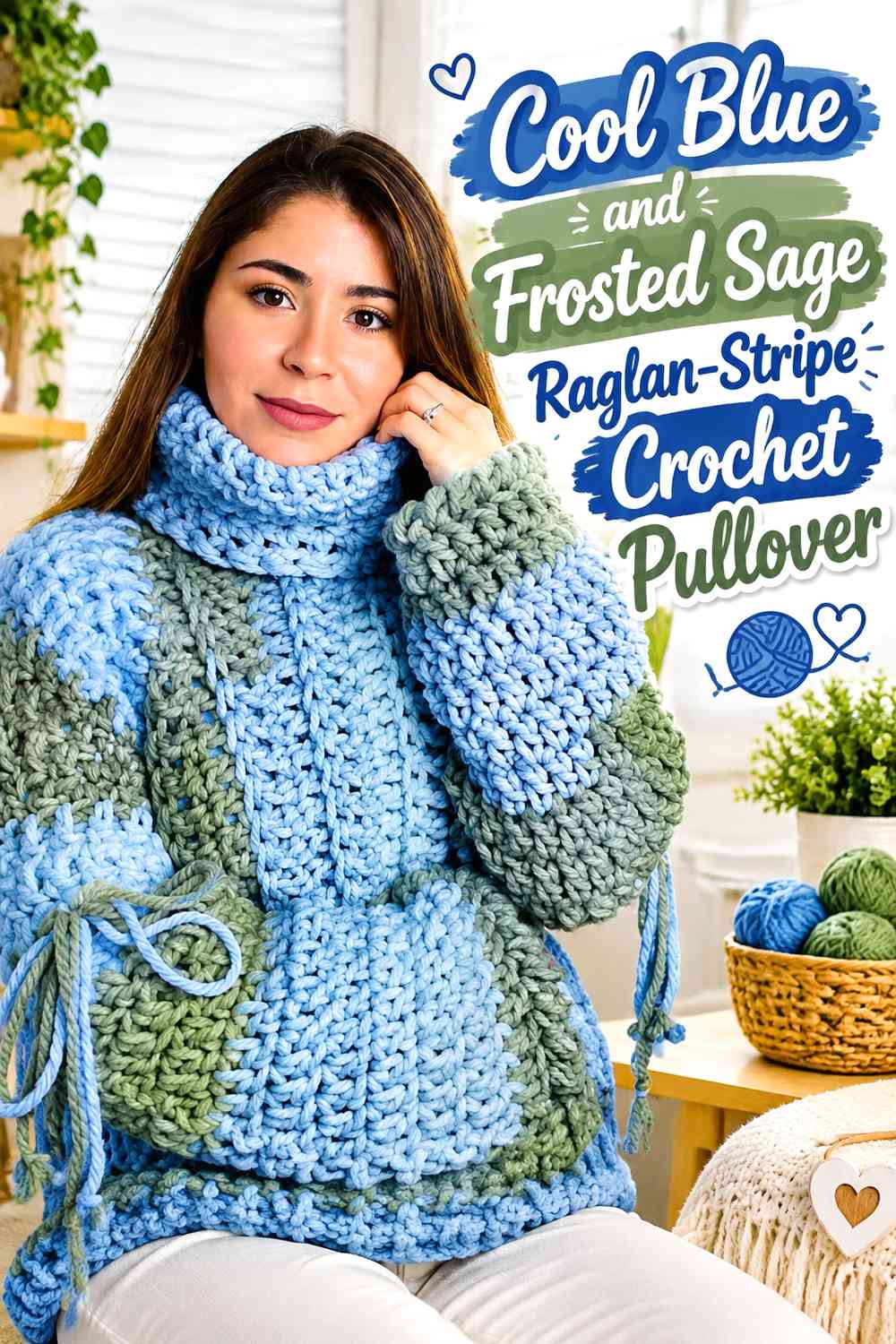
This idea uses broad stripes but lets the raglan shaping alter how they move across the upper body. Alternate cool blue and frosted sage through the sweater while paying attention to how the color changes meet around the yoke and sleeves.
Cool Blue and Frosted Sage Should Stay Organized Around the Crochet Raglan
Color changes near raglan increases can create diagonal visual effects even when the stripes begin horizontally. Look at the complete upper body rather than judging each section independently.
Keep the two sleeves under the same broad color plan so one does not become significantly bluer or greener than the other.
Cool Blue Can Lead the Frosted Sage Stripe Sequence
Start with blue as the more frequently repeated or broader shade if you want the sweater to retain a colder overall appearance.
Use sage as a quieter interruption between blue zones, and consider matching the ribbing to whichever shade already dominates the adjacent section instead of forcing another contrast.
Creator Credit: Brunaticality
12. Cool Blue Crochet Alpine-Texture Pullover With Frosted Sage Ribbing
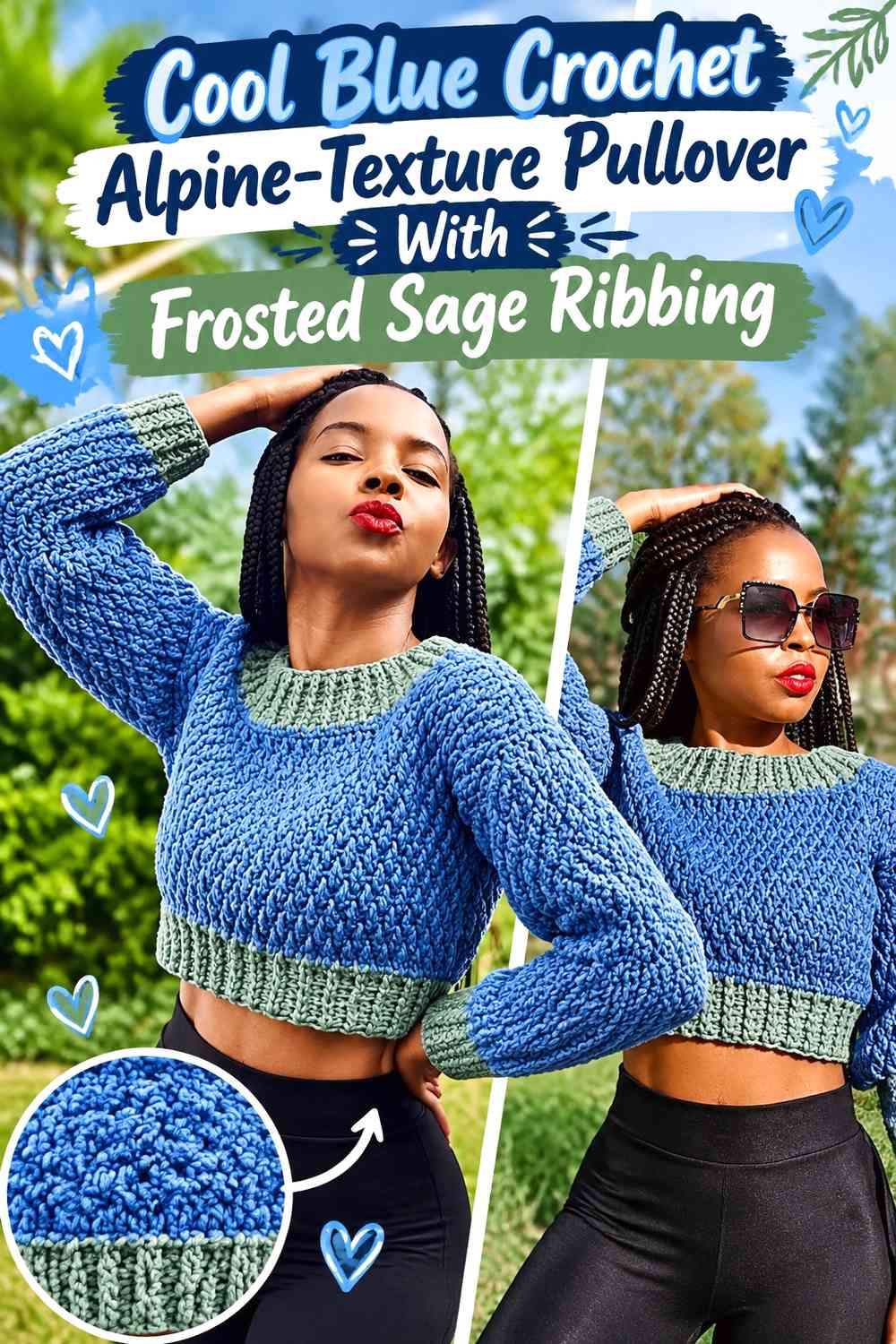
A pronounced textured crochet stitch can create the substantial surface associated with winter knitwear without needing all-over motifs. Let cool blue cover the alpine-style body and use frosted sage around the cuffs, hem, and possibly neckline.
Cool Blue Can Show the Raised Crochet Texture Across the Pullover
Keep the textured stitch in one dominant blue field so its raised pattern remains easy to see. Alternating sage through every textured row can create visual noise because the stitch already has strong relief.
Check a swatch in both direct and softer light; pronounced texture can make cool blue appear darker between raised sections.
Frosted Sage Ribbing Can Frame the Cool Blue Crochet Texture
Use sage at structural edges where smoother ribbing contrasts with the textured blue body. This separates color and texture changes at the same natural garment boundaries.
If the sage border feels too pale against blue, increase its depth slightly rather than introducing another accent color.
Creator Credit: AC Crochets
13. Frosted Sage Crochet V-Neck Knit-Look Pullover With Cool Blue Trim
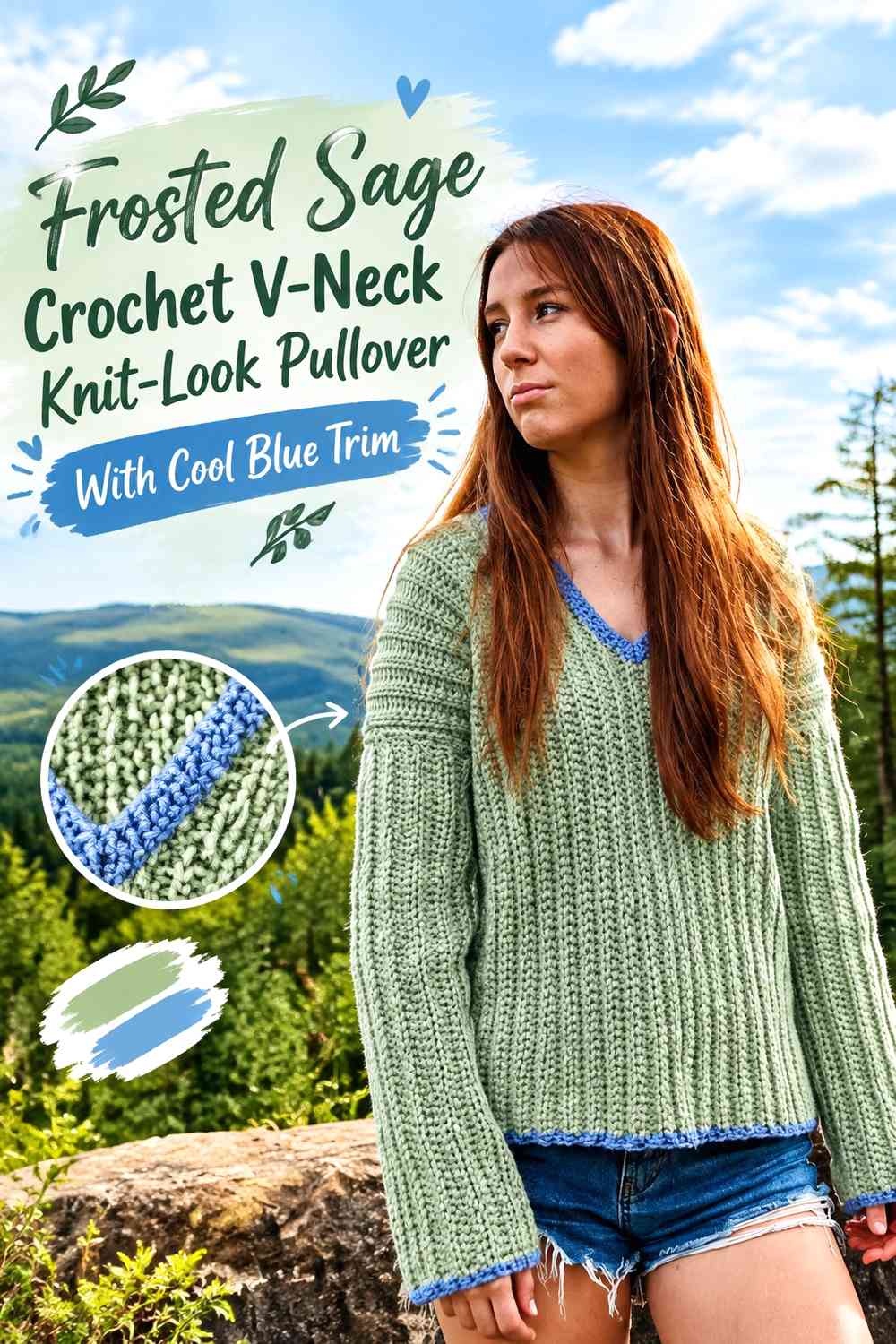
A V-neck creates strong diagonal lines that can carry the cool-blue accent. Use frosted sage for the ribbed or knit-look body and cool blue around the neckline, cuffs, or narrow lower border. The result has Scandinavian restraint without relying on a circular yoke.
Frosted Sage Can Keep the Crochet V-Neck Body Quiet and Knit-Like
Use sage across the main panels so the ribbed texture or directional stitches remain the dominant feature. The pale muted field can also make the blue neckline more noticeable.
Make sure any change to yarn or stitch technique still meets the construction’s fit requirements before adapting the color plan.
Cool Blue Can Trace the Frosted Sage Crochet V-Neck
Place blue along the V where it can emphasize the neckline’s geometry. Keep the trim width consistent on both sides so the point remains centered.
If you repeat blue at the cuffs, use a similar visual weight so the neckline and sleeves feel connected rather than unrelated.
Creator Credit: Crochet with Carrie
14. Cool Blue Crochet Cropped Knit-Look Pullover With Frosted Sage Bands
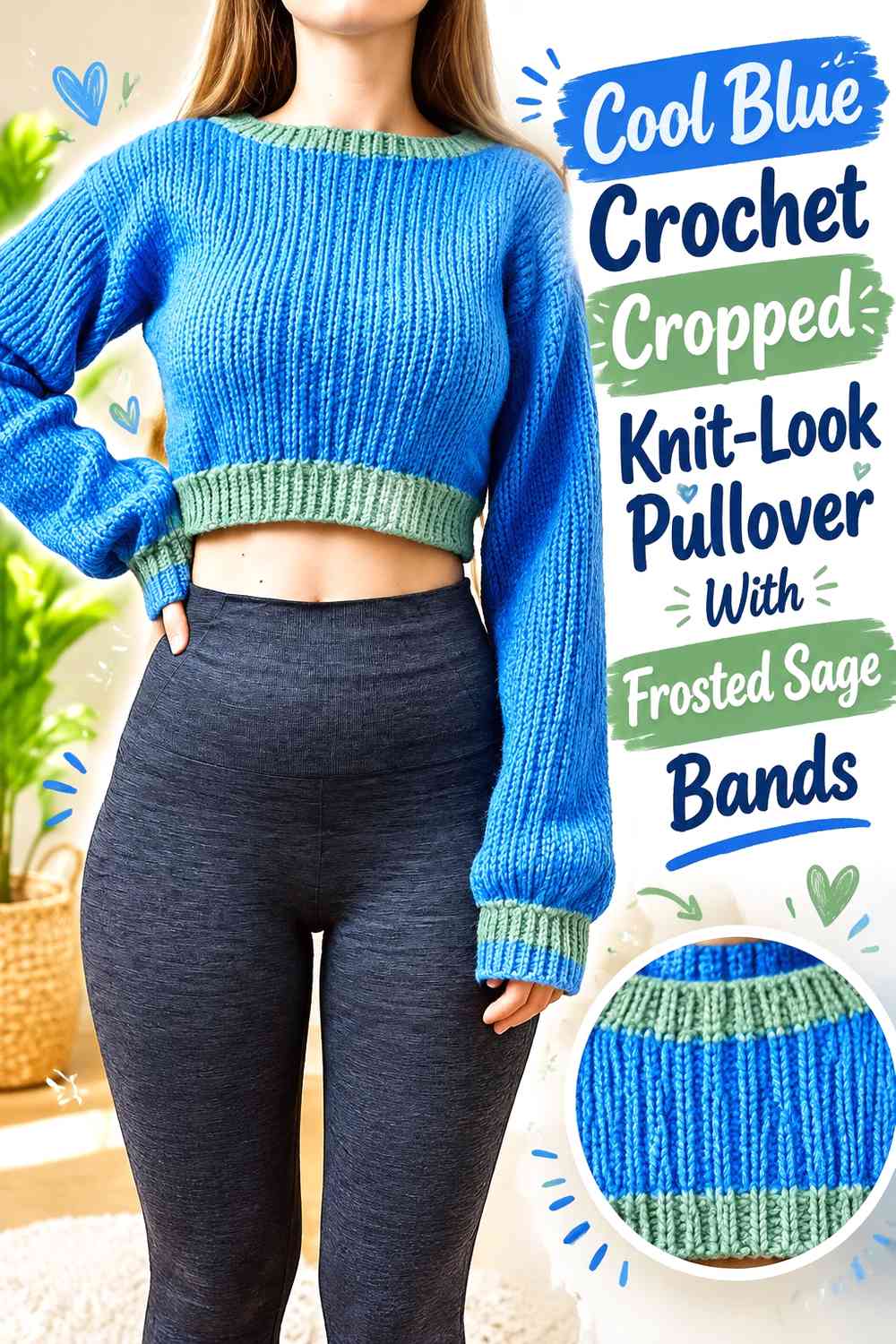
A cropped pullover has less torso space, so color changes need to be more selective. Use cool blue as the main body and reserve frosted sage for one upper band plus cuffs, rather than filling the shorter sweater with many small stripes.
Cool Blue Should Remain the Main Crochet Field on a Shorter Pullover
Keep enough uninterrupted blue between the neckline and hem for the sweater to read as blue-led. On a cropped garment, every contrast band occupies a greater percentage of the visible torso.
Use the knit-look stitch texture itself as decoration between sage sections.
Frosted Sage Bands Need Careful Scale Against Cool Blue
Choose one broad sage band or a small number of restrained bands rather than repeating the color at every opportunity. The shorter body needs more negative space around the contrast.
Check the finished color placement with the actual intended length before committing to a large lower band.
Creator Credit: Madeleine Shirley
15. Frosted Sage and Cool Blue Scandinavian Color-Block Crochet Pullover
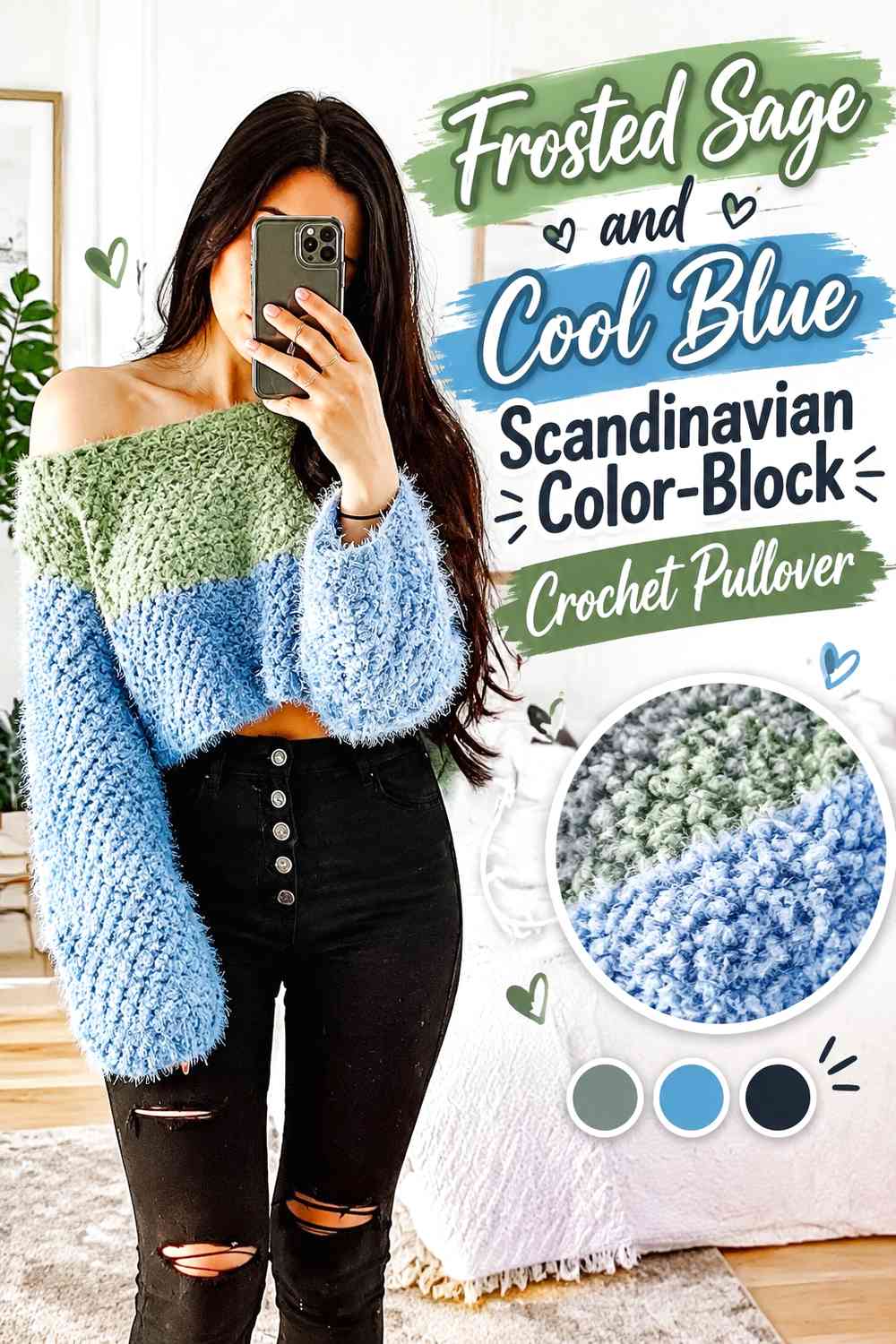
The final idea uses large geometric color areas instead of repeating motifs. Frosted sage can cover the upper torso and one sleeve section, while cool blue takes the lower body or contrasting sleeve zones. The large blocks create a clean modern interpretation of Scandinavian winter color rather than imitating traditional fair-isle patterning.
Frosted Sage and Cool Blue Need Clean Crochet Color-Block Boundaries
Use broad, intentional transitions so the sweater reads as a planned two-color garment. Several narrow irregular changes can make the design appear patchy instead of minimal.
Map the front, back, and sleeves together before starting so a blue section does not stop unexpectedly at a seam while sage dominates the adjacent panel.
Cool Blue or Frosted Sage Should Still Dominate the Scandinavian Pullover
Even in a strongly divided design, choose one shade to occupy slightly more visual area. Cool blue can take the torso while sage covers shoulders and sleeves, or sage can dominate with blue concentrated lower down.
That hierarchy gives you a clearer answer for neckline, cuff, and hem colors rather than making every edge another new decision.
Creator Credit: Dana B
Which Cool Blue and Frosted Sage Scandinavian Knit-Look Pullover Should You Choose?
Choose the fair-isle-look yoke or Nordic-band versions if colorwork is the main reason you want a Scandinavian-inspired sweater. Concentrated motifs around the shoulders or chest give the pullover a clear winter-knit reference while leaving the rest of the garment comparatively simple.
For a quieter result, choose a cool-blue or frosted-sage knit-look body with contrasting ribbing, cuffs, or hem. These options let crochet texture do more of the work and reduce the amount of color switching.
Vertical or structural color placement—raglan lines, sleeve motifs, or neckline trim—draws attention to garment construction. Wide stripes and large color blocks make the palette itself more prominent. If you want cool blue and frosted sage to feel calm rather than graphic, give one shade most of the sweater and use the other only in one or two repeated locations.
Conclusion
Cool blue and frosted sage can create a convincing Scandinavian knit-look crochet pullover in several ways. Detailed yoke colorwork gives the strongest traditional winter-sweater reference, but it is not the only option. Knit-like ribbing, geometric bands, restrained stripes, contrast cuffs, and clean color blocking can all produce a Nordic-inspired direction when the palette remains organized.
Let cool blue dominate when you want a crisper icy winter look. Use frosted sage as the main field when you prefer a softer, muted sweater with blue functioning as the stronger accent. For the most convincing knit-look effect, test color and stitch texture together before committing to a full garment.
Follow the credited tutorial for the exact sweater construction, sizing, and shaping. If you add colorwork, change stitch texture, or substitute a different yarn, swatch and recheck gauge rather than assuming the original fit will remain unchanged.
Frequently Asked Questions
Should Cool Blue or Frosted Sage Be the Main Color on a Scandinavian Crochet Pullover?
Either can lead. Cool blue gives the sweater a clearer icy winter direction, while frosted sage creates a softer muted base. Choose one for most of the torso and sleeves, then use the second shade for yoke motifs, ribbing, bands, or cuffs.
How Can Cool Blue and Frosted Sage Create a Knit Look in Crochet?
Color alone does not create the effect. Pair the palette with crochet textures that visually resemble knitted fabric, such as dense ribbing, split-single-crochet colorwork, third-loop textures, or other knit-look stitch patterns appropriate to the sweater construction.
Where Should Frosted Sage Go on a Cool Blue Scandinavian Pullover?
Useful placements include a yoke motif, cuffs, neckline, hem, sleeve bands, or a geometric chest section. Keeping sage in a few clearly defined locations usually looks more controlled than scattering it throughout the sweater.
Can Cool Blue and Frosted Sage Be Used for Fair-Isle-Look Crochet?
Yes. Two colors are enough for a restrained geometric yoke or repeated winter band. Keep the motif organized and test the colorwork stitch because its gauge may differ from the plain body fabric.
How Do I Keep a Cool Blue and Frosted Sage Pullover From Looking Too Busy?
Choose one dominant shade and limit the second color to one or two structural areas. A blue body with sage cuffs and a yoke band, for example, already provides plenty of visual interest when the crochet texture also has a knit-like appearance.
Do Cool Blue and Frosted Sage Need Strong Light-Dark Contrast?
Not necessarily. Similar values create a softer, more blended Scandinavian palette, while stronger light-dark separation makes geometric motifs easier to read. Check the actual crocheted swatch—and optionally a grayscale photo—before deciding which effect you prefer.
Can I Add Scandinavian Colorwork to Any Crochet Sweater Tutorial?
Not without checking the construction. Changing from a plain stitch to a colorwork or knit-look stitch can alter gauge, thickness, stretch, and drape. Use the tutorial for the garment construction, then swatch any proposed colorwork technique before substituting it.
Should Cool Blue and Frosted Sage Sleeve Motifs Match the Yoke Exactly?
They can echo the yoke without duplicating it completely. Repeating the same colors and a related geometric rhythm is often enough to connect the sections while keeping the sleeves from competing with the main upper-body motif.