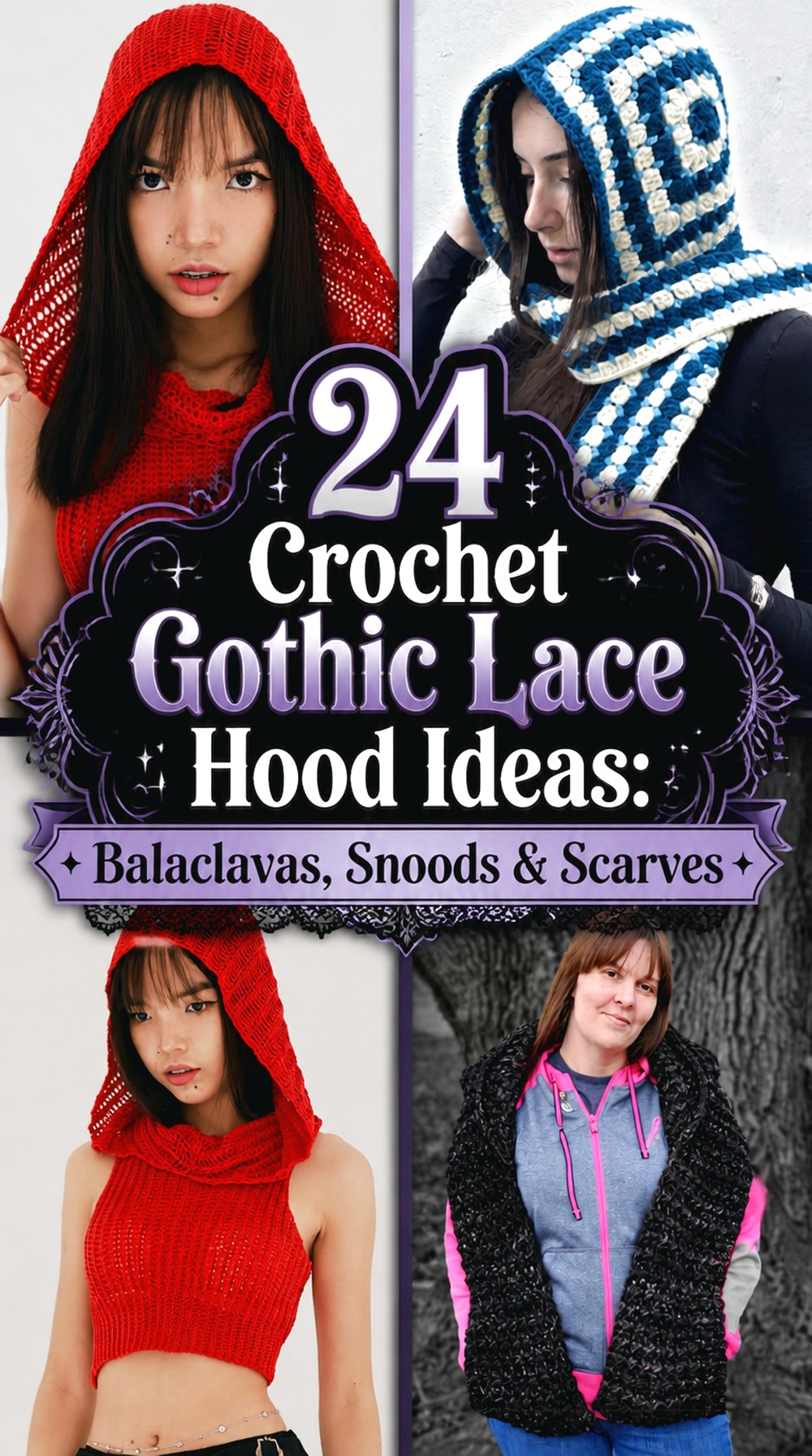

A gothic crochet hood can be close and architectural, soft and veil-like, or dramatic enough to flow into a scarf or cloak. That range matters because lace behaves differently on a fitted balaclava than it does along a loose snood, scarf tail, or cape edge. Face openings, neck volume, drape, motif joins, and the weight of decorative details can all change how the finished piece wears.
The tutorials below provide 24 different construction directions to explore. Some teach an already distinctive hood, while others provide a strong hood, balaclava, cowl, scarf, or cloak structure that can inspire a darker lace interpretation. Where the source itself is not a gothic lace project, treat the lace treatment as an independent adaptation rather than something demonstrated by the creator. Use the original tutorial for its exact construction details and verify fit before changing its fabric.
Quick List
- Crochet Collar-Framed Gothic Balaclava
- Crochet Deep-Drape Gothic Snood Hood
- Crochet Rounded Gothic Scoodie with Lace Tails
- Crochet Pocketed Gothic Hooded Scarf
- Crochet Rib-Cuffed Gothic Hooded Cowl
- Crochet Fur-Edged Gothic Hooded Scarf
- Crochet Granny-Window Gothic Balaclava
- Crochet Eight-Square Gothic Balaclava
- Crochet Infinity-Wrap Gothic Hooded Scarf
- Crochet Long Pocket Gothic Hooded Wrap
- Crochet Cathedral-Cable Gothic Hooded Cowl
- Crochet Close-Fit Gothic Balaclava with Lace Rim
- Crochet Tie-Front Gothic Balaclava Hood
- Crochet Soft Gothic Snood Balaclava
- Crochet Cloak-Style Gothic Fairy Hood
- Crochet Gothic Hooded Cowl Top
- Crochet Long-Tail Gothic Hood Scarf
- Crochet Motif-Panel Gothic Hood Balaclava
- Crochet Rounded-Corner Gothic Hooded Scarf
- Crochet Turtleneck Gothic Hooded Cowl
- Crochet Ribbed Gothic Hooded Cowl
- Crochet Gothic Hooded Wrap Shawl
- Crochet Minimal Gothic Hooded Scarf
- Crochet Layered Hat-and-Snood Gothic Hood
Choose the Gothic Hood Silhouette Before You Choose the Lace
Start with the silhouette because it controls where decorative openwork can realistically go. A fitted balaclava emphasizes the face opening and works well when you want a sharp, close gothic frame. A snood or hooded cowl creates more folds at the neck, while a hooded scarf adds long vertical lines that can carry lace without making the crown overly open. Cloak and wrap hoods give the most dramatic shoulder coverage.
Also consider how the hood behaves when lowered. A deep hood that looks beautiful over the head may create considerable volume around the neck. Glasses, hairstyles, earrings, coat collars, and scarves can all affect comfort. Check the source tutorial’s finished shape first, then decide whether your gothic treatment should emphasize the face, neckline, lower edge, or trailing sections.
Put Openwork Where the Hood Still Needs Stability
A gothic lace effect does not require replacing every solid stitch area with mesh. In many hoods, the crown, back seam, lower neck, and attachment areas perform structural work. Making those zones dramatically more open can change stretch and distort the intended silhouette.
Instead, consider concentrating lace around a face border, scarf ends, a lower cowl edge, shoulder panels, or decorative inserts. Motif-built designs offer another route because open areas can be planned within individual squares while the joins retain the overall shape. Before combining stitch fabrics, compare blocked samples rather than relying only on their unblocked appearance. If beads, chains, charms, or long ties are added for gothic styling, keep their weight and snag potential in mind, particularly around the face and neck.
Drape and Stitch Definition Matter More with Dark Yarn
Black and very dark yarn can make subtle stitch texture difficult to see, particularly when the fiber has a strong halo. That may be desirable for a shadowy, blended surface, but it works against designs where cables, lace openings, or motif boundaries are supposed to provide the visual interest.
For intricate gothic openwork, compare yarns under normal daylight before committing to the whole hood. A fabric that looks crisp in charcoal, wine, or deep violet may lose definition in solid black. Drape is equally important: very loose fabric can make a snood feel fluid and veil-like, while a firmer fabric creates a more sculptural face frame. When adapting a tutorial, swatch the proposed fabric and check both stretch and recovery before assuming it will behave like the original.
Crochet Collar Framed Gothic Balaclava
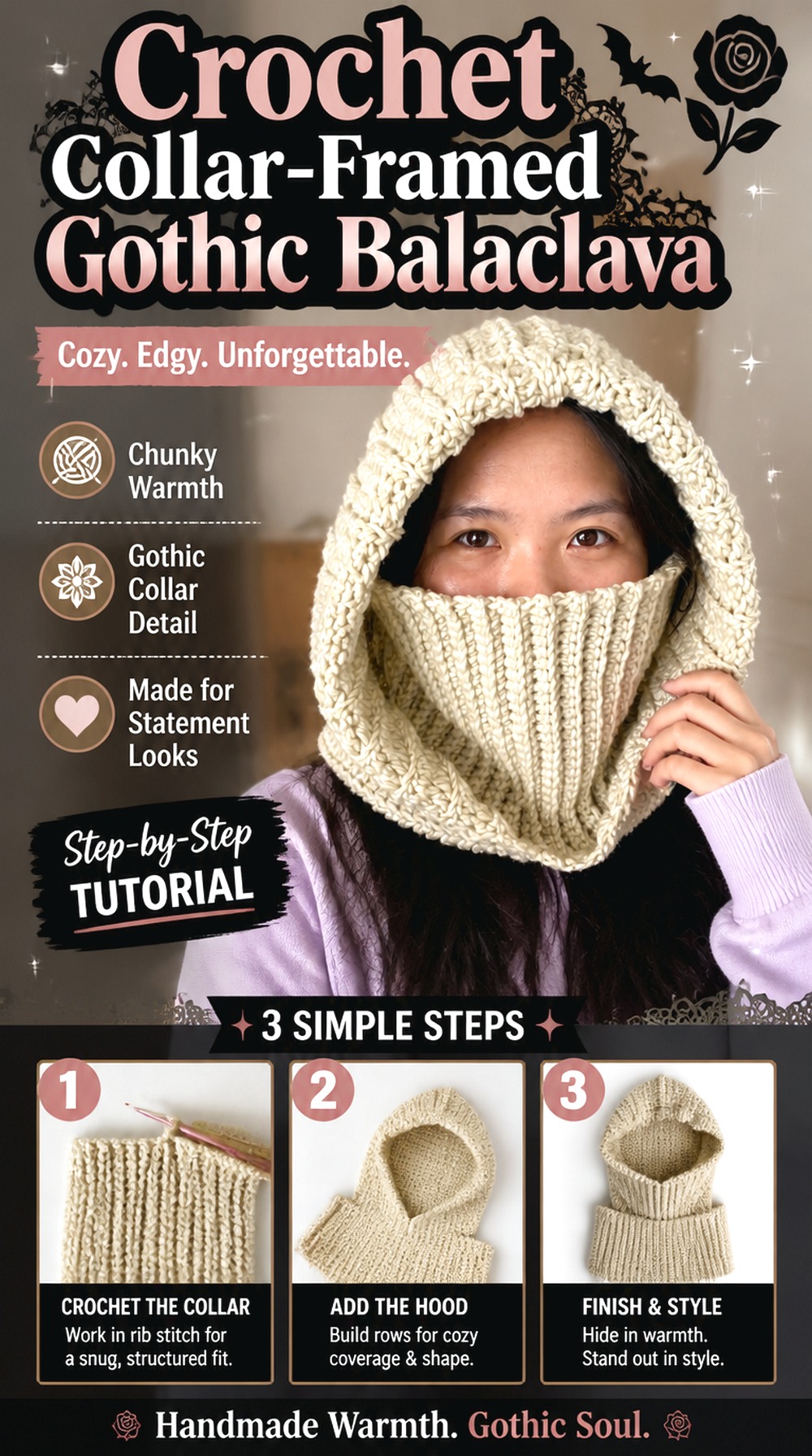
This direction combines the compact coverage of a balaclava with a distinct lower collar, giving you a strong base for a dark romantic hood without needing a long scarf. The silhouette works especially well when you want the face opening to remain the focal point while the neckline extends beneath a coat or jacket.
For a gothic lace interpretation, keep the main head section supportive and concentrate openwork near the outer collar or as a narrow frame around the face. That preserves the recognizable balaclava shape while giving the decorative fabric enough room to be visible.
Let the Collar Carry More of the Ornament
The lower collar gives you a larger decorative area than the crown, so it is a sensible place to explore scallops, arches, mesh, or a contrasting lace border. Because that section sits below the main face opening, its visual weight can balance a relatively simple hood above. Check how the collar lies against your intended outerwear before adding anything bulky.
Check the Face Opening Before Adding a Border
An extra border can reduce or stabilize an opening depending on the stitch and tension. Try on the base hood at the stage recommended by the tutorial before planning an elaborate trim. If the opening already sits close to the cheeks or chin, a wide decorative edge may make the fit feel tighter or move the visual frame farther inward.
Original Tutorial and Creator Credit
Creator: Life by Susan | Crochet
Crochet Deep Drape Gothic Snood Hood

A snood creates a softer gothic look because it does not need to hug every contour of the head. The extra fabric can fall in folds around the neck when lowered and create a veil-like outline when pulled up. That makes this direction useful for readers who want drama without long scarf ends.
Rather than covering the entire piece in highly open lace, consider a mostly cohesive snood with a more transparent upper border. Deep charcoal, black, oxblood, or muted plum can emphasize the shadow created by the folds, while the open edge gives the hood a lighter frame.
Neck Volume Changes the Finished Mood
A generous snood can look intentionally theatrical, but additional lace borders, tassels, or thick trims also increase the amount of fabric around the neck. Test how the piece sits both up and down. If you plan to wear it with a high coat collar, a slimmer decorative treatment may be more comfortable than adding volume to every edge.
A Veil-Like Edge Needs Enough Body Behind It
Openwork has more visual impact when it contrasts with a stable section of fabric. Keeping the main snood relatively cohesive can help a lace rim read as a deliberate veil rather than making the entire hood collapse into loose mesh. Swatch the decorative section and assess whether it stretches substantially more than the body fabric.
Original Tutorial and Creator Credit
Creator: Treasurie
Crochet Rounded Gothic Scoodie with Lace Tails
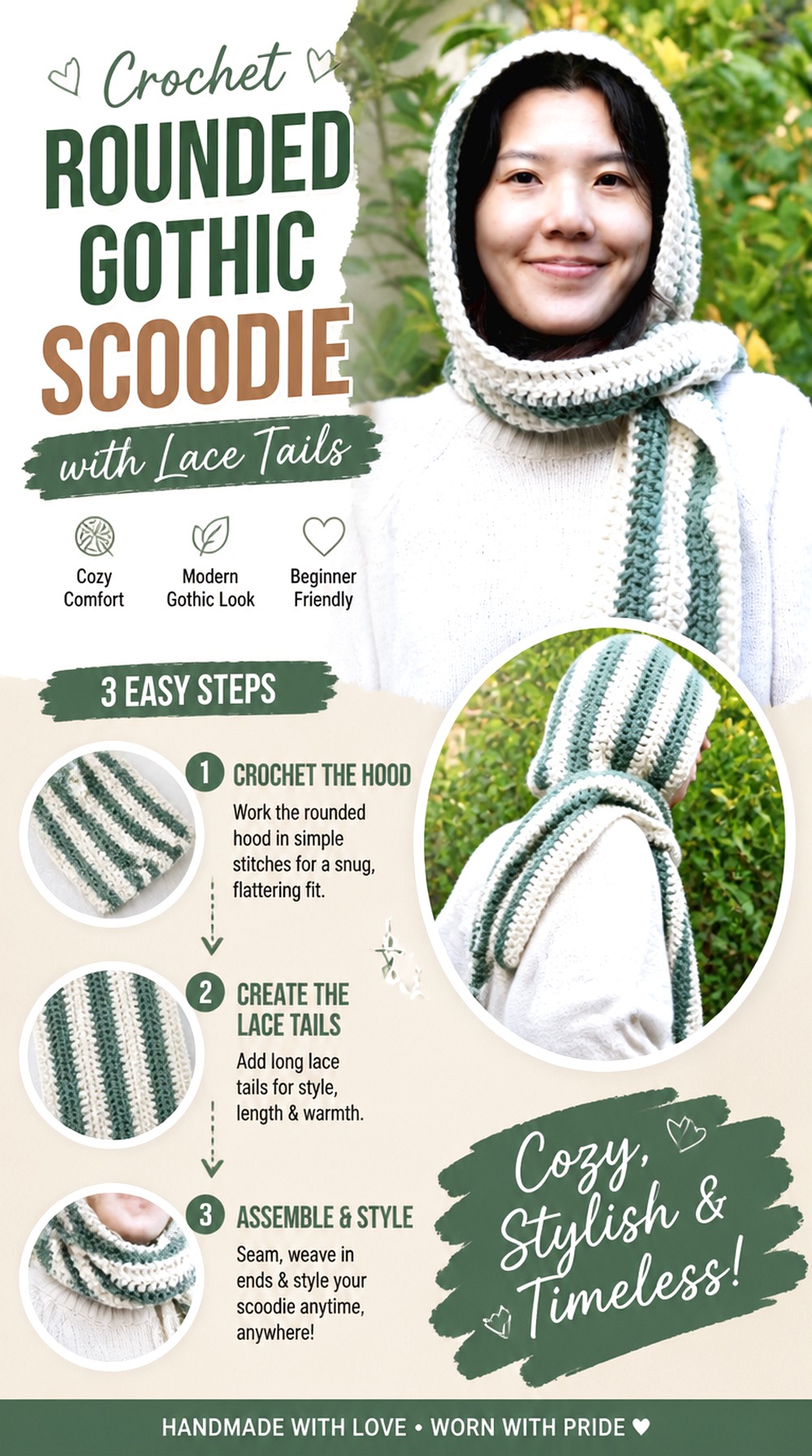
A scoodie combines a practical hood with scarf extensions, giving gothic styling two very different surfaces to work with. The rounded hood can stay relatively restrained while the scarf tails carry more obvious lace, pointed edging, or repeating open motifs. That division keeps the head section wearable while allowing the lower portion to become much more ornamental.
This option also suits readers who dislike a pronounced point at the back of a hood. The smoother crown makes the finished piece read more like an integrated garment accessory, while long scarf lines can visually lengthen an outfit.
Keep the Rounded Crown Visually Clean
A rounded hood depends on the crown shape reading clearly. Heavy applique, thick dimensional stitches, or uneven lace changes near that area may compete with the smooth outline. For a gothic adaptation, a cleaner crown paired with decorative framing around the face or scarf ends can create stronger contrast and preserve the hood’s distinctive profile.
Use the Scarf Ends as the Lace Showcase
Long scarf panels provide room for repeating motifs without putting the same stretch demands on the hood itself. Before replacing solid sections with openwork, compare the width of your lace panel to the scarf fabric after blocking. A dramatic flare at the ends can be intentional; an accidental width change can make the transition look awkward.
Original Tutorial and Creator Credit
Creator: VivCrochets
Crochet Pocketed Gothic Hooded Scarf
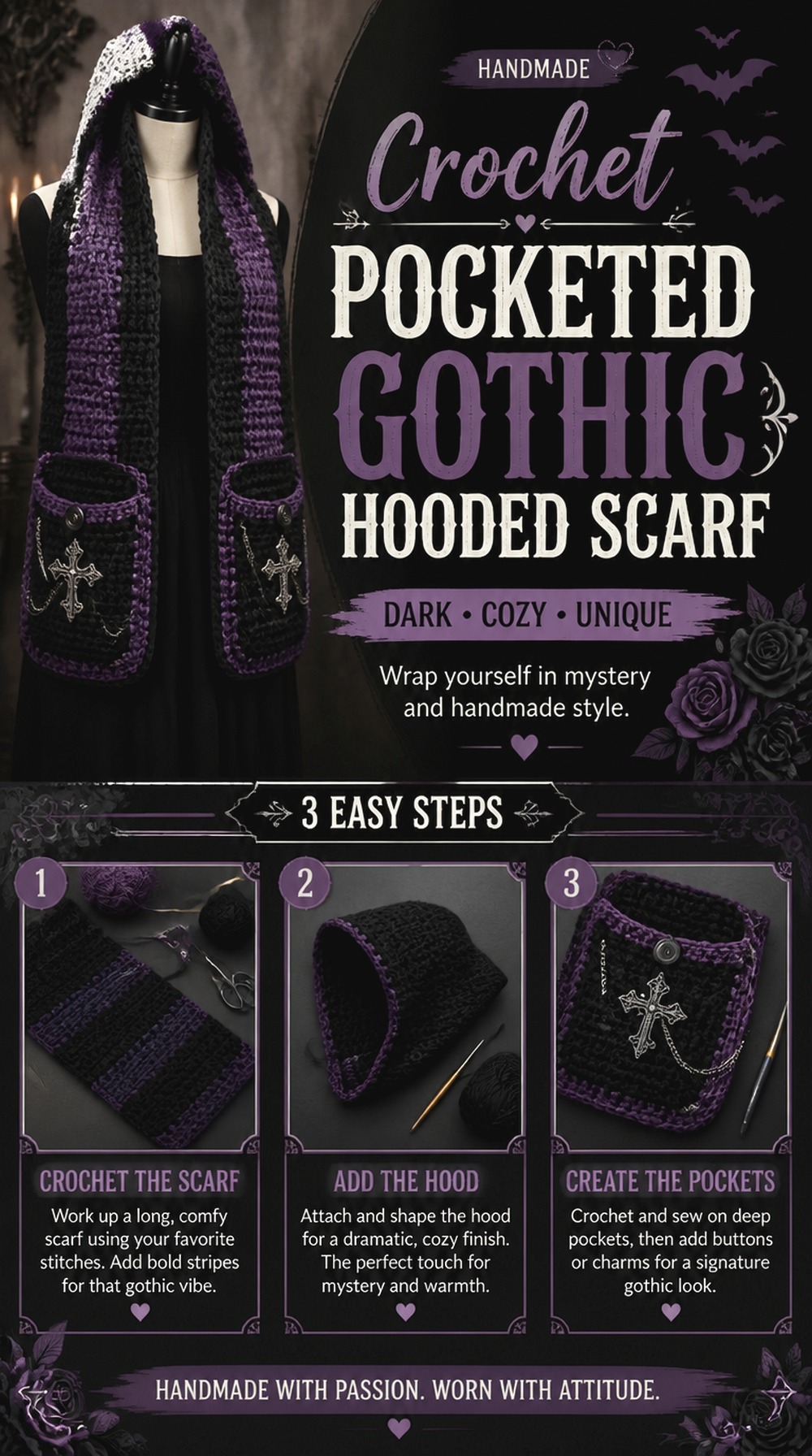
A hooded scarf with pockets has a larger visual footprint than a compact balaclava, making it a strong choice for a gothic outerwear accessory. The pockets anchor the lower ends and create natural spaces for motif panels, lace overlays, or contrasting borders while the hood remains functional.
Because pockets add another layer of fabric, they are worth treating as design features rather than hiding them. Dark tonal contrast—such as matte black against charcoal—or an openwork panel over a denser pocket can create interest without relying on bright color.
Pocket Openings Should Stay Practical
Decorative edging around a pocket can be striking, but it should not make the opening difficult to use. Check where your hands naturally enter and whether a scalloped or pointed trim catches on rings or bracelets. A lace panel on the pocket face may be less intrusive than a highly elaborate trim directly across the opening.
Balance Long Ends Against the Hood
Pockets can make the ends visually and physically heavier than an ordinary scarf. If you also add beads, fringe, or layered lace, that imbalance becomes more pronounced. Try the finished base scarf on before choosing embellishments so you can see whether the tails already pull downward strongly enough to affect how the hood sits.
Original Tutorial and Creator Credit
Creator: naztazia
Crochet Rib Cuffed Gothic Hooded Cowl
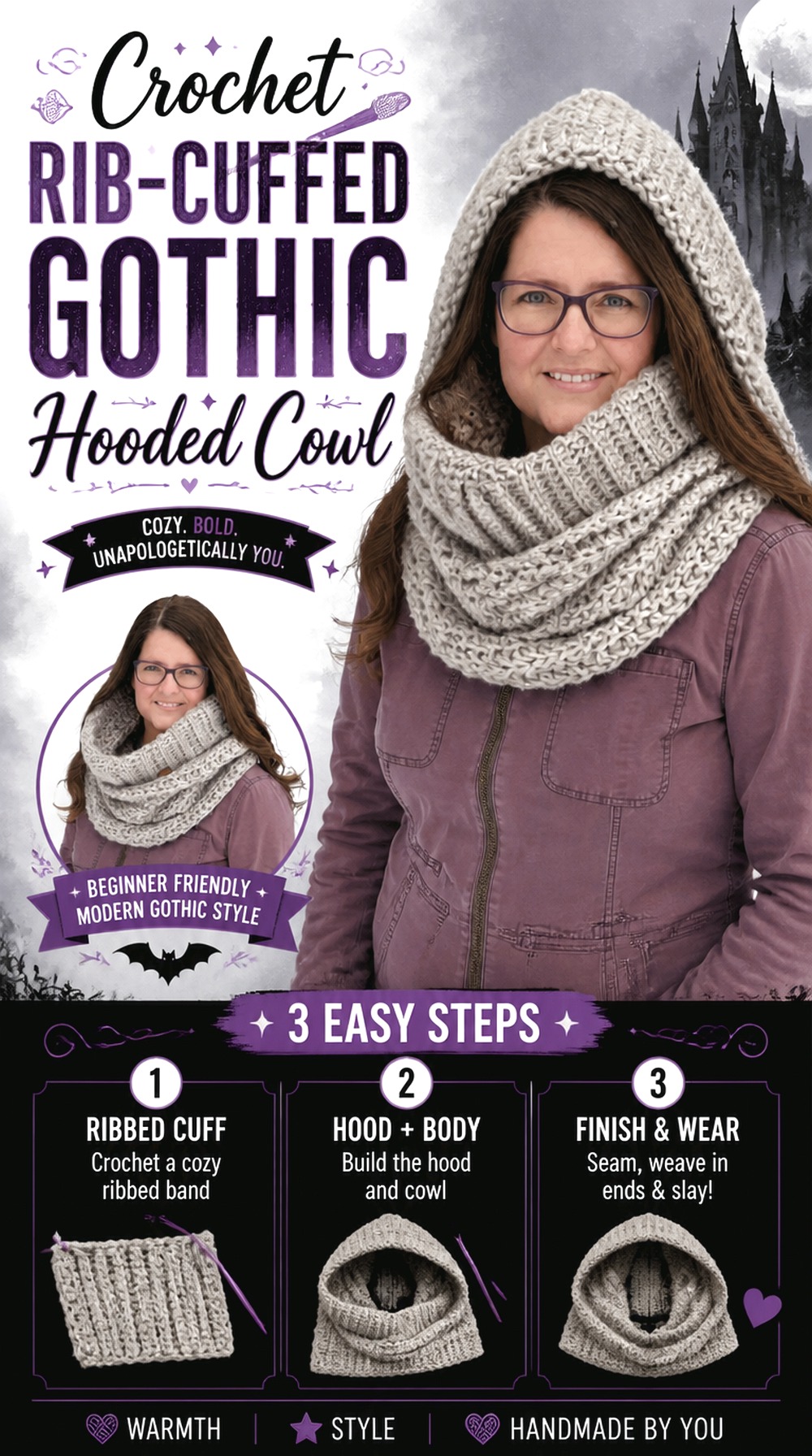
A cuffed hooded cowl creates a defined frame around the head without needing long ties or scarf tails. Its strong border makes it a good gothic base when you want the drama concentrated close to the face. The cowl can also be worn down around the neck, so the decorative edge remains visible even when the hood is not raised.
For a lace interpretation, consider contrasting the firmer cuff with subtler openwork in the body or adding a narrow ornamental layer outside the structural edge rather than replacing it.
Treat the Cuff as a Frame, Not Just a Finish
A substantial cuff immediately draws attention to the face opening. If you plan to add lace, decide whether it should sit outside that frame or replace part of its visual role. Two equally bold borders may compete with each other, while a narrow pointed or picot-like accent can make the original frame feel more intentional.
Test the Hood in Both Wearing Positions
A hooded cowl changes shape considerably when lowered. Extra trim that falls neatly around the face may bunch differently at the neck. Before committing to dimensional decoration, fold the hood down and wear it with the coat or top you expect to pair with it. That reveals whether the added texture creates comfortable folds or unwanted bulk.
Original Tutorial and Creator Credit
Creator: A Crocheted Simplicity – Jennifer Renaud
Crochet Fur Edged Gothic Hooded Scarf
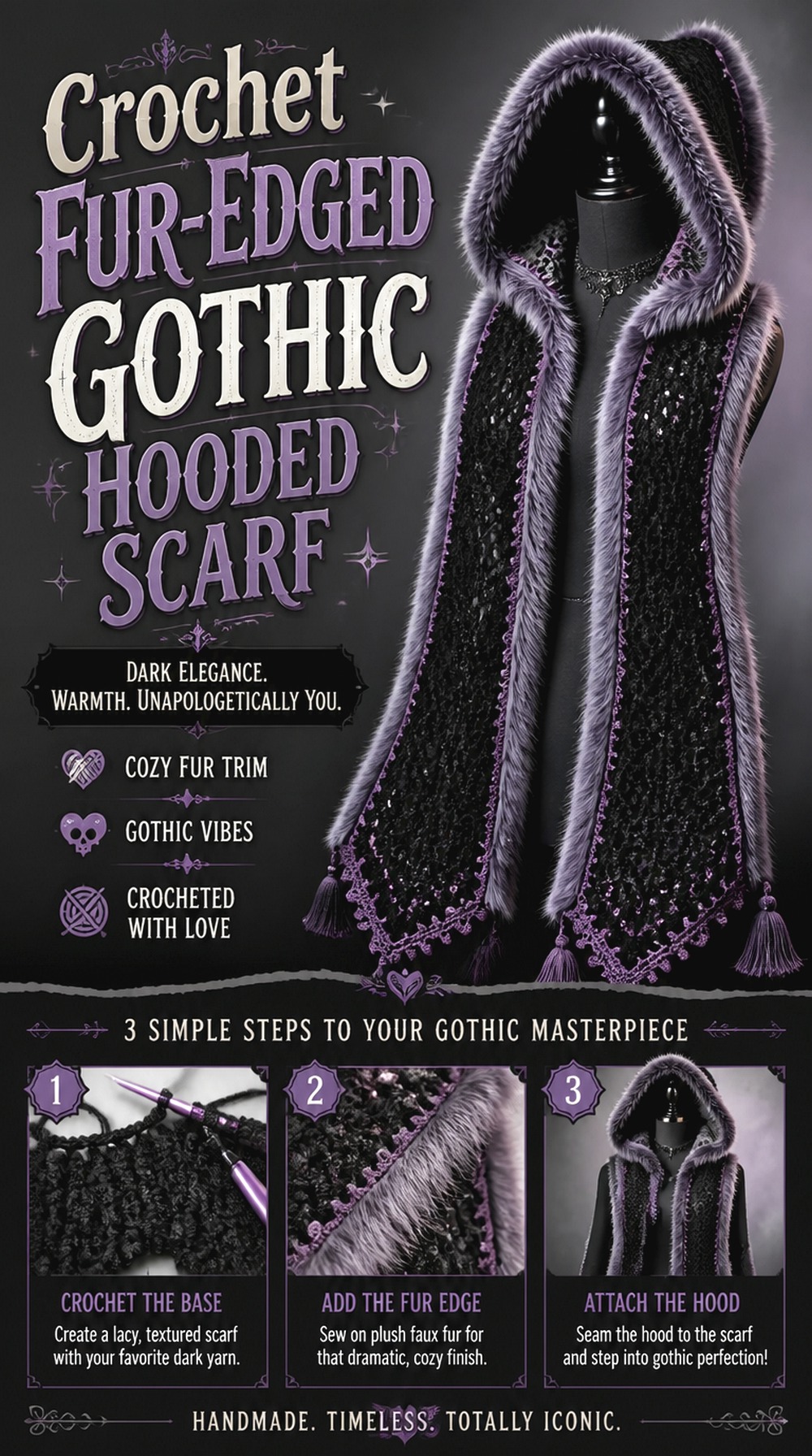
A soft contrasting edge changes a hood immediately, and this hooded scarf provides a useful base for a dark winter-goth interpretation. Instead of treating a plush-looking border as purely cozy, pair it with black, charcoal, deep wine, or smoky gray fabric for a dramatic frame reminiscent of dark fantasy outerwear.
If you prefer a lace-focused result, reserve the textured edge for the hood and use openwork farther down the scarf. The difference between a dense face frame and lighter trailing sections creates more depth than repeating the same texture everywhere.
Keep Plush Texture Away from Delicate Lace Detail
A fuzzy or highly textured trim can obscure tiny stitch shapes beside it. If you want lace to remain visible, separate the two treatments or enlarge the openwork scale rather than placing very fine lace directly against a visually dense border. View your swatches from normal wearing distance, not only close up.
Decide Which Feature Owns the Face Opening
This version can become visually busy if fur-like trim, lace, cords, and embellishments all converge around the face. Choose one dominant treatment there. Secondary gothic details can move toward the scarf ends, where they have room to repeat without crowding the wearer’s features.
Original Tutorial and Creator Credit
Creator: Wolfie Knots
Crochet Granny Window Gothic Balaclava
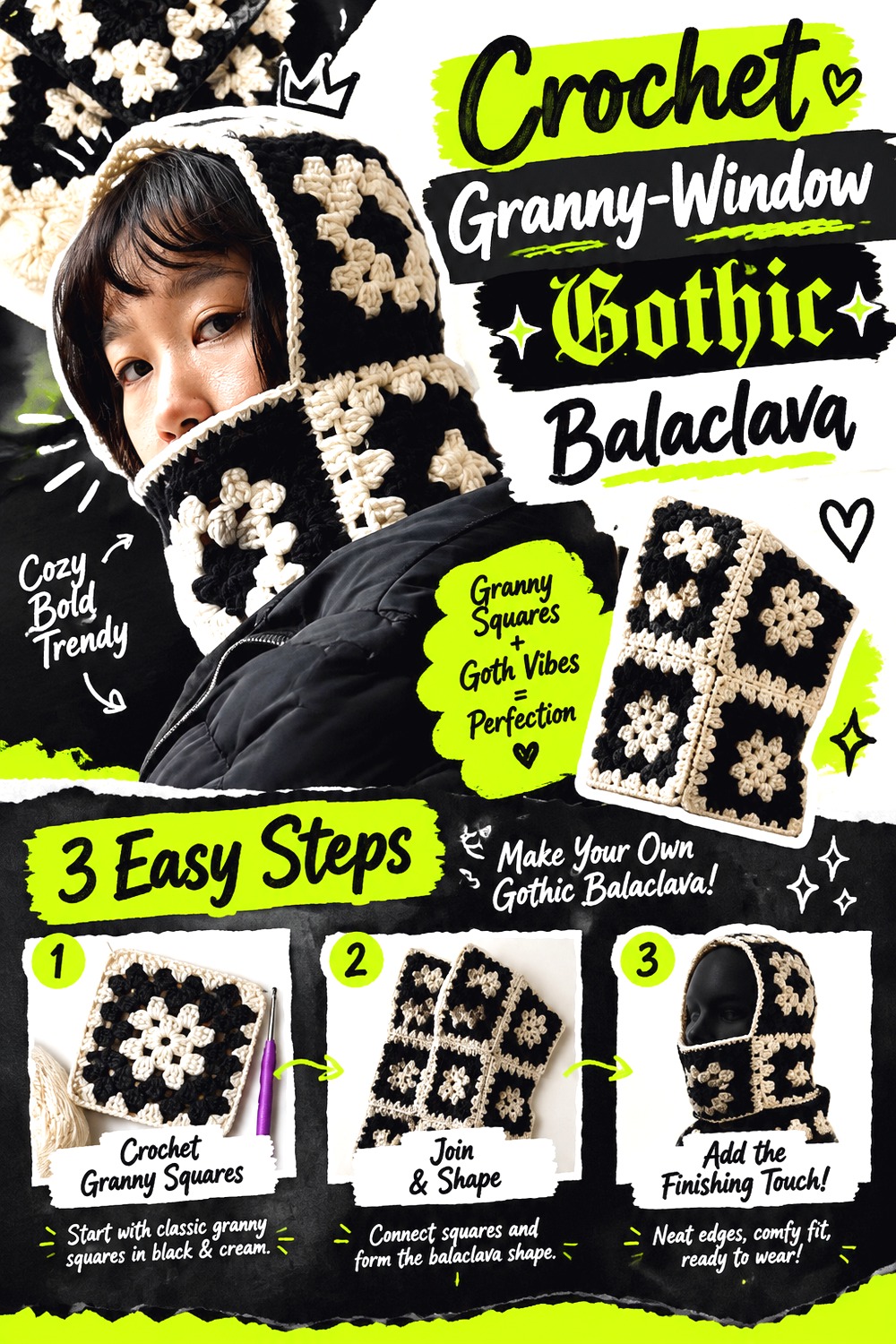
A granny-based balaclava offers a natural route into gothic openwork because the motif itself already creates visible negative space. Using a restrained dark palette can shift the familiar granny-square character toward stained glass, ironwork, or window tracery without needing to cover the hood in additional embellishment.
The main planning challenge is scale. Motifs dictate dimensions more strongly than a continuous fabric does, so the blocked size of each square matters to the finished face opening and crown shape.
Think Like a Stained-Glass Layout
Before joining anything, arrange the blocked motifs in the intended color order and examine where the most open areas will fall. A strong center or border color can help individual squares read as connected architectural panels. Random distribution may work for patchwork, but gothic styling often benefits from deliberate symmetry around the face.
Motif Size Controls More Than Width
Changing yarn, hook, or border rounds alters the square itself and therefore the geometry of the hood. Do not assume two granny designs can be substituted simply because both are called squares. Compare blocked height, width, edge stitch distribution, and overall density before mixing motifs within one fitted headpiece.
Original Tutorial and Creator Credit
Creator: day la hanh
Crochet Eight Square Gothic Balaclava
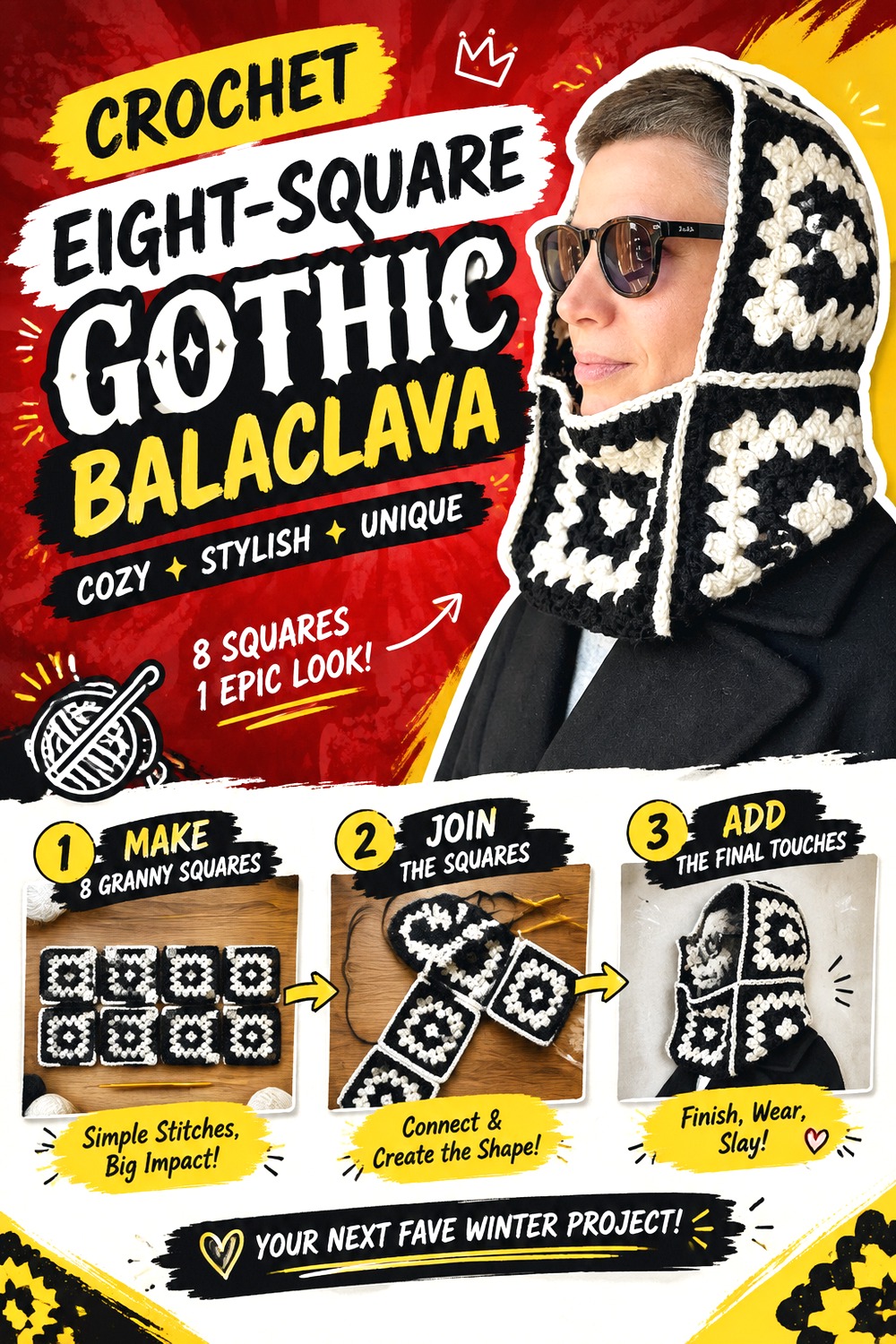
Building a hood from eight granny squares makes the motif grid a visible part of the construction rather than a surface decoration. That is especially useful for gothic styling because each square can be treated like an individual pane, with a consistent dark border unifying more intricate centers.
This approach suits crocheters who enjoy planning the finished object piece by piece. It is less forgiving, however, when motifs block to noticeably different dimensions. Consistency matters before the pieces become a fitted head covering.
Map All Eight Squares Before Joining
Lay the completed, blocked motifs in their intended arrangement before assembly. Look for repeated center colors, directional motifs, or high-contrast areas that could unintentionally cluster on one side. A quick layout check gives you a chance to move squares before the joins make the composition permanent.
Keep Join Tension Consistent Around the Head
A join can behave differently from the square fabric itself. If seams are unusually tight, the hood may lose flexibility even when the motifs stretch comfortably. If they are loose, the grid can become uneven. Compare joined sample edges when adapting the look rather than assuming decorative seams will behave like the creator’s original construction.
Original Tutorial and Creator Credit
Creator: Crochetclubstore
Crochet Infinity Wrap Gothic Hooded Scarf
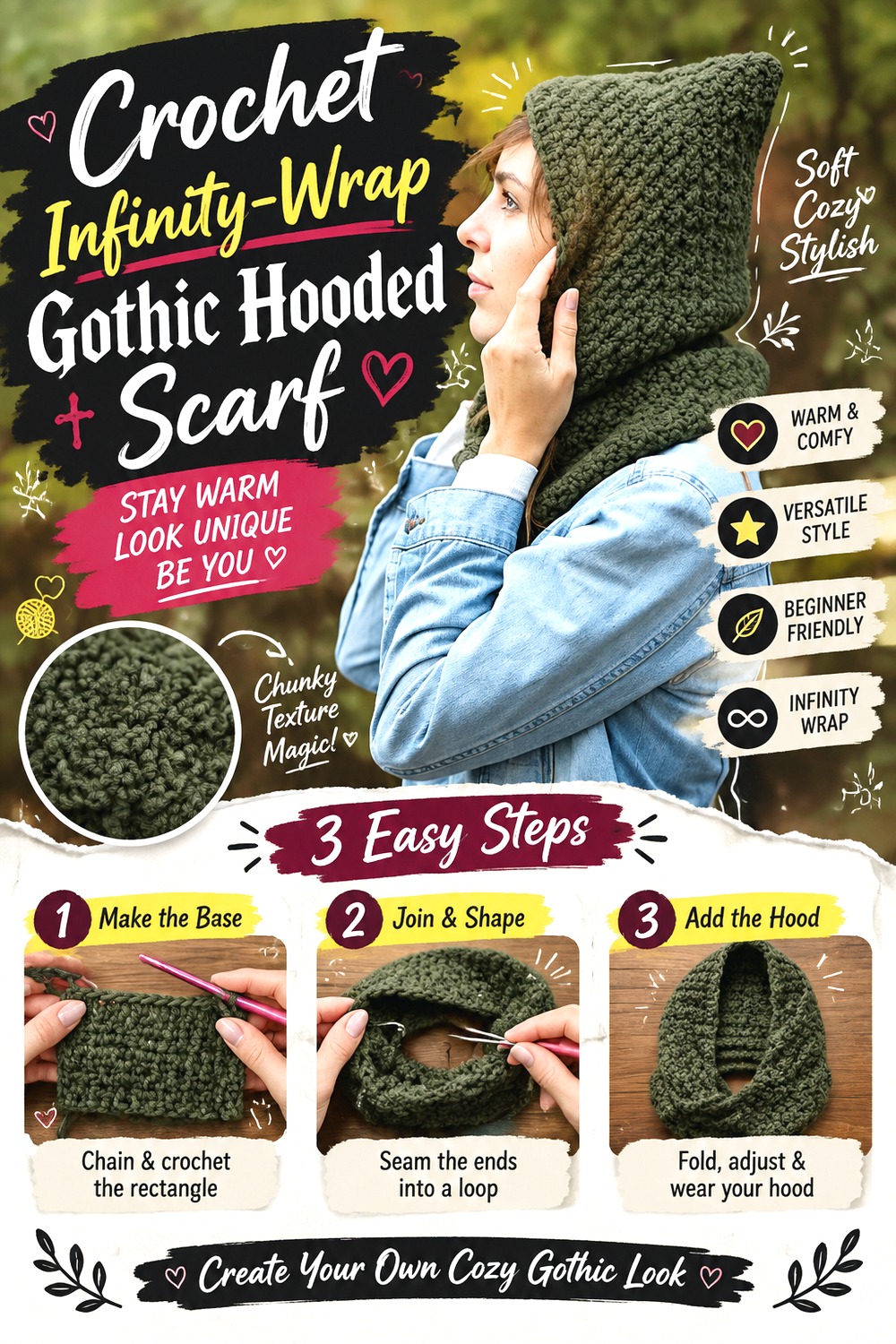
An infinity scarf with an attached hood produces a very different gothic silhouette from loose scarf tails. The looped neck section creates layered folds beneath the hood, giving the finished piece a substantial, almost mantle-like profile without extending into a full cape.
For a gothic lace version, a solid hood paired with selective openwork in the looping scarf can work particularly well. The wrap creates overlapping shadows, so even a relatively simple lace repeat can become visually richer when the fabric crosses itself.
Consider How Many Layers the Openwork Creates
A lace fabric seen in one layer may look very open, while two overlapping wraps can appear much denser. Evaluate the scarf when worn rather than judging the stitch pattern flat on a table. That helps you decide whether the openwork needs larger spaces or a simpler repeat to remain visible.
Watch the Transition Between Hood and Loop
The attachment point is visually important because it connects two differently behaving sections. If you introduce contrasting lace, avoid making the transition look accidental. Repeating a small element from the hood edge in the scarf—or maintaining one consistent border—can help the two portions read as one intentional accessory.
Original Tutorial and Creator Credit
Creator: Kay Krochets
Crochet Long Pocket Gothic Hooded Wrap
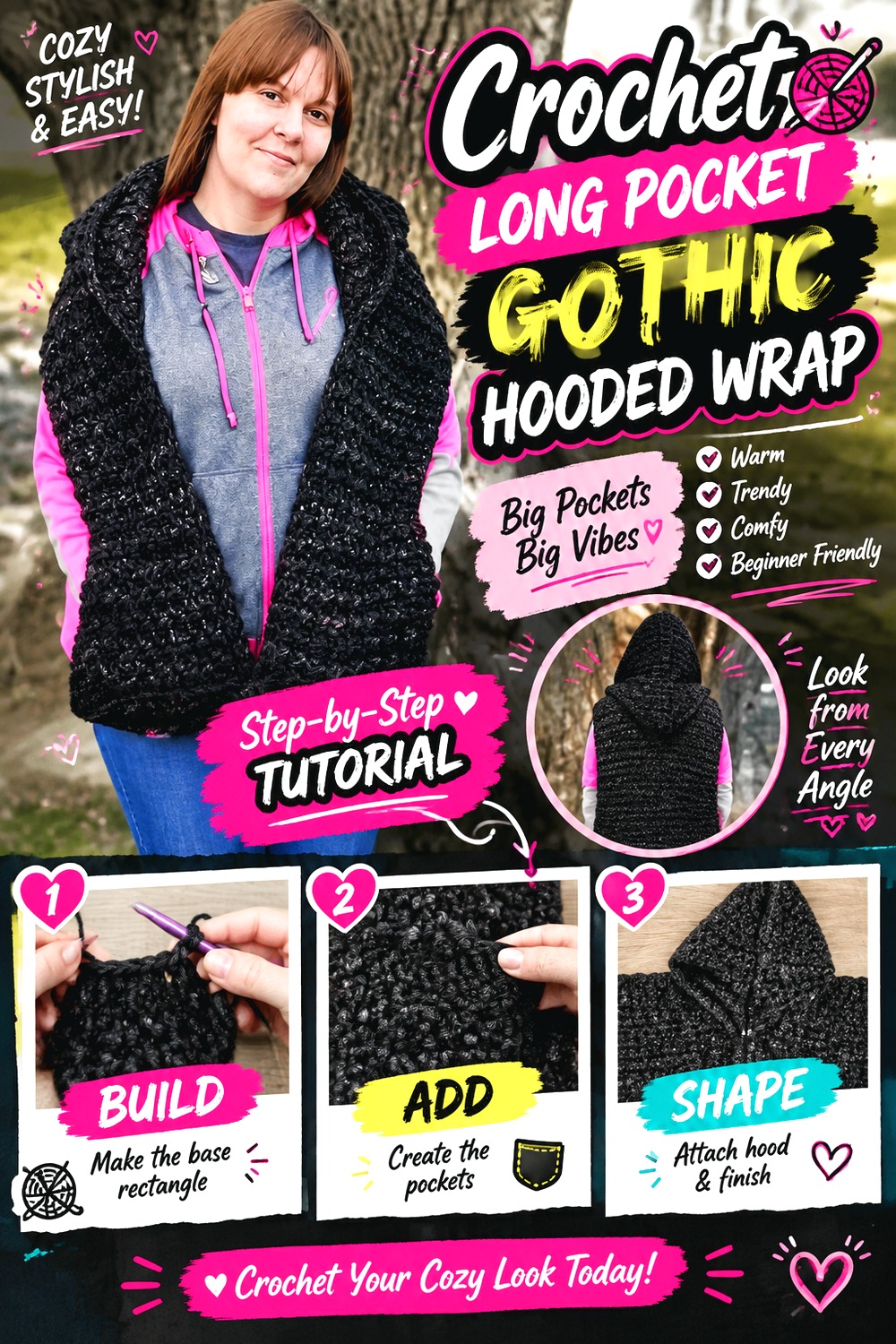
This long hooded scarf format creates more vertical coverage and visual movement than a compact cowl. Pockets at the ends can make the accessory feel closer to a narrow wrap, giving you space for larger gothic motifs that would overwhelm a small hood.
A dark solid hood with increasingly open lace toward the lower ends can create a gradual shift from practical head covering to decorative garment detail. Because the scarf sections hang from the shoulders, consider their weight before adding fringe, beads, or dense appliqués.
Use Length to Create a Graduated Lace Effect
Instead of repeating one fabric from hood to hem, transition gradually into more open sections lower down. The upper scarf can remain stable where it crosses the chest, while the ends become more decorative. This approach also keeps the most fragile lace away from areas that receive more rubbing from coat collars and shoulder straps.
Reinforce the Visual Weight of the Pockets
A pocket interrupts the flow of a lace panel. You can either disguise that transition by matching the surrounding texture or emphasize it with a framed motif. Whichever route you choose, make sure the pocket remains clearly usable and that decorative points or loops do not continually catch when a hand enters.
Original Tutorial and Creator Credit
Creator: Bag-O-Day Crochet
Crochet Cathedral Cable Gothic Hooded Cowl
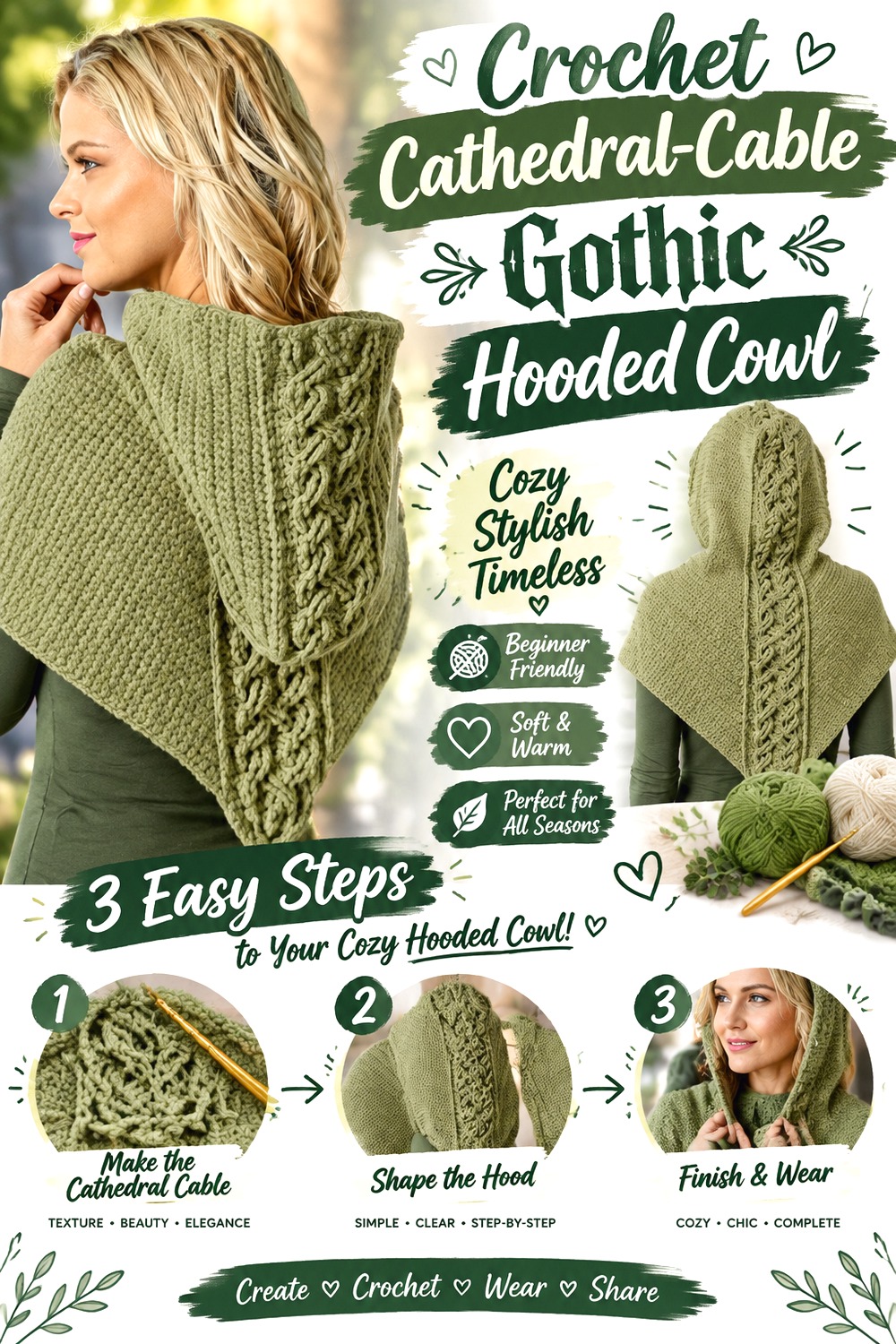
Raised crochet cables can provide gothic detail without relying entirely on open lace. Their strong vertical and crossing lines can resemble carved architectural ornament, making this hooded cowl an excellent option for a more structured cathedral-inspired look.
Rather than adding lace everywhere, use openwork as contrast around the cable panels or outer edge. The solid relief texture then remains visible while small transparent sections lighten the composition. This is particularly useful with dark yarn, where subtle flat textures may otherwise disappear.
Give Raised Cables Enough Visual Contrast
Complex cables need clear stitch definition. Very fuzzy yarn or extremely dark fabric under poor lighting can conceal their structure. Before committing to black, make a small textured sample and view it at normal distance. Deep gray, smoky purple, or black yarn with a cleaner surface may reveal the architecture more clearly.
Avoid Competing Motifs Beside the Cable Panel
If the cable is the main statement, a highly intricate lace repeat immediately beside it can make both details harder to read. A simpler mesh, narrow open border, or plain connecting section creates negative space around the relief. Gothic design often becomes stronger when one architectural feature is allowed to dominate.
Original Tutorial and Creator Credit
Creator: Marly Bird
Crochet Close Fit Gothic Balaclava with Lace Rim
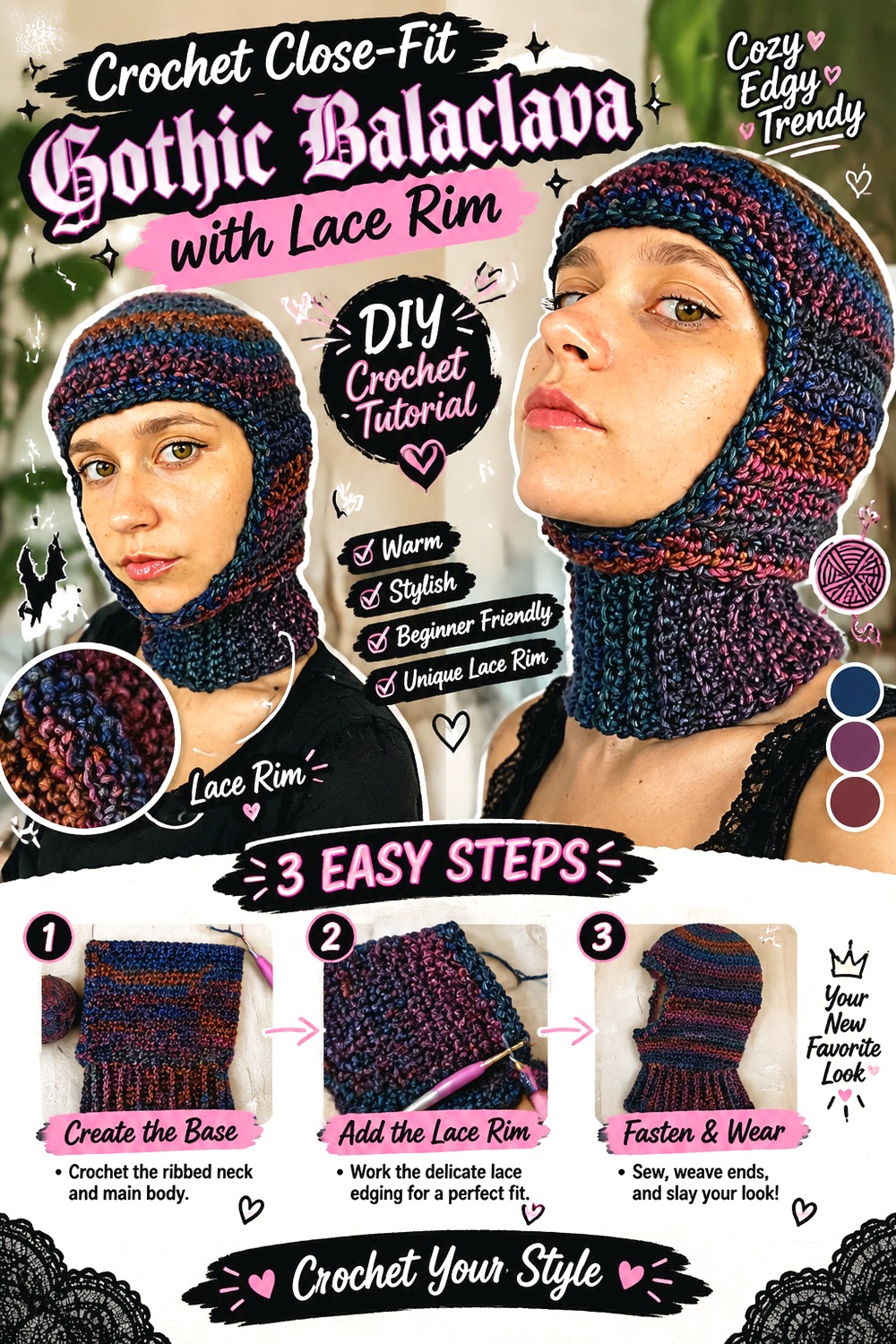
A streamlined balaclava keeps the gothic silhouette compact and modern. Instead of adding long fabric sections, the design can focus entirely on the relationship between the face opening, crown, and neckline. That makes a narrow lace rim, tiny pointed edging, or contrasting open border much more noticeable.
This is a useful direction for anyone who wants gothic styling without a dramatic cloak or scarf. Because the hood sits closer to the head, however, every change around the face can affect comfort more quickly than it would on a loose snood.
Keep Face Trim Narrow Until Fit Is Confirmed
A wide border can change both the appearance and usable size of a close opening. Complete enough of the base shape to understand how it fits before deciding how much decorative fabric to add. If you want a pronounced lace effect, extending outward is usually easier to manage than allowing a trim to encroach substantially on the face.
Small Details Read Strongly on a Compact Hood
A fitted silhouette does not need many embellishments. One dark lace frame, a pointed lower edge, or a contrasting textural band can become the dominant feature because there are fewer competing areas. This makes the design well suited to restrained gothic styling rather than heavily layered decoration.
Original Tutorial and Creator Credit
Creator: brittanyalicecrochet
Crochet Tie Front Gothic Balaclava Hood

Ties immediately change the personality of a balaclava. They create visible lines around the lower face or neckline and can make the hood feel more like a historical bonnet, dark romantic head covering, or fantasy accessory depending on the yarn and finishing choices.
This construction already has a strong focal detail, so gothic lace works best when it supports the ties rather than competing with them. A narrow lace frame or subtle open edging can provide texture while leaving the tie closure easy to see and use.
Treat the Ties as Functional Components
Long cords can snag on jewelry, bags, or outerwear, so do not lengthen them purely for dramatic effect without considering how the hood will be worn. Decorative beads or metal findings also add weight. If you customize the ties, test how they behave while walking and when the hood is worn under a coat.
Echo the Tie Line with a Delicate Border
A slim border around the face can visually connect to the tie area and make the closure look integrated rather than added afterward. Keep the border flexible enough to follow the opening. If the lace is much stiffer than the hood fabric, it may flare outward instead of framing the face.
Original Tutorial and Creator Credit
Creator: Kenikse Crochet
Crochet Soft Gothic Snood Balaclava
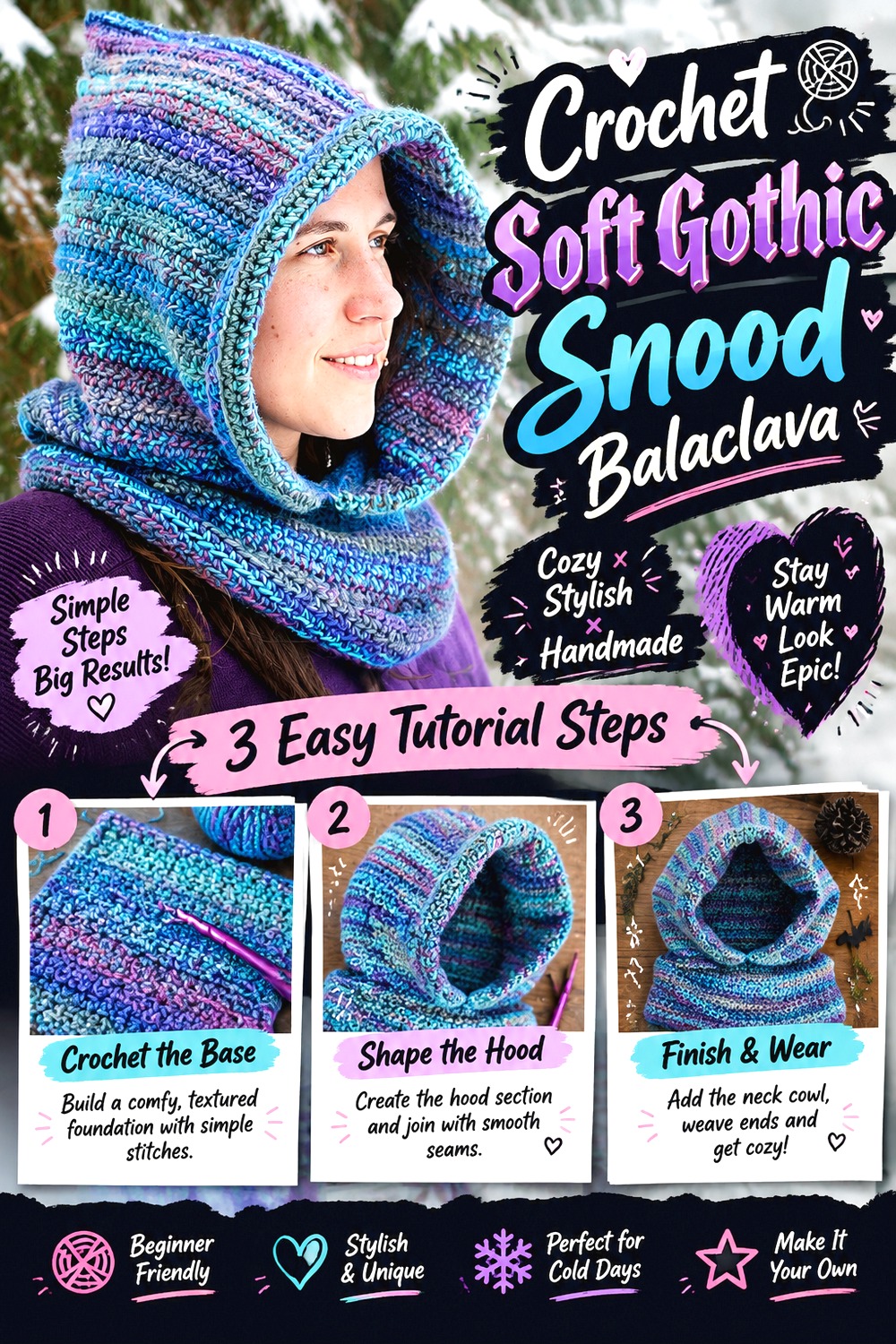
This hybrid shape sits between a close balaclava and a loose snood, making it useful when you want head coverage without the long extensions of a scarf. The simpler outline can carry a dramatic gothic yarn color, a lace face border, or a lower openwork section while still remaining easy to combine with outerwear.
The key choice is how much looseness you want around the head and neck. More drape creates a romantic, hood-like effect; less excess fabric makes the piece read more clearly as a balaclava.
Decide How Much Slouch Belongs at the Back
Extra depth can create attractive folds but may also shift the face opening. When adapting the visual style, avoid assuming that more fabric automatically creates a better gothic drape. Check the side profile and back of the hood as well as the front to see whether the volume looks intentional.
Keep the Lower Edge Compatible with Outerwear
A broad decorative edge can be beautiful on its own yet uncomfortable when trapped beneath a close jacket collar. If this will be an everyday winter accessory, consider concentrating lace higher on the hood and keeping the section that overlaps a coat relatively smooth.
Original Tutorial and Creator Credit
Creator: Crochet with illJay
Crochet Cloak Style Gothic Fairy Hood
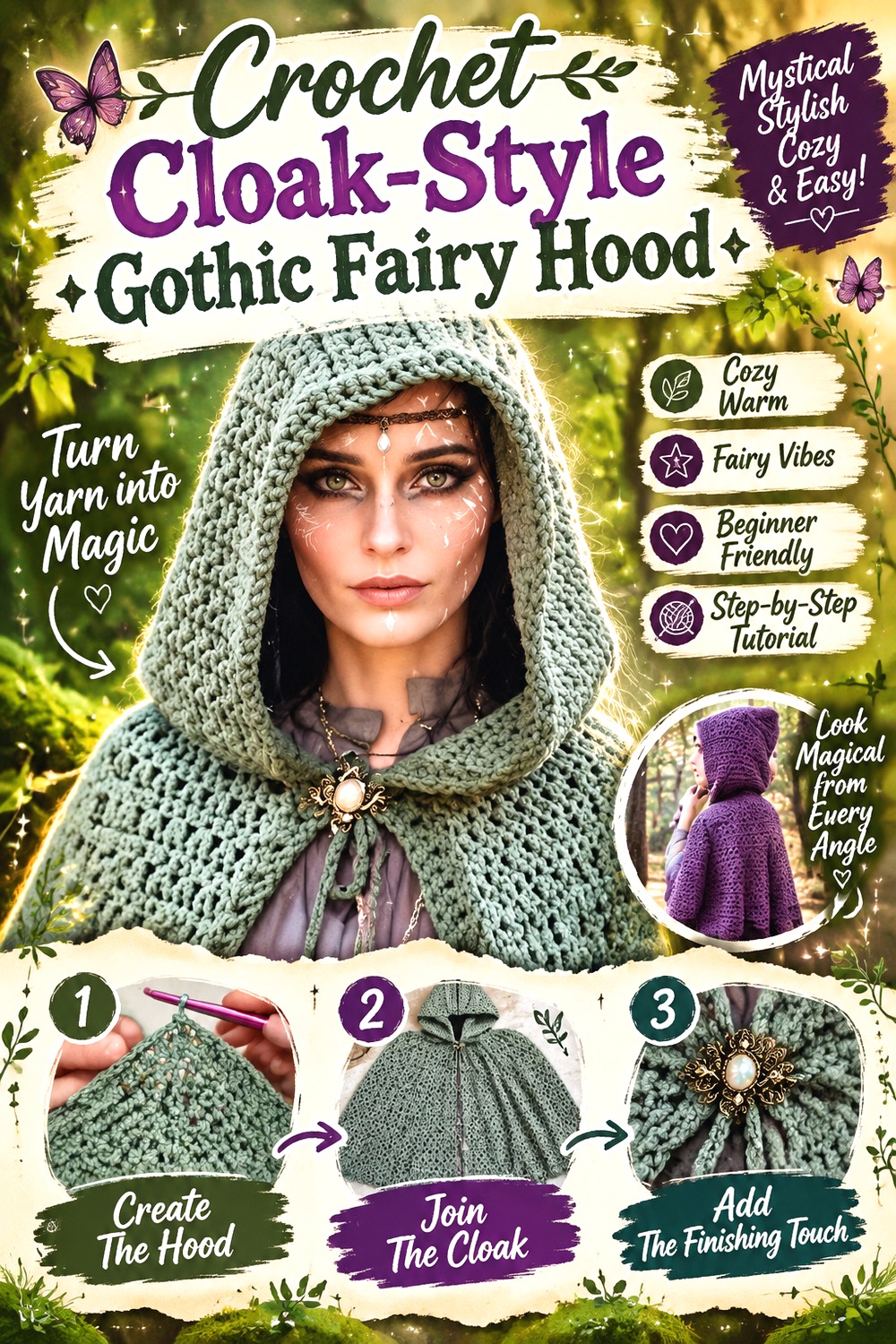
For maximum drama, move beyond a neck accessory and use a hood attached to a cloak. The extra shoulder coverage gives lace much more room to appear along broad outer edges, where scallops, arches, or open motifs can be visible without weakening the top of the hood.
This direction fits dark fairy, medieval-inspired, romantic gothic, costume, and statement outerwear styling. Because a cloak contains substantially more fabric than a balaclava or cowl, decorative changes can also have a larger effect on overall weight and drape.
Reserve Fine Lace for the Most Visible Edges
A cloak offers many possible decorative zones, but filling all of them with intricate work may overwhelm the silhouette. The face frame and lower perimeter usually provide the clearest viewing angles. Concentrating openwork there can preserve the long uninterrupted sweep of the main fabric while still producing a distinctly ornate result.
Judge the Hood Together with the Shoulders
The hood is only one component of this silhouette. A very bulky hood can visually overpower a delicate cape, while an extremely open hood may feel disconnected from a dense body. Lay out yarn and stitch samples together before adapting the two areas so their texture and weight look intentional as one garment.
Original Tutorial and Creator Credit
Creator: Jayda InStitches
Crochet Gothic Hooded Cowl Top
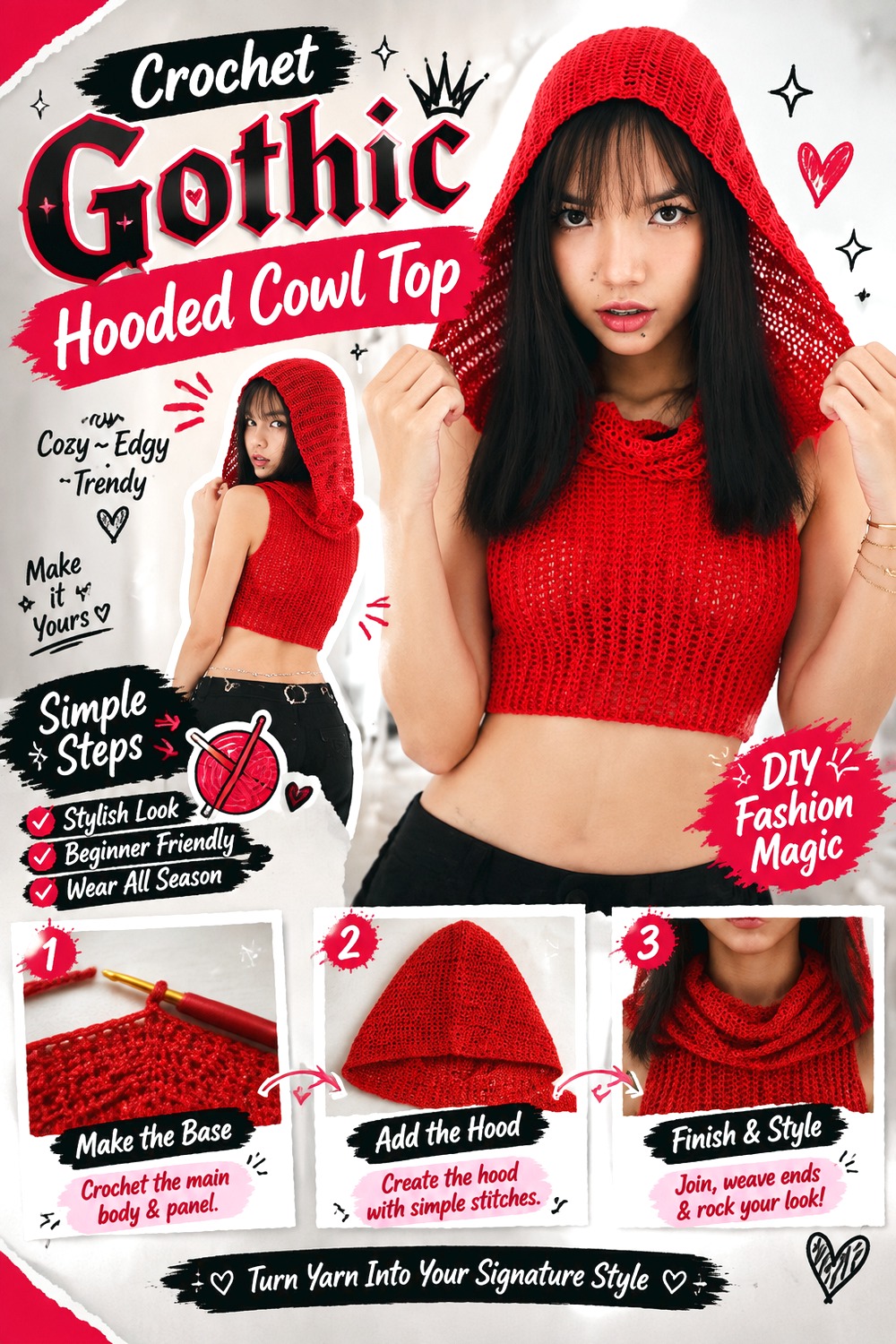
A hooded cowl top extends the concept farther down the torso, creating a more garment-like gothic piece. Instead of treating the hood as an isolated accessory, the neckline and upper body become part of its visual architecture. This gives you additional locations for controlled openwork without putting every decorative change around the face.
A lace shoulder panel, open lower border, or contrasting neckline can create a layered dark-romantic effect while the hood itself stays relatively stable. This approach works especially well when you want the finished piece to read as clothing rather than winter headwear.
Let the Upper Body Support the Hood Visually
Because the hood is attached to a larger top, changes to the body texture affect how the whole design reads. If the hood is solid and substantial, a completely delicate body may feel disconnected. Repeat a small textural element across both zones or use a consistent border to link them.
Check Layering Before Making the Neckline Ornate
Decorative neckline details can sit differently over a fitted shirt, loose blouse, or coat. Decide how you expect to wear the piece before adding thick borders or dangling embellishments. The most dramatic trim is not always the most practical if several garment layers meet at the same point.
Original Tutorial and Creator Credit
Creator: Chenda DIY
Crochet Long Tail Gothic Hood Scarf
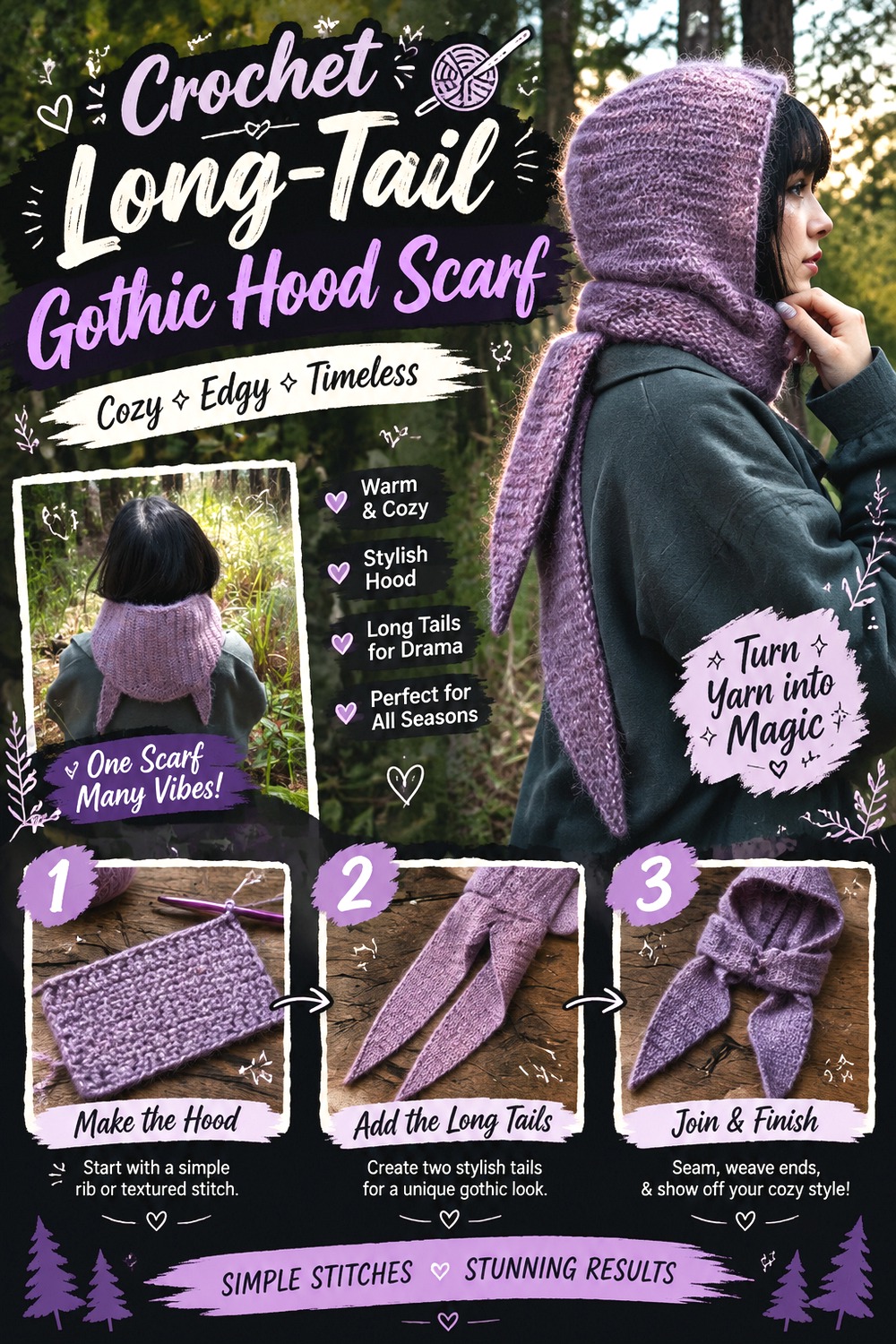
A straightforward hood scarf is one of the most adaptable foundations in this collection. The hood can stay simple and wearable while the long ends become the main gothic feature through pointed lace, mesh sections, floral-dark-romantic motifs, or dramatic borders.
Because the scarf tails hang vertically, they display stitch patterns more consistently than fabric that bunches around the neck. This is useful if you want the lace itself to be clearly recognizable rather than seen primarily through folds.
Use Vertical Lines to Lengthen the Design
Motifs that form columns, arches, or elongated openings complement the natural drop of a hood scarf. Before selecting an openwork pattern, check whether its repeat will fit comfortably within the scarf width. Cropping a large repeat awkwardly at both sides can make a carefully planned lace section look unfinished.
Keep the Hood Edge Simpler Than the Tails
If the lower scarf panels contain detailed lace, a restrained face frame gives the eye somewhere to rest. A small matching element can connect the hood to the tails without duplicating the entire pattern. This also reduces the risk that heavy decoration around the face competes with the more visible hanging panels.
Original Tutorial and Creator Credit
Creator: ABoC Studio
Crochet Motif Panel Gothic Hood Balaclava
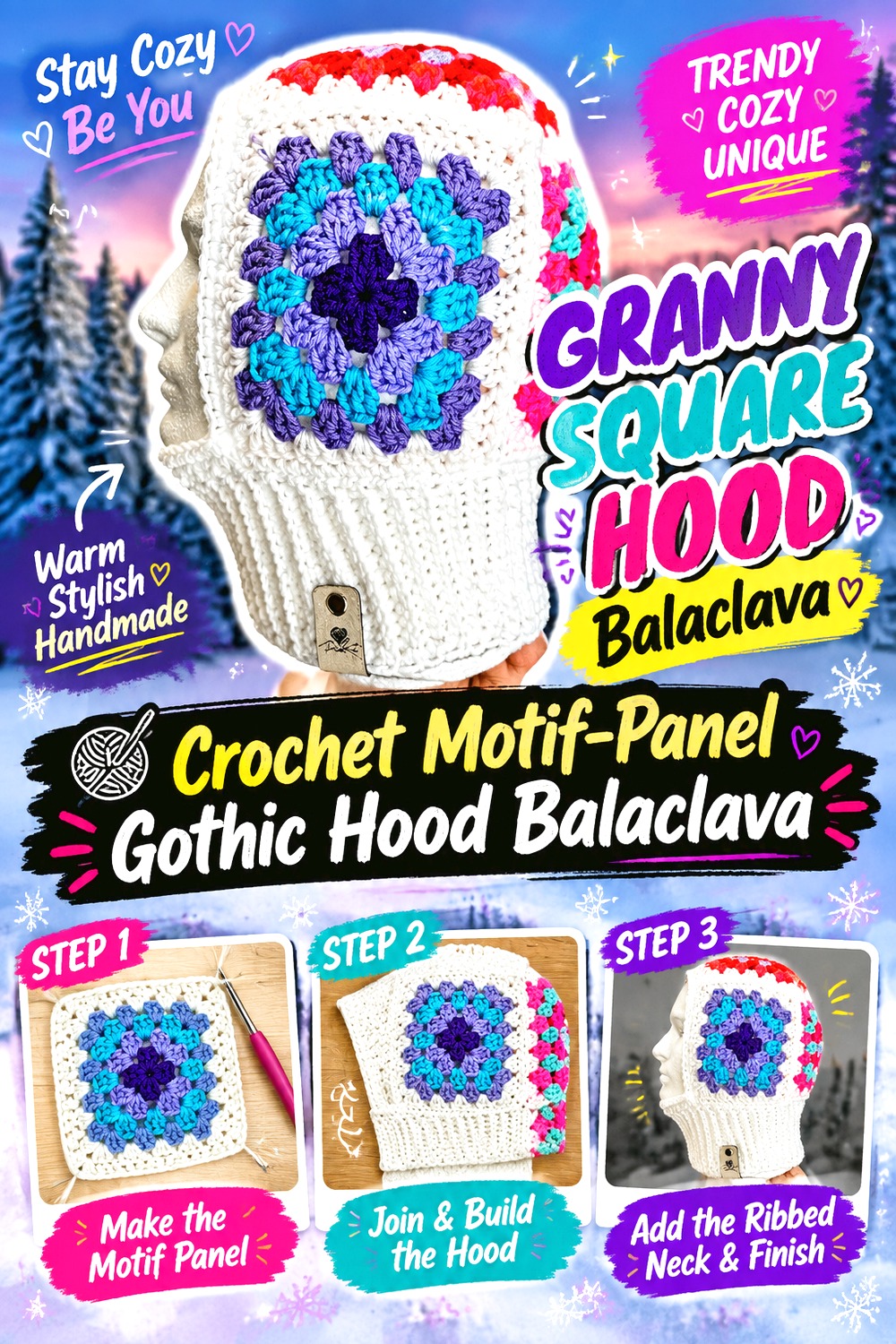
A granny-square hood balaclava naturally divides the headpiece into visible panels. Instead of disguising the joins, a gothic interpretation can emphasize them with dark borders so the finished hood resembles leaded glass or paneled architectural ornament.
This direction is particularly useful for crocheters who want motif variety without making a long scarf or cloak. The limited surface means each square matters, so choosing a clear palette and consistent motif scale has a larger impact than adding many extra embellishments after assembly.
Make the Join Part of the Graphic Design
A contrasting or strongly defined join can outline each motif and strengthen the stained-glass effect. Before selecting that treatment, test whether the seam stays flexible enough for a headpiece. A beautiful rigid join may suit a blanket but feel uncomfortable when it has to curve over the crown.
Plan Motif Direction Around the Face
Squares with floral, pointed, or radiating centers can look noticeably different when rotated. Arrange all panels before joining and photograph the proposed layout. Viewing the composition as a whole makes it easier to spot one motif whose direction disrupts symmetry around the face opening.
Original Tutorial and Creator Credit
Creator: PassioKnit Kelsie
Crochet Rounded Corner Gothic Hooded Scarf
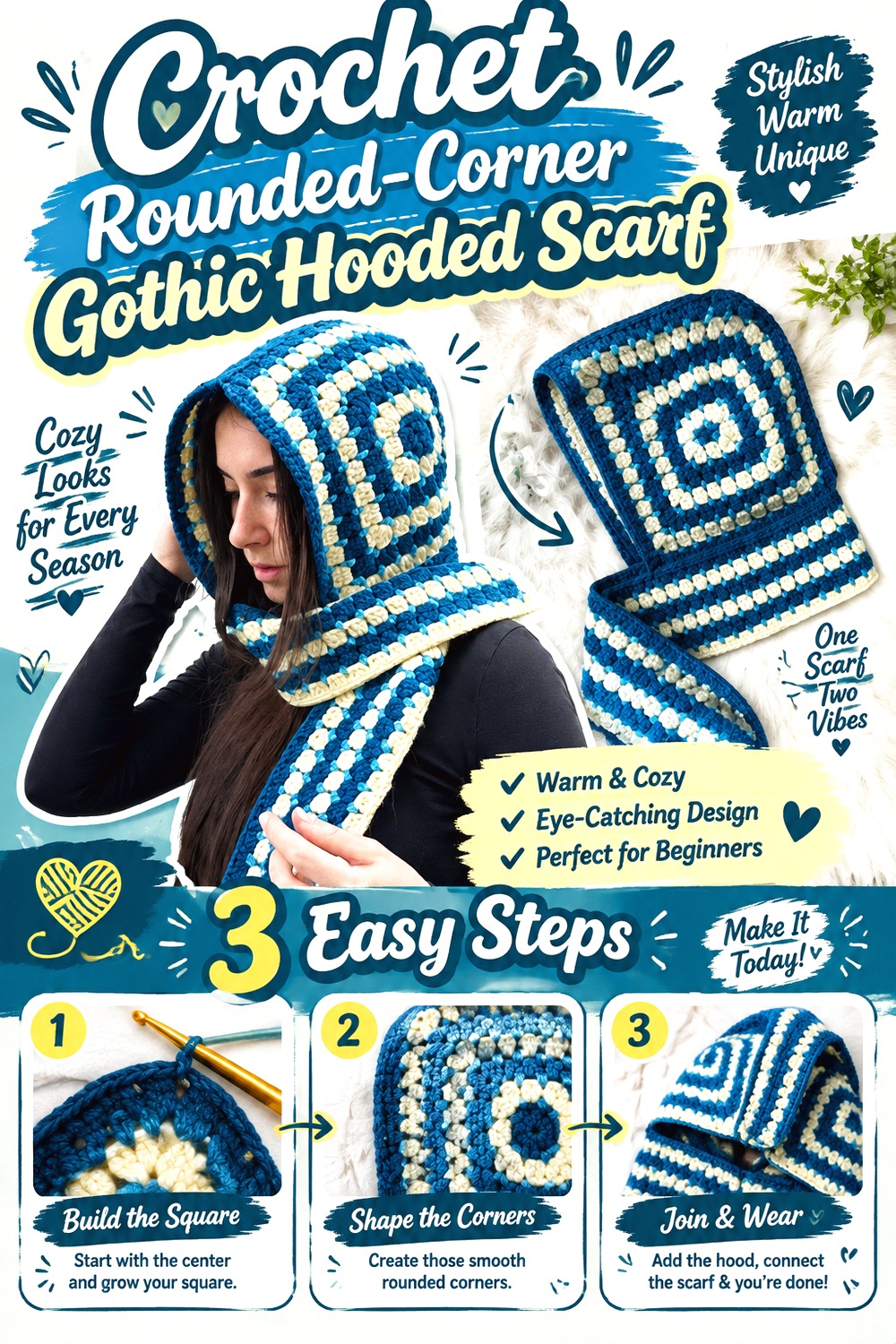
This hooded scarf emphasizes a smoother, rounded crown rather than the pointed back sometimes created by simple folded constructions. That difference may seem small on a flat project, but it changes the side profile considerably and can give a gothic hood a softer, more historical silhouette.
Use the rounded top as a clean foundation and place lace around the face or along the scarf ends. A curved hood already creates visual movement, so it rarely needs heavy decoration over the crown to feel distinctive.
Preserve the Rounded Shape When Changing Fabric
Openwork can stretch differently from the original stitch fabric, which matters where the design relies on a controlled curve. If you want lace near the crown, compare a blocked sample to the original fabric before substituting it extensively. A decorative border is often easier to manage than altering the structural shaping itself.
Frame the Curve with a Continuous Edge
A smooth border following the rounded hood can emphasize the silhouette more effectively than scattered appliqués. If you choose a pointed or scalloped gothic edge, keep the repeats consistent around the curve and check how they behave at the top where the fabric changes direction.
Original Tutorial and Creator Credit
Creator: madebymara
Crochet Turtleneck Gothic Hooded Cowl

A turtleneck-style base produces a strong column between the shoulders and hood, giving this silhouette a more structured appearance than a loose snood. That lower neck can provide warmth and stability while the hood carries a lighter decorative treatment.
For gothic styling, contrast is particularly effective here: a dense ribbed or solid neck beneath an open face frame creates a clear transition from structure to ornament. It also gives you an alternative to dangling scarf ends when you prefer a cleaner outline.
Keep the Neck Stretch Functional
Any neckline that must pass over the head needs enough usable stretch. Decorative surface work, tight seams, or a non-stretchy added border can change that behavior. Test the finished base neck opening before attaching embellishment and make sure your adaptation does not unintentionally restrict the area that needs to expand.
Use Openwork to Lighten the Upper Hood
A substantial turtleneck already creates visual density below the chin. Adding more heavy texture everywhere can make the accessory appear bulky. Concentrating airy stitches toward the outer hood or face edge provides contrast and helps the upper portion feel more veil-like without sacrificing the structured lower section.
Original Tutorial and Creator Credit
Creator: Crochet with Charity
Crochet Ribbed Gothic Hooded Cowl
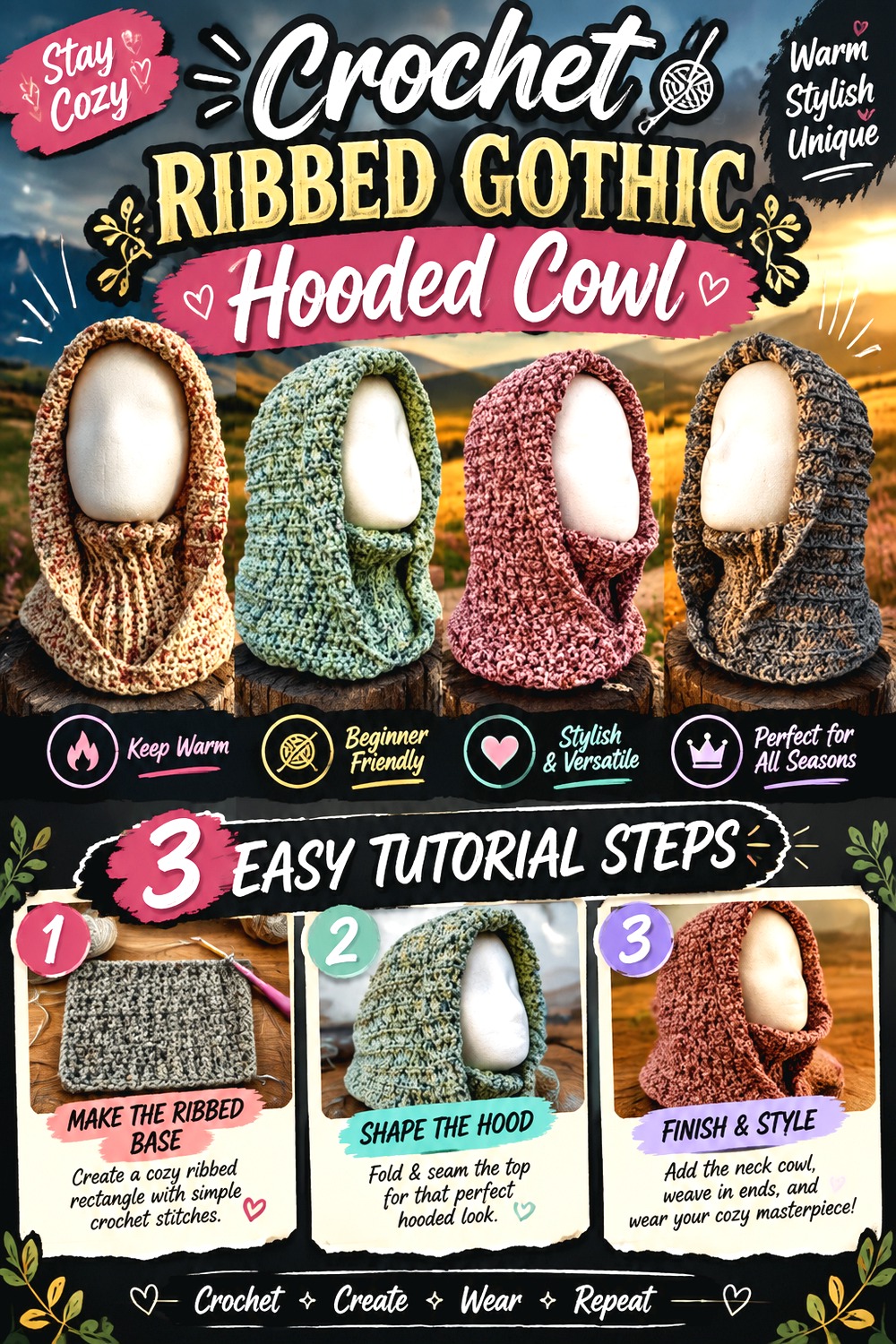
A strongly ribbed hooded cowl provides linear texture without requiring additional motifs. The vertical ridges can create a severe, architectural gothic look in their own right, particularly when paired with a deep monochrome palette.
This makes the design useful for a restrained interpretation where lace appears only at an outer edge. The contrast between repetitive ribbing and a small open border can be more effective than adding several different textures. It is also a practical option for readers who prefer a contained cowl over long scarf panels.
Rib Direction Shapes the Visual Profile
Strong lines guide the eye, so pay attention to how the ribbing travels across the neck and hood. An added lace border should complement rather than interrupt that direction. A narrow edge following the existing outline often looks more intentional than an unrelated motif placed in the middle of a prominent ribbed field.
Check Recovery After Blocking
Ribbed and openwork fabrics may respond differently after washing or blocking. Before combining them extensively, make samples using the intended yarn and finishing method. You are looking not only at width but at whether stretched fabric returns close to its original shape, especially near the neck and face opening.
Original Tutorial and Creator Credit
Creator: Lucky Platypus Crochet
Crochet Gothic Hooded Wrap Shawl
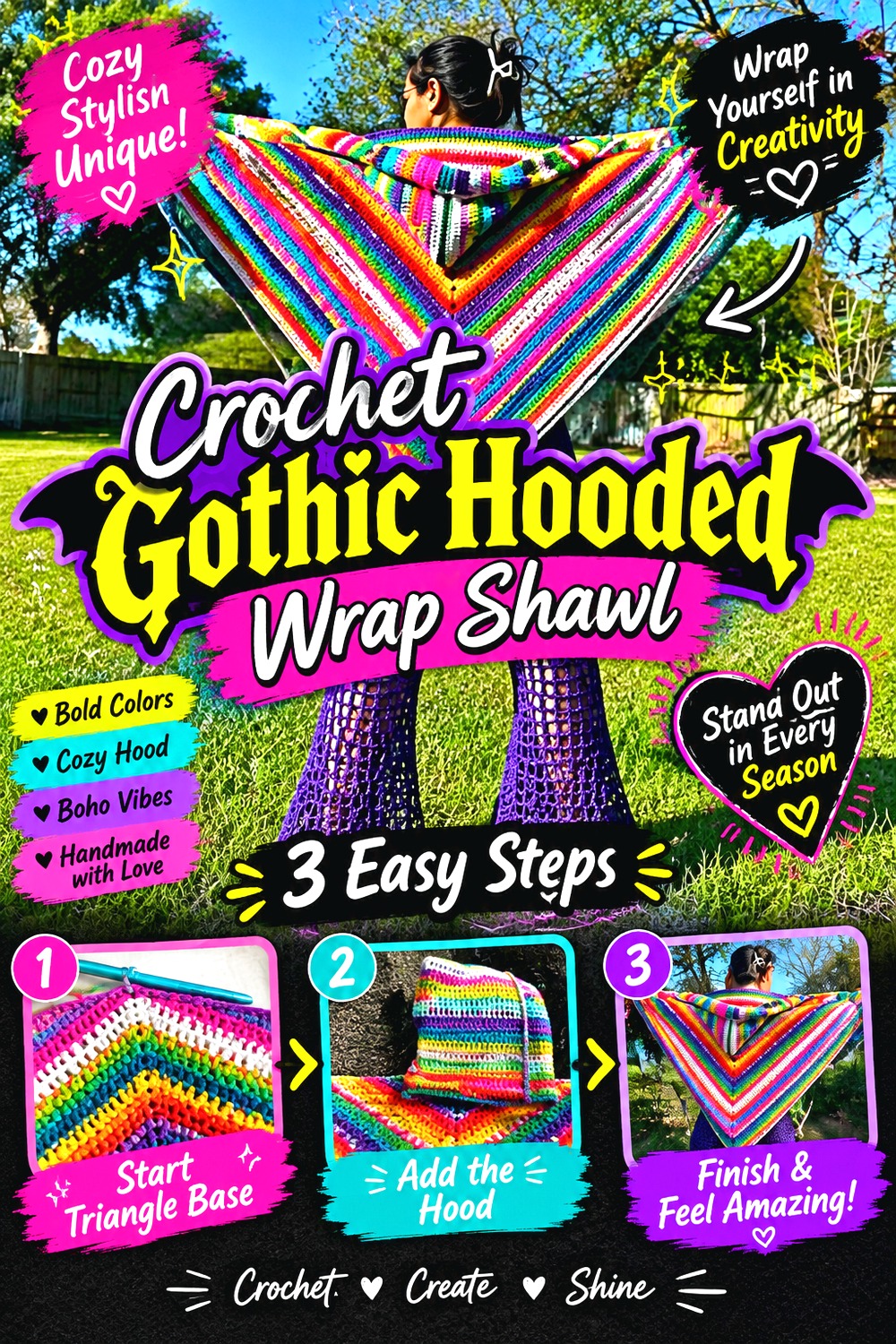
A hooded shawl spreads the design across the shoulders instead of concentrating everything around the neck. That extra width makes it one of the strongest options for large-scale gothic lace because motifs can be seen flat across the wrap rather than compressed into a small cowl.
The hood can remain relatively solid while lace radiates outward across the shoulders, or the outer shawl border can become the decorative focus. Either route produces a softer alternative to a structured cloak while retaining plenty of dramatic movement.
Plan Lace Scale for a Larger Surface
A tiny lace repeat that looks intricate on a balaclava may appear visually busy when multiplied across an entire shawl. Larger arches or clearer repeated panels can read better at garment scale. Make enough of a sample to judge the repeat across several units rather than deciding from one small motif.
Watch How the Wrap Moves at the Shoulders
Shoulder fabric bends and shifts with the arms, so extremely long points, beads, or loose loops may catch more easily than the same details on a stationary scarf end. If the shawl is intended for regular wear, keep elaborate embellishment toward areas that move less or test it with your normal range of movement first.
Original Tutorial and Creator Credit
Creator: AstroKnotty
Crochet Minimal Gothic Hooded Scarf
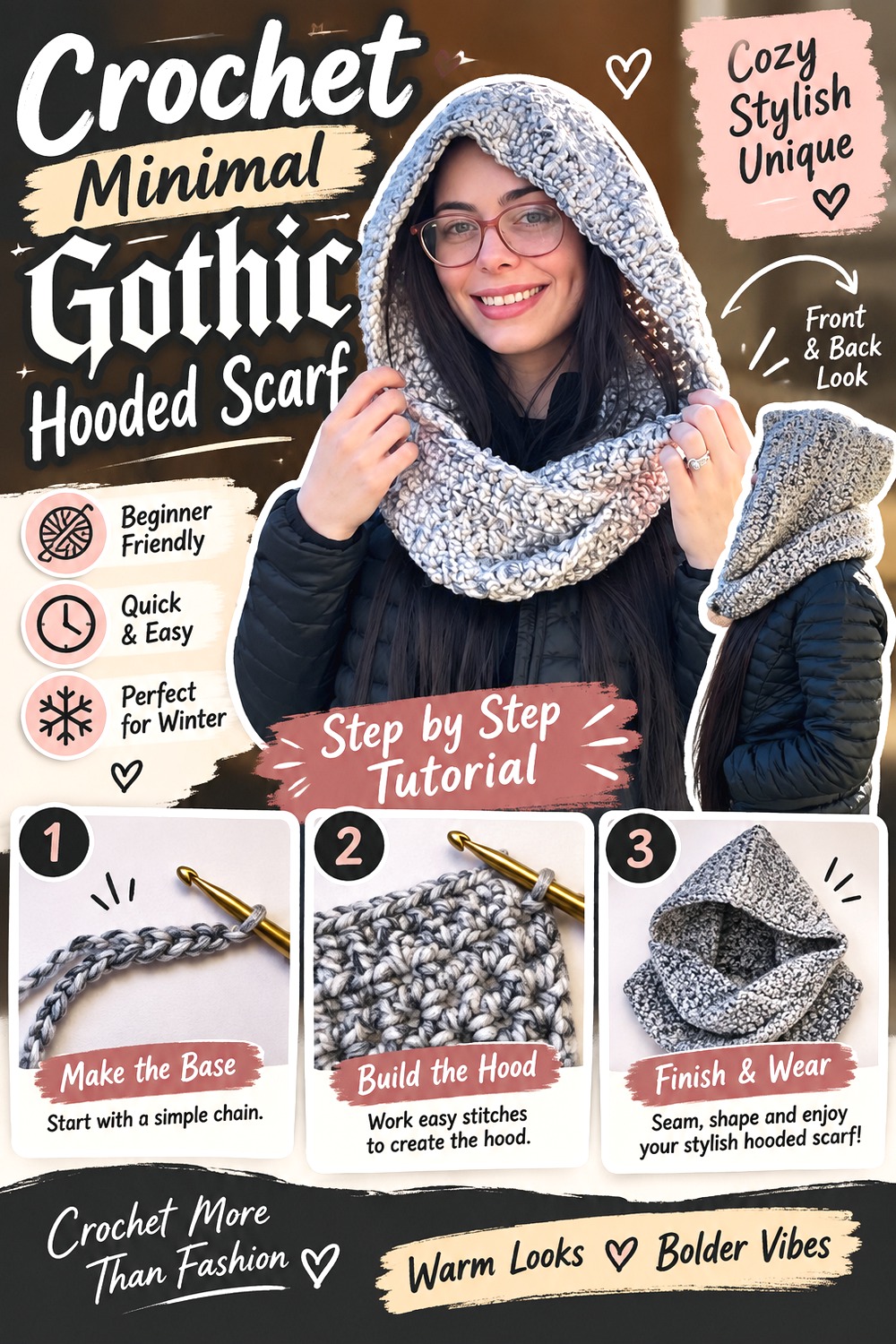
A simple hooded scarf can be the better choice when your yarn or lace border is intended to provide most of the character. With fewer competing construction features, a narrow cobweb-style edge, tonal openwork panel, pointed scarf finish, or dramatic dark fiber can become the visual focus.
This option also makes comparison easier because you can judge the relationship between the hood and scarf without pockets, a large cowl, or extensive motif assembly. It is a versatile base for a gothic design that still needs to work with everyday coats.
Let One Gothic Detail Do the Work
Choose one dominant feature—perhaps the face edging, scarf ends, or a central openwork panel—and keep the rest quieter. A minimal base can quickly become cluttered when several unrelated motifs are added simply because there is open space. Repeating one visual language usually gives the finished accessory a clearer identity.
Check the Scarf Width Against Your Lace Repeat
If you plan to substitute or insert openwork, make sure the repeat works naturally across the available width. A border may be simpler to adapt than a full-width lace panel when the original proportions do not align. Always compare the blocked width before committing to a long section.
Original Tutorial and Creator Credit
Creator: Katy’s Crafted & Co.
Crochet Layered Hat and Snood Gothic Hood
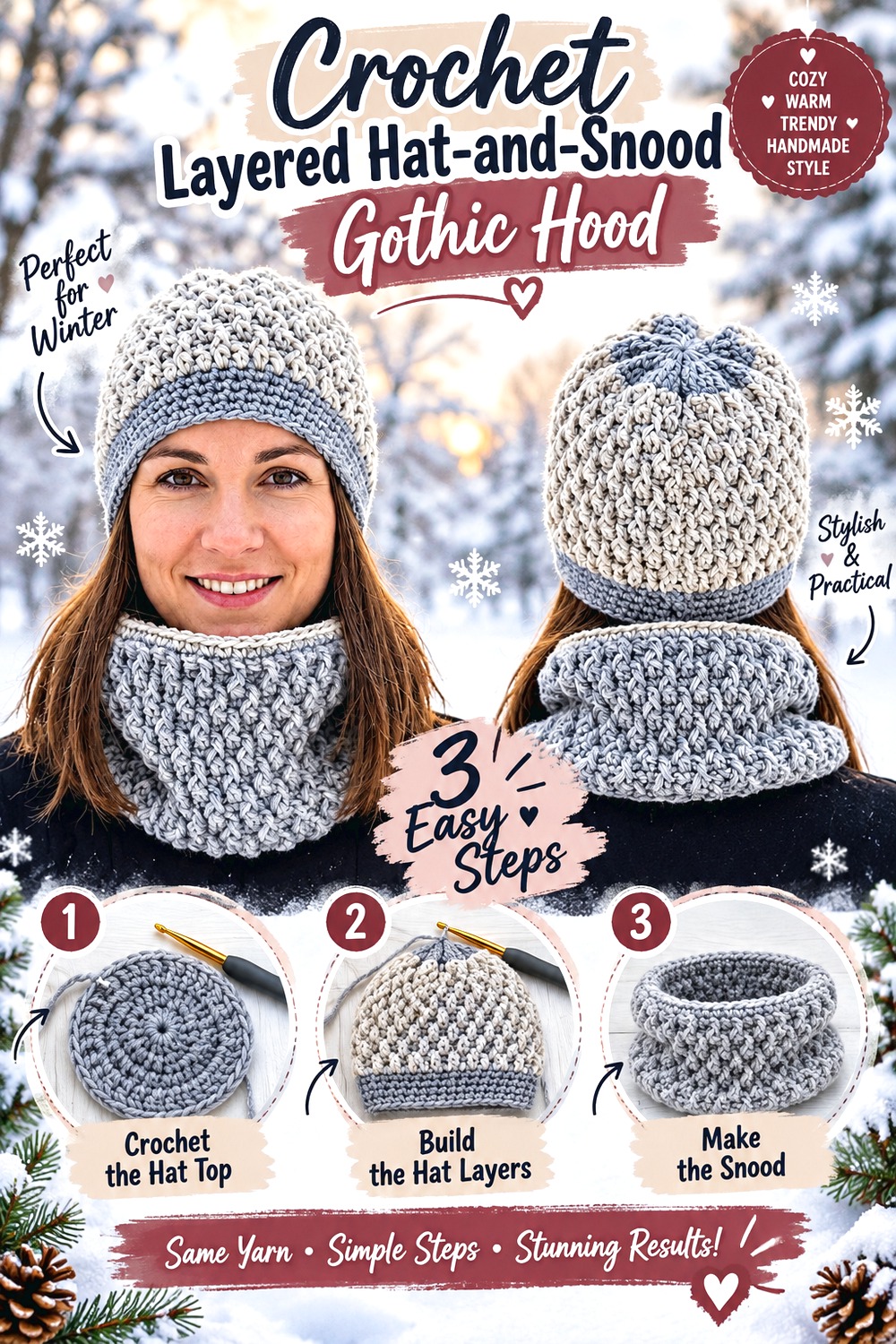
This final direction separates head coverage and neck volume into coordinating pieces rather than relying on one continuous hood. A hat paired with a snood can visually mimic a layered hood while giving you more control over warmth and styling. The snood can be raised, lowered, or worn around the neck independently.
For a gothic lace interpretation, use the two layers deliberately. A denser hat can provide coverage beneath a more open snood, allowing the outer piece to carry larger lace openings than you might choose for a stand-alone winter hood.
Layering Makes Openwork More Wearable
An open snood may reveal more skin than you want in cool weather, but a separate inner layer changes that equation. Test the two pieces together before making the outer layer extremely loose. You still need enough room for comfortable movement without creating so much volume that the snood slides unpredictably.
Coordinate Texture Without Making Identical Pieces
The hat and snood do not need the same stitch pattern. Repeating a border, yarn family, or small motif can connect them while allowing each component to perform a different job. This approach creates a richer layered look than simply duplicating one texture across both pieces.
Original Tutorial and Creator Credit
Creator: Alextitia Tuto Crochet
Which Crochet Gothic Lace Hood Shape Fits Your Look?
| Hood direction | Strongest visual feature | Good place for gothic lace | Main checkpoint |
|---|---|---|---|
| Fitted balaclava | Close face frame | Narrow face edge or lower collar | Do not reduce the usable face opening unintentionally |
| Snood or hooded cowl | Soft neck folds | Upper rim or lower cowl edge | Check bulk when the hood is worn down |
| Hooded scarf | Long vertical panels | Scarf tails and face border | Compare lace width after blocking |
| Motif-built hood | Graphic panel layout | Inside motifs and decorative joins | Match blocked motif dimensions |
| Hooded wrap or cloak | Shoulder-spanning drama | Outer edges and broad panels | Consider finished fabric weight and movement |
| Turtleneck hood | Strong neck structure | Outer hood or face frame | Preserve enough neckline stretch |
| Layered hat and snood | Two-part flexibility | Outer snood | Test the layers together for volume |
The most dramatic option is not automatically the most useful one. A fitted balaclava puts nearly all the attention around the face, while a hooded scarf gives lace room to travel downward. Snoods create shadowy folds, motif hoods produce a graphic stained-glass effect, and wraps or cloaks provide the largest canvas for ornamental work.
Conclusion
For a close, modern gothic look, start with one of the balaclava or turtleneck constructions and keep the ornament concentrated around the face. Choose a snood or hooded cowl when soft folds matter more than long lines, or move to a hooded scarf when you want large lace panels that remain visible below the shoulders. Motif-built hoods suit stained-glass-inspired layouts, while the shawl and cloak options create the most dramatic outer silhouette.
Whichever direction you choose, compare the base fit and blocked fabric before introducing substantially different openwork. Use the original tutorials near each idea for exact construction details, then treat gothic lace, color, borders, and embellishment as carefully planned adaptations.
Frequently Asked Questions
Can I turn any crochet hood tutorial into a gothic lace hood?
Not without considering how the original fabric supports the shape. A decorative lace edge can often be added with fewer structural consequences than replacing the crown, seams, or neckline with very open fabric. If you want a major stitch substitution, compare blocked samples for width, stretch, drape, and recovery first. The tutorial’s original proportions assume its intended fabric behavior.
Where is the safest place to add openwork to a fitted crochet hood?
From a construction standpoint, borders and lower decorative areas are usually easier to experiment with than the most heavily shaped parts of the crown. A face border can work too, but it may change the opening size or stretch. Try on the base shape before adding it and check that the trim does not interfere with vision, glasses, or comfortable movement.
What type of crochet hood gives lace the most room to show?
Hooded scarves, wraps, and cloaks provide larger relatively flat areas where lace can remain visible. A fitted balaclava has less surface area, so smaller borders or motif details tend to dominate more quickly. Snoods fall between those extremes: they provide plenty of fabric, but folds can overlap and partially hide detailed stitch patterns when the piece is worn.
How can I keep black crochet lace from losing stitch definition?
Compare the yarn in daylight before starting a large project. Very fuzzy fibers and extremely subtle stitch relief can be difficult to distinguish in black. Cleaner yarn surfaces, larger open spaces, or slightly lighter dark shades such as charcoal, aubergine, or deep burgundy can make intricate structure easier to see while preserving a gothic palette.
Can I combine granny squares from one design with a hood tutorial from another?
Potentially, but the word “square” does not guarantee compatibility. Block the motifs and compare their actual dimensions, edge structure, density, and stretch before planning the hood. On a wearable, even modest inconsistencies can shift the face opening or panel alignment. It is better to solve those differences at the sample stage than after several motifs are permanently joined.
Should a crochet gothic hood be blocked before adding decorative trim?
Blocking the main fabric first can be useful when the final dimensions or drape influence your trim choice. Openwork and motif projects in particular may change noticeably after finishing. Follow care guidance appropriate to the yarn you are actually using, then judge the face opening, hood depth, and edge behavior before attaching a border whose length depends on those dimensions.
Are chains, beads, charms, and long ties practical on a gothic crochet hood?
They can be decorative, but their placement matters. Extra weight can pull on lace, and dangling elements near the face or neck can snag on jewelry, bags, hair, or outerwear. Keep functional ties appropriate to how the hood will be worn, secure embellishments carefully, and test the finished piece during normal movement rather than judging it only on a mannequin.