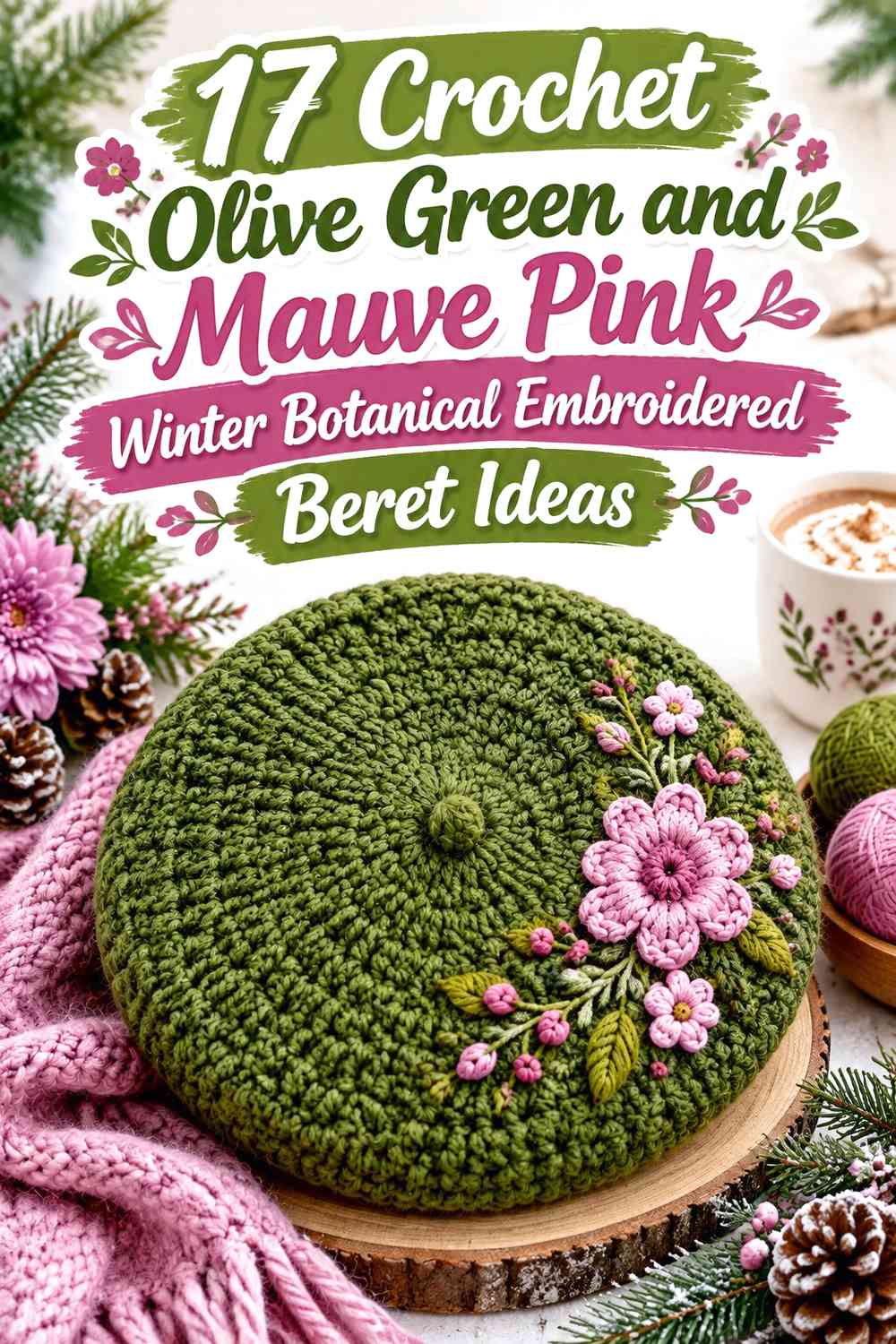

Olive green and mauve pink give a crochet winter beret a muted botanical palette without requiring a large collection of flower colors. Olive green can cover the crown, brim, leaves, vines, or stems, while mauve pink can define blossoms and small floral accents. Reversing those roles creates a softer pink beret with darker foliage providing structure.
A beret also offers several distinct embroidery zones. A botanical spray can travel across one side of the crown, small flowers can circle the outer disk, or a single vine can rise from the brim toward the top. The curved shape matters: motifs that look evenly spaced while the beret lies flat may shift toward the back or underside once it is worn at an angle.
The tutorials credited below support classic, lace, textured, puffed, chunky, slouchy, and tam-style crochet beret constructions. The olive green, mauve pink, floral embroidery, leaves, vines, and other botanical treatments are independent adaptations rather than claims about the creators’ original colors or embellishments.
Quick List
- Olive Green Crochet Beret With Mauve Pink Side-Flower Embroidery
- Mauve Pink Crochet Beret With Olive Green Botanical Vine
- Olive Green Helix Crochet Beret With Mauve Pink Crown Flowers
- Mauve Pink Lace Crochet Beret With Olive Green Leaf Embroidery
- Olive Green Slouchy Crochet Beret With Mauve Pink Wildflower Spray
- Mauve Pink Classic Crochet Beret With Olive Green Laurel Embroidery
- Olive Green Crochet Beret With Mauve Pink Botanical Crown Ring
- Mauve Pink French Crochet Beret With Olive Green Side Vine
- Olive Green Lace Crochet Beret With Mauve Pink Scattered Blossoms
- Mauve Pink Crochet Beret With Olive Green Brim-to-Crown Stem
- Olive Green Textured Crochet Beret With Mauve Pink Flower Cluster
- Mauve Pink Crochet Beret With Olive Green Tiny-Leaf Border
- Olive Green Mohair-Look Crochet Beret With Mauve Pink Minimal Flowers
- Mauve Pink Puff Crochet Beret With Olive Green Botanical Arc
- Olive Green Crochet Beret With Mauve Pink Offset Floral Crescent
- Mauve Pink Crochet Beret With Olive Green Embroidered Crown Branch
- Olive Green Tam-Style Crochet Beret With Mauve Pink Botanical Medallion
Let Olive Green or Mauve Pink Establish the Beret Before Embroidering
Choose the dominant beret color before planning the floral work. An olive-green crown gives mauve-pink blossoms clear separation and naturally allows leaves or stems to stay tonal. A mauve-pink beret makes olive-green vines more prominent and produces a lighter overall winter accessory.
Avoid assigning both shades equal space automatically. Botanical embroidery generally reads more clearly when the beret provides one broad background color and the second shade is reserved for recognizable leaves, flowers, or borders.
Place Olive Green and Mauve Pink Botanicals on the Worn Beret
Try the finished or nearly finished beret on before fixing embroidery positions. Decide which side will tilt downward, where the crown faces outward, and how much of the top remains visible from the front.
A floral cluster near the geometric center of a flat beret may move toward the upper rear when worn. Side sprays and asymmetrical vines should therefore be positioned according to the worn shape rather than the flat circle alone.
Keep Olive Green and Mauve Pink Embroidery Away From Excessive Brim Stretch
The brim needs to sit comfortably around the head, so dense embroidery directly across a stretchy band can make that section less flexible. Concentrate larger flowers and leaves above the brim and use only restrained stitched accents near the lower edge.
Complete the basic beret fit first. Botanical decoration should enhance a properly fitting hat rather than being used to stabilize, tighten, or reshape the brim.
1. Olive Green Crochet Beret With Mauve Pink Side-Flower Embroidery
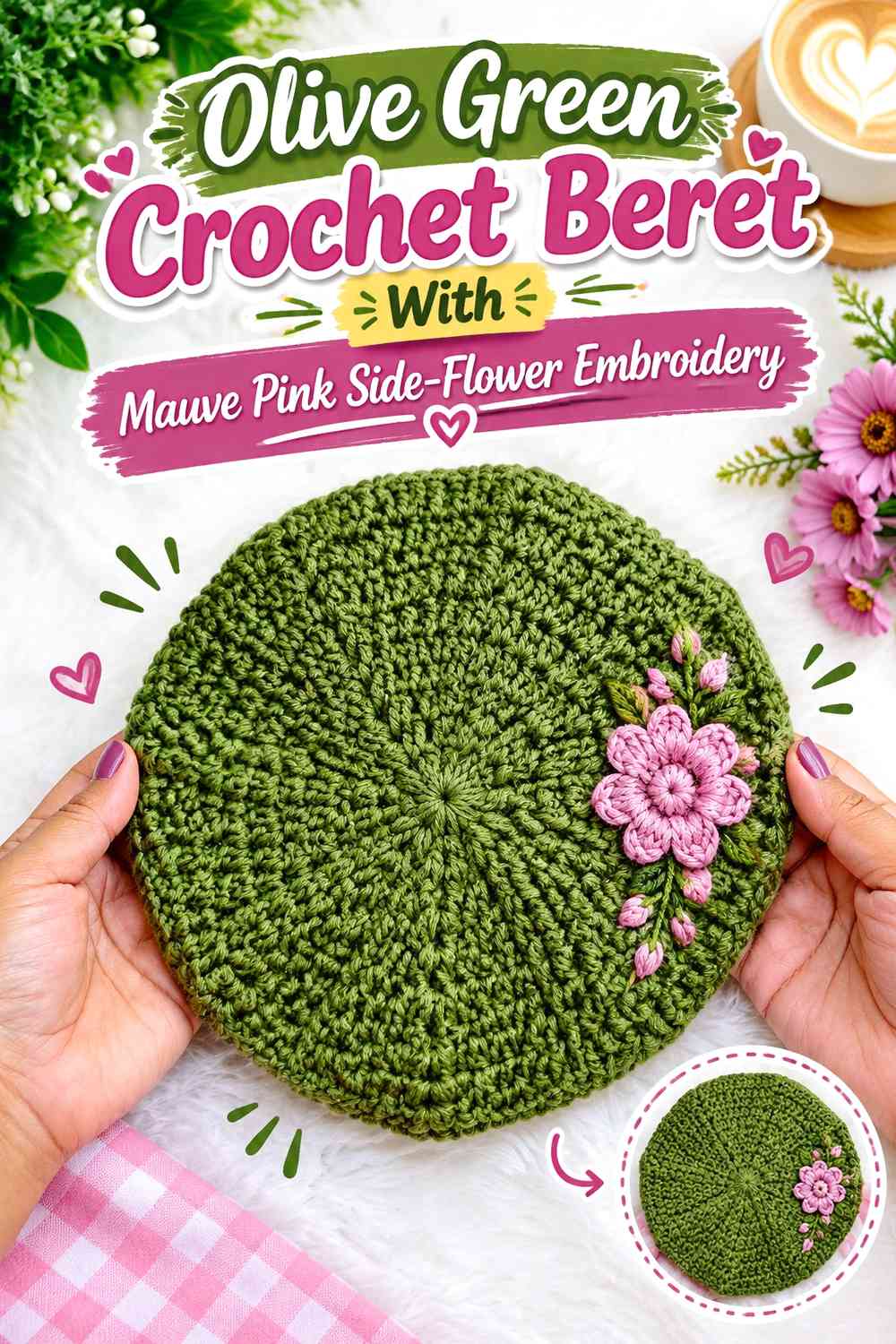
Let olive green cover the complete beret and place a mauve-pink floral spray on one outward-facing side. This is the clearest botanical arrangement because the dark muted field gives the flowers enough negative space while leaving most of the classic beret silhouette uninterrupted.
Mauve Pink Flowers Need Open Olive Green Around the Side Spray
Keep visible green between individual blooms so the embroidery reads as several flowers rather than one irregular pink patch.
Position the largest mauve-pink flower toward the visual center of the spray and let smaller accents taper toward the crown or brim.
Olive Green Should Stay Calm Beyond the Mauve Pink Flowers
Leave the opposite side and most of the top solid green. The asymmetry is part of what makes a side spray effective.
If you want additional mauve pink, use one tiny flower near the end of the spray rather than starting a second major cluster.
Creator Credit: Alice Tejidos
2. Mauve Pink Crochet Beret With Olive Green Botanical Vine
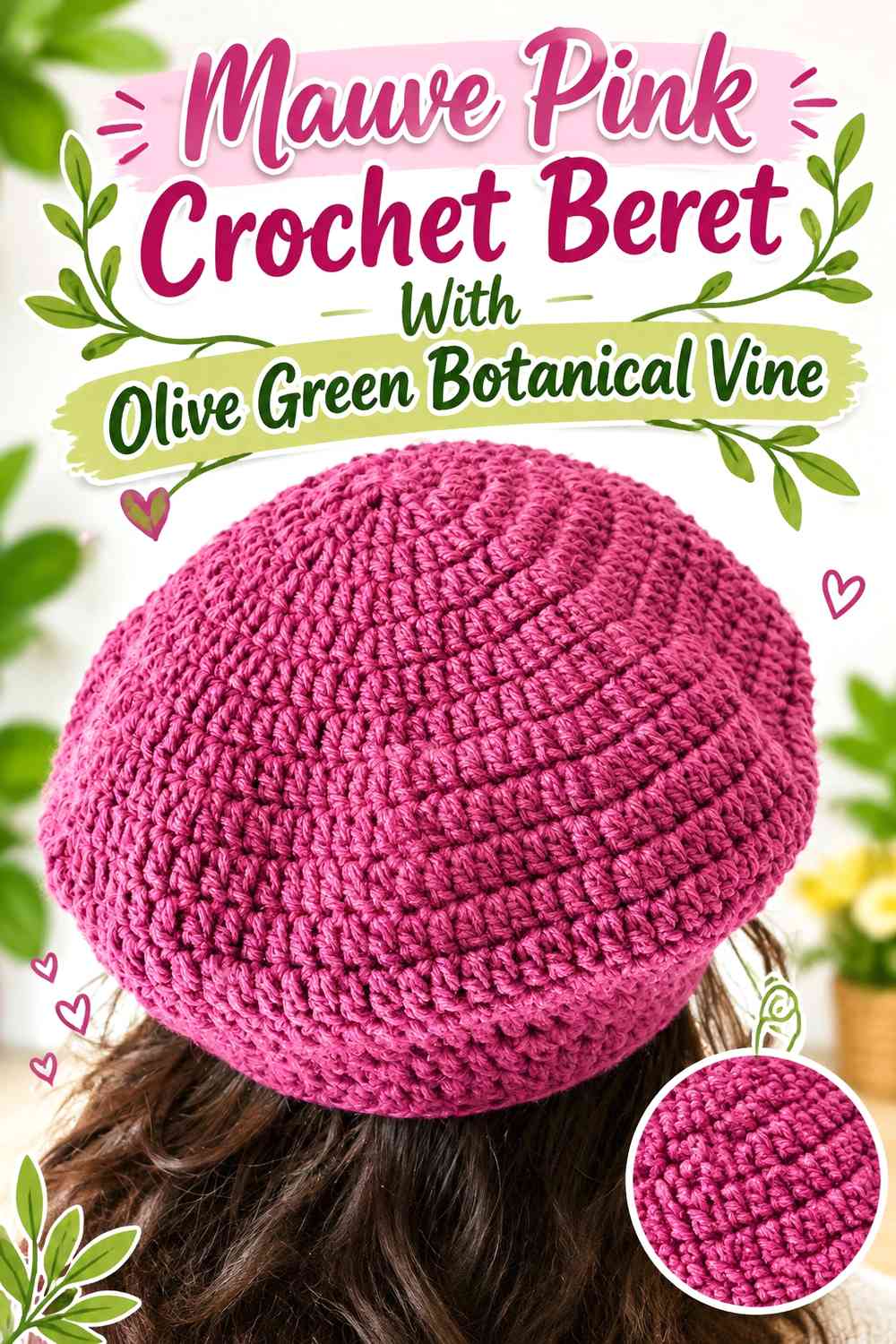
Use mauve pink for the whole beret and let one olive-green vine travel diagonally from the lower side toward the crown. Small leaves can branch from the vine while the pink background remains broad and visible.
Olive Green Vines Should Follow the Mauve Pink Beret Curve
Shape the vine according to the worn curve rather than forcing a perfectly straight diagonal across the flat beret.
A gentle arc can follow the round crown more naturally and keep the leaves facing outward.
Mauve Pink Needs Space Between Olive Green Leaves
Avoid filling every section of the vine with dense foliage. Pink gaps allow the individual leaf shapes and direction of the stem to remain readable.
If flowers are added, keep them mauve-on-mauve or very restrained so the green vine remains the strongest botanical feature.
Creator Credit: Crochet con Sole
3. Olive Green Helix Crochet Beret With Mauve Pink Crown Flowers
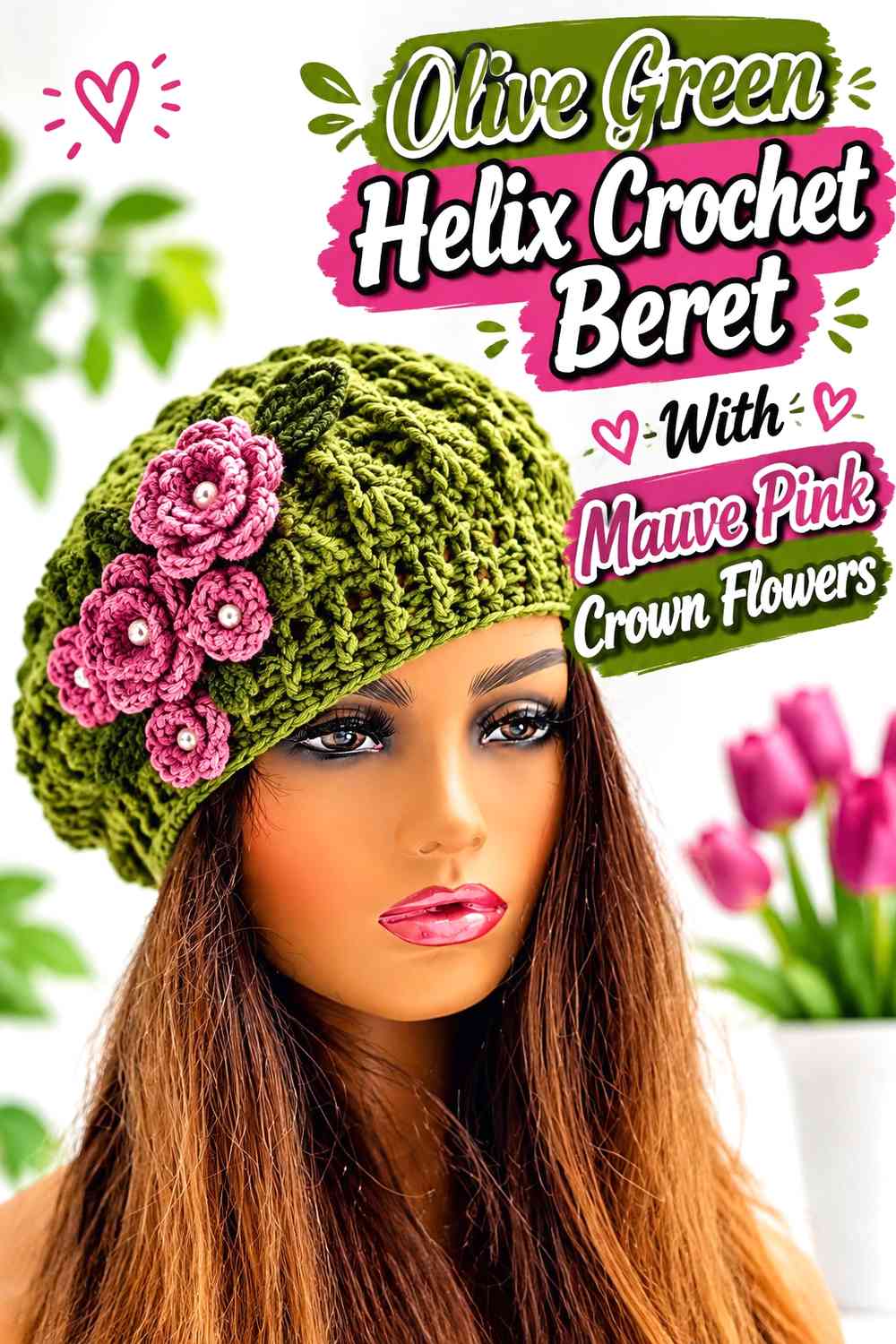
A spiral or helix-like beret already creates movement across the crown, so keep the structure olive green and position mauve-pink flowers near selected points along that visual flow. The embroidery should reinforce the spiral rather than cover it.
Mauve Pink Flowers Can Follow the Olive Green Helix
Place the blossoms along one portion of the spiral direction instead of arranging them in an unrelated straight row.
Use fewer flowers as the spray moves outward if you want the crown center to remain the strongest point.
Olive Green Texture Should Stay Visible Between Mauve Pink Blooms
Protect enough of the original surface that the helix remains recognizable. A large cluster covering several textured sections can hide the very construction that makes this beret distinctive.
Keep the brim green so the crown decoration remains separate from the fit area.
Creator Credit: Bag-O-Day Crochet
4. Mauve Pink Lace Crochet Beret With Olive Green Leaf Embroidery
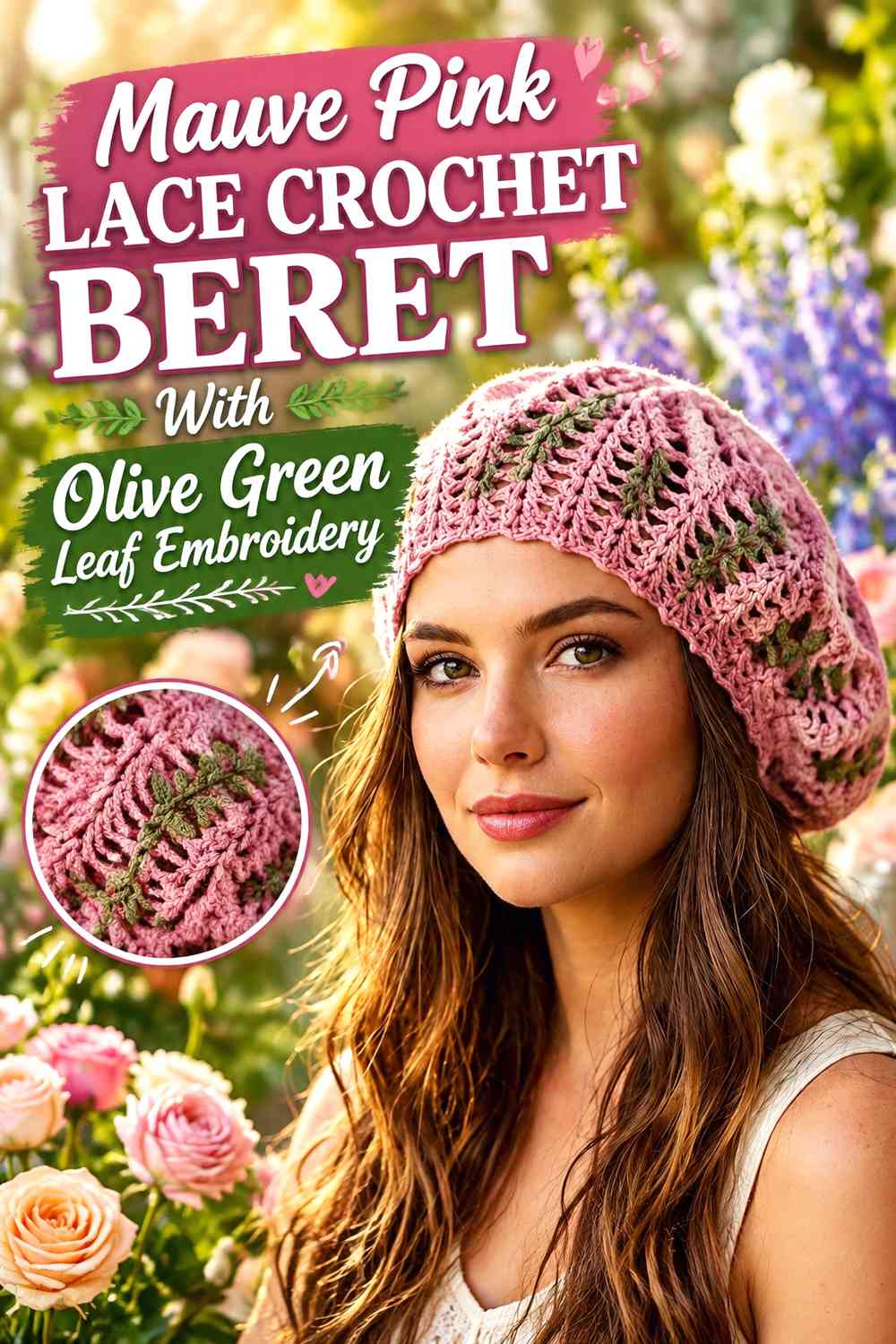
Lace already contributes open pattern and visual detail, so use mauve pink throughout the lace and add only a restrained olive-green leaf branch. The foliage can sit on a comparatively stable section near the side rather than crossing the most open portions.
Olive Green Leaves Need Stable Mauve Pink Lace Beneath Them
Choose a section where the embroidery can sit cleanly without spanning large openings. The leaf outlines will remain easier to recognize against a more continuous crochet surface.
A small branch can be more effective than trying to embroider foliage across the complete lace crown.
Mauve Pink Lace Should Remain the Main Feature Around Olive Green
Leave most of the openwork untouched. The botanical accent should complement the lace instead of creating a second equally dense surface pattern.
Keep the olive green away from every lace repeat so the eye can still follow the original texture.
Creator Credit: Lace Olga Rich
5. Olive Green Slouchy Crochet Beret With Mauve Pink Wildflower Spray
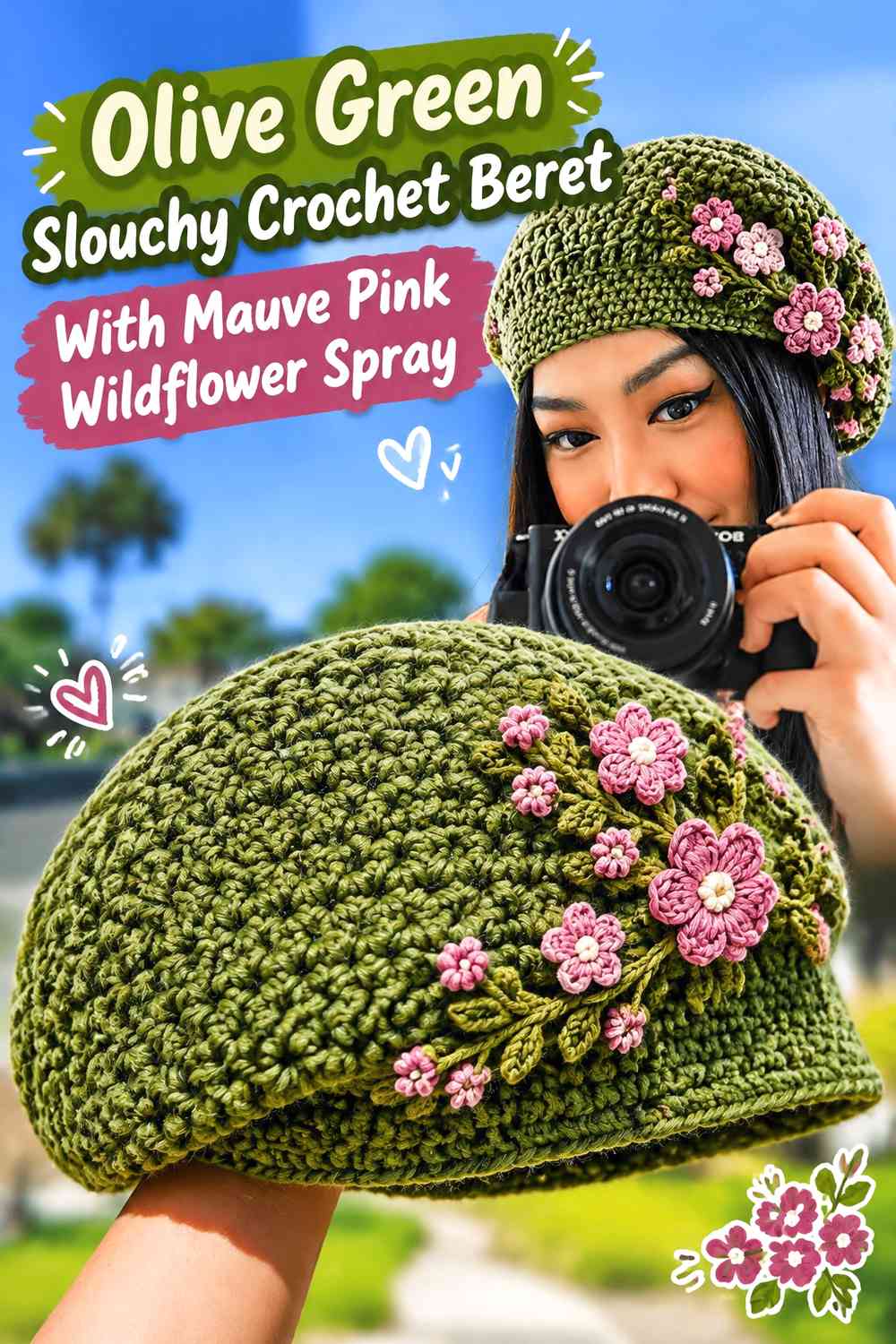
A slouchier beret gives the embroidery more room but also changes position more when worn. Use olive green across the body and place a loose mauve-pink wildflower spray where the fabric naturally falls toward one side.
Mauve Pink Wildflowers Should Sit on the Visible Olive Green Slouch
Try the beret on before attaching or embroidering the main flower cluster. Extra depth can move a motif farther toward the back than expected.
Place the strongest mauve-pink flower where it remains visible after the crown settles.
Olive Green Should Separate the Mauve Pink Wildflowers
Keep the flowers spaced with visible green stems or gaps between them. A wildflower direction works better when the blooms look scattered along one route rather than packed into a dense rosette.
Let the spray taper before it reaches the brim.
Creator Credit: Cherilyn Q
6. Mauve Pink Classic Crochet Beret With Olive Green Laurel Embroidery
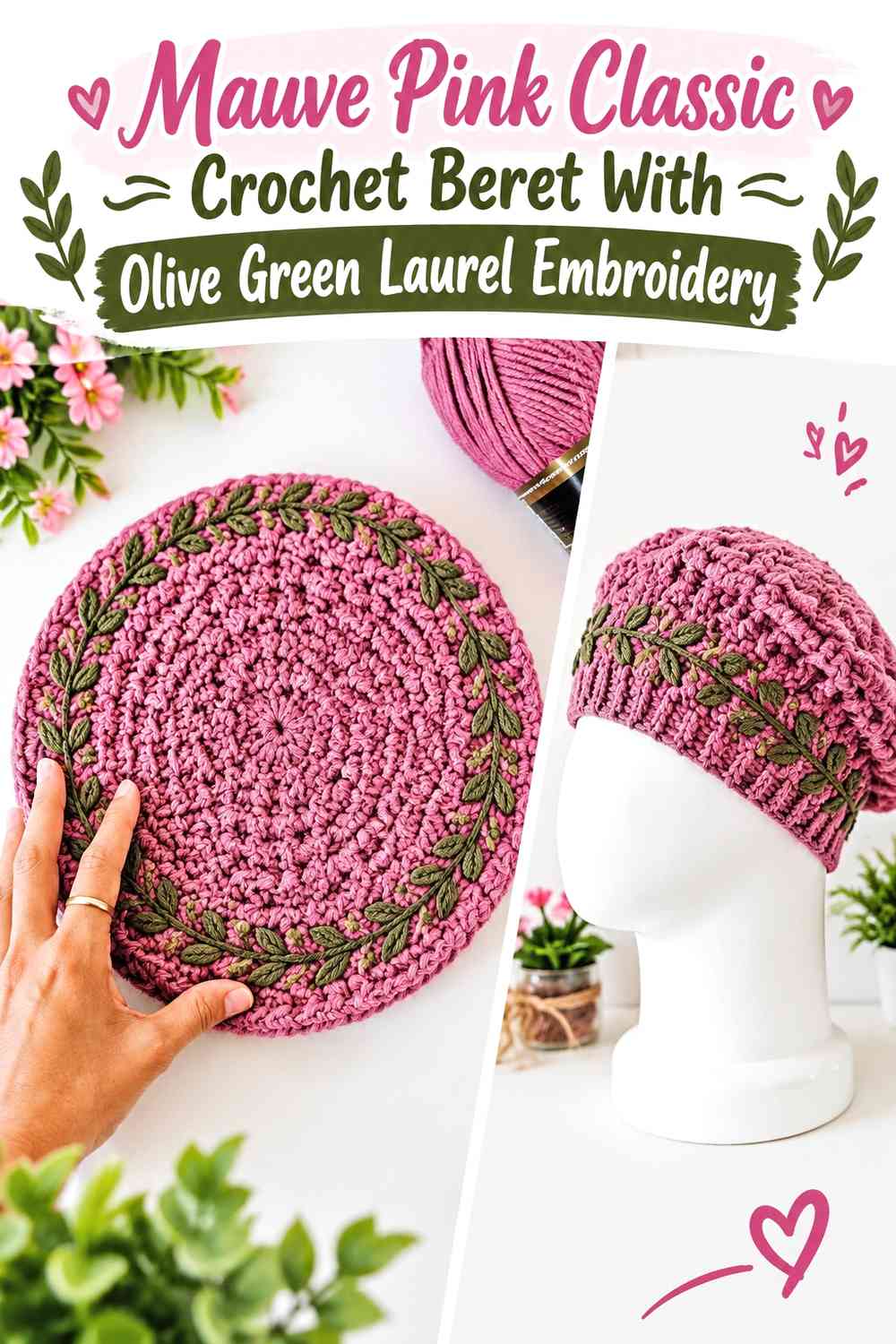
Use a mauve-pink classic beret as the quiet background for an olive-green laurel-like arc. The leafy branch can curve around one side of the crown and stop before completing a full wreath, giving the beret a botanical motif without making it overly formal.
Olive Green Laurel Leaves Need a Clear Mauve Pink Arc
Keep the leaf sequence following one consistent curve. If individual leaves point in unrelated directions, the branch can look scattered rather than botanical.
Plan the full arc lightly before committing to the visible green stitches.
Mauve Pink Should Stay Open Inside the Olive Green Laurel
Leave the center of the arc predominantly pink. The open area helps the curved foliage remain readable.
One small mauve-pink tonal flower inside the arc can work, but the green leaves should stay dominant.
Creator Credit: Vasilya Knits – Crochet
7. Olive Green Crochet Beret With Mauve Pink Botanical Crown Ring
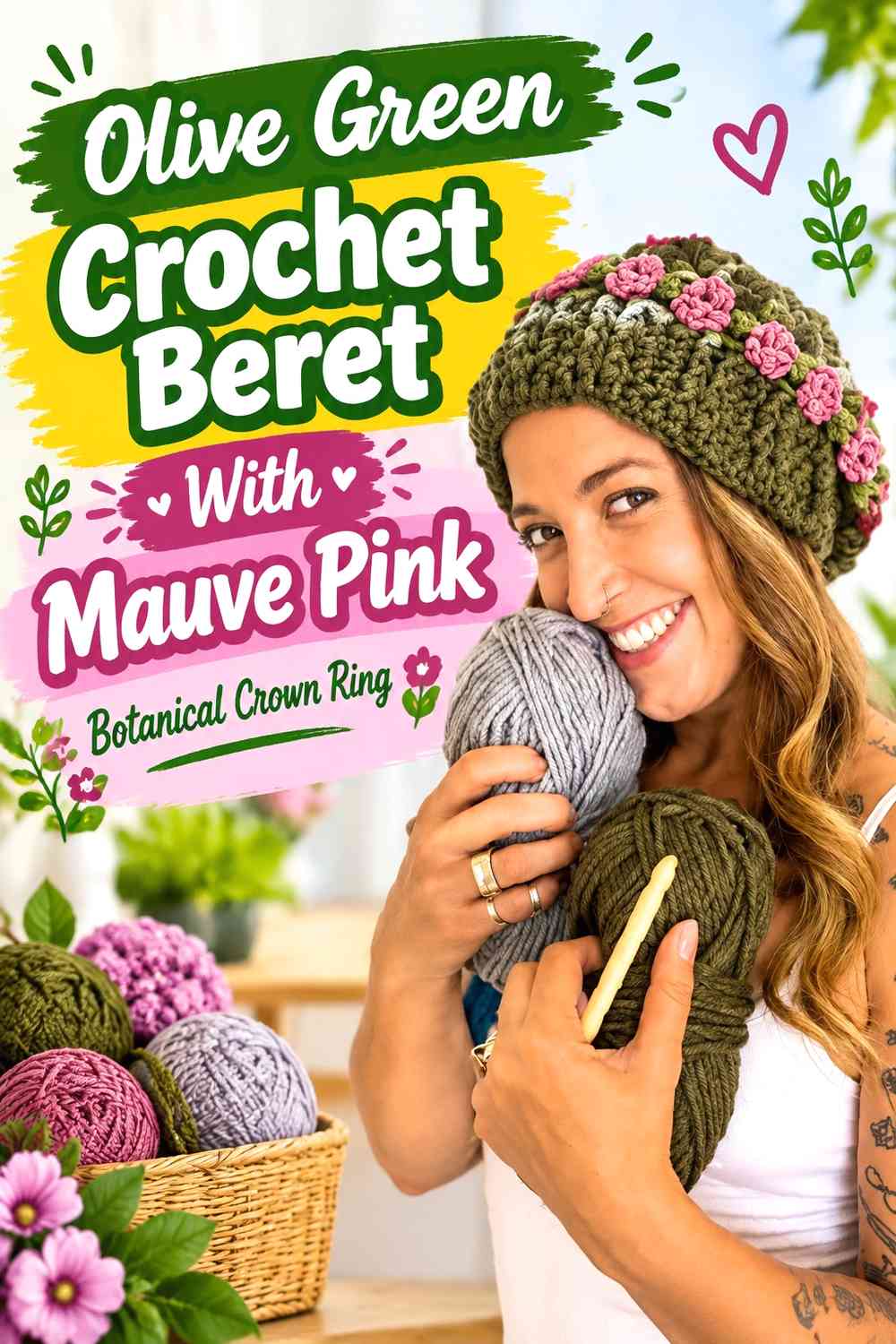
Place a ring of small mauve-pink floral accents around the outer crown rather than concentrating them on one side. Olive green remains across the full beret and between every motif, giving the arrangement more rhythm than a dense flower wreath.
Mauve Pink Crown Flowers Need Olive Green Gaps
Space the motifs far enough apart that each blossom remains recognizable. Green negative space is especially important because a full ring already repeats the color many times.
Check the ring while the beret is worn so the lower flowers do not disappear behind the brim.
Olive Green Should Dominate Inside the Mauve Pink Crown Ring
Keep the top center solid green to prevent the crown from becoming completely floral.
A plain center also makes the circular arrangement more obvious from above.
Creator Credit: Anne Galante – Escola de Artes Manuais
8. Mauve Pink French Crochet Beret With Olive Green Side Vine
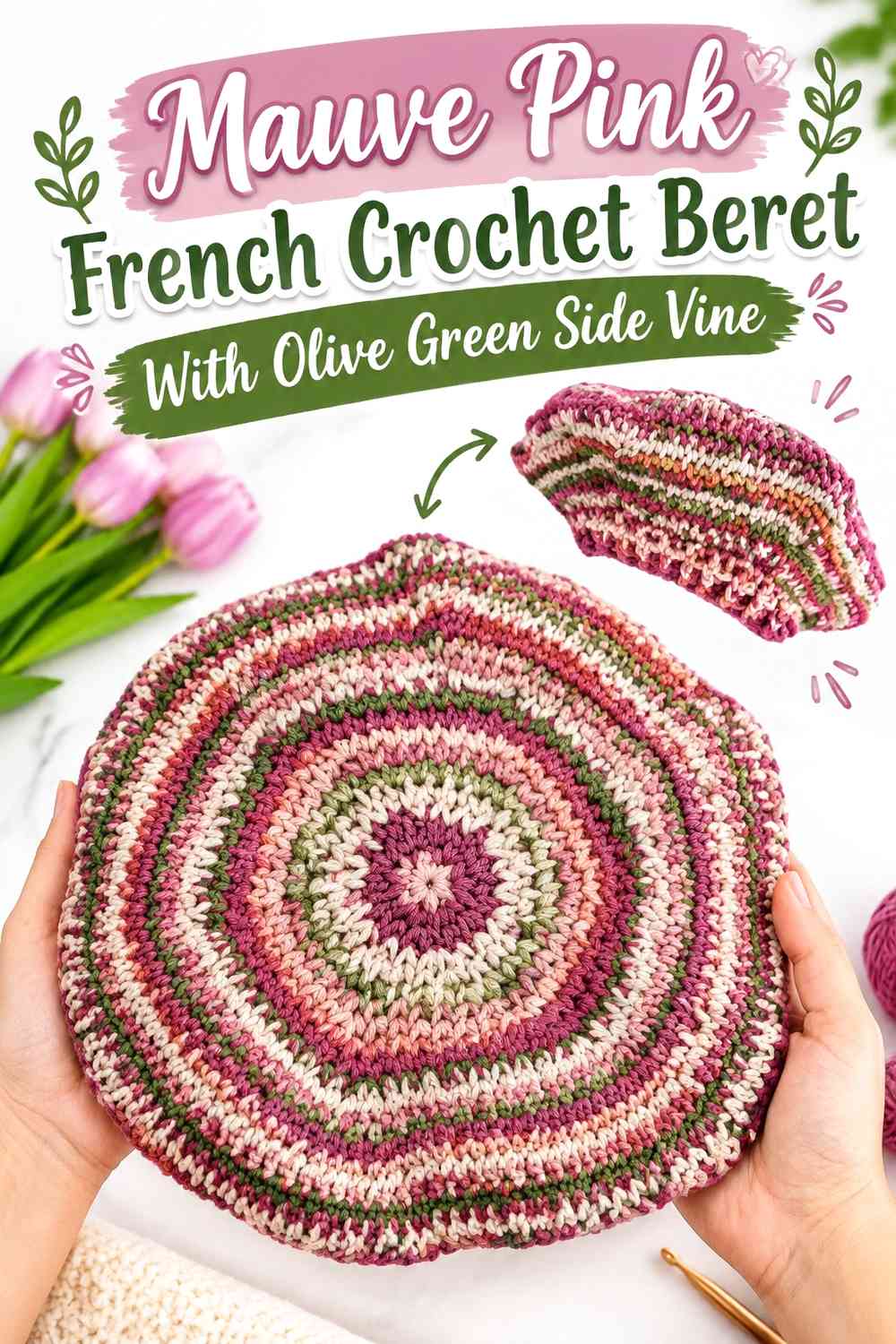
Keep the French-style beret mauve pink and embroider one fine olive-green vine rising from the lower side. This is a restrained option for readers who want botanical detail without a large flower cluster.
Olive Green Should Rise Gradually Across the Mauve Pink Side
Start the vine above the most flexible part of the brim and let it travel onto the crown. The transition makes the embroidery look integrated into the beret rather than placed randomly in the middle.
Keep the branch narrow as it approaches the top.
Mauve Pink Needs Quiet Space Opposite the Olive Green Vine
Leave the other side undecorated. The asymmetry gives the small green detail enough visual importance.
If you add mauve-pink blossoms to the vine, use only a few so they do not disappear against the base color.
Creator Credit: Sirin’s Crochet
9. Olive Green Lace Crochet Beret With Mauve Pink Scattered Blossoms
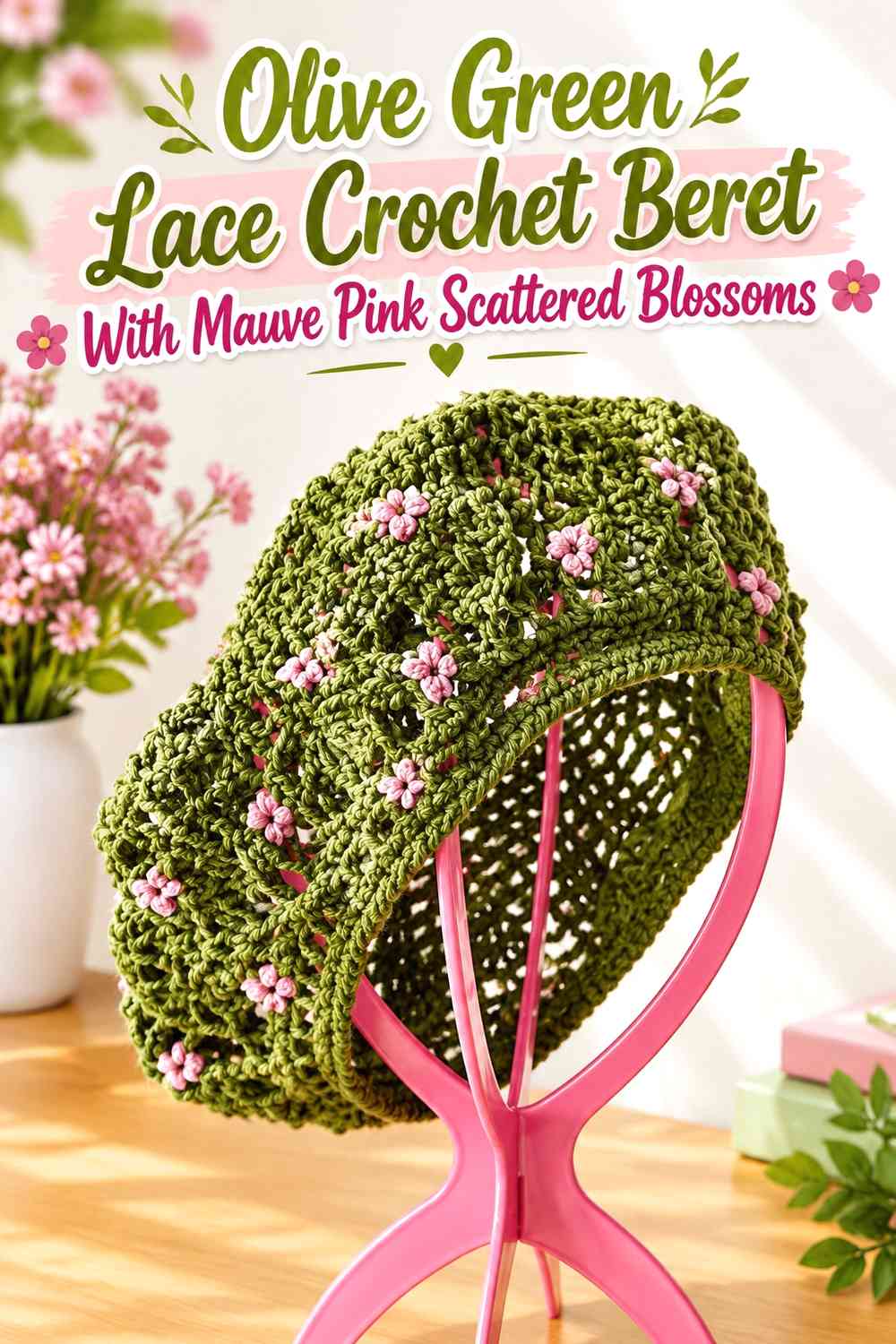
A lace beret can carry several tiny mauve-pink blossoms when they are spaced independently rather than joined into a dense spray. Olive green provides a darker framework around both the lace openings and floral accents.
Mauve Pink Blossoms Should Avoid the Largest Olive Green Lace Openings
Position the flowers on sections with enough crochet beneath them to support a recognizable shape.
If a blossom crosses an opening, part of its silhouette may disappear into the negative space.
Olive Green Lace Needs Room Between Mauve Pink Accents
Use the blossoms selectively rather than decorating every repeat. Repetition in the lace already supplies a pattern, so the embroidery should introduce a second rhythm more sparingly.
A plain olive-green brim keeps the lower edge visually stable.
Creator Credit: Marifu6a
10. Mauve Pink Crochet Beret With Olive Green Brim-to-Crown Stem
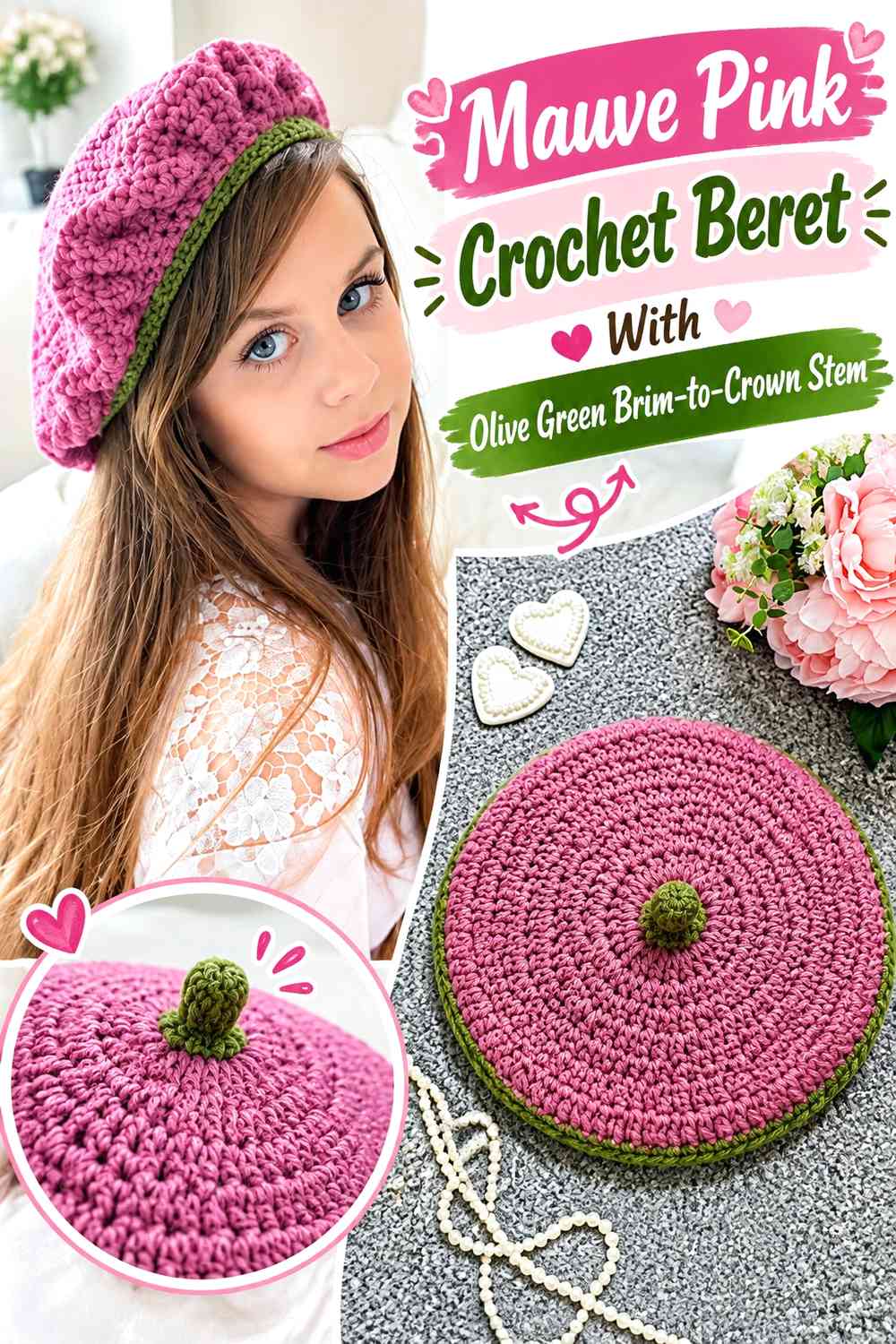
Make the botanical element one continuous olive-green stem that begins just above the brim and travels toward the crown, with only a few leaves or mauve-on-mauve flowers branching from it.
Olive Green Stems Should Start Above the Mauve Pink Brim
Keep dense embroidery away from the most stretch-dependent part of the lower band. Beginning just above it preserves a clean brim and creates a clear starting point for the botanical motif.
Let the stem widen only slightly as it enters the crown.
Mauve Pink Should Stay Broad Beside the Olive Green Stem
Keep the majority of the beret pink so the narrow green line remains purposeful.
A second green stem on the opposite side would change this from a focal motif into a more symmetrical botanical pattern, so add it only if that is the intended direction.
Creator Credit: Selina Veronique Crochet
11. Olive Green Textured Crochet Beret With Mauve Pink Flower Cluster
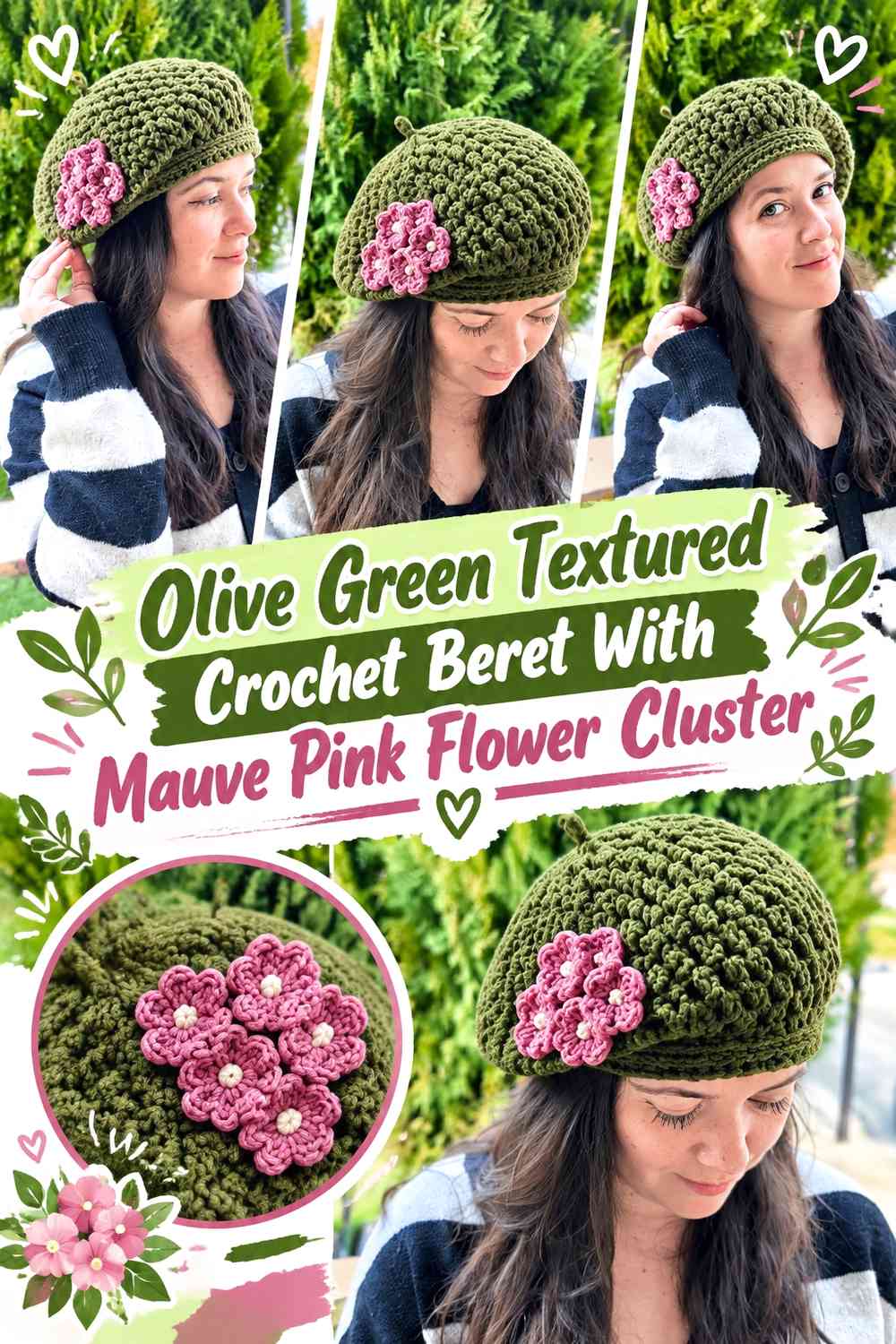
A cluster-stitch beret already carries noticeable texture, so concentrate the mauve-pink embroidery into one compact floral grouping. Olive green across the rest of the surface keeps texture and embroidery from competing everywhere.
Mauve Pink Flowers Need a Calm Olive Green Placement Zone
Choose one area where the stitch texture is comparatively predictable and the flowers can sit visibly on top.
A flower cluster directly over the most raised section may look uneven or obscure both details.
Olive Green Texture Should Remain Visible Around Mauve Pink
Keep a generous green margin around the cluster so the original stitch surface remains part of the finished look.
Avoid adding embroidered vines all the way around the crown when one concentrated group already provides enough botanical detail.
Creator Credit: Passionate Crafter
12. Mauve Pink Crochet Beret With Olive Green Tiny-Leaf Border
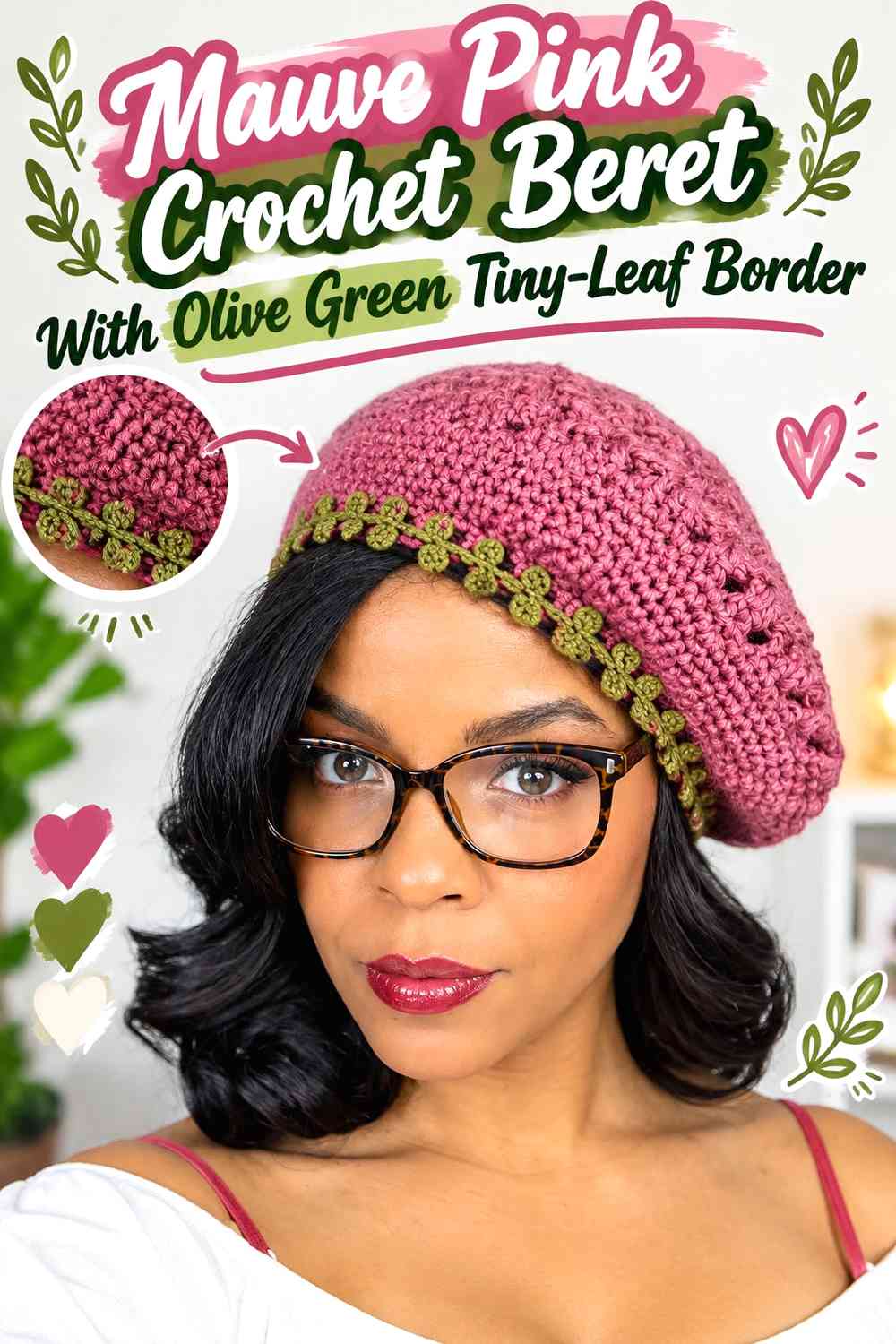
Use mauve pink throughout the beret and place a row or partial row of very small olive-green leaves just above the brim. The treatment gives the lower crown a botanical boundary without covering the main top surface.
Olive Green Leaves Should Sit Above the Mauve Pink Stretch Band
Place the foliage on the first stable crown area instead of embroidering heavily through the brim itself.
This preserves flexibility while still making the leaf border look connected to the bottom of the beret.
Mauve Pink Should Remain Open Above the Olive Green Border
Leave the crown predominantly pink so the green leaves form one clearly defined horizontal or curved zone.
If you want flowers, add only one or two mauve-pink raised accents above the leaves so the border remains recognizable.
Creator Credit: Littlejohn’s Yarn
13. Olive Green Mohair-Look Crochet Beret With Mauve Pink Minimal Flowers
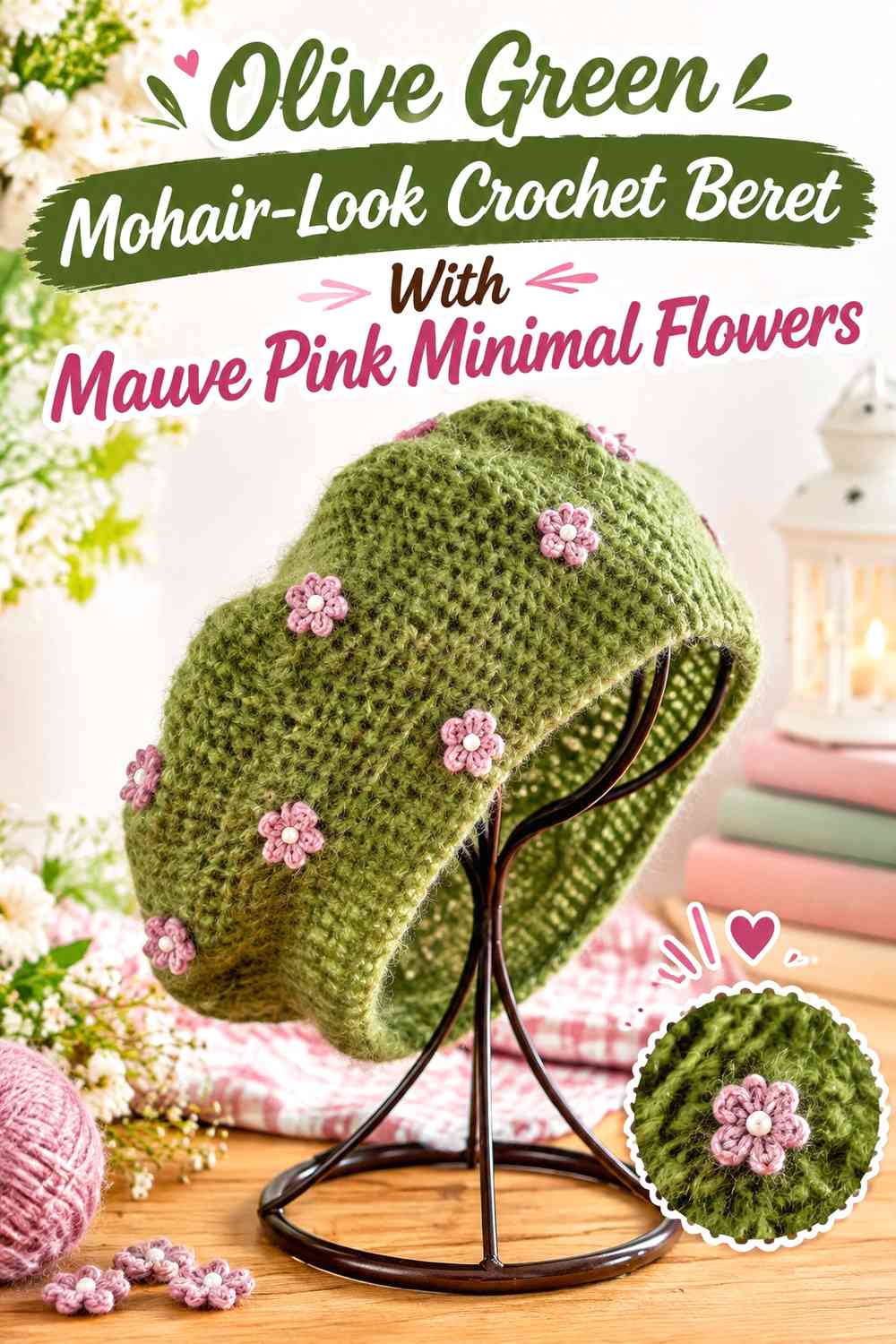
A fuzzy or mohair-look surface can obscure small embroidery, so keep the olive-green beret simple and use a few larger mauve-pink flowers rather than many tiny botanical stitches.
Mauve Pink Flowers Need Simple Shapes on Olive Green Fuzz
Favor bold, recognizable flower silhouettes and generous spacing. Delicate outlines may become visually lost against a soft haloed surface.
Test one flower before committing to a full cluster.
Olive Green Should Remain Broad Around Mauve Pink
Keep most of the fuzzy surface undecorated so the textural softness remains visible.
A few mauve-pink flowers near one side can supply enough color without turning the beret into an all-over embroidered piece.
Creator Credit: fuwaricoの happy handmade
14. Mauve Pink Puff Crochet Beret With Olive Green Botanical Arc
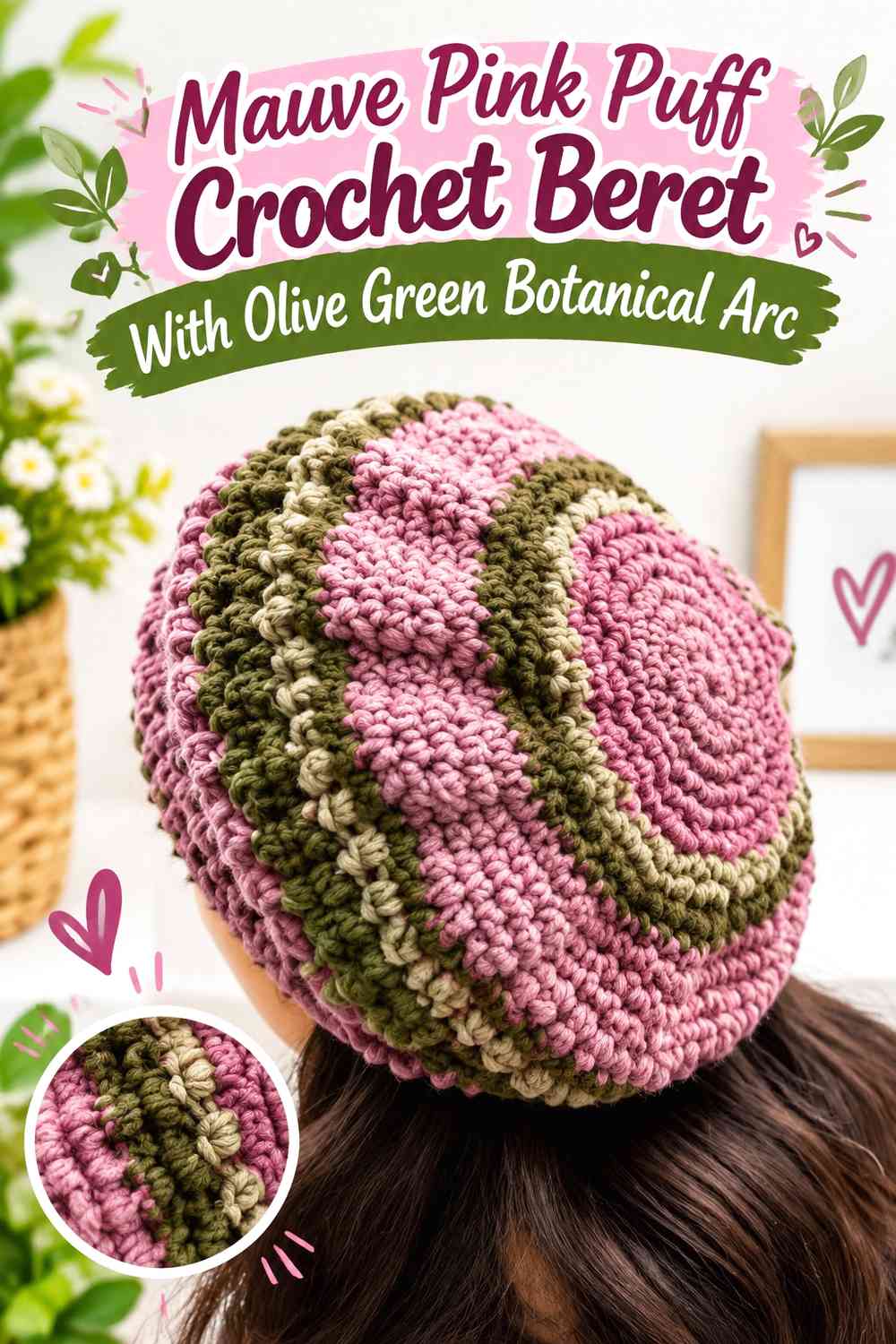
Puff texture gives the beret a dimensional surface, so use mauve pink across the entire construction and embroider an olive-green arc around only one portion of the crown. This keeps the surface design controlled.
Olive Green Arcs Need Clear Routing Across Mauve Pink Puffs
Plan the stem path around rather than indiscriminately through the strongest raised areas. A consistent route helps the vine remain visible despite the textured background.
Small leaves can sit in the flatter spaces between puff sections when the construction allows.
Mauve Pink Puffs Should Stay Exposed Beside Olive Green
Leave substantial areas untouched so both the puff texture and botanical embroidery have room.
If flowers are added, use mauve-on-mauve or only a very small number of contrasting accents to avoid creating three competing visual systems.
Creator Credit: Meladora’s Creations for Crochet
15. Olive Green Crochet Beret With Mauve Pink Offset Floral Crescent
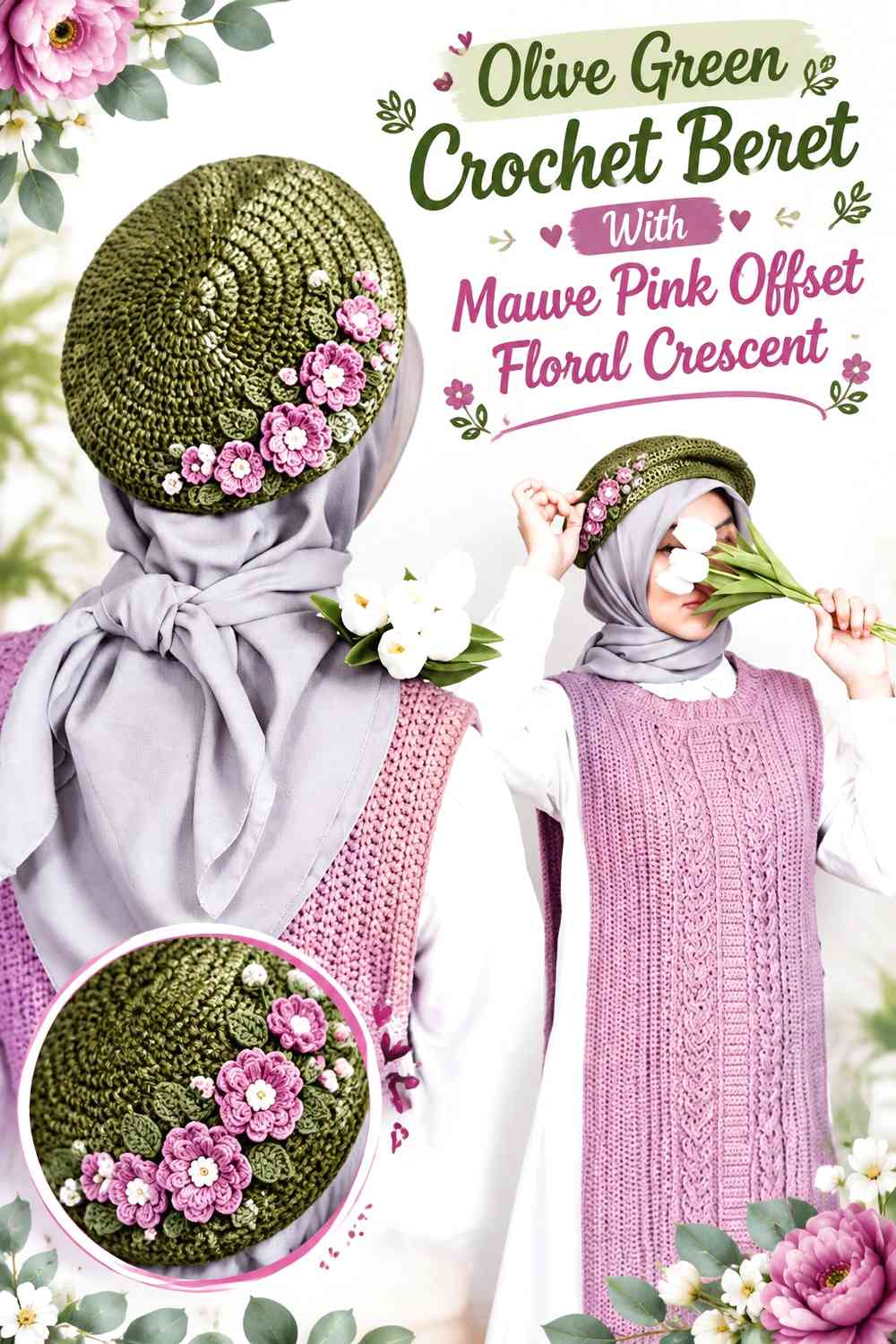
Arrange mauve-pink blossoms and small olive-toned leaves in a crescent that follows part of the outer crown. Because the beret itself is olive green, the leaves can remain subtle while the pink flowers define the crescent.
Mauve Pink Should Mark the Olive Green Crescent Rhythm
Place the larger mauve blossoms at a few anchor points and use smaller flowers between them. This creates a gradual arc rather than a row of identical motifs.
The crescent should follow the crown rather than sit as a straight diagonal.
Olive Green Needs Open Crown Space Opposite Mauve Pink
Keep the other half mostly undecorated. The open green area makes the crescent easier to recognize and prevents a heavily embellished look.
If leaves are embroidered in olive green, rely on stitch direction or slightly different placement rather than expecting strong color contrast.
Creator Credit: Crochet.Box
16. Mauve Pink Crochet Beret With Olive Green Embroidered Crown Branch
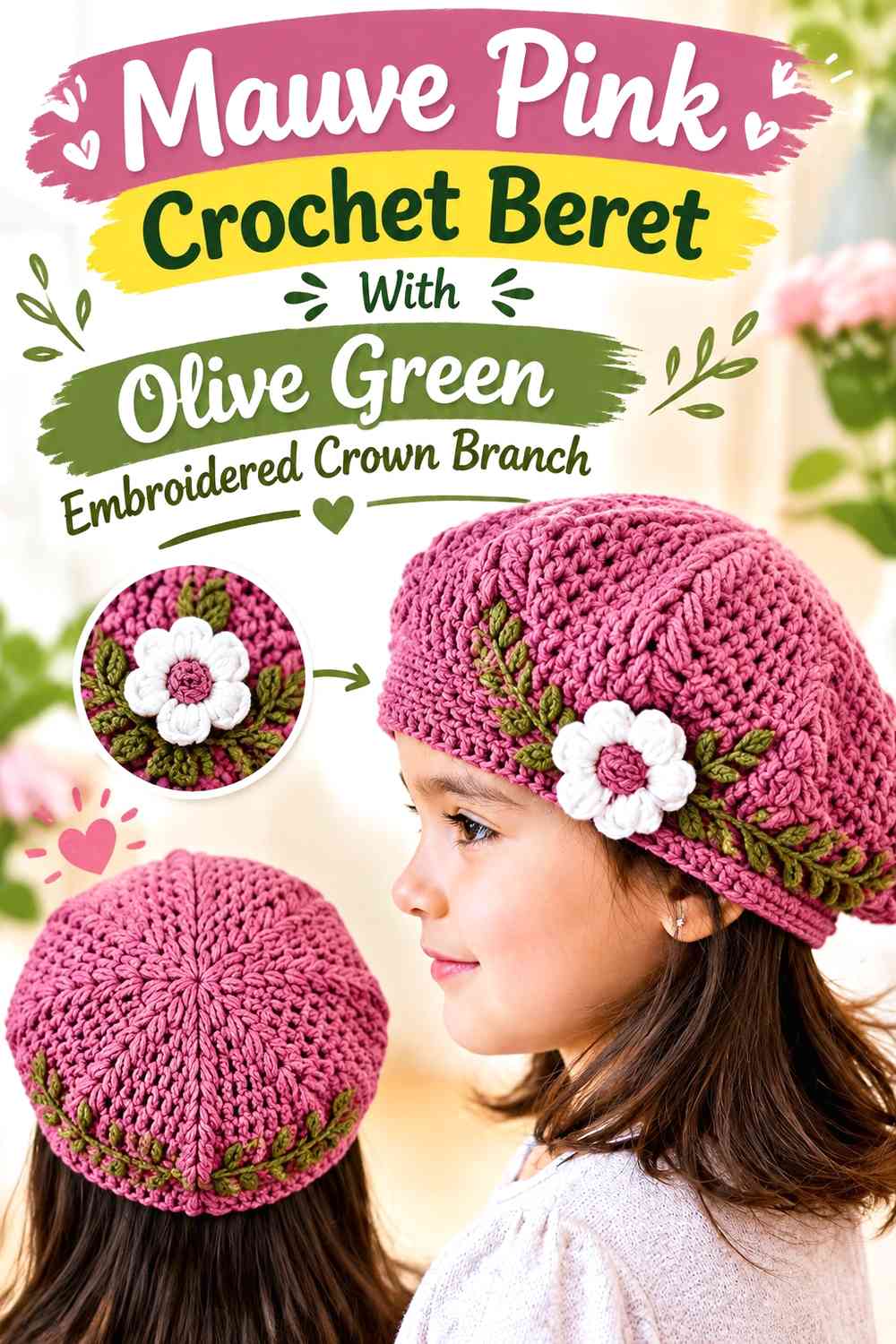
Use one olive-green branch across the upper crown of a mauve-pink beret, allowing a few leaves to extend toward the sides. The motif becomes especially visible when the beret is worn with more of the top tilted toward the viewer.
Olive Green Crown Branches Need a Mauve Pink Viewing Angle
Determine how you normally wear the beret before placing the branch. A motif centered perfectly on top can disappear when the beret is tilted strongly to one side.
Shift the branch toward the area most likely to face outward.
Mauve Pink Should Stay Clear Between Olive Green Leaves
Leave enough background visible along the branch for individual leaves to remain distinct.
Avoid packing leaves edge to edge; a branch looks more natural and easier to read when portions of the mauve-pink stem path remain open.
Creator Credit: كروشيه توتا و المبدعات. crochet tota
17. Olive Green Tam-Style Crochet Beret With Mauve Pink Botanical Medallion
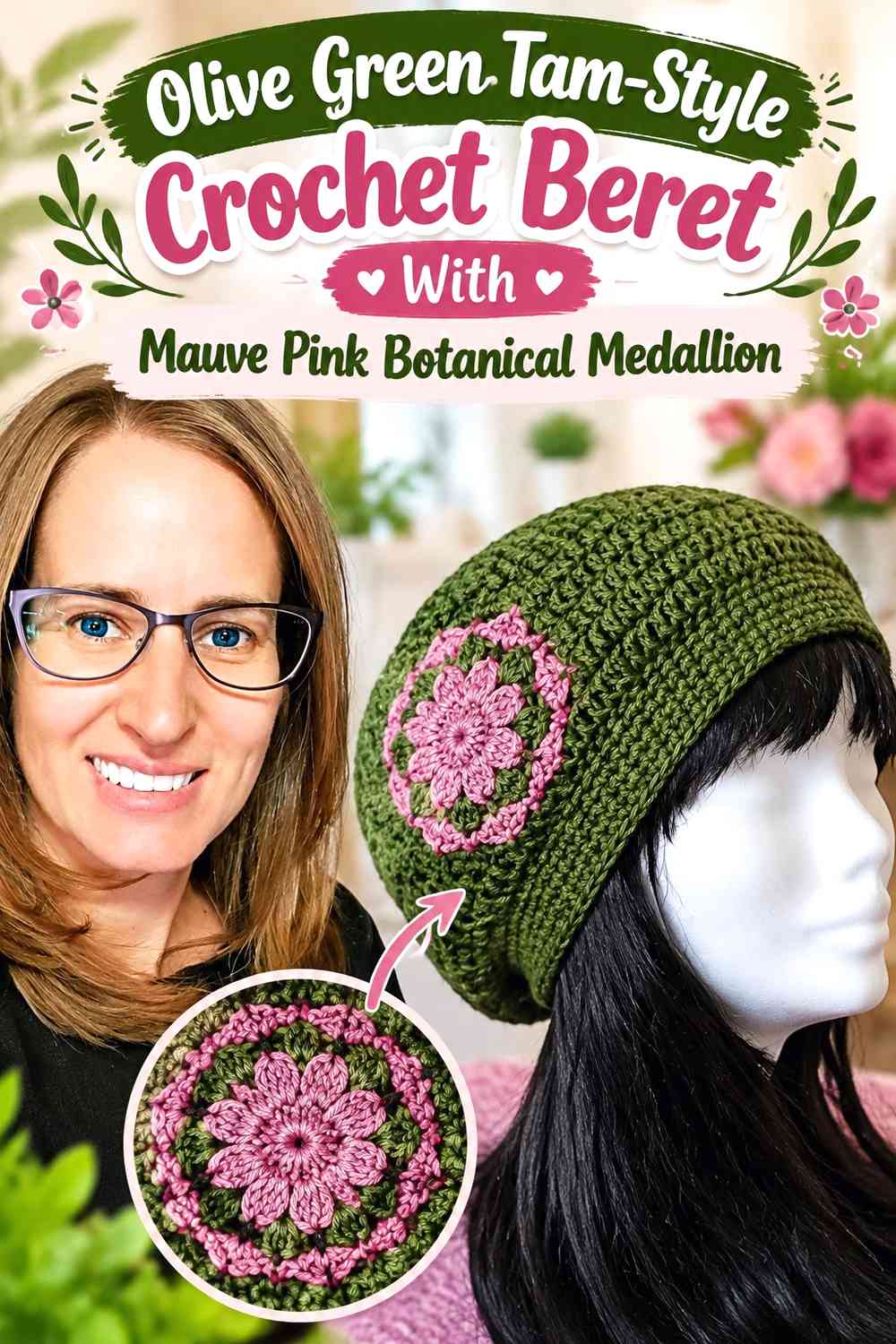
Finish with a tam-style beret whose broader crown supports one centered or slightly offset mauve-pink botanical medallion. Use olive green across the hat and arrange flowers and small leafy elements within one contained circular area.
Mauve Pink Medallions Need an Olive Green Margin
Keep a clear dark-green boundary around the botanical group so the medallion remains distinct from the rest of the crown.
If the design approaches the outer edge, reduce the motif scale rather than letting flowers spill into the brim area.
Olive Green Should Frame the Mauve Pink Botanical Center
Preserve the brim and outer crown in olive green. This dark framework gives the floral center more visual importance and keeps the hat silhouette easy to read.
A few olive-green embroidered leaves inside the medallion can connect the floral detail back to the base without adding another color.
Creator Credit: Crochet with Clare
Comparing the Olive Green and Mauve Pink Botanical Berets
For an olive-green-dominant winter look, Ideas 1, 3, 5, 7, 9, 11, 13, 15, and 17 keep green across most of the beret. Mauve pink then becomes the flower, crown-ring, blossom, crescent, or medallion shade.
Ideas 2, 4, 6, 8, 10, 12, 14, and 16 give mauve pink the larger surface. These make olive-green vines, branches, borders, laurel arcs, and leaves much more graphic.
For the most restrained botanical treatment, Ideas 2, 8, 10, 12, and 16 rely mainly on stems or foliage. Ideas 1, 5, 7, 11, and 15 place more attention on floral clusters. Ideas 4, 9, and 14 are better suited to readers who want embroidery combined with an already textured or openwork crochet surface.
The beret construction should guide the final choice. Smooth classic berets can support more detailed floral work, while lace, puff, mohair-look, and highly textured designs generally benefit from fewer and larger embroidered motifs.
Conclusion
Olive green and mauve pink work especially well for a botanical winter beret because the two colors naturally divide foliage and floral roles. Olive green can create a quiet woodland base or darker leaves, while mauve pink supplies softened flowers that remain seasonal without becoming overly bright.
Choose a side spray or crescent when you want obvious asymmetry, a crown ring when you prefer repeated motifs, or one vine or branch when the botanical effect should stay minimal. Textured and lace berets already contribute substantial pattern, so keep their embroidery more selective than you would on a plain classic beret.
Use the credited tutorials for their original beret construction, shaping, and brim. Then try the finished beret on before adding independent botanical embroidery so the olive-green vines, mauve-pink flowers, crown details, and side sprays remain visible in the way you actually wear the hat.
Frequently Asked Questions
Should olive green or mauve pink dominate a botanical crochet beret?
Use olive green as the main shade when you want mauve-pink flowers to become the focal point. Choose mauve pink for the beret body when you want darker olive-green leaves and vines to create the stronger graphic structure.
Where should mauve pink flowers go on an olive green beret?
Useful placements include an outward-facing side spray, an offset crown crescent, a ring around the outer crown, or one compact flower cluster. Try the beret on first because the visible areas change when the crown is tilted.
Can I add botanical embroidery to a plain crochet beret tutorial?
Yes. Use the tutorial for the original beret construction and treat the floral work as an independent surface adaptation. Finish enough of the beret to confirm its fit and worn orientation before planning the embroidery.
Should olive green embroidery go across the brim of a mauve pink beret?
Keep dense embroidery above the most stretch-dependent brim area. Small accents near the edge can work, but a large branch or heavy flower cluster is generally better placed on the crown where it will not interfere with the band’s flexibility.
How can I keep mauve pink flowers visible on textured olive green crochet?
Use fewer, larger motifs and leave clear green space around them. Very small flower details can get lost against puff stitches, fuzzy yarn surfaces, or strongly raised texture.
Can olive green leaves and mauve pink flowers be used on a lace crochet beret?
Yes, but place embroidery where there is enough crochet fabric beneath the motif. Avoid spanning the largest lace openings with detailed flowers or leaves if doing so makes their outlines difficult to recognize.
How can I make an olive green and mauve pink botanical beret look less busy?
Choose one main botanical system: a vine, side spray, crown ring, crescent, or compact cluster. Keep the rest of the beret comparatively plain and avoid covering the brim, crown center, and both sides with separate floral arrangements at the same time.