

Sage green and espresso create a grounded winter palette for a crochet housecoat. Sage green can cover broad body panels without making the garment visually heavy, while espresso gives collars, cuffs, pockets, belts, and textured sections enough depth to stand apart.
Texture makes the color relationship more important. Raised stitches, ribbing, clusters, and other dimensional surfaces create their own shadows, so a housecoat does not necessarily need frequent color changes to look detailed. A large sage-green textured panel can carry plenty of visual interest on its own, while espresso can be reserved for the places where the garment needs definition.
The tutorials credited below support long cardigans, dusters, coatigans, and cozy cardigan constructions that can inform a housecoat-style winter layer. The sage-green-and-espresso palettes are independent adaptations; use each creator’s tutorial for its original construction and check the finished measurements, fit, and closure arrangement before adapting it for lounging.
Quick List
- Sage Green Body and Espresso Trim Crochet Textured Housecoat
- Espresso Body and Sage Green Collar Crochet Textured Housecoat
- Sage Green and Espresso Ribbed Crochet Winter Housecoat
- Sage Green Housecoat With Espresso Shawl Collar
- Sage Green and Espresso Pocket-Accent Crochet Housecoat
- Sage Green and Espresso Belted Crochet Winter Housecoat
- Sage Green, Espresso, and Oatmeal Crochet Textured Housecoat
- Sage Green, Espresso, and Cream Crochet Winter Housecoat
- Sage Green Body With Espresso Cuffs Crochet Textured Housecoat
- Espresso Panels With Sage Green Sleeves Crochet Winter Housecoat
- Sage Green and Espresso Color-Block Crochet Textured Housecoat
- Sage Green Housecoat With Espresso Raised-Texture Panels
- Sage Green and Espresso Reversible-Look Crochet Winter Housecoat
Let Sage Green or Espresso Control the Main Housecoat Panels
The back and front panels make up most of a long housecoat’s visible area, so choose the dominant color there first. Sage green creates a lighter, softer field that leaves room for dark espresso finishing. Espresso produces a much deeper garment and makes sage-green cuffs, pockets, or collar details more prominent.
Avoid changing color simply because a large panel feels plain while you are working on it. On a textured housecoat, stitch relief already breaks up the surface. Too many additional color blocks can hide the texture instead of emphasizing it.
Use Sage Green and Espresso to Make Crochet Texture Easier to Read
Texture is easiest to notice when the yarn color and stitch structure are not competing for attention. A continuous sage-green panel can show ribbing, raised stitches, or repeating relief more clearly than a panel that changes between green and brown every few rows.
Espresso is especially useful at boundaries. It can emphasize a front opening, cuff, pocket top, hem, or belt without needing to cover the entire housecoat. When both colors are fairly muted, compare them in the lighting where the garment will usually be worn to make sure the darker details remain distinct.
Plan Sage Green and Espresso Around Housecoat Fit and Function
A housecoat-style layer needs more than an attractive palette. Check how the front panels overlap or hang, whether a collar adds bulk around the neck, where pockets sit, and whether a belt or other closure suits the construction you are adapting.
Color can help organize those functional areas. Espresso pockets on sage green are easy to locate visually, while an espresso belt can define a mostly green garment. If the housecoat is already espresso-led, lighter sage details can keep cuffs and front edging from disappearing into the body.
1. Sage Green Body and Espresso Trim Crochet Textured Housecoat
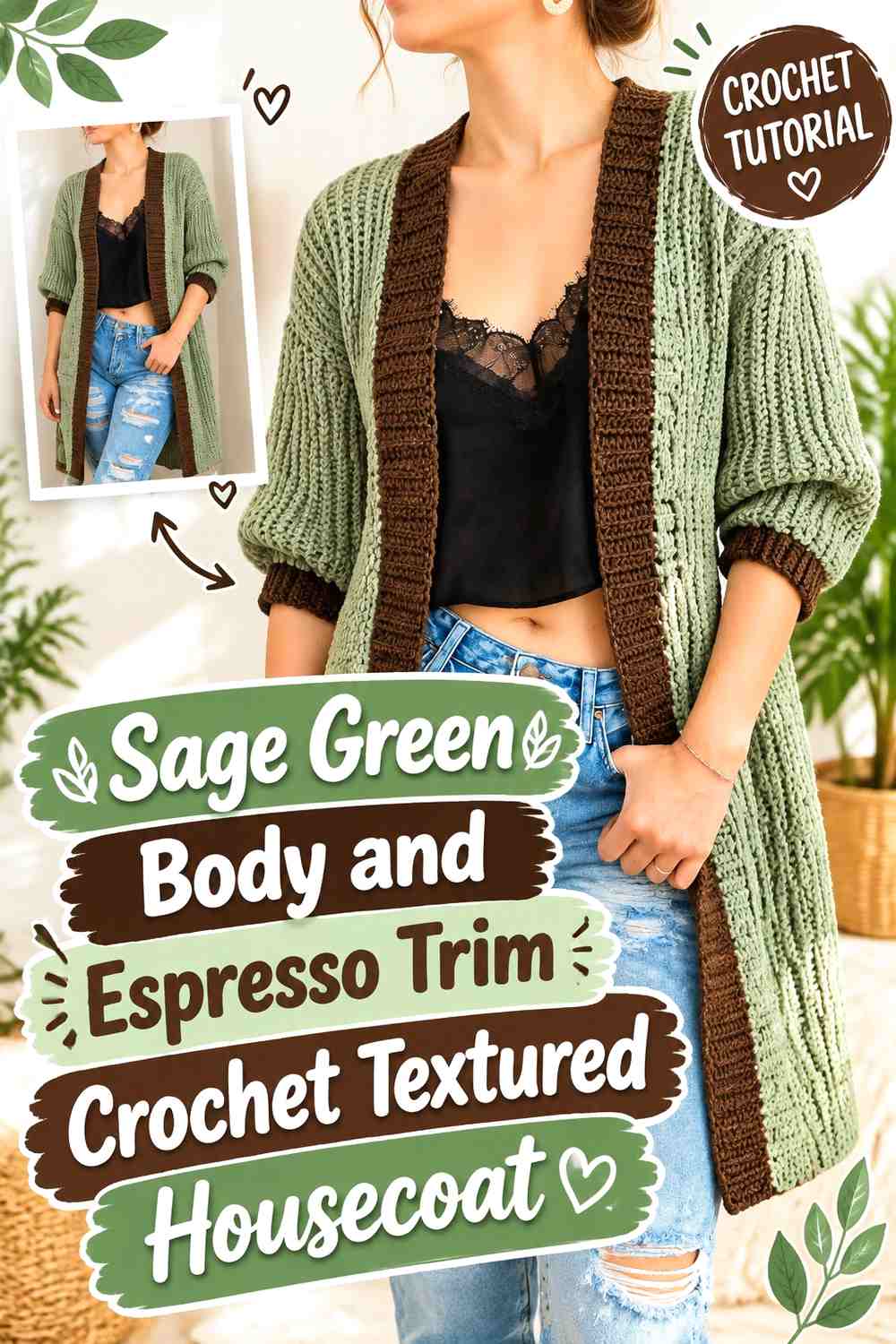
Let sage green cover the back, front panels, and sleeves, then use espresso around the opening, cuffs, and lower edge. This arrangement gives most of the textured crochet surface one uninterrupted color while the darker brown creates a clear perimeter. It is a useful starting point when the stitch pattern itself provides plenty of visual detail.
Let Sage Green Carry the Main Textured Housecoat Surface
Keeping the broad panels sage green allows shadows from raised or ribbed crochet to provide the variation. Before adding extra espresso stripes, look at the panel from several feet away; the texture may already give the surface enough definition.
Use Espresso to Frame the Sage Green Front Opening
Espresso along both front edges creates a dark vertical line that can make the housecoat structure easier to see. Keeping the trim consistent on both sides is more cohesive than introducing isolated brown sections across the green body.
Creator Credit: TCDDIY Tutorial
2. Espresso Body and Sage Green Collar Crochet Textured Housecoat
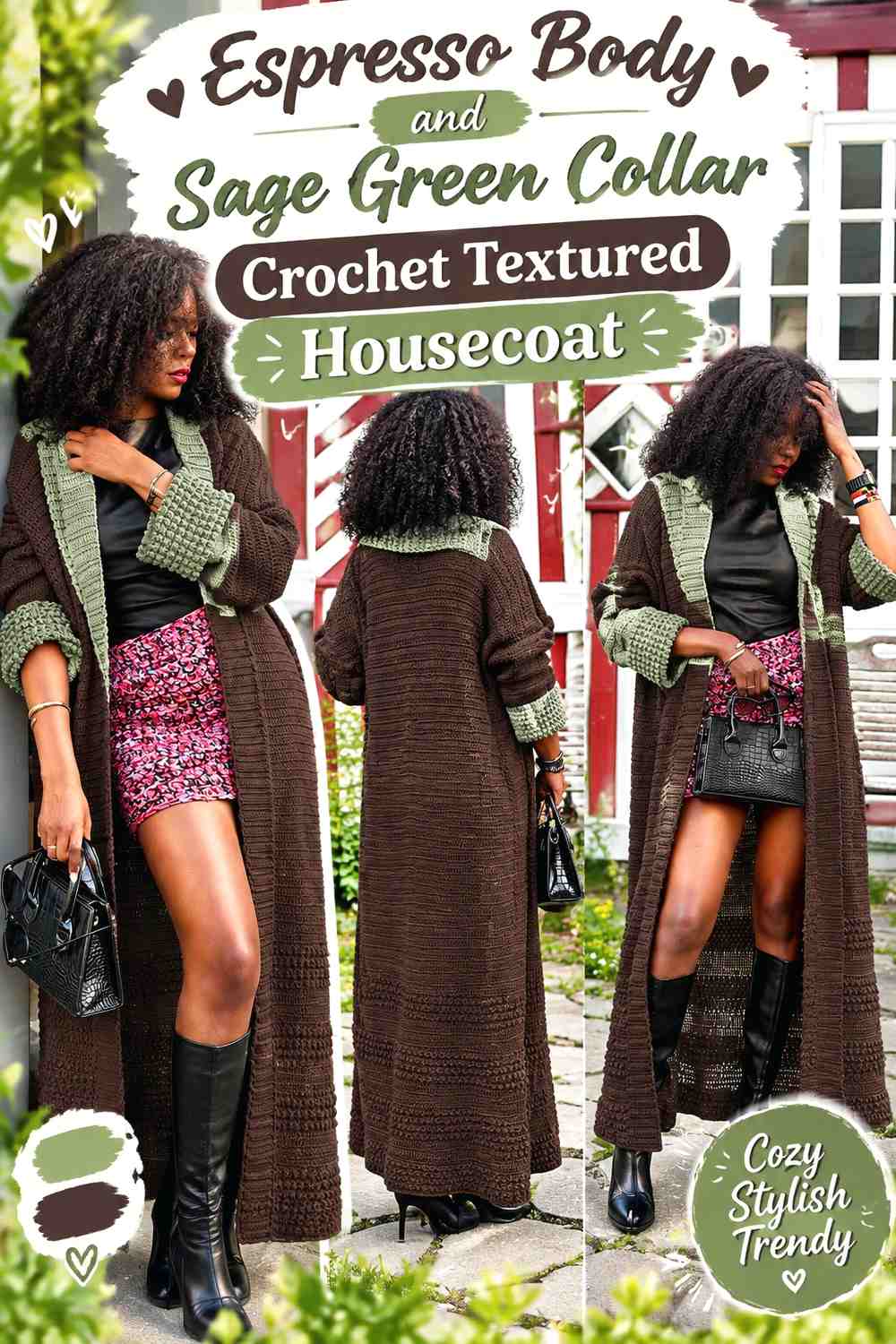
Reverse the hierarchy for a deeper winter layer. Espresso can cover the large body panels while sage green appears around the collar, opening, and perhaps the pocket tops. Because the body is dark, the lighter green becomes more noticeable even when it occupies relatively little space.
Keep Espresso Continuous Across the Main Crochet Housecoat Panels
Large espresso sections create a strong background for textured stitches. Avoid interrupting every relief repeat with green unless a deliberately striped housecoat is the goal; continuous brown lets both the texture and silhouette remain clearer.
Let Sage Green Lighten the Espresso Neckline
A sage-green collar creates separation around the face and upper opening without requiring a large color block. Repeating a little sage at the cuffs can connect the neckline color to the rest of the garment.
Creator Credit: AC Crochets Tutorial
3. Sage Green and Espresso Ribbed Crochet Winter Housecoat
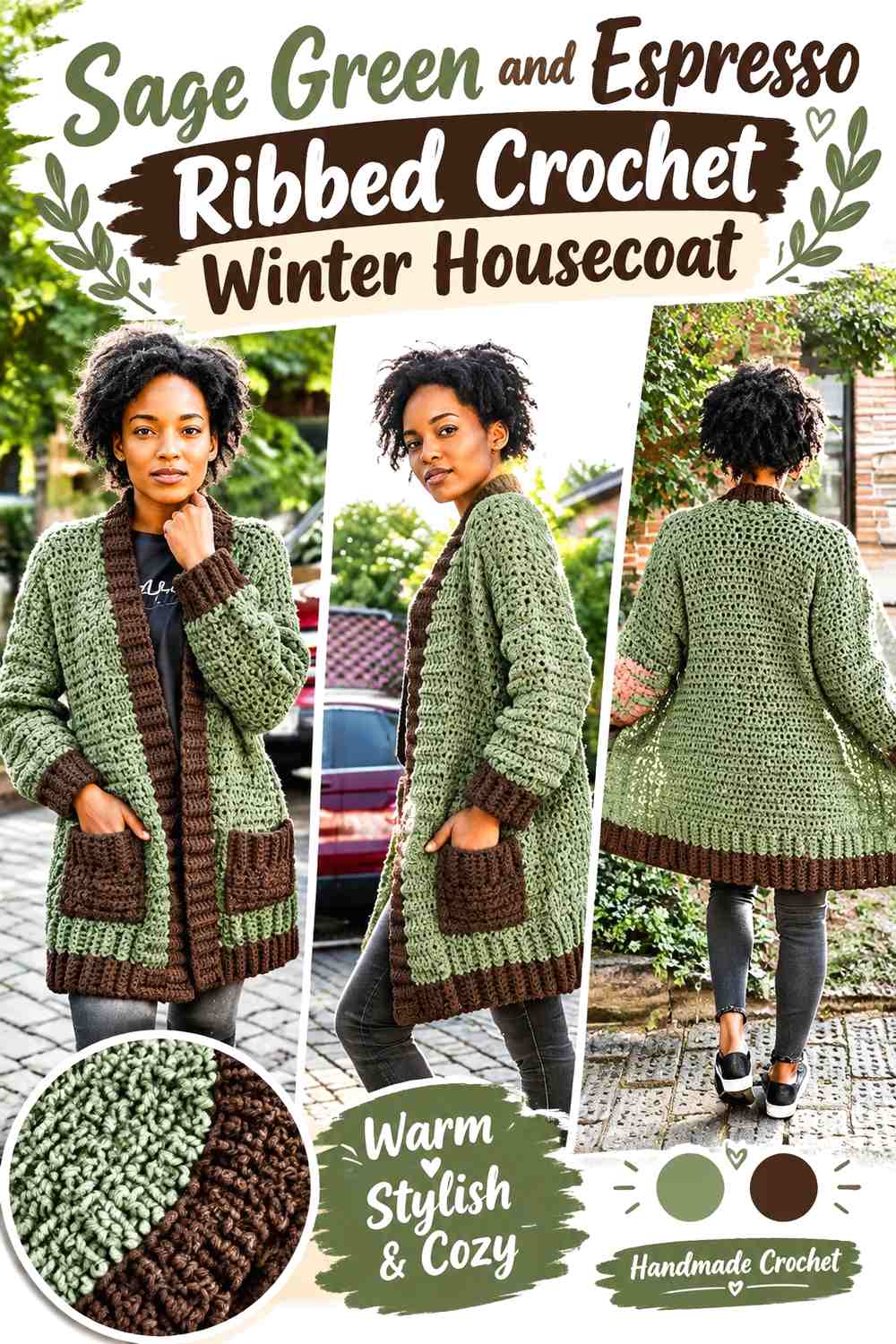
Ribbing gives these muted colors extra visual structure. Use sage green through the main body and let espresso concentrate on ribbed cuffs, front bands, and the hem. The darker ribbing can make the garment edges look more defined while keeping the central panels calm.
Keep Sage Green Broad Around Espresso Ribbing
Give the main sage-green sections enough width to contrast with the darker ribbed areas. If espresso ribbing becomes very broad on every edge, it can begin to dominate the garment despite being intended as trim.
Repeat Espresso Ribbing at the Sage Green Cuffs and Opening
Using the same dark treatment in several structural locations makes the palette feel planned. Cuffs and front bands are especially useful because they naturally frame larger sage-green areas rather than breaking through them.
Creator Credit: TL Yarn Crafts Tutorial
4. Sage Green Housecoat With Espresso Shawl Collar
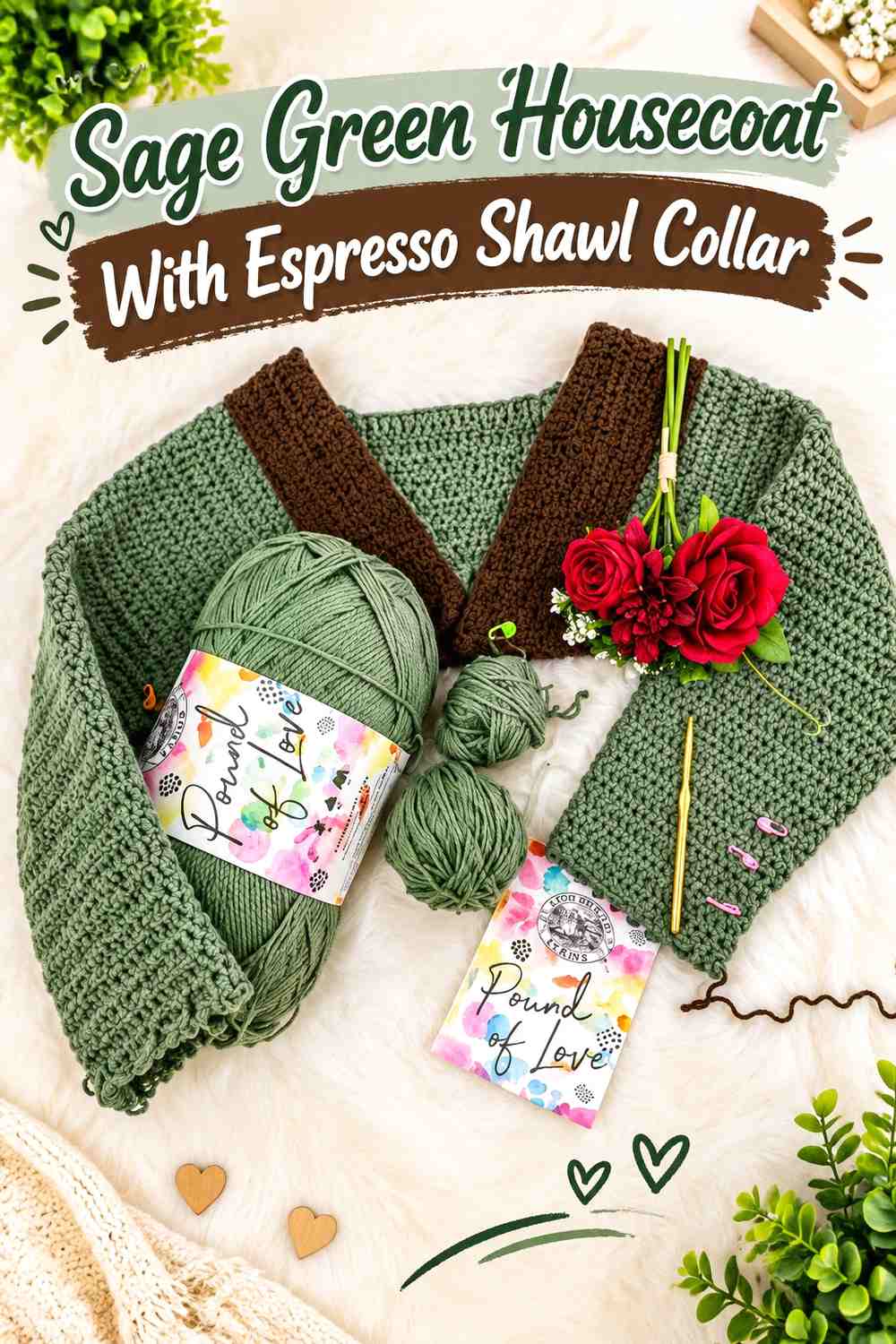
A broad shawl-style collar provides enough space for espresso to become a major supporting color without covering the main housecoat body. Keep the panels and sleeves sage green, then let the espresso collar run continuously around the neckline and front opening.
Let Espresso Give the Sage Green Shawl Collar Strong Definition
A dark collar creates an obvious boundary between the green body and the housecoat opening. Because a shawl collar already has substantial visual width, additional espresso stripes across the body may be unnecessary.
Keep Sage Green Visible Beside the Espresso Collar
Do not allow the brown collar to expand so far across the front that the sage-green panels become narrow side strips. Keeping enough green visible preserves the intended green-led palette and lets the collar remain a contrasting feature.
Creator Credit: CreativeArtzySoul Tutorial
5. Sage Green and Espresso Pocket-Accent Crochet Housecoat
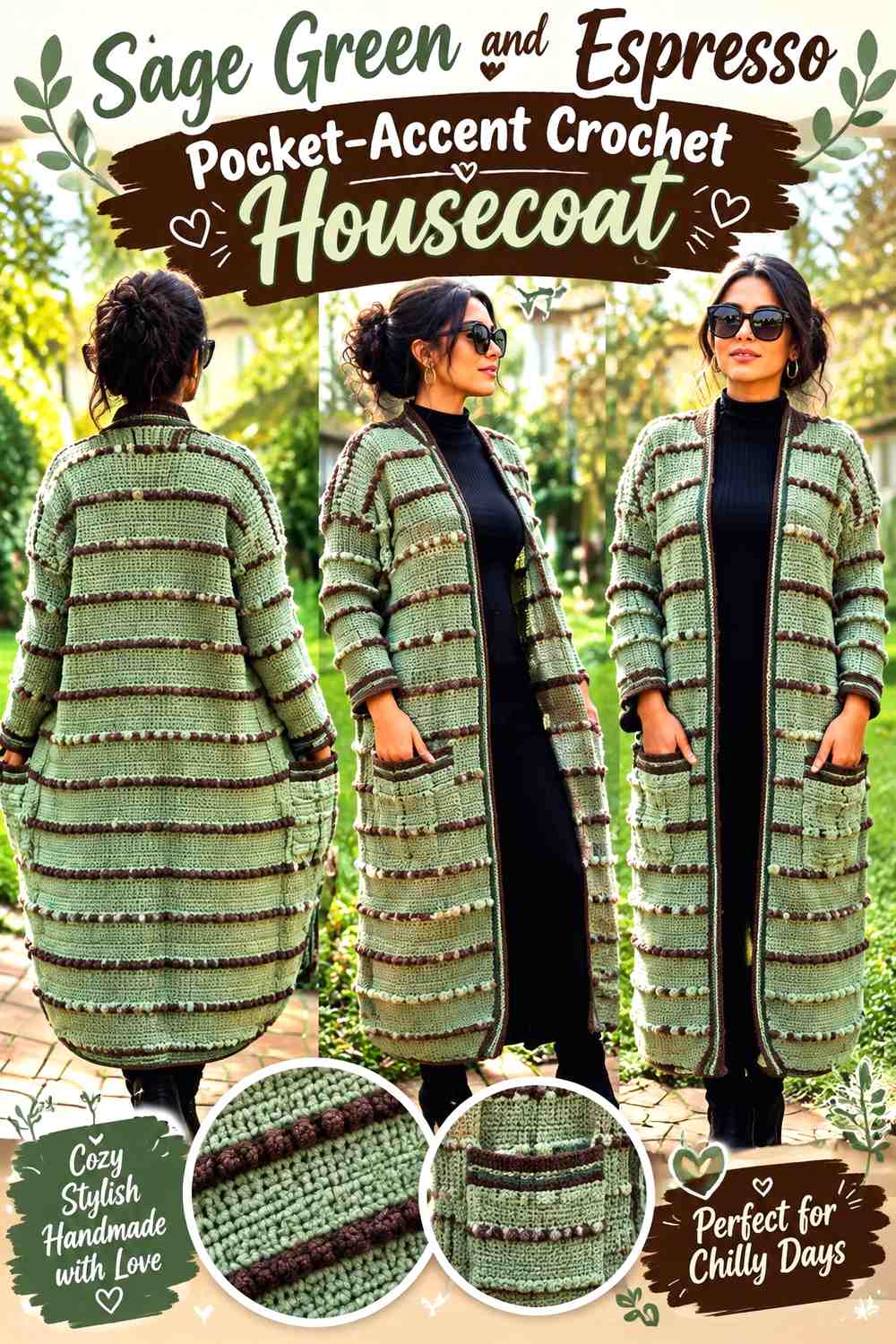
Pockets offer a practical place to introduce espresso without changing the main stitch pattern. A sage-green housecoat can carry matching textured panels while espresso pockets create two dark repeated blocks near the lower front.
Place Espresso Pockets Clearly Against the Sage Green Panels
Use both pockets in the same color role so they read as a deliberate pair. If one pocket is espresso and the other blends into sage, the front can look visually unbalanced even when the construction is symmetrical.
Repeat Sage Green Around the Espresso Pocket Area
Keep the surrounding front panels consistently green rather than adding several additional brown blocks nearby. Open green space allows the pockets to remain useful focal points and keeps the texture on the main body visible.
Connect Espresso Pockets to the Sage Green Housecoat With Small Repeats
A narrow espresso cuff or front edge can stop the pockets from looking like isolated dark patches. The repeat does not need to be large; it only needs to establish that espresso is part of the garment-wide palette.
Creator Credit: Crochet Lyn Tutorial
6. Sage Green and Espresso Belted Crochet Winter Housecoat
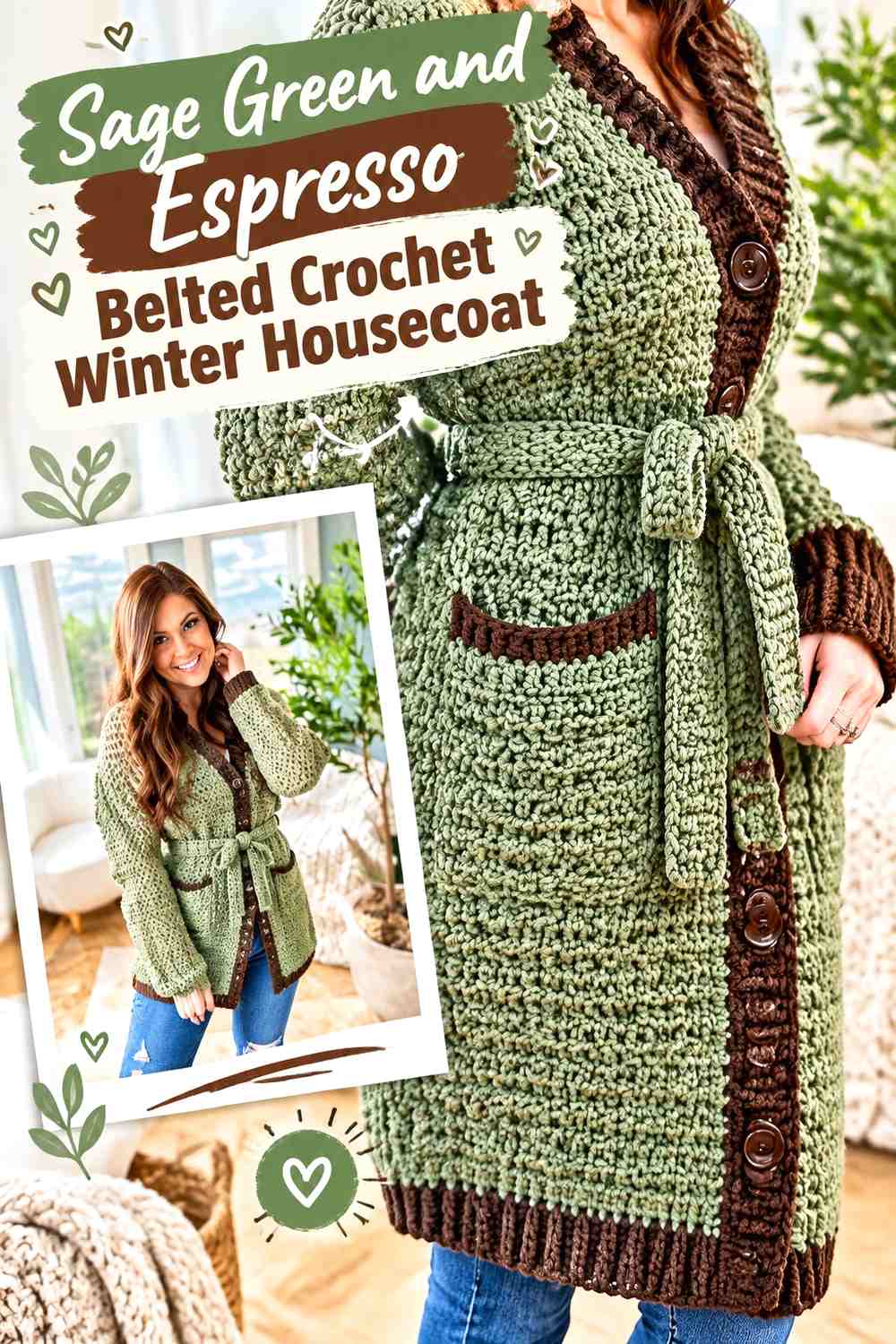
A belt gives espresso a natural horizontal role across a sage-green housecoat. Keep the body mostly green and use a brown belt to create definition only when the housecoat is tied. When worn open, smaller espresso details at the cuffs or opening can maintain the color connection.
Use Espresso as the Main Belt Color on Sage Green
A solid espresso belt creates a clear break across the long green panels. Avoid frequent color changes within the belt itself if the body already contains substantial texture; a clean dark line is easier to coordinate with the rest of the garment.
Repeat Espresso Above and Below the Sage Green Waist
A little brown at the neckline or cuffs prevents the belt from becoming the only dark element. Spread those repeats vertically so espresso feels integrated from the upper to lower portions of the housecoat.
Creator Credit: MJ’s Off The Hook Designs Tutorial
7. Sage Green, Espresso, and Oatmeal Crochet Textured Housecoat
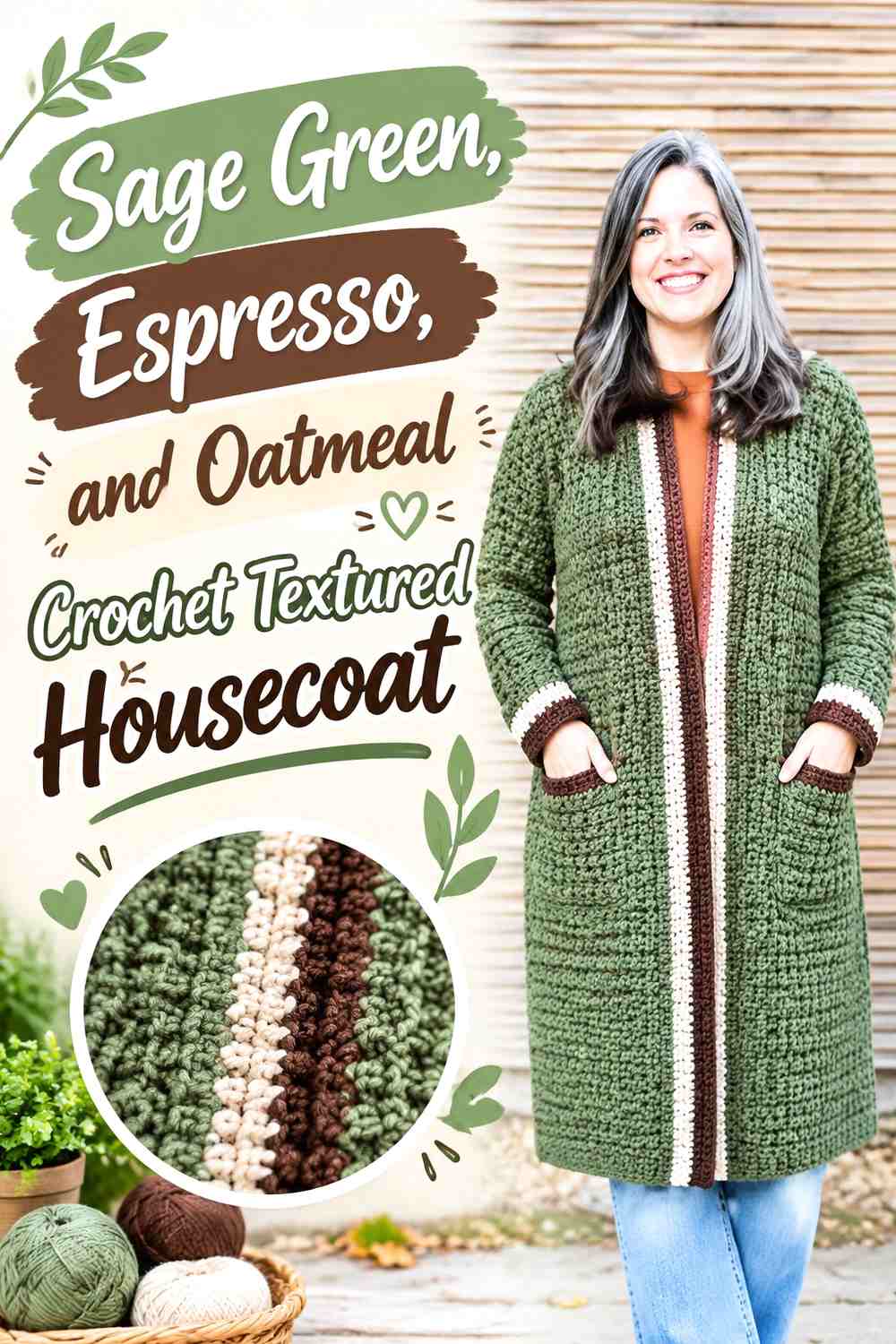
Oatmeal softens the transition between sage green and espresso. Keep sage as the dominant panel color, espresso as the darkest structural accent, and oatmeal in narrow areas such as pocket edging, collar transitions, or selected textured sections.
Keep Oatmeal Secondary to Sage Green on the Housecoat
Oatmeal and sage can both be quiet colors, so giving them equal coverage may weaken the green-led direction. Use sage for the larger fields and let oatmeal provide only a lighter interval.
Let Espresso Separate Sage Green From Oatmeal Texture
If the green and oatmeal are similar in value, place espresso where stronger definition is needed. A narrow brown border or cuff can prevent the two pale colors from visually merging.
Creator Credit: ChristaCoDesign Tutorial
8. Sage Green, Espresso, and Cream Crochet Winter Housecoat
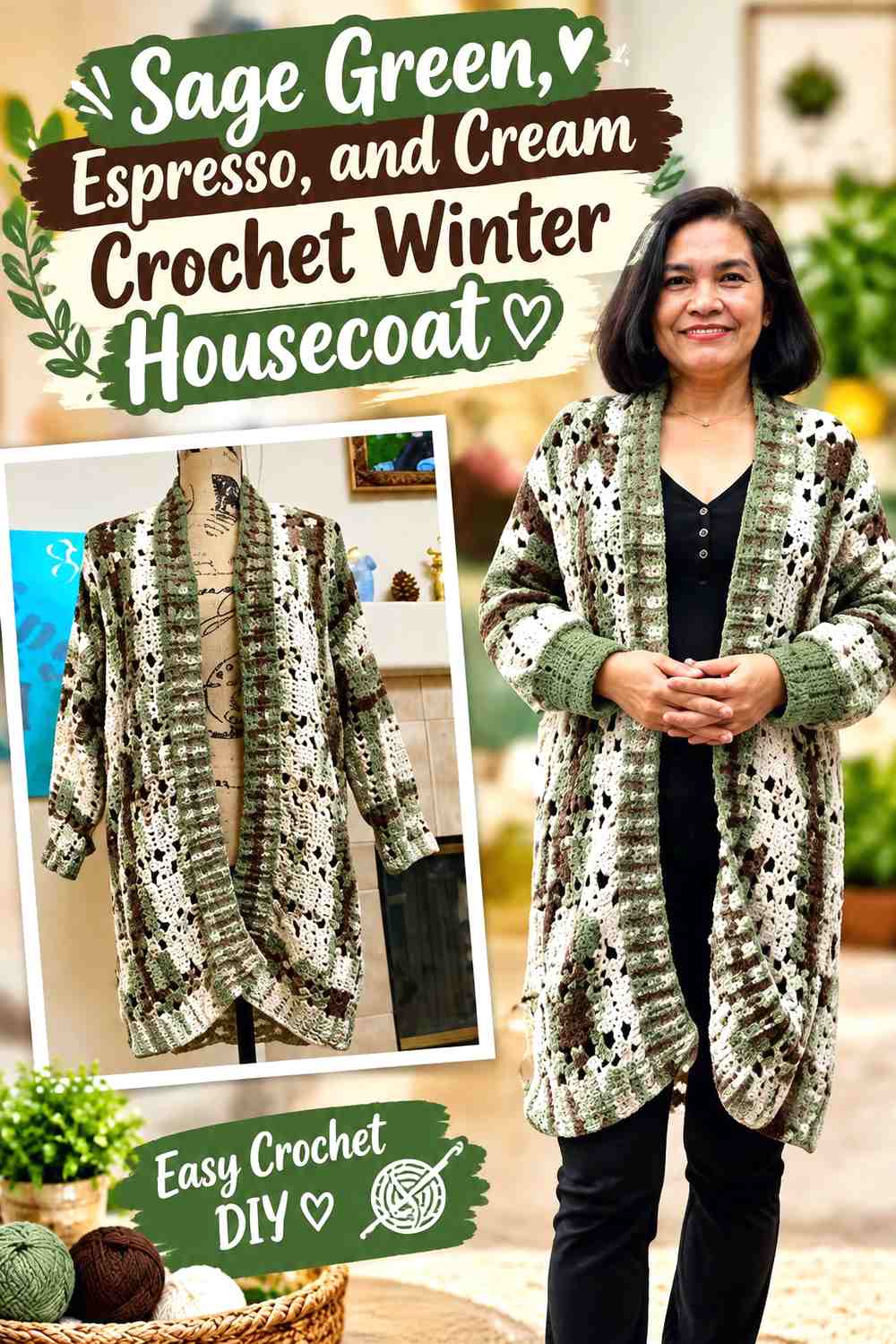
Cream creates a clearer light accent than oatmeal. Use it sparingly around an espresso collar, textured pocket top, or narrow cuff detail while sage green continues across the main housecoat panels.
Use Cream to Separate Espresso From Sage Green Details
Cream is most useful where a small boundary needs more clarity. A narrow light line between a brown collar and green body can make both colors easier to distinguish without turning cream into a third dominant shade.
Keep Sage Green Larger Than Cream on the Textured Housecoat
A cream-heavy garment changes the entire visual balance. Restrict the light neutral to finishing details so the housecoat still reads immediately as sage green and espresso.
Creator Credit: Crafting Shed Tutorial
9. Sage Green Body With Espresso Cuffs Crochet Textured Housecoat
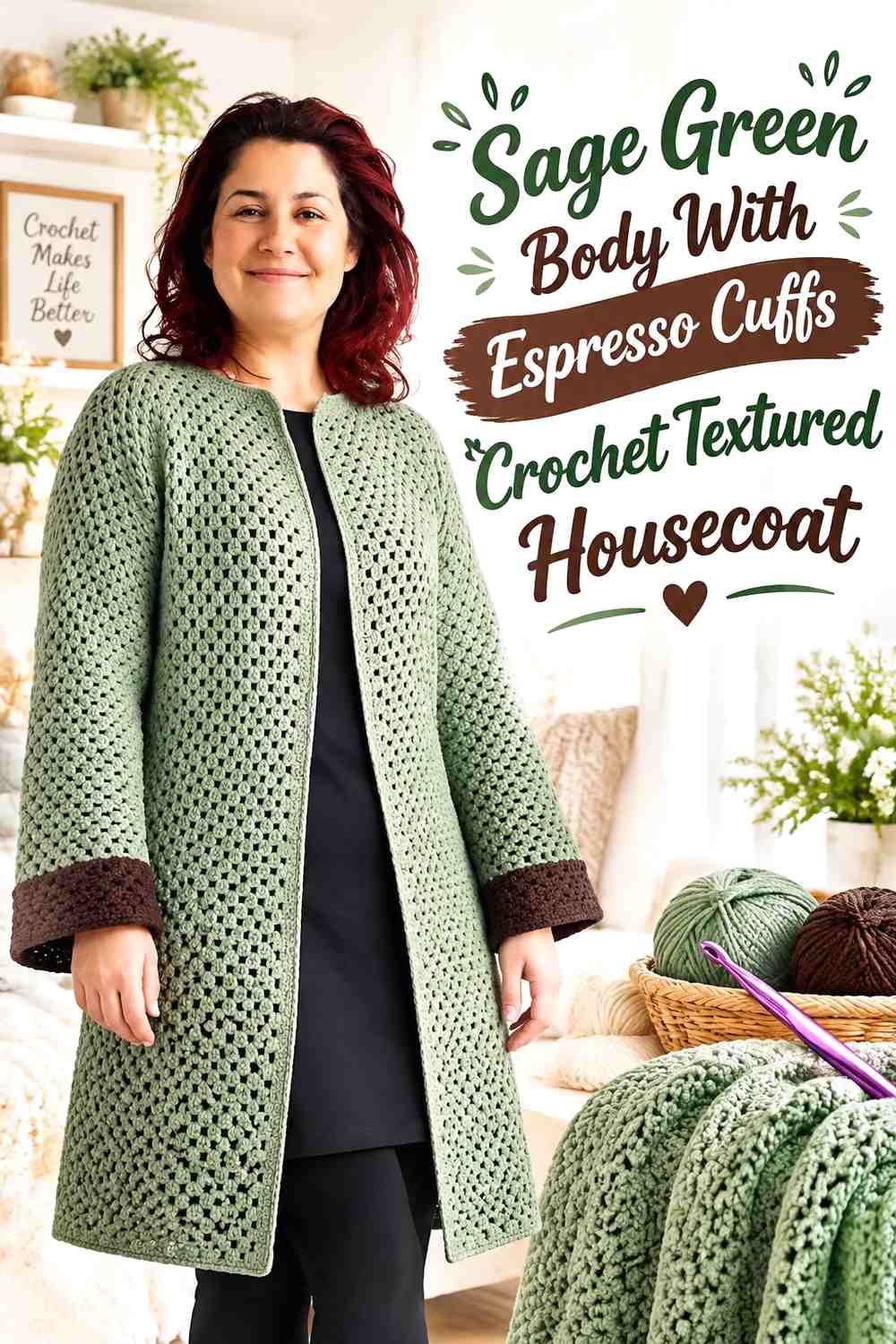
Concentrate espresso at the sleeve ends and let the entire body stay sage green. This creates strong definition around the hands while preserving a continuous green surface through the torso and sleeves.
Make Espresso Cuffs Wide Enough to Register Against Sage Green
Very narrow dark edging may disappear within heavy texture. Give the espresso cuff enough visible area to create a deliberate finish, but keep it proportionate to the sleeve so it does not look like a separate brown sleeve section.
Keep Sage Green Continuous Above the Espresso Cuffs
Avoid inserting additional brown bands immediately above the cuff. A clean transition from sage green to espresso makes the color placement easier to understand and lets sleeve texture remain uninterrupted.
Creator Credit: İlmeklerin Deryası Tutorial
10. Espresso Panels With Sage Green Sleeves Crochet Winter Housecoat
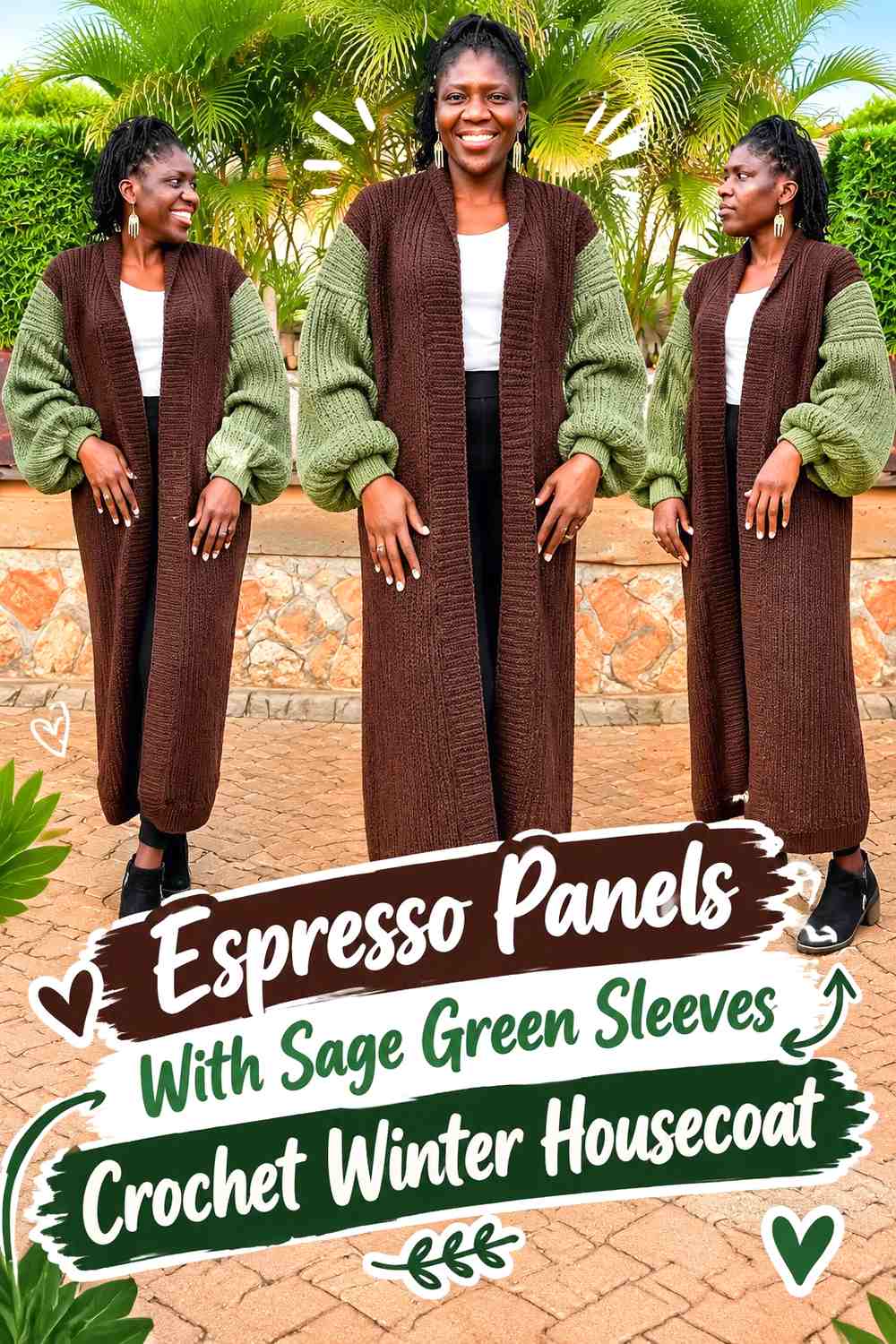
Use espresso across the long front and back panels while making the sleeves sage green. This places the lighter color in motion around the arms and keeps the torso visually grounded.
Keep Espresso Connected Across the Main Housecoat Body
A continuous espresso torso gives the garment a strong center. If the front panels already contain noticeable texture, let that relief create variation instead of breaking the brown area into extra green blocks.
Use Sage Green Sleeves to Lighten the Espresso Housecoat
Both sleeves should carry enough sage to establish a deliberate color block. Repeating green at the collar or pocket edging can connect the sleeves back to the torso without reducing the espresso dominance.
Creator Credit: BzzzMagicHands🧶 Tutorial
11. Sage Green and Espresso Color-Block Crochet Textured Housecoat
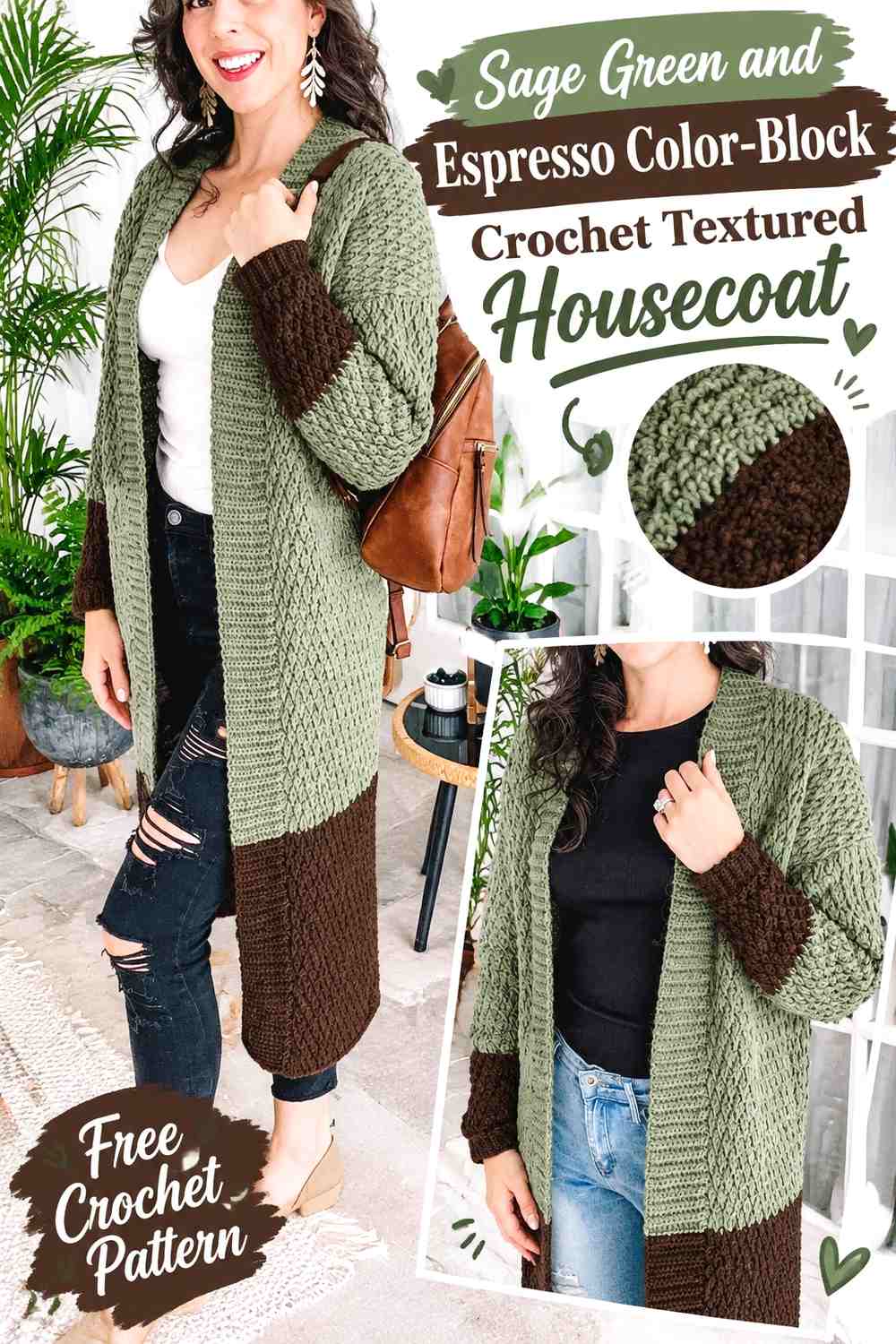
A planned color-block treatment can make large textured sections easier to distinguish. Use sage green on one major garment zone, such as the upper body, and espresso on another, such as the lower panels, while allowing the dividing line to follow the garment’s construction rather than cutting randomly across texture.
Give Sage Green and Espresso Distinct Housecoat Zones
Whole panels or broad sections create a clearer result than many small alternating blocks. Choose the division before crocheting so the color change aligns with the garment rather than interrupting an important textured repeat.
Repeat Sage Green Within the Espresso Color Block
A small green cuff, pocket edge, or collar detail can carry the upper color into the darker section. This repetition keeps the two large zones connected instead of making the housecoat look assembled from unrelated halves.
Creator Credit: Briana K Tutorial
12. Sage Green Housecoat With Espresso Raised-Texture Panels
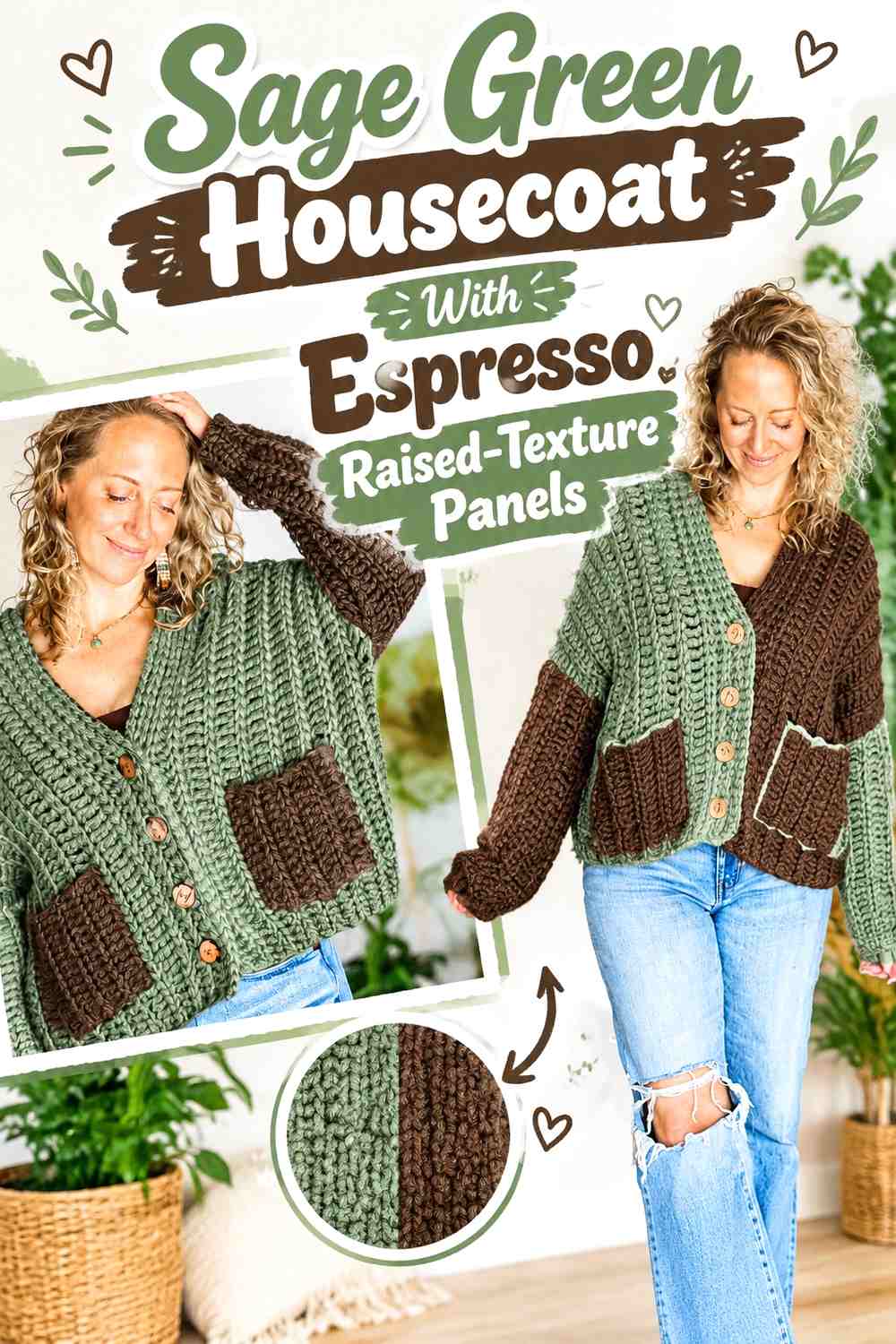
Instead of using espresso mainly as trim, place it inside selected raised-texture areas. Sage green can remain the broad background while espresso defines a textured back panel, pocket section, or another contained feature.
Put Espresso Where Raised Texture Needs the Strongest Contrast
A dark textured panel can become a focal point against a quieter green field. Restrict it to one or two intentional areas so the viewer can appreciate both the relief and the color difference.
Leave Sage Green Around the Espresso Texture
Negative space matters on a wearable. Surrounding a brown textured panel with uninterrupted sage green stops several dimensional elements from competing and makes the darker section easier to appreciate.
Creator Credit: Make & Do Crew Tutorial
13. Sage Green and Espresso Reversible-Look Crochet Winter Housecoat
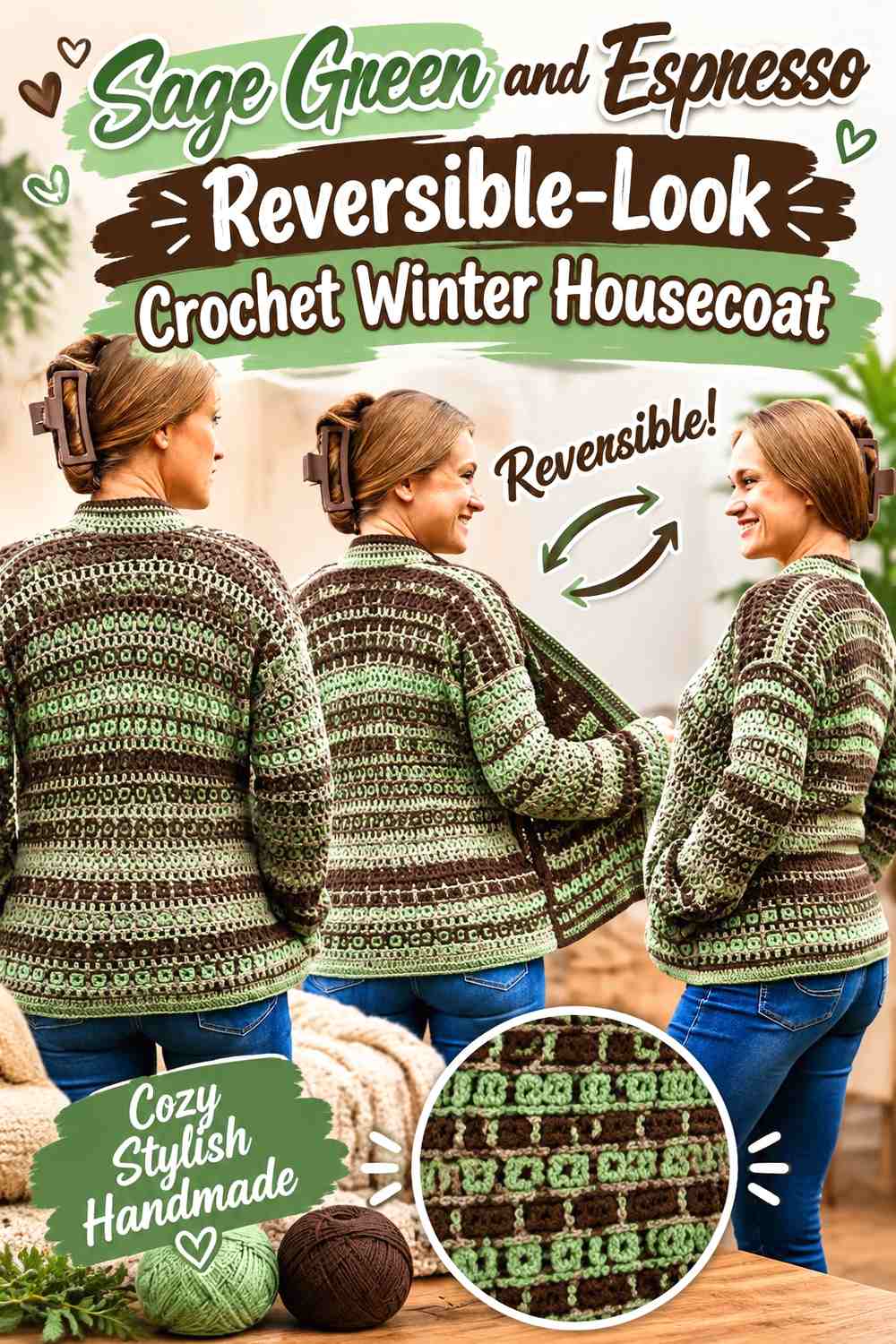
A two-sided or interlocking-texture concept gives sage green and espresso unusually equal importance. Instead of treating brown purely as trim, allow the two colors to interact through larger structured areas while preserving a clear contrast between them.
Keep Sage Green and Espresso Balanced Across the Textured Panels
This is the strongest option when you genuinely want both colors to carry visual weight. Repeat the relationship consistently across the body so one panel does not look substantially darker or lighter than the rest without a deliberate reason.
Use Espresso to Emphasize Sage Green Interlocking Texture
Where the two shades interact closely, check that the pattern remains readable at normal viewing distance. If sage and espresso are too similar in value, a complex interlocking surface can lose definition despite the hue difference.
Repeat Sage Green and Espresso Through the Housecoat Edges
Carry both colors into selected finishing areas so the panel treatment does not stop abruptly at the body. A controlled repeat at the collar, cuffs, or pockets can connect the textured center to the garment’s perimeter.
Creator Credit: Life and Yarn Tutorial
Comparing Sage Green and Espresso Textured Housecoat Palettes
For the calmest winter look, let sage green cover most of the garment and reserve espresso for front edging, cuffs, pockets, or a belt. Large areas of green allow textured crochet to create its own shadows without frequent color changes.
For a darker housecoat, reverse the relationship. Espresso body panels with sage-green sleeves or a lighter collar create stronger contrast while keeping the muted winter palette intact.
The color-block and raised-texture ideas work well when you want the palette itself to emphasize construction. Instead of decorating every surface, they concentrate contrast in selected panels.
Oatmeal and cream can both soften the two-color combination. Oatmeal produces a gentler transition, while cream gives small details stronger light-dark separation. Neither needs much coverage when sage green and espresso are meant to stay dominant.
Conclusion
Sage green and espresso are especially useful on a textured crochet housecoat because they can provide definition without requiring a busy multicolor arrangement.
Choose sage green as the main body color when you want stitch texture, ribbing, pockets, and long panels to remain visually light. Add espresso where the garment needs boundaries—around the collar, cuffs, front opening, belt, pockets, or hem.
For a deeper winter direction, let espresso cover the main panels and use sage green to open up the sleeves, collar, or finishing details. If you want both colors to carry equal importance, a controlled color-block or interlocking-texture treatment is clearer than frequent random changes.
Before adapting any cardigan or duster construction into a housecoat-style layer, check the intended length, front coverage, sleeve fit, collar, pockets, and closure arrangement. Use the credited tutorials for their original construction details and make color decisions independently around the housecoat fit and texture you want.
Frequently Asked Questions
Should Sage Green or Espresso Be the Main Color of a Textured Crochet Housecoat?
Sage green is a useful dominant color when you want the texture to look lighter and less visually dense. Espresso creates a deeper winter garment and makes sage-green trim more noticeable. Choose according to which color you want covering the largest front and back panels.
Where Should Espresso Go on a Sage Green Crochet Housecoat?
Useful locations include the front opening, shawl collar, cuffs, pocket tops, belt, and hem. These areas naturally frame or organize large sage-green panels, so espresso can add definition without interrupting the main texture.
Can Sage Green and Espresso Be Used in Equal Amounts?
Yes, particularly in a planned color-block or interlocking design. When the colors share the garment more evenly, assign them to clear panels or structural zones rather than switching unpredictably through individual textured repeats.
How Can I Keep Texture Visible in Sage Green and Espresso Crochet?
Allow some textured areas to remain in one continuous color. Raised crochet already creates light and shadow, and frequent color changes can make that relief harder to see. Use the second color where it strengthens an edge or emphasizes one selected textured feature.
Does Cream Work With Sage Green and Espresso on a Winter Housecoat?
Yes. Cream can provide a light separating accent around collars, cuffs, or pockets. Keep it secondary if you want sage green and espresso to remain the obvious palette.
Is Oatmeal Better Than Cream With Sage Green and Espresso?
Neither is universally better. Oatmeal gives a softer, more tonal transition, while cream usually produces stronger light-dark separation. Choose according to whether the housecoat needs subtle blending or clearer definition.
What Should I Check Before Adapting a Long Crochet Cardigan Into a Housecoat?
Check the length, front-panel coverage, sleeve proportions, collar, pocket position, and closure or belt arrangement against the way you intend to wear it at home. Do not assume a cardigan tutorial automatically provides the overlap or wrap coverage you want from a housecoat.