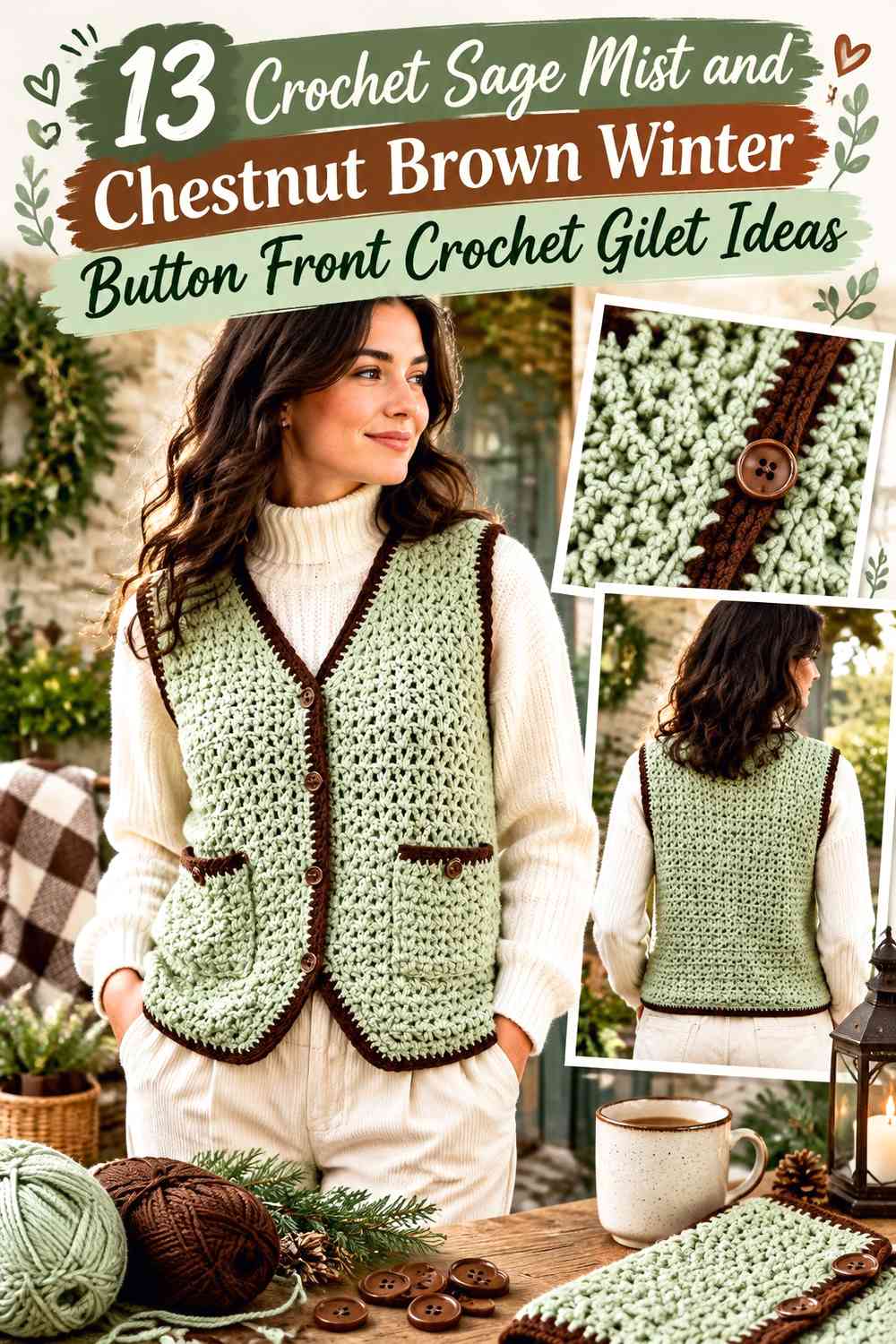

Sage mist and chestnut brown give a crochet winter gilet a useful light-and-dark structure. Sage mist can soften the broad body panels, while chestnut brown defines the button placket, neckline, hem, pockets, or armhole edging. Reversing those roles creates a warmer gilet with cooler sage details around the front opening.
The button front deserves special attention because it creates a vertical line through the entire garment. A chestnut-brown placket against sage mist can visually sharpen that line, while sage-mist edging on a brown gilet produces a quieter contrast. Either approach works better when the second color is repeated once elsewhere rather than appearing only around the buttons.
The credited tutorials include button-up vests, waistcoats, sleeveless cardigans, ribbed vests, textured vests, hooded designs, and motif-based constructions. Some already include buttons; others provide the underlying gilet or vest construction. Where the source is not button-front, treat the placket, buttonholes, and closure as a separate adaptation and check the front overlap before committing to placement.
Quick List
- Sage Mist Body and Chestnut Brown Button-Band Crochet Gilet
- Chestnut Brown Hooded and Sage Mist Button-Edge Crochet Gilet
- Sage Mist Ribbed and Chestnut Brown Button-Front Crochet Gilet
- Chestnut Brown Textured and Sage Mist Button-Trim Crochet Gilet
- Sage Mist Tailored and Chestnut Brown Button-Placket Crochet Gilet
- Chestnut Brown Sleeveless Cardigan and Sage Mist Button-Band Crochet Gilet
- Sage Mist Contrast-Edge and Chestnut Brown Button Crochet Gilet
- Chestnut Brown Longline and Sage Mist Button-Front Crochet Gilet
- Sage Mist Chunky One-Piece and Chestnut Brown Button-Edge Crochet Gilet
- Chestnut Brown Textured and Sage Mist Button-Placket Crochet Gilet
- Sage Mist Granny Square and Chestnut Brown Button-Band Crochet Gilet
- Chestnut Brown Ribbed and Sage Mist Button-Edge Crochet Gilet
- Sage Mist Checkerboard and Chestnut Brown Button-Front Crochet Gilet
Let Chestnut Brown Define a Sage Mist Button Front
On a sage-mist-dominant gilet, chestnut brown works especially well along the front opening because the darker shade gives the button line a clear boundary. It can continue around the neckline or lower hem to create a complete frame.
The brown does not need to cover a wide area. A narrow placket can provide enough contrast if the buttons and surrounding sage panel remain clearly separated.
For additional balance, repeat chestnut brown at the pocket rims or armholes. That keeps the button band connected to the garment without turning the whole gilet into evenly divided color blocking.
Use Sage Mist to Lighten a Chestnut Brown Winter Gilet
A chestnut-brown body creates a warmer, heavier-looking layer. Sage mist can then appear around the neckline, buttonholes, armholes, or pocket edges to break up the darker surface.
This direction works particularly well with textured crochet. Keeping the texture mainly brown allows shadows to define the stitches, while sage is reserved for structurally important edges.
If the gilet has a hood or deep neckline, sage mist can outline that feature and continue directly into the button band. The lighter shade then creates one uninterrupted framing line.
Keep Sage Mist and Chestnut Brown Balanced Around the Buttons
Button-front color planning should account for how the garment looks both closed and open. When closed, a contrasting placket may become a narrow central stripe. When open, both front edges are visible separately and the supporting color occupies more visual space.
Before adding a broad contrast band, consider how much of the front panel it will consume. A very wide chestnut placket can make a sage gilet look divided into three separate blocks.
Buttons also do not need another competing accent color. Sage mist and chestnut brown already provide enough visual structure for the closure to stand out.
1. Sage Mist Body and Chestnut Brown Button-Band Crochet Gilet
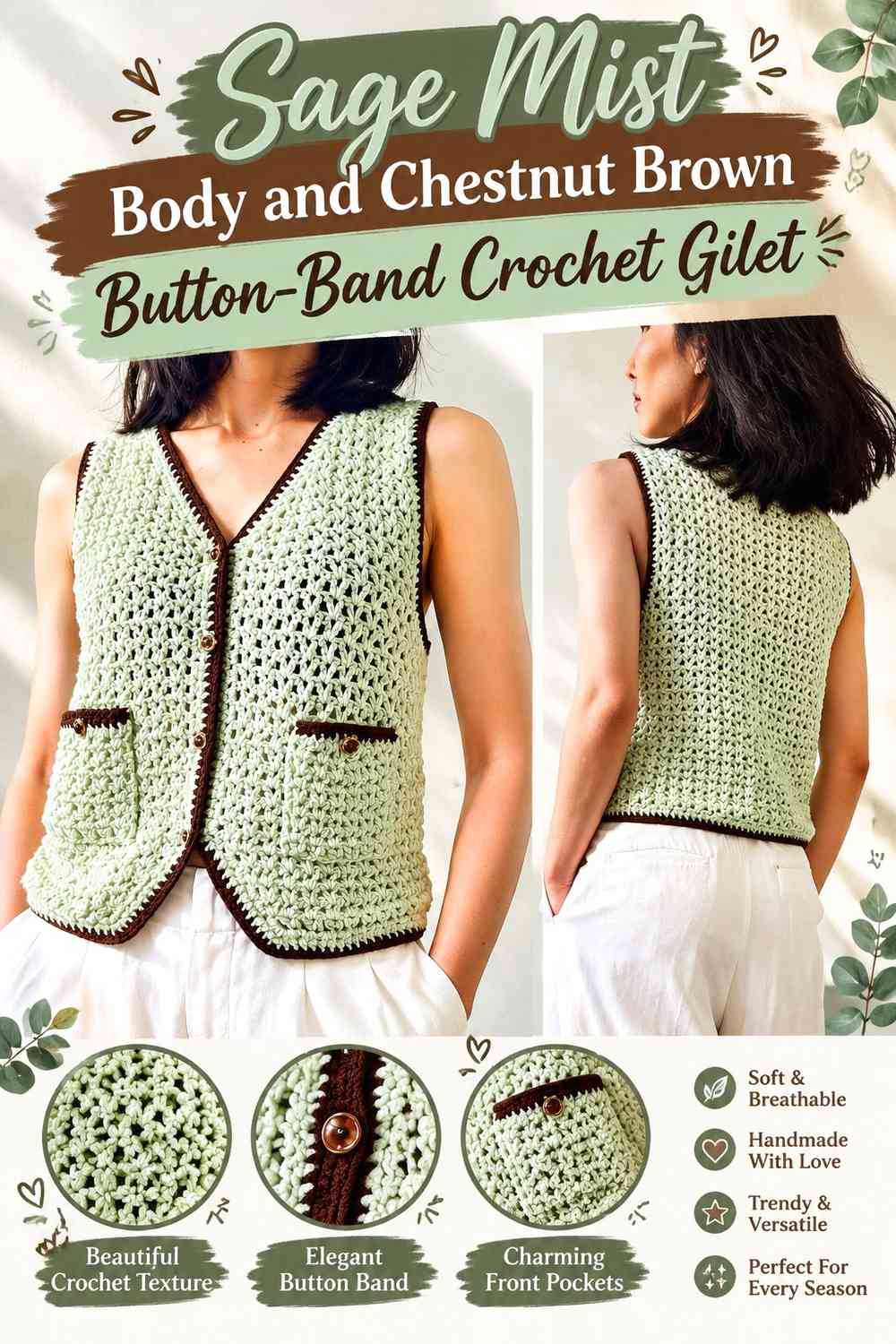
This direction gives sage mist most of the garment and concentrates chestnut brown along the opening. The result keeps the gilet light enough for winter layering while allowing the darker button band to establish a strong vertical center. The supporting tutorial includes a vest construction with button finishing, making it a particularly useful source for this adaptation.
Sage Mist Should Stay Broad Across the Crochet Gilet Panels
Use sage mist across both front panels and the back so the gilet reads as one continuous soft-green layer. Avoid interrupting each panel with extra brown sections when the button band already supplies the strongest contrast.
A broad sage field also makes the garment easier to coordinate over cream, brown, charcoal, or other winter basics.
Chestnut Brown Can Frame the Sage Mist Button Front
Run chestnut brown down both front edges and use the same shade around the neckline if you want a complete frame. The dark vertical treatment helps distinguish the two front panels even before buttons are added.
A small brown repeat at the lower hem can connect the placket to the rest of the garment.
Creator Credit: inta crochet
2. Chestnut Brown Hooded and Sage Mist Button-Edge Crochet Gilet
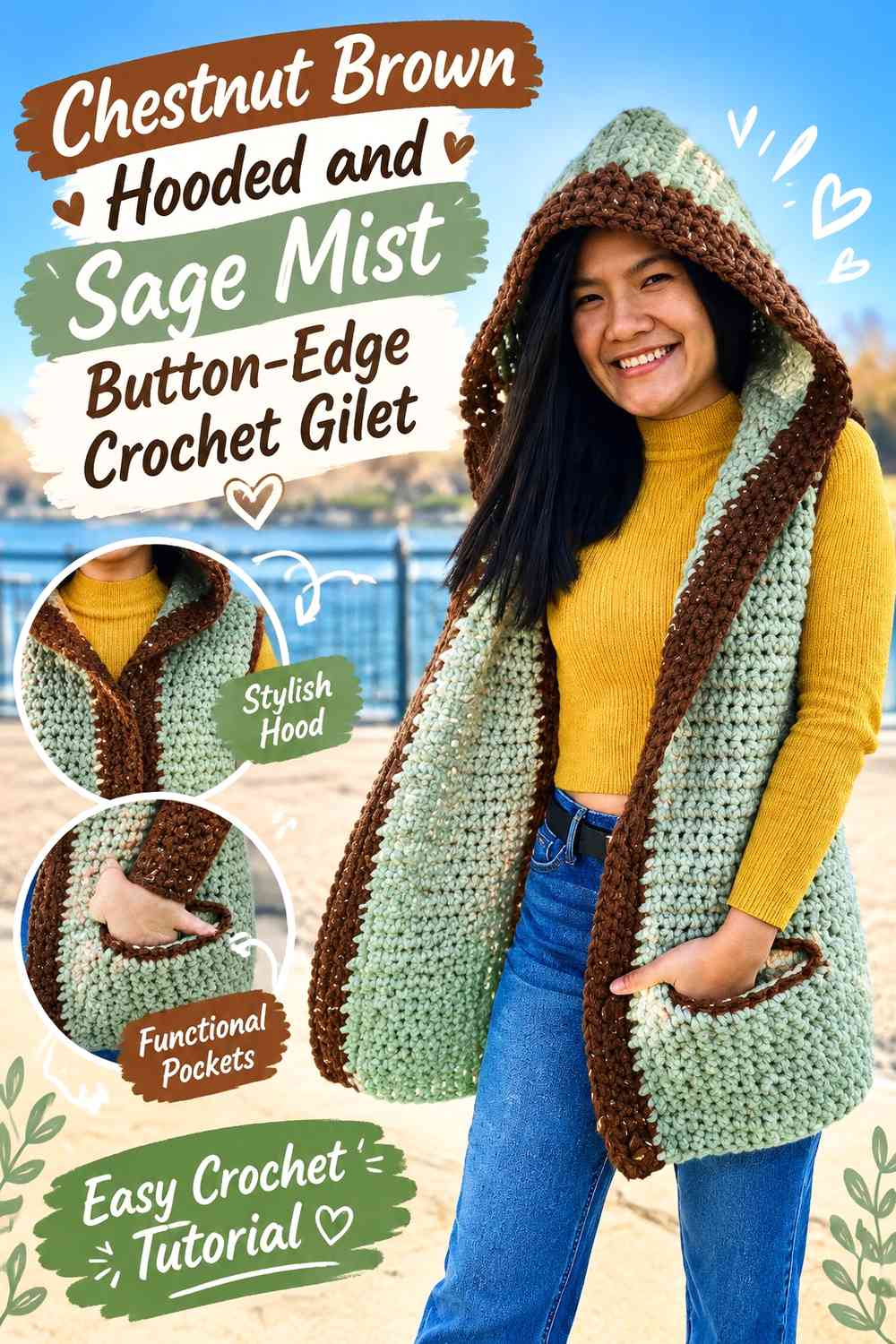
A hooded gilet provides a larger framing area around the upper body. Keep chestnut brown across the body and hood, then let sage mist travel around the hood opening and down the button edges. The lighter outline makes the deep brown construction feel less visually dense.
Chestnut Brown Should Unite the Crochet Hood and Gilet Body
Use chestnut brown continuously through the main torso and hood so those sections feel like one winter layer. The broad dark surface also gives sage-mist edging enough contrast to remain noticeable.
Avoid adding separate sage panels inside the body if the hood and front already contain several construction lines.
Sage Mist Can Connect the Chestnut Brown Hood to the Buttons
Begin the sage edging around the hood and continue it down the front opening. This creates one clear light-colored path from neckline to hem rather than several unrelated accents.
If pockets are part of the chosen construction, a narrow sage pocket rim can provide a useful secondary repeat.
Creator Credit: KnitcroAddict
3. Sage Mist Ribbed and Chestnut Brown Button-Front Crochet Gilet
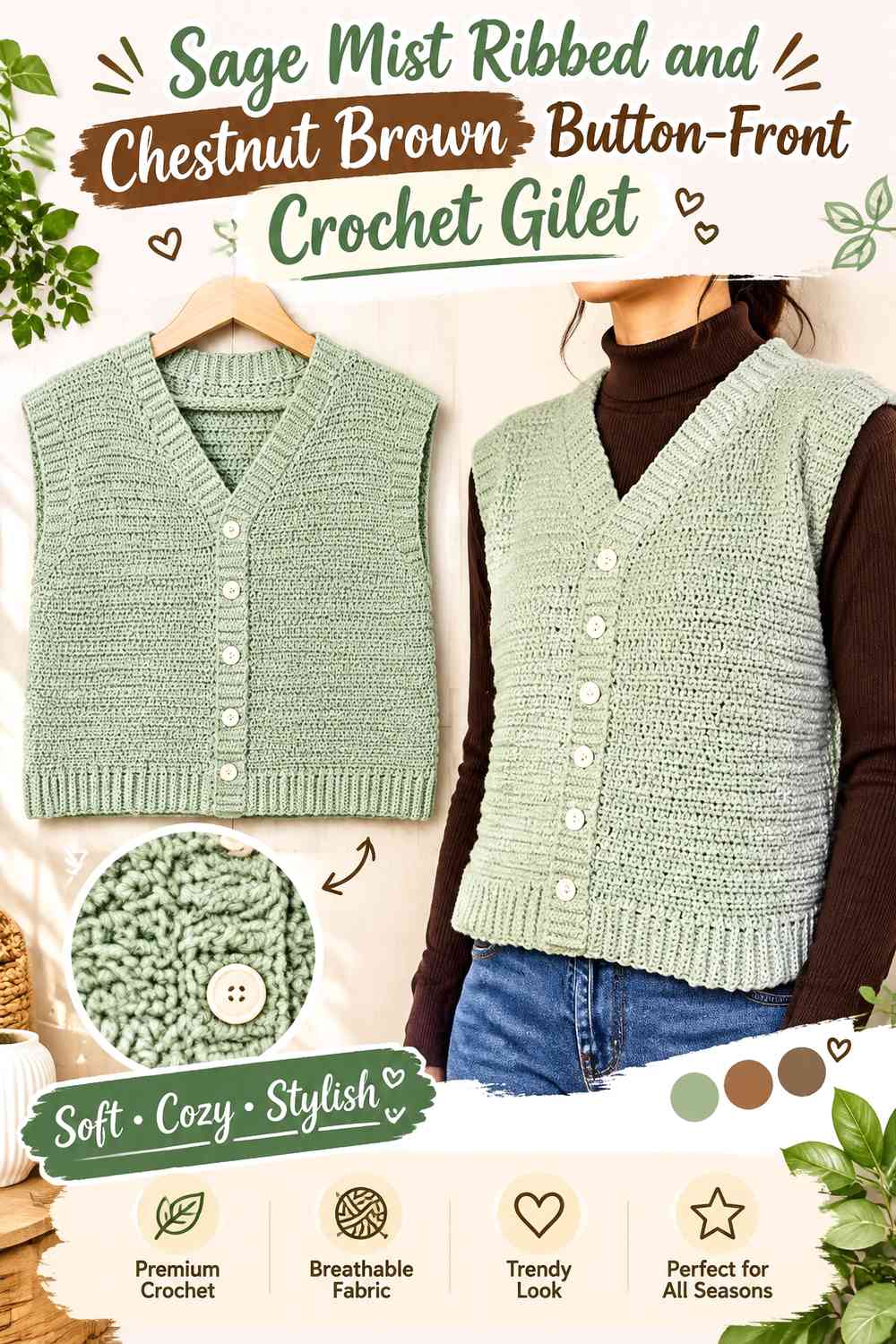
A straightforward button-up vest gives the palette a clean tailored direction. Make the main body sage mist and reserve chestnut brown for the ribbed lower band and button placket. The two brown areas then form an L-shaped visual frame around the pale body.
Sage Mist Should Keep the Crochet Gilet Front Calm
Use sage mist across the majority of each front panel so the button line remains easy to distinguish. A simple field is particularly useful when the construction already includes visible ribbing.
Chestnut Brown Can Link Sage Mist Ribbing to the Button Band
Use brown at the hem and front placket rather than placing it in isolated patches. Connecting those two structural zones makes the darker shade look integrated into the construction.
If you add brown around the armholes as well, keep that edging narrow so the placket remains the principal contrast feature.
Creator Credit: Muzhi Crochet
4. Chestnut Brown Textured and Sage Mist Button-Trim Crochet Gilet
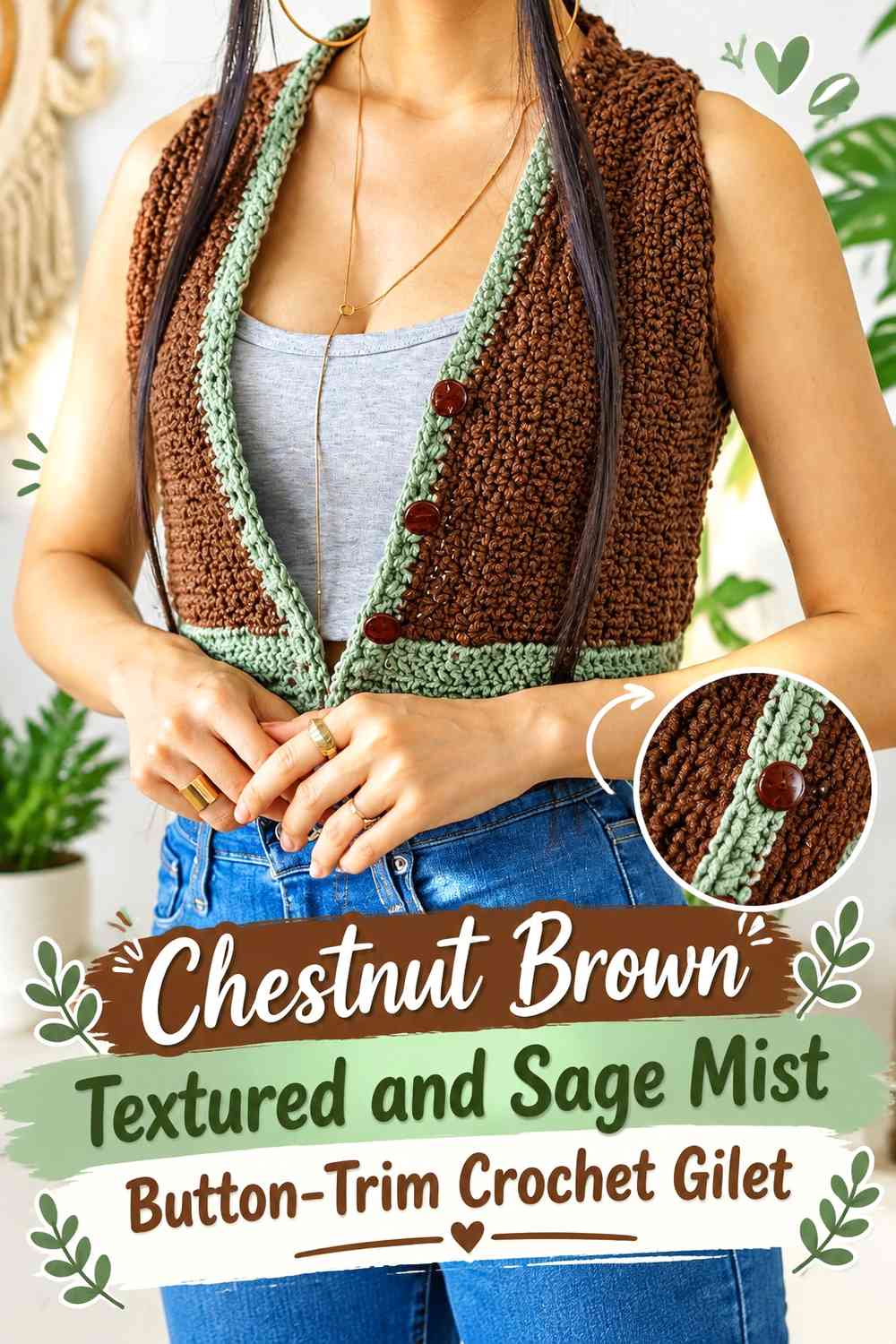
This version puts chestnut brown across the textured body and uses sage mist on the front closure. The lighter placket creates a clean break through the denser brown stitchwork and makes the button area easier to locate.
Chestnut Brown Should Carry the Crochet Gilet Texture Continuously
Keep the primary stitch texture brown instead of alternating sage through every repeat. Light and shadow will already reveal the textured surface.
A continuous body color also prevents the vest from becoming visually crowded once the contrasting placket and buttons are added.
Sage Mist Can Give Chestnut Brown a Softer Button Frame
Use sage mist around the front opening and possibly the neckline. The cooler pale edge lightens the dark body without competing with its texture.
A small sage detail at the pocket edge or hem is enough to repeat the color elsewhere.
Creator Credit: TCDDIY
5. Sage Mist Tailored and Chestnut Brown Button-Placket Crochet Gilet
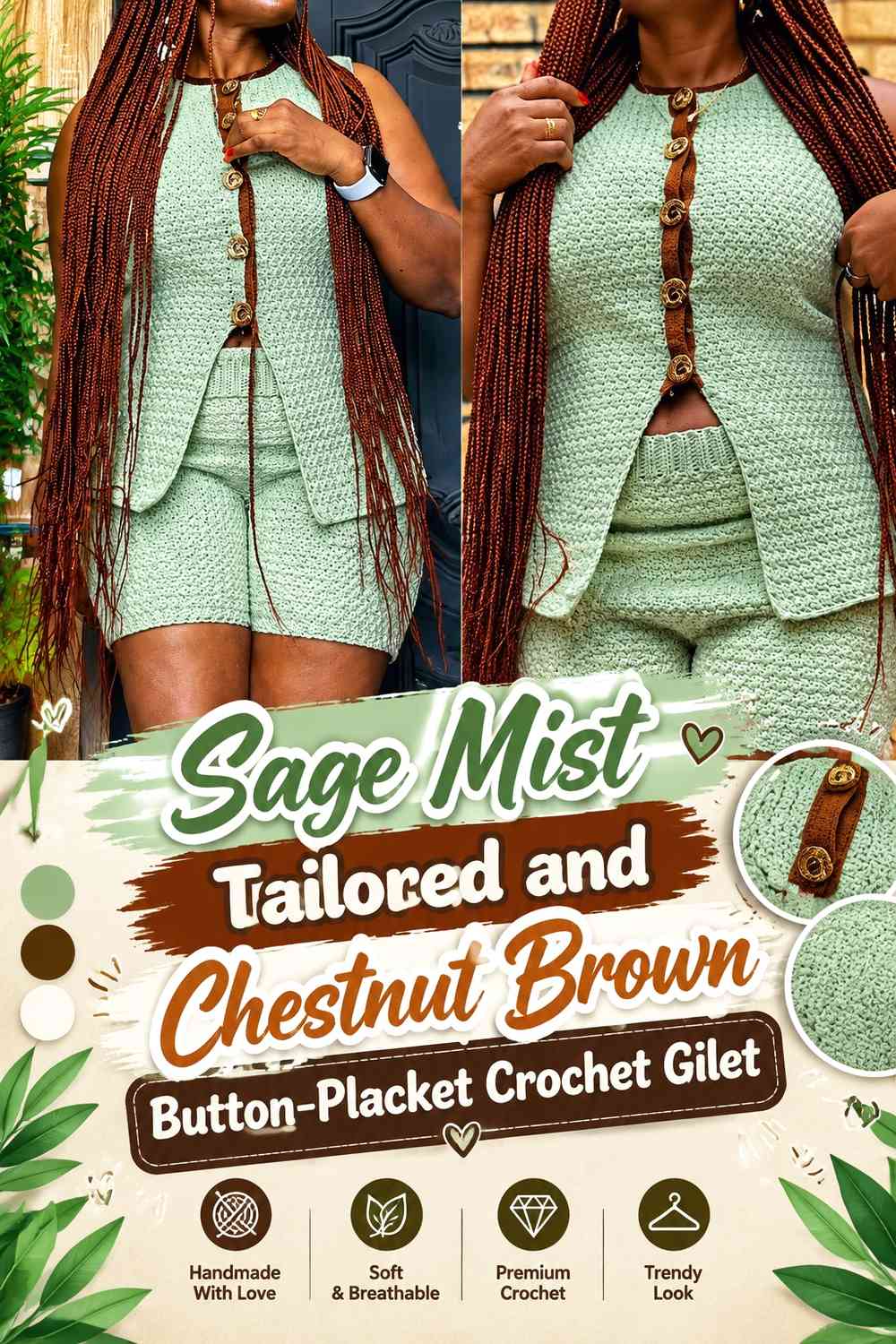
A waistcoat-style construction suits a more restrained two-color treatment. Keep the body sage mist and use chestnut brown primarily for the button placket and lower edge. This emphasizes the tailored shape rather than turning the garment into a heavily color-blocked vest.
Sage Mist Can Keep the Crochet Waistcoat Panels Visually Clean
Use sage through the main front and back areas so the garment’s shaping remains easy to see. The muted green also provides a quiet field for a strong central brown line.
Chestnut Brown Should Concentrate Around the Sage Mist Closure
Make the button band the main brown feature. If additional contrast is needed, repeat brown at the hem or neckline rather than introducing several separate body panels.
This keeps the closure visually connected from top to bottom.
Creator Credit: HookedByJessica
6. Chestnut Brown Sleeveless Cardigan and Sage Mist Button-Band Crochet Gilet
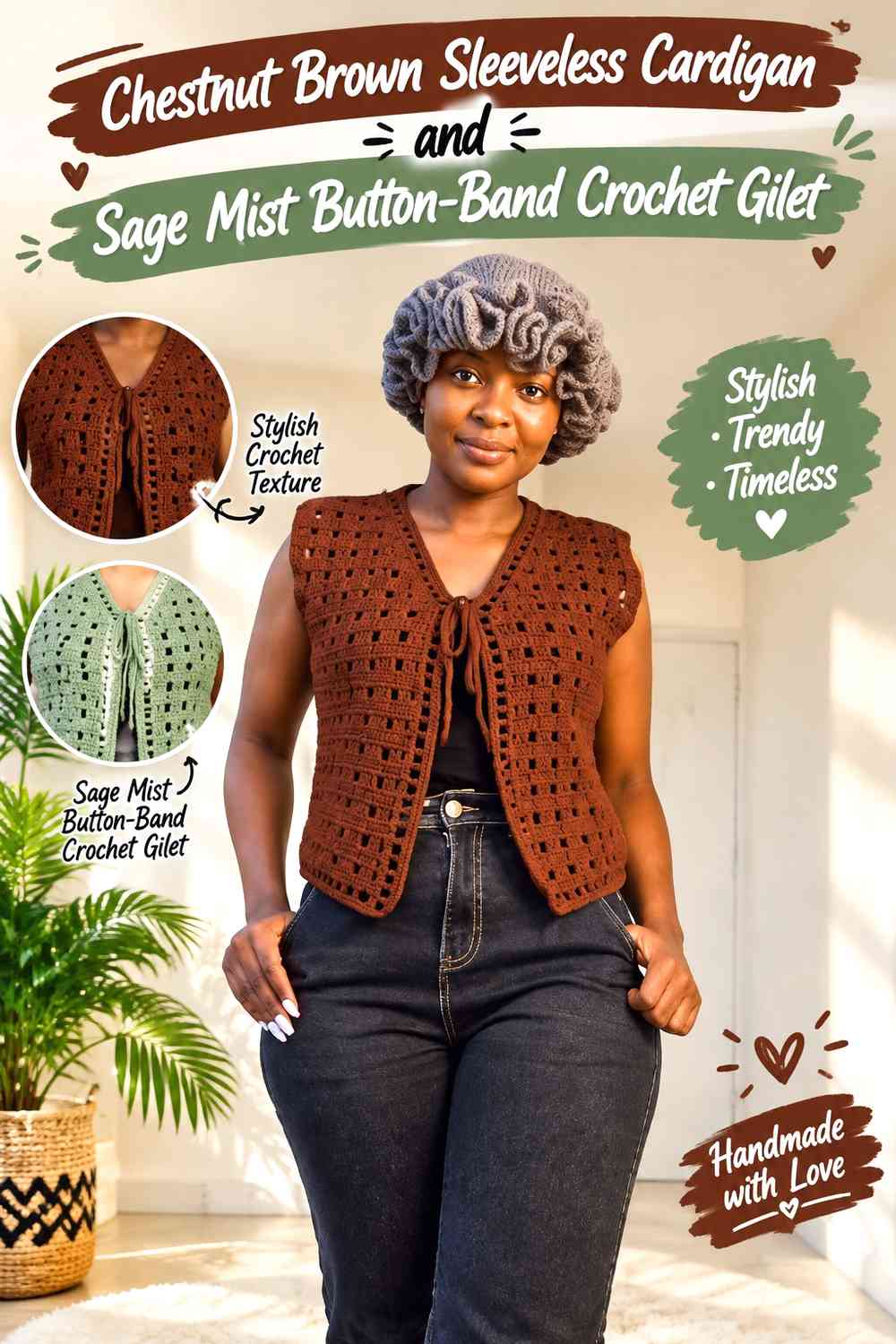
A sleeveless-cardigan silhouette can create a slightly longer, softer gilet. Chestnut brown works well across the broad body, while sage mist creates a lighter center-front edge and can be repeated around the armholes.
Chestnut Brown Should Preserve the Crochet Gilet’s Longer Line
Use brown continuously from shoulder toward the lower edge so the eye follows the garment vertically. Too many horizontal sage bands can visually shorten a longer sleeveless layer.
Sage Mist Can Brighten the Chestnut Brown Center Front
Place sage around the button area where it will remain visible whether the gilet is worn open or closed. A matching sage armhole edge adds balance without dividing the torso.
Creator Credit: LaDenser Crochets
7. Sage Mist Contrast-Edge and Chestnut Brown Button Crochet Gilet
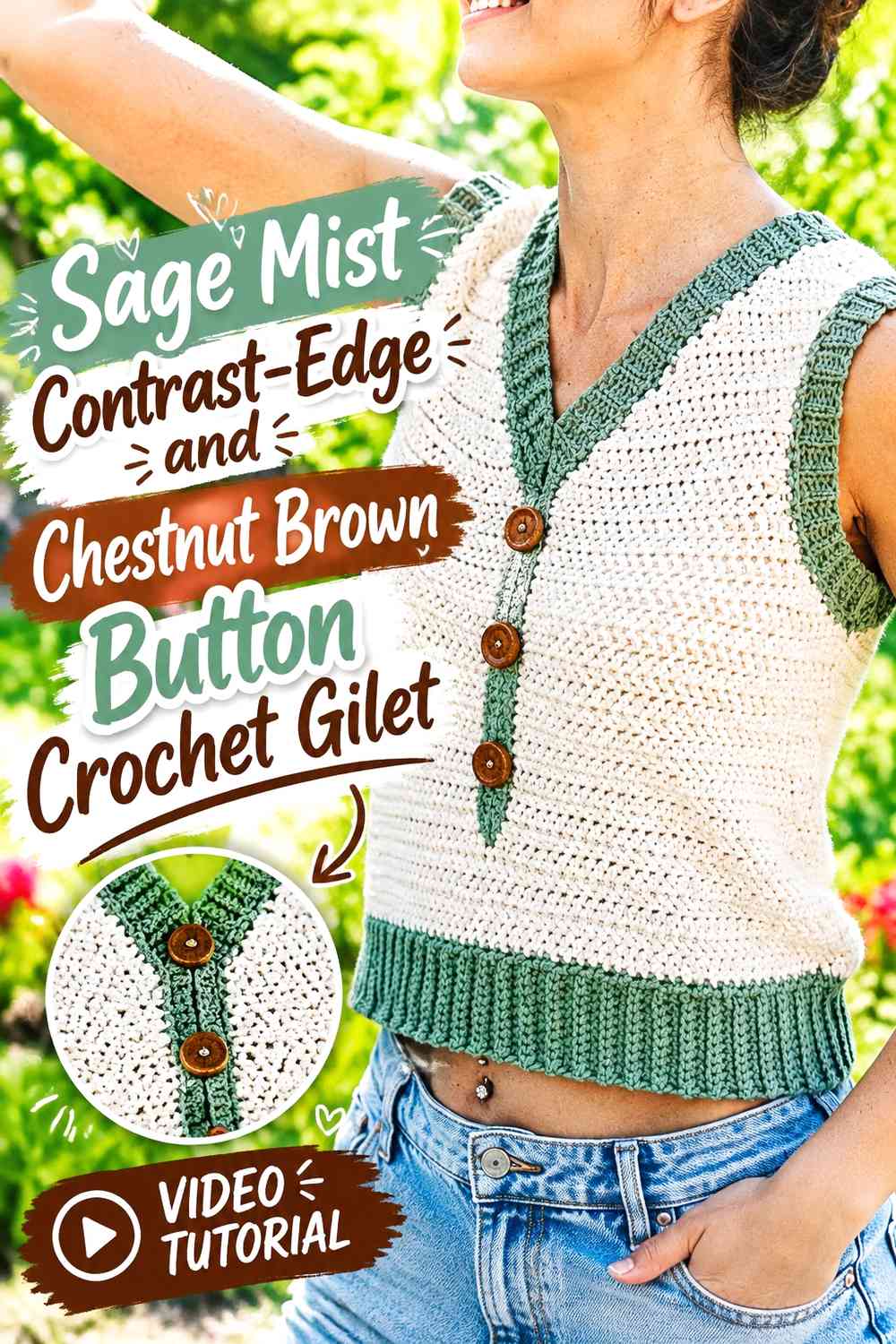
This idea uses sage mist as the broad body color and chestnut brown as a framing shade around the neckline, armholes, hem, and button front. The darker border creates a crisp outline without requiring brown body panels.
Sage Mist Should Fill the Main Crochet Gilet Surface
Keep the central front and back areas sage so the contrasting edging has enough negative space to work. The pale body also helps the darker outline appear deliberate rather than incidental.
Chestnut Brown Can Build a Complete Frame Around Sage Mist
Use the same brown treatment around several structural boundaries, but vary the width according to importance. The button band can be broader than the armhole finish because it carries the closure.
This creates a hierarchy rather than making every border equally heavy.
Creator Credit: Leelee Knits
8. Chestnut Brown Longline and Sage Mist Button-Front Crochet Gilet
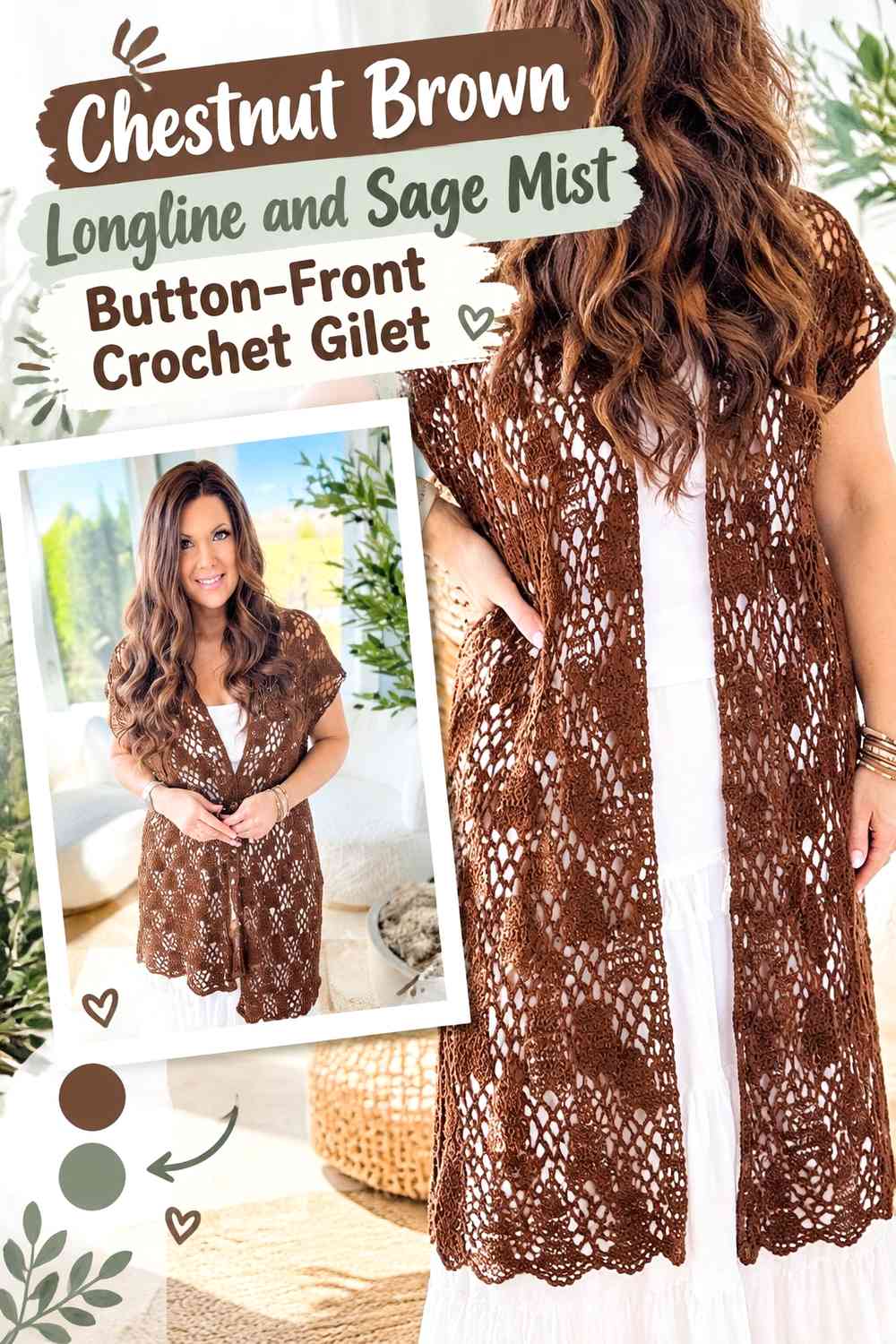
A longer sleeveless cardigan offers more vertical surface than a cropped vest, so the supporting color needs to be placed carefully. Use chestnut brown across the main longline panels and sage mist around the front opening, neckline, and selected pocket edges.
Chestnut Brown Should Stay Continuous Through the Crochet Longline Panels
Keep the large body sections dark so the longer silhouette remains visually connected from shoulder to lower edge. Wide alternating blocks can make the gilet look segmented.
Sage Mist Can Trace the Chestnut Brown Button Front From Neck to Hem
A long sage border naturally emphasizes the vertical opening. If buttons are added as an adaptation, place them within or directly beside this light band so the closure and color treatment behave as one design feature.
Creator Credit: MJ’s Off The Hook Designs
9. Sage Mist Chunky One-Piece and Chestnut Brown Button-Edge Crochet Gilet
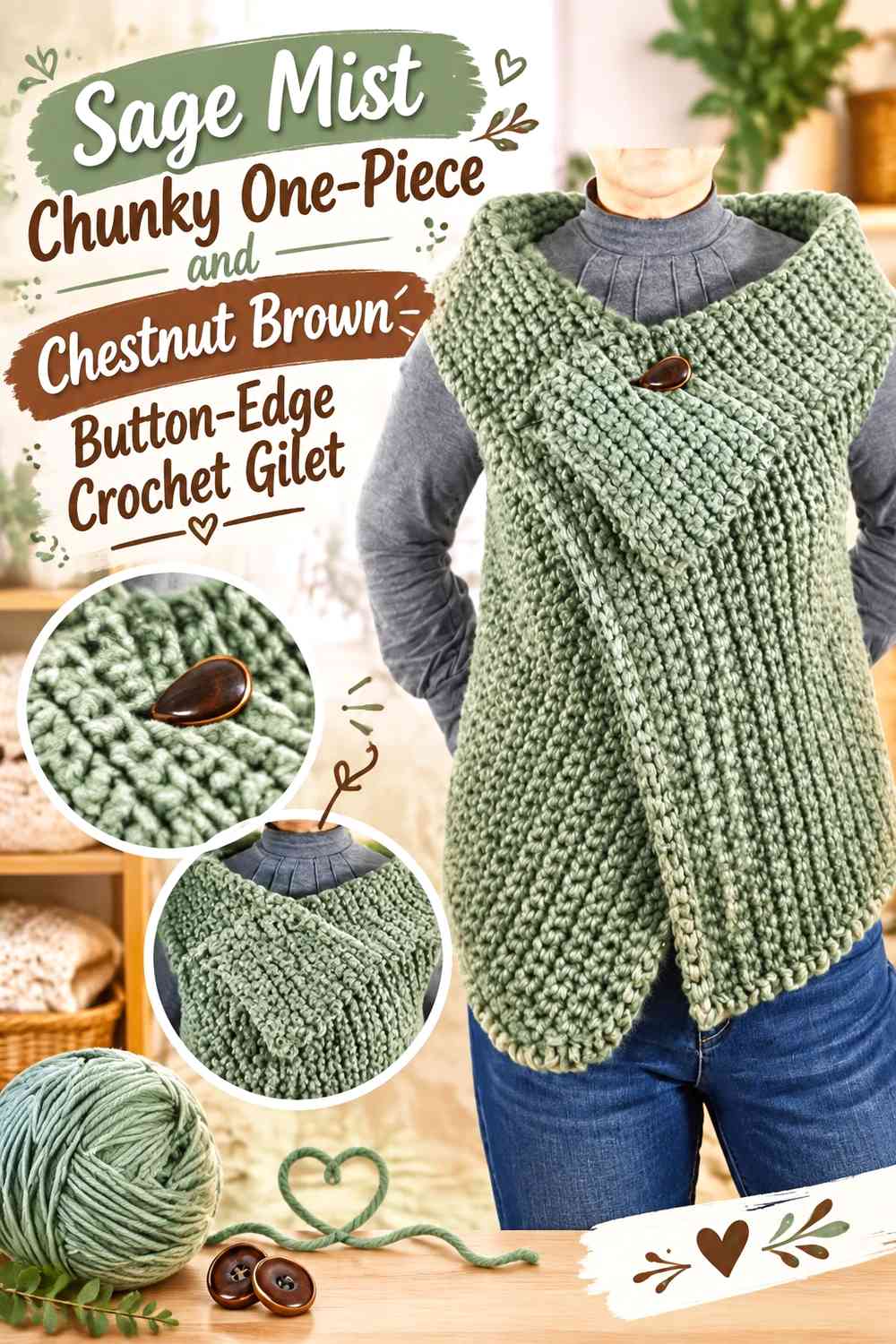
A substantial one-piece vest construction benefits from large color zones. Let sage mist cover the main garment and use chestnut brown on a broad front border that matches the heavier scale of the crochet.
Sage Mist Can Keep the Chunky Crochet Gilet From Feeling Too Dark
Use the softened green across most of the thick fabric so the garment retains a lighter overall appearance. The chunky surface already supplies significant visual weight.
Chestnut Brown Needs Enough Width Against Sage Mist Chunky Fabric
A very thin brown line can disappear beside substantial stitches. Give the button band enough width to look intentional, but stop before it begins to dominate the front panels.
Repeat brown at the upper neckline if you need to connect the two front edges visually.
Creator Credit: Crochets4U
10. Chestnut Brown Textured and Sage Mist Button-Placket Crochet Gilet
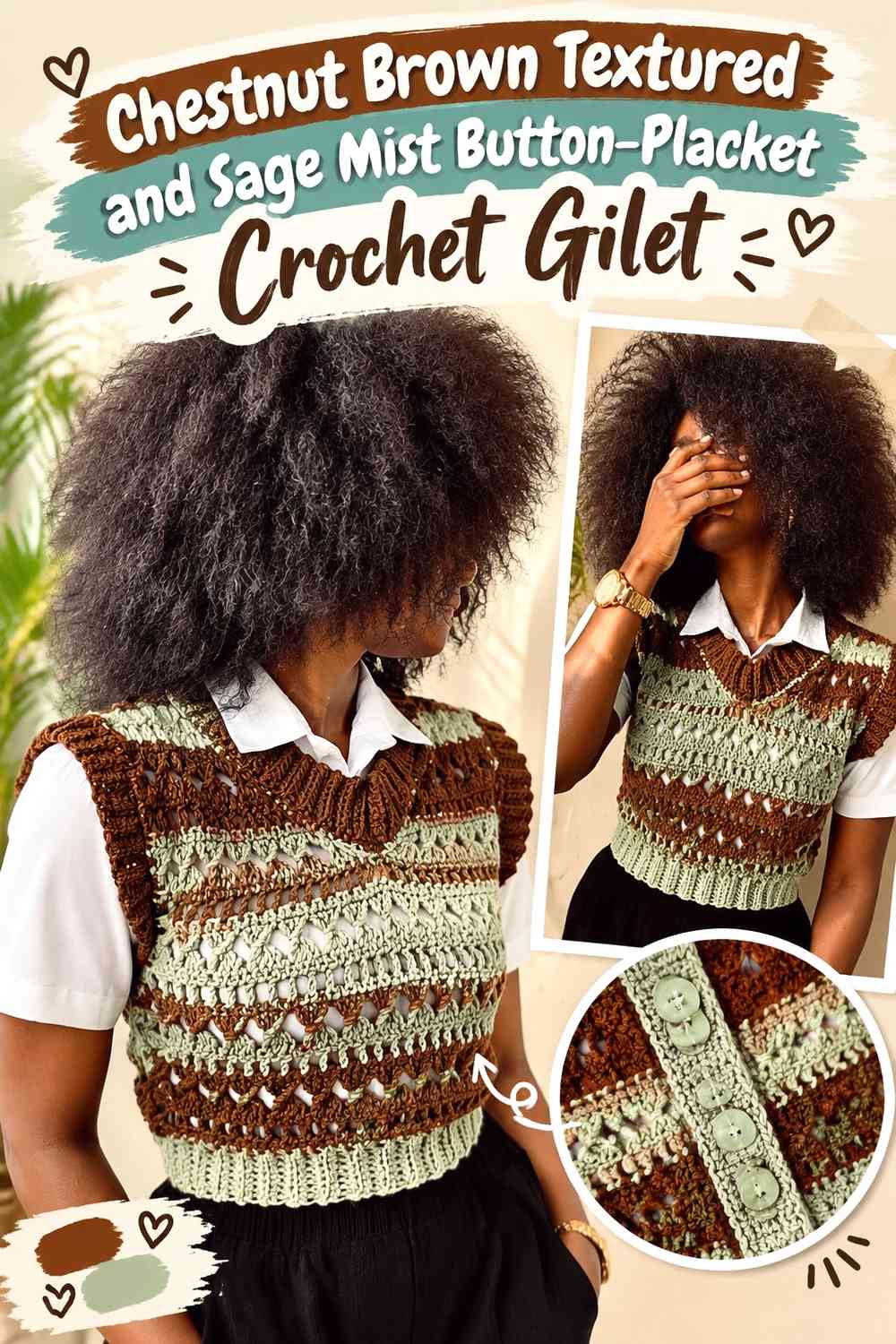
This construction puts texture at the center of the design. Use chestnut brown across that stitchwork and keep sage mist relatively smooth around the button band. Separating texture and color roles prevents the front from becoming too busy.
Chestnut Brown Should Let the Crochet Texture Supply the Detail
Use brown continuously through the main textured sections. The stitch pattern can create the visual variation without requiring sage accents inside every repeat.
Sage Mist Can Calm the Chestnut Brown Button Area
A comparatively simple sage placket gives the eye a break from the texture and makes the closure easier to distinguish. Continue sage only into a small neckline or hem treatment if the button band needs a second visual connection.
Creator Credit: Zx Crochets
11. Sage Mist Granny Square and Chestnut Brown Button-Band Crochet Gilet
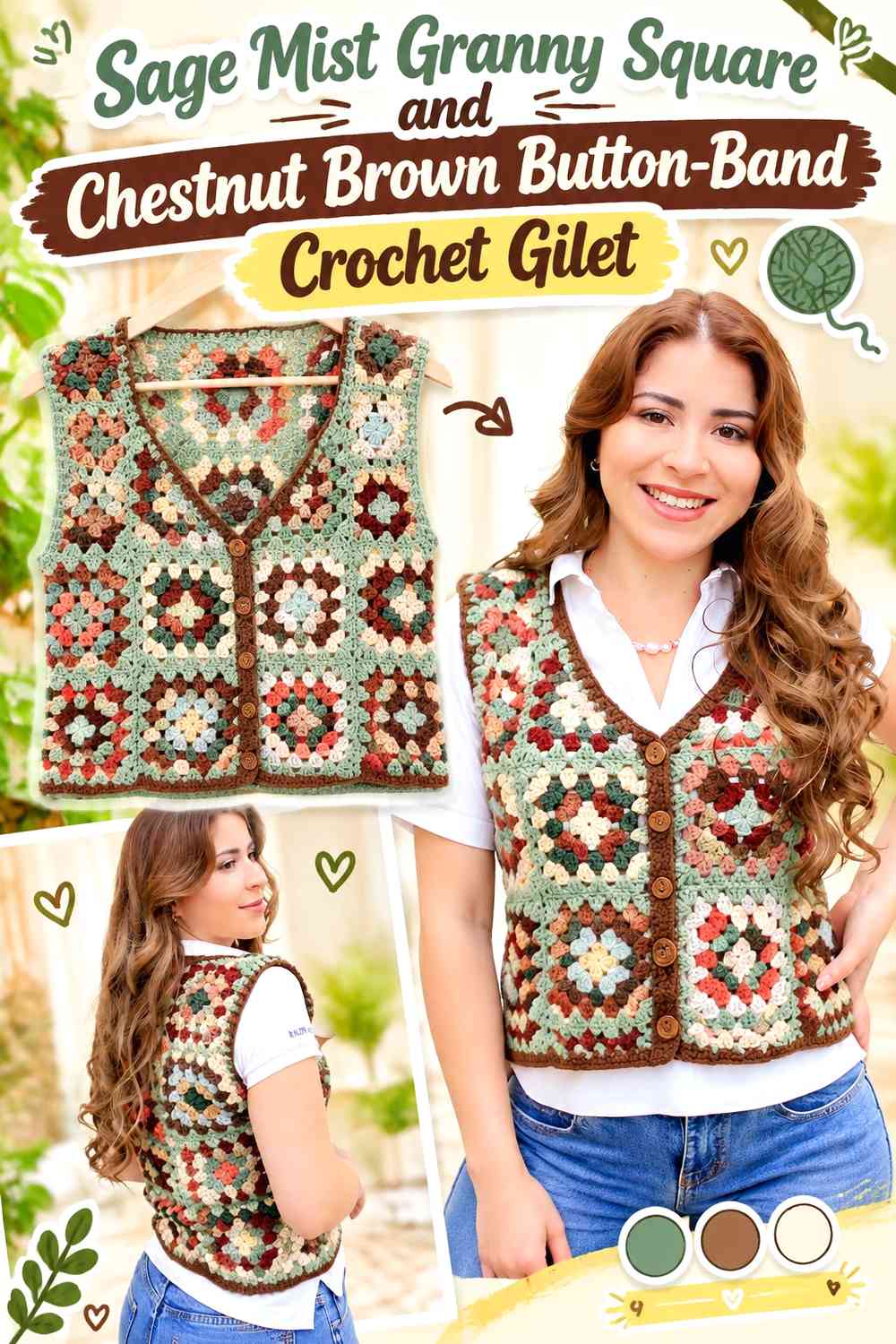
A granny-square vest already contains repeated motif structure, so use the two colors with restraint. Make sage mist the principal motif field and use chestnut brown for joining, outer rounds, or the added button band rather than alternating the shades unpredictably.
Sage Mist Should Keep the Crochet Granny Motifs Related
Repeat sage across every major square so the front and back read as one garment. The motifs can still vary through placement without each one needing a different color balance.
Chestnut Brown Can Join Sage Mist Motifs to the Button Front
Use brown along joins or outer motif rounds and continue that shade into the front placket. The repeated darker lines help the modular construction feel connected to the closure.
Keep the button band comparatively simple so it does not compete with the granny texture.
Creator Credit: Brunaticality
12. Chestnut Brown Ribbed and Sage Mist Button-Edge Crochet Gilet
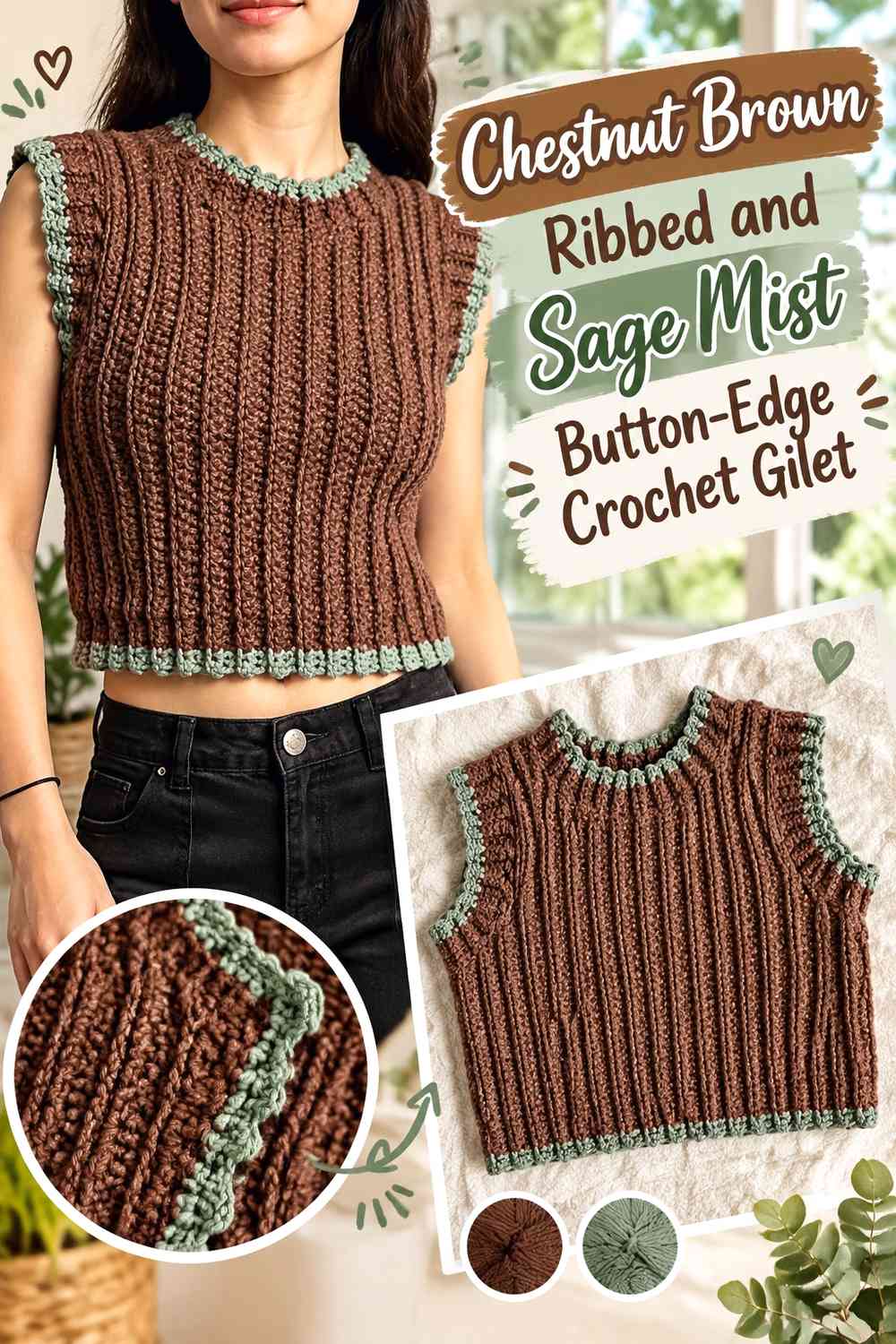
A ribbed vest provides strong directional texture, making it useful to keep the body mostly one color. Chestnut brown can cover the ribs while sage mist appears only on the front opening and perhaps one lower edge.
Chestnut Brown Should Keep the Crochet Ribbing Uninterrupted
Use brown across long ribbed sections so their direction remains obvious. Frequent sage changes would create new lines that compete with the existing texture.
Sage Mist Can Mark the Chestnut Brown Button Opening
A pale green placket gives the dark ribs a clear stopping point at center front. If adapting the source into a button-front gilet, check that the added band does not pull the ribbed panels out of shape.
Creator Credit: VivCrochets
13. Sage Mist Checkerboard and Chestnut Brown Button-Front Crochet Gilet
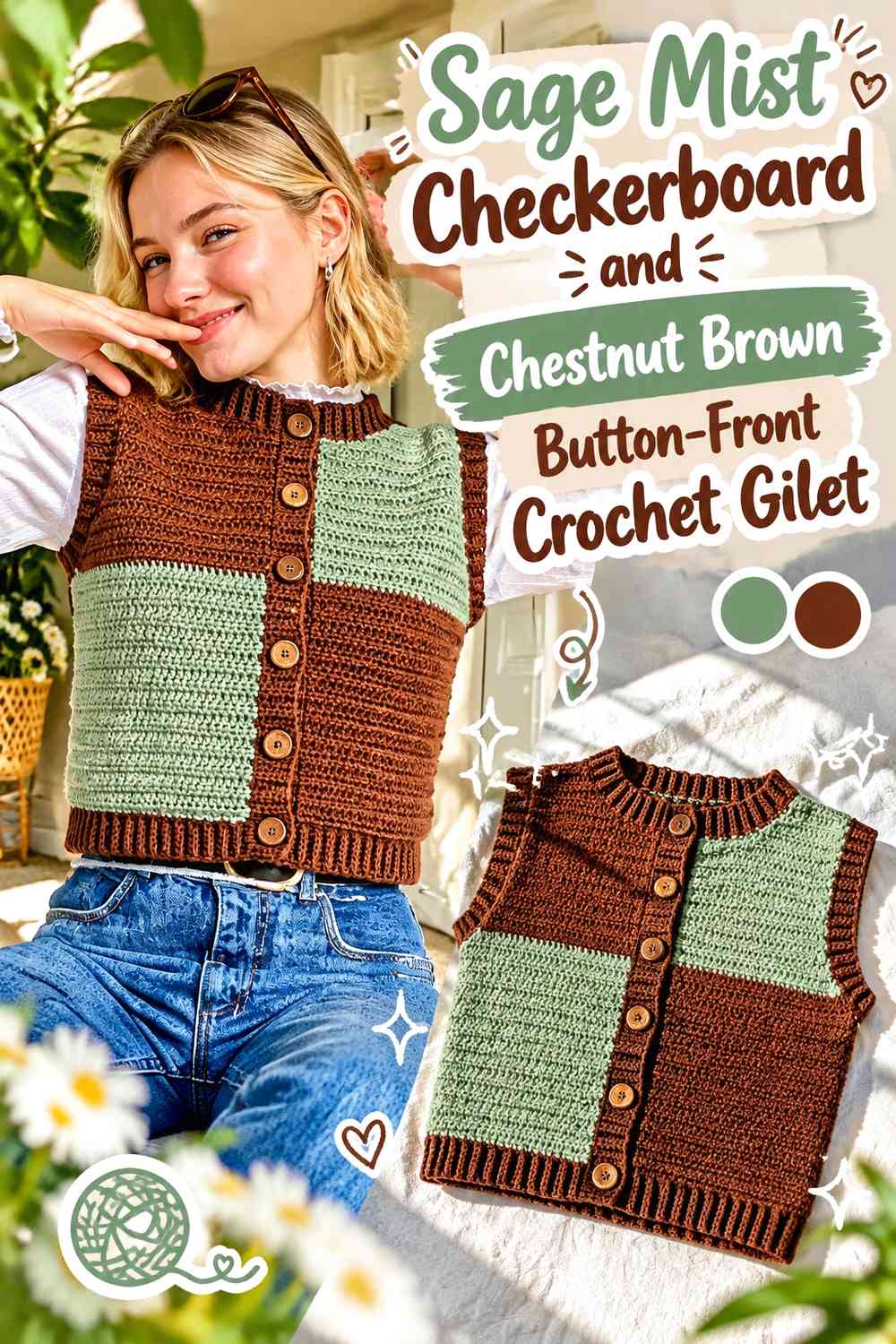
The final idea uses both colors more equally but still gives the button front a separate role. Work larger sage-mist and chestnut-brown blocks across the body, then use chestnut brown consistently along the closure so the center remains visually stable despite the graphic pattern.
Sage Mist and Chestnut Brown Blocks Need a Controlled Crochet Layout
Keep the color blocks large enough to remain distinct across the front panels. Small alternating sections can make it harder to see where the gilet opens.
Make sure both front panels look intentional when worn open as well as closed, because the checker arrangement will shift visually when the edges separate.
Chestnut Brown Can Stabilize the Sage Mist Checkerboard Button Front
Use one continuous brown button band even where the neighboring body block changes color. That uninterrupted line gives the closure a clear identity and prevents buttons from disappearing into the check pattern.
Creator Credit: HayHay Crochet
Which Sage Mist and Chestnut Brown Button-Front Gilet Should You Choose?
For the strongest classic button-front look, start with the sage body and brown placket, ribbed button-up, textured button vest, or hooded button gilet. These constructions already give the front opening a prominent role.
For a softer winter palette, let sage mist dominate the body and keep chestnut brown on the placket, edging, pockets, or hem. This makes the brown feel like tailoring rather than a competing body color.
For a warmer gilet, reverse the relationship. Chestnut brown can cover longline, textured, or ribbed panels while sage mist defines the opening and armholes.
If you choose a granny-square, checkerboard, or heavily textured construction, simplify the button band. Those surfaces already contain plenty of pattern, so the closure works better as a consistent visual line.
Conclusion
Sage mist and chestnut brown work especially well on a winter crochet gilet because they can divide the garment into body and structure without requiring a large palette.
Use sage mist across the main panels when you want a softer garment with a defined chestnut-brown button front. Use chestnut brown as the body color when you want a warmer layer and let sage mist lighten the neckline, placket, armholes, or pockets.
The front opening should remain the most organized part of the color plan. A continuous contrast band helps buttons stay visible and gives the gilet a strong vertical center whether it is worn open or closed.
Use each credited tutorial for the vest, waistcoat, or sleeveless-cardigan construction it demonstrates. Where the source is not already button-front, treat the button band, overlap, and buttonholes as a separate adaptation and check the fit before finalizing the closure.
Frequently Asked Questions
Should Sage Mist or Chestnut Brown Dominate a Winter Crochet Gilet?
Sage mist gives the gilet a softer, lighter appearance and makes a chestnut-brown button band especially visible. Chestnut brown creates a warmer, deeper body and lets sage mist act as a cooler framing shade.
Where Should Chestnut Brown Go on a Mostly Sage Mist Button-Front Gilet?
Useful placements include the button placket, neckline, hem, armhole edging, and pocket rims. Give brown one main role—usually the front closure—and repeat it more lightly in one or two supporting areas.
How Can Sage Mist Brighten a Chestnut Brown Crochet Gilet?
Use sage mist around the neckline and continue it down the front opening. A second small repeat at the armholes or pockets can balance the lighter color without dividing the main brown body.
Should Both Button Bands Be the Same Color?
Usually, yes. Matching front edges create a cleaner vertical frame and keep the closure visually balanced. An intentionally asymmetric design is possible, but it should be planned across the whole garment rather than created by one mismatched edge.
Can I Add Buttons to a Crochet Vest Tutorial That Was Designed Without Them?
You can use the vest as a construction reference, but adding a functioning button front may require extra width, an appropriate placket, and planned buttonholes. Check how the fronts meet before assuming decorative edging can simply become a closure.
How Do I Keep Sage Mist and Chestnut Brown Granny or Checker Gilets From Looking Too Busy?
Use larger color areas and keep the button band consistent. Let the motif or checker pattern provide the visual variation while one uninterrupted shade defines the front opening.
What Other Color Can Replace Sage Mist While Keeping the Chestnut Brown Winter Look?
Choose another softened, light-to-medium green if you want to preserve the botanical contrast, or use a muted neutral if you prefer a quieter result. The key is maintaining enough light-dark separation for the chestnut-brown button front to remain clear.