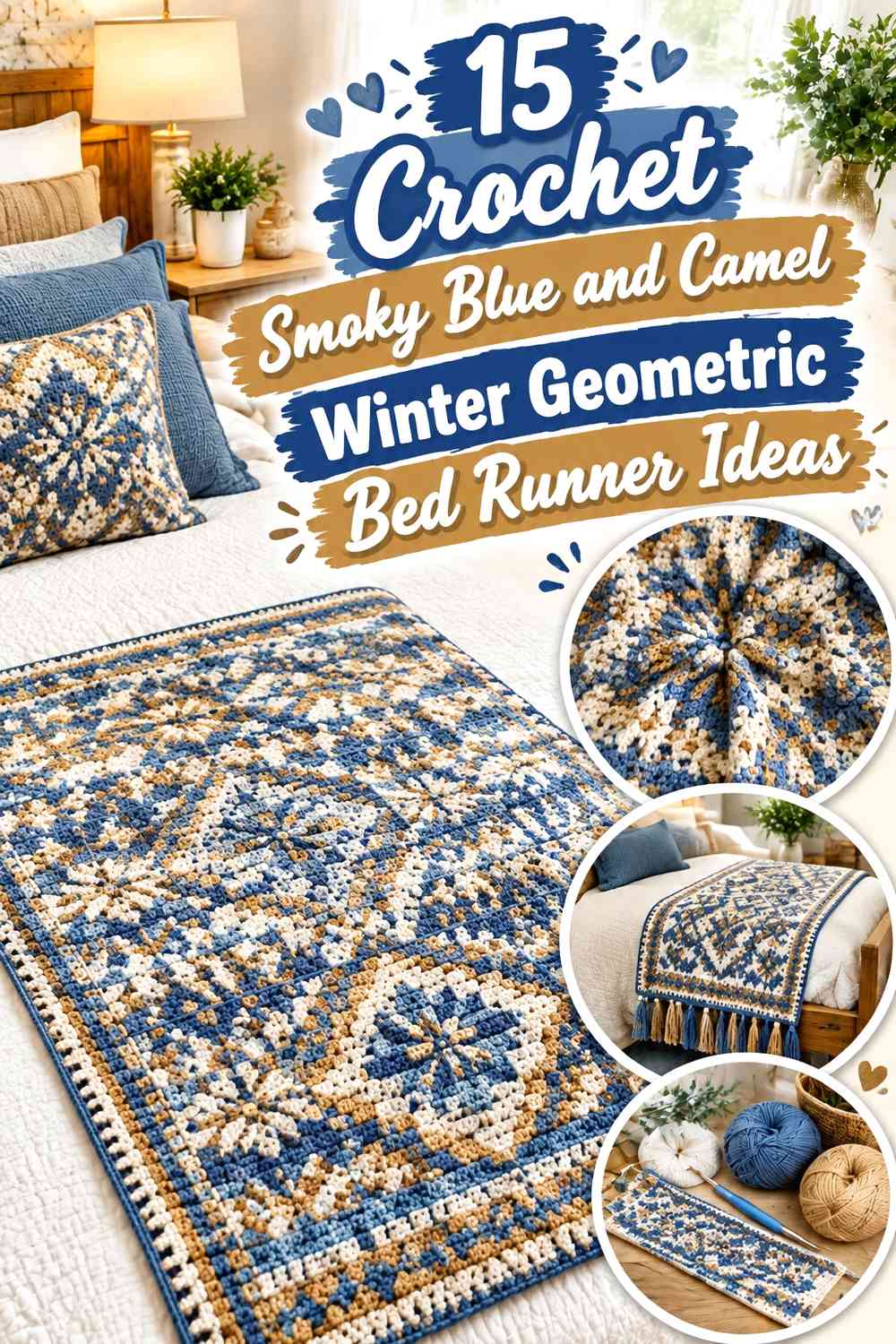

Smoky blue and camel create a winter palette that feels softer than high-contrast navy and cream while still giving geometric crochet enough separation to stay visible. Smoky blue can establish the cooler main field, while camel adds warmth through diamonds, stripes, joins, borders, and isolated blocks.
A bed runner needs different color planning from a full blanket. Most of the design is viewed as a horizontal strip across the foot or lower portion of the bed, so geometric motifs should remain readable across width rather than relying on a long vertical repeat. Borders also matter because the two long edges are usually exposed against the bedding.
The tutorials credited below teach blankets, throws, mosaic crochet, diamonds, chevrons, panels, and color blocking that can support these runner adaptations. They do not necessarily demonstrate bed runners or use this exact smoky blue and camel palette. Use each creator’s tutorial for its original construction details, then adapt the overall dimensions and color placement to your bed.
Quick List
- Smoky Blue Mosaic Field with Camel Diamonds Crochet Bed Runner
- Camel Diamond Band on Smoky Blue Crochet Bed Runner
- Smoky Blue and Camel Soft Chevron Crochet Bed Runner
- Camel-Led Chevron with Smoky Blue Valleys Crochet Bed Runner
- Smoky Blue Diamond Grid with Camel Negative Space Crochet Bed Runner
- Camel Two-Color Diamonds on Smoky Blue Crochet Bed Runner
- Smoky Blue Center Blocks with Camel End Panels Crochet Bed Runner
- Camel-Framed Smoky Blue Geometric Panel Crochet Bed Runner
- Smoky Blue Three-Panel Runner with Camel Joining Lines Crochet Bed Runner
- Camel Window Grid with Smoky Blue Mosaic Blocks Crochet Bed Runner
- Smoky Blue Diamond Medallion with Camel Border Crochet Bed Runner
- Smoky Blue Offset Blocks with Camel Connecting Stripes Crochet Bed Runner
- Camel Color Blocks with Smoky Blue Geometric Bands Crochet Bed Runner
Choose Smoky Blue and Camel Contrast for the Bed, Not Just the Yarn Ball
Put both yarn colors against the bedding before deciding which should dominate. Smoky blue may separate strongly from white or cream bedding but blend more closely with gray-blue sheets. Camel can provide a useful warm break when the surrounding bedding is cool or neutral.
If the two yarns look distinct in hue but their lightness is similar, check them in grayscale. Strong geometric shapes such as diamonds and chevrons generally need enough value separation to remain recognizable from the doorway rather than only at close range.
Plan Smoky Blue and Camel Geometry Across the Bed Width
A runner is usually read from left to right, so decide where the main motif should fall when the piece is centered on the mattress. One large diamond band may suit the format better than many small repeats that become visually crowded.
Make a sample of at least one full geometric repeat and place it across the bed. This helps you judge whether the motif scale works with the mattress width and whether the design will remain visible when the long edges drape slightly.
Use Smoky Blue and Camel Borders to Control the Runner Edge
The border can either reinforce the geometry or compete with it. A camel edge around a smoky blue field can warm the entire piece, while a smoky blue border around camel-heavy motifs can visually contain the warmer color.
Avoid making the border so wide that it reduces the main geometric area. On a narrow runner, a deep border occupies a much larger proportion of the visible surface than it would on a full blanket.
1. Smoky Blue Mosaic Field with Camel Diamonds Crochet Bed Runner
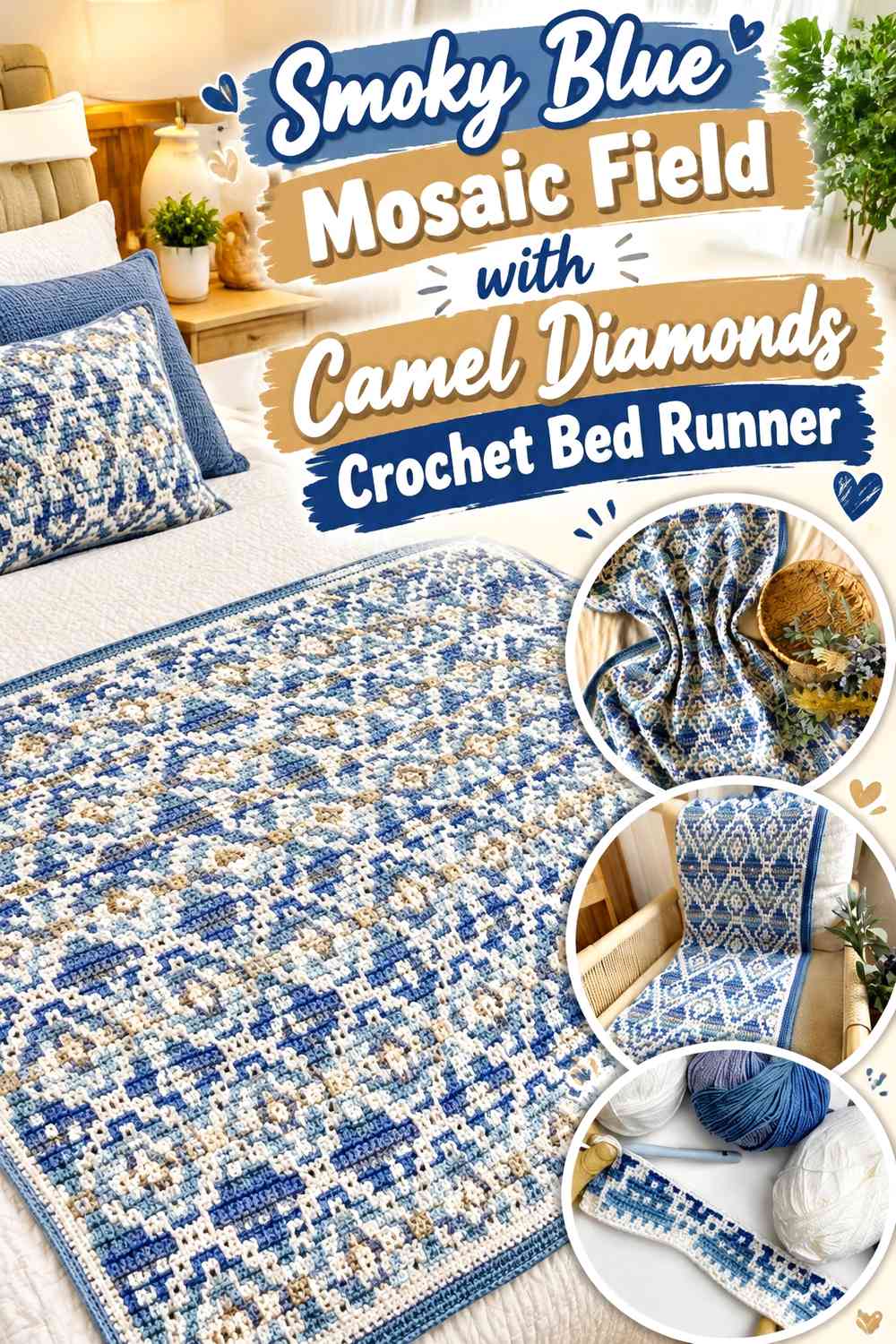
This design uses smoky blue as the continuous background while camel creates inset geometric shapes. The arrangement suits a runner because the repeated diamonds can travel horizontally across the bed without requiring many different colors.
Let Smoky Blue Carry the Main Mosaic Field
Use smoky blue across the largest uninterrupted areas so the runner reads as one cool winter textile. The consistent background also gives each camel motif the same visual setting, which helps repeated diamonds feel connected.
Before extending the full width, check one completed repeat against the bedding to make sure the blue does not disappear into the surrounding linens.
Keep Camel Diamonds Clear Inside the Smoky Blue Field
Camel should occupy enough area for the geometric pattern to remain recognizable from several feet away. Very narrow camel lines can disappear if the two yarns have similar value.
Keep the diamond spacing consistent so the warm accents create rhythm rather than isolated patches.
Creator Credit: HanJan Crochet
2. Camel Diamond Band on Smoky Blue Crochet Bed Runner
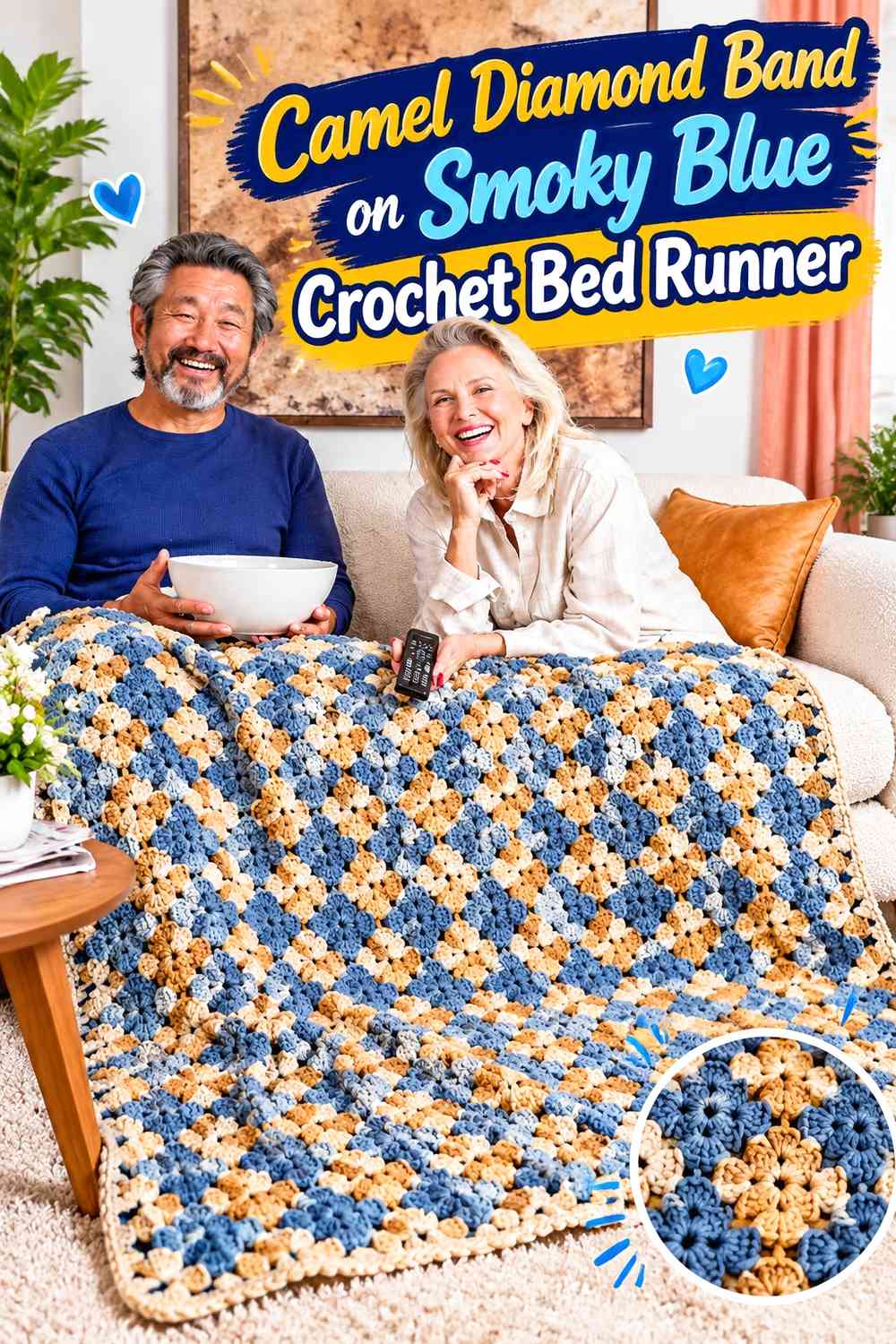
Instead of spreading diamonds through the entire surface, concentrate them in one camel band running along the runner’s center. Smoky blue above and below the band creates a quieter frame.
Keep Smoky Blue Open Around the Camel Diamond Band
Give the center geometry enough blue space on both long sides. This helps the diamond strip remain the focal point and prevents the runner from looking like an edge-to-edge patterned blanket cut down to a narrower size.
Compare the blue margins before finishing so the center band does not drift visually toward one edge.
Let Camel Repeat Across the Smoky Blue Runner Center
Use camel consistently inside the diamond sequence instead of alternating several warm accents. A single warm color keeps the repeated shape easy to follow across the mattress.
If the diamonds feel too dominant, reduce their vertical height rather than weakening the color contrast.
Creator Credit: The Crochet Crowd
3. Smoky Blue and Camel Soft Chevron Crochet Bed Runner
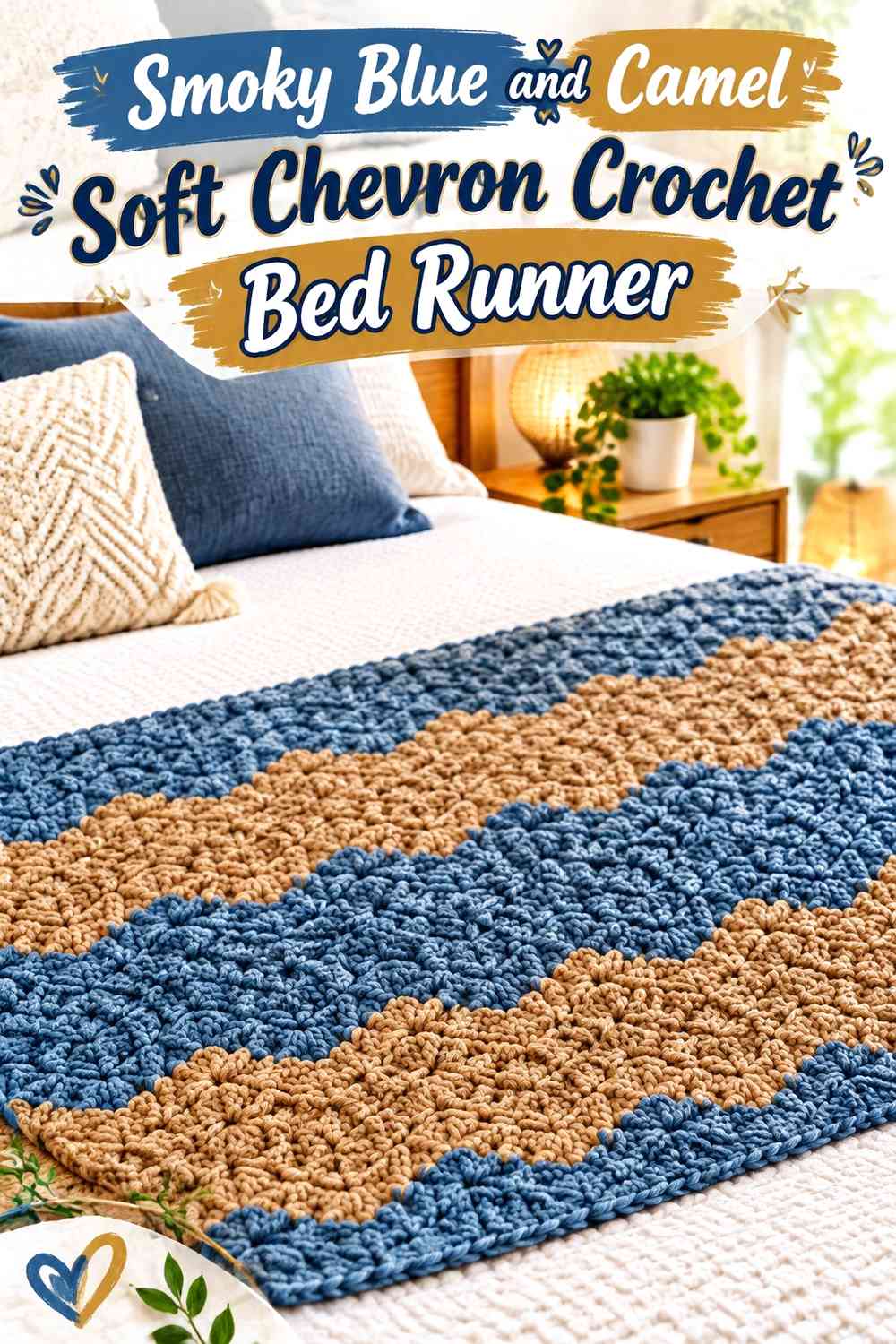
A softer chevron introduces movement without the sharp visual breaks of a rigid diamond grid. Alternate smoky blue and camel in broad sections so the peaks and valleys remain obvious across the runner.
Give Smoky Blue and Camel Chevron Bands Enough Depth
Very thin stripes can make a chevron runner busy, especially when many peaks repeat across the bed. Broader bands allow the zigzag shape itself to stay visible.
Sample several rows of each shade before deciding the final stripe depth.
Keep Camel and Smoky Blue Peaks Aligned Across the Runner
The geometry depends on consistent peaks and valleys more than on decorative edging. Check the line of the chevrons periodically so the color bands continue to stack cleanly.
If one color begins to dominate because its bands are wider, decide whether that imbalance supports the intended palette before continuing.
Creator Credit: CrochetHooksYou
4. Camel-Led Chevron with Smoky Blue Valleys Crochet Bed Runner
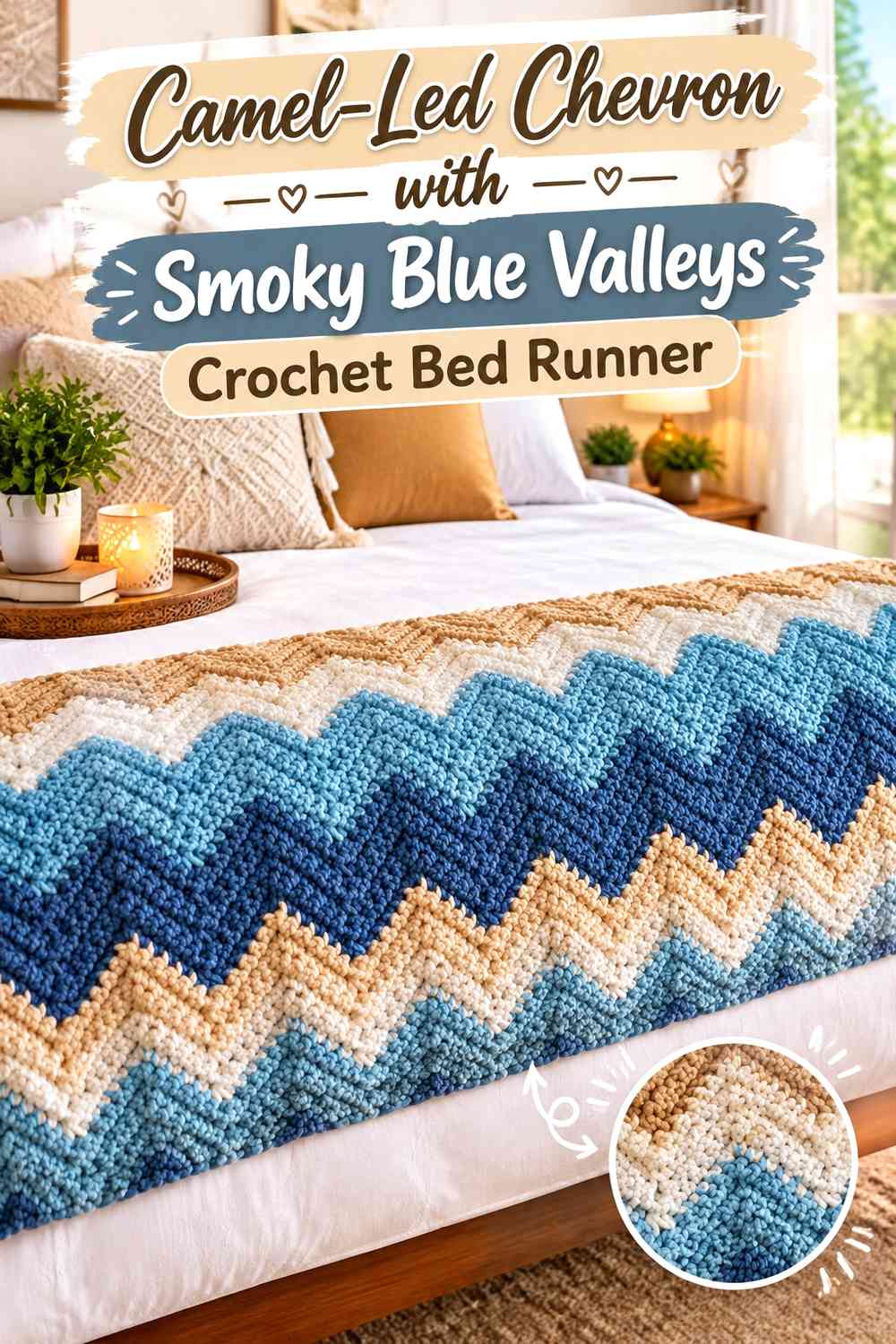
This version makes camel the stronger surface color and uses smoky blue to emphasize the downward points or alternating chevron bands. The warmer balance can coordinate well with beige, oatmeal, or wood-toned bedroom details.
Let Camel Cover More of the Chevron Surface
Give camel the wider bands or larger visual share when you want the runner to feel warmer. Keep the color continuous through several peaks so it reads as a deliberate main field rather than an accent stripe.
Judge the balance with the runner placed over the actual duvet rather than against a neutral work surface.
Use Smoky Blue to Define the Camel Chevron Valleys
Smoky blue can provide the darker or cooler separation between camel sections. Repeating it at predictable intervals helps the zigzag remain legible from across the room.
Avoid reducing blue to such a narrow line that the chevron shape becomes unclear.
Creator Credit: RepeatCrafterMe
5. Smoky Blue Diamond Grid with Camel Negative Space Crochet Bed Runner
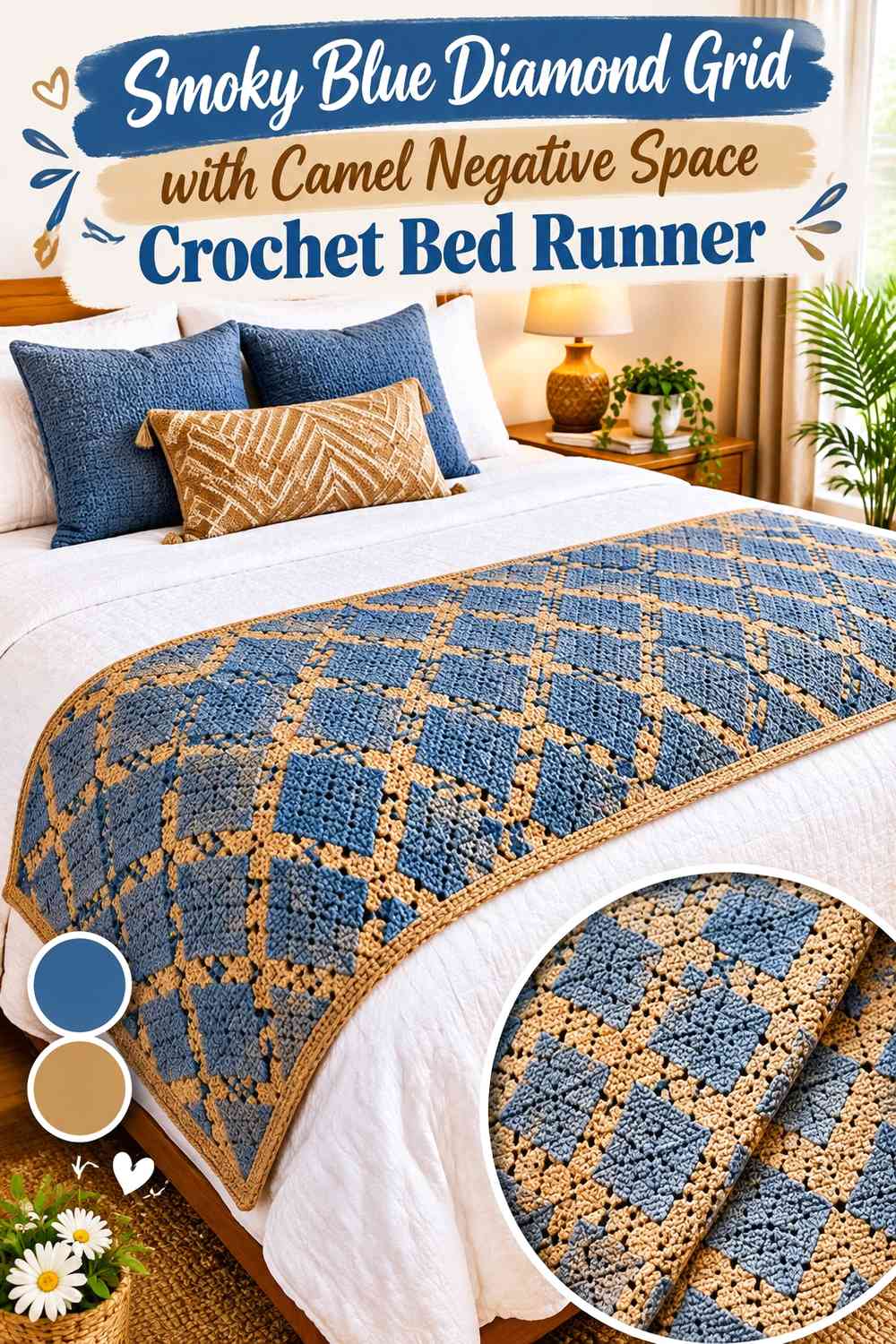
A repeated diamond grid creates a stronger architectural look. Smoky blue can form the primary geometric lines while camel fills or surrounds selected sections.
Use Smoky Blue to Draw the Main Diamond Grid
Keep the blue geometry continuous enough that the eye can follow each diamond from one side to the other. Broken or irregular color placement can weaken the grid even when individual sections are attractive.
Lay the runner flat periodically and inspect several repeats together rather than judging one diamond at a time.
Let Camel Separate Adjacent Smoky Blue Diamonds
Camel gives the blue grid breathing room and prevents multiple motifs from merging into one dense surface. Use it consistently between repeated shapes so it functions as intentional negative space.
If the camel areas become too narrow, increase separation before adding extra border decoration.
Creator Credit: Alison Russell Crochet and Craft Channel
6. Camel Two-Color Diamonds on Smoky Blue Crochet Bed Runner
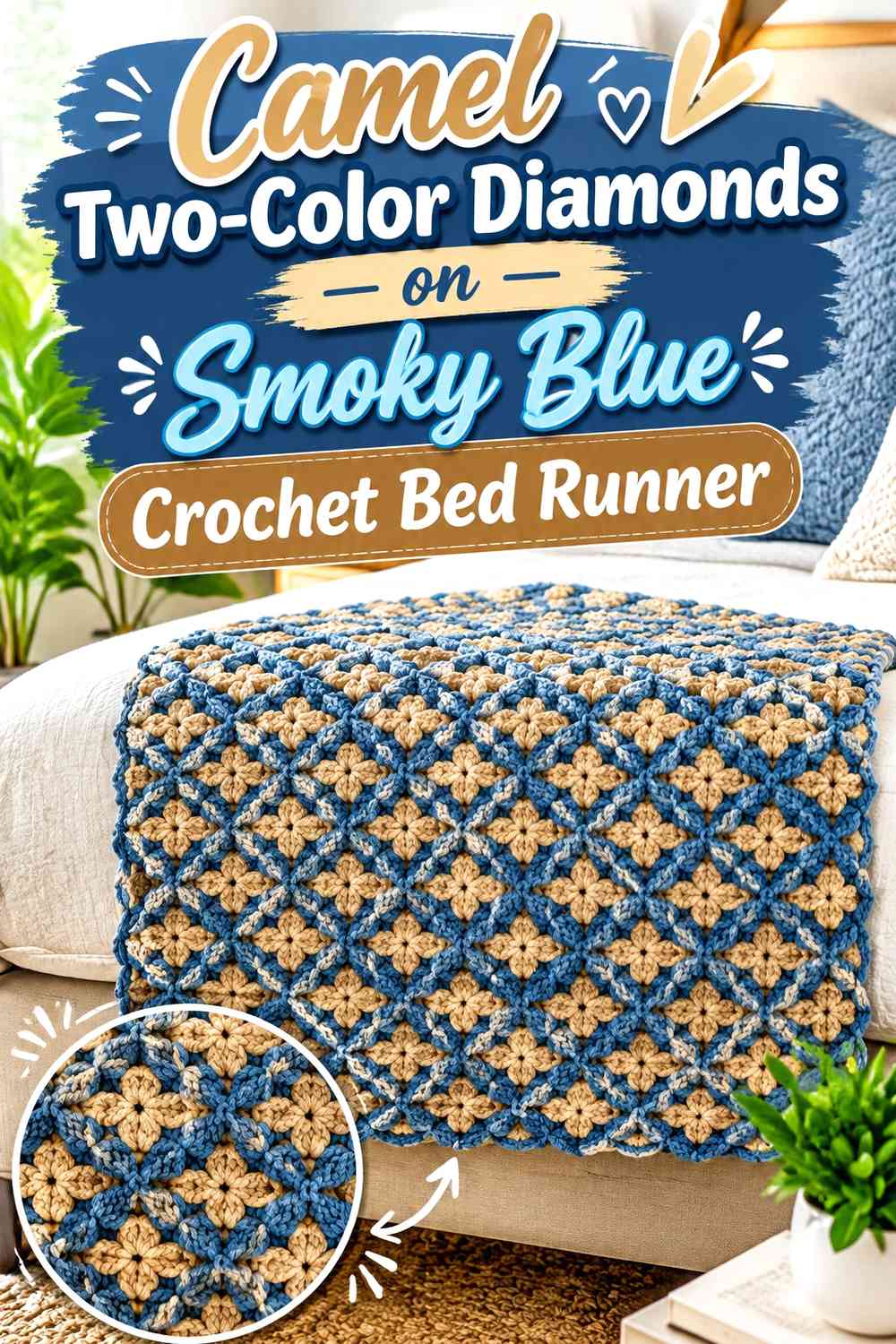
A two-color diamond construction is especially suited to this palette because each shade can hold a clear visual role. Smoky blue can form the runner ground while camel appears inside the repeated diamond structure.
Keep Smoky Blue Consistent Between Camel Diamonds
Use blue as the repeated interval between warm motifs so the runner has a stable rhythm. Equal blue gaps make separate diamonds feel like part of one pattern rather than a collection of isolated blocks.
Check the spacing across the whole bed width before adding a finishing edge.
Give Camel Enough Area to Read Against Smoky Blue
Camel should not be reduced to tiny internal marks if diamonds are the central design feature. Larger uninterrupted sections preserve the warm shape and keep the motif recognizable.
If you want a quieter result, reduce the number of diamonds rather than fragmenting each one.
Creator Credit: Sierra Fontaine
7. Smoky Blue Center Blocks with Camel End Panels Crochet Bed Runner
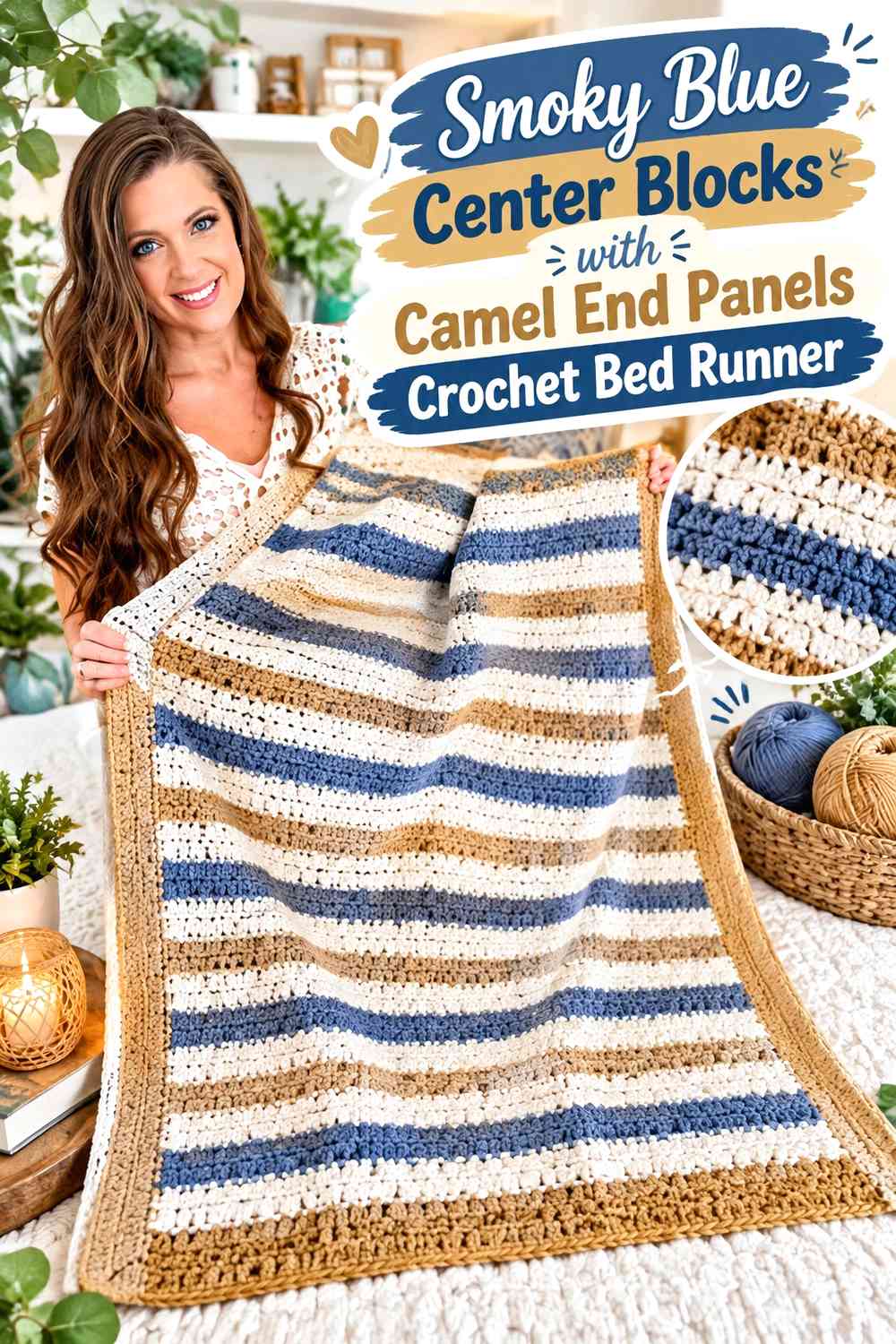
Color blocking provides a simpler geometric direction. Place a large smoky blue section in the middle of the runner and use camel toward the two ends, creating broad rectangular areas rather than small repeats.
Center Smoky Blue Across the Middle of the Bed Runner
The blue block should align with the visual center of the mattress when the runner is laid across the bed. A centered field makes the two camel ends appear deliberately balanced.
Test the runner on the bed before finalizing the end sections because mattress width affects how much of each block remains visible.
Balance Camel on Both Sides of the Smoky Blue Center
Keep the camel sections comparable in visual weight unless an intentionally asymmetric runner is the goal. Matching ends give the simple block arrangement enough structure without additional motifs.
A narrow smoky blue line within the camel ends can be added only if the large sections need stronger connection.
Creator Credit: MJ’s Off The Hook Designs
8. Camel-Framed Smoky Blue Geometric Panel Crochet Bed Runner
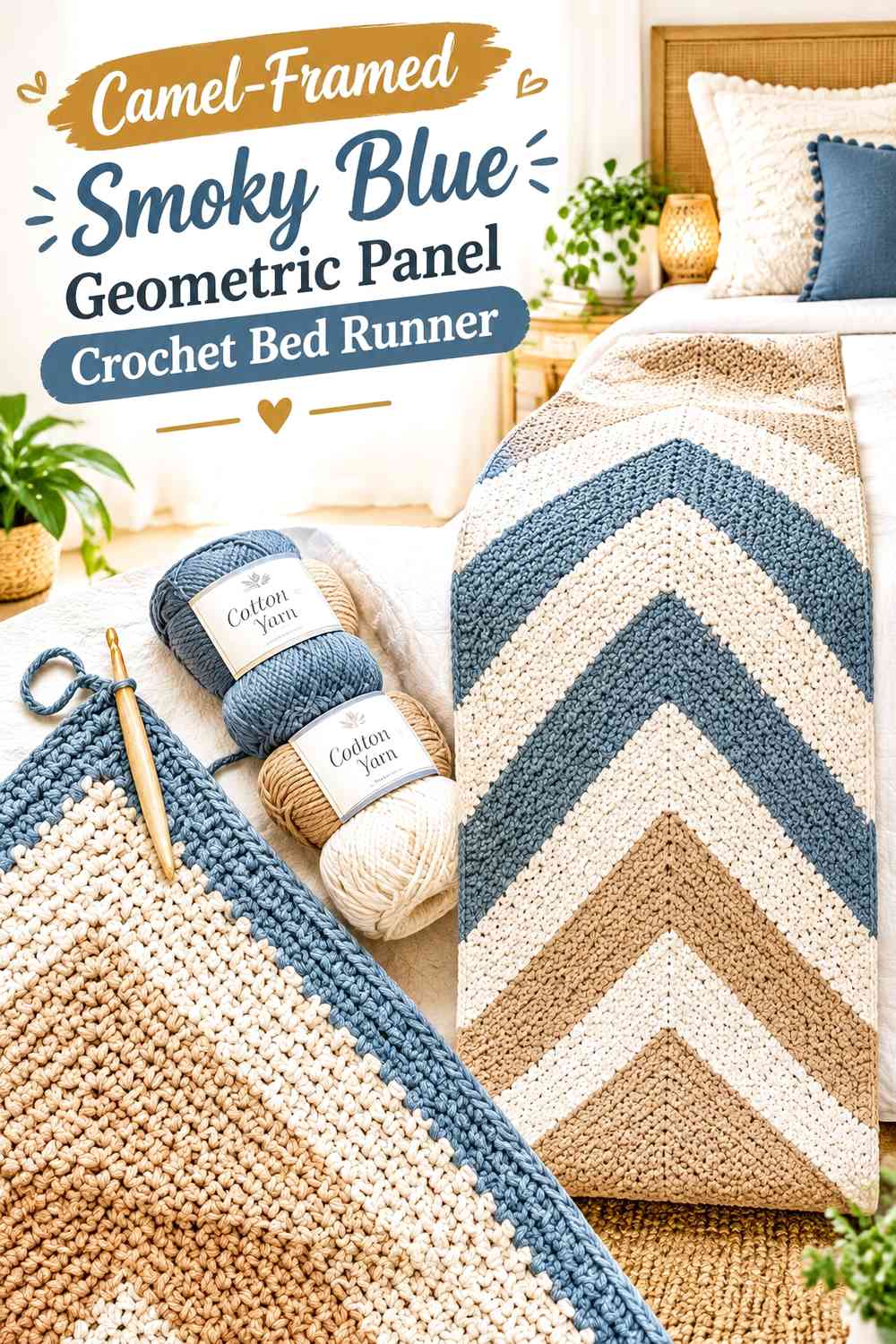
Here, smoky blue occupies the main central panel while camel surrounds it as a warm frame. This arrangement emphasizes the long rectangular shape of a bed runner rather than filling it with many separate motifs.
Keep Smoky Blue Broad Through the Center Panel
Use the blue section for the strongest stitch texture or geometric repeat. The uninterrupted field gives the center enough room to remain visible even when the runner drapes slightly over the sides of the bed.
Avoid narrowing the center excessively to accommodate an oversized border.
Let Camel Frame the Smoky Blue Without Crowding It
A camel strip along the long edges and ends can make the blue center look more deliberate. Keep the border proportional to the runner width.
If the camel frame becomes visually dominant, reduce its depth rather than adding more blue decoration on top.
Creator Credit: TL Yarn Crafts
9. Smoky Blue Three-Panel Runner with Camel Joining Lines Crochet Bed Runner
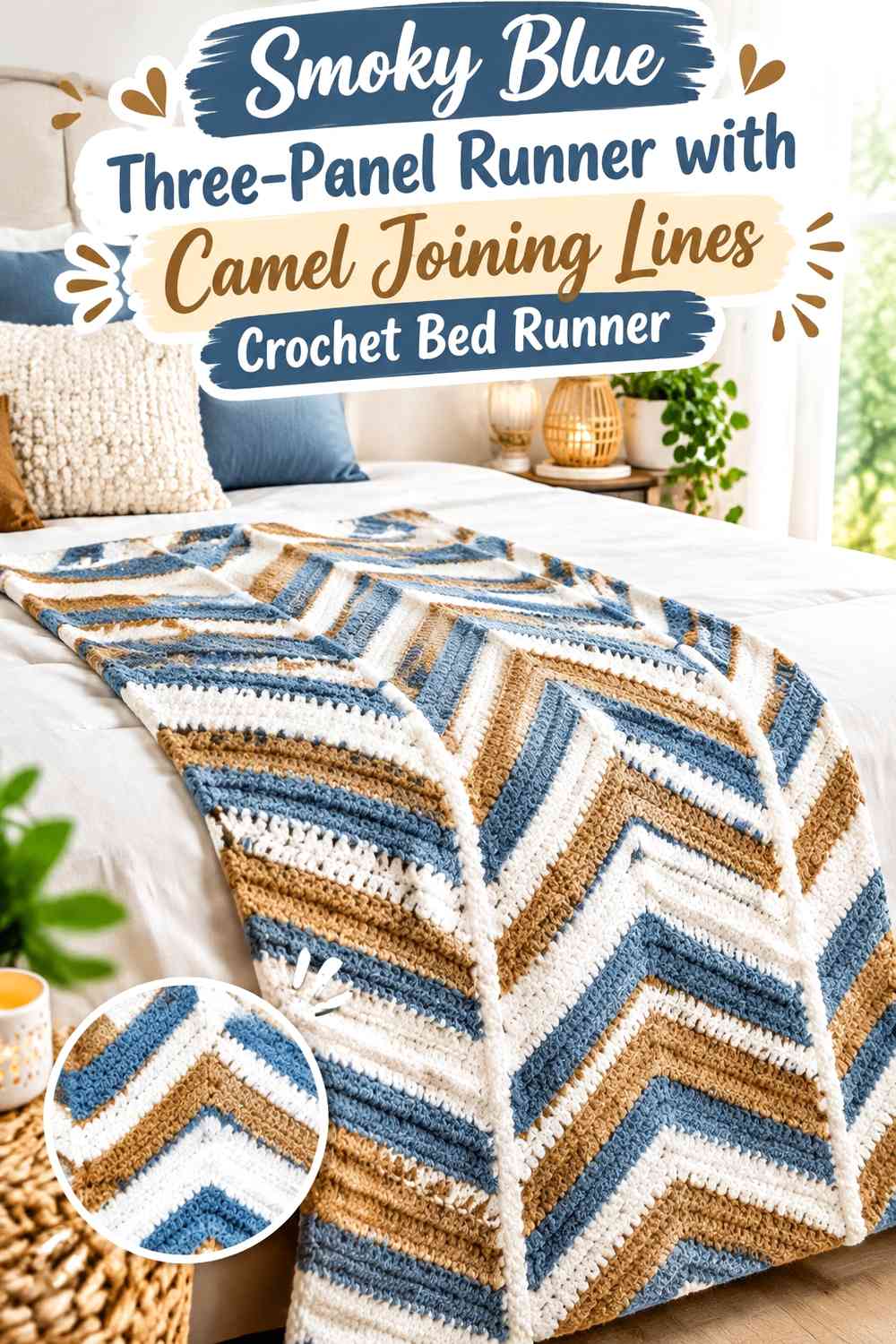
A panel construction creates natural vertical divisions when adapted to the narrower runner format. Keep the panels smoky blue and let camel mark the joins between them.
Repeat Smoky Blue Across All Three Geometric Panels
Using one blue across the panels keeps them visually connected even if each section has its own texture. This lets construction lines contribute to the geometry without turning the runner into a collection of unrelated pieces.
Arrange the panels side by side before joining to check their direction and visual weight.
Use Camel to Emphasize the Smoky Blue Panel Joins
Camel joining lines can become an intentional design feature rather than something to hide. Keep their width consistent so each division has comparable emphasis.
Because the runner is narrow, avoid overly wide joins that reduce the visible blue panel area.
Creator Credit: B.Hooked Crochet
10. Camel Window Grid with Smoky Blue Mosaic Blocks Crochet Bed Runner
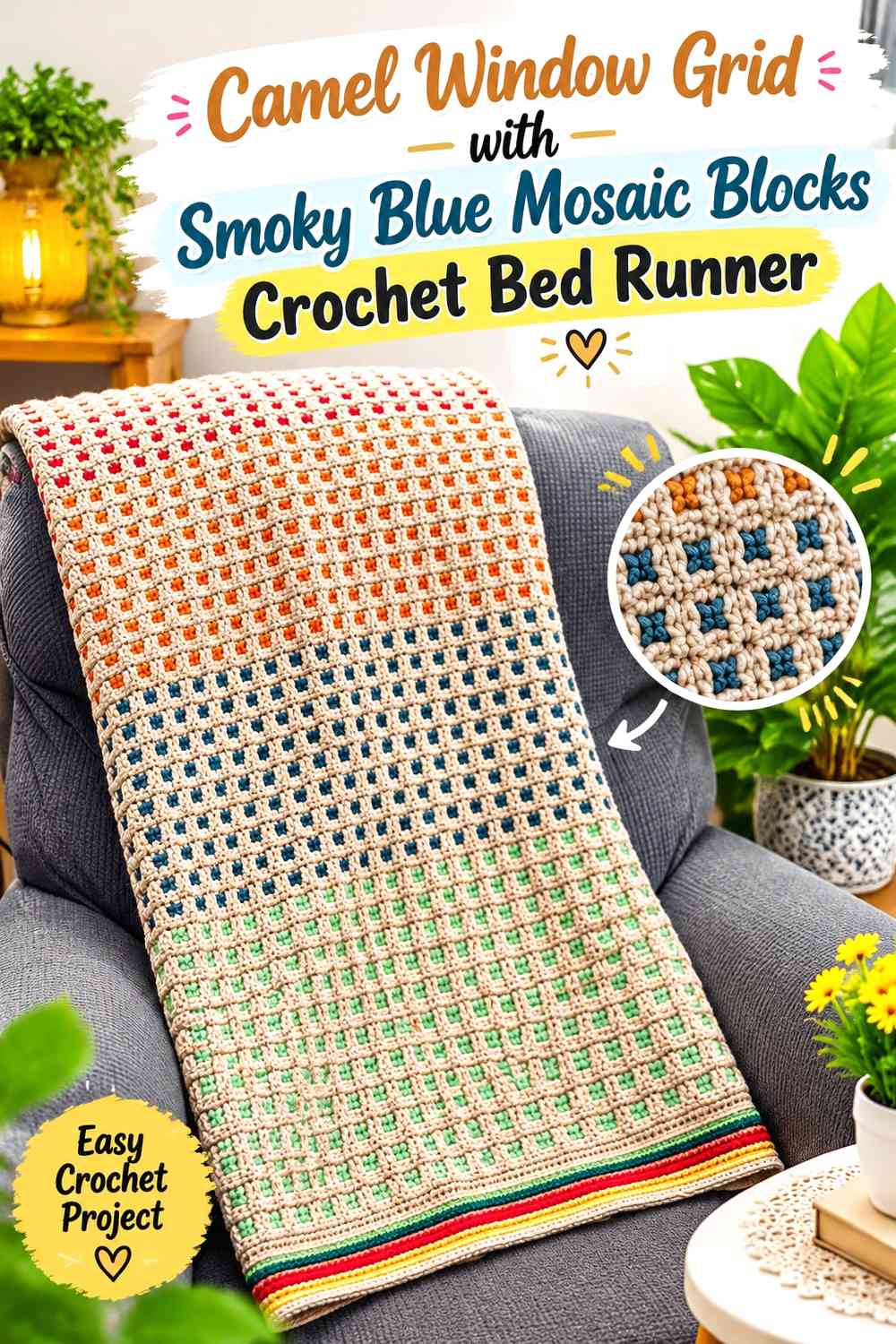
A window-like mosaic pattern creates small repeated geometric openings. Camel can provide the grid while smoky blue fills or appears beneath the repeated block shapes.
Let Camel Form the Continuous Window Grid
A connected camel framework gives the runner a warm geometric skeleton. Keep the grid consistent across the width so the repeated windows align cleanly.
If camel is close in value to smoky blue, make the grid wide enough to remain visible at bedroom viewing distance.
Keep Smoky Blue Blocks Repeating Inside the Camel Grid
Use blue consistently in the inset areas so each opening reinforces the cool side of the palette. Avoid introducing random changes in which windows receive blue unless an irregular pattern is intentional.
A simple border can be enough because the grid already provides strong internal structure.
Creator Credit: Yarn Crafts | EyeLoveKnots | Cre8tion Crochet
11. Smoky Blue Diamond Medallion with Camel Border Crochet Bed Runner
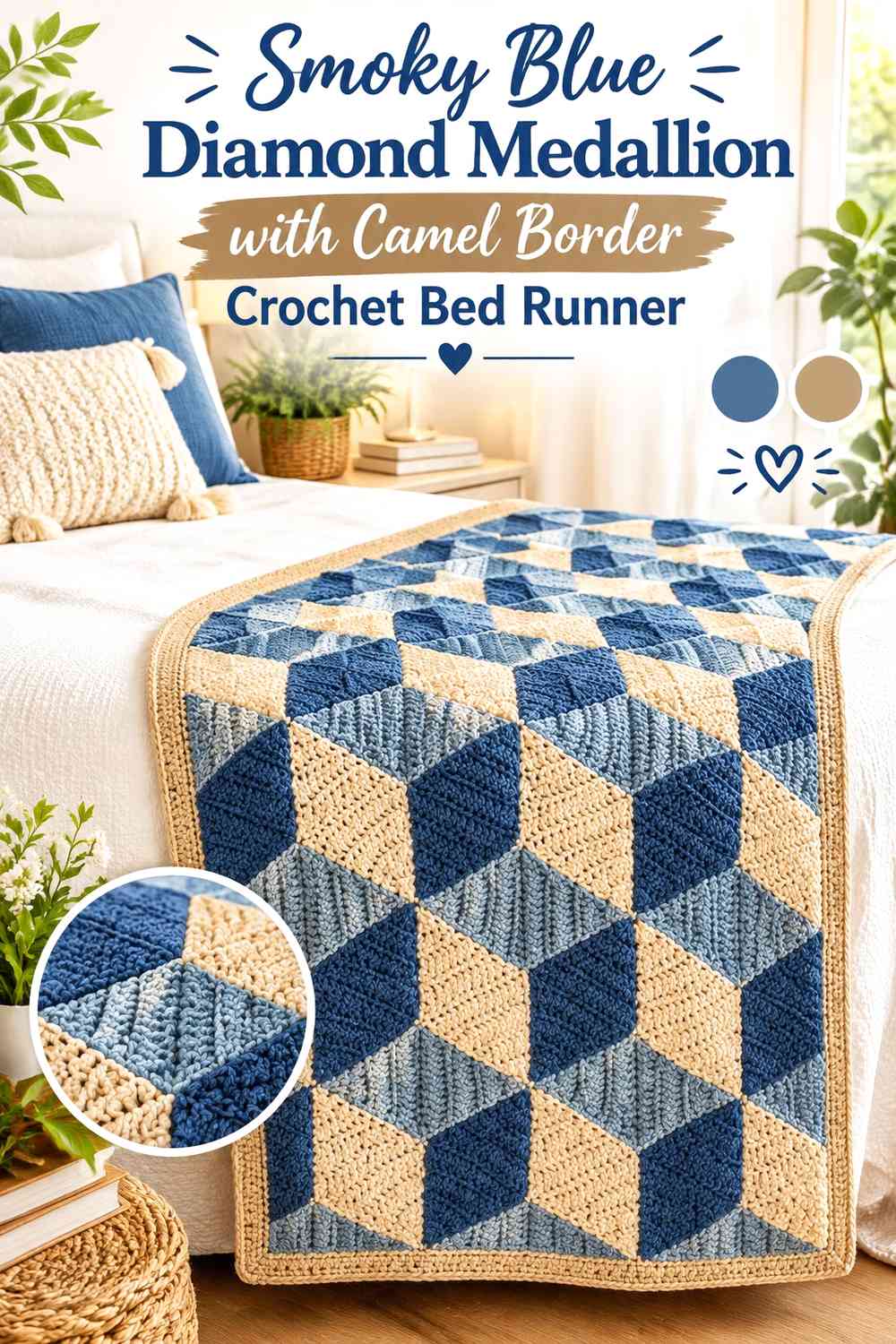
A diamond-focused blanket concept can be narrowed into a runner with one strong horizontal sequence of medallions. Smoky blue carries the main diamond shapes and camel surrounds them.
Give Smoky Blue Diamonds a Clear Horizontal Rhythm
Arrange the diamonds so their centers form a consistent line across the mattress. This is more important on a bed runner than adding many vertical repeats that may be partly hidden by pillows or folds.
Leave enough camel between each blue shape for the diamond outline to stay distinct.
Use Camel Around the Smoky Blue Diamond Sequence
Camel can provide both background and finishing border, creating one warm field around the cooler motifs. Keep the outer edge narrower than the internal spacing so it does not make the runner look boxed in.
Test the final color balance against the bedding before adding optional finishing details.
Creator Credit: Lanas y ovillos
12. Smoky Blue Offset Blocks with Camel Connecting Stripes Crochet Bed Runner
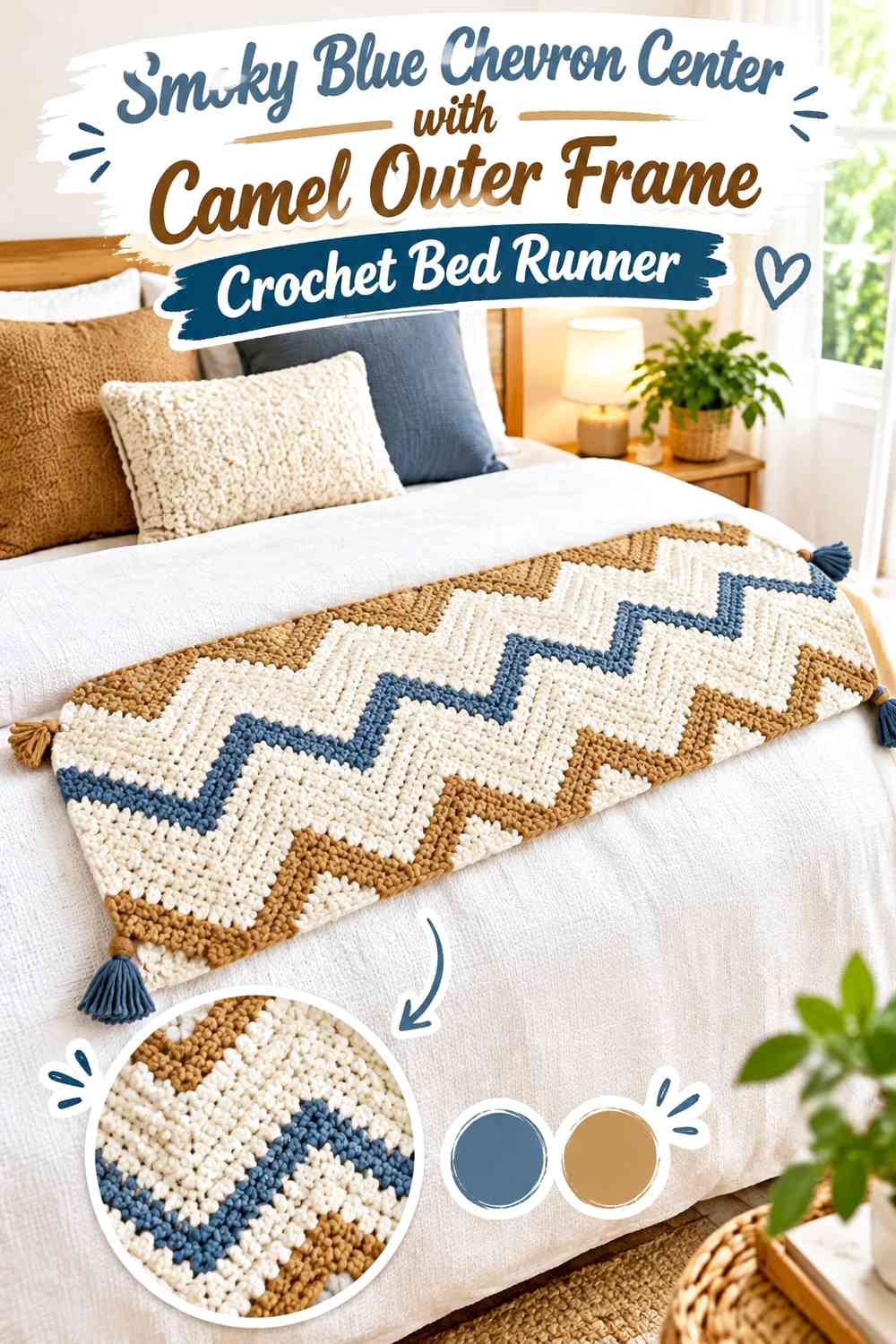
Offset rectangles create a more modern geometric direction than centered diamonds. Smoky blue can occupy the larger blocks while camel runs between them as narrow connecting stripes.
Stagger Smoky Blue Blocks Across the Runner Width
Offset the blue sections deliberately instead of lining every boundary up vertically. The shifting geometry gives the runner movement while still keeping the broad color areas easy to read.
Lay out the full color plan before working repeated sections so the stagger remains balanced across both ends.
Keep Camel Narrow Between the Smoky Blue Blocks
Use camel as a separator rather than an equal block if you want smoky blue to remain dominant. A consistent warm stripe can link sections that otherwise appear disconnected.
If the camel lines become too thin to register, increase them slightly rather than adding scattered camel details elsewhere.
Creator Credit: Sewrella
13. Camel Color Blocks with Smoky Blue Geometric Bands Crochet Bed Runner
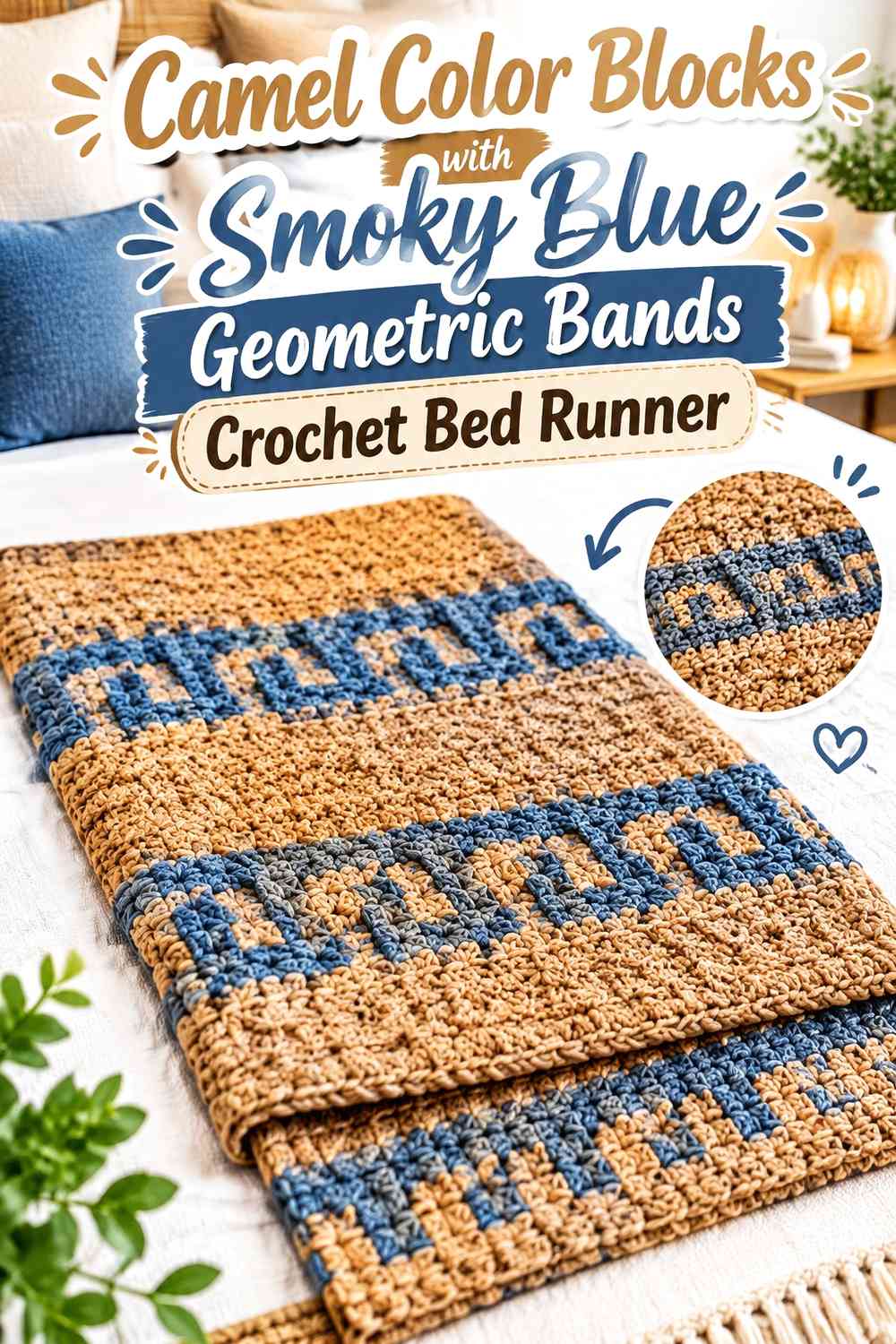
The final idea reverses the dominant color again. Camel fills broad rectangular areas, while smoky blue creates narrower bands that divide the runner into repeated geometric zones.
Let Camel Cover the Broad Bed Runner Blocks
Large camel areas make the piece warmer and quieter than a heavily patterned mosaic. They also provide a strong background for narrower blue sections.
Keep block proportions consistent enough that the runner appears planned when stretched across the bed.
Use Smoky Blue Bands to Divide the Camel Geometry
Place blue bands at deliberate intervals instead of distributing them randomly. Their cooler contrast can mark block transitions and give the eye a clear path across the runner.
Avoid making every band a different width unless irregularity is part of the intended composition.
Repeat Smoky Blue at the Camel Runner Ends
A small blue finishing section at both ends can tie the internal bands to the outside edge. Keep it narrower than the main camel blocks so it functions as closure rather than another large color zone.
Creator Credit: Bag-O-Day Crochet
Which Smoky Blue and Camel Geometric Bed Runner Should You Choose?
For strong repeated geometry, Ideas 1, 2, 5, 6, 10, 11, and 13 emphasize diamonds, grids, or mosaic shapes. These suit beds where the runner will remain mostly flat and the center pattern will be easy to see.
For more directional movement, Ideas 3, 4, and 12 use chevrons. Broader color bands make the peaks easier to recognize and reduce visual busyness across the mattress.
If you prefer cleaner modern blocks, Ideas 7, 8, 9, 14, and 15 use panels, joins, frames, and rectangles. These let smoky blue and camel create the geometry mainly through large color areas rather than many small motifs.
Conclusion
Smoky blue and camel can create a geometric winter bed runner that feels cool and warm at the same time, but the strongest result comes from giving each shade a specific job.
Use smoky blue as the main field when you want diamonds, chevrons, and blocks to feel cooler and more defined. Let camel dominate when you want a warmer runner with blue acting as the structural contrast. Borders and joining lines are especially useful places for the secondary color because they can connect the design without fragmenting the main motifs.
Before committing to the full runner, test one complete geometric repeat across the actual bed. Check its scale from the doorway, compare the colors against the bedding, and make sure the border leaves enough room for the primary pattern. Follow the credited tutorials for their original construction details while adapting the width, length, and smoky blue-and-camel placement independently.
Frequently Asked Questions
Should smoky blue or camel dominate a geometric crochet bed runner?
Either can lead. Smoky blue works well as the larger field when you want a cooler winter direction, while camel can dominate when you want the runner to add more warmth to neutral bedding. Give the secondary color a defined role such as borders, diamonds, joins, or stripes.
How large should smoky blue and camel geometric motifs be on a bed runner?
There is no universal motif size because mattress width and runner width vary. Make one complete diamond, chevron, or block repeat and place it across the actual bed. The shape should remain recognizable from normal room distance without requiring so many repeats that the runner feels crowded.
How can I tell whether smoky blue and camel have enough contrast?
Place the yarns side by side under the bedroom lighting and view them from several feet away. A grayscale photo can also help reveal their light-and-dark relationship. If they merge, use larger separate color areas rather than relying on narrow alternating details.
Should a smoky blue and camel bed runner match the bedding exactly?
It does not need to match exactly. The more useful goal is enough separation for the runner to remain visible on the bed. Test the yarns against the duvet, quilt, or coverlet before making the full piece.
Which color works better for a smoky blue and camel runner border?
Use camel when you want to warm and frame a smoky blue center. Use smoky blue when the middle is camel-heavy and needs a cooler outer boundary. The border should support the main geometry rather than become the widest visual element.
Can I substitute another blue for smoky blue?
Yes. Choose another subdued blue that preserves the same cool, softened role and remains clearly distinct from camel. A very bright blue will create a more saturated result, while a blue-gray will keep the palette quieter.
Can I substitute another neutral for camel?
Yes. A warm tan, muted beige-brown, or similar medium warm neutral can fill the same role. Preserve enough contrast with smoky blue so diamonds, blocks, and joining lines remain visible.